Category: producers

  • The Honour stands of Birken

    The Honour stands of Birken

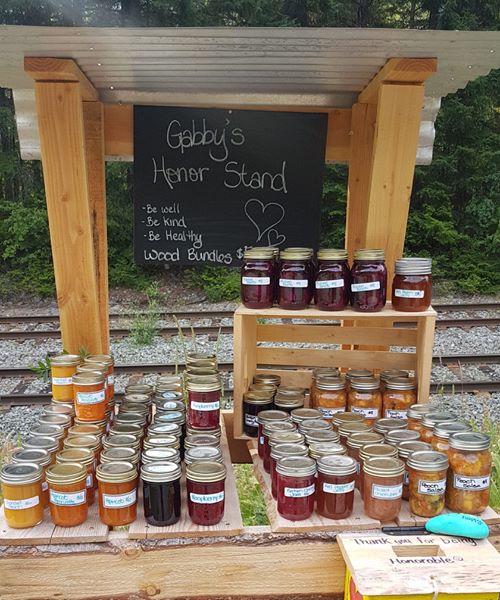
    The Birken / D’Arcy corridor is unique to the Sea to Sky Region. Unhurried, non-commercial, safe, sparsely populated and relatively unchanged throughout the nearly 3 decades I’ve lived here. In fact, there is less here now than there was back then. Its downtown consists of an old resort at Gates Lake, open for a few months, and a telephone booth (there is no cell service). The Demographic is also interesting. It’s more affordable and out of the way and therefore attracts misfits, homesteaders, bohemians, red necks, hermits, draft dodgers, hippie relics, adventurers and commuters to Whistler. There are few, if any, employment opportunities, therefore those who stick it out have become resourceful, artistic and enterprising.

    The climate is more arid, being on the cusp of the interior and in the rain shadow of the Coast Mountains. Spring comes early.  We see more sunny days, warm days, and cool evenings. Its narrow valley is  protected by steep mountains. It is not a  conventional farming community like Pemberton with acres of flat tillable ground. It is however a great hobby gardening area. Its soils are well drained, mineral rich and ideally suited for fruits, berries, and garlic. Its waters are crisp and clean. I don’t believe a single person uses pesticides. It is sought after for bee keepers for this reason as well as its natural bio-diversity.

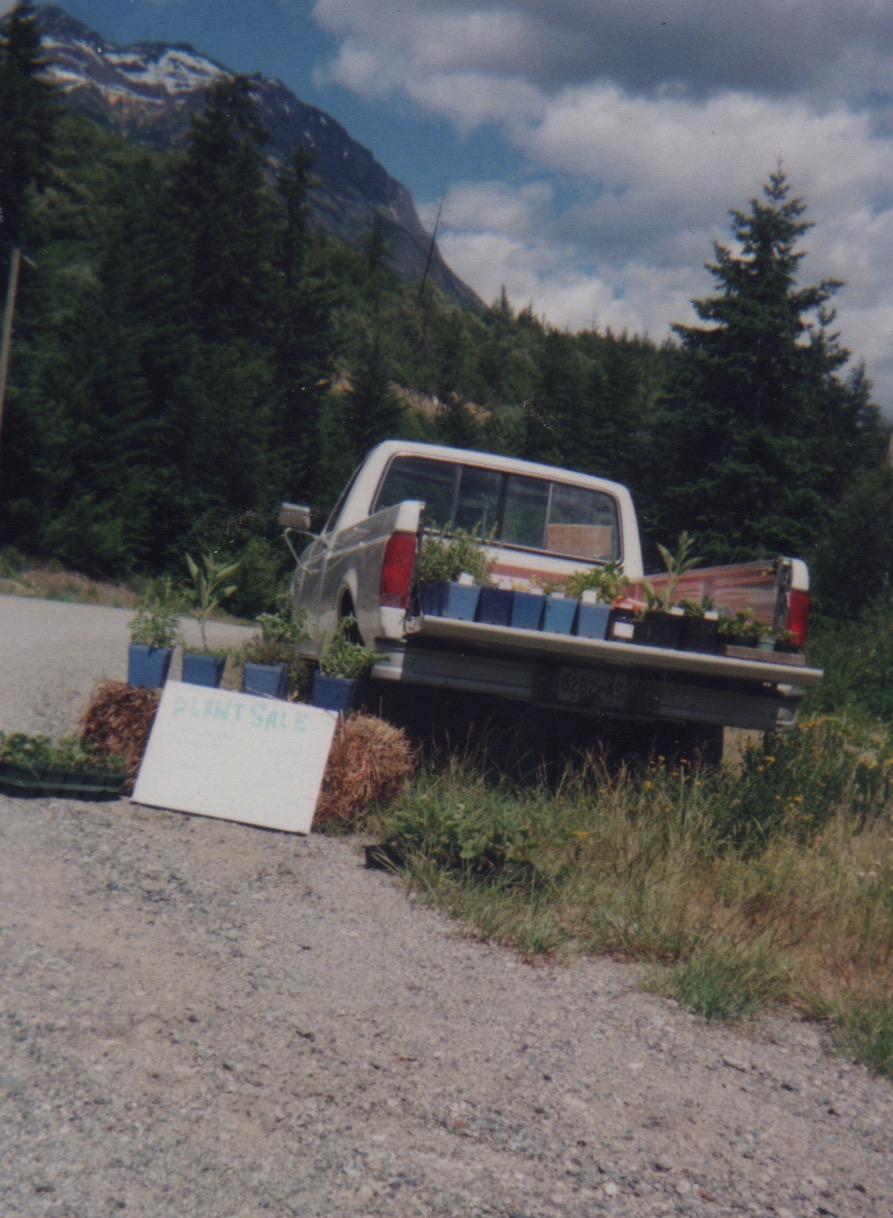
    PIC 5 plant sale

    I started putting plants and surplus veggies at the top of my driveway with a jar for cash many years ago, mostly for my neighbours. The above photo is circa 1995. I called it the Beer Stand back then. If I had enough for a case for the weekend it was a successful week. Over time it got consistently busier and we added more products. It became the Entertainment Stand where, in good weeks, we could go to a restaurant or even a concert. Our farm is now a registered business and after a good year we can take a vacation at the end of the season. Keeping it stocked is now a part-time job (farming, of course, is full-time), but I have to say it’s the best job I’ve ever had.  I joke when being leisurely that I’m currently working my job . The operating costs are extremely low so every sale is a bonus. Farming itself is extremely labour intensive with a low profit margin and high risk. We could never afford to pay someone to sit and serve customers. It’s really the only viable way of doing business in a rural area. If we bring perishables back from the market they quickly go up there in the fridge. We can offer an ever-changing wider selection of items than we would at the farmers market, can keep things fresh and pass our cost savings on to the customer. Win, win, win!

    Generally people are honest and since it’s the honour system, we accept e-transfers and IOU’s. Someone, who we caught pinching out of the change jar, returned years later with a letter of apology and a $50 bill. This restored our faith in humanity and the honour system. What comes around goes around.

    115823217_10157015108455755_4358984688747848677_o

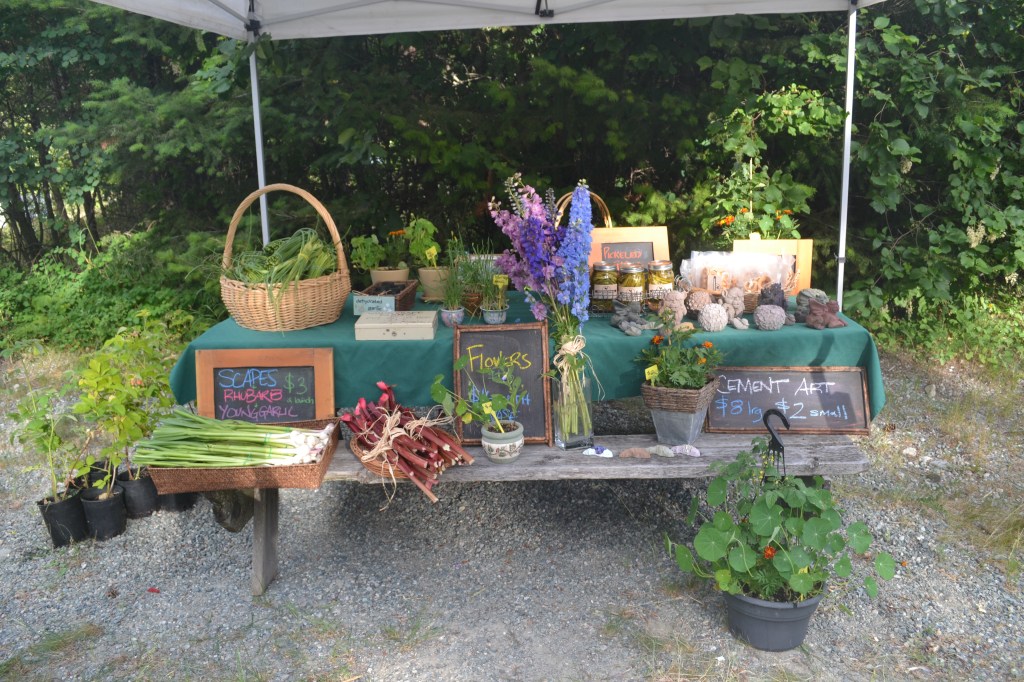
    Birken has now become a valley with many honour stands offering everything from jams to fresh pasta to firewood. It’s a place of cottage industries, where hobbies help many with spare cash. They range from tents, and  permanent shelters to coolers. Many interested in setting up their own stand have contacted us wondering if we would be offended by the competition. We look at it the opposite way. The more the merrier! It has started to become a destination place for a casual drive picking up things along the way.  Those coming up for a swim in our many lakes can grab some fruit to munch on. Campers and boaters can pick up a fresh bouquet and something to add to their dinners on the way home. We’ve had nothing but positive feedback. It reminds many of their country childhoods and a simpler time when everything was local and fresh and neighbours shared.


  • Thank you to the Vegans

    Thank you to the Vegans

    As discussed in my last post I think we owe vegans in particular an enormous debt of gratitude. These deadly viruses originate with wild animals in captivity caged inhumanely alongside domesticated animals for human consumption in markets mainly in China, but also it has been reported Indonesia and Thailand. What will happen in future and how and if this will be monitored is another matter.

    Vegans are against the use of any animal product for consumption and their choices are truly admirable. We have so many ethical food producers here and ethical and sustainable hunting practices yet unfortunately there will always be people who abuse a shared trust. Also, whenever we purchase packaged meat in the grocery store and are not connected with the hunting of the meat ourselves or the raising of the meat ourselves or by people we know in our own community (shout out to those very important and hard-working people in Pemberton now and how grateful I am to you) then we honestly cannot say for sure that the meat was raised ethically.

    So if you find this all too much to process (pun not intended) then you can just go vegan. And if that is too much to process then you can at least go partially vegan. I find vegan eating particularly easy at breakfast and lunch. Oatmeal and oat milk (yay – oat milk has 4g of protein per cup!), toast with peanut butter, etc.

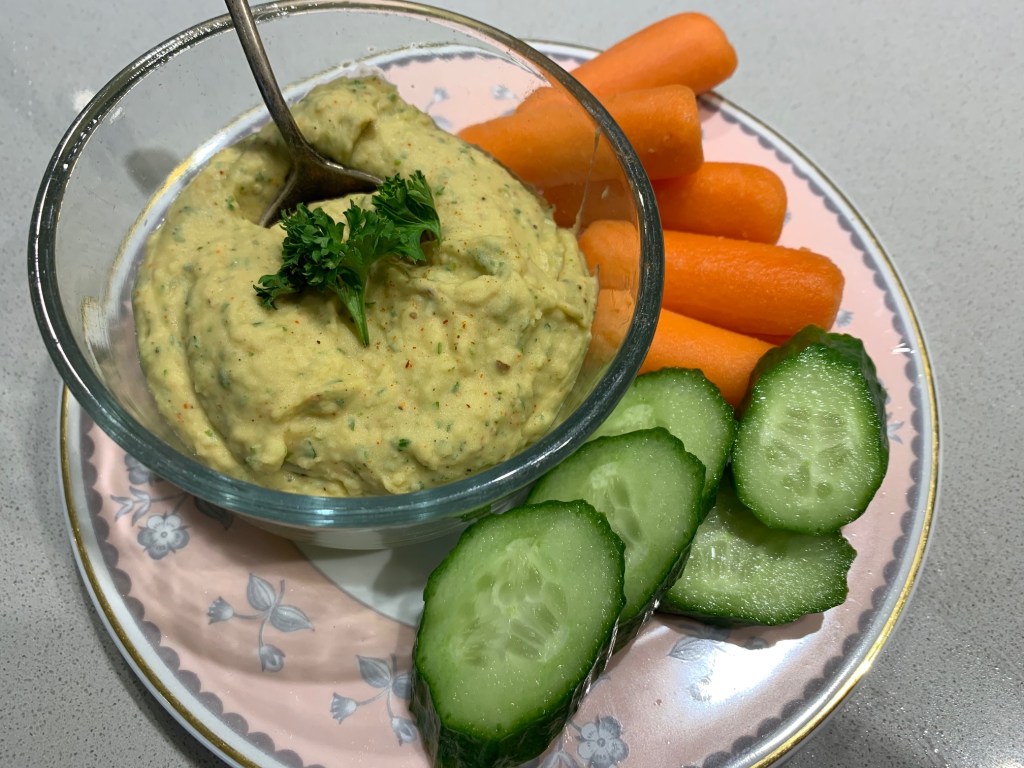
    For lunch I like to serve bean dips and veggies and even a light lentil soup. I just tweaked a bean dip I found online that in its original posted form was bland and blah. This one is zippy and fluffy and very delish. Please enjoy and thank you again to the vegan community.

    White Bean Dip with Pemberton Garlic and Parsley:

    Ingredients:

    15 grams of small white cannellini beans

    **Method for dried beans: Soak a bag or two of dried cannellini beans overnight. In the AM, drain water and put beans in slow cooker and add water until beans are covered by two inches. Cook on low 8 hours. When tender, put 15 gram portions of beans in containers and freeze for future use.

    2 cloves Pemberton garlic

    4 dashes hot sauce (I like the Cholula brand from Mexico)

    1/3-1/2 cup pure olive oil

    3 tbs fresh-squeezed lemon juice

    1/3 cup Pemberton-grown parsley

    1 tsp salt

    1 tsp pepper

    1 tsp paprika

    Method: Blend all ingredients together in Cuisinart. Adjust salt and pepper to taste. Serve with sliced cucumbers, celery, carrots or sweet peppers.

  • Acclimatization, zones, and how plants adapt to weather

    Acclimatization, zones, and how plants adapt to weather

    You know when you go on a tropical vacation in the winter and at your destination, the locals are wearing hats, long sleeves and pants. You strip down, head to the beach only to get sunburn and heatstroke? Eventually, after a week, you get used to it. Upon return, that first blast of cold at the airport feels like the Arctic, yet people are wearing shorts!

    Plants experience the same affect, perhaps even more because it happens gradually at a cellular level. The more robust the cell walls become, the hardier the plant.

    Every living thing has preferred conditions. Plants are grouped into zones to help guide gardeners to choose plants that will survive in their climate. It is based on the worst weather extremes for the area: Coldest temperature, number of frost free days and exposure. It’s good to know your zone before you waste your time and money on something that won’t thrive. Zones can be pushed higher by starting plants indoors, protecting them with cloth, overhangs, windbreaks, a south facing wall and   greenhouses. Global warming is also changing things and most areas will be up-zoned in the near future.

    Microclimates exist in all zones. Sunny south facing protected areas can be a full zone or more higher than a cold, windy, shady frost pocket. Understanding your microclimates on your property can determine whether you will succeed or not. It’s something you need to constantly pay attention to, and even make notes, if you have to. The smallest changes can make a big difference.

    Slowly, plants need to adapt from one environment to the other. Our intervention is called “hardening off”. Plants started indoors are used to the warm cosy, calm and diffused light. If you put those out right away they will most likely get shocked by cold nights, wind, pounding rain and scorching sun. The trick is to, over the course of several days, slowly leave them out in their new environment a little more each day, paying attention to extremes in which case you will have to leave them indoors or add extra protection.

    When buying plants in the spring it’s good to ask the grower to what extent they’ve been hardened off, if at all. You may have to do it yourself. Something few consider. Many tropical plants in Florida, grown for export as houseplants are raised under shade cloth, not because they don’t tolerate sun, but because they will eventually live in someone’s living room. It works both ways.

    When to plant your starts or seeds outside is also tricky. Seed packages are only a rough guideline as they can’t possibly know everyone’s circumstances. Even experienced gardeners can’t rely on calendar dates, as every year is different. It’s part intuition, part trial and error and partly luck. Those in tune with nature will know when to plant something by biological clues related to the weather, like when the crocuses sprout, the ice on the lake melts, you see the first Robin or the forsythia blooms.  This study is called Phenology  and is the most accurate method. The even more in tune will take biodynamic guidance into account such as moon cycles, the almanac  and spiritual doctrines to plan schedules, making things  even more complicated to organize.

    Regardless, all good farmers are aware of the weather and check the forecast constantly.

    Starting some things early can be as detrimental as starting them late. A root-bound start can suffer and be stunted. A plant left too long indoors on a windowsill can get leggy and fall over searching for the sun. It’s good to know how many days it takes a particular variety to mature. Transplanting earlier may serve no benefit.

    Most plants will survive marginal temps above freezing. Few do anything and stay in a state of statice between 1-6 degrees celsius. Some tender annuals such as basil will perish at a damp 1-2 degrees. Transplanting on a windy day is terrible as it knocks them over, and sucks the moisture from the plants and soil, through transpiration. Some things that have a short lifespan may need successive planting to stagger the harvest. Cool loving crops may only work in spring and fall. and will quickly bolt in the summer. Late maturing species may need to be brought indoors to finish off or  to spend their dormancy. Hardening off is also required to adapt in this case , now humidity and introducing pests indoors becomes a concern. Plants are fickle,  you need to get to know them personally.

    There are obviously so many factors to consider: The bottom line is that you have to treat all your plants like dependents and provide the best care for them from the elements as possible. You have to guide them through life, like children, until they are strong enough to go at it with little intervention. You can never assume anything, be complacent or lazy. What if it was your infant out there? How would you care for it?


  • Sobering Advice for New Impulse Gardeners

    Sobering Advice for New Impulse Gardeners

    first gardenOne of the few businesses that has and will continue to thrive throughout the Covid crisis is the garden and small farming sector. The sudden interest  in our food security, sustainability and living off the land  is at a level I have never seen before. This is great. It is something that anyone involved in small farming has been advocating and working towards for a long time. I have seen the progression from the early farmers market days, trying to convince consumers what organic meant and  that local was best, to the vibrant markets we have now. It’s been a slow and steady growth, business-wise. Something is different now – maybe self-isolation has give folks time to think about what’s really important in the game of life, how vulnerable and dependent on the system we are.

    I would never discourage anyone to garden. Even a few patio planters, home landscaping or a herb garden can bring anyone joy. Warning, it can be addictive. There’s always more to learn. It’s grounding and healthy for body and mind. Do it.

    What I’m seeing as the result of the pandemic, is a mad rush to become self sufficient in a very short period of time. People are “panic buying” chickens, livestock, incubators, fencing, potting soil, seeds and any garden supplies as if it were toilet paper. As a side hobby, gardening is awesome, but the reality is you will most likely spend more on retail supplies and work hard for a small harvest. You will have successes and even more failures. You will enjoy the fruits of your labour so much it will seem worth it. Unfortunately, it won’t make you self-sufficient right away. Sorry.

    I’m not quite there yet, myself and that’s after 27 years of homesteading, with 5 years of schooling and lots of  related work and business experience. My first veggie garden was in 1994. It was a lot of work. I had mediocre results. There was no Google. I winged it. I decided I would try to live off what I grew. I lost 50 lbs, before I gave in to groceries and meat. Not advisable as a weight loss diet.

    I don’t like bursting people’s bubbles, because I have always said I live in one myself. I have learned mostly through trial and error, and it pains me to see others about to make the same mistakes I made through naivete and inexperience. I have the need to explain to those new to this way of life that it’s just not a short term process that can be accomplished in a season. For most small business plans, they say you shouldn’t see a return on your investment for 2 -3 yrs. For small farms change that to decades. Available land, infrastructure, supplies, labour and overhead will eat into any profits. If you plant a fruit tree you might not see a reasonable harvest for 8-10 years. Soil needs to be built up over several years. You need a rough plan, expect slow incremental growth and lots of long term commitment.

    It’s all possible with patience, capital, sweat equity and a good team.

    Study it as much as you want, it’s endless. The reality is you will inevitably learn from your mistakes and Mother Nature will always throw you a curveball or two.

    My advice is to start small with realistic goals and low expectations. Think about by whom and how everything will be maintained, especially if you plan to return to  your regular work in the future. Don’t “put the cart before the horse” by buying livestock before you have fencing and shelters or plants before your beds are prepped. Be patient. Timing is everything. Ask questions. Don’t overspend on fancy tools and gadgets from Lee Valley, exotic plants, and pricey greenhouses. Do a few things well instead of trying everything.  Be efficient. Think about how you can work with nature in the simplest ways.  Don’t bite off more than you can chew. Enjoy, it’s a long ride.

  • Vegan eggnog recipe courtesy Pemberton’s wizard cocktail concocters

    Vegan eggnog recipe courtesy Pemberton’s wizard cocktail concocters

    Not only are  Tyler and Lorien at Pemberton Distillery absolute wizards (and trailblazing legends) in the organic craft spirits industry, their ten year old distillery provides a creative outlet for their growing and making tendencies – motivating picking and planting missions (they grow their organic hops, most of the herbs and botanicals used in their Absinthe and many for their Gin and they are slowly expanding the raspberry, strawberry and rhubarb crops to eventually be self-sufficient) and cocktail concoctions.

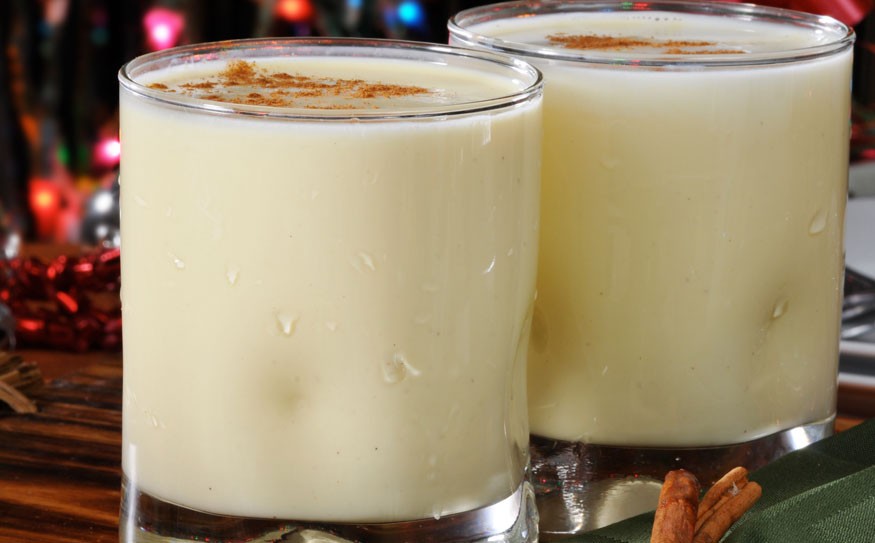
    Here’s a festive offering that Lorien made for the bar at the Refresh holiday market a few weeks ago, and shares with us! pemberton distillery

    This Mylk Nog is a nice and simple alternative to traditional eggnog – the cashew and coconut milks make it nice and creamy still, but it is not at all syrupy. The Nocino is a green walnut liqueur (this year, the green walnuts were all harvested here in Pemberton!) which is slightly bitter and spicy, almost like an Amaro, and adds a really interesting character to the nog!

    food_epicurious1

    Mylk Nog (serves a gathering!)

    1L cashew milk (make your own or buy at grocery store)

    500ml full fat coconut milk 

    125ml simple syrup (1:1 cane sugar to water)

    200ml Pemberton Organic Kartoffelschnaps 

    100ml Pemberton Nocino Green Walnut Liqueur

    Nutmeg

    Combine all ingredients in blender to combine. Taste and adjust sweetness as desired. Chill overnight. Stir and serve in small glasses. Garnish with a dust of nutmeg. Will last in the fridge for a few days.

  • 10 Lessons learned from 10 years of homesteading: Sweetwater Lane Farm reflects on their decade milestone

    10 Lessons learned from 10 years of homesteading: Sweetwater Lane Farm reflects on their decade milestone

    This guest post was written by Gus Cormack and Jocelyn Sereda, homesteaders and B&B operators, who celebrate their 10th anniversary living with the land this year. Everything they learned they learned the hard way – by doing it, with skin in the game, and their young family depending on them getting it right. They have slowly turned a 7 acre plot of land at the end of Owl Ridge, originally set up for horses, into a permaculture-inspired homestead, where they raise all their own meat, eggs, honey as well as fruit and veggies. I caught them in a reflective mood (having just enjoyed an amazing home-grown meal with them, and been gifted some sourdough starter to kick off my breadmaking journey) and asked them to round up their best 10 learnings to share with us. ~ Lisa

    by Gus and Jocelyn

    This year marks 10 years of homesteading at Sweetwater Lane Farm.

    It started with a dream. We had big ideas to solve the problems of the world so we packed up our lives in the Big Smoke, left careers and the comfort of family and old friends, and set off into the unknown, armed with just a bag full of clothes, our skis and our ambitions.

    The first step was to find an ideal place to live – somewhere we could grow food and play in the mountains. After many lists and much deliberation, we landed in Pemberton, our new homesteading paradise, and started the journey that continues today.
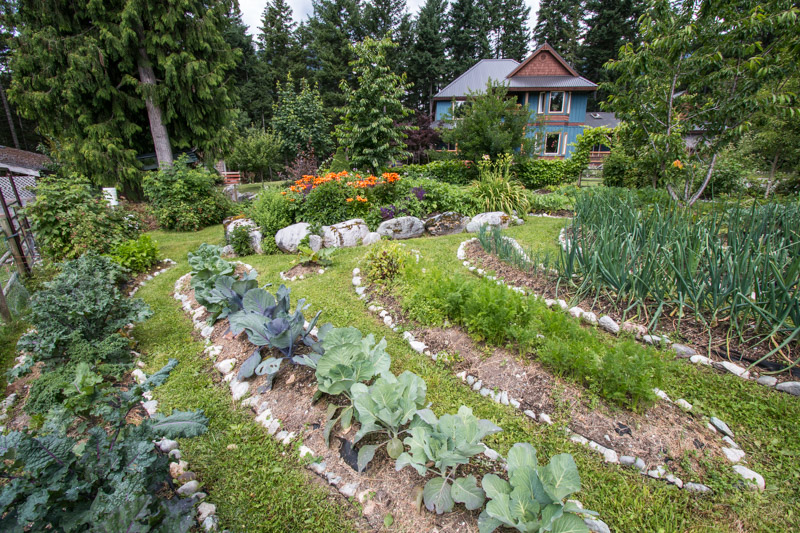
    untitled-31

    Along the way, ideals gave way to pragmatism, pragmatism turned into frustration, then frustration became the realization that “hey, this is actually working”! And the cycle continues.

    When Lisa asked us to write about 10 lessons learned the hard way in 10 years of homesteading, we jumped on it. We quickly found it was difficult to nail down just 10, because when you are homestead farming, every day is a lesson. And most of those days the lessons are learned the hard way. This list, by no means exhaustive, is just our top 10.

    1. Chickens are a gateway animal: If you think you’re just going to get a couple of chickens for fun, and maybe enjoy some eggs for breakfast every now and then, you might be in for a surprise. They are addictive. You’ll lose hours of your life watching the chicken channel. And it will be the best thing ever! You somehow fall in love with the simplicity of their lives and the meditative way they meander around the yard eating bugs and grass. The eggs are fantastic and you’ll never go back to store-bought. The next thing you know you’ll have 30 chickens, 3 cows, 2 donkeys, 3 pigs, 6 ducks, 2 cats and 2 dogs. And I’m not sure if it ends there. Stay tuned!
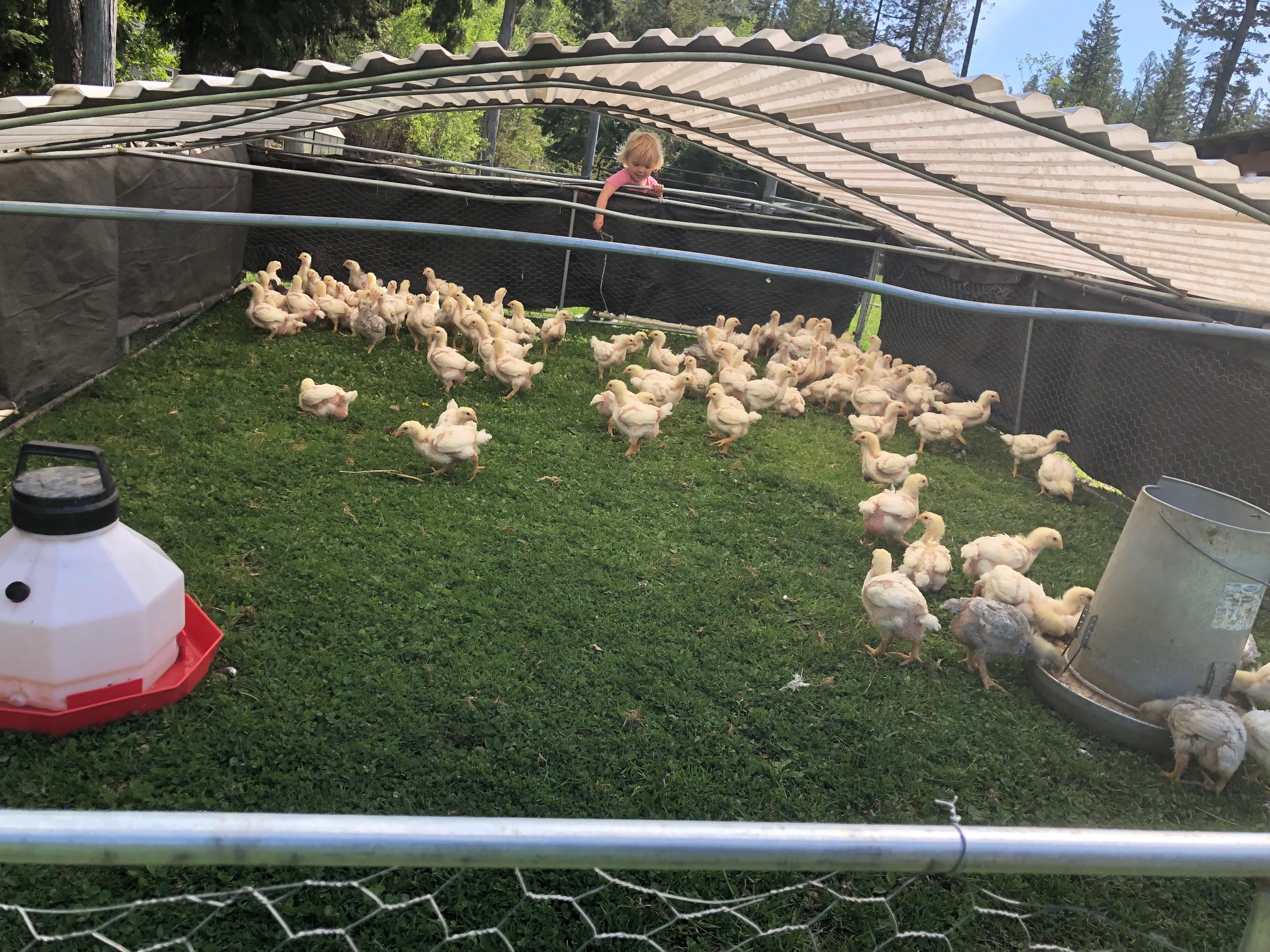
    IMG_2968

    2. Bait the Bears: Homestead farming necessarily creates a plethora of bear attractants. Some of our favorite things to eat on the farm also happen to be bear’s favorite foods. In the first few years, we had several incidents with bears breaking into portable chicken coops or climbing fruit trees. It wasn’t until we had one particularly problematic bear that killed around 100 chickens over the course of 2 sleepless weeks that we learned about baiting our electric fences. Simply wrapping some bacon around hot electric fences solved all our bear problems overnight. Once they put their sensitive noses on a 10 joule fence they never come back!


    3. Ravens are smarter than you: These majestic black birds have earned their place in folklore the world over. Seeing them systematically dismantle our chicken coops to steal chicks, open doors to steal eggs or send decoy birds in to distract the guard dogs, you quickly realize why they are revered creatures. We have loved observing them over the years and are okay with them winning the occasional battle. They exploit your weaknesses and therefore help make you smarter in the long run.

    IMG_0397

    4. Weeds will always be your best crop: The better you get at growing the things you want to grow, the better the weeds seem to get at growing! For years we fought a losing battle. The weed seeds come from literally everywhere and are very motivated to grow. Fast. Like with almost everything else on the farm, we started to look at how we could use them to our advantage (after trying all the other tricks we could come up with to beat them). It turns out that many of the “weeds” in the garden are actually far more nutritious than the salad greens we were growing so we started just eating them! Chickweed and lamb’s quarter salad quickly became a favorite. If you work in a fancy restaurant perhaps consider adding salade de mauvaises herbes to the menu and start feeding your customers weeds! Animals also love to eat most of the prolific weeds so they are essentially free animal feed. On top of that, when you pick the weeds and use them as mulch around the plants you actually WANT to grow, you add nutrients to the soil, conserve moisture, and save yourself the time and money buying and applying more commercial mulch around the plants. Voila. The enemy becomes an ally!
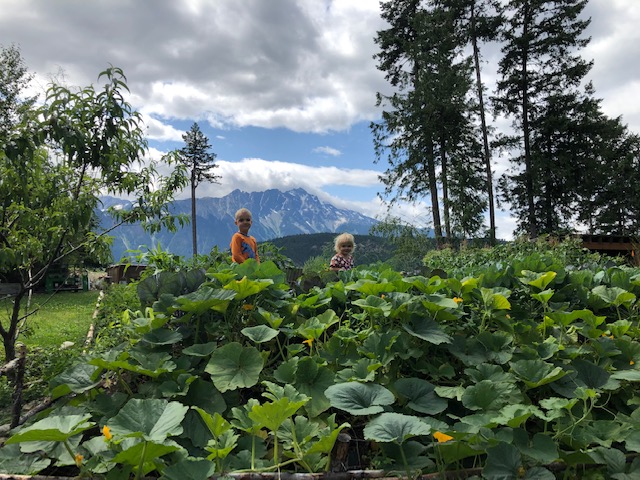
    IMG_3899

    5. Water is Life: We can’t overstate this. Until your water pump dies and your plants are baking in the hot sun, you won’t know the importance. It’s nothing like city life where you turn on the tap and presto aqua de vita! It’s much more complicated to be self-sufficient. To further complicate things, pumps only seem to break down when the temperature is over 35C and most likely on a long weekend. Parts aren’t easy to come by nor are tradespeople who can fix them properly when you need them. Get educated and find a good supplier who answers the phone when you need to troubleshoot and make sure you always have spare parts on hand! This is also one of the first things you should look into when deciding which property to buy – how much water is available and where does it come from? This was another lesson learned the hard way, but that is a whole other story…

    6. Don’t push shit up hill: This might sound like an old saying but there’s a very practical application for it. We inherited a septic system that uses a pump to push waste up a hill to a septic field. When you live in a rural area and the power goes out – what’s going to push your shit uphill? So given the chance to do it over, definitely let shit roll downhill. As a side note: This applies in a non-literal way to almost everything else in homesteading life as well.
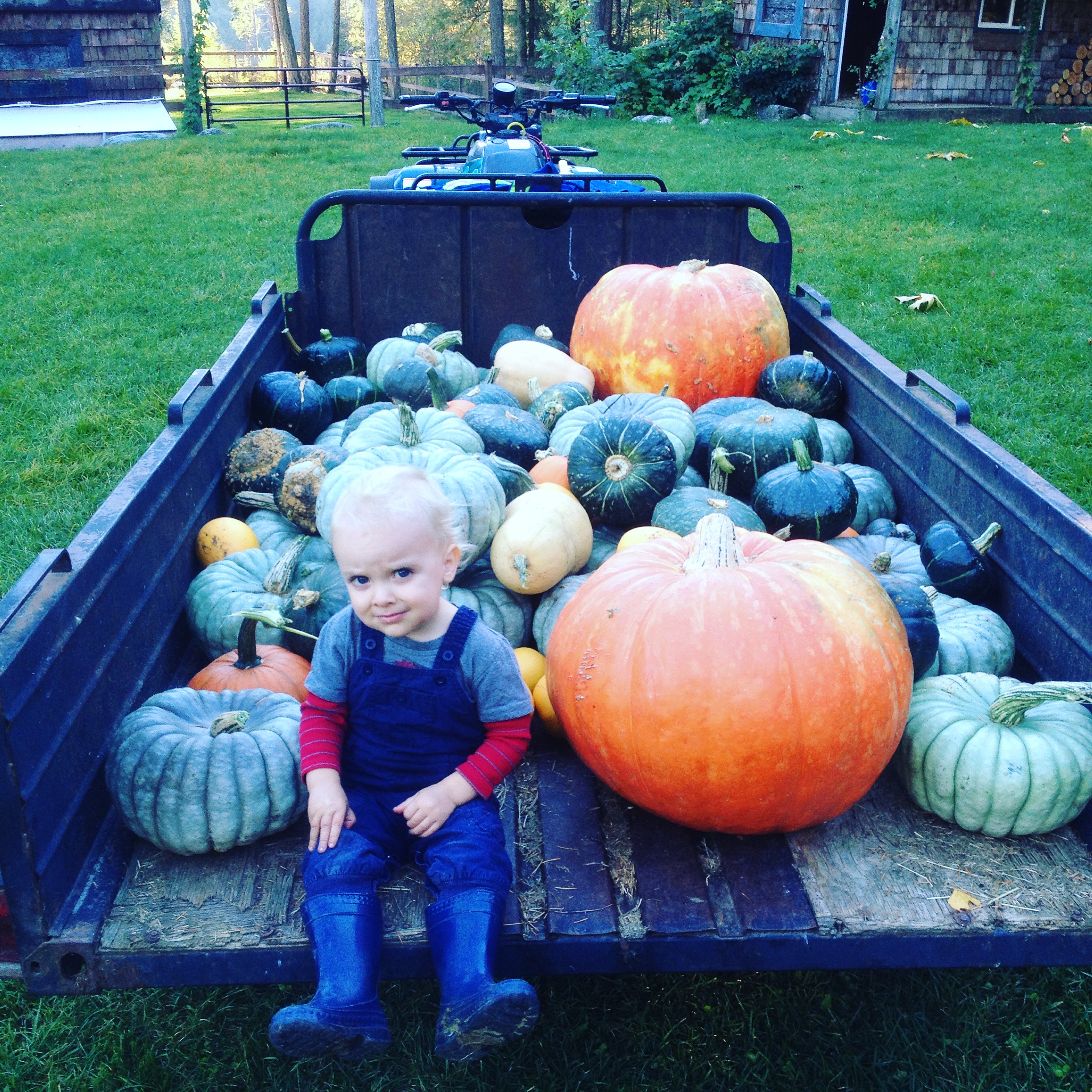
    IMG_1953

    7. Squash are sexual deviants: Squash are one of the coolest things to grow on the farm. They are very independent, not needing much love or attention; they are prolific and create a huge amount of food that can store all winter from just one seed. The problem with squash is, if left to their own devices they will happily breed with every other squash within close vicinity. This can create some really interesting and tasty combinations, but most likely you will end up with a soft shelled pumpkin. So plant your squash away from each other or be prepared for strange tasting and looking crosses.

    8. Plan for Death: Before you get your first farm animal, take the time to think about how you are going to deal with their end of life. If it’s a meat animal, know how, where and when you are going to butcher them and how you are going to get them there. That little piglet you brought home in a dog crate certainly won’t fit in there at the end of the season! It’s impossible to get someone to come slaughter your animals with no forward planning. Also having the right tools and set up is essential if you are going to do it yourself. If it’s a long-term farm animal, still be ready for the off-chance your animal passes suddenly. We lost an almost full grown steer once. Without a tractor on hand we wouldn’t have been able to deal with it in a timely manner. It’s not something we want to have to think about but doing so can save you a significant amount of stress and give you better systems to work with in the meantime.

    9. There’s no such thing as a free animal: Driving home one day we saw a sign on the highway that said “free chickens”. We excitedly went home to grab a dog crate and headed back to pick up our new free animals smiling about what a great deal it was. We loaded them up and got them settled into their coop. About 2 weeks later these free chickens started to crow. We had a dozen “free roosters”. They competed crowing with each other day and night. All of them. All the time. Moral of the story is, if they are free they will come at a cost. You just may not know what that cost is right away.

    IMG_3268

    10. Everything should have a job: Every animal on the farm should have a job. Otherwise you will just be collecting pets that will take up your time and money. If you need to build up your soil then rotational grazing of cows and chickens is great. If you need protection from predators in your pasture then a guard dog or even a donkey works great. Having animals that instinctively add to the farm will help lighten the load and enhance your homestead. Right now we are using our donkeys to help fire smart the forest beside the house. Otherwise we might have to consider them lawn ornaments.

    As a final thought, remember to be inspired by your big ideas but understand there may be many, many steps to achieve your goals. If something doesn’t work the first time, go back to the drawing board and try again. And then again, and again. And again until you figure it out. Every homestead is different so if you read something in a book, understanding that most of the time things won’t work exactly like they said can save you a great deal of frustration. The customized lessons you will learn are invaluable. Practice humility daily. Things don’t always work out. The environment will often dictate your success. If something doesn’t fit, let it go. No matter what you might think – you are not the boss! Most importantly, make sure you are having fun (at least some of the time) because that’s kind of the point of all this, right!?

    IMG_0764

    If you are interested in following along our adventures at Sweetwater, you can find us on Instagram @sweetwaterlanefarm and FaceBook at www.facebook.com/swtwtrlnfrm… If you are very interested in learning more about what we are doing and how you can do it too, contact us at enquiries@sweetwaterlanefarm.com as we do offer homesteading courses from time to time!
  • Thoughts on plastic bag bans from an organic potato farmer

    Thoughts on plastic bag bans from an organic potato farmer

    Clamorous demands for a plastic bag ban at Vancouver farmers’ markets have resulted in… a (pending) plastic bag ban at market. The association that runs the markets at which we have been selling potatoes for over 25 years recently announced that starting with the 2020 season all single-use plastic bags will be banned. I have been privately fuming about it for ages, with no proper articulation. The formal announcement has forced me to publicly admit that I have issues with the new policy.

    First some groundwork. Let me lay this on you. I sell a lot of things in plastic. Potatoes mainly, but also carrots, beets, parsnips, and even on the odd occasion broccoli, beans and basil. Retailing with plastic is effective and efficient. It’s not completely brainless and some merchandizing skills are required. The tops should be tucked under the bags, for example, or the display can end up looking like a farmers’ market stand that sells plastic bags, as opposed to potatoes. The bags should be of good value with the price stickers visible. You should know when to use a twist tie for closure and when to use a knot, and what type of knot. The bag should contain no unsightly culls. There ought to be a bulk option right beside the ordered heap of pre-packaged product. Half the customers will choose one, half will choose the other.

    Things in plastic bags sell. Every retailer knows this. That’s why you see in the grocery store that everything is packaged, particularly in the produce department. If you want to sell more, put it in plastic. I think too, consumers have been convinced that things in plastic are more hygienic so that adds to the appeal and bolsters demand for plastic bagging. It’s entirely about boosting sales, however.

    So to continue with the summary of my current situation, plastic bags are a major part of our retailing plan at farmers’ market. I rely on them. If I want something to sell, I put it in a plastic bag. Boom. It sells. My farm depends on farmer’s market sales for almost 80% of our revenues and at least half those sales come from things in plastic: We make it convenient, attractive and of good value. We are managing to come up with lots of packaging alternatives, but none check all the boxes. The pending plastic bag ban is causing me to feel (and this is just for starters) highly irritated, somewhat stressed, and quite mis-understood.

    A mild yet persistent panic over-rides everything: how am I going to maintain sales at market if I can’t use plastic bags? I have known this was coming for a few years but now it is officially imminent, and I still don’t have a good replacement.


    My other feelings include indignation and not a little derision: how dare anyone who has never tried to sell potatoes in the rain demand a plastic bag ban. You can’t just put them in paper. A paper bag containing heavy potatoes is going to be very disappointing at some future possibly inconvenient and ruinous point, even in only slightly moist weather. The more fickle customer is going to pass on potatoes in soggy paper. There are a lot of that type of customer.

    This line of thought leads to a further point of indignation: why is it okay to impede my ability to compete in the retail environment? People need to understand that we feel ourselves slightly in competition with grocery stores who have a lot of very cheap potatoes, which they sell in plastic bags, because that’s how potatoes sell best. I have customers on the bubble to whom convenience and price almost outweigh taste and quality, and we will lose them. Resentment bubbles in my bosom…

    …followed by more derision: what exactly do you mean when you glibly say “single-use plastic bag ban”, which appears to be the go-to wording of this pending policy? It sounds a little jingo-y, to my ears, and it’s semantically weak.

    How about those produce roll-bags. They don’t have holes. They get used again. And again. Especially to carry potatoes and carrots in damp weather, and to store them at home. You know, it has been a long, long time since there was no plastic in the household. Before plastic bags, homes featured things like root-storage rooms, and somebody doing daily cooking and shopping. Freshly dug, delicate, oh-so-tasty nugget potatoes store well in a plastic bag in the bottom crisper drawer OR in a log-walled, dirt floor roothouse. Do people really know how to live without plastic? It’s kind of a big deal. Anyways, I am pretty sure those roll-bags are included in this ban.

    As another aside, because it is irresistible and the resentment has briefly bubbled over, are the same people also calling for a ban on plastic dog-poop bags? Oh? What’s that? You have a dog? And you think those dog poop bags aren’t rife with environmental issues and that your dog poop is pure? Bah. Pick it up with paper, why don’t you.

    I guess I think demands for plastic bag bans are thoughtless and not a little frenzied. Seems crazy to expect a little farmer like me to have to re-invent packaging, and that having done so, it will matter. I guess I don’t want to have to go through this with my 600 customers a week when the other 4 million people in the Lower Mainland are being offered, and are voluptuously consuming, singularly useless plastics galore at the grocery store.

    I don’t think anyone should feel like an environmental champion because they have been successful in their calls for a plastic bag ban at farmers’ market. This is, and you will forgive the expression, very small potatoes, and the price is being paid by a small, local organic family farm. Hardly heroic.

    Having said all that (and perhaps I have said too much), I am going to stop using the plastic bags with holes. I accept this. We have been thinking creatively for some time now, even before we heard the baying calls for a ban. It will cost us money, both in terms of lost sales and replacement packaging, but obviously I don’t think plastic bags with holes in them are useful beyond the single use for which they are so well designed. They are the junk food of packaging. We can do better. And I can even recognize that I might be wrong about the consequences.

    It would be super nice in return if people could check their calls for this ban. Farmers’ markets themselves are already on the cutting (and bleeding) edge of the quest for low environmental impact business operations. Environmental glory for all can certainly be found there. I am in awe of and deeply appreciative of the efforts that people will make to avail themselves of well-grown food at farmers’ markets. Speaking of plastic alone, a farmers’ market customer must barely use any compared to a grocery store shopper. Should we not be boasting about that? And enticing more of them over, rather than scaring them off?

    It is a simple exercise to find something environmentally devastating in someone else’s lifestyle. I try to resist (dog-poop bag rant an exception to the rule), because…well…sometimes it is none of my business.


    Anna Helmer farms with family and friends in the Pemberton Valley and dearly loves to pile it high and watch it fly.

  • Frontier Thinking: Everything you do happens at the place where your ideas meet your idea of the world

    Frontier Thinking: Everything you do happens at the place where your ideas meet your idea of the world

    This is the time of year when the farm machines roll full-tilt out of winter hibernation.

    At least, that’s how Andrew Budgell speaks of it.

    Co-owner of Laughing Crow Organics, one of Pemberton’s small scale organic mixed vegetable farms, Budgell is six credits shy of an English degree, and seven years in to his transformation as a farmer. We sat down this winter to talk shop, mutually intrigued by each other’s craft.

    LGC-LaughingCrow-24©AudreyThizy.2019
    Andrew Budgell and Kerry McCann of Laughing Crow Organics. ©Audrey Thizy.2019. All rights reserved / audreythizy.mail@gmail.com / +1 778 266 3655 / http://www.audreythizy.com.

    “In the winter time, it’s like you’re assembling this really complicated machine,” Budgell explained. “And when the season starts, you pull it out in the field and start it up. It begins lumbering forward. And you start seeing, as the season goes on, that you’ve become a part of the machine, working, weeding, watching. But this has all been planned. Every now and again, the machine will trip because of something you didn’t think of. Then there’s this extra challenge of patching things up and putting out fires. But the machine rumbles onwards forever.”

    Once the snow is off the fields, and the Life Force is surging through everything, nothing is sleeping. And the farmers start moving to keep pace – a pace that will keep accelerating until they feel like they’re running. “I feel like if I don’t keep moving alongside it, the machine falls apart. You have one chance. It’s a really hard deadline, unless you can decode nature.”

    You make the machine, you become the machine. Phoyo by Laughing Crow organics

    Budgell is regaling me with images of his Frankensteinian creature, in part, because we’ve sat down to talk about the contrast between winter and summer. Winter is a time for planning and playing. Now that farming season is here, it’s time to get down and dirty with your creation – to fully engage in this mysterious interplay between your plans and ideas and the physical world.

    Farmer Andrew Budgell working on an early draft Laughing Crow Organics

    I returned to this interview after listening to poet David Whyte talk about “the conversational nature of reality.” Whyte suggests that “the only place where things are actually real is at this frontier between what you think is you, and what you think is not you; that whatever you desire of the world will not come to pass exactly as you like it. But the other mercy is that whatever the world desires of you will also not come to pass. And what actually occurs is this meeting, this frontier.”

    One day this winter, running alongside my own lumbering beast of deadlines and deliverables, I did something different. Instead of downing two espressos, I squandered 15 precious minutes in meditation. I sat, breathed out, and in, and out, and in, and offered a kind of prayer to the universe. This story means a lot to me, I admitted. I want to do the idea, and the people it represents, real service. And I have five and a half hours to do it. Anything or anyone out there that can help get this fully formed out onto the page right now is most welcome.

    I’d long been intrigued by Eat, Pray, Love author Elizabeth Gilbert’s theory of creativity, famously disseminated in her TED talk. Her insight is that there are Muses, a kind of “other” energy that works through us. A big part of doing creative work, maybe the biggest part, is consistently showing up so the forces know where to find you.

    She came to that story as a kind of medicine to her huge commercial success and the weight of creative pressure that followed. Excavating an ancient understanding of Muses was her way of letting the air out of the pressure cooker of her Next Big Project; saying, look it’s not all on me. If I just show up, some other magic will meet me there.

    It intrigued me, but it felt a bit passive, like she meant opening yourself up as a channel or a medium, letting something use you to flow through and onto the page. Writing hadn’t ever felt like productive sleep-walking to me. But when I sat in that moment of pause, inviting mysterious allies out of the cosmic woodwork, I suddenly saw it as a much more dynamic process – profoundly collaborative. Co-creation. Something might work through me, but it had to work with me, with my brain, my thought patterns and habits of language, and I would be shaped by the flow, just as I might allow it to help shape the work.

    It was a new frontier.

    It may be that some kind of meeting took place that day. But I began to let my fear and overwhelm subside at the responsibility of what I was tackling, trying to pull stories out of the ether, alone.

    LGC-LaughingCrow-12©AudreyThizy.2019
    Photo by Audrey Thizy

    Every spring, when the freshly plowed fields are full of scribbles and half-thoughts, Budgell feels the weight of the beautiful responsibility he has shouldered to feed hundreds of people. “We always freak out! We worry: is it going to grow this year? Is it going to happen? Are we going to have food? All through April and May and June. And then right around July, it’s like this crazy revelation. Oh my God! It worked again! Nature!”

    When the miraculous manifests photo by Laughing Crow Organics
    Photo courtesy Laughing Crow Organics

    “There is a chemistry to creative work that is about two parts miraculous to one part sheer effort,” reads a quote tacked above my desk.  The precise effort-to-miracle ratio may change, but both are indispensable. We keep fumbling back to this. It’s on you, but it’s not all on you. It can’t happen without you, so show up and do the very best you can but make space for the not-knowing, the magical, the forces that keep the plants growing and the words flowing, and whatever else needs human hands to manifest in the world, in this earthy gritty sweaty dimension, where revelation happens.

    Follow @laughingcroworganics on instagram for more revelations.

  • The Biodynamic Farming Experience for the Celestially-Challenged, chapter 2

    The Biodynamic Farming Experience for the Celestially-Challenged, chapter 2

    Hello and welcome to Chapter 2 of The Biodynamic Farming Experience for the Celestially-Challenged. It is a partly-formed, poorly-articulated and over-hyphenated chronical of a particular journey, which is not quite the right word because it suggests the presence of a destination which is not at all guaranteed. Whatever it is, a woman-farmer-of-a-certain-age-and-experience (me) delves into the theory and more-importantly the practice of Biodynamic farming in search of fun (frankly) and future of farming (idealistically).

    Journey is clearly not the right word. Voyage of discovery? Too fancy. Is it a process? Nope. No fun. Compost heap. I think it might be a compost heap. Perfect. Piling up all kinds of ideas, layering them with experience, mixing up some theories, letting it sit. For absolute certain, something good is going to come of it, but it might take a while, depending on how raw the material is.

    The bottom layer in my compost pile of cosmic cognitive sentience (how about that!) is a cover-to-cover reading of the original Biodynamic lectures delivered by Dr. Rudolph Steiner. I am just about done. I remain perplexed most of the time, although I experience (sadly random and rare) flashes of triumph when I realize I have managed to grasp a concept or follow an argument- very quickly snuffed out, usually by the next paragraph. I persist, however, because I am hooked.

    In the last article I mentioned the Biodynamic Preparation 500, which we have been using for years. It is widely considered to be the most basic and simple preparation. It’s easy to make. You just stuff a cow horn full of fresh manure and bury it a foot or two down in the soil for the winter. In the spring, when dug up, the manure has transformed into a delightfully hummus-y loamy, dark, rich, almost powdery substance which is incorporated into water and sprinkled about the fields and gardens. Steiner manages to explain why the use of a cow horn is necessary, but I can’t. The point though, is to avail the farm to the powerful forces of the universe.

    Well the thing of it is, it also works on people. If you are not picking yourself up off the floor after collapsing in a dead faint of amazement, then I have not expressed myself well. Which is a problem with the writing, not with Biodynamics. You see, I myself have been made available to believe that the universe has an influence on the health of my farm because I have been using the Biodynamic Preparation 500.

    It’s taken close to twenty years of using the preparation for me to get to this stage. I hope it doesn’t take everyone else that long. Steiner seemed to think about 4 years should do it.

    To return to the point of this exercise: is Biodynamics fun? Is it the future of farming? I remain firm in my conviction that it might be. It is certainly more fun than the organic certification process, which I find has gotten a little dry. Necessary, if we are keen to relieve the Monsantos and DuPonts of the world their self-appointed mantle of agriculture way-finders. Obligatory, if you want to sell directly to people who don’t want to consume products from those companies. It is not, however, fun. Not that it needs to be, of course. That obviously does not come into it. It’s just that I find myself less and less satisfied with the result: a mere certificate.

    helmers_farm

    With Biodynamics, I seem to be ending up with a lot more than that. I have inspiration, wonder, amazement, incredulity, reality-checks, positive feedback from customers, tantalizing experiences of powerful forces. Lovely things to add to the compost heap of galactic oomph. I think I am going to be a better farmer because of it. Certainly, the farm is a better farm because of it.

    Returning to the question of looking into the future of farming. It does seem to me that farmers and consumers alike are aware that the organic certification program can only take us so far. There needs to be something that speaks to the fact that many farmers are going way beyond what is necessary to get the organic certificate. They are doing so because it becomes clear after a few years of organic farming, that the soil needs a little something more to gain health.

    While I think it is reasonable to look at Biodynamics to take it to the next level, there may be some snags. One of them has got to be that it can get a little bogged down in discussion, which I would like to flag as one of the biggest hinderances to productivity. A talking farmer is very often not a working farmer.

    Another issue is this insistence on involving the position of the sun and the moon in relation to the stars and planets. People like me are simply going to switch off when this topic arises. I believe that this aspect of Biodynamics is the stumbling block for most would-be practitioners. There is precious little science to back up the practices and very little apology is made for this.

    Cynically, I would also suggest the fact that Biodynamic farming does not require much in the way of support industries would really sink it as a viable farming method for the future. Apart from the odd tractor, a few implements and some cover-crop seed, Biodynamic farmers spend very little in the mainstream agricultural system. There is simply no need.

    So, as far as the future goes, Biodynamic farming is hazardously non-productive, off-putting, un-scientific and doesn’t contribute to the world’s largest companies. Doesn’t sound very promising does it.

    On the plus side, our yields are increasing, our customers are asking for it, and it is a fun way to farm. I think if we all just started throwing a little Biodynamic 500 around and carried on with our business, it would be a good start.

    Come visit the farm April 27, 2019 and we’ll mix some up for you.

    helmers biodynamic open house

  • With love to the #1 Tomato Grampa

    With love to the #1 Tomato Grampa

    I started my tomato seedlings on March 24th which is at least two weeks later than usual. It wasn’t until the snow really started to melt that I felt motivated, but better late than never.

    IMG_5769

    My Dad is the self-titled Second Best Tomato Grower in West Vancouver. I can’t vouch for whether #1 deserved the title as I never met him, but as far back as I can recall, my Dad has grown tomatoes.  Not the weird multi-coloured heirloom ones, just the basic varieties of Big Beef, Early Girl and red Cherry tomatoes, that look like, you know, tomatoes. My Dad is known as Tomato Grampa to his Grandkids to differentiate from the other Grandpas; not sure if they were lucky enough to have nicknames.

    IMG_5790

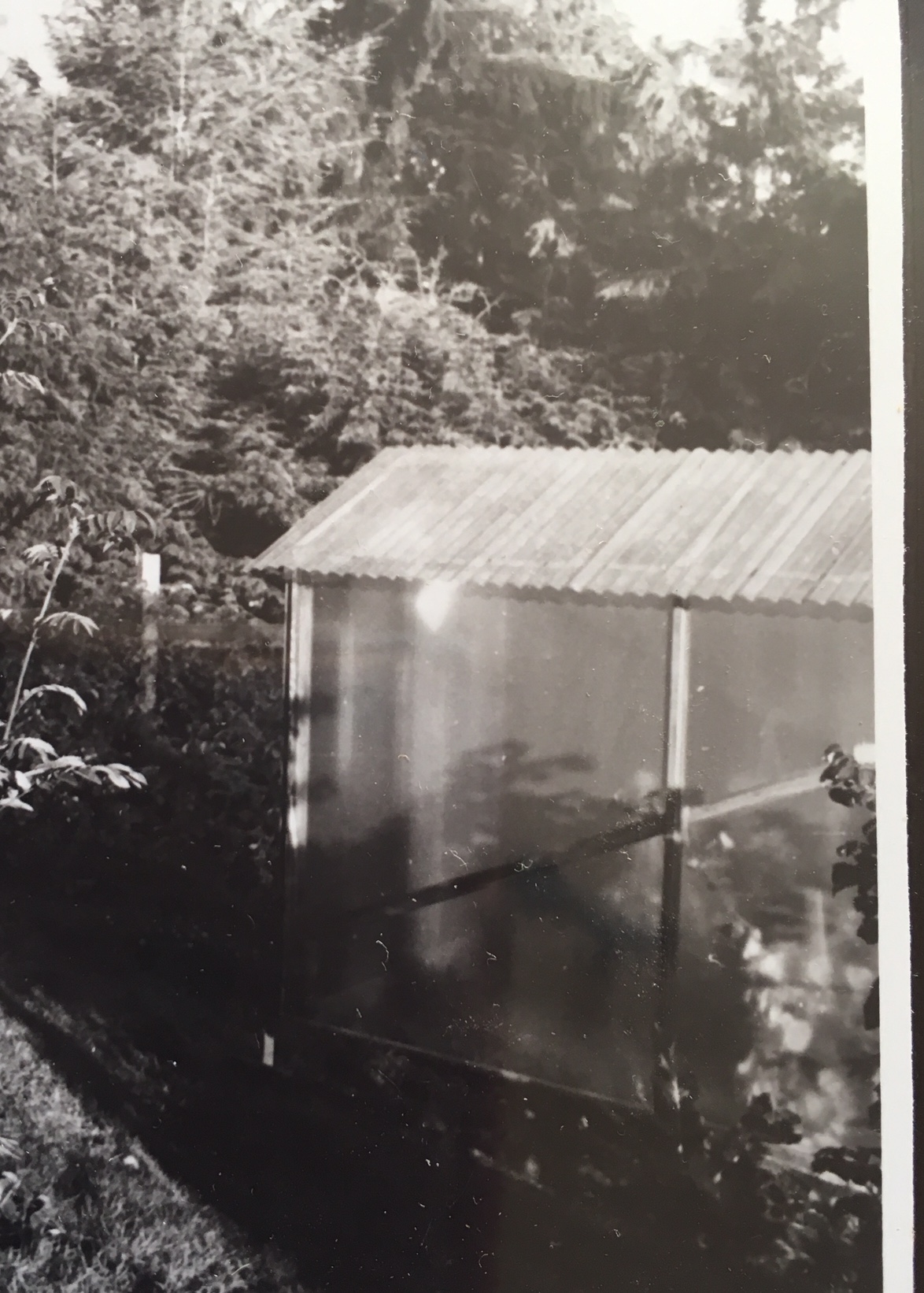
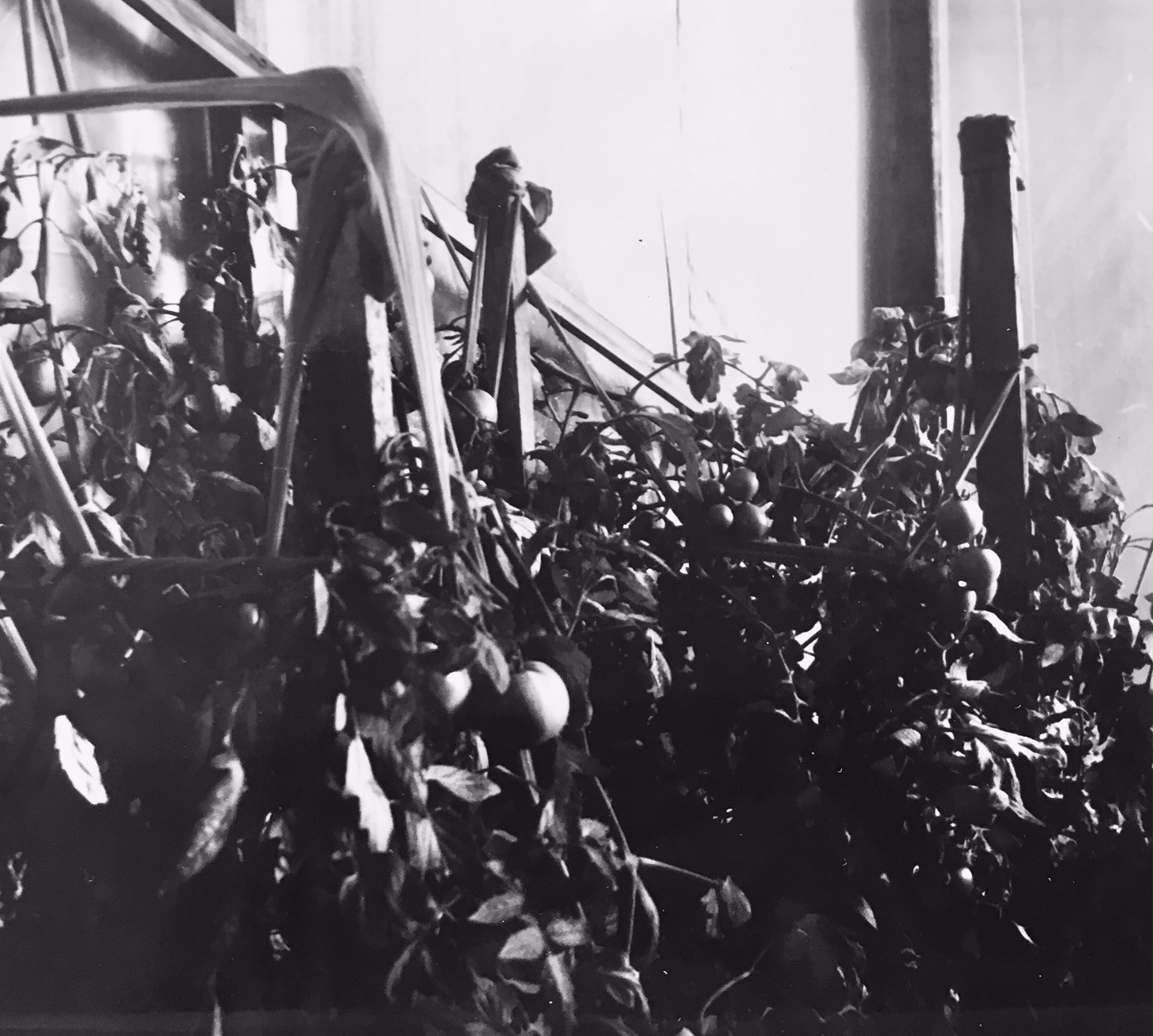
    I remember the first greenhouse Dad built in the house I lived in until I was 24. It had poly sheet walls on a thin frame, and a plastic corrugated roof. My mother, sister and I were instructed to donate any pantyhose that had runs, as they made wonderful flexible slings for vines and fruit; this is back in the day when women wore pantyhose at work and most other places so there was an endless supply. After I left home, my parents moved into a new house and Dad built a hot tub inset in the raised deck off the kitchen; the heat from the tub heated the enclosed glass greenhouse he built under the deck. It was ingenious and the tomatoes flourished.

    IMG_5791


    When I lived in various apartments in the city, I always had a tomato plant on my deck donated by my Dad. When I moved to Pemberton, I finally had room for a garden, so started my own plants from Dad’s seedlings. As he did, Dad taught me to save the seeds from the biggest and best fruit by placing the seeds onto a paper towel and letting it dry. Label it, fold it up and put it someplace you’ll remember. No cleaning or fancy storage required. For many years, I have grown the babies from my Dad’s original plants, and I still save my seeds the same way.   I hope one day to pass along their progeny to my son.

    IMG_5767

    Last year I started 72 plants, and all but two came up. Of those 70, 6 didn’t survive the transplant into the ground (I don’t have a greenhouse, yet…) so I asked my husband to pick up 6 to replace them. He came home with a flat of 36 instead. They were so cheap, he says. This happens every year as my husband has little faith in my leggy and straggly transplants, but by the height of the season they have stalks as thick as my thumb. Unlike my Dad’s orderly greenhouse rows, my boxes are overcrowded, a Tomatazon rainforest.   My carpenter husband builds straight and orderly trellises with end cuts for his bought plants, while I pick up weirdly-shaped deadfall from the woods, as pantyhose are no longer a staple of my wardrobe. My boxes are whimsical and interesting; his are uniform. Nevertheless, all our plants do well, so I spend a good part of my fall canning, drying and giving away tomatoes. I always complain about having too many but every year I still start 72 plants, in case half don’t make it, and every year my husband buys more.

    IMG_2632
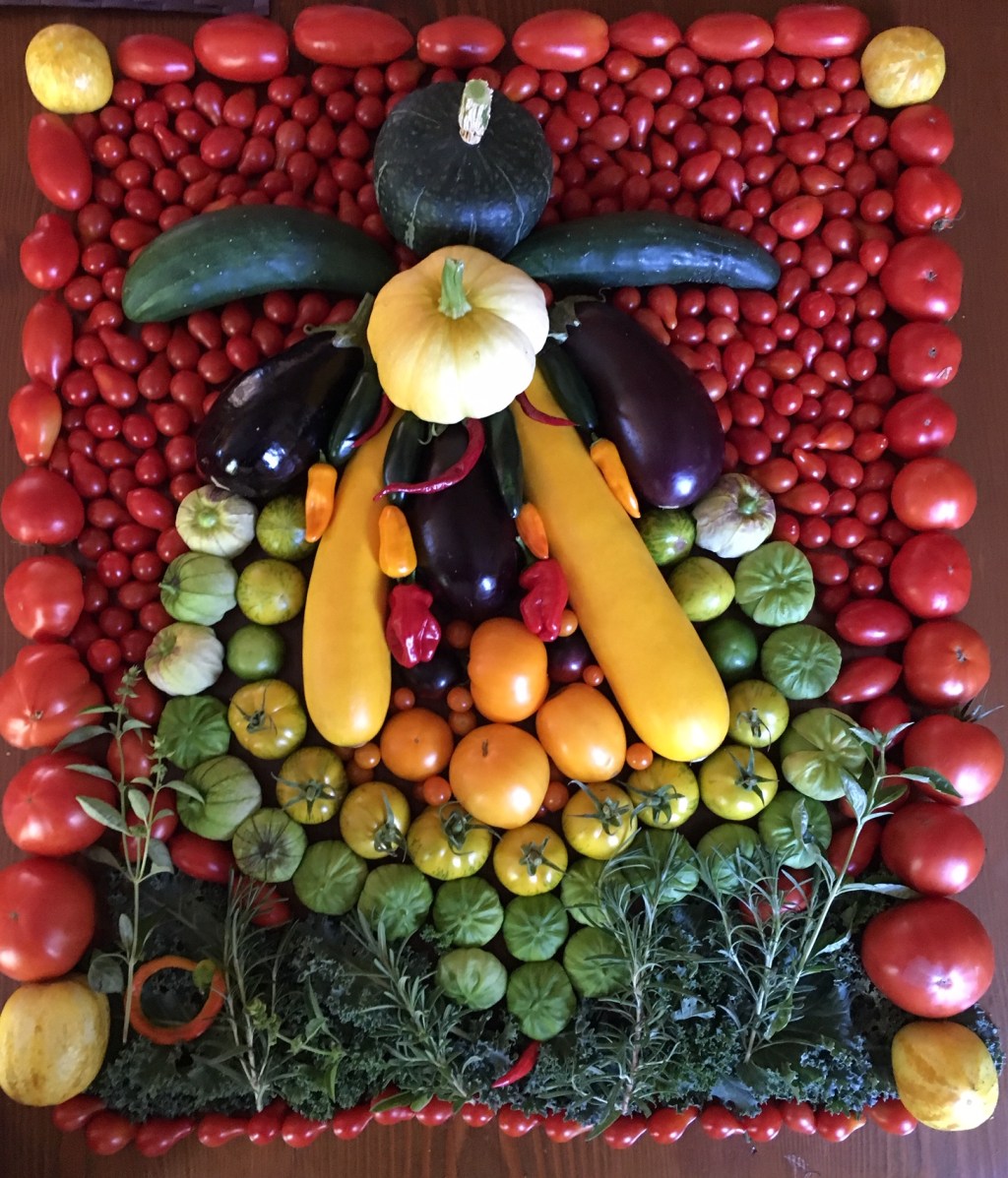
    When life gives you an abundance of tomatoes, make art. Photo, and vegetable art, by Nancy Lee.

    When my parents moved into their current seaside apartment, Dad gave up starting his own plants. Now I donate a plant or two, some of which I get the side-eye for (Green Zebra, Big Yellow, Indigo Cherry or Roma) as he prefers the basic round red tomatoes you can slice and put on a sandwich. He also buys a plant from the local nursery, since my garden tomatoes don’t seem to flourish as much in the ocean breeze as in the Pemby heat.

    As I write this a week after planting, most of my seedlings are starting to pop up, and I expect we’ll have another bumper crop. I have a heavy heart though, as Dad isn’t doing well, and likely won’t be here to enjoy tomatoes this summer. I will always be thankful for all you taught me Dad, and every time I eat a warm tomato fresh from the vine, especially the round red ones, I will think of you.

    You’ll always be #1 to me.