Tag: kera willis

  • Plant medicine: wildcrafting Balm of Gilead

    Plant medicine: wildcrafting Balm of Gilead

    IMG_2019

    “What’s this?” asked my clutter-resistant husband, observing the giant mason jar of oily plant matter on the counter.

    “Ohh, it’s medicine! It’s called Balm of Gilead,” I explained.

    “Oh. But what is it?”

    “Cottonwood tips in oil.”

    “Hmm. And what’s it good for treating?” he asked, in an impressively neutral manner, eyes scanning to the brand new bottle of olive oil next to the stove that was now suddenly, dramatically, near-empty.

    IMG_2023

    I reamed off a list of benefits from Balm of Gilead, the old herbal remedy – that I’d just copied out carefully into my new Plant Allies notebook – using information I gleaned from Natalie Rousseau’s blog. The resinous buds are rich in salicin which your body converts to salicylic acid, the active ingredient in aspirin. Good for sore muscles, rheumatic conditions, simple wound healing, as an expectorant chest rub to treat a boggy spring chest cold. Bees also use the resin to protect their hives.

    “Plus,” I enthused, “it’s helping me be more in tune with this place, with the seasons, and what’s outside our door.” He’s knows that “tuning in to the deeper rhythms” is kind of my jam right now, so, even though I could see his brain calculating the cost per millilitre of this little experiment, as compared to the cost per unit of a bottle of generic aspirin tablets, as weighed against the likelihood of me ever 1. completing this project and 2. treating anything with it, he nodded quietly, and put the jar back on the counter.

    Since moving to Pemberton from the land of eucalypts and snow gums, I had acquired the habit of thinking that black cottonwood (Populus balsamifera ssp.) are kind of junk trees – the wood is too wet to burn well, the snowfall of the seeds in May wreak havoc on friends’ allergies, and the branches crash to the ground, making them kind of hazardous to live directly under under. Even though wonderful plant mentors like Evelyn Coggins, Dawn Johnson and Connie Sobchak have offered me other ways of thinking about cottonwood, thanks to their contributions to The Wellness Almanac – great bird habitat! good for erosion prevention! great shade in a sweltering Pemberton summer! a beautiful scent! a medicine! – those attributes felt like supplementary prizes, making up for basic deficiencies in character.

    Then, in February, I joined Kera Willis and Guliz Unlu for an all-day workshop, offered through Mountain Horse School,Lightning Seeds: Opening the Gateway of What’s Possible.” The hook had been set, when Kera asked:

    What happens when we invite natural rhythms, cycles and energies to help us create the changes we wish to see, in both ourselves and the wider world?

    What if we could get out of our own way?

    What if we could remember ourselves into a state of embedded belonging within the natural world?

    “In the same way a lightning strike may ignite an instant blaze or slow burn that smoulders for months, these awarenesses and experiences may take root eagerly within us, or they may take months (or even years!) to percolate down through our soil,” wrote Kera.

    Befriending my tree neighbours has been an outcome with a long slow germination. First there was ignorance, curiosity, longing, admiration of those with more knowing. Years of that.

    IMG_0934
    Lightning Seeds beneath a  big old cottonwood. Photo courtesy Kera Willis/Guliz Unlu.
    IMG_0948
    Besa. Photo courtesy Kera Willis/Guliz Unlu

    Then, facilitated by Kera and Guliz, a group of us were invited to stand in the crunching snow in the shelter of a cottonwood and consider: what is the smell of lighting? what is the sensation of green? what secret desire might we share with a horse, a tree, a non-verbal witness? How might be hold ourselves if we courted wonder, if we invited animals to approach us, instead of steam-rolling our way into the thick of things, without waiting, without listening, without receiving?

    We ended our explorations at the mixing table, hands-on, pouring melted beeswax and cottonwood oil into containers, inhaling the aroma. Connecting with our senses. Relating.

    IMG_0960
    Photo courtesy Kera Willis/Guliz Unlu
    IMG_0964
    Photo courtesy Kera Willis/Guliz Unlu

    Percolate.

    A month later, on the first day of spring break, I found myself at the base of a massive cottonwood that grows beside the creek behind my house. I wouldn’t have known it was a cottonwood. But I was sniffing around the ground like a truffle pig, and when I found dropped branches with the tell-tale resinous buds (quick sniff for confirmation, month-old memory of sitting at Kera’s table still fresh), I gazed up, to locate the source. Oh. There she is. Wow. Your majesty. I couldn’t help but bow. Her crown was stunning. So different from the conical tops of the Douglas-fir and red cedar that have filled my winter days.

    IMG_1868

    I picked the buds from winter-fallen branches, taking in the scent, and I kind of chatted away to the tree. First, I acknowledged her presence. Big step. I’ve walked by plenty of times, head in my own thoughts, brushing by like strangers. So we began the dance of becoming friends. I accepted her, without assessing her worthiness, just as I do when I become friends with someone. And I offered myself as a potential friend, and complimented her on her lovely qualities – like the fact that the branches she drops in winter storms are rich with buds that are full of medicine for spring coughs, muscle aches and pains, wound healing. I accepted the offering.

    She’s a local here, (a coastal dweller, her kin are native to western North America) and the flood plain is her habitat – she can take root in pure sand or gravel along riverbanks, and absorbs water through her roots to help control flooding.

    black-cottonwood

    I’d brought the wee lad with me, beckoning him outside with the promise of a “creek patrol.” I had showed him Natalie’s blog post, with her step by step photo instructions of making a poplar salve, and explained what I was wanting to do. I pulled out my little jar of salve from February and we both inhaled it. He absorbed it all quietly, then ran to find a basket for me, and his raspberry picking container (yogurt container with string to hang around the neck) from the bottom drawer.

    IMG_1869

    As I plucked the buds from fallen branches he hustled back and forth between the creek and mother tree pouring water on it as “an offering.” Also leaving branches against its trunk in case it felt compelled to be a Fort anytime soon. It has been almost a year since we last talked about the idea of offering thanks to the trees and living things around us – and maybe we owe it to Wild Kratts, but he’s bought into that idea completely.

    (Cut to last night’s first fire, with deadfall we collected from the forest floor.

    Dad: “trees are so awesome because they give us firewood!”

    Boy: “No, trees are awesome because they give us oxygen. That’s more important than fire wood. If you don’t have oxygen, you can’t LIVE!”)

    IMG_1872
    Making offering. Moss, dirt, creek water.

    This is the seed I want to plant in his heart, I thought, as I was collecting buds from the forest floor : there is so much abundance here as long as we remember to acknowledge and give thanks and give something in return. This is the dawning that is, at last, awakening in me.

    The smell of cottonwood resin, which I found kind of medicinal and stenchy in February, is now something I inhale with intention and gladness. (Especially given that my hands are covered with it, right now, after I opened the lid of my brewing jar to see how things were looking. Word to the wise: when they say, “only fill your jar 3/4 full, because the buds will swell”, they mean it. Oh grasshopper. So much to learn.)

    Now that I have begun to enter into relationship with that great tree, I see her – from my window, out in the yard, walking the creek – all the time, and it doesn’t make sense to not nod in greeting. After all, we’re friends. Even if I never use the oil, medicinally, some “medicine” has been gained, in this, small glimpse at the significance of the phrase I have heard my Lil’wat neighbours use: all my relations.

    IMG_2020
    As explosions go, things could have been worse.


    IMG_2022
    Add to grocery list: olive oil.

    Balm of Gilead

    Local clinical herbalist, Evelyn Coggins says you can make Balm of Gilead as follows:

    Using a ratio of one part buds to 3 parts vegetable oil (I use olive oil), soak the buds for at least three weeks, stirring gently once a day to expose all bud surface areas to the solvent.

    I use 500 ml canning jars and cover the tops with paper towel secured with canning rings. This prevents stuff from falling into your oil but also allows the moisture from the buds to escape. Keep the oil in a warm place (in the oven with the oven light on) to help gently dissolve the resins into the oil.

    When your soaking is complete, allow the jars to sit at room temperature overnight then strain out the buds. Let the oil sit covered with a clean tea towel for another 24 hours at room temperature and then decant it into jars, cover tightly, label and store in a dark place.

    You can apply it to sore spots as is or mix it with other infused oils and essential oils, add some melted beeswax and presto: an absolutely fabulous homemade version of “Tiger Balm”.


  • Old Fashioned Egg Nog

    Old Fashioned Egg Nog

    I grew up in rural Ontario, and every New Years Eve my family and I would drive 3 miles down our snowed-in gravel road to the farm of Joanne Cowling. Having come to Canada from England many years earlier, Joanne kept her meticulous British accent and a series of beautifully maintained gardens, complete with goats, sheep, pigs, geese, ‘chooks’ (chickens) and a pony named Sandman. Upon entering the red brick farm house my brother and I would remove our winter clothes and make a beeline for the kitchen where Joanne would ladle out a hand-thrown clay goblet of homemade egg nog for each of us. As I sipped its heady creamy goodness, I always wondered what made the adults laugh so loud as they drank theirs. (I suppose I did not see the brandy making its way from goblet to goblet, how conversation slipped more easily in its presence). Then my brother and I would weave between the legs of neighbours to get to the large table that was laid out with hundreds of Joanne’s famous hors d’ourves: crab wrapped in filo pastry, thin slices of marinated beef tongue, smoked salmon sprinkled with capers, warm brie cheese, and Christmas cookies cut into the shapes of animals, decorated with fancy icing and tiny silver balls. But in the collage of these most delicious morsels, it is the egg nog that I remember most; that rich impossible creaminess.
    About 10 years ago, through a series of arm wrestles, afternoon coffees, and barn chore trades, my mom finally convinced Joanne to write her recipe down, and the ‘nog became part of our family tradition. Every year when I go home for Christmas there is the requisite jug of thick, creamy (and quite boozy) ‘nog chilling in a snowdrift outside the back door.
    Over the years I’ve sampled many attempts at the enigma that is egg nog. And I have to tell you that nothing, and I mean NOTHING has come close to the velvety indulgence of this homemade ‘nog. It takes a little bit of time and effort, a little bit of coaxing and folding and stirring and chilling. But the results are worth it: a rich, milkshake-thick ‘nog, meant to be sipped, savoured, and shared- or stirred into your morning coffee.

    Recently, concern had been expressed over the consumption of raw eggs (which are essential to traditional egg nog’s frothy texture) because of the possibility of exposure to Salmonella bacteria.
    The Canadian Food Inspection Agency states that “Although Salmonella is rarely found in eggs in Canada… foods made from raw or lightly cooked eggs may be harmful to vulnerable people such as young children, the elderly, pregnant women and people with weak immune systems.” (A study conducted by the USDA in 2002 showed that only one in every 30,000 eggs in the national food system was contaminated with Salmonella bacteria).
    In quest of an opinion closer to home, I visited Trout Lake farmers market and talked to vendors selling local eggs. “An egg is an egg.” One farmer told me. “I’m a big believer in cooked food. But I’ve got a friend who gulps them down raw all the time, and never seems to have a problem.”
    “The big thing is to know your farmer” another told me, restating the mantra of the local food movement. “You want to know that the flock has no history of salmonella, and that the eggs have been properly washed and stored.” Eggshells themselves form a hermetic seal, which means they are impervious to contamination once they have been laid, unless the shell has been cracked or compromised. So when sourcing eggs for this recipe, choose ones with shells that are clean, uniform, and unbroken, that have been refrigerated as soon as possible after laying, and that are not past the best before date. (If 3141194799_9e84cca519_zyou’ve bought undated eggs from a local farmer, use them 3-4 weeks after purchasing, and don’t be afraid to ask if he or she ever eats them raw.) If you want to be extra cautious you can always buy cartons of pasteurized egg yolks and whites from any large grocery store. I personally prefer the full-bodied taste of eggs from organic free-run hens, and believe that chickens who’ve had a chance to scratch in the dirt and get splashed with the occasional raindrop lay healthier, more nutrient-rich eggs. I also like knowing the name of the person who hands me my carton, rather than selecting one from the cold glare of a supermarket display case.                         Whichever source of eggs you choose, after you’ve whipped, mixed and folded a batch of this incredible egg nog into being, take a moment to send a few thoughts to the chickens that have made all of this possible. Then take a sip. Let the holidays begin!


    Old Fashioned Egg Nog

    Makes approx. 2 litres

    I find it easiest to separate eggs by cracking the whole egg into the palm of a clean hand, and then letting the white drain out between my fingers. You can also use an egg separating tool, or pour the yolk from shell to shell until all the white has drained away. Be careful not to get any yolk in with the whites, or they will not whip as well.

    If you wish to make a non-alcoholic ‘nog, substitute 1 ½ cups whole milk and 1 tsp vanilla in place of the brandy or rum.

    10 Egg Yolks
    3 1/2 cups white sugar
    1 1/2 cups Brandy or Rum
    10 egg whites
    1 litre whipping cream
    ½ tsp fresh grated nutmeg

    Put a bowl in the freezer to chill for making the whipped cream.

    Whip the yolks together with the sugar using an electric mixer until they are light in colour and a consistency similar to buttercream.

    Add the alcohol a little at a time, mixing all the while. Continue to mix until all the sugar has lost its granular texture.

    In a clean stainless, ceramic, glass or copper bowl, whip the egg whites until they form stiff peaks. Room temperature whites whip best. Fold the egg whites into the yolk/sugar/alcohol mixture.

    Whip the cream in the bowl that has cooled in the freezer until it is stiff. Gently fold it into the ‘nog along with the grated nutmeg.

    Store in the freezer for a milkshake-like consistency, as the alcohol will keep the ‘nog from freezing. Or keep refrigerated. Either way, the ‘nog is better if allowed a few hours for the flavours to mingle. Stir before pouring, and grate additional nutmeg over the top of each glass before serving. Enjoy!

    *Author’s note: this article originally appeared in Edible Vancouver’s Winter 2011 issue, but as the online edition is no longer available in its entirety, I though it was worth a repost. 🙂

  • Wildflower Gummies!

    Wildflower Gummies!


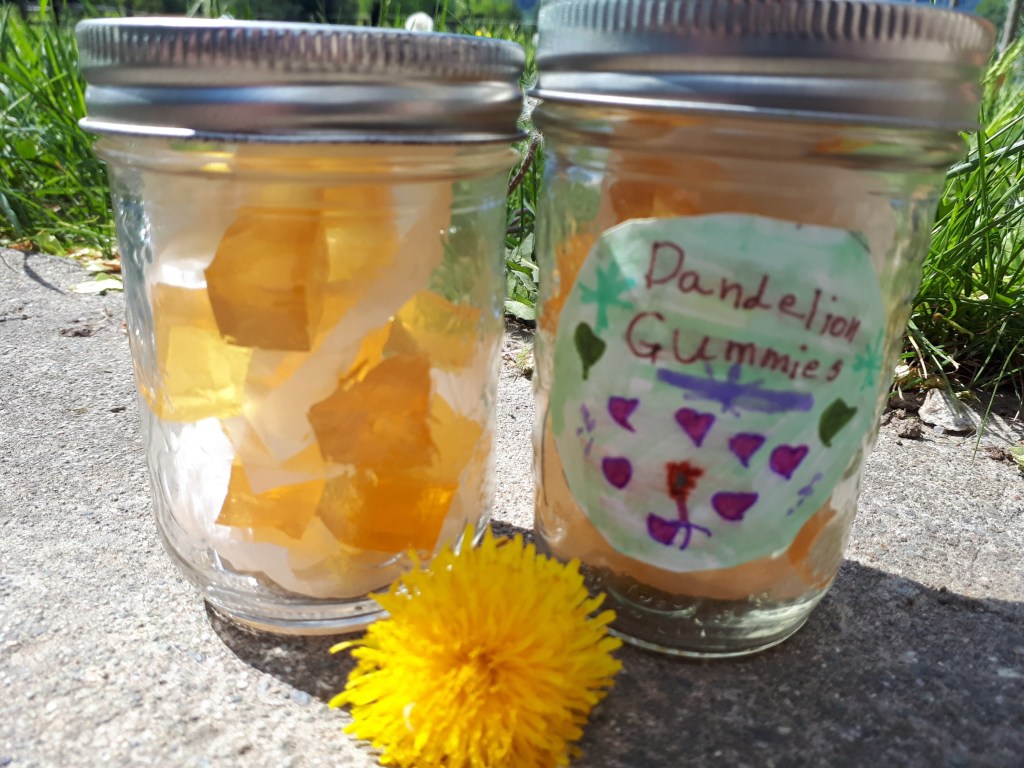
    20180509_1701241On May 11, I hosted a camp where we were supposed to make dandelion jelly. I had all these beautiful ideas in my head about the kids picking a huge bowl of blossoms out in the back field with the bees and other pollinators, their, fingers becoming stained yellow with pollen… how romantic. Of course, this is not how it happened in real life.
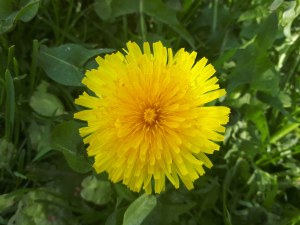
    “Jelly, what’s that?” one of the girls asked.

    “Well, it’s like jam, except there are no chunks in it, and we can make it from flowers!”

    “THAT SOUNDS GROSS!!” They replied in chorus. “EWWWW! WE ARE NOT MAKING THAT!! DISGUSTING!!”

    Well, that stumped me. For a moment.

    “Wait… we could make dandelion GUMMIES. Would that be better?”

    “YES!!” It was unanimous. GUMMIES were obviously WAY better than jelly.

    While we were waiting for our gummies to set in the freezer, we went outside and picked dandelions in the front yard. I showed the girls something my dad taught me when I was a little kid: that if you pick the largest dandelion stem you can find and take off its flower, it makes a noise like a kazoo! It takes a bit of patience to find the right stem, and sometimes you have to break it shorter and shorter before it will start to make  noise. It’s some kind of magic that happens when the dandelion milk in the bottom of the stem starts to vibrate, so it helps to have a juicy one! Two of the girls got bored and wandered away to play tag with Vinnie the sheep. But Avery was very excited about playing dandelions. “This is the best day of my life!” she exclaimed. “Now I can annoy everyone FOREVER!”


    20180511_142337
    Our gummies after being cut into bite sized morsels!

    As we cut up, divided up and packaged our very own homemade dandelion gummies, I realized this gummie making is an incredible way to get even the most squeamish of kids interested in the world that is growing all around them. If seasonal edible flower gummies can lead them to being able to identify a few species growing in their own back yard, then they learn to have a relationship with that particular plant, and that relationship can be a gateway to curiosity. In what other ways that plant can be used? What kind of environment does it like to grow in? Knowing a single plant intimately is enough to make the natural world come alive. I bet that even from reading this post you will notice dandelions more. Your awareness of them will become sharper, more open. And this kind of curiosity- this relatedness- is precious. It leads to a sense of belonging to the maze of green abundant life that exists outside our windows, the same way that knowing a friend in a crowd makes being amongst that many strangers less overwhelming. So if all we need is a few cups of cane sugar to kindle this relationship, then so be it!

    20180511_1432542
    Posing with our finished product!

    And don’t worry, I am going to give you recipes. I am also going to acknowledge I am leading you on a little, as dandelion season is almost completely over in Pemby. Don’t worry, you can use any edible fragrant flower to make your gummies. That means, lilacs = yes. Peonies = yes. And those wild roses that are just starting to bloom? Yes, you can use those too!!

    First, you need to make a flower syrup. I make mine in big batches, as I like to be able to keep some to make into summer drinks (a few tbsp and a bit of mineral water over ice on a hot day = heavenly). Please note that the syrup recipe is not intended to be canned, as the proportions are not tested for safety. So please keep your syrups in the fridge! I am confident you will use them up before they have a chance to go bad. This recipe makes about 6c of syrup, which is quite a lot. You can always halve or quarter the amounts if you want to make a smaller batch.

    Wildflower Syrup:20180509_165901

    2c flower petals

    4c cane sugar

    5c water

    1 organic lemon, sliced

    1. Prepare your flowers. It is best to harvest them in full sun at the height of the day. (From noon to 3 pm.) That way the flowers will retain the most potency and fragrance. Whichever kind of flower you are using, do your best to use only the petals. (In the case of dandelions, this means removing the green base of the flower.) Use flowers as close as you can to the time of harvest, as they will lose potency as soon as they are picked.
    2. Bring the water to a boil and add the cane sugar and stir until dissolved.
    3. Add flower petals and sliced lemon and cover your pot or bowl with a tea towel or cheesecloth to keep out flies, and leave out at room temperature to infuse for 2-4 days, stirring once per day. You want to optimize the length of your infusion without your syrup starting to ferment. If you see lots of bubbles or you are happy with the flavour, it’s time to move onto step 4…
    4. Strain and bottle your syrup. Enjoy!


    Wildflower Gummies 20180511_1440321

    1c flower syrup

    3pkj (3tbsp) gelatin*

    1. Find a mould for your gummies. I used the bottom of a tupperware container and cut them into squares, but you could get super creative here. You don’t need parchment or non stick spray or anything.
    2. Heat your flower syrup until just before boiling. Separate 1/4 -1/2 c of syrup and shake or whisk the Gelatin into it. (I used a small Mason jar and shook it to combine the gelatin, then strained out the residual lumps using a tea strainer as I feel you get less foam this way.)
    3. Add the gelatin mix to the rest of your syrup, stir well to combine, then pour it into your mould. If foam has accumulated on top of your gummy, skim it off with a spoon.
    4. Let your gummies set. I put mine in the freezer, but if you are not in such a rush you can just leave them out.
    5. To get your gummy out of the mould, dip your mould into warm water for a few minutes (being careful not to get water on your gummy). Then run a knife around the edge of your mould and you should be able to pull it right out. Don’t be afraid to use your fingers to pull it out of the mould- you won’t wreck it.
    6. Now you can cut your gummy into shapes with a sharp knife or cookie cutter. You could also roll them in sugar and leave them out for a few days is you want a chewier texture. I was happy with mine as they were as I found them already quite sweet. If you don’t go the additional sugar method, I would keep your gummies in the fridge as they do have quite a bit of moisture in them and will mould if they are not devoured within the first few days. Enjoy!

    *I used Knox Gelatin which comes pre-portioned in little paper packages, but I saw Stay Wild has boxed gelatin that is also gluten free!

  • Taking the Sting

    Taking the Sting

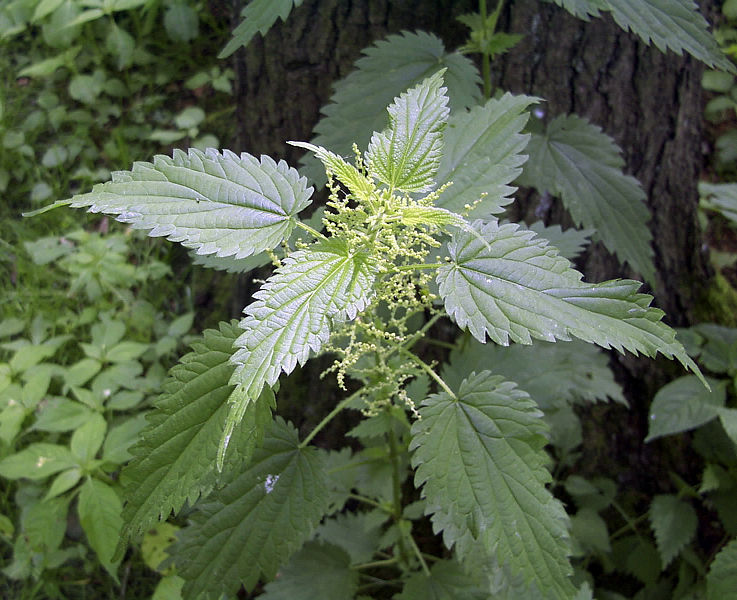
    I am one of those weird and fantastic people who get really excited about the plants nobody likes. The wild ones, the weeds. The FLOWERS OF TREES. The pesky dandelions old men spend hours picking out of their lawns. The patch of chickweed I found growing in the horse pasture… and made into lip balm and a series of green juices that impressed even my mother.

    I want to share a little about a spiky, prickly friend of mine, otherwise known as Stinging Nettle. Nettle is the star of the show right now. When I filmed the video I was fresh from two hours of editing a manuscript, and an hour of harvesting Nettle tops. The result? One part medicinal plant talk, two parts deep restorative ecology of the human ecosystem, and one part neighbour’s chainsaw as background noise. You can’t get more ‘weedy’ then that!


  • Burn Your Plan

    Burn Your Plan

    A very long time ago, I passed a man on a couch at Burning Man Festival. It was so late it was almost morning, and the sun had just begun to paint the edges of the mountains with the faintest of light. The man struck up a conversation. And as I warmed my hands at the small fire he had lit at the edge of the road, he told me something that has come back to haunt me more times then I would like to admit.

    “You know” he said, hanging in the pause to build up the effect, “sometimes you have to plan your burn… and then burn your plan.” 

    In this rural, beautiful, messy, animal filled life- where some of the beautiful things you want to create never happen because you have to fix fences instead, and you show up at the grocery store wearing boots covered in muck no matter how hard you try to remember to change them- burning your plan is inevitable. And actually, I think it makes for more love filled creations most of the time. In being willing to let the universe lead the dance every now and then, we make space for magic to happen. And when we have magic, well then anything is possible. We do need a bit of a plan to start with, otherwise we would never get out of bed in the morning, a container and a direction in which to move. But then the more we can be open to running with what happens in the moment, the more our creations and actions can start to suddenly seem a little bigger than ourselves. And that’s always a good thing.

    I run a horse and nature based teaching business called Mountain Horse School. This past week I ran 4 days of March Break camp for an amazing little group of kids. I was so proud of the design for this camp: I had found the most amazing natural art activities, and had planned everything out as far as two weeks ahead. But then I found I was unable to source one crucial item for each creation. Then the weather was freezing and that changed the plans I had made too, and one of my horses was terribly grumpy, and so I pulled him halfway through camp and let him watch from the bleachers. Given the circumstances, we did the only thing we could: we improvised.

    20180319_131220.jpg
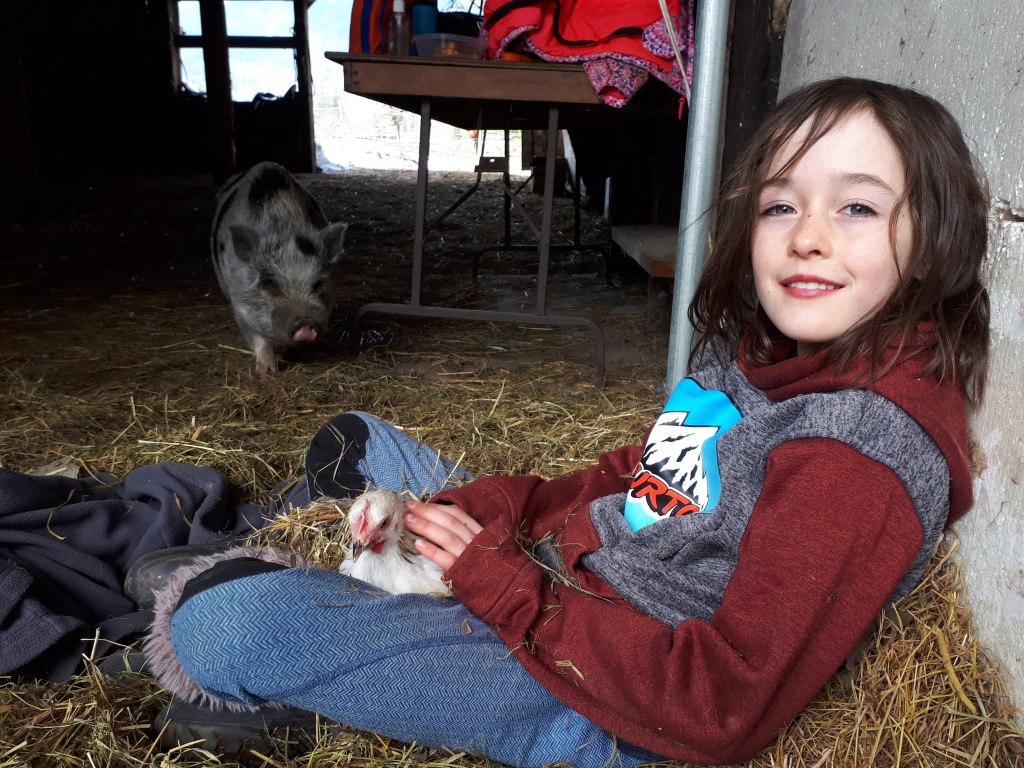
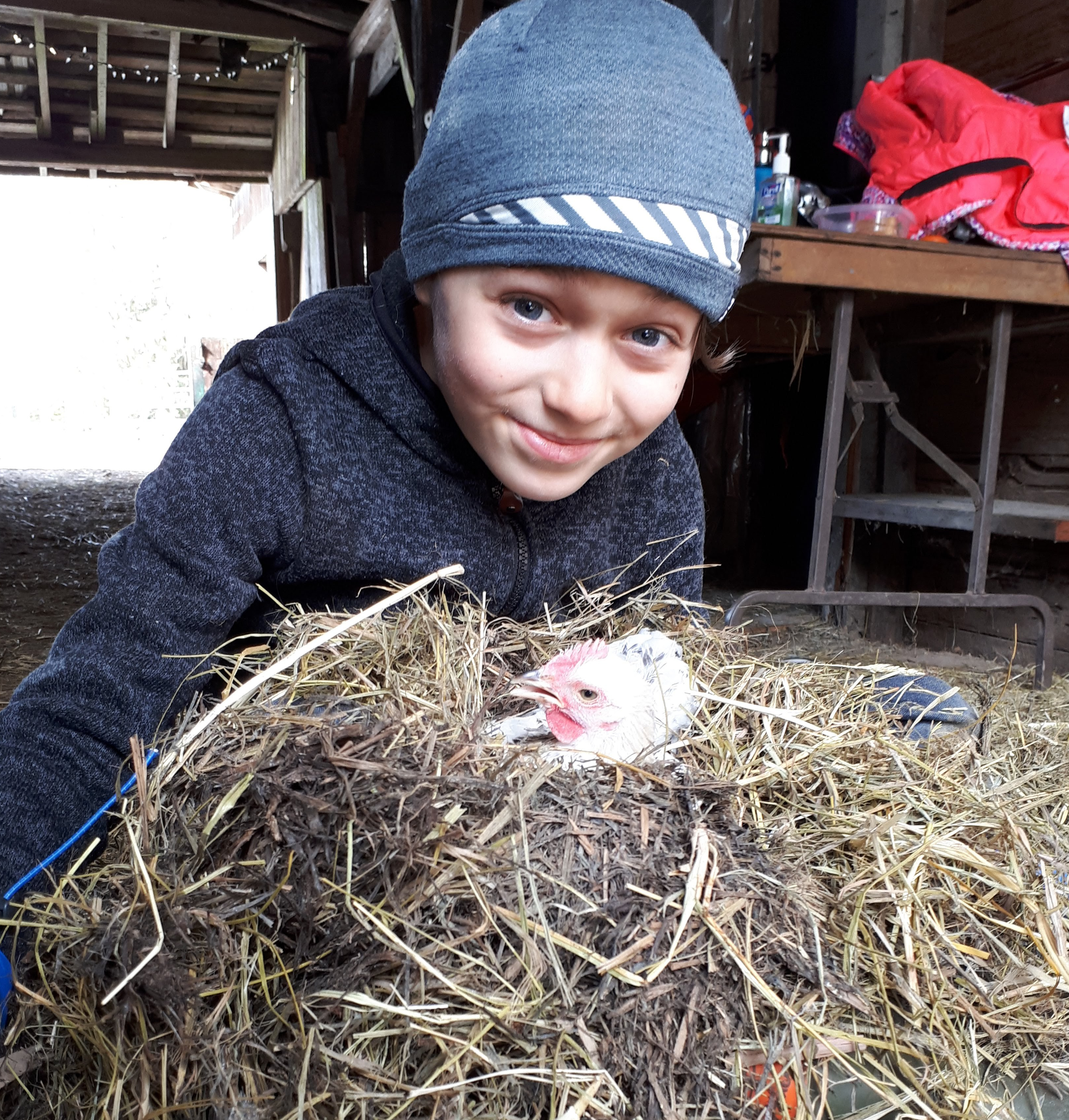
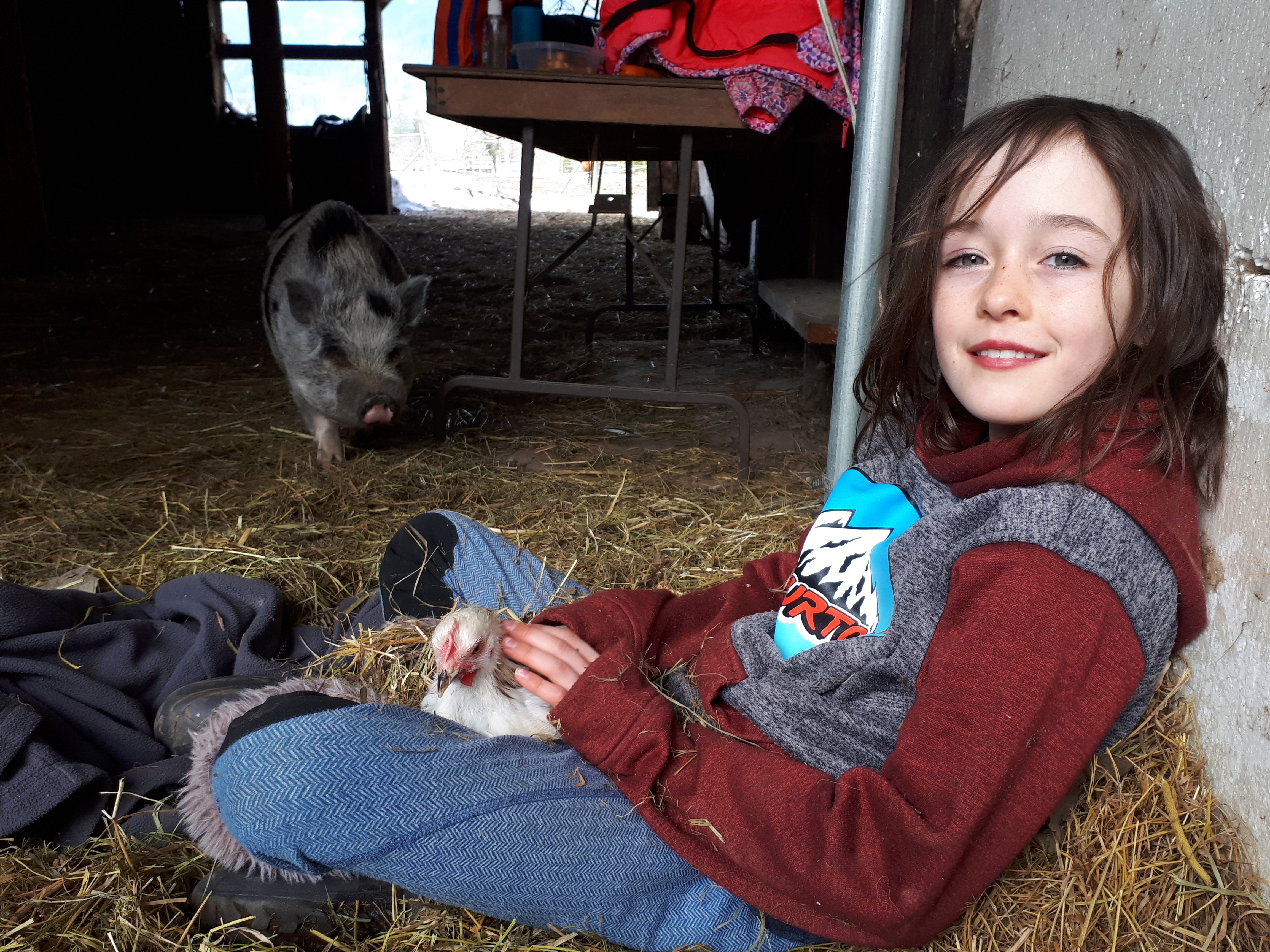
    When things got a little too frantic, we held chickens in our laps and waited until they felt safe enough to close their eyes…

    20180319_131303.jpg

    My newest mare Besa (who is not yet trained to ride and was NOT part of the plan for camp) kept insisting she be included. On the last day as we were getting ready to do horse painting she asked again. I looked at her big black head hanging over the gate, and weighed my options and risks. I was doing something more than that too: I was feeling towards her and towards the empty space between us, to see what might want to happen out of the moment. The look in the mare’s eyes was definitely an invitation.  Ok. I thought. The kids have enough horse sense that if something goes sideways, we will all be able to stay safe. We’ve been studying their behaviour and body language all week, and imagining our way into their thoughts. It might be neat to have them involved in the process of introducing Besa to something new. 

    20180322_140814.jpg
    Juliette introducing Besa to the colour fuchsia.

    Not only did Besa decide it was ok to be painted, she stood in a kind of trance, with a look on her face that I have only seen in horses who are very, very deeply concentrating on the work at hand. She didn’t even shiver her skin when the first wet blue brush touched her skin. And now, two days later, she has not rolled, and the colours shine brightly out from her white coat.


    If you are driving out in the meadows this week and see a black and white horse with a brightly coloured wing, apple, and heart on her side, you are not losing your mind. You are seeing my plan as it has gone up in flames, and the much more beautiful genuine  messy thing that has come in to take its place.


  • Rural Matchmaking

    Rural Matchmaking

    Last week, I filled out an adoption application for an older Dachshund named Sammy who is down somewhere in Surrey BC. I did the paperwork on behalf of my sheep Vinnie, who lacks the opposable thumbs, concentration and linguistic skills to do so. Vinnie loves dogs, but they all think he is a weirdo and run away from him. This Sammy dog apparently loves sheep, but they all think HE is a weirdo and run away from him. Do you see where this is going?

    Sammy is 12 but is in great health and a complete love-bug, the woman who is fostering him told me when I called her. He’s an absolute sweetheart who loves kids and wants to be part of whatever is going on. It seemed as if all I had to do was fill out the required forms and then- as if I was some electronic far-reaching cupid- Sammy and Vinnie would live happily ever after. What I want is beside from the point. At least it’s almost spring, so the strict embargo I have been living under- “NO MORE ANIMALS UNTIL SPRING!!” is almost lifted anyways.

    So I filled out the application, talked to Sammy’s foster mom, then followed up with the rescue organization when I didn’t hear back from them the next day. “We’ve actually received a stack of adoption applications” the woman told me. “We’re just going through them now.”

    I hung up the phone, and put away my ever pressing anxiety that I WAS NOT DOING ENOUGH TO MAKE THIS DOG APPEAR RIGHT NOW!! And told myself that was it; it was now up to the Universe, or God, or whoever it is that makes these sorts of decisions. The real decisions. Like if my sheep will finally get a dog of his very own.

    sammy
    Sammy. ‘Could I be your dog??’
    vinnie datin gpic
    Vinnie. ‘Oh where, oh where oh where might my little dog be?’


    But then yesterday, Vinnie pogo-sticked up to my car as I was leaving for work with an excitement usually reserved only for DOGS! and these words appeared on the screen of my mind:

    “YOU ARE GOING TO GET MY DOG!!!! MY DOG IS COMING!! I AM SO EXCITED!!!!”

    “Vinnie, I’m leaving to go to work.”

    “NO!! YOU ARE GOING TO GET MY DOG!! MY DOG IS COMING!! MY DOG IS COMING!!”

    I got out of my car and put Vinnie back on his side of the fence, and he bounced out after me again. I had the distinct impression he would bounce after me all the way to work. So I put him in his stall for the day and left. The prevailing anxiety that I AM NOT DOING ENOUGH TO GET THE DOG!!! returned and circled my brain like a bird trying to land on the ocean. GET THE DOG GET THE DOG GET THE DOG!!!

    I tried to tune into Sammy but the signal of him had kind of gotten lost, as if my application was sitting under a pile of papers somewhere, or as if there was something important I had left out. Or as if it really WAS out of my hands and that somewhere down there in Surrey the fate of this dog was being decided without me. I actually intended to write this post about something else entirely. But Vinnie BOUNCED onto the screen of my mind and wanted me to tell you HIS story so I shut up and listened.

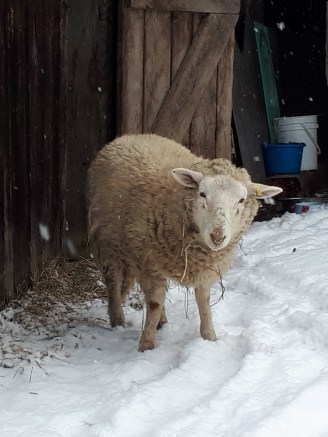
    I found Vinnie on Facebook. An amazing woman named Katie Cowley raised him when his mom rejected him and his brother, and he had a difficult time of it- even more difficult than most bottle babies. He had a really hard time learning how to drink from a bottle and perform other simple sheep-y tasks, like eat grass or make friends. This caused him to be rejected by the flock and instead his companions were dogs. Then his brother died, which caused further alienation. So Vinnie grew up into what my sheep rancher friend Nikki calls a ‘Shog’- an animal with the body of a sheep but the consciousness of a dog. A bit of a misfit. A reject, some might say. To me this makes him special… and perfect.

    When Katie moved from the farm where Vinnie was born to Squamish, she needed a new home for Vinnie. I had just moved to Pemberton with my teaching business Mountain Horse School, and I found Katie’s post for Vinnie on Facebook. (The REAL online dating site for all of us weirdo rural animal matchmakers). I have a very unique collection of animals- whom I call my teaching posse- and together we run kids’ day camps and classes and events and offer relationship based riding lessons and animal/nature/horse based therapy for those with autism, ADHD and other neurodiversities. We even host workshops, classes and sessions for adults too!

    I collect animals with unique stories and experiences that make them especially open to encounters with humans. They are all calm and very grounded, with especially sweet and curious natures- which makes them incredible medicine for someone who is anxious or traumatized, or who wants to savour the feeling of a relationship with a being who offers love more simply and more readily than a human. Often my animals find their way to me via extraordinary means, and when I saw Katie’s post about Vinnie (then unfairly but perhaps accurately called Dumbo) something in me went DING DING DING!! And I knew I would be getting this little sheep.

    Part of my role as lead human in my posse is doing my best to keep each critter not only safe and fed, but happy and fulfilled. I could see that Vinnie was sorely missing having a dog in his life, and not just any dog; a dog that understood him. A dog that could play his game of slow motion virtual head-butting, and fill his dog-deficient neural pathways with bright and shiny love. So if such a dog ‘just happened’ to appear in my Facebook newsfeed, I must do my due diligence as keeper of the posse’s internal and external happiness to make sure this dog arrived at the farm. Right?? Even if such an animal would need to live inside the house with me. (Who am I kidding? My dog-deficient neural pathways could use a dose of bright and shiny love, too.)


    Writers note: Between the time I wrote the text of this piece and the time I got into town to post it (crappy internet being a side effect of rural living) I received a text from the rescue saying that my farm ‘sounds like the ideal environment for a dog like Sammy’ and I should hear back from the woman who is to do the site visit in the next couple of days. So there are a few more hoops to jump through, but it looks like Vinnie is close to getting his DOG!! I will keep you posted. 🙂