Blog

  • If It Ain’t Broke It Will Be

    If It Ain’t Broke It Will Be

    Farming is not for the faint of heart.

    Oh sure, as you drive up the valley and see all those beautiful farms, crops growing, people happily hoeing, tractors making the rounds, it all seem so peaceful and idyllic.

    There is a behind the scenes though.

    All that machinery and the tractors that pull it can pose a mechanical nightmare for farmers. They will most likely blow a gasket when you need them the most. Farming is an occupation that consists of a lot of frustration tempered with an equal amount of patience. There are times, I’m sure, when all of us have wanted to burn it all down.(Metaphorically speaking of course).
    IMG_1359

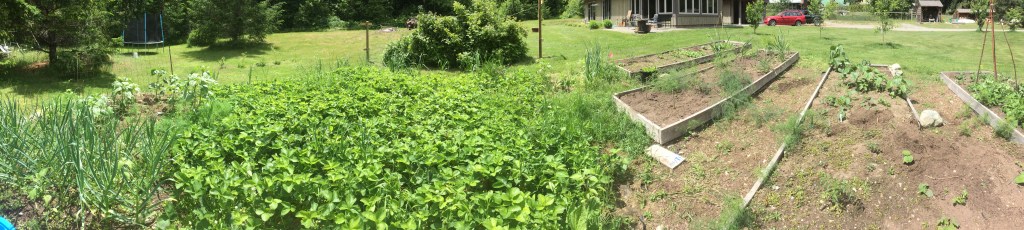
    What can go wrong will go wrong. That seems to be the motto here at Shaw Creek Farms these days. Spring has sprung, summer is almost upon us and we have been faced with one mechanical disaster after another this spring.

    IMG_2027

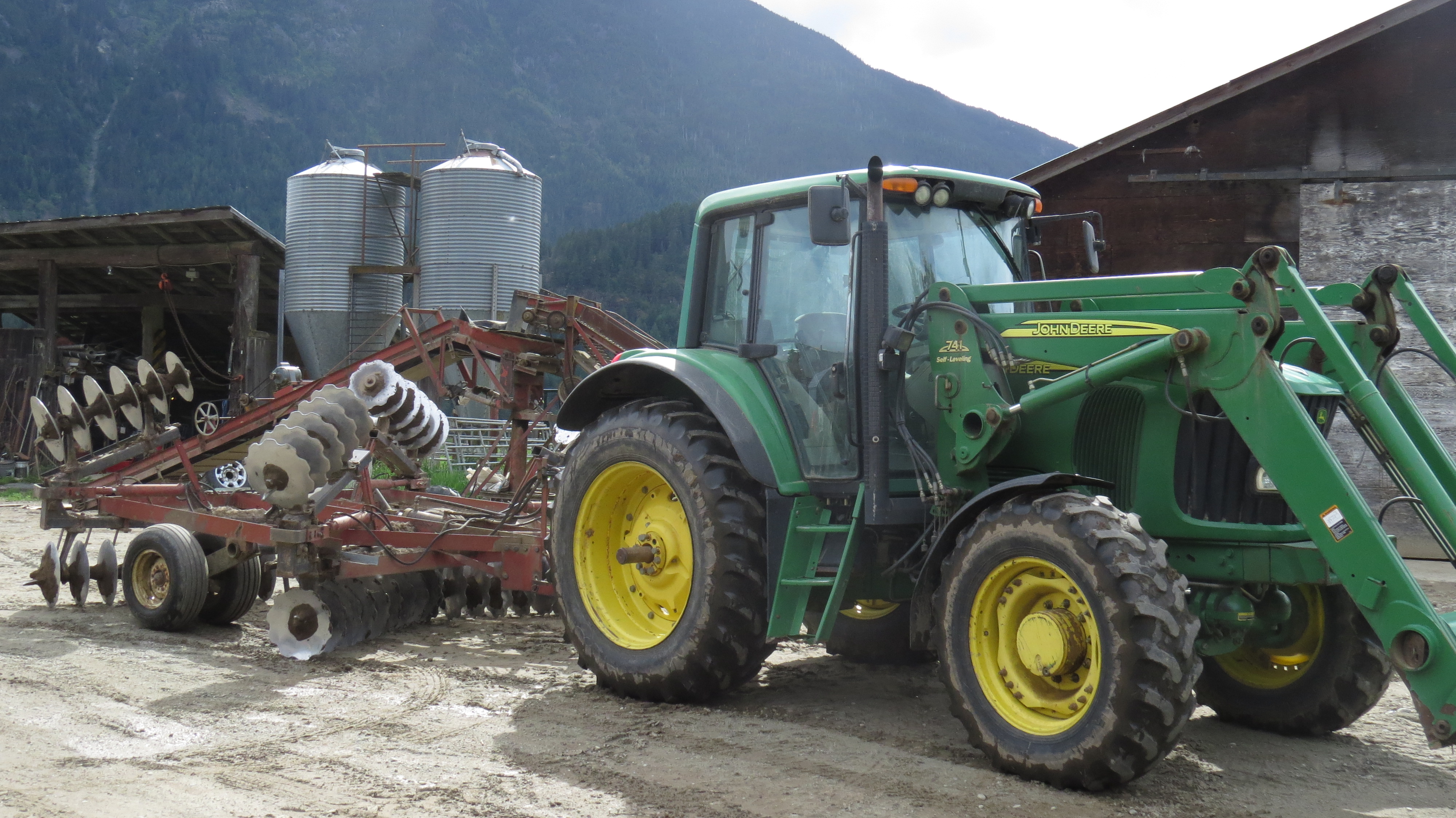
    First it was the tractor. A behemoth of a machine. Needed for damn near every job on the farm. The doohickey that connects the whatsit to the thingamabob broke. That is about as technical as I get. When my husband talks to me about tractor parts I know I should be paying close attention but all I really hear is the teacher’s voice from Charlie Brown. After numerous calls to the John Deere dealer the doohickey was ordered and picked up, in Kamloops, by my son and me.

    IMG_2025

    The rotavator was the next to go. We had two fields left to till when smoke started pouring out of it.  Never a good sign. The parts for this machine are so expensive they will be referred to in this paragraph by $$$$. Another call in to a different dealer followed by emails with photos and the $$$$ was ordered. We have to wait two weeks because, apparently these $$$$ have to come from the ends of the earth.

    IMG_2026

    Next up, the fertilizer spreader. The thingy that wings the fertilizer out onto the ground disintegrated. Need a new one. Call in to John Deere again who then has to call Vicon, maker of said spreader. They then send it to John Deere, who then sends it to us. Thingy picked up and put back on. Spreader winging fertilizer again. But wait… not an hour later and here comes the tractor, backing the spreader into the shop. I know my husband is at the end of his rope because when I ask what’s wrong he silently points to the arm thingy that spins the wingy thingy. Off it comes and into the truck with it he goes. He’s not even calling the dealers now. He’s just heading straight to a neighbour’s farm to see what he’s got. Nope, the one the neighbour has is the wrong one. BUT WAIT. Up on the wall of the neighbour’s shop! There it is, hanging there. The part he needs! Praise be to Thor, God of tractor parts! (It’s got to be him right? He does carry a hammer.)

    IMG_2081

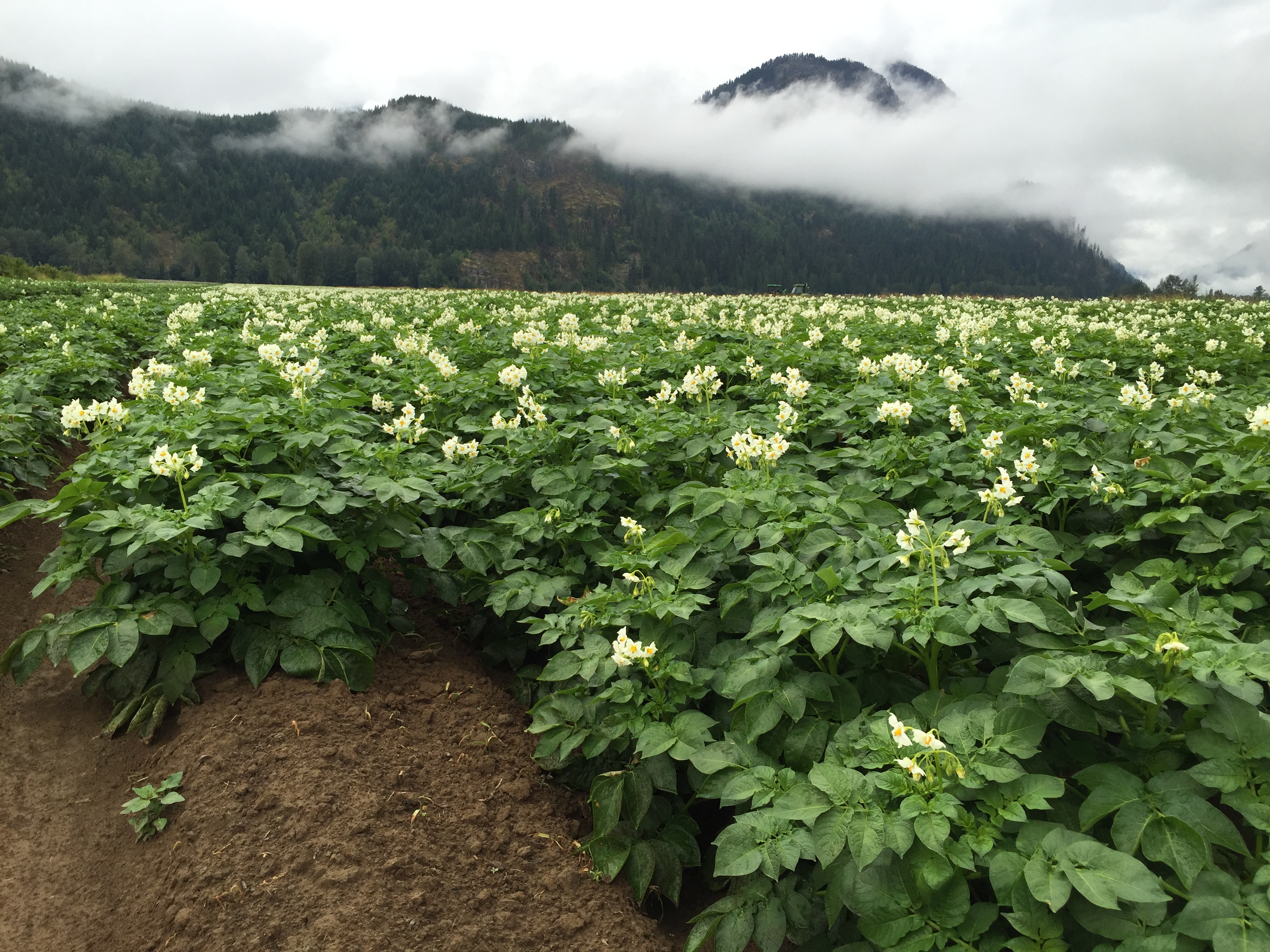
    I really hope our run of bad luck is at an end.( I didn’t even mention the tractor tire that was one lug nut from falling off.) They say bad luck runs in threes. Ours just happen to be multiples of three. We’ll get there, the potatoes will get planted and they will be up out of the ground. Then this ‘springus horriblus’ will be but a memory.

    In the meantime… patience.

    *Michelle Beks is having a hard time getting anything done with her fingers crossed.

  • Worry, not worry

    Worry, not worry

    This year has been a year of worry: worry about a mysterious illness that has been depleting my blood levels and sapping my energy, worry about work and money, worry about my kids—they’re fine, but parenting is perplexing—, worry about climate change and politics and the state of the world, and worry about my livelihood and contribution to the planet. Really? I am worrying about all of this? A friend and mentor calls worry “meditating on sh#t.” Maybe I’ve got it all wrong.

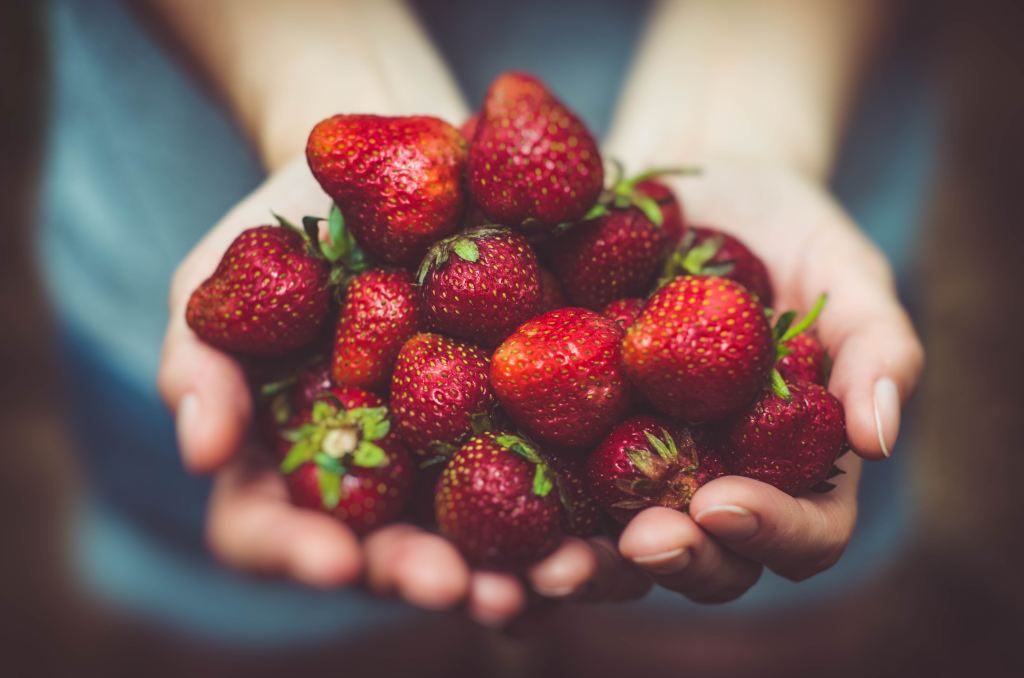
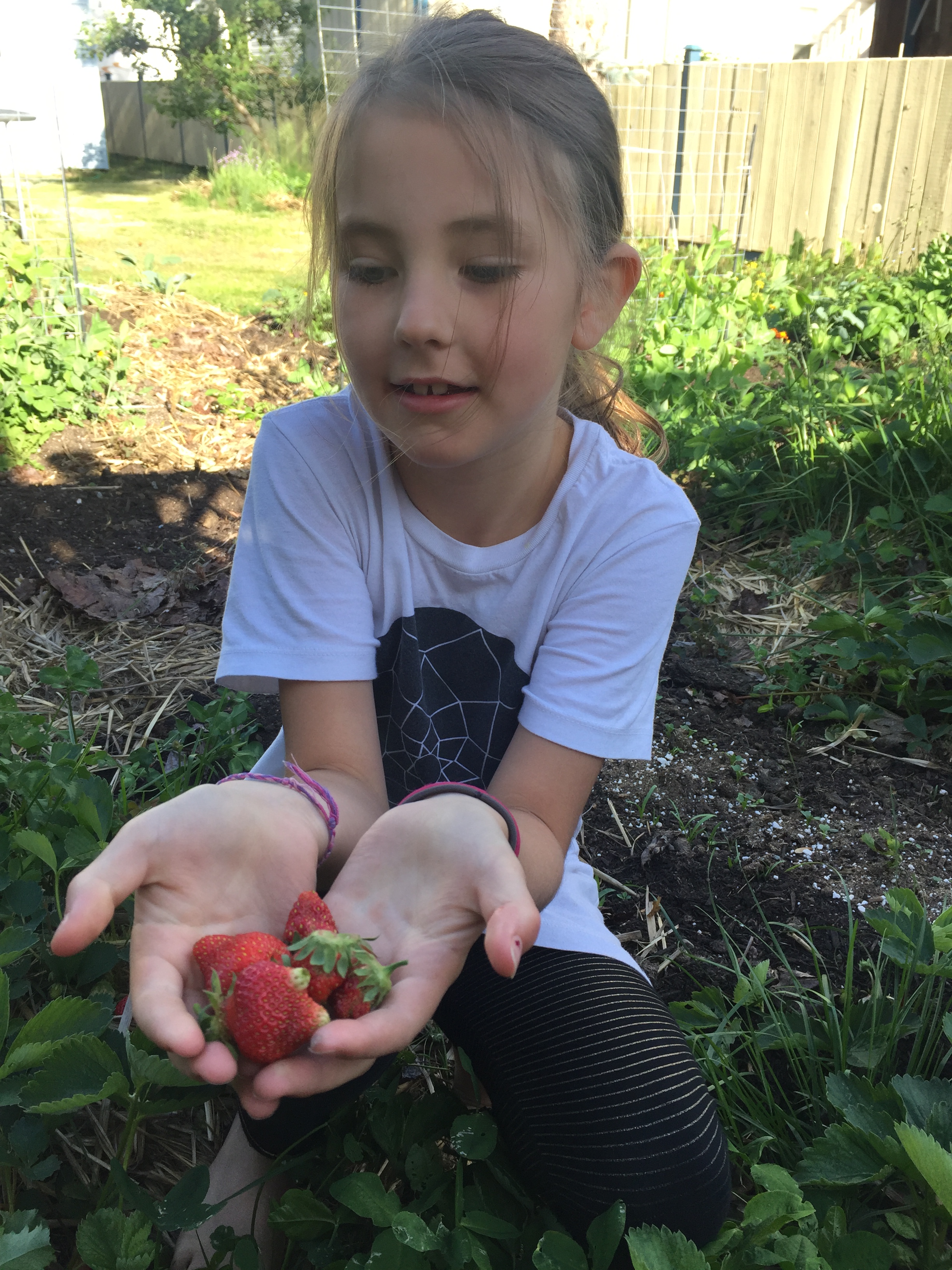
    But, when I’m in my garden, this goes away. There is something perfect about harvesting strawberries with my daughter. We fill our hands until we can’t pick any more, and then—who are we kidding—eat them all before we even stand up out of our crouch. Things are right in the world when she notices that our peas have started to flower, and when she concedes to planting snow peas, in addition to her favourite snap peas, because our dog, Louis, (our other loyal harvester) prefers them.

    strawberries

    All is well in the world when I notice that the blueberry plants are covered in blueberries, the squash have blossoms, the garlics are scaping, the slug-eaten cabbages are bouncing back with vigour after the rain, the soil is buttery soft and black under a layer of mulch from the fall, and there’s an unexpected patch of thyme flowering on a path.

    My peonies went wild this year bursting with excitement when I picked them, and then continuing to explode with petals once inside. I can remember my heart feeling full like that when I met my partner.

    But isn’t it moments like this? Just noticing or tending to the moment in time when everything is fine. The singularity of this okayness.

    Last weekend my partner celebrated a business milestone on the same day that a staff member suffered an enormous, tragic, heart-breaking loss. He couldn’t shake his sadness. “I should be celebrating,” he said, “but this is my worst day in business so far.”

    Life is like that.

    My garden reminds me that we can either celebrate everything—every miraculous seed that germinates, every volunteer tomato or cucumber, every iridescent and sour rhubarb slice, every bite of peppery arugula, every cherry blossom, every furry mint leaf—this is all we get after all. Or we can celebrate nothing. We can wait until everything is lined up and there’s nothing to worry about, but that moment that will never come.

    So, I’ll celebrate knowing it’s all okay just how it is. When I’m worried, all I need to do is return to my garden. It’s so full of life.


  • Cookbook Club to reconvene, after summer hiatus, on September 20, with a freestyle celebration of your own garden

    Cookbook Club to reconvene, after summer hiatus, on September 20, with a freestyle celebration of your own garden

    Cookbook Club goes freestyle.

    Your mission, should you choose to accept it, is to grow your next dish for Cookbook Club’s next gathering, at Stay Wild Natural Health, on Thursday, September 20.

    No specific cookbook needed, when the real recipe for deliciousness is the terroir of this place right here.

    Potluck or preserves-tasting and trading session – let’s celebrate the end of summer, the harvest, and the potential we have in our own backyard to experiment with a zero mile diet.

    It’s a Cookbook Club with no featured cookbook.

    Find your own recipe. Bring copies, so everyone can build out their repertoire.

    Explore Traced Elements and try one of the recipes our contributors have shared.

    Screen Shot 2018-06-14 at 10.11.47 AM

    Pickle or preserve a little something extra, and put it away to share and show offf this September.

    Celebrate an ingredient.

    Enlist a farmer to help you.

    Let’s see what freestyle Cookbook Club dishes out.

    See you in September.

  • Haskaps and Thimbleberries: Our Babies’ First Foods

    Haskaps and Thimbleberries: Our Babies’ First Foods

    Tae's first meal-4

    Our first child was born in March. That summer, I awaited eagerly for one of my favourite berries to ripen, so it could be his first food. Wild growing thimbleberries were just the right timing.

    Well almost.

    His first food ended up being dirt! He had found himself a meal from the forest floor. Later that day, perfectly undigested pieces of twig and dirt contrasted his baby poo.


    A few days later, my big moment of sharing happened. I gave him a piece of thimbleberry, and observed the expression of “What on earth is this sensation!?”

    Just like the dirt, later that day perfectly undigested pieces of thimbleberry moved through his system.

    To this day, he still loves thimbleberries.

    What I love about thimbleberries is that they can only be found freshly picked off the bush, not from the store. They are super bright in colour; rich in nutrients.

    One of the special things my four year old and I do together is go on forest walks, in search of edible berries, a form of connecting to the wonders of nature.

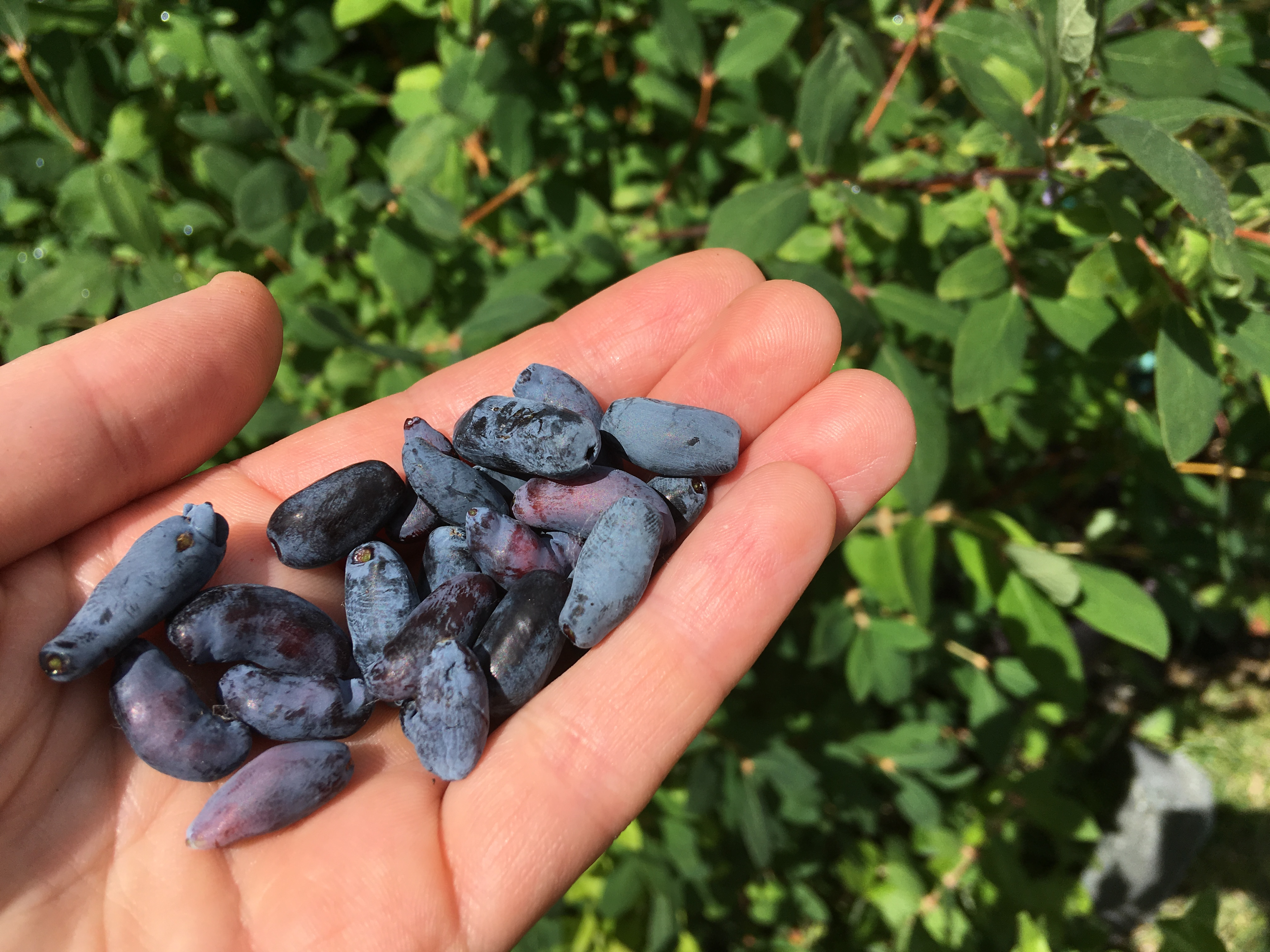
    Our second child, born in November got to enjoy haskaps as one of his first foods.

    Haskap Berries

    Haskaps ripen early, in May. Like thimbleberries, haskaps are vivid in colour; bright in nutrients.

    One of the special things my baby and I do together is sit in the backyard and pick a baby kale leaf or haskap berry and enjoy 🙂 I pre-chew the baby kale leaf, and pop it in his mouth. Big smiles all around 🙂

    Thank you forests, thank you gardens, for such exchanges of radiance.

    Resource for edible berries in BC: http://northernbushcraft.com/berries/
  • The Time is Coming Soon…To Pick the First Ripe Saskatoons!

    The Time is Coming Soon…To Pick the First Ripe Saskatoons!

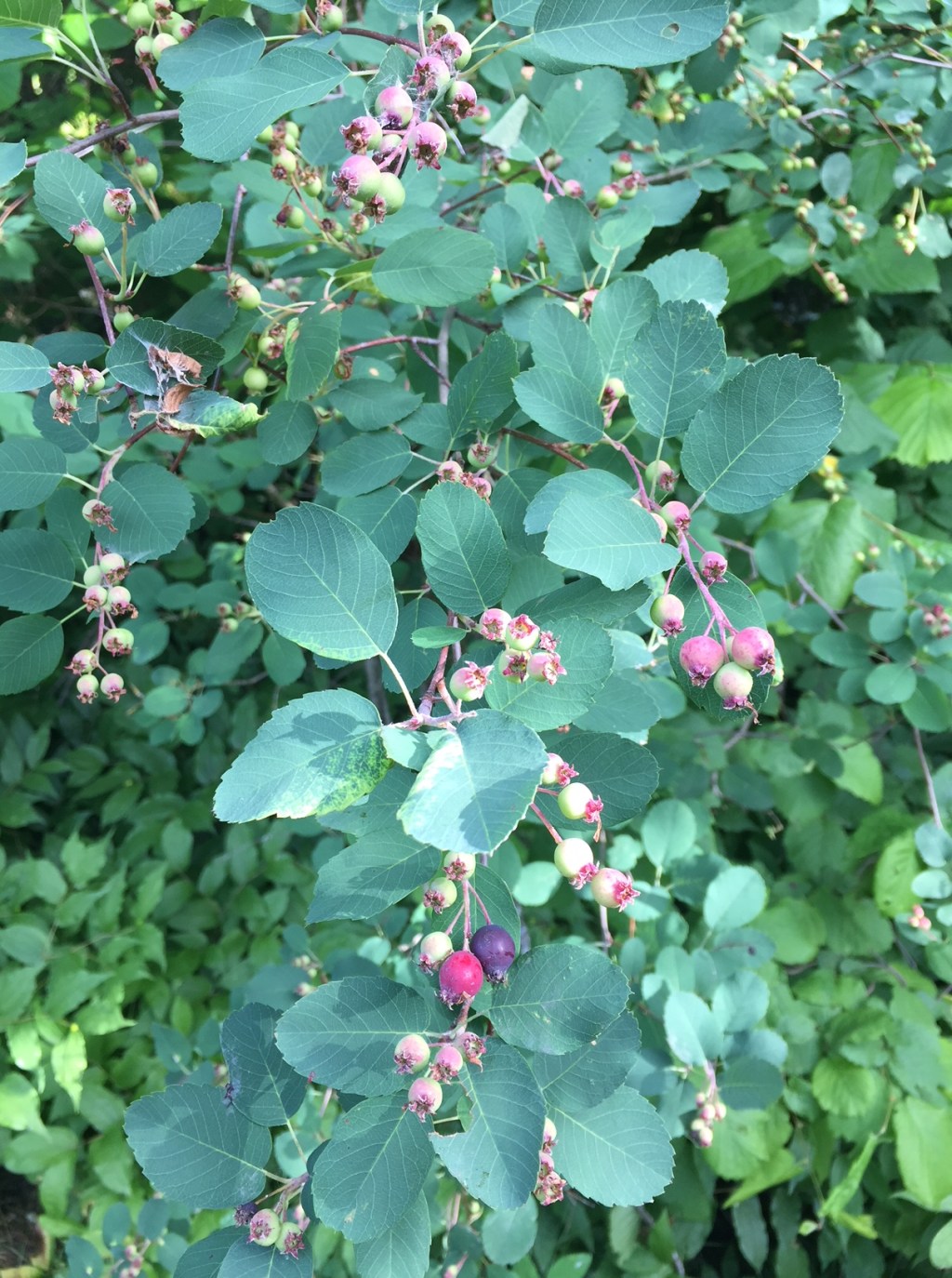
    I never liked saskatoon berries when I moved to Pemberton. What was the fuss about? The little things were grainy and full of seeds. I was not impressed although I knew people who adored them. Years passed, and each year I ignored the little purple berries that grew so plentifully around me. Then one day I looked down in my yard and it was covered in little shrivelled saskatoons. They had dropped off the tree and the sun had dried them out. I popped one in my mouth and the flavour was unexpectedly…fantastic. Like a raisin or currant but better. I scooped up all the berries I could and gobbled them up.

    The next year I purposely dried a few cups of saskatoon berries in a dehydrator and used them in a cracker recipe with rosemary, substituting saskatoons for raisins. Then two years ago I started enjoying the taste of fresh saskatoons. I will now paw through all the trees in my yard like a bear and cram them into my mouth. Yes, my taste buds really have changed. I eagerly anticipate the arrival of these little berries now.

    As a non-gardener (I am pretty much successful with only rhubarb, raspberries, apples, plums and cherries – and possibly parsley and cilantro if I’m lucky) saskatoons are an amazing return on zero investment. No watering, no weeding. My kind of berry!

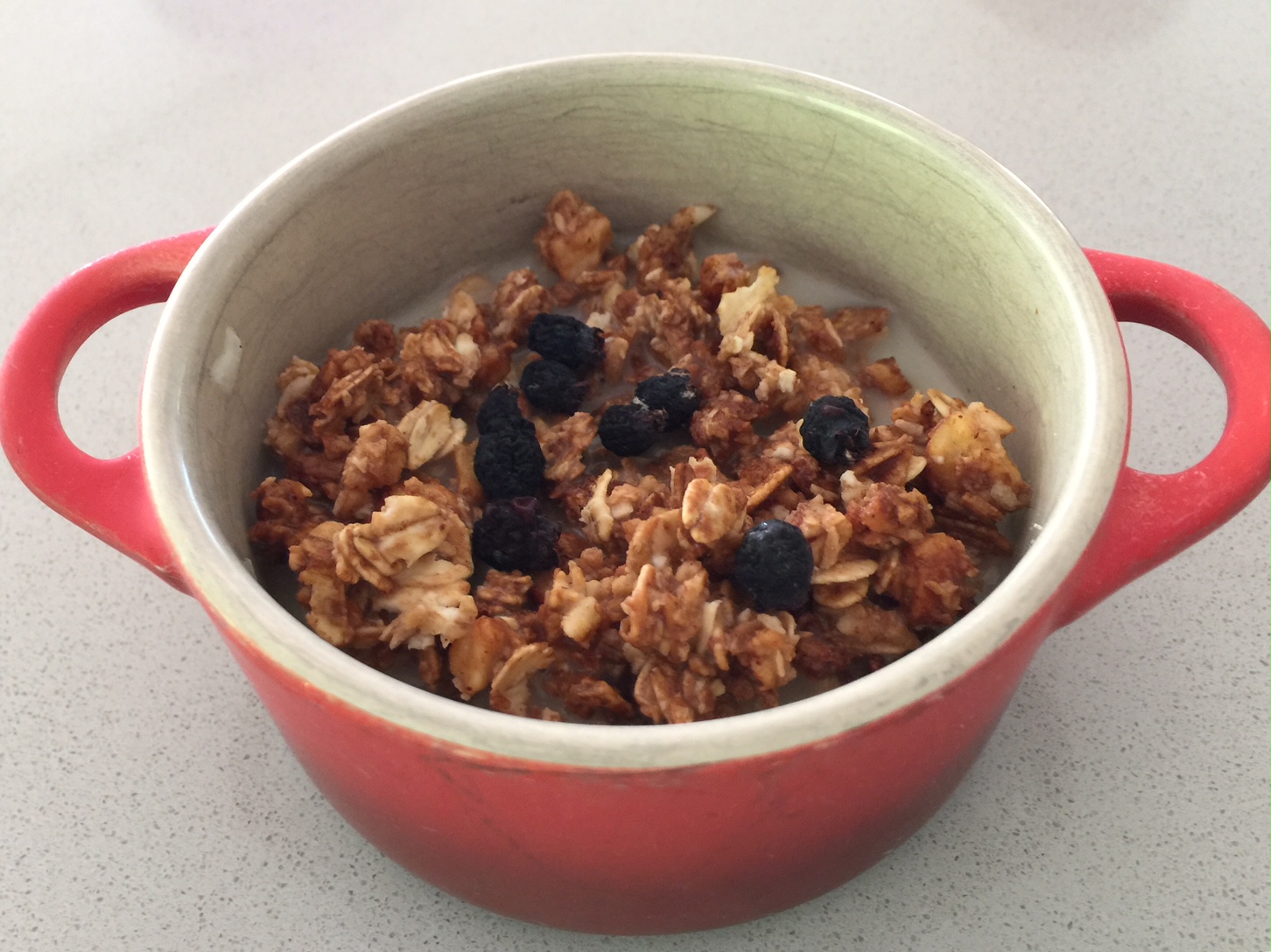
    My granola recipe which follows is adapted from my aunt’s recipe. We share an enthusiasm for a dry granola (not soggy or moist) that stays crunchy in milk. Many granola recipes call for oil which I think is not a good ingredient in granola. After your granola is baked, add a cup of dried saskatoons for a Pemberton treat!

    Crunchy Almond Granola with Dried Saskatoons:

    2/3 cup unsweetened shredded coconut

    2 cups chopped almonds (almond pieces should be the size of gravel)

    3 cups slow oats

    ½ tsp. salt

    2 tsp. cinnamon

    ½ cup runny honey (warm on very low heat if hardened)

    1 cup dried saskatoon berries

    Method:

    Preheat oven to 300F.

    Combine all ingredients (can use a mixer). When fully combined, add honey. Mix very well.

    Spread onto two parchment-lined rimmed baking sheets.

    Bake for approximately 30 minutes, stirring the granola thoroughly every 10 minutes. You must watch granola carefully as it will burn quickly and every oven is different.

    Cool.

    Add 1 cup dried saskatoons.

    Mix well and store in glass jar in fridge for up to several months. Granola and plain Greek yogurt makes an easy, quick, and nutritious breakfast! Enjoy!

    IMG_6291

  • Living Cuisine – Sarinda Hoilett welcomes strawberry season, with foods that heal and rock your taste buds

    Living Cuisine – Sarinda Hoilett welcomes strawberry season, with foods that heal and rock your taste buds

    Strawberry season has arrived just in time for my first Traced Elements post.  The following recipes are all plant based, raw, made with love. They are intended to light up your taste buds wihile nourishing you on the deepest level.

    Processed with VSCO with a6 preset

    Most of my recipes don’t involve too much chemistry so feel free to play with measurements and ingredients.  Taste things as you go and adjust according to your own taste preferences.

    I have included 2 cultured recipes here because supporting your microbiome with fermented foods is essential not only to your gut health but to your mental and emotional wellbeing.  Our bodies are a complex ecosysytem. Of the bacteria in our bodies it is estimated that only 10% are human cells. What we eat can influence everything from our moods, food cravings, weight gain/loss, food allergies and disease expression.

    image2

    Our microbiome is affected by chronic stress, lack of sleep, processed foods, antibiotics and other pharmaceuticals.  Newborns are seeded with good bacteria when passing throught the birth canal and from breast milk. It’s important that special attention is payed to children born by c-section.

    Our gut health is dynamic and we can easily create balance by eating more pre-biotics foods (Jerusalem artichokes, raw dandelion greens, raw or cooked onion, raw garlic, raw leeks, raw asparagus, chicory, bananas, asparagus, beans) and more probiotic foods such as Kombucha, Kefir, homemade yogurt, natto, tempeh, miso, saurkraut and cultured vegetables.  

    IMG_8057

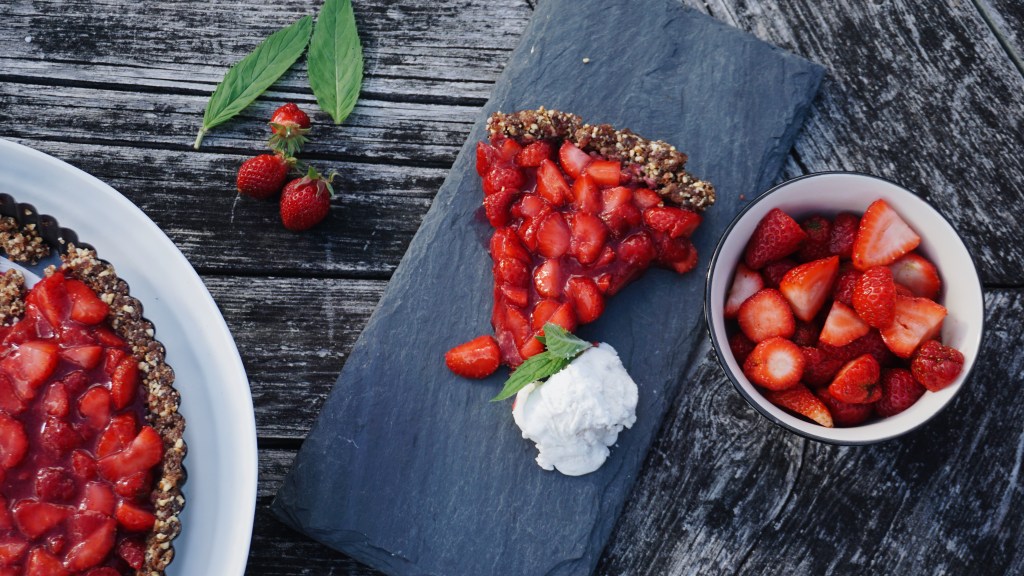
    Strawberry Pie

    This recipe is simple and can pass for breakfast or dessert.  You will need a food processor and an 8” or 9” pan.

    Ingredients

    • 5 cups of fresh strawberries
    • 2 cups of almonds, sprouted* if possible
    • 1.5 cups of dates, pitted ( I prefer to use medjool or date paste**)
    • 2 Tbsp coconut oil (optional)
    • 1 lemon
    • 2 Tbsp powdered psyllium husk, powdered chia seed or irish moss gel*** – as a stabilizer / thickener  for the filling
    • 2-4 Tbsp honey, maple syrup, agave or couple drops of stevia

    Processed with VSCO with a6 preset

    Crust

    1. In the food processor pulse the almonds until they are an light “mealy” consistency.  Don’t overprocess.
    2. Add dates and combine until the mixture sticks together when you squeeze between finger and thumb
    3. You can add the coconut oil which helps the crust set  
    4. Press mixture into your chosen pan and refrigerate while you prepare filling

    Filling

    1. Slice and dice 4 cups of the strawberries, place in a mixing bowl and set aside
    2. Place the remaining cup of strawberries in a food processor or blender and combine with a squeeze of lemon juice, sweetener and thickener of your choice.  
    3. Add mixture to sliced berries and combine with a spoon.  Pour into pie crust
    4. Let set in refrigerator.

    *Sprouted Almonds – soaking nuts removes enzyme inhibitor and makes them more digestible.  Almonds are best soaked 8 hours or overnight. For this type of recipe you want your almonds dry so you would have to dehydrate them after soaking for 24hrs.  You can skip this step for the purpose of this recipe. Alternatively, the Wellness Center at Nesters in Whistler sells Sprouted Almonds by Living Intentions

    **Date paste can be made by soaking dates until soft and blending with just enough water to have a smooth jam like consisitency.  Note: once you have added water you’ll need to refrigerate your date paste. Will keep 2-4 weeks.

    ***Irish Moss (AKA carageenan in its processed form) acts as a stabilizer and has many health benefits in its whole unprocessed form.  You can purchase this algae from Harmonic Arts. Once you prepare the gel it can be added as a thickening agent to smoothies and desserts.

    To make the gel, soak whole irish moss overnight, rinse well to remove any ocean debris, place in high speed blender/Vitamix and add barely enough water to cover.  Now blend it like you mean it. This is where the magic happens. In less than a minute the the irish moss will turn into a smooth gel. It will get thicker once refrigerated.  It has a bit a distinct taste which can usually be masked by some sweetness.

    PS – I store everything in glass

    IMG_8069

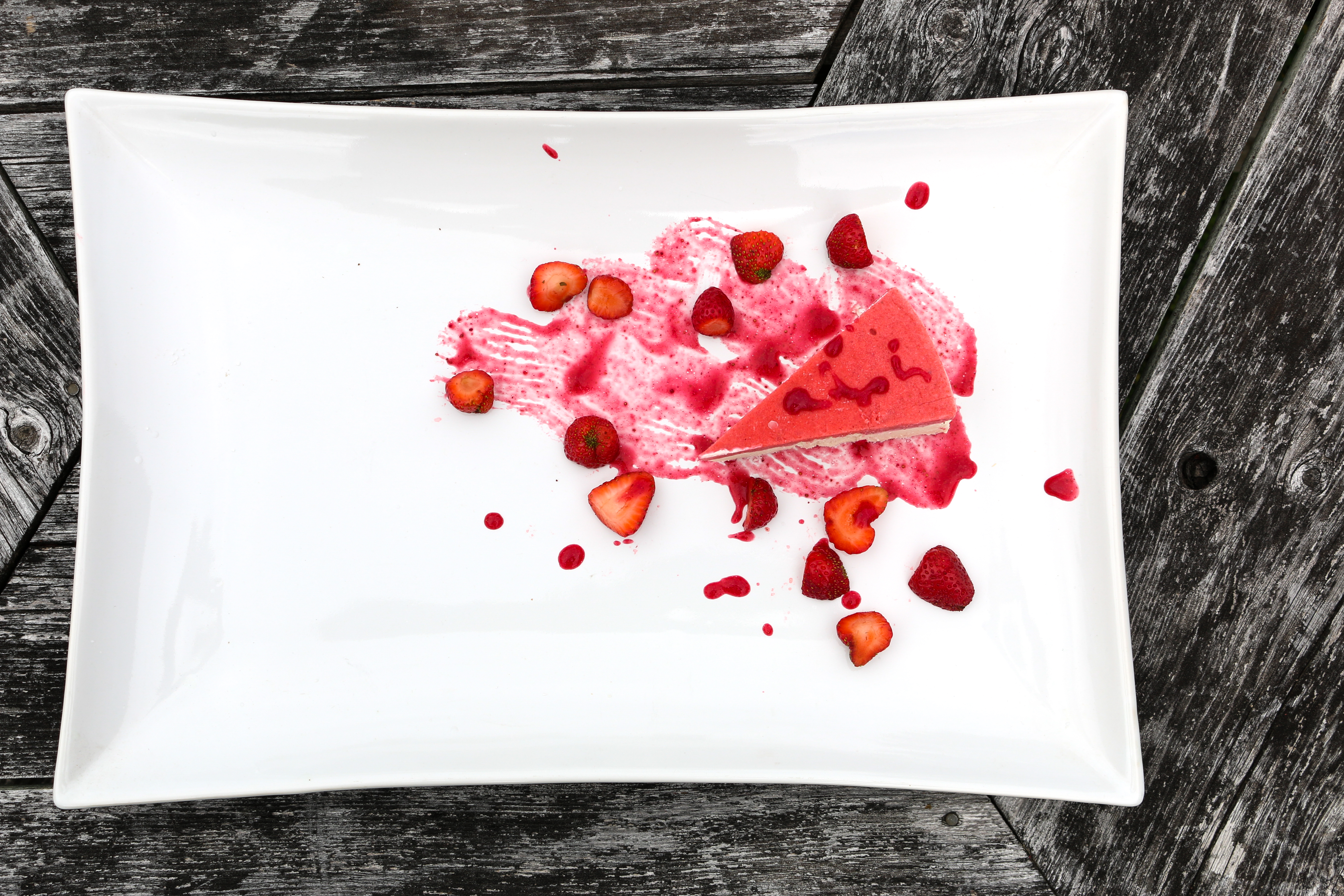
    Cultured Raw Strawberry Cheezecake

    This is one of my all time favourite recipes.  I wanted to try fermenting the cheezecake filling this time and the results were delish!  I’ll give you both options. Original and cultured. For best results you will need a high speed blender, although a food processor could work.

    Cheezecake filling

    • 3 cups of raw cashews, soaked 2 hours or more
    • ¾ cup fresh lemon juice (not bottled – only the best for you!)
    • ¾ cup unpasturized honey
    • ¾ cup coconut oil
    • ½ tsp sea salt
    • Dash of vanilla extract or powder

    Strawberry topping

    • Approx 2 cups fresh or frozen berries
    • Dash of lemon juice
    • Dash of sweetener – agave, honey, maple syrup, stevia or monk fruit drops – totally optional, fresh strawberries are sweet enough on their own

    Preparation

    1. Sprinkle ¼-½ cup powdered dry coconut at the bottom of a spring form pan and set aside
    2. In a high speed blender combine honey, lemon juice, coconut oil, salt, vanilla, and then slowly add cashews
    3. Pour cheezecake filling into springform pan and let set in the freezer
    4. Combine the strawberry topping ingredients in the blender  (once again feel free to improvise with toppings and flavour combos)
    5. I usually wait at least 20 minutes before pouring toppings onto cheezecake layer

    This cake is best stored in the feezer.  Take it out 20-30 minutes before serving

    Cultured version

    1. Blend 3 cups of cashews with approx 1 cup water.  Then added ½ tsp probiotic powder.
    2. Transfer cashew mixture into a glass bowl and let sit in a slightly warm place for 8 hours.  I use my Excalibur dehydrator for this stage set at 95 degrees F
    3. After 8 hrs your cashew mixture should have a slightly tangy taste.  Transfer to blender and add remaining ingredients:
    • ½ cup coconut oil
    • ½ cup honey
    • ½ cup fresh lemon juice
    • ½ tsp sea salt
    • Dash vanilla

    Processed with VSCO with a6 preset

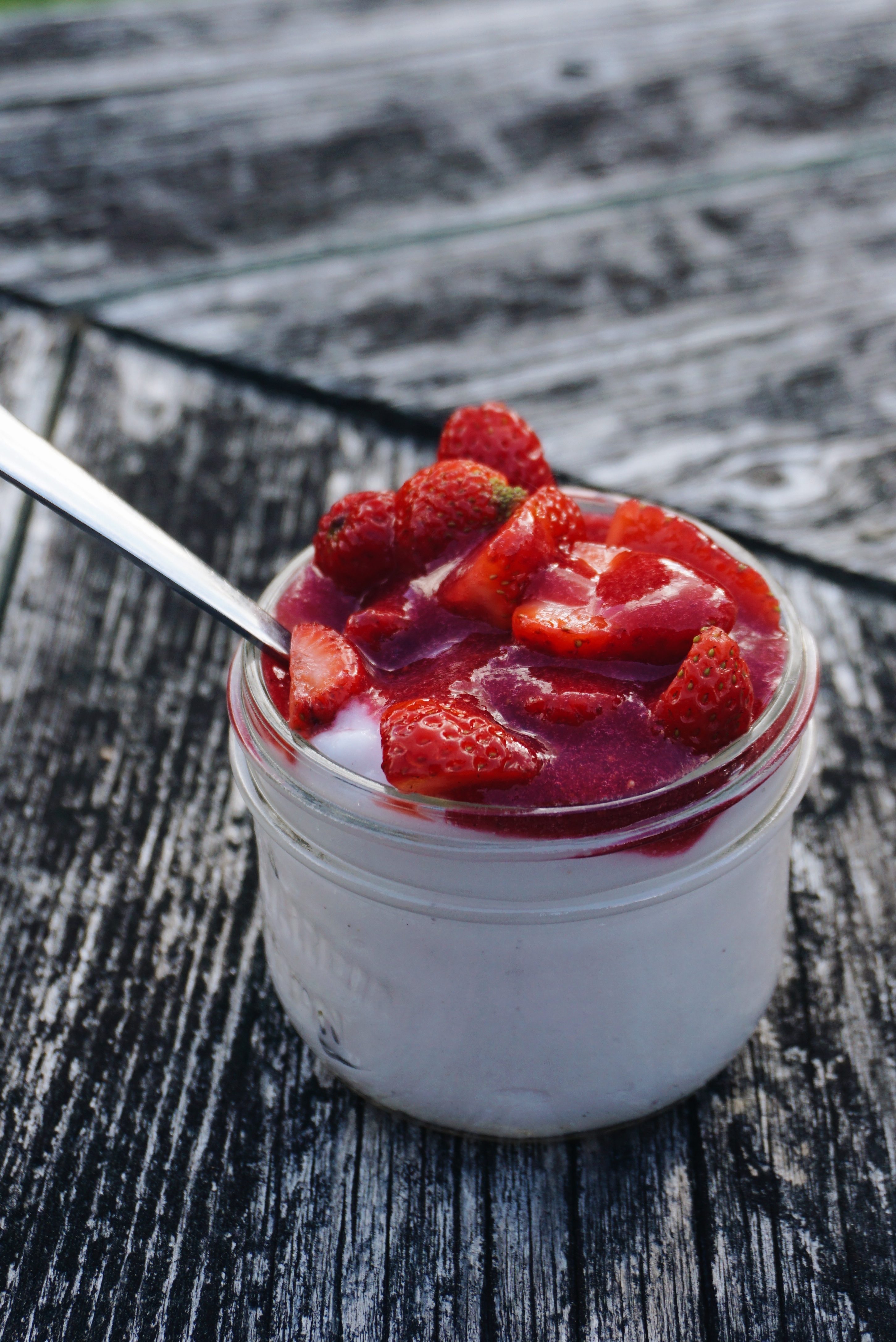
    Coconut yogurt

    This is a a super simple alternative to the overprocessed commercial dairy-free yogurts.

    Given coconuts don’t grow in Pemberton this is a bit of a treat.

    • 2 cups coconut meat (you can purchase frozen in bags at Stay Wild or Nesters)
    • 1 ½ cups water
    • ½ tsp probiotic powder

    I typically double the recipe which will make two 1 litre mason jars

    In high speed blender combine coconut meat and water.  Stir in probiotic powder. Pour into 1 litre glass mason jar.  Place in dehydrator on lowest setting for approximately 8hrs or wrap in towel and place in a warm place.  Refrigerate.

    Processed with VSCO with a6 preset

    Recipes by Sarinda Hoilett

    Photos (and quality control): Jaya and Ruben Guibert


  • Resiliency and Mysteries of the Morel Mushroom

    Resiliency and Mysteries of the Morel Mushroom

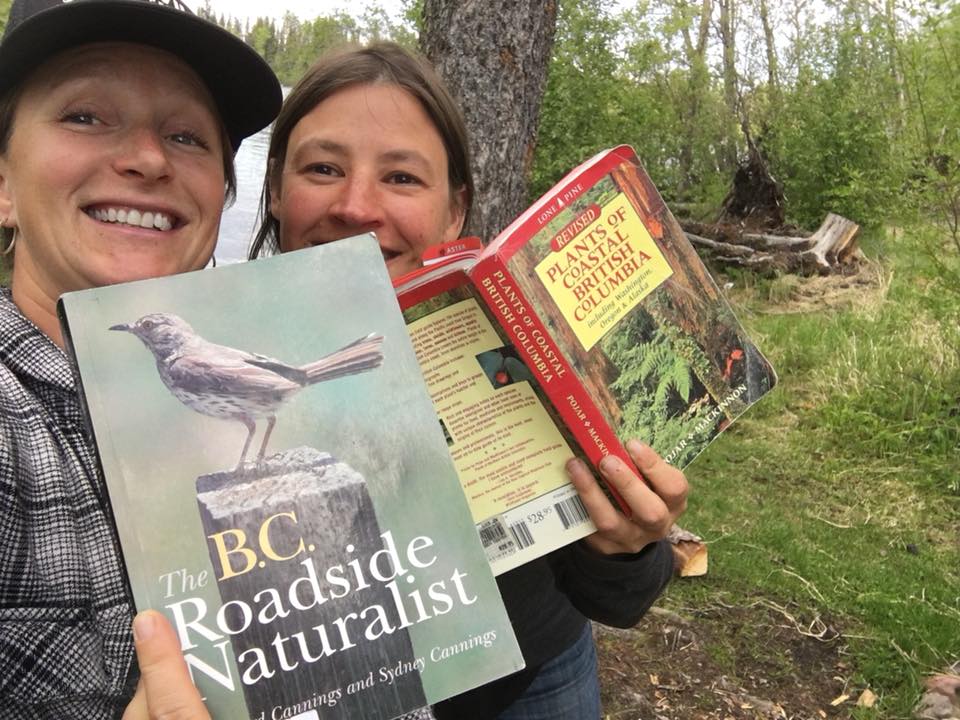
    The previous extent of my mushrooming has pretty much focused around the fall when the fruiting bodies emerge from beneath the moss, on the sides of logs, and through the cottonwood leaves. Pines, chanterelles, shaggy mane, and combs tooth are all I really know well enough to harvest and eat without being worried I might kill my family. But this year, it was the spring harvest of morels that called. My partner in crime suggested we bring the kids. They (the kids) are low to the ground and possibly more enthusiastic about picking mushrooms than we are. They had a small taste of the exciting morel hunt a couple of years ago picking in the Boulder Creek fire zone. We were all excited about finding a few morels to cook, save, trade.
    v and dawn geeking out

    We decided to pick in the Elephant Hill Fire zone that burned about 192,000 hectares in the Cariboo last year. While this is undoubtedly devastating on many levels, fire is part of the natural disturbance regime of that forest type. Many species that grow in that area are fire-adapted or fire-dependent. For example, the thick bark of mature Douglas-fir can withstand moderate fire (check out the fire scarred trees at One Mile Lake). Deep roots of vaccinium species (blueberries, huckleberries, etc) survive and send up an abundance of new shoots in following years. The cones of pines trees have a waxy coating which opens in response to the heat of the blaze, scattering seeds onto soil newly fertilized by nutrients in the ash. Many forest types require fire to stay healthy, to regenerate. Indigenous people throughout the world incorporated fire into their traditional landscape management. Lil’wat people extensively burned areas within their Traditional Territory to promote food production, and “the hills were just like a garden” (Baptiste Ritchie in Turner, 1999). Root vegetables such as: Indian potatoes or skewnkwina, yellow avalanche lily or sk’am’c , and tiger lily or skimuta (Lilium columbianum) and many berry crops were managed through controlled burning to produce better crops (Turner, 1999).

    Fire suppression to protect homes, communities, forest “crops” and other interests have impacted this natural disturbance regime. Without fire, forests are susceptible to disease such as the mountain pine beetle and over time, stagnate. Forests that historically burned regularly in a patchwork pattern now are subject to catastrophic, widespread, high intensity fires that change the way the forests regenerate. Soils become hydrophobic, resulting in a vegetative moonscape and flash flooding (we saw this near Loon Lake). Fire-adapted species can’t withstand the intensity. The list goes on.

    However, I digress. Back to the morels.

    Morels and wild mushroom harvesting in general are a huge industry. In preparation for the onslaught of mushroom pickers, the Secwépemc people (whose Traditional Territory we were picking on) implemented a permitting system, created designated campgrounds, and on-the-ground safety support. Permits in hand, we tested a few places on the way up to our destination. We kind of thought we may need to be picking with elbows out like on an epic powder day but were pleasantly surprised to be alone. Within a couple of minutes of jumping out of the truck the kids were shouting in excitement.
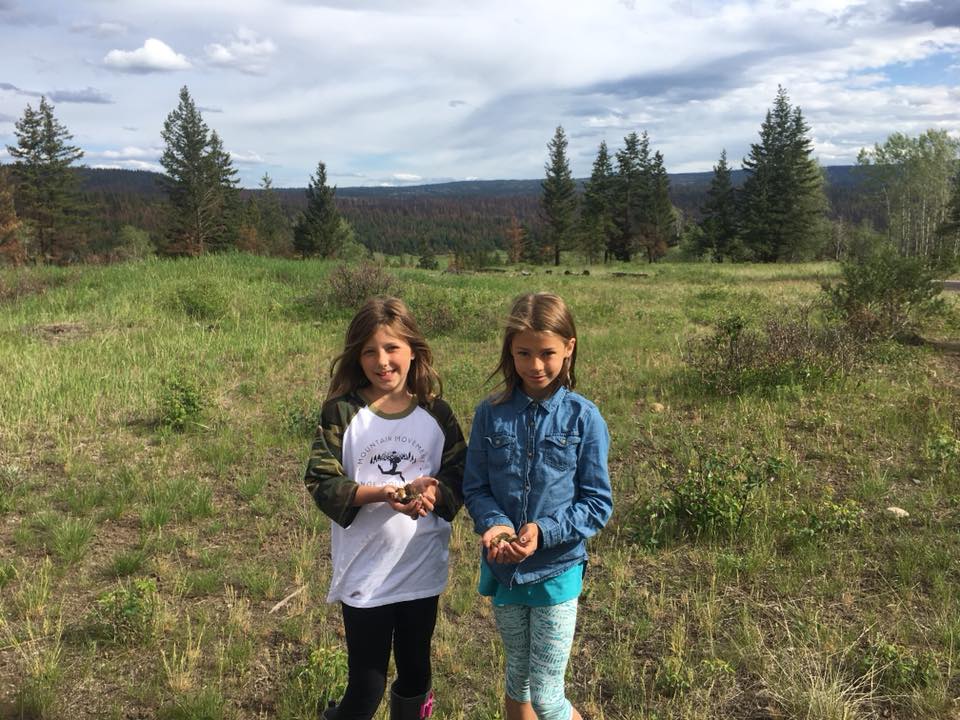
    ash and violet

    But we did not expect what waited for us only a short distance from our cabin. The forest floor was littered with morels in places. Over the course of a couple of short and easy days picking, we harvested all we needed for ourselves and close friends, so abundant in the immediate area we stayed in sight of the truck the entire time. In places, you had to really watch where you stepped so that you didn’t crush these highly camouflaged gems.

    post burn bounty

    The kids, in total disregard to the cloud of mosquitos, picked solidly and without complaint, filling their buckets amidst cries of “Jackpot!”. “Partner Alert! I need help!”.

    motherlode

    We hypothesised about abundance, distribution, ecology. I was excited to come home and learn more. I wanted to know why morels appear after a fire, and the question seems somewhat unanswered by science. While much research has been conducted in recent years regarding the extraordinary and fascinating importance of mycelium or  “mushroom roots” in the forest floor (check out this video– SO COOL!), morel ecology, spatial distribution, and abundance are not widely researched. In order to make sense of one hypothesis, it helps to have basic knowledge of the mushroom life cycle.

    mushroom life cycle

    Some scientists suggest that after a fire destroys many of the plants the morel hyphae may have been working with, the hyphae are stimulated to form fruiting bodies and send their spores far and wide in hope that some will land in areas with living plant roots. Totally plausible in my eyes.

    It is fascinating to think about how ecosystems are adapted to respond to catastrophe. It gives me hope in our changing world. If a morel mushroom can withstand the hottest of fires and not only survive, but thrive, can we heal our hurting planet? Can our natural world adapt fast enough for climate change?  Is that part of why our hearts are buried so deep in our chests? I like to think that is why for some of us, our fears, happiness, vulnerability, our joy are buried in emotional vaults that they are just waiting to be tested, to have the opportunity to rise up, to spread, to be released.

    It makes me think about the projects I am working on right now, which have a strong focus on “resiliency”. It seems to be the new buzz word, superceding sustainability. Like the theory of morels acting out of a need for survival, I wonder what the catalyst will be for individuals and communities to summon the vision of resiliency into the action of resiliency. It is already happening, I know, but at the same time it feels like our world is constantly bracing, building, preparing. I am grateful to celebrate the ways in which our community builds resiliency. Great weekends away with great friends. Breaking bread, sharing food, spreading ideas.

    I employed a variety of methods to preserve my bounty but focused on dehydrating. My favourite morel recipe so far was a simple Risotto Bianco with morels and garlic scapes sautéed in butter. If anyone is inspired to go hunting for morels, I think that area will still be good until mid-June or so. Keep a watch on fires happening this summer and plan a trip for next spring. Like most trips to the woods, it deeply satisfied the nerder naturalist and philosopher in me!


  • Is oregano worthy of your love?

    Is oregano worthy of your love?

    I never buy herbs.

    With the exception of cilantro – of course. And basil. But only during basil season.

    I used to spend big bucks for that recipe that needed two, yep two, sprigs of thyme. And I’d think to myself, what the hell am I going to make now.

    I couldn’t eat roasted cherry tomatoes with goat’s cheese, thyme and lemon on fresh pasta all week (a recipe ripped from a friend, which may have been ripped from the internet, which could probably be re-ripped from the internet through the Googling of the list of ingredients, if by chance one’s taste buds are tingling at the thought).

    Herbs - thyme (1 of 1)
    Lemon Thyme

    Invariably, thyme, rosemary and oregano went to waste in my fridge.

    It wasn’t long before I got wise to how easy it is to grow a pot of herbs. And not long after that did I realize herbs make for an amazing rock garden display – even in my frigid and often sun-challenged sideyard.

    The shapes, colours and smells in my rock garden have changed immensely over the years.

    Herbs (4 of 8)
    Lemon Balm

    I have fewer traditional flower garden flowers and an abundance of lemon balm, lavender, rosemary, oregano, chives, mint, tarragon and thyme. Most return each year. Each dependant on the winter weather.

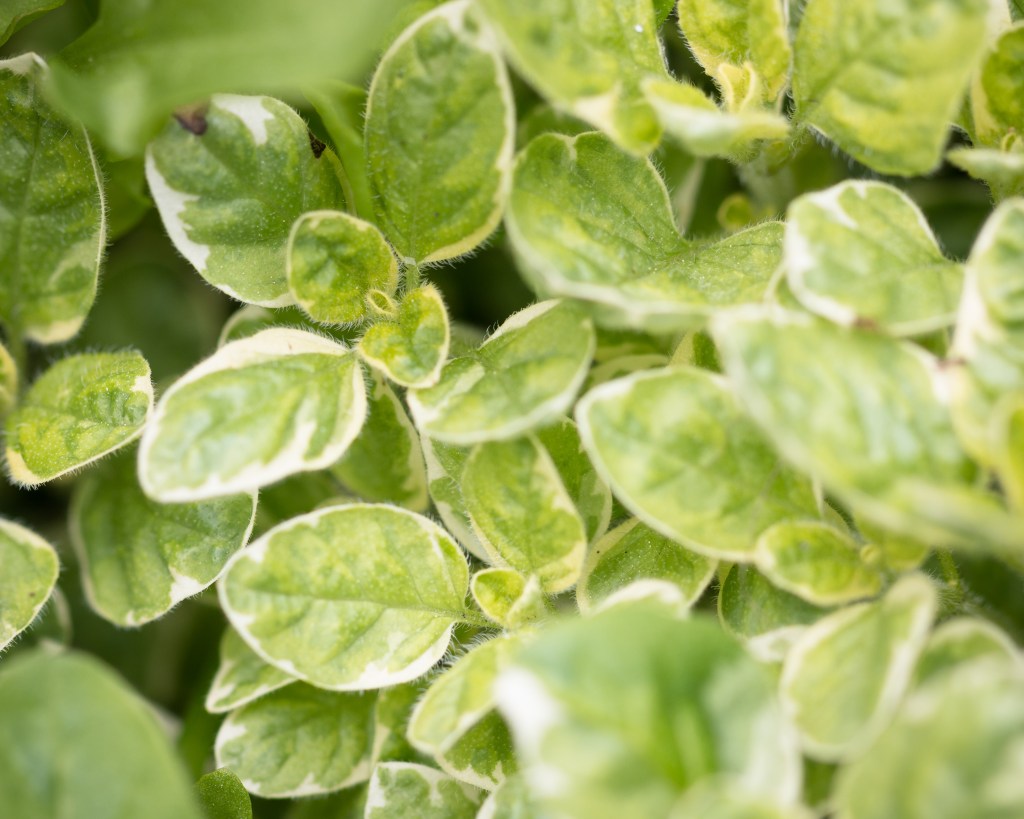
    Although my favourite trailbuilder often suggests oregano isn’t worthy of the dirt it rests in, the bees love it — especially when it flowers.

    Oregano shadow digi (1 of 1)
    Oregano Flowers

    And I think the oregano flowers look stunning once dried. And so does @therocketnarcissist, but he never makes the oregano connection. Nor do I remind him.

    Today, was a bit damp, but it didn’t stop me from getting eye level with a few of the lovely herbs that make up my rock garden “passion” project.

    I like mornings best. The light is gorgeous. The bugs are sleeping in.

    Herbs (3 of 8)
    Chive Flower Buds

    The only downfall is the need to watch out for the banana slugs on your way through the garden. That slime is certainly the most unpleasant thing about gardening. It’s disgusting.

    ~

    Lisa Severn lives in Pemberton South South (aka. Emerald Estates) with her trail-obsessed “husband”. Pembertonians can be seen around town asking Dan and Lisa, “So, what are you doing in Pemberton, again. Did you move here?”

    ~

    Follow Lisa @rhubarbstreet for more of her food photography. Click for more on Lisa and her co-conspirators… err… co-contributors.

  • lessons about diversity inadvertently learned by a chicken farmer

    lessons about diversity inadvertently learned by a chicken farmer

    Once upon a time way back in the day, as my made-up legend goes, a farmer tripped and fell returning from the chicken coop, smashing his eggs.  A couple of valuable lessons were learned at that moment that still ring true today. Firstly: “Don’t put your eggs all in one basket.” Another adage, assuming the eggs were fertile, is “don’t count your chickens until until your eggs have hatched.”

    Now these wise words go well beyond the tragedy of broken eggs with respect to farming. The true moral of the story is life in nature is unpredictable and there are so many variables. Therefore DIVERSITY is your best insurance when raising crops or even livestock. Nothing is guaranteed, until the final transaction.

    The rise of monocultures, factory farms and GMOs that treat food as commodities is both foolish and greedy. What was originally designed to provide food security for the masses now appears to be doing the opposite. Mad cow disease, avian Flu, threats to bees, extinction of heirloom gene pools are all human-made problems. Mother Nature always knows best and I think she’s pissed off at our shenanigans.

    Seeing huge fields of one variety of apples in Washington state, or whole towns in California boasting they are the __________ growing capital of the world, makes my blood boil. Talk about risky. Take Gilroy, California, for example. For decades the commercial garlic exporter for all North America was hit with an untreatable white rot mould. This has opened the market for an even bigger producer, China, to dump tons of low quality, bleached, and irradiated toxic garlic on the market. Yuk! Or worse, the potato famine in Ireland, growing one variety of a single staple, all destroyed by blight, starving millions and displacing more.What happens today when a pest or disease goes rampant? The answer is almost always more chemical pesticides. What about nutrient depletion? More chemical fertilizers of course. What about weather related? The droughts, hailstorms, floods – the things we read about in the news somewhere in the world daily and exacerbated by climate change? Often its government bailouts and huge insurance claims or bankruptcy. Why are humans so shortsighted and stubborn? We have been cultivating food successfully for thousands of years. Why did we have to change the program?

    Biodiversity is the key to every balanced ecosystem and we have to look at our gardens in this light.

    At our farm we plant a half dozen different fruit trees every year, not just for variety but more for security. Fruit set often takes a rest after a bumper crop. It’s cyclical like so many things in nature. Pollination is also variable, dependant in temperature, bugs, wind and other factors beyond our control. Remember when we try to control nature it usually backfires. So we have to learn our lessons from our observations, trials and errors taking our clues from nature. Mother knows best.


  • Nootka Rose Jelly

    Nootka Rose Jelly

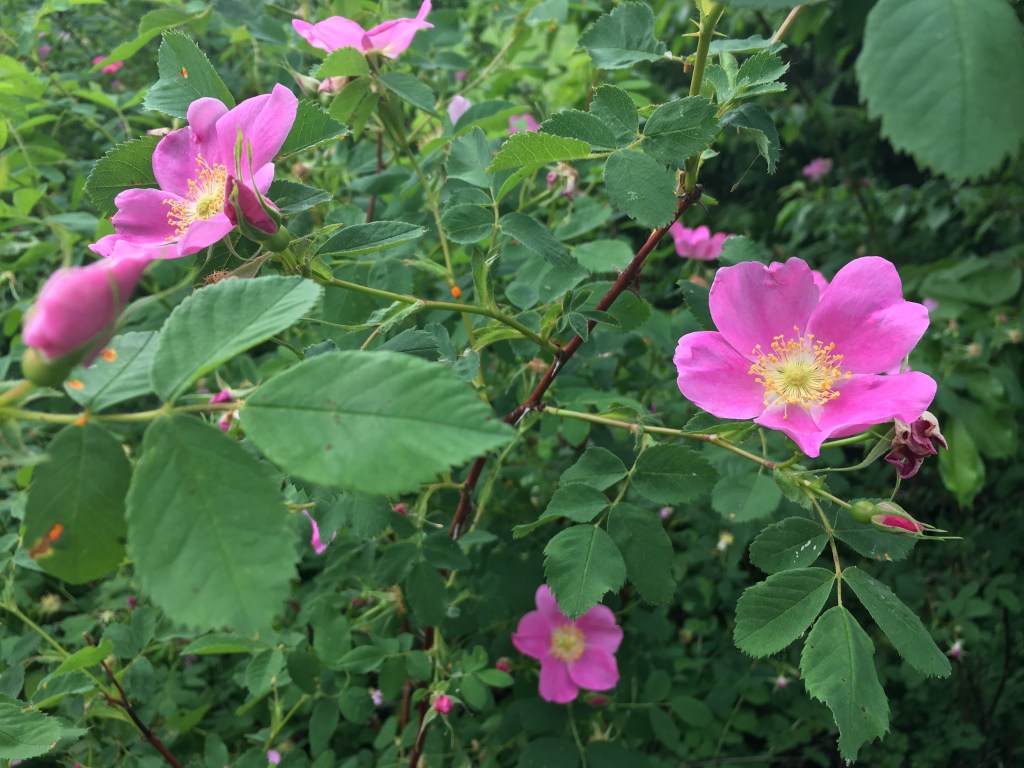
    For me the art of slowing down and smelling the roses has turned into taking advantage of the surplus of this native shrub behind my house, plucking their petals and creating something delicious. As it is in my garden where I rarely follow my planting plans the same holds true to my style of cooking; recipes are but a base. I’ll admit my first batch, from a recipe I followed, did not set. This led me to taking matters into my own hands, going with the flow and trusting my strong sense of jamming. So, queue up some Bob Marley as I guide you to making your very own wild rose jelly.

    INGREDIENTS

    ≈4 cups wild rose petals, lightly packed

    4½ cups boiling water

    ¼ cup fresh lemon juice

    5½ cups sugar

    2 pkgs liquid pectin

    Other: cheesecloth, jars, lids, tops, a big pot & lots of love

    Start by foraging for rose petals: try to pick in areas away from the roadside and pick higher then a dog may pee! Give them a small bath in the sink to get rid of the majority of bigger bugs and pick out any of the greens. Don’t stress too much about getting everything, as you’ll end up straining the lot later. Place them in a nonreactive bowl, cover with the boiling water and allow steep for 1-2hrs. The petals will lose their colour and look quite dull but patience is key here.


    While your petals are steeping prepare your jelly vessels. This recipe makes approximately 8-9 cups of liquid gold; I use a mishmash of 125ml and 250ml jars and usually prepare a few more then what’s needed, just incase. Wash every thing then put the lids and tops in a pot submerged in water and place on the stove over medium-high heat. Jars can go on a cookie sheet in the oven at 250°F. You want these to sit in their respective mediums for at least an hour.

    When you’re satisfied with how long the petals have steeped or you can’t wait any longer get ready for some magic. Add the lemon juice and watch the water go from blah to vibrant pink! It’s science.
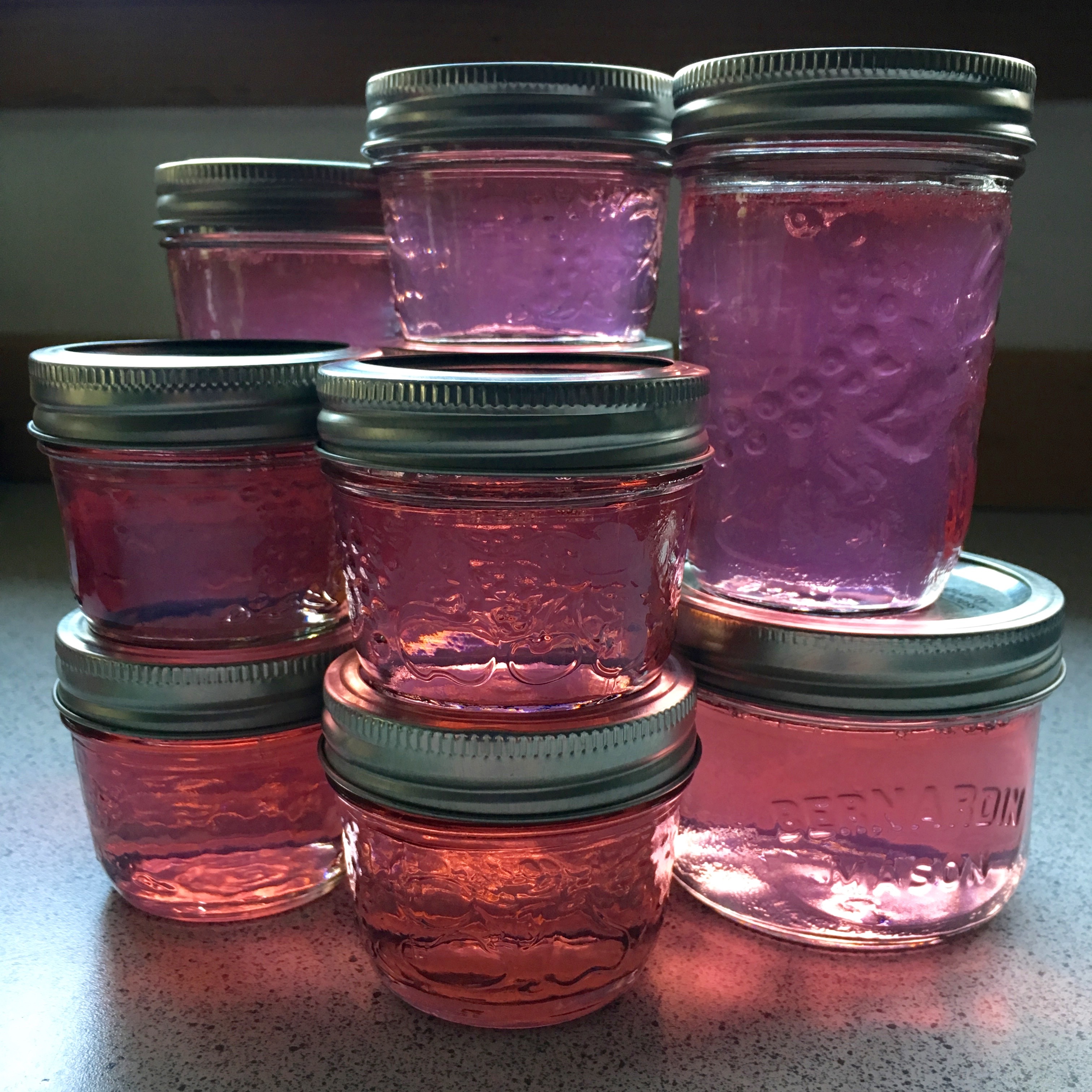
     

    Pour the petals and water through a strainer lined with cheesecloth straight into a big pot squeezing all the liquid out that you can. You want 4 cups of rose water; if you’re a bit short just add a bit of filtered water. I found this recipe made the right amount of water so you should be fine but feel free to measure if you’re not sure. I like to wing things. Add the sugar and bring up to a boil, stirring to ensure all the sugar incorporates into the rose water. Once at a  hard boil keep it here for 2 minutes skimming any foam off the top. After the time has elapsed remove from the heat, add the pectin and stir to combine for 5-6 minutes – no less – more is okay but no less.

    Now you’re ready to put your creation into jars and await the sweet satisfying sound of popping lids. Some recipes call for a water bath to finish the canning process but I’ve never done that. I just go with what my mom taught me, which is what’s outlined here, and it’s never failed me just like her.

    IMG_4022

    This simple tasty treat can be enjoyed may ways but my favourite thus far is on coconut ice cream or straight out of the jar… Happy jammin’!