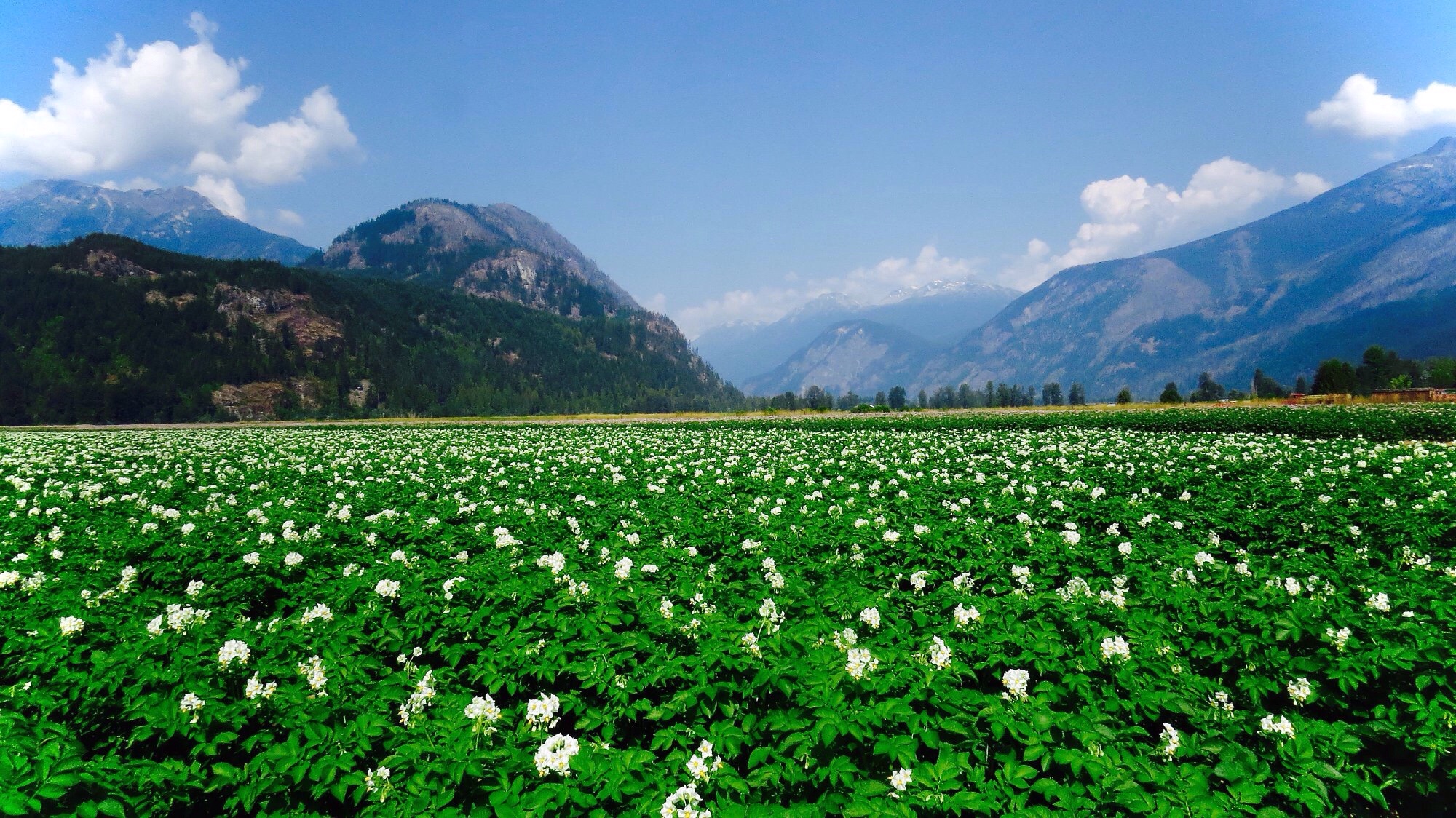
Pemberton is nicknamed Spud Valley for good reason. Potatoes are the number one crop grown in the valley. The soil here is amazing for growing all kinds of vegetables but potatoes especially love it. The families who immigrated from Ireland and settled here in the early 1900’s saw this and started to grow potatoes. Thus the legend of the Pemberton potato was born.
Fast forward to today. There are 9 farms in the valley growing Elite Seed Potatoes. It takes us 3 or 4 years to get a crop that we will sell and ship off our farm. We grow our potatoes strictly to sell for seed to other potato growers who then may plant them for 1 or 2 more years before they end up in a store and on your plate.
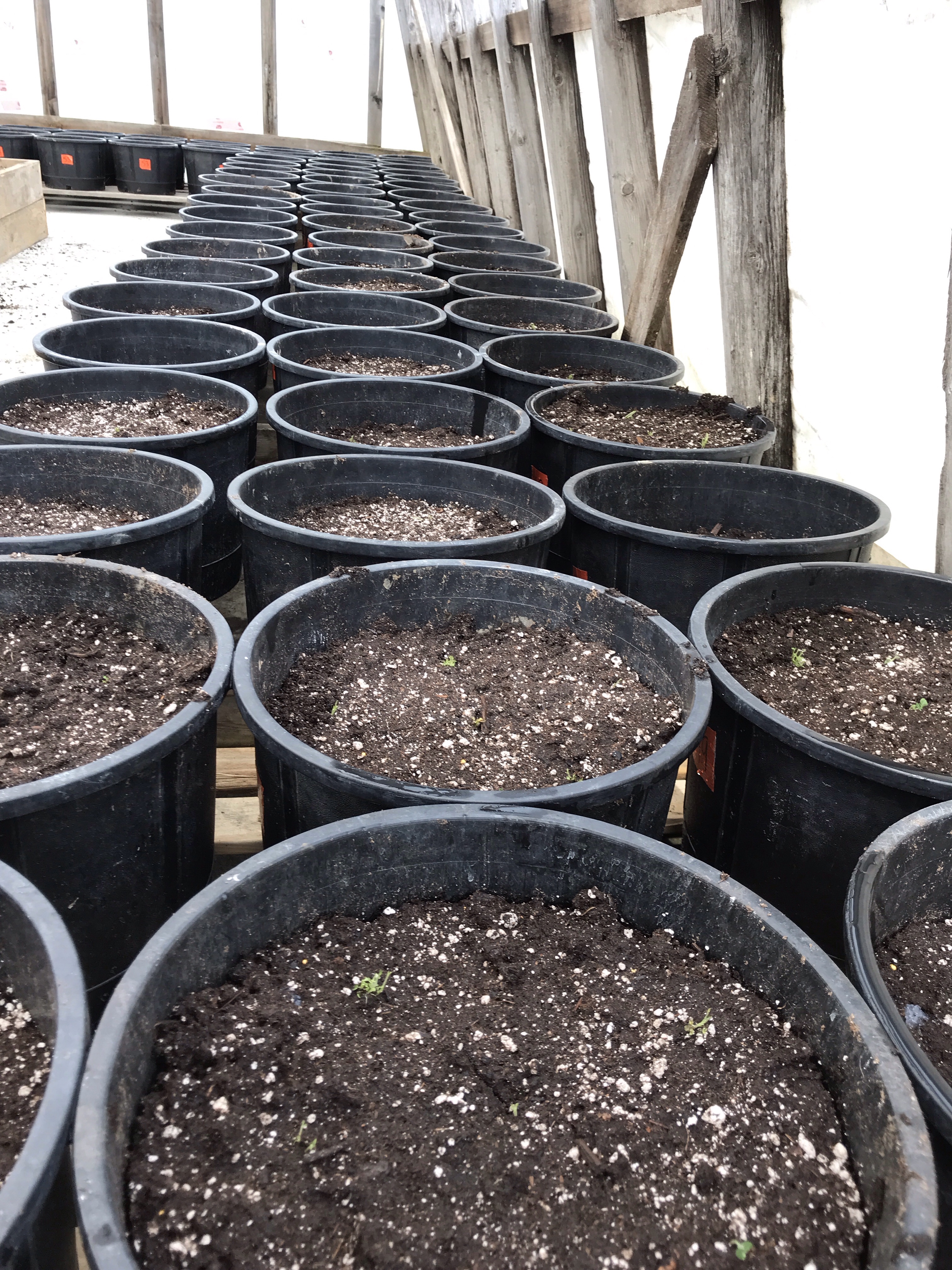
The first year starts with what we call tissue culture plants. These are basically potato plant stem cuttings produced in a plant propagation facility that is co operatively run buy the farmers. Thousands of these plants are produced and planted in the field or in a screen house.
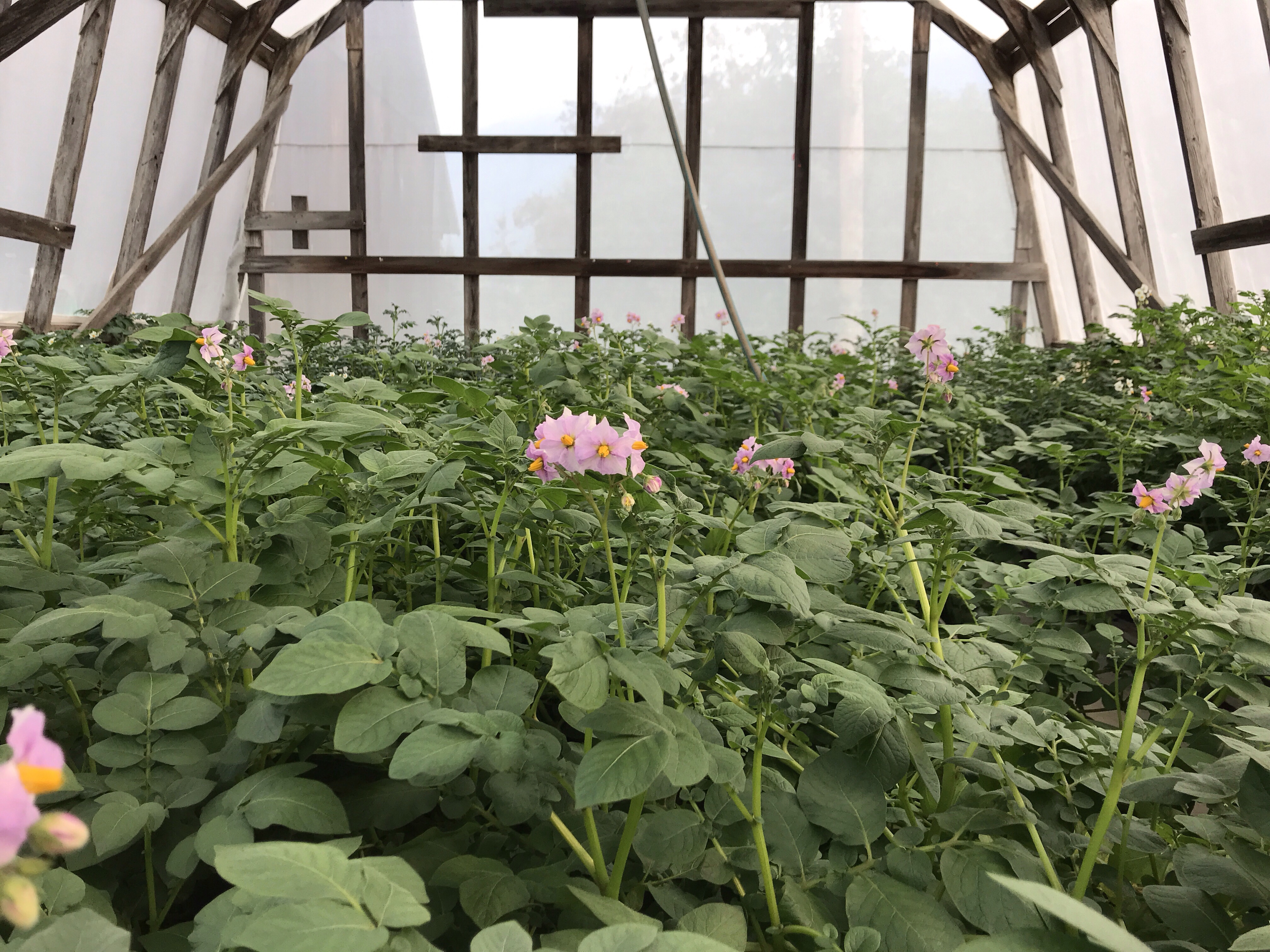
Our operation runs a screen house. This small house will produce enough potatoes to plant 40 or 50 acres in 3 years. These plants are amazing! Whenever I plant them I just can’t believe that these tiny fragile cuttings are going to grow into anything. Watered and cared for all summer long and they do it. They grow into beautiful big potato plants that produce tiny little tubers that will then become the base of our seed crop which we will sell in 4 years.
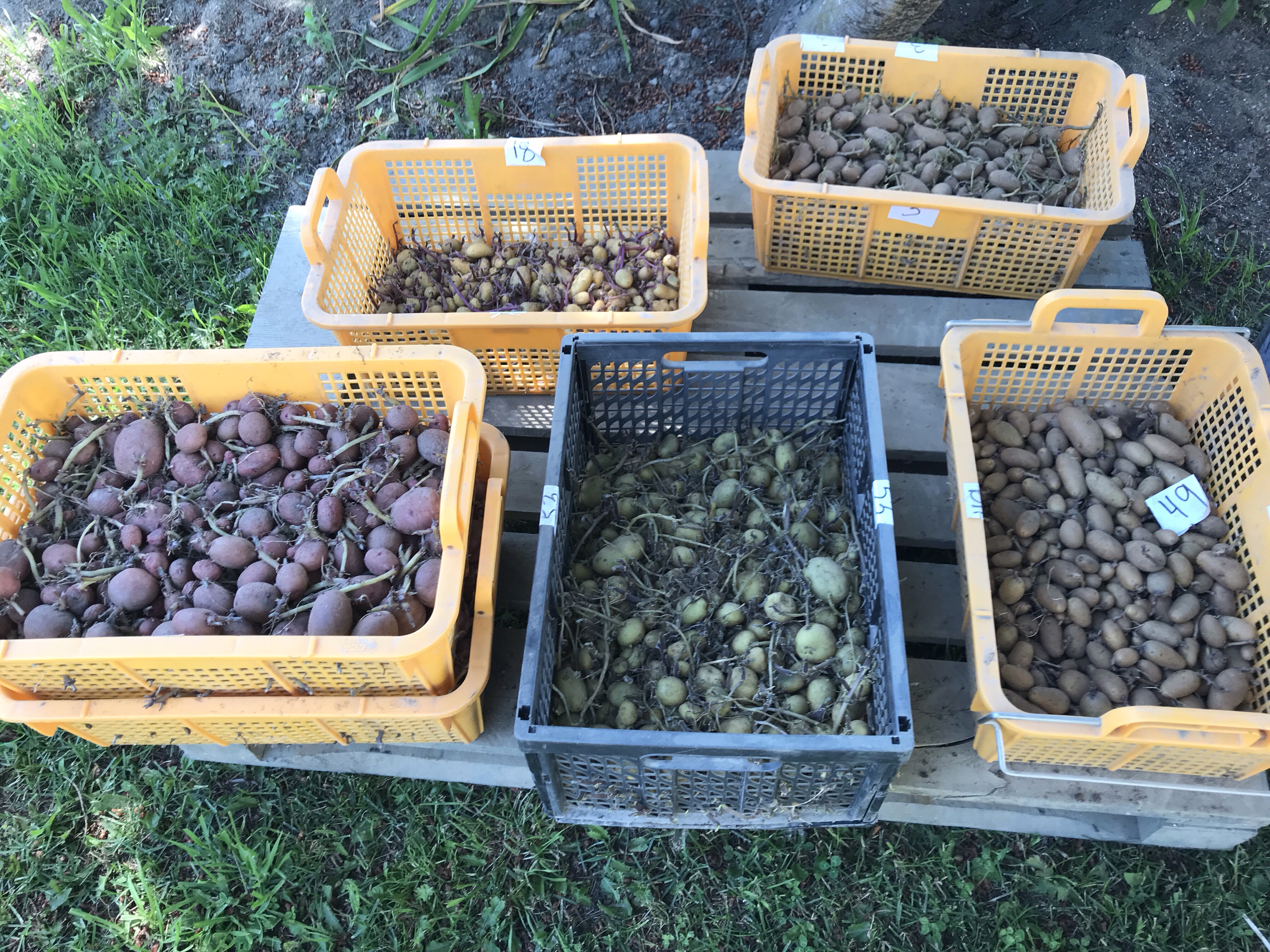
The potatoes that we harvest from our screen house are called mini tubers. Tiny little potatoes that we harvest, in the fall, by hand and store for the winter, planting them the following spring. They will be harvested and planted 3 more times. And so begins the circle of life for the famous Pemberton Potato.
It is midsummer still. I am a big fan of beans in the summer. Why? In dried form they last and last. You can throw a bag of dried lima beans in the pantry and cook them 4 years later and they still taste great. Unless you have access to reliable refrigeration when you are travelling in summer, I would prefer to avoid carting meat around.
Obviously it is hard to resist the call of BBQ salmon or burgers. But for a regular mid-day meal or evening side dish that many would enjoy – and pretty darn safe in above average temperatures – then it is time to put beans back on the table.
The following is a dish I turn to every summer when I spend time on one of the islands and have limited or unreliable refrigeration. All you need is a large bag of lima beans or fava beans. Once they have been soaked and cooked you can do a number of things.
First off, sauté the beans in bacon fat with added olive oil. Sauté them with chopped onion and fresh rosemary and pepper. Throw in a few more finely chopped veggies – such as diced bell peppers for colour. This dish makes a great side dish. Then later – add some veggie broth and turn it into a soup. I LOVE soup! And bean soup I enjoy a lot – even at tepid or room temperature. Again, no worries about meat going off in hot weather. Sometimes I don’t have much of an appetite during the hot spells….so beans are a great option for sustenance.
Here’s to summer creativity in the kitchen – either camping or at a cabin – and bring out the beans!
Sautéed Lima Beans:
One large bag of large-sized lima beans (or fava beans)
Salt and pepper
Olive oil and/or bacon fat
Fresh rosemary
Method:
Soak beans for 6 hours, then drain water and cook beans with fresh water covering the lima beans by 3 inches.
Bring to boil and simmer until beans are tender
Note: DO NOT RUSH THIS PROCESS. If you take beans off stove too early and before they are fork tender they will NOT cook well later.
When tender, drain beans and sauté beans in bacon fat and olive oil and chopped onion and other veggies as available. Add 2 tbs of fresh rosemary. The dish is finished when the bacon fat gives a caramelised finish and subtle crust to the beans. Using a large cast iron enameled pot gives a good finish to the beans!
Serve as side dish or main (maybe add some chopped cooked bacon).
Option 2:
Take your leftover sautéed beans and add to a soup stock made strictly with veggie ends, 30 peppercorns, and 2 bay leaves. See broth photo attached. I used the ends/cores from bell peppers, dill stems, onion ends, parsley ends and cauliflower stalks – which were going to go into the “green bin” but I saved. Someone else’s veggie “waste” is my soup stock base!
Black Bean and Veggie Hash:
3 cups cooked black beans
1.5 cups cilantro, chopped
3 tbs bacon fat and/or olive oil
1 cup onion
2 cups thinly sliced zuchini
1-2 cups corn kernels
juice of one lime
1 tbs cumin
pepper to taste
Method:
Saute onion, zucchini, and black beans in fat and/or oil. Add cilantro, cumin and corn. Saute until veggies are soft, caramelized and flavourful. When finished add lime juice and pepper to taste. Makes an amazing lunch or side dish. And you can always add 2-3 cups of veggie broth to leftovers for a delicious soup following day.
We are all ruled in someway or another by the big burning circle in the sky; we crave it after days go by with out it and we curse it away when it’s too hot. Sweltering days call for cool delicious foods high in water content – as beer and bubbles only keep us mildly hydrated no matter what we tell ourselves.
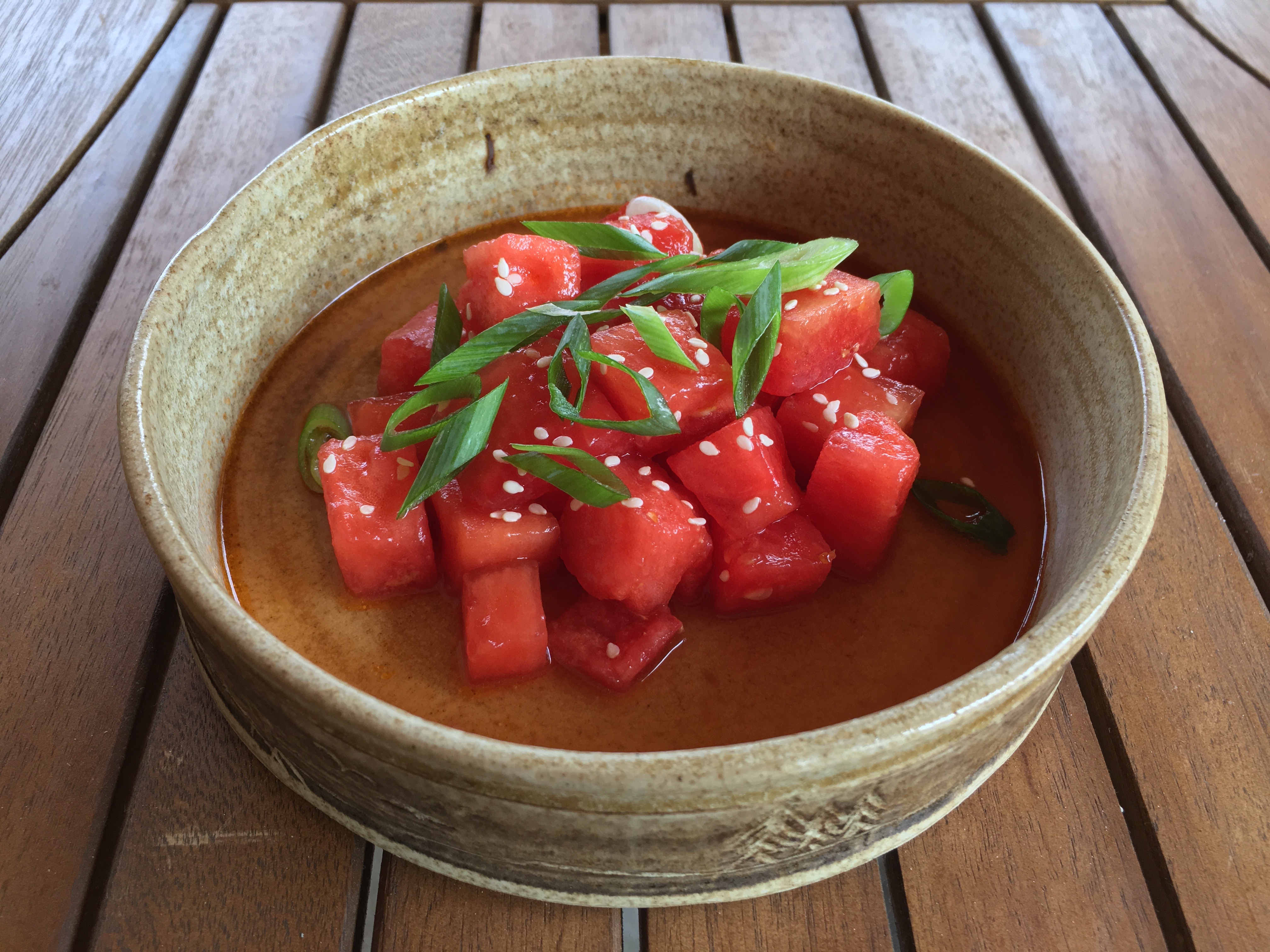
Enter watermelon poke.
If you eat at anyone of our amazing local sushi joints you will probably recognize the “poke” part as a dish commonly made with ahi tuna marinated in a sesame-soy dressing. (Personally, it’s one of my go to’s and I can easily crush an entire bowl to myself.) So when on a blistering hot day one of my favourite blog sites posted a recipe replicating this traditional Hawaiian dish using watermelon I was beyond excited. I immediately biked to the grocery store, bought a watermelon, got extremely sweaty in the process and ate the crap out of the final product… and so has everyone else I’ve fed it too.
Here’s my take on 101 Cookbooks recipe: the link will take you to the actual recipe if you don’t like free balling like me. I also prefer to make it a day or few hours before consumption to allow the watermelon to marinade and soak up all the sauce.
Step Uno: Deal with your watermelon.
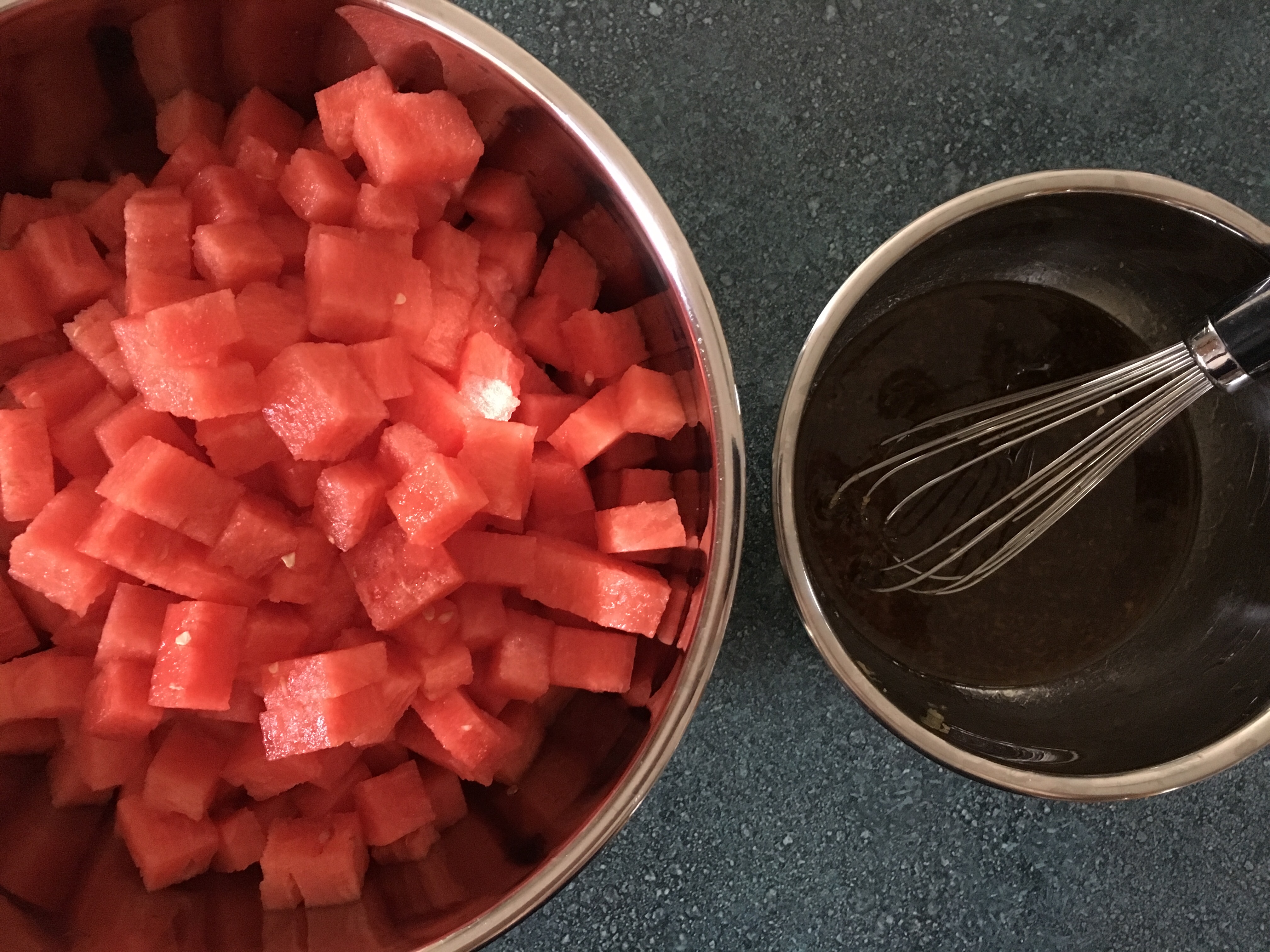
Slice a bunch into small cubes ½“ – 1” cubes, I like a good variety of sizes. Use a small to medium sized melon depending on how many folks your feeding.
Step Two: Make your sauce.
Combine the zest & juice of one lemon (or lime whatever is on hand), some ponzu, rice wine vinegar and sriracha (to taste) then whisk in some sesame oil and avocado oil.
Step 3: Combine everything together and let sit in the refrigerator until you’re ready to eat!
Step Quatro: Dress it up.
Serve topped with green onions, sesame seeds and long ribbons of cucumber or daikon radish.
Don’t forget to save some slices of watermelon for the kids and the hound!
Collard Greens and Cottage Cheese
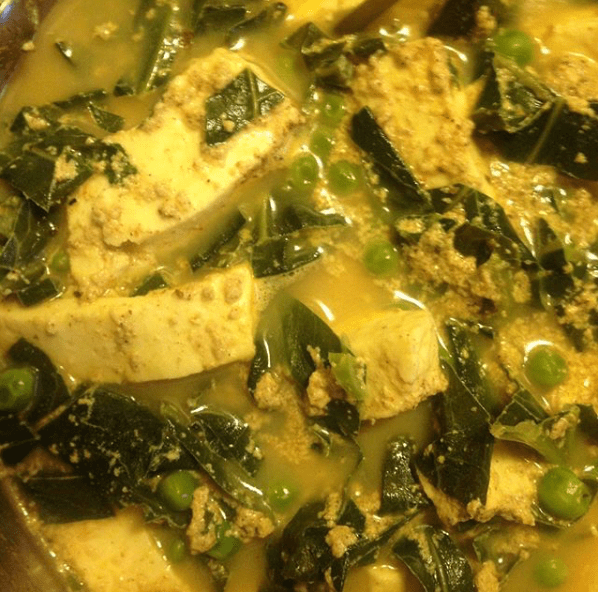
Serves 4 If you had a chance to try this at the Pemberton Farmers market this month, you will bookmark this page. Visit Nidhi under the Downtown Community Barn on Friday, between 3pm and 6:30pm, and see what she’s cooked up for Market-goers this week.
Ingredients:
Collard Greens 5 medium leaves
Indian Cottage Cheese 100 grams
Fresh green peas 50 grams
Fennel powder 1 tsp
Ginger powder 1 tsp
Paprika 1/2 tsp
Salt to taste
Milk 1 cup
Olive oil 1 tsp
Non dairy coconut milk 1/2 cup
Method
1. Wash collard Greens, remove veins, stem julienne and set aside.
2. Cube Cottage Cheese into bite size squares and set aside.
3. Heat a medium size ceramic pan and warm the oil.
4. Add all the spices and sauté for a minute.
5. Add the milk or ccconut milk and bring to a boil. Simmer for 5 minutes on low heat to cook the spices.
6. Add the Cottage Cheese and cook for a minute. Add the peas and simmer another minute.
7.Serve hot on rice!
As Master Gardeners in Training, we are committed to volunteering our time in our local community to educate and answer gardening questions. We use science-based facts and we only share organic garden solutions. Our backgrounds and experience vary, but we all have something in common: the love for plants and gardening. Our title indicates that we are all-knowing… well, some of us are, and the rest of us continue to unearth the facts about all things botanical.
In early June, I was asked by Sarah Jones from Stewardship Pemberton Society if I would speak about collecting vegetable seeds and pollination at one of their free garden seminars at the Pemberton Public Library, the library is home to the Seed Library for Pemberton. Immediately said “Yes!!!” The only caveat was my experience in seed collecting was pretty much, well, non-existent. However, that did not stop my enthusiasm to dig deeper into a topic that I am sure would come up one day at one of our Master Gardener Clinics.
After much research and discovery, my confidence in the subject was better, but what impressed me more, was the significance of collecting seeds. I had no idea the socio-economic impact that seed collection had on creating healthy food systems and people.
Did you know collecting seeds helps to maintain seed health & resilience, better genetic diversity in our gardens, farms & kitchens, and can save you money? It’s no wonder as a child, my grandmother was mortified when she found us playing with her seeds; destroying hours of painstaking work, not to mention affecting her ability to grow the lovely veggies we enjoyed throughout the year.
Photo by Burcu Asvar
Many of us buy seeds from seed catalogues or at our local garden centres. Most seed companies nowadays sell F1 or Hybrid seeds that may produce seeds that are sterile or no seed at all. If they do produce seed they may not produce true to type.
If you can, choose to buy seeds that are open sourced; these are seeds that are not restricted by patents or other intellectual property rights. This keeps our food supply secure for future generations (this is where the socio-economic impact comes into play). Or better yet, take advantage of seed libraries in your community (i.e. Pemberton Seed Library).
Open pollinated seeds are non-hybrid plants which are more genetically diverse, have a greater amount of variation within the plant population, and they allow plants to slowly adapt to local growing conditions & climate year to year.
Collecting seeds requires some good planning as well as understanding the fertilization process. Pollination is key for fertilization, and it’s different depending on the type of plant. Some plants can self-pollinate (i.e. beans), while others depend on insects (honeybees being the most efficient) or by wind (i.e. corn).
Before you start to collect seeds, you need to ask yourself the following questions:
When it comes to Pollination…
Will these plants cross with any others? Is this good or bad? (usually bad)
How does this happen? (wind or insect)
What can I do to control this? Do I need anything?
Do I need a minimum of healthy seed? (do they breed as a group?)
Do they pollinate on their own and self-pollinate (need one only?)
Have I chosen the right plant for the seed?
When it comes to seed extraction and drying….
Do I need to do anything special to the seed?
Is my seed well dried and labelled?
The answers to these questions are different for each vegetable, and my recommendation is to get a good reference book on seed collection that will answer all these questions in greater detail. I have listed a few websites, and a couple of books at the end, that the Pemberton Library has ordered for its book collection.
The process of collecting seeds is easily summed up in the diagram below:
To maintain purity of seeds, they may require isolation through distance to prevent insect or wind contamination, time (being planted in stages so that the first crop sets its seeds and stops shedding pollen), mechanical isolation (i.e. using physical barriers to prevent unwanted pollen, like cloth bagging or caging), and/or hand pollination, which is the most commonly used method to produce pure seed.
Choosing seed comes down to observing the whole plant and not just the fruit, checking for disease & insect resistance, drought resistance, trueness to type, colour & shape of fruit, flavour, etc. Other factors include vigor and population size (saved from the greatest possible number of plants).
The process of removing and cleaning seeds can include washing, drying; and some plants require fermentation first.
Washing seeds (tomatoes) requires placing the collected seeds in a bucket of water, stirred with vigor to help separate viable seeds, strained, and dried on a non-stick surface (glass or ceramic dish, cookie sheet, or screen – not paper towel).
Plants that produce seeds in pods (peas) or husks (corn) are usually harvested dry, threshed to break the seed from the covering, and any chaff or debris is removed by a process called winnowing (wind).
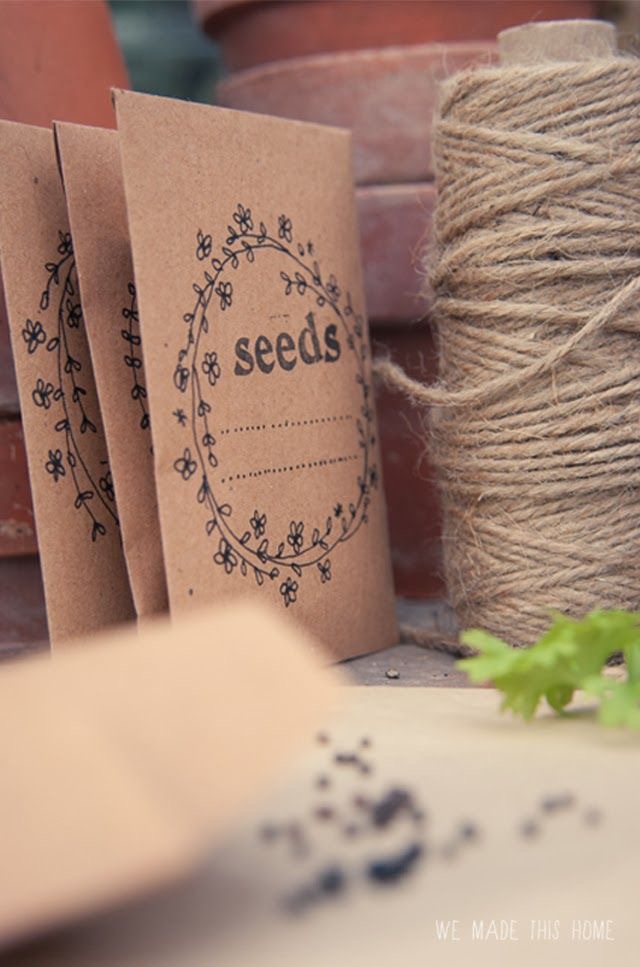
Storing seeds is the final stage of the process. Glass or metal jars, zip lock bags, paper envelopes provide air tight homes, and make sure to keep the seeds away from heat or moisture. Ensure they are clearly labelled and stored in a cool, dark place where there is minimal temperature fluctuation.
I want to thank Sarah Jones (Stewardship Pemberton Society) and Lisa Richardson (Traced Elements) for asking me to share my new-found appreciation and knowledge about seed collection. I have an utmost respect for those gardeners and farmers who have been collecting seeds and who are able to pass down their seed from generation to generation. According to the United Nations Food and Agricultural Organization, we have lost 75% of our diversity in our agricultural crops since the beginning of the last century. Having a seed library and sharing our seeds within our community plays such a significant role in the health of our food systems, and is good for our mind, body and soul.
Summer is well and truly here! (I can say that with conviction as it’s currently 37˚C!). And with summer comes backyard bbq parties and the dilemma of what to take with you as your pot luck offering.
Well, worry no more! This month’s recipe, borne out of the need to find a salad not imported from the US of A (I’m on a Trump boycott AND trying to buy less produce wrapped in plastic), has a dressing that tastes exactly like the one in the Kale and Brussel Sprout pre-packaged salad kit you can get from Pemby’s grocery store. So it’s delicious, and it’s also so easy to make you’ll be left wondering why you ever bought a ready made salad in the first place!
So here it is, the tastiest, easiest Broccoli Salad ever. And make sure to tell everyone you made it yourself! 😉
Ingredients:
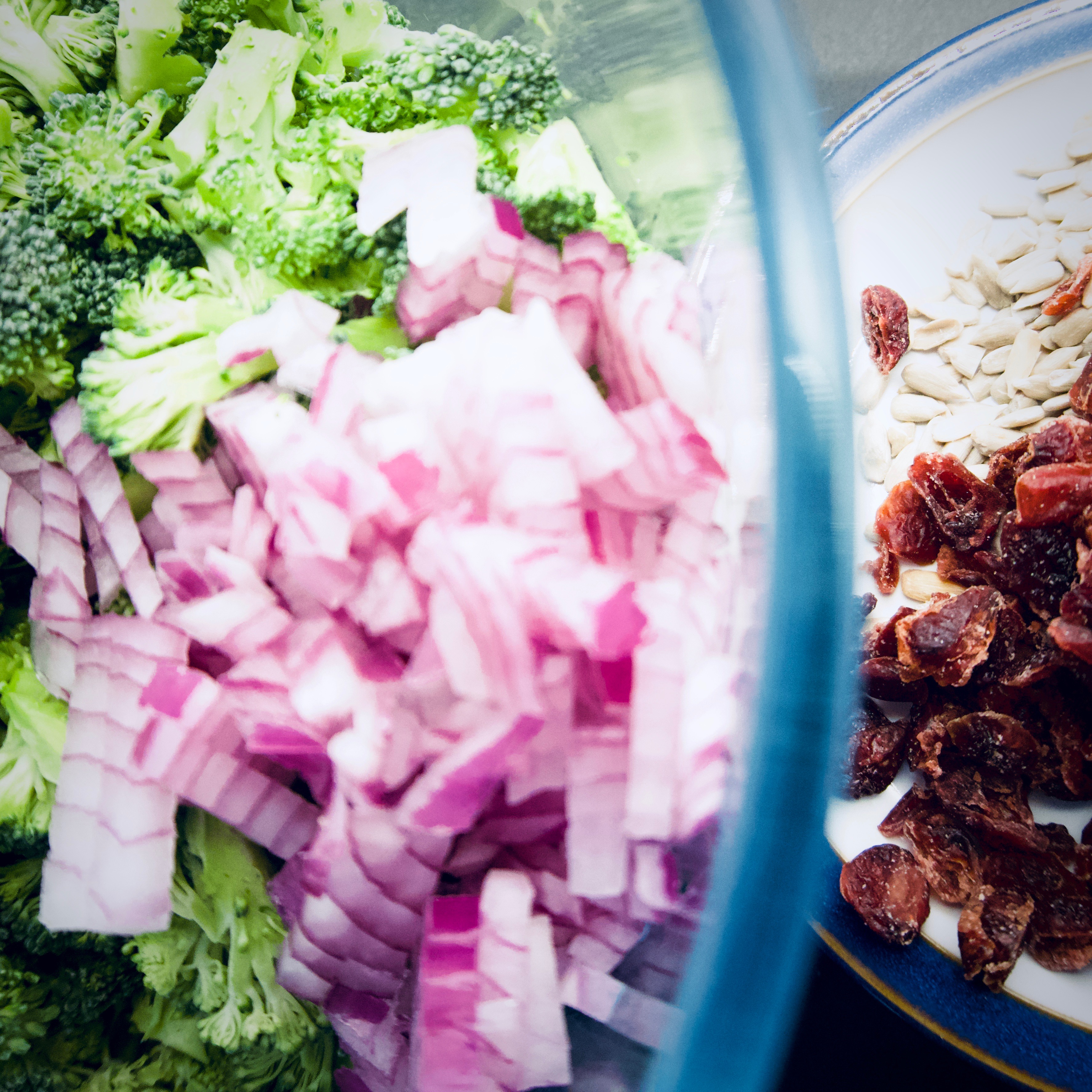
8cupsbroccolicut into bite sized pieces
1/3cupred oniondiced
1/2 cup dried cranberries
1/4cupsunflower seeds
1/2cupbacon bits (I used turkey bacon because I don’t eat the other variety!)
3tablespoonscider vinegar
2tablespoonssugar
1cupmayonnaise
Salt & pepper
Directions:
Whisk together cider vinegar, sugar, mayonnaise, salt and pepper in a medium bowl. Set aside.
In a large bowl, combine broccoli, onion, cranberries, sunflower seeds, and bacon bits.
The bell rings to start the market day. Relentless and demoralizing rain has been falling since the tents came out of the trailer and we began the set-up, two hours ago. The gutters now strung up between the tents are working well, emitting a steady stream of water into the growing pool along the back curb and the tent side walls keep us relatively rain-free inside the stall. The very air seems wet, however, and little can be done about that. Tough morning at market so far.
I’ve been selling my family farm’s produce at Vancouver farmers’ markets for 20 years, so I know how to sell potatoes in the rain. It’s just like how to do it in the sunshine, except it seems mentally harder. The difficulty lies in keeping the stall in a high state of readiness, even though it might be empty and you would prefer to be warm and dry elsewhere. Every sale matters- especially in the rain, if your farm depends on farmers’ market sales
I squeeze my way past the bins of backstock in the trailer where I have been changing out of sopping wet clothes. I have already traded a few hellos with the neighboring vendors, people I’ve seen every Saturday morning for years, but there’s been no time for more than that. I glance around to make sure all the signs are up and that the display is full: we’ve finished in time. It takes just as long to get set up in the rain as it does otherwise. Longer, of course, if you waste time regretting the situation.
The potatoes look good today, the red Chieftain and yellow Sieglinde sort of glowing in the dim light. My staff, who are making up $5 bags of potatoes and carrots, wisely refrain from discussing the weather. The vast, dripping, emptiness out in the market fairway which would normally be filled with customers eager to start shopping, lining up in advance of the opening bell, is obvious enough.
It is undeniably deserted, and despite the potatoes doing their best to provide sunshine, it feels disheartening. I give my head a shake because I think it’s too early to write this one off.
The first customer materializes- she’s a rain-or-shine regular who gave up on regular grocery stores quite a few years ago. She is followed by another I don’t recognize. A chef splashes his way in. I make sure his 20lb bag weighs at least 25. At the till, we’ll be rounding down more than usual. The customers might not notice but I don’t mind. I am feeling very benevolent towards anyone who turns up this morning.
Before I know it an hour has passed, and I realize that the potato display tables are hidden from view by the backs of customers filling bags. The stack of now empty bins in the back has risen to a level I hardly thought possible when the opening bell rang. It’s going to be a solid day, despite the rain, which might even be easing up a little.
One of my staff has been coming to market ever since she was a baby, and her mom worked for a farm vendor here before that. She’s on the first till, and I jump behind the second one, a line-up having formed of dripping wet customers who thank us for being here today when they get to the front.
It bears repeating: the rain-soaked customers are thanking us and giving us money for potatoes. In fact, now it’s so busy they are lining up to do so.
This, right here, is what makes farmers’ markets tick. People choose shopping in the rain over going to a grocery store. Farmers choose marketing in the rain over selling wholesale.
It’s what leads to the fact that farmers can make a living on an acreage that would otherwise be insufficient because they can get full retail for their produce.
The customers keep coming back for more because…well…I just don’t know. Is it the quality of the product? The contact with an actual farmer? The coffee and crepes? It might be magic. Whatever the cause, it provides me motivation to keep farming, and to keep customer service and marketing standards high. It seems like a practical way of showing the customers that I really appreciate their business.
I love being a part of this special relationship, but I worry that it won’t last. It’s so much work, there is so much to learn, and there is so much competition for customers- and surely, they won’t keep coming? I mean, sometimes they must quietly wonder if it is really all that great? The weather, the effort, the cost. All that cooking.
Customers. We need customers to make markets successful. We need to retain existing ones and win new ones who might also shop in the rain. The good news is that we are only tapping a tiny fraction of the people who buy food, so there are plenty more to be had. The bad news is that the competition out there is absolutely fierce, and nowhere else other than at farmers’ markets are customers asked to go out shopping in all sorts of weather, probably park far away, and spend perhaps a little more than they really meant to.
Farmers’ markets enjoy one major competitive advantage however, and that is something I have begun to call “mutual appreciation”. This is an energy generated at the point of contact between primary producer and end consumer at market, most notably at the transaction stage. I take your money, you take my potatoes. We are both appreciative of the other. The feeling builds each week, from season to season and year to year and really can’t be re-created in other retail environments.
The farmer can do much to cultivate the feeling of mutual appreciation in the stall. It’s about a lot more than saying “thank you”. Developing good customer service and merchandizing skills is of prime importance- pre-market preparation, and of course years of practice help too. In my opinion, it is important to put as much effort into selling the food as you spend growing it. These customers deserve that.
The farmer makes the magic that the people are coming back for. If you can also create this feeling of “mutual appreciation” in your stall, I think you’ll be able to have both tills busy, even in the rain.
Anna Helmer farms in the Pemberton Valley with her family: friends and relations. Her book is called: A Farmer’s Guide to Farmers’ Marketsand is available on amazon.com.
Sounds like a potential math write up but you’re wrong. (I would never do that to you or myself.) I will quickly remind you that I did well in said subject thanks to my dad but generally I don’t care for it… for the most part I’m a pocket calculator gal. So, let’s explore the awesomeness of rotation in a few other ways through a couple quick examples: the wheels on my bike rotate and take me to all sorts of cool places, my car takes me to work so I can afford a bike to take me to all these cool places and well, we all take a trip around the sun every year (whether we want to accept that it results in aging is a whole other conversation).
Regardless on how you define rotation, the point is – it’s good: a chance to roll past the old and explore the new. Now, let’s apply this mentality to our garden.
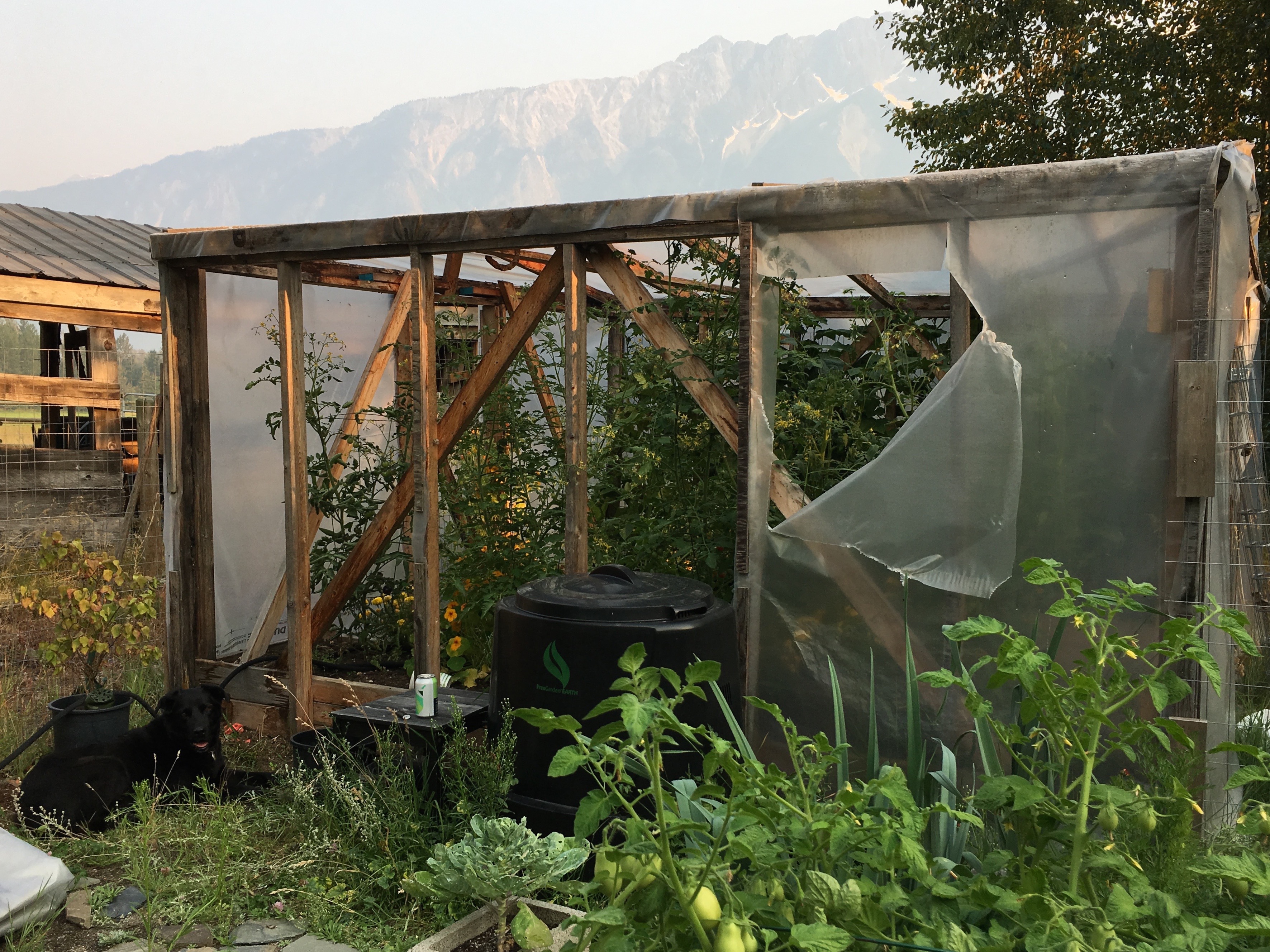
When I moved into our current location all that existed was a greenhouse for garden space. From what I could tell the only items that had been planted in there were tomatoes, peppers, basil and cucumbers (basically, all the standard greenhouse lovers). However. Over the last couple years I began to realize that the greenhouse location was kind of shady due to the rise of the surrounding cottonwoods and things weren’t thriving as well as they should be.
Then spider mites appeared last year… they even attacked my marigolds. I mean come on: marigolds! They are supposed to be the shit – indestructible. This led me to realize that change was mandatory. So, down came the plastic walls of the greenhouse late-ish last summer and a ton of Sea to Sky Soils compost added in the fall.
Long story short what I’m trying to get across is that planting the same thing time and time again in the same zone is no bueno. Enter the rotation factor here.
There is a simple crop rotation scheme that follows; legumes-greens-roots-fruit. Of course there are tons of don’ts and cans and “rules” that apply to make it not so simple. For instance: potatoes are considered a root and tomatoes are fruit but because they are from the same family they shouldn’t follow each other, they could harbor similar disease and pest problems for the next crop. AND THEN, if you add in the companion planting aspect it can get real strange. Here is a simple plan I came up with for an assignment that demonstrates what a 6 crop rotation could look like.
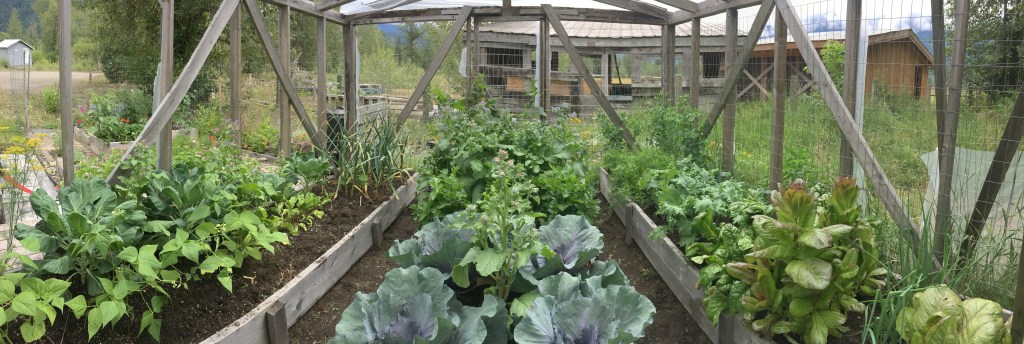
My “greenhouse” is now the greenest it’s ever been thanks to my decision to open it up and plant a bunch of greens, roots and legumes. But I think the thing to remember is that well, any rotation is better then none and adding organic matter into your beds is a surefire way to add nutrients back in and no future plant is going to disagree to that.
Stay thirsty for garden experimentation my friends!















 Traced Elements