Category: recipes

  • COVID Trends – No-Knead Bread

    COVID Trends – No-Knead Bread

    I’m not sure about you, but I was feeling a bit left out of the club!

    Since the start of the Coronavirus pandemic many people have either been laid off (hopefully just temporarily) or have had to close their businesses to control the spread. I am one of the lucky ones in that my 40-hour work week has remained, with only some minor changes to my schedule. However, it did mean that while everyone else was discovering the joys of breadmaking, i.e. different starters and best methods, albeit when flour and yeast were available, I was stuck in front of my computer screen!

    A little Pinterest research later I found a No-Knead Bread recipe that claimed it was “crazy easy”! And it was! Four ingredients, mix them up, leave them overnight to do their thing and then the next day make it into a ball, stick it in a dutch oven, cook it for 45 minutes and ta da – homemade artisan bread!

    But one thing still peeved me. The flavour was great, the texture was wonderful, the making of the recipe had been a success, so what was the problem? Well have you tried toasting the middle slice of a round loaf without having to cut it in half first or without trying to toast both ends so that you end up burning the middle and setting the fire alarm off? No? Me neither!

    So the next time I made the bread, when it came to shaping it into a ball I tried to make it an oblong instead and used my lasagna dish to cook it in. The result was better but the slices were still not toaster friendly.

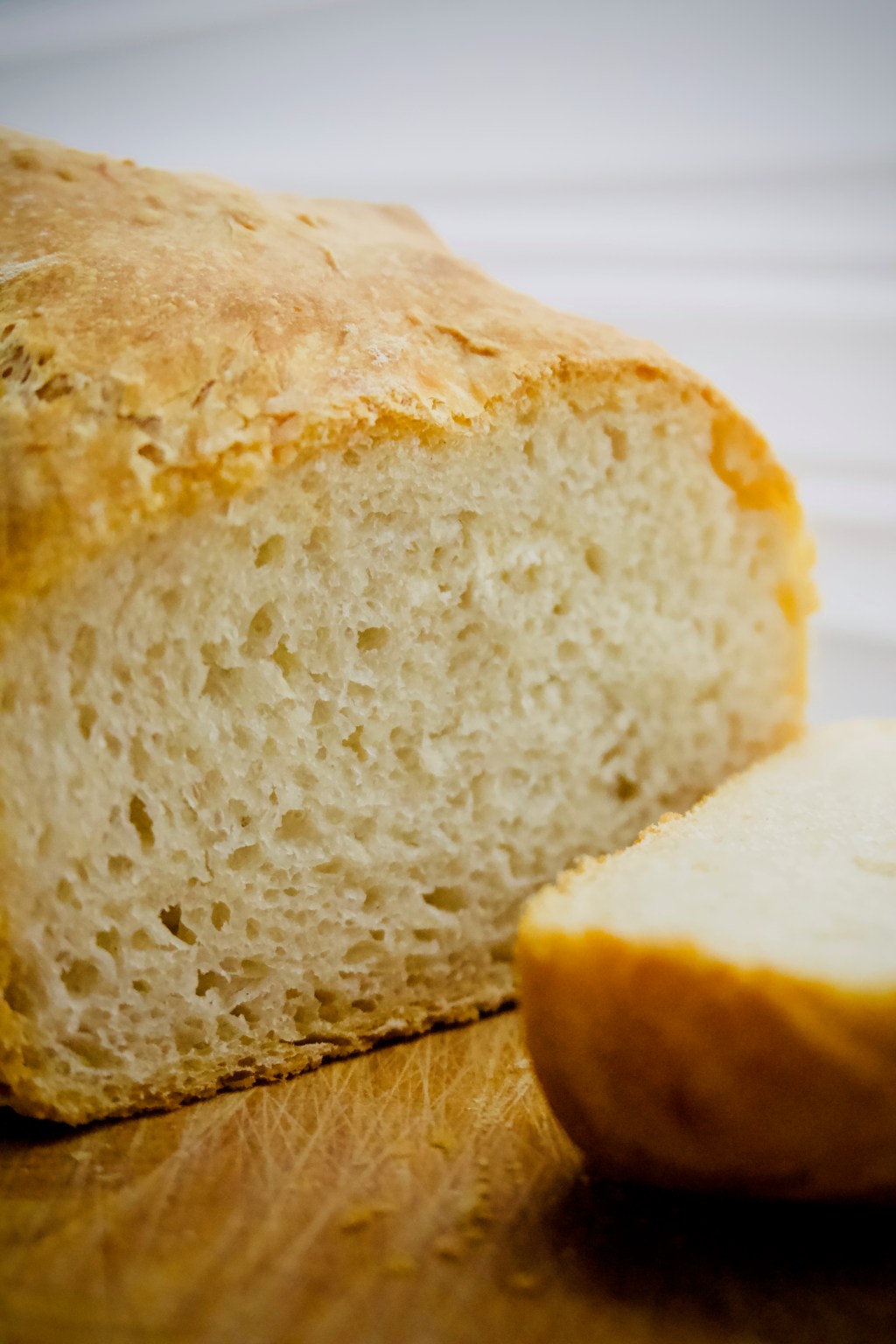
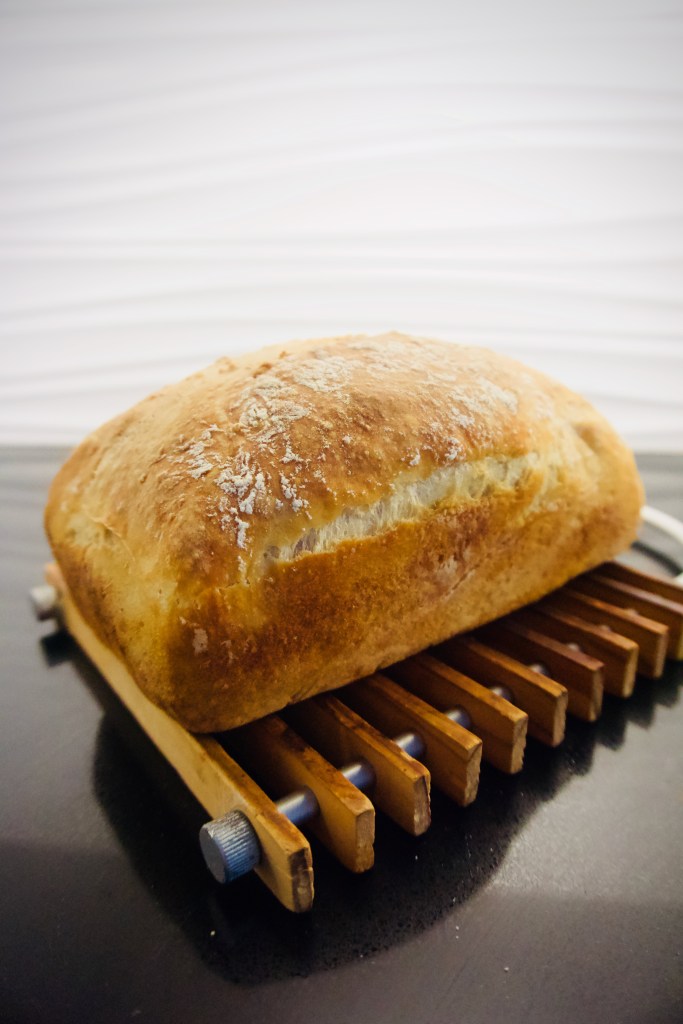
    And then I came across this No-Knead Bread hack. Instead of shaping into a ball, flatten it a little, then fold it in 3 and stick it in a [greased] traditional loaf pan.

    So far it looks like it may have worked. 🙂 It looks like a normal loaf and should fit in my toaster no problem and will be easier to cut as it won’t be wider than my bread knife. This could turn out to be a complete success and it may be one thing I don’t have to buy at the grocery store anymore. (Sorry Pemberton Valley Supermarket). Of course, the proof (no bread pun intended) will be in the eating!
    Ingredients

    (Makes 1 loaf)

    • 3 cups all purpose flour
    • 1 teaspoon salt
    • 1/2 teaspoon yeast
    • 1.5 cups warm water

    Directions

    1. In a bowl, stir the flour, salt, yeast and water until combined. Cover with plastic wrap and rest at room temperature for 8-24 hours.
    2. Turn dough out onto a well floured surface.
    3. Sprinkle a little more flour over the top of the dough and knead the dough just two or three times until the flour is incorporated and the dough is no longer bubble-gum sticky.
    4. Flatten into a Rectangle – Use your fingertips to gently flatten into a rough rectangle. If the dough is sticking to the counter, sprinkle a little flour underneath. Try not to use too much flour, though, or else you’ll have trouble getting the dough to stick to itself once you shape it.
    5. Place the shaped loaf into a greased bread pan and let it rise until it’s just starting to crest over the rim of the pan.
    6. Turn on the oven to 450° to pre-heat about 20 minutes before baking.
    7. Just before baking, rub a little flour into the surface of the loaf and cut a slash or two with a serrated knife.
    8. Bake the loaf for 45-50 minutes, turning them once halfway through so they bake evenly. The loaf should be golden-red with a few toasted brown spots. Shake out of the pan and tap the bottom with your knuckle – if it sounds hollow, it’s done! If you’re not sure, check the internal temperature. Bread is done when the centre registers 190°.
    9. Cool before slicing (and slathering with butter!).

  • Spelt Bread for the New Pemberton Bakers

    Spelt Bread for the New Pemberton Bakers

    Hi everyone, and thank you for visiting this website and thank you as ever to Lisa for running it. It is a lot of fun to contribute to – now more than ever. I see at the Pemberton Supermarket that there are store-packaged containers of yeast! The usual small amount of yeast that the store stocks in jars is apparently not enough for everyone (including myself) making bread these days. I think it is wonderful. I have been making my own bread for years. A warning however – do not buy large quantities of yeast at a place like Costco, in bulk. Yeast loses its power after a while, so buy it in small jars (after this Covid crisis is over). Bread takes patience and time and it is very disappointing when your bread doesn’t rise due to outdated yeast!

    This is the recipe I have tweaked over the years. I meant to post it last June but I scrolled down today and noticed that either the recipe got bumped off or I didn’t actually post it like I meant to! Sorry about that. This bread is especially good for toast in the am. There was a butter shortage last week when I got to the Pemberton Supermarket so I bought what was left – organic butter at $10.00 per pound – yikes! We were rationing it at that price. Thank you to the Pemberton Supermarket which during regular times is well stocked, clean, friendly, and bright, but during this crisis is doing a wonderful job supplying our community.

    Delicious Fibre-full Spelt Bread (yield: 2 loaves)

    Ingredients:

    7 cups whole grain spelt flour

    (I used the Everland brand this time but Bob’s Red Mill works well too. I have recently had all my Anita’s brand sprouted spelt flour go rancid on me recently even being kept in the freezer so I am not going to use it or recommend it for the time being.)

    4 tsp instant dry yeast

    1 tbs table salt

    1 cup ground chia seed (MUST be ground first)

    1.5 cups slow old-fashioned oats

    3 ¼ cup water

    1/3 cup unsalted butter

    1 cup oat bran

    Method:

    Put 4 cups flour into stand mixer, and add: yeast, salt, oats, chia. Mix well with dough hook.

    In saucepan place water and butter, over low heat. When butter has melted remove from heat and add to mixer, with mixer on low speed.

    When flour and water mixture are well incorporated, add oat bran and 3 cups of flour slowly.

    Increase speed to medium. When dough is elastic and well mixed (10 minutes), remove dough and place in a large buttered mixing bowl. Cover bowl with plastic wrap and place in oven with oven light on for 1 hour.

    After one hour, remove dough and divide in half. Take each half and roll into a cylinder. Place each cylinder into a greased loaf pan. You will have two loaves.

    Place loaf pans into oven with oven light on for 1 hour.

    Remove pans from oven after one hour and then turn on oven to 375C.

    Bake loaves for 30-32 minutes. Cool on rack. Enjoy!

  • The Frogs are Croaking!

    The Frogs are Croaking!

    In these strange times I have been waiting (impatiently) for the frogs to start croaking. First come the pussy willows, next comes the frogs. And tonight I heard them – over on Urdal Road. They will slowly migrate west to Collins Road and Pemberton Meadows Road soon but for now you have to tilt your ears to the east. I always am excited to hear the first frogs, but this year I have been really anxious for them – a sign that outside of the human species, life goes on as normal.

    Thank you to our farmers. This pandemic and crisis has re-alerted me to the importance of food security. When I first moved to Pemberton 16 years ago Anna Helmer explained all this to me. I hadn’t a clue, being raised in Vancouver and buying my groceries at Safeway. I didn’t know what the ALR was. “Pave paradise, put up a parking lot”, sang Joni Mitchell in Big Yellow Taxi. More recently, she wrote in her song Shine: “Shine on fertile farmland buried under subdivisions”.

    We need farmers. We need farmland. This cannot be outsourced. Farmland must be protected. We are learning this now during this crisis. The hard way.

    When the Hellevangs recently announced that they were selling big 50 lb bags of Yukon Gold potatoes I jumped on it. And for the last 2 weeks we have been eating a lot of baked potatoes. I visited the UK for the first time nearly 30 years ago, and my Mum and I stayed with her friends who had a very young and “highly-spirited” (bratty in our view) child. She would only settle down with the promise of a “jacket potato”. At a village tea room or at their home these jacket potatoes seemed to have magical powers.

    Not sure why it’s taken me so long to embrace the simple but sublime jacket potato – but if you have some chili on hand (my recipe for deer chili is posted on this blog), plus sour cream, chopped green onions, butter and crumbled bacon, and of course some beautiful Pemberton Yukon Gold or Russet potatoes, you have such an easy and delicious meal.

    Frogs, farmers, potatoes. Pemberton we will get through this!

    Pemberton Baked Potatoes: (serves 4)

    4 large Russet or Yukon Gold Pemberton-grown potatoes, scrubbed well.

    Method: Using the tines of a fork, poke the potatoes in 5 or 6 places.

    Bake 1 to 1.5 hours at 350F. (Time depends on size of your potatoes.)

    Serve with butter, sour cream, green onions, bacon bits, or chili.

  • DIY – Maple Granola

    DIY – Maple Granola

    The past few weeks, with the arrival of COVID-19 to our piece of the world, has caused me, as a normally un-anxious person, to become riddled with anxiety and a sense of foreboding, as I know is the case with many of my friends, colleagues and neighbours.

    Working in the hospitality industry in Whistler, with hotels temporarily ceasing operations and restaurants and bars closed to guests, means that is time to pull up the boot straps and find a way to both save money and release some of that tension.

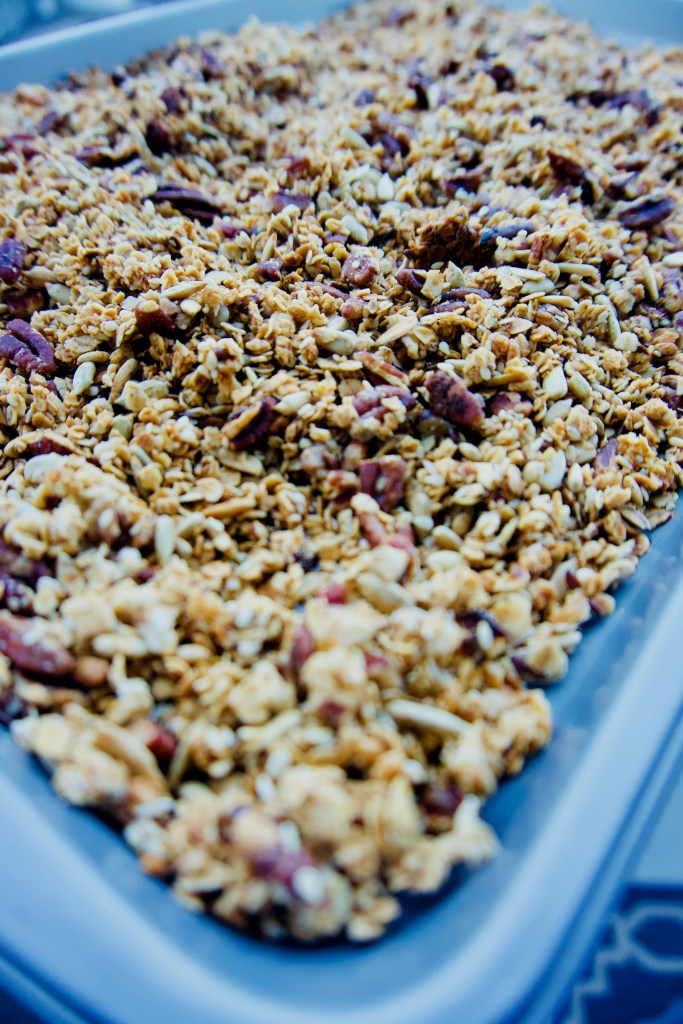
    My go-to is baking and I do happen to have a banana bread in the oven as I type. But, as the hotel restaurant where I work had to close suddenly, there was a lot of food that was potentially going to go to waste and was instead given away to the staff, primarily to those who were just about to receive a temporary lay-off notice. 😦  I did, however, manage to get my hands on some yogurts and this recipe for Maple Granola is one that I have been meaning to make for a while. So now my daily breakfast consists of yogurt parfait with half a banana and, if I really needed a snack, the granola would work for that too.

    FYI I didn’t actually have any sunflower seeds in the cupboard but did have some linseeds so added those in instead. However, I’m pretty much sure you could add in whatever seeds, nuts and dried fruit you prefer and it would still taste delicious!
    Ingredients

    (Makes 8 cups)

    • 3 cups large-flake rolled oats
    • 1 1/3 cup natural almonds or pecans , chopped
    • 3/4 cups pepitas (pumpkin seeds)
    • 3/4 cups sunflower seeds
    • 1/3 cup sesame seeds
    • 1 teaspoon cinnamon
    • 3/4 teaspoons kosher salt or sea salt
    • 1/2 teaspoon ground ginger
    • 2/3 cups maple syrup
    • 3 tablespoons canola oil or melted coconut oil
    • 1/2 cup coconut chips (optional)1
    • /3 cup dried cranberries
    • 1/3 cup raisins

    Directions

    1. Preheat oven to 300°F.
    2. In large bowl, stir together oats, almonds, pepitas, sunflower seeds, sesame seeds, cinnamon, salt and ginger. Add maple syrup and oil, stirring to coat; spread evenly on baking sheet. Bake until golden brown, stirring every 15 minutes and rotating pan halfway through, about 40 minutes. Let cool completely in pan.
    3. Sprinkle with coconut chips (if using), cranberries and raisins.

  • Plant Yourself: A Recipe for Being Here

    Plant Yourself: A Recipe for Being Here

    I was originally going to call this post “A Recipe for Ordinary Wonder.” I’ve already written about wonder here, and while I think it’s essential, it remains a little ephemeral. It slips beyond the edges of our understanding. I feel the medicine of this particular moment needs to be earthy, grounded, real. Needs to be practical enough to lift us out of our fear and isolation. It needs to come in bite sized pieces, like good dark chocolate.

    I’m a horse and nature based teacher. Or rather I was, until the recommendations for social distancing led me to decide to cancel my spring break camps and enter self imposed quarantine as I’ve taught students from all over the Sea to Sky corridor (and the world, via Whistler) over the last two weeks. Yesterday while picking out the paddocks, I asked myself this question: if I’m not able to teach in person– to create the kind of meaning filled and deeply felt transformative encounters between horses, humans and land I feel we so badly need right now– what can I offer through other means that can give people the skills to create experiences for themselves?

    There’s a lot of writing swirling around about reconnecting and seeking stillness right now. What I think we’re being invited to do is to expand our consciousness past our own perspective. To broaden it past the narrow road of our individual lives and the lives of our families; to open to the collective whose voices move close against the boundaries we’ve made around ourselves. As I write this, an image comes into my mind of a dog shaking its head: one of those proper shakes where their ears flap up against the sides of their skull, and you can almost hear their brain rattling around in there, rearranging their neural pathways.

    These times we’re in are like that. We’re being shaken out of our patterns. We can choose to steel ourselves against what’s happening and create more rigidity in response to change (which we know we’re going to see a lot more of in this lifetime…) or we can get curious and explore it as an adjustment in our perspective, an ear shake that opens us to something wider than what we were.

    I want to give you a set of tools, something real and grounded and simple, that you can play with. Play with these with your kids. Pull one out each day and see where it takes you. You don’t need anything special. Just your body and the body of the world. Some of them might seem a little silly. That’s on purpose. They’re meant to enliven the younger parts of ourselves. That’s often where our biggest perspective shifts lie and where the more authentic parts of ourselves are buried. They’re also meant to give us the kind of connection we crave right now, an empathetic, felt sense of being known by an other. It’s just that, in this case, “the other” isn’t human. Even better! Nature is endlessly forgiving of our bumbling attempts to re-mind ourselves of our relationship with her. There’s no judgement here. Think of these exercises as lighthearted games, little valentines we can exchange with the more-than-human-world that surrounds us.

    If you try these, I’d love to hear about your experiences in the comments. Share your valentines with me. (I promise I won’t judge you either. ❤ )

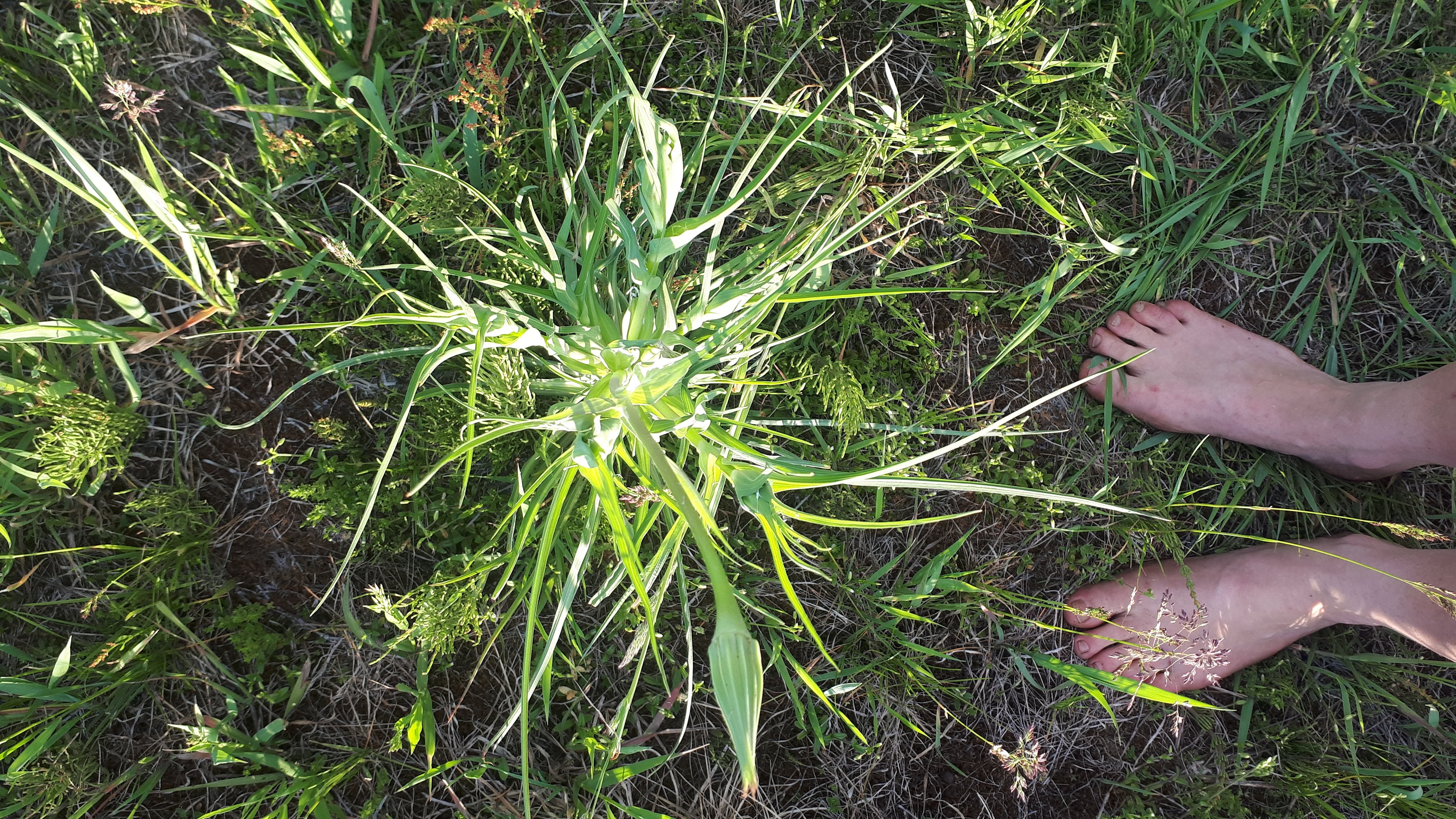
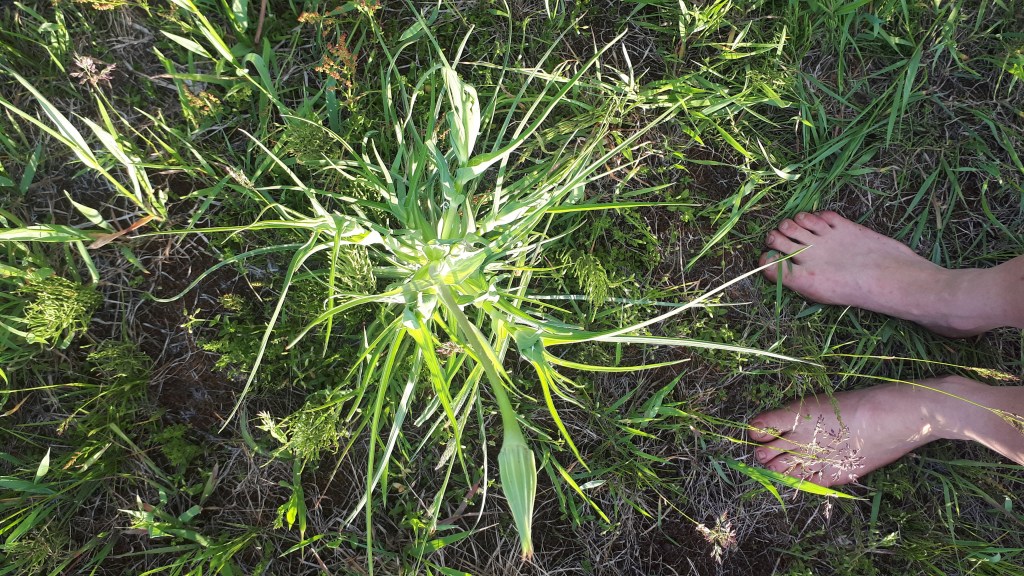
    1. Take off your shoes. And your socks. Find a patch of ground that looks warm and safe and inviting and stand on it. If you want more, go for a little walk. If you’ve tried a warm and inviting patch of ground already, try standing on snow. Try pavement. Try mud. Try exploring a liminal zone by walking from a shadow to sunlight, and track the differences in temperature with the bottom of your feet. Want to level up? Watch my video, “Place Based Walking,” for some ideas. Or walk on some gravel for a free acupressure session. (Top tip: touching the earth barefoot grounds and stabilizes the electromagnetic systems in the body. It literally rewires us to attune to the larger electromagnetic field of the earth, which helps us to come closer to a state of heart and brain coherence. Think of this as your antidote to all the wireless technology we’re saturated with, and the true savasana with which to end your online yoga class.)20190526_193441 (4)
    2. Let yourself be touched. The next time you’re out on a trail– or in your backyard, for that matter– notice the shrubs and trees that lean close to the edge of the path. It may be an errant twig that brushes across your cheek, or a cottonwood limb that’s come down across the over the course of winter. Or perhaps a low hanging cedar branch that brushes the top of your head and releases its scent. Just before you move out of the way, stop. Let yourself come into contact with this tree. You are nature touching nature. See how many different trees, bushes and branches you can let make contact with. Try not to do it on purpose. What happens if you turn off the path and into thick brush? Is it easier to find the gentlest way through? Is there something in your walking that becomes a kind of dance? An intimate exchange with the life forms we’ve believed to be inanimate all around us? What thoughts do we dance with in our psychic space in this same way? What reaches always toward us,  yet remains unnoticed? What do we cut through in order to continue to travel in the direction we want to go? What does it take for us to be touched by a different  part of nature in this way? A rock? A lake? How would we have to move our bodies to make contact?
    3. Fall in love with something small. Go outside. You can go to your favourite patch of woods or rock or field, or give yourself a challenge and start on a sidewalk or in the middle of your street. Your goal now is to wander. To meander with no destination in mind until something tiny calls your attention and makes you stop. Look down in the direction of your feet and keep your eyes soft. Look at the trunks of the trees. Look at everything without really looking at it. Keep your attention soft, like a photograph that’s not quite in focus. Wander until something, of its own accord, pulls your attention toward itself. It might be a bright green wolf lichen, or a pattern the compression of the snow has left in last summer’s dried grass. It might even be a chocolate bar wrapper with half of its colour worn away, held to the ground by a fallen stick. Once something tiny calls you awake, then give yourself to it entirely. Bend down and get close. Learn everything you can about it without causing harm. Then stand up, zoom out again, let your attention go soft, and start wandering again until something else calls to you. If you’re with your family or a friend for this, tell each other something you love about the tiny thing you discovered without giving away its identity. See if they can guess what it was. (Top tip: if you can cultivate this kind of “falling in love outside of yourself”, this sense of your attention being called to something of its own accord, it’s the best state of consciousness for finding mushrooms and other medicinal plants, and a profound way to activate our intuition. This form of listening to the being-ness of the world has been essential to the survival and evolution of human beings up until the last hundred years or so, when we started to place our emphasis on the rational, linear parts of our cognition.)
    4. Look up. Go to where there is nothing a human has made between you and the sky and look up. Bring a blanket and lie on a rock and look up. Let the sun heat your eyes behind your closed lids. Sit with your back against a tree and trace the line its trunk makes on the way to the sky with your gaze. Follow that line out into the crown of the tree, as if you were drawing the lines of each branch into the sky with your mind. Or look at clouds and then trace them in your mind’s eye in this same way. At night, look up at the stars. Imagine you are sailing on a ship a thousand years ago and this is the only map you have to guide you into the unknown. Learn a few constellations, or trace lines between the stars and make up your own patterns and give them names. Learn a star or a constellation as a family and know that every time you go outside and look up at it, you are connected. Look up. We need to remember the world is bigger than us again. (PS: I have a secret theory I have only anecdotal evidence to prove, but I’m still going to share it with you anyways: I think looking up in this way– actively tracing and engaging the muscles of our eyes in unfamiliar patterns of movement, specifically looking up into the worlds that exist above the plane human live on– causes our vagus nerve (and our autonomic nervous system, which governs our heart rate, breathing, digestion, hormone levels, AND THEREFORE OUR STRESS RESPONSE) to shift from fight/flight/freeze back to social engagement.)
    5. Leave a gift. Make something beautiful out of some bits of nature you find around you. (Three year olds are great at this, as they haven’t yet been trained out of this kind of reciprocity with their environment. ) Arrange a line of pinecones that marches across your street and makes someone else wonder. Create a spiral made out of pine needles for the wind to blow away. Line up twenty sticks from longest to shortest. Write “I love you” in pebbles across the valley trail. It doesn’t have to be profound, and it doesn’t have to be ‘Art’. Making and creativity are part of the basic tenants of humanity. Nature is always taking chaos and creating something more complex and more beautiful. How can we invite some of this elemental and playful creativity into our lives? How do we share our energy with others in ways that add to the glorious mystery of the natural world? Be inspired by the ephemeral earthworks created by Andy Goldsworthy or the morning altars offered by Day Schildkret, but don’t get trapped by the idea that your gift has to be a grand gesture. Gratitude, giving, and making are ancient parts of our being. Make something now, in this field where we’re standing, with just the materials of the field itself, for nature herself to wonder about. DSCN2734


  • Perfect for a cold day – Slow-Cooker Creamy Chicken With Biscuits

    Perfect for a cold day – Slow-Cooker Creamy Chicken With Biscuits

    You know those days.

    The ones that are cold, wet and miserable and you walk the dog only to feel chilled to the bones. Or it’s snowing so hard you just want to curl up in front of the fire with a good book and a huge mug of coffee. The ones when all you want to do is eat comfort food, but with the least amount of effort to make it.

    Well I found it in this recipe for Creamy Chicken with Biscuits. 🙂 Place all the ingredients (except the biscuits) in the slow cooker and leave it to do it’s thing for 3 to 6 hours, depending on the temperature setting you choose! Isn’t the slow cooker magic?

    And what makes this recipe even better are those biscuits. You could go the extra easy [ie lazy] route and buy some store-bought ready-made biscuits OR you could make up the simple recipe that’s included for Easy Drop Biscuits. Just put all the ingredients in a food processor and mix together. I ended up bringing mine together on the counter so I really felt that I had put the effort in, and because all I really have is a hand blender chopper thing so it doesn’t work quite as well! 😉

    Anyway, boy were they worth it! They made the dish even better and merited the 10 minutes it took to make them. Flaky, buttery and oh so yummy.

    Ingredients

    • 2 cups all-purpose flour, spooned and leveled
    • 1/2 cup (1 stick) cold unsalted butter, cut into small pieces
    • 1 tablespoon baking powder
    • 1 teaspoon kosher salt
    • 1 cup whole milk

    Directions

    1. Heat oven to 400° F.
    2. In a food processor, combine the flour, butter, baking powder, and salt; pulse until pea-size clumps form.
    3. Add the milk and pulse just until moistened.
    4. Drop 6 large mounds of the dough (about ½ cup each) onto a baking sheet.
    5. Bake until golden, 18 to 20 minutes.

    Now you know what to throw in the slow cooker on the next cold, wet, miserable day. You’re welcome!

  • “Rally the Troops” Cauliflower-Lentil-Fennel-Coconut Curried Soup

    “Rally the Troops” Cauliflower-Lentil-Fennel-Coconut Curried Soup

    I’ve been making this soup often. I feel like I am rallying the troops as I take all the veggies out of the fridge to start cooking. Napa cabbage is a new addition I have made and turns out this veggie is high in vitamin C – a good winter soup veggie. I can eat this soup most days in winter and make a batch about once a week. It is good for lunch or dinner and I feel good knowing I am getting my veggie requirements.

    I am going to make this soup for a friend this weekend. It ticks so many boxes: veggies (including 2 cruciferous veggies), minerals from homemade chicken stock/bone broth, and protein from the lentils. Enjoy the last stage of winter – prime soup-eating season. I am proud to say I created this soup. I am really happy with it and I hope others give it a go. There is no nicer way to eat healthfully in winter than with a delicious veggie-filled soup.

    Ingredients:

    3 tbs pure olive oil

    2-3 cups chopped napa cabbage/Chinese cabbage

    1 large yellow onion, chopped

    2 cups chopped parsley

    ½ fennel bulb, fine chop

    6 large white mushrooms, chopped

    1 medium cauliflower, chopped

    1 cup chopped celery


    2-4 tsp pepper (2 tsp to start, then adjust to taste)

    2-3 tsp salt (start with 2 tsp, then adjust to taste)

    2 tbs cumin

    1 tbs coriander

    1 tsp curry powder


    ½ can full fat coconut milk

    1.5 cups well-rinsed red lentils (lentils can have a chalky flavour if they are not rinsed. Do not skip this step.)

    8-10 cups homemade* chicken broth, made with the carcass of a Pemberton-raised roast chicken (use 10 cups for a thinner soup)

    Method:

    Sauté all veggies including parsley. The process takes a while. You want a nicely caramelised batch of veggies. Do not continue until the veggies are at a point where you would enjoy eating them as a cooked side dish.

    Add spices and 2 tsp each of salt and pepper.

    Add chicken stock, lentils and coconut milk.

    Bring to boil, then simmer on low heat for 20 minutes.

    Taste the soup. Adjust salt and pepper.

    When you are satisfied with spicing, blend the soup in batches in a high-powered blender.

    Enjoy!

    *Homemade stock makes all the difference. See my previous soup posts on tracedelements.com for recipe for homemade chicken stock. I store the stock in clear 3-cup Ziploc twist-lid containers. I like these as you can see what is inside and, unlike most other storage containers for the freezer, the lids on these ones don’t fall off! (this is not a paid endorsement but I would be interested in this kind of thing!!)

    IMG_5983

    Here is a photo of what my pot looks like with soup stock simmering. My chicken carcass is in there along with all my veggie ends and a quarter cup of peppercorns. This is a good one to two week supply of stock. I often use stock to reheat leftovers on the stove. It heats everything more evenly and adds flavour!

  • Tartine Cookbook Review Part 2: Gougères

    Tartine Cookbook Review Part 2: Gougères

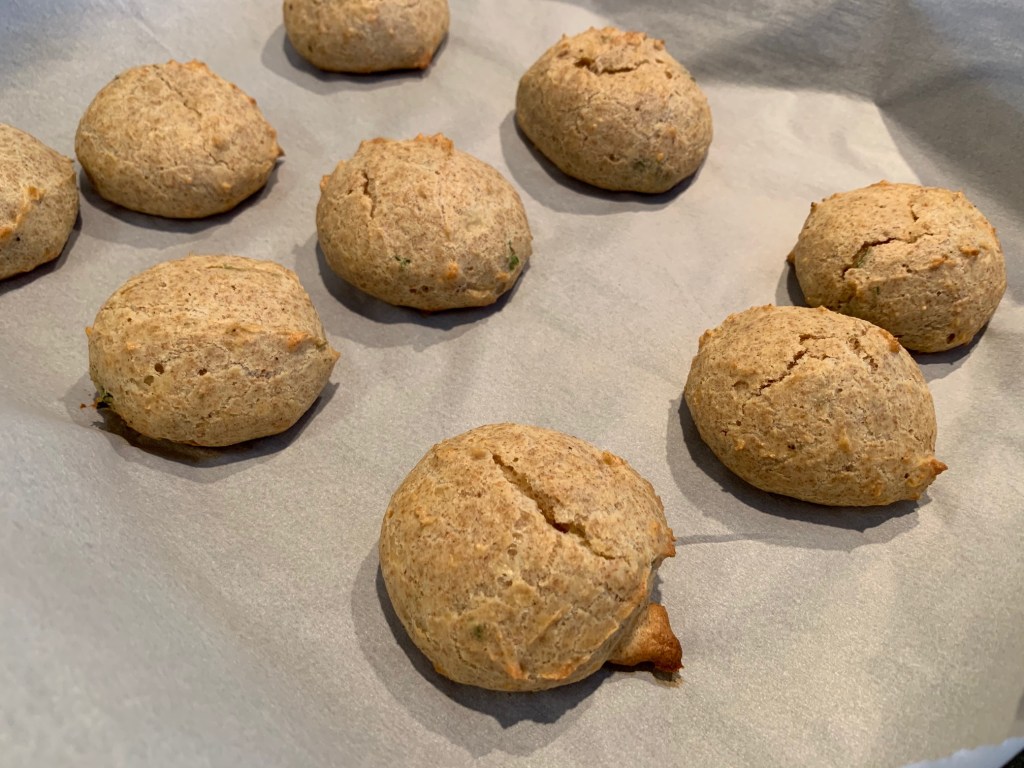
    I wanted to spend a bit more time with this cookbook and make something out of my comfort zone. Turns out gougères are pretty easy to make and are an impressive hors d’oeuvre! I changed a few things to healthify them – namely used whole grain spelt flour instead of white wheat flour. However, they call for milk and cheese so not vegan or for the lactose intolerant. I also sped up the method by altering a few steps so you can get these into the oven quicker. I will make these again!

    Gougères: (or cheese puffs, to keep things simple)

    Yield: 3 dozen gougères.

    Ingredients:

    1 ¼ cup skim milk (or half part whole milk, half part water)

    140 grams unsalted butter

    1 tsp salt

    1 cup spelt flour

    5 large Pemberton eggs

    ¾ cup grated Jarlsberg cheese

    ¼ cup fine chopped parsley

    ½ tsp pepper

    Method:

    Put milk and butter into medium heavy bottom sauce pan over low-medium heat. Bring to boil. When boiling, shut off heat and add flour. Mix with wooden spoon until well incorporated. Then transfer mixture to stand mixer and add eggs one at a time until well mixed. Then add grated cheese, parsley and pepper.

    Drop spoonfuls of batter onto parchment-lined baking sheet and bake for 25 minutes at 350F. Serve immediately.


  • A fresh take on the classic oatmeal cookie from the new Tartine Cookbook

    A fresh take on the classic oatmeal cookie from the new Tartine Cookbook

    When Lisa gave me the opportunity to review a cookbook or two I jumped at the chance. I have always wanted to do this!

    I have had a lot of fun looking at just-released cookbooks (one more review coming next month). The new Tartine cookbook (a classic baking book from an established San Francisco area bakery that has been given a refresh for a new generation with plenty of gluten-free options) by Elisabeth Prueitt and Chad Robertson, is beautifully photographed and full of innovative recipes.

    But, heads up, the recipes are not for beginner bakers or anyone time-strapped. The book is beautifully photographed and has been a welcome addition to my coffee table and looking through it has given me ideas for how to incorporate new flavours into old stand-by recipes. I also appreciated the fact that the authors list the ingredients in grams and ounces which I find a time saver (for those of us with kitchen scales).

    In the spring when I have a bit more time I will tackle the brioche recipe and some of the elaborate cakes, such as the Russian Napoleon cake. For now I wanted a recipe that would pack a punch, be time-efficient, and would also be useful in the lunch box and for snacks on the go. This recipe fit the bill.

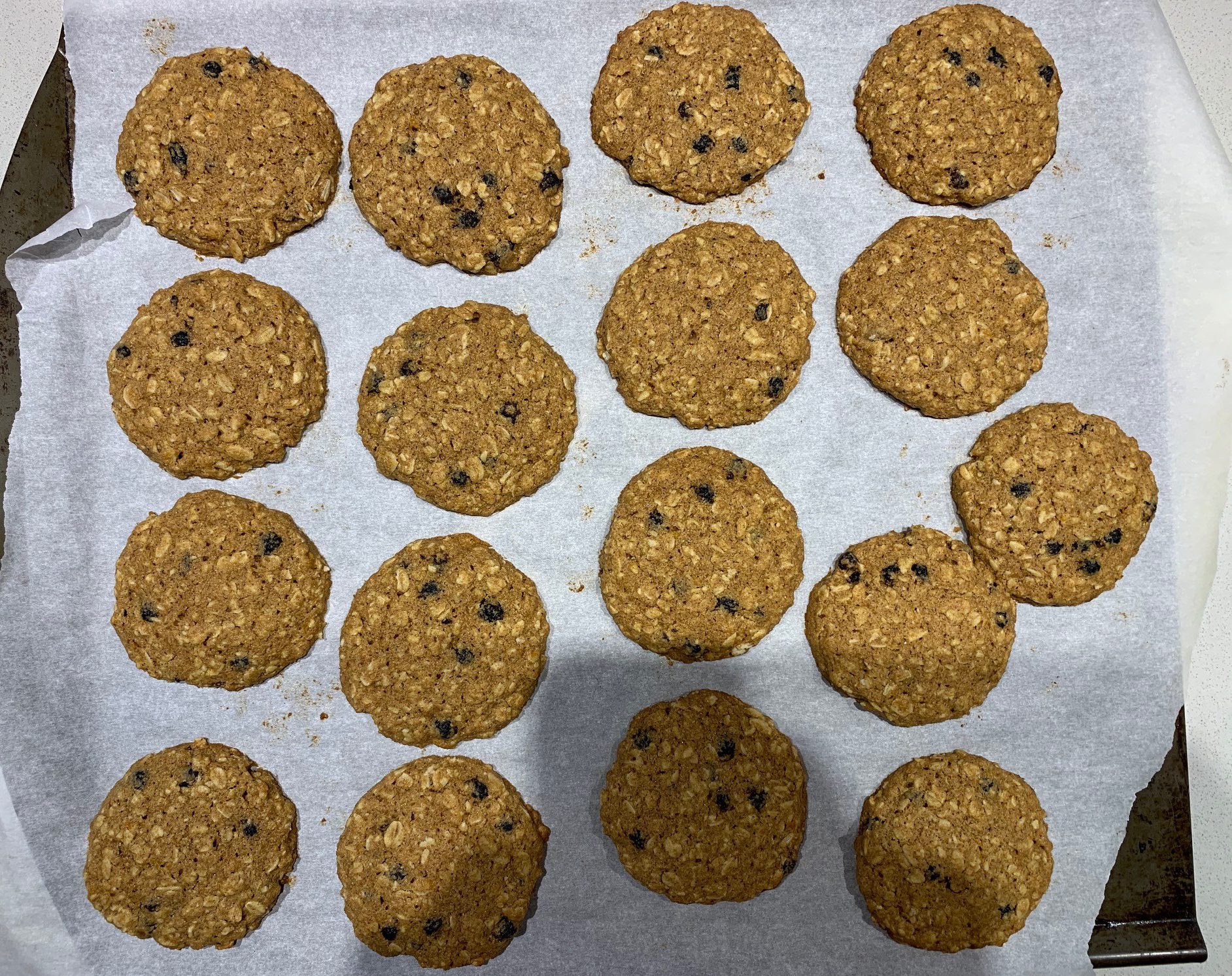
    I Pemberton-ised it by using dehydrated Saskatoon berries instead of currants, and also healthified it by reducing the sugar and using whole-grain sprouted spelt flour instead of all-purpose wheat flour. I also swapped out nutmeg for cinnamon as I am not a nutmeg fan. I also changed the method a bit and baked them straight after mixing, whereas the authors recommend refrigerating the dough first. I think the cookies were delicious and the extra step was not necessary. Less time = enjoying cookies sooner! I also appreciate the fact that these cookies are nut-free and therefore suitable for nut-free schools.

    I hope these will be a hit in your home for these snowy winter days.

    Orange-Oatmeal Currant Cookies:

    (yield: 3 dozen cookies)

    Ingredients:

    1 cup currants or dehydrated saskatoon berries

    285 grams spelt flour

    ½ tsp baking soda

    ½ tsp cinnamon

    225 grams unsalted butter

    1 cup granulated sugar

    1 large Pemberton egg

    1 Pemberton egg yolk

    2 tbs light corn syrup

    1 tbs molasses

    3 tsp orange zest

    ½ tsp salt

    1 2/3 cup rolled oats

    Method:

    Whisk flour, baking soda and cinnamon together in bowl.

    In stand mixer fitted with paddle attachment, mix butter until it is fluffy and light. Add sugar and mix until well blended. Add all other ingredients except oats and currants and blend well. Add flour mixture, oats and saskatoon berries/currants. Mix until well blended.

    Preheat oven to 350F.

    Place tablespoons of dough (use a spring-loaded ice-cream scoop for a professional look) onto a parchment-lined cookies sheet. Bake 12 minutes. Check for doneness after 10 minutes. Every oven varies in temperature. Cool and enjoy!


    IMG_5980


  • Christmas Morning Breakfast – With a Healthy Dose of Pemberton!

    Christmas Morning Breakfast – With a Healthy Dose of Pemberton!

    Christmas morning is not an oatmeal morning. You want to have something special and festive on the table. This is a very useful recipe as the dish looks impressive but is actually very easy to execute.

    This dish will make use of “all the Pemberton blueberries you froze” this past summer! If you have one, use an enameled cast iron fry pan as some of the lower-quality cast iron pans leave a metallic aftertaste. Happy Christmas!

    Dutch Baby Pancake with Pemberton Blueberry Compote

    Ingredients:

    Pancake:

    6 Pemberton large eggs

    1 cup almond or oat milk

    ¼ cup sugar

    ¼ tsp salt

    ½ tsp almond extract

    ½ cup spelt flour

    ½ cup almond meal

    2 tbs butter

    Compote:

    2 cups Pemberton blueberries

    1 tbs corn starch

    ½ tsp lemon zest

    Whip Cream:

    2 cups whipping cream

    Garnish: 1 tbs icing sugar

    Method:

    Pancake:

    Preheat oven to 425F

    Blend all ingredients except butter in a blender on high speed

    Place the butter in a 10-inch enameled cast iron fry pan and place in oven for 5 minutes.

    Remove pan when butter is melted (use oven mitts!)

    Pour ingredients into fry pan and place fry pan in oven

    Bake for 20 minutes.

    Compote: Place blueberries, zest and corn starch in saucepan on medium heat, and stir until mixture becomes a thick sauce.

    Whip cream: Whip the cream in stand mixer until soft peaks form.

    Serving: Slice baked pancake into 8 servings. Top each serving with spoonful of compote and dollop of whip cream. Garnish the plate with a dusting of icing sugar using a small sieve.