Category: cookbook club

  • Eat Your Way Home

    Eat Your Way Home

    I asked Chef David Wolfman if he thought eating an all-indigenous diet would transform me over time, and he laughed.

    Wolfman is a television celebrity – the host of Cooking with the Wolfman which ran for 17 years on the APTN – a professor, culinary artist, and the co-author of newly released Cooking with the Wolfman indigenous fusion cookbook, with his wife Marlene Finn.

    David Wolfman_hires

    The book, released in the fall of 2017, has already won several awards, including Best Cookbook in Canada from the Gourmand World Cookbook Awards. It’s in contention for the prestigious Best in the World designation and will represent Canada at the World Cookbook Fair in May.

    The book, he says, was a result of people always asking “when are you doing a cookbook?” and finally making the time, to collect his best recipes, and compile them, to a standard he would feel proud of, while having fun.

    As educators, Wolfman and Finn also wanted the book to be a “sharp how-to.” But most of all, they wanted to honour their elders and share the stories that had been shared with them.
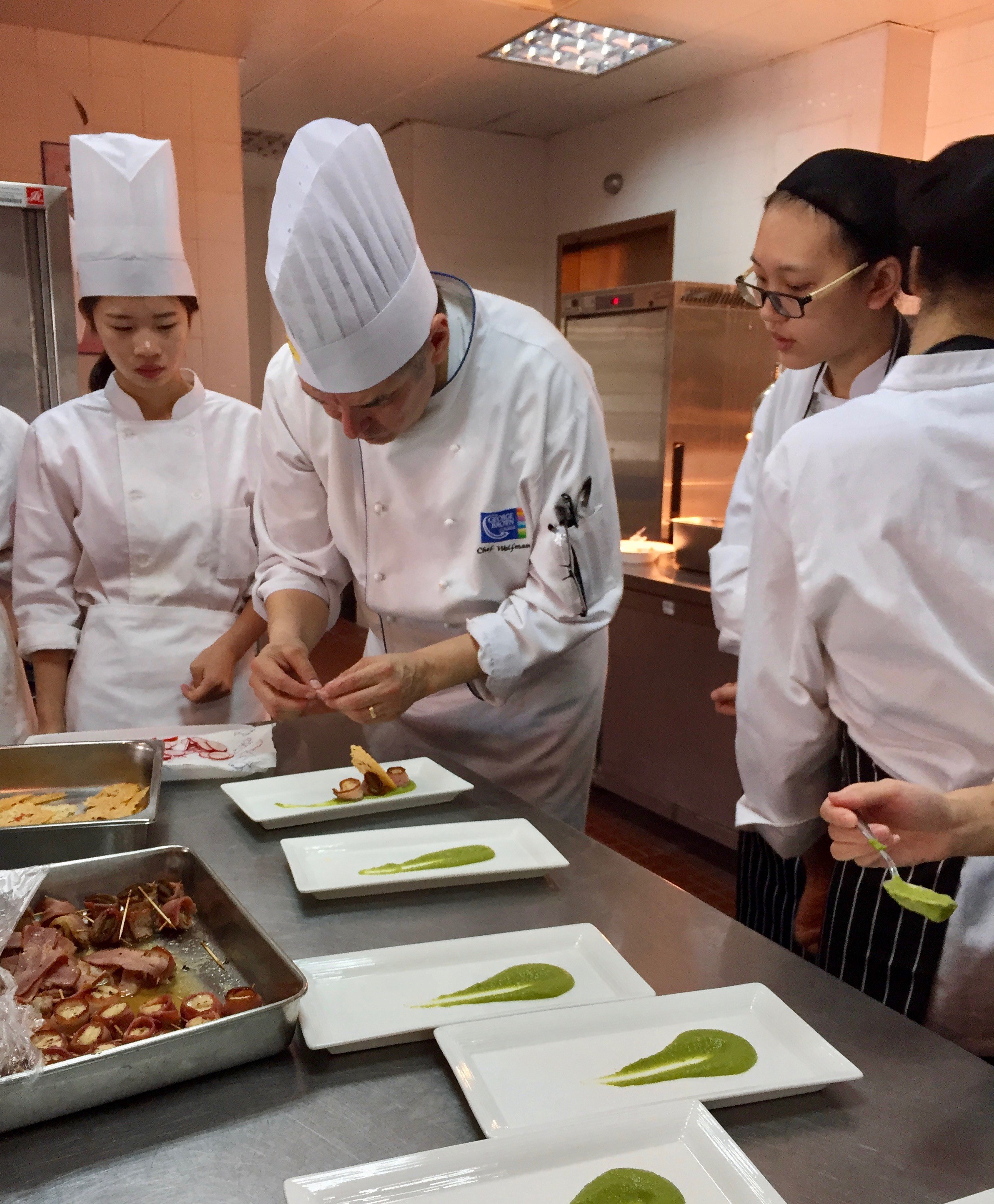
    David Wolfman at GBC teaching

    “What we really wanted to do is do what our ancestors have always done, what our moms have always done, and talk about the food. Talk about the gathering of the herbs, and the fish and how it was dried, and the way it was a real team effort for the whole family to get the food. They didn’t just go and buy the food. There was a real respect for the food.”

    Wolfman’s mother, the late Delores Diablo, is Xaxl’ipmec, and grew up in the Fountain Valley, near Lillooet. She moved to Toronto after she got married, and David and his siblings were raised as “urban natives.”

    When he first visited his relatives in Xaxl’ip, Wolfman asked obsessively, “is this native?”, “is this native?,” trying to get his bearings. His uncle would tease him: “See these wieners? These wieners are native,” he’d jest drily. “See this frying pan? This frying pan is native.”

    Wolfman was looking for food to connect him with culture and place. “I had this big interest in going back home. The fascinating thing is I was a chef. So my relatives were saying to me, ‘oh, show me how to do that hollandaise. How do you make this sauce?’ And I would say, ‘oh, can you show me how you dry the salmon?’ I don’t think that they realized the volume I was absorbing.”

    I think this is why he laughs at my question. You can’t eat yourself indigenous. You might be literally fuelled by the ingredients you consume, but you don’t become the cuisine that you eat. Although he defines his beat as “indigenous fusion”, he isn’t as interested in defining or limiting or separating things apart, so much as he is interested in using food as a catalyst for coming together.

    He’d always been the guy who wandered into the kitchen and sat down with a friend’s Portugese or Italian mom, absorbing their intimacy with the food, their techniques, learning everything he could. He traced that comfort back to standing on a milk crate at the stove, 9 years old, stirring his first stew for his mother – the way she winked at him when he splashed a bit of meat over the edge of the pot, and assuaged his worries that he was going to get in trouble for making a mess, by picking it up and saying, “oh we better eat that one!”

    “She made it really comfortable for me, and I realized from her that the sharing of the food and the knowledge was more important than the finessing and the garnishing and the bouquet garni and the spices.”

    Cooking with Wolfman_Moose Burgers with Diablo Pepper Squash Relish_image

    After his mother died, Wolfman returned to Xaxl’ip, and sat outside the now abandoned cabin she had grown up in. He saw the mountains, the window, the berry bush she had told stories about – the xosum berries she couldn’t wait to eat, that she’d eat before they were ready, and giving herself a stomach-ache with her impatience.

    All these stories came rushing out of the landscape, out of his past, out of their time in the kitchen together. “It was like someone opened up a book and started telling me all these stories again. I wondered how am I remembering all these things, just sitting here?” He felt as if it was her spirit, telling him all these things.

    Food is just food, says Wolfman. You have to sell it to people. He calls it “whetting people’s appetites.” He teaches his students, “I don’t tell people when they come into my restaurant, ‘Tonight you’re gonna have a choice of eating a dead chicken or a dead fish.’” Part of what gets us hungry when we read a menu, he says, is the backstory. It’s organic. It’s grain-fed. It was gathered by hand under a huge blue sky. It was made for me by my grandmother whenever I went to visit.

    Keeping the stories alive is what matters. And stories that are shared last longer, go farther, grow into something more.

    “Food ties us together,” says Wolfman. “Especially when you have respect for food, and you bounce different ideas off each other. Even if we’re different, or have different beliefs, it doesn’t matter. The end goal is that we sit together and eat together and tell stories and love the company. That’s all.”

    COOKBOOK-CLUB April 26 2018 


  • Discover Chef David Wolfman’s award-winning cookbook for CookBook Club April 26

    Discover Chef David Wolfman’s award-winning cookbook for CookBook Club April 26

    Save the date for 26 April’s Cook Book Club. We’re exploring Chef David Wolfman‘s award-winning new book, “Cooking with the Wolfman.”

    Dubbed the “Godfather of Indigenous Cuisine”, Chef Wolfman is a classically trained Chef, Culinary Arts Professor at George Brown College and the executive producer and host of the 17 year strong television show (on APTN), Cooking with the Wolfman. Born in Toronto, Wolfman thinks of his mother’s territory in Xaxlip, just north of Lillooet, as “home” –  he does homage to her, and indigenous cultures of the Americas, with this cook-book – a how-to, recipe book and collection of stories, all rolled into one.

    Check out the copy on display at Stay Wild Natural Health.

    There are some game options, fish options, and plenty of baked treats to try out.

    Chef Wolfman says that if you are a fan of eating local, or eating sustainable, eating “indigenous” will be right up your alley.

    “I always say local, sustainabie and indigenous is synonymous with each other. The direction I see us moving into – heirloom tomatoes, churning our own butters, making our own stocks, growing our own herbs, using all of the herb, using everything, so we’re not actually wasting food – it’s like we’re going back to what one elder told me are ‘the old ways’ – making sure we don’t take more from the earth and that we’re conscious of the earth.”

    But whatever your food philosophy, or buzz words, or preferred cuisine, Wolfman’s belief aligns perfectly with what Cook Book Club is all about:

    The end goal is that we sit together and eat together and tell stories and love the company. That is all.”


    So, make a plate, bring a date.

    Cook Book Club is a PLUS ONE event, so if you’ve prepared a dish to share, bring a friend with you. Maybe you even want to prep your dish together, or share the cost of ingredients…

    New for April’s Cook Book Club, we’ve adopted Signal Hill Elementary’s School Lunch Program as our charity of choice, and will have a donation dish at Cook Book Club for whatever cash-or-coin contribution you’d like to make.

    COOKBOOK-CLUB April 26 2018

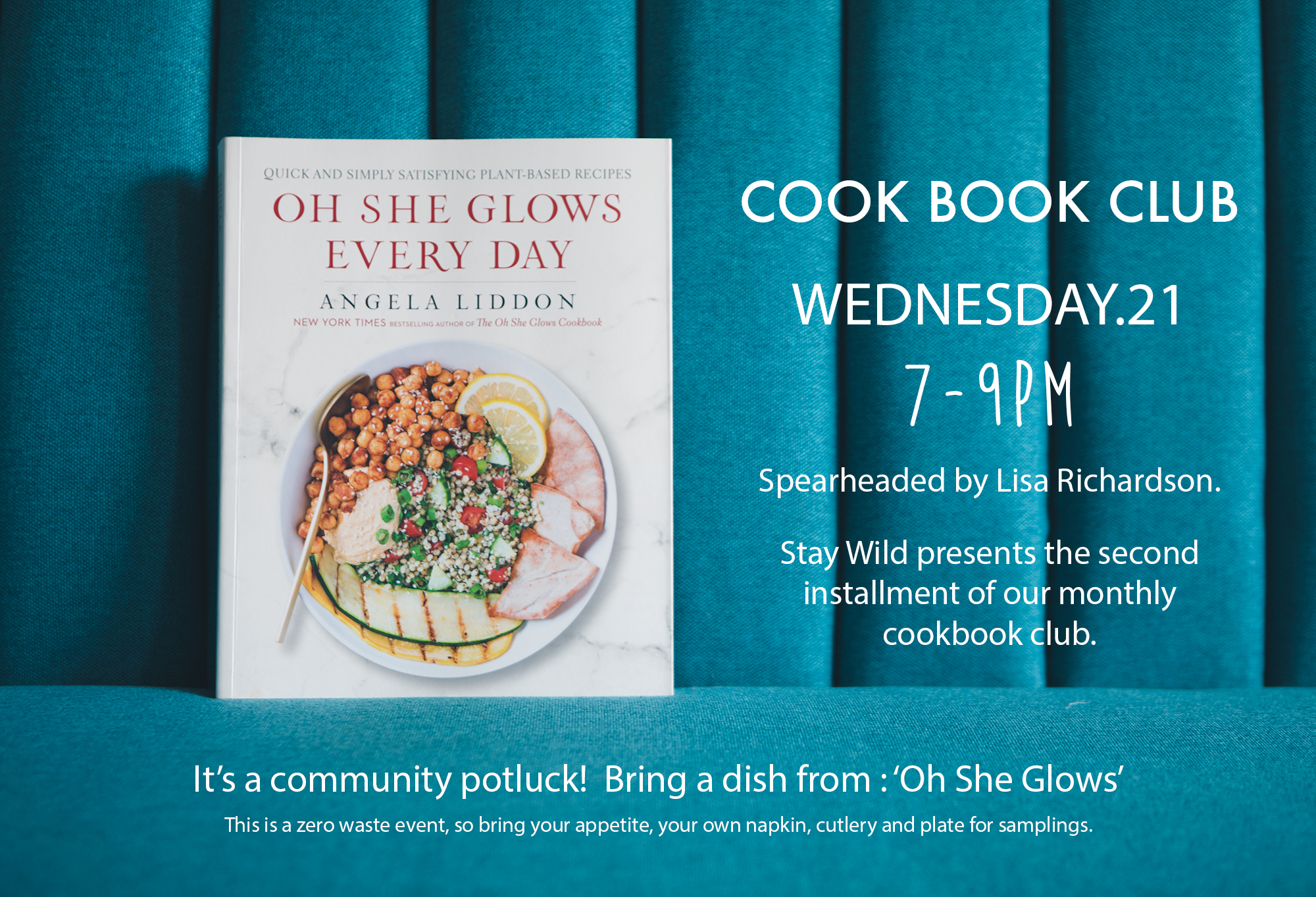
  • Cook Book Club ushers in the spring, March 21, 7pm-9pm, featuring Oh She Glows Every Day

    Cook Book Club ushers in the spring, March 21, 7pm-9pm, featuring Oh She Glows Every Day

    cook-book-she-glows

    Cook Book Club has a very simple formula for fun.

    Cook Book Club happens once a month.

    You make a shareable plate, from a selected cookbook, and show up, to Stay Wild, at 7pm.

    You meet a bunch of other people, sample a bunch of other dishes, and decide whether the cookbook is for you or not.

    No cost. No stakes. No pressure.

    A fun, free, social night out. A community potluck. A chance for food to bring us together.

    Bring your own napkin, or nibbling plate. It’s a Zero Waste event, so that Stay Wild will want to continue to host us!

    The March meeting will take place Wednesday, March 21, and the feature cookbook is Angela Liddon’s Oh She Glows Every Day.

    The library has a copy. Or borrow a friend’s. Or pop by Stay Wild and browse their display copy and snap a photo of your chosen recipe.

    Let us know what you’re thinking about bringing in the comments below, or on the Facebook page event. 

    Last month, our highly organic (i.e. loosely organized) approach meant no doubling up, and 11 different dishes/beverages to try.

    Hope you can make it.

  • The Imperfect Table

    The Imperfect Table

    Scruffy hospitality, Cook Book Clubs and reclaiming the table

    I hate owing someone a dinner invitation.

    It’s so high-pressure.

    I always thought “imperfectionism” was the character flaw until Brene Brown, the vulnerability guru, outed perfectionism as a tactic people use to protect themselves from getting hurt.

    perfectionism by brene brown

    Ha! I exhaled smugly, I knew there was something suspicious about you perfectly groomed, beautifully mannered ones, with your instagrammable dinner parties and Kinfolk magazines casually tossed on the Noguchi coffee table.

    kinfolk-founders

    kinfolk-preview1
    Trying very hard to look like you’re not trying. The Kinfolk Table – a different planet for aliens who specialize in artfully dishevelled, immaculately styled entertaining.

    But embracing your own flawsomeness is harder than it sounds. Even with Brene Brown’s Vulnerability manifesto at your back. I point a finger at Lucy Waverman, the Globe and Mail’s food columnist. Waverman has written that you should never ask “what can I bring” in response to a dinner party invitation. It’s an insult to the host who has put forethought into curating a great meal with perfectly paired wines. Just bring your conversational A-game, she says, and an elegant hostess gift.

    Lucy and I move in different circles.

    On my planet, we always ask.

    I ask, not to insult my host, but to acknowledge that bringing people into your space takes effort, and I’m happy to help lighten the load.

    For the record, I am never insulted when someone asks me. I am also stoked if, without even asking, someone randomly shows up with contributions. Throw them down there on the table. Open that bag of chips, decant some vino, let’s squeeze in as much conversation as possible before the children blow it all up.

    IMG_4275.JPG
    No, none of the plates at my house match. And they probably never will.

    But it’s taken a while to devolve to this place, helped along by necessity (children), a catchphrase and one unofficial intervention.

    The intervention occurred in the fall, when childless friends, after months of “we should get together soon” emails, randomly dropped by, with wine, cheese and crackers.

    This couple are consummate hosts. They’re foodies and entertainers with a genuine passion for food, wine, design and décor. For a long time, after first being invited to their house for dinner, (three courses, perfectly plated, in a room where the drapes and the curtains matched), I was too scared to return the favour and serve up one of my standard one-pot meals in return.

    When I eventually braved-up, and dished forth something peasant-like, on chipped plates, from a help-yourself-to-more platter on the table, they didn’t turn up their noses. They were more distracted by the conversation, by playing with my toddler, or whipping up the dessert themselves. (I’m smart enough to say hell yes, when an amazing cook asks “shall I bring dessert?” Sorry Lucy for not measuring up to your standards.)

    Their drive-by drop-in was the ultimate signal to me: we don’t need to be entertained, we don’t want to be a high pressure entry in your dayplanner, we just want to catch up.

    IMG_1540
    For perfect looking, perfect tasting meals, eat out. Fergie’s Cafe at Sunwolf is instagram-worthy. Dinner at my place is not.

    The catchphrase came out of a sermon, in which a Knoxville, Tennessee minister commended us to lower our standards and embrace “scruffy hospitality”, the kind of dinner party that reveals you hunger more for good conversation than fancy ingredients.

    In my gospel of scruffy hospitality, “what can I bring” is the password, a signal that a person appreciates they are participating in a come-as-you-are experience, where the napkins are unironed, if we even remembered to put them out, and the kids will move from lap to table to toy room as we try and coerce them into eating something, before ignoring them for conversation that is grabbed and relished and as nourishing as the food could be.

    “What can I bring?” is also code for: “I know you’ll have cleaned the bathroom for the first time this week because people are coming over, and that you and your partner will probably be arguing the moment we walk in the door, because that’s what happens to us too, every single time we have people around.”

    It means: “I anticipate stepping around toys piled into a corner. I am willing to push past my inhibitions and make myself at home, to find a glass and pour myself a glass of water if I am feeling thirsty.”

    Ultimately, it’s code for: ”I’m just happy to see you.”

    IMG_0444
    Keep it casual. Otherwise, we’ll see you in 15 years or so.

    That’s what my foodie friends taught me, when they dropped by with crackers and dip and we ate standing up, moving between the kitchen island and the side of the bath-tub where the kid happily contributed his chatter.

    And that’s why I started Cook Book Club. which debuted Thursday 22, at Stay Wild Natural Health Store and Juice Bar.

    deep like pow-08697
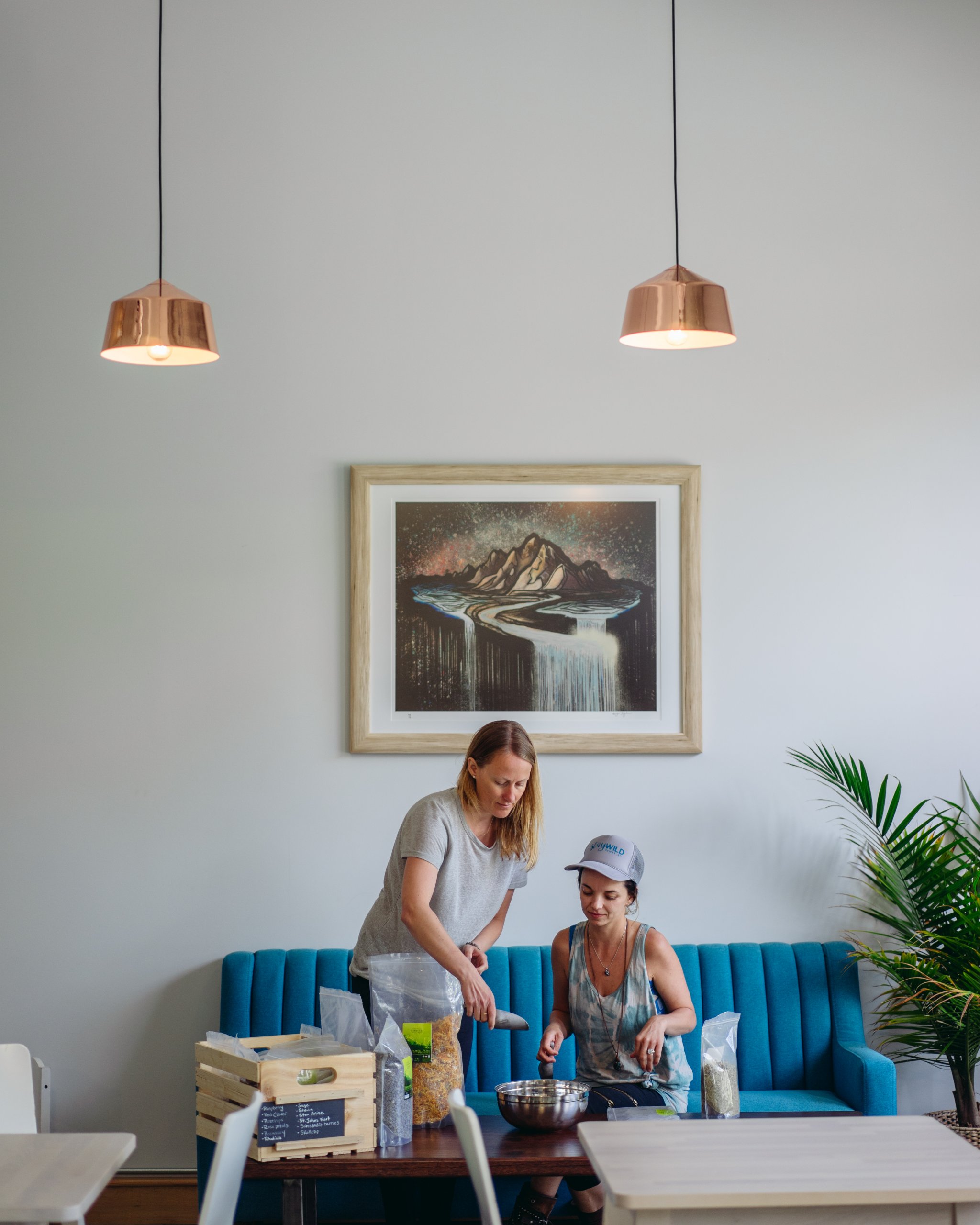
    Leah Langlois of Stay Wild imagines all the yummy plates that will arrive for Cook Book Club

    If your contribution is a fizzle or a flop, you blame it on the cookbook.

    Imperfectionism, scruffy hospitality, cook book club, it’s all an invitation to reclaim the table as a gathering place. Even when we’re too busy to entertain. Especially then.

    Cook Book Club Feb 22 poster

    The Velocity Project: how to slow the f*&k down and still achieve optimum productivity and life happiness, is a biweekly column by Lisa Richardson that runs in Pique newsmagazine. 


  • Traced Elements and Stay Wild invite you to Cook Book Club, February 22

    Traced Elements and Stay Wild invite you to Cook Book Club, February 22

    leah and nada

    Here’s how it works.

    You make a shareable plate, from the selected cookbook, and show up, to Stay Wild, at 7pm, on Thursday February 22.

    You meet a bunch of other people, sample a bunch of other dishes, and decide whether the cookbook is for you or not.

    No cost. No stakes. No pressure.

    Bring your own napkin, or nibbling plate. We’re making this a Zero Waste event.

    Take home your platter at the end of the night.

    Make new friends. Try some new dishes. Get inspired. Without having to do too much work at all.

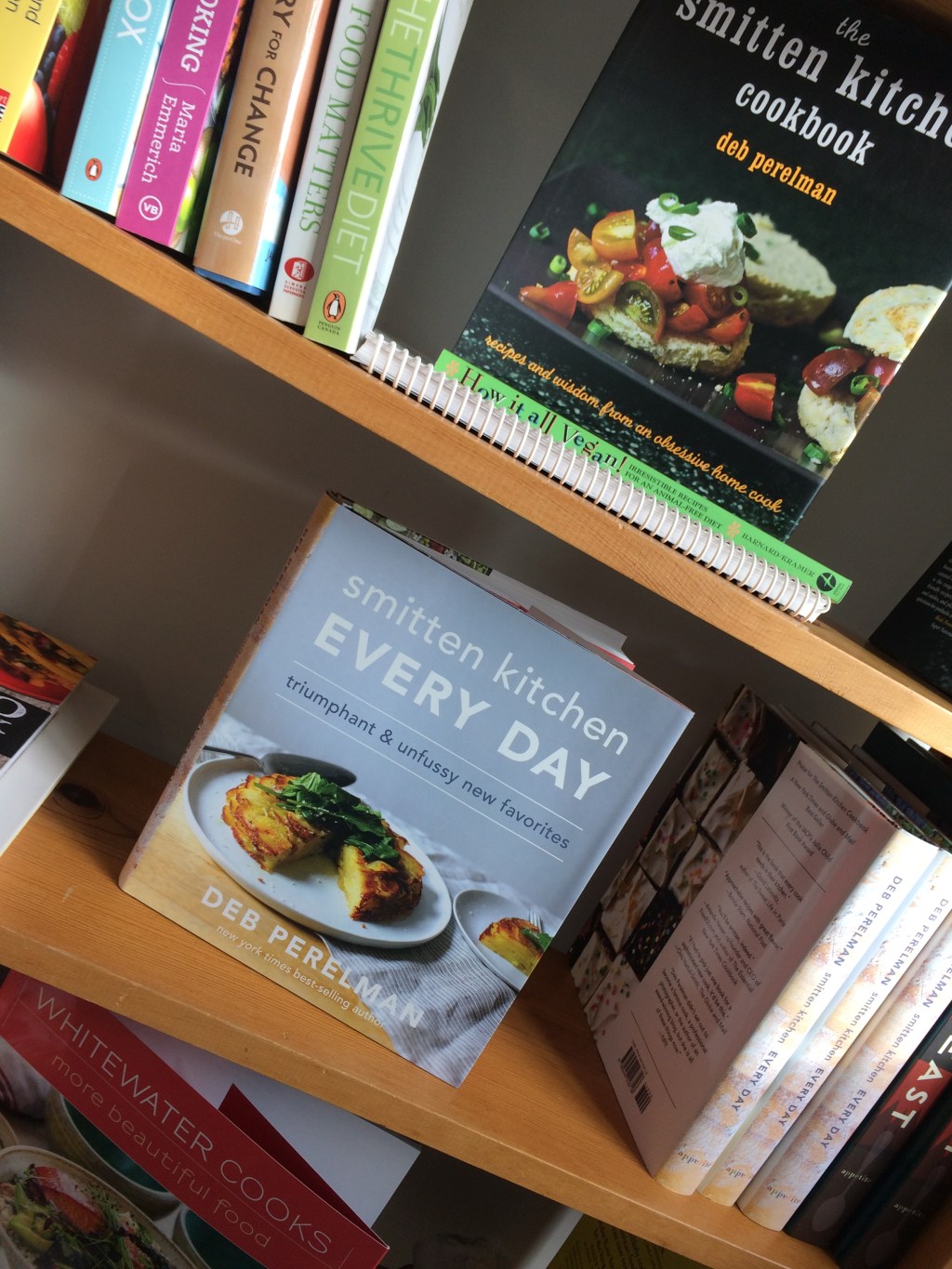
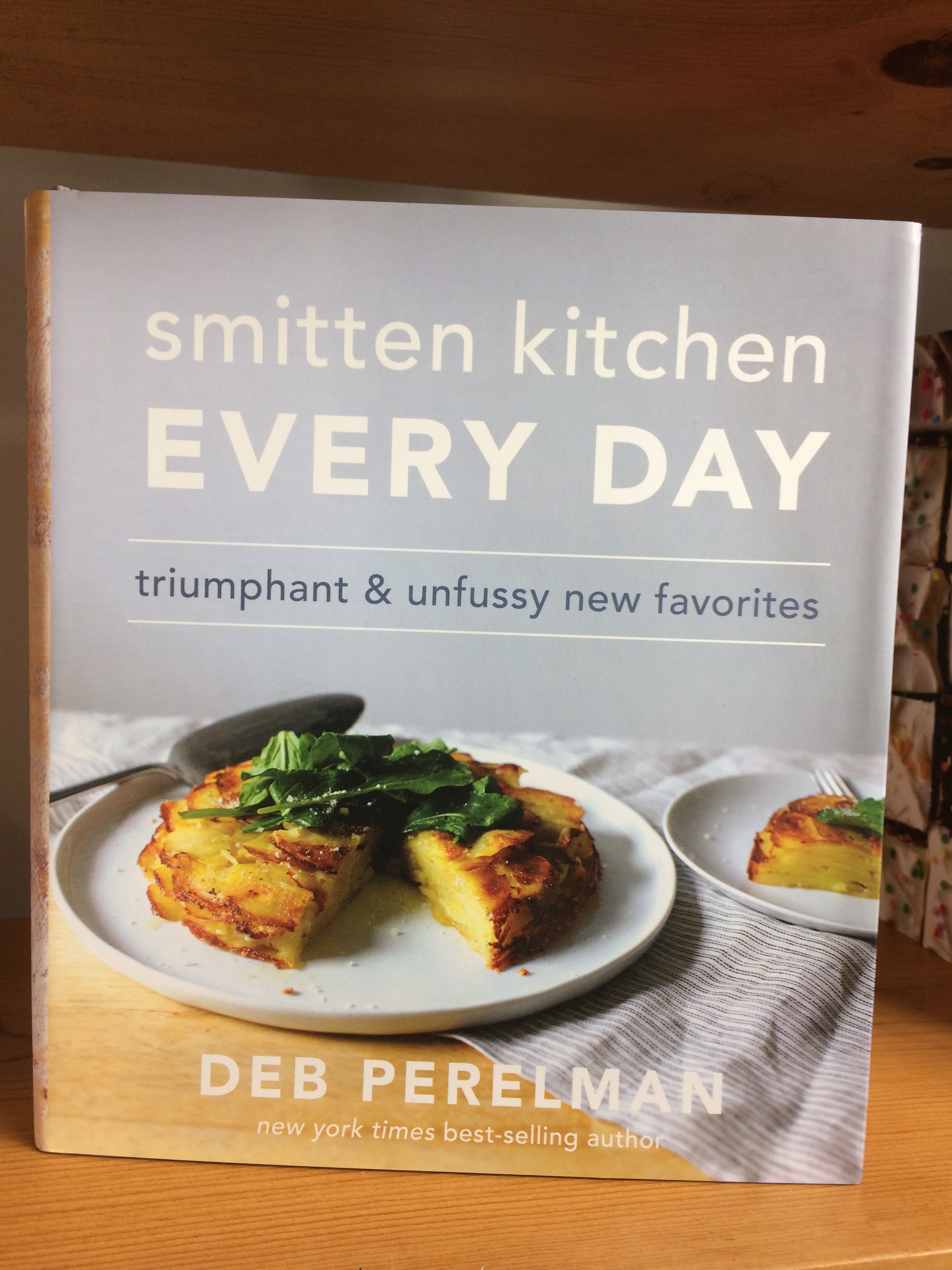
    First cookbook is the Smitten Kitchen Every Day.

    There’s a copy at Stay Wild and you’re welcome to stop by, browse its pages, and snap a photo of the recipe you’d like to try.

    IMG_4248

    Post a note in the comments, of what you’re making, so we don’t have 20 people making the same dish.

    Cookbook clubs are the new potlucks. ~ Andrea Chu