As a child I avoided eating vegetables as if they were toxic. The final scene of many dinners was a stand off between my parents and I over an untouched side of raw carrots. Eventually they surrendered, not willing to torture me or forego sleep to prove a nutritional point. For many years after these victories I avoided vegetables altogether. It is a strange turn of events that today I am working on a small organic vegetable farm.
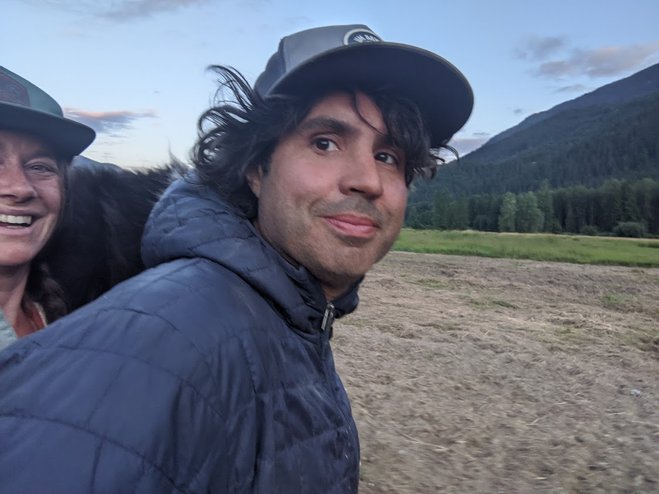
Like many people in British Columbia, I am not from here. I have the indistinct story of being from Ontario. After graduating from Dalhousie University last spring, I moved back home to work for my parents and save some money. When the fall came around, I built a bed in my car and set off for a road trip through the United States. I had a ski pass and a National Parks pass, and I was going to see the natural splendour that is so celebrated.
As I approached the end of my trip and the bottom of my bank account in the early spring of 2020, I had to decide what to do next. Rounding the turn and heading north from California, BC appeared to be a natural conclusion. In the past, I had spent my summers working on golf courses. I wanted to continue working outside, this time putting my efforts towards work I felt was part of a solution, environmentally and physically. I went on GoodWork.ca, a jobsite connecting eco-minded workers with sustainable work.
One posting caught my eye: Laughing Crow Organics in Pemberton, working as a farmhand. I emailed Andrew Budgell and Kerry McCann, the owners and operators of the farm. A few days later, I had a Skype interview from the visitor’s centre in Yosemite Valley, and they offered me the job. I started looking for a place to live that would also be financially sustainable.
Kerry McCann, Laughing Crow Organics’ co-owner: “People need to eat.”
But soon after this, the world entered a pandemic, and suddenly every plan was on shaky foundation. No one had any idea what would be possible a week, a month, a year from now. I was in Lake Louise staying with a friend from home when COVID hit, planning to continue west. He had been laid off from his job at the hotel, and we both decided to head east and wait things out.
I got in touch with Kerry. Would there still be a job for me? People still need to eat, she said. “We will be growing plants and feeding people and we will need your help.” A month after my first cross country drive, I turned around and headed back west.
Immediately I knew I had made the right decision. Even in May, at the height of COVID confusion, Pemberton was a pocket of normalcy. The next month, when Black Lives Matter demonstrations erupted across North America, the events of the world felt even further away. In both instances, I wondered what part I played in it all. What is my responsibility?
Farming was an attempt to answer this question. Our food systems are some of the most oppressive systems we have, environmentally, socially and economically. Like many others in the capitalist mindset, optimization has been focused on profits, rather than quality. As a result, large scale agriculture has sterilized the growing process in an effort to grow more food for less money. These costs do not evaporate. They are passed down the line onto the health, the environment, the worker, and the consumer.
When I was on the road, I did most of my shopping at Walmart. It was the cheapest option, and they let me sleep in the parking lot, so it was convenient, but I knew there was something wrong with this decision. By spending my money on cheaper food, I was inevitably supporting practices I do not believe in. Cheaper food is cheaper because it exploits workers, and abuses the environment.
Eating is a completely different experience on the farm, one I am very fortunate to have. The work is fair, the pay is honest, and our relationship with the land is respectful. We give it what it needs, and it repays in kind.
Unfortunately, there is an observed problem of access to good food, one that can often be drawn on lines of racial inequality. Buying organic is often out of reach, and Walmart or McDonald’s appears to be the best or only option. But when I go to market, and see what our customers get for $30, in quality and quantity, I cannot believe I shopped at Walmart. If I were a customer, which I have no doubt I will be in the future if I am not still an employee, I would be proud to be supporting better practices, and to be receiving a better product.
To be an activist does not necessarily mean you must be on the front lines with a picket sign. It can be as simple as making more informed choices at the grocery store. By supporting local, small scale sustainable agriculture, we are supporting the health of the earth, the health of ourselves, and the health of society. It is an act of liberation and solidarity. The more we choose to buy from farmers who are doing the right thing, the more this opportunity will be presented to others.
I needed to find myself on a farm before I truly grasped this, but awareness is free to anyone, and it is often the most powerful thing we can do.
When I interviewed Kerry and Andrew last year, for a story about local farmers, Andrew shared his idea that the farm is a kind of mechanical beast that they build up every year, that eventually lurches to life. I loved seeing him unpack this idea in Laughing Crow Organics’ newsletter to harvest box subscribers last week, and got permission to share it here.
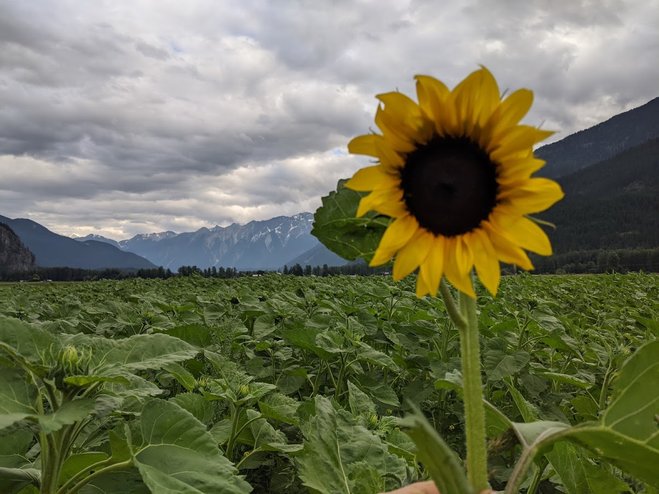
In other news, the sunflower maze is ready and opening Friday August 14
The farm monster is a giant animated beast built from scratch every year, one miniature piece at a time placed by a few busy human hands.
Slow incremental progress is the key. In the early weeks it almost seems unlikely that it will take shape…
By June it starts to have form and begins to threaten action by spitting out peas, radishes, salad greens, lettuces and kales..
More pieces are added… the monster is fed and begins to belch out carrots and beets random flowers and zucchinis—–
I’m not sure exactly what move creates the next shift but it’s like an all-of-a-sudden lurch when the monster begins to barf out all of the things… tomatoes, eggplants, beans, melons and onions. Squash starts to fatten up and beach ball pumpkins appear almost as if from nowhere… Brussels form, and armies of broccoli, cauliflower and cabbages line up for harvest.
It is exhilarating and exhausting all at once. We are at this juncture now. August…. we have built a veritable monster and are so very excited to share it with you over the second half the growing season.
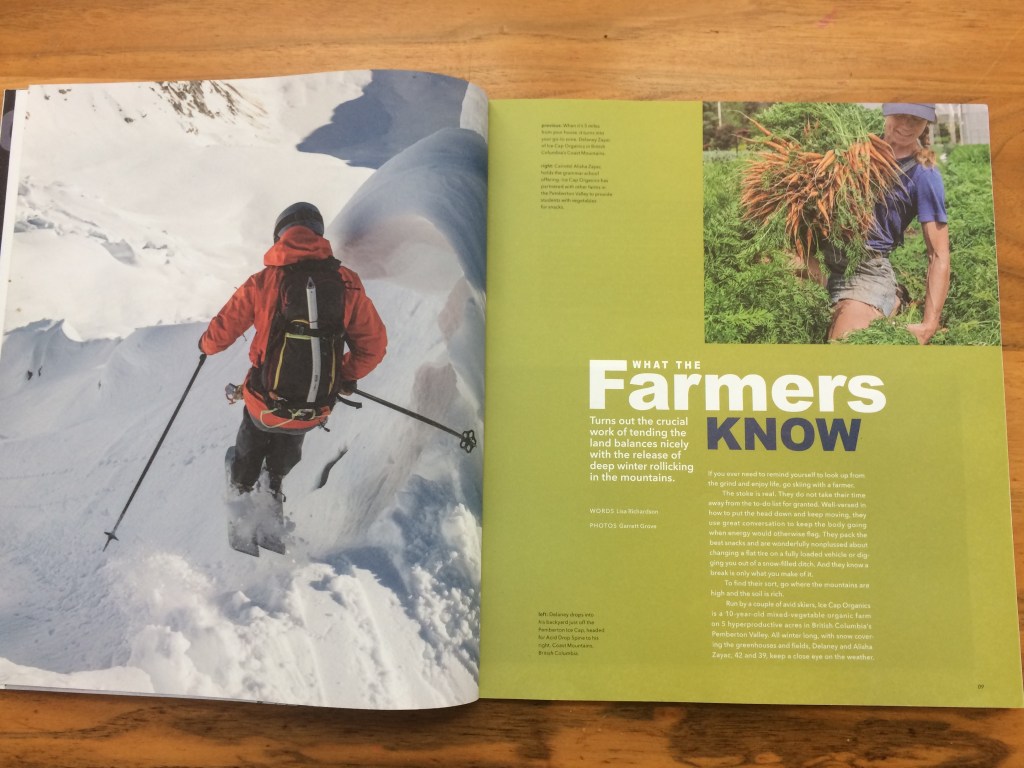
Turns out the crucial work of tending to the land balances nicely with the release of deep winter rollicking in the mountains.
If you ever need to remind yourself to look up from the grind and enjoy life, go skiing with a farmer.
The stoke is real. They do not take their time away from the to-do list for granted. Well-versed in how to put the head down and keep moving, they use great conversation to keep the body going when energy would otherwise flag. They pack the best snacks, and are wonderfully nonplussed about changing a flat tire on a fully-loaded vehicle or digging you out of a snow-filled ditch. And they know a break is only what you make of it.
To find their sort, go where the mountains are high and soil is rich.
Run by a couple of avid skiers, Ice Cap Organics is a ten-year-old mixed vegetable organic farm, on five hyper-productive acres in British Columbia’s Pemberton Valley. All winter long, with snow covering the greenhouses and fields, Delaney and Alisha Zayac, 42 and 39, keep a close eye on the weather. And whenever the conditions are right, Delaney, is up at 3 a.m., blazing out the door, skinning in the dark with headlamps to pursue objectives out on Miller Ridge or Duffey Lake Road with a small crew of friends. Alisha often opts to show their kids what’s to love about winter.
The volcanic-rich river-silt blessed soil of the Pemberton Valley has earned many farmers’ attention, but it’s the massive Coast Mountains that catch the farming-skiing type. And if the mountains bring folks in, it’s sometimes the farming that gets them to stay—loamy earth beneath 8,000-foot mountains, and living to the sound of glacier-fed rivers.
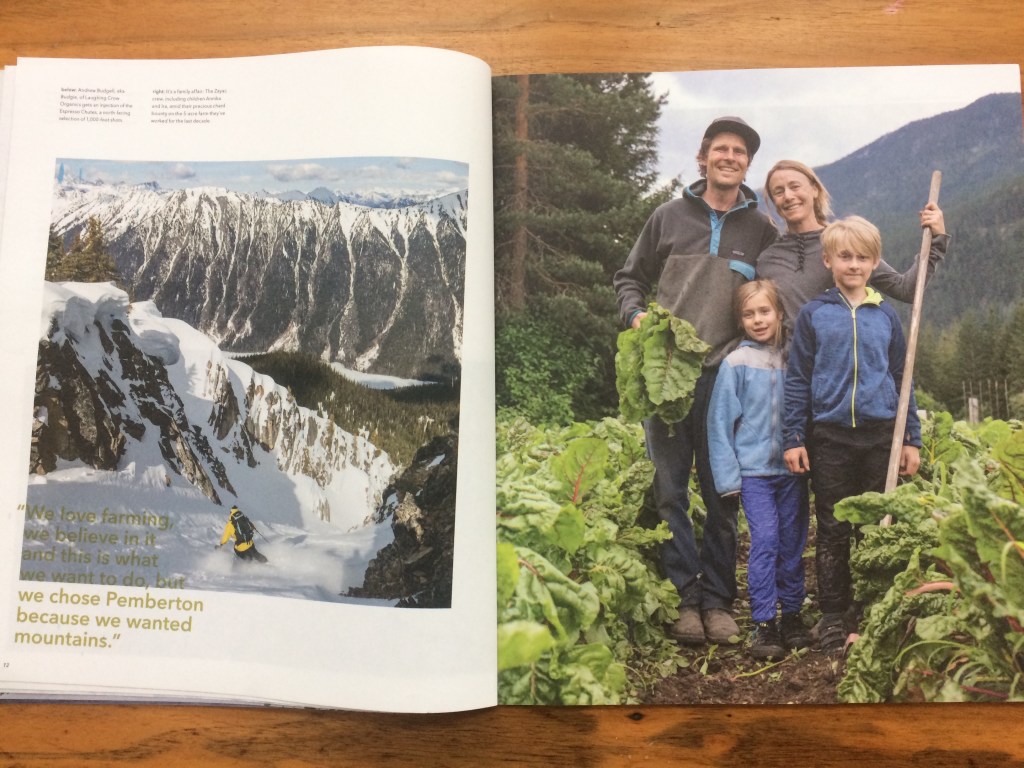
“It’s why we’re here,” says Alisha. “Winters off is one of the things that drew us to farming,” explains the former tree-planter and agro-ecology scientist. “We love farming, we believe in it, and this is what we want to do, but we chose Pemberton, because we wanted mountains. We canvassed the world, to find places where you have mountains and farmland – Bella Coola, Pemberton, Chile, a couple of places in France.”
Delaney reflects on their decision-making process—a couple of young nomads who were dividing their year into three seasons—university, tree-planting, travelling or skiing. He’d spent his twenties and early thirties skiing over 100 days a year, bumming throughout the Canadian Rockies, Kootenays and Coast Range, and venturing farther afield to the Andes and the Alps. It was time to root down and think about having a family but Delaney knew that without big mountains there was no chance of his calling a place home. Pemberton was fertile, steep, proximate to a hungry market, and permanently set to stun—a place where there are no ugly views.
Now their year breaks into two parts: farming season, and winter. As the farm sleeps, the pair take turns driving their vegetables down to winter markets in Vancouver, a city of 2.5 million people two hours to the south. They make plans, research the latest science and developments in farming, ski, and regenerate. “We work hard in the summer, and play hard in the winter.” Every morning since completing the 10-day silent Vipassana retreat she’s wanted to do for decades, Alisha wakes up before dawn, before the kids, 6 and 8, have roused, to sit and meditate for an hour, watch her mind, and bank some equanimity for the day ahead. Delaney plans his last spring mission to the remote Waddington Range. Bad weather days, they tackle the farm chores, like sourcing an old upright freezer from a Chinese grocery store that they can upcycle into a germinator for their seed starts.
Then, come growing season, they take up their mantle as activists.
“That’s another reason we started farming,” says Alisha. “It was a way to align with our values, a positive way to be part of the community. I wanted to fight the good fight for agriculture and as soon as I started farming, I realized this is actually enough.” It’s a quiet, radical activism.
After he’s been at the markets in the city for the weekend, the first thing Delaney does is park the truck, grab the kids and walk around in the fields together, see how things are looking, noting the growth and changes that have unfurled in the last three days. The Lillooet River runs past the end of the narrow, pot-holed street, flowing down out of the ice-cap and past the sulfurous thermal sleeping volcano that still vents steam out its fumeroles. The Lil’wat Nation, whose traditional territory this is, says the wild land upstream of Ice Cap’s farm has a power that comes from deep in the earth. It’s so big and powerful that when he skis back there, it gives him goosebumps. He treads the soil of the farm to shake off the city, touch down, ground down, and tap quickly back into that energy.
Winter gives it the time to seep in.
“Every farm has its own personality,” says Amy Norgaard, who’s worked at many farms in the Pemberton Valley, including Ice Cap Organics.
Amy, 26, grew up in western Canada, in the 7,000-person ranching and logging town of Merritt, British Columbia, skiing and snowboarding obsessively from the age of two. When her mom got breast cancer, Amy, then in high-school, discovered that vegetables are potent and delicious medicine. Later, she floundered through university courses until discovering the faculty of Land and Food systems—that’s when Amy found her people.
“I took my first soil science course in 2013 and it literally changed my life. I started learning about farming systems and their complexity and beauty and the complete mess we’ve made with food production.” Two years later, to acquire her final six credits and prove to herself that her romantic idea of farming probably wouldn’t withstand reality, she interned as a farmhand for eight months at Ice Cap. All the pieces fell into place – her love of the mountains and her understanding that being stressed is completely different from working hard. She farmed so hard that years of brain-spinning insomnia disappeared, allowing her to fall asleep exhausted and satisfied.
Of course, the skiing helped.
For the last eight years that he has lived in Pemberton, Andrew Budgell rented a poorly insulated cabin near his farm fields, tucked off the narrow road in a giant grove of cedars. Winter is the only time he’s not covered in dirt, but the price he pays is in “cold.” Some days, it was so freezing, he’d blast hot air in his face with a hair dryer to bring himself back to life.
“He calls it the comfort gun,” says his soft-spoken farming partner, Kerry McCann.
Andrew, 44, and Kerry, 36, met in Pemberton eight years ago, when Andrew, a ski-bumming boot-fitter in Whistler and refugee from the suburbs of Ottawa, decided to experiment with growing salad greens as a side hustle. He knew nothing about farming, except that he wasn’t afraid of hard work, loved learning, and wanted to attune more deeply to the rhythms of the earth.
McCann, a beekeeper, yoga teacher and cranio-sacral therapist, had been working as the “hands” of an arthritic physiotherapist in the economically depressed community in Ontario where she’d grown up, home-schooled, on a self-sufficient homestead run by her back-to-the-lander parents. Changes in the health insurance legislation meant her work was drying up, so she ventured west, and stopped in the first place she found that had seven pages of help wanted ads in the newspaper – the Whistler-Pemberton corridor. She convinced her landlord to let her install garden beds alongside the field where Andrew was growing his greens. As her seasonal job as a park host wound down, Kerry began to ponder her next move when Andrew proposed next-leveling his salad bar. “Maybe we should start a farm? I can’t do this alone. We’ll get bees!”
Kerry is an instinctive grower. Where Andrew acquires knowledge through his brain, poring over books and websites, and studying dewpoint and freezing level and weather models, Kerry’s insight into the natural world flows through her actual pores – she will walk outside, sniff the air and announce, “Frost is on its way. We should cover the vegetables.” These approaches define their skiing styles, too: Andrew studies maps and trip reports; Kerry rests on instinct.
Seven years into operating Laughing Crow Organics – their certified organic mixed vegetable farm – they’ve doubled income and veggie production almost every year. But Andrew says, “The reality is, we’re both very challenged in pulling this off. We are living and breathing this farm dawn until dusk.” Farming, just like hiking and skiing your ass around the mountains in temps that turn any exposed hair into icecicles, is not an easy endeavour.
But they always eat well, and when winter arrives, they forget their 30-item daily to-do list and head for the hills.
Kerry spent years meditating and practicing yoga; skiing is her winter practice, exploring the backroads and drainages and skin laps around Pemberton. “I used to spend a lot of time looking for enlightenment. But when you’re skiing powder, it’s a kind of samadhi,” she says, referring to the yogic word for oneness, or meditative absorption, the goal of all her sitting. It’s a kind of short-cut.
Increasingly, Amy is part of Laughing Crow Organic’s winter crew too. After several seasons with Ice Cap, she went to graduate school to study soil science. She skis every chance she gets. “Part of the connection you gain from farming comes from being so exposed to the elements. There’s a lot of vulnerability. You don’t know what the day is going to look like, and you’re vulnerable to what Mother Nature wants to do to you.” She thinks about this when she’s out skiing, too—the natural synergy between mountain people and growers, and how they understand the thrill and sense of vitality that come from being immersed in the elements. The honest exhaustion at the end of the day’s effort. The risk, the reward of getting out among it.
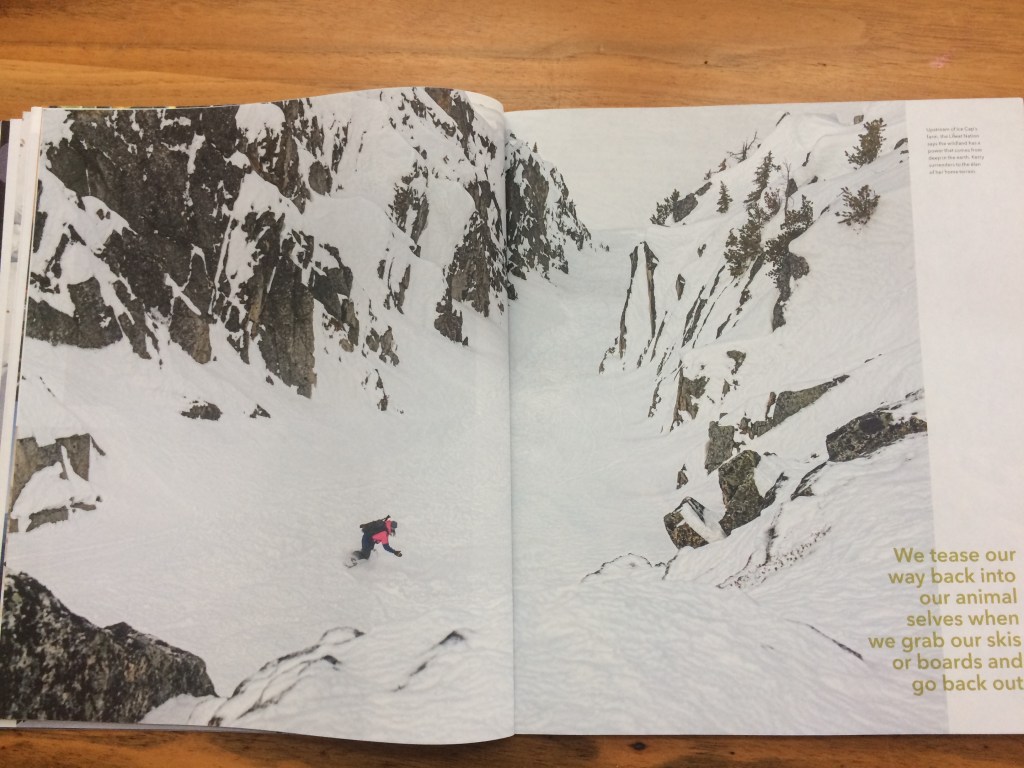
Most of the modern developed world is a set of systems and habits and structures designed to limit our exposure to nature and keep us safe from variability, from discomfort or physical labor, and help us not even break a sweat. We tease our way back into our animal selves when we grab our skis and go back out. But the illusion of separation remains, constantly reinforced every time we jump into a vehicle, order a coffee to-go, stock up at the grocery store where an invisible, complex, global supply chain presents us with the illusion of a constant steady supply of fuel, of food, insulating us from our true vulnerability on this delicate earth.
It’s good to sit with that: what the skiing-farmers know.
This story was featured in Patagonia’s Winter 2020 Journal. All images captured by Garrett Grove.
Co-owner of Laughing Crow Organics, one of Pemberton’s small scale organic mixed vegetable farms, Budgell is six credits shy of an English degree, and seven years in to his transformation as a farmer. We sat down this winter to talk shop, mutually intrigued by each other’s craft.
“In the winter time, it’s like you’re assembling this really complicated machine,” Budgell explained. “And when the season starts, you pull it out in the field and start it up. It begins lumbering forward. And you start seeing, as the season goes on, that you’ve become a part of the machine, working, weeding, watching. But this has all been planned. Every now and again, the machine will trip because of something you didn’t think of. Then there’s this extra challenge of patching things up and putting out fires. But the machine rumbles onwards forever.”
Once the snow is off the fields, and the Life Force is surging through everything, nothing is sleeping. And the farmers start moving to keep pace – a pace that will keep accelerating until they feel like they’re running. “I feel like if I don’t keep moving alongside it, the machine falls apart. You have one chance. It’s a really hard deadline, unless you can decode nature.”
Budgell is regaling me with images of his Frankensteinian creature, in part, because we’ve sat down to talk about the contrast between winter and summer. Winter is a time for planning and playing. Now that farming season is here, it’s time to get down and dirty with your creation – to fully engage in this mysterious interplay between your plans and ideas and the physical world.
I returned to this interview after listening to poet David Whyte talk about “the conversational nature of reality.” Whyte suggests that “the only place where things are actually real is at this frontier between what you think is you, and what you think is not you; that whatever you desire of the world will not come to pass exactly as you like it. But the other mercy is that whatever the world desires of you will also not come to pass. And what actually occurs is this meeting, this frontier.”
One day this winter, running alongside my own lumbering beast of deadlines and deliverables, I did something different. Instead of downing two espressos, I squandered 15 precious minutes in meditation. I sat, breathed out, and in, and out, and in, and offered a kind of prayer to the universe. This story means a lot to me, I admitted. I want to do the idea, and the people it represents, real service. And I have five and a half hours to do it. Anything or anyone out there that can help get this fully formed out onto the page right now is most welcome.
I’d long been intrigued by Eat, Pray, Love author Elizabeth Gilbert’s theory of creativity, famously disseminated in her TED talk. Her insight is that there are Muses, a kind of “other” energy that works through us. A big part of doing creative work, maybe the biggest part, is consistently showing up so the forces know where to find you.
She came to that story as a kind of medicine to her huge commercial success and the weight of creative pressure that followed. Excavating an ancient understanding of Muses was her way of letting the air out of the pressure cooker of her Next Big Project; saying, look it’s not all on me. If I just show up, some other magic will meet me there.
It intrigued me, but it felt a bit passive, like she meant opening yourself up as a channel or a medium, letting something use you to flow through and onto the page. Writing hadn’t ever felt like productive sleep-walking to me. But when I sat in that moment of pause, inviting mysterious allies out of the cosmic woodwork, I suddenly saw it as a much more dynamic process – profoundly collaborative. Co-creation. Something might work through me, but it had to work with me, with my brain, my thought patterns and habits of language, and I would be shaped by the flow, just as I might allow it to help shape the work.
It was a new frontier.
It may be that some kind of meeting took place that day. But I began to let my fear and overwhelm subside at the responsibility of what I was tackling, trying to pull stories out of the ether, alone.
Photo by Audrey Thizy
Every spring, when the freshly plowed fields are full of scribbles and half-thoughts, Budgell feels the weight of the beautiful responsibility he has shouldered to feed hundreds of people. “We always freak out! We worry: is it going to grow this year? Is it going to happen? Are we going to have food? All through April and May and June. And then right around July, it’s like this crazy revelation. Oh my God! It worked again! Nature!”
Photo courtesy Laughing Crow Organics
“There is a chemistry to creative work that is about two parts miraculous to one part sheer effort,” reads a quote tacked above my desk. The precise effort-to-miracle ratio may change, but both are indispensable. We keep fumbling back to this. It’s on you, but it’s not all on you. It can’t happen without you, so show up and do the very best you can but make space for the not-knowing, the magical, the forces that keep the plants growing and the words flowing, and whatever else needs human hands to manifest in the world, in this earthy gritty sweaty dimension, where revelation happens.







 Traced Elements