Tag: eggs

  • Appreciating the Neighbourhood Chicken Lady

    Appreciating the Neighbourhood Chicken Lady

    Hey folks!

    Let’s talk about the cost of a dozen eggs.  What I see in our area is that most farmers sell a dozen eggs for $5.  A few farmers sell for $6 or $7, not many.  In the grocery store prices range from $3 to $8.

    I have been selling eggs for $6 and most people feel comfortable paying that price.  Here’s the thing, I do not make any money off selling eggs.  I basically sell eggs for the People.  The People love farm, fresh eggs!  That’s why I do it.  I even try not to use eggs in my home so that I have more to sell.  It is not because I’m being greedy and want to make more money but because I need to sell them all to break even.  Yes. you heard that right!  If I sell the majority of the eggs I collect, I break even but only with the cost of feed.

    I have been using an app called “Count My Eggs” for the last 40 days.  I can input how many chickens I have, how many eggs I collect each day, my expenses, and my sales.  The app tells me that I have collected over 500 eggs (chicken and duck) and sold over 450 eggs.  It shows me that I have spent $2 more on feed in last 40 days than I’ve made in sales.  I lose money.  Having said this, I do have eggs in the incubator and if I had sold them I would have made a tiny bit more on egg sales.  Had I sold those 3 dozen eggs I would have made about $0.45/day of income.  Yep, raking in the big bucks!!

    Screenshot_20200402-152857_Instagram

    I have the same feed expenses all year but chickens don’t lay all year.  The math is about $6.64/day for about 40 laying hens and a few roosters all year round regardless of how many eggs they lay/day.  In the winter they hardly lay and I use a light the coop during the winter to try and encourage laying (so a bit of hydro).   The chickens take a lot of laying breaks throughout the year (if it’s too hot, or too cold, if they’re molting, if they’re stressed out, if there isn’t enough daylight, a hundred reasons!).  No eggs, no income…but they keep on eating.  There will be a bit of a flux in income for the next month or so selling day-old chicks but it won’t even begin to cover what I’ve spent feeding hens that aren’t laying.

    Keeping chickens takes a lot of time, every day. I am not compensated for the hours spent feeding and watering, cleaning coops and water jugs, collecting and washing eggs, or building fences.  Also anything extra, like sawdust or wood pellets for the floor and nesting boxes, replacment feeders, or the cost of fencing materials when needed is money out of my pocket.

    Raising chickens is not a money maker, it is a passion project (like most farming is).  I love being able to provide folks with eggs from happy, healthy, free-range chickens but I do so at a great cost to my bank account.

    Please remember how hard I work every day, all year to provide people with eggs and please keep this article in mind when you are asked to pay a bit more for a dozen eggs.  I do it all for you!

    Dare I ask for $7.00/dozen?

    Screenshot_20200402-161843_Instagram

    Air hugs!

    -Meg

    Once a farm girl, always a farm girl.

    once_a_farm_girl_nametag

  • lessons about diversity inadvertently learned by a chicken farmer

    lessons about diversity inadvertently learned by a chicken farmer

    Once upon a time way back in the day, as my made-up legend goes, a farmer tripped and fell returning from the chicken coop, smashing his eggs.  A couple of valuable lessons were learned at that moment that still ring true today. Firstly: “Don’t put your eggs all in one basket.” Another adage, assuming the eggs were fertile, is “don’t count your chickens until until your eggs have hatched.”

    Now these wise words go well beyond the tragedy of broken eggs with respect to farming. The true moral of the story is life in nature is unpredictable and there are so many variables. Therefore DIVERSITY is your best insurance when raising crops or even livestock. Nothing is guaranteed, until the final transaction.

    The rise of monocultures, factory farms and GMOs that treat food as commodities is both foolish and greedy. What was originally designed to provide food security for the masses now appears to be doing the opposite. Mad cow disease, avian Flu, threats to bees, extinction of heirloom gene pools are all human-made problems. Mother Nature always knows best and I think she’s pissed off at our shenanigans.

    Seeing huge fields of one variety of apples in Washington state, or whole towns in California boasting they are the __________ growing capital of the world, makes my blood boil. Talk about risky. Take Gilroy, California, for example. For decades the commercial garlic exporter for all North America was hit with an untreatable white rot mould. This has opened the market for an even bigger producer, China, to dump tons of low quality, bleached, and irradiated toxic garlic on the market. Yuk! Or worse, the potato famine in Ireland, growing one variety of a single staple, all destroyed by blight, starving millions and displacing more.What happens today when a pest or disease goes rampant? The answer is almost always more chemical pesticides. What about nutrient depletion? More chemical fertilizers of course. What about weather related? The droughts, hailstorms, floods – the things we read about in the news somewhere in the world daily and exacerbated by climate change? Often its government bailouts and huge insurance claims or bankruptcy. Why are humans so shortsighted and stubborn? We have been cultivating food successfully for thousands of years. Why did we have to change the program?

    Biodiversity is the key to every balanced ecosystem and we have to look at our gardens in this light.

    At our farm we plant a half dozen different fruit trees every year, not just for variety but more for security. Fruit set often takes a rest after a bumper crop. It’s cyclical like so many things in nature. Pollination is also variable, dependant in temperature, bugs, wind and other factors beyond our control. Remember when we try to control nature it usually backfires. So we have to learn our lessons from our observations, trials and errors taking our clues from nature. Mother knows best.


  • Why Everyone Should Have Backyard Chickens

    Why Everyone Should Have Backyard Chickens

    With Easter here, I thought it fitting to talk about the true supplier of eggs. Bunnies get all the credit this time of year, but we all know we have chickens to thank for the ever so versatile egg. Although they may not be filled with chocolate there is not much that beats a fresh scramble with eggs that were laid that morning.
    image1
    6 years ago we made the decision to invest in chickens. Specifically, laying hens as opposed to meat birds or roosters. We were renting a house up the Meadows where we were cultivating 1/4 acre plot of land as a veggie garden. On the property was an empty chicken coop that hadn’t been used since our landlord kept a few birds many years before. It was a little rundown and being used as storage but we emptied it out and fixed it up. We have since then moved to Reid Road and were fortunate enough to be able take our chickens with us.
    To be honest I didn’t have the greatest memories of chickens. I remember getting chased around the yard by an angry hen and being pecked at by mean-looking rooster. Maybe we lucked out, maybe it’s the breed or maybe there is something to be said for raising your day old chicks but we have some of the friendliest birds. They LOVE to be petted, picked up and they are not afraid of people, dogs or cats. We let them roam free for most of the day and then when the sun starts to set, they retreat back into their coop and we lock them up for evening. I thought there would be a lot more chasing and wrangling involved but they seem to know where their home is and enjoy staying there (that or they know where their food is!)
    image5
    Roaming freely around the yard.
    It was a bit of a life adjustment and took a bit of getting use to caring for birds – cleaning the coop, collecting eggs every day, filling feed and ensuring clean water – but the benefits quickly outweighed the work. In six years of owning chickens, I think I’ve only purchased eggs from elsewhere once. We usually have eggs to spare and either sell them or share with friends and family.
    image3
    Olive deciding wether or not to share. Petey the dog and Dr Gre the cat coming to check out what’s happening

    Here is my list of benefits to keeping laying hens:

    • They compost for you! I keep a scraps bowl in my fridge and every morning bring it to the birds. Carrot peels, the tomatoes I forgot about and are now stinking up the fruit bowl, the stale bread that’s about to mould, aside from a few items the chickens will gladly eat it all. (We do not feed our chickens any dairy or meat products. There is also a list of fruits and veggies to avoid feeding your chickens such as citrus, grapes and mangoes)
    • They are incredibly entertaining. Have you ever watched a chicken run? It’s like peaking into the Jurassic age. And if you have children, chickens are a fantastic source of entertainment. Have you ever tried to catch a chicken that does not want to be caught? Well, kids will try for hours!
    • Not only will you waste less food (feeding your birds scraps) but the grocery stores will also waste less food. Did you know that at the Pemberton Valley Supermarket you can pick a banana box of the grocery store’s unsellable fruits and veggies? For $2 you can pick up a chicken box filled with an assortment of items that are perhaps a little too ripe or bruised but the chickens aren’t picky, in fact they are thrilled to see that box coming their way.
    • You know exactly where your food comes from. You know the living conditions of these birds and you know exactly how long the eggs have been sitting on your fridge shelf. This was a huge one for me. There are companies that advertise “free range” or “free run” by giving their birds an additional amount of space and a minimum amount of time spent outside but at the end of the day we just can’t really know how these birds spend their existence. (Of course, in Pemberton we are so fortunate to get access to eggs from trusted farmers, so I am speaking more to what is available at the grocery store.)
    • There is something so rewarding in caring for a creature. There are many reasons we keep pets, it has been shown that cuddling a pet can reduce stress, loneliness and anxiety. Chickens are no exception! Plus if you’re not interested in having indoor pets, chickens are a great alternative!
    • Chickens help keep the bug and slug population under control. If you do keep a home garden chickens can play an amazing role as a natural insecticide.
    • EGGS! Oh yeah! When was the last time your dog left you a tasty treat? Chickens are fabulous, you feed them, they feed you!
    image2
    An example of the contents of a chicken box from the Pemberton Valley Grocery Store
    When is comes to the coop there are so many amazing and innovative plans available online but here are a few essential features that every chicken coop should include:
    • Waterproof roof
    • A secure structure with a raised floor. Ensuring there are no holes that a mouse could fit through
    • Ventilation grills
    • Window(s) for ventilation and natural light
    • Nesting boxes
    • A roost of sorts
    • Lockable door
    • Fenced run using either chicken wire or galvanized wire
    • Heat lamp
    • Waterer
    • Food dispenser
    • Electric fence (optional but recommended)
    There are a few different options when choosing which laying hens to get and where to get them from. We are very lucky in Pemberton. Through the Animal Barn you can place an order for “ready to lay hens” meaning these chickens have been sexed and then the hens raised until a week or two before they are ready to lay.
    Another option is to get “day old chicks”. There are a couple hatcheries in the Vancouver area that offer both sexed or unsexed day old chicks and you can expect your hens to start laying around 6 months.
    The last option and my least favoured is to purchase day old chicks and have them sent through the mail. I won’t go into any detail on this one.
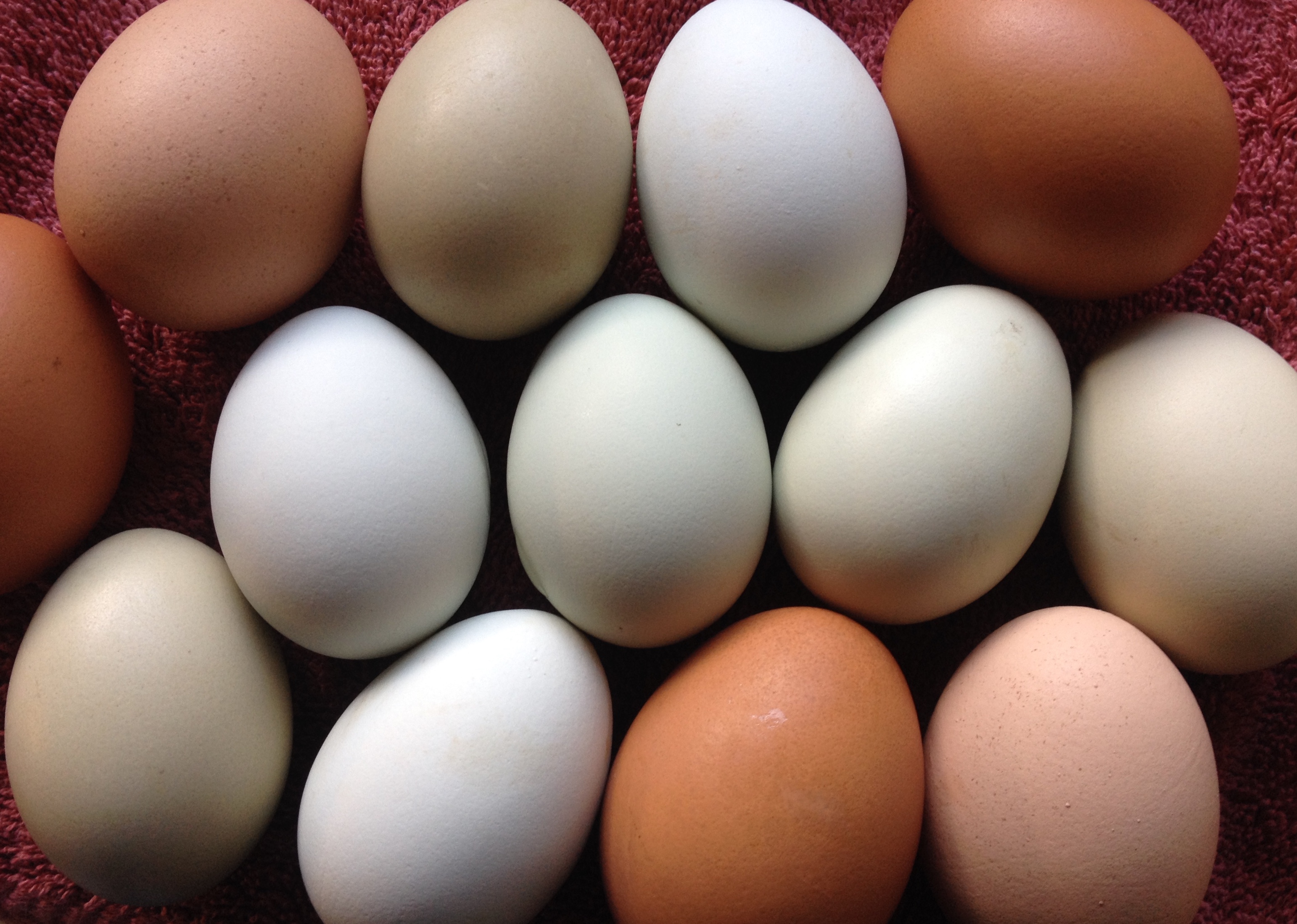
    We opted for day old chicks and we drove down to the Little Red Hen Hatchery in Abbotsford and picked up ten of the cutest little “Easter Egger” chicks. Easter Eggers are a breed of hen also sometimes called Americanas and they lay pastel coloured eggs sometimes blue, green, white and pink.
    image4
    Since then, we have purchased ready to lay hens through the Animal Barn and adopted a few stragglers around town that needed a home. We’ve grown our brood to 20 hens, each one adding its own personality to the dynamic. It was 6 years ago that we invested in laying hens and I can’t imagine my life without these feathery friends!
  • Patty B, Pemberton Wedding Duck

    Patty B, Pemberton Wedding Duck

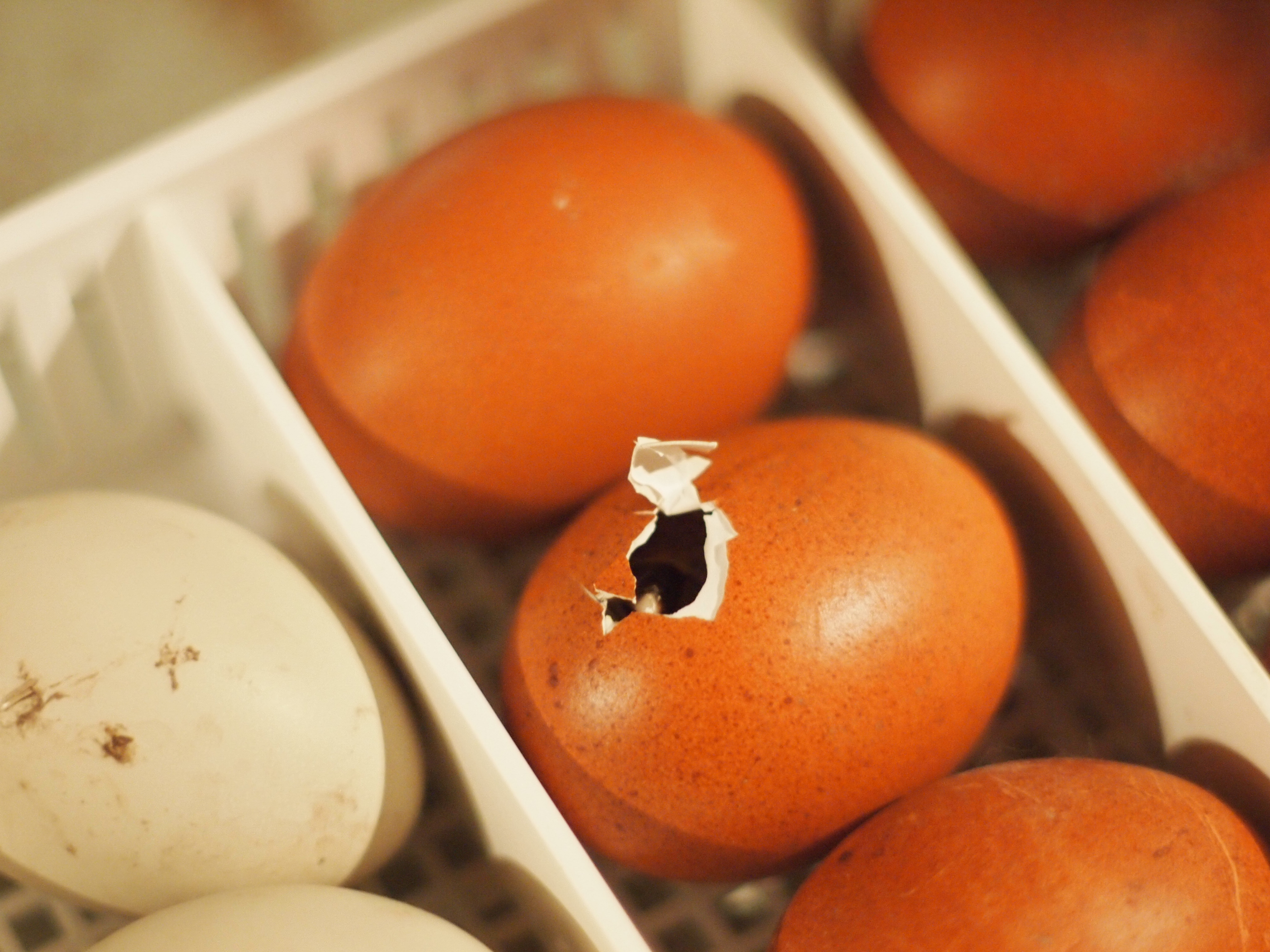
    The sounds of spring are in the air. Birdsong fills the yard, and the egg incubator hums in my living room. Every spring we carefully place colourful, fertilized chicken and duck eggs in the racks and wait patiently, until we can hear, with ears pressed to warm shell, the muffled rustles and faint peeps of tiny birds inside.

    OLYMPUS DIGITAL CAMERA

    The ducklings and chicks we hatch are egg layers – we generally won’t eat these birds, but sometimes a male duck will find its way into the oven. Our layers are almost like pets, and those with standout personalities or traits often get names.

    Last year, about a month before our wedding in September, we decided to incubate some duck eggs out of the spring season to bolster our flock after a lot of losses to raccoon and bobcat. Only one duck ended up hatching out, and since the little guy was going to be alone in the brooder, I decided to take the tiny duckling under my wing. We started calling the duck Pat since we didn’t know if it was a boy or girl. Then we changed tactic and tweaked the name to Patty B to help sway the universe into giving us a lady egg layer instead of another randy male.

    IMG_3695 (002)

    We aren’t going to have kids, and you may laugh, but being a duck mom was super intense. I have no idea how mothers of actual, tiny humans do it!

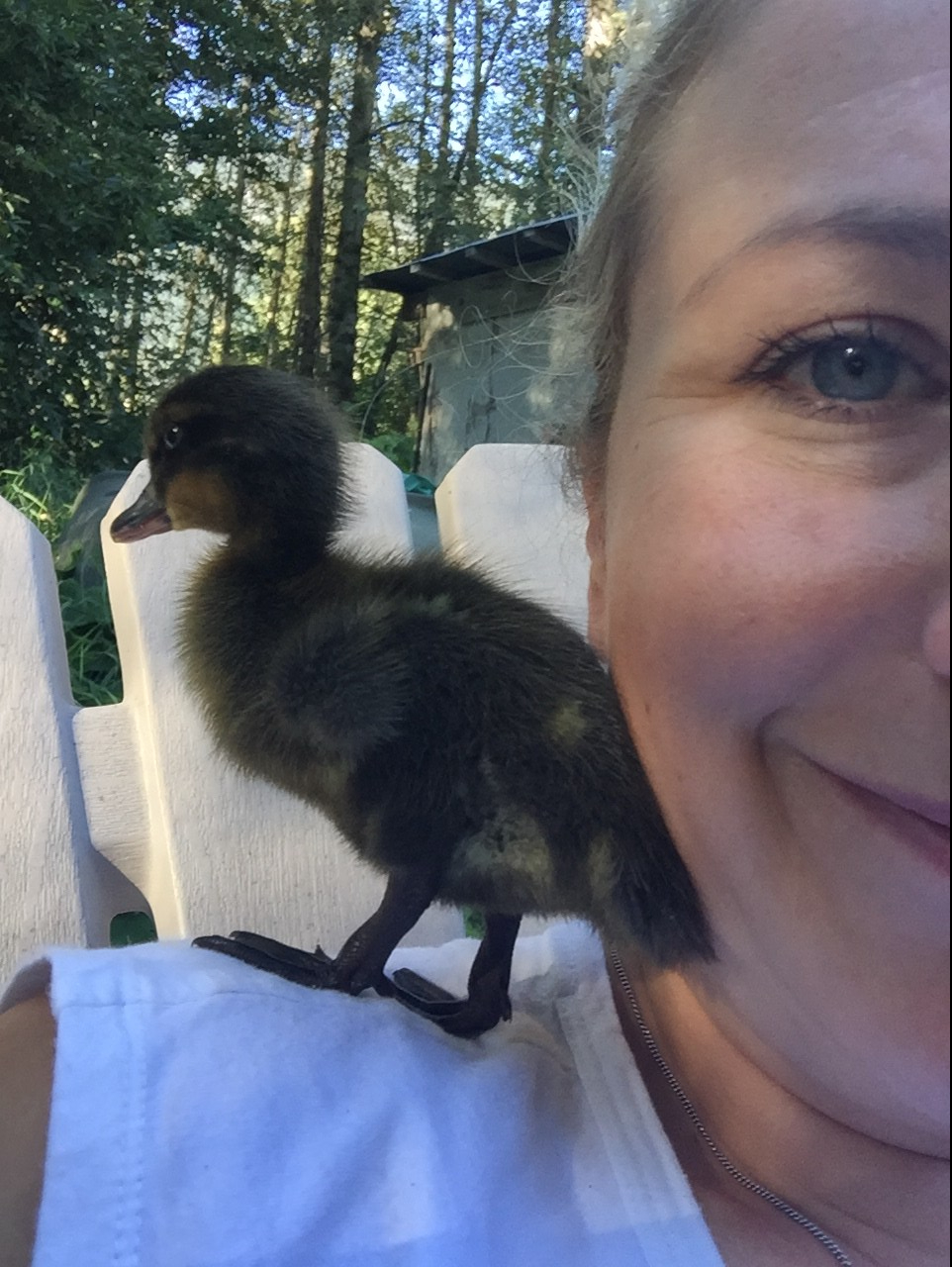
    When she wasn’t with me, perched on my shoulder, Patty B was in a large pen outside the French doors of my home office. Every time I put Patty B back into the pen after a walk around the yard, her frantic cries would break my heart and inevitably I would be back out there for another visit. In retrospect those regular walks around the yard, with the slapslapslap of her tiny feet windmilling behind me and our chilly wades into the backyard slough so she could dip and dive through the muddy water probably saved me from a total “crash and burn” in the lead up to the wedding.

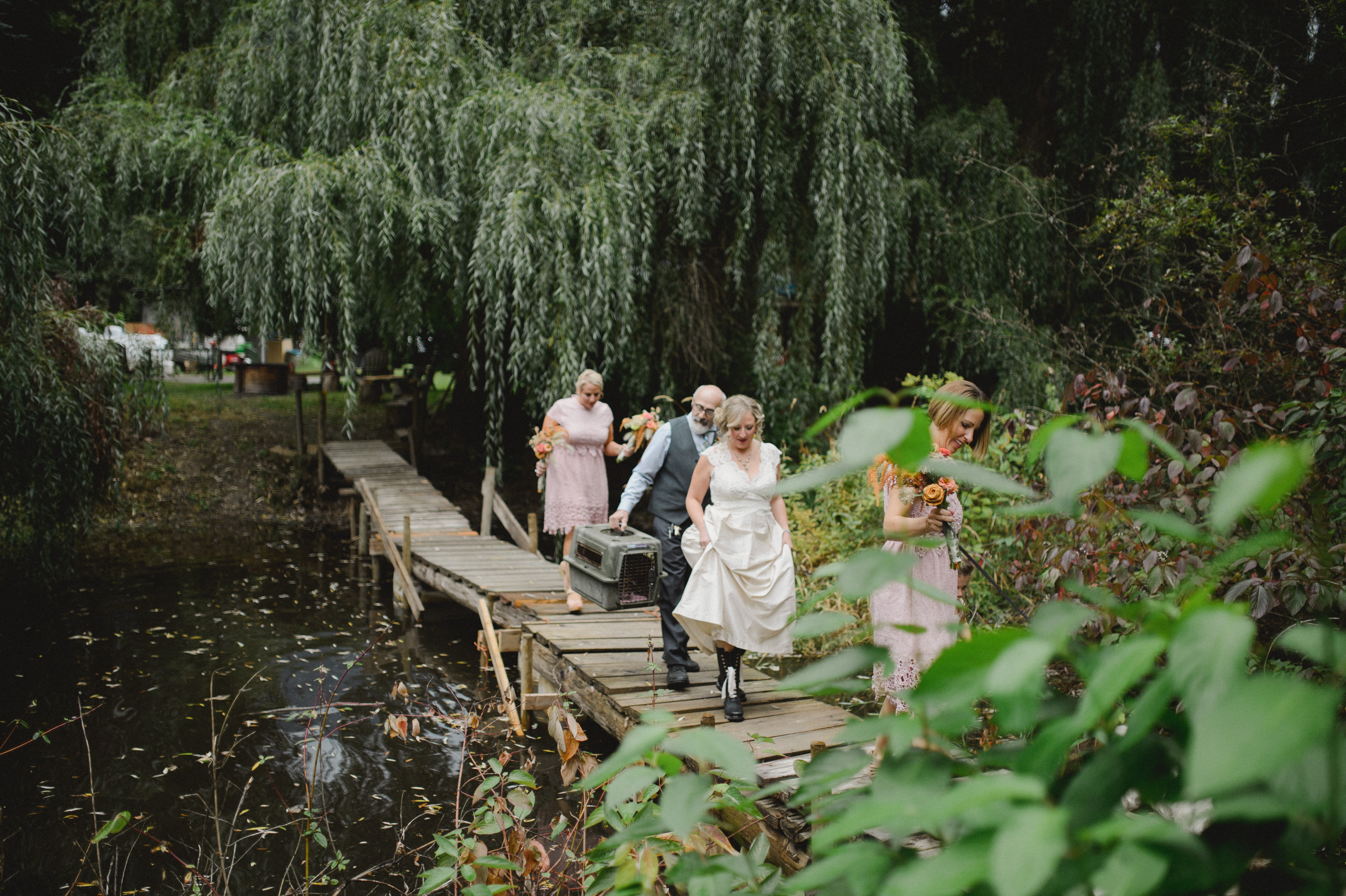
    As the big day drew closer and our walks got longer I hatched an idea – what if Patty B was part of the wedding procession? Training began in earnest with longer walks around the yard and then, eventually, forays across the small bridge into the backfield where our ceremony would take place.


    R+M_001237
    Anastasia Chomlack photo


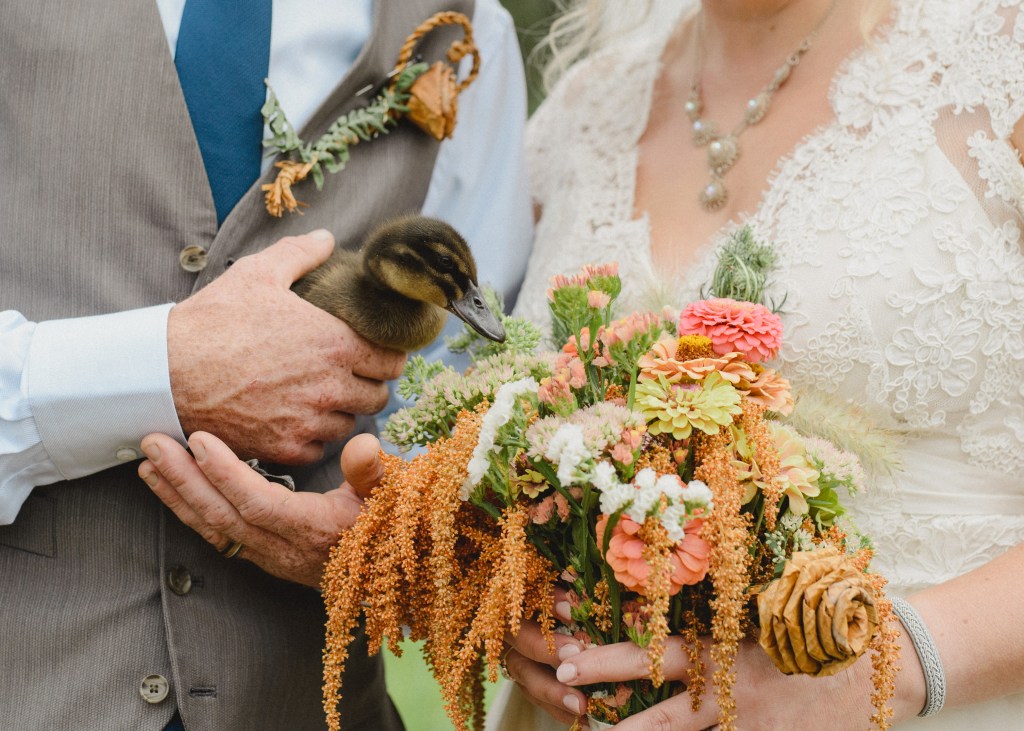
    The wedding day finally dawned…and it was windy and rainy. September 9, 2017, happened to be the first time it rained since Patty B was born…actually, I think it was the first day it rained all summer! Luckily, we had a break in the weather before the outdoor ceremony began and as my wedding party and I gathered just across the bridge, my dad opened the door to the pet carrier to release Patty B. She dashed out onto the muddy path with excited chirps and peeps and began slurping muddy water up her bill. Mud! Worms! AWESOME.

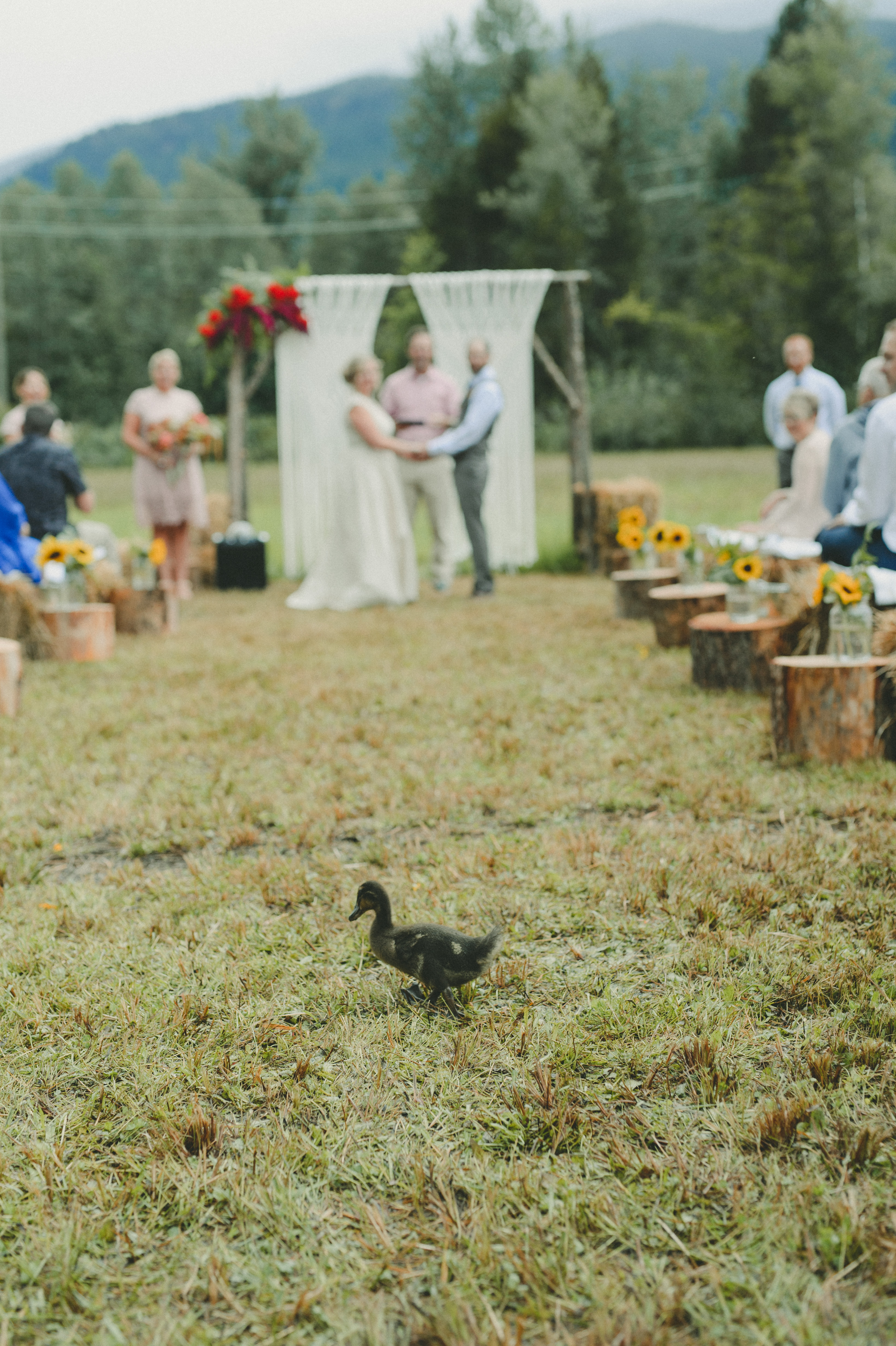
    It was time to start down the aisle, and my flower girl and bridesmaids began their slow march down the field. It was time for me, my dad and Patty B to make our way down to the rest of my life. But Patty B was having none of it.

    I gave one last “C’mon, Patty B!” before sighing and giving up. The show had to go on. We walked down the field and suddenly as we were coming up between the rows of guests I heard a small boy cry out, “Is that a DUCK!?”


    R+M_001267
    Anastasia Chomlack photo


    YES. Patty B made it down the aisle with me after all.

    Most of the animals we raise have a pretty low-key life compared to the wedding adventures of Patty B. But, we tend to every animal at Bandit Farms with care, love, and respect whether we are raising them for their eggs or to eventually harvest for meat. I’m not a duck mom to everyone but being close to our food sources is a privilege I will never take for granted.

    Also, in case you were wondering, Patty B turned out to be Pat…but don’t worry, we won’t eat him.

    ML_PattyB

  • Eggs and the place we call home

    Eggs and the place we call home

    1. The best eggs I’ve ever eaten were done over easy, and served on crusty toasted hazelnut and currant bread that was smothered with melted butter and peanut butter. A strict vegetarian, I hadn’t eaten eggs for years, but started craving them while pregnant with my first son. This decadent breakfast, repeated many times through the pregnancy felt so nourishingly good. My son, Isaac, was born a huge, healthy baby (it must have been the eggs) at home in Victoria on a rainy day in May. The next day my potato plants were a foot taller. My son’s father might have been hard to live with, but he was an amazing gardener and grew a jungle of food and flowers in our backyard.
    2. My friend “Chicken Jen” (who lived down the road from me in Sooke) turned a residential lot into a productive and wild vegetable and herb garden in less than three months, with the help of  home-made portable PVC dome chicken coops. The chickens removed sod, and aerated and fertilized the soil in each successive round bed that she planted, and her “ladies” gave her surplus eggs to sell. Her vision for her abundant garden, created while her kids were only two and four, still astounds me. 13 years later, the nickname Chicken Jen has stuck.
    3. I moved from the island to Whistler with Isaac and my new partner. I was pregnant again. Our access to food and gardens dried up in the mountain resort. Sure, we could get good local food at the farmers’ market, but we didn’t know the farmers. We no longer hacked down chard from our front yard, or picked brambly blackberries, or gardened for 10 months out of the year. We missed eating farm fresh local eggs.
    4. After seven years in Whistler, our growing brood (I’d had one more child) moved to Pemberton. We bought our first home, got a dog and planted a garden. On one of my first rides around town, I discovered the egg box on Urdal Road and I knew we were home. We traded zucchini, cucumber and greens from our first lush, wild backyard garden for composted manure from our neighbour’s farm and for heirloom eggs in every colour.. Having access to real food right where we live, and knowing where it comes from is a big deal. It’s something we love about living here and it’s not something we take for granted.
    5. Let’s play local food Jeopardy. The answer is: Bog’s, the Wag’n’Wash, the Animal Barn, AC Gas, Stay Wild, the Owl’s Nest, Mile One, Collins Cross, the egg box on Urdal, the farmer’s market, Brooke and Kevin’s place, and Pemberton Valley Wellness. The business names themselves reveal  the flavour of this funky little town. The question: Where can you buy local eggs in Pemberton?
    6. The secret: Everyone has their own source. If you don’t time it right on delivery days, you could be cruising around town, visiting all of these locations without realizing they’re part of a hyperlocal egg market. Alternatively, you might well disappoint your family by coming home empty-handed. Sorry, kids, no pancakes this morning.
    7. You’ll be late, too, because you’ll have talked to friends and neighbours all over town. During our first couple of months in Pemberton, I would frustrate my partner every time I biked to the store to get milk for his coffee. My 15-minute round trip would invariably take an hour or more, slowed by the pull of  my grocery store conversations.
    8. Eggs are a window into the local food system in Pemberton. Local food is grown in abundance by experts and amateurs throughout the valley—but you need to know where to go to get it. And to find out where to get it, you need to talk to people. That’s the fun part. If they made it easier, something would be lost.
    9. We have a great farmer’s market and some awesome local businesses and CSA programs to get the straight goods right from the source. But you can also find your eggs or fresh basil or seed garlic on the Pemberton Food and Farm Facebook page, a matchmaking service for people looking to buy or sell food, seeds, plants or other random farm and garden stuff. Looking for a Thanksgiving turkey, alpaca wool, goats or egg cartons? Selling tomato starts, plums, bushels of basil? The source or recipient are only a couple of messages away.
    10. Farming and backyard growing in Pemberton is surprisingly untrendy. People just raise food and grow stuff here because they can, or because they love to, and it just makes sense. Keeping backyard chickens isn’t new, and while I’m tempted sometimes to imagine myself as more of a homesteader than I actually am, I don’t think I have the heart to deal with bear proofing and the collateral damage when raccoons or cougars or coyotes get into the coops. I barely have the heart to steal eggs from aggressive chickens.
    11. Every egg carton has a story. One of our local egg suppliers sells her daughter’s eggs and tracks the cartons to see if they get returned to her shop. One of the farmers at the market in the summer said new cartons cost more than twenty cents apiece—that puts a serious dent in his egg profits. Farmers don’t become farmers to get rich. But what is shared and supplied and circulated in this community is rich. It’s the soil, the place, the creatures, the stories.
    12. Eggs have been one of the nutritional threads in raising my kids—one of the first meals they could cook for themselves—one of the nutrient dense meals I’ve eaten through pregnancies, breastfeeding and birth. One of the food sources that connects us to the place where we live.
    13. My baker’s dozen. I’m lucky if there are eggs in my house or it’s back to part 5 of this story.  My favourite homegrown breakfast:

    11 o’clock braised greens & eggs

    INGREDIENTS

    • A few giant handfuls of greens from the garden (kale, chard, spinach, collard or beet greens)
    • A few cloves of garlic (homegrown if you can), peeled
    • Coconut oil
    • A couple of eggs
    • Flax oil
    • Condiments (homemade kimchi, sauerkraut or hot sauce & Bragg’s)
    • Ground flax seed
    • Leftover brown rice (optional)

    INSTRUCTIONS

    • Wash greens and tear into large pieces.
    • Wilt greens and simmer garlic with a splash of water in a pan with a lid.
    • Add a small amount of coconut oil to the pan.
    • Add a couple of eggs and fry them up in the same pan.
    • Serve eggs and your pile’o’greens with hot sauce, Bragg’s, flax oil, flax seed, and homemade kimchi or sauerkraut (*recipes for vegan kimchi and sauerkraut to follow in future posts).
    • Add a scoop of warm leftover brown rice, if you have some.
    • Eat with thanks. Be nourished.