I’ve been making this soup often. I feel like I am rallying the troops as I take all the veggies out of the fridge to start cooking. Napa cabbage is a new addition I have made and turns out this veggie is high in vitamin C – a good winter soup veggie. I can eat this soup most days in winter and make a batch about once a week. It is good for lunch or dinner and I feel good knowing I am getting my veggie requirements.
I am going to make this soup for a friend this weekend. It ticks so many boxes: veggies (including 2 cruciferous veggies), minerals from homemade chicken stock/bone broth, and protein from the lentils. Enjoy the last stage of winter – prime soup-eating season. I am proud to say I created this soup. I am really happy with it and I hope others give it a go. There is no nicer way to eat healthfully in winter than with a delicious veggie-filled soup.
Ingredients:
3 tbs pure olive oil
2-3 cups chopped napa cabbage/Chinese cabbage
1 large yellow onion, chopped
2 cups chopped parsley
½ fennel bulb, fine chop
6 large white mushrooms, chopped
1 medium cauliflower, chopped
1 cup chopped celery
2-4 tsp pepper (2 tsp to start, then adjust to taste)
2-3 tsp salt (start with 2 tsp, then adjust to taste)
2 tbs cumin
1 tbs coriander
1 tsp curry powder
½ can full fat coconut milk
1.5 cups well-rinsed red lentils (lentils can have a chalky flavour if they are not rinsed. Do not skip this step.)
8-10 cups homemade* chicken broth, made with the carcass of a Pemberton-raised roast chicken (use 10 cups for a thinner soup)
Method:
Sauté all veggies including parsley. The process takes a while. You want a nicely caramelised batch of veggies. Do not continue until the veggies are at a point where you would enjoy eating them as a cooked side dish.
Add spices and 2 tsp each of salt and pepper.
Add chicken stock, lentils and coconut milk.
Bring to boil, then simmer on low heat for 20 minutes.
Taste the soup. Adjust salt and pepper.
When you are satisfied with spicing, blend the soup in batches in a high-powered blender.
Enjoy!
*Homemade stock makes all the difference. See my previous soup posts on tracedelements.com for recipe for homemade chicken stock. I store the stock in clear 3-cup Ziploc twist-lid containers. I like these as you can see what is inside and, unlike most other storage containers for the freezer, the lids on these ones don’t fall off! (this is not a paid endorsement but I would be interested in this kind of thing!!)
Here is a photo of what my pot looks like with soup stock simmering. My chicken carcass is in there along with all my veggie ends and a quarter cup of peppercorns. This is a good one to two week supply of stock. I often use stock to reheat leftovers on the stove. It heats everything more evenly and adds flavour!
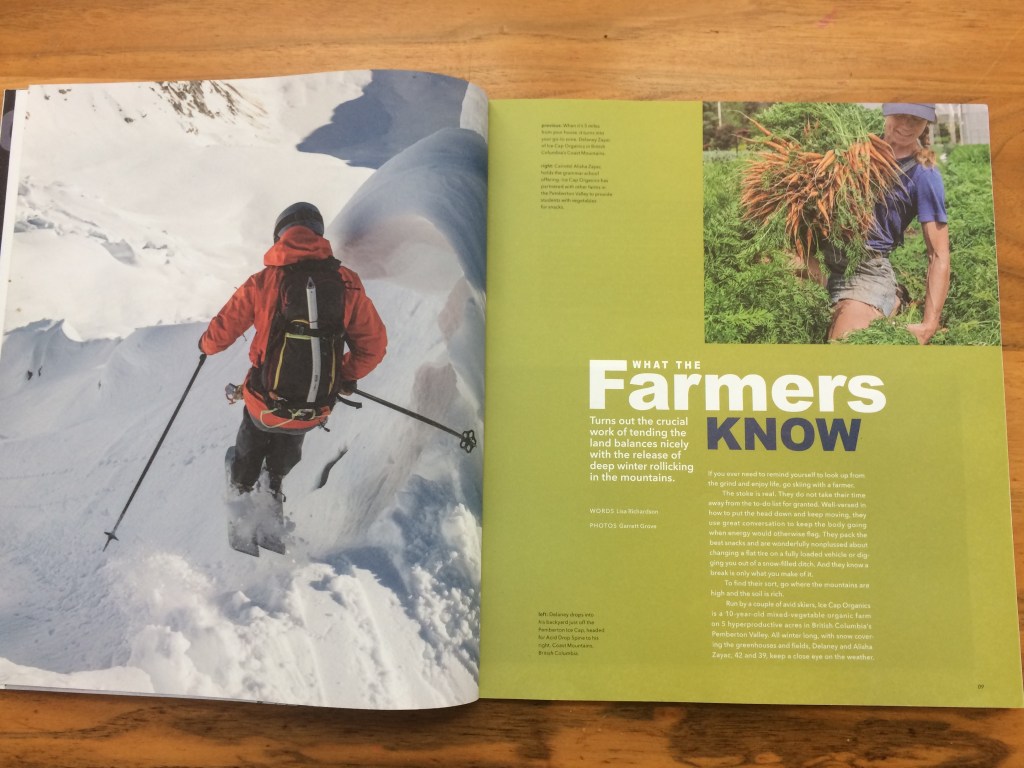
Turns out the crucial work of tending to the land balances nicely with the release of deep winter rollicking in the mountains.
If you ever need to remind yourself to look up from the grind and enjoy life, go skiing with a farmer.
The stoke is real. They do not take their time away from the to-do list for granted. Well-versed in how to put the head down and keep moving, they use great conversation to keep the body going when energy would otherwise flag. They pack the best snacks, and are wonderfully nonplussed about changing a flat tire on a fully-loaded vehicle or digging you out of a snow-filled ditch. And they know a break is only what you make of it.
To find their sort, go where the mountains are high and soil is rich.
Run by a couple of avid skiers, Ice Cap Organics is a ten-year-old mixed vegetable organic farm, on five hyper-productive acres in British Columbia’s Pemberton Valley. All winter long, with snow covering the greenhouses and fields, Delaney and Alisha Zayac, 42 and 39, keep a close eye on the weather. And whenever the conditions are right, Delaney, is up at 3 a.m., blazing out the door, skinning in the dark with headlamps to pursue objectives out on Miller Ridge or Duffey Lake Road with a small crew of friends. Alisha often opts to show their kids what’s to love about winter.
The volcanic-rich river-silt blessed soil of the Pemberton Valley has earned many farmers’ attention, but it’s the massive Coast Mountains that catch the farming-skiing type. And if the mountains bring folks in, it’s sometimes the farming that gets them to stay—loamy earth beneath 8,000-foot mountains, and living to the sound of glacier-fed rivers.
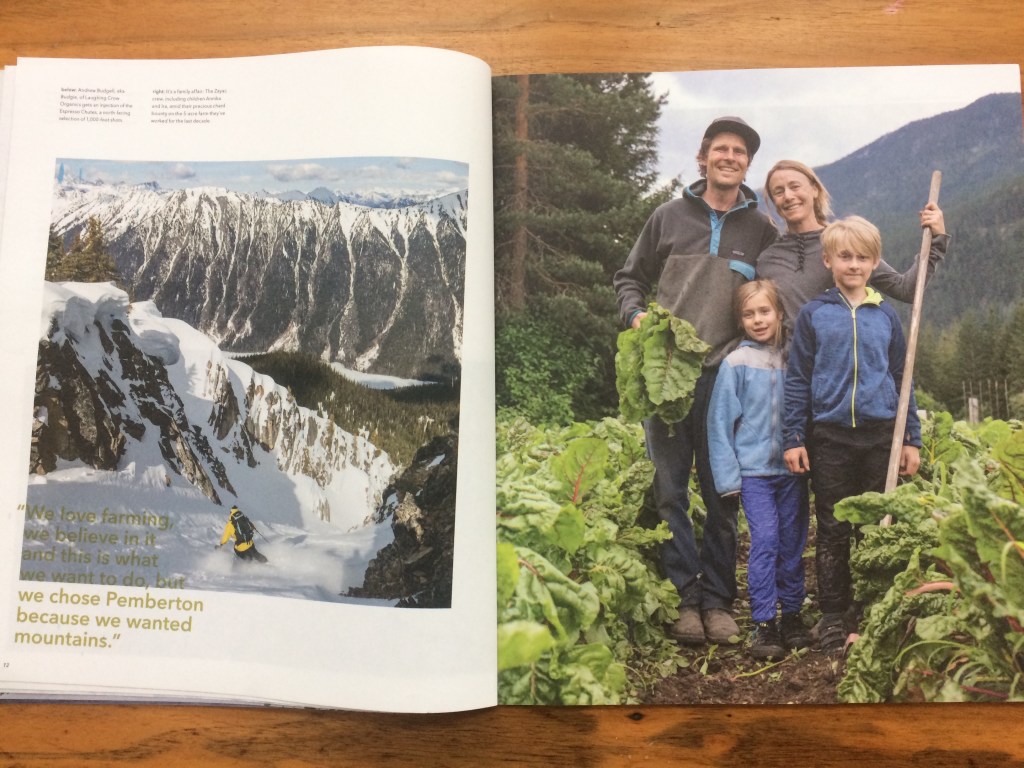
“It’s why we’re here,” says Alisha. “Winters off is one of the things that drew us to farming,” explains the former tree-planter and agro-ecology scientist. “We love farming, we believe in it, and this is what we want to do, but we chose Pemberton, because we wanted mountains. We canvassed the world, to find places where you have mountains and farmland – Bella Coola, Pemberton, Chile, a couple of places in France.”
Delaney reflects on their decision-making process—a couple of young nomads who were dividing their year into three seasons—university, tree-planting, travelling or skiing. He’d spent his twenties and early thirties skiing over 100 days a year, bumming throughout the Canadian Rockies, Kootenays and Coast Range, and venturing farther afield to the Andes and the Alps. It was time to root down and think about having a family but Delaney knew that without big mountains there was no chance of his calling a place home. Pemberton was fertile, steep, proximate to a hungry market, and permanently set to stun—a place where there are no ugly views.
Now their year breaks into two parts: farming season, and winter. As the farm sleeps, the pair take turns driving their vegetables down to winter markets in Vancouver, a city of 2.5 million people two hours to the south. They make plans, research the latest science and developments in farming, ski, and regenerate. “We work hard in the summer, and play hard in the winter.” Every morning since completing the 10-day silent Vipassana retreat she’s wanted to do for decades, Alisha wakes up before dawn, before the kids, 6 and 8, have roused, to sit and meditate for an hour, watch her mind, and bank some equanimity for the day ahead. Delaney plans his last spring mission to the remote Waddington Range. Bad weather days, they tackle the farm chores, like sourcing an old upright freezer from a Chinese grocery store that they can upcycle into a germinator for their seed starts.
Then, come growing season, they take up their mantle as activists.
“That’s another reason we started farming,” says Alisha. “It was a way to align with our values, a positive way to be part of the community. I wanted to fight the good fight for agriculture and as soon as I started farming, I realized this is actually enough.” It’s a quiet, radical activism.
After he’s been at the markets in the city for the weekend, the first thing Delaney does is park the truck, grab the kids and walk around in the fields together, see how things are looking, noting the growth and changes that have unfurled in the last three days. The Lillooet River runs past the end of the narrow, pot-holed street, flowing down out of the ice-cap and past the sulfurous thermal sleeping volcano that still vents steam out its fumeroles. The Lil’wat Nation, whose traditional territory this is, says the wild land upstream of Ice Cap’s farm has a power that comes from deep in the earth. It’s so big and powerful that when he skis back there, it gives him goosebumps. He treads the soil of the farm to shake off the city, touch down, ground down, and tap quickly back into that energy.
Winter gives it the time to seep in.
“Every farm has its own personality,” says Amy Norgaard, who’s worked at many farms in the Pemberton Valley, including Ice Cap Organics.
Amy, 26, grew up in western Canada, in the 7,000-person ranching and logging town of Merritt, British Columbia, skiing and snowboarding obsessively from the age of two. When her mom got breast cancer, Amy, then in high-school, discovered that vegetables are potent and delicious medicine. Later, she floundered through university courses until discovering the faculty of Land and Food systems—that’s when Amy found her people.
“I took my first soil science course in 2013 and it literally changed my life. I started learning about farming systems and their complexity and beauty and the complete mess we’ve made with food production.” Two years later, to acquire her final six credits and prove to herself that her romantic idea of farming probably wouldn’t withstand reality, she interned as a farmhand for eight months at Ice Cap. All the pieces fell into place – her love of the mountains and her understanding that being stressed is completely different from working hard. She farmed so hard that years of brain-spinning insomnia disappeared, allowing her to fall asleep exhausted and satisfied.
Of course, the skiing helped.
For the last eight years that he has lived in Pemberton, Andrew Budgell rented a poorly insulated cabin near his farm fields, tucked off the narrow road in a giant grove of cedars. Winter is the only time he’s not covered in dirt, but the price he pays is in “cold.” Some days, it was so freezing, he’d blast hot air in his face with a hair dryer to bring himself back to life.
“He calls it the comfort gun,” says his soft-spoken farming partner, Kerry McCann.
Andrew, 44, and Kerry, 36, met in Pemberton eight years ago, when Andrew, a ski-bumming boot-fitter in Whistler and refugee from the suburbs of Ottawa, decided to experiment with growing salad greens as a side hustle. He knew nothing about farming, except that he wasn’t afraid of hard work, loved learning, and wanted to attune more deeply to the rhythms of the earth.
McCann, a beekeeper, yoga teacher and cranio-sacral therapist, had been working as the “hands” of an arthritic physiotherapist in the economically depressed community in Ontario where she’d grown up, home-schooled, on a self-sufficient homestead run by her back-to-the-lander parents. Changes in the health insurance legislation meant her work was drying up, so she ventured west, and stopped in the first place she found that had seven pages of help wanted ads in the newspaper – the Whistler-Pemberton corridor. She convinced her landlord to let her install garden beds alongside the field where Andrew was growing his greens. As her seasonal job as a park host wound down, Kerry began to ponder her next move when Andrew proposed next-leveling his salad bar. “Maybe we should start a farm? I can’t do this alone. We’ll get bees!”
Kerry is an instinctive grower. Where Andrew acquires knowledge through his brain, poring over books and websites, and studying dewpoint and freezing level and weather models, Kerry’s insight into the natural world flows through her actual pores – she will walk outside, sniff the air and announce, “Frost is on its way. We should cover the vegetables.” These approaches define their skiing styles, too: Andrew studies maps and trip reports; Kerry rests on instinct.
Seven years into operating Laughing Crow Organics – their certified organic mixed vegetable farm – they’ve doubled income and veggie production almost every year. But Andrew says, “The reality is, we’re both very challenged in pulling this off. We are living and breathing this farm dawn until dusk.” Farming, just like hiking and skiing your ass around the mountains in temps that turn any exposed hair into icecicles, is not an easy endeavour.
But they always eat well, and when winter arrives, they forget their 30-item daily to-do list and head for the hills.
Kerry spent years meditating and practicing yoga; skiing is her winter practice, exploring the backroads and drainages and skin laps around Pemberton. “I used to spend a lot of time looking for enlightenment. But when you’re skiing powder, it’s a kind of samadhi,” she says, referring to the yogic word for oneness, or meditative absorption, the goal of all her sitting. It’s a kind of short-cut.
Increasingly, Amy is part of Laughing Crow Organic’s winter crew too. After several seasons with Ice Cap, she went to graduate school to study soil science. She skis every chance she gets. “Part of the connection you gain from farming comes from being so exposed to the elements. There’s a lot of vulnerability. You don’t know what the day is going to look like, and you’re vulnerable to what Mother Nature wants to do to you.” She thinks about this when she’s out skiing, too—the natural synergy between mountain people and growers, and how they understand the thrill and sense of vitality that come from being immersed in the elements. The honest exhaustion at the end of the day’s effort. The risk, the reward of getting out among it.
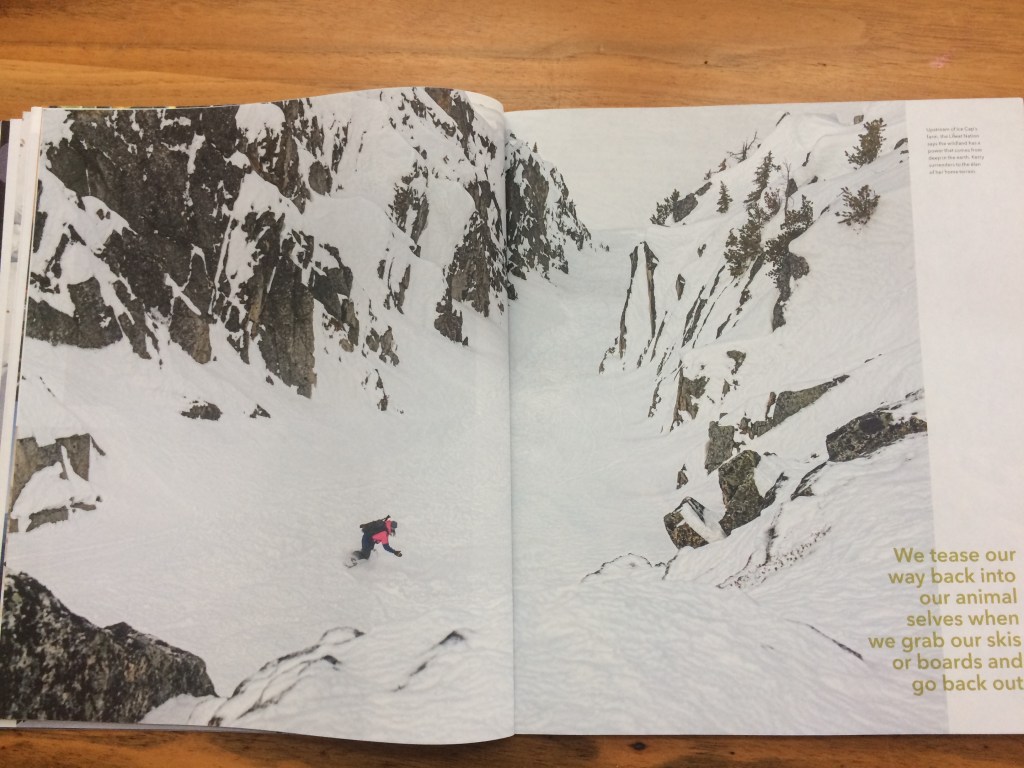
Most of the modern developed world is a set of systems and habits and structures designed to limit our exposure to nature and keep us safe from variability, from discomfort or physical labor, and help us not even break a sweat. We tease our way back into our animal selves when we grab our skis and go back out. But the illusion of separation remains, constantly reinforced every time we jump into a vehicle, order a coffee to-go, stock up at the grocery store where an invisible, complex, global supply chain presents us with the illusion of a constant steady supply of fuel, of food, insulating us from our true vulnerability on this delicate earth.
It’s good to sit with that: what the skiing-farmers know.
This story was featured in Patagonia’s Winter 2020 Journal. All images captured by Garrett Grove.
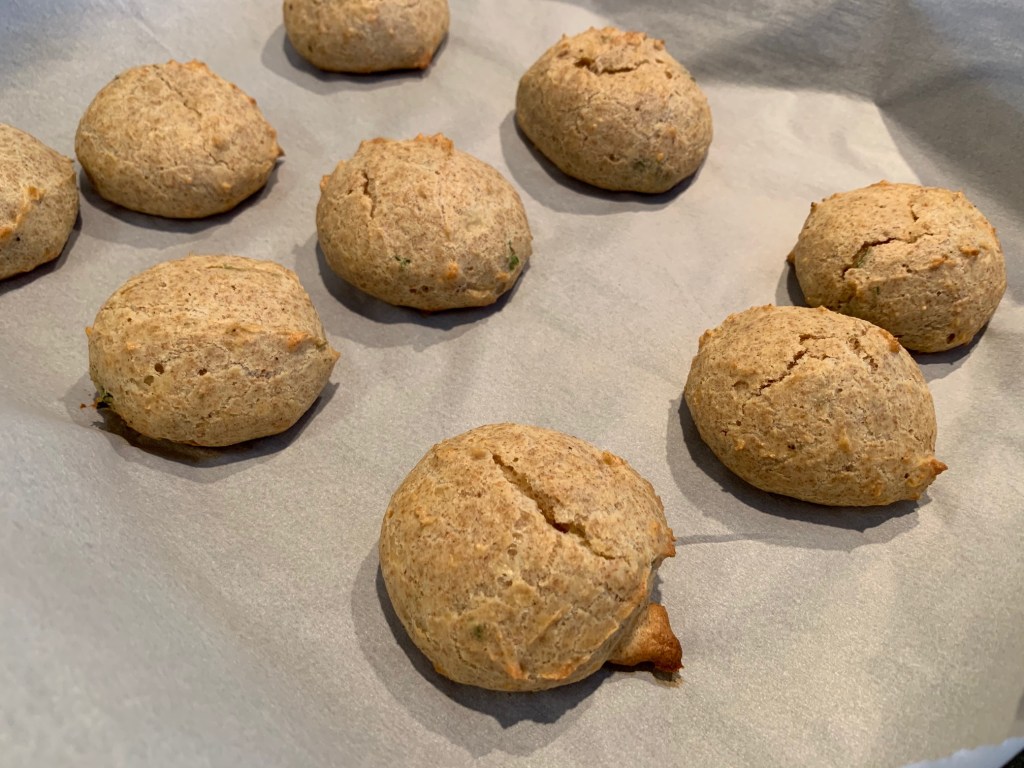
I wanted to spend a bit more time with this cookbook and make something out of my comfort zone. Turns out gougères are pretty easy to make and are an impressive hors d’oeuvre! I changed a few things to healthify them – namely used whole grain spelt flour instead of white wheat flour. However, they call for milk and cheese so not vegan or for the lactose intolerant. I also sped up the method by altering a few steps so you can get these into the oven quicker. I will make these again!
Gougères: (or cheese puffs, to keep things simple)
Yield: 3 dozen gougères.
Ingredients:
1 ¼ cup skim milk (or half part whole milk, half part water)
140 grams unsalted butter
1 tsp salt
1 cup spelt flour
5 large Pemberton eggs
¾ cup grated Jarlsberg cheese
¼ cup fine chopped parsley
½ tsp pepper
Method:
Put milk and butter into medium heavy bottom sauce pan over low-medium heat. Bring to boil. When boiling, shut off heat and add flour. Mix with wooden spoon until well incorporated. Then transfer mixture to stand mixer and add eggs one at a time until well mixed. Then add grated cheese, parsley and pepper.
Drop spoonfuls of batter onto parchment-lined baking sheet and bake for 25 minutes at 350F. Serve immediately.
When Lisa gave me the opportunity to review a cookbook or two I jumped at the chance. I have always wanted to do this!
I have had a lot of fun looking at just-released cookbooks (one more review coming next month). The new Tartine cookbook (a classic baking book from an established San Francisco area bakery that has been given a refresh for a new generation with plenty of gluten-free options) by Elisabeth Prueitt and Chad Robertson, is beautifully photographed and full of innovative recipes.
But, heads up, the recipes are not for beginner bakers or anyone time-strapped. The book is beautifully photographed and has been a welcome addition to my coffee table and looking through it has given me ideas for how to incorporate new flavours into old stand-by recipes. I also appreciated the fact that the authors list the ingredients in grams and ounces which I find a time saver (for those of us with kitchen scales).
In the spring when I have a bit more time I will tackle the brioche recipe and some of the elaborate cakes, such as the Russian Napoleon cake. For now I wanted a recipe that would pack a punch, be time-efficient, and would also be useful in the lunch box and for snacks on the go. This recipe fit the bill.
I Pemberton-ised it by using dehydrated Saskatoon berries instead of currants, and also healthified it by reducing the sugar and using whole-grain sprouted spelt flour instead of all-purpose wheat flour. I also swapped out nutmeg for cinnamon as I am not a nutmeg fan. I also changed the method a bit and baked them straight after mixing, whereas the authors recommend refrigerating the dough first. I think the cookies were delicious and the extra step was not necessary. Less time = enjoying cookies sooner! I also appreciate the fact that these cookies are nut-free and therefore suitable for nut-free schools.
I hope these will be a hit in your home for these snowy winter days.
Orange-Oatmeal Currant Cookies:
(yield: 3 dozen cookies)
Ingredients:
1 cup currants or dehydrated saskatoon berries
285 grams spelt flour
½ tsp baking soda
½ tsp cinnamon
225 grams unsalted butter
1 cup granulated sugar
1 large Pemberton egg
1 Pemberton egg yolk
2 tbs light corn syrup
1 tbs molasses
3 tsp orange zest
½ tsp salt
1 2/3 cup rolled oats
Method:
Whisk flour, baking soda and cinnamon together in bowl.
In stand mixer fitted with paddle attachment, mix butter until it is fluffy and light. Add sugar and mix until well blended. Add all other ingredients except oats and currants and blend well. Add flour mixture, oats and saskatoon berries/currants. Mix until well blended.
Preheat oven to 350F.
Place tablespoons of dough (use a spring-loaded ice-cream scoop for a professional look) onto a parchment-lined cookies sheet. Bake 12 minutes. Check for doneness after 10 minutes. Every oven varies in temperature. Cool and enjoy!
Christmas morning is not an oatmeal morning. You want to have something special and festive on the table. This is a very useful recipe as the dish looks impressive but is actually very easy to execute.
This dish will make use of “all the Pemberton blueberries you froze” this past summer! If you have one, use an enameled cast iron fry pan as some of the lower-quality cast iron pans leave a metallic aftertaste. Happy Christmas!
Dutch Baby Pancake with Pemberton Blueberry Compote
Ingredients:
Pancake:
6 Pemberton large eggs
1 cup almond or oat milk
¼ cup sugar
¼ tsp salt
½ tsp almond extract
½ cup spelt flour
½ cup almond meal
2 tbs butter
Compote:
2 cups Pemberton blueberries
1 tbs corn starch
½ tsp lemon zest
Whip Cream:
2 cups whipping cream
Garnish: 1 tbs icing sugar
Method:
Pancake:
Preheat oven to 425F
Blend all ingredients except butter in a blender on high speed
Place the butter in a 10-inch enameled cast iron fry pan and place in oven for 5 minutes.
Remove pan when butter is melted (use oven mitts!)
Pour ingredients into fry pan and place fry pan in oven
Bake for 20 minutes.
Compote: Place blueberries, zest and corn starch in saucepan on medium heat, and stir until mixture becomes a thick sauce.
Whip cream: Whip the cream in stand mixer until soft peaks form.
Serving: Slice baked pancake into 8 servings. Top each serving with spoonful of compote and dollop of whip cream. Garnish the plate with a dusting of icing sugar using a small sieve.
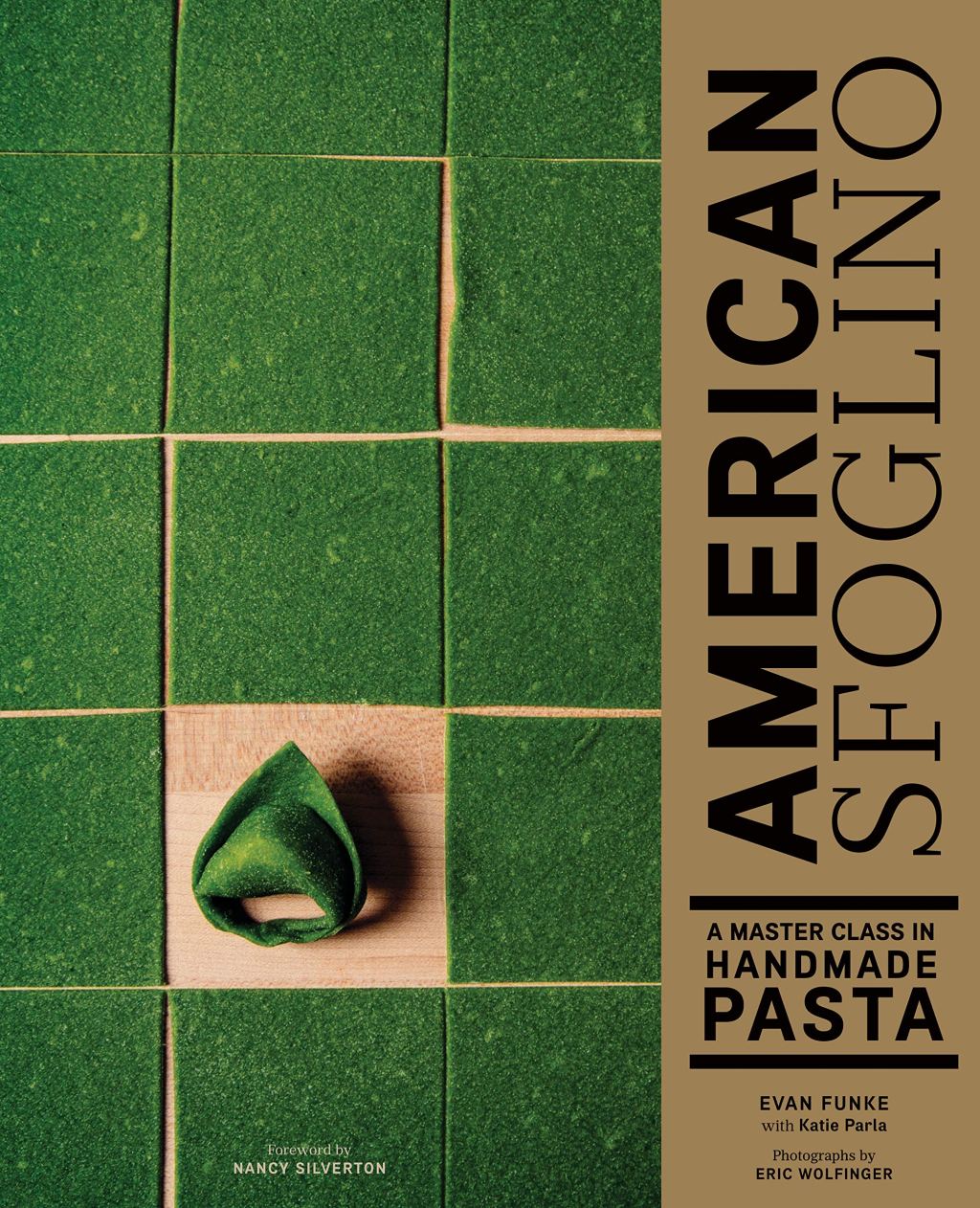
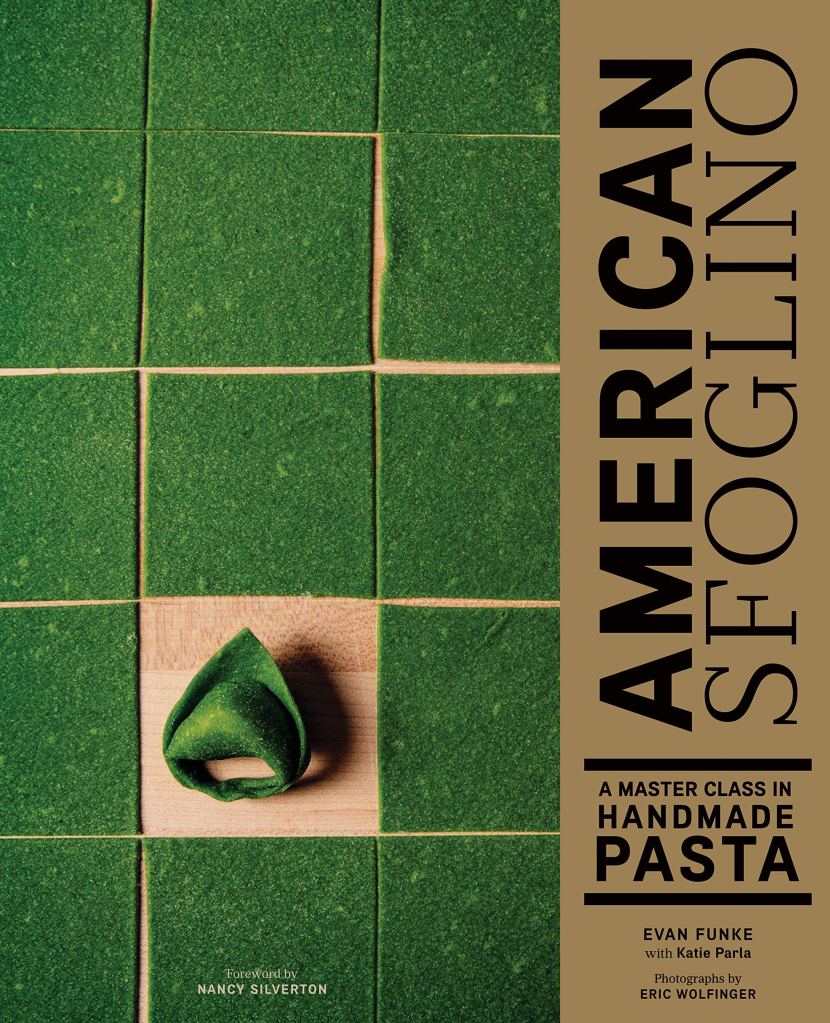
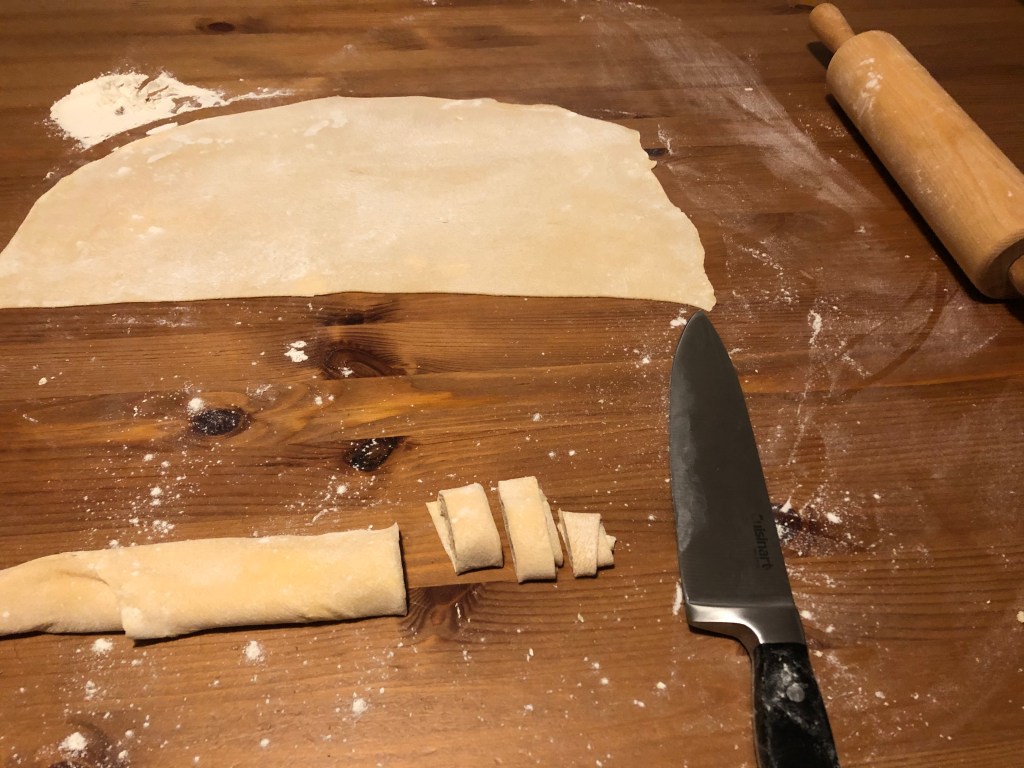
I have always wanted to make homemade pasta but always thought it was too hard and time-consuming. This cookbook, American Sfoglino: a master class in hand made pasta, byEvan Funke, showed me that making homemade pasta and gnocchi is easy and I was even able to hack the time process a little.
Although my background is mostly Finnish (with a little French Canadian and English smattered in there), I come from a very Canadian-Italian hometown. Italian is the predominant ethnicity. So I grew up with amazing homemade Italian food by friends, neighbours and great Italian restaurants. I know good Canadian Italian food.
I cook a lot of Italian at home – lasagnes and pasta dishes – I have always been intimidated to make my own homemade pasta. This cookbook American Sfoglino has changed that. Not only did I learn that it is easy to make homemade pasta and gnocchi, you do not need fancy ingredients or equipment. I also really loved the stories in it of the author’s time training in Bologna, Italy with a pasta master. It is a bit of a travel memoir (my favourite book genre) with history of Bologna pasta and food culture. So it’s a great read even besides the pasta making. It also has beautiful, simple and useful photography. The food I made actually kind of looked like the food in the photographs which doesn’t always happen with cookbooks for me!
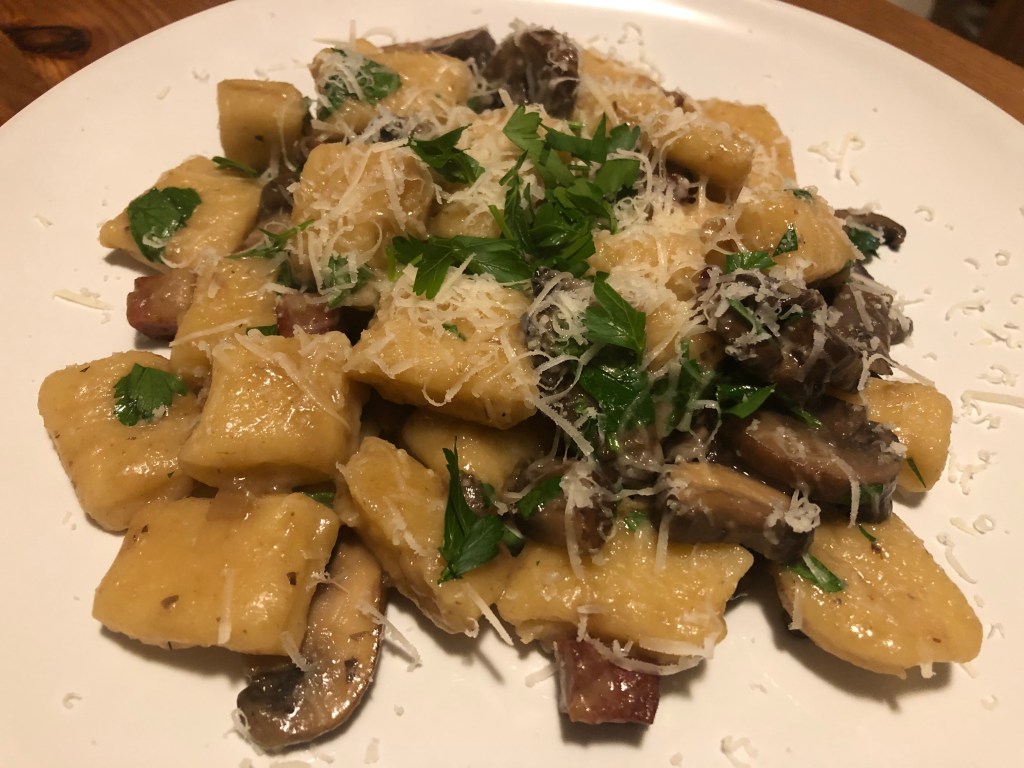
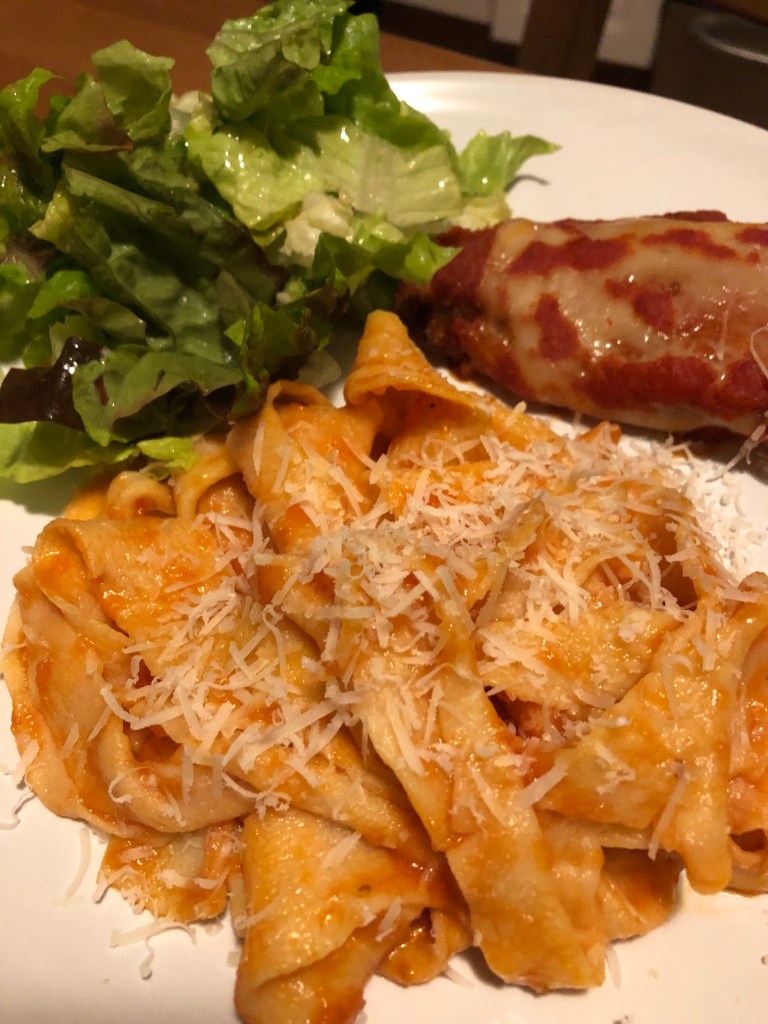
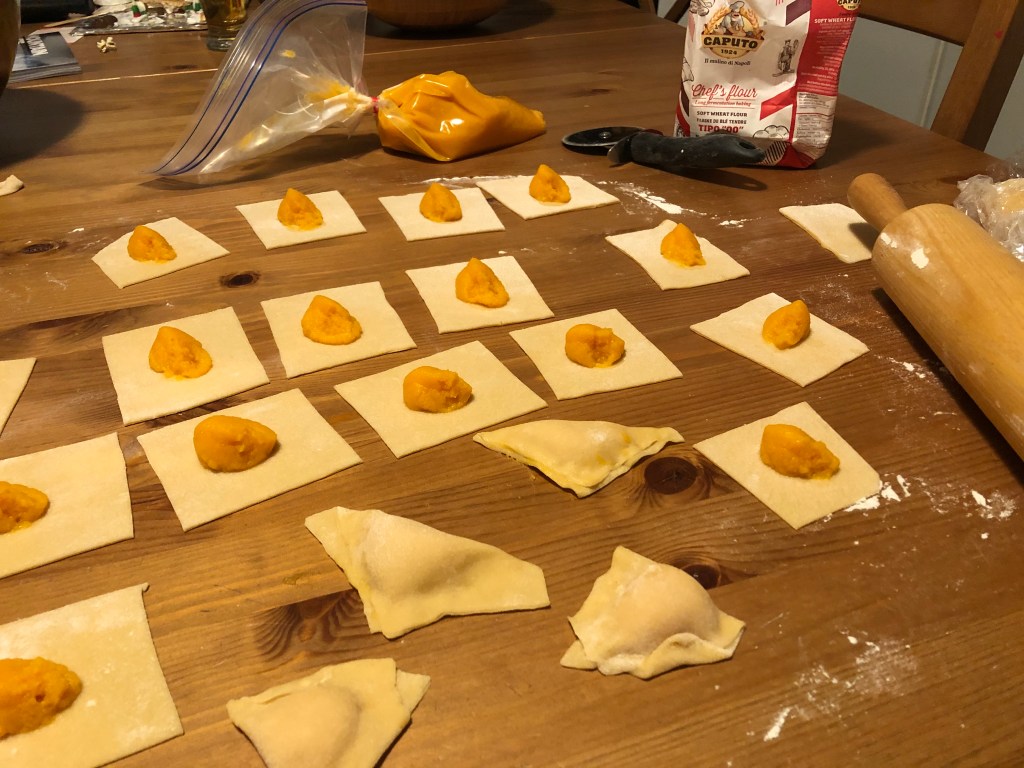
The recipes I have tried so far the Sfoglia All’Ouvo (Egg Dough) and Gnocchi Di Ricotta (Ricotta Dumplings). I turned the Sfoglia All’Ouvo into Tagliatelle with the Pomodoro Sauce (which I served with parmesan chicken and salad), Triangoli with Ripieno Di Zucca (Butternut Squash Filling) served in the Burro E Salvia (Butter and Sage sauce) and the Gnocchi Di Ricotta Alla Boscaiola (Pancetta, Mushrooms and Herbs sauce).
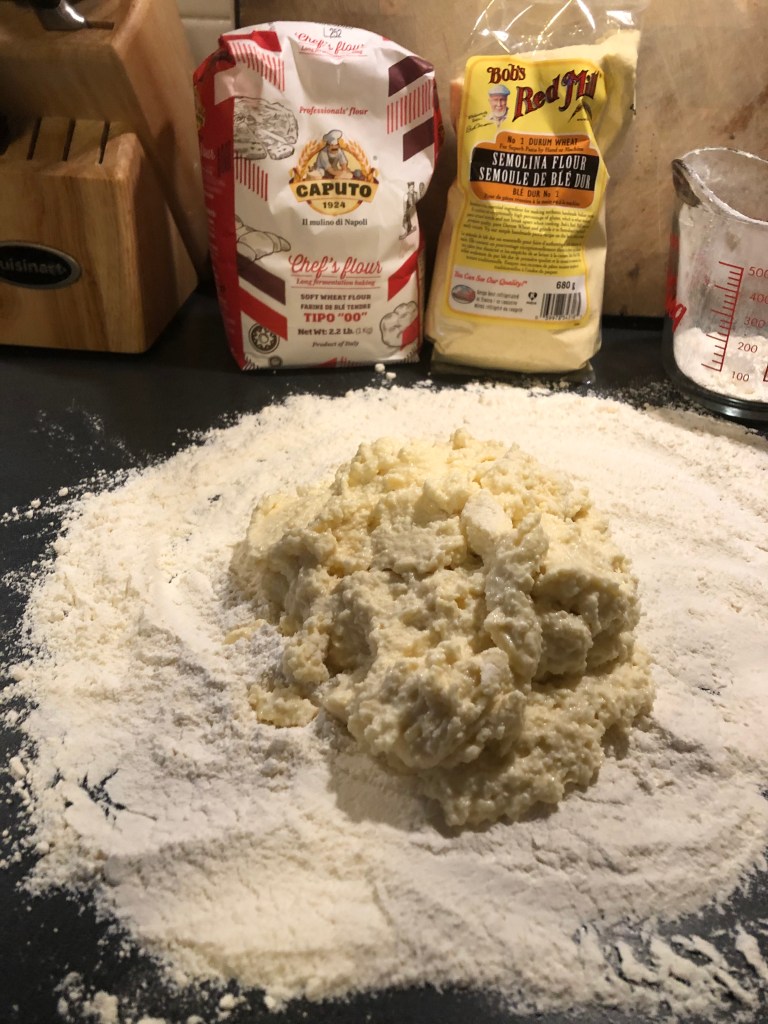
All recipes tasted amazing and looked surprisingly as good as they did in the book. And the best part was that I only needed special flour – “00” Italian flour – which I found in our rural grocery store.
I could not find all the mushrooms listed for the Pancetta, Mushrooms and Herb sauce, but I did find button, baby belle and oyster mushrooms which tasted amazing. Our grocery store also had pancetta in the deli and Italian peeled canned tomatoes.
When he first described rolling out the pasta dough to the thickness of 4 post it notes I thought I’d never get it that thin, but I cleared off my table and rolled it out easily to this thickness. I was pleasantly surprised how easy the dough was to work with.
The only hacks I did make was to not use a kitchen scale to weigh the ingredients – I googled weight to cups and this worked fine, although I do a lot of cooking and feel my cooking experience may have helped estimate if the dough was wet/dry enough and adjust accordingly.
I also sped up some of the waiting times on the dough which needs to rest 2-3 hours, I waited 2 hours with the first batch and 1 hour with the second batch, and it came out amazing both times. I also substituted chicken stock for the mushroom stock in the mushroom sauce which still came out amazing.
I loved everything I made from American Sfoglino but I especially loved how light, fluffy and airy my Tagliatelle was in the Pomodoro sauce – it was exactly how I imagined my homemade pasta should feel and taste and the Pancetta, Mushroom and Herb sauce was the best mushroom sauce I have ever made and would go great with any pasta.
I can’t wait to make these recipes again and try more from American Sfoglino. I will be cooking from this cookbook and reading for pleasure for a long time to come!
P.S. Sfoglino/Sfloglina means a maker of fresh pasta sheets in Italian.
A few weeks back, I ordered Calgary Eats because a number of signs told me to.
My favourite food photographer & YouTuber Joanie Simon was working on Phoenix Cooks – another Figure 1 Publishing book.
I’d seen the stunning cover and layout of Vancouver Eats. Given my aversion to shellfish, Calgary Eats, a farmland-locked town, made more sense to me.
I’d been following Figure 1 publishing online for quiet some time, and I was dying to get my hands on any of their cookbooks.
For this review, I wanted to give you, my cooking cohort, a good sense of what’s inside Calgary Eats. So I set up coloured sticky notes, blue for “must make” and yellow for “would love to make, but…” And the number of sticky notes were plenty.
I was delighted when I opened the book. The layout is gorgeous. Each chef is honoured with a portrait of themselves, with some donning the traditional buttoned-down whites and others in street wear. And below that image, there is a paragraph or two on each chef’s philosophies or history. A born and bred in Calgary status gives reason to some recipes, while others are informed by a much different life, like work in a chemistry lab or life on a South Korean farm.
In this documentation of Calgary’s current food scene, you will find, long-time chefs, famous chefs and popular-with-their-customers chefs. There are self taught chefs, highly trained chefs and highly trained train-the-trainer type chefs. I suppose if you’re heading east to Calgary you might take this as a restaurant guide to help you pick local must-tries – but a warning to weary, it ain’t light. It’s a hard cover.
On my list of “would love to make, but…” dishes, you’ll find things like:
“Eat to the Beet” Salad
Without a doubt, I know this salad would taste divine with its beets prepared 3 ways. But, I’m left to wonder, who has time for an elaborate salad?
Whiskey-Glazed Elk Ribs with Pickled Cucumber Salad
This is something that our household would devour with its beautiful barbecue sauce made of molasses, ginger, apple cider vinegar and whiskey. But these will have to be beef or pork ribs. Elk just isn’t something we have access to.
On my “must make” list of dishes, you’ll find things like:
Tomato-Gin Jam
When I saw this recipe my mouth began to water. It looks easy to make and features the brightness of sherry vinegar and the punchy evergreen-ness of gin. The recipe calls for pairing it with a Grilled Goat Cheese Sandwich, and I was excited to notice the image presents a brie style goat cheese. This is on my list for next year when cherry tomatoes are in their prime. I’ll try to remember to keep you updated.
Ricotta-Stuffed Pasta with a Preserved Lemon-Thyme Butter Sauce
While this recipe would take much longer than beets 3-ways, I’d be willing to go the distance with this one. The recipe comes in pieces: preserved lemon compound butter, homemade ricotta and a good-for-stuffing pasta dough. And it seems you could divvy up each piece of this recipe to create new recipes. In fact, I might even put the compound butter on toast.
So far, I’ve made a few recipes.
Falafel with Yogurt Dip
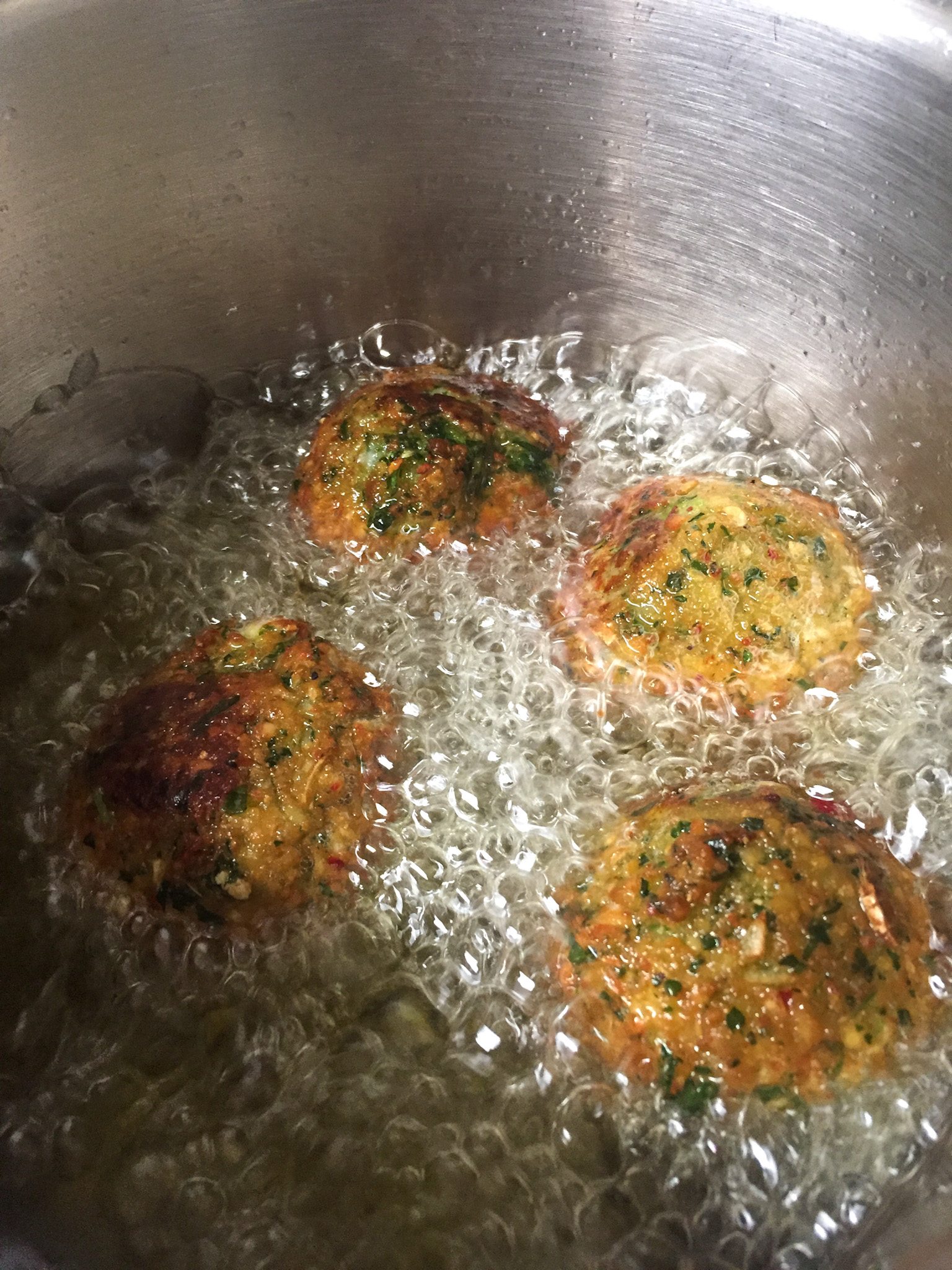
I make falafel all the time. But I wing it from various internet recipes with tons of substitutions. Since making this recipe, I’ve sworn that I’m done with winging falafel. This recipe is exactly as promised: fluffy and flavourful falafel [that] will change your life. In fact, I dare you to make it.
BTW: I’ll be doubling this recipe next time. UPDATE: I doubled the recipe and it was enough for leftovers after serving with the recipe below. I added a couple of images, so that you can see the falafel.
Dukkah-Fried Cauliflower with Green Olive and Harissa Aioli
I made this as a side dish to the falafel. I am also done with the internet on a recipe like this. This page is already filled with fingerprints, I can’t even image what it will look like 6 months from now – it’ll probably be the messiest page in the book, a true sign of a great recipe.
BTW: This recipe contains a lot of steps, but if you have a spice grinder and food processor, you are all set. It’s quick and easy.
Although, Calgary is farmland-locked, there are a number of shellfish recipes in here. So, for seafood lovers, don’t despair, you have a may options with this cookbook (even a few that aren’t listed in the table of contents).
My neighbour shared some frozen self-caught halibut with us, so I might try Roasted Halibut with Chilies, Dungeness Crab, Bean Ragout and Grapefruit sans crab, next.
Not only are Tyler and Lorien at Pemberton Distillery absolute wizards (and trailblazing legends) in the organic craft spirits industry, their ten year old distillery provides a creative outlet for their growing and making tendencies – motivating picking and planting missions (they grow their organic hops, most of the herbs and botanicals used in their Absinthe and many for their Gin and they are slowly expanding the raspberry, strawberry and rhubarb crops to eventually be self-sufficient) and cocktail concoctions.
Here’s a festive offering that Lorien made for the bar at the Refresh holiday market a few weeks ago, and shares with us!
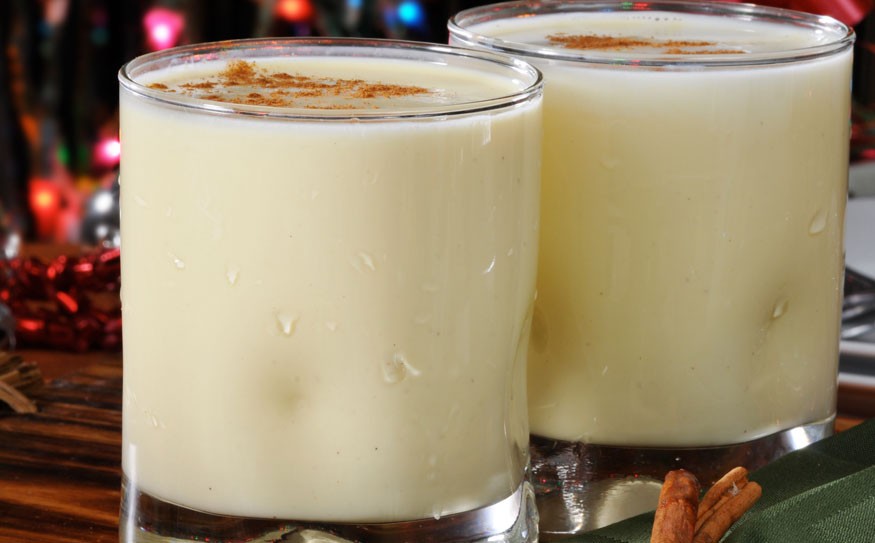
This Mylk Nog is a nice and simple alternative to traditional eggnog – the cashew and coconut milks make it nice and creamy still, but it is not at all syrupy. The Nocino is a green walnut liqueur (this year, the green walnuts were all harvested here in Pemberton!) which is slightly bitter and spicy, almost like an Amaro, and adds a really interesting character to the nog!
Mylk Nog (serves a gathering!)
1L cashew milk (make your own or buy at grocery store)
500ml full fat coconut milk
125ml simple syrup (1:1 cane sugar to water)
200ml Pemberton Organic Kartoffelschnaps
100ml Pemberton Nocino Green Walnut Liqueur
Nutmeg
Combine all ingredients in blender to combine. Taste and adjust sweetness as desired. Chill overnight. Stir and serve in small glasses. Garnish with a dust of nutmeg. Will last in the fridge for a few days.
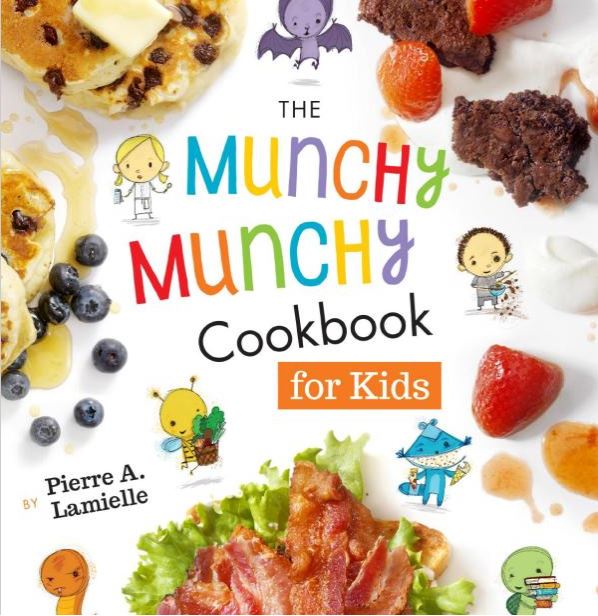
My kids offered (er.. rather were bribed with a cookbook and kitchen privileges) to review the Munchy Munchy Cookbook for Kids by Pierre A. Lamielle. It looked and sounded like a lot of fun.
Here’s our first shared book review featuring me (tonight, tired mom), Calian (10) and Kwaya (8). My additions are in italics.
The book is pretty cool. It includes handy cooking instructions, a good variety of easy to make, but not dull recipes, safety tips and great illustrated characters.
What did you like about the book?
K: I thought it was a cool idea for the Munchy Munchy Bunch.
There’s Sal, who has to follow a recipe; Pepper, who’s a hot mess; Ragu, who’s always hungry for anything and everything; Ziti, who’s the absolute most picky eater of all time; Sage, who’s the ultimate food nerd; Rose, who knows how everything grows; and Bean, who’s here and there and everywhere.
K: The very, very, very slow grilled cheese looked yummy. I did not get time to make it!
C: I made the volcano eggs and pancakes. I wanted to make the brownies, too, but you wouldn’t let me.
How did the recipes go?
C: The volcano eggs didn’t turn out well. I didn’t follow the recipe that well. They were hard inside. I’d like to try making them again.
Volcano eggs in progress
C: The pancakes were the best pancakes I’ve ever made. And they even looked like the best pancakes.
Good looking pancakes!
I agree. C was home from school with a cold one day and made the pancakes. They tasted great, cooked easily, and would pack well for lunch.
What else would you like to cook?
C: I would like to cook the brownies. The Caesar salad looks good, but we don’t have the ingredients or any lettuce.
What didn’t you like?
K: The illustrations on the recipes were not my favourite. I couldn’t really tell what I was seeing.
Who would you recommend this cookbook for?
K: The book would be good for a person who has never cooked before: maybe someone who is 6 or 7.
C: It would be good for someone like Gabriel in kindergarten to learn how to cook his first things. Older kids (like us) could use it without help. Younger kids could use it with parents in the kitchen.
Anything else to add?
K: Thanks for the book!
I was impressed by the description of Familius, the global trade publishing company that published this book. They believe that the family is the fundamental unit of society and that happy families (of all types) are the foundation of a happy life. They publish beautiful books that help families live their 9 Habits of Happy Family Life: love together, play together, learn together, work together, talk together, heal together, read together, eat together, laugh together. What an inspiring mission!
Update
C made the brownies. They were delicious for one-bowl brownies with limited ingredients–chewy and crispy without being too chocolately. Another success!
Sometimes when I tell myself to breathe, it triggers panic – as if by drawing attention to this innate, unconscious, automatic action, breathing in and out suddenly becomes improbably difficult. Meditation, swimming laps, yoga… all these experiences often contain a few extremely panicked moments when I gasp, unable to catch a breath that has suddenly awakened to itself, like an animal realizing it is trapped and throwing itself at the bars of the cage.
It’s weird. “Here, notice this amazing thing you do. Breathing. Doesn’t it calm you down?”
“OMFG. I can’t get enough air. I’m going to die!”
I feel a little bit the same about this time of year: Mild fluttery panic somewhere beneath the rib cage.
Up until now, you may have known this feeling as par for the course, as the essence of Shoulder Season, these days of Waiting for the Snow to Seriously Fly. The panic flutter channels as a kind of scarcity fear that ripples onwards and onwards, as the days shorten, darken, flip over, tumbling towards the bottom of the year: will there be enough snow? Will I get enough work? Will I ski enough days to pay off my pass? HOW many days left before Christmas? Have I got something for everyone? Will there be enough food to make it a feast? Will I manage to get through all the social occasions without melting down? Do I have enough of a tribe that I won’t be lonely?
This year, thanks to Pemberton-based teacher Natalie Rousseau and her online programs, 13 Moons and The Witches’ Year, I have gleaned a slightly broader perspective on this time of year. I see that these questions arise from a deeper and older one: Will the light return? Every season that saw pre-industrial people store their harvests away and duck into shelters to weather the winter and live alongside the literal fruits of their labours, the consequences of their actions over the course of the preceding year, was a time of reckoning and resolution. It was a season of living with the question, what have I done with my time? Was it good enough?
Rousseau calls this time of year, a 52 day period that runs from Samhain or Halloween to Yule or Winter Solstice, The Dark Season.
I’ve come to think of it as a time of Unearthing. Of things not wanting to stay in their boxes, getting untidy, becoming pushed forth. Stories. Emotions. Stuff we’ve tried to bury, all heaving up, surfacing in strange ways, asking to be noticed, remedied, attended to.
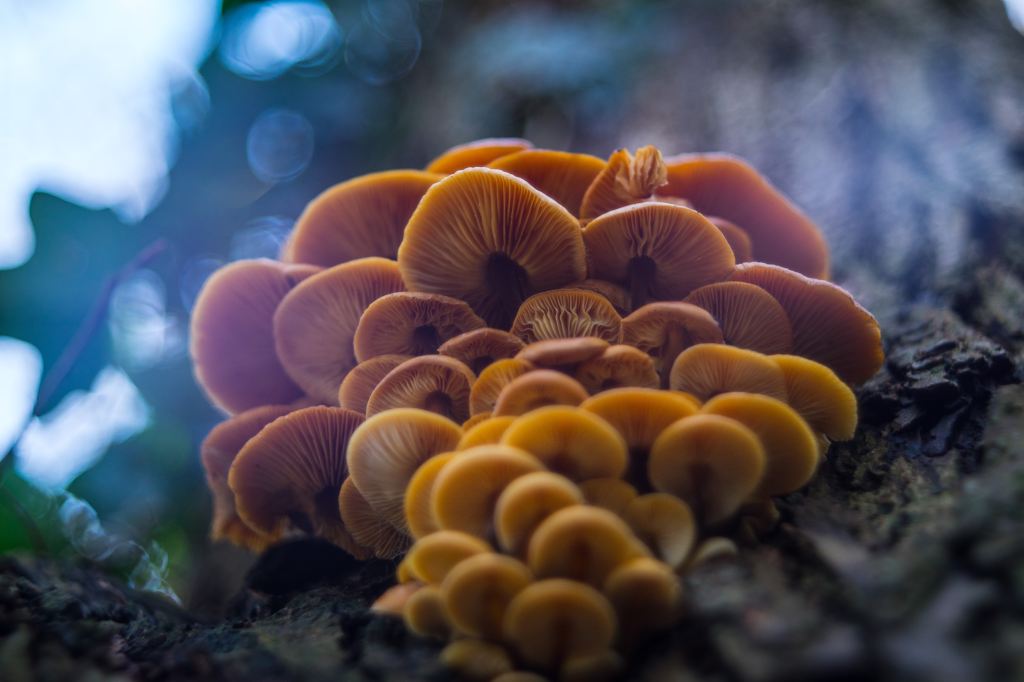
For weeks, as I’ve learned of friends’ relationships breaking down and buried frictions waking up, tidied up the receipts of the year, seen stories I wrote months ago land in print, or stood in front of my pantry, outside the mushrooms were pushing themselves up with quiet force. Surfacing. Unearthing themselves. What did it all mean? Paul Stamets, the author of Mycelium Running, calls mushrooms “mycomagicians.” They are not afraid of endings, of decay. They are, in fact, “the grand recyclers of our planet, disassembling large organic molecules into simpler forms, which in turn nourish other members of the ecological community. Fungi are the interface organisms between life and death.”
Kind of the perfect symbol for the Dark Season. Beneath our feet, beneath this surface of frosty soil that will soon be buried even deeper by metres of snow, (may it be so), vast intelligent complex fungal networks underscore and entangle everything. This is the season in which we glean a tiny window into that, as the fruit of all that complexity pops up. The question was never, “have I done enough?” But: Have We? Collectively, not just as little tribes, but in concert with the life force surging invisibly beneath our feet, all around us.
Much is being unearthed, heaving to the surface, in these days, of unraveling climate systems. Much of our collective behaviour is nestling in for the winter, and demanding a reckoning. Sure makes you want to run for the nearest all-inclusive beach resort. Or beg the gods for the happy oblivion of a powder day.
But before the flight, or fight – before the adrenalized response – the Wheel of the Year, the cycles of history, have built in this beautiful terrifying moment, this awful awe-full moment, a chance to be still and consider: have we done enough? Where have we fallen short? If we are gifted a new breath and a new day and another season together, what shall we plant in this beautiful living Earth? What shall we bequeath the future?
“For most of our human evolution on this planet this was a season of rest,” says Rousseau. “And our souls still crave it. Important work happens in the catacombs and secret chambers of our soul during this season, even if our culture doesn’t recognize it.”
Her prescription is generous, if not counter-intuitive to what we tend to expect of ourselves at this time of year: slow down. And notice.
The year breathes its long sigh, and here, at the bottom of the breath, there is a pause. It’s okay if it makes you panic, a little. Notice that too. (Eventually it settles, I swear.) The pause is the most beautiful gift of the year, the echo of the harvest, in which all possibility hovers, looking for a place, a body, a community in which to land, to come into being once the light returns.
This post first ran as a column in Pique newsmagazine, Velocity Project: how to slow the f*&k down and still achieve optimum productivity and life happiness.
















 Traced Elements