Blog

  • Food and Feelings: Jerk

    Food and Feelings: Jerk

    My name is Blair Kaplan Venables and some people may say that I have an insatiable hunger for life. I would say that I have an insatiable hunger for food.

    I love to eat.

    I eat when I’m happy. I eat when I’m sad. I eat when I’m stressed out. I eat when I’m nervous. I eat to celebrate. I eat to mourn. I eat three meals a day plus a few snacks.

    My feelings directly impact what I eat and crave (and normally the craving is cheese-centric).

    I’m also someone who isn’t “in love” with cooking or baking. Every so often I’ll get into cooking but I like things that are easy to make, fast to make and yummy.

    I know what you are thinking and YES, we own a slow cooker but I don’t even use that. I have a few recipes that I’ve mastered and they are on a constant rotation.

    Over the past few years, I made a few lifestyle changes to help positively impact my life. So, I’ve looked for ways to make healthy food taste better. Chicken, in my opinion, is one of those foods that needs a little extra help.

    One of my most favourite discoveries is The Metropolitan Chef’s Jerk Rub, which is made in Port Alberni, B.C and I tell everyone about it. I’ve even got my mother hooked on it. It’s super easy to use and makes chicken (especially free-range chicken) taste scrumptious.

    IMG_0754

    You see, my love for jerk chicken stemmed from a trip with my friends to Negril, Jamaica. It wasn’t until this trip that I truly fell in love with jerk chicken. However, I’m slightly domestically challenged and I could never make it taste as good…until I discovered this magical rub.

    Most recently, I’ve personally hand-delivered two packages of it to my mom in Winnipeg. This, my friends, is a jerk rub that’s gone national.

    So, want in on this game-changing jerk rub? You can buy it at Mile One Eating House.

  • Eggs and the place we call home

    Eggs and the place we call home

    1. The best eggs I’ve ever eaten were done over easy, and served on crusty toasted hazelnut and currant bread that was smothered with melted butter and peanut butter. A strict vegetarian, I hadn’t eaten eggs for years, but started craving them while pregnant with my first son. This decadent breakfast, repeated many times through the pregnancy felt so nourishingly good. My son, Isaac, was born a huge, healthy baby (it must have been the eggs) at home in Victoria on a rainy day in May. The next day my potato plants were a foot taller. My son’s father might have been hard to live with, but he was an amazing gardener and grew a jungle of food and flowers in our backyard.
    2. My friend “Chicken Jen” (who lived down the road from me in Sooke) turned a residential lot into a productive and wild vegetable and herb garden in less than three months, with the help of  home-made portable PVC dome chicken coops. The chickens removed sod, and aerated and fertilized the soil in each successive round bed that she planted, and her “ladies” gave her surplus eggs to sell. Her vision for her abundant garden, created while her kids were only two and four, still astounds me. 13 years later, the nickname Chicken Jen has stuck.
    3. I moved from the island to Whistler with Isaac and my new partner. I was pregnant again. Our access to food and gardens dried up in the mountain resort. Sure, we could get good local food at the farmers’ market, but we didn’t know the farmers. We no longer hacked down chard from our front yard, or picked brambly blackberries, or gardened for 10 months out of the year. We missed eating farm fresh local eggs.
    4. After seven years in Whistler, our growing brood (I’d had one more child) moved to Pemberton. We bought our first home, got a dog and planted a garden. On one of my first rides around town, I discovered the egg box on Urdal Road and I knew we were home. We traded zucchini, cucumber and greens from our first lush, wild backyard garden for composted manure from our neighbour’s farm and for heirloom eggs in every colour.. Having access to real food right where we live, and knowing where it comes from is a big deal. It’s something we love about living here and it’s not something we take for granted.
    5. Let’s play local food Jeopardy. The answer is: Bog’s, the Wag’n’Wash, the Animal Barn, AC Gas, Stay Wild, the Owl’s Nest, Mile One, Collins Cross, the egg box on Urdal, the farmer’s market, Brooke and Kevin’s place, and Pemberton Valley Wellness. The business names themselves reveal  the flavour of this funky little town. The question: Where can you buy local eggs in Pemberton?
    6. The secret: Everyone has their own source. If you don’t time it right on delivery days, you could be cruising around town, visiting all of these locations without realizing they’re part of a hyperlocal egg market. Alternatively, you might well disappoint your family by coming home empty-handed. Sorry, kids, no pancakes this morning.
    7. You’ll be late, too, because you’ll have talked to friends and neighbours all over town. During our first couple of months in Pemberton, I would frustrate my partner every time I biked to the store to get milk for his coffee. My 15-minute round trip would invariably take an hour or more, slowed by the pull of  my grocery store conversations.
    8. Eggs are a window into the local food system in Pemberton. Local food is grown in abundance by experts and amateurs throughout the valley—but you need to know where to go to get it. And to find out where to get it, you need to talk to people. That’s the fun part. If they made it easier, something would be lost.
    9. We have a great farmer’s market and some awesome local businesses and CSA programs to get the straight goods right from the source. But you can also find your eggs or fresh basil or seed garlic on the Pemberton Food and Farm Facebook page, a matchmaking service for people looking to buy or sell food, seeds, plants or other random farm and garden stuff. Looking for a Thanksgiving turkey, alpaca wool, goats or egg cartons? Selling tomato starts, plums, bushels of basil? The source or recipient are only a couple of messages away.
    10. Farming and backyard growing in Pemberton is surprisingly untrendy. People just raise food and grow stuff here because they can, or because they love to, and it just makes sense. Keeping backyard chickens isn’t new, and while I’m tempted sometimes to imagine myself as more of a homesteader than I actually am, I don’t think I have the heart to deal with bear proofing and the collateral damage when raccoons or cougars or coyotes get into the coops. I barely have the heart to steal eggs from aggressive chickens.
    11. Every egg carton has a story. One of our local egg suppliers sells her daughter’s eggs and tracks the cartons to see if they get returned to her shop. One of the farmers at the market in the summer said new cartons cost more than twenty cents apiece—that puts a serious dent in his egg profits. Farmers don’t become farmers to get rich. But what is shared and supplied and circulated in this community is rich. It’s the soil, the place, the creatures, the stories.
    12. Eggs have been one of the nutritional threads in raising my kids—one of the first meals they could cook for themselves—one of the nutrient dense meals I’ve eaten through pregnancies, breastfeeding and birth. One of the food sources that connects us to the place where we live.
    13. My baker’s dozen. I’m lucky if there are eggs in my house or it’s back to part 5 of this story.  My favourite homegrown breakfast:

    11 o’clock braised greens & eggs

    INGREDIENTS

    • A few giant handfuls of greens from the garden (kale, chard, spinach, collard or beet greens)
    • A few cloves of garlic (homegrown if you can), peeled
    • Coconut oil
    • A couple of eggs
    • Flax oil
    • Condiments (homemade kimchi, sauerkraut or hot sauce & Bragg’s)
    • Ground flax seed
    • Leftover brown rice (optional)

    INSTRUCTIONS

    • Wash greens and tear into large pieces.
    • Wilt greens and simmer garlic with a splash of water in a pan with a lid.
    • Add a small amount of coconut oil to the pan.
    • Add a couple of eggs and fry them up in the same pan.
    • Serve eggs and your pile’o’greens with hot sauce, Bragg’s, flax oil, flax seed, and homemade kimchi or sauerkraut (*recipes for vegan kimchi and sauerkraut to follow in future posts).
    • Add a scoop of warm leftover brown rice, if you have some.
    • Eat with thanks. Be nourished.
  • The Imperfect Table

    The Imperfect Table

    Scruffy hospitality, Cook Book Clubs and reclaiming the table

    I hate owing someone a dinner invitation.

    It’s so high-pressure.

    I always thought “imperfectionism” was the character flaw until Brene Brown, the vulnerability guru, outed perfectionism as a tactic people use to protect themselves from getting hurt.

    perfectionism by brene brown

    Ha! I exhaled smugly, I knew there was something suspicious about you perfectly groomed, beautifully mannered ones, with your instagrammable dinner parties and Kinfolk magazines casually tossed on the Noguchi coffee table.

    kinfolk-founders

    kinfolk-preview1
    Trying very hard to look like you’re not trying. The Kinfolk Table – a different planet for aliens who specialize in artfully dishevelled, immaculately styled entertaining.

    But embracing your own flawsomeness is harder than it sounds. Even with Brene Brown’s Vulnerability manifesto at your back. I point a finger at Lucy Waverman, the Globe and Mail’s food columnist. Waverman has written that you should never ask “what can I bring” in response to a dinner party invitation. It’s an insult to the host who has put forethought into curating a great meal with perfectly paired wines. Just bring your conversational A-game, she says, and an elegant hostess gift.

    Lucy and I move in different circles.

    On my planet, we always ask.

    I ask, not to insult my host, but to acknowledge that bringing people into your space takes effort, and I’m happy to help lighten the load.

    For the record, I am never insulted when someone asks me. I am also stoked if, without even asking, someone randomly shows up with contributions. Throw them down there on the table. Open that bag of chips, decant some vino, let’s squeeze in as much conversation as possible before the children blow it all up.

    IMG_4275.JPG
    No, none of the plates at my house match. And they probably never will.

    But it’s taken a while to devolve to this place, helped along by necessity (children), a catchphrase and one unofficial intervention.

    The intervention occurred in the fall, when childless friends, after months of “we should get together soon” emails, randomly dropped by, with wine, cheese and crackers.

    This couple are consummate hosts. They’re foodies and entertainers with a genuine passion for food, wine, design and décor. For a long time, after first being invited to their house for dinner, (three courses, perfectly plated, in a room where the drapes and the curtains matched), I was too scared to return the favour and serve up one of my standard one-pot meals in return.

    When I eventually braved-up, and dished forth something peasant-like, on chipped plates, from a help-yourself-to-more platter on the table, they didn’t turn up their noses. They were more distracted by the conversation, by playing with my toddler, or whipping up the dessert themselves. (I’m smart enough to say hell yes, when an amazing cook asks “shall I bring dessert?” Sorry Lucy for not measuring up to your standards.)

    Their drive-by drop-in was the ultimate signal to me: we don’t need to be entertained, we don’t want to be a high pressure entry in your dayplanner, we just want to catch up.

    IMG_1540
    For perfect looking, perfect tasting meals, eat out. Fergie’s Cafe at Sunwolf is instagram-worthy. Dinner at my place is not.

    The catchphrase came out of a sermon, in which a Knoxville, Tennessee minister commended us to lower our standards and embrace “scruffy hospitality”, the kind of dinner party that reveals you hunger more for good conversation than fancy ingredients.

    In my gospel of scruffy hospitality, “what can I bring” is the password, a signal that a person appreciates they are participating in a come-as-you-are experience, where the napkins are unironed, if we even remembered to put them out, and the kids will move from lap to table to toy room as we try and coerce them into eating something, before ignoring them for conversation that is grabbed and relished and as nourishing as the food could be.

    “What can I bring?” is also code for: “I know you’ll have cleaned the bathroom for the first time this week because people are coming over, and that you and your partner will probably be arguing the moment we walk in the door, because that’s what happens to us too, every single time we have people around.”

    It means: “I anticipate stepping around toys piled into a corner. I am willing to push past my inhibitions and make myself at home, to find a glass and pour myself a glass of water if I am feeling thirsty.”

    Ultimately, it’s code for: ”I’m just happy to see you.”

    IMG_0444
    Keep it casual. Otherwise, we’ll see you in 15 years or so.

    That’s what my foodie friends taught me, when they dropped by with crackers and dip and we ate standing up, moving between the kitchen island and the side of the bath-tub where the kid happily contributed his chatter.

    And that’s why I started Cook Book Club. which debuted Thursday 22, at Stay Wild Natural Health Store and Juice Bar.

    deep like pow-08697
    Leah Langlois of Stay Wild imagines all the yummy plates that will arrive for Cook Book Club

    If your contribution is a fizzle or a flop, you blame it on the cookbook.

    Imperfectionism, scruffy hospitality, cook book club, it’s all an invitation to reclaim the table as a gathering place. Even when we’re too busy to entertain. Especially then.

    Cook Book Club Feb 22 poster

    The Velocity Project: how to slow the f*&k down and still achieve optimum productivity and life happiness, is a biweekly column by Lisa Richardson that runs in Pique newsmagazine. 


  • For the love of baking: Zoe Martin shares a cranberry orange scone recipe

    For the love of baking: Zoe Martin shares a cranberry orange scone recipe

    I am that person. The one in a restaurant who looks at the dessert menu first before deciding whether or not to order a starter. I am the person who would much rather have a chocolate bar over a packet of crisps, sorry chips.

    Yes, I have a sweet tooth, to which my waistline can attest, and I put it down to my genes. For example, my dad could polish off half a packet of digestive biscuits in one sitting, but he could also cycle for miles on end so that he worked them off again!

    Throughout my childhood, I loved to visit my Granny’s house as there would inevitably be the chance to lick the spoon clean, god forbid nowadays, of some kind of raw cake mixture. (BTW I survived just fine!) She would always have drop scones, griddle scones, cherry cake, tea cake or shortbread on hand in a tin in the larder. The first two of which were mouth-wateringly delicious, especially with her home-made Bramble Jelly, something that I have yet to attempt to make.

    So if you invite me to a potluck, or if I’m popping round to friends, I am likely going to be the one bringing something sweet – brownies, cupcakes, muffins, apple pies – you get my drift. (Good job I don’t have many gluten free friends!)

    When my husband was away recently I found myself at a loose end and what better thing to do than make something? For this particular occasion I decided that scones seemed like a good idea so set off in search of the perfect recipe – Pinterest is great tool for research! I happened upon this one for Cranberry Orange Scones which looked like they might go particularly well with a cup of tea while catching up with a friend. And they did! Soft, fluffy and buttery with the perfect hint of orange (I had even added a bit more than suggested in the recipe), chewy cranberries and, actually, not overly sweet.

    fullsizeoutput_7beNow that I have this recipe tested I should be able to take the basic recipe and create my own flavours. As they say, practise makes perfect!

    Ingredients for the scones:

    • 2 1/2 cups all-purpose flour
    • 2 tbsp sugar
    • 1 tbsp baking powder
    • 1/4 tsp salt
    • 1/2 tbsp grated orange zest (from 1/2 orange)
    • 1/2 cup (1 stick) cold butter, cut into chunks
    • 2 large eggs, lightly beaten
    • 1/2 cup heavy whipping cream + 1 tbsp to brush the top
    • 3/4 cup dried cranberries
    • 1 tbsp coarse/raw sugar to sprinkle the top, optional

    fullsizeoutput_7bc

    Ingredients for the glaze:

    • 2/3 cup powdered sugar
    • 1 Tbsp freshly squeezed orange juice

    How to make:

    Makes 12. Preheat oven to 400˚F and line a large baking sheet with parchment paper.

    1. In a large bowl, stir together the flour, sugar, baking powder, salt and grated orange zest. Add the butter pieces and use a pastry cutter (or 2 knives, or hands like I did) to cut the butter into the mixture until you have coarse pea-sized crumbs.
    2. Toss in the dried cranberries and stir gently to combine. Make a well in the centre and set aside.
    3. In a medium bowl, whisk together the eggs and 1/2 cup of heavy cream. Pour the egg mixture into the flour mixture and use a spatula to stir until just moistened.
    4. Turn the dough out onto a generously floured surface and pull it together into a round disk, about 3/4″ thick. (Note – it doesn’t have to be perfect, in fact it looks more home-made when uneven and rough looking!)
    5. Cut the disk into 12 equal wedges and pull apart slightly. Brush the tops of scones with 1 tbsp of heavy cream and sprinkle the top with raw sugar, if desired.
    6. Bake for 15-17 minutes until golden.
    7. Place the scones on a wire cooling rack and let cool for 15 minutes.
    8. Whisk together the powdered sugar and the freshly squeezed orange juice, adding more or less for desired thickness, and then drizzle over cranberry scones.
    9. Eat and enjoy!

    fullsizeoutput_7bd

  • Soup’s On – Recipes that Make it Easy to Eat Your Veggies in Winter

    Soup’s On – Recipes that Make it Easy to Eat Your Veggies in Winter

    First off, thanks to Lisa for getting this website/blog off the ground. There is so much to write about regarding food, especially in Pemberton.

    I consider myself first a baker by choice, and a cook by necessity. I still use my oven a lot but in the last few years I have really grown to love making soup. I adore soup and it is my preferred form of food, in all seasons except summer!

    You can use so many odds and ends in soup. You can improvise. You can make things vegan, or dairy free, with so many alternatives. Soup can often be a complete meal in a bowl, which is helpful for kids’ thermoses taken to school.

    I find in the winter a plate with a bit of starch, a piece of meat or fish, and some veggies on the side is not appealing. I would way rather slurp my meal from a steaming bowl. Chinese medicine, from what I understand of it, states that cooked veggies are easier to digest, and I find it so much more appealing to eat my veggies surrounded by broth in soup-form in cold weather.

    This soup recipe started with me looking for a butternut soup recipe online. I found something quite good, or looked as if it had potential, and I made it. I got 7 butternut squashes from my in-laws who had planted a bunch with my kids in their garden. I needed to do something with them because I don’t have a cold room with the perfect temperature that prevents winter veggies from rotting. I need to get my squash roasted, pureed, and then frozen.

    I took that initial recipe and have changed it so much that it is an entirely new recipe. I find cauliflower is such a versatile veggie that it can be added to a ton of dishes. The key is that it needs time to sautĂŠ slowly which brings out the sweetness and flavour.

    My rules of soup-making are: take your time to sauté the veggies low and slow. Second: I add my herbs to the sauté process – I find this adds flavour. Sometimes I will also add a bit of parsley or cilantro at the end, but I always add a lot of those two when I am sautéing my veggie base low and slow. Third: I always double, triple or quadruple cilantro or parsley called for in recipes. (Cilantro and parsley are two items I always have in my fridge.) Ditto for pepper. I always add more than called for.

    So here it is:

    “Mug of Gold” Butternut-Cauliflower Soup with Spinach:

    Ingredients:

    1 large yellow onion, medium dice

    1 large cauliflower- remove and chop florets into very small pieces

    2 tablespoons pure olive oil

    1-2 garlic cloves, chopped (optional)

    1 tablespoon fresh ginger, grated

    1/2 – 1 cup parsley, roughly chopped

    1 teaspoon curry powder

    1 teaspoon coriander

    2-3 teaspoons cumin

    1/4 teaspoon cloves

    2-3 cups purĂŠed pumpkin or butternut squash

    1.5 cups blanched spinach

    5-6 cups chicken stock*

    1 cup plain, unseasoned tomato juice** (home canned ideally): (optional) OR if you don’t have unseasoned tomato juice, just use more chicken stock

    1/2 cup full fat coconut milk

    pinch of cayenne pepper (optional)

    1 tsp salt, or to taste

    2 tsp pepper, or to taste

    Chopped parsley for garnish

    DIRECTIONS:

    SautĂŠ cauliflower florets in olive oil with onion, garlic, and parsley. SautĂŠ until cauliflower is browned nicely and caramelized.

    Add salt, pepper and spices.

    Add purĂŠed pumpkin or butternut squash.

    Add blanched spinach.

    Add coconut milk, tomato juice (if using), and stock.

    Bring to boil, then simmer on low 10-15 mins. Cool 5-10 mins.

    Blend in batches (in high powered, such as a Vita-Mix blender*** if possible)

    Adjust salt and pepper. Also you may want to add more stock if you find the consistency is too thick. Do not add more tomato juice, as more than one cup will overpower the butternut.

    Serves 8.

    *Chicken stock: I roast a chicken once a week. That evening I will put the carcass in a large stock pot with a ton of veggie ends/trimmings that I save in a large Ziploc in my freezer. In that bag I will add: cauliflower stalks and leaves, parsley ends, onion ends, green onion ends, carrot ends, celery ends, sweet pepper stems, etc. etc. The only “end” that doesn’t work is potato ends. And the veggie should be clean. I add the “ends” to the chicken carcass (works out to be about 3 cups of veggie trimmings), fill the pot with water, add 2 bay leaves and about 30 whole peppercorns. Then I bring to boil and simmer for 2 hours. After cooling I drain the broth and when cool, freeze in containers. I pick the meat off the carcass and this meat I will use in soups later.

    **Tomato juice: I home canned some juice after canning Lillooet tomatoes. I think the most simple juice is best, so you could use the juice from a can of commercial tomatoes. If you don’t have a mild and unseasoned juice like this, omit the tomato juice and just use more chicken stock.

    ***Blender: If you like blended soups then a high-powered blender, such as a Vita-Mix, will make the smoothest soups.


  • Farmers Staycation: why the best place to find the Millers is on the Miller’s farm

    Farmers Staycation: why the best place to find the Millers is on the Miller’s farm

    For some reason most of our family breaks from farming are taken on the farm.

    Actually there are several reasons for it – like checking the cows, checking the fences, checking the back field, scouting for saw logs and firewood trees for next winter.

    But mostly its about experiencing the beautiful place that we live and farm.

    We have a fishing hole, a beaver pond, a forest, a river.

    Our short little trips on a sunny Sunday are the things we remember more than the 30 seasons of Potato Fields we have planted.

    We work here so we can live here. We work too hard. We are working on that.

    Image.jpg
    This is the the fishing hole at the river. It has always been a great spot for a kid to catch their first fish.
    Image 2.jpg
    The Waterfall  hike usually coincides with some irrigation intake repairs.
    Image.jpg
    Every fall we try to get a mushroom picking hike in across the creek and up the hillside. Last fall Jesse and I came upon this spot.
    27749838_10156060076868904_6344091625903080429_n.jpg
    Feb 2018 – a walk across the creek to the upper swamp. This is where most of the  coho fry from Ryan Creek spend their first summer  growing.   We were checking out the tracks and trying to figure out what all the animals were up to.


  • Nidhi Raina’s Bad Boy Rutabaga & Turnips

    Nidhi Raina’s Bad Boy Rutabaga & Turnips

    Yes, we live in Spud Valley, but let’s not overlook the other root vegetables that also flourish in Pemberton’s silt-rich soil. Today, local cook and the wizard behind Nidhi’s Cuisine, Nidhi Raina, gives turnips and rutabagas their due.

    I’ve never eaten either, unless it was by mistaken, so it’s surprising to learn that rutabagas and turnips are among the most commonly grown and widely adapted root crop. Rootdown Farms, IceCap Organics and North Arm Farm all grow ’em.

    Turnips (brassica rapa) and rutabagas (brassica napobrassica) are relatives – part of  the Cruciferae or mustard family, of the genus Brassica. They are similar in plant size and general characteristics.

    rutabaga centre stage in rootdown organic farms winter csa box
    The rutabaga, centre stage of Rootdown Organic’s winter harvest box.

    They are cool-season crops and can be grown as either a spring or fall crop. Rutabagas are the slower grower – needing on average 90 days. Turnips, have a field to plate timeline of 40 – 75 days, depending on the variety.

    raidshes and hakurei turnips at Rootdown organic farm
    Hakurei turnips cosying up to radishes at Rootdown Organic Farm.

    Bad Boy Rutabaga & Turnips

    by Nidhi Raina

    Here is the very first recipe inspired by rutabagas and turnips sitting on the supermarket shelf begging to be wowed into a delight on a dinner table this February 2018.

    IMG_3325

    Number of Servings: 4
    Ingredients
    2 Medium Rutabagas
    4 medium Turnips
    1 medium yellow onion
    1 medium tomato
    1/2 inch fresh ginger
    1 small jalapeno
    1 tsp coriander powder
    1 tsp sweet paprika
    1 tsp turmeric powder
    Salt to taste
    1/2 tsp brown sugar
    Flat leaf parsley leaves or sliced green onion
    1 cup water
    3 tbsp olive oil
    Method
    1. Wash, pat dry, peel and chop rutabagas and turnips into inch sized pieces.
    2. Chop tomatoes and onion and set aside in separate bowls.  Slice the jalapeno and discard seeds.
    3. Grate the ginger and set aside.
    4. Heat the olive oil on medium heat. Add the onions, ginger and jalapenos and cook till onions are golden in color.
    5. Add the tomatoes, coriander, paprika and turmeric powder.  Cook for a minute.
    6. Add the rutabagas and turnips and toss in the mix so its well coated.  Add salt to taste.
    7. Cook the vegetables with 1 cup of water for 15-20 minutes on medium heat making sure the vegetables hold their shape.
    8. Add the sugar towards the end and fold in.
    9.  Serve warm on brown rice or quinoa.
    10. Garnish with a few parsley leaves or sliced green onions.
  • Rural Matchmaking

    Rural Matchmaking

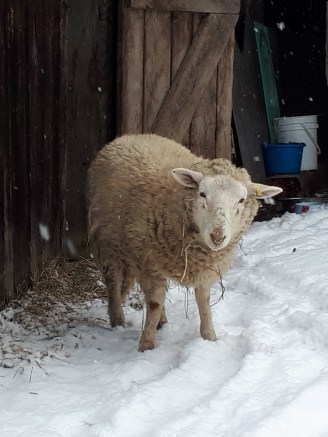
    Last week, I filled out an adoption application for an older Dachshund named Sammy who is down somewhere in Surrey BC. I did the paperwork on behalf of my sheep Vinnie, who lacks the opposable thumbs, concentration and linguistic skills to do so. Vinnie loves dogs, but they all think he is a weirdo and run away from him. This Sammy dog apparently loves sheep, but they all think HE is a weirdo and run away from him. Do you see where this is going?

    Sammy is 12 but is in great health and a complete love-bug, the woman who is fostering him told me when I called her. He’s an absolute sweetheart who loves kids and wants to be part of whatever is going on. It seemed as if all I had to do was fill out the required forms and then- as if I was some electronic far-reaching cupid- Sammy and Vinnie would live happily ever after. What I want is beside from the point. At least it’s almost spring, so the strict embargo I have been living under- “NO MORE ANIMALS UNTIL SPRING!!” is almost lifted anyways.

    So I filled out the application, talked to Sammy’s foster mom, then followed up with the rescue organization when I didn’t hear back from them the next day. “We’ve actually received a stack of adoption applications” the woman told me. “We’re just going through them now.”

    I hung up the phone, and put away my ever pressing anxiety that I WAS NOT DOING ENOUGH TO MAKE THIS DOG APPEAR RIGHT NOW!! And told myself that was it; it was now up to the Universe, or God, or whoever it is that makes these sorts of decisions. The real decisions. Like if my sheep will finally get a dog of his very own.

    sammy
    Sammy. ‘Could I be your dog??’
    vinnie datin gpic
    Vinnie. ‘Oh where, oh where oh where might my little dog be?’


    But then yesterday, Vinnie pogo-sticked up to my car as I was leaving for work with an excitement usually reserved only for DOGS! and these words appeared on the screen of my mind:

    “YOU ARE GOING TO GET MY DOG!!!! MY DOG IS COMING!! I AM SO EXCITED!!!!”

    “Vinnie, I’m leaving to go to work.”

    “NO!! YOU ARE GOING TO GET MY DOG!! MY DOG IS COMING!! MY DOG IS COMING!!”

    I got out of my car and put Vinnie back on his side of the fence, and he bounced out after me again. I had the distinct impression he would bounce after me all the way to work. So I put him in his stall for the day and left. The prevailing anxiety that I AM NOT DOING ENOUGH TO GET THE DOG!!! returned and circled my brain like a bird trying to land on the ocean. GET THE DOG GET THE DOG GET THE DOG!!!

    I tried to tune into Sammy but the signal of him had kind of gotten lost, as if my application was sitting under a pile of papers somewhere, or as if there was something important I had left out. Or as if it really WAS out of my hands and that somewhere down there in Surrey the fate of this dog was being decided without me. I actually intended to write this post about something else entirely. But Vinnie BOUNCED onto the screen of my mind and wanted me to tell you HIS story so I shut up and listened.

    I found Vinnie on Facebook. An amazing woman named Katie Cowley raised him when his mom rejected him and his brother, and he had a difficult time of it- even more difficult than most bottle babies. He had a really hard time learning how to drink from a bottle and perform other simple sheep-y tasks, like eat grass or make friends. This caused him to be rejected by the flock and instead his companions were dogs. Then his brother died, which caused further alienation. So Vinnie grew up into what my sheep rancher friend Nikki calls a ‘Shog’- an animal with the body of a sheep but the consciousness of a dog. A bit of a misfit. A reject, some might say. To me this makes him special… and perfect.

    When Katie moved from the farm where Vinnie was born to Squamish, she needed a new home for Vinnie. I had just moved to Pemberton with my teaching business Mountain Horse School, and I found Katie’s post for Vinnie on Facebook. (The REAL online dating site for all of us weirdo rural animal matchmakers). I have a very unique collection of animals- whom I call my teaching posse- and together we run kids’ day camps and classes and events and offer relationship based riding lessons and animal/nature/horse based therapy for those with autism, ADHD and other neurodiversities. We even host workshops, classes and sessions for adults too!

    I collect animals with unique stories and experiences that make them especially open to encounters with humans. They are all calm and very grounded, with especially sweet and curious natures- which makes them incredible medicine for someone who is anxious or traumatized, or who wants to savour the feeling of a relationship with a being who offers love more simply and more readily than a human. Often my animals find their way to me via extraordinary means, and when I saw Katie’s post about Vinnie (then unfairly but perhaps accurately called Dumbo) something in me went DING DING DING!! And I knew I would be getting this little sheep.

    Part of my role as lead human in my posse is doing my best to keep each critter not only safe and fed, but happy and fulfilled. I could see that Vinnie was sorely missing having a dog in his life, and not just any dog; a dog that understood him. A dog that could play his game of slow motion virtual head-butting, and fill his dog-deficient neural pathways with bright and shiny love. So if such a dog ‘just happened’ to appear in my Facebook newsfeed, I must do my due diligence as keeper of the posse’s internal and external happiness to make sure this dog arrived at the farm. Right?? Even if such an animal would need to live inside the house with me. (Who am I kidding? My dog-deficient neural pathways could use a dose of bright and shiny love, too.)


    Writers note: Between the time I wrote the text of this piece and the time I got into town to post it (crappy internet being a side effect of rural living) I received a text from the rescue saying that my farm ‘sounds like the ideal environment for a dog like Sammy’ and I should hear back from the woman who is to do the site visit in the next couple of days. So there are a few more hoops to jump through, but it looks like Vinnie is close to getting his DOG!! I will keep you posted. 🙂

  • The dirt on how the PR girl met the farmer

    The dirt on how the PR girl met the farmer

    March 11 marks four years since I met the farmer that would change the course of my life forever. You see,  that day I went on a date with “SnowboardingFarmer,” aka Riley Johnson, a Pemberton guy I met on an online dating site.

    We won’t talk about how he postponed our date twice; once because his snowmobile broke down and the second time because his basement flooded and two baby rabbits died on the same day. Those things don’t matter anymore.

    March 11 was the perfect day to meet him.

    Perfect, because he called me that day to see if I would be able to get together – THAT AFTERNOON – for a drink after work. No notice, at all. So, I met him wearing an old plaid shirt with jeans, and unwashed hair frizzing in a ponytail. He showed up in a plaid shirt too and came clomping up the stairs to the Mexican Corner in Whistler wearing huge mud splattered work boots.

    OLYMPUS DIGITAL CAMERA

    “What is THIS?” I asked myself as he sat across from me with a mischievous twinkle in his eye.

    Both of us showing each other who we were. Me, inadvertently, since I would have made way more of an effort for a blind date if I knew that it would be happening that day. Him, by design, since if any Whistler girl is going to embark on a relationship with a Pemberton farmer you might as well show her the dirt up front.

    After eleven years in Whistler marching down quaint cobblestone lanes in heeled boots, working my way up the ladder in Whistler Blackcomb’s public relations department, and networking and attending special events like a fiend, finding myself falling in love with this muddy farmer was both the most surprising event in my life and the easiest thing in the world.

    One of the first ways I acknowledged the significance of my new relationship was a call I made to SPUD organic produce delivery. When they asked me why I was cancelling my longstanding and recurring order, my answer was simple.

    I fell in love with a farmer.

    OLYMPUS DIGITAL CAMERA

  • Anna Helmer’s Farm Story continues

    Anna Helmer’s Farm Story continues

    Deep winter confessions of lavish plan-hatching and mild delusions, meet work in someone else’s root house. (Just don’t call it mindless.)

    A farming luxury: to lavishly plan the work of the coming season when there is no chance of starting any of it for at least two months. Cue careless disregard for work. Sloppy accounting of work requirements. Expansive imaginings absent anything but the faintest work alarm bells, easily ignored.

    The carrot crop proposal, for example. With a foot of snow on the ground and the clouds heavy with more, it seems totally reasonable to be planning to plant 2 acres of them this summer. The chefs are asking for more and the customers say they are the best at market. Ergo the ego demands, therefore the farmer plans, hence we can ignore the actual work involved. 2 acres. At least.

    I am not totally unaware of how things will unfold in real life. There will certainly be a privately raised eyebrow when enthusiastic planning first encounters carrot reality and the 5-gallon pails of seed start showing up sometime next month.  Second thoughts will come flooding in, assuming they haven’t already, when I find myself still seeding well into the evening come that day in June. Assuming (again) that I follow through with seeding the entire 2 acres, the subsequent weeding and irrigation requirements will cause heart palpitations in July and August, and the harvest will be frankly sobering, or perhaps borderline terrifying, because it will take for freakin’ ever to get them all out of the ground. And exactly one year from now, on a snowy day in mid-February, there will be tears because by now the unsold remaining crop will be sprouting hairs and getting soft in storage.

    For now, however, it’s a really clever and enterprising idea, worth pursuing and budgeting for. It’s even spawning tangential plans: a cooler expansion. My optimism knows no limits. These days are golden.

    To stay in farming shape, to maintain my farming bona fides now that markets are done for the season, and basically to keep it real, I am moonlighting as a forklift operator at a local seed potato farm, which is not as glamorous as it sounds.


    More precisely, I am stationed at the end of a seed potato sorting conveyor line and every 15 minutes I get to hop on an electric forklift and pick up a 2200lb sack of Red La Soda seed potatoes. I take it to the scale. If it’s too heavy, I remove potatoes; too light and I add them. Weight confirmed, I check that I remembered to slip the tag into the attached tag-holder and I move the sack to the collection area. That done, I return the forklift to the ready position and help my work partner manage the next bag. Twenty-two sacks make a full load on an 18-wheeler. It takes about a day to get it done, if nothing breaks down. It is unusual for nothing to break down.

    I like working on other people’s farms because I love considering a mechanical time-out to be an opportunity to get a walk in the sunshine. When they occur on my own farm, they can be expensive, disappointing and dreaded.

    It really goes on and on, doing the same thing over and over, with one hour for lunch. In these circumstances, a good co-worker makes a very positive difference. I have just the guy. His good humour rarely falters – the one time it did, he had an orange and was completely restored. The other thing I liked was that he never stopped trying to do a good job. There are a lot of challenges to managing 2200lb of potatoes every 15 minutes, none the least of which is staying focused, and we worked as hard on the first bag as we did on the 22nd.

    I am going to stop you right there before you call this mindless work. It is not. I think that phrase was floated by someone who could not handle the pressure of coming up with his/her own stuff to think about. (S)He panicked, quit, and branded it mindless.

    It is not mindless. Once you have sorted out the physical aspects of what you are doing, your mind is free to be engaged. How do you think this article got written? Still and all, it can be nice when there are breakdowns to liven up the day.

    So. Work. Thank goodness I have some to do or my theoretical planning for the summer might be absent a whiff of reality and I wouldn’t want that.

    Anna Helmer wrote a slim volume and put it on Amazon where it is a best seller in that category.

    Portrait by Maureen Douglas.