Blog

  • A Bee Journey Vol. 1

    A Bee Journey Vol. 1

    I’m very good at multi-tasking.

    I’m writing this while at a three day craft market in Vancouver selling my handcrafted shrubs (Thirsty Whale Elixirs – small batch cocktail mixers made with organic apple cider vinegar, fruit, and cane sugar) and sending emails for my full time job. You might say, “I’m busy as a bee!” – so why not add another hobby on top of sewing, crafting, making sourdough and helping with our family’s brewery (Pemberton Valley BeerWorks)?!

    I have always wanted to have bees. Growing up, my Grandfather had bees (Don Miller of Miller Meadow Farms – now Across the Creek Organics). I have memories of his hives out by the rhubarb and grape vines – little white boxes of magic. Memories of full gallon jars of liquid gold in Grandma’s pantry. Memories of covering her homemade biscuits in sugary love. He eventually had to stop beekeeping as he developed a bee sting allergy (And this being Pemberton in the ‘80s with no EpiPens available and only a small clinic a 15 minute drive away, I totally understand why he stopped.).

    My first time “getting my hands dirty” or sticky in a hive was about 8 years ago on the farm when my Aunt got her first hive. I had no idea what I was doing, but no one got stung and we harvested 11 liters of amazing honey. Unfortunately, the hive didn’t survive the winter and now I have inherited some of her equipment.

    Beekeeping is not a cheap hobby, but if you are lucky and not too greedy you can make some money selling honey to family and friends. Why not be greedy? Well, bees collect flower nectar and convert it into honey, (honey is their carbohydrate and pollen their protein), so they need to store enough of both to last through the winter.

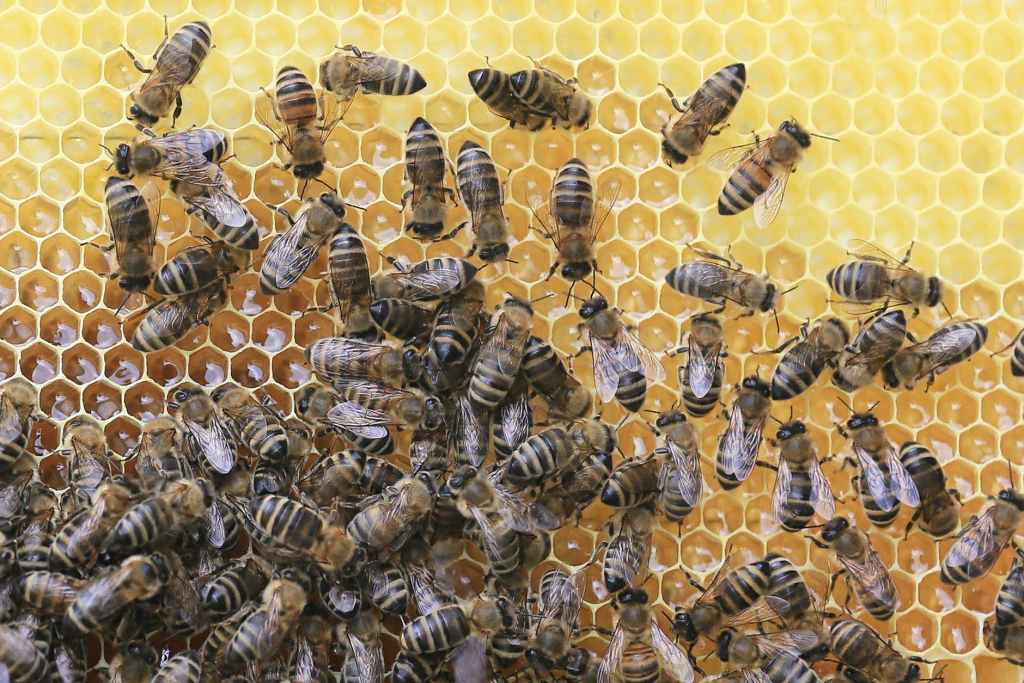
    In preparation for receiving my first two bee nucs (or nucleus, a small bee colony made from larger ones) at the end of May, I have taken a three day beekeeping course, read four books, talked to local bee keepers, watched countless educational videos online, and I still don’t know anything!

    The real learning will come once I get my hands sticky again. And then even after a few years, I still probably won’t know enough.

    All I can say is that I’m fascinated by Apis Melifera (the Western/European Honey Bee) and I can’t wait to learn more and share my journey with anyone who wants to read about it!

    You can follow my journey on Instagram @Pembee_Hives.


  • Dad’s Cabin

    Dad’s Cabin

    IMG_3065.JPG

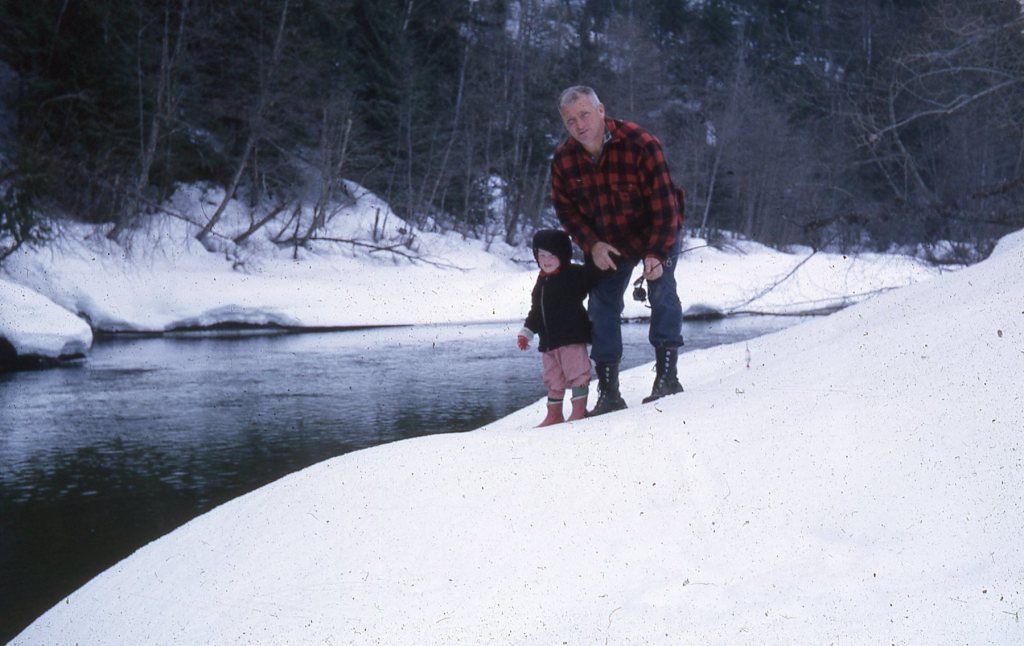
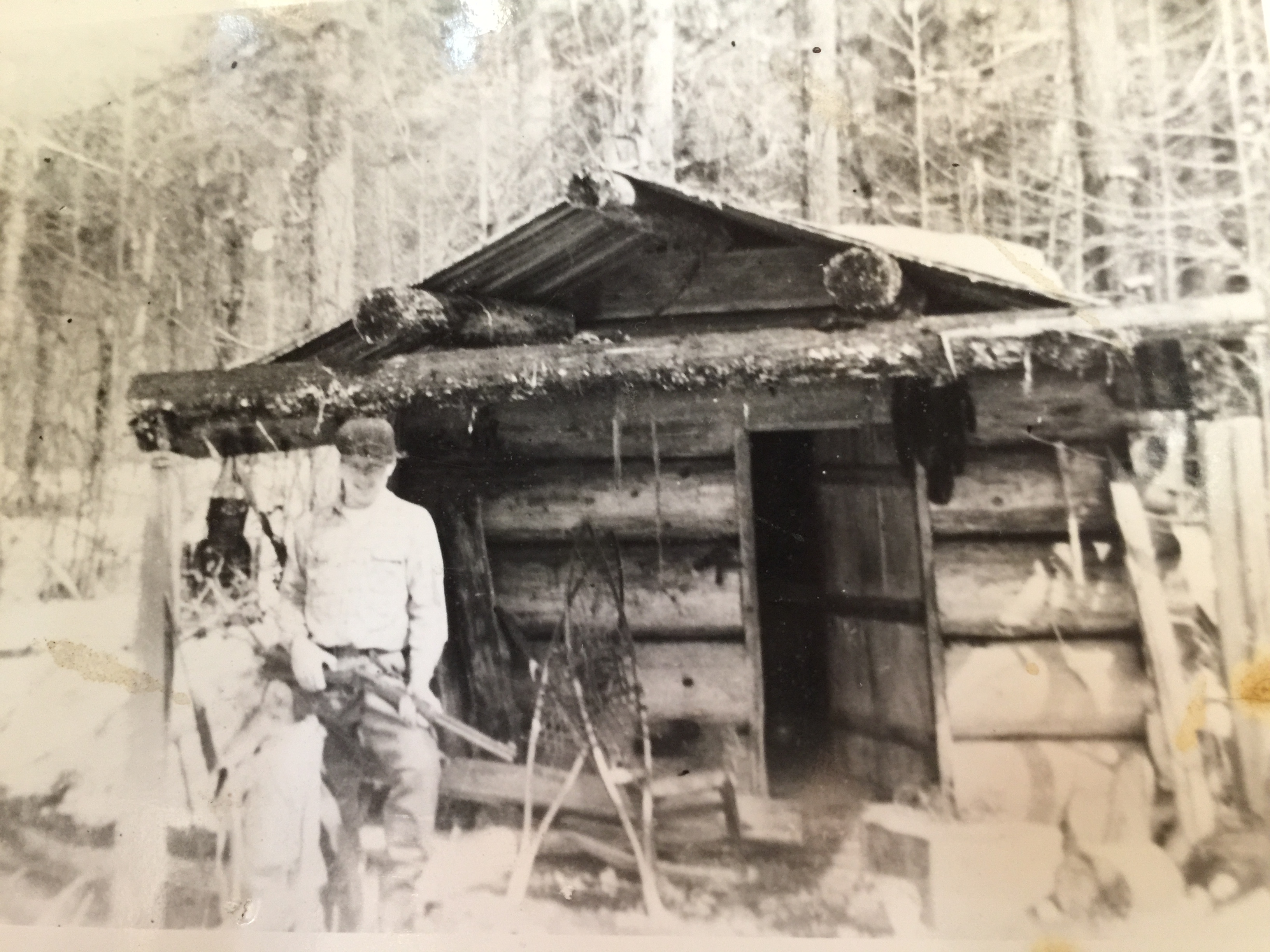
    Boy, oh boy, Dad was mad that night. He arrived home in the dark as per his MO. He was back early from his trip because a Grizzly had damaged his trapper’s cabin.

    He spent a week down in the basement building a snare and talked about what the hide would fetch at the fur auction. It seems it was the insult as much as the damage done and it seemed personal. The Grizzly had come in through the roof, destroyed everything, and, without consideration of the time it would take to fix the place, left through the window.

    Dad took some consolation in the one can of beans that the Grizzly missed in his rage/romp. We have an old cooking pot on the wall of the shop with teeth holes in it that dad brought home to show us the power of his new pal on the trapline.

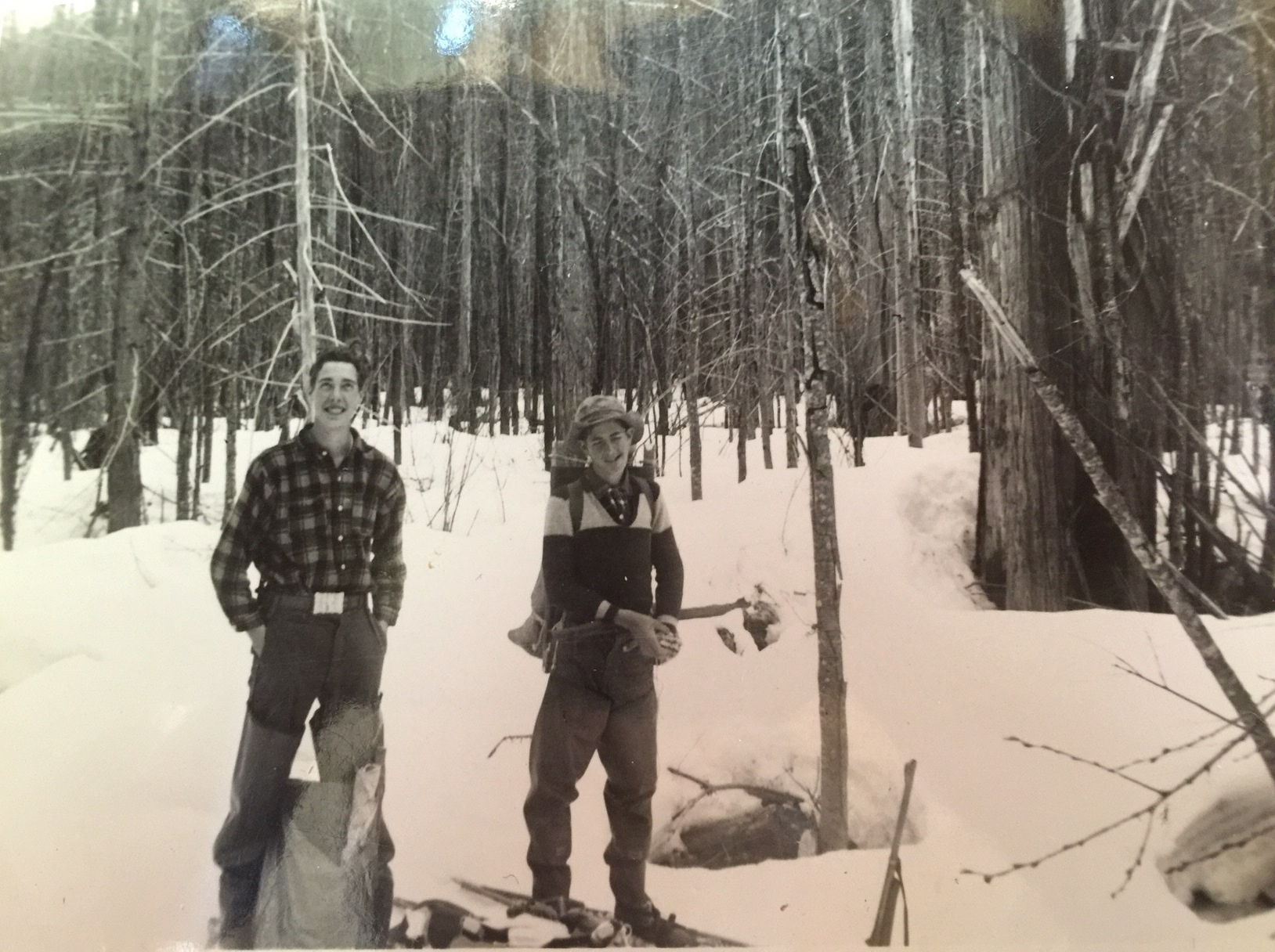
    My dad had a trapline from North Creek to Meager Creek. I think he started it around 1949, when he came back from the war. Trapping was a pretty common way to make money back in those days in Pemberton, and farming was real tough. He would walk in on snowshoes for 17 miles, spend about a month trapping and skinning, then walk out with the pelts. Once the pelts were safe at home, he would head out and do it again. Usually one of his nephews would meet him on the trail and help pack out. One nephew was eager to show his strength but after dad split the load in half, couldn’t carry the weight. My dad was pretty strong.

    Most of my trips to Dad’s Cabin were as a teenager on spring fishing trips.We would walk the crust and fish for Dollies. One time I took two of my nephews fishing up there and had to crawl a mile out because the snow had weakened the crust and I crashed through every step. They were light enough to scoot along on top and found it pretty amusing.

    He used to piggy-back me on all the slippery river crossings. When I was about sixteen or so, I shakily carried him across, and was pretty proud of myself. We weren’t real huggers, our family, so it was wrestling and river crossings, and it was wonderful.IMG_3066

  • Blank Canvas

    Blank Canvas

    The summer I turned 11, my family packed our camper and set off on a massive adventure that lasted over a month. The leg of our trip that resonated the most with me was the coast of BC. There was something about the mountains and ocean that spoke to me – it made me feel free. I vowed right then that I would return to live in this place.

    Life on the west coast became a reality when my art skills got me into the University of Victoria. However, I quickly discovered I was not like my classmates and had zero desire to become any entity that encompassed being an artist. I lasted 2 years before I bought a car, learned to drive standard in a mall parking lot and set forth for Whistler because it seemed like a cool place to go and get lost.

    Fast forward to my years in landscape construction and maintenance where I learned design and plant knowledge and in time I was let loose to create spaces for clients. These playful experiences naturally paired well with my understanding colour and sense of flow. Eventually I realized that I was still creating; it was just a different type of medium.

    Now I spend countless hours every year drafting my garden plans for the following season. Notes on notes on notes as to what was great, what was horrible, where to plant what, what not to plant, what I want more of. Lots of mindless staring out the window at my plot fantasizing its potential; then scavenging bits of wood and rocks to add into the landscape. And, like clockwork when it comes to planting time, the plans that have come to fruition are loosely used and I stuff seeds and starters in the beds as I see fit.

    Maybe it’s the old artist in me coming out to play and wanting to just be free to experiment with what feels good at the last minute. This is an integral part of the learning process in gardening and I highly encourage it. Sure we can read books and learn what we should or shouldn’t do but at the end of the day if we are satisfied with the results then, who gives a shit.

    Feel it out. Plant what makes sense. Plant what you love. Look at your space and see it as a blank canvas in which to create your sanctuary. It can be whatever you want it to be. Let it evolve. You can always return to your canvas and paint over something you don’t love.

    Eighteen year later since arriving home in the Sea to Sky I have finally accepted that I’m a gardener and a landscaper: an artist after all.

    IMG_0114

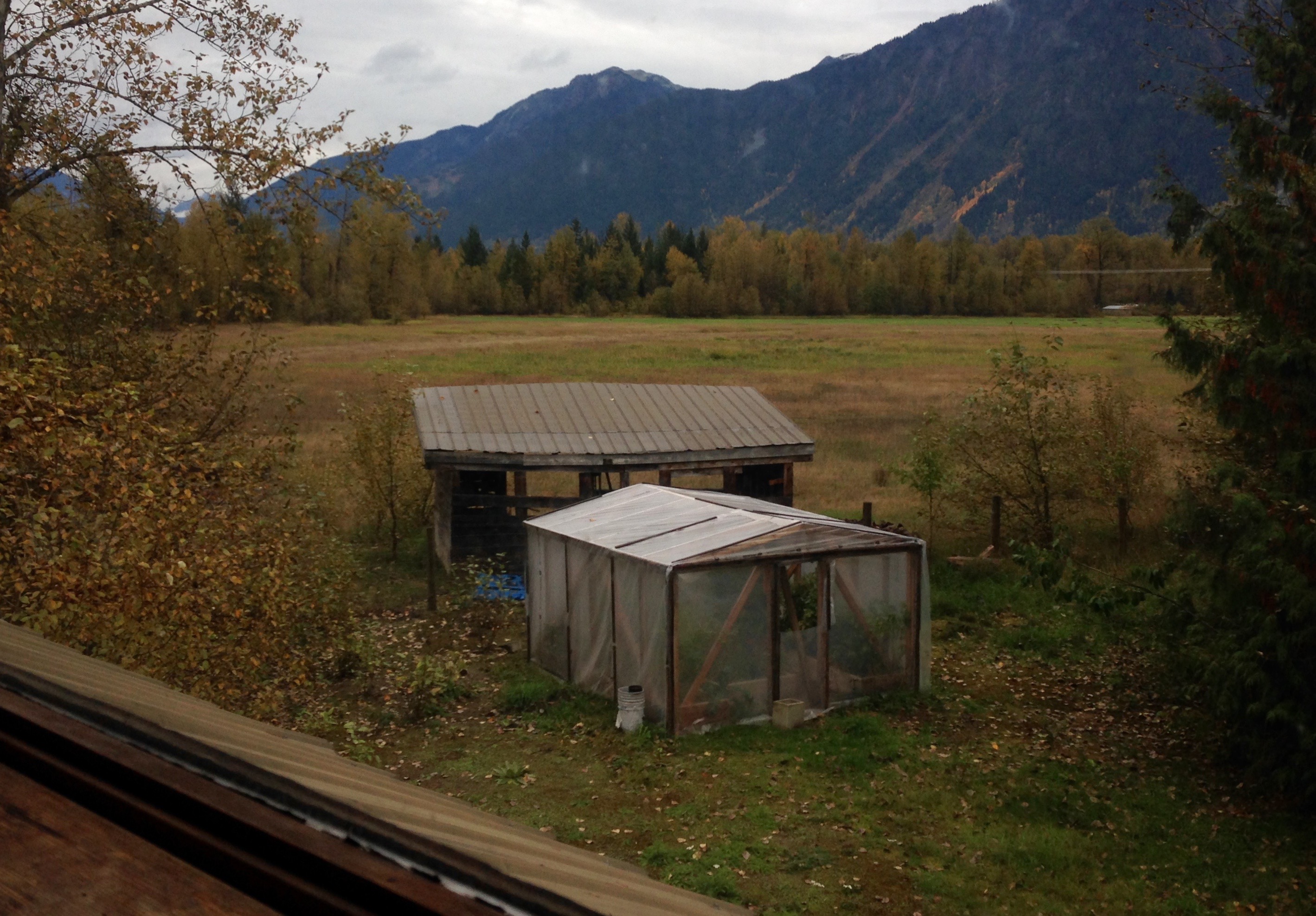
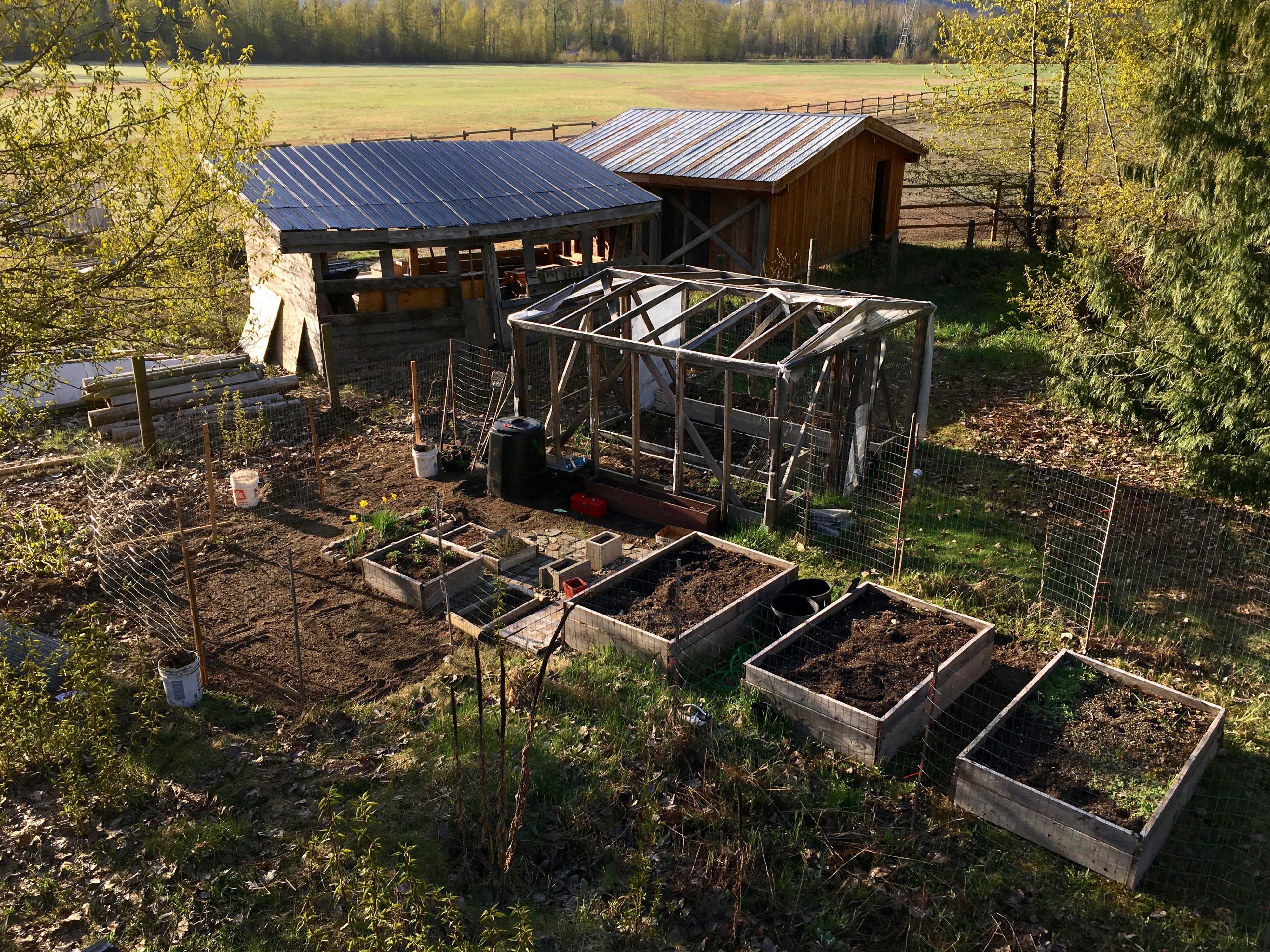
    Photo notes – The main photo (above) was taken out the window when I moved into our current residence from where I sit every day drinking coffee. The picture below was taken this morning and I can guarantee in a month it will look even different. Stay tuned! IMG_3346

  • Taking the Sting

    Taking the Sting

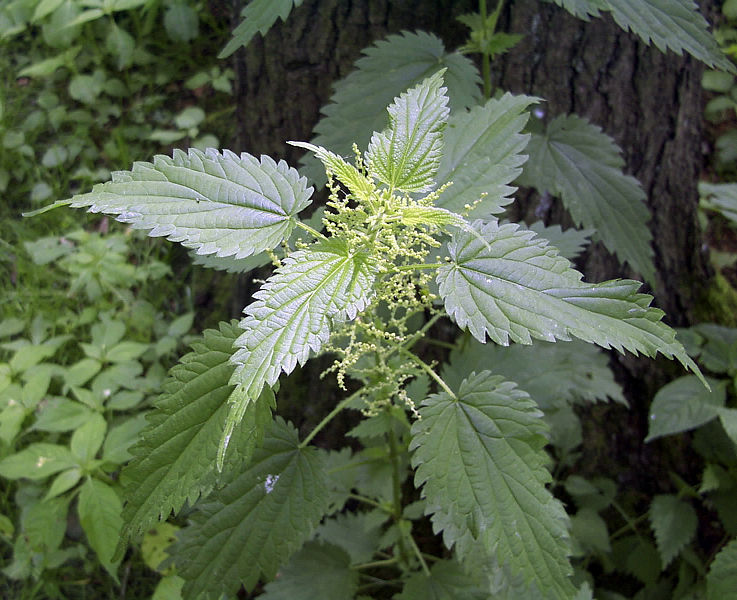
    I am one of those weird and fantastic people who get really excited about the plants nobody likes. The wild ones, the weeds. The FLOWERS OF TREES. The pesky dandelions old men spend hours picking out of their lawns. The patch of chickweed I found growing in the horse pasture… and made into lip balm and a series of green juices that impressed even my mother.

    I want to share a little about a spiky, prickly friend of mine, otherwise known as Stinging Nettle. Nettle is the star of the show right now. When I filmed the video I was fresh from two hours of editing a manuscript, and an hour of harvesting Nettle tops. The result? One part medicinal plant talk, two parts deep restorative ecology of the human ecosystem, and one part neighbour’s chainsaw as background noise. You can’t get more ‘weedy’ then that!


  • Don’t date a farmer if you want to lose weight

    Don’t date a farmer if you want to lose weight

    Riley doesn’t know this, but when we first met, I thought dating a farmer would help me lose weight. I didn’t really need to lose weight, at the time, but I thought, “Oh yeah, this is going to be great…I’ll be eating all these veggies, and helping in the fields. By the end of the summer, I’m gonna be tanned, and I’m gonna be ripped.”

    I was sitting on my butt at a desk in Whistler for over eight hours a day at the time, but a total body transformation over one summer seemed totally feasible.bacon.jpgAs our relationship progressed, my usual breakfast evolved from a green smoothie to fresh duck eggs fried with homemade bacon luscious and sticky from the maple syrup it was cured in. Life was sweet, was it love or the spoonful of brown sugar I started adding to my huge mug of coffee?

    After work, I would change into some old jeans and head out into the field to help with weeding. These golden hours were half “drinks after work”, half chores as we moved down the row side by side, catching each other up on the day’s events, and swigging from cold cans of beer set, sweating, in between the beets.

    Gone were my single-girl dinners of a chicken breast with steamed broccoli, or red wine and popcorn in front of the TV. Now I ate a proper plate, at the table, tucking into pasture-raised pork chops, roast chicken, or lamb burgers with a side of potatoes, beets, and carrots.

    PembertonBandits.jpg
    Anastasia Chomlack photo.

    So, approximately four years here I am, a little “fluffier” than I was before I met Riley. I gained a lot by dating a farmer – a few pounds, a happy life, love and the ability to eat ridiculously well every single day.

    For me, small changes like minimizing gluten and cutting out sugar move the dial in small ways. But this spring my goal is to move the dial in a big way, and I have joined the twice-weekly running club led by personal trainer Anngela Leggett of Evergreen Fitness and Yoga in an effort to get more fit. The women in this group are more experienced runners than I am, but I do what I can and managed to run 10.5km last week.running groupI’m pretty sure running should work out as a better tactic for me to lose weight than dating a farmer. If it doesn’t, I’ll still value my gains as I get outside and explore Pemberton’s amazing trails with a diverse and inspiring group of local women.


  • Eat Your Way Home

    Eat Your Way Home

    I asked Chef David Wolfman if he thought eating an all-indigenous diet would transform me over time, and he laughed.

    Wolfman is a television celebrity – the host of Cooking with the Wolfman which ran for 17 years on the APTN – a professor, culinary artist, and the co-author of newly released Cooking with the Wolfman indigenous fusion cookbook, with his wife Marlene Finn.

    David Wolfman_hires

    The book, released in the fall of 2017, has already won several awards, including Best Cookbook in Canada from the Gourmand World Cookbook Awards. It’s in contention for the prestigious Best in the World designation and will represent Canada at the World Cookbook Fair in May.

    The book, he says, was a result of people always asking “when are you doing a cookbook?” and finally making the time, to collect his best recipes, and compile them, to a standard he would feel proud of, while having fun.

    As educators, Wolfman and Finn also wanted the book to be a “sharp how-to.” But most of all, they wanted to honour their elders and share the stories that had been shared with them.
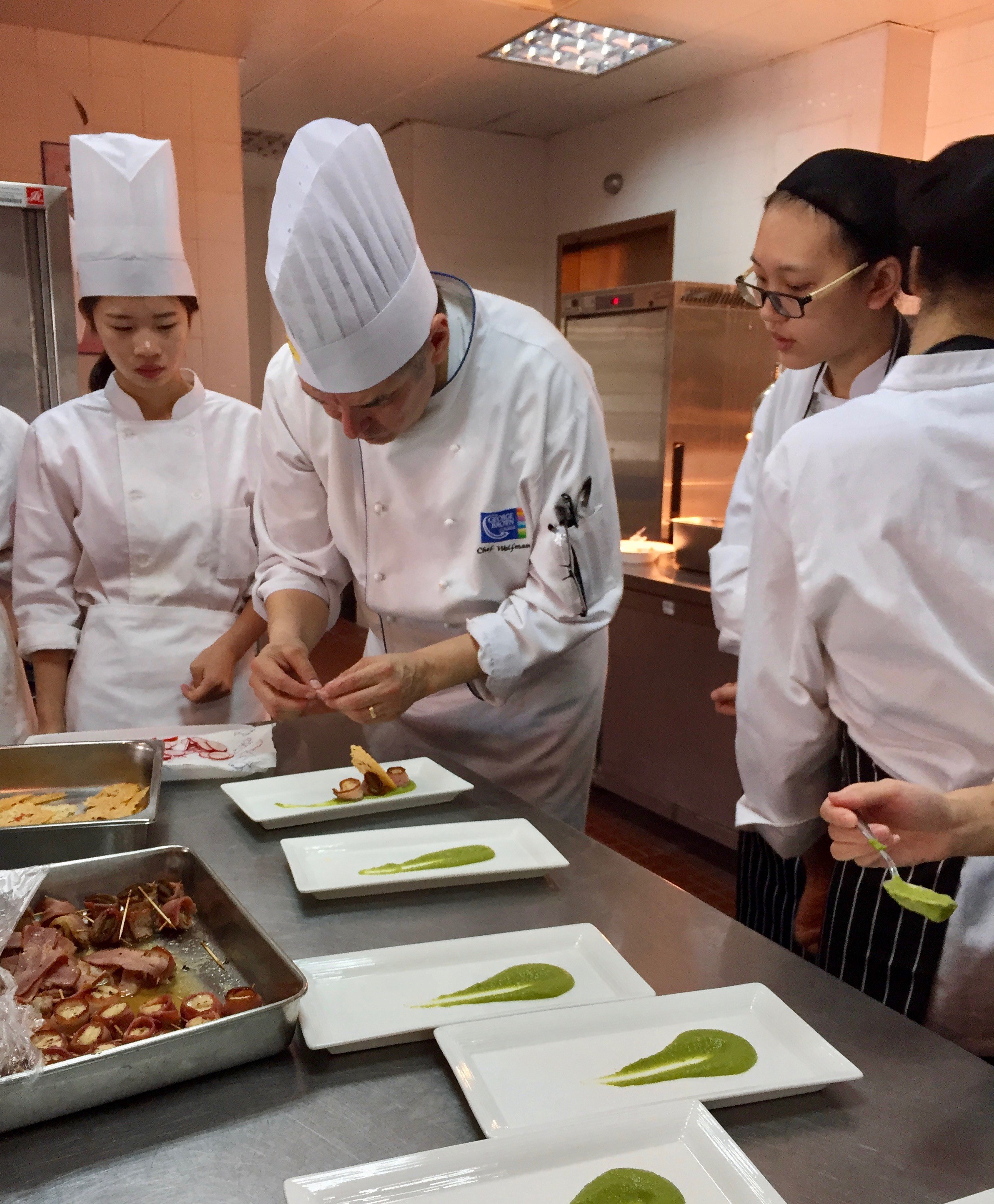
    David Wolfman at GBC teaching

    “What we really wanted to do is do what our ancestors have always done, what our moms have always done, and talk about the food. Talk about the gathering of the herbs, and the fish and how it was dried, and the way it was a real team effort for the whole family to get the food. They didn’t just go and buy the food. There was a real respect for the food.”

    Wolfman’s mother, the late Delores Diablo, is Xaxl’ipmec, and grew up in the Fountain Valley, near Lillooet. She moved to Toronto after she got married, and David and his siblings were raised as “urban natives.”

    When he first visited his relatives in Xaxl’ip, Wolfman asked obsessively, “is this native?”, “is this native?,” trying to get his bearings. His uncle would tease him: “See these wieners? These wieners are native,” he’d jest drily. “See this frying pan? This frying pan is native.”

    Wolfman was looking for food to connect him with culture and place. “I had this big interest in going back home. The fascinating thing is I was a chef. So my relatives were saying to me, ‘oh, show me how to do that hollandaise. How do you make this sauce?’ And I would say, ‘oh, can you show me how you dry the salmon?’ I don’t think that they realized the volume I was absorbing.”

    I think this is why he laughs at my question. You can’t eat yourself indigenous. You might be literally fuelled by the ingredients you consume, but you don’t become the cuisine that you eat. Although he defines his beat as “indigenous fusion”, he isn’t as interested in defining or limiting or separating things apart, so much as he is interested in using food as a catalyst for coming together.

    He’d always been the guy who wandered into the kitchen and sat down with a friend’s Portugese or Italian mom, absorbing their intimacy with the food, their techniques, learning everything he could. He traced that comfort back to standing on a milk crate at the stove, 9 years old, stirring his first stew for his mother – the way she winked at him when he splashed a bit of meat over the edge of the pot, and assuaged his worries that he was going to get in trouble for making a mess, by picking it up and saying, “oh we better eat that one!”

    “She made it really comfortable for me, and I realized from her that the sharing of the food and the knowledge was more important than the finessing and the garnishing and the bouquet garni and the spices.”

    Cooking with Wolfman_Moose Burgers with Diablo Pepper Squash Relish_image

    After his mother died, Wolfman returned to Xaxl’ip, and sat outside the now abandoned cabin she had grown up in. He saw the mountains, the window, the berry bush she had told stories about – the xosum berries she couldn’t wait to eat, that she’d eat before they were ready, and giving herself a stomach-ache with her impatience.

    All these stories came rushing out of the landscape, out of his past, out of their time in the kitchen together. “It was like someone opened up a book and started telling me all these stories again. I wondered how am I remembering all these things, just sitting here?” He felt as if it was her spirit, telling him all these things.

    Food is just food, says Wolfman. You have to sell it to people. He calls it “whetting people’s appetites.” He teaches his students, “I don’t tell people when they come into my restaurant, ‘Tonight you’re gonna have a choice of eating a dead chicken or a dead fish.’” Part of what gets us hungry when we read a menu, he says, is the backstory. It’s organic. It’s grain-fed. It was gathered by hand under a huge blue sky. It was made for me by my grandmother whenever I went to visit.

    Keeping the stories alive is what matters. And stories that are shared last longer, go farther, grow into something more.

    “Food ties us together,” says Wolfman. “Especially when you have respect for food, and you bounce different ideas off each other. Even if we’re different, or have different beliefs, it doesn’t matter. The end goal is that we sit together and eat together and tell stories and love the company. That’s all.”

    COOKBOOK-CLUB April 26 2018 


  • First Steps

    First Steps

    Calving time on the farm is almost over. It starts in late January and finishes up around now. We have a small herd and have six new additions to the group. All born healthy and with no problems.

    I was lucky to be there when this little one was born on a beautiful sunny day. I ran to get my camera and recorded her first steps.


    Mama is licking her clean to dry her off. This is an important first step for Mama as it helps to imprint her calf to her. Within a few hours this little one will be trying to run and play with the other babes.


    Feature photo courtesy Connie Sobchak. via TheWellnessAlmanac.com

  • Honor Thy Weeding

    Honor Thy Weeding

    It’s funny how life can throw us curveballs when we least expect. Call it coincidence that I have struck out during a season that literally celebrates rebirth and renewal. But as the saying goes; everything happens for a reason. What has kept me sane is my garden.

    When you’re forced to slow down in a life that is typically robust it’s truly hard to cope – every day brings new challenges. Many of which I am not comfortable with and have had a hard time accepting.

    So, what does an active gal do when forced to step outside of her skin and just be?

    She sits with her garlic. She weeds. She envisions where all the little seedling starters will eventually go and thrive. She checks on these seedlings at least 20 times a day. She walks and appreciates the revival of the forest after a long winter. She watches the ants. She buys plants (retail therapy for the win).

    IMG_2968

    A calming sensation genuinely lifts me up when I’m gardening. It’s my therapy. No stress involved – just the dirt and me. It has always been this way: before I was concussed, now while I’m concussed, and indefinitely when I’m past it.

    There is something to be said about stopping to smell the roses. Going back to the simpler things gives us a greater appreciation of the bigger picture. Through my minor setback I have learned the importance of this phrase and will celebrate it beyond my recovery. Gardening has an effortless way of healing.

    Spring. I surrender my ego to you… and the weeds in my garden.

  • How to Enjoy Pemberton Deer Meat

    How to Enjoy Pemberton Deer Meat

    I did not grow up eating deer meat. Beef, yes. Chicken, yes. Salmon and sole, yes. But deer meat, no. So when I moved to Pemberton and began sharing my fridge with a hunter, I was in for a change in dietary habits.

    While it was not something I can say I enjoyed eating at first, over the years I have learned that deer meat can be just fine. I would like to add that I am grateful for the deer, and the deer meat. Deer eat leaves in the forest, and that is a healthy, natural diet that is passed on to us in the form of healthy, natural, and lean meat. I also like the fact that we know where our meat comes from.

    Some Recipes Work for Deer Meat. Others Do Not:

    My advice to any readers who either have just taken up hunting, or are living with people who hunt, is that some recipes complement deer and others do nothing for it. For instance, do not create a delightful, light, refreshing marinara sauce with Lillooet tomatoes and fresh basil, and expect that it will taste great mixed with a pound of ground deer meat. It will not. (I do not call it venison – that’s chef talk. Deer meat it is.)

    Stew Meat and Ground Meat are Your Friends:

    No matter how much a hunter tries to tell you that “deer roast is amazing”, do not believe him or her. A pork roast? Sign me up. A beef roast? Pass the Dijon. A deer roast? I have [expletive] tried and tried for over a decade and not once has one turned out well. Do not let that hunter persuade you into deer steaks either. In my culinary opinion, another waste of time.

    In short, your entire deer should be turned into either ground or stew meat, with all due respect for the animal.

    Recipes That Have Worked for Me:

    My best recipes for deer meat are used over and over again, and they are best suited for fall, winter and early spring. By late spring we are pretty much done with deer meat, but it can still be used in warmer weather for my taco fiesta recipe which follows.

    My favourite recipe that truly complements deer meat (or disguises it – depending on your point of view) is Shelley Adams’ Whitewater Cooks at Home recipe for Curried Lamb & Lentil Soup. It is delicious, full of flavour, freezes and reheats beautifully, and anyone I have served this to loves it (including many people who do not eat wild game). Deer stew meat is substituted for the lamb.

    Honourable mentions go to Shelley’s recipe for Beef, Leek and Pot Barley Soup (swap out the beef for deer stew meat) from the same book, and her Whitewater Cooks Chilli from her first cookbook. I have still not found the ideal pasta sauce recipe but the one I use is the Best of Bridge cookbook series Best of the Best for their lasagna recipe – the sauce can be used over any pasta. It is really only good on a fall or winter chilly night as it is quite heavy – and the flavours may be a bit dated for today’s palates. But a heavy pasta meal can be very satisfying and comforting on a dark, cold, winter night so it works for me sometimes.

    Mexican Taco Fiesta with Pemberton-Area Deer Meat (Serves 6):

    Here is a recipe I just came up with recently that is delicious, kid-friendly, and appealing to the palate year-round. I choose to serve the tacos without cheese or sour cream, but it’s a personal choice. I also make a cooked salsa with canned tomatoes, making this recipe a practical choice in winter months when fresh tomatoes are expensive and not flavourful.

    Ingredients:

    1 lb. ground deer meat

    3 tbs. home mixed taco seasoning

    1 12-count package of authentic corn tortillas

    10 romaine lettuce leaves, shredded

    1 recipe cooked tomato salsa (recipe follows)

    2 cups cooked black beans

    2 cups finely chopped cilantro

    2 cups cooked corn kernels (fresh or frozen)

    Choice of hot sauce for garnish

    Method:

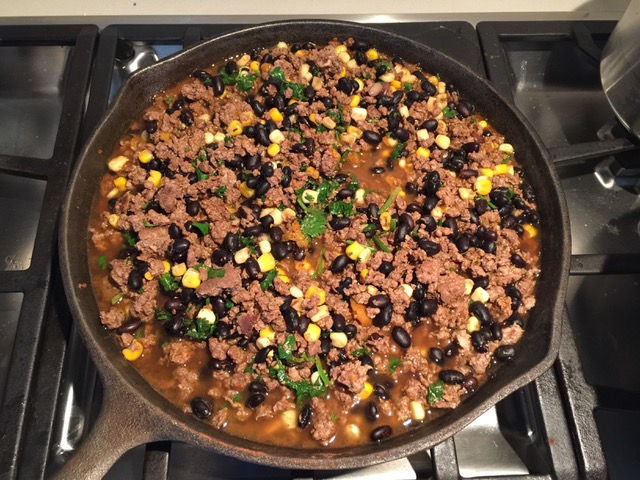
    Cook your deer meat in a very large cast iron fry pan or a heavy-bottomed large saucepan until no longer pink.

    When fully cooked, add 2 cups water and 3 tbs. of taco seasoning.

    Add cooked black beans, cilantro and corn and simmer until the liquid is boiled down (but not so much that your meat mixture is dry).

    Warm tortillas in oven for 15 minutes at 180F

    Chop up lettuce into small shreds.

    Assemble tacos with meat mixture, salsa and lettuce over a tortilla, at the table. No need to roll up (corn tortillas will fall apart easily). Cut up and eat with knife and fork.

    Enjoy!

    Cooked Salsa:

    Ingredients:

    1 litre of canned, diced Lillooet tomatoes

    1 cup chopped cilantro

    1 cup chopped white or yellow onion

    1 tsp. salt

    1 tsp. ground pepper

    Method:

    Sauté onions til very well cooked or caramelised. Add cilantro, tomatoes and salt and pepper. Simmer until most of the liquid is boiled down.

    Leftovers:

    Combine the salsa, the deer meat mixture, and shredded lettuce and sauté over medium heat until hot. Makes a great lunch next day!

    IMG_5492


  • Smells of spring, sweat, and soil

    Smells of spring, sweat, and soil

    It would not be an exaggeration to say that I love all the seasons. Apologies if anyone finds this level of optimism off-putting, I have been told it can be a bit much. I think farming demands it: to anticipate each season’s arrival, to enjoy the process, and to be thrilled to see one go in order to welcome what comes next.

    Spring is all about smells. After a winter of snow and soup and spreadsheets about farm planning and field layouts and budgets, it is so nice to smell dirt. Or “soil”, depending who you ask. I did not grow up on a farm and only started to dabble in it as a profession within the past decade, so the novelty of spring has not yet worn off. I hope that it never does.

    This will be the third growing season of Four Beat Farm here in the meadows, and I would be lying if I said that I felt ready for it. But that’s the great part about farming and growing food—often the best option (the only option?) is to jump in before you are ready, because nature does not wait, and if you procrastinate too long to till or plant or weed or water or harvest then it may be another 365+ days before you can realistically try your hand at growing that particular crop again.

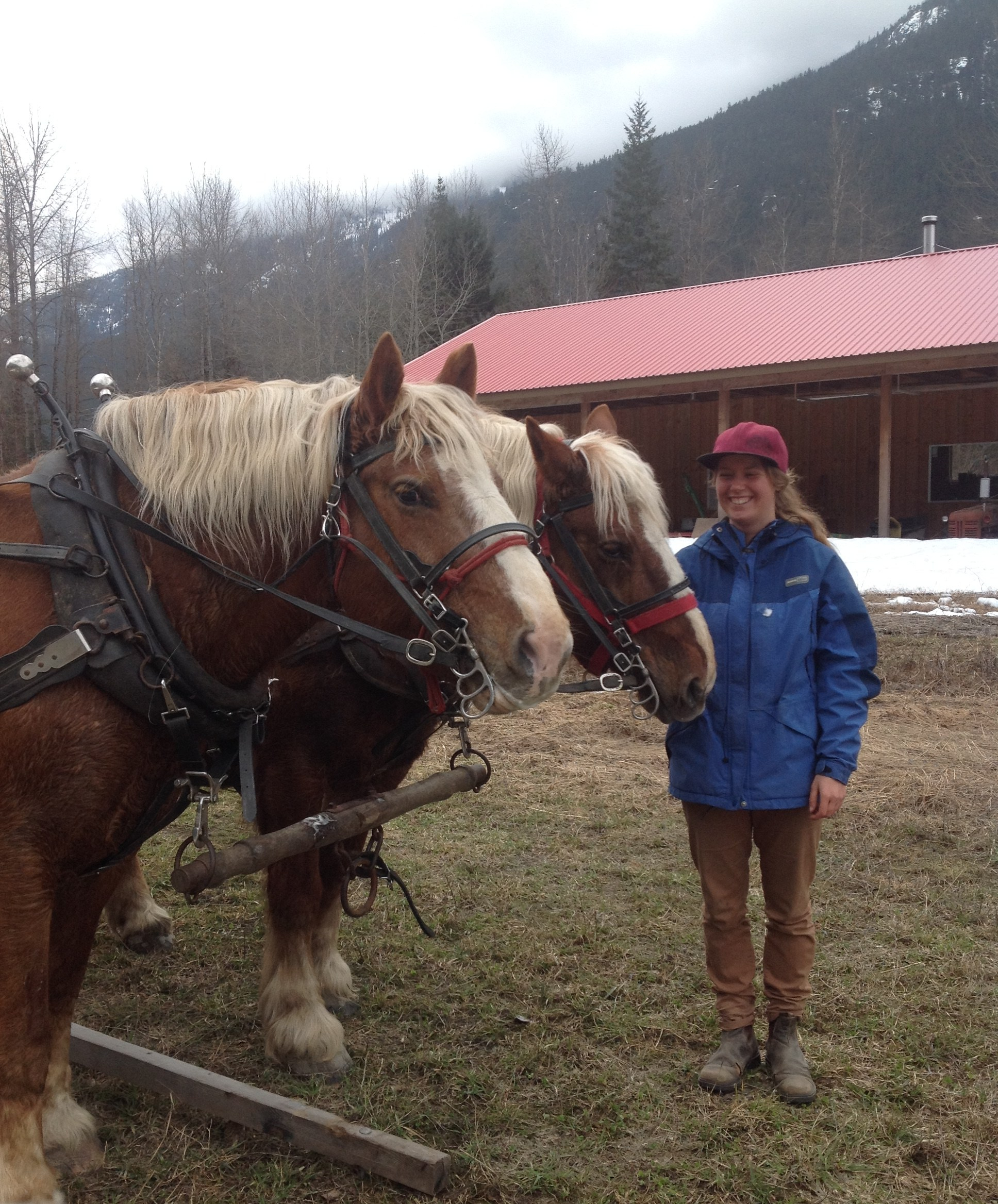
    Right now, spring smells like freshly turned earth, compost, and sweaty horses who, along with their farmer, had a pretty quiet winter. Call it lazy, call it restful, either way the sudden workload of April can be a shock to the system. Thank goodness for variety. For every hour that is spent moving fresh manure into the greenhouse to keep it heated on cold nights, there are taxes to finish, cultivators that still haven’t been repaired, onion seedlings that need haircuts, and horses that appreciate an afternoon head scratch as their muscles rest after morning fieldwork.

    IMG_2890

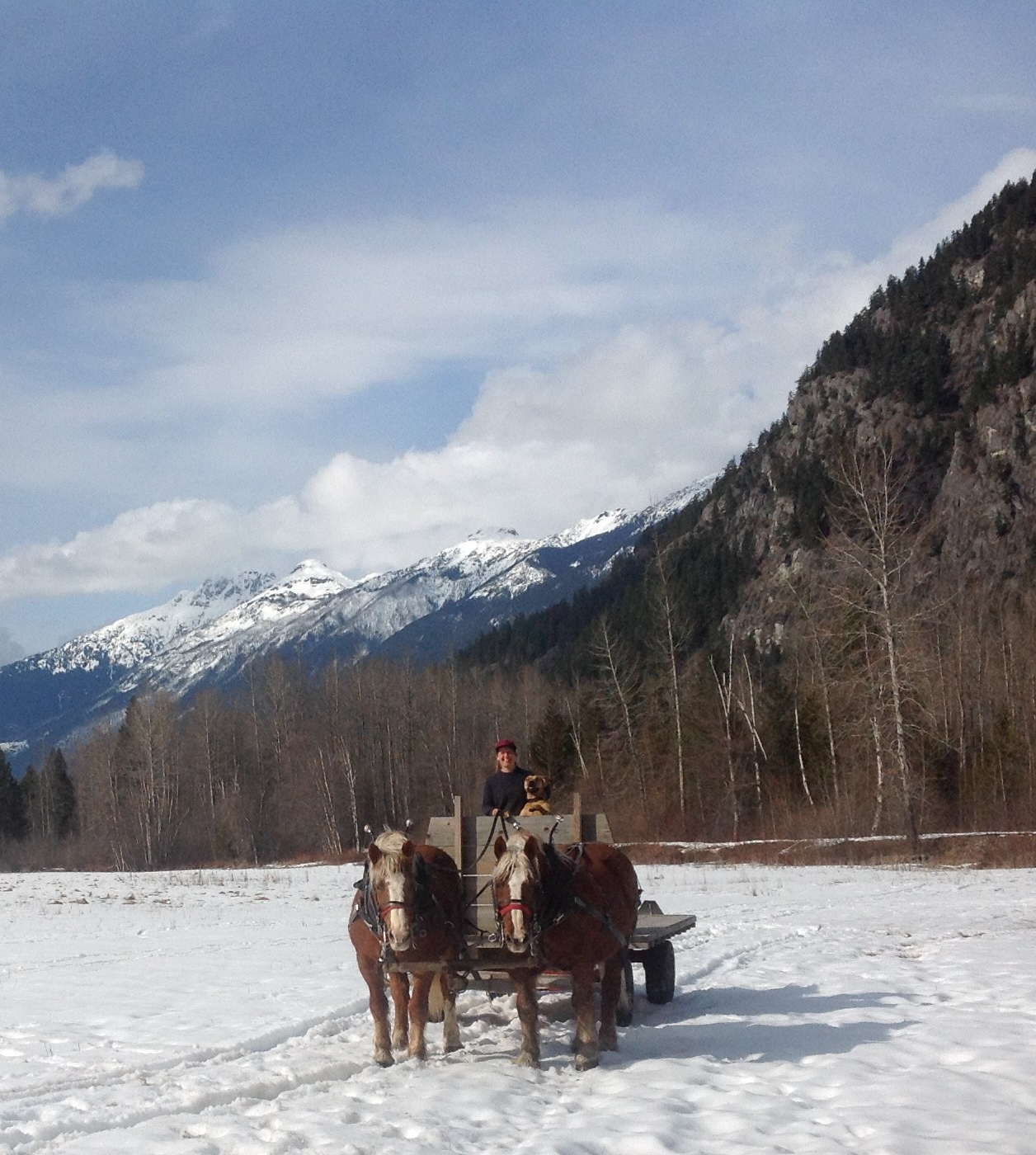
    When it comes to fieldwork, plowing with horses is slower than with a tractor, no arguments there. Our ever-improving farming systems for 3ish acres of certified organic vegetable seem to be functioning adequately throughout the summer season with the two horses at hand, often called a “team”. When people want to talk about it (or even when they don’t), I can and do enthusiastically chatter on that there are many jobs on the farm that horses do on par or better than I have seen done with a tractor. This is without even getting into the added benefits of having two 1600lb colleagues who eat local fuel, constantly produce compost, and bring a level of determination and sass to the field that I have yet to see in a combustion engine.

    IMG_2857

    For this year’s planned spring tillage, however, which will allow for better crop rotation and attention to soil health, our current two horses are fully employed and could easily share the workload with two more given our short and intense growing season here in the valley. So, as in past years, we as a farm leave the option open to phone one of our many generous neighbours to bring in some extra horsepower for big jobs.

    On a practical level, getting a few hours of custom tractor work here and there feels more efficient than feeding and caring two extra animals who are only going to work for a few weeks out of the year. I drawn parallels with fellow small farmers who might choose to rent heavy machinery for excavation projects, or how it can make sense to have a small car for your family and borrow a neighbour’s pickup truck when you need to bring home a few loads of compost to kick off the gardening season.

    When weighing the options, I have to remind myself that we are a young farm that is in the business of growing food for our community, and that there are many ways to best do this. That said, if someone in the valley has a well-trained team of draft horses I can borrow to spell mine for a few days when their shoulders get sore, feel free to drive up the valley and drop by.

    Our place is the one with plow lines that are not entirely straight, horses that still have their winter coats, and a hoophouse bursting with onion plants that are already dreaming of farmer’s markets at the community barn downtown.

    -Naomi

    IMG_2788
    Getting in shape, late March