Blog

  • Frontier Thinking: Everything you do happens at the place where your ideas meet your idea of the world

    Frontier Thinking: Everything you do happens at the place where your ideas meet your idea of the world

    This is the time of year when the farm machines roll full-tilt out of winter hibernation.

    At least, that’s how Andrew Budgell speaks of it.

    Co-owner of Laughing Crow Organics, one of Pemberton’s small scale organic mixed vegetable farms, Budgell is six credits shy of an English degree, and seven years in to his transformation as a farmer. We sat down this winter to talk shop, mutually intrigued by each other’s craft.

    LGC-LaughingCrow-24©AudreyThizy.2019
    Andrew Budgell and Kerry McCann of Laughing Crow Organics. ©Audrey Thizy.2019. All rights reserved / audreythizy.mail@gmail.com / +1 778 266 3655 / http://www.audreythizy.com.

    “In the winter time, it’s like you’re assembling this really complicated machine,” Budgell explained. “And when the season starts, you pull it out in the field and start it up. It begins lumbering forward. And you start seeing, as the season goes on, that you’ve become a part of the machine, working, weeding, watching. But this has all been planned. Every now and again, the machine will trip because of something you didn’t think of. Then there’s this extra challenge of patching things up and putting out fires. But the machine rumbles onwards forever.”

    Once the snow is off the fields, and the Life Force is surging through everything, nothing is sleeping. And the farmers start moving to keep pace – a pace that will keep accelerating until they feel like they’re running. “I feel like if I don’t keep moving alongside it, the machine falls apart. You have one chance. It’s a really hard deadline, unless you can decode nature.”

    You make the machine, you become the machine. Phoyo by Laughing Crow organics

    Budgell is regaling me with images of his Frankensteinian creature, in part, because we’ve sat down to talk about the contrast between winter and summer. Winter is a time for planning and playing. Now that farming season is here, it’s time to get down and dirty with your creation – to fully engage in this mysterious interplay between your plans and ideas and the physical world.
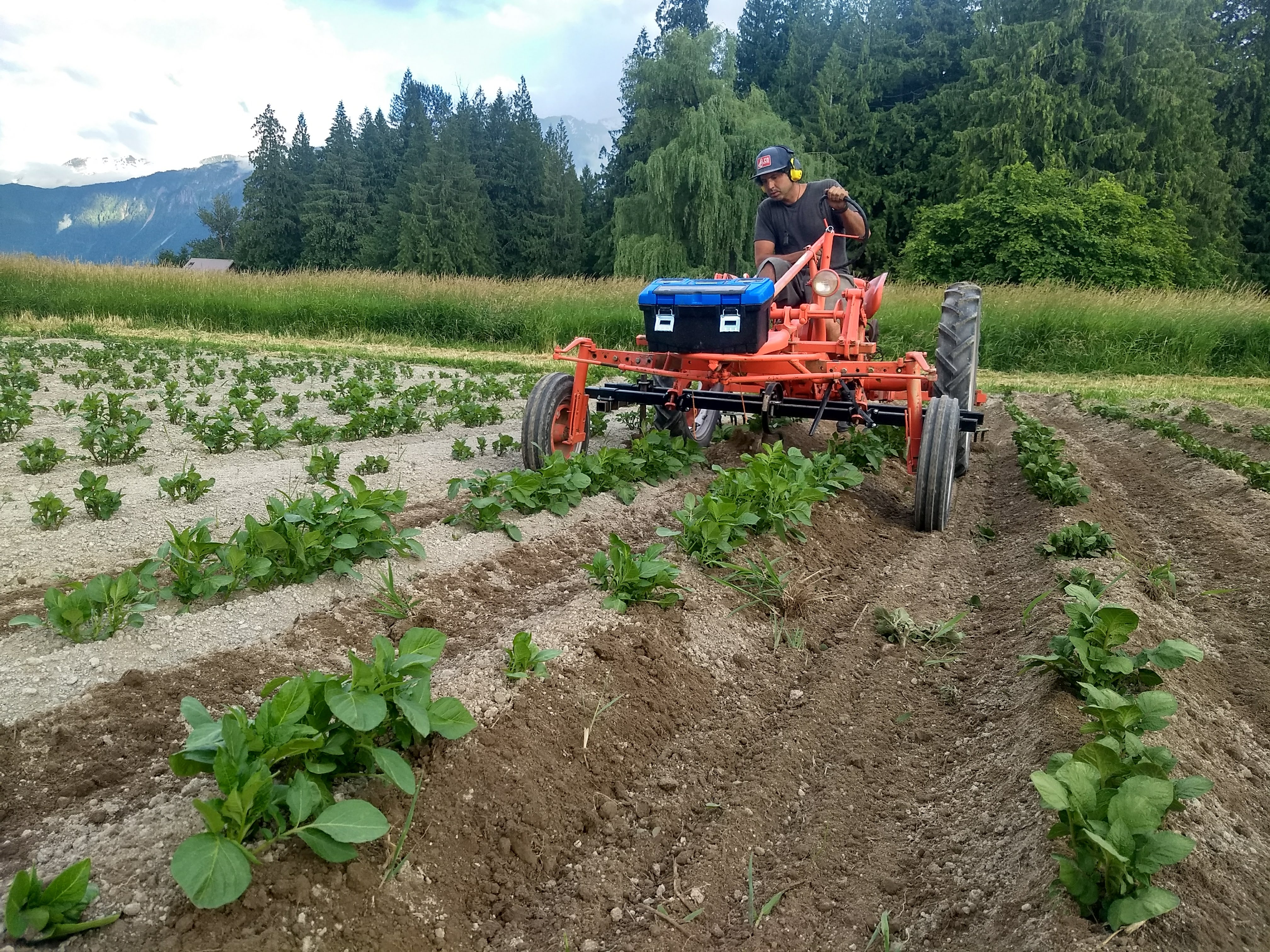
    Farmer Andrew Budgell working on an early draft Laughing Crow Organics

    I returned to this interview after listening to poet David Whyte talk about “the conversational nature of reality.” Whyte suggests that “the only place where things are actually real is at this frontier between what you think is you, and what you think is not you; that whatever you desire of the world will not come to pass exactly as you like it. But the other mercy is that whatever the world desires of you will also not come to pass. And what actually occurs is this meeting, this frontier.”

    One day this winter, running alongside my own lumbering beast of deadlines and deliverables, I did something different. Instead of downing two espressos, I squandered 15 precious minutes in meditation. I sat, breathed out, and in, and out, and in, and offered a kind of prayer to the universe. This story means a lot to me, I admitted. I want to do the idea, and the people it represents, real service. And I have five and a half hours to do it. Anything or anyone out there that can help get this fully formed out onto the page right now is most welcome.

    I’d long been intrigued by Eat, Pray, Love author Elizabeth Gilbert’s theory of creativity, famously disseminated in her TED talk. Her insight is that there are Muses, a kind of “other” energy that works through us. A big part of doing creative work, maybe the biggest part, is consistently showing up so the forces know where to find you.

    She came to that story as a kind of medicine to her huge commercial success and the weight of creative pressure that followed. Excavating an ancient understanding of Muses was her way of letting the air out of the pressure cooker of her Next Big Project; saying, look it’s not all on me. If I just show up, some other magic will meet me there.

    It intrigued me, but it felt a bit passive, like she meant opening yourself up as a channel or a medium, letting something use you to flow through and onto the page. Writing hadn’t ever felt like productive sleep-walking to me. But when I sat in that moment of pause, inviting mysterious allies out of the cosmic woodwork, I suddenly saw it as a much more dynamic process – profoundly collaborative. Co-creation. Something might work through me, but it had to work with me, with my brain, my thought patterns and habits of language, and I would be shaped by the flow, just as I might allow it to help shape the work.

    It was a new frontier.

    It may be that some kind of meeting took place that day. But I began to let my fear and overwhelm subside at the responsibility of what I was tackling, trying to pull stories out of the ether, alone.
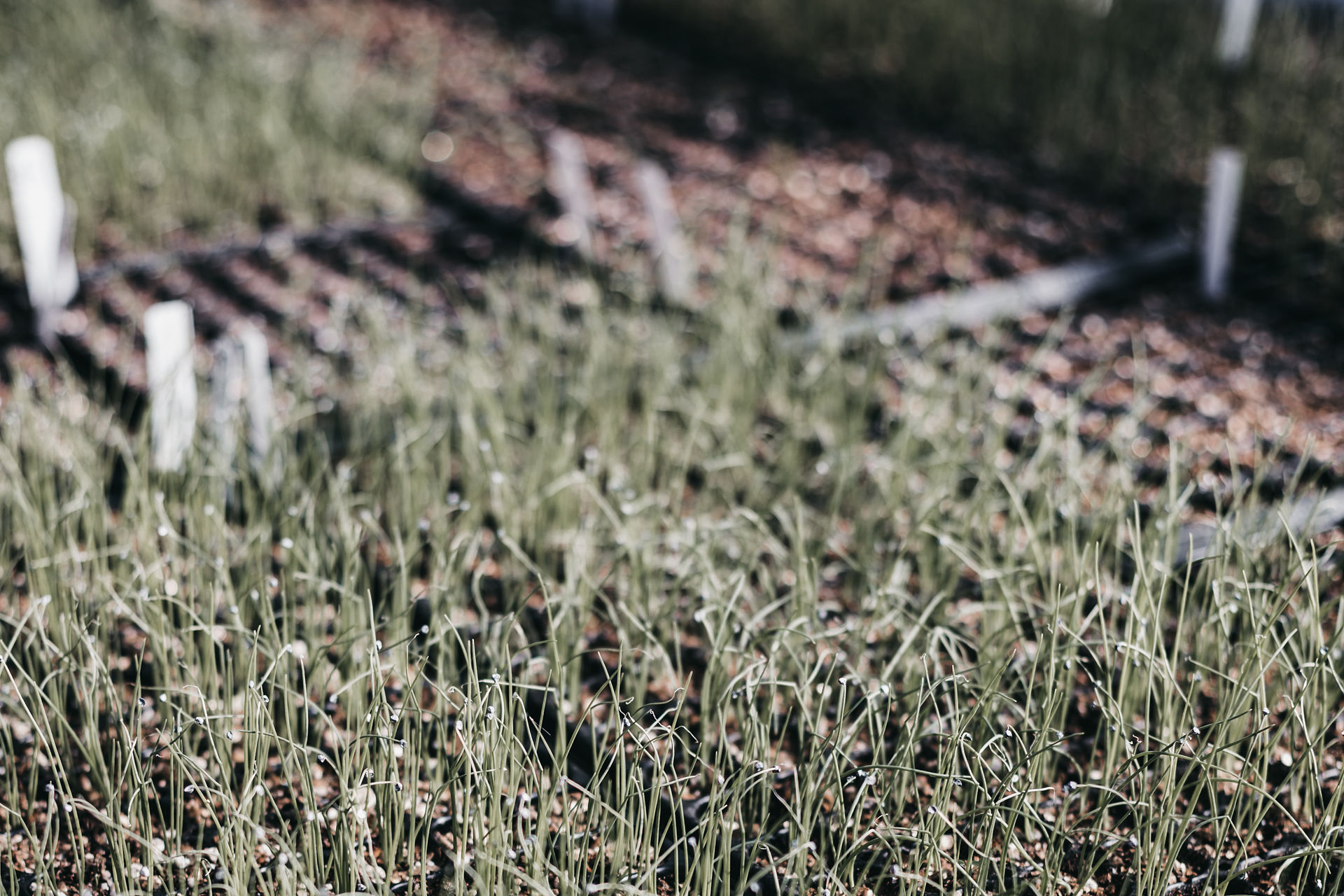
    LGC-LaughingCrow-12©AudreyThizy.2019
    Photo by Audrey Thizy

    Every spring, when the freshly plowed fields are full of scribbles and half-thoughts, Budgell feels the weight of the beautiful responsibility he has shouldered to feed hundreds of people. “We always freak out! We worry: is it going to grow this year? Is it going to happen? Are we going to have food? All through April and May and June. And then right around July, it’s like this crazy revelation. Oh my God! It worked again! Nature!”
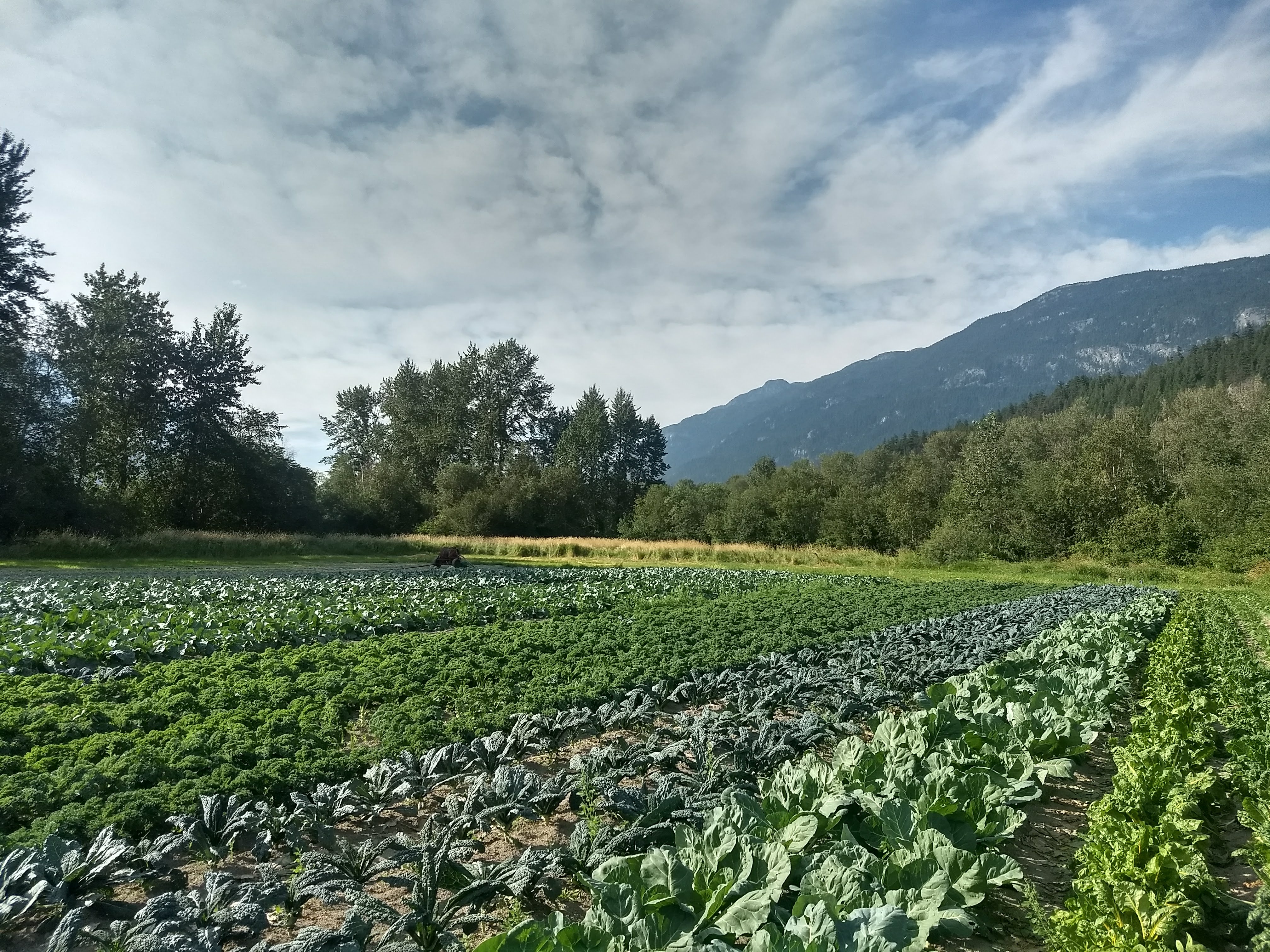
    When the miraculous manifests photo by Laughing Crow Organics
    Photo courtesy Laughing Crow Organics

    “There is a chemistry to creative work that is about two parts miraculous to one part sheer effort,” reads a quote tacked above my desk.  The precise effort-to-miracle ratio may change, but both are indispensable. We keep fumbling back to this. It’s on you, but it’s not all on you. It can’t happen without you, so show up and do the very best you can but make space for the not-knowing, the magical, the forces that keep the plants growing and the words flowing, and whatever else needs human hands to manifest in the world, in this earthy gritty sweaty dimension, where revelation happens.

    Follow @laughingcroworganics on instagram for more revelations.
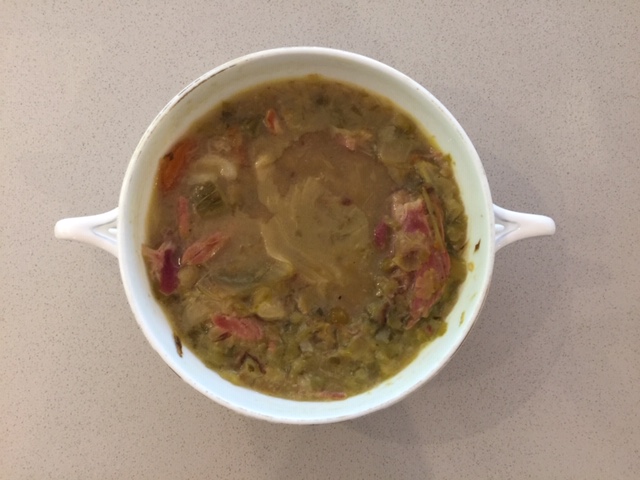
  • Professional-Quality Ham and Pea Soup

    Professional-Quality Ham and Pea Soup

    I have experimented for quite a few years with ham and pea soup – switching out the green peas for yellow peas. The yellow peas never softened enough for a good soup and they varied a lot from brand to brand. Green peas soften well. Of course, it helps to simmer your soup for at least 3 hours. A UK friend of mine who used to cater large events called it “the best ham and pea soup I have ever had”. Thanks to that high praise I am posting it today. Pemberton ingredients include carrots, and if you have a source, the ham itself. This soup goes well with a nice piece of warm cornbread. I like the recipe out of the ReBar cookbook by Audrey Alsterburg and Wanda Urbanowicz – an incredibly well-written and inspiring cookbook by two Victoria chefs.

    Professional-Quality Ham and Pea Soup:

    Ingredients:

    1 large ham bone with about 2-3 cups of ham still on it (after baking a 4-5 lb bone-in ham the night prior)

    1 bunch green onions, chopped

    2 tbs pure olive oil

    2-3 cups chopped green cabbage

    2 large carrots, chopped

    1.5 cups parsley, chopped

    8-10 cups water

    1 450-gram bag of dried green peas

    2 tsp pepper

    Method:

    Sauté green onion in olive oil.

    Add cabbage, parsley, carrots, and pepper and sauté until well caramelised.

    Add ham bone, water, and green peas.

    Bring to boil.

    After soup comes to a boil, turn heat down and simmer 3-4 hours.

    Remove ham bone and go through the ham that has fallen into the soup to make sure no gristle or pieces of fat remain in the soup.

    Remove all large ham pieces and cut into bite-sized pieces and then put back into soup. Enjoy!


  • The Do Over

    The Do Over

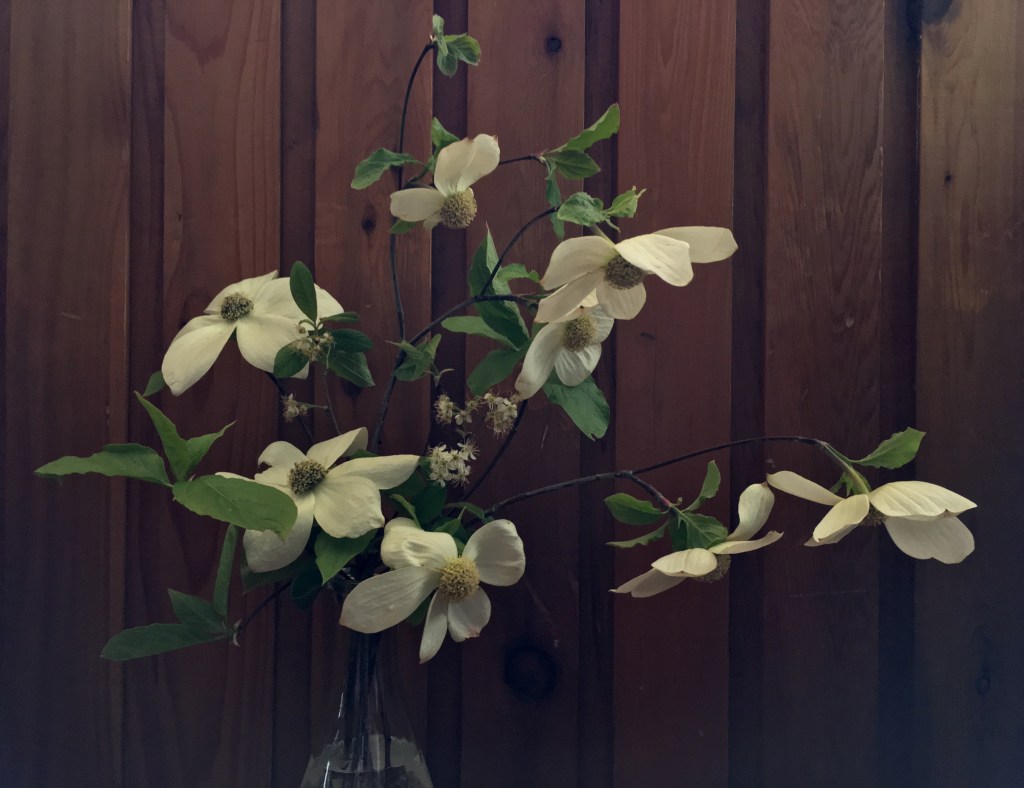
    My favorite strip in the ol’ daily commute is in full bloom: Dogwood Row aka the false flat of Nairn Falls. When this magical time finally happens I know spring has officially arrived. These native beauties symbolizes this time of the year perfectly: rebirth and resurrection, durability and reliability, strength and resilience.

    So, life has felt a little backwards lately and I’ve been dormant like the bulbs I planted in the fall: slowly growing in hibernation, slowly surfacing to flower. While the green glow of spring delivers a healthy dose of new beginnings there will always be things that don’t survive the winter.

    The beauty is, you can always replant.

    Spring offers up a chance to do over everything from last year… literally, start fresh, change the pattern and do it better. Prune away the dead to promote new growth, leaving some things the same (they’re called perennials for a reason) and don’t forget to tend to your evergreens as they are there for you every season.

    IMG_8308

    It’s not always as simple as it seems: a large puzzle with small pieces. Sometimes you’re rewarded beyond expectation in an instant and sometimes patience is a virtue.

    But by saying yes to growing new things and experimenting with new varieties we can create a new palette to work with.

    There is little risk in gardening if you’re willing to fail and get your hands dirty. Notable and new to my garden this year are Jerusalem artichokes, shiso and fennel (which will actually be nowhere near my garden because it’s friends with no one). Oh, and way more flowers! Because why not? And pollination is key to life. Other plants are bound to sneak their way in too.


    When supported by a cast of usual suspects: beets, carrots, cabbage, cauliflower, cucumber, tomatoes, brussel sprouts, squash, cantaloupe, onions, garlic, strawberries, raspberries, blueberries, peppers, peas, beans, all the herbs, chard, radish, daikon, celery, kale, romaine, greens, kohlrabi, leeks etc, one can be nourished and flourish quite well.

    There is a good chance I’ve already said this but I’m just going to keep saying it:

    Grow what you love, try new things, revisit old favourites and savour the process.


  • Dinner made easy – Chicken Divan

    Dinner made easy – Chicken Divan

    So my OH has been away, galavanting off to the UK and Spain, leaving me with the dog, and the chores, for just over a week on my own. (Don’t get me wrong – it’s been great catching up with episodes of Desperate Housewives and enjoying some peace and quiet!)

    It has also left me with the chance to take a day off work just so I can go and collect him from the airport. At least it gets me out of the “bubble”, right?

    The flight is due to land in the early afternoon so, with the drive and subsequent stops, on the way back, I thought it would be ideal if I could make something in advance for dinner that I can just reheat and serve when we get home. Luckily, Martha came to my rescue when this recipe popped in to my Facebook feed!

    Now, I’d never heard of Chicken Divan before but apparently it’s a chicken casserole usually served with broccoli, almonds, and Mornay sauce that was named after the place of its invention, the Divan Parisienne Restaurant in the New York City Chatham Hotel where it was served as the signature dish in the early twentieth century. So there you go!

    I have since seen a few recipes on Pinterest that use Cream of Mushroom Soup but there’s nothing more satisfying than making it all from scratch (time permitting). So, hopefully it tastes great and my efforts will be appreciated!

    Note this recipe serves 6 to 8 people – I guess we’ll have plenty of leftovers! 😉

    Ingredients

    • 1 bunch broccoli, cut into florets (about 5 cups)
    • 680g (1 1/2 pounds) boneless, skinless chicken breast, cut crosswise into 1/2-inch-thick strips
    • 1 small onion, finely chopped (1 cup)
    • 225g cremini mushrooms, sliced (about 2 1/2 cups)
    • 4 tbsps unsalted butter, plus 2 tablespoons melted
    • Kosher salt and freshly ground pepper
    • 3 tbsps unbleached all-purpose flour
    • 3 cups whole milk, room temperature
    • 255g shredded medium-sharp cheddar (3 cups)
    • 2 tsps Dijon mustard
    • 1 tsp Worcestershire sauce
    • 1/8 tsp cayenne pepper
    • 1/2 cup sour cream
    • 1 cup panko breadcrumbs
    • Cooked egg noodles or steamed white rice, for serving (or whatever you prefer)

    Directions

    1. Preheat oven to 400 degrees. In a large straight-sided skillet, simmer 1/2 cup water over medium-high heat, then add broccoli and a pinch of salt. Cover, reduce heat to medium-low, and cook until crisp-tender, about 6 minutes. Drain well, then transfer to a large bowl; set aside. Wipe out skillet.

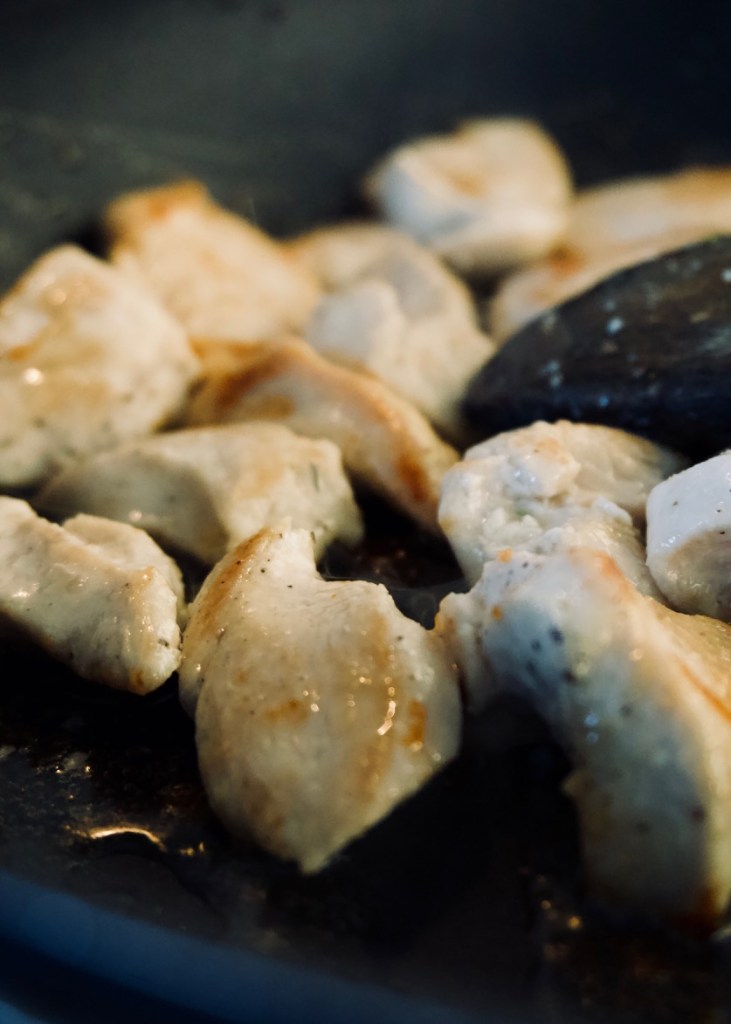
    2. Pat chicken dry; season with salt and pepper. Melt 2 tablespoons butter over medium-high heat. Add half the chicken and cook, turning once, until browned and cooked through, about 4 minutes. Transfer to a plate. Repeat with remaining chicken; set aside.
    3. In same skillet, melt 2 tablespoons butter, then add onion and mushrooms. Cook, stirring occasionally, until tender and starting to brown, 6 to 7 minutes. Add flour and cook, stirring, 30 seconds. Slowly add milk, reduce heat to medium, and cook, stirring constantly, until mixture is thick enough to coat the back of a spoon, about 9 minutes. Add 2 cups cheese, Dijon, Worcestershire, cayenne, and sour cream; stir until combined. Season with salt and pepper. Add cheese sauce to bowl with broccoli, followed by chicken and accumulated juices; toss to combine. Transfer to a 2 1/2-quart baking dish.
    4. In a small bowl, combine 2 tablespoons melted butter, panko, and remaining 1 cup cheese. Sprinkle over broccoli-and-chicken mixture. Bake until bubbly and golden, 20 to 25 minutes. Let cool 15 minutes, then serve over noodles or rice.
  • The Biodynamic Farming Experience for the Celestially-Challenged, chapter 2

    The Biodynamic Farming Experience for the Celestially-Challenged, chapter 2

    Hello and welcome to Chapter 2 of The Biodynamic Farming Experience for the Celestially-Challenged. It is a partly-formed, poorly-articulated and over-hyphenated chronical of a particular journey, which is not quite the right word because it suggests the presence of a destination which is not at all guaranteed. Whatever it is, a woman-farmer-of-a-certain-age-and-experience (me) delves into the theory and more-importantly the practice of Biodynamic farming in search of fun (frankly) and future of farming (idealistically).

    Journey is clearly not the right word. Voyage of discovery? Too fancy. Is it a process? Nope. No fun. Compost heap. I think it might be a compost heap. Perfect. Piling up all kinds of ideas, layering them with experience, mixing up some theories, letting it sit. For absolute certain, something good is going to come of it, but it might take a while, depending on how raw the material is.

    The bottom layer in my compost pile of cosmic cognitive sentience (how about that!) is a cover-to-cover reading of the original Biodynamic lectures delivered by Dr. Rudolph Steiner. I am just about done. I remain perplexed most of the time, although I experience (sadly random and rare) flashes of triumph when I realize I have managed to grasp a concept or follow an argument- very quickly snuffed out, usually by the next paragraph. I persist, however, because I am hooked.

    In the last article I mentioned the Biodynamic Preparation 500, which we have been using for years. It is widely considered to be the most basic and simple preparation. It’s easy to make. You just stuff a cow horn full of fresh manure and bury it a foot or two down in the soil for the winter. In the spring, when dug up, the manure has transformed into a delightfully hummus-y loamy, dark, rich, almost powdery substance which is incorporated into water and sprinkled about the fields and gardens. Steiner manages to explain why the use of a cow horn is necessary, but I can’t. The point though, is to avail the farm to the powerful forces of the universe.

    Well the thing of it is, it also works on people. If you are not picking yourself up off the floor after collapsing in a dead faint of amazement, then I have not expressed myself well. Which is a problem with the writing, not with Biodynamics. You see, I myself have been made available to believe that the universe has an influence on the health of my farm because I have been using the Biodynamic Preparation 500.

    It’s taken close to twenty years of using the preparation for me to get to this stage. I hope it doesn’t take everyone else that long. Steiner seemed to think about 4 years should do it.

    To return to the point of this exercise: is Biodynamics fun? Is it the future of farming? I remain firm in my conviction that it might be. It is certainly more fun than the organic certification process, which I find has gotten a little dry. Necessary, if we are keen to relieve the Monsantos and DuPonts of the world their self-appointed mantle of agriculture way-finders. Obligatory, if you want to sell directly to people who don’t want to consume products from those companies. It is not, however, fun. Not that it needs to be, of course. That obviously does not come into it. It’s just that I find myself less and less satisfied with the result: a mere certificate.

    helmers_farm

    With Biodynamics, I seem to be ending up with a lot more than that. I have inspiration, wonder, amazement, incredulity, reality-checks, positive feedback from customers, tantalizing experiences of powerful forces. Lovely things to add to the compost heap of galactic oomph. I think I am going to be a better farmer because of it. Certainly, the farm is a better farm because of it.

    Returning to the question of looking into the future of farming. It does seem to me that farmers and consumers alike are aware that the organic certification program can only take us so far. There needs to be something that speaks to the fact that many farmers are going way beyond what is necessary to get the organic certificate. They are doing so because it becomes clear after a few years of organic farming, that the soil needs a little something more to gain health.

    While I think it is reasonable to look at Biodynamics to take it to the next level, there may be some snags. One of them has got to be that it can get a little bogged down in discussion, which I would like to flag as one of the biggest hinderances to productivity. A talking farmer is very often not a working farmer.

    Another issue is this insistence on involving the position of the sun and the moon in relation to the stars and planets. People like me are simply going to switch off when this topic arises. I believe that this aspect of Biodynamics is the stumbling block for most would-be practitioners. There is precious little science to back up the practices and very little apology is made for this.

    Cynically, I would also suggest the fact that Biodynamic farming does not require much in the way of support industries would really sink it as a viable farming method for the future. Apart from the odd tractor, a few implements and some cover-crop seed, Biodynamic farmers spend very little in the mainstream agricultural system. There is simply no need.

    So, as far as the future goes, Biodynamic farming is hazardously non-productive, off-putting, un-scientific and doesn’t contribute to the world’s largest companies. Doesn’t sound very promising does it.

    On the plus side, our yields are increasing, our customers are asking for it, and it is a fun way to farm. I think if we all just started throwing a little Biodynamic 500 around and carried on with our business, it would be a good start.

    Come visit the farm April 27, 2019 and we’ll mix some up for you.

    helmers biodynamic open house

  • Ginger Chew cookies – Healthified!

    Ginger Chew cookies – Healthified!

    These cookies are adapted from the Silver Palate Cookbook – a staple cookbook in the kitchens of my mother, aunt and gran in the 1980s. I have always loved their “molasses cookies” but in the past few years I have given up baking with white flour. I made this version healthier with 50% less sugar than the original recipe, spelt flour, and also some almond meal. They are very good. They do not feature heavily in Pemberton-area ingredients – except the egg – but today the weather was cold, stormy and winter-like, so ginger cookies seemed like a good match.

    Ginger Chews: (Yield: 21 cookies)

    Ingredients:

    6 oz unsalted butter

    ½ cup white sugar

    ¼ cup molasses

    1 large Pemberton egg

    1 ¼ cups spelt flour

    ½ cup almond meal

    ½ tsp baking soda

    ½ tsp ground cloves

    ½ tsp ground ginger

    ½ tsp salt

    1 tsp cinnamon

    Method:

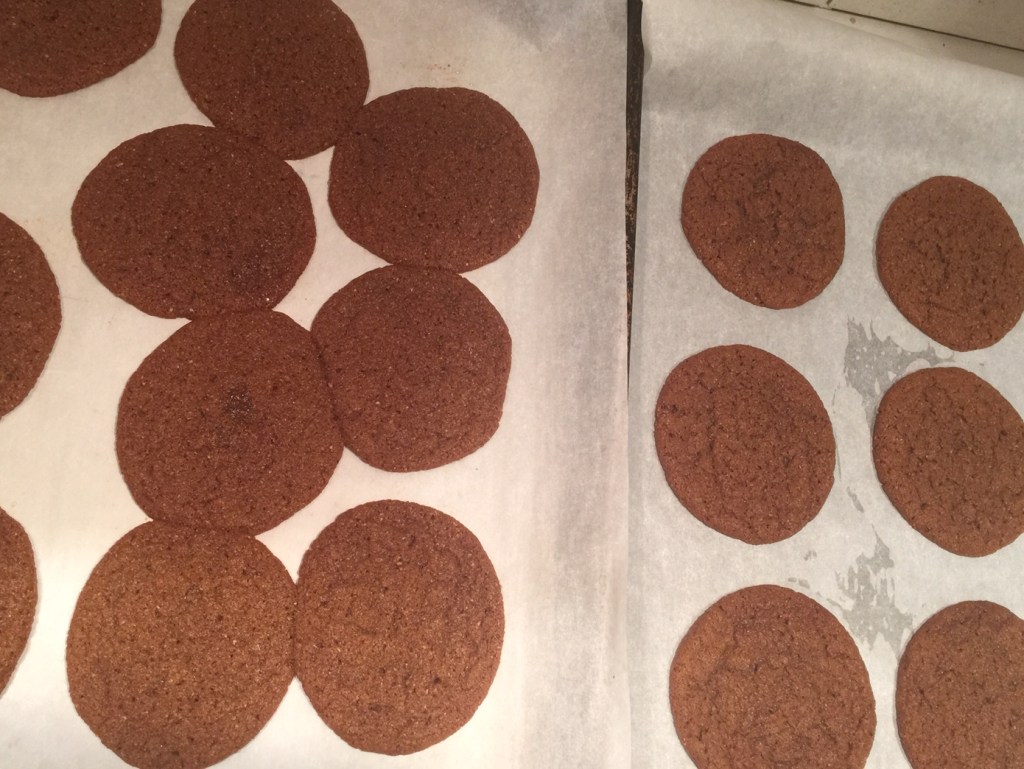
    Preheat oven to 350F. Melt butter on very low heat in a medium saucepan. Add sugar, molasses, and egg and mix well. Then add the rest of the ingredients and mix well. Place 1 tbs balls of cookie dough on 2 parchment-lined cookie sheets. The cookies spread a lot when baking so leave 3 inches in between the cookie dough. Bake for 12-14 minutes. Cool for 15 minutes.

    Enjoy!

  • The Atypical, Unfair Economics of Farming.

    The Atypical, Unfair Economics of Farming.

    Q : How do you make a million dollars farming? A: Start with 4 million!

    As far as business models go, none is as bizarre as farming. There are very few winning formulas. It’s either large scale corporate agribusiness (which has its fair share of hidden costs) or struggling small-scale mom-and-pop operations. There really is no middle ground. It’s feast or famine, so to speak.

    The reality is our food system is broken and has been heavily subsidized since it became a transportable industrialized commodity. The sticker price on food rarely reflects its true value. Farmers markets offer a more equitable price point, but the math still rarely adds up.

    Competition in most sectors is healthy to keep businesses up to date and prices in check. In farming, it’s devastating. Huge mechanized monocultures, using underpaid labour, utilizing relatively cheap petroleum for fertilizing, harvesting and transportation are no match for a local farmer growing the natural way. Throw in crop insurance, subsidies, GMO’s and shareholders and it’s a lose-lose for both sides. One model is unsustainable environmentally the other is economically unfeasible. It’s a David vs Goliath scenario. That’s why the local, organic and fair trade movement has developed to help level the playing field of this uphill battle. The disparity gap is massive.

    When I asked for something  pricey, my mother always said “Money doesn’t grow on trees.”  Eventually I proved her wrong, but she had a point. A fruit tree, for example, may not bear a sizeable crop for 8-10 yrs. During this time it will need annual maintenance and constant care. Same can be said for the fence that protects it, the irrigation system that waters it and the root cellar to store the fruit. Everything is a long term investment. It is said you plant “pears for your heirs.” I call my  fruit trees my RRSP’s.

    So why would anyone even attempt to become a farmer?

    Passion, sustainability, and the romantic notion of working with nature in the outdoors are all good reasons.

    Yes you can eke out a living like the pioneers did, but with today’s expenses, it’s hardly a get rich quick scheme. Most thriving farms either started out small and slowly grew within their means, such as in my case, or they were inherited complete with infrastructure. Other options are leasing land, buying into a co-op or renting out your land and hiring farm hands while you work your real paying job.

    The big dilemma surfaces eventually: Do you stay small, subsist and struggle, or do you invest large and go big, making it even more risky. Either way is tough and requires  hard work… Almost all will need winter employment and additional sources of income. When doing our books, I often get discouraged. My wife has to remind me sometimes we’ve chosen a lifestyle not a career.

    Can you imagine going to the bank and asking to borrow money for a farm start up in Pemberton with your list of capital projects and expenses? A couple million for the land and a couple more for housing, outbuildings, power, irrigation, equipment, supplies etc. That doesn’t even include the operating costs such as labour, permits, insurance, taxes, fuel, tools, amendments and general overhead.

    Now you have to explain that you’re going to sell your produce at a few dollars per pound, provided the weather and other environmental conditions co-operate. Our short growing season rarely offers a second chance. Over half the year brings in little or no income. Every concept is risky. Almost everything is perishable with a short shelf life. Now you have to market your goods. Do you get a fair price toiling away a couple days a week at farmers markets, drive all over delivering to restaurants, or do you succumb to the middle man and sell it at a discounted wholesale price? The middle man can make as much or more on the transaction alone. Any potential investors out there interested yet? I can picture the Dragons tearing a strip out of that business plan.

    So how on earth does one make a living farming? Hard work and determination is needed, but still won’t guarantee success alone. Diversifying, simplifying, creating a unique niche market, marketing, networking, packaging, bartering, preserving and value-adding your harvest into products is really the only way to justify small scale farming. Farmers should spend as much time in the kitchen, office and garage to be successful. Reinvesting, organization, maintenance and long term planning are essential.

    There is a relatively new category of farmer that seems to be proliferating: “Le Nouveaux Riche Fermier.” They are recognized by their huge mansions set in the middle of the field, a long tree lined paved driveway with a large elaborate locked gate. The obligatory white picket fence, brightly painted barn and shiny tractors. The owners are rarely seen outdoors and never with dirty fingernails. It’s often hard to see what they’re doing from the road. So what are they cultivating anyways? Tax breaks and the right to brag that they are trendy farmers at the country club, I suppose. If you assume all that bling was acquired through farming, you’re fooling yourself. It’s a false front.

    Just because you can afford to buy a farm doesn’t automatically make you a farmer. They are actually taking away usable land and degrading true farm culture.

    If you’re in it for the money, you’re literally wasting your time. There is not a single small-scale farmer that tracks their time and would ever attempt to calculate a wage. For them, their lifestyle is priceless. There is no point in tying to make sense of the economics. You work your ass off and hopefully reap something from what you sow.

    So the next time you wonder why that pineapple from the Philippines is cheaper that those local grapes at the farmers market, just remember your comparing apples and oranges.

  • With love to the #1 Tomato Grampa

    With love to the #1 Tomato Grampa

    I started my tomato seedlings on March 24th which is at least two weeks later than usual. It wasn’t until the snow really started to melt that I felt motivated, but better late than never.

    IMG_5769

    My Dad is the self-titled Second Best Tomato Grower in West Vancouver. I can’t vouch for whether #1 deserved the title as I never met him, but as far back as I can recall, my Dad has grown tomatoes.  Not the weird multi-coloured heirloom ones, just the basic varieties of Big Beef, Early Girl and red Cherry tomatoes, that look like, you know, tomatoes. My Dad is known as Tomato Grampa to his Grandkids to differentiate from the other Grandpas; not sure if they were lucky enough to have nicknames.

    IMG_5790

    I remember the first greenhouse Dad built in the house I lived in until I was 24. It had poly sheet walls on a thin frame, and a plastic corrugated roof. My mother, sister and I were instructed to donate any pantyhose that had runs, as they made wonderful flexible slings for vines and fruit; this is back in the day when women wore pantyhose at work and most other places so there was an endless supply. After I left home, my parents moved into a new house and Dad built a hot tub inset in the raised deck off the kitchen; the heat from the tub heated the enclosed glass greenhouse he built under the deck. It was ingenious and the tomatoes flourished.

    IMG_5791


    When I lived in various apartments in the city, I always had a tomato plant on my deck donated by my Dad. When I moved to Pemberton, I finally had room for a garden, so started my own plants from Dad’s seedlings. As he did, Dad taught me to save the seeds from the biggest and best fruit by placing the seeds onto a paper towel and letting it dry. Label it, fold it up and put it someplace you’ll remember. No cleaning or fancy storage required. For many years, I have grown the babies from my Dad’s original plants, and I still save my seeds the same way.   I hope one day to pass along their progeny to my son.

    IMG_5767

    Last year I started 72 plants, and all but two came up. Of those 70, 6 didn’t survive the transplant into the ground (I don’t have a greenhouse, yet…) so I asked my husband to pick up 6 to replace them. He came home with a flat of 36 instead. They were so cheap, he says. This happens every year as my husband has little faith in my leggy and straggly transplants, but by the height of the season they have stalks as thick as my thumb. Unlike my Dad’s orderly greenhouse rows, my boxes are overcrowded, a Tomatazon rainforest.   My carpenter husband builds straight and orderly trellises with end cuts for his bought plants, while I pick up weirdly-shaped deadfall from the woods, as pantyhose are no longer a staple of my wardrobe. My boxes are whimsical and interesting; his are uniform. Nevertheless, all our plants do well, so I spend a good part of my fall canning, drying and giving away tomatoes. I always complain about having too many but every year I still start 72 plants, in case half don’t make it, and every year my husband buys more.

    IMG_2632
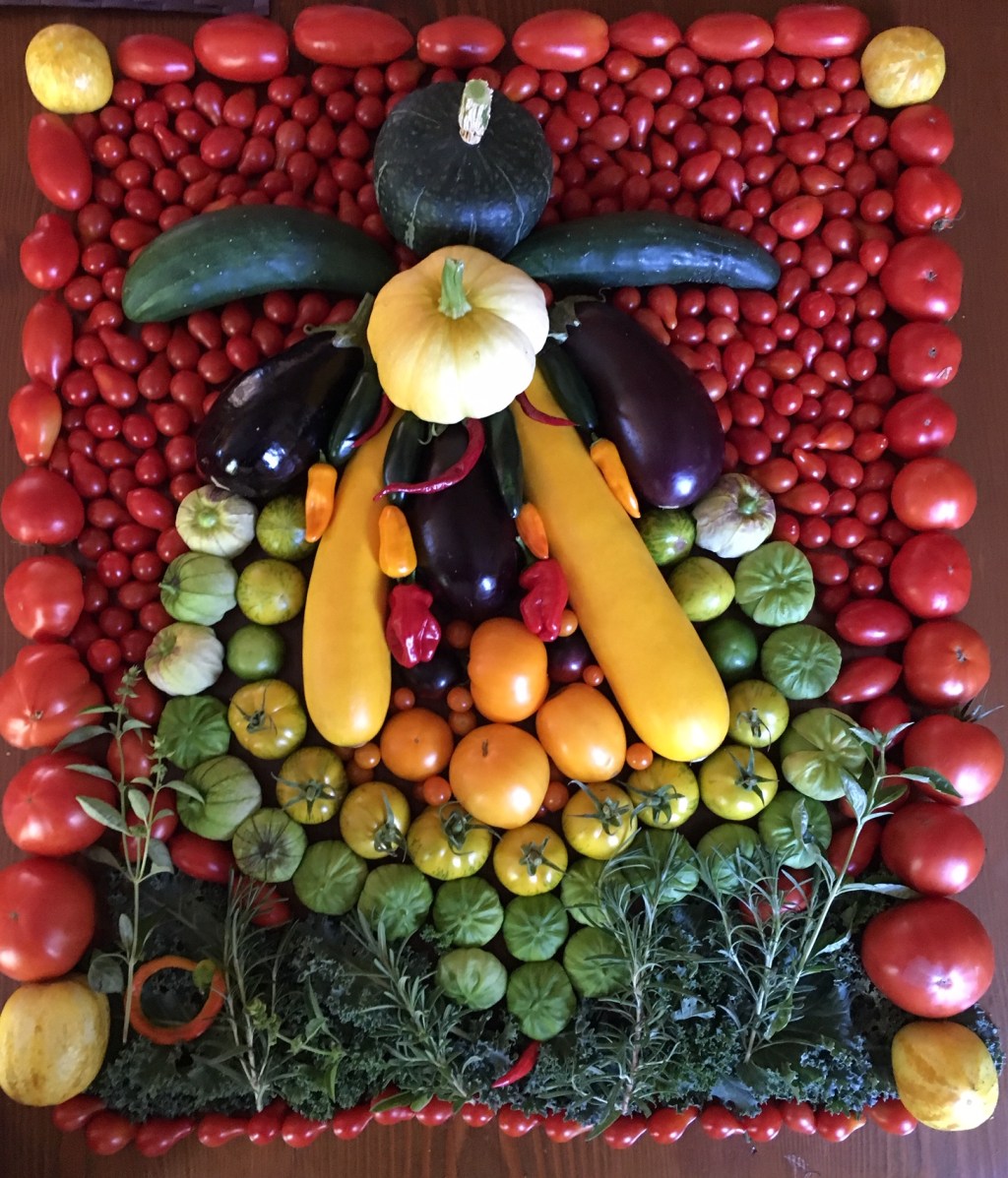
    When life gives you an abundance of tomatoes, make art. Photo, and vegetable art, by Nancy Lee.

    When my parents moved into their current seaside apartment, Dad gave up starting his own plants. Now I donate a plant or two, some of which I get the side-eye for (Green Zebra, Big Yellow, Indigo Cherry or Roma) as he prefers the basic round red tomatoes you can slice and put on a sandwich. He also buys a plant from the local nursery, since my garden tomatoes don’t seem to flourish as much in the ocean breeze as in the Pemby heat.

    As I write this a week after planting, most of my seedlings are starting to pop up, and I expect we’ll have another bumper crop. I have a heavy heart though, as Dad isn’t doing well, and likely won’t be here to enjoy tomatoes this summer. I will always be thankful for all you taught me Dad, and every time I eat a warm tomato fresh from the vine, especially the round red ones, I will think of you.

    You’ll always be #1 to me.

  • Banana Bread – another variation, with cream cheese frosting!

    Banana Bread – another variation, with cream cheese frosting!

    I’d seen this recipe months ago while, undoubtedly, searching for something entirely different on Pinterest.

    However, it caught my eye and was one of those cakes I could imagine baking up for team-mates at work or for a large get-together with friends. I mean who doesn’t like banana bread or cream cheese frosting?

    So the opportunity to try this recipe came up because we were meeting up with two sets of friends and would be able to share the banana bread love. But then one of the get-togethers we had planned, cancelled at the last minute. This meant that there was far more cake to eat, on our own, than was anticipated! But, as it turned out, this cake is so light and the frosting is so dreamy that it was way too easy to eat more than one serving.

    There goes the waistline – again!

    Ingredients

    For the Banana Bread Cake

    • 1/2 cup butter, softened
    • 1 1/2 cups granulated sugar
    • 2 large eggs
    • 1 cup sour cream full-fat is best
    • 1 teaspoon vanilla extract
    • 2 cups all-purpose flour
    • 1 teaspoon baking soda
    • 1/4 teaspoon salt
    • 1 cup mashed bananas about 2 or 3 bananas

    For the Cream Cheese Frosting

    • 1/2 cup butter, softened
    • 1 bar (8 oz/227 g) cream cheese full-fat is best
    • 1 teaspoon vanilla extract
    • 2 1/2 – 3 cups powdered sugar
    • 3-4 tablespoons heavy whipping cream

    Directions

    1. Heat oven to 350 degrees. Prepare a 9×13 baking dish and spray with cooking spray. Set aside.
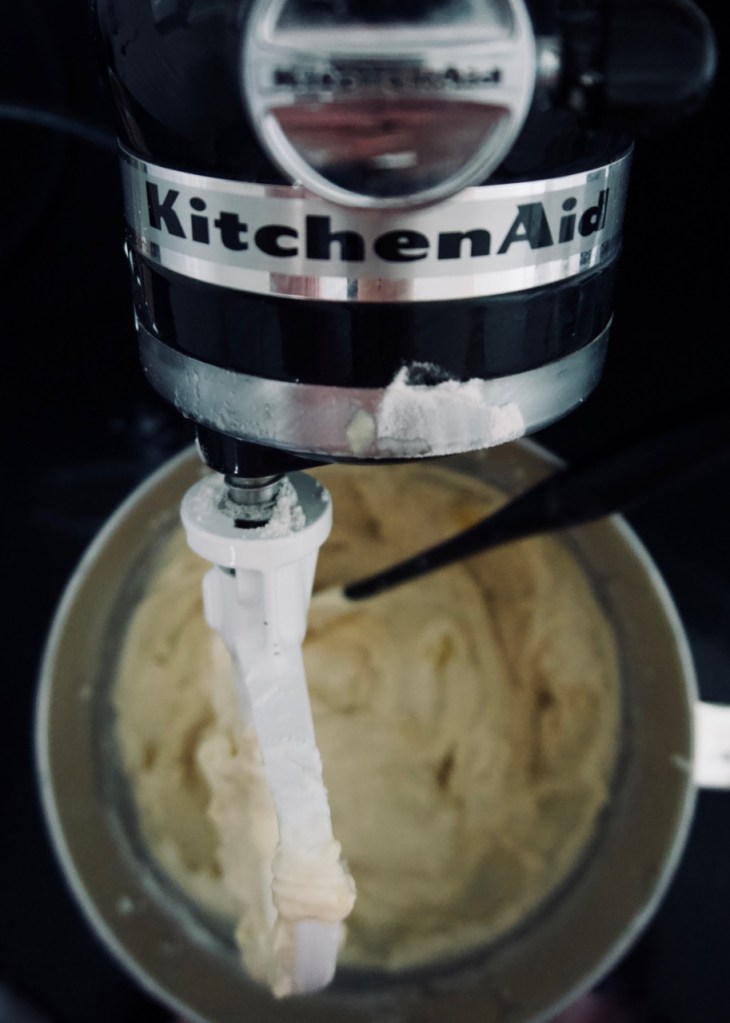
    2. In a large bowl, cream butter and sugar together until light and fluffy. Add eggs, sour cream, and vanilla. Blend together until combined and creamy.
    3. In small bowl, add flour, baking soda, and salt. Whisk together to break up clumps. Add it into the wet batter and stir with spatula just until mixed and no flour pockets remain.
    4. Add mashed banana and gently stir together. Dump batter into the baking dish and spread out evenly. It makes it easier if you dump large spoonfuls of the batter all over the baking dish, instead of just one big pile of batter.
    5. Cook for 25-35 minutes or until toothpick inserted in middle does not come out with wet batter. The edges and top will be light browned. Mine takes about 32 minutes.
    6. Let cake cool completely before frosting.
    7. To make frosting: beat butter and cream cheese together until combined. Add in vanilla extract, 2 cups of the powdered sugar, and 3 tablespoons heavy cream. Beat together until frosting forms. Add more powdered sugar and/or milk until desired frosting consistency is reached.* NOTE: if you use anything other than heavy whipping cream, start with 1 tablespoon and work from there. Heavy cream is so thick that you need more of it, lower fat milks you will need less of.
    8. Cut into squares and garnish each piece with banana slices and chopped walnuts.

    Please don’t blame me if this becomes your next favourite Banana Bread recipe! I will certainly be making it again!

  • Plant medicine: wildcrafting Balm of Gilead

    Plant medicine: wildcrafting Balm of Gilead

    IMG_2019

    “What’s this?” asked my clutter-resistant husband, observing the giant mason jar of oily plant matter on the counter.

    “Ohh, it’s medicine! It’s called Balm of Gilead,” I explained.

    “Oh. But what is it?”

    “Cottonwood tips in oil.”

    “Hmm. And what’s it good for treating?” he asked, in an impressively neutral manner, eyes scanning to the brand new bottle of olive oil next to the stove that was now suddenly, dramatically, near-empty.

    IMG_2023

    I reamed off a list of benefits from Balm of Gilead, the old herbal remedy – that I’d just copied out carefully into my new Plant Allies notebook – using information I gleaned from Natalie Rousseau’s blog. The resinous buds are rich in salicin which your body converts to salicylic acid, the active ingredient in aspirin. Good for sore muscles, rheumatic conditions, simple wound healing, as an expectorant chest rub to treat a boggy spring chest cold. Bees also use the resin to protect their hives.

    “Plus,” I enthused, “it’s helping me be more in tune with this place, with the seasons, and what’s outside our door.” He’s knows that “tuning in to the deeper rhythms” is kind of my jam right now, so, even though I could see his brain calculating the cost per millilitre of this little experiment, as compared to the cost per unit of a bottle of generic aspirin tablets, as weighed against the likelihood of me ever 1. completing this project and 2. treating anything with it, he nodded quietly, and put the jar back on the counter.

    Since moving to Pemberton from the land of eucalypts and snow gums, I had acquired the habit of thinking that black cottonwood (Populus balsamifera ssp.) are kind of junk trees – the wood is too wet to burn well, the snowfall of the seeds in May wreak havoc on friends’ allergies, and the branches crash to the ground, making them kind of hazardous to live directly under under. Even though wonderful plant mentors like Evelyn Coggins, Dawn Johnson and Connie Sobchak have offered me other ways of thinking about cottonwood, thanks to their contributions to The Wellness Almanac – great bird habitat! good for erosion prevention! great shade in a sweltering Pemberton summer! a beautiful scent! a medicine! – those attributes felt like supplementary prizes, making up for basic deficiencies in character.

    Then, in February, I joined Kera Willis and Guliz Unlu for an all-day workshop, offered through Mountain Horse School,Lightning Seeds: Opening the Gateway of What’s Possible.” The hook had been set, when Kera asked:

    What happens when we invite natural rhythms, cycles and energies to help us create the changes we wish to see, in both ourselves and the wider world?

    What if we could get out of our own way?

    What if we could remember ourselves into a state of embedded belonging within the natural world?

    “In the same way a lightning strike may ignite an instant blaze or slow burn that smoulders for months, these awarenesses and experiences may take root eagerly within us, or they may take months (or even years!) to percolate down through our soil,” wrote Kera.

    Befriending my tree neighbours has been an outcome with a long slow germination. First there was ignorance, curiosity, longing, admiration of those with more knowing. Years of that.

    IMG_0934
    Lightning Seeds beneath a  big old cottonwood. Photo courtesy Kera Willis/Guliz Unlu.
    IMG_0948
    Besa. Photo courtesy Kera Willis/Guliz Unlu

    Then, facilitated by Kera and Guliz, a group of us were invited to stand in the crunching snow in the shelter of a cottonwood and consider: what is the smell of lighting? what is the sensation of green? what secret desire might we share with a horse, a tree, a non-verbal witness? How might be hold ourselves if we courted wonder, if we invited animals to approach us, instead of steam-rolling our way into the thick of things, without waiting, without listening, without receiving?

    We ended our explorations at the mixing table, hands-on, pouring melted beeswax and cottonwood oil into containers, inhaling the aroma. Connecting with our senses. Relating.

    IMG_0960
    Photo courtesy Kera Willis/Guliz Unlu
    IMG_0964
    Photo courtesy Kera Willis/Guliz Unlu

    Percolate.

    A month later, on the first day of spring break, I found myself at the base of a massive cottonwood that grows beside the creek behind my house. I wouldn’t have known it was a cottonwood. But I was sniffing around the ground like a truffle pig, and when I found dropped branches with the tell-tale resinous buds (quick sniff for confirmation, month-old memory of sitting at Kera’s table still fresh), I gazed up, to locate the source. Oh. There she is. Wow. Your majesty. I couldn’t help but bow. Her crown was stunning. So different from the conical tops of the Douglas-fir and red cedar that have filled my winter days.

    IMG_1868

    I picked the buds from winter-fallen branches, taking in the scent, and I kind of chatted away to the tree. First, I acknowledged her presence. Big step. I’ve walked by plenty of times, head in my own thoughts, brushing by like strangers. So we began the dance of becoming friends. I accepted her, without assessing her worthiness, just as I do when I become friends with someone. And I offered myself as a potential friend, and complimented her on her lovely qualities – like the fact that the branches she drops in winter storms are rich with buds that are full of medicine for spring coughs, muscle aches and pains, wound healing. I accepted the offering.

    She’s a local here, (a coastal dweller, her kin are native to western North America) and the flood plain is her habitat – she can take root in pure sand or gravel along riverbanks, and absorbs water through her roots to help control flooding.

    black-cottonwood

    I’d brought the wee lad with me, beckoning him outside with the promise of a “creek patrol.” I had showed him Natalie’s blog post, with her step by step photo instructions of making a poplar salve, and explained what I was wanting to do. I pulled out my little jar of salve from February and we both inhaled it. He absorbed it all quietly, then ran to find a basket for me, and his raspberry picking container (yogurt container with string to hang around the neck) from the bottom drawer.

    IMG_1869

    As I plucked the buds from fallen branches he hustled back and forth between the creek and mother tree pouring water on it as “an offering.” Also leaving branches against its trunk in case it felt compelled to be a Fort anytime soon. It has been almost a year since we last talked about the idea of offering thanks to the trees and living things around us – and maybe we owe it to Wild Kratts, but he’s bought into that idea completely.

    (Cut to last night’s first fire, with deadfall we collected from the forest floor.

    Dad: “trees are so awesome because they give us firewood!”

    Boy: “No, trees are awesome because they give us oxygen. That’s more important than fire wood. If you don’t have oxygen, you can’t LIVE!”)

    IMG_1872
    Making offering. Moss, dirt, creek water.

    This is the seed I want to plant in his heart, I thought, as I was collecting buds from the forest floor : there is so much abundance here as long as we remember to acknowledge and give thanks and give something in return. This is the dawning that is, at last, awakening in me.

    The smell of cottonwood resin, which I found kind of medicinal and stenchy in February, is now something I inhale with intention and gladness. (Especially given that my hands are covered with it, right now, after I opened the lid of my brewing jar to see how things were looking. Word to the wise: when they say, “only fill your jar 3/4 full, because the buds will swell”, they mean it. Oh grasshopper. So much to learn.)

    Now that I have begun to enter into relationship with that great tree, I see her – from my window, out in the yard, walking the creek – all the time, and it doesn’t make sense to not nod in greeting. After all, we’re friends. Even if I never use the oil, medicinally, some “medicine” has been gained, in this, small glimpse at the significance of the phrase I have heard my Lil’wat neighbours use: all my relations.

    IMG_2020
    As explosions go, things could have been worse.


    IMG_2022
    Add to grocery list: olive oil.

    Balm of Gilead

    Local clinical herbalist, Evelyn Coggins says you can make Balm of Gilead as follows:

    Using a ratio of one part buds to 3 parts vegetable oil (I use olive oil), soak the buds for at least three weeks, stirring gently once a day to expose all bud surface areas to the solvent.

    I use 500 ml canning jars and cover the tops with paper towel secured with canning rings. This prevents stuff from falling into your oil but also allows the moisture from the buds to escape. Keep the oil in a warm place (in the oven with the oven light on) to help gently dissolve the resins into the oil.

    When your soaking is complete, allow the jars to sit at room temperature overnight then strain out the buds. Let the oil sit covered with a clean tea towel for another 24 hours at room temperature and then decant it into jars, cover tightly, label and store in a dark place.

    You can apply it to sore spots as is or mix it with other infused oils and essential oils, add some melted beeswax and presto: an absolutely fabulous homemade version of “Tiger Balm”.