Category: relationships

  • Planting Garlic Is My Most Potent Annual Prayer

    Planting Garlic Is My Most Potent Annual Prayer

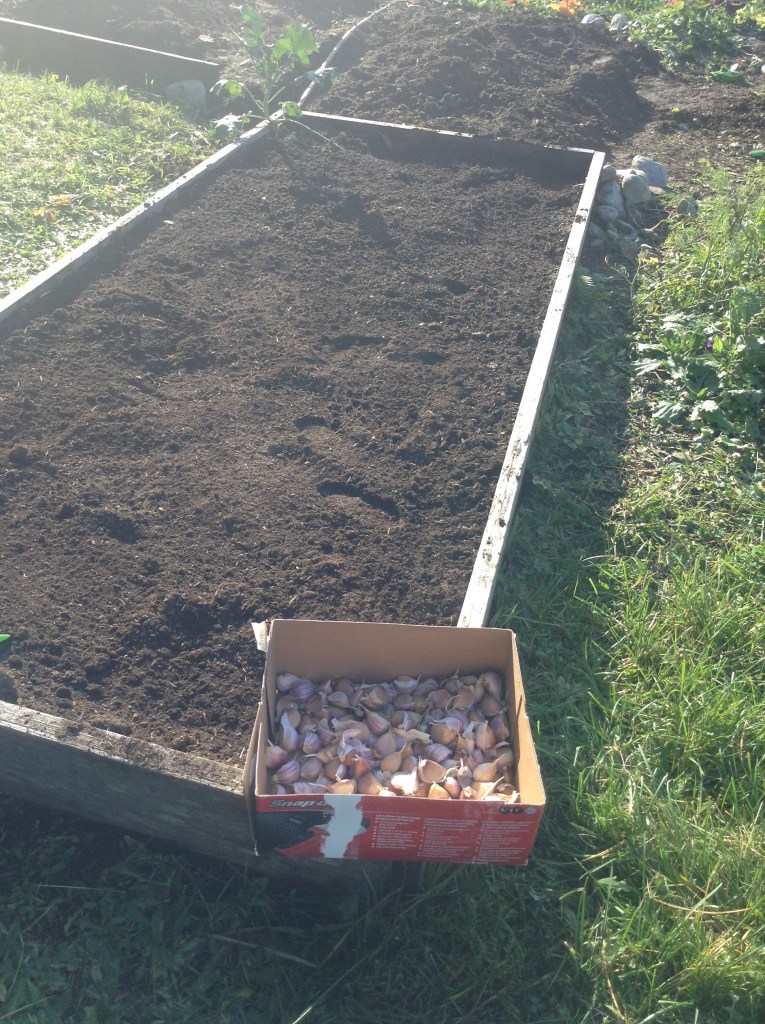
    I guess I always did say a kind-of prayer when I planted garlic – “okay then, do your thing.” I’d brush my hands clean of the moist black soil and feel again the improbability of all this growing business – stick clove in soil, anticipate its budding five or six months from now. I mean, how the hell does that even work? Shrug.

    “Over to you guys. Here’s hoping.”

    And there was a certain kind of hope in the action, a brave kind of reclaiming my right to grow my own garlic and feel a bit empowered, but the prayer itself was largely a faithless one – a parcel dropped by my suspicious feet, with no address, beyond a scribbled “To whom it may concern”.

    I am always caught by surprise by the little nubs of green shooting up through the mulch in the spring. It inspires wonder… but the wonder of the doubter… like, “that’s wonderful, but I can’t really believe it actually worked. There must be some trick to this Life business.”

    This year was different. (And I don’t think I can attribute it to experience – or to ten consecutive “successful” (knock on wood) garlic harvests.)

    I think the difference is that this year, there’s a new word in my vocabulary. The Underworld.

    Says the Google:

    Hidden deep within the bowels of the earth and ruled by the god Hades and his wife Persephone, the Underworld was the kingdom of the dead in Greek mythology, the sunless place where the souls of those who died went after death.

    It’s a word that kept coming up this year, from some of the thinkers I follow, folk who try to parse meaning from news headlines, whose idea of bigger picture involves mythology and ancestors and cosmic time.

    What I gleaned from those thinkers is that we could possibly think of this pandemic time, this “lockdown Lite” (as it’s been in BC) experience, as an opportunity to be initiated. An invitation to take things seriously. To go deep. To be confronted. To stop running around like the White Rabbit (“I’m late, I’m late, for a very important date”) and turn bravely and acknowledge Death. To shed some stuff – some of the ego’s favourite props. To emerge out the other side a little wiser… rather than just annoyed and anxious to reclaim my old life, exactly as it was.

    The climate emergency is the real event horizon that looms large. Maybe, I thought, COVID-19 might teach us something that can help us approach that bigger drama, treat this as a threshold into a different way of being, instead of just an interruption to our regular programming.

    Garlic planting with my helper in more innocent pre-pandemic days

    So when there was a brief window through which I could race out to the garden, clear a few beds, and insert cloves, I was in a different frame of mind.

    What has happened, strangely, in this last year, is that I’ve been invited by wonderful meditation and wisdom teachers, (thank you Susan Reifer and Natalie Rousseau) to allow myself to feel supported. Like, literally, to sit and close my eyes and feel my bones on the ground and the floor meeting me, and all the bits of my house holding things up and the earth beneath that… everything that rises up to meet the parts of me that settle down.

    That was new.

    And when I got around to planting this spring, I invited my weedy messy garden to support my little food-growing mission – to rise up to meet the part of me that was sowing seeds and digging down. And to my everlasting surprise, it did.

    And whenever I felt the lonely weight of all my feelings throughout the spring and summer, as we practiced physical distancing and hunkered in our wee bubble and I lamented all the things and people I was missing, the falling away of all the things that used to prop my ego up, the shock of lost momentum, the loss of all that had suddenly been cancelled, I walked outside and sensed the trees creating a kind of open-air church around me, all steadfast and able to contain the leakages of my emotions.

    And when I got curious about the idea that my great-grandmothers probably lived through pandemics, and did a little ancestry research, I arrived at this powerful sense that I am now the garden, I am now the physical matter in which my ancestors have the opportunity to flourish. I am the place of bloom. I am the landscape of Life and vitality, and they are all informing that, nourishing that, infusing that with richness, with the compost of their own lives.

    In short, instead of working in this hopeful-but-not-really-convinced state of reclaiming life, growth, gardening and garlic, I became reclaimed. I was reclaimed by my ancestors, by the soil, by the life force, by the trees around me.

    I planted the garlic this year, and I knew, without doubt, that those little cloves were not being cast out into an uncertain future, but that they were being offered back to Life, returned to soil that I tend with care, that I nourish with compost that has been generated from a combination of yard waste, our food scraps, wonderful worms and a host of other microscopic life. I understand that under every foot of soil, are gazillions of microscopic living beings. It is not me, kinda hopeful, against the emptiness. It is me settling down and receiving an immense amount of support that rises up to meet me, from every imaginable direction. Invisible, sure. But, even though I don’t see it, I sense it. I sense it now.

    I pushed the garlic into the Earth, and tucked them in for their winter sleep, their journey to the Underworld, beneath a blanket of maple leaves that I scraped up from the yard.

    This year, I have come to believe in the Intelligence of All Things, an intelligence that is encoded in all of us, a deep Knowing of what to do. The garlic will lie in its depths through the Dark Season, as the wheel of the year rolls from Samhain (pronounced sow-en in Celtic, the pagan precursor to Halloween) through to Solstice and over into Imbolc, the spring, and then they will rise again.

    And it won’t be a surprise. Because this is what Life does. It returns. It sprouts forth, it blossoms, it revels, it fruits, it pares away, it dies, it is absorbed, and it returns.

    So I tucked them in to the bed, and I offered my prayer, and this year, it wasn’t: hope you know what to do now… It was “thank you, thank you, sleep well and I’ll see you in the spring,” silently uttered with a little tearfulness and the deepest kind of gratitude and reverence I know.
  • An end to the fits and starts

    An end to the fits and starts

    I recently, well 33 days ago, signed up for a creative workshop that asks that you ship something every day for 100 days.

    It’s hard. I am a “do it when the muse shows up” creative. And, this course teaches you to accept creativity as a career — a position where people expect you to show up and do the work.

    Prompts remind you that people who have creative careers submit below average work as often as they submit just good enough work — and rarely submit creative genius. And the prompts posit that hope, that plane-is-delayed-painstaking-waiting-hope, for the creative genius to show up is what keeps us comfortably sitting in that mythical land of writer’s block.

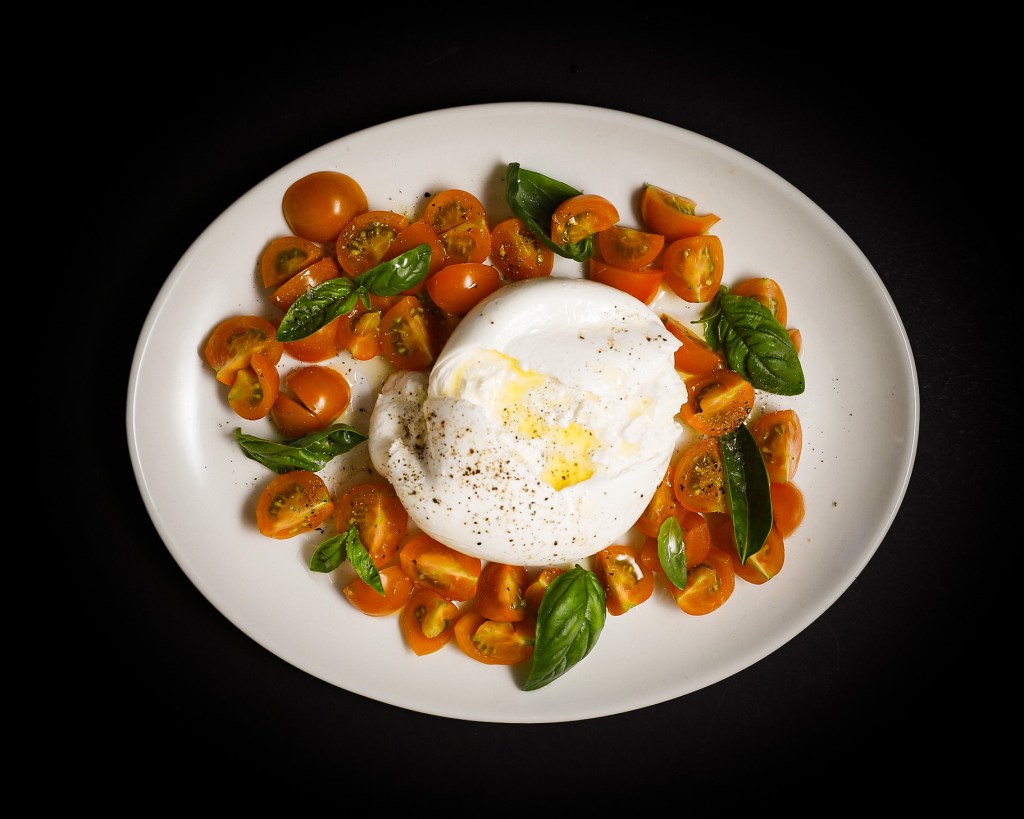
    I don’t write a story every day, but I am sure to make an observation. Sometimes that observation includes photography (like the cherry toms and burrata). My genre is creative non-fiction. Here is a compilation of a few of those observations (your thoughts in the comments will be welcomed).


    I pull open the door, without recalling that it’s weighted with jams, chutneys and quickles. The energy of my pull slams the door against the wall with a big thud and subsequent clinking of jars.

    It’s Friday. Farmers’ Market day.

    And fridge cleaning day.

    For the millionth time, I check the temperature, and it’s still set to as low as it will go. I shake my fist, as if my landlord above our suite can see me. This fridge, from brand new, has always been too cold for fragile veggies. I sigh.

    I yell over the jammy beat of the Grateful Dead, “Honey. I think a refrigerator risotto will clean this out! Can you do the prep while I go to market?”

    “Fennel. Carrots. Zucchini. Fava beans. Garlic. Patty Pans. Beets. Roasted…on risotto. How’s that sound?”

    “Honey…?”


    I rip open the bag. The dirt-laden pickling cucumbers present a distinct earthy smell that reminds me that it’s August. I carefully weigh six and a half pounds. A wave forms as I dump the cucumbers into an enormous bowl full of crystal-clear water.

    I’m drenched. I go to the drying rack and grab a fresh shirt.

    I return to the kitchen to find emerald green oblongs floating in murky brown water. I’m mindful, as I drain the swamp – so as not to need another shirt. I guide the spray hose and jiggle the bowl full of soon-to-be pickles. The force of the tap dislodges most of the brown wilted blossoms from which these little delights grew.

    As the stainless basin once again fills to the brim, the brown feathery blobs float to the top – and with an odd sense of wonder I think about how long it’s been since the flowers perished.


    The room fills with light, and a small rumble follows.

    My husband snores next to me. I consider waking him to watch the light show, and help calm my nerves. Instead I watch alone, and wonder how many forest fires we can expect from this rainless lightning storm.

    I can’t sleep, so I open social media and people are posting images and videos of massive lightning rods that reach to the horizon. Exactly the kind of lightning that starts forest fires, I muse. It takes time, but I fall asleep.

    I hadn’t checked the wildfire map even once this summer. It’s been cool and rainier than the last 5 years. The moment I hear the espresso machine, I grab my phone. More than 100 new fires dot the map with the likelihood of more remote fires still to be identified.

    Ten new fires in the farming town just 30 kms north are noted. Each fire, according to the elevation lines, is well into the mountains, and still, it is nerve wracking.

    Rain is expected in the days to come, but I hope farming can continue with the suppressive smoke that is reportedly filling the valley floor. I think about how they will maintain their livelihoods should another state of emergency befall the farmers’ work of feeding their communities. The prospects look grim.


    Thanks for reading. Is there something you’ve been doing in fits and starts that could use a 100 day push? Share in the comments below – I’d love to know.

    ~Lisa Severn

  • Picklepalooza: preserving high summer for my Future Self (and friends)

    Picklepalooza: preserving high summer for my Future Self (and friends)

    It’s not really cost-effective, this pickling and preserving business, I realize, as I empty another $20 bottle of Bragg’s apple cider vinegar into a pot. My husband keeps checking in, nervously asking “Are you having fun?” because these evenings are cutting into my Netflix/book-reading time, and I tend to be an angry-and resentful-if-you-aren’t-also-contributing house-cleaner.

    IMG_1630

    But there is the small stack of rainbow-hued jars starting to accumulate after a week of busy evenings,  glowing from within. There is the sound of the “pop” that makes my heart lift a little when the seal is made. (It worked! Not incubating botulism yet!) There is a sense of deep alignment with the seasons and the fleeting urgency of this specific moment (cucumbers! carrots! beans! Pickle them now, or forfeit the opportunity entirely for another year.)

    There is a small sense that I am resourcing myself for an uncertain future, by slow-growing these skills that all my ancestors knew but that somehow skipped a generation; that I’m building a little bit of resilience to depend slightly less on a volatile global supply chain. And there is the sense that I’m packing some of the sweetness of this moment, of this abundant sunshiney moment, into a glass container, as an offering to my Future Self. I imagine her, in the fall and winter, her step a little heavier getting out of bed in the dark, looking to a low-hung grey sky, missing the feeling of hair against bare shoulders and bare feet against lush clover-filled grass… and sending this gesture to her as a reminder: sweetness returns, love. Time might feel as if it’s lurching relentlessly forward, but it’s rolling over and over, cycling, spiralling, a wheel.

    Screen Shot 2020-06-18 at 10.45.46 AM copy

    Every year, for a while now, I’ve tried to make something to preserve or pickle in the summer – starting with strawberry jam in 2012 from bare bones instructions scribbled on the back of a cereal box by Tonette McEwan. I haven’t yet absorbed this process into muscle memory, and every summer, I enter the kitchen with a sense of dauntedness. How many ways can I mess this up? How does it work again?

    IMG_1526
    Step 1. Refer to bible. Read. Review. Read again.

    IMG_1531
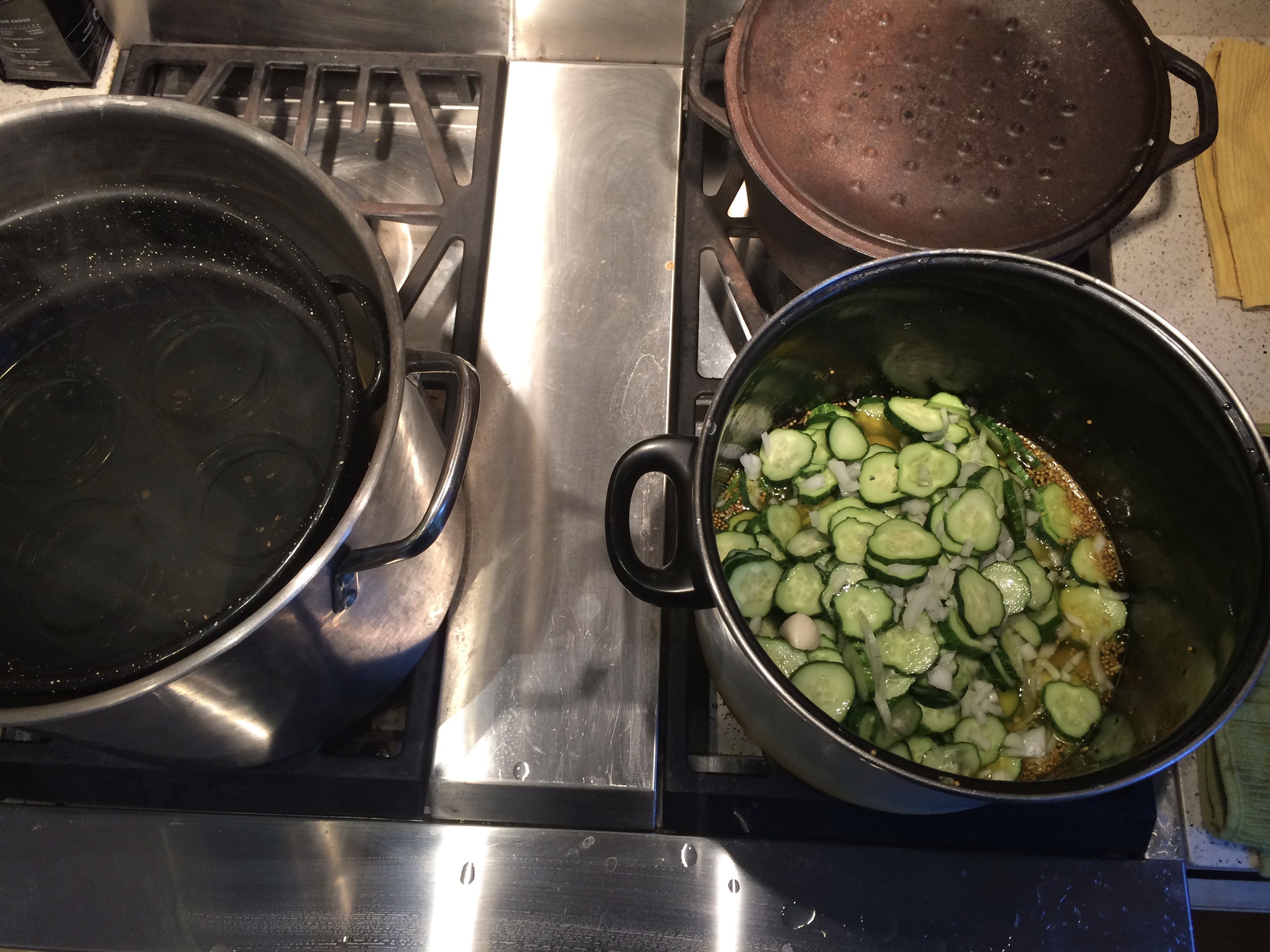
    Step 2. Chop and stir. Revisit book several more times during process.

    IMG_1533
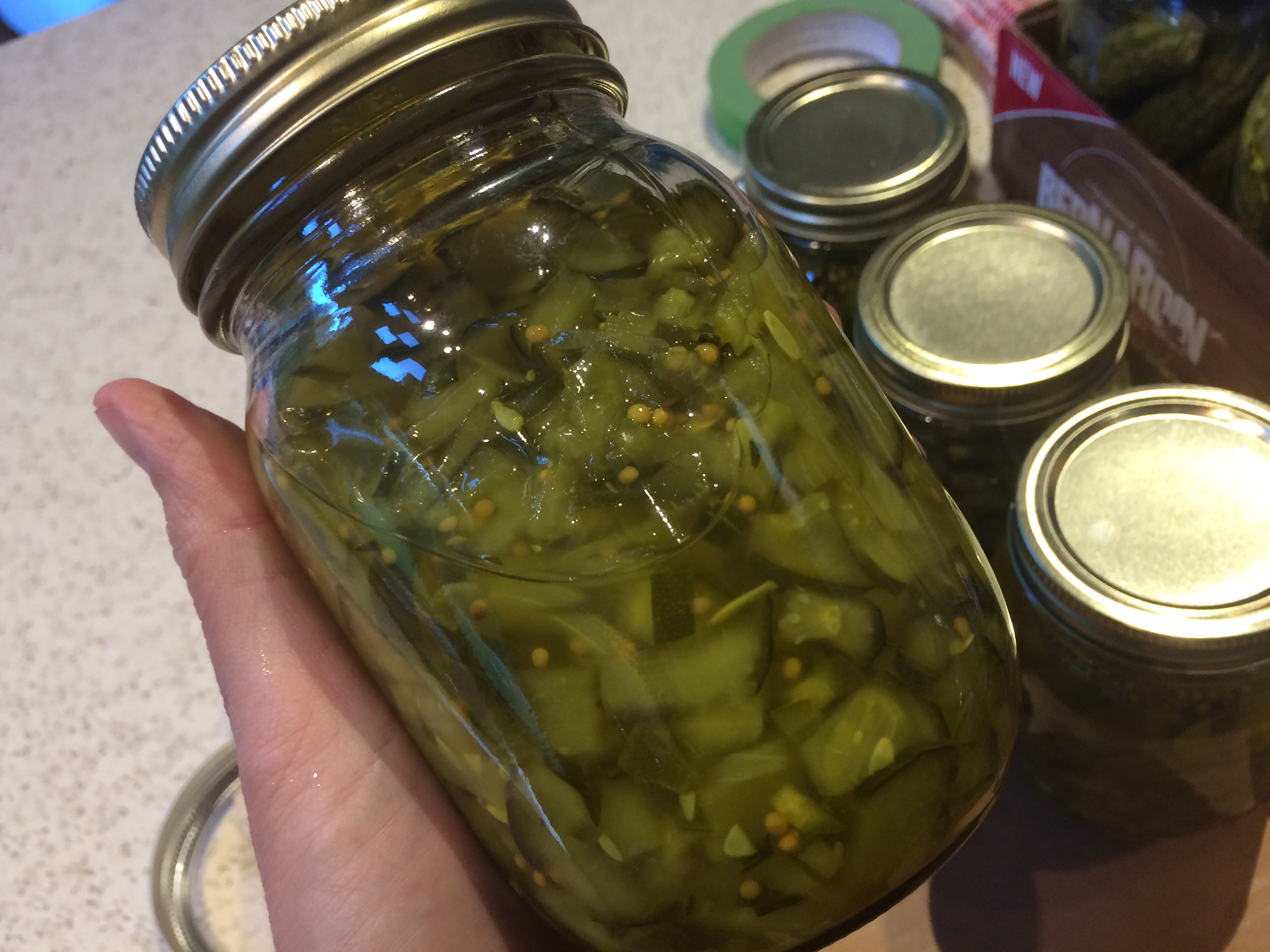
    Step 3. Ignore dishes for a moment and rejoice in moment of completion. (Then realize all the steps you forgot, like stirring to remove air bubbles, and wonder if that actually was half an inch of head room. Wish your grandma was here. Start dishes. Label. Schedule Moment of Truth for 6 weeks+ from now. Hope Future You bloody well appreciates this.)

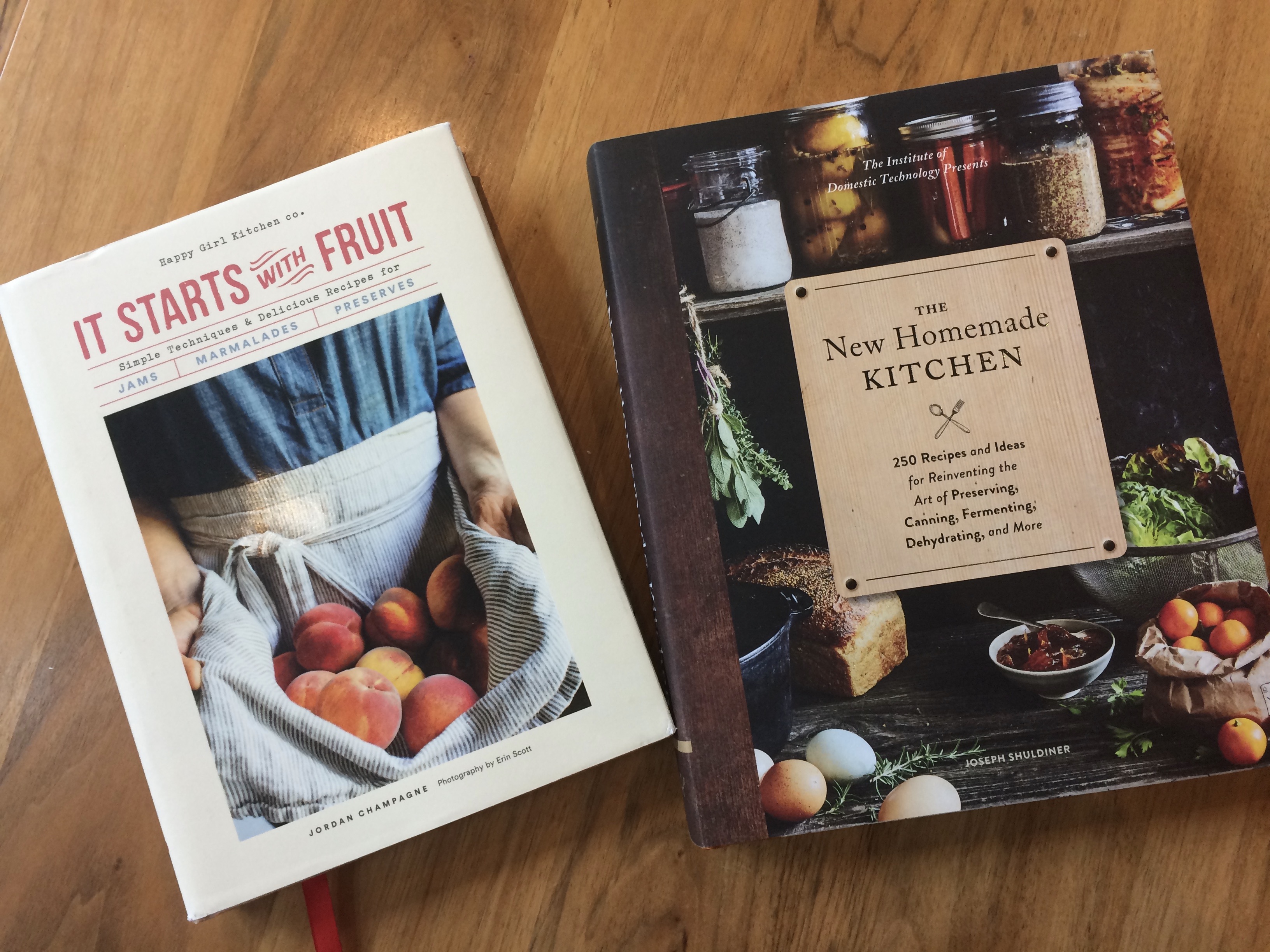
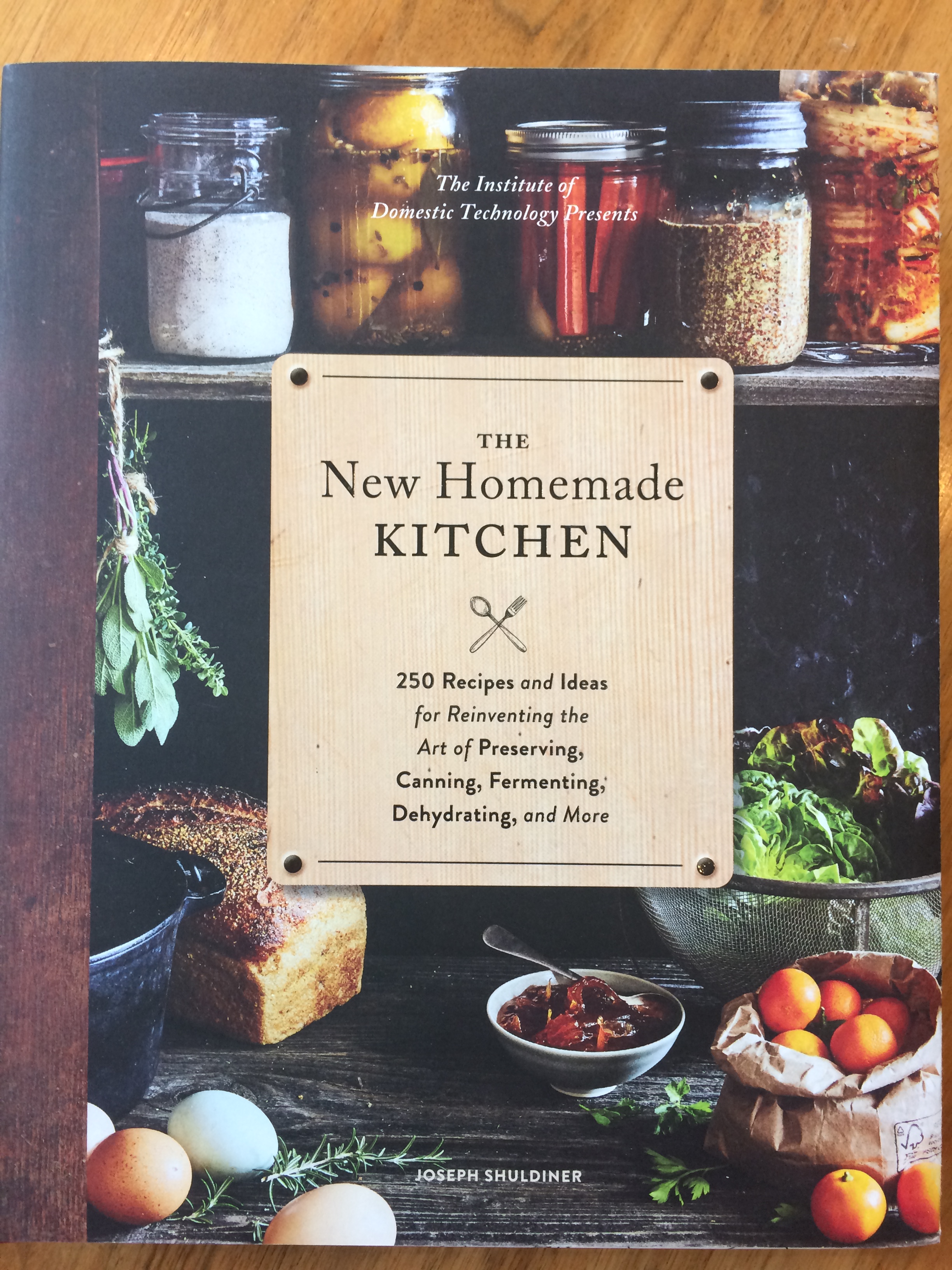
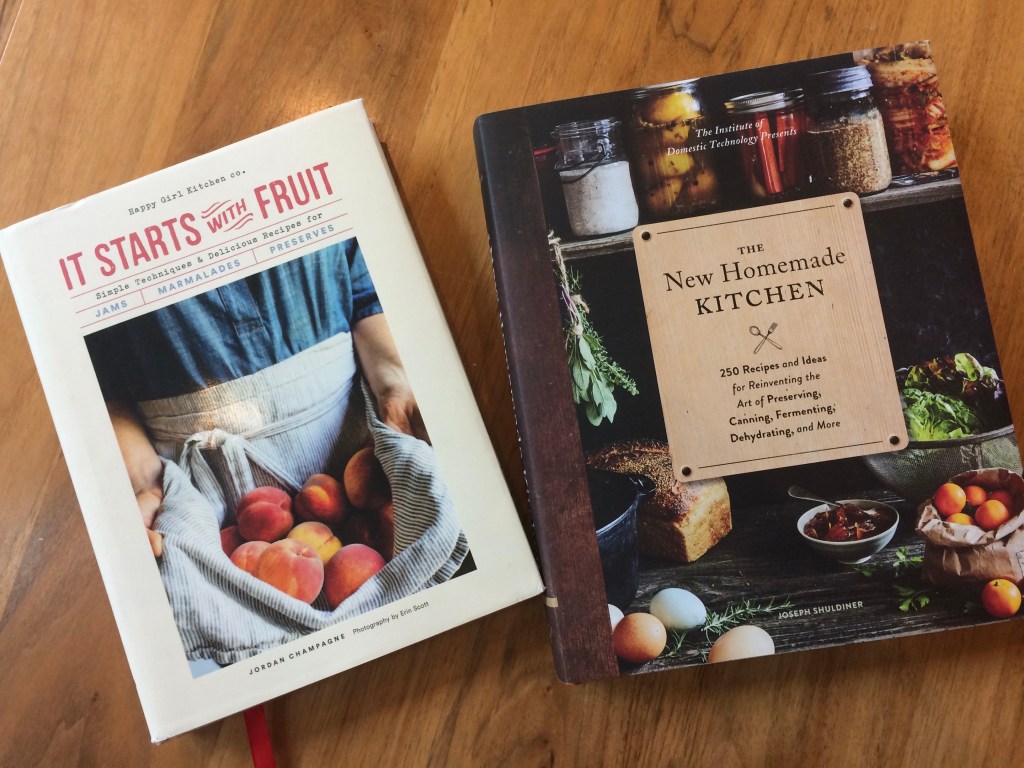
    I didn’t learn these things at the apron strings of a beloved elder or a practical mother. I learned them out of books, so the knowledge always feels a bit slippery, like it dumped out of my head last year the minute the pot was scrubbed (just like all the information crammed into my brain to pass an exam promptly vanished the minute we headed to the pub to celebrate the final test). I learned them at the bookshelf, and these new bibles (The New Homemade Kitchen  by Joseph Shuldiner and It Starts with Fruit by Jordan Champagne) are utterly lust-worthy and wonderful (and way better to have as a guide than a Google search.)

    And yet, each year, I have a growing sense of the rhythm of this work, the laying out of supplies, jars, tongs, the MacGyvering of a canning rack, the towels delineating where the ready jars and the full jars and the processed jars will await their turns. Each year, I find there’s a little something more I can grab from my garden, instead of at the store, to add to the mix – my own dill, my own coriander seeds.

    IMG_1535
    Enjoy August 7. Or discover they taste like a mouthful of salt and toss in compost. Vow not to try ‘winging it’ until you’re a bit more experienced.

    There are failures – like the unredeemable refrigerator pickles that I made with the leftover brine from the dill pickles and that tasted like an ocean vegetable –  a nice crunch and a mouthful of salt – to be deposited directly into the compost bin with a sigh. And there’s the worry that there are other, yet-to-be-discovered-screw-ups, that will be revealed when I eagerly open one of those jars of beets or beans or cukes or relish…

    But if I wanted guarantees, I’d go buy something industrially packed and commercially grown, from the store.

    I am realizing, deep in these days of uncertainty and strangeness, that I don’t trust those guarantees anymore.

    I want the intimacy of relationship, with my garden, my farmers, my neighbour’s generosity, my own hands conjuring a future snack or meal, with my family and friends when I lay out a small platter of cheeses and crackers and home-made relish, with the friends who shared recipes and whose names blazon the top of my barely-legible recipe cards.

    Perversely,  I’ve absorbed the idea that the latter is a much riskier prospect to depend upon. Probably because emotional vulnerability – failure, rejection, disappointment – always feels so live and lurking. But that terrain is the most rewarding. The faceless amorphous industrial food complex has seduced us with the idea of being reliable, invulnerable, of providing us whatever we want whenever we want it… but it’s fracturing right now as every faultline that has ever existed gapes under COVID19 pressure loads.

    Activate in the space you have influence

    I’m not pickling and preserving to save money, or to plant a flag for hope, or to stockpile my apocalypse arsenal. I’m doing what Kate Raworth, the renegade economist and founder of Doughnut Economics (which preaches the radical idea of building economic models that operate within the Earth’s carrying capacity and try to meet everyone’s needs), says: I’m activating in the space in which I have influence. In this small way, in the small space of my kitchen, I shape a small aspect of my future. Buying local, saving seeds, sharing abundance, observing the seasons, trading recipes with friends, falling into step with Nature… in these small ways, we all can.

    IMG_1527
    “A kitchen compendium, a handbook, a reference guide, and an inspiration, The New Homemade Kitchen includes step-by-step instructions, helpful tips, and delicious recipes that feature ingredients you just learned how to make yourself.” Amazing new book from Chronicle Books for rookies and veterans, covering all kinds of basics, as well as enticing experiments like making your own miso, cider or roasting your own coffee.


  • Chic’weed: A weed so chic you will love it like a flower.

    Chic’weed: A weed so chic you will love it like a flower.

    With the botanical name of ‘Myosoton aquaticum’ it becomes clear that there is more than meets the eye when acquainting oneself with the perennial weed known as ‘Chickweed’.

    These triumphant little wonders that grow in nitrogen rich soil pack a powerful punch of medicine. Chickweed is consumed for stomach and bowel problems, blood disorders, asthma, lung diseases, obesity, vitamin C deficiency (scurvy) and skin conditions such as psoriasis, rabies, itching, muscle and joint pain!

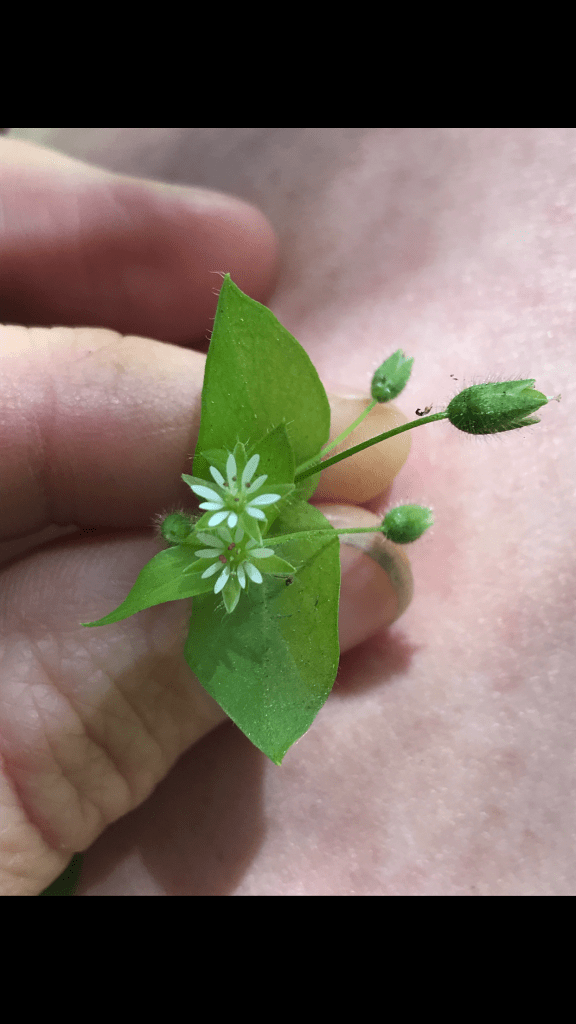
    Nestled among flocks of clover and dandelion allies there is great joy to be discovered upon first glance. Pristine symmetry of ten white fronds and with a closer look, noticing there are in fact five immaculate heart shaped petals split down the gentle center of her alluring, aromatic excellence.

    Building a relationship with this plant has been a joyful adventure and thankfully they grow wildly upon mountain tops, valleys and most lawns in the Pemberton Valley in every season sans snow. Chickweed is often overlooked as a weed, pulled up and out of the dirt without a chance to spread her delicate wings of love upon your dinner plates full of nourishing kindness and fresh flavor infusion. If you haven’t already I urge you to open your heart to this angelic wild edible and invite her into you culinary explorations!

    When wild harvesting as always only take what you need, in this case a pair of scissors, the top six inches of the plant and no more than 10% of the crop you see present. You can add her to fresh spring salads, summery mocktails and even fall soups and garnishes. My personal favorite way to integrate this wild beauty is my vegan, ‘Chic’week Pesto’. I add this into an ice cube tray and set it in the freezer for a heal(thy) does of delicious nourishment. It is especially useful on evenings when making dinner seems an unattainable feat! Many studies suggest integrating phytonutriens (an abundance of which are found in the complex immune systems of wild edible plants) into our daily diet will decrease disease, bringing us closer to our ancestors diet of grazing on a variety of nutrient dense wilderness edibles.

    Without further ado, here is the recipe!

    Chic’Weed Pesto Recipe:

    3 cups of Chickweed washed and drained

    1/4 cup of Nutritional Yeast

    1 cup raw nuts (cashews, pines, hazelnut, walnuts – pick your fave or mix)

    2-3 Raw garlic cloves

    1 tsp pink salt

    1/4 tsp black pepper

    1/2 cup olive oil

    1 tbsp fresh lemon juice

    Chop in a food processor until smooth, add to an ice cube tray and voila! Phytonutrient dense deliciousness at your fingertips!

    I can’t wait to see how you explore this wonderful plant!
    Until then you can find me on Instagram @theplayfulmooon making all vegan recipes to share with you through my recipe hashtag #eatrealrainbows🌈

    Much love!

    Leala

  • Nature’s Gifts

    Nature’s Gifts

    What is this weed in my garden, or what is this plant on this trail?! Does it have any herbal, medicinal, or edible qualities? When and how could I make elderflower cordial? You can eat ferns!? How can I preserve thimbleberries? How can I save my salad greens for later in the season when I am no longer sick of salad? I hate to waste- what can I do with carrot tops?

    Nature gives us so much for free – if we know when and where to look for her gifts. They are often sporadic, and never last long! So every Tuesday we at Nurture in Nature are offering to take you on a little Zoom walk through our garden and forests to show off what is all around us that we so often forget to notice, and give some tips on how to recognize, appreciate, and utilize the never-ending gifts from Mother Nature. For example – chamomile is out right now!!

    For more information, visit our website-

    https://www.nurtureinnature.ca/blank-page-1

    feb88c_5df941c7e9b04a198f8519d911a654a5_mv2

    Our first session is free, to offer a taste at what we want to offer, and to practice of course! Tuesday June 30 at 6:30 pm, register online here;

    https://www.eventbrite.ca/e/natures-gifts-tickets-110216229710

    We hope that by demonstrating how we connect to the land around us, we can offer insight into how you can cultivate a deeper connection with the place and community wherever you are, be that Pemberton or elsewhere. So join us Tuesday to begin walking a path of connecting more deeply to your food system, community, and the environment, as we search for more sustainable and resilient lifestyles, together.

    Nurture your Nature

  • Allies in Unlikely Places

    Allies in Unlikely Places

    For the past nine weeks I’d felt a low-level thrum of stress about the winter-mess of my garden. It would spike when I saw other people, in March, as the Prime Minster was giving his briefings in a snowstorm, who were pandemic-proofing their future by getting in loads of soil, going to physically-distanced plant sales, posting pics of their seedlings, their brand new beds. I was happy for them, of course. And happy for the idea that people would turn en masse to gardening.

    But I hated them too.

    That little frisson of envy and anxiety would perk up at the panic-buying of chickens and the video pleas from West Coast Seeds to please be patient, we’re experiencing unusual demand. I was working and parenting and re-orienting to life in isolation and trying to fit in the occasional mind-clearing walk in the woods. All my garden time in March and April was single-mindedly devoted to weeding the strawberry patch, an epic battle that left me hallucinating invasive wiry grass root systems whenever I closed my eyes. It was a race against time to excavate the plants before they began to flower, signaling May. It was a race against the 7 year old’s tolerance for solo-play. It was a battle compounded by the sense that now everyone else in the world was jumping ahead of me, scooping up all the seeds, all the soil, on top of all the yeast, flour and toilet paper they’d already stockpiled. Oh, hello scarcity mindset, my pandemic dance partner. The things that matter most (stretches of uninterrupted time, kids for my son to play with, seeds, clarity about the future) all seemed in desperately short supply.

    One afternoon trail-running, the sudden scent of cottonwood stopped me in my tracks. It was as if someone had spilled a jar of infused oil. I stopped and inhaled deeply, looking around to for the source. “What?” I wondered. “What is it?”

    It took a while for me to settle into listening mode, but when I did, the thought arose/the tree I could smell but couldn’t see, said: “When you work with us, you create the relationship that allows us to work with you.

    I had recognized the scent because I had worked with cottonwood – gleaning buds back in the spring of 2019, packing them into a jar and pouring olive oil over them, tucking it in the pantry and shaking it when I remembered. A year later, I strained out the plant matter and poured the sticky oil into an old tin can, warming it over a saucepan of water, into which I chucked the leftover ends of a beeswax candle, to make a salve for aching muscles.

    Had that quiet afternoon, working with my hands, my attention, and the invisible company of half a dozen women who had introduced me to this tree over the past few years, also been a gateway into a deeper relationship with the tree species itself? Could it be that a tree was now suggesting to me, that by doing that, I was opening up a portal of reciprocity, a way in which the plant could now work with me, too?

    As I finally declared the Victoria Day long weekend my time to plant, and cleared away mounds of last year’s garden debris from one bed, feeling that little surge of overwhelm, inadequacy, I thought back to my cottonwood-perfume-on-the-trail moment and wondered if maybe, I could just ask the garden nicely to be prolific this season to support my family, and even possibly, to allow me to support other families. After all, as I turned up self-seeded carrots and cilantro and a bounty of worms, it seemed bent on sprouting forth with life. Perhaps we could work together.

    What if the Law of Nature is as simple and generous and sensible as this: Work with what you have. It will work with you.

    Dr Robin Wall Kimmerer, botanist, professor and the author of Braiding Sweetgrass: Indigenous Wisdom, Scientific Knowledge and the Teaching of Plants, asks her nature-loving students if they believe nature loves them back. They’re always a bit insulted or shocked by the naivete of the question. They’re scientists, after all.

    Kimmerer writes, “How do I show my girls I love them on a morning in June? I pick them wild strawberries. We pick violets in May. How do we show our children our love? Each in our own way by a shower of gifts and a heavy rain of lessons. Maybe it was the smell of ripe tomatoes. It just came to me in a wash of happiness. I knew it with a certainty as warm and clear as September sunshine. The land loves us back. She loves us with beans and tomatoes. By a shower of gifts and a heavy rain of lessons. She provides for us and teaches us to provide for ourselves. That’s what good mothers do.

    I will always compare my garden to other people’s neater ones, the square angles, black soil, cute little labels, fancy trellises. Mine is chaotic and messy and imperfect. But it’s working with me. I felt the sudden lift of that, eased my trust into it. Some things will get eaten before I can harvest them, by deer or slugs or the kid. That’s part of it. We are impacted by other beings. It all flows. In this wild space, I dropped seeds and found a promise, and a reminder: it’s not all on my shoulders. All these beings and energies and life forms – the seeds, the wind, the rain, the worms – are working with me. Bringing me back, beckoning me back into relationship. Together, we might be okay. In fact, we might even flourish.


  • Plant Yourself: A Recipe for Being Here

    Plant Yourself: A Recipe for Being Here

    I was originally going to call this post “A Recipe for Ordinary Wonder.” I’ve already written about wonder here, and while I think it’s essential, it remains a little ephemeral. It slips beyond the edges of our understanding. I feel the medicine of this particular moment needs to be earthy, grounded, real. Needs to be practical enough to lift us out of our fear and isolation. It needs to come in bite sized pieces, like good dark chocolate.

    I’m a horse and nature based teacher. Or rather I was, until the recommendations for social distancing led me to decide to cancel my spring break camps and enter self imposed quarantine as I’ve taught students from all over the Sea to Sky corridor (and the world, via Whistler) over the last two weeks. Yesterday while picking out the paddocks, I asked myself this question: if I’m not able to teach in person– to create the kind of meaning filled and deeply felt transformative encounters between horses, humans and land I feel we so badly need right now– what can I offer through other means that can give people the skills to create experiences for themselves?

    There’s a lot of writing swirling around about reconnecting and seeking stillness right now. What I think we’re being invited to do is to expand our consciousness past our own perspective. To broaden it past the narrow road of our individual lives and the lives of our families; to open to the collective whose voices move close against the boundaries we’ve made around ourselves. As I write this, an image comes into my mind of a dog shaking its head: one of those proper shakes where their ears flap up against the sides of their skull, and you can almost hear their brain rattling around in there, rearranging their neural pathways.

    These times we’re in are like that. We’re being shaken out of our patterns. We can choose to steel ourselves against what’s happening and create more rigidity in response to change (which we know we’re going to see a lot more of in this lifetime…) or we can get curious and explore it as an adjustment in our perspective, an ear shake that opens us to something wider than what we were.

    I want to give you a set of tools, something real and grounded and simple, that you can play with. Play with these with your kids. Pull one out each day and see where it takes you. You don’t need anything special. Just your body and the body of the world. Some of them might seem a little silly. That’s on purpose. They’re meant to enliven the younger parts of ourselves. That’s often where our biggest perspective shifts lie and where the more authentic parts of ourselves are buried. They’re also meant to give us the kind of connection we crave right now, an empathetic, felt sense of being known by an other. It’s just that, in this case, “the other” isn’t human. Even better! Nature is endlessly forgiving of our bumbling attempts to re-mind ourselves of our relationship with her. There’s no judgement here. Think of these exercises as lighthearted games, little valentines we can exchange with the more-than-human-world that surrounds us.

    If you try these, I’d love to hear about your experiences in the comments. Share your valentines with me. (I promise I won’t judge you either. ❤ )

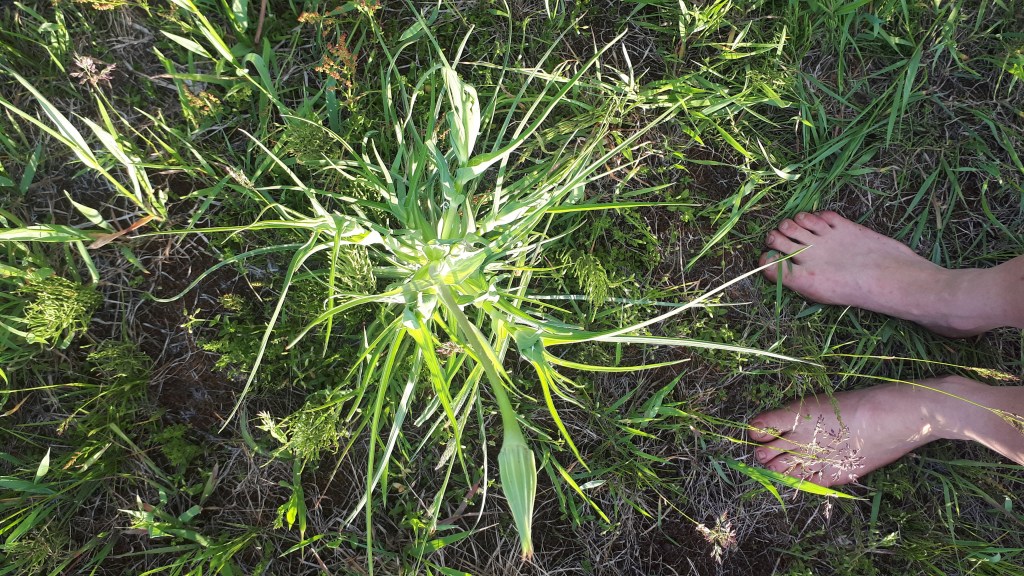
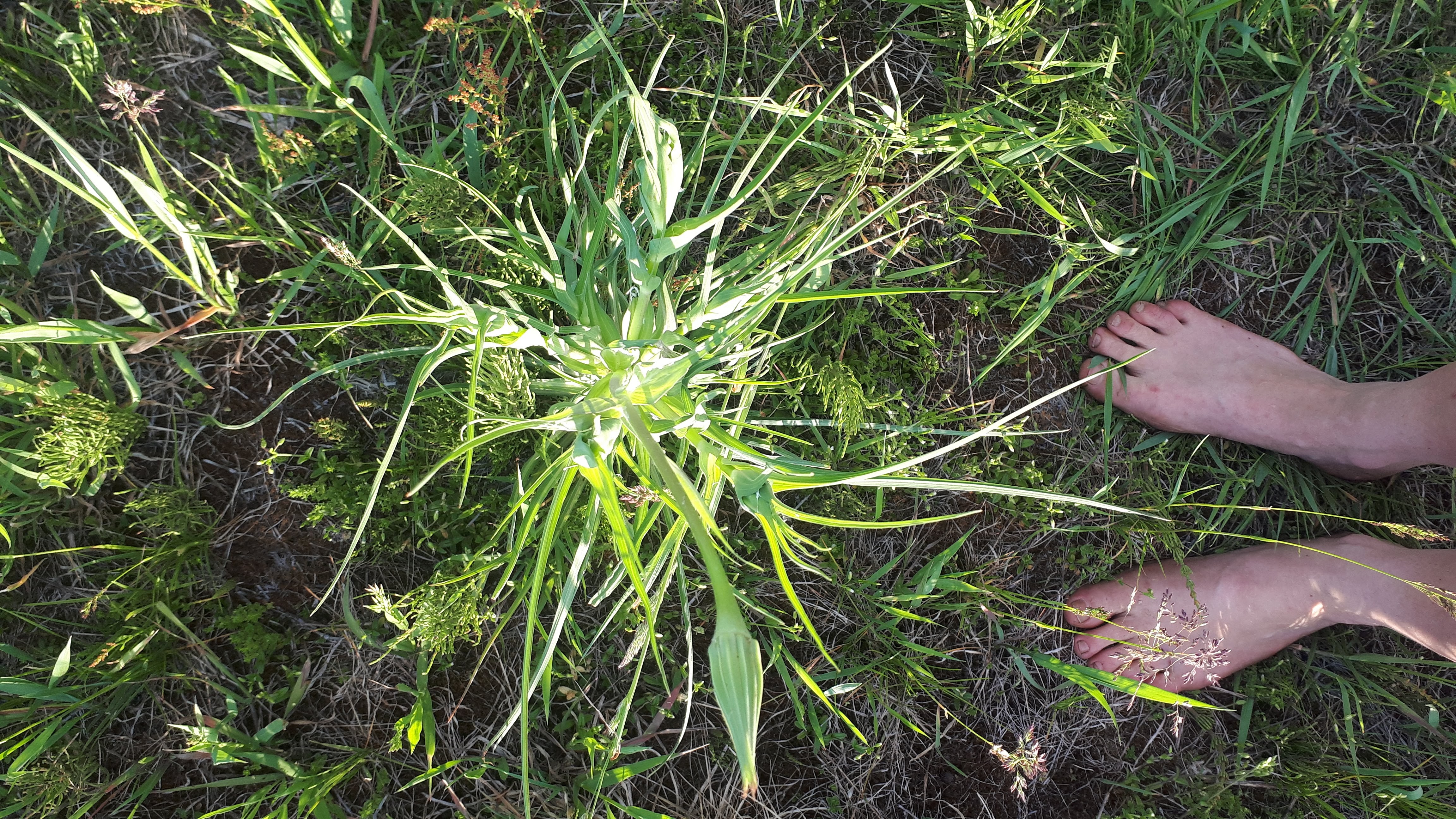
    1. Take off your shoes. And your socks. Find a patch of ground that looks warm and safe and inviting and stand on it. If you want more, go for a little walk. If you’ve tried a warm and inviting patch of ground already, try standing on snow. Try pavement. Try mud. Try exploring a liminal zone by walking from a shadow to sunlight, and track the differences in temperature with the bottom of your feet. Want to level up? Watch my video, “Place Based Walking,” for some ideas. Or walk on some gravel for a free acupressure session. (Top tip: touching the earth barefoot grounds and stabilizes the electromagnetic systems in the body. It literally rewires us to attune to the larger electromagnetic field of the earth, which helps us to come closer to a state of heart and brain coherence. Think of this as your antidote to all the wireless technology we’re saturated with, and the true savasana with which to end your online yoga class.)20190526_193441 (4)
    2. Let yourself be touched. The next time you’re out on a trail– or in your backyard, for that matter– notice the shrubs and trees that lean close to the edge of the path. It may be an errant twig that brushes across your cheek, or a cottonwood limb that’s come down across the over the course of winter. Or perhaps a low hanging cedar branch that brushes the top of your head and releases its scent. Just before you move out of the way, stop. Let yourself come into contact with this tree. You are nature touching nature. See how many different trees, bushes and branches you can let make contact with. Try not to do it on purpose. What happens if you turn off the path and into thick brush? Is it easier to find the gentlest way through? Is there something in your walking that becomes a kind of dance? An intimate exchange with the life forms we’ve believed to be inanimate all around us? What thoughts do we dance with in our psychic space in this same way? What reaches always toward us,  yet remains unnoticed? What do we cut through in order to continue to travel in the direction we want to go? What does it take for us to be touched by a different  part of nature in this way? A rock? A lake? How would we have to move our bodies to make contact?
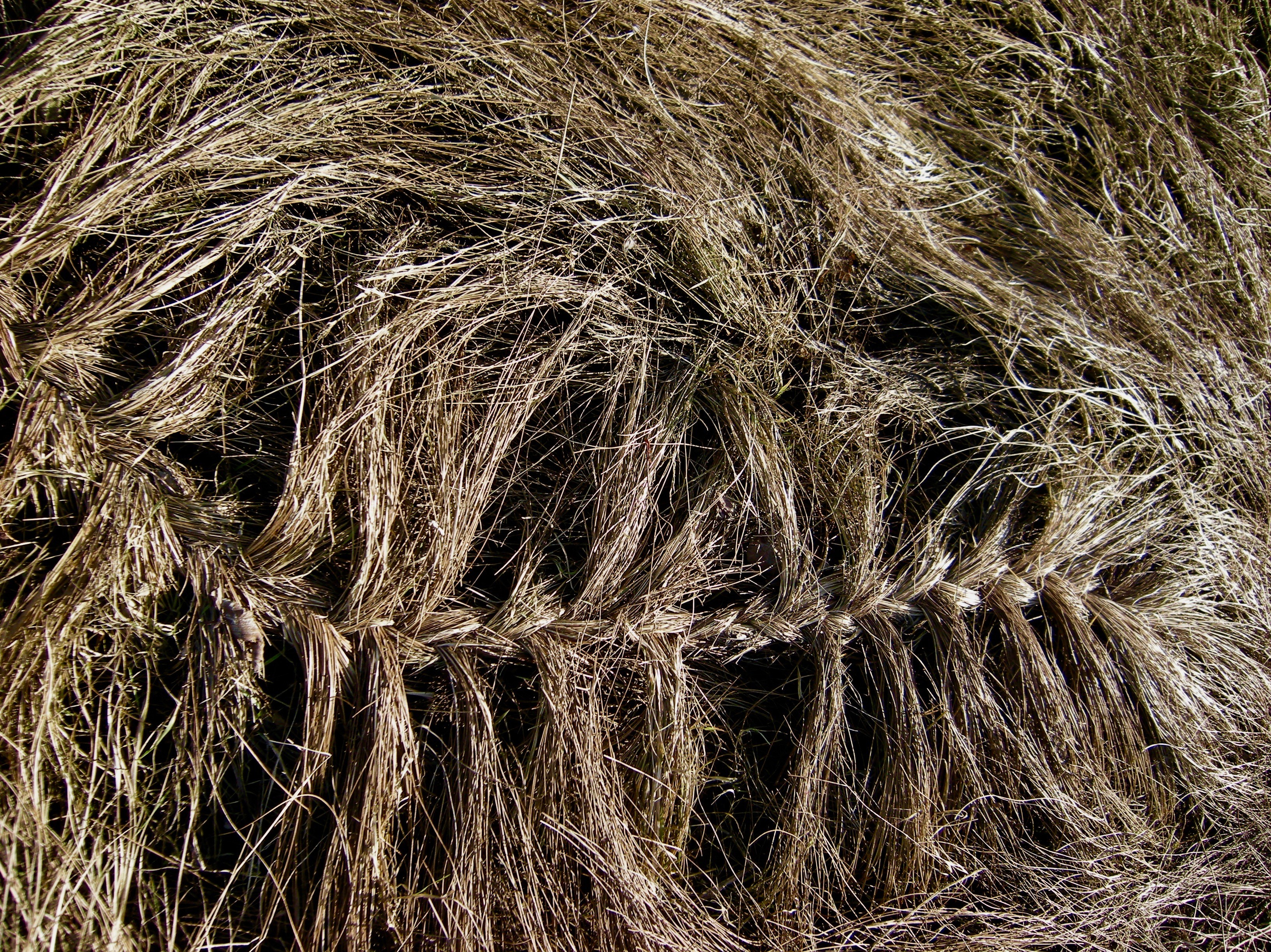
    3. Fall in love with something small. Go outside. You can go to your favourite patch of woods or rock or field, or give yourself a challenge and start on a sidewalk or in the middle of your street. Your goal now is to wander. To meander with no destination in mind until something tiny calls your attention and makes you stop. Look down in the direction of your feet and keep your eyes soft. Look at the trunks of the trees. Look at everything without really looking at it. Keep your attention soft, like a photograph that’s not quite in focus. Wander until something, of its own accord, pulls your attention toward itself. It might be a bright green wolf lichen, or a pattern the compression of the snow has left in last summer’s dried grass. It might even be a chocolate bar wrapper with half of its colour worn away, held to the ground by a fallen stick. Once something tiny calls you awake, then give yourself to it entirely. Bend down and get close. Learn everything you can about it without causing harm. Then stand up, zoom out again, let your attention go soft, and start wandering again until something else calls to you. If you’re with your family or a friend for this, tell each other something you love about the tiny thing you discovered without giving away its identity. See if they can guess what it was. (Top tip: if you can cultivate this kind of “falling in love outside of yourself”, this sense of your attention being called to something of its own accord, it’s the best state of consciousness for finding mushrooms and other medicinal plants, and a profound way to activate our intuition. This form of listening to the being-ness of the world has been essential to the survival and evolution of human beings up until the last hundred years or so, when we started to place our emphasis on the rational, linear parts of our cognition.)
    4. Look up. Go to where there is nothing a human has made between you and the sky and look up. Bring a blanket and lie on a rock and look up. Let the sun heat your eyes behind your closed lids. Sit with your back against a tree and trace the line its trunk makes on the way to the sky with your gaze. Follow that line out into the crown of the tree, as if you were drawing the lines of each branch into the sky with your mind. Or look at clouds and then trace them in your mind’s eye in this same way. At night, look up at the stars. Imagine you are sailing on a ship a thousand years ago and this is the only map you have to guide you into the unknown. Learn a few constellations, or trace lines between the stars and make up your own patterns and give them names. Learn a star or a constellation as a family and know that every time you go outside and look up at it, you are connected. Look up. We need to remember the world is bigger than us again. (PS: I have a secret theory I have only anecdotal evidence to prove, but I’m still going to share it with you anyways: I think looking up in this way– actively tracing and engaging the muscles of our eyes in unfamiliar patterns of movement, specifically looking up into the worlds that exist above the plane human live on– causes our vagus nerve (and our autonomic nervous system, which governs our heart rate, breathing, digestion, hormone levels, AND THEREFORE OUR STRESS RESPONSE) to shift from fight/flight/freeze back to social engagement.)
    5. Leave a gift. Make something beautiful out of some bits of nature you find around you. (Three year olds are great at this, as they haven’t yet been trained out of this kind of reciprocity with their environment. ) Arrange a line of pinecones that marches across your street and makes someone else wonder. Create a spiral made out of pine needles for the wind to blow away. Line up twenty sticks from longest to shortest. Write “I love you” in pebbles across the valley trail. It doesn’t have to be profound, and it doesn’t have to be ‘Art’. Making and creativity are part of the basic tenants of humanity. Nature is always taking chaos and creating something more complex and more beautiful. How can we invite some of this elemental and playful creativity into our lives? How do we share our energy with others in ways that add to the glorious mystery of the natural world? Be inspired by the ephemeral earthworks created by Andy Goldsworthy or the morning altars offered by Day Schildkret, but don’t get trapped by the idea that your gift has to be a grand gesture. Gratitude, giving, and making are ancient parts of our being. Make something now, in this field where we’re standing, with just the materials of the field itself, for nature herself to wonder about. DSCN2734


  • Munchy Munchy Cookbook for kids: review

    Munchy Munchy Cookbook for kids: review

    My kids offered (er.. rather were bribed with a cookbook and kitchen privileges) to review the Munchy Munchy Cookbook for Kids by Pierre A. Lamielle. It looked and sounded like a lot of fun.

    Here’s our first shared book review featuring me (tonight, tired mom), Calian (10) and Kwaya (8). My additions are in italics.

    The book is pretty cool. It includes handy cooking instructions, a good variety of easy to make, but not dull recipes, safety tips and great illustrated characters.

    What did you like about the book?

    K: I thought it was a cool idea for the Munchy Munchy Bunch.

    There’s Sal, who has to follow a recipe; Pepper, who’s a hot mess; Ragu, who’s always hungry for anything and everything;  Ziti, who’s the absolute most picky eater of all time; Sage, who’s the ultimate food nerd; Rose, who knows how everything grows; and Bean, who’s here and there and everywhere.

    K: The very, very, very slow grilled cheese looked yummy. I did not get time to make it!

    C: I made the volcano eggs and pancakes. I wanted to make the brownies, too, but you wouldn’t let me.

    How did the recipes go?

    C: The volcano eggs didn’t turn out well. I didn’t follow the recipe that well. They were hard inside. I’d like to try making them again.

    Volcano eggs in progress

    C: The pancakes were the best pancakes I’ve ever made. And they even looked like the best pancakes.

    Good looking pancakes!

    I agree. C was home from school with a cold one day and made the pancakes. They tasted great, cooked easily, and would pack well for lunch.

    What else would you like to cook?

    C: I would like to cook the brownies. The Caesar salad looks good, but we don’t have the ingredients or any lettuce.

    What didn’t you like?

    K: The illustrations on the recipes were not my favourite. I couldn’t really tell what I was seeing.

    Who would you recommend this cookbook for?

    K: The book would be good for a person who has never cooked before: maybe someone who is 6 or 7.

    C: It would be good for someone like Gabriel in kindergarten to learn how to cook his first things. Older kids (like us) could use it without help. Younger kids could use it with parents in the kitchen.

    Anything else to add?

    K: Thanks for the book!

    I was impressed by the description of Familius, the global trade publishing company that published this book. They believe that the family is the fundamental unit of society and that happy families (of all types) are the foundation of a happy life. They publish beautiful books that help families live their 9 Habits of Happy Family Life: love together, play together, learn together, work together, talk together, heal together, read together, eat together, laugh together. What an inspiring mission!

    Update

    C made the brownies. They were delicious for one-bowl brownies with limited ingredients–chewy and crispy without being too chocolately. Another success!

  • Wonder really is a survival skill

    Wonder really is a survival skill

    I read this quote as I skimmed The Curious Nature Guide: Explore the Natural Wonders All Around You, by Clare Walker Leslie and it stuck with me. It’s at the heart of what I hope my kids get out of school… and life, really. 

    But maybe it’s for just that reason–how busy we are and distracted and disconnected we are–that wonder really is a survival skill. It might be the thing that reminds of what really matters, and of the greater systems that our lives are completely dependent on. It might be the thing that helps us build an emotional connection–an intimacy–with our surroundings that, in turn, would make us want to do anything we can to protect them. ~ H. Emerson Blake in the foreword to Wonder and Other Survival Skills

    It’s wonder that helped me survive the last year, too.

    Exactly a year ago, I quit my decade-long secure government job, launched myself into self-employment and simultaneously became really ill. I left work and needed my first of many blood transfusions a few weeks later. I’d been struggling with severe anemia for years and my condition had eluded a definitive diagnosis.  

    By February I received a lymphoma diagnosis and in March I was receiving life-giving and equally barbaric chemo and antibody treatments. 

    I worked in bed for the winter–one of the luxuries of self-employment– and in the spring began a slower version of gardening. 

    My year was all about survival, but also wonder. Wonder at the drugs that saved me, and the plants they were originally derived from. Wonder at my family, who I would love to live with for a long time, and would grieve so much to leave. Wonder at how sick I had become, how I’d fallen between cracks in the medical system, how I looked “fine” and pale when I was barely floating through my days with dangerously low hemoglobin– the oxygen carrying component of blood.

    And there was wonder at how ridiculously great and high I felt the first time I received a blood transfusion. Wonder at how my fingers and lips turned pink–how I was reanimated with blood. Wonder that strangers literally gave me the gift of life. Wonder at the cost of my drugs–$10,000 for two days’ treatment every month. Wonder that our health care system paid for them. Wonder at how much care was missing in treatment, and also wonder at how much care was offered from lab techs, ER and chemo nurses, and angel friends.

    HomeGrown

    And my wonder garden grew in spite of me, and continued to offer gifts: the wonder of harvesting garlic in between summer rain storms, celebrating epic and endless dahlia blooms, eating broccoli and peas for days, and enjoying such a bounty of tomatoes that the last batch sat ripening in egg cartons on my counter even last week. Wonder at the soil–lush, rich, buttery and black that I’ve been building in my garden for the last few years. Wonder at the sunflowers that provided so many blooms abuzz with bees and then food for weeks to so many different kinds of birds. 

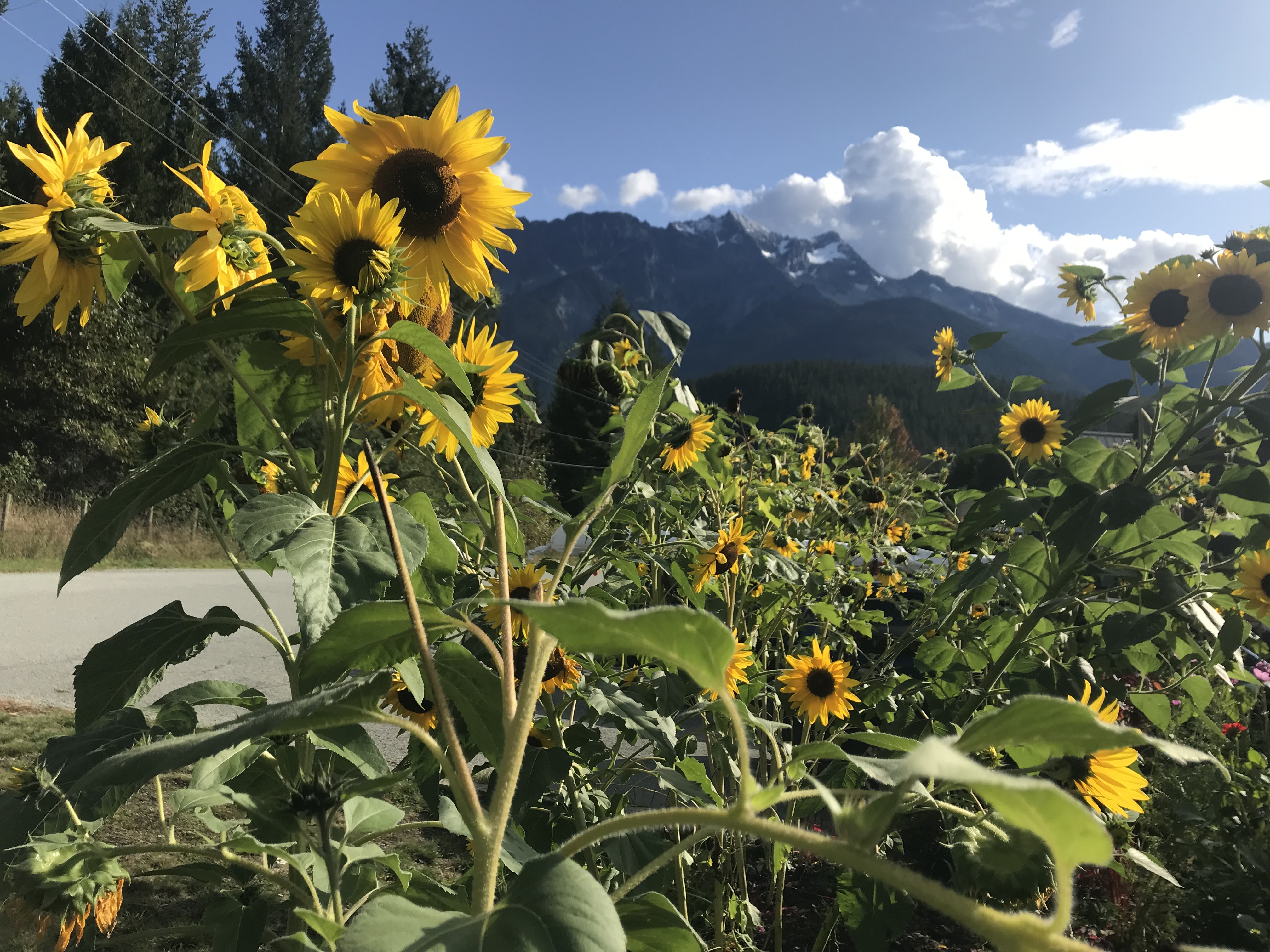
    SunflowerJungle

    I also experienced confusion and wonder at the suffering of so many people I saw in treatment and in our community. I felt the sadness of illness and accidents and the losses of loved ones.  Wonder at the gaping holes and the ways we try to soothe and patch them.

    I had a few days after my second round of treatment when I entered a black pit of despair. Nothing made sense. I saw no reason for my suffering or anyone’s suffering and no reason for living or sickness or treatment for it. But then tulips bloomed and that made sense. It a crack of enchantment. A thread of wonder. A signal that something small was still right in the world. 

    It’s foggy and cold today. There are cracked chestnuts, a precarious pile of birch logs, a dull axe, a frosty table and a barbeque abandoned for the season on our deck. The leaves are still hanging onto the overhanging chestnut tree, now wilted and brown. I’ve been harvesting the last scrubby bits of kale, chard, parsley, chives and celery leaves sticking out of straw mulch, as I surrender to buying greens over the winter.

    Mel'sHappyPlace

    I survived the year, along with my garden, along with my kids, along with my partner, along with my dog, along with my work, thanks, in part, to the balm of wonder.

  • Earth-tending

    Earth-tending

    Tend: care for or look after; give one’s attention to.

    A few years ago I was in the habit of taking long walks — slow meanders along the Valley Trail in Whistler. 

    20190814_181914

    The pace gave me time to observe the emergence and dying back of the various plants that grew alongside the trail through the fluctuations of the seasons. I also noted growing piles of cigarette butts scattered along the route. I thought about how for some animals, guided to food sources by their highly-acute noses, these small but numerous objects were not only an inconvenience but a stinky hindrance. And since my silent berating of those tossing the litter wasn’t doing much good, I decided that cleaning up the cigarette butts would be a more tangible act of care to extend towards these little creatures. Thus, the practice of earth-tending entered my life.

    OLYMPUS DIGITAL CAMERA

    Sometimes it feels as though there’s not much I can do for the Earth. While glaciers are melting, tornados swirling and fires burning the Amazon rainforest, my rote environmental gestures of recycling and reducing meat intake seem pitiful. But somehow by making my gestures smaller, and more insignificant they became more personal too. It may not make a noticeable difference but I can choose to do these acts regardless, to microscopically tend to the earth as if each gesture is a show of respect for this living planet, our home.

    20190812_080517

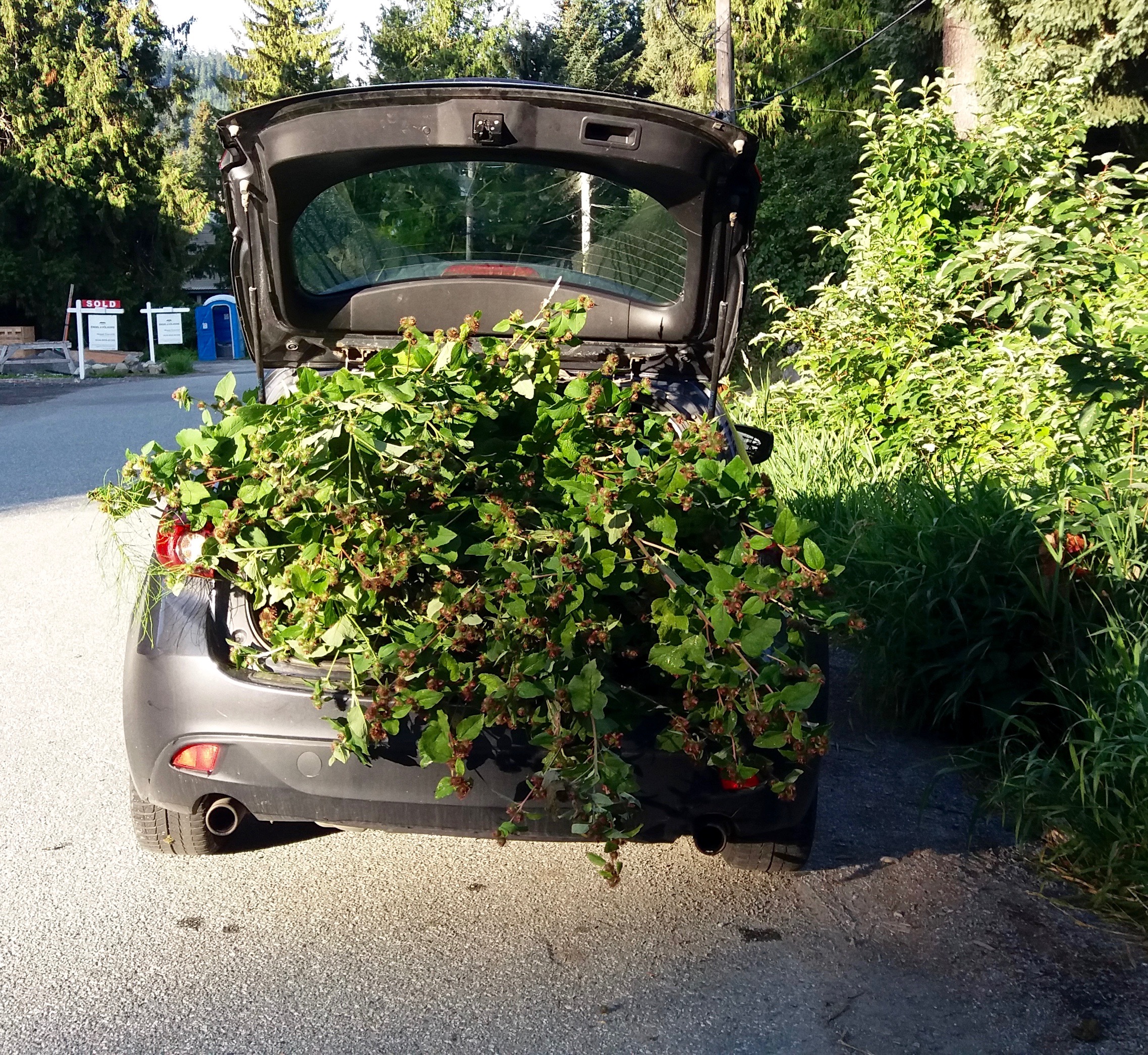
    This summer at my partner’s urging, we adopted a section of the Valley Trail to keep clear of the wildly tenacious burdock plant (as part of a Sea-to-Sky Invasive Species initiative). We would head out with clippers, gloves, a tarp and shovel and spend a few hours clearing a section. Before long my partner extended our range to the whole neighbourhood of Creekside and we removed seemingly tonnes of green matter.

    OLYMPUS DIGITAL CAMERA

    In his mind the project was an eradication of a pesky plant; in my mind it was a type of guerrilla gardening, another act of tending. Instead of planting anything we were creating space for native plants to return (hopefully). In a way we hoped to ameliorate the heavy human footprint in the neighbourhood as seeds (via burrs) are often moved by humans and their canine companions. In some places the burdock was growing dense, thick. Walls of clinging burrs can limit passage for berry-foraging bears and small winged animals such as birds and bats can become trapped and even die in the tangle.

    20190814_182001

    I had moments lamenting a summer spent in the ditches, thinking  “What on earth are we doing out here, getting clubbed in the head and tangled-in-burrs instead of bbq-ing or at the lake” but then I’d see the street or patch that we’d cleared.

    20190820_075158

    On some levels it felt never-ending but on other levels, it mattered. The caring mattered. And in the long run, it deepens my relationship with this place we call home. 

    OLYMPUS DIGITAL CAMERA

    I can’t pick up every piece of garbage I see, nor do I want to, but as I sit here in an airport lobby a bird is stuck indoors—flying around, trying to find an exit. It perched on the seat across from me and swivelled its head, looking for the way. I don’t always know how to work through my grief about the current state of the planet or the plight of creatures we share it with,  but I do know that small acts of tending, of caring, seem to be a window out.