Category: producers

  • Small Potatoes

    Small Potatoes

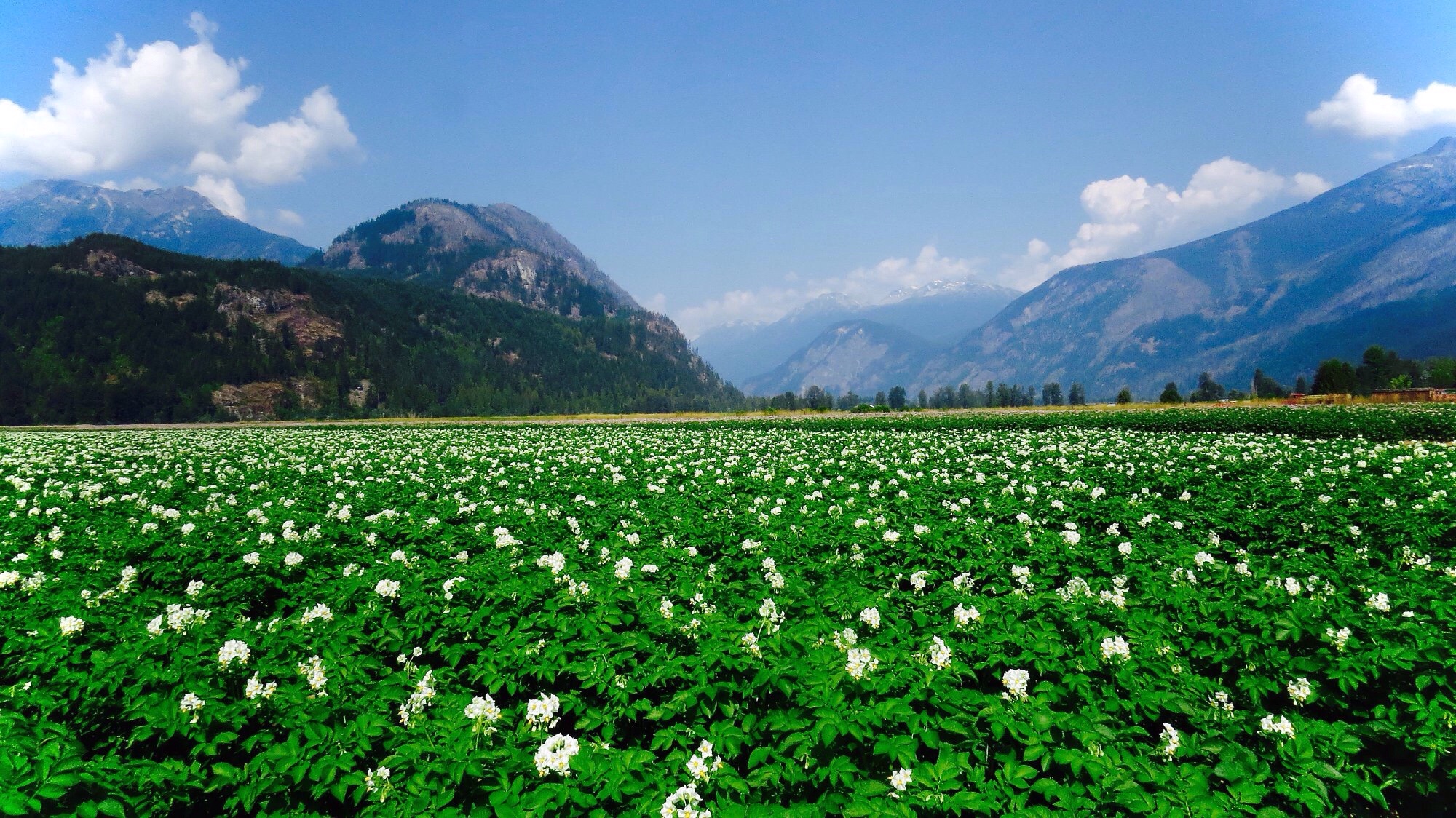
    Pemberton is nicknamed Spud Valley for good reason. Potatoes are the number one crop grown in the valley. The soil here is amazing for growing all kinds of vegetables but potatoes especially love it. The families who immigrated from Ireland and settled here in the early 1900’s saw this and started to grow potatoes. Thus the legend of the Pemberton potato was born.

    Fast forward to today. There are 9 farms in the valley growing Elite Seed Potatoes. It takes us 3 or 4 years to get a crop that we will sell and ship off our farm. We grow our potatoes strictly to sell for seed to other potato growers who then may plant them for 1 or 2 more years before they end up in a store and on your plate.

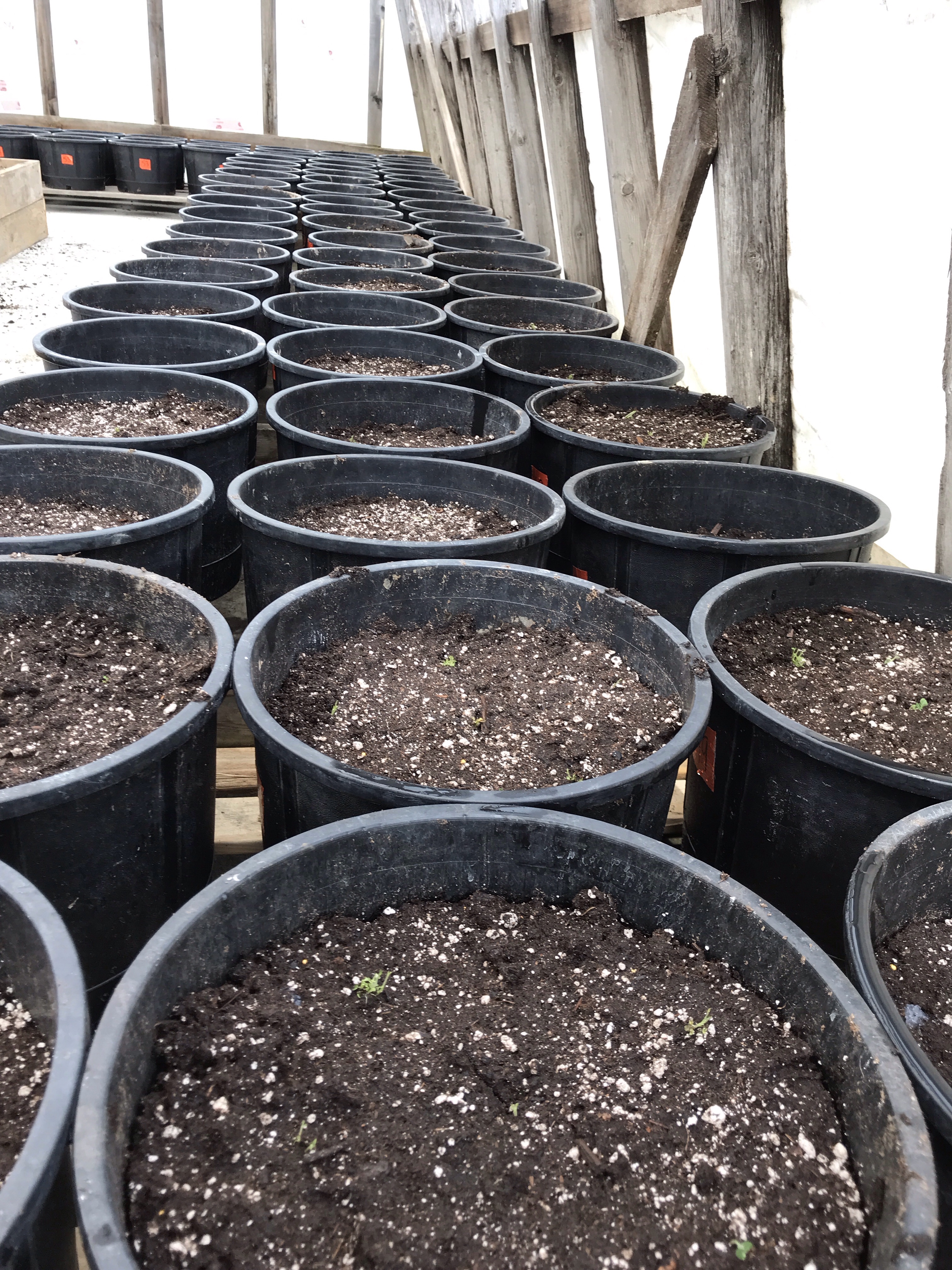
    The first year starts with what we call tissue culture plants. These are basically potato plant stem cuttings produced in a plant propagation facility that is co operatively run buy the farmers. Thousands of these plants are produced and planted in the field or in a screen house.

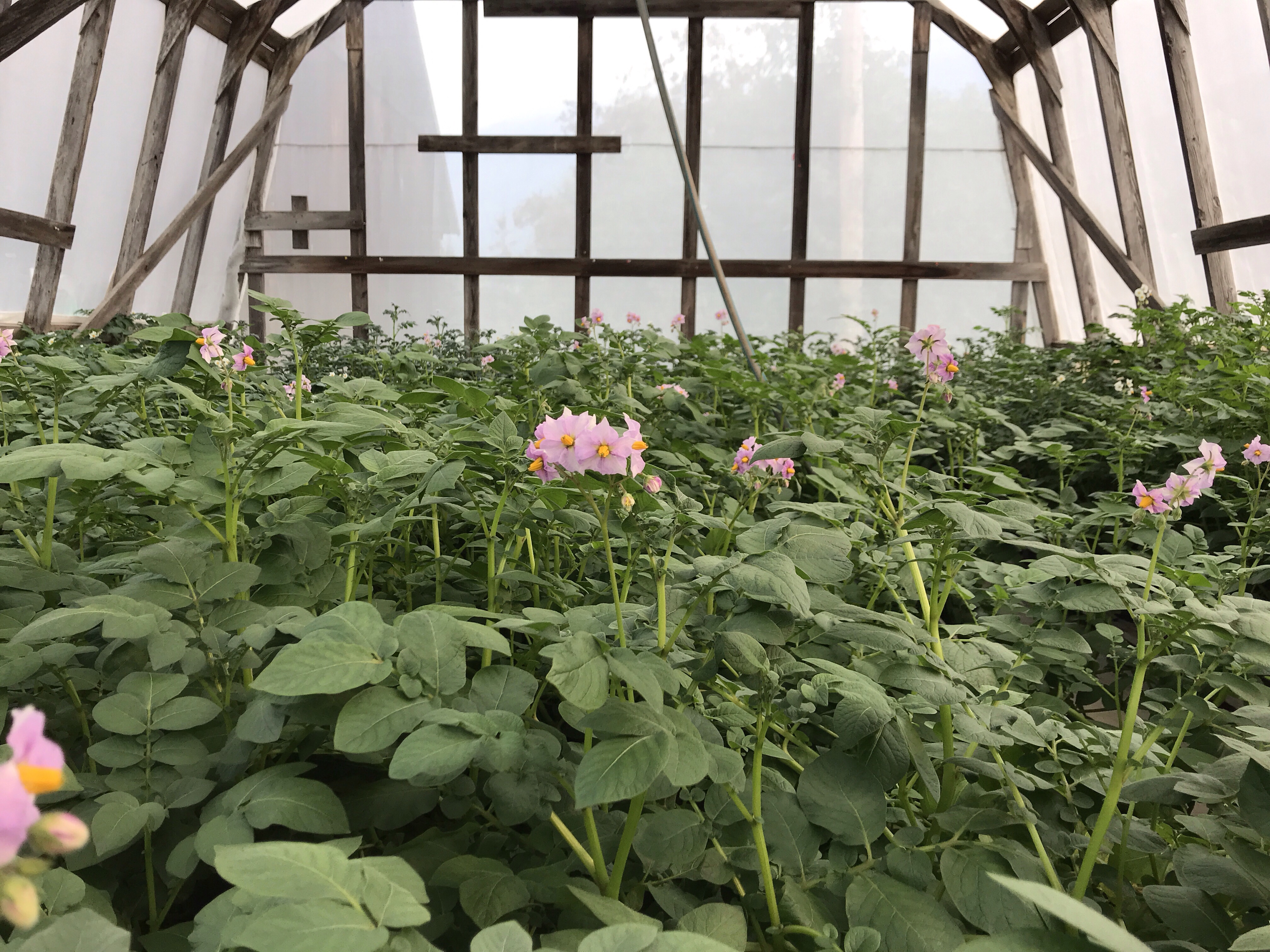
    Our operation runs a screen house. This small house will produce enough potatoes to plant 40 or 50 acres in 3 years. These plants are amazing! Whenever I plant them I just can’t believe that these tiny fragile cuttings are going to grow into anything. Watered and cared for all summer long and they do it. They grow into beautiful big potato plants that produce tiny little tubers that will then become the base of our seed crop which we will sell in 4 years.

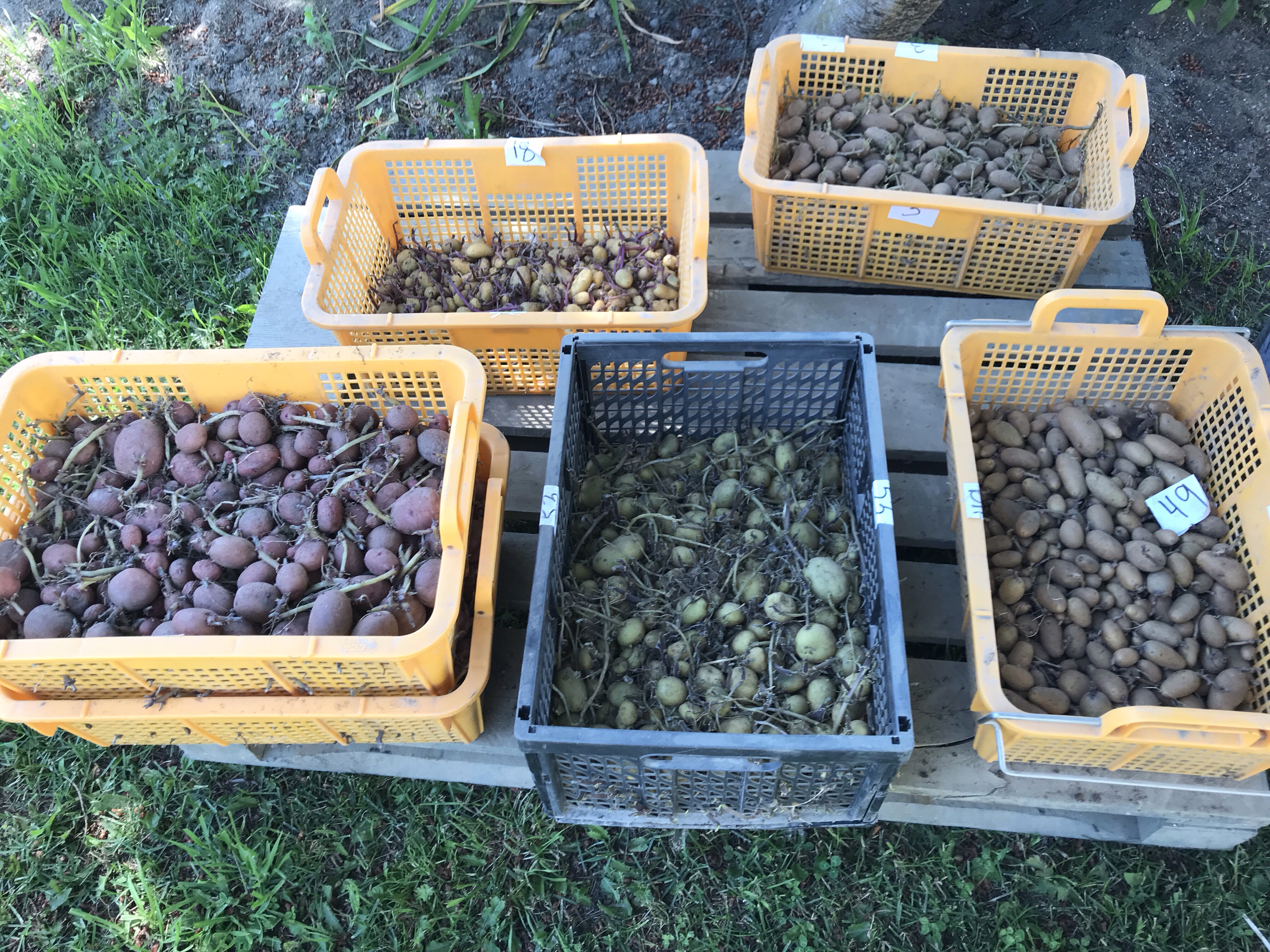
    The potatoes that we harvest from our screen house are called mini tubers. Tiny little potatoes that we harvest, in the fall, by hand and store for the winter, planting them the following spring. They will be harvested and planted 3 more times. And so begins the circle of life for the famous Pemberton Potato.

  • Mutual Appreciation: the farmers’ market secret sauce

    Mutual Appreciation: the farmers’ market secret sauce


    The bell rings to start the market day. Relentless and demoralizing rain has been falling since the tents came out of the trailer and we began the set-up, two hours ago. The gutters now strung up between the tents are working well, emitting a steady stream of water into the growing pool along the back curb and the tent side walls keep us relatively rain-free inside the stall. The very air seems wet, however, and little can be done about that. Tough morning at market so far.

    helmers-e1431620796552

    I’ve been selling my family farm’s produce at Vancouver farmers’ markets for 20 years, so I know how to sell potatoes in the rain. It’s just like how to do it in the sunshine, except it seems mentally harder. The difficulty lies in keeping the stall in a high state of readiness, even though it might be empty and you would prefer to be warm and dry elsewhere. Every sale matters- especially in the rain, if your farm depends on farmers’ market sales

    I squeeze my way past the bins of backstock in the trailer where I have been changing out of sopping wet clothes. I have already traded a few hellos with the neighboring vendors, people I’ve seen every Saturday morning for years, but there’s been no time for more than that. I glance around to make sure all the signs are up and that the display is full: we’ve finished in time. It takes just as long to get set up in the rain as it does otherwise. Longer, of course, if you waste time regretting the situation.


    The potatoes look good today, the red Chieftain and yellow Sieglinde sort of glowing in the dim light. My staff, who are making up $5 bags of potatoes and carrots, wisely refrain from discussing the weather. The vast, dripping, emptiness out in the market fairway which would normally be filled with customers eager to start shopping, lining up in advance of the opening bell, is obvious enough.

    It is undeniably deserted, and despite the potatoes doing their best to provide sunshine, it feels disheartening. I give my head a shake because I think it’s too early to write this one off.

    The first customer materializes- she’s a rain-or-shine regular who gave up on regular grocery stores quite a few years ago. She is followed by another I don’t recognize. A chef splashes his way in. I make sure his 20lb bag weighs at least 25. At the till, we’ll be rounding down more than usual. The customers might not notice but I don’t mind. I am feeling very benevolent towards anyone who turns up this morning.

    Before I know it an hour has passed, and I realize that the potato display tables are hidden from view by the backs of customers filling bags. The stack of now empty bins in the back has risen to a level I hardly thought possible when the opening bell rang. It’s going to be a solid day, despite the rain, which might even be easing up a little.

    One of my staff has been coming to market ever since she was a baby, and her mom worked for a farm vendor here before that. She’s on the first till, and I jump behind the second one, a line-up having formed of dripping wet customers who thank us for being here today when they get to the front.

    It bears repeating: the rain-soaked customers are thanking us and giving us money for potatoes. In fact, now it’s so busy they are lining up to do so.

    This, right here, is what makes farmers’ markets tick. People choose shopping in the rain over going to a grocery store. Farmers choose marketing in the rain over selling wholesale.

    It’s what leads to the fact that farmers can make a living on an acreage that would otherwise be insufficient because they can get full retail for their produce.

    The customers keep coming back for more because…well…I just don’t know. Is it the quality of the product? The contact with an actual farmer? The coffee and crepes? It might be magic. Whatever the cause, it provides me motivation to keep farming, and to keep customer service and marketing standards high. It seems like a practical way of showing the customers that I really appreciate their business.

    I love being a part of this special relationship, but I worry that it won’t last. It’s so much work, there is so much to learn, and there is so much competition for customers- and surely, they won’t keep coming? I mean, sometimes they must quietly wonder if it is really all that great? The weather, the effort, the cost. All that cooking.

    resampled_big_helmers 6

    Customers. We need customers to make markets successful. We need to retain existing ones and win new ones who might also shop in the rain. The good news is that we are only tapping a tiny fraction of the people who buy food, so there are plenty more to be had. The bad news is that the competition out there is absolutely fierce, and nowhere else other than at farmers’ markets are customers asked to go out shopping in all sorts of weather, probably park far away, and spend perhaps a little more than they really meant to.

    Farmers’ markets enjoy one major competitive advantage however, and that is something I have begun to call “mutual appreciation”. This is an energy generated at the point of contact between primary producer and end consumer at market, most notably at the transaction stage. I take your money, you take my potatoes. We are both appreciative of the other. The feeling builds each week, from season to season and year to year and really can’t be re-created in other retail environments.
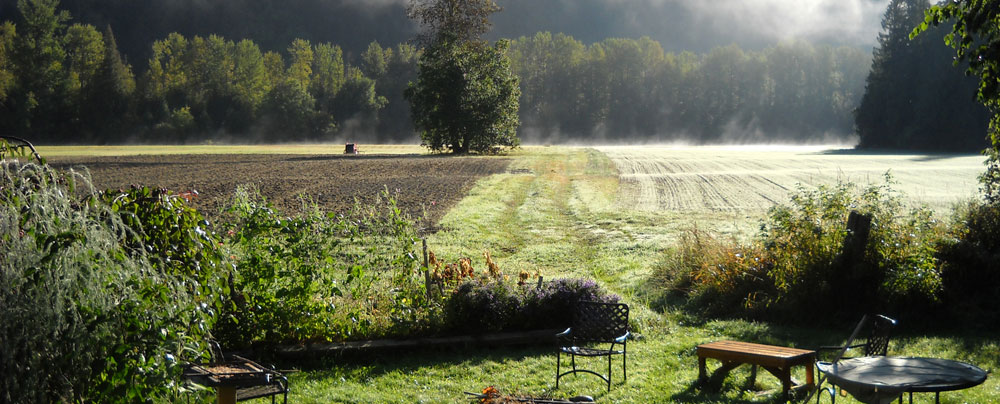
    helmers_farm

    The farmer can do much to cultivate the feeling of mutual appreciation in the stall. It’s about a lot more than saying “thank you”. Developing good customer service and merchandizing skills is of prime importance- pre-market preparation, and of course years of practice help too.  In my opinion, it is important to put as much effort into selling the food as you spend growing it. These customers deserve that.

    The farmer makes the magic that the people are coming back for. If you can also create this feeling of “mutual appreciation” in your stall, I think you’ll be able to have both tills busy, even in the rain.

    Anna Helmer farms in the Pemberton Valley with her family: friends and relations. Her book is called: A Farmer’s Guide to Farmers’ Markets and is available on amazon.com.


  • A Bee Journey Vol 2

    A Bee Journey Vol 2

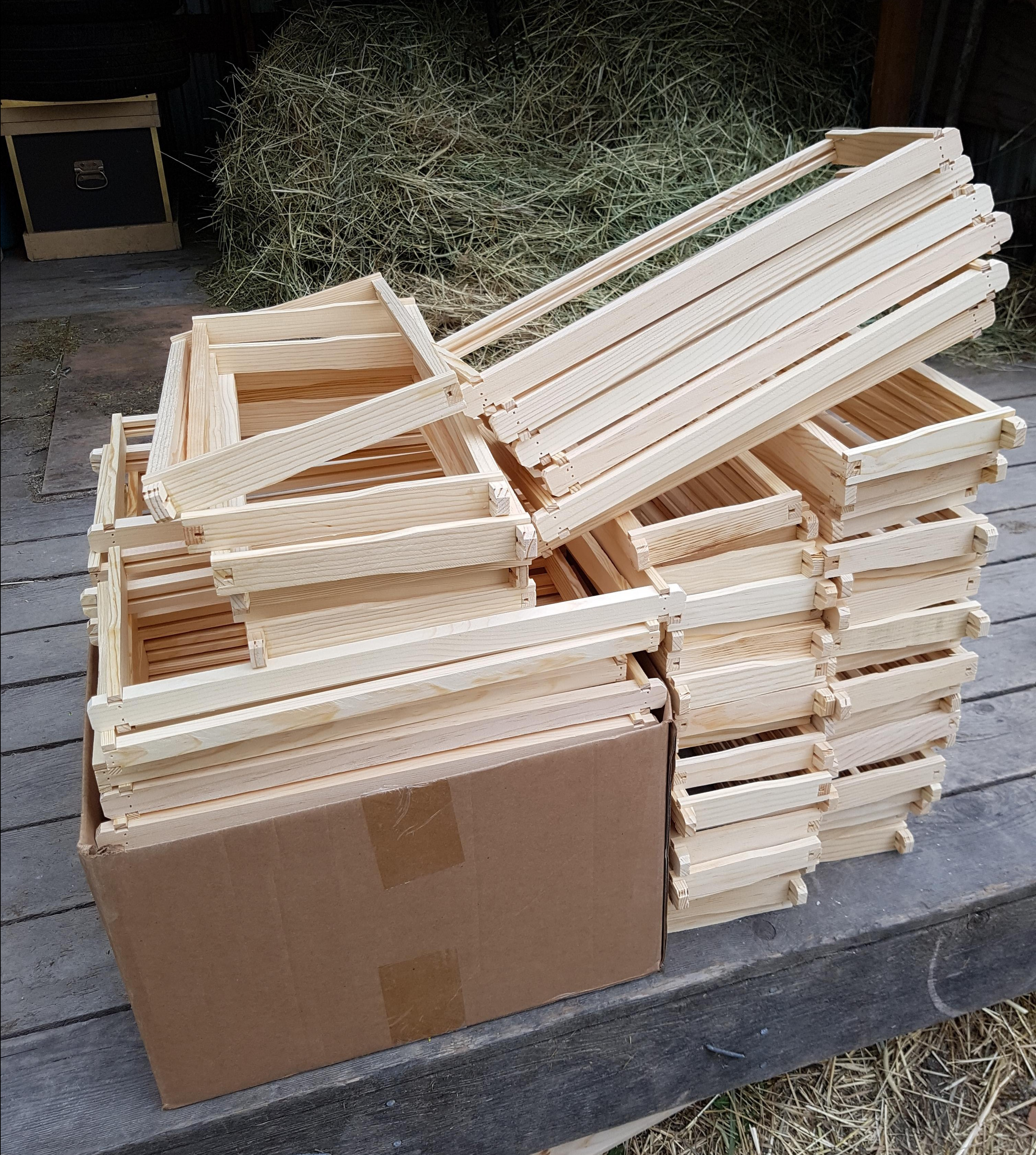
    If you recall from my first post (A Bee Journey Vol 1), I mentioned that getting into beekeeping is not cheap. So how did a frugal girl reduce her start-up costs? She asked her carpenter boyfriend to help her make bee boxes instead of buying them! So, on a Saturday in April, we stopped at Home Depot for wood and spent 5 very productive hours in the workshop, cutting enough wood to make 4 bee hives. While he cut, I gave cutting directions and sanded the newly cut pieces. The total savings were $300, which was about the amount that I had to spend on frames (this is where the bees store their honey, eggs, pollen, etc.) I needed to buy 120 frames for only for 4 hives. Imagine how many you’d need for a 50-hive apiary (that’s around 1500 frames!).

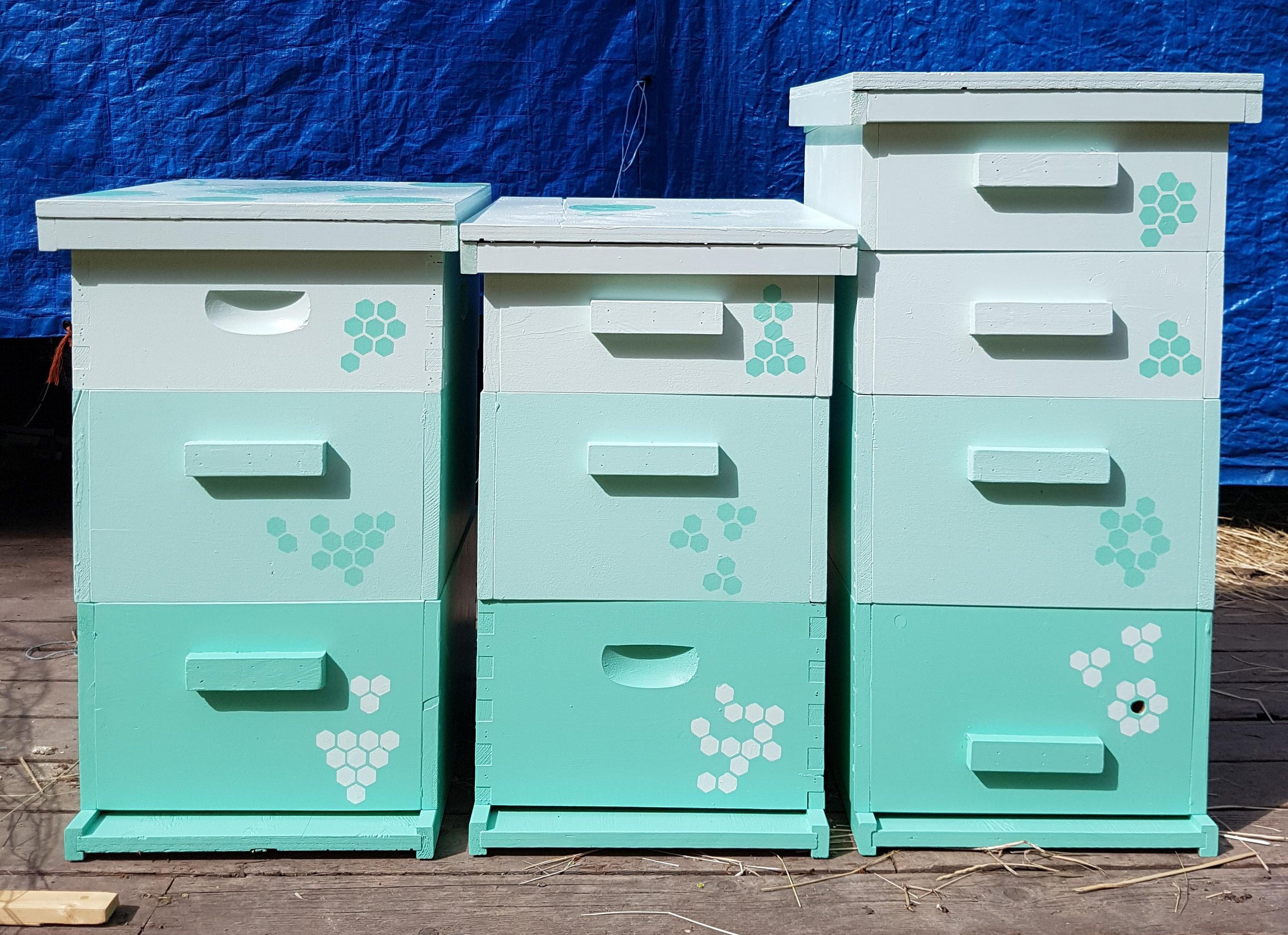
    Then came the fun part, picking paint colours! My favorite colour is teal, so three shades of teal it was. Bees see blue, green and ultraviolet, which means they see colours differently than we do (humans see red, blue and green). So any colour in their spectrum works, but not red. Bees don’t like red! You don’t want too dark a paint as it will increase the internal hive temperature, which will make the bees have to work harder to keep the hive at 34C. This will cause them stress and we don’t want that. Many factors affect honeybee survival and it’s the beekeeper’s job to manage factors that can cause them stress.

    So, now I had unassembled hive boxes and paint. We spent a good portion of a day gluing, nailing and screwing the boxes and frames together. Then another afternoon of painting. And I think they turned out pretty good. Now I just have to be patient and wait for the bees!

    20180505_100027
    The kids started sanding on their own!
    20180428_160430
    Frames, frames and more frames!

    20180505_111059

    20180505_154807
    The finished goods!
  • How Farming Chose me

    How Farming Chose me

    The awkward question often arises when meeting people: “What do you do?”

    While in any given day I could list at least a half a dozen of the different things I have accomplished, I’m always hesitant to call myself a farmer. How did this happen to me? I certainly didn’t foresee this while in University studying Landscape Architecture. Problem is I couldn’t sit still at a desk. I needed to be in the dirt with a shovel in my hand rather than a pencil.

    I do come by it honestly having spent my entire adult life landscape gardening. It’s in my blood. I started mowing lawns and gardening at 15. My company was called “Shovels and Rakes.” Researching 400 years of homesteading history in Canada, almost all my ancestors’ occupations are listed as “cultivator”. I’m programmed to grow and nurture plants and be a steward of my little piece of this earth – my attempt at some form of authentic sustainability. It’s my happy place, my spirituality.

    But farmer as occupation is just not glamorous (except at the Farmers Market). As a business model, it rates as one of the lowest paying, highest labour and riskiest endeavours. Unless you are part of the mega-agribusiness, (no thank you), the odds are against you and the competition is fierce. There is no salary, no pension, no paid holidays, no insurance, no benefits or any security whatsoever. You are at the mercy of nature’s elements.

    So why? I know I could use my skills elsewhere, make good money set myself up. The reality is that I have to accept that this life chose me. I am set up! I breathe clean air , access the best water, have a family that is awesome and involved. We eat the freshest food, and spend our days just making a living in the purest sense.  It is not a job, it’s a lifestyle. Oh, and by the way in the winter months, I’m a snowcat groomer. 27 years as a snow farmer as well.


  • It’s time to talk Farm Fashion

    It’s time to talk Farm Fashion

    The time has come for a column on farm fashion. All the chick farm columnists eventually get around to a “what to wear” piece, don’t they? This one is all about what happens when fashion is slave to function and haute couture ain’t in it.

    When choosing an outfit for the day, I consider the potential for getting dirty, wet, cold, greasy, dusty, sun-burned, heat-stroked, or photographed for Elle magazine.

    Helmers1_S6A3181
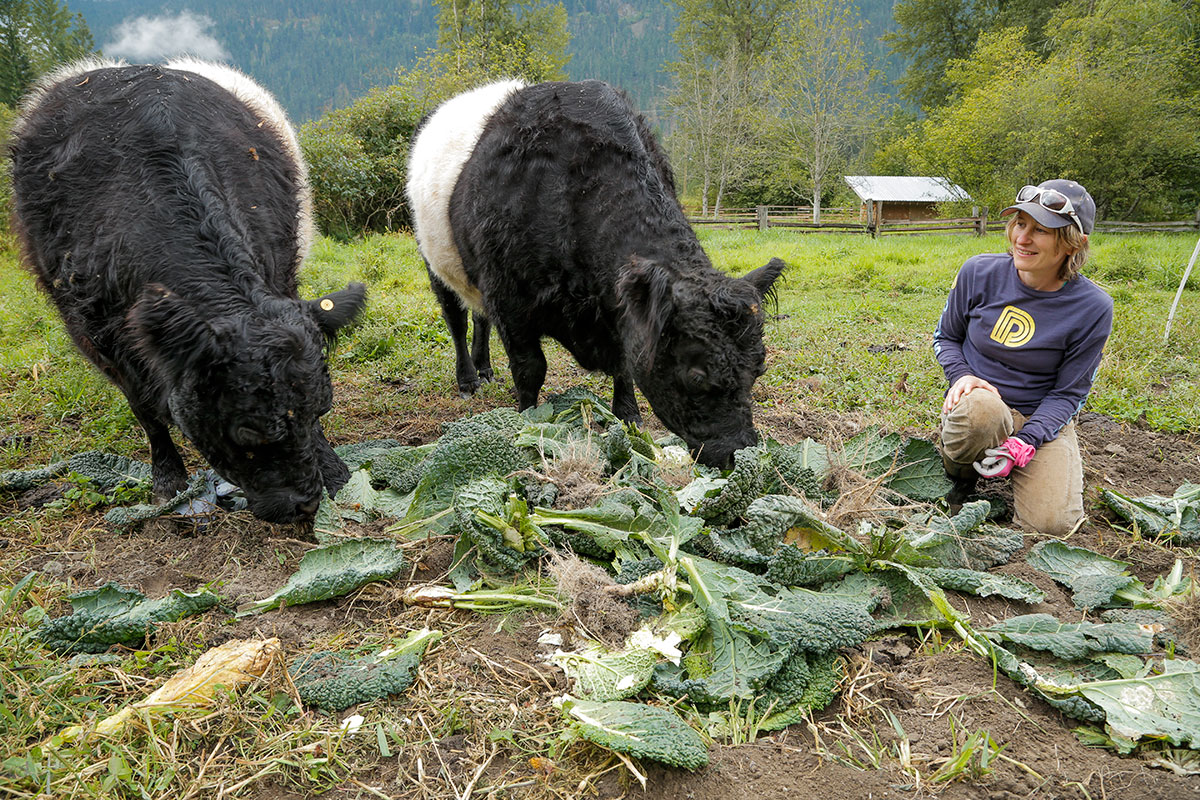
    The cows have very exacting standards. In forage. In fashion, they’re a bit more chill. Unless, of course, you’re wearing leather.

    Evaluation complete, I don yesterday’s work pants, (hopefully, but unlikely) complete with small crescent wrench and pen-knife in the pockets, clean work shirt, work boots (rubber or leather), and make obvious weather-related adjustments. A seasonal ball cap or toque, with occasional forays into wide brimmed sun hats, offers warmth, shade, and hair control. I don’t bother with make-up.

    There are two items in my functional farm-chic wardrobe to which a more detailed examination is due. They score particularly low on fashion but shoot the lights out on functionality; a by no means unusual description for just about everything I wear out there. Let us then consider coveralls, and the mosquito bag net.

    13124927_10153945295231311_8492489048310326032_n
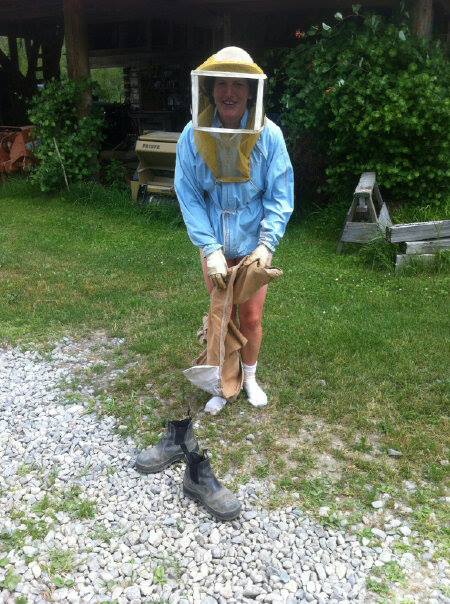
    Anna Helmer gets into her bee-suit, and someone takes a photo and puts it on Facebook.

    Until I went to welding class in the city, where we were required to wear coveralls, I had decided against that look for myself.  I tried wearing them a few years ago and felt about as alluring as an old hockey bag. Never having been what you might call an instinctively feminine dresser, I felt wearing coveralls would sever completely any connection to my embattled femininity. I had to draw the line.

    In welding school I was not given any choice in the matter and I initially bemoaned my baggy figure. Eventually however, I noticed that my good jeans (worn mistakenly to class) stayed clean, protected by the Big Blues (pet name for my coveralls) which got sooty and smoky. Perhaps, I began to think, there was yet wine to be squeezed from this stone.

    rootdown-organic-farm-2
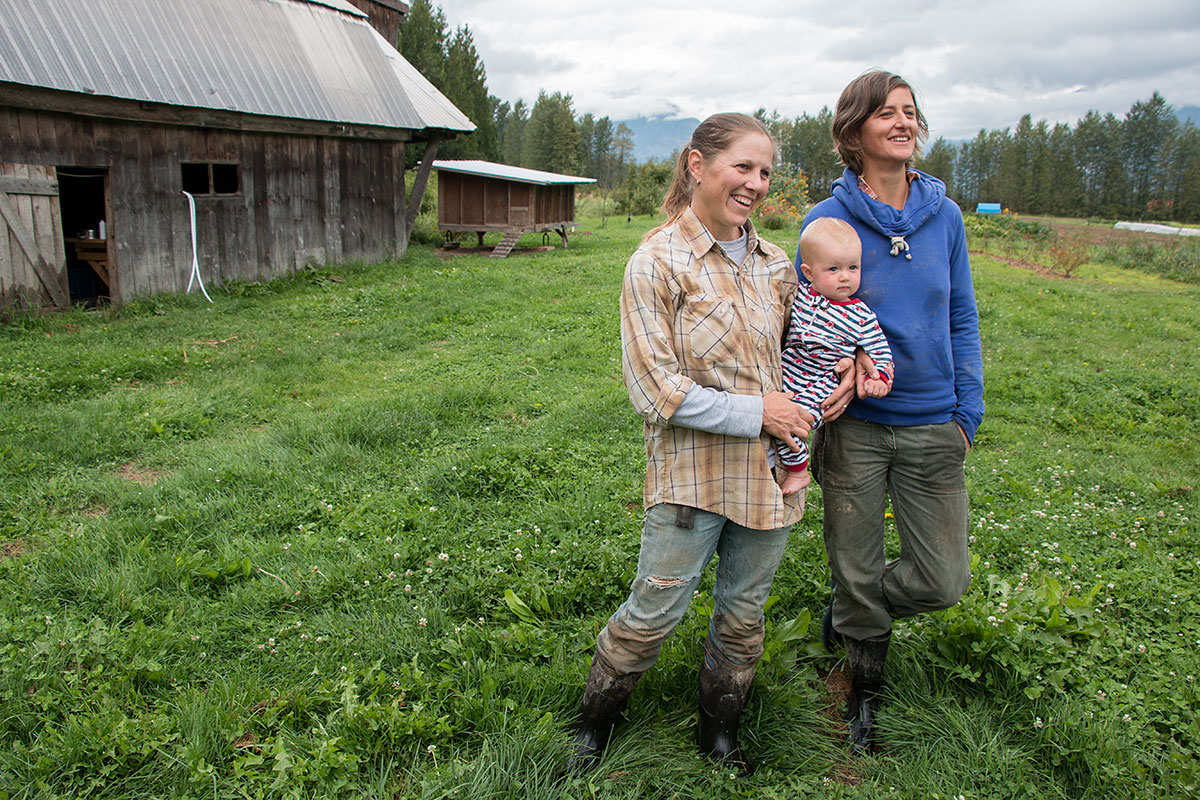
    Sarah and Simone from Rootdown Organics demonstrate the key farm fashion accessories: soiled pants, rubber boots, cute baby who is actually in charge.

    I have come to realize that the coveralls represent a new opportunity for me. I can stay a little cleaner on the farm, and not arrive home resembling a diesel spill in a dust bowl. Not only can I look presentable at the end of the day, but if Elle magazine does happen to show up for a photo shoot, I can be assured of a clean outfit underneath. They will still have to bring their own make-up person.

    plentywildheader
    Alyssa and David from Plenty Wild Farms must have had enough time to shower before their photo shoot. Do farmers really ever look this clean when out in the fields?

    Turning now to the mosquito bag net; my choice for most essential farm fashion accessory.

    In my net I am bug-free; I blithely disregard the scornful sniggering of other slaves to fashion on the farm, slathered as they are in dodgy chemicals, and/or in a high state of denial over the level of torment they endure as bag-less labourers in mosquito country. There is no bigger slap in the face to high fashion than dropping a bag over your head, but neither can I countenance flies in my eyes.

    acrosscreekheader
    Bruce Miller models the ultimate in Pemberton farm fashion, the Slow Food Cycle Sunday t-shirt.

    To conclude, it would be nice to point to an item in my farm wardrobe that is more fashion than function, but I am at a loss. I suppose my pink John Deere ball cap tilts the balance slightly in favour of glam, but looses ground as its grubbiness increases with every passing day of summer. In an uncharacteristic eruption of reckless consumerism, I have purchased a brand new one for this summer.

    Anna Helmer believes farmers are under-represented on the fashion run-way but sort of sympathizes.

    Not being able to stage a photo shoot of Anna’s farm fashion moments during planting season, we’ve poached these illustrative photos of Pemberton’s organic farmers in their sartorial best, from BeyondYourEye.com photography, via the BC Organic Farmers.

  • And GO

    And GO

    It is a busy time in the life of a vegetable farmer, especially with the hot sunny weather we have been having!  While the motto of April may have been “hurry up and wait”, May is definitely the month of “don’t stop moving” here at Four Beat Farm.

    Most hours of the day (OK and the evening too sometimes) are devoted to preparing the fields for planting, transplanting and seeding the earlier vegetables, planning for markets and harvest season, keeping an eye on the early salad plantings to ensure that the weeds do not take hold, and putting the final tweaks onto those “spring projects” that somehow never did quite get finished.  It is still spring in the calendar, though the temperatures might indicate otherwise.  There is little time for reflection or lounging around, yet there is a sense of fun and excitement in the air as the days grow longer and momentum starts to build.

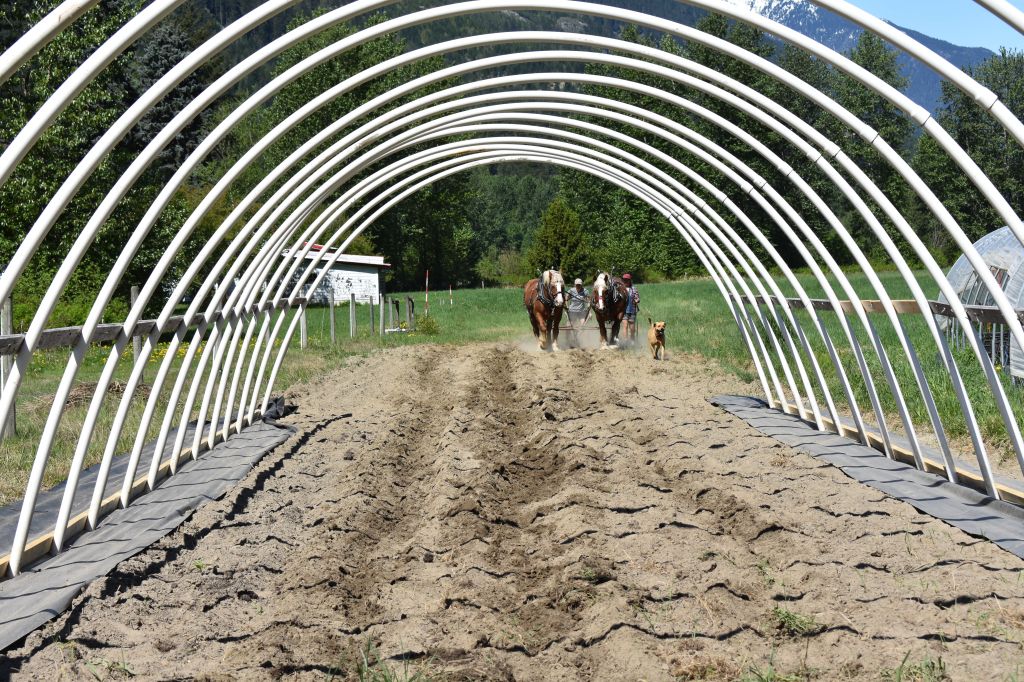
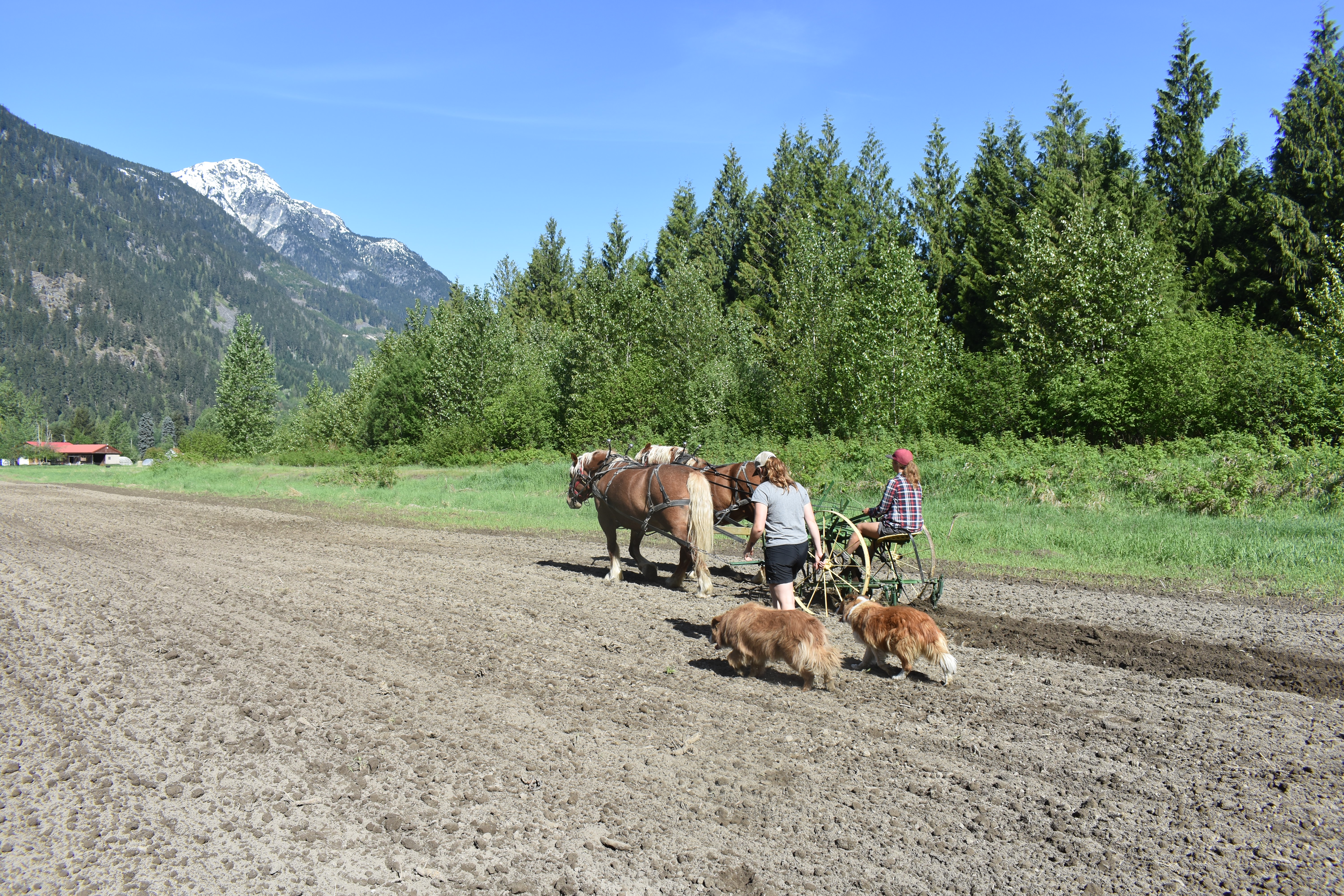
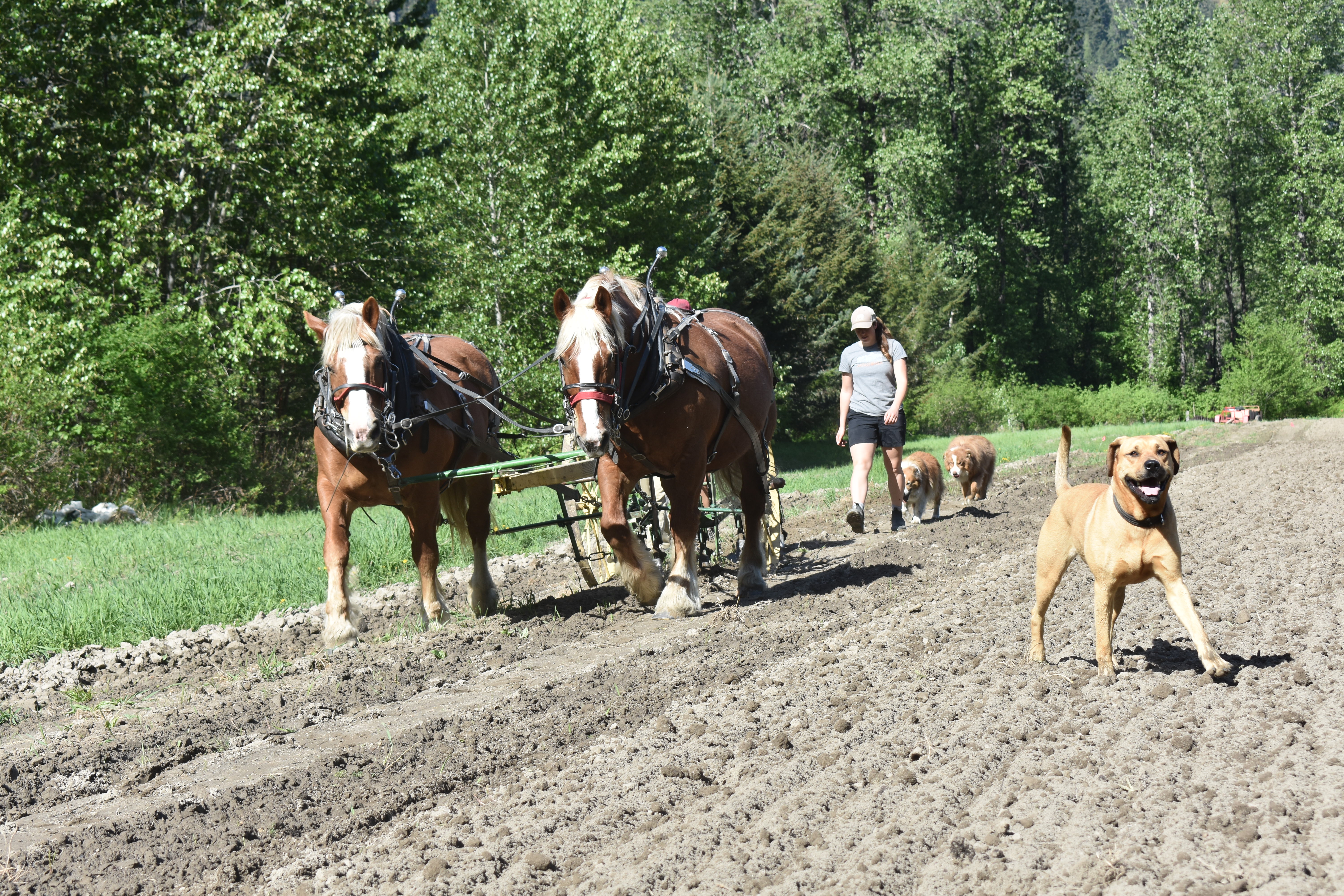
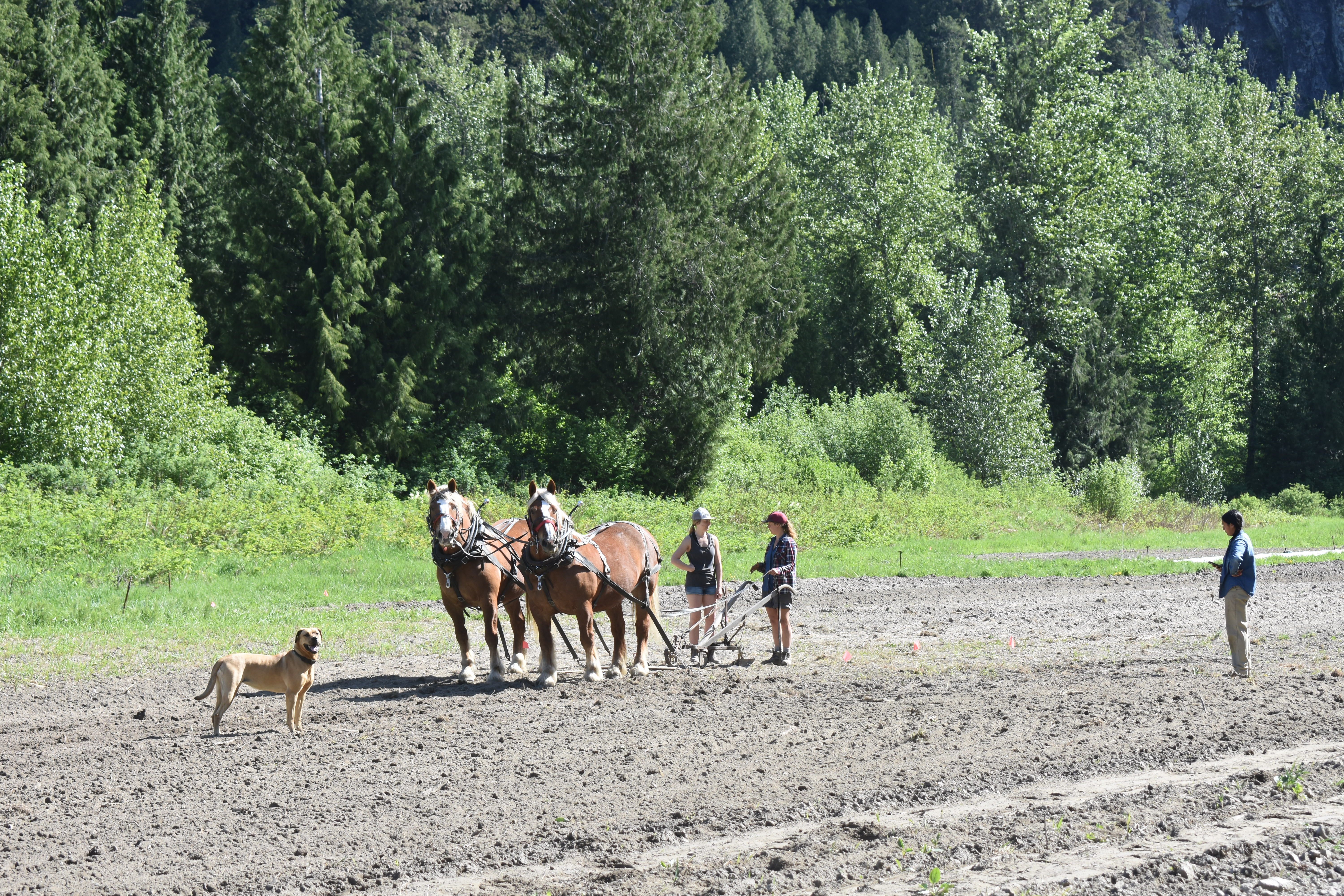
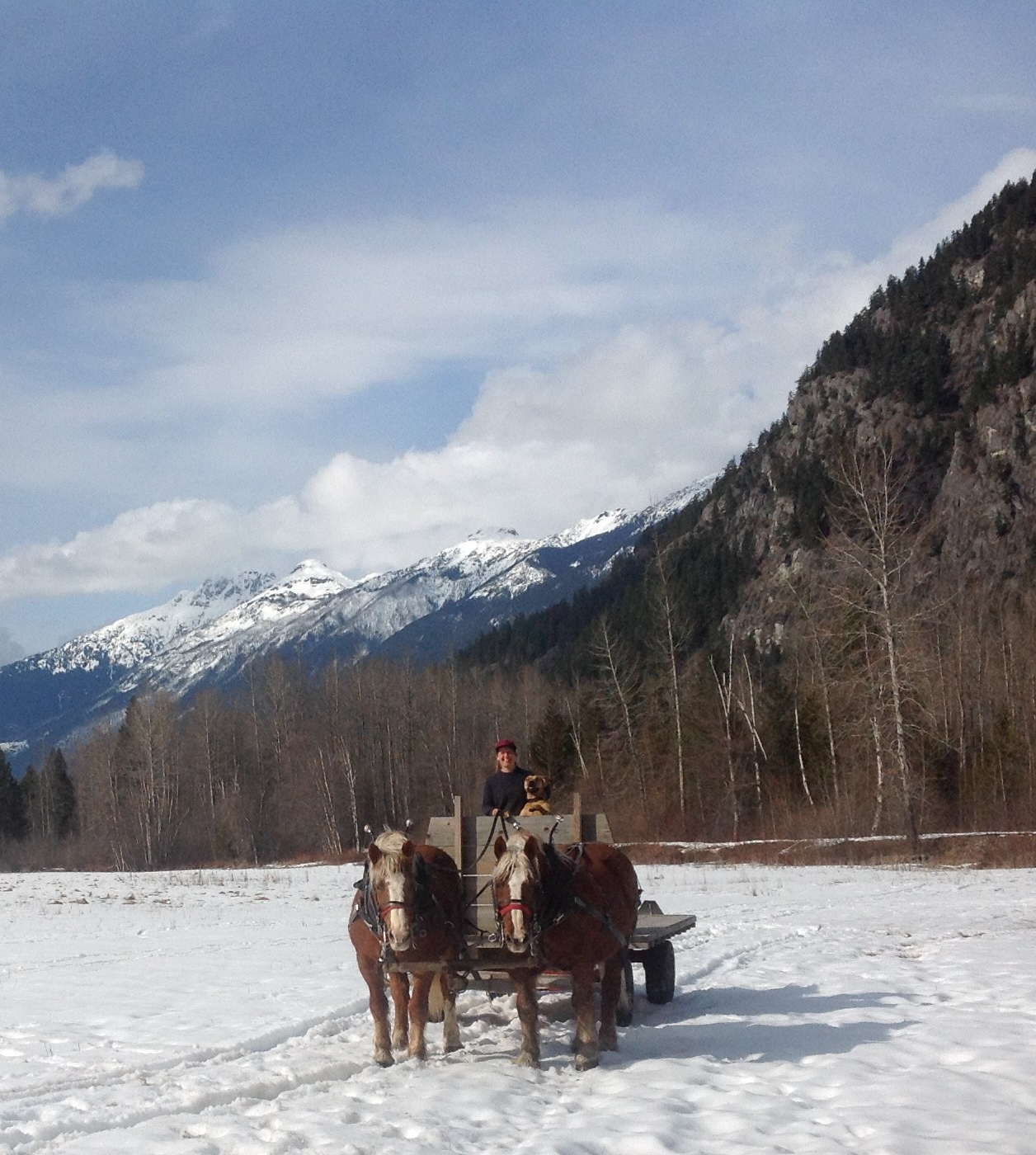
    Even though there does not seem to be much time to go for a hike at the moment, there is fun to be had in the field, such as on this Saturday morning with some canine, equine, and human friends testing out a few new (to us) ways of cultivating in the vegetable field.

    DSC_0351DSC_0355DSC_0439DSC_0381DSC_0454DSC_0462

  • Smells of spring, sweat, and soil

    Smells of spring, sweat, and soil

    It would not be an exaggeration to say that I love all the seasons. Apologies if anyone finds this level of optimism off-putting, I have been told it can be a bit much. I think farming demands it: to anticipate each season’s arrival, to enjoy the process, and to be thrilled to see one go in order to welcome what comes next.

    Spring is all about smells. After a winter of snow and soup and spreadsheets about farm planning and field layouts and budgets, it is so nice to smell dirt. Or “soil”, depending who you ask. I did not grow up on a farm and only started to dabble in it as a profession within the past decade, so the novelty of spring has not yet worn off. I hope that it never does.

    This will be the third growing season of Four Beat Farm here in the meadows, and I would be lying if I said that I felt ready for it. But that’s the great part about farming and growing food—often the best option (the only option?) is to jump in before you are ready, because nature does not wait, and if you procrastinate too long to till or plant or weed or water or harvest then it may be another 365+ days before you can realistically try your hand at growing that particular crop again.

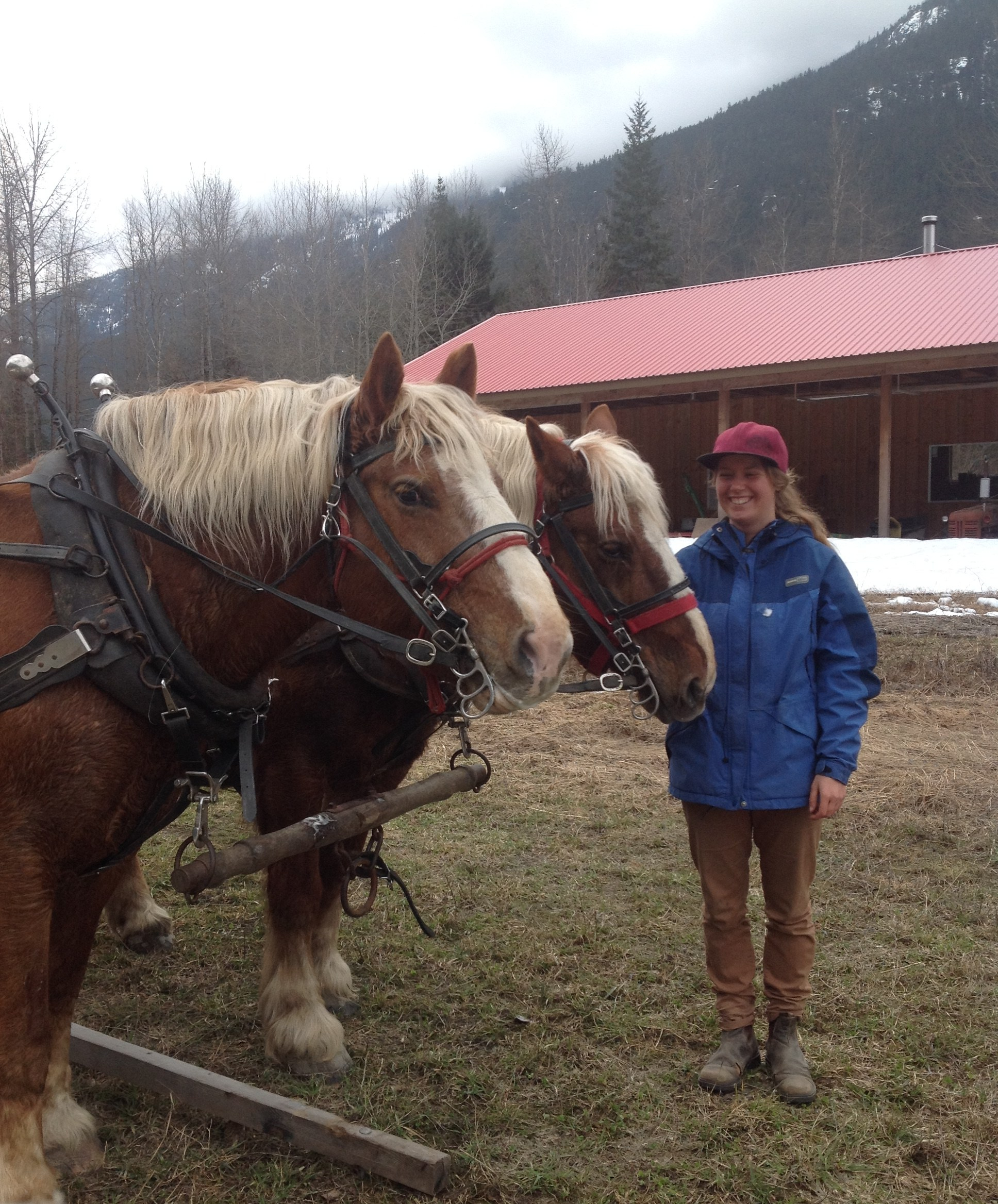
    Right now, spring smells like freshly turned earth, compost, and sweaty horses who, along with their farmer, had a pretty quiet winter. Call it lazy, call it restful, either way the sudden workload of April can be a shock to the system. Thank goodness for variety. For every hour that is spent moving fresh manure into the greenhouse to keep it heated on cold nights, there are taxes to finish, cultivators that still haven’t been repaired, onion seedlings that need haircuts, and horses that appreciate an afternoon head scratch as their muscles rest after morning fieldwork.

    IMG_2890

    When it comes to fieldwork, plowing with horses is slower than with a tractor, no arguments there. Our ever-improving farming systems for 3ish acres of certified organic vegetable seem to be functioning adequately throughout the summer season with the two horses at hand, often called a “team”. When people want to talk about it (or even when they don’t), I can and do enthusiastically chatter on that there are many jobs on the farm that horses do on par or better than I have seen done with a tractor. This is without even getting into the added benefits of having two 1600lb colleagues who eat local fuel, constantly produce compost, and bring a level of determination and sass to the field that I have yet to see in a combustion engine.

    IMG_2857

    For this year’s planned spring tillage, however, which will allow for better crop rotation and attention to soil health, our current two horses are fully employed and could easily share the workload with two more given our short and intense growing season here in the valley. So, as in past years, we as a farm leave the option open to phone one of our many generous neighbours to bring in some extra horsepower for big jobs.

    On a practical level, getting a few hours of custom tractor work here and there feels more efficient than feeding and caring two extra animals who are only going to work for a few weeks out of the year. I drawn parallels with fellow small farmers who might choose to rent heavy machinery for excavation projects, or how it can make sense to have a small car for your family and borrow a neighbour’s pickup truck when you need to bring home a few loads of compost to kick off the gardening season.

    When weighing the options, I have to remind myself that we are a young farm that is in the business of growing food for our community, and that there are many ways to best do this. That said, if someone in the valley has a well-trained team of draft horses I can borrow to spell mine for a few days when their shoulders get sore, feel free to drive up the valley and drop by.

    Our place is the one with plow lines that are not entirely straight, horses that still have their winter coats, and a hoophouse bursting with onion plants that are already dreaming of farmer’s markets at the community barn downtown.

    -Naomi

    IMG_2788
    Getting in shape, late March


  • Telling the Bees of the Legend of Lisa

    Telling the Bees of the Legend of Lisa

    I asked Pemberton’s bee-keeping community if there was anyone interested in contributing their know-how and passion to Traced Elements. Jennie Helmer put her hand up, and offers this first post, of bee-keeper wisdom, in dedication to Lisa Korthals. 

    This community has lost one of the most-loved, revered, and all-around rad women this grateful town has ever seen.  Pemberton will not soon forget the beauty, grace and strength that was Lisa Korthals.

    When I heard the unimaginable news of her death, I sat in stunned silence. Thinking of all the broken-hearts aching in our town. I imagined Lisa’s beautiful smile and her effortless love of all things related to family, friends, wheels and skis.

    Eventually I went to sit with my honey bees, to tell them the story of Lisa’s life and death.

    I sat on the old wooden fence beside the bees. I built this fence to wrap around their hives. It was designed to give them flying space while I sip tea and watch them zip in and out of their little hive-homes. At times, I’m able to mark the changing days by the various shades of yellow pollen stuffed gently into their legs. In the early Spring the pollen is a brilliant, neon yellow, later it turns a dusky orange.

    Today it is an intense burst of yellow, as I sit and tell the bees of Lisa.

    The “telling of the bees” is an old-world tradition, where bees are informed of important moments in their keepers’ lives. In Celtic myth, bees were regarded as having great wisdom and acted as messengers between worlds, able to travel to the Otherworld bringing back messages from the gods.

    telling the bees by jennie helmer

    I told the bees the tale of the warrior woman who has died in the unforgiving and indiscriminating arms of the mountains. I told the bees of Lisa’s family, of her phenomenal soul-mate Johnny with his gentle smile, his bravery and unimaginable strength. I told the bees of her son Tye who embodies Lisa’s spirit, who is a kind soul and an amazing ski racer, and who is building into his own legend at such a young age. And of lovely Chris, Lisa’s brother whose spirit she kept alive with stories and photos.

    I told the bees of her daring ascents, her tenacious descents, and the beautiful places she’d been in this world. I told the bees of the other female ski guides in the area whose souls were crushed on this day, whose worlds would never be the same again. A remarkably close group of strong women, they are the queens of an industry where female ski guides are revered, iconic and so undeniably safe in every choice they make in the mountains. This should not have happened to one of them.

    I shared with the bees that the hearts and minds of our community are devastated and tattered and torn. I asked that the bees find these hearts, and gently give them strength to keep breathing and moving and smiling; and then I asked that if they could find Lisa, could they let Lisa know that we will hold sacred her memory, that her family will be loved and cared for and that she will never be forgotten. If they could also stay a bit longer by her side, I asked, could they tell her that we’ll see her in the mountains, on the trails, and everywhere in-between.

    As I told the bees, they told me: be still, be strong, be comforted, be kind, be love in this life, live like the Legend that is Lisa.


  • Patty B, Pemberton Wedding Duck

    Patty B, Pemberton Wedding Duck

    The sounds of spring are in the air. Birdsong fills the yard, and the egg incubator hums in my living room. Every spring we carefully place colourful, fertilized chicken and duck eggs in the racks and wait patiently, until we can hear, with ears pressed to warm shell, the muffled rustles and faint peeps of tiny birds inside.

    OLYMPUS DIGITAL CAMERA

    The ducklings and chicks we hatch are egg layers – we generally won’t eat these birds, but sometimes a male duck will find its way into the oven. Our layers are almost like pets, and those with standout personalities or traits often get names.

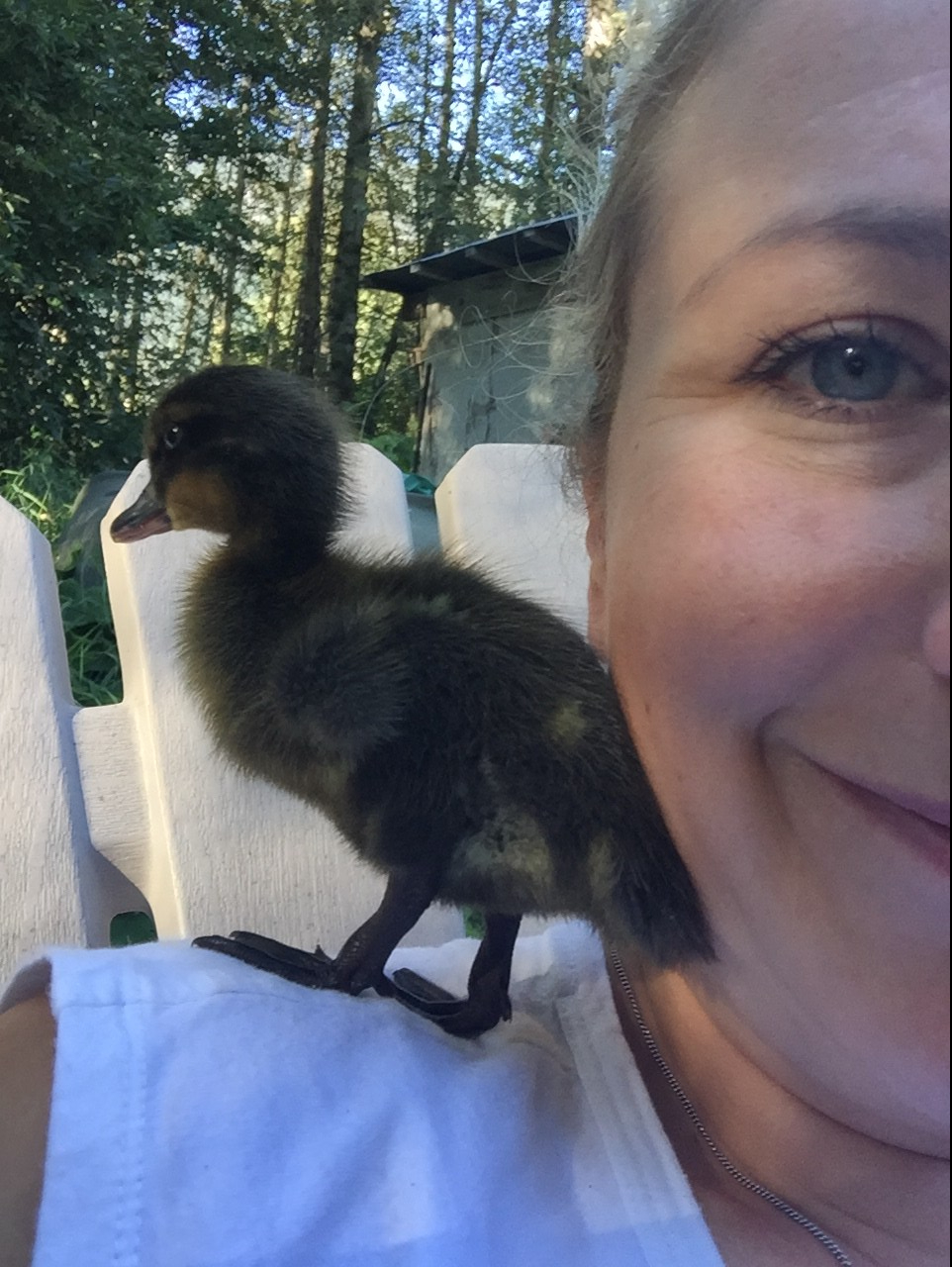
    Last year, about a month before our wedding in September, we decided to incubate some duck eggs out of the spring season to bolster our flock after a lot of losses to raccoon and bobcat. Only one duck ended up hatching out, and since the little guy was going to be alone in the brooder, I decided to take the tiny duckling under my wing. We started calling the duck Pat since we didn’t know if it was a boy or girl. Then we changed tactic and tweaked the name to Patty B to help sway the universe into giving us a lady egg layer instead of another randy male.

    IMG_3695 (002)

    We aren’t going to have kids, and you may laugh, but being a duck mom was super intense. I have no idea how mothers of actual, tiny humans do it!

    When she wasn’t with me, perched on my shoulder, Patty B was in a large pen outside the French doors of my home office. Every time I put Patty B back into the pen after a walk around the yard, her frantic cries would break my heart and inevitably I would be back out there for another visit. In retrospect those regular walks around the yard, with the slapslapslap of her tiny feet windmilling behind me and our chilly wades into the backyard slough so she could dip and dive through the muddy water probably saved me from a total “crash and burn” in the lead up to the wedding.

    As the big day drew closer and our walks got longer I hatched an idea – what if Patty B was part of the wedding procession? Training began in earnest with longer walks around the yard and then, eventually, forays across the small bridge into the backfield where our ceremony would take place.


    R+M_001237
    Anastasia Chomlack photo


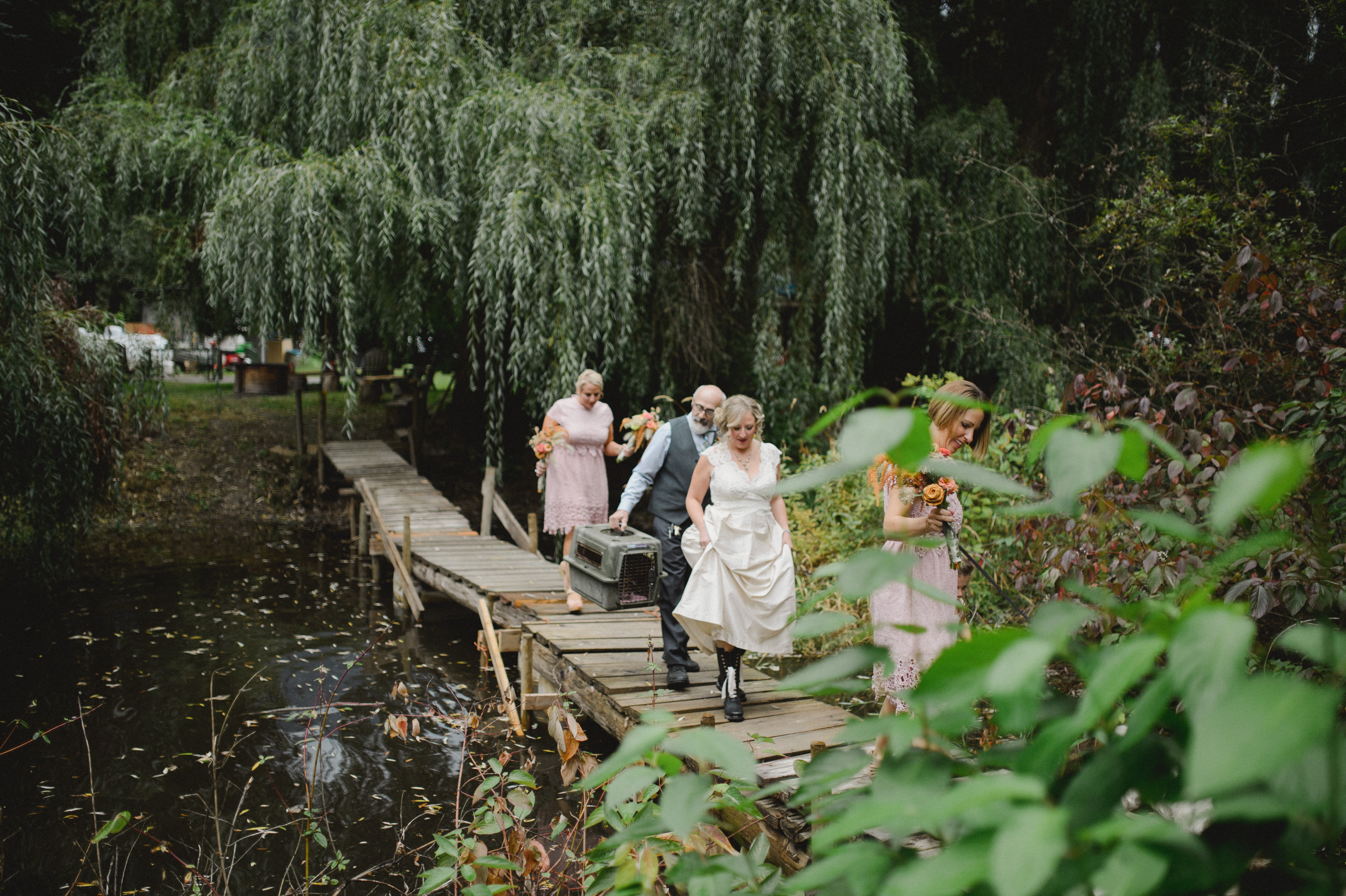
    The wedding day finally dawned…and it was windy and rainy. September 9, 2017, happened to be the first time it rained since Patty B was born…actually, I think it was the first day it rained all summer! Luckily, we had a break in the weather before the outdoor ceremony began and as my wedding party and I gathered just across the bridge, my dad opened the door to the pet carrier to release Patty B. She dashed out onto the muddy path with excited chirps and peeps and began slurping muddy water up her bill. Mud! Worms! AWESOME.

    It was time to start down the aisle, and my flower girl and bridesmaids began their slow march down the field. It was time for me, my dad and Patty B to make our way down to the rest of my life. But Patty B was having none of it.

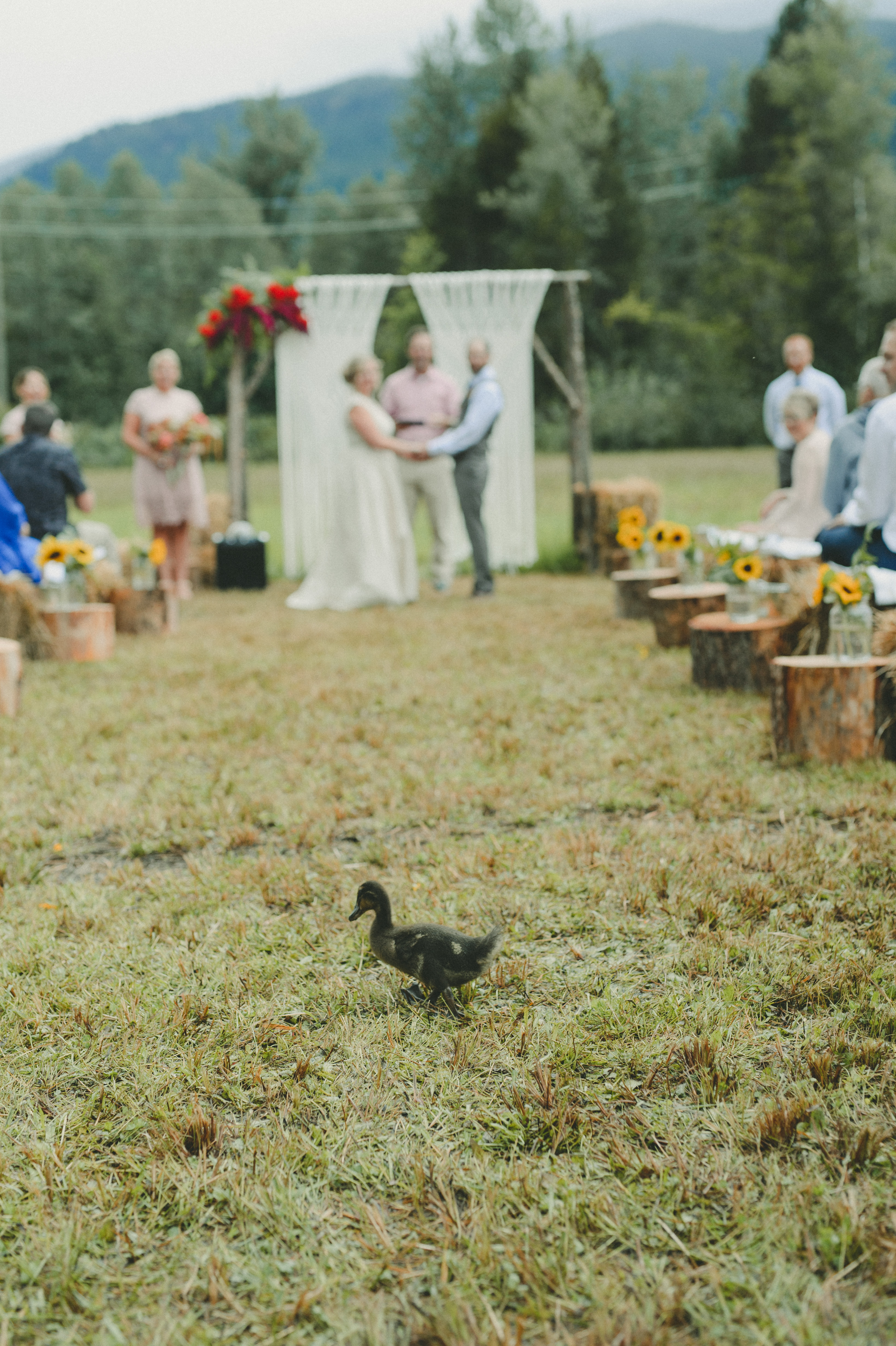
    I gave one last “C’mon, Patty B!” before sighing and giving up. The show had to go on. We walked down the field and suddenly as we were coming up between the rows of guests I heard a small boy cry out, “Is that a DUCK!?”


    R+M_001267
    Anastasia Chomlack photo


    YES. Patty B made it down the aisle with me after all.

    Most of the animals we raise have a pretty low-key life compared to the wedding adventures of Patty B. But, we tend to every animal at Bandit Farms with care, love, and respect whether we are raising them for their eggs or to eventually harvest for meat. I’m not a duck mom to everyone but being close to our food sources is a privilege I will never take for granted.

    Also, in case you were wondering, Patty B turned out to be Pat…but don’t worry, we won’t eat him.
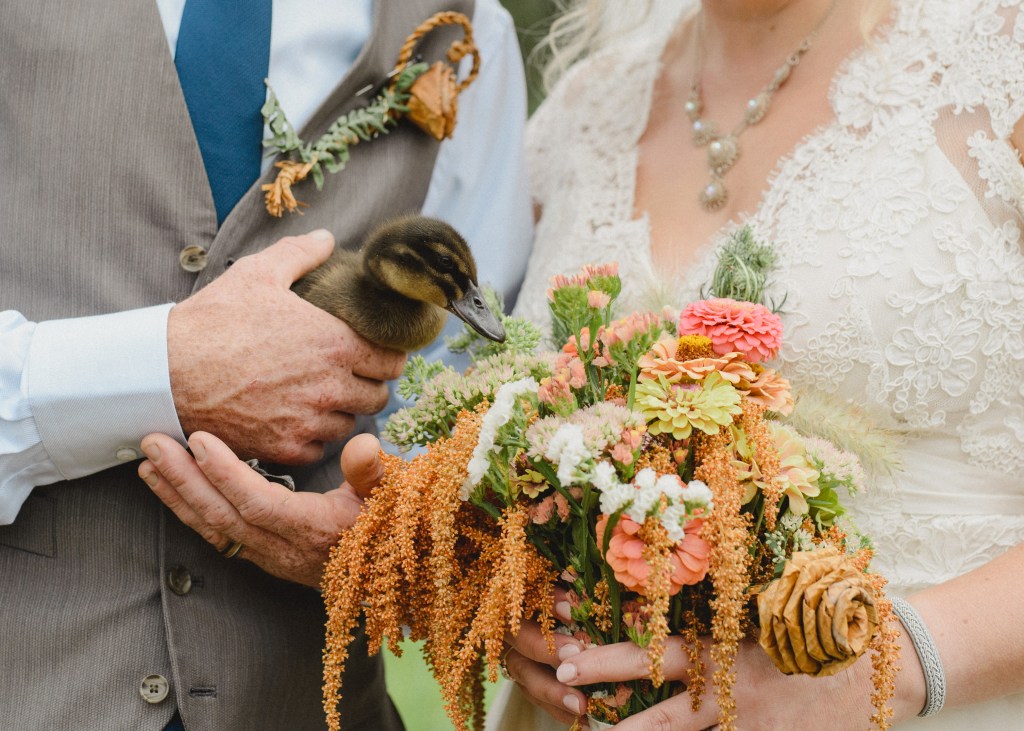
    ML_PattyB

  • Anna Helmer’s Farm Story continues

    Anna Helmer’s Farm Story continues

    Deep winter confessions of lavish plan-hatching and mild delusions, meet work in someone else’s root house. (Just don’t call it mindless.)
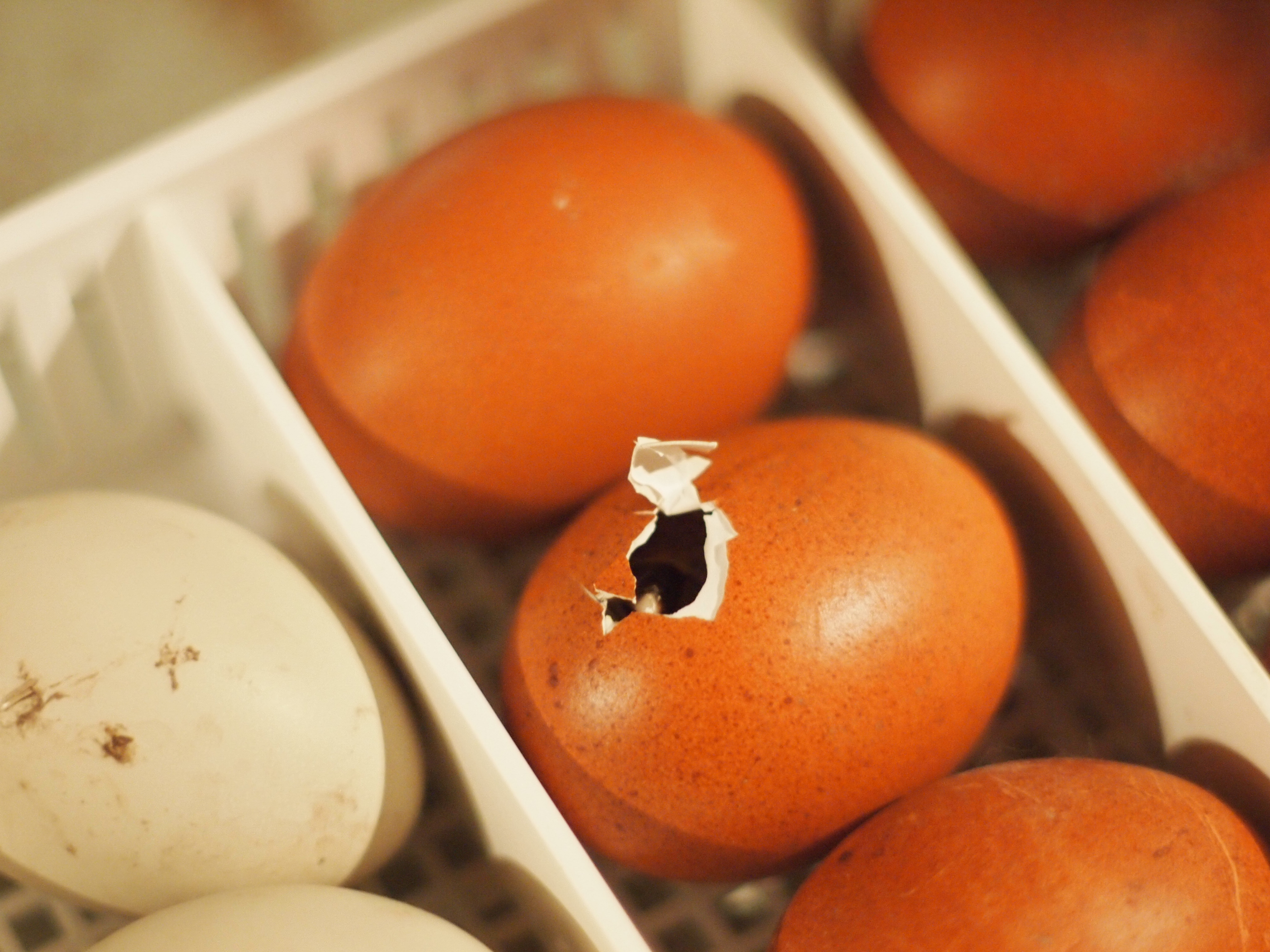
    A farming luxury: to lavishly plan the work of the coming season when there is no chance of starting any of it for at least two months. Cue careless disregard for work. Sloppy accounting of work requirements. Expansive imaginings absent anything but the faintest work alarm bells, easily ignored.

    The carrot crop proposal, for example. With a foot of snow on the ground and the clouds heavy with more, it seems totally reasonable to be planning to plant 2 acres of them this summer. The chefs are asking for more and the customers say they are the best at market. Ergo the ego demands, therefore the farmer plans, hence we can ignore the actual work involved. 2 acres. At least.

    I am not totally unaware of how things will unfold in real life. There will certainly be a privately raised eyebrow when enthusiastic planning first encounters carrot reality and the 5-gallon pails of seed start showing up sometime next month.  Second thoughts will come flooding in, assuming they haven’t already, when I find myself still seeding well into the evening come that day in June. Assuming (again) that I follow through with seeding the entire 2 acres, the subsequent weeding and irrigation requirements will cause heart palpitations in July and August, and the harvest will be frankly sobering, or perhaps borderline terrifying, because it will take for freakin’ ever to get them all out of the ground. And exactly one year from now, on a snowy day in mid-February, there will be tears because by now the unsold remaining crop will be sprouting hairs and getting soft in storage.

    For now, however, it’s a really clever and enterprising idea, worth pursuing and budgeting for. It’s even spawning tangential plans: a cooler expansion. My optimism knows no limits. These days are golden.

    To stay in farming shape, to maintain my farming bona fides now that markets are done for the season, and basically to keep it real, I am moonlighting as a forklift operator at a local seed potato farm, which is not as glamorous as it sounds.


    More precisely, I am stationed at the end of a seed potato sorting conveyor line and every 15 minutes I get to hop on an electric forklift and pick up a 2200lb sack of Red La Soda seed potatoes. I take it to the scale. If it’s too heavy, I remove potatoes; too light and I add them. Weight confirmed, I check that I remembered to slip the tag into the attached tag-holder and I move the sack to the collection area. That done, I return the forklift to the ready position and help my work partner manage the next bag. Twenty-two sacks make a full load on an 18-wheeler. It takes about a day to get it done, if nothing breaks down. It is unusual for nothing to break down.

    I like working on other people’s farms because I love considering a mechanical time-out to be an opportunity to get a walk in the sunshine. When they occur on my own farm, they can be expensive, disappointing and dreaded.

    It really goes on and on, doing the same thing over and over, with one hour for lunch. In these circumstances, a good co-worker makes a very positive difference. I have just the guy. His good humour rarely falters – the one time it did, he had an orange and was completely restored. The other thing I liked was that he never stopped trying to do a good job. There are a lot of challenges to managing 2200lb of potatoes every 15 minutes, none the least of which is staying focused, and we worked as hard on the first bag as we did on the 22nd.

    I am going to stop you right there before you call this mindless work. It is not. I think that phrase was floated by someone who could not handle the pressure of coming up with his/her own stuff to think about. (S)He panicked, quit, and branded it mindless.

    It is not mindless. Once you have sorted out the physical aspects of what you are doing, your mind is free to be engaged. How do you think this article got written? Still and all, it can be nice when there are breakdowns to liven up the day.

    So. Work. Thank goodness I have some to do or my theoretical planning for the summer might be absent a whiff of reality and I wouldn’t want that.

    Anna Helmer wrote a slim volume and put it on Amazon where it is a best seller in that category.

    Portrait by Maureen Douglas.