What is this weed in my garden, or what is this plant on this trail?! Does it have any herbal, medicinal, or edible qualities? When and how could I make elderflower cordial? You can eat ferns!? How can I preserve thimbleberries? How can I save my salad greens for later in the season when I am no longer sick of salad? I hate to waste- what can I do with carrot tops?
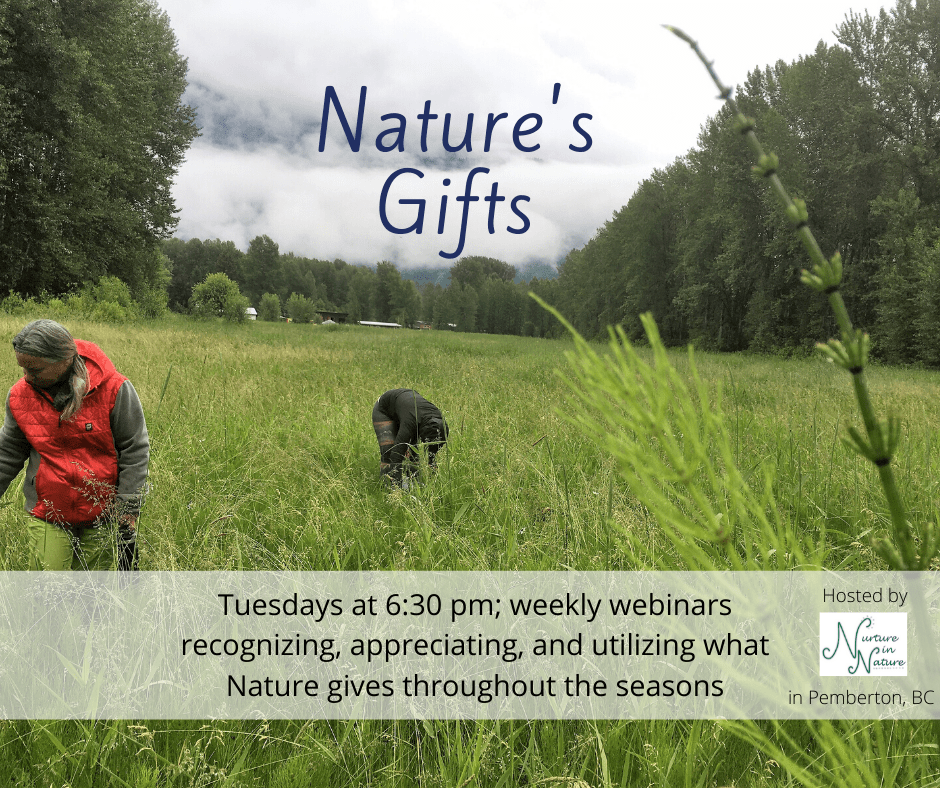
Nature gives us so much for free – if we know when and where to look for her gifts. They are often sporadic, and never last long! So every Tuesday we at Nurture in Nature are offering to take you on a little Zoom walk through our garden and forests to show off what is all around us that we so often forget to notice, and give some tips on how to recognize, appreciate, and utilize the never-ending gifts from Mother Nature. For example – chamomile is out right now!!
We hope that by demonstrating how we connect to the land around us, we can offer insight into how you can cultivate a deeper connection with the place and community wherever you are, be that Pemberton or elsewhere. So join us Tuesday to begin walking a path of connecting more deeply to your food system, community, and the environment, as we search for more sustainable and resilient lifestyles, together.
For the past nine weeks I’d felt a low-level thrum of stress about the winter-mess of my garden. It would spike when I saw other people, in March, as the Prime Minster was giving his briefings in a snowstorm, who were pandemic-proofing their future by getting in loads of soil, going to physically-distanced plant sales, posting pics of their seedlings, their brand new beds. I was happy for them, of course. And happy for the idea that people would turn en masse to gardening.
But I hated them too.
That little frisson of envy and anxiety would perk up at the panic-buying of chickens and the video pleas from West Coast Seeds to please be patient, we’re experiencing unusual demand. I was working and parenting and re-orienting to life in isolation and trying to fit in the occasional mind-clearing walk in the woods. All my garden time in March and April was single-mindedly devoted to weeding the strawberry patch, an epic battle that left me hallucinating invasive wiry grass root systems whenever I closed my eyes. It was a race against time to excavate the plants before they began to flower, signaling May. It was a race against the 7 year old’s tolerance for solo-play. It was a battle compounded by the sense that now everyone else in the world was jumping ahead of me, scooping up all the seeds, all the soil, on top of all the yeast, flour and toilet paper they’d already stockpiled. Oh, hello scarcity mindset, my pandemic dance partner. The things that matter most (stretches of uninterrupted time, kids for my son to play with, seeds, clarity about the future) all seemed in desperately short supply.
One afternoon trail-running, the sudden scent of cottonwood stopped me in my tracks. It was as if someone had spilled a jar of infused oil. I stopped and inhaled deeply, looking around to for the source. “What?” I wondered. “What is it?”
It took a while for me to settle into listening mode, but when I did, the thought arose/the tree I could smell but couldn’t see, said: “When you work with us, you create the relationship that allows us to work with you.”
Had that quiet afternoon, working with my hands, my attention, and the invisible company of half a dozen women who had introduced me to this tree over the past few years, also been a gateway into a deeper relationship with the tree species itself? Could it be that a tree was now suggesting to me, that by doing that, I was opening up a portal of reciprocity, a way in which the plant could now work with me, too?
As I finally declared the Victoria Day long weekend my time to plant, and cleared away mounds of last year’s garden debris from one bed, feeling that little surge of overwhelm, inadequacy, I thought back to my cottonwood-perfume-on-the-trail moment and wondered if maybe, I could just ask the garden nicely to be prolific this season to support my family, and even possibly, to allow me to support other families. After all, as I turned up self-seeded carrots and cilantro and a bounty of worms, it seemed bent on sprouting forth with life. Perhaps we could work together.
What if the Law of Nature is as simple and generous and sensible as this: Work with what you have. It will work with you.
Dr Robin Wall Kimmerer, botanist, professor and the author of Braiding Sweetgrass: Indigenous Wisdom, Scientific Knowledge and the Teaching of Plants, asks her nature-loving students if they believe nature loves them back. They’re always a bit insulted or shocked by the naivete of the question. They’re scientists, after all.
I will always compare my garden to other people’s neater ones, the square angles, black soil, cute little labels, fancy trellises. Mine is chaotic and messy and imperfect. But it’s working with me. I felt the sudden lift of that, eased my trust into it. Some things will get eaten before I can harvest them, by deer or slugs or the kid. That’s part of it. We are impacted by other beings. It all flows. In this wild space, I dropped seeds and found a promise, and a reminder: it’s not all on my shoulders. All these beings and energies and life forms – the seeds, the wind, the rain, the worms – are working with me. Bringing me back, beckoning me back into relationship. Together, we might be okay. In fact, we might even flourish.
I wasn’t going to make rhubarb sauce this year- it needs a disgusting amount of sugar to make it taste good, and then it leaves that hairy feeling on my teeth. It’s not good for me, and it doesn’t feel good, so why spend the time?
But, then I realized what was growing in a patch behind the farmhouse.
Sweet Cicely has the natural chemical anethole that, when cooked, is twice as sweet as sucrose. It grows here in BC, and is a natural, unprocessed sugar. Now I don’t feel so bad about eating rhubarb sauce; it has half the amount of sugar in it, and I like eating it because it doesn’t leave that weird feeling in my mouth.
Recipe:
Note to all, my mom taught me to cook with measurements. But when I am out foraging, it is hard to get “2 cups of rhubarb”. Sometimes I end up with 3. Or 9. So I cook with proportions, and taste test to get it right. Good luck!
1 part Rhubarb, cut into small pieces.
With about 2 inches of water in the bottom of the pot so the rhubarb doesn’t burn, bring to a boil and let the rhubarb break down and become saucy and thick.
Once it is about the desired texture, add 1/2 part diced sweet cicely.
Add1/4 part of sugar, let it boil until you can no longer taste the liquorice flavour of the sweet cicely.
You can add other fruits, like strawberries, and lessen the amount of sugar you need even more.
Enjoy your rhubarb sauce on vanilla ice cream, in pies, or on yoghurt and granola for breakfast!
I wouldn’t say it is healthy, per se.
But at least it isn’t as unhealthy as it was, and it came mostly from my backyard!
Community gardens – they allow for humans, plants, food, and wildlife to come together in symbiotic relationships. And now we have a new one in Pemberton!
This slideshow requires JavaScript.
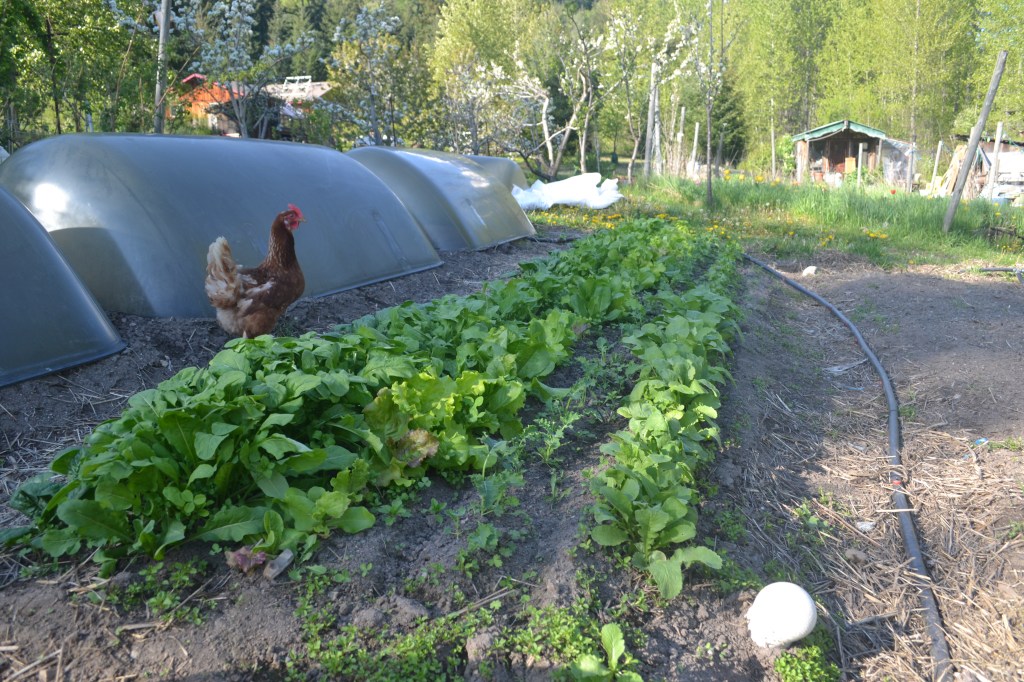
Here at Nurture in Nature, we have 15 Pembertonians joining us on-site for two hours each week to maintain this communal permaculture garden. Everyone comes once a week to participate in the cycles of gardening, so the daily workload is shared amongst the group and we all get a weekly harvest. You can see in the above gallery we have come a long way so far this season! Thanks again to Sea To Sky Soils for helping so much with the initial setup!
So far, we have harvested cotton buds, nettles, fiddleheads, dandelions, wild mint, spruce tips, and sweet cicely from the wild side of our garden. From our cultivated areas, we are already harvesting salad greens, heads of lettuce, kale and collard greens, and a plethora of herbs such as mints, lemon balm, oregano, summer savory, parsley and thyme. I have seen some pretty creative food ideas coming from the garden as we as a team learn how to create and share a yield as a community, but also how to appreciate what Nature is already offering without any work on our end. Cotton bud tinctures, nettle pesto, dandelion honey, peppermint brownies, herb butters and teas have all been made by our gardeners. Many of us joined this garden because we just didn’t have the space at home to grow our own food, so we can already see dramatic change towards resiliency for those of us currently involved!
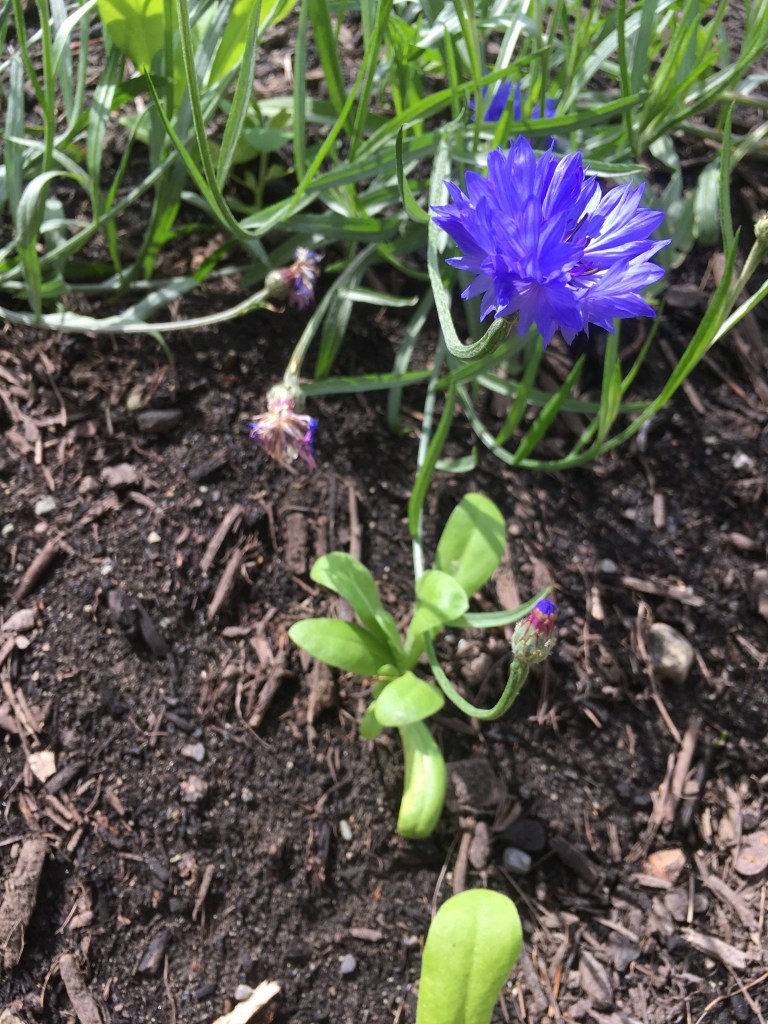
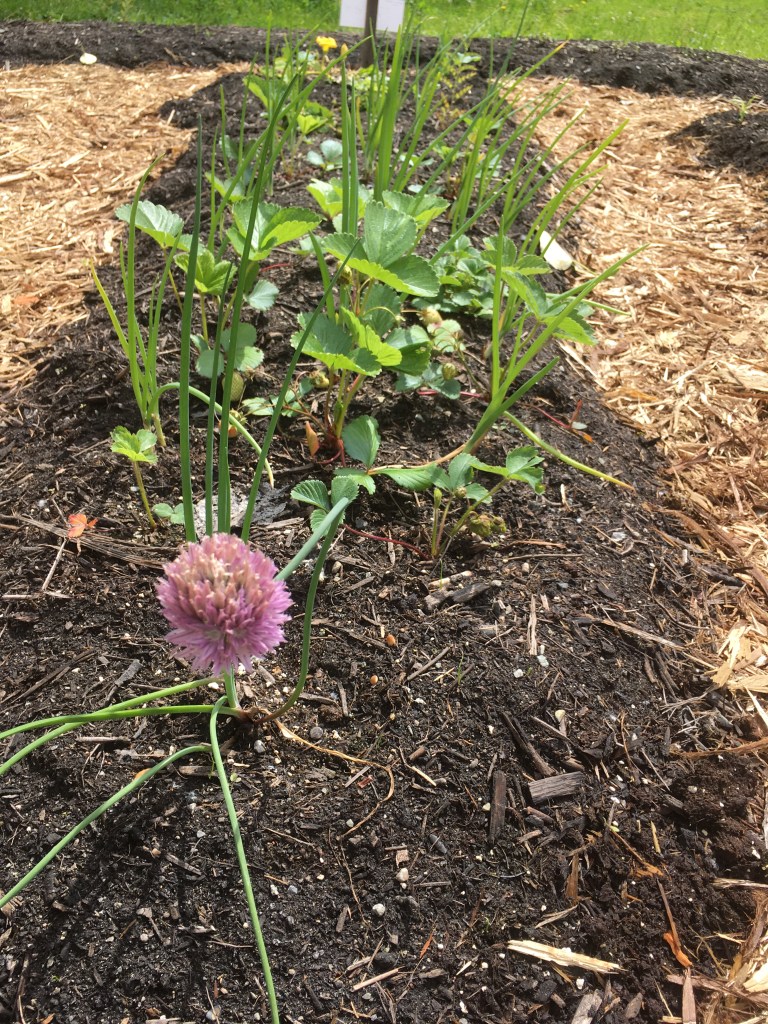
My favourite aspect of permaculture gardening that I have been able to share so far this year is succession planting. Check out these pictures, as we are now harvesting our biggest lettuce heads, we are freeing the carrot and beet babies that are hidden underneath – can you see them? How about the parsnips coming up under the peas, and the little lettuces that will replace the bigger ones when we pull them?
The web that this garden is creating is already visible and tangible, and it is only a month old. We have new friends, weekly connections with people and our environment, and a deeper understanding of our food sources as well as gratitude for fresh nutrition. And the colours are only just beginning to blossom. What else will this new community garden bring?!
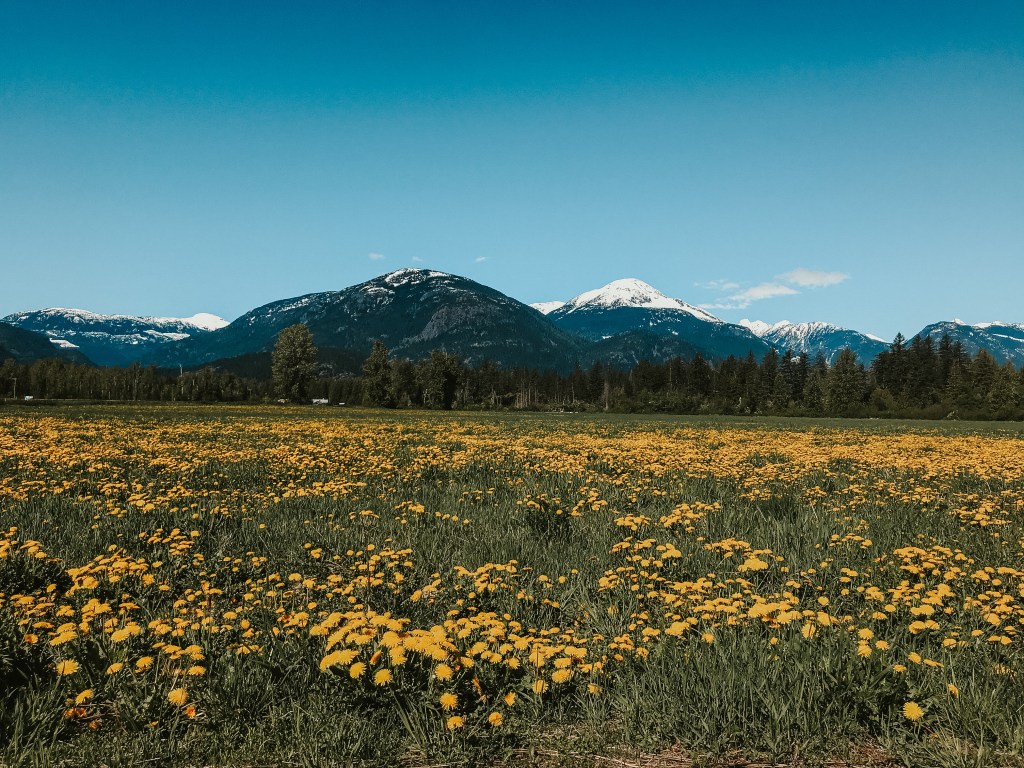
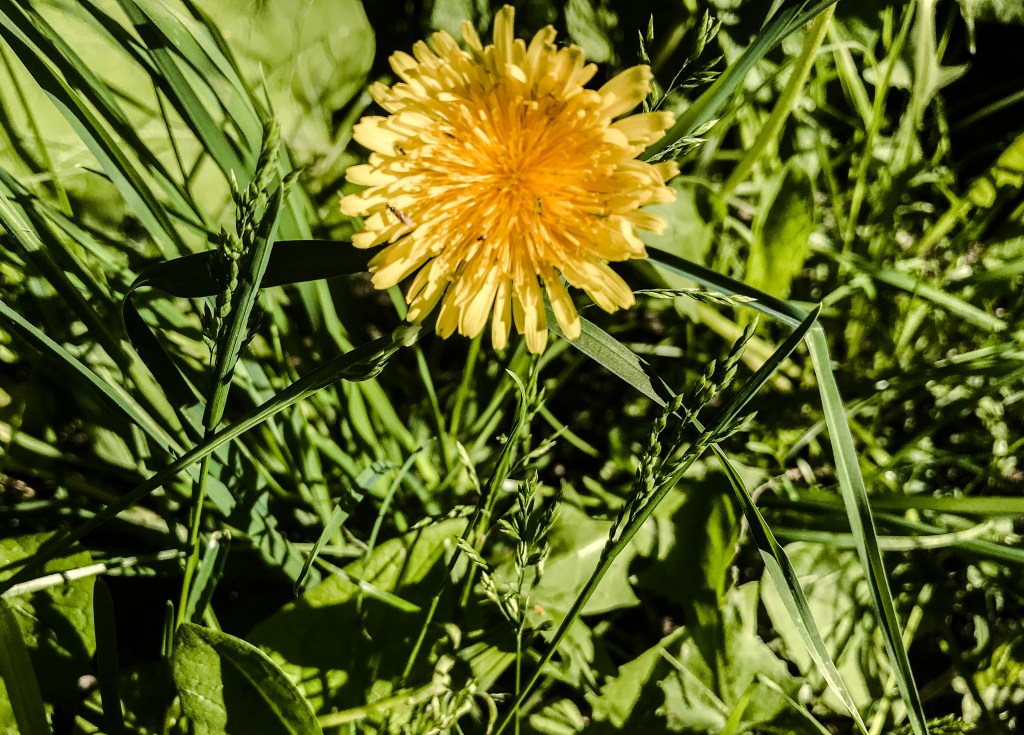
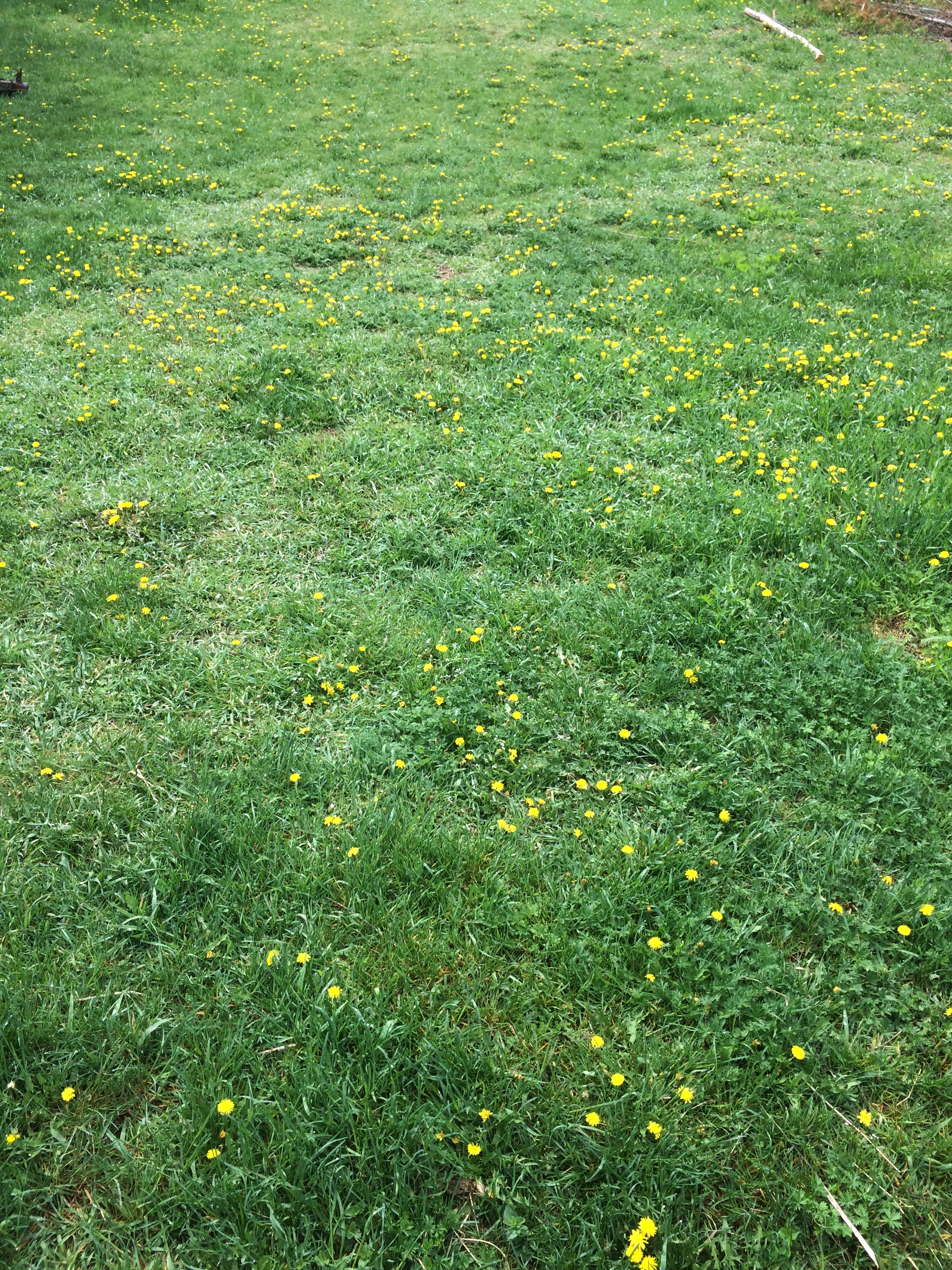
This spring I have been truly taken with (or perhaps a better way of saying it would be: OBSESSED) with dandelions! Yes the weeds everyone attempts to terminate that spread easily upon crisp green lawns!
These past few years I decided to make a pact with myself, to get in touch with some of my ancestral roots and learn more deeply their simple ways of existence and so, I have been exploring a deep pull within: the vast knowledge of wild edibles!
As a young girl I always told the world that my favourite ‘flower’ was a dandelion. This remark was often met with scoffing or a simply worded statement “Dandelions are not flowers, they are weeds.” I didn’t know the difference, all I knew was that they looked like small puffs of sunshine that occasionally would turn into a fun toy that you could tell the time with. As an adult it has been many years since my dandelion days and I’m thoroughly proud to say they are back!
As a vegan, a vegan cook and a self proclaimed kitchen witch, I have delved deep into the succulent yellow petals of our local friends and from root to tip I have explored all of the wonder this plant provides. Before I move onto the incredible recipe that features this wild edible, the health warrior in me wishes to share some fun facts about these bountiful beauties:
Dandelions contain fibre, vitamins A, C , K, E, folate, small amounts of B vitamins and minerals including iron, calcium, magnesium and potassium.
You can consume the roots, the flower and the leaves!
Dandelion has been used for thousands of years in both Ayurvedic and Chinese medicine.
Dandelion is most commonly used as a liver remedy, diuretic and cholekinetic (increases stomach bile)
Dandelions are also used as a digestive aid for diseases of the mammary glands, abscesses, ulcerations and swollen lymph glands.
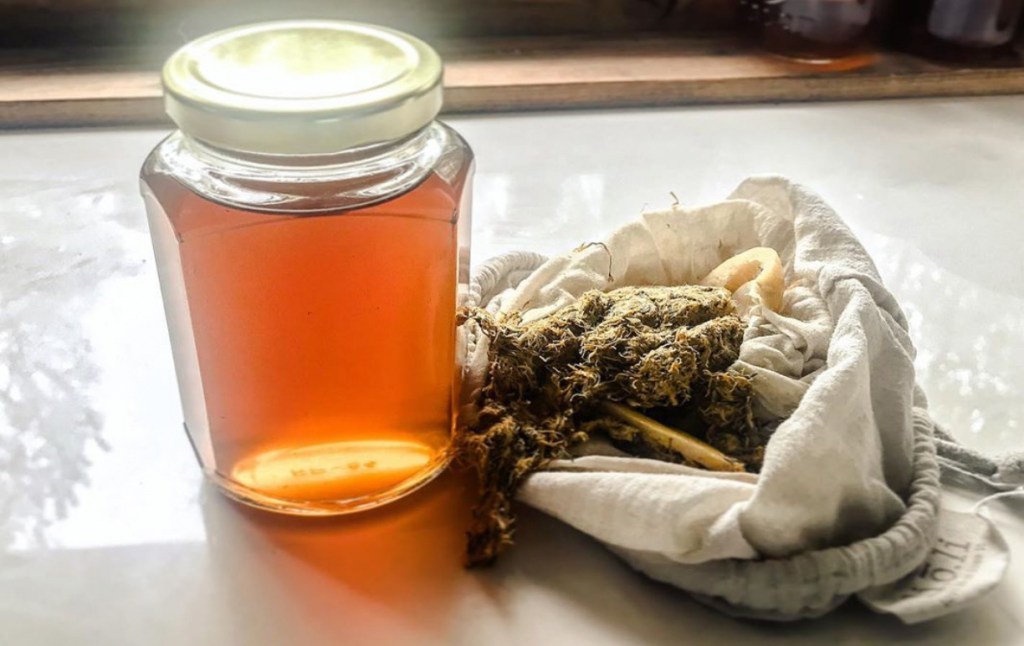
They also can taste incredible! As a general rule the younger greens are less bitter and are great in salads or blanched as a side. The root can be roasted and drank with hot water as a coffee substitute. The heads can be added to salads, dressings, dips or even tempura them and add to a stir fry or salad. I have also added the yellow flowers to breads, baked goods, pancakes, coconut yogurt…you name it! Yet my favourite way to use these high mineral powerhouses is to make traditional Scandinavian dandelion honey! This is very simple, delicious and a great way to add a little sweetness to your desserts, morning pancakes and beverages.
Recipe:
2 cups of dandelion heads (presoaked in water, 1 tbsp vinegar for 10min and strained)
2 tsp vanilla extract
1/2 lemon
Organic sugar of choice
Water
In a medium sized pot cover the lemon, vanilla and 2 cups of dandelion heads with water. Bring to a boil and simmer for 15min, allow to cool and place in an airtight container in the fridge overnight to infuse. Next day strain out the solids using a nut milk bag or strainer. Measure the liquid you have in a jug, typically it should be around 1.5 – 2 cups. Match the same ratio with your organic sugar of choice. Bring the dandy liquid and sugar to a boil. Keep a close eye on it until it gets thicker and turns a deeper colour (around 15min.) Once finished add to a clean jar, you can store this in the refrigerator for about 1 month and enjoy in any way you please!
It tastes remarkably like honey, is a sweeter rich in vitamins and minerals and just might be the best thing you have ever tried on pancakes!
Spring comes on fast and furious. One minute (or month), it seems, I am scratching seeds into half-thawed ground and the next I am watching Red Russian kale and arugula flower and spinach go to seed.
I have watched crocuses, hyacinths, tulips, lilacs, forget-me-nots and dandelions bloom, and now am into rhododendrons, lupines, alliums, columbines and irises. The bees are happy at work, while ants are partying on my peonies.
I’ve been relishing my time in the garden with a different rhythm, since COVID-19 interrupted life as we knew it. I sleep later, work during off hours when the kids are outside, and stay up at night watching videos about growing things. I drink coffee in the morning, but often forget to eat until later in the day when my hangry panic sets in. Thankfully, we are moving out of months of buying greens at the store into eating our own home-grown.
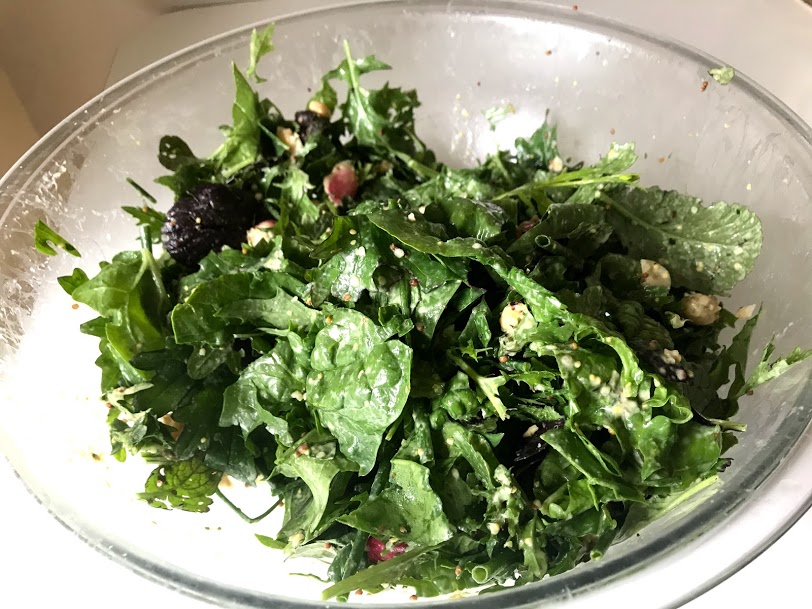
This is the salad I wolf down in the afternoon these days:
Before
Get yer greens salad
Ingredients
Large bowl of greens (mine included kale, arugula, spinach and spicy mesclun greens today. Sometimes, I’ll add dandelion leaves. And my kids prefer romaine mixed with the darker wilder greens.)
Radishes, if you have them
A few green onions or chives
Herbs, if you have them (parsley, dill, cilantro or basil)
Dressing
Large heaping tablespoon of grainy mustard
Large heaping spoon of tahini
A couple of tablespoons of hemp seeds
Splash of apple cider vinegar (mine is infused with dandelion flowers)
Splash of flax seed oil
Tablespoon of nutritional yeast
Splash of maple syrup or fresh local honey
Chopped garlic, if you have some (we’ve run out of last year’s garlic, so I used a sprinkle of garlic, hot pepper salt flakes instead)
Directions
Wash greens thoroughly and chop or cut with scissors into bite sized pieces; Dry in salad spinner.
Whisk dressing ingredients in a large bowl, adding more or less tahini depending on how thick you want it.
Add greens, radishes and onions to the bowl with salad dressing and toss vigorously or massage with your hands.
Add extras if you like. Try chickpeas, roasted yams, pumpkin seeds, toasted sesame seeds, smoked tofu, grated carrots or ginger, or red peppers.
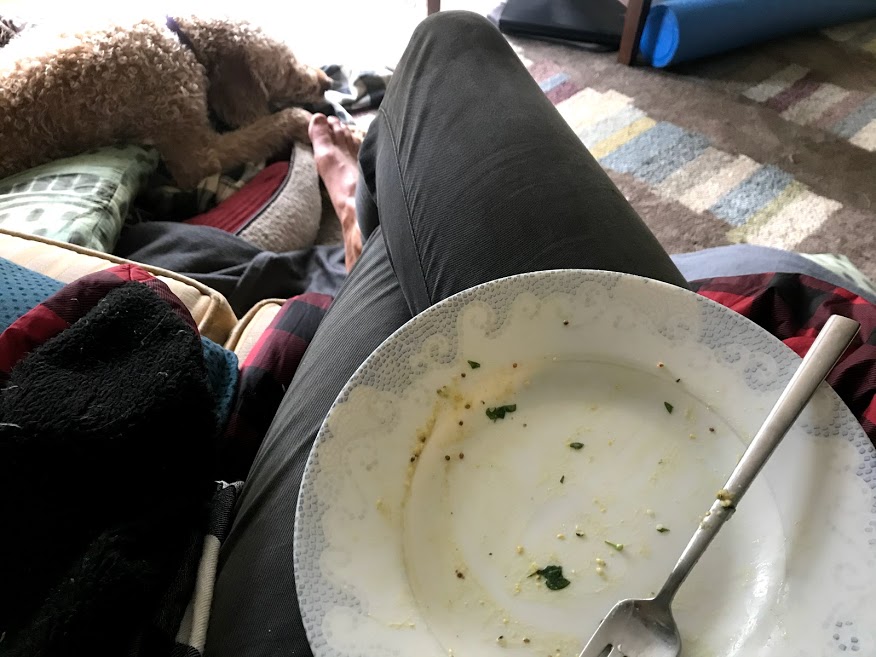
Resist the temptation to eat the whole bowl if you offered to make lunch for your partner. Enjoy ’til the next ravenous feast!
After: empty plate, full belly, dirty garden jeans and happy dog at my feet
Could a food chain that whispers of global vulnerability make me reconsider the value of my yard as part of my personal supply chain? I cultivate weeds better than anything. My yard is a festival of dandelions.
There is nothing to be gained by declaring war on this. But everything to be gained by researching all the medicinal and nutritional benefits of dandelion and declaring it my most successful garden crop ever. So, with a nudge of encouragement from Natalie Rousseau, whose plant ally for early spring in her 13 Moons course was dandelion, I cooked up a dandelion saute, as the evening’s serve of greens.
It tasted… so… weedy.
The seven year old sniffed and said, “No.” Husband’s verdict: “not for the permanent recipe collection.”
I went to instagram to announce this state of affairs.
And was encouraged by friends not to give up.
So I did some more research. They are SO GOOD FOR YOU. My coffee-to-wine IV line slash coping technique has short term effectiveness, (upping and downing me as required), but I’m not in love with the long term consequences (like looking haggard. I embrace witchiness but I’m not ready to be a hag just yet.) The promise of clear skin alone convinced me to keep trying – if not to disguise or balance the taste of dandelion, then to acquire.
Two weeks into my experiments with dandelion (and with even more available in my yard, yay abundance!) it’s some combination of all of the above.
Susun Weed has taught that information in wild food is healing to our cells, it nourishes them with fewer glitches, it returns us to a state of health that aligns with an older Earth, because the receptor sites for minerals in our cells, are primed for the nutrients found in wild food.
the optimum nutrition is the nutrition from the wild plants. ~ susun weed
Dandelion is a member of the Asteraceae (daisy) family, a spring tonic and blood purifier. Dandelion leaves and roots relieve chronic stagnation in the liver, while the flowers can relieve a stagnant depressed spirit.
“It grows almost anywhere: wild in fields, lining trails, in suburban yards, breaking through cracks in city sidewalks. Its constant presence is a reminder of its persistence to live as long as it can under any condition.” ~ Christine Buckley, Plant Magic
It was actually imported to North America as a spring green and boasts the scientific name Taraxacum officinale, meaning the official remedy. Like, for everything.
Its strengths are as a tonic, diuretic, alterative, antirheumatic, bitter, cholagogic, hepatic, exhilarant, mild laxative and nutritive.
Dandelion – Are tap-rooted biennial or perennial herbaceous plants, native to temperate areas of the world. Dandelions are thought to have evolved about thirty million years ago in Eurasia, they have been used by humans as food and herb for much of recorded history. Dandelions are one of the first plants to bloom in the spring and therefore are a very important source of nectar and pollen early in the season. Its tap-root will bring up nutrients for shallower-rooting plants, and add minerals and nitrogen to the soil. Dandelions are even said to emit ethylene gas which helps fruit ripen.
Christine Buckley, in her new (and highly recommended) book Plant Magic includes dandelion in her herbal arsenal – she makes vodka tincture with the flowers and takes that jar of liquid sunshine as deep winter medicine, confessing it is her favourite plant for being “scrappy, fierce, life giving and cheery.”
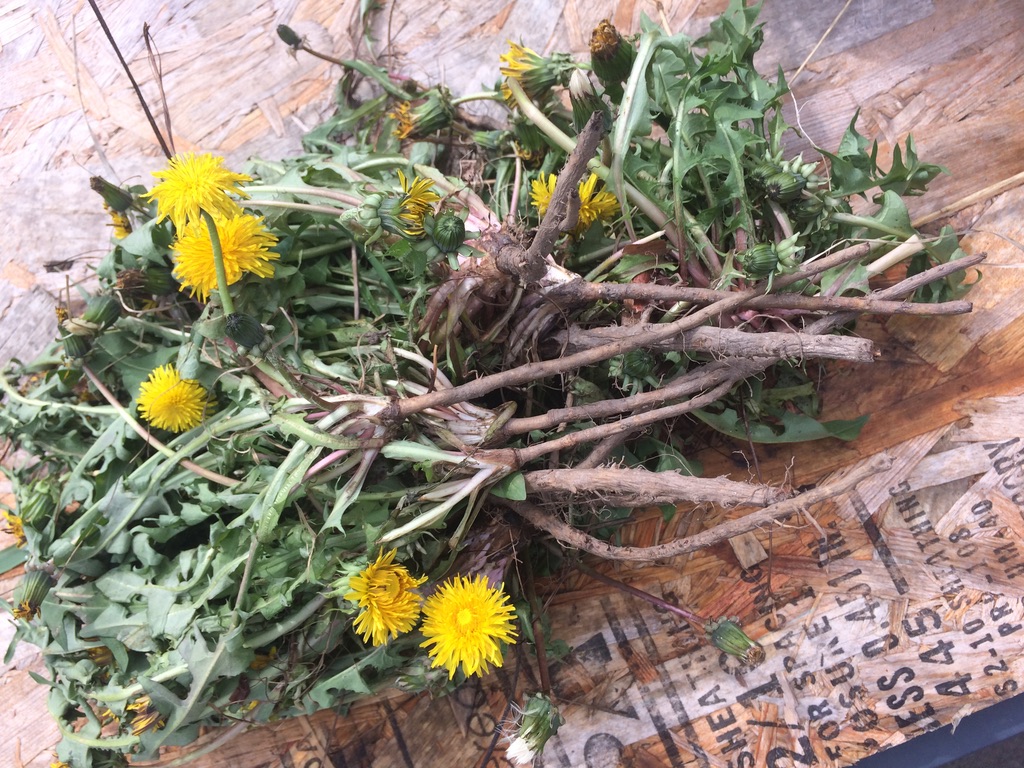
Buckley recommends to use the roots for sluggish digestion – dandelion will not just kick your digestive system into high gear, it also improves bile production in the liver, so you can digest fats and eliminate toxins from your body with more ease. This will reduce inflammation in the body, make your skin look better, help your metabolism and allow the liver to cleanse the blood.
It’s high in mineral content and inulin, a type of fibre, which is an excellent prebiotic.
Are you sold yet?
The leaves are great spring salads – waking up our systems. It’s a tonic, so that means you can take it, every day, and little by little, you will improve.
“It is the ultimate preventative medicine,” says Buckley. And high in potassium, too.
So long as the leaves are green, they’re edible. They become progressively bitter, so start with tender spring leaves. It also is packed with vitamins A, E, K, b6, B1 and C. Temper the bitterness with other ingredients (like plaintain leaves, garden herbs, seeds, nuts, shaved cheese, dried fruit.)
So, with that data fomenting in my brain, my community of wild advisors offered tips on incorporating this super food into my diet.
Christine Buckley’s must-have new book, Plant Magic
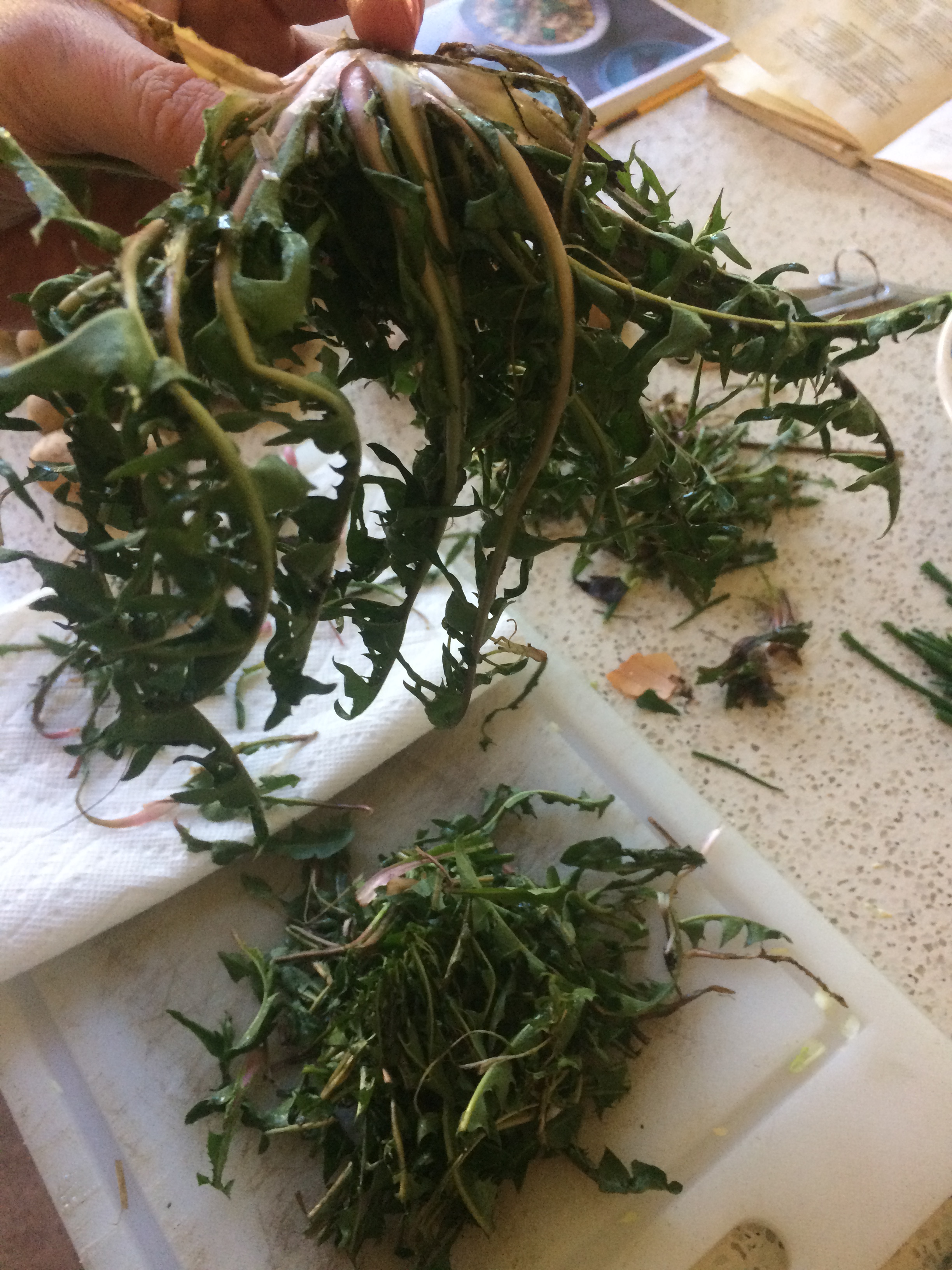
Holly Joseph recommends: “The roots are nice and hot right now. Add to a stir fry, they taste so good! Brush them off under the hose. They are long and thin right now. And taste pretty peppery. I just cut it up right from the garden and put it right into my stir fry. Made it kind of spicy!”
Asta Kovanen’s advice: “My tip is to cut wild greens in slowly. Add them in small percentages to your regular veg and then your palate can adjust without major assault.”
Leala Selina Martin said: “I often will juice them as the larger they are the more bitter. They are so good for you though!”
Sarinda Hoilett advised: “It’s all in the balance of flavours. Macadamia nuts (although gift from heaven) are expensive and hard to find…you can substitute cashews or even avocado and try for a creamy citrus blend to balance the bitter 🍃, And mix them with other greens or drop a few in a sweet smoothie.”
Dandelion Cream Salad
20 dandelion leaves, finely chopped, main stem rmoved
1/2 cup macadamia nuts
1/4 cup diced red bell pepper
1/4 cup coconut water
3 tbs lemon juice
1 tsp Celtic salt
Massage chopped dandelion leaves well with salt to break down the fibre. Let sit for at least 5 minutes. Blend nuts with coconut water and lemon to cream. Mix well to coat dandelions with cream and add red bell pepper. This salad is a wonderful way to get the great nutrition of dandelion with a reduction of the bitterness.
After great success with Natalie’s dandelion cordial, making Christine Buckley’s winter rescue tincture (as I call it the “dandy brandy”) is next on my list.
1 ½ cups dandelion flower blossoms
1 cup honey
1 cup brandy
Put the flowers in a glass pint jar. Dissolve the honey in the brandy by stirring or whisking vigorously together. Pour the brandy and honey over the flowers, label and store in a cool dark place for 6 weeks. Bottle your tincture but don’t hide it away so well that you forget about it by winter.
Pemberton-based clinical herbalist, Evelyn Coggins,advised, after reading this post: “I love to hear this topic of wild medicine/wild food being shared as miraculous, magical news… because it is all that. A weed is just a plant that hasn’t learned to grow in rows. The bitter principal of dandelion is tricky. We like sweet, salty and to some degree sour but bitter rarely. Maybe we are cautious because the toxic constituents in plants are most often present as alkaloids and alkaloids are bitter. It must have been a real learning curve to distinguish between toxic and beneficial bitters. The beneficial bitters aid digestion and many traditional aperitifs employ plant based bitters. Gin and tonic is a good example. Gin is prepared from juniper berries and they are bitter. Bitters act on the bitter receptors on the tongue and start a chain reaction that leads to the increased flow of bile into the digestive tract and all the nutritional value that ensues from there. It is not surprising that the liver leaps into action with bitters since poisons must be metabolized and hopefully rendered harmless by this organ. I agree that one must start slowly when turning to bitter plants but the journey is so worth it.”
I’ve been a client of Evelyn’s and can’t recommend her highly enough.
Now, more than ever, is a time to treat nature as an ally, not a servant/slave, and to behave with honour, humility, curiousity and gratitude.
Just because you use the derisive word weed doesn’t mean this plant has no value.
Finally, leave some for the pollinators. They matter in this lovely web, perhaps more than anyone. Not to mention, the roots reach deep into the soil to bring up nutrients, so they’re working healing magic on the Earth, not just our bodies.
Thanks to Tanina Williams, who first introduced me to the idea of making dandelion jelly, for sharing this video:
As discussed in my last post I think we owe vegans in particular an enormous debt of gratitude. These deadly viruses originate with wild animals in captivity caged inhumanely alongside domesticated animals for human consumption in markets mainly in China, but also it has been reported Indonesia and Thailand. What will happen in future and how and if this will be monitored is another matter.
Vegans are against the use of any animal product for consumption and their choices are truly admirable. We have so many ethical food producers here and ethical and sustainable hunting practices yet unfortunately there will always be people who abuse a shared trust. Also, whenever we purchase packaged meat in the grocery store and are not connected with the hunting of the meat ourselves or the raising of the meat ourselves or by people we know in our own community (shout out to those very important and hard-working people in Pemberton now and how grateful I am to you) then we honestly cannot say for sure that the meat was raised ethically.
So if you find this all too much to process (pun not intended) then you can just go vegan. And if that is too much to process then you can at least go partially vegan. I find vegan eating particularly easy at breakfast and lunch. Oatmeal and oat milk (yay – oat milk has 4g of protein per cup!), toast with peanut butter, etc.
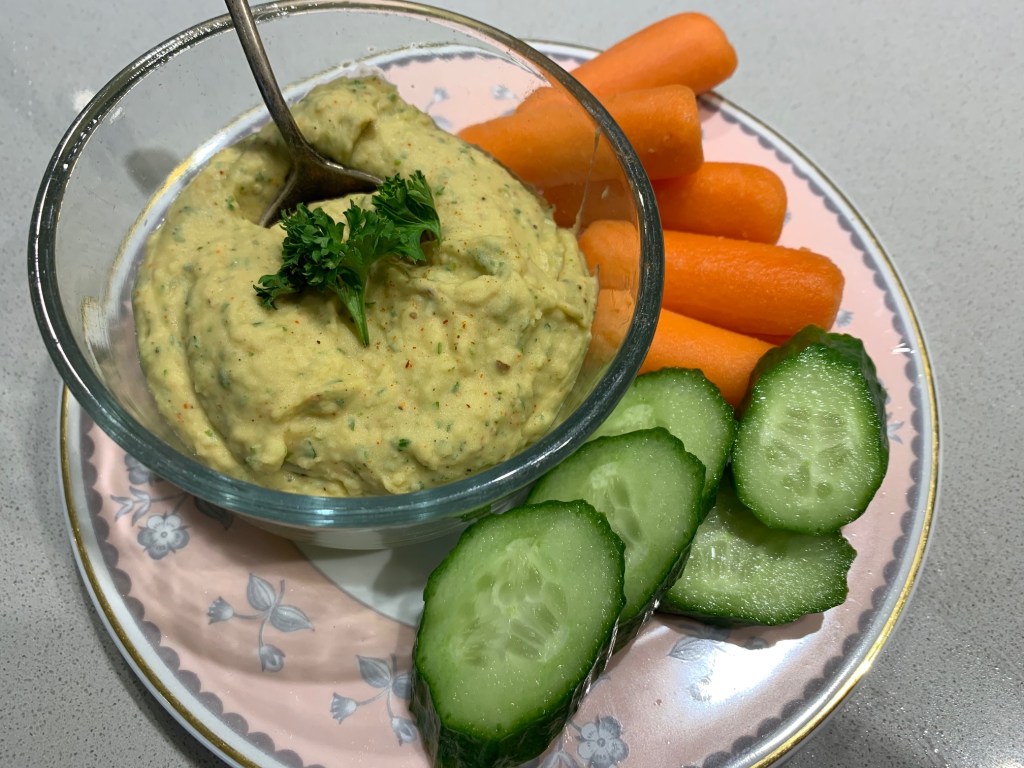
For lunch I like to serve bean dips and veggies and even a light lentil soup. I just tweaked a bean dip I found online that in its original posted form was bland and blah. This one is zippy and fluffy and very delish. Please enjoy and thank you again to the vegan community.
White Bean Dip with Pemberton Garlic and Parsley:
Ingredients:
15 grams of small white cannellini beans
**Method for dried beans: Soak a bag or two of dried cannellini beans overnight. In the AM, drain water and put beans in slow cooker and add water until beans are covered by two inches. Cook on low 8 hours. When tender, put 15 gram portions of beans in containers and freeze for future use.
2 cloves Pemberton garlic
4 dashes hot sauce (I like the Cholula brand from Mexico)
1/3-1/2 cup pure olive oil
3 tbs fresh-squeezed lemon juice
1/3 cup Pemberton-grown parsley
1 tsp salt
1 tsp pepper
1 tsp paprika
Method: Blend all ingredients together in Cuisinart. Adjust salt and pepper to taste. Serve with sliced cucumbers, celery, carrots or sweet peppers.
I’m not sure about you, but I was feeling a bit left out of the club!
Since the start of the Coronavirus pandemic many people have either been laid off (hopefully just temporarily) or have had to close their businesses to control the spread. I am one of the lucky ones in that my 40-hour work week has remained, with only some minor changes to my schedule. However, it did mean that while everyone else was discovering the joys of breadmaking, i.e. different starters and best methods, albeit when flour and yeast were available, I was stuck in front of my computer screen!
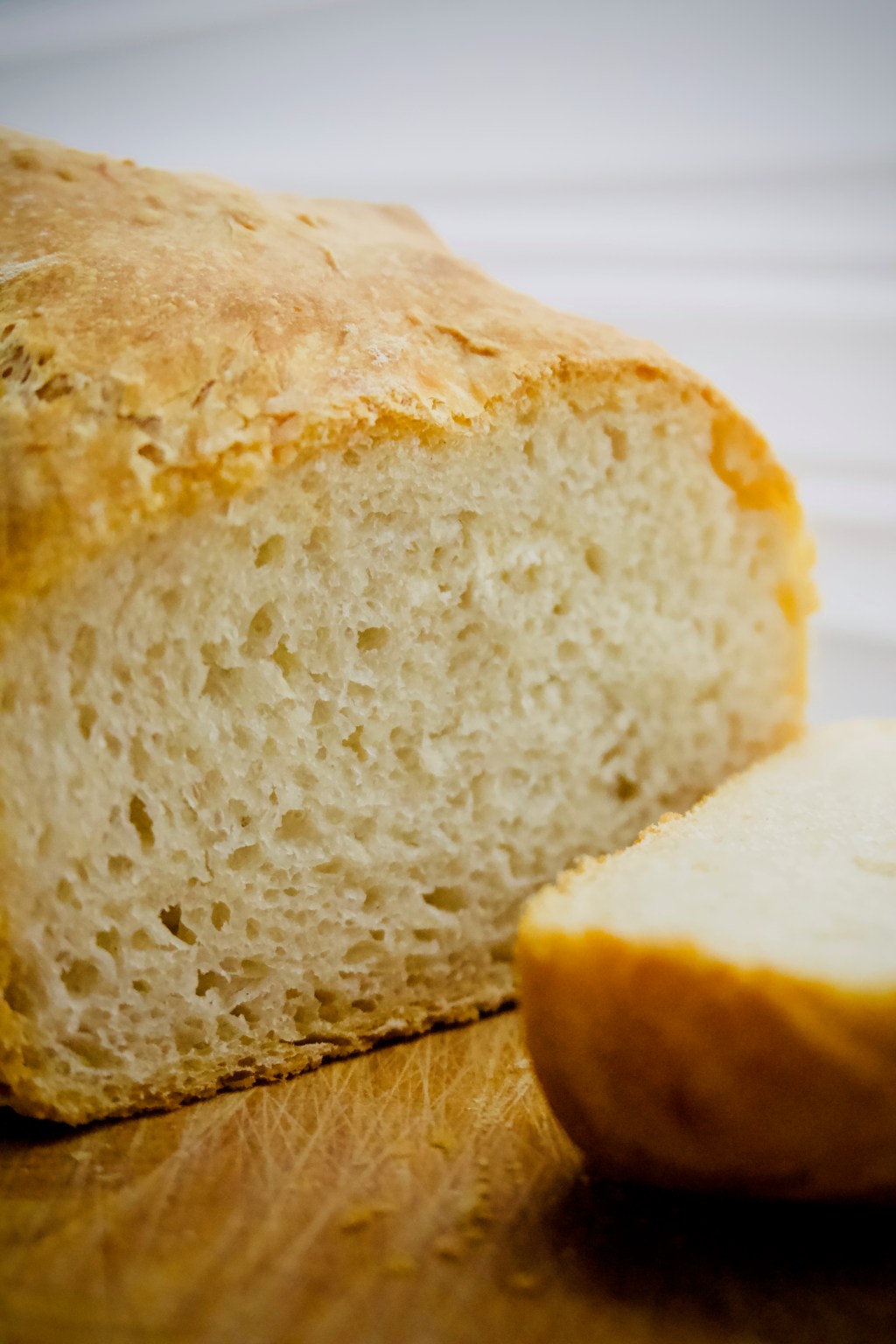
A little Pinterest research later I found a No-Knead Bread recipe that claimed it was “crazy easy”! And it was! Four ingredients, mix them up, leave them overnight to do their thing and then the next day make it into a ball, stick it in a dutch oven, cook it for 45 minutes and ta da – homemade artisan bread!
But one thing still peeved me. The flavour was great, the texture was wonderful, the making of the recipe had been a success, so what was the problem? Well have you tried toasting the middle slice of a round loaf without having to cut it in half first or without trying to toast both ends so that you end up burning the middle and setting the fire alarm off? No? Me neither!
So the next time I made the bread, when it came to shaping it into a ball I tried to make it an oblong instead and used my lasagna dish to cook it in. The result was better but the slices were still not toaster friendly.
And then I came across this No-Knead Bread hack. Instead of shaping into a ball, flatten it a little, then fold it in 3 and stick it in a [greased] traditional loaf pan.
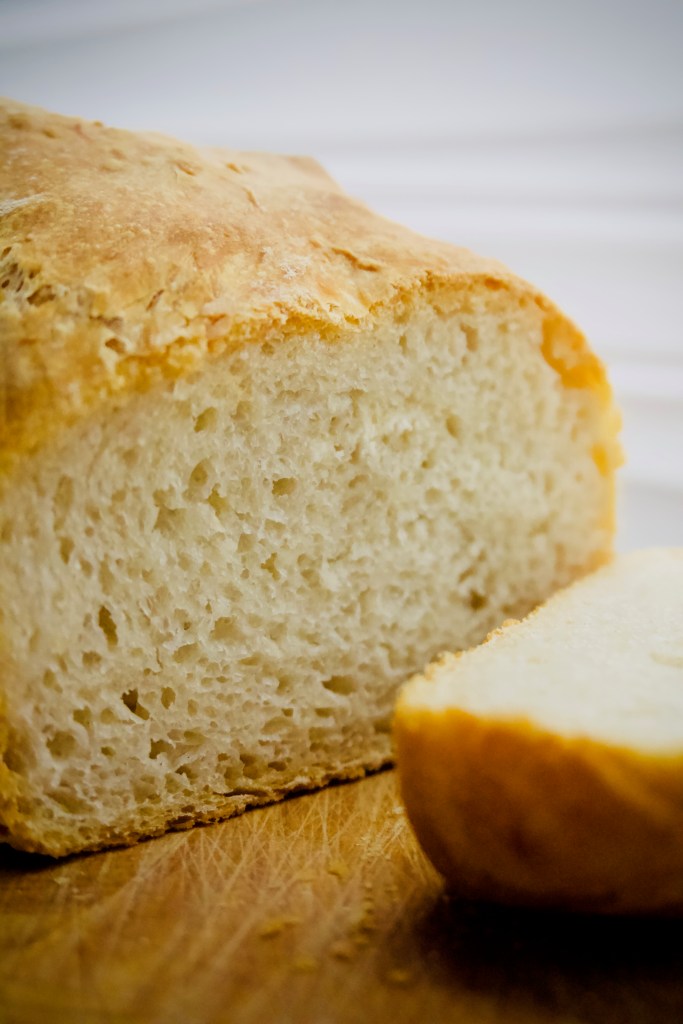
So far it looks like it may have worked. 🙂 It looks like a normal loaf and should fit in my toaster no problem and will be easier to cut as it won’t be wider than my bread knife. This could turn out to be a complete success and it may be one thing I don’t have to buy at the grocery store anymore. (Sorry Pemberton Valley Supermarket). Of course, the proof (no bread pun intended) will be in the eating!
Ingredients
(Makes 1 loaf)
3cupsall purpose flour
1teaspoonsalt
1/2teaspoonyeast
1.5cupswarm water
Directions
In a bowl, stir the flour, salt, yeast and water until combined. Cover with plastic wrap and rest at room temperature for 8-24 hours.
Turn dough out onto a well floured surface.
Sprinkle a little more flour over the top of the dough and knead the dough just two or three times until the flour is incorporated and the dough is no longer bubble-gum sticky.
Flatten into a Rectangle – Use your fingertips to gently flatten into a rough rectangle. If the dough is sticking to the counter, sprinkle a little flour underneath. Try not to use too much flour, though, or else you’ll have trouble getting the dough to stick to itself once you shape it.
Place the shaped loaf into a greased bread pan and let it rise until it’s just starting to crest over the rim of the pan.
Turn on the oven to 450° to pre-heat about 20 minutes before baking.
Just before baking, rub a little flour into the surface of the loaf and cut a slash or two with a serrated knife.
Bake the loaf for 45-50 minutes, turning them once halfway through so they bake evenly. The loaf should be golden-red with a few toasted brown spots. Shake out of the pan and tap the bottom with your knuckle – if it sounds hollow, it’s done! If you’re not sure, check the internal temperature. Bread is done when the centre registers 190°.
Cool before slicing (and slathering with butter!).
You know when you go on a tropical vacation in the winter and at your destination, the locals are wearing hats, long sleeves and pants. You strip down, head to the beach only to get sunburn and heatstroke? Eventually, after a week, you get used to it. Upon return, that first blast of cold at the airport feels like the Arctic, yet people are wearing shorts!
Plants experience the same affect, perhaps even more because it happens gradually at a cellular level. The more robust the cell walls become, the hardier the plant.
Every living thing has preferred conditions. Plants are grouped into zones to help guide gardeners to choose plants that will survive in their climate. It is based on the worst weather extremes for the area: Coldest temperature, number of frost free days and exposure. It’s good to know your zone before you waste your time and money on something that won’t thrive. Zones can be pushed higher by starting plants indoors, protecting them with cloth, overhangs, windbreaks, a south facing wall and greenhouses. Global warming is also changing things and most areas will be up-zoned in the near future.
Microclimates exist in all zones. Sunny south facing protected areas can be a full zone or more higher than a cold, windy, shady frost pocket. Understanding your microclimates on your property can determine whether you will succeed or not. It’s something you need to constantly pay attention to, and even make notes, if you have to. The smallest changes can make a big difference.
Slowly, plants need to adapt from one environment to the other. Our intervention is called “hardening off”. Plants started indoors are used to the warm cosy, calm and diffused light. If you put those out right away they will most likely get shocked by cold nights, wind, pounding rain and scorching sun. The trick is to, over the course of several days, slowly leave them out in their new environment a little more each day, paying attention to extremes in which case you will have to leave them indoors or add extra protection.
When buying plants in the spring it’s good to ask the grower to what extent they’ve been hardened off, if at all. You may have to do it yourself. Something few consider. Many tropical plants in Florida, grown for export as houseplants are raised under shade cloth, not because they don’t tolerate sun, but because they will eventually live in someone’s living room. It works both ways.
When to plant your starts or seeds outside is also tricky. Seed packages are only a rough guideline as they can’t possibly know everyone’s circumstances. Even experienced gardeners can’t rely on calendar dates, as every year is different. It’s part intuition, part trial and error and partly luck. Those in tune with nature will know when to plant something by biological clues related to the weather, like when the crocuses sprout, the ice on the lake melts, you see the first Robin or the forsythia blooms. This study is called Phenology and is the most accurate method. The even more in tune will take biodynamic guidance into account such as moon cycles, the almanac and spiritual doctrines to plan schedules, making things even more complicated to organize.
Regardless, all good farmers are aware of the weather and check the forecast constantly.
Starting some things early can be as detrimental as starting them late. A root-bound start can suffer and be stunted. A plant left too long indoors on a windowsill can get leggy and fall over searching for the sun. It’s good to know how many days it takes a particular variety to mature. Transplanting earlier may serve no benefit.
Most plants will survive marginal temps above freezing. Few do anything and stay in a state of statice between 1-6 degrees celsius. Some tender annuals such as basil will perish at a damp 1-2 degrees. Transplanting on a windy day is terrible as it knocks them over, and sucks the moisture from the plants and soil, through transpiration. Some things that have a short lifespan may need successive planting to stagger the harvest. Cool loving crops may only work in spring and fall. and will quickly bolt in the summer. Late maturing species may need to be brought indoors to finish off or to spend their dormancy. Hardening off is also required to adapt in this case , now humidity and introducing pests indoors becomes a concern. Plants are fickle, you need to get to know them personally.
There are obviously so many factors to consider: The bottom line is that you have to treat all your plants like dependents and provide the best care for them from the elements as possible. You have to guide them through life, like children, until they are strong enough to go at it with little intervention. You can never assume anything, be complacent or lazy. What if it was your infant out there? How would you care for it?








 3 tbs lemon juice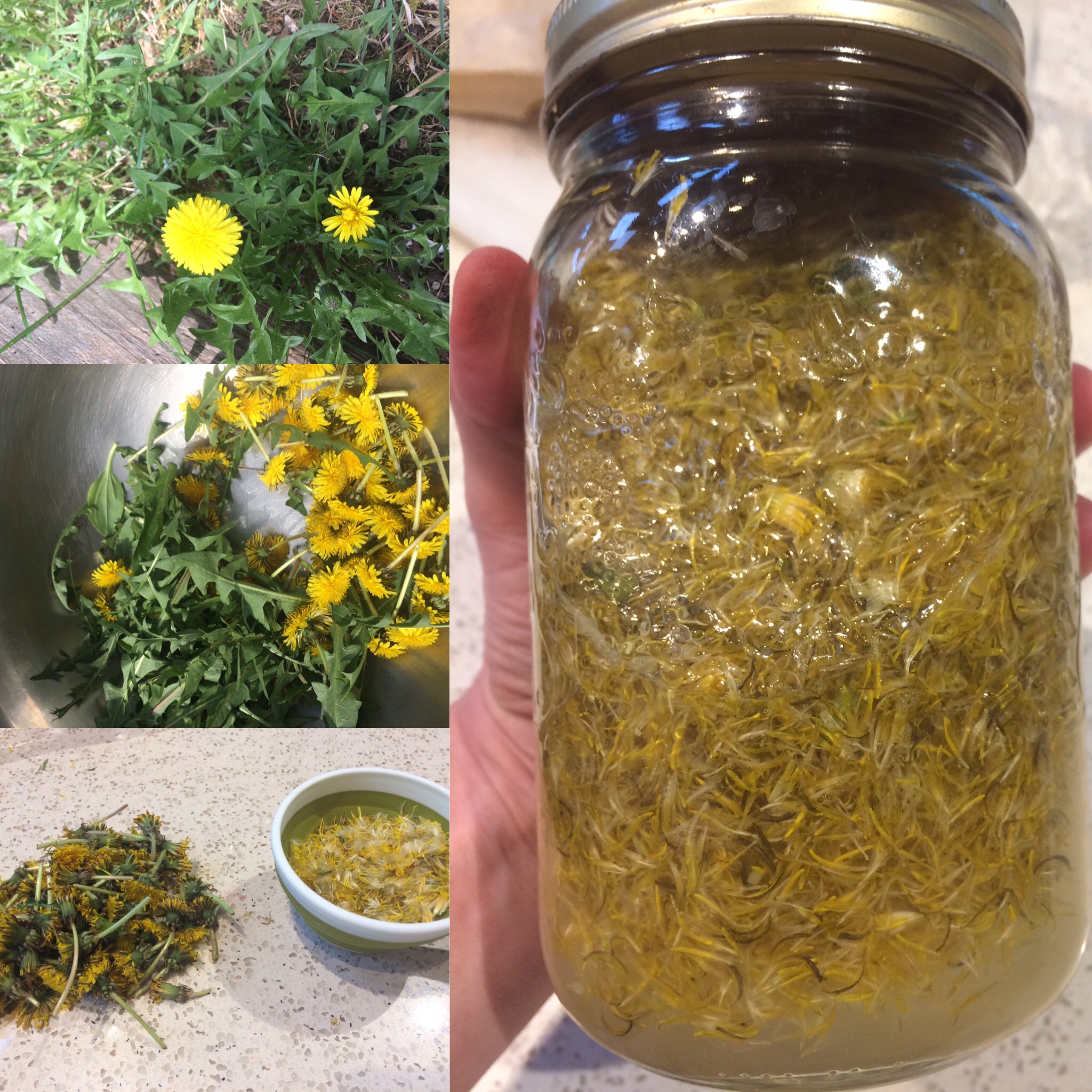



 Traced Elements