Category: pemberton

  • Burn Your Plan

    Burn Your Plan

    A very long time ago, I passed a man on a couch at Burning Man Festival. It was so late it was almost morning, and the sun had just begun to paint the edges of the mountains with the faintest of light. The man struck up a conversation. And as I warmed my hands at the small fire he had lit at the edge of the road, he told me something that has come back to haunt me more times then I would like to admit.

    “You know” he said, hanging in the pause to build up the effect, “sometimes you have to plan your burn… and then burn your plan.” 

    In this rural, beautiful, messy, animal filled life- where some of the beautiful things you want to create never happen because you have to fix fences instead, and you show up at the grocery store wearing boots covered in muck no matter how hard you try to remember to change them- burning your plan is inevitable. And actually, I think it makes for more love filled creations most of the time. In being willing to let the universe lead the dance every now and then, we make space for magic to happen. And when we have magic, well then anything is possible. We do need a bit of a plan to start with, otherwise we would never get out of bed in the morning, a container and a direction in which to move. But then the more we can be open to running with what happens in the moment, the more our creations and actions can start to suddenly seem a little bigger than ourselves. And that’s always a good thing.

    I run a horse and nature based teaching business called Mountain Horse School. This past week I ran 4 days of March Break camp for an amazing little group of kids. I was so proud of the design for this camp: I had found the most amazing natural art activities, and had planned everything out as far as two weeks ahead. But then I found I was unable to source one crucial item for each creation. Then the weather was freezing and that changed the plans I had made too, and one of my horses was terribly grumpy, and so I pulled him halfway through camp and let him watch from the bleachers. Given the circumstances, we did the only thing we could: we improvised.
    20180319_131220.jpg
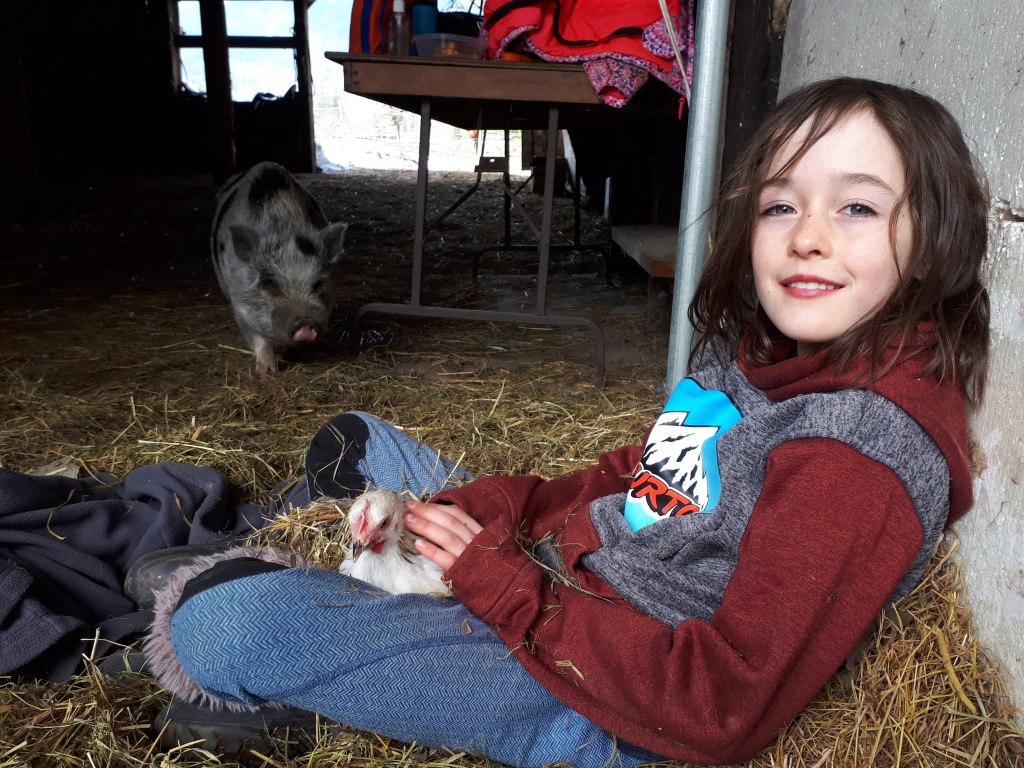
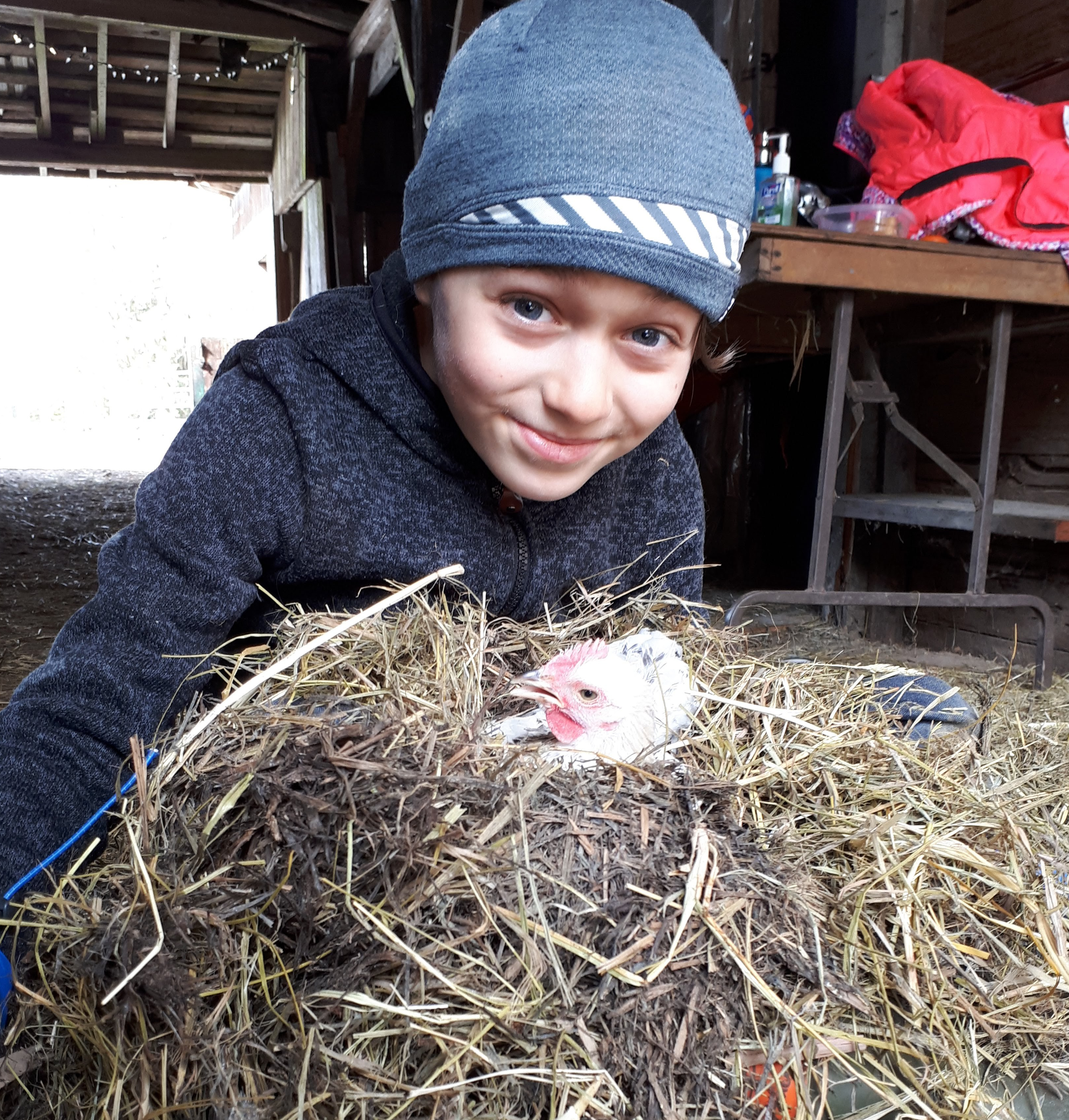
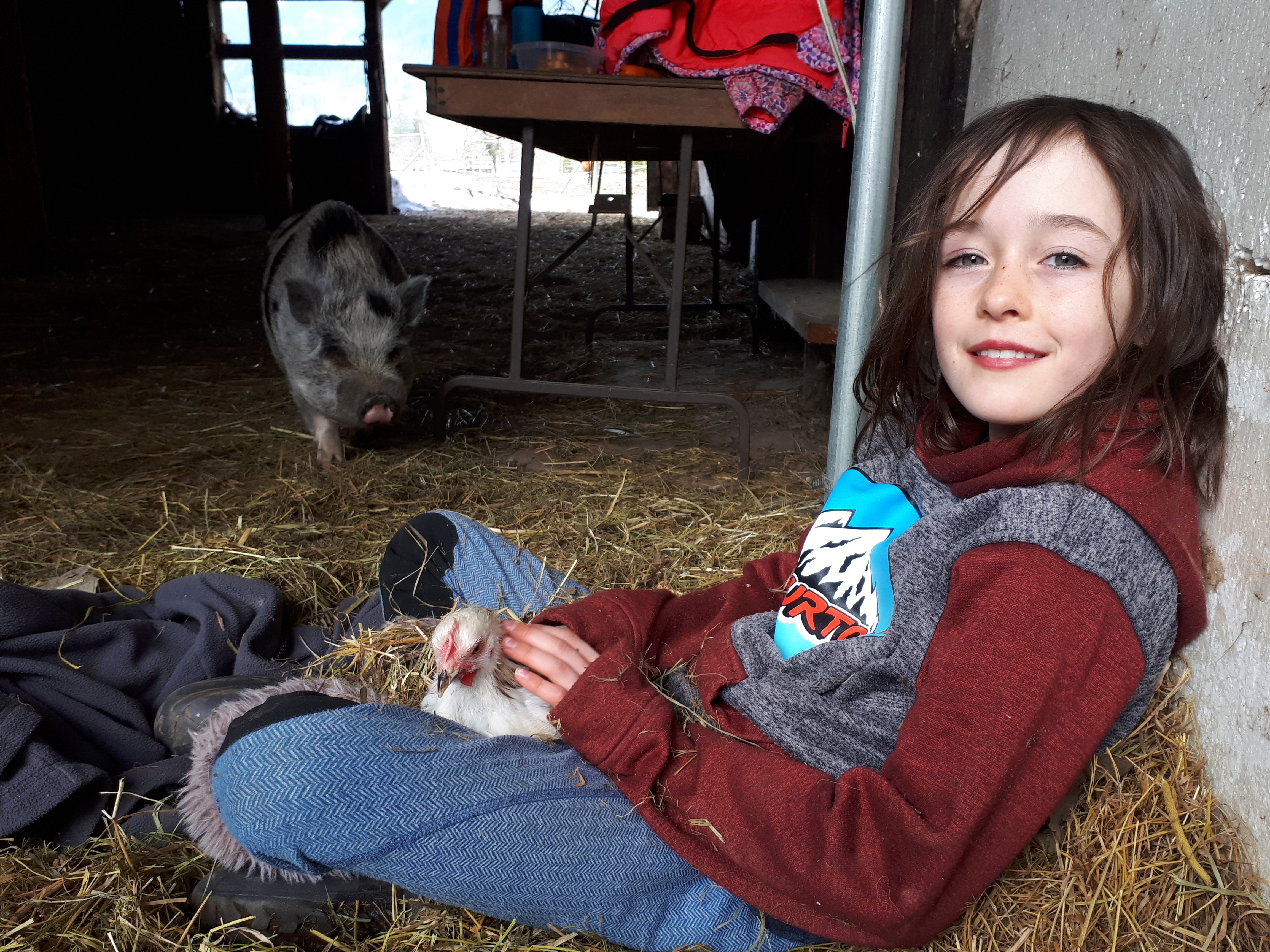
    When things got a little too frantic, we held chickens in our laps and waited until they felt safe enough to close their eyes…

    20180319_131303.jpg

    My newest mare Besa (who is not yet trained to ride and was NOT part of the plan for camp) kept insisting she be included. On the last day as we were getting ready to do horse painting she asked again. I looked at her big black head hanging over the gate, and weighed my options and risks. I was doing something more than that too: I was feeling towards her and towards the empty space between us, to see what might want to happen out of the moment. The look in the mare’s eyes was definitely an invitation.  Ok. I thought. The kids have enough horse sense that if something goes sideways, we will all be able to stay safe. We’ve been studying their behaviour and body language all week, and imagining our way into their thoughts. It might be neat to have them involved in the process of introducing Besa to something new. 

    20180322_140814.jpg
    Juliette introducing Besa to the colour fuchsia.

    Not only did Besa decide it was ok to be painted, she stood in a kind of trance, with a look on her face that I have only seen in horses who are very, very deeply concentrating on the work at hand. She didn’t even shiver her skin when the first wet blue brush touched her skin. And now, two days later, she has not rolled, and the colours shine brightly out from her white coat.


    If you are driving out in the meadows this week and see a black and white horse with a brightly coloured wing, apple, and heart on her side, you are not losing your mind. You are seeing my plan as it has gone up in flames, and the much more beautiful genuine  messy thing that has come in to take its place.


  • Patty B, Pemberton Wedding Duck

    Patty B, Pemberton Wedding Duck

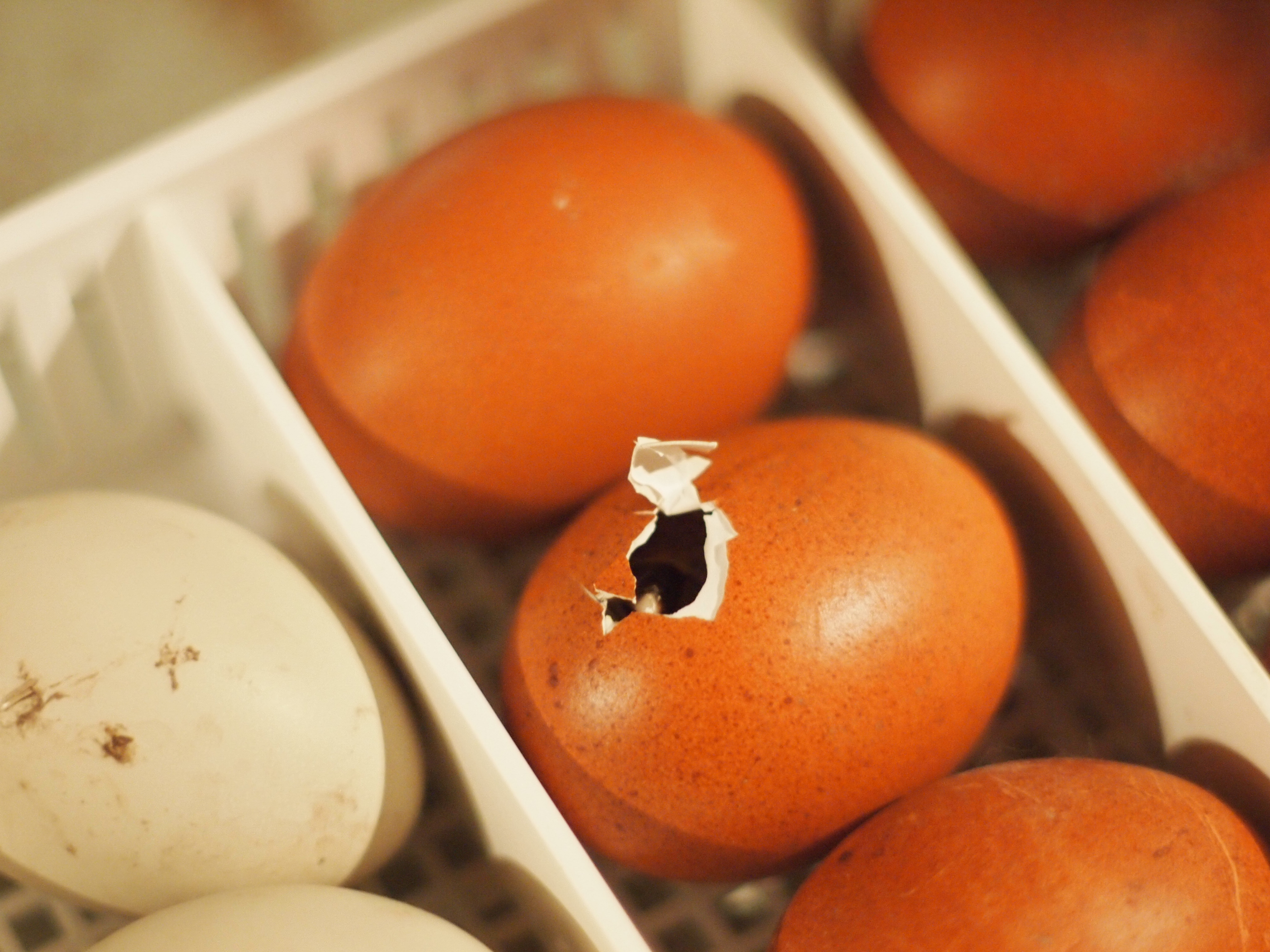
    The sounds of spring are in the air. Birdsong fills the yard, and the egg incubator hums in my living room. Every spring we carefully place colourful, fertilized chicken and duck eggs in the racks and wait patiently, until we can hear, with ears pressed to warm shell, the muffled rustles and faint peeps of tiny birds inside.

    OLYMPUS DIGITAL CAMERA

    The ducklings and chicks we hatch are egg layers – we generally won’t eat these birds, but sometimes a male duck will find its way into the oven. Our layers are almost like pets, and those with standout personalities or traits often get names.

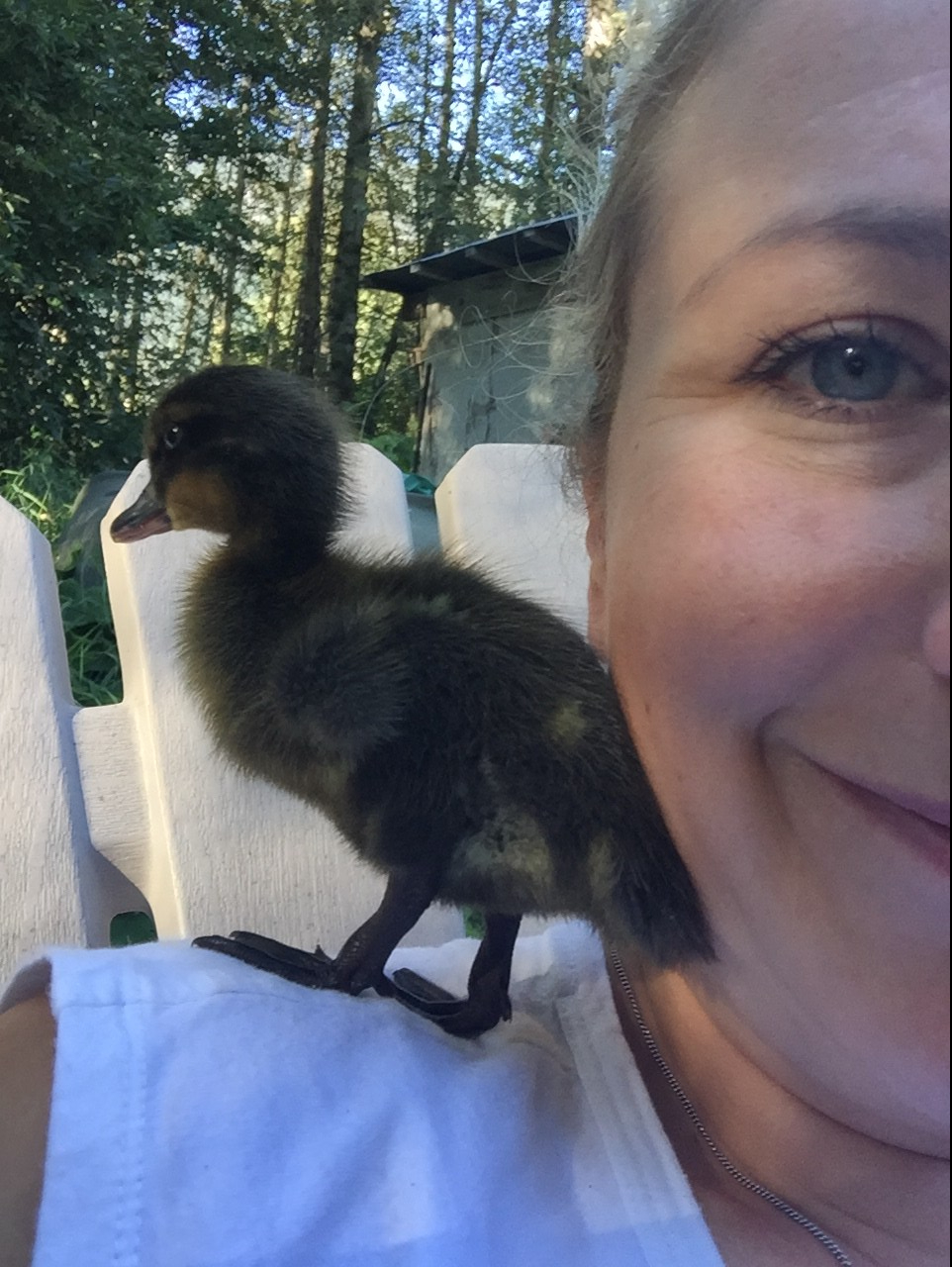
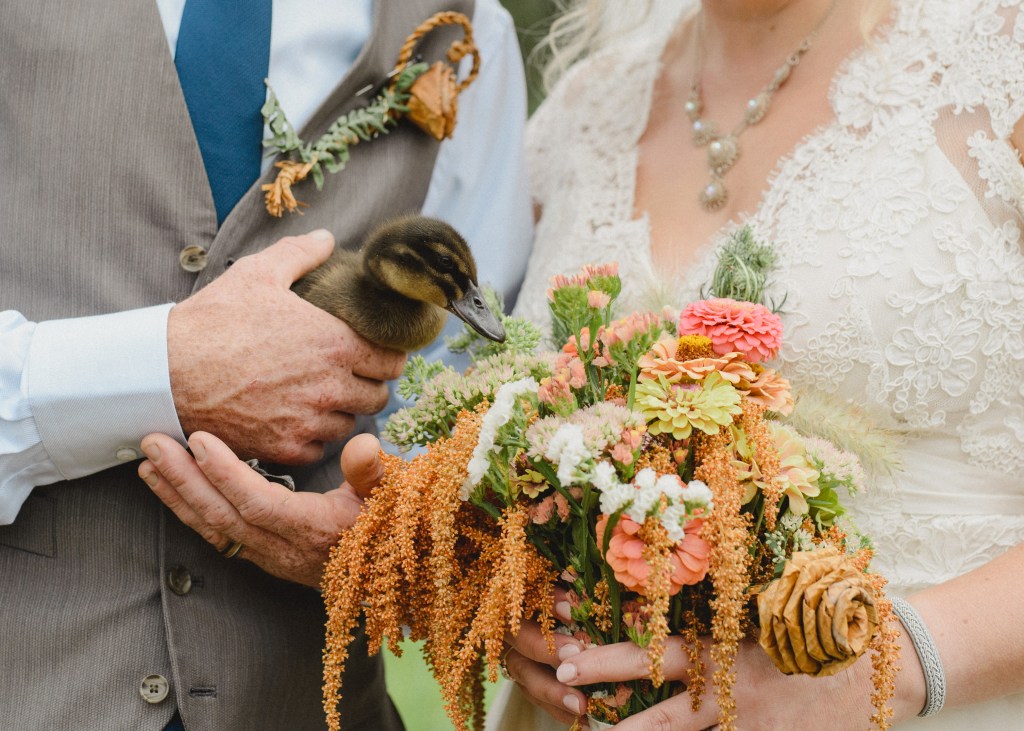
    Last year, about a month before our wedding in September, we decided to incubate some duck eggs out of the spring season to bolster our flock after a lot of losses to raccoon and bobcat. Only one duck ended up hatching out, and since the little guy was going to be alone in the brooder, I decided to take the tiny duckling under my wing. We started calling the duck Pat since we didn’t know if it was a boy or girl. Then we changed tactic and tweaked the name to Patty B to help sway the universe into giving us a lady egg layer instead of another randy male.

    IMG_3695 (002)

    We aren’t going to have kids, and you may laugh, but being a duck mom was super intense. I have no idea how mothers of actual, tiny humans do it!

    When she wasn’t with me, perched on my shoulder, Patty B was in a large pen outside the French doors of my home office. Every time I put Patty B back into the pen after a walk around the yard, her frantic cries would break my heart and inevitably I would be back out there for another visit. In retrospect those regular walks around the yard, with the slapslapslap of her tiny feet windmilling behind me and our chilly wades into the backyard slough so she could dip and dive through the muddy water probably saved me from a total “crash and burn” in the lead up to the wedding.

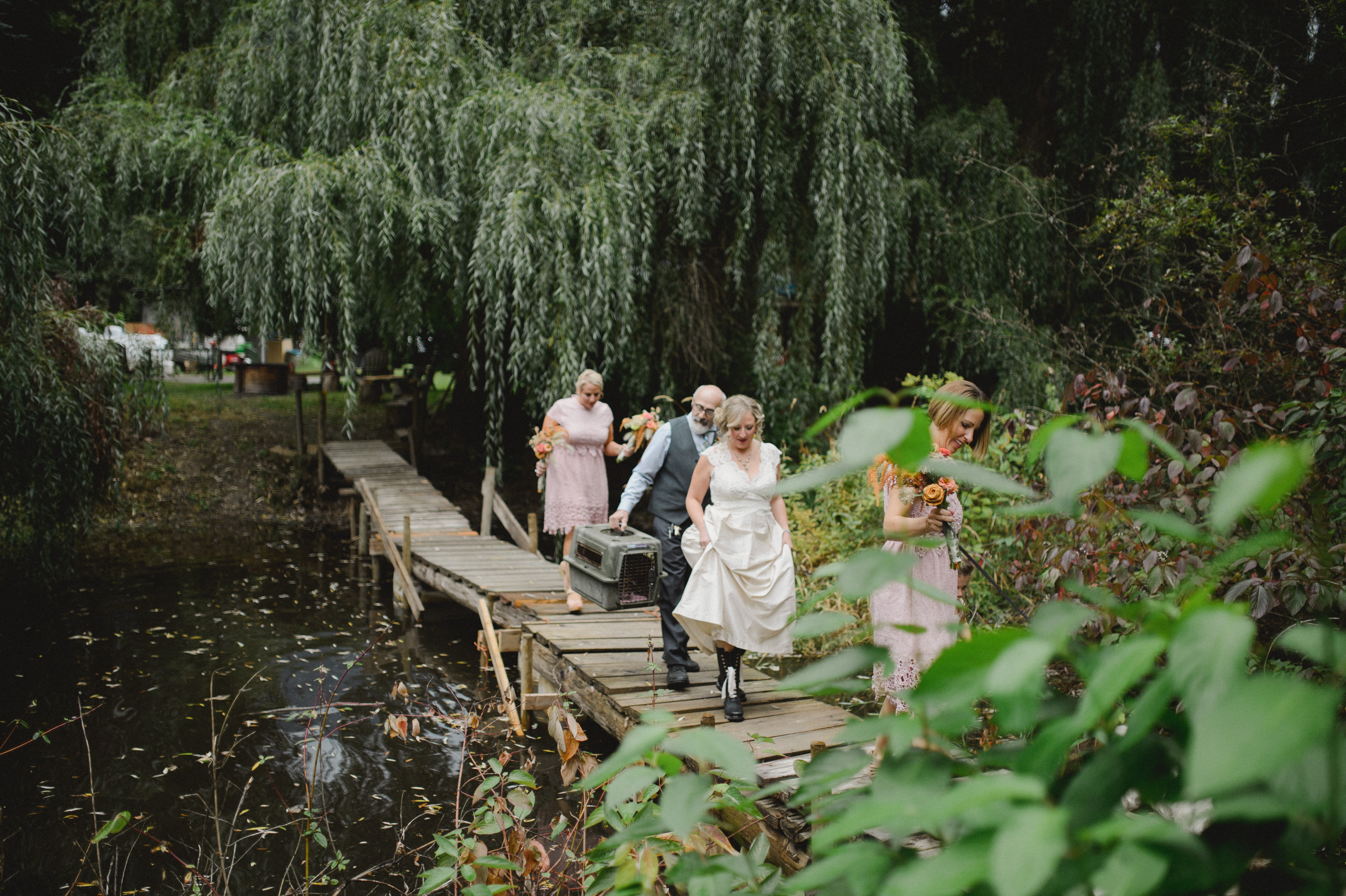
    As the big day drew closer and our walks got longer I hatched an idea – what if Patty B was part of the wedding procession? Training began in earnest with longer walks around the yard and then, eventually, forays across the small bridge into the backfield where our ceremony would take place.


    R+M_001237
    Anastasia Chomlack photo


    The wedding day finally dawned…and it was windy and rainy. September 9, 2017, happened to be the first time it rained since Patty B was born…actually, I think it was the first day it rained all summer! Luckily, we had a break in the weather before the outdoor ceremony began and as my wedding party and I gathered just across the bridge, my dad opened the door to the pet carrier to release Patty B. She dashed out onto the muddy path with excited chirps and peeps and began slurping muddy water up her bill. Mud! Worms! AWESOME.

    It was time to start down the aisle, and my flower girl and bridesmaids began their slow march down the field. It was time for me, my dad and Patty B to make our way down to the rest of my life. But Patty B was having none of it.

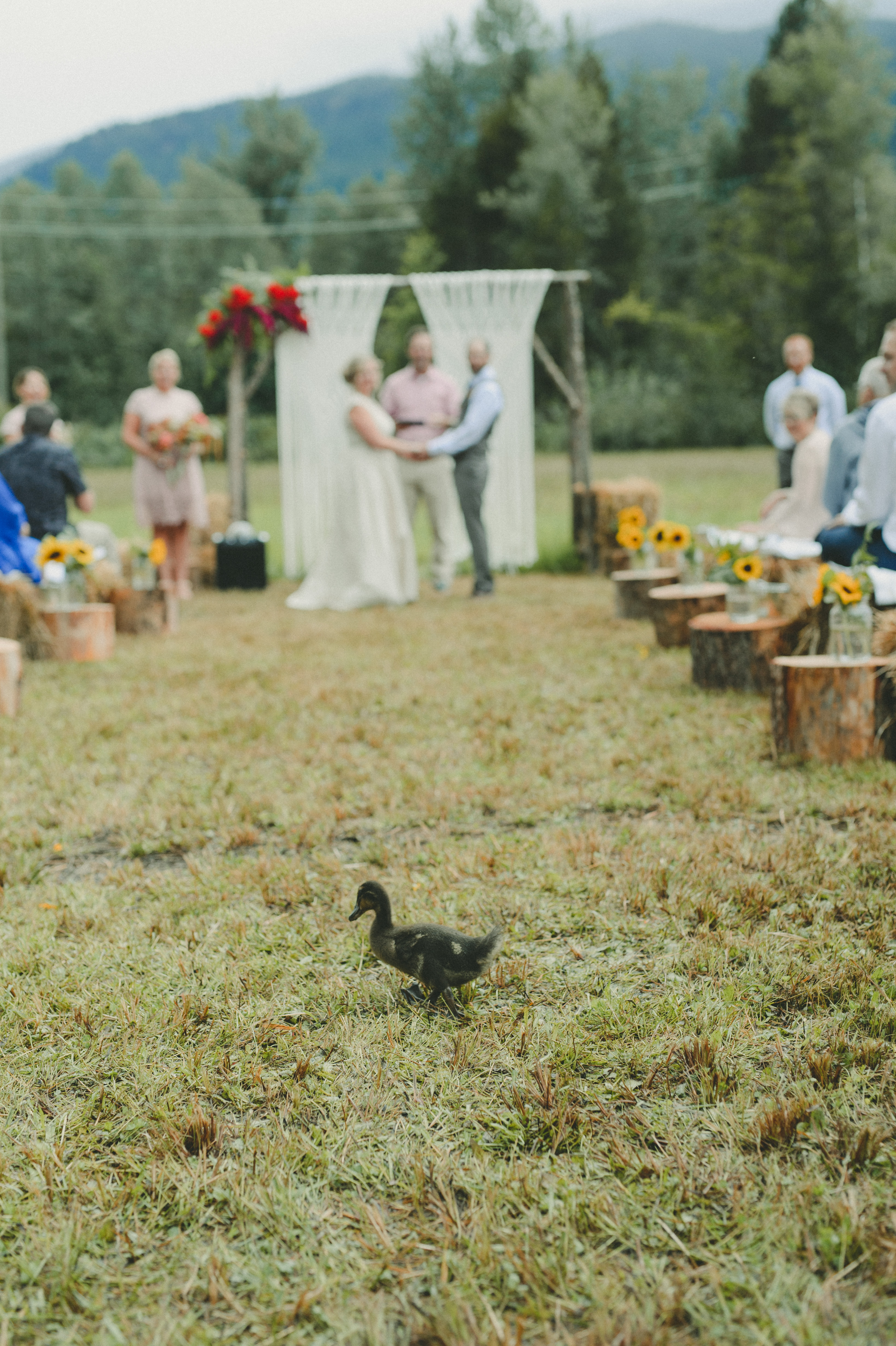
    I gave one last “C’mon, Patty B!” before sighing and giving up. The show had to go on. We walked down the field and suddenly as we were coming up between the rows of guests I heard a small boy cry out, “Is that a DUCK!?”


    R+M_001267
    Anastasia Chomlack photo


    YES. Patty B made it down the aisle with me after all.

    Most of the animals we raise have a pretty low-key life compared to the wedding adventures of Patty B. But, we tend to every animal at Bandit Farms with care, love, and respect whether we are raising them for their eggs or to eventually harvest for meat. I’m not a duck mom to everyone but being close to our food sources is a privilege I will never take for granted.

    Also, in case you were wondering, Patty B turned out to be Pat…but don’t worry, we won’t eat him.

    ML_PattyB

  • A Pemberton Food Story

    A Pemberton Food Story

    Food was one of the reasons my partner and I decided to move to Pemberton in 2011 after only being here a handful of times. We had been growing food in our community garden in Whistler. We also made our weekly bike ride to the farm market on Sunday for a couple of years and I swear getting to know the people who grew our food made it taste better.

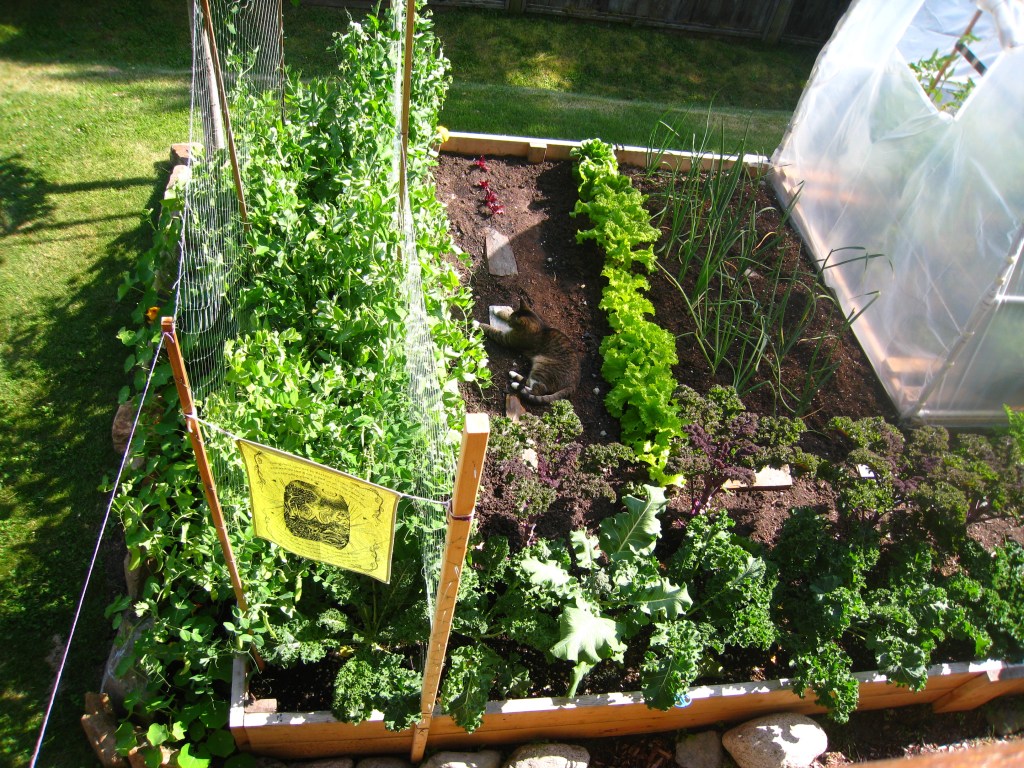
    We didn’t realize it at the time but when we moved to Pemberton we were dinks (dual income no kids). Armed with an abundance of time and money we were eager to tear up our lawn in the Glen and get started on our first labour of love. A couple of loads of soil later and our veggie garden was born, complete with a PVC greenhouse and vertical herb planters. Within a year I left a cushy (albeit ill-suited) office job to work on a local organic farm. There my love of Pemberton and slow food grew to new levels. I knew intellectually farming would be hard work but nothing could have prepared my body physically. As hard as it was at times it was incredibly therapeutic to be working in the elements day after day. I got stronger physically and mentally as the months passed. I spent many days weeding and planting and harvesting in good conversation with new friends. I gained a deep appreciation for the dedication and perseverance it takes to be an organic farmer and hence a steward of the earth. I learned from my experience growing food that it’s not always perfect, straight and neat. It’s scrappy and messy and mucky and absolutely gorgeous all at once, just like life.

    In 2014 our dinkdom concluded and our hearts grew with the birth of our daughter. The abundance of time ended as did my days on the farm, in the mountains or spending my days making food in the kitchen . They were replaced with early am nursing sessions, diaper changes, a whole lot of raw love and a good sprinkle of depression. There were tough times and bliss-full times but one of the things I looked forward to was our weekly CSA harvest box from Ice Cap Organics. I would wake up on pick up days as giddy as a kid on Christmas morning. I knew how hard people had worked to get those boxes filled with a rainbow of nourishing veggies, eggs, chicken even flowers and it felt good to be sharing it at the table each day as a new family.

    Here we are three years later and life is opening back up again. We have a new plot at the community garden to experiment, learn and teach with. Now those days making food in the kitchen are shared with our daughter who knows where her food comes from and loves to help cook it. I have the pleasure of cooking food at a local organic eatery called Stay Wild. Just like working on the farm my life is uplifted every time I’m there. Relationships with the women I work with and the people we serve are just as enriching and nourishing as the food. As I write this and think about food and Pemberton I am reminded of Lisa Richardson’s article where she spoke of, “the opportunity food offers us, to grow – not just out there in the soil, but as humans”, and I am thoroughly grateful we decided to call this fertile place home.

  • Pemberton (by Way of India) Curry – 3 Ways:

    Pemberton (by Way of India) Curry – 3 Ways:

    If I ever write a cookbook it will be called Why the Heck Not? Culinary Adventures Without Leaving Home.

    I am an improviser, both in cooking and baking. Sometimes the results are forgettable, but sometimes everything works. This curry worked. It was a matter of getting “rid” of odds and ends in the freezer and using up odds and ends in the fridge. Curry, like soup, is a good destination for those odds and ends. I will endeavor to contribute recipes to Traced Elements that call for ingredients that come from Pemberton – or can be grown in Pemberton. This curry is a winner: Pemberton Russet potatoes, Pemberton asparagus, parsley, and tomatoes, Pemberton-raised chicken and chicken broth.

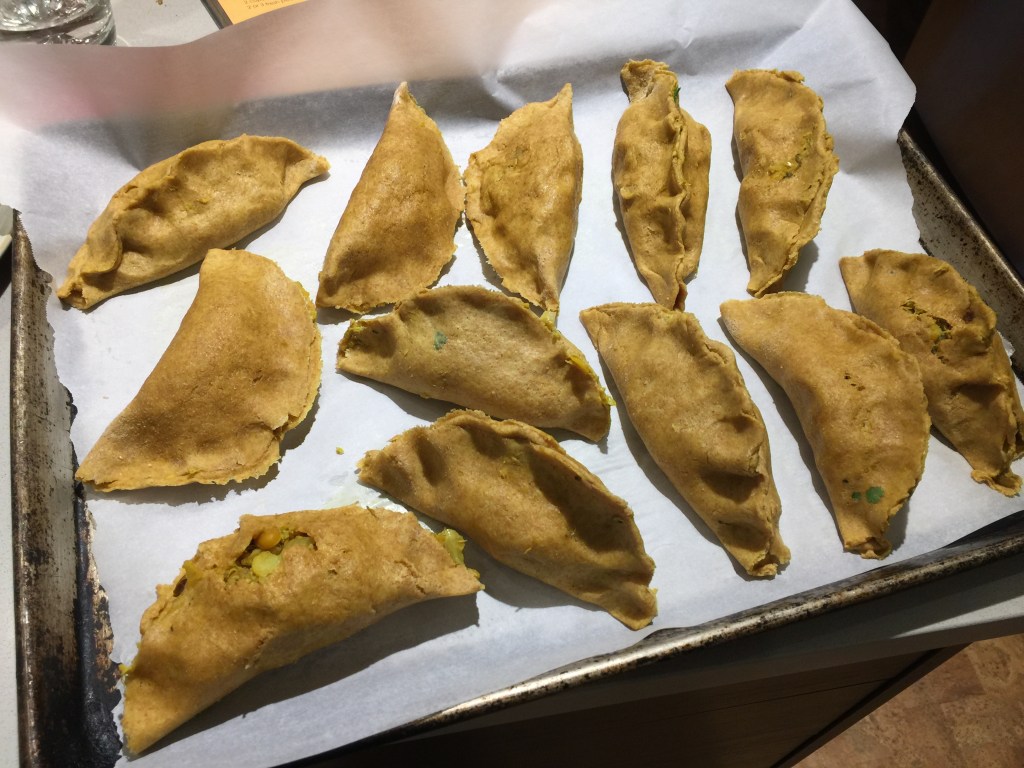
    The three ways part is this: the curry can be served over a bed of rice or quinoa. However, if it is simmered down, it can be a samosa filling (samosa dough recipe and samosa-assembling and baking method is courtesy of Shelley Adams’ awesome first cookbook Whitewater Cooks).

    Then finally, because I love soup, this curry can become a warm and satisfying one. I do not own a microwave, so leftovers are much easier to heat, eat, and enjoy if you just add a cup or two (or more) of chicken broth to them.

    Versatile Pemberton Chicken Curry with Asparagus and Tomato:

    Ingredients:

    3 cups Pemberton-raised cooked and diced chicken breast or thigh meat*

    2 cups sliced Pemberton-grown green gage plums (pits removed)*

    1 large yellow onion, diced

    2 tbs olive oil

    2 cloves Pemberton-grown garlic

    2 large Pemberton-grown russet potatoes, baked, cooled, peeled, and diced*

    1 large Pemberton or Lillooet-grown beefsteak tomato, diced*

    2-3 cups Pemberton-grown asparagus, cooked and diced*

    1 cup minced parsley

    2 tsp salt

    2 tsp pepper

    2 tsp curry powder

    2 tsp cumin

    1 can full-fat coconut milk

    3 tbs gluten-free soy sauce

    2 cups low/no sodium chicken broth*

    *Indicates this ingredient came directly out of my freezer.

    Method:

    Use a large heavy-bottomed stainless steel soup pot or a cast iron stew pot. Add 2 tbs olive oil and warm up on medium-low heat. Add diced onion and minced garlic. Let it cook slowly on low-medium heat so the onion caramelises. Do not rush this part. When the onion and garlic mixture is golden brown, turn the heat to medium, and add your diced chicken, sliced green-gage plums, diced tomato, parsley, asparagus, and potato. Let it sauté around so the flavours mingle and cook. Then add your cumin, curry powder, salt, pepper, and soy sauce. Sauté a few minutes more. Finally, add your coconut milk and 2 cups chicken broth. Let it simmer 10 minutes.

    **If you are making samosas, let the mixture simmer until there is not too much liquid as that will make the samosas too watery and will not stay formed. At the same time, you don’t want your curry mixture too dry either. Just remember your curry mixture will be encased in raw dough and baked so you don’t want the curry mixture to soak through.

    If you are making curry you are almost done. Cook a pot of basmati rice or quinoa and pour your curry over it. You may want to garnish with a chutney and papadum! I would like to make my own chutney but for now it is Major Grey’s from the supermarket.

    And if you are making soup, you will want to add 2 to 6 cups more chicken broth, depending on how thick you like your soup.

    Samosas (Yields 12):

    Samosa dough ingredients (adapted from Shelley Adams’ Whitewater Cooks – her first cookbook)

    3 cups spelt flour

    ½ tsp salt

    ½ tsp baking powder

    ¼ tsp turmeric

    ¼ tsp paprika

    2/3 cup cold butter cubed (for those of you who like to measure ingredients on a kitchen scale, that works out to be 152 grams)

    2/3 cup cold water

    1 egg, beaten

    Method:

    To make dough:

    Place all dry ingredients in food processor and pulse to combine. Add butter and pulse until mixture resembles sand granules. Then slowly add enough water until the dough comes together (you may not need all the water). Wrap dough in plastic wrap and refrigerate for one hour.

    To assemble samosas:

    Roll out dough on a piece of parchment paper until quite thin. You will need extra spelt flour to sprinkle so your dough doesn’t stick to your rolling pin. You don’t want thick dough or else your samosas will be too heavy and stodgy. Cut out portions of dough using the lid of a sour cream container (about 4 inches in diameter). Remove your circle and place on a parchment lined baking sheet. Place a scant ¼ cup of your curry mixture in the centre of your dough circle and fold the circle in half, making a half-moon. Crimp your edges. Do this with the remainder of the dough and curry. Makes about a dozen. Then brush all your samosas with an egg wash using a pastry brush. You will likely have curry mixture left over, and you can freeze that for future meals, as long as your chicken was not previously frozen.

    Bake your samosas in a 350F oven for 30 minutes. Serve with chutney.


  • Nonna’s Kitchen Table: Mangia! I Love-a You!

    Nonna’s Kitchen Table: Mangia! I Love-a You!


    The table, for me is the trunk of the family tree.

    In her  post “The Imperfect Table”, Lisa Richardson challenged us to “reclaim the table.”

    I was intrigued by that statement. It was an opportunity to investigate the perception I have of my own scruffy dinner table situation.

    First, I thought of the meaningful and diverse experiences I’ve had while seated around a table with others. The common thread woven through so many very different experiences was the uplifted and complete feeling from simply showing up, sitting together and sharing a meal.

    The kitchen table – an ordinary yet omnipresent piece of furniture, in an infinite variety of shapes, sizes across cultures and this planet – for gathering and eating the food that has been graciously provided by mother earth herself.

    Now that I have a family of my own, I look back with deep appreciation for the commitment my family had for gathering together every evening to share space, food and conversation.

    When I visualize myself as a kid with my family, we are usually sitting around a table. My family roots are European – Italian and Eastern European.  My siblings, cousins and I were all born in Canada, but we’ve always been enveloped into the dining culture of Italy.

    One table shines above all others for its weighty contribution in shaping my sense of what it means to gather in the spirit of food, family and togetherness – Nonna’s kitchen table.

    “Nonna” is the Italian word for Grandmother.

    Nonna Selfie

    My Nonna’s table represents all that is good and pure about sharing space with the people in your life who spark joy and happiness.

    Nonna’s table, and kitchen, remain a timeless constant in my life of change.

    Physically, it is a vintage enthusiast’s wonderland.

    For my psyche, it is a meditative place of calm and serenity.

    The décor is firmly lodged in the disco era and has been since I was a kid… perfectly preserved and immaculately cared for. Four swivelling vinyl bucket chairs sit around the glazed marble-look tabletop with lace cloth, atop the vibrant 1970’s linoleum. Mandatory gold framed painting of fruit and wine looks down from the wall.

    Nonna's Kitchen

    This table holds the imprint of four generations of Di Valentino’s gathering, breaking bread and eating pasta, laughing, crying, supporting, loving and holding space for each other. This table has facilitated a rise above language barriers – the offer and acceptance of food and “caffè” was the only phrase required to communicate the boundless love between grandchild and Nonna.

    I bring this priceless wisdom, gleaned from forty years of eating at my Nonna’s kitchen table, into my life and my child-raising. Whatever may have happened during the day is put on the back burner. What is brought to the table is food, love and eye contact.

    Sometimes that love has peeled and chopped, sautéed and baked for hours. Other times that love has ripped into a box of bunny shaped pasta and tossed it into a pot.

    Either way, the expression of love at the kitchen table is tangible and I feel deeply that this is one of the greatest gifts that I can offer.

  • Southern Style

    Southern Style


    IMG_6727

    For those who do not know me, my name is Raven. I own a little bakery in one of the greatest mountain towns ever, Pemberton in British Columbia. I have a deep love for gluten, wheat, and all that it brings to my life. Today initially I wanted to write on a traditional favourite from where I grew up in the Southern Appalachian mountains, cast iron skillet cornbread. But as I sifted through this wheat-lover’s cupboards I found I had all the ingredients except my beloved wheat flour. What was I to do? With complete reluctance to change my topic, I let my topic change me.  Because for some reason there was, in the deep lost corners of my cabinet, a small bag of Gluten Free Flour.

    One of the very real and important things I want to say about my love for cornbread is that it comes to me with a remembrance of home, of the Appalachian mountain culture and all that I hope to share with you over time.

    It is important to me that food represent something more than nutrients. It is, as Elizabeth David said, and this is a very loose quote to be sure…

    “every bite we eat is not just food, it’s our culture, our history, our memories of ourselves, of our families, of times when we were particularly happy.”

    So today, I created for myself a new memory.  I hope you too, as you cook for yourself, your family and friends, find the time to honor and create memories of food filled with life and memories.

    So I now give to you my recipe for Gluten Free Skillet Corn Bread.

    1. The most important step is get a cornbread skillet.  Like this one that my mom gave to me when I first settled down. It’s of great value but not of the  monetary kind, and is only as good as the time you put into it, the “seasoning.”IMG_6626
    2. Gather all your ingredients, as organic as you can afford and as local as it can be.
    3. Next, turn on your oven to 425 degrees F.  Then put your cast iron skillet onto the your stove top on med low heat.
    4. Add 1/4 cup of a high heat tolerant oil.  I prefer grapeseed,  but please just no olive oil. While your oil is warming —
    5. Grab a med mixing bowl, whisk, spatula, and a measuring cup.
    6. Then, add into your bowl, 1 cup of buttermilk, 3 large eggs, 3 tablespoons of organic sugar, 1 1/2 teaspoons of salt, 1 tablespoon of baking powder, 2 teaspoons of baking soda and whisk it up.
    7. Note: after many years of cooking I do not mix my dry ingredients all together.  If you have that compulsion, it is ok.
    8.  Now add 2 cups of stoneground yellow organic corn meal, followed my 1 1/2 cups of my favourite wheat flour replacement Cup4Cup.  I do believe in this product and it is an amazing.
    9. Whisk it all together to make a batter…now add 3/4’s of that what-should-now-be-very-warm oil from your skillet and mix in.
    10. Take your spatula and pour the batter into your hot skillet.  The idea is that we are doing two things — frying it a tiny bit, as we love to do in ol’ Dixie, but we are also keeping your cornbread from sticking.
    11. For 4-5 mins let it cook on the stovetop, then put it into the oven until its done.  How long’s that you ask? At least 30 minutes, but it depends on your oven. Just until you stick a knife into it and it comes clean.
    12.  Your cornbread finally is done when you flip it out of the pan in awe and admiration that it actually did not stick to the pan.
    13. How do you eat it? With butter. Lots of butter! Who am I kidding?!  Gluten free, maybe, but without butter what do we have?

    r-xx

  • Food and Feelings: Jerk

    Food and Feelings: Jerk

    My name is Blair Kaplan Venables and some people may say that I have an insatiable hunger for life. I would say that I have an insatiable hunger for food.

    I love to eat.

    I eat when I’m happy. I eat when I’m sad. I eat when I’m stressed out. I eat when I’m nervous. I eat to celebrate. I eat to mourn. I eat three meals a day plus a few snacks.

    My feelings directly impact what I eat and crave (and normally the craving is cheese-centric).

    I’m also someone who isn’t “in love” with cooking or baking. Every so often I’ll get into cooking but I like things that are easy to make, fast to make and yummy.

    I know what you are thinking and YES, we own a slow cooker but I don’t even use that. I have a few recipes that I’ve mastered and they are on a constant rotation.

    Over the past few years, I made a few lifestyle changes to help positively impact my life. So, I’ve looked for ways to make healthy food taste better. Chicken, in my opinion, is one of those foods that needs a little extra help.

    One of my most favourite discoveries is The Metropolitan Chef’s Jerk Rub, which is made in Port Alberni, B.C and I tell everyone about it. I’ve even got my mother hooked on it. It’s super easy to use and makes chicken (especially free-range chicken) taste scrumptious.

    IMG_0754

    You see, my love for jerk chicken stemmed from a trip with my friends to Negril, Jamaica. It wasn’t until this trip that I truly fell in love with jerk chicken. However, I’m slightly domestically challenged and I could never make it taste as good…until I discovered this magical rub.

    Most recently, I’ve personally hand-delivered two packages of it to my mom in Winnipeg. This, my friends, is a jerk rub that’s gone national.

    So, want in on this game-changing jerk rub? You can buy it at Mile One Eating House.

  • Eggs and the place we call home

    Eggs and the place we call home

    1. The best eggs I’ve ever eaten were done over easy, and served on crusty toasted hazelnut and currant bread that was smothered with melted butter and peanut butter. A strict vegetarian, I hadn’t eaten eggs for years, but started craving them while pregnant with my first son. This decadent breakfast, repeated many times through the pregnancy felt so nourishingly good. My son, Isaac, was born a huge, healthy baby (it must have been the eggs) at home in Victoria on a rainy day in May. The next day my potato plants were a foot taller. My son’s father might have been hard to live with, but he was an amazing gardener and grew a jungle of food and flowers in our backyard.
    2. My friend “Chicken Jen” (who lived down the road from me in Sooke) turned a residential lot into a productive and wild vegetable and herb garden in less than three months, with the help of  home-made portable PVC dome chicken coops. The chickens removed sod, and aerated and fertilized the soil in each successive round bed that she planted, and her “ladies” gave her surplus eggs to sell. Her vision for her abundant garden, created while her kids were only two and four, still astounds me. 13 years later, the nickname Chicken Jen has stuck.
    3. I moved from the island to Whistler with Isaac and my new partner. I was pregnant again. Our access to food and gardens dried up in the mountain resort. Sure, we could get good local food at the farmers’ market, but we didn’t know the farmers. We no longer hacked down chard from our front yard, or picked brambly blackberries, or gardened for 10 months out of the year. We missed eating farm fresh local eggs.
    4. After seven years in Whistler, our growing brood (I’d had one more child) moved to Pemberton. We bought our first home, got a dog and planted a garden. On one of my first rides around town, I discovered the egg box on Urdal Road and I knew we were home. We traded zucchini, cucumber and greens from our first lush, wild backyard garden for composted manure from our neighbour’s farm and for heirloom eggs in every colour.. Having access to real food right where we live, and knowing where it comes from is a big deal. It’s something we love about living here and it’s not something we take for granted.
    5. Let’s play local food Jeopardy. The answer is: Bog’s, the Wag’n’Wash, the Animal Barn, AC Gas, Stay Wild, the Owl’s Nest, Mile One, Collins Cross, the egg box on Urdal, the farmer’s market, Brooke and Kevin’s place, and Pemberton Valley Wellness. The business names themselves reveal  the flavour of this funky little town. The question: Where can you buy local eggs in Pemberton?
    6. The secret: Everyone has their own source. If you don’t time it right on delivery days, you could be cruising around town, visiting all of these locations without realizing they’re part of a hyperlocal egg market. Alternatively, you might well disappoint your family by coming home empty-handed. Sorry, kids, no pancakes this morning.
    7. You’ll be late, too, because you’ll have talked to friends and neighbours all over town. During our first couple of months in Pemberton, I would frustrate my partner every time I biked to the store to get milk for his coffee. My 15-minute round trip would invariably take an hour or more, slowed by the pull of  my grocery store conversations.
    8. Eggs are a window into the local food system in Pemberton. Local food is grown in abundance by experts and amateurs throughout the valley—but you need to know where to go to get it. And to find out where to get it, you need to talk to people. That’s the fun part. If they made it easier, something would be lost.
    9. We have a great farmer’s market and some awesome local businesses and CSA programs to get the straight goods right from the source. But you can also find your eggs or fresh basil or seed garlic on the Pemberton Food and Farm Facebook page, a matchmaking service for people looking to buy or sell food, seeds, plants or other random farm and garden stuff. Looking for a Thanksgiving turkey, alpaca wool, goats or egg cartons? Selling tomato starts, plums, bushels of basil? The source or recipient are only a couple of messages away.
    10. Farming and backyard growing in Pemberton is surprisingly untrendy. People just raise food and grow stuff here because they can, or because they love to, and it just makes sense. Keeping backyard chickens isn’t new, and while I’m tempted sometimes to imagine myself as more of a homesteader than I actually am, I don’t think I have the heart to deal with bear proofing and the collateral damage when raccoons or cougars or coyotes get into the coops. I barely have the heart to steal eggs from aggressive chickens.
    11. Every egg carton has a story. One of our local egg suppliers sells her daughter’s eggs and tracks the cartons to see if they get returned to her shop. One of the farmers at the market in the summer said new cartons cost more than twenty cents apiece—that puts a serious dent in his egg profits. Farmers don’t become farmers to get rich. But what is shared and supplied and circulated in this community is rich. It’s the soil, the place, the creatures, the stories.
    12. Eggs have been one of the nutritional threads in raising my kids—one of the first meals they could cook for themselves—one of the nutrient dense meals I’ve eaten through pregnancies, breastfeeding and birth. One of the food sources that connects us to the place where we live.
    13. My baker’s dozen. I’m lucky if there are eggs in my house or it’s back to part 5 of this story.  My favourite homegrown breakfast:

    11 o’clock braised greens & eggs

    INGREDIENTS

    • A few giant handfuls of greens from the garden (kale, chard, spinach, collard or beet greens)
    • A few cloves of garlic (homegrown if you can), peeled
    • Coconut oil
    • A couple of eggs
    • Flax oil
    • Condiments (homemade kimchi, sauerkraut or hot sauce & Bragg’s)
    • Ground flax seed
    • Leftover brown rice (optional)

    INSTRUCTIONS

    • Wash greens and tear into large pieces.
    • Wilt greens and simmer garlic with a splash of water in a pan with a lid.
    • Add a small amount of coconut oil to the pan.
    • Add a couple of eggs and fry them up in the same pan.
    • Serve eggs and your pile’o’greens with hot sauce, Bragg’s, flax oil, flax seed, and homemade kimchi or sauerkraut (*recipes for vegan kimchi and sauerkraut to follow in future posts).
    • Add a scoop of warm leftover brown rice, if you have some.
    • Eat with thanks. Be nourished.
  • The Imperfect Table

    The Imperfect Table

    Scruffy hospitality, Cook Book Clubs and reclaiming the table

    I hate owing someone a dinner invitation.

    It’s so high-pressure.

    I always thought “imperfectionism” was the character flaw until Brene Brown, the vulnerability guru, outed perfectionism as a tactic people use to protect themselves from getting hurt.

    perfectionism by brene brown

    Ha! I exhaled smugly, I knew there was something suspicious about you perfectly groomed, beautifully mannered ones, with your instagrammable dinner parties and Kinfolk magazines casually tossed on the Noguchi coffee table.

    kinfolk-founders

    kinfolk-preview1
    Trying very hard to look like you’re not trying. The Kinfolk Table – a different planet for aliens who specialize in artfully dishevelled, immaculately styled entertaining.

    But embracing your own flawsomeness is harder than it sounds. Even with Brene Brown’s Vulnerability manifesto at your back. I point a finger at Lucy Waverman, the Globe and Mail’s food columnist. Waverman has written that you should never ask “what can I bring” in response to a dinner party invitation. It’s an insult to the host who has put forethought into curating a great meal with perfectly paired wines. Just bring your conversational A-game, she says, and an elegant hostess gift.

    Lucy and I move in different circles.

    On my planet, we always ask.

    I ask, not to insult my host, but to acknowledge that bringing people into your space takes effort, and I’m happy to help lighten the load.

    For the record, I am never insulted when someone asks me. I am also stoked if, without even asking, someone randomly shows up with contributions. Throw them down there on the table. Open that bag of chips, decant some vino, let’s squeeze in as much conversation as possible before the children blow it all up.

    IMG_4275.JPG
    No, none of the plates at my house match. And they probably never will.

    But it’s taken a while to devolve to this place, helped along by necessity (children), a catchphrase and one unofficial intervention.

    The intervention occurred in the fall, when childless friends, after months of “we should get together soon” emails, randomly dropped by, with wine, cheese and crackers.

    This couple are consummate hosts. They’re foodies and entertainers with a genuine passion for food, wine, design and décor. For a long time, after first being invited to their house for dinner, (three courses, perfectly plated, in a room where the drapes and the curtains matched), I was too scared to return the favour and serve up one of my standard one-pot meals in return.

    When I eventually braved-up, and dished forth something peasant-like, on chipped plates, from a help-yourself-to-more platter on the table, they didn’t turn up their noses. They were more distracted by the conversation, by playing with my toddler, or whipping up the dessert themselves. (I’m smart enough to say hell yes, when an amazing cook asks “shall I bring dessert?” Sorry Lucy for not measuring up to your standards.)

    Their drive-by drop-in was the ultimate signal to me: we don’t need to be entertained, we don’t want to be a high pressure entry in your dayplanner, we just want to catch up.

    IMG_1540
    For perfect looking, perfect tasting meals, eat out. Fergie’s Cafe at Sunwolf is instagram-worthy. Dinner at my place is not.

    The catchphrase came out of a sermon, in which a Knoxville, Tennessee minister commended us to lower our standards and embrace “scruffy hospitality”, the kind of dinner party that reveals you hunger more for good conversation than fancy ingredients.

    In my gospel of scruffy hospitality, “what can I bring” is the password, a signal that a person appreciates they are participating in a come-as-you-are experience, where the napkins are unironed, if we even remembered to put them out, and the kids will move from lap to table to toy room as we try and coerce them into eating something, before ignoring them for conversation that is grabbed and relished and as nourishing as the food could be.

    “What can I bring?” is also code for: “I know you’ll have cleaned the bathroom for the first time this week because people are coming over, and that you and your partner will probably be arguing the moment we walk in the door, because that’s what happens to us too, every single time we have people around.”

    It means: “I anticipate stepping around toys piled into a corner. I am willing to push past my inhibitions and make myself at home, to find a glass and pour myself a glass of water if I am feeling thirsty.”

    Ultimately, it’s code for: ”I’m just happy to see you.”

    IMG_0444
    Keep it casual. Otherwise, we’ll see you in 15 years or so.

    That’s what my foodie friends taught me, when they dropped by with crackers and dip and we ate standing up, moving between the kitchen island and the side of the bath-tub where the kid happily contributed his chatter.

    And that’s why I started Cook Book Club. which debuted Thursday 22, at Stay Wild Natural Health Store and Juice Bar.

    deep like pow-08697
    Leah Langlois of Stay Wild imagines all the yummy plates that will arrive for Cook Book Club

    If your contribution is a fizzle or a flop, you blame it on the cookbook.

    Imperfectionism, scruffy hospitality, cook book club, it’s all an invitation to reclaim the table as a gathering place. Even when we’re too busy to entertain. Especially then.

    Cook Book Club Feb 22 poster

    The Velocity Project: how to slow the f*&k down and still achieve optimum productivity and life happiness, is a biweekly column by Lisa Richardson that runs in Pique newsmagazine. 


  • Farmers Staycation: why the best place to find the Millers is on the Miller’s farm

    Farmers Staycation: why the best place to find the Millers is on the Miller’s farm

    For some reason most of our family breaks from farming are taken on the farm.

    Actually there are several reasons for it – like checking the cows, checking the fences, checking the back field, scouting for saw logs and firewood trees for next winter.

    But mostly its about experiencing the beautiful place that we live and farm.

    We have a fishing hole, a beaver pond, a forest, a river.

    Our short little trips on a sunny Sunday are the things we remember more than the 30 seasons of Potato Fields we have planted.

    We work here so we can live here. We work too hard. We are working on that.

    Image.jpg
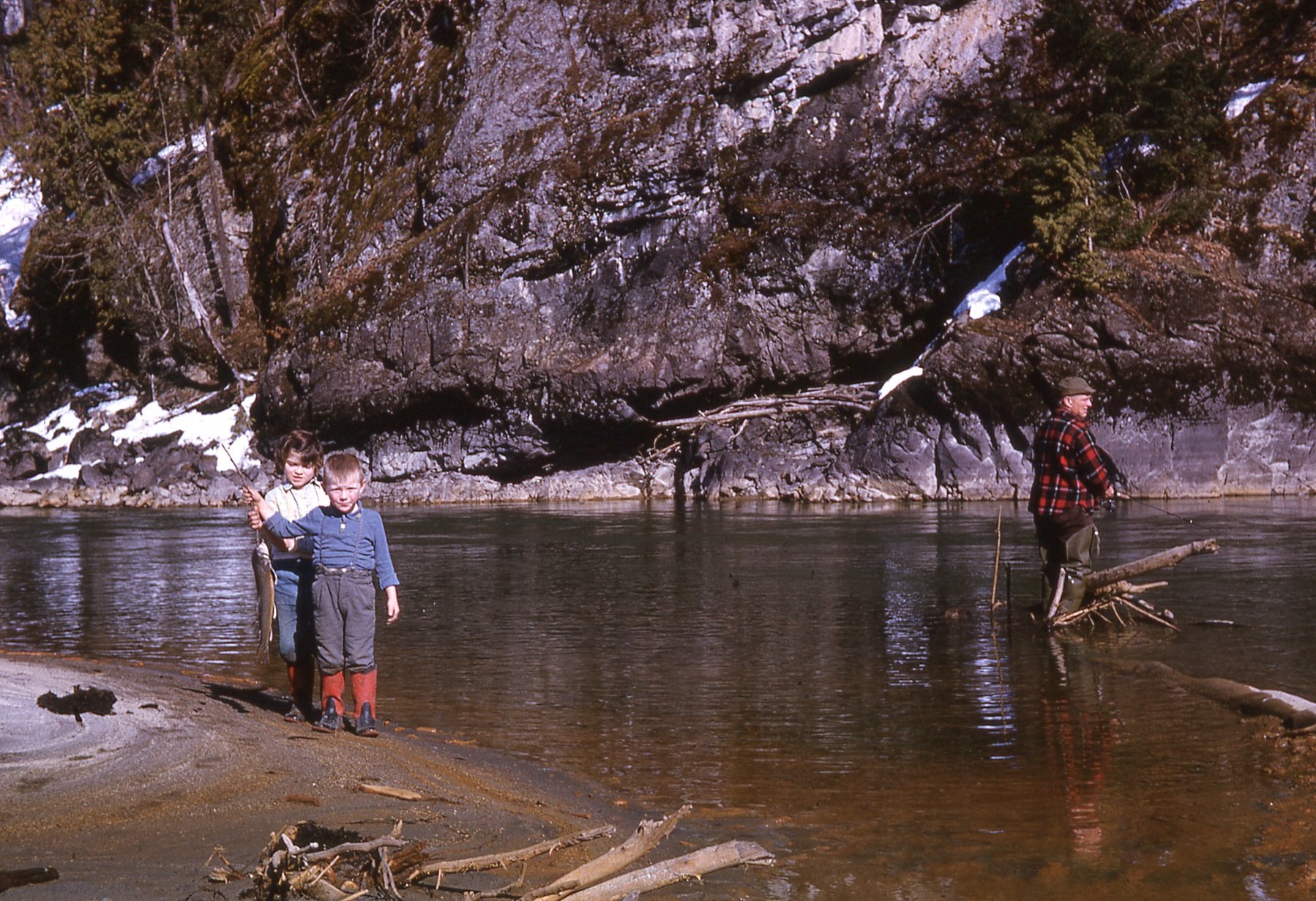
    This is the the fishing hole at the river. It has always been a great spot for a kid to catch their first fish.
    Image 2.jpg
    The Waterfall  hike usually coincides with some irrigation intake repairs.
    Image.jpg
    Every fall we try to get a mushroom picking hike in across the creek and up the hillside. Last fall Jesse and I came upon this spot.
    27749838_10156060076868904_6344091625903080429_n.jpg
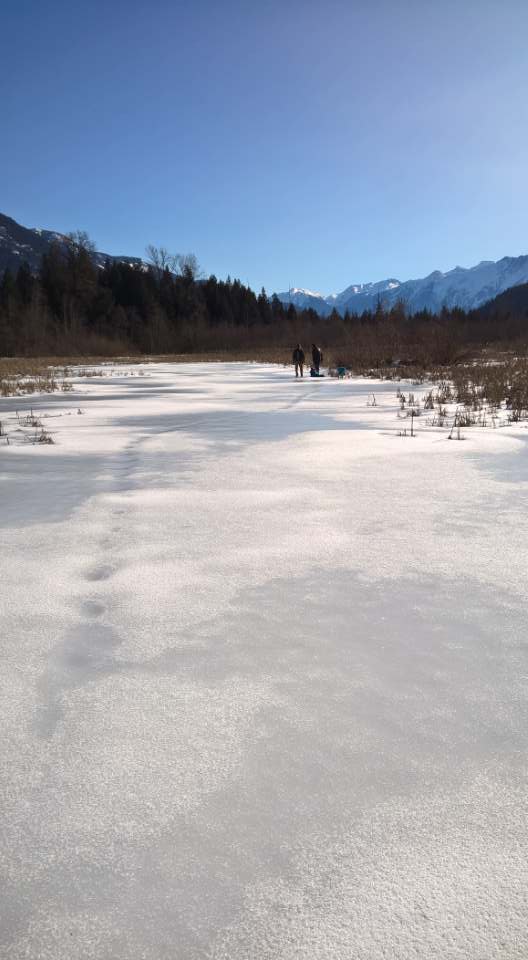
    Feb 2018 – a walk across the creek to the upper swamp. This is where most of the  coho fry from Ryan Creek spend their first summer  growing.   We were checking out the tracks and trying to figure out what all the animals were up to.