Category: food

  • Software for Wild Intelligence

    Software for Wild Intelligence

    “Seeds are software, and we have the seeds” -Representative of the chemical giant Seminis, just before selling out to Monsanto

    Usually, plantain is a quiet, unobtrusive little plant. She is known for her excellent healing properties, her usefulness as a spit poultice, and her excellent nutritional properties. She is generally soft spoken, and most people are surprised to notice she has been underfoot all along. She is like coffeeshops in Vancouver: ubiquitous. But lately plantain, sometimes called ‘white man’s foot’ for the way she has followed our footsteps across North America, has been shouting at me. She is poking me with her seed spears. Every time I turn around, there she is. Usually when this happens it means the particular plant that is ‘shouting’ has some particular medicine I need to pay attention to. My resistance is generally high. You think I would actively cultivate some sort of porosity towards these sorts of encounters, but no. When a plant is trying to get my attention (or most things, for that matter) my first response is resistance. When I finally let plantain in all I do is look at her for a moment, but that look takes a photograph that embeds her in my mind and from there she begins to communicate with me.

    plantain
    Plantain

    Because of the way the summer has gone- hot and dry- Plantain is setting seed earlier than usual, and with an abundance I did not notice last fall. Perhaps she is foretelling the future, but it is more likely her actions are a reflection of the present. (When a plant is stressed, their seed production tends to be prolific. Cue the fallen black cottonwood I stood in the ruins of this past spring, who released her white parachute fluff designed to float her future progeny over the entire province OVERNIGHT WHILE SHE LAY DYING ON THE GROUND, while most of the trees were barely starting to open their little seed casings.)

    But that is not what I want to tell you. What I want to tell you is that I want to cry. Each time a Plantain seed spire touches my ankle it is a reminder that things will never be the way that they were. A reminder that I do not have the time and that I am doing too much, too fast, to really listen, to really hear, to really feel any of it. There is grief in these too-early seed spires. Grief that the world is burning; that part of the morphic field of these seeds will always contain the memory of smoke.

    I believe a plant is a part of a specific ecosystem’s innate intelligent awareness made incarnate, and that a seed is the plant’s answer to the questions of its times. And the answer will be different, even among similar species, if they are growing in different locations. A seed is this wild intelligence made portable, designed for dispersal, a portable currency of consciousness.

    So if we really want to rejoin the dance, if we really want to be a part of what is going up in flames around us, what is burning and the new seeds that will be born out of this fire, we need to eat of the wild, NOW. We need to take a little of the otherly intelligence that is the essence of the natural world into our bodies so that we can start to belong to the place in which we are standing. Perhaps this is the beginnings of true reconciliation. Or at least the seeds with which to begin.

    Please don’t think I am being trite. I am not making small of atrocities that have been committed both by and against humanity. I am not saying that by taking yet another thing from the wild we can heal from the many woundings of the entitlement we have been taught to assume. I am saying that we need to begin to build a bridge to another way of being, of living, of feeling, and that if we can ingest the local wild plants that are doing that all around us in the places where we live, who have not cut themselves off from the responsiveness of the wild innate intelligence of their own sovereignty,  then we begin to take those transforms of meaning into our cells, and that begins to alter us.

    Do you remember at the beginning when I said Plantain shouted at me? Well obviously she didn’t, at least not in words. But when I started to pay attention- when I started to unravel the thread of meaning she held for me- she led me here. When I went out to shoot the pictures for this post I stripped a handful of her seeds from their spire, winnowed their husks away by breathing into my palm, put them into my mouth and chewed. They popped between my teeth like chia seeds, and had a similar mucilaginous texture. They didn’t really taste like much but maybe that’s a good thing. Something about pulling the seeds from their stalk felt familiar, the way I sometimes recognize the face of a stranger I have not known in this life.

    Beside the Plantain (and remaining mostly quiet all this time) was a stand of Dock, with seeds also ready for harvest.

    So here is where we get to the practical and super-actionable and amazing part of this post: you can make flour from both these seeds. Yep, that’s right. SUPER SOVEREIGN INTELLIGENCE WILD MORPHIC FIELD FLOUR WITH BONUS SUPER NUTRITION! (Or as we more quietly call it, Plantain/ Wild Dock Flour.)

    Plantain/Wild Dock Flour

    1. Simply go out and gather as much Plantain and Dock seeds as you have the patience for, checking that the ground the plants grow in is free from contaminants and roadside pollutants. There is no need to winnow (separate) the seeds from the hulls as from both kinds of seeds’ hulls are edible and add extra fibre to your flour, as would happen if you added rice bran. If the seeds do not pull off the seed heads easily when you are harvesting, they are not ripe yet and should be left on the plant to mature. As with all wildcafting/foraging, be considerate of the plant’s needs to reproduce and other animals who may depend on the seeds as a food source. (A good rule is to not harvest more than 25% of the yield of a patch, but in the case of weeds like Plantain and Dock (which are prolific) you can sometimes take a little more without ill effects.
    2. If you wish to increase the nuttiness of the flavour of your flour (OR if you are worried about bugs, OR if you are not sure your seeds are completely dry) you can roast your seeds on a cookie sheet in the oven, stirring several times at 200 degrees  until seeds have darkened slightly.
    3. Store whole in airtight containers until ready for use. Grind seeds and hulls in a coffee grinder until they reach a flour like texture. Substitute 1 for 1 to replace up to 1/2c of flour called for in the recipe to add extra nutritional value and wild intelligence to whatever you are baking.


    Author’s note: The seed harvesting in this piece was originally inspired by Katrina Blair’s book ‘The Wild Wisdom of Weeds: 13 Essential Plants for Human Survival” which is an excellent resource for anyone wanting an accessible way to learn to incorporate edible weeds into their diet!



  • Whats All The Fuss About Garlic?

    Whats All The Fuss About Garlic?

    There aren’t too many plants or food items that gets growers more excited than garlic. Sure, some folks get mushroom fever in the fall, and cannabis is all the rage, but garlic gets almost all gardeners hyped.

    Why? After all, it’s just another onion (allium). Onions don’t command upwards of $15/lb. I’ve never heard of a Leek Festival. Apparently the labourers who built the pyramids were partially paid in garlic — I don’t think that shallots would have even got the Sphinx completed.

    Garlic is easy to grow, but it takes some practise to get big high quality bulbs. The most important thing is to start with very large locally grown cloves that are proven and acclimatized to our region.

    Never attempt to plant (or eat) store-bought imported crap, especially from China. Most of it is bleached, irradiated and fumigated to prevent sprouting. It could be years old and grown in a toxic environment. Yuk!

    I truely believe the Pemberton to Lytton corridor grows some of the finest garlic in the world. In all my travels, in which I’m always scouting for garlic at markets, I have never seen or tasted better. We are fortunate to be able to grow both the more hardy and flavourful hardnecks and the more typical softnecks grown in the south. We are blessed with mineral rich soils, pleasant weather in October for planting, just enough insulating snow, an early spring, ample rain into June and a hot dry summer to force bulbing and easy harvesting. The most perfect scenario!

    My interest in garlic happened unassumingly about 25 years ago by reading a book called the Garlic Testament. It was a zen and the art of growing garlic type novel written by a hobby garlic farmer in New Mexico. It was part informative, part biography, part philosophy. I don’t think it even comes close to the best book written on the subject, but the lifestyle intrigued me. That autumn, I bought 5 lb off an old hippie friend who lives on the Highline Road and the rest is history. I now grow over 12,000 bulbs.

    The local homesteaders of the 60’s, 70′ and 80’s were probably unaware that the were planting the seeds of a future craze. The Rocombole Variety was introduced by the “back to the landers” between D’arcy and  Seton; the Red Russian from the Doukhabour settlement up in the Haylemore and Barkley Valleys; the Porecelains from the commune at the Langstaff Farm in Birken.  If you’re a misfit, garlic is the crop for you.

    Nowadays, everyone with a garden has caught the fever. Take a drive up the Meadows and you will see lots of patches, big and small. And why not? It’s easy, healthy, tasty and gets people excited, talking and posting photos on social media… about a bulb in the onion family. Go figure.

    The Annual Garlic Festival , Saturday August 25th at Willowcraft Farm in Poole Creek (Birken) is being sanctioned and promoted by the Pemberton Arts Council this year. Everyone is welcome after 4pm. There will be food, drink, live music and of course… Garlic!

  • How does the Pemberton Seed Library work

    How does the Pemberton Seed Library work

    marjorie-bertrand-122238-unsplash
    Photo by Marjorie Bertrand on Unsplash


    If Catherine Karpman’s post, from earlier last week, got you excited about seed-saving, here is what the Pemberton Seed Library is all about, in a nutshell. Why not try saving seed from your garden this year, and donating it to the Seed library, to help boost the collection?!?

    Challenge for 2018? Accepted.

    Seed-Library.png

    If you do it, document it!! We’d love to share.

  • Sunny Sunny Days

    Sunny Sunny Days

    We are all ruled in someway or another by the big burning circle in the sky; we crave it after days go by with out it and we curse it away when it’s too hot. Sweltering days call for cool delicious foods high in water content – as beer and bubbles only keep us mildly hydrated no matter what we tell ourselves.


    Enter watermelon poke.


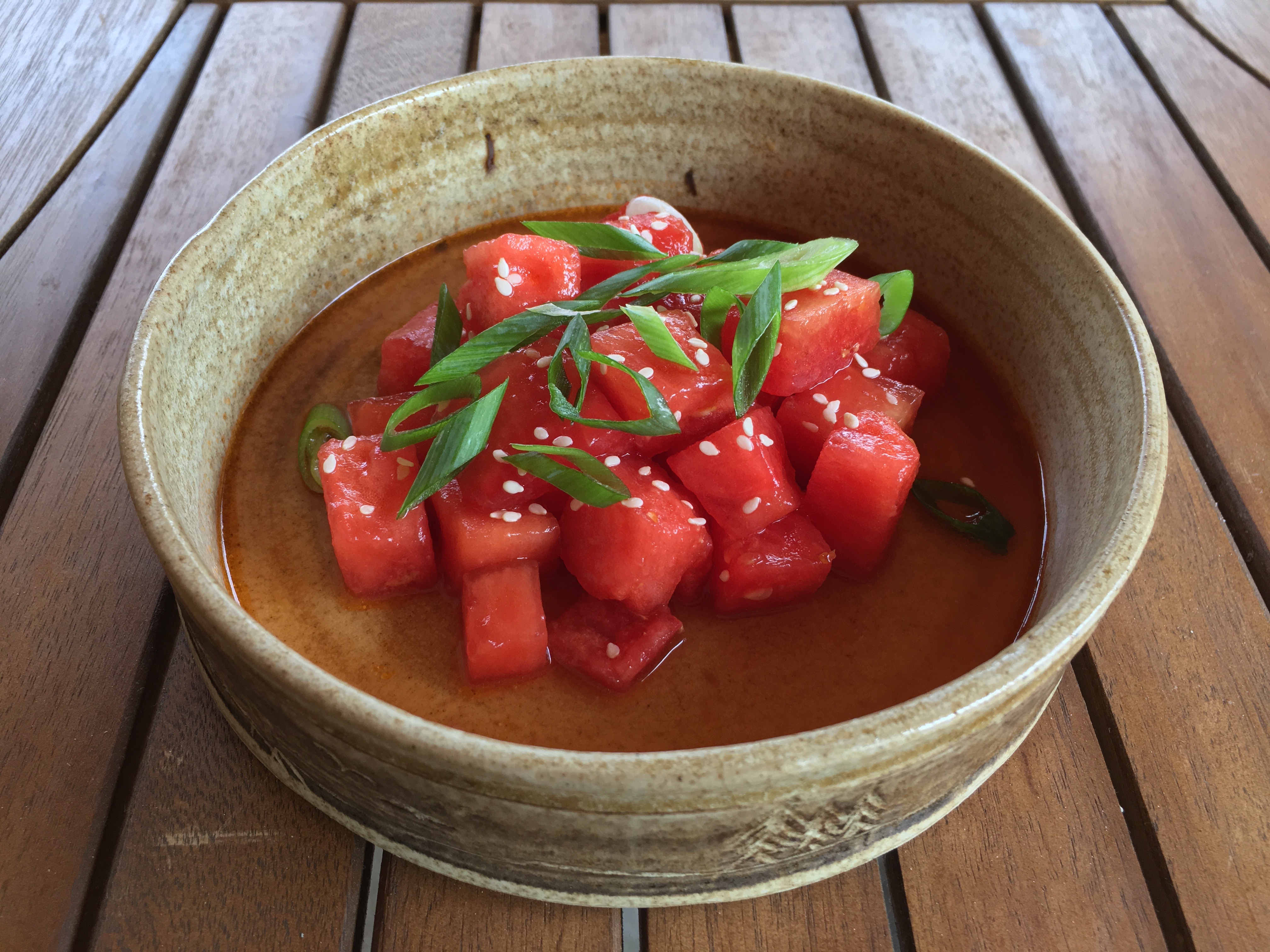
    If you eat at anyone of our amazing local sushi joints you will probably recognize the “poke” part as a dish commonly made with ahi tuna marinated in a sesame-soy dressing. (Personally, it’s one of my go to’s and I can easily crush an entire bowl to myself.) So when on a blistering hot day one of my favourite blog sites posted a recipe replicating this traditional Hawaiian dish using watermelon I was beyond excited. I immediately biked to the grocery store, bought a watermelon, got extremely sweaty in the process and ate the crap out of the final product… and so has everyone else I’ve fed it too.


    Here’s my take on 101 Cookbooks recipe: the link will take you to the actual recipe if you don’t like free balling like me. I also prefer to make it a day or few hours before consumption to allow the watermelon to marinade and soak up all the sauce.


    Step Uno: Deal with your watermelon.


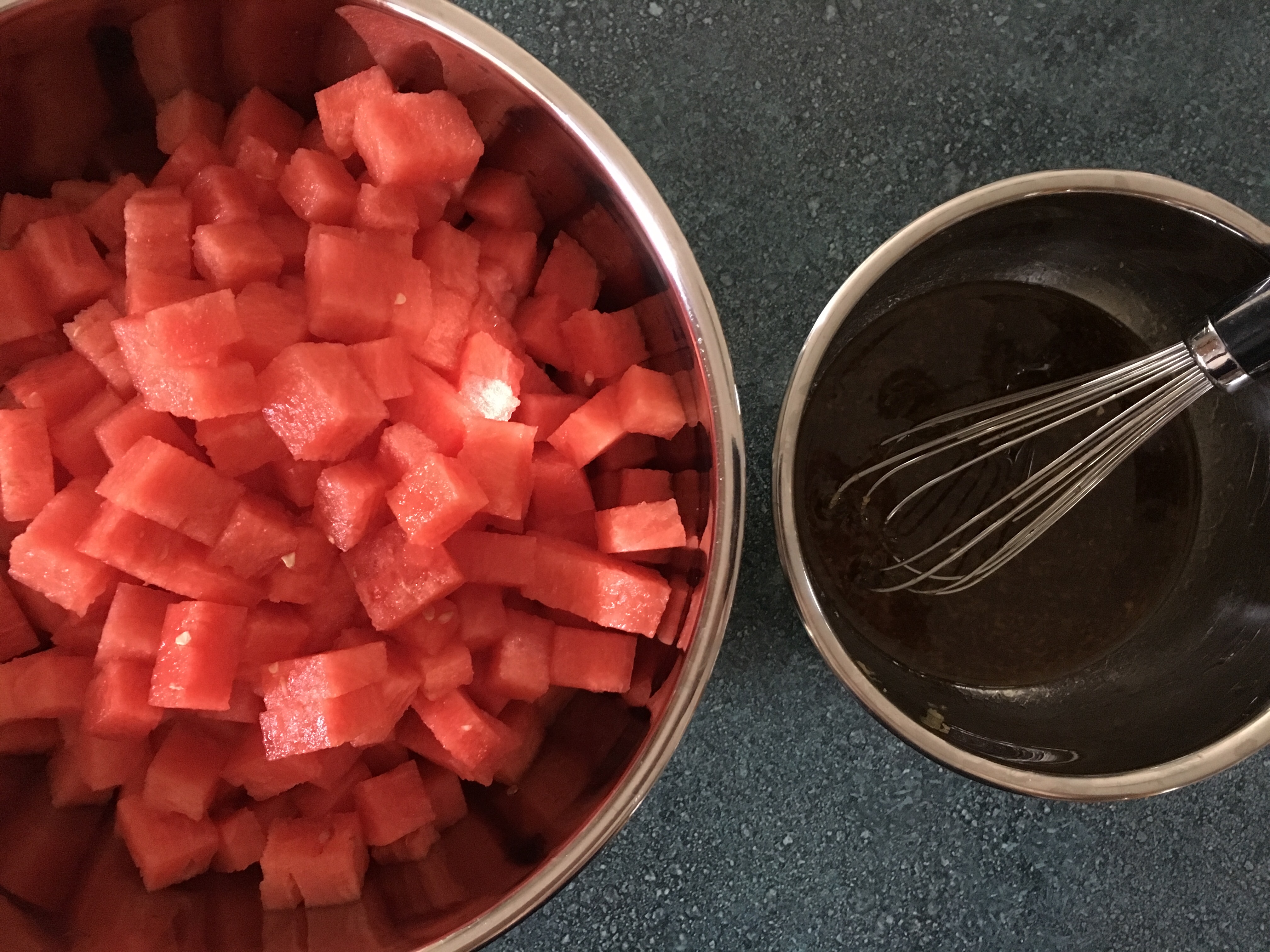
    • Slice a bunch into small cubes ½“ – 1” cubes, I like a good variety of sizes. Use a small to medium sized melon depending on how many folks your feeding.


    Step Two: Make your sauce.


    • Combine the zest & juice of one lemon (or lime whatever is on hand), some ponzu, rice wine vinegar and sriracha (to taste) then whisk in some sesame oil and avocado oil.


    Step 3: Combine everything together and let sit in the refrigerator until you’re ready to eat!

     IMG_5090

    Step Quatro: Dress it up.


    • Serve topped with green onions, sesame seeds and long ribbons of cucumber or daikon radish.

    IMG_5096

    Don’t forget to save some slices of watermelon for the kids and the hound!

  • Making a difference one seed at a time…

    Making a difference one seed at a time…

    IMG_0349
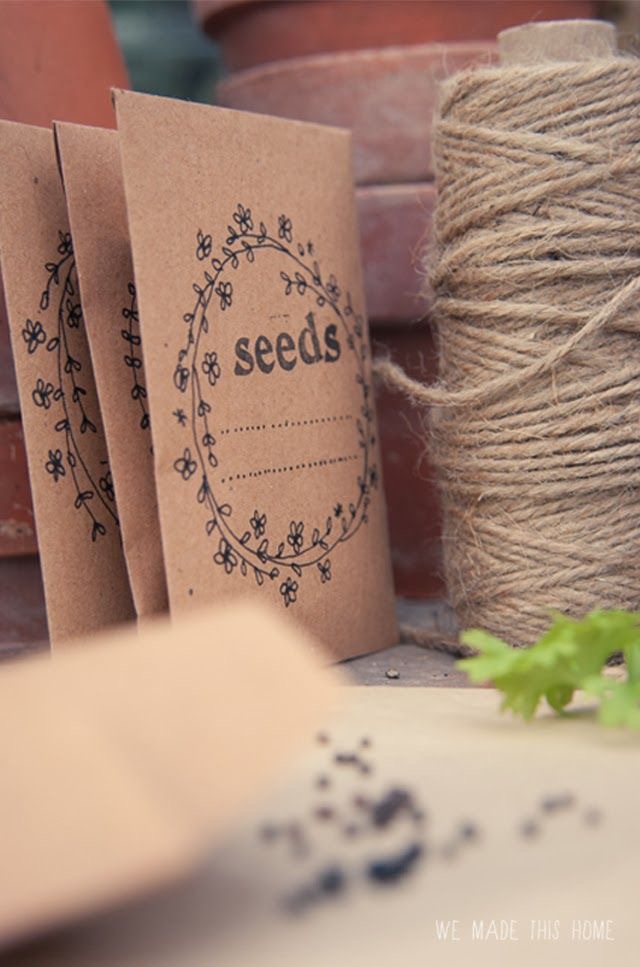
    wemadethishome.com

    As Master Gardeners in Training, we are committed to volunteering our time in our local community to educate and answer gardening questions. We use science-based facts and we only share organic garden solutions. Our backgrounds and experience vary, but we all have something in common: the love for plants and gardening. Our title indicates that we are all-knowing… well, some of us are, and the rest of us continue to unearth the facts about all things botanical.

    In early June, I was asked by Sarah Jones from Stewardship Pemberton Society if I would speak about collecting vegetable seeds and pollination at one of their free garden seminars at the Pemberton Public Library, the library is home to the Seed Library for Pemberton. Immediately said “Yes!!!” The only caveat was my experience in seed collecting was pretty much, well, non-existent. However, that did not stop my enthusiasm to dig deeper into a topic that I am sure would come up one day at one of our Master Gardener Clinics.

    After much research and discovery, my confidence in the subject was better, but what impressed me more, was the significance of collecting seeds.  I had no idea the socio-economic impact that seed collection had on creating healthy food systems and people.

    Did you know collecting seeds helps to maintain seed health & resilience, better genetic diversity in our gardens, farms & kitchens, and can save you money?  It’s no wonder as a child, my grandmother was mortified when she found us playing with her seeds; destroying hours of painstaking work, not to mention affecting her ability to grow the lovely veggies we enjoyed throughout the year.

    IMG_0517
    Photo by Burcu Asvar

    Many of us buy seeds from seed catalogues or at our local garden centres.  Most seed companies nowadays sell F1 or Hybrid seeds that may produce seeds that are sterile or no seed at all.  If they do produce seed they may not produce true to type.

    If you can, choose to buy seeds that are open sourced; these are seeds that are not restricted by patents or other intellectual property rights.  This keeps our food supply secure for future generations (this is where the socio-economic impact comes into play).  Or better yet, take advantage of seed libraries in your community (i.e. Pemberton Seed Library).

    Open pollinated seeds are non-hybrid plants which are more genetically diverse, have a greater amount of variation within the plant population, and they allow plants to slowly adapt to local growing conditions & climate year to year.

    Collecting seeds requires some good planning as well as understanding the fertilization process.  Pollination is key for fertilization, and it’s different depending on the type of plant.  Some plants can self-pollinate (i.e. beans), while others depend on insects (honeybees being the most efficient) or by wind (i.e. corn).

    Before you start to collect seeds, you need to ask yourself the following questions:

    When it comes to Pollination…

    • Will these plants cross with any others? Is this good or bad? (usually bad)
    • How does this happen? (wind or insect)
    • What can I do to control this? Do I need anything?
    • Do I need a minimum of healthy seed? (do they breed as a group?)
    • Do they pollinate on their own and self-pollinate (need one only?)
    • Have I chosen the right plant for the seed?

    When it comes to seed extraction and drying….

    • Do I need to do anything special to the seed?
    • Is my seed well dried and labelled?

    The answers to these questions are different for each vegetable, and my recommendation is to get a good reference book on seed collection that will answer all these questions in greater detail. I have listed a few websites, and a couple of books at the end, that the Pemberton Library has ordered for its book collection.

    The process of collecting seeds is easily summed up in the diagram below:

    image005

    image007
    Diagram via real seeds.co.uk


    To maintain purity of seeds, they may require isolation through distance to prevent insect or wind contamination, time (being planted in stages so that the first crop sets its seeds and stops shedding pollen), mechanical isolation (i.e. using physical barriers to prevent unwanted pollen, like cloth bagging or caging), and/or hand pollination, which is the most commonly used method to produce pure seed.

    Choosing seed comes down to observing the whole plant and not just the fruit, checking for disease & insect resistance, drought resistance, trueness to type, colour & shape of fruit, flavour, etc.  Other factors include vigor and population size (saved from the greatest possible number of plants).

    The process of removing and cleaning seeds can include washing, drying; and some plants require fermentation first.

    Washing seeds (tomatoes) requires placing the collected seeds in a bucket of water, stirred with vigor to help separate viable seeds, strained, and dried on a non-stick surface (glass or ceramic dish, cookie sheet, or screen – not paper towel).

    Plants that produce seeds in pods (peas) or husks (corn) are usually harvested dry, threshed to break the seed from the covering, and any chaff or debris is removed by a process called winnowing (wind).

    Storing seeds is the final stage of the process. Glass or metal jars, zip lock bags, paper envelopes provide air tight homes, and make sure to keep the seeds away from heat or moisture. Ensure they are clearly labelled and stored in a cool, dark place where there is minimal temperature fluctuation.

    IMG_0518

    I want to thank Sarah Jones (Stewardship Pemberton Society) and Lisa Richardson (Traced Elements) for asking me to share my new-found appreciation and knowledge about seed collection. I have an utmost respect for those gardeners and farmers who have been collecting seeds and who are able to pass down their seed from generation to generation. According to the United Nations Food and Agricultural Organization, we have lost 75% of our diversity in our agricultural crops since the beginning of the last century. Having a seed library and sharing our seeds within our community plays such a significant role in the health of our food systems, and is good for our mind, body and soul.

    Happy Seed Collecting everyone!

    Resources:

  • A summer pot luck staple – Broccoli Salad

    A summer pot luck staple – Broccoli Salad

    Summer is well and truly here! (I can say that with conviction as it’s currently 37˚C!). And with summer comes backyard bbq parties and the dilemma of what to take with you as your pot luck offering.

    Well, worry no more! This month’s recipe, borne out of the need to find a salad not imported from the US of A (I’m on a Trump boycott AND trying to buy less produce wrapped in plastic), has a dressing that tastes exactly like the one in the Kale and Brussel Sprout pre-packaged salad kit you can get from Pemby’s grocery store. So it’s delicious, and it’s also so easy to make you’ll be left wondering why you ever bought a ready made salad in the first place!

    DSC00088

    So here it is, the tastiest, easiest Broccoli Salad ever. And make sure to tell everyone you made it yourself! 😉

    Ingredients:

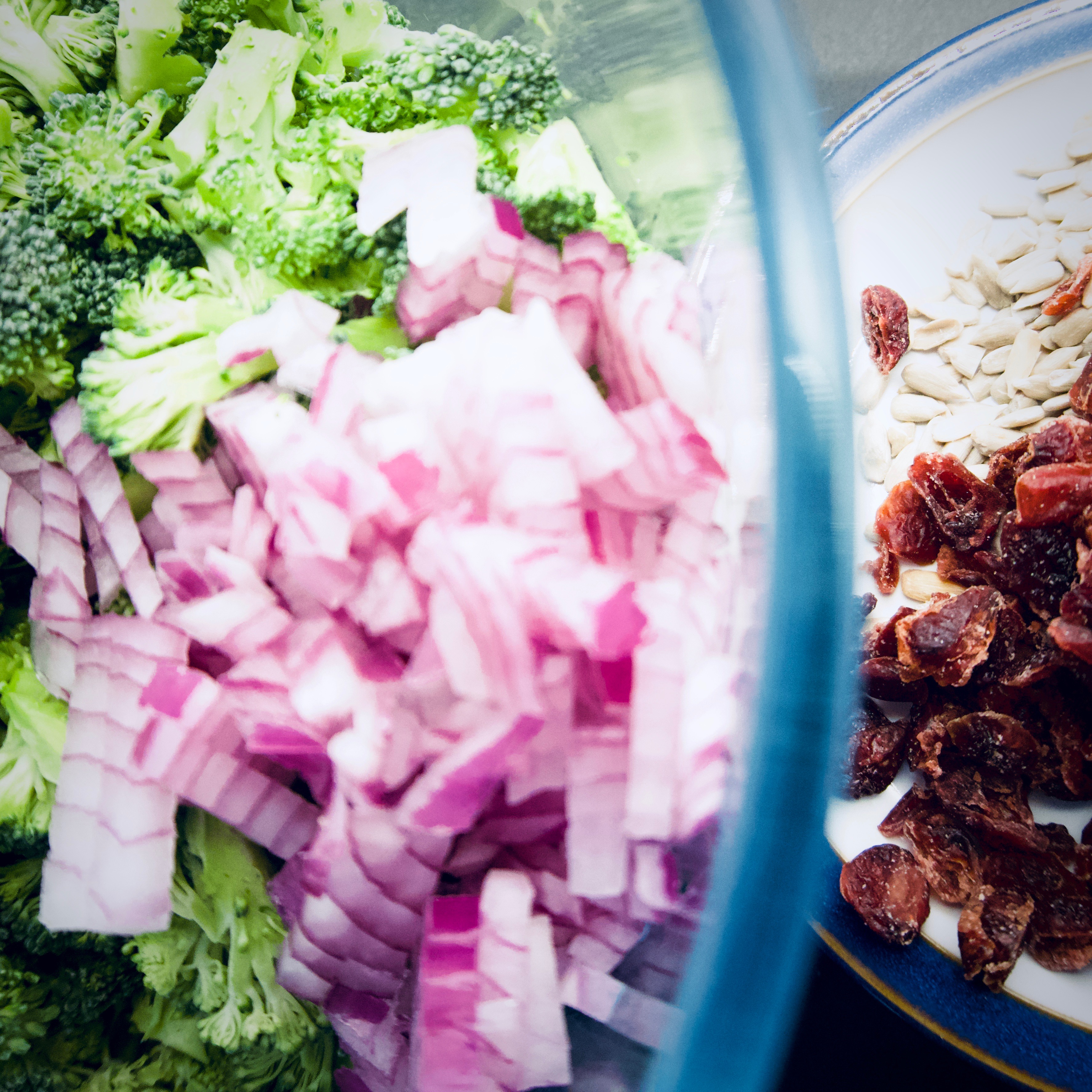
    • 8 cups broccoli cut into bite sized pieces
    • 1/3 cup red onion diced
    • 1/2 cup dried cranberries
    • 1/4 cup sunflower seeds
    • 1/2 cup bacon bits (I used turkey bacon because I don’t eat the other variety!)
    • 3 tablespoons cider vinegar
    • 2 tablespoons sugar
    • 1 cup mayonnaise
    • Salt & pepper

    DSC00083

    Directions:

    1. Whisk together cider vinegar, sugar, mayonnaise, salt and pepper in a medium bowl. Set aside.
    2. In a large bowl, combine broccoli, onion, cranberries, sunflower seeds, and bacon bits.
    3. Pour the prepared dressing over and mix well.
    4. Refrigerate for an hour before serving.
    5. Preparation time = 15 minutes.
    6. Yields 8 servings.

    DSC00084

  • The Power of Rotation

    The Power of Rotation

    Sounds like a potential math write up but you’re wrong. (I would never do that to you or myself.) I will quickly remind you that I did well in said subject thanks to my dad but generally I don’t care for it… for the most part I’m a pocket calculator gal. So, let’s explore the awesomeness of rotation in a few other ways through a couple quick examples: the wheels on my bike rotate and take me to all sorts of cool places, my car takes me to work so I can afford a bike to take me to all these cool places and well, we all take a trip around the sun every year (whether we want to accept that it results in aging is a whole other conversation).

    Regardless on how you define rotation, the point is – it’s good: a chance to roll past the old and explore the new. Now, let’s apply this mentality to our garden.

    IMG_4740

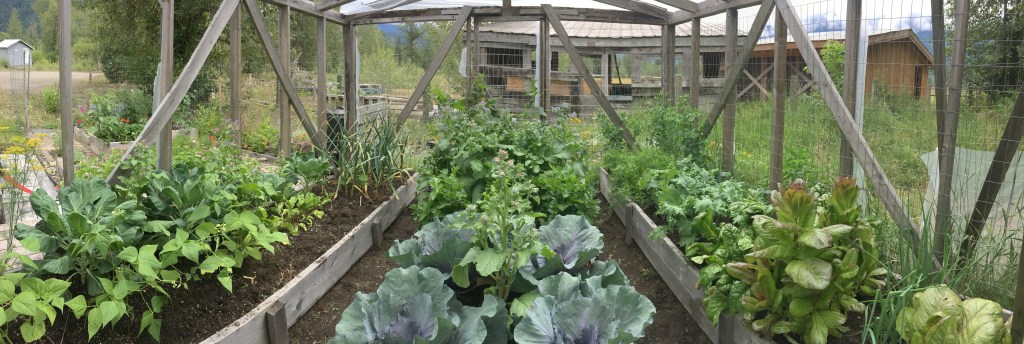
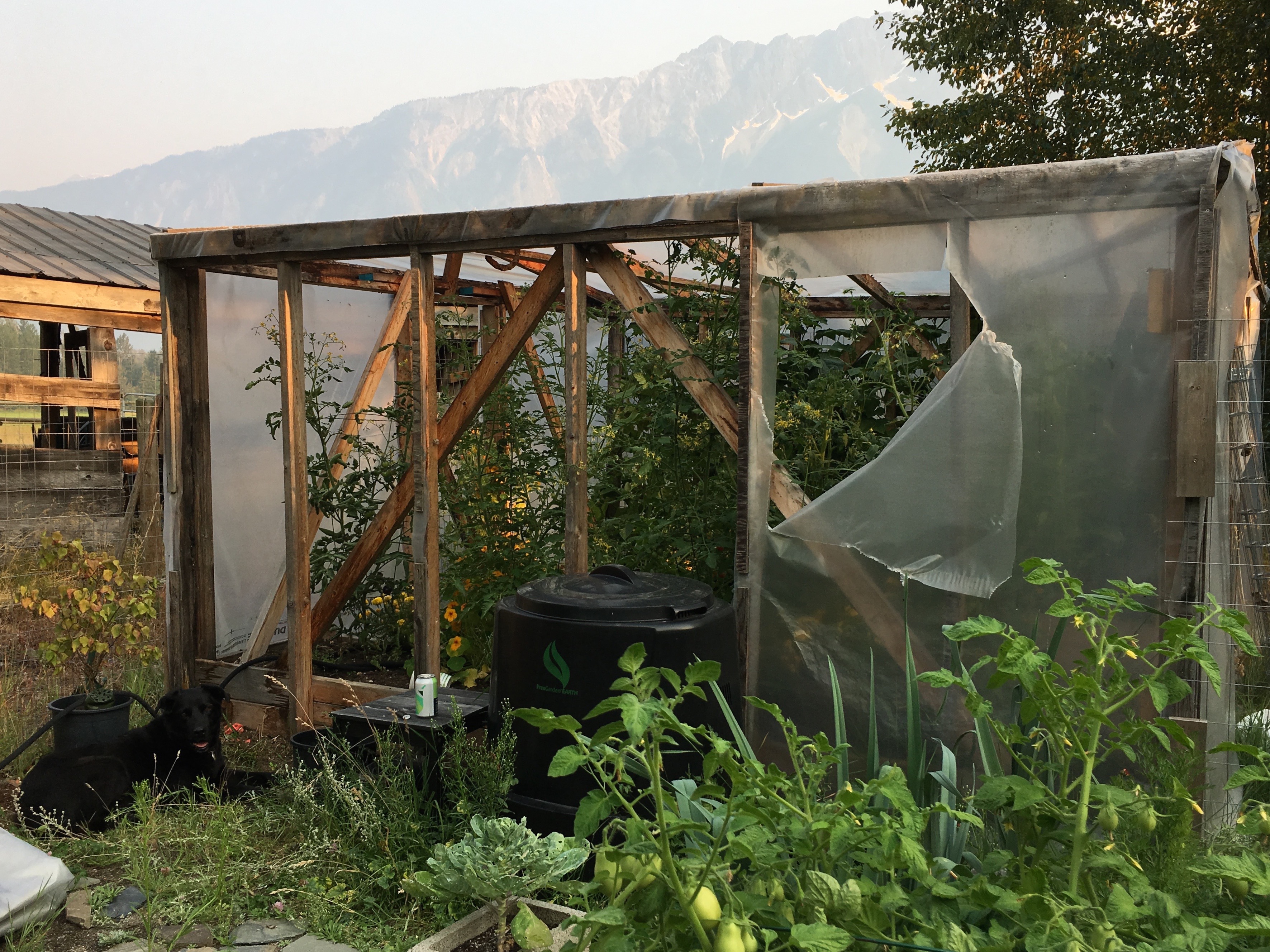
    When I moved into our current location all that existed was a greenhouse for garden space. From what I could tell the only items that had been planted in there were tomatoes, peppers, basil and cucumbers (basically, all the standard greenhouse lovers). However. Over the last couple years I began to realize that the greenhouse location was kind of shady due to the rise of the surrounding cottonwoods and things weren’t thriving as well as they should be.

    Then spider mites appeared last year… they even attacked my marigolds. I mean come on: marigolds! They are supposed to be the shit – indestructible. This led me to realize that change was mandatory. So, down came the plastic walls of the greenhouse late-ish last summer and a ton of Sea to Sky Soils compost added in the fall.

    IMG_0491

    Long story short what I’m trying to get across is that planting the same thing time and time again in the same zone is no bueno. Enter the rotation factor here.

    There is a simple crop rotation scheme that follows; legumes-greens-roots-fruit. Of course there are tons of don’ts and cans and “rules” that apply to make it not so simple. For instance: potatoes are considered a root and tomatoes are fruit but because they are from the same family they shouldn’t follow each other, they could harbor similar disease and pest problems for the next crop. AND THEN, if you add in the companion planting aspect it can get real strange. Here is a simple plan I came up with for an assignment that demonstrates what a 6 crop rotation could look like.

    IMG_4863

    My “greenhouse” is now the greenest it’s ever been thanks to my decision to open it up and plant a bunch of greens, roots and legumes. But I think the thing to remember is that well, any rotation is better then none and adding organic matter into your beds is a surefire way to add nutrients back in and no future plant is going to disagree to that.


    Stay thirsty for garden experimentation my friends!

  • Stop glorifying the summit and enjoy the climb: an astrological forecast for pasta makers

    Stop glorifying the summit and enjoy the climb: an astrological forecast for pasta makers

    Years ago, I read a horoscope that said, “Dear Capricorn, you’d be better off enjoying the climb than glorifying the summit.”

    Or at least that’s how I remember it. The precise words are trivial. In effect, the astrological forecast reminded me of the value of process.

    We need such memorandums, because we often forget about the value in getting our hands dirty. We seldom recognize the profits in puzzling out the crux move.

    And, we barely admit our battles.

    I’m sure you’re wondering what this has to do with fettuccini.

    Well, I might argue that you should take the time to frolic in the process of making a plate of pasta – from scratch. From sourcing the flour, eggs and olive oil to wrapping the toothy noodles around your fork, it’s all part of a process that can soothe the mind and the soul.

    Fresh pasta (2 of 2)

    This dish started with a trip the Pemberton Farmers’ Market and a chat with local farmers.

    Eggs & bacon sourced from the kind folks at Spray Creek Ranch.

    Arugula sourced from the ever-witty Naomi at Four Beat Farms.

    Flour sourced from Anita’s Organic Mill (purchased at M1).

    Killer noodle recipe ripped from “The Pasta Bible” circa 1994. (I went old school version – bonus points right?!).

    “Pasta Dough No. 4”

    2 1/2 c. all-purpose flour + extra for flouring surfaces and strips of fresh pasta

    1 egg

    7 egg yolks

    1 tbsp. olive oil

    1/2 tsp. salt

    I added a wee bit of water when the dough was too dry to pull together in a solid mass. I’d say add no more than a teaspoon of water at a time.

    The recipe calls for sifting and fussy stuff like that, but I took a rustic approach. Perhaps, be careful when pulling the flour into the egg lake, if your crater breaks you can lose all your egg over that cliff that I call countertop edge.

    My Post (54)

    Rustic instructions (feel free to ask questions in the comments)

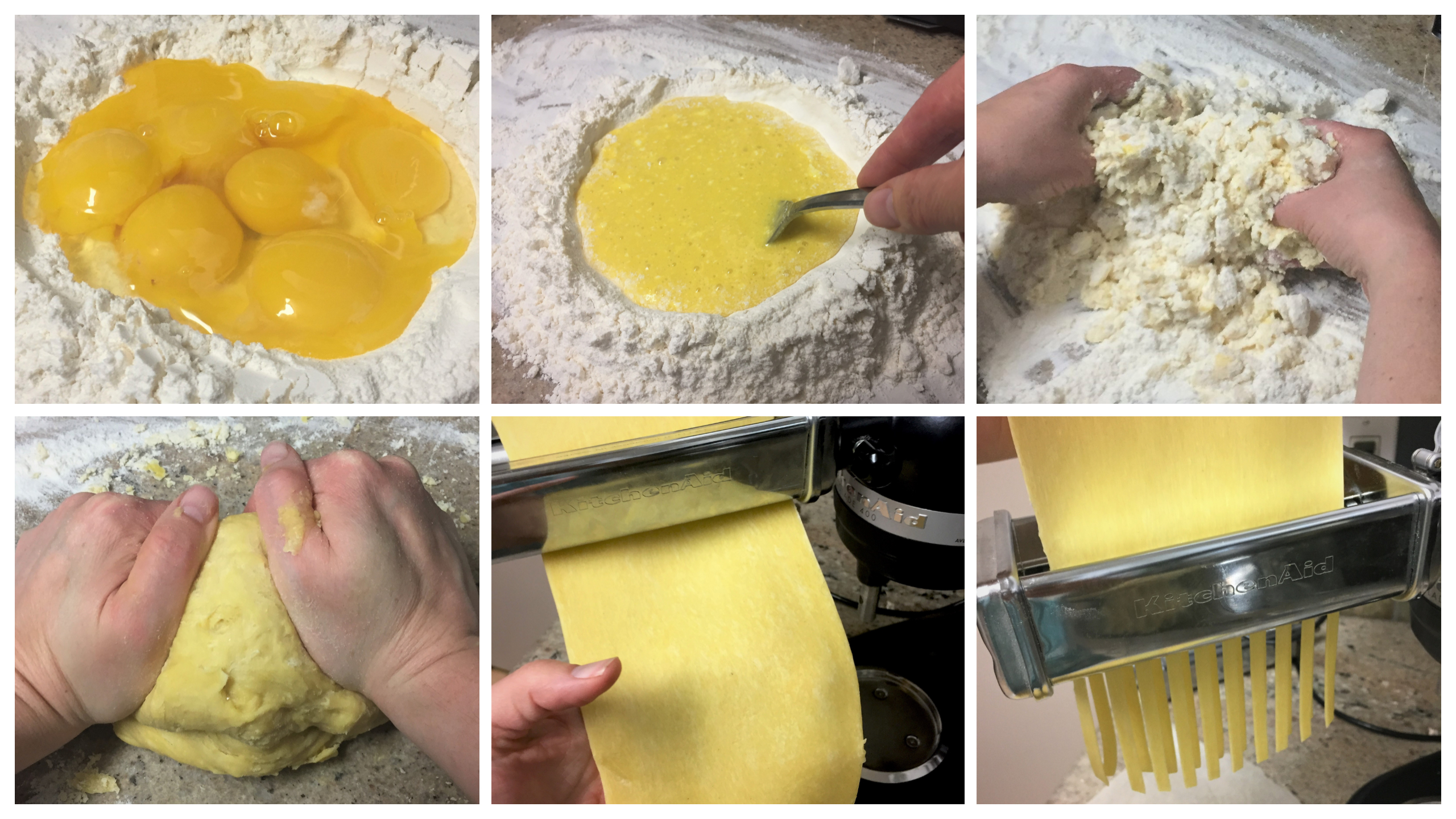
    1. Mound the flour on the countertop and make a deep crater for the eggs.
    2. Crack the eggs into a pinch-bowl one at a time (it makes it easier should you have to fish out a shell or manage a breach of the crater wall) and gently slide them into the crater until you have all of them neatly inside. Add the olive oil too.
    3. Gently beat the eggs, until well combined.
    4. Pull the flour into the egg lake until the liquid is absorbed.
    5. Pull the crumbles together and start to form a dough.
    6. Knead.
    7. Refrigerate, wrapped tightly (in a bees’ wax cloth, or cling wrap if you must) for at least an hour.
    8. Roll out the dough.
    9. Cut the dough into strips.
    10. Dust the strips in flour.

    To save my wrists, next time, I’ll use my stand mixer for the kneading as well as the rolling. You must knead it until it’s glossy and stretchy. Maybe 10 minutes, maybe more (add music and dancing, if you’re bored). I made the dough before work and rolled it out before dinner.

    You can roll out the dough with a pin, but ensure that it’s very thin before cutting it into strips. I rolled my dough to the thinnest possible setting and it was still plump compared to store brands.

    Be sure to drop the fettucini strips into rumbling water, because the temperature drops quickly with a big batch. If you’re really unsure about your dough, try cooking a few strands for about 4 minutes. Then taste test.

    I used Jamie Oliver’s carbonara recipe (which is actually Gennaro’s recipe) for the sauce and added arugula for colour.

    Enjoy. And, be sure to let me know how it went.

    ~

    Lisa Severn is going to Pemberton again — this weekend. She’s praying for a complete annihilation of the mosquito population with the 30 deg. heat.

    ~

    Start a conversation with Lisa over @rhubarbstreet or look for more on Lisa and her co-conspirators… err… co-contributors.


  • Save Your Fork

    Save Your Fork

    My need to forage continues. This week’s victim: Saskatoon berries. Just try walking past the currently loaded bushes of perfectly plump, deep purple berries – I dare you. Even Shadow comes to a complete skid stop to forage on the lower quarters of these native shrubs. Our mission over the last week was to beat the bears to the berries around our place and hit up a few other spots I’d been scoping. We were more than successful; stained fingers, a full bucket and swelled bellies. I figured the best way to capture these jewels was by channeling my inner Julia Child and baking a pie. So, here we go!


    Step Uno: make your crust. Use your favourite double crust recipe or try mine.

    2½ cups flour – tsp salt – 1 cup unsalted butter (frozen) – 6 to 8 tbsp ice cold water

    • Combine the flour and salt in a medium sized bowl. Then grate the butter into the flour. I cut the butter into two halves and grate one at a time, leaving the second in the freezer until I’m done the first. Once both blocks are done use your hands to combine the flour with the butter by gently rubbing it through your hands. It doesn’t need to be fully incorporated but what your looking for is a bunch of little “butter peas” coated in flour. I’m ghetto and don’t own a pastry cutter but if you have one then small cubed blocks of butter cut in will give you the same effect. I have found that grating the butter gives great distribution in the pastry with a very flaky end result – BINGO! Now add most of the water and blend until just combined. Turn the mixture out onto your working surface and bring together the dough by kneading it into a ball, using more water if needed. Separate the ball into two with one just a bit bigger then other and shape them both into flat-ish discs. Cover separately with plastic wrap and retire them to the fridge to rest for at least an hour.


    Step Two: the filling. (Plus turn on your oven to 425°F now to preheat it)

    5 cups Saskatoon berries – 3 tbsp flour – ⅓ cup sugar – zest of a lemon (optional)

    • Combine everything together, easy-peasy.


    Step 3: build your pie.

    • Take the smaller disc out of the fridge and place it on a floured surface. Grab your rolling pin and push the disc out to about a ¼“ thick and place into your pie plate. Pour those prepped Saskatoons in next! Scatter a few slivers of butter over the top of the berries. Grab the last disc and flatten it out to the same thickness as the bottom, re-flouring the surface if needed. The reason for the last dough disc being a bit bigger is that the filling of your pie usually makes a mini mountain and you want to ensure you’ve got plenty of dough to blanket the whole hill, and then some. Before layering on the dough topper, wet the edge of the bottom dough with water – this helps them stick together. Crimp, roll or pinch the dough layers together. Brush the top of the pie with a beaten egg and slice a few air holes into the top.


    Step Quatro: Bake and wait.

    • Place your pie on a baking sheet and into your preheated oven. Bake at the preheated 425°F for 15 minutes then lower the temperature to 350°F for an addition 45-60min or until the crust is golden brown. Cool on a wire rack.


    Step Five: eat now or freeze for later.

    • I chose to freeze my pie and savor it later this fall with friends when we’re craving a taste of summer. Luckily, I saved a bit of the filling and had just enough left over dough to make 4 mini tarts. They were consumed quite quickly.


    There is a CBC story that recalls a visit by the Duke of Edinburgh to a small town in the Yukon many moons ago. He stops for a meal at a local diner and as the waitress reaches to remove his dinner plate she warmly says to him, “Save your fork Duke, there’s pie”.


    Wives’ tale or not the phrase has stuck with us for generations… and this pie for sure warrants saving your fork.