Category: food

  • Tips and tricks for starting seeds

    Tips and tricks for starting seeds

    With the promise of spring just around the corner, starting seeds initiates the growing season. Nothing conveys more optimism and hope for the future for a gardener.  Seeds are amazing, wonderful little specks of embryonic life.They are relatively easy to start, but these few guidelines can increase success.

    1- Store seeds properly in a cool dark place. It sounds detrimental but apparently the deep-freeze is best. That’s how the seed banks preserve them.

    2- Read the package for info, or better yet Google it. This will tell you timing, depth and whether they need light (sprinkle on top) or darkness (cover with newspaper). Some seeds have special requirements such as pre-soaking.

    3- Check the date packaged and find out how long they are viable for. If you’re not sure you can pre-germinate them in wet paper towel.

    4- Make sure you have the appropriate-sized container with drainage holes. Generally bigger plants and seeds will need bigger containers.

    5- If you are recycling containers, always wash and disinfect them with diluted bleach or hydrogen peroxide to kill moulds, bacteria, diseases, critters and their eggs.

    6- Always use a fine sterilized potting mix (peat moss, perlite and vermiculite) or peat pucks. Never use dirt from outside or recycled mix. All it takes is a few eggs or spores to create an infestation indoors. If you do encounter bugs, isolate immediately, discard or treat with insecticidal soap.

    7- Use a tray without drainage holes to capture excess water and to encourage roots to go down to get it.

    8- Line the bottom of the tray with perlite to provide aeration and somewhere for the roots to thrive should they outgrow their container. This is especially useful when using peat pellets.

    9-Grow more than you will require, there will usually be casualties and you can always trade or gift them. A staggered seeding schedule can increases your odds and provide a varied harvest in the future.

    10- Cover with washed sand to fill in the nooks and crannies. Newly sprouted seeds will easily push through this layer. When the sand dries on the surface they need water. Never overfill the container as the water will run off instead of soaking in.

    11- Label and date them. It’s easy to forget what you started if you have many trays going. Be patient. Some seeds take weeks to sprout but most are 5-7 days.

    12- Place somewhere with bottom heat until germinated. A heat mat or on top of the fridge works great.

    13- Cover with a dome or plastic film to retain humidity and heat.

    14- Use a spray bottle to keep starts misted and let water percolate to the bottom of the tray. A watering can will probably be too much for the sprouts.  The larger the plant and container the more water it will need.Never let the soil dry out, but also don’t over water.

    15- Place in a bright spot but out of direct sunlight. Place a fluorescent light a few inches above. This prevents stretching. A timer on 18hrs will promote more growth and give them a few hours to rest.

    16- The starts will eventually need ventilation, opening a window is good but an oscillating fan on low will help stiffen the stalks and prevent mould and damping off (a condition where the plants rot and fall over at the base from cold, damp soil and stagnant air).

    17- Tall plants may need staking – wooden skewers and tape work great. Pinching the tops can also promote a shorter bushy habit.

    17- Up-pot or transplant as soon as they outgrow their containers.Make sure there is no risk of frost before putting outside.

    18- Acclimatize them by slowly increasing light and decreasing temperature.
    Harden them off before planting by putting them out in the day (weather permitting) a week before slowly increasing duration.


    19- Feed them every second or third watering. Liquid seaweed is great – it has all the micro and macro nutrients they need at first. Start with 1/4 strength and slowly increase dosage. Remember, potting soil has zero nutrients.They can only survive so long on their own stored energy.

    20- Treat them like helpless, fragile babies, after all thats exactly what they are.

    Good luck and happy gardening!
  • Sprout away the winter blues: the marvel of microgreens

    Sprout away the winter blues: the marvel of microgreens

    Molly Costello, a wonderful artist I just discovered (thank you instagram), asked her community this week: how do you get through winter?

    More specifically, she asked, “how do you find joy in winter?” which is a very constructive re-frame.

    It’s a beautiful and productive thread, and prompted me to this place: SPROUT!

    Well, I was nudged as much by Molly’s question as by the $5 price tag on a head of wilted lettuce, and the price tag on a bunch of kale, which my garden no longer yields (most of it was nibbled down to stem by the deer, and anything that remained is now buried under a foot of snow) and which inevitably cooks down to a single mouthful, although any dirt I didn’t wash from it manages to expand in size in some perverse inverse leaf-to-dirt amplification equation). Plus, I was motivated by this instinct that when I make something from scratch, or see something grow, I feel stupidly happy; my kid engages more deeply in the real world, and we’re already in that constant tussle of real world versus seductive screen; also, a desire to have some greenery in the diet in the depths of winter. I already had a sprouting jar, so I pulled it out of the cupboard and carefully measured out my tablespoon of alfalfa seeds, rinsed them, soaked them in water overnight, and then begin the daily ritual of rinse, swirl, drain, sit back upside in the jar on the plate on the corner of the counter.

    deviyahya-1052792-unsplash
    Photo by Deviyahya on Unsplash

    Then, thanks to a combination of internet-smarts, sunflower seeds and encouragement from Stay Wild (apparently, Leah’s countertop at home is covered in sprouts and micro greens), and a great book from the library, I became a micro green grower.

    deviyahya-801405-unsplash
    Photo by Deviyahya on Unsplash

    Farmer and micro green guru, Elizabeth Millard offers a lot of great advice, but it’s her tone that I appreciate the most:

    “Winter in Minnesota is notorious for wearing optimists down to a brittle nub, but the more experimentation we did with micro greens, pea shoots, radishes and other tasty vegetables, the more we felt like we were extending summer into our house… There’s a certain thrill that comes with seeing seeds begin to pop into three first leaves, and if you’re wearing your pyjamas at the time, that excitement can feel doubled.”

    4b8cb2f8-92ef-4878-a1cd-53d643f28b4b--16795820412_4f4d4cfce6_b
    Microgreen guru Elizabeth Millard (left) and her partner Karla Pankrow of Bossy Acres farm in Minnesota

    As a person who works from home, being able to do things in one’s pyjamas is Mission Critical for me. It’s a flashing neon sign that says, “Lisa, this might even work for you.”

    And so, following the various bits of advice I’d gleaned from above-mentioned resources, I began, with one plastic salad box rescued from the recycling bin, some potting mix excavated from underneath the cobwebs in the garage, and my little packet of sunflower seeds acquired from Stay Wild.

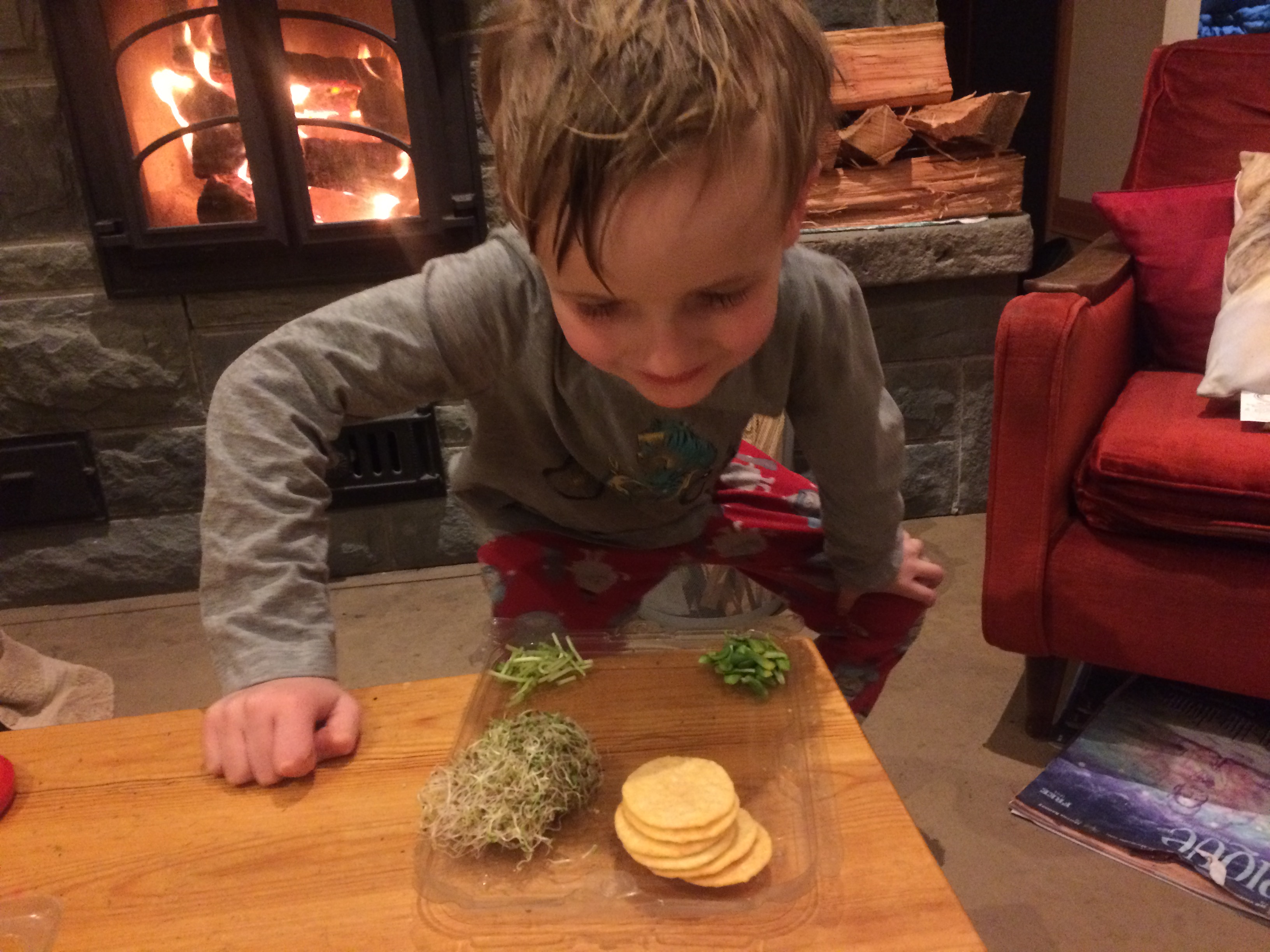
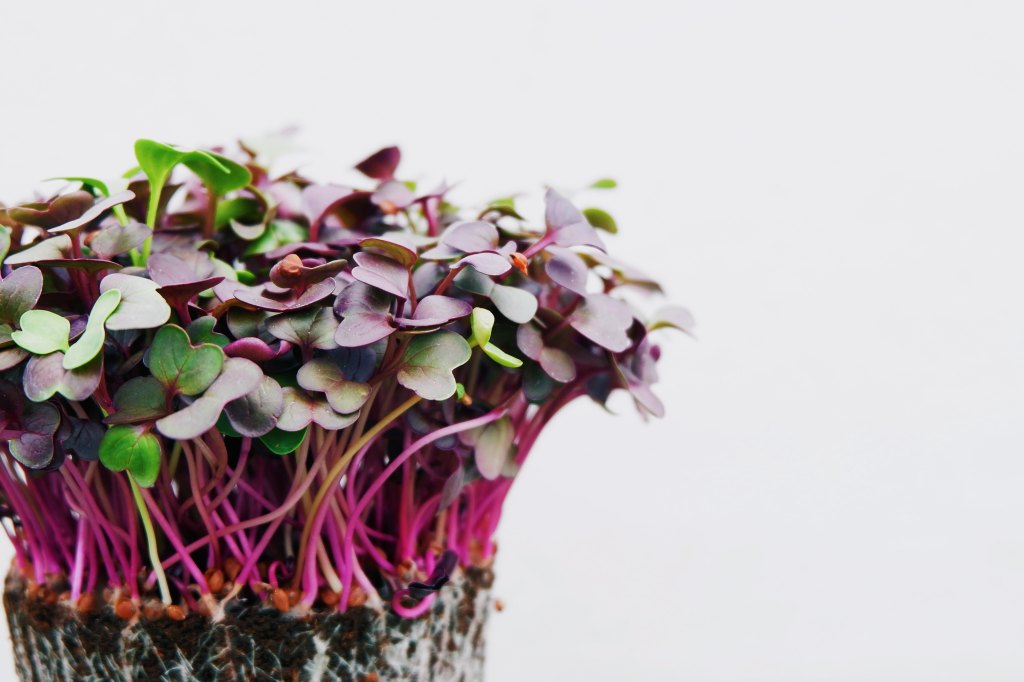
    A few days later, my 5 year old put himself in charge of the harvest, and Mr Just-Ichiban-Noodles-for-Me, snipped and plucked and made merry with the nutrient-dense cotyledons (the initial two leaves of a seedling, that give way to the plant’s “true leaves”). He made cracker-sandwiches for us, from the micro greens, and ate his way through much of the first harvest. Hooray!

    e19ef333-b272-4407-aea3-e48d7d0f1a87

    Some wins just feel too easy… I spent $3, used garbage, and my kid fed himself greens (and also introduced his meat-eating dragon to the joy of omnivorism.)

    img_0313
    Look, Sparky! Micro greens. Feel free to toast them, if you like. Bu they’re just as good raw, for those who don’t have the ability to breathe fire.


    img_0373
    Raw food chef-in-training preps the basic ingredients for a nutrient-dense snack for all the family.


    Added bonus, the micro greens made my dinner look more like the picture in the recipe book, which never happens! Wizardry. And joy.

    img_0402

    Millard said, in her book: “Sometime around the middle of February, it always seems to hit: the weariness of filling my shopping basket with fresh vegetables from California, Chile, Mexico, and even Peru or New Zealand. No offence to the hardworking farmers, because I truly appreciate the opportunity to eat oranges during a snowstorm. But these products require, by necessity, lengthy shipping times that sap them of flavour and nutrition to some degree. Still, it’s not easy to eat local when you live in a place that requires budgeting 20 minutes every morning for scraping the ice off your windshield.”

    How do you find joy in winter is a wonderful prompt, as I discovered when I read through the responses to Molly Costello’s post: cross-country skiing, running, sleepovers and dinners with friends, landscape planning and reading seed catalogues, being okay with not being totally okay, soup-making, sauna, drinking warm juice, extra gratitude practice, crafting, making art and cooking for friends, burning candles, forest walks, cold water swimming, making broth, hot baths, taking a cup of coffee outside cloaked in a huge coat, writing letters to long-distance friends and taking extra good care of the houseplants.

    If you want to get more specific, you could ask: where do you find joy in winter? And happily, I can now answer: on my kitchen counter.


  • The Last Squash

    The Last Squash

    Bittersweet times are upon me these days as my personal stock levels of fresh garden produce dwindle down to the last survivors. Luckily seed ordering is in full effect to keep the dream alive! Yet, even though the light at the end of the winter tunnel grows brighter every day, you can still guarantee there will be times when we feel the need to: bundle up, get adventurous, come home and devour a hot bowl of soup.

    But I’ll reiterate before continuing that… #summeriscoming.

    Feeling inspired from an Instagram post by my “neighbor” Anna for a mega hearty vegetable broth and a recipe from My New Roots, I set forth to honor my last butternut squash with a soup so full of nutritional goodness that would make the new Canadian Food Guide salivate.

    So here we go – Butternut Miso Soup.

    Step Uno: Make Anna’s stock.

    • Once you’ve got all the goods simmering away go out and adventure for a few hours then come home to the most AMAZING smell, ladle up yourself a cup and savor the goods! Freeze what you don’t use in different sized containers for later. (I added in some carrot and celery because I had it on hand and well, I’ve never made a stock with out either!)


    Step Two: Start making the soup.

    Butternut squash, peeled & diced into ½“ pieces (approx. 3 cups), roasted at 375°F with some coconut oil, salt and pepper – one medium sized onion, diced – 3-4 cloves garlic, minced – 2-3 Tbsp fresh grated ginger (I keep mine in the freezer for easy grating and its keeps longer) – miso paste (Fuji Market in Whistler has a great selection, I used AWASE Miso)

    • Add some coconut oil into a Dutch oven over medium heat, then add the onion and cook until translucent then add in the garlic and ginger; allow everyone to mingle until fragrant. Then add in the butternut squash and cook for 5 minutes to absorb the flavors. Top the lot with the veggie stock and allow to simmer for 10-15minutes. Use one cup of water and combine with ¼ cup miso paste, whisking to combine then add to the pot. Remove from the heat and use an immersion blender to smooth out the soup. Add more stock or water to obtain your desired consistency and season with salt & pepper.

    Step 3: Wasabi cream.

    1 Tbsp wasabi powder – 1 Tbsp water – 2 Tbsp mayo – squeeze lemon or lime juice – dash of tamari

    • Whisk everything together and get ready to be addicted, and willing to putting this sauce on everything.

    Step Quatro: Eat the soup.

    • Serve the soup drizzled with the wasabi cream, sprinkled with black sesame seeds and topped with some pea shoots, micro greens or whatever is on hand. That is all.

    img_7124

    Simple. Delicious. Nutritious. Most importantly: made and grown with love.

    And remember… always trust a Swede.


  • AW NUTS: Nancy Lee finds out just why Nuts are so Expensive

    AW NUTS: Nancy Lee finds out just why Nuts are so Expensive

    I’ve been involved with the Fruit Tree Project the past two years. This awesome endeavour connects local fruit tree owners, volunteer pickers and community groups, such as the Food Bank, who share the bounty and reduce conflict with bears. I have enjoyed learning how to make crabapple juice and jelly, as well as eating delicious apples, pears, grapes and plums, so when the email came in looking for volunteers to pick black walnuts, I was in!

    My dear old Mom’s version of swearing is “gosh dangit” or “darg narbit” or “aw nuts”.  With the first two, one can imagine the true meaning, but I never understood how a delicious nut could be used as a cuss word.  Until now.

    Harvesting the nuts was quick and easy; you just pick up the nuts from the ground under the tree – who knew?  In no time, the 5 of us had collected 90 lbs! I was very excited with my share, a large bucketful, and imagined impressing my family at Christmas with something not tomato-based. (I grow too many tomatoes!)

    img_4855

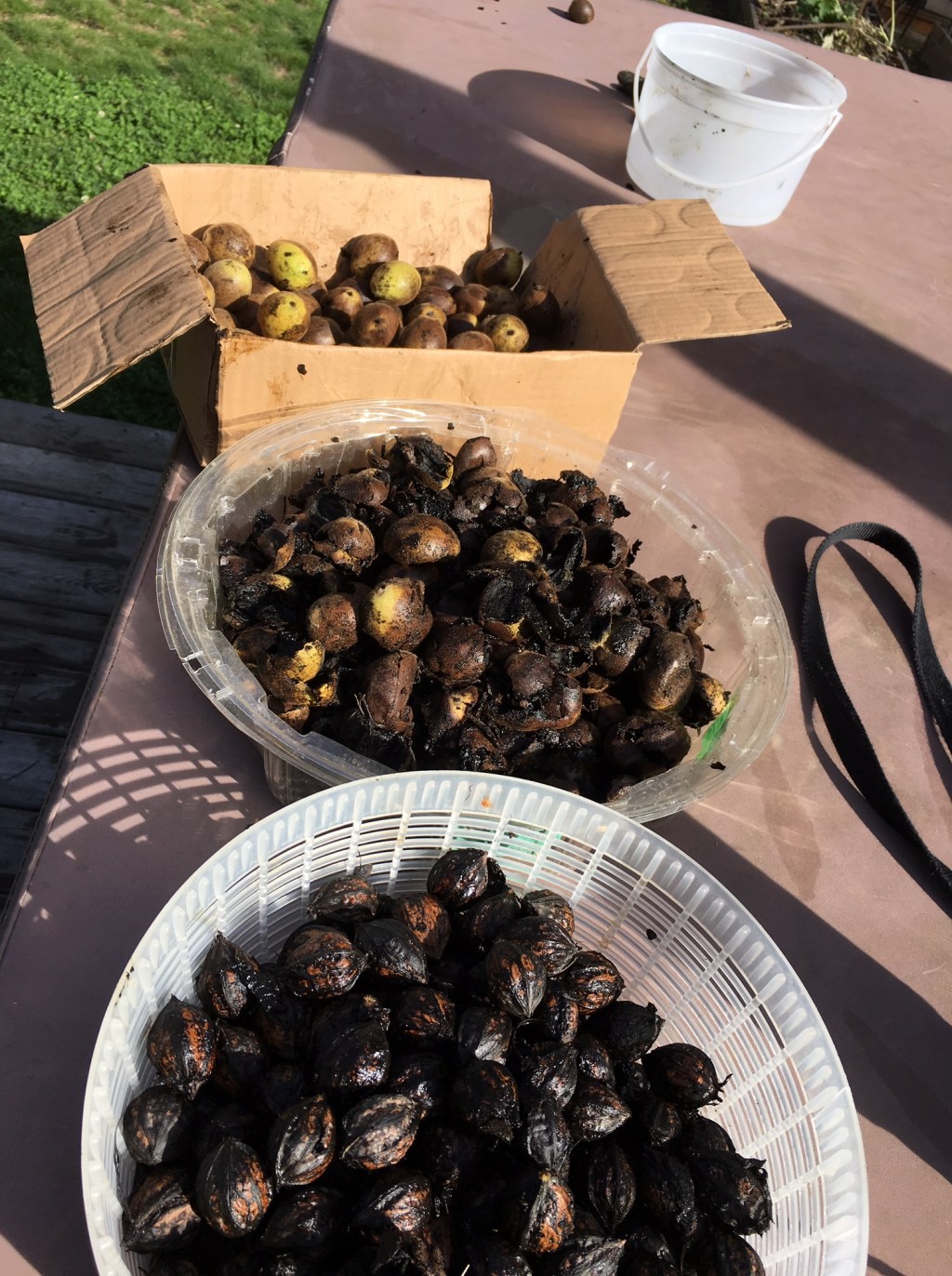
    Hulling the walnuts was also easy. I had been warned to wear gloves as walnuts stain but because the fruit was soft, removing the outer husks was quick work. Inside, a black glistening prune-like thing remained, hence the name “black” walnut. The black slime wasn’t easy to remove, so I went looking on YouTube and found a delightful video hosted by Farmer Drawl and his Long-Sufferin’ Wife from the Heartland (not really, but you get the idea). Drawl’s technique of husking the walnuts was a sledge hammer so I wasn’t convinced of his methods, but I kept watching. Once hulled, he “power-warshed” the walnuts in a large bin, “but that ain’t the end of the story”. He then put them into a smaller bucket, used a shovel to agitate them, changed the water, repeated this 4 times, and then and only then did they turn up looking like walnuts. Ha, I thought. I have a power-washer and a much smaller amount, so no problem.

    img_4858

    The darg narbit power-washer did a bit but Drawl was right; it didn’t finish the job. For the next two hours I tried methods like individual hand-scrubbing (that didn’t last very long), the shovel/bucket/agitate trick (didn’t work) and finally, the hand-pluck/fingernail scrape/rinse and rinse again/put in a large plastic mesh potato bag and roll it around on the grass on your hands and knees trick. I ended up soaking wet with black fingernails, but the result was a basket of things that finally resembled walnuts. Next week’s carrot cake will be worth it, I thought. Then Drawl says, “store ‘em for at least 6-7 weeks, then use a hammer to open ‘em up to git at the fruit”. Aw nuts.

    img_4859

    Fast forward to the week before Christmas and the big bag of walnuts sat ready to be divided amongst my siblings. Of course I kept a share for myself, and pulled out the nutcracker. I tried and tried and ended up with a broken nutcracker and a strained wrist, but no open walnuts. If I had this much trouble, I figured I would have to shell the nuts before I gifted them. Back to YouTube. Turns out black walnuts are notoriously difficult to open. Many different ideas were presented:  microwave ‘em, roast ‘em, soak ‘em. Nope.  Lightly tap the pointy end with a hammer. Nope. Nothing and I mean nothing opened the gosh-derned things. Then I remembered Farmer Drawl and pulled out the sledgehammer. I put half the nuts into the same mesh potato bag I’d used to clean them and smashed away on the concrete floor of the cold garage. I then spent the next hour picking pieces of fruit (the ones that weren’t dust) from the walnut shell shards, until I lost patience.

    img_5125

    End result: one lousy cup of small walnut pieces.

    Yes, they were sweet and tasty, but after all those hours of effort?!  I threw the rest of the unshelled nuts into the woods for the squirrels and birds. Family got tomato sauce for Christmas. Aw nuts!!

    ~ by Nancy Lee

  • Food and Feelings: Intentions for 2019

    Food and Feelings: Intentions for 2019

    Oh hello, 2019! I’m not someone who’s all about the “new year, new me” mantra but I do like to use the new year as a time to remind myself about the things that I love. I also use this time to set achievable intentions. To be honest, I celebrate my actual new year on my birthday (August 8th) and that is when I set bigger BHAG-ish goals. For 2019, I’ve set some intentions that will help inspire my happiness and that may require guidance from the community. I don’t have a very green thumb, I’m a creature of habit and I love being outside.

    If you have any suggestions or tips on any of the below intentions, please comment below this post or email. #help

    Pemberton on Christmas Day.

    Intention one:  Try something other than Pad Thai at Barn Nork

    I’m a frequent diner at Barn Nork (and also a frequent eater of their take out). I always switch up the starters but I can’t seem to deviate from their delicious Pad Thai. HELP! My goal for 2019 is to provide my taste buds a new experience via the Barn Nork train.

    Intention two: Always have local farm fresh eggs

    My name is Blair and I’m an egg-aholic. I start off every single day with a delicious breakfast that 99.9% of the time includes eggs. Since moving to Pemberton in 2012, I discovered how delicious farm fresh eggs are. Sometimes they are easy to buy and sometimes I feel like Sherlock Holmes trying to hunt down someone who will sell me at least a dozen. Over the years I’ve collected a few different resources for farm fresh eggs and I’ve learned to buy two dozen at a time. When I can’t find the eggs I desire, I buy them from the store and they just don’t have the same taste (in my opinion). Why should I let my eggs dip below my taste bud’s standards? I shouldn’t and I won’t! So, 2019, bring on the farm freshies!

    Intention three: Grow my own flowers (to cut)

    I’ve always been a sucker for fresh cut flowers. They are pretty and smell divine. I realized that during 2018 I spent a lot of money on purchasing flowers. Because I enjoy flowers so much, and I have the space to grow them, why try growing them? My husband has a greener thumb than I do and he’s agreed to help me out with this intention. I’m looking to grow flowers that are cat-friendly AND that are low maintenance. What do you think I should grow?

    One thing to note is that this past summer was the first summer (ever) that I managed to keep my lavender plant alive. GO ME!

    Intention four: Pick my raspberries, every day

    When I moved to town I shared with Shayne my love for raspberries and that I’ve always wanted my own raspberry bush. So, we planted a raspberry bush and we seemed to plant them in the right spot because they love to grow! Usually, halfway through the season, I seem to slip away from picking them daily and eventually forget about them. I usually have a moment where I remember (when I’m no where near Pemberton) and call a neighbour to send their kids to pick the berries. I have NO REASON to not pick the raspberries on a daily basis (unless I’m out of town, which, I guess, is a reason). I should also freeze them if I have too many. So, backyard bush, bring it on!

    Because it’s now January 10, 2019, and I’ve shared my intentions publicly with you, please hold me accountable. Also, if you have any words of encouragement or advice, please send them my way. Cheers to an awesome 2019 full of new menu choices, fresh cut flowers, raspberries galore and eggies from my neighbours.

    Blue sky in Pemberton on Christmas Day.

    P.S. Want to drop me a line? My email is blair@blairkaplan.ca.

  • L is for Lefse: a guest post by Connie Sobchak

    L is for Lefse: a guest post by Connie Sobchak

    Lefse by Connie SobchakAs Christmas neared, I thought about ways to make the season a little more special for my dad, who is in residential care in Squamish. Home baking is always a treat for him but I knew one item in particular would be most welcome: lefse. A Norwegian flatbread made with several variations, lefse was something Mom used to make for Christmas using Grandma’s recipe, which called for mashed potatoes, flour, milk, butter and a little salt. In the old cabin, she baked it on top of the wood stove after rolling it into tortilla sized rounds. Once one side cooked she flipped the lefse using an old yard stick, then made a stack of ten to twelve which were rolled up inside a tea towel. It was a sticky, floury, messy procedure but worth it when the butter and Roger’s Golden syrup came out; Dad would spread the syrup and butter over the lefse then roll it jelly roll style, holding both ends up to eat it so the syrup didn’t run out.

    Well, my attempts at recreating lefse have not been very successful – my potatoes were too wet or I didn’t add enough flour or I was too reluctant to commit to the messiness of it all. Dad ate it but I suspect he was being kind – thank goodness for the syrup. So this year, after a cousin reminded me that one could actually purchase lefse in the Lower Mainland, I phoned around to try to buy some; alas, the sources were too far away or just not feasible. Then I had a brainwave – I would post an ad on the local Buy and Sell sites: ISO someone willing to sell some lefse.  Help make an old Norwegian’s Christmas a little brighter.

    It took an hour till my inbox pinged and there was a message from a man in Squamish who was willing to trade me some lefse for Pemberton carrots and potatoes. We arranged a time and date and then I started fretting about finding the Roger’s golden syrup which has some substitutes but none that are quite as tasty, apparently. Before I could take my post down, another person responded, saying, this is the best post, ever!”  We chatted and she assured me that if I couldn’t find the Roger’s Golden Syrup, her folks had lots and she would meet me somewhere in Squamish and give me some.  People were committed to a successful completion of my mission.

    Tuesday rolled around and I texted my supplier that we were on the way and plugged the address into the GPS. They were in full production mode when I arrived; here was a couple who did not hesitate to embrace the lefse mess. He had made a round metal plate to place on top of the electric burner of the stove and they had ordered a proper ridged rolling pin and a thin flipping stick for easier manipulation of the rounds. It was his job to flip and tend the lefse while his wife prepared the dough and rolled it into the proper shape. 

    L is for Lefse

    Here, have a seat and taste it, they encouraged me, spreading one piece generously with butter.  Now, I have never really been a fan of this treat (some people say lefse tastes and feels like burnt newspaper with flour on it) but theirs was spectacular – soft and not too floury – perfectly cooked. We talked about how often they made the flatbread and what traditions they associated with it, discovering mutual friends and sharing Christmas stories. I left with twelve pieces wrapped in a napkin.  Don’t worry about the napkin, she said, I buy them at the thrift stores for nickels and dimes, then send them off full of baking.

    When I got to Hilltop House, Dad was participating in a word game wherein the participants had to offer words beginning with particular letters of the alphabet for a variety of prompts in under a minute. They were already at S Somewhere hotSedonaSomething yummySmoothiesSomething you eat at Christmas-Stollen.  I was not surprised to hear that Dad had said lefse earlier in the game for that particular prompt and the other residents were pleased to get a first hand glimpse of this item they had not heard of.  

    Mr Hellevang making lefse by Connie sobchak

    Dad and I went back to his room and I set up our little feast of lefse, butter and Roger’s Golden Syrup (which I found at Save-on.) While Dad rolled up his first piece, I relayed the story of how I’d procured it and he got a good chuckle in between bites.  Christmas season did indeed get a lot brighter because of that home baked treat.


  • Old Fashioned Egg Nog

    Old Fashioned Egg Nog

    I grew up in rural Ontario, and every New Years Eve my family and I would drive 3 miles down our snowed-in gravel road to the farm of Joanne Cowling. Having come to Canada from England many years earlier, Joanne kept her meticulous British accent and a series of beautifully maintained gardens, complete with goats, sheep, pigs, geese, ‘chooks’ (chickens) and a pony named Sandman. Upon entering the red brick farm house my brother and I would remove our winter clothes and make a beeline for the kitchen where Joanne would ladle out a hand-thrown clay goblet of homemade egg nog for each of us. As I sipped its heady creamy goodness, I always wondered what made the adults laugh so loud as they drank theirs. (I suppose I did not see the brandy making its way from goblet to goblet, how conversation slipped more easily in its presence). Then my brother and I would weave between the legs of neighbours to get to the large table that was laid out with hundreds of Joanne’s famous hors d’ourves: crab wrapped in filo pastry, thin slices of marinated beef tongue, smoked salmon sprinkled with capers, warm brie cheese, and Christmas cookies cut into the shapes of animals, decorated with fancy icing and tiny silver balls. But in the collage of these most delicious morsels, it is the egg nog that I remember most; that rich impossible creaminess.
    About 10 years ago, through a series of arm wrestles, afternoon coffees, and barn chore trades, my mom finally convinced Joanne to write her recipe down, and the ‘nog became part of our family tradition. Every year when I go home for Christmas there is the requisite jug of thick, creamy (and quite boozy) ‘nog chilling in a snowdrift outside the back door.
    Over the years I’ve sampled many attempts at the enigma that is egg nog. And I have to tell you that nothing, and I mean NOTHING has come close to the velvety indulgence of this homemade ‘nog. It takes a little bit of time and effort, a little bit of coaxing and folding and stirring and chilling. But the results are worth it: a rich, milkshake-thick ‘nog, meant to be sipped, savoured, and shared- or stirred into your morning coffee.

    Recently, concern had been expressed over the consumption of raw eggs (which are essential to traditional egg nog’s frothy texture) because of the possibility of exposure to Salmonella bacteria.
    The Canadian Food Inspection Agency states that “Although Salmonella is rarely found in eggs in Canada… foods made from raw or lightly cooked eggs may be harmful to vulnerable people such as young children, the elderly, pregnant women and people with weak immune systems.” (A study conducted by the USDA in 2002 showed that only one in every 30,000 eggs in the national food system was contaminated with Salmonella bacteria).
    In quest of an opinion closer to home, I visited Trout Lake farmers market and talked to vendors selling local eggs. “An egg is an egg.” One farmer told me. “I’m a big believer in cooked food. But I’ve got a friend who gulps them down raw all the time, and never seems to have a problem.”
    “The big thing is to know your farmer” another told me, restating the mantra of the local food movement. “You want to know that the flock has no history of salmonella, and that the eggs have been properly washed and stored.” Eggshells themselves form a hermetic seal, which means they are impervious to contamination once they have been laid, unless the shell has been cracked or compromised. So when sourcing eggs for this recipe, choose ones with shells that are clean, uniform, and unbroken, that have been refrigerated as soon as possible after laying, and that are not past the best before date. (If 3141194799_9e84cca519_zyou’ve bought undated eggs from a local farmer, use them 3-4 weeks after purchasing, and don’t be afraid to ask if he or she ever eats them raw.) If you want to be extra cautious you can always buy cartons of pasteurized egg yolks and whites from any large grocery store. I personally prefer the full-bodied taste of eggs from organic free-run hens, and believe that chickens who’ve had a chance to scratch in the dirt and get splashed with the occasional raindrop lay healthier, more nutrient-rich eggs. I also like knowing the name of the person who hands me my carton, rather than selecting one from the cold glare of a supermarket display case.                         Whichever source of eggs you choose, after you’ve whipped, mixed and folded a batch of this incredible egg nog into being, take a moment to send a few thoughts to the chickens that have made all of this possible. Then take a sip. Let the holidays begin!
     

    Old Fashioned Egg Nog

    Makes approx. 2 litres

    I find it easiest to separate eggs by cracking the whole egg into the palm of a clean hand, and then letting the white drain out between my fingers. You can also use an egg separating tool, or pour the yolk from shell to shell until all the white has drained away. Be careful not to get any yolk in with the whites, or they will not whip as well.

    If you wish to make a non-alcoholic ‘nog, substitute 1 ½ cups whole milk and 1 tsp vanilla in place of the brandy or rum.

    10 Egg Yolks
    3 1/2 cups white sugar
    1 1/2 cups Brandy or Rum
    10 egg whites
    1 litre whipping cream
    ½ tsp fresh grated nutmeg

    Put a bowl in the freezer to chill for making the whipped cream.

    Whip the yolks together with the sugar using an electric mixer until they are light in colour and a consistency similar to buttercream.

    Add the alcohol a little at a time, mixing all the while. Continue to mix until all the sugar has lost its granular texture.

    In a clean stainless, ceramic, glass or copper bowl, whip the egg whites until they form stiff peaks. Room temperature whites whip best. Fold the egg whites into the yolk/sugar/alcohol mixture.

    Whip the cream in the bowl that has cooled in the freezer until it is stiff. Gently fold it into the ‘nog along with the grated nutmeg.

    Store in the freezer for a milkshake-like consistency, as the alcohol will keep the ‘nog from freezing. Or keep refrigerated. Either way, the ‘nog is better if allowed a few hours for the flavours to mingle. Stir before pouring, and grate additional nutmeg over the top of each glass before serving. Enjoy!

    *Author’s note: this article originally appeared in Edible Vancouver’s Winter 2011 issue, but as the online edition is no longer available in its entirety, I though it was worth a repost. 🙂

  • Food and Feelings: Fromage

    Food and Feelings: Fromage

    Bonjour*. When you think of France what do you think of? What comes to mind is probably different for everyone. For me, one of the thoughts that surface is about cheap and delicious cheese. After returning from my rock-and-roll honeymoon, I’m left missing the delicious croissants, cheese, wine and various other delightful foods.

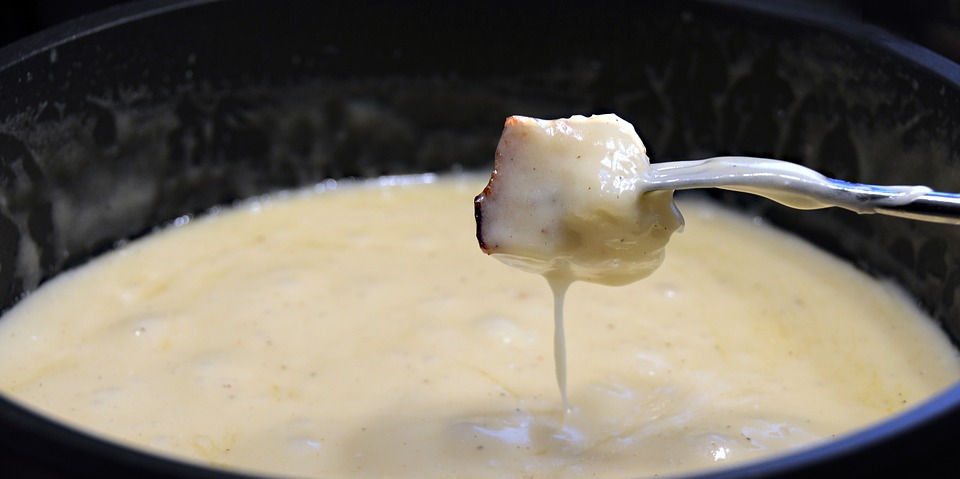
    Anyone who knows me knows that I LOVE cheese so this trip was full of dreamy surprises. My favourite cheese experience was when Shayne and I went to Le Fer a Cheval in Chamonix, France. We were looking for the best fondue in town and this was recommended to us by a local. This restaurant is so popular that if you don’t have a reservation you most likely won’t get a table. So, we made a reservation and I then counted down the hours, minutes and seconds until fondue-ville.

    Le Fer a Cheval
    Le Fer a Cheval

    Stoked on life, we ordered the fondue with tomato sauce and potatoes. The cheese had tomato sauce in it and it came with bread and a huge basket of potatoes. I guess you can take the girl out of Pemberton but you can’t take Pemberton out of the girl. It was filling. It was delicious. It was everything that I had hoped for. After this experience, I felt inspired to create a life where fondue was present on a more regular basis.

    Fondue in Chamonix
    Fondue in Chamonix

    A few years ago, I celebrated Christmas with my in-laws in Kamloops. They decided to have a fondue dinner instead of a traditional Christmas dinner. This, my friends, was amazing. It’s was a very social experience and made dinner super-interactive. There was cheese fondue, oil, chocolate and many food options. However, there were no potatoes.

    It’s impossible to scarf down dinner because you have to wait for your food to cook, bite by bite. We did this for a few years but took a break last year. This year we are bringing it back, Pemberton style (in Pemberton) and I’ve decided to call it a Very Merry Fonduemas. And yes, there will be potatoes.

    Fondue round two, HERE I COME!

    BONUS: Did you know that fondue originated in Switzerland? Praise the Swiss.  Also, fondue recipes vary depending on the region that you are in. You can learn more about that HERE.

    *I speak very little French but do know a few words. Just ask Shayne (pictured below) because he was witness to me trying to communicate in French while in France (which, I’m sure, was a painful experience for him).

    IMG_7892

  • Obsession

    Obsession

    Lately I’m having a hard time drawing the line between what should get more attention: my new Le Creuset Dutch oven or planning out my garden for next year. What to cook vs what to plant. Either way both schools of thought provide me with a constant mind game and humor my co-workers. Not to mention, a day wandering through the Van Duesen Gardens, tackling Julia Child’s ‘Beef Bourguignon’, absorbing the concepts I’ve been studying in an ‘Intro to Landscape Design’ course and an evening with Stevie (MF’in) Nicks – basically, my mind has been on overload.

    Stimulation: it’s a blessing and a curse.

    The Internet was slow as molasses for Cyber Monday sales as people consumed their lives away. It’s also made my normal routine of scouring through sites for new recipes to cook during the week near impossible. So, I decided to kick it old school and take to my graph paper, apply some new design techniques and start planning out my garden. Nothing like thinking in colour on a grey day: Julia Child inspirations can wait… lasagna is on the menu tonight and that recipe is engraved in my mind.

    The process for me starts by making a list of what I loved and what did well, knowing full well that next year might bring completely different growing conditions. But I don’t dwell on that. Just like I’m not dwelling on the fact that last year we were shredding deep snow at this time and this year it’s warm and wet with the lowest base we’ve seen in years. Gross – but c’est la vie.

    The second list I make is what’s sucked or I just don’t want to grow anymore. This is largely based on the fact that I can get it from someone local like Laughing Crow Organics or Helmer’s or without sacrificing my own garden space. Supporting our local farmers is equally as important in the grand equation and should not be left out!

    The third list is the experimental list AKA: my favourite.

    The other lists include; herbs, flowers and things that grow on the deck. This list will change and grow which is part of the glory of working in pencil.

    0

    Second step of the layout plan is to draft your garden space on paper, preferably graph (enter a hint of obsession here), to somewhat of an exact scale in 2D form and trace the outline with permanent marker. Then the fun begins – what grew where and where do they go next: the power of rotation.

    Be sure to sharpen your HB2 pencil and prepare your eraser for this stage. Start plopping your veggies, flowers and herbs in as you see fit. Ideas will come and go as fast as you think them and are on to the next. And to be completely honest, by the time you go to plant they’ve probably changed but hey, remember, it’s just as much fun to colour outside of the lines as within.

    IMG_6599

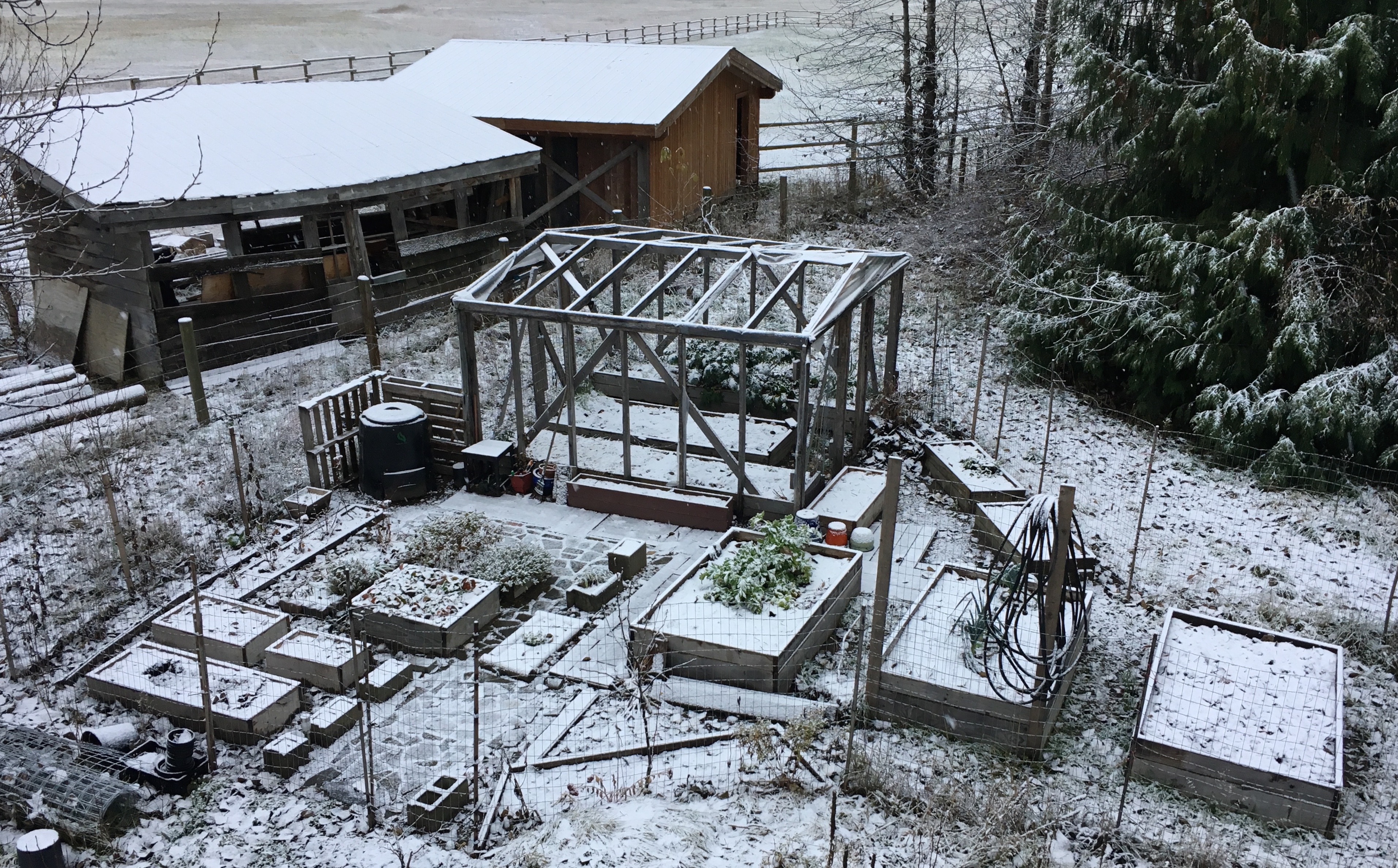
    Third step… sit and wait. It’s winter – the ground is frozen, you can’t plant shit but somehow your kale still seems to grow; roll with it. Pour yourself a tasty beverage, dream up new ideas, play around with your design, your ideas and aspirations. No thought is too small or unachievable. Remember, I started my current garden with nothing but a “green house”.

    IMG_6526

    To obsess over what you want to grow and eat is a healthy, sustainable step in the right direction – you just have to be willing to try.

  • Lettuce Talk

    Lettuce Talk

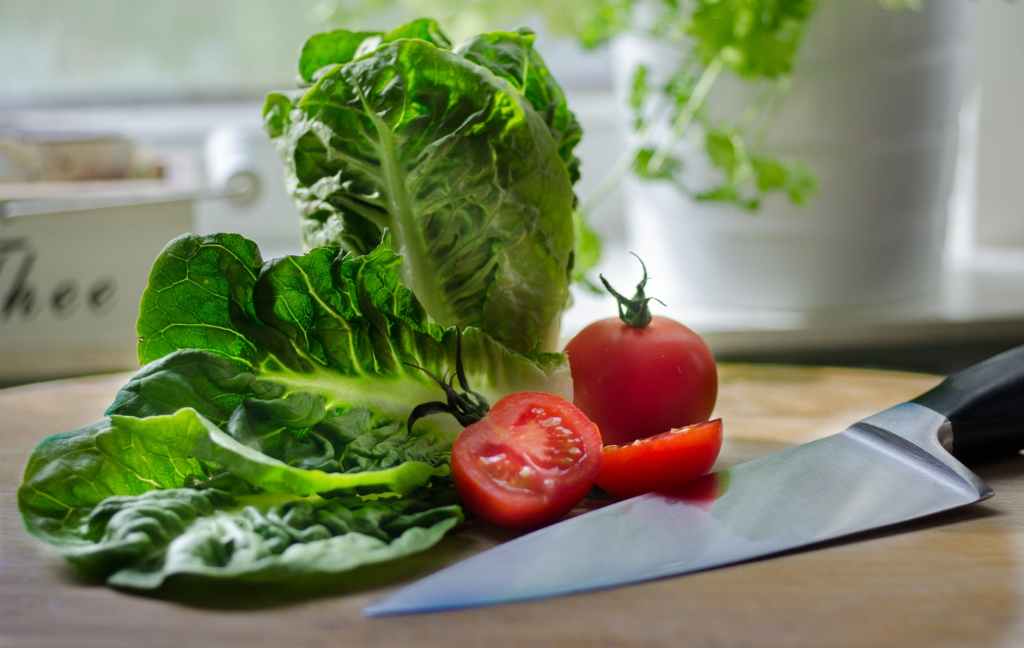
    There has been a small uproar on social media lately regarding the price in the local stores of lettuce. Small, wilted stuff that you know has traveled a few thousand miles to get here.

    People are saying it is because of the romaine shortage.

    But really, it is just an excuse the middle man and the stores are using to falsely inflate the price.

    The only lettuce that should cost more because of the romaine shortage is romaine. Is any of that inflated cost trickling down to the romaine grower who now has to dump tons of lettuce? Doubt it.

    In the seed potato industry, when there is a shortage of one variety of potato, it is only that one variety that costs a little more, because it is in demand.

    I don’t buy lettuce in the winter. Salads are a summer thing.

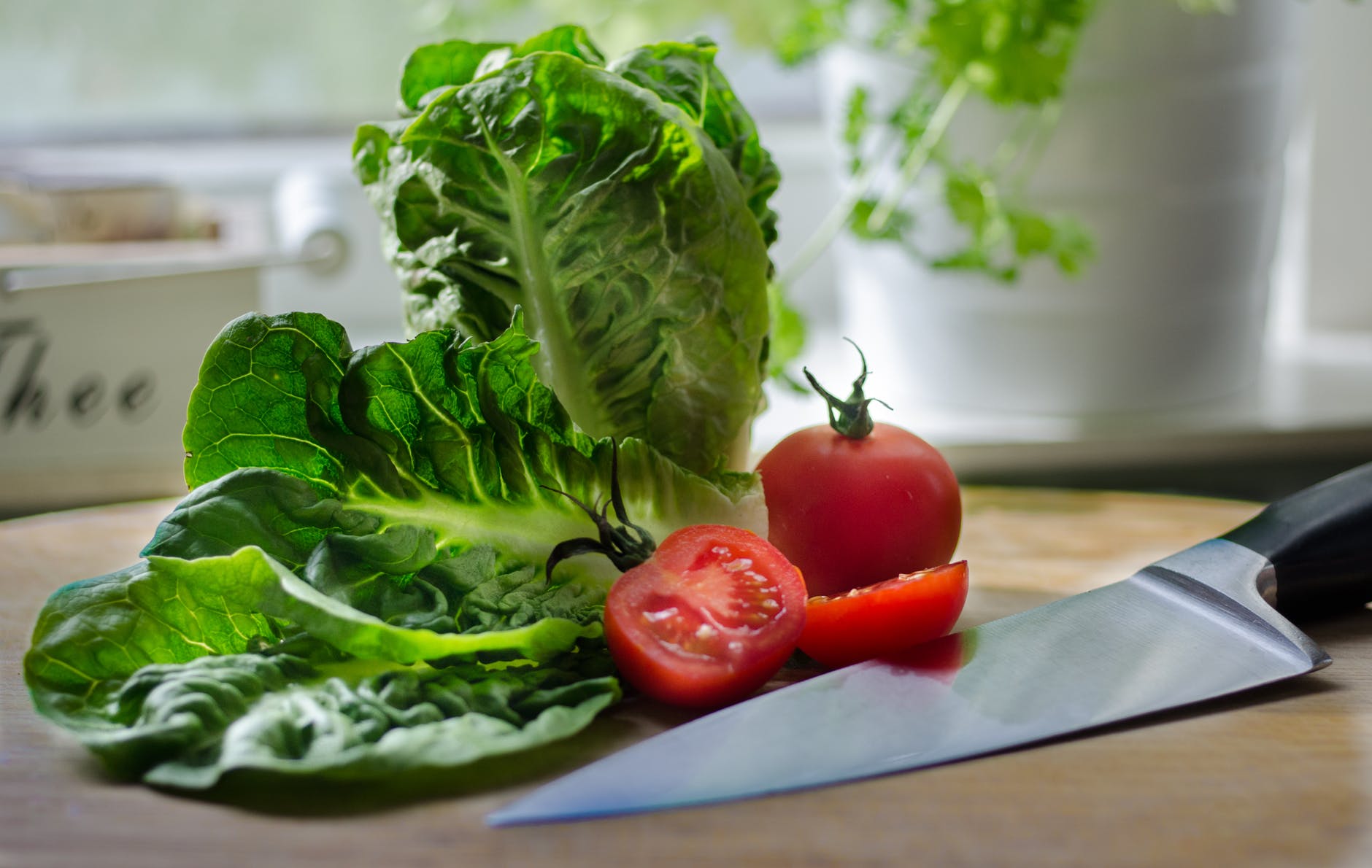
    salad tomatoes kitchen cooking
    Photo by Skitterphoto on Pexels.com

    One more thing. You know that steak or hamburger you bought for your dinner? The price of that has steadily increased over the last few decades. We just shipped our beef cattle and averaged $1.80/lb. Now back up 40 years and those same cattle would have fetched us $1.00/lb. That’s is only an .80 cent or 80% increase in 40 years. Forty years, people! While the cost to produce that beef or the potatoes and vegetables that go with it has gone up 200% and the  price you pay for that beef in the store has increased 170%.

    bbq beef chopping board close up
    Photo by Lukas on Pexels.com

    I guess all I’m trying to say is all these price increases are not really getting back down the line to the producer of the food.

    People, speak up with your wallets. Buy local. Eat seasonal.

    IMG_1444