Category: food

  • Wildflower Gummies!

    Wildflower Gummies!


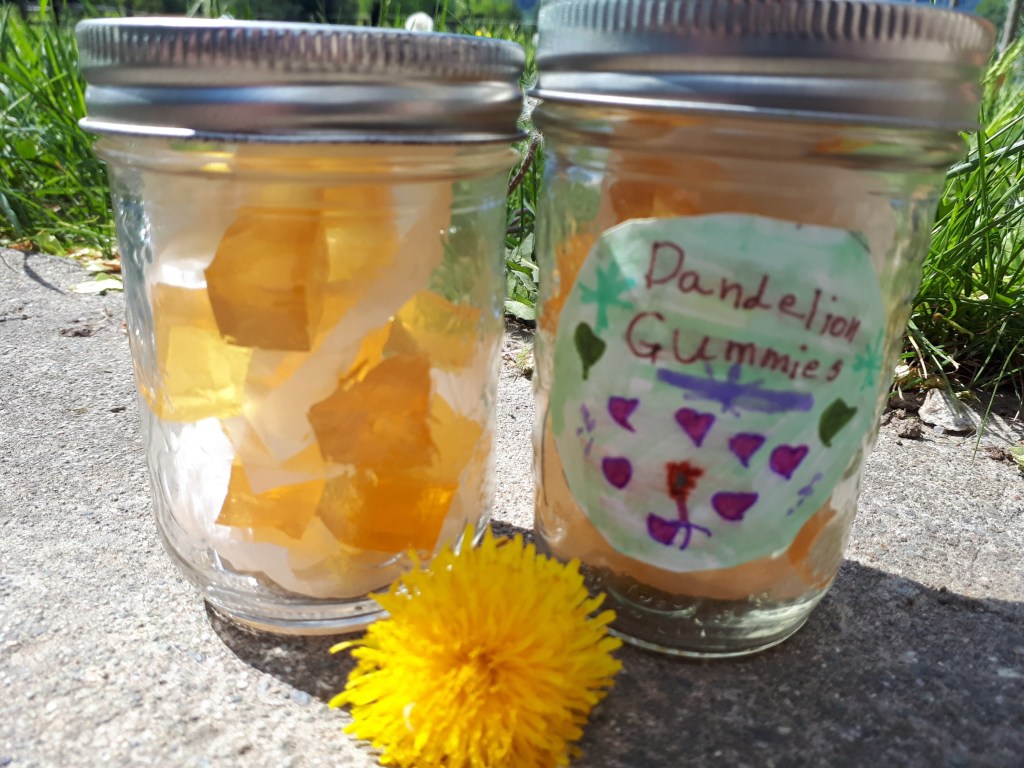
    20180509_1701241On May 11, I hosted a camp where we were supposed to make dandelion jelly. I had all these beautiful ideas in my head about the kids picking a huge bowl of blossoms out in the back field with the bees and other pollinators, their, fingers becoming stained yellow with pollen… how romantic. Of course, this is not how it happened in real life.

    “Jelly, what’s that?” one of the girls asked.

    “Well, it’s like jam, except there are no chunks in it, and we can make it from flowers!”

    “THAT SOUNDS GROSS!!” They replied in chorus. “EWWWW! WE ARE NOT MAKING THAT!! DISGUSTING!!”

    Well, that stumped me. For a moment.

    “Wait… we could make dandelion GUMMIES. Would that be better?”

    “YES!!” It was unanimous. GUMMIES were obviously WAY better than jelly.

    While we were waiting for our gummies to set in the freezer, we went outside and picked dandelions in the front yard. I showed the girls something my dad taught me when I was a little kid: that if you pick the largest dandelion stem you can find and take off its flower, it makes a noise like a kazoo! It takes a bit of patience to find the right stem, and sometimes you have to break it shorter and shorter before it will start to make  noise. It’s some kind of magic that happens when the dandelion milk in the bottom of the stem starts to vibrate, so it helps to have a juicy one! Two of the girls got bored and wandered away to play tag with Vinnie the sheep. But Avery was very excited about playing dandelions. “This is the best day of my life!” she exclaimed. “Now I can annoy everyone FOREVER!”
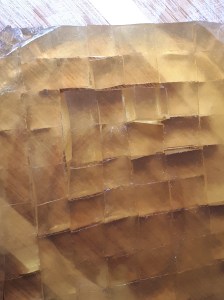


    20180511_142337
    Our gummies after being cut into bite sized morsels!

    As we cut up, divided up and packaged our very own homemade dandelion gummies, I realized this gummie making is an incredible way to get even the most squeamish of kids interested in the world that is growing all around them. If seasonal edible flower gummies can lead them to being able to identify a few species growing in their own back yard, then they learn to have a relationship with that particular plant, and that relationship can be a gateway to curiosity. In what other ways that plant can be used? What kind of environment does it like to grow in? Knowing a single plant intimately is enough to make the natural world come alive. I bet that even from reading this post you will notice dandelions more. Your awareness of them will become sharper, more open. And this kind of curiosity- this relatedness- is precious. It leads to a sense of belonging to the maze of green abundant life that exists outside our windows, the same way that knowing a friend in a crowd makes being amongst that many strangers less overwhelming. So if all we need is a few cups of cane sugar to kindle this relationship, then so be it!

    20180511_1432542
    Posing with our finished product!

    And don’t worry, I am going to give you recipes. I am also going to acknowledge I am leading you on a little, as dandelion season is almost completely over in Pemby. Don’t worry, you can use any edible fragrant flower to make your gummies. That means, lilacs = yes. Peonies = yes. And those wild roses that are just starting to bloom? Yes, you can use those too!!

    First, you need to make a flower syrup. I make mine in big batches, as I like to be able to keep some to make into summer drinks (a few tbsp and a bit of mineral water over ice on a hot day = heavenly). Please note that the syrup recipe is not intended to be canned, as the proportions are not tested for safety. So please keep your syrups in the fridge! I am confident you will use them up before they have a chance to go bad. This recipe makes about 6c of syrup, which is quite a lot. You can always halve or quarter the amounts if you want to make a smaller batch.

    Wildflower Syrup:20180509_165901
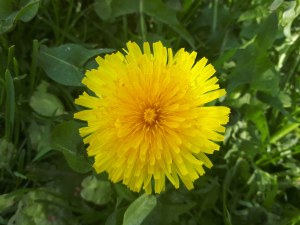
    2c flower petals

    4c cane sugar

    5c water

    1 organic lemon, sliced

    1. Prepare your flowers. It is best to harvest them in full sun at the height of the day. (From noon to 3 pm.) That way the flowers will retain the most potency and fragrance. Whichever kind of flower you are using, do your best to use only the petals. (In the case of dandelions, this means removing the green base of the flower.) Use flowers as close as you can to the time of harvest, as they will lose potency as soon as they are picked.
    2. Bring the water to a boil and add the cane sugar and stir until dissolved.
    3. Add flower petals and sliced lemon and cover your pot or bowl with a tea towel or cheesecloth to keep out flies, and leave out at room temperature to infuse for 2-4 days, stirring once per day. You want to optimize the length of your infusion without your syrup starting to ferment. If you see lots of bubbles or you are happy with the flavour, it’s time to move onto step 4…
    4. Strain and bottle your syrup. Enjoy!


    Wildflower Gummies 20180511_1440321
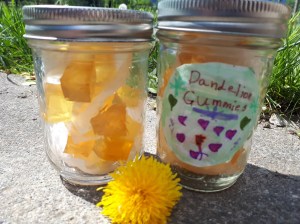
    1c flower syrup

    3pkj (3tbsp) gelatin*

    1. Find a mould for your gummies. I used the bottom of a tupperware container and cut them into squares, but you could get super creative here. You don’t need parchment or non stick spray or anything.
    2. Heat your flower syrup until just before boiling. Separate 1/4 -1/2 c of syrup and shake or whisk the Gelatin into it. (I used a small Mason jar and shook it to combine the gelatin, then strained out the residual lumps using a tea strainer as I feel you get less foam this way.)
    3. Add the gelatin mix to the rest of your syrup, stir well to combine, then pour it into your mould. If foam has accumulated on top of your gummy, skim it off with a spoon.
    4. Let your gummies set. I put mine in the freezer, but if you are not in such a rush you can just leave them out.
    5. To get your gummy out of the mould, dip your mould into warm water for a few minutes (being careful not to get water on your gummy). Then run a knife around the edge of your mould and you should be able to pull it right out. Don’t be afraid to use your fingers to pull it out of the mould- you won’t wreck it.
    6. Now you can cut your gummy into shapes with a sharp knife or cookie cutter. You could also roll them in sugar and leave them out for a few days is you want a chewier texture. I was happy with mine as they were as I found them already quite sweet. If you don’t go the additional sugar method, I would keep your gummies in the fridge as they do have quite a bit of moisture in them and will mould if they are not devoured within the first few days. Enjoy!

    *I used Knox Gelatin which comes pre-portioned in little paper packages, but I saw Stay Wild has boxed gelatin that is also gluten free!
  • Food for Thought

    Food for Thought

    On March 29th my daughter turned 9 months old, this same day I had bittersweet emotions as it also marked the 11th year of my fathers passing. My father suffered from depression and this eventually lead him to take his own life. This article weighs heavy on me as I raise a tiny human with a brain that’s growing and absorbing at an alarming rate. I want to give her the best tools and support to ensure healthy brain development and positive mental health. I truly believe this starts with our nutrition. Did you know that our brains are 60% fat and a whopping 20% of our calorie intake is used to fuel our brains. It’s no wonder what we consume can have such a huge impact on how we feel and perceive.

    Mental health has always played a huge role in my life. I’ve always been conscious of my own mental state and I have siblings and friends that are currently managing their depression and anxiety. Although there are many good days, the bad days can often turn into weeks, months and sometimes years. And what do we do when we have these days, consume junk and comforts foods, we often stop exercising and moving our bodies which only worsens the symptoms. Chances are you also know someone that is suffering or perhaps you yourself have struggled with mental health. Even seasonally I see so many people, myself included, fall into a slump over the winter months or the never ending rainy spring or fall. On a less severe scale, have you ever felt brain fog, mood swings, anxiety or an overwhelming or prolonged feeling of being unmotivated. This could all tie into your brain not getting the essential nutrients that it needs. Two mornings ago after a night of broken sleep, no breakfast (or coffee) I proceeded to getting house chores done. I caught myself trying to put the clean dishes away in the freezer and nearly threw the dirty laundry in the garbage… I clearly was not on my A game that morning. Perhaps that’s why they say breakfast is so important, get that brain fueled up and ready for the day.

    Stay Wild overnight oats photo by Julia harvey

    Speaking of which, here is one of my favourite breakfasts that just happens to be ideal brain food. The overnight oat and chia cups from Staywild. If you have not already tried one of these, I urge you to. They are also baby approved, I usually need to get two otherwise my little one will eat all of mine. I’ve tried so many home recipes but they never come close to how tasty Staywild prepares them. They have the perfect oat to chia ratio and that cashew and date whip is the icing on the cake. Here’s a quick breakdown of the ingredients and what makes them essential for fueling our brains.


    Oats: provide glucose, long term energy for the body and mind. They also contain vitamin B, E, potassium and zinc which help the brain function at its optimum level.

    Chia seeds: Omega 3 ALA which your brain uses to make DHA fatty acids (essential for optimum brain function). Also a complete protein which means it contain all 9 essential amino acids

    Almond milk: Riboflavin, L-carnitine, vitamin E, vitamin D. All key nutrients in supporting positive neurological activity

    Cashew: Rich in vitamin B6. Cashews have been know to help fight depression and an anxious mood. B6 can help the uptake of serotonin in the body and help magnesium reach cells more effectively

    Strawberries/Blueberries: Rich in Antioxidants and flavonoids help protect against free radicals, reduce inflammation and studies have shown improvement in memory and cognitive ability from diets with high amounts of berries.

    Coconut: Healthy source of dietary fibre and MCT (medium chain triglycerides)

    I cannot begin to express the importance of managing a healthy mind and I truly believe that begins with our nutrition. What we fuel our bodies with can have a massive impact on our mental health both positively and negatively.

    Our brains are absolutely fascinating and the more I learn about how the brain works and what it needs to function optimally, the more I try to make conscious decisions that will make a positive impact. I’m also quicker to realize the negative effects when I make poor choices. Eat well, feel well!

    Mindful Morning retreat


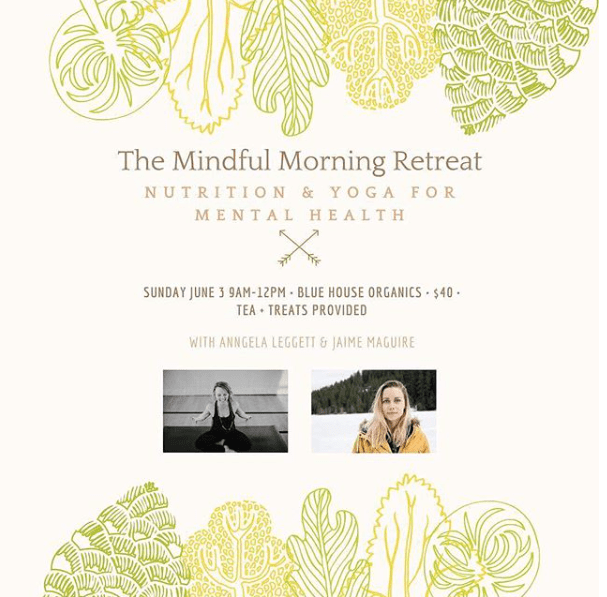
    I wanted to use this to promote a really great event The Mindful Morning Retreat that is being held at Blue House Organics by Anngela Leggett and Jamie Maguire but I wasn’t quick enough. They sold out in no time. However, a little birdie told me that there will be a round two at the end of the summer so keep your eyes and ears open if you’re interested in getting more in depth on the topic of nutrition and brain function while partaking in some mindful yoga. Your brain is a hungry little organ, feed it well and seriously you should try an oat and chia cup from Staywild when you have the opportunity.

    Overnight oats with a side of mt Currie photo by Julia Harvey
    Enjoying breakfast with a fabulous view and of Mount Currie never hurts
  • Food and Feelings: Caesar Trail

    Food and Feelings: Caesar Trail

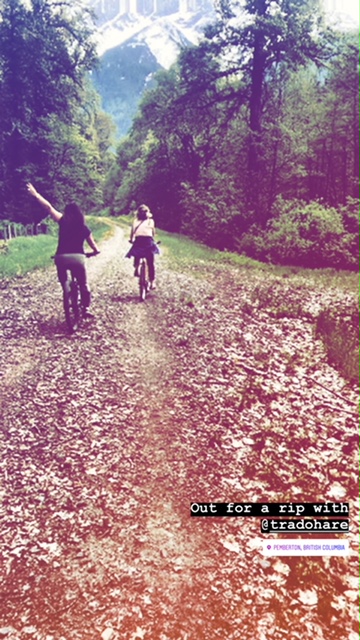
    There’s a scene from the movie Now and Then where all of the girls are joyfully riding their bikes around their town. Often when I’m riding my bike with my friends, around Pemberton, I pretend I’m in that movie. Perhaps it’s because what I’m doing is a simple yet heart-fulfilling activity? Perhaps when I’m on my bike it feels like all of life’s complications melt away? Perhaps I just really love that movie and wish I was in it?
    I’m not sure what it is but I love being on my bike and riding the “mellow” trails and routes around town.
    Being from Winnipeg, where the biggest hill I had growing up was a bridge, inclines and declines can be intimidating to me. So, I’ve established that there are certain trails in town that I’m comfortable with.
    One of those trails is called “Caesar Trail.”
    IMG_0821
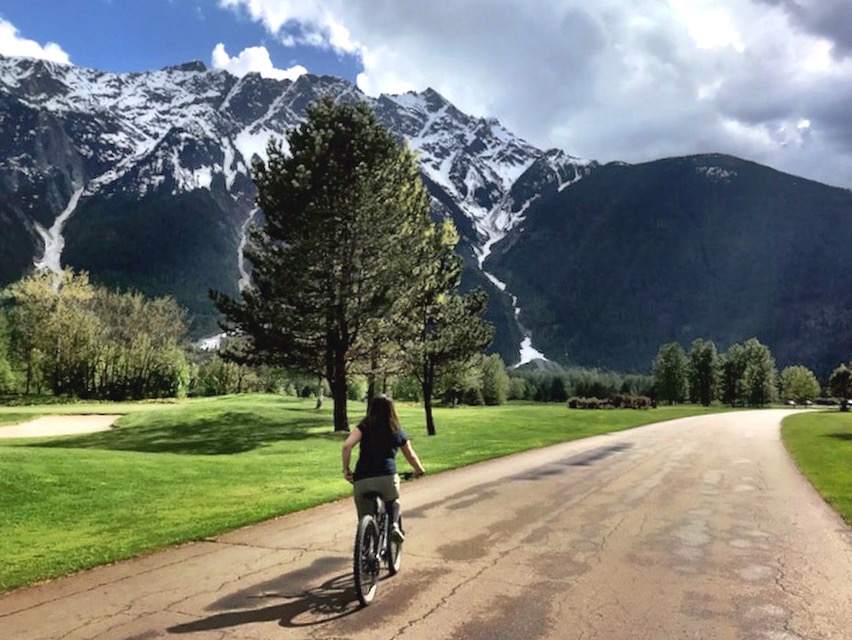
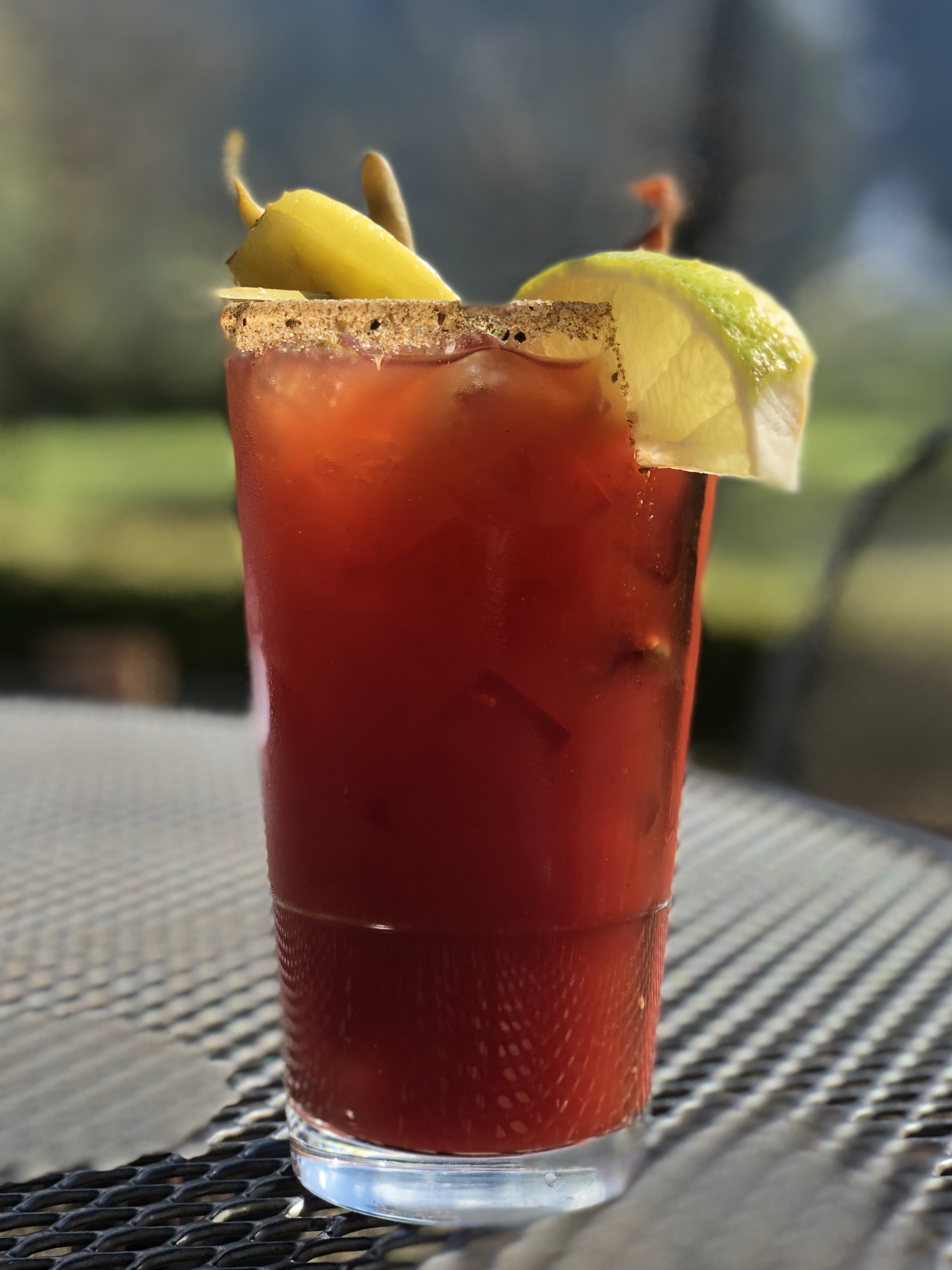
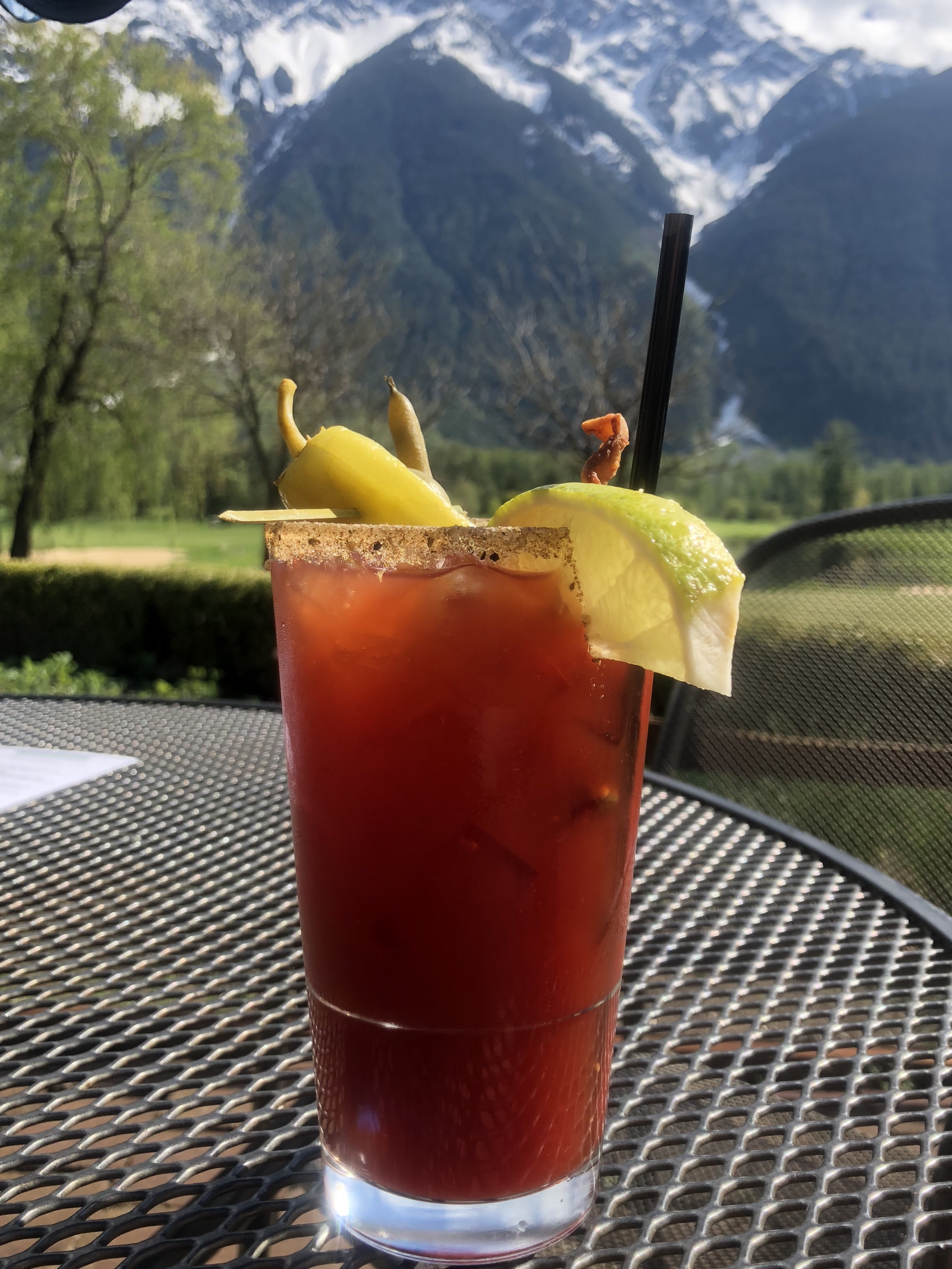
    Upon moving to Pemberton in 2012 I was introduced to the activity of riding my bike along the dike to the golf course zone. It’s quite magical and beautiful to ride my bike on the dike and to be able to choose where to go next once the dike ends. I found myself more often than not riding that trail and ending up at one of the golf courses for a Caesar.
    Yum….Caesars.
    IMG_0826
    The fact that the route/trail didn’t have that exciting of a name, in my opinion, I started to call it the “Cesar Trail.” Maybe this is a name that will catch on? Maybe this is the name that only me and my friends will use?
    All that matters is that at the end of the beautiful and chill adventure is a Caesar.
    It’s my favorite trail to ride in the whole Sea to Sky Corridor and I recommend you try it out (especially if the sun is shining).
    IMG_0747 2
    IMG_0746IMG_0744
    Cheers to Tara and Kalmia for being my partners-in-caesar and to Shayne for taking pictures of us! 
  • Garden Journals

    Garden Journals

    Hello everyone, my name is Anni Kolbe and I work for the Sea to Sky Community Services (SSCS) in Pemberton.  My job title for SSCS is a Settlement and Outreach worker for the Pemberton Multicultural Network. So what that means is I help immigrants settle into life in Canada and meet other people.

    In order for people to meet I plan and implement life skill workshops.  Throughout the years I have learned that people in Pemberton will attend your workshops if it relates to food and gardening.


    I wanted to share a workshop I did a few weeks ago at the Pemberton Public Library on garden journals and companion planting.


    A garden journal is a great way to keep track of important information about your garden such as the weather, pests, what you planted and when you planted.  Those are just a few things you can keep track of.

    Take a peek through the slide show to get more ideas of how to keep a garden journal.

    PMN new good logo

  • April Kitchen Sadhana

    April Kitchen Sadhana

    In yogi language (Sanskrit) the word sadhana often refers to a conscious spiritual practice, discipline or service.

    In the last year I participated in an absolutely divine online course with a local yoga teacher.  Each month we got amazing content including a particular kitchen sadhana – ideas like herbal bitters or kitcharis and other ayurvedic potions.

    I’ve carried this ritual of kitchen sadhana into my life as I find it very grounding.

    This month I have two particular recipes that I’m really excited about.

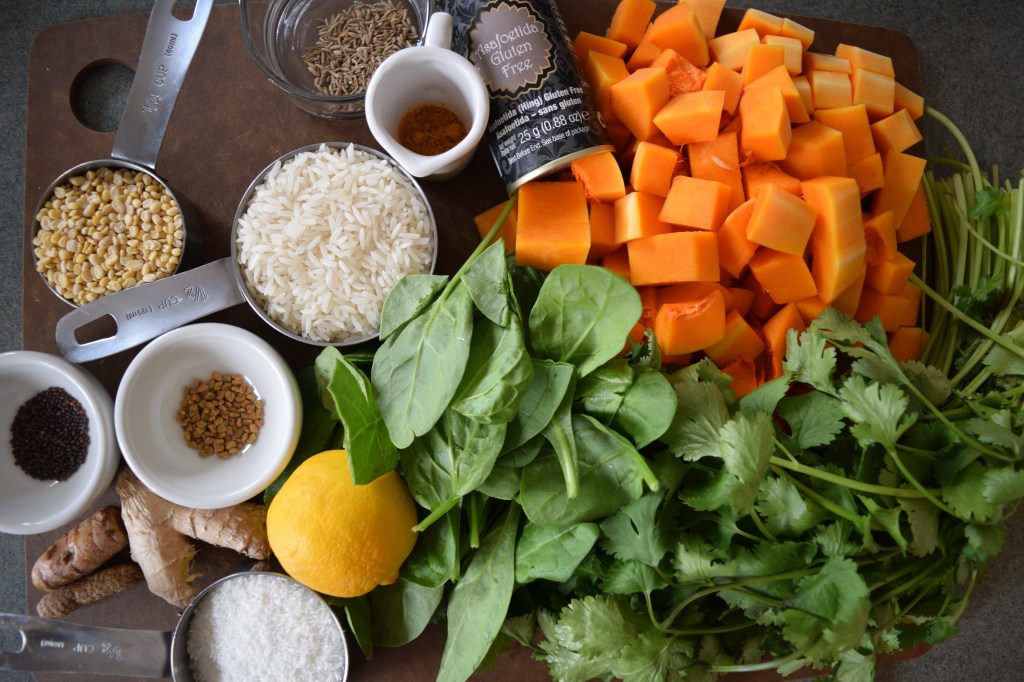
    The first is one of my absolute favourite foods to make when I need something easy to digest that is also a complete meal and very comforting and nourishing. Kitchari (sometimes spelled kichadi) refers to a stew-like one-pot meal which is a mixture of two grains. Spring is often a time when we are shedding the stagnant, dense energy of winter and the heavier foods we’ve been eating to up-shift to the lighter, more buoyant foods of spring, like dandelion greens and fresh nettle. The great thing about kitchari is that you can use any vegetables you have on hand.

    up to april 2018 200

    This particular recipe is with a mix of mung beans and basmati rice and I had butternut squash, spinach and frozen peas on hand so in they went.

    Here is the link for the recipe:  http://www.mapi.com/ayurvedic-recipes/soup-and-salad/khichadi-mung-bean-and-basmat-rice-stew.html

    up to april 2018 201

    The next spring kitchen sadhana is a work in progress. It comes from a cookbook I have taken out from the library seven times in the past three years called The Nourished Kitchen by Jennifer McGruther.

    Nearly May 001

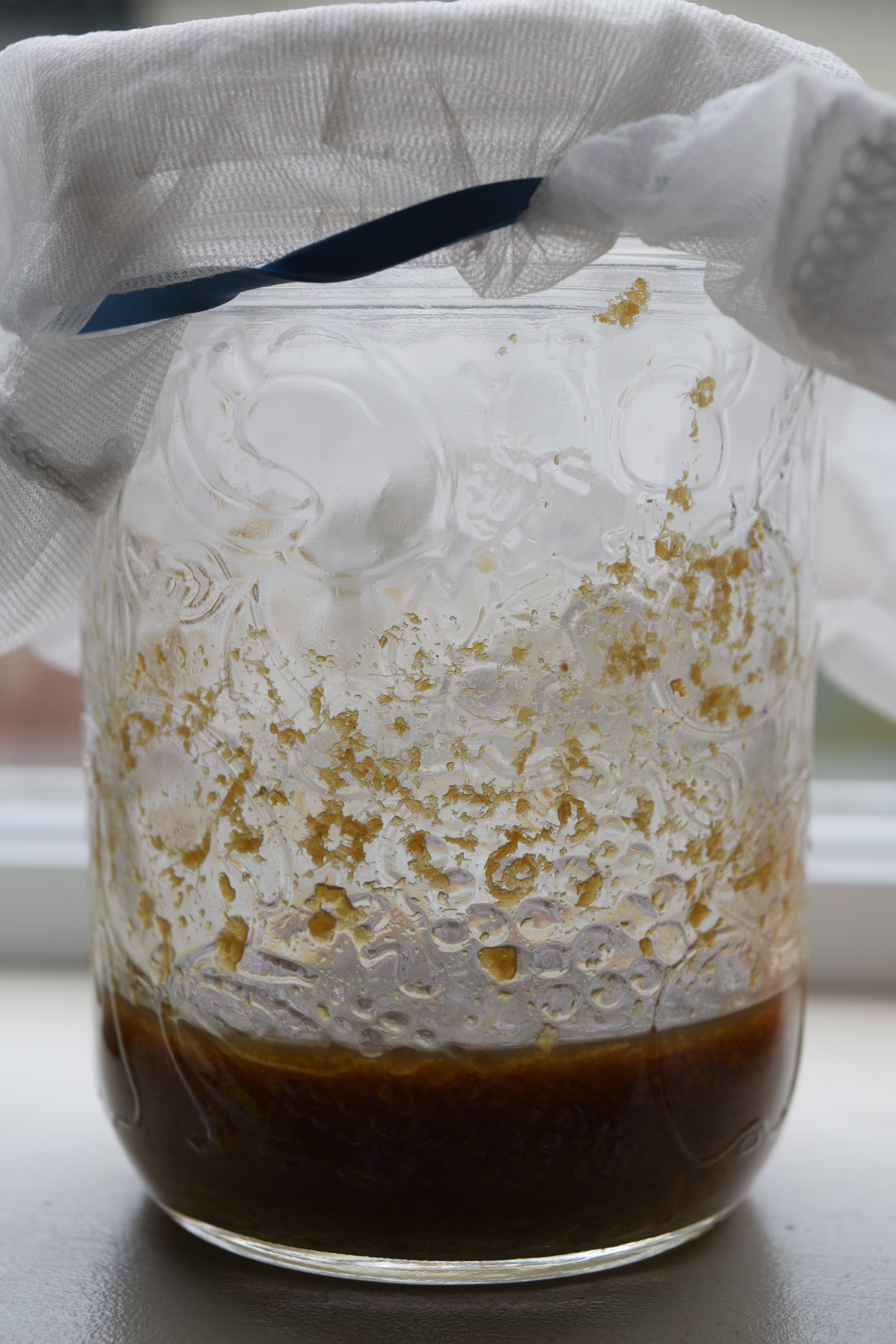
    For me, it is not an everyday kind of cookbook but a fun experimental one. Of particular interest to me is her chapter on fermentation. I love water kefir and kombucha and homeade sodas but usually buy them. I am now 3 days in to creating my own live wild yeast and ginger starter. From this, I can then create my own water kefir and beet kvass or flavoured sodas and the starter keeps living as long as you replenish what you use and keep it fed and/or refrigerated.

    Nearly May 002

    It doesn’t look super delicious now but I love the simplicity of just ginger, water, unrefined sugar and time in the environment and from here the off shoots will be a complex flavour sensation and also great for gut health like ginger lemon water kefir or beet kvass mixed with spring water on a hot afternoon. A great reward for my kitchen sadhana. You can find this cookbook at the Pemberton Library and she also has a website you can check out at https://nourishedkitchen.com/

  • Unexpected Lessons on Permaculture and Community

    Unexpected Lessons on Permaculture and Community

    When I used to think about permaculture, I thought of it more like the “old way of gardening”. Less intensive, lots of diversity, a closed loop system that tries to reduce our impact on the earth. A systems thinking that uses everything in multiple ways. Gut Gardening. Intuitive.

    But, as I was reminded earlier this month during the (FREE) one day course on permaculture by Permaculture Design at Quest University, permaculture principles are rooted in science, and way more complex.


    Doing the right thing for the planet, for the patch of soil you are stewarding, is backed by scientific research. For my rational Western mind that sometimes needs things to be “scientifically proven,” that goes a long way. Science, fused with community. Science, fused with growing food, shelter, plants and systems that are good for the earth. Science, and changing our thinking patterns. Taught by the dynamic duo Delvin Solkinson and Kym Chi, the opportunity to attend with a carful of amazing girlfriends and kick ass gardeners was the recipe for a perfect day. Yes please.

    image005

    The term permaculture was coined back in the 70’s by founder Bill Mollison. The Permaculture Research Institute tells us that permaculture

    “is the conscious design and maintenance of agriculturally productive ecosystems which have the diversity, stability, and resilience of natural ecosystems. It is the harmonious integration of landscape and people — providing their food, energy, shelter, and other material and non-material needs in a sustainable way.”

    image001

    At the start of the day, fifty-five people sat in a circle – from all walks of life, many young, fresh students, but also many people in their later years. We shared what brought us there. It was everything from wanting to learn how to better compost, to learning more about plants that can help heal the earth. Gardeners who operate more in their heads and want to operate more from their hands/hearts. Pioneers who want to explore the feelings of plants. I admit I was guarded in that space. It had been a while since I had sat in a room with chimes to focus our attention and teachers who ask us to take a deep breath and sit with our thoughts. It took a bit for me to settle into the vibe and be open to the experience. Clearly, I need to re-establish my yoga practice!
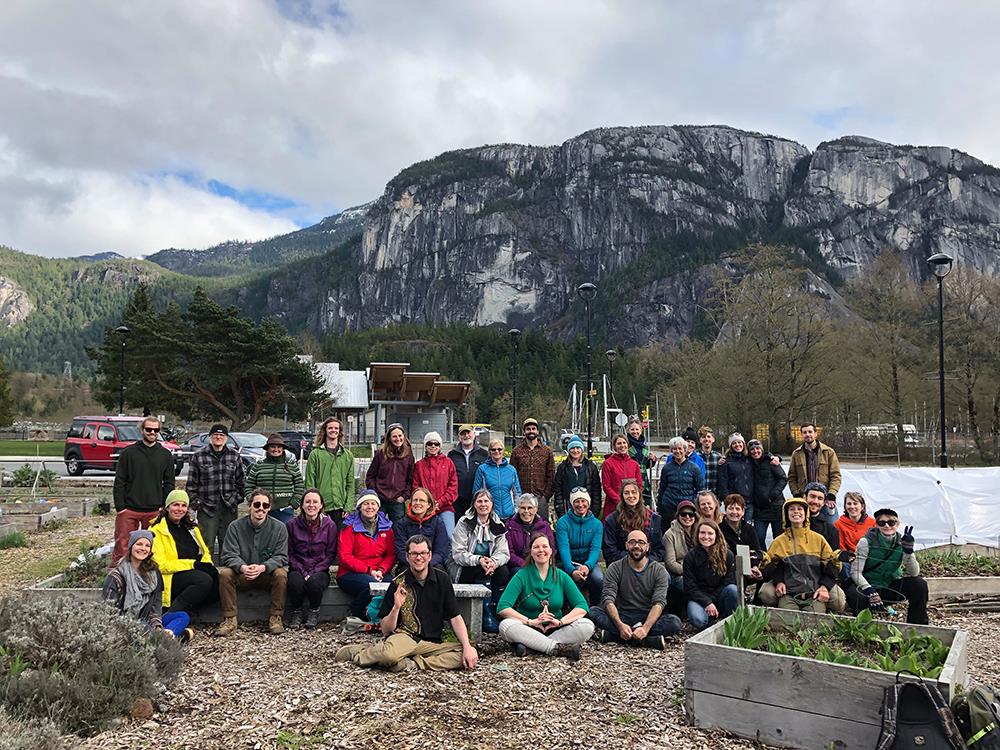
    Kym and Delvin said over and over during the course of the day: think about the “problems” as opportunities. Have weeds? How can we use them? (Living mulch, compost, re-evaluate if they are actually a problem. Feed your chickens…) A challenging slope on your land? Why not plant an orchard and incorporate bioswales to manage your irrigation challenges and needs?

    image002


    But what resonated so strongly had less to do with gardening and more to do with community. That, and this statement made by one of our teachers that gave us permission to be OK with where we were, as individuals, and society. “Don’t shit on yourself for not knowing, not doing. Don’t shit on others for not knowing, not doing.” Another yes please.

    But by the end of the day the shift was apparent, empowering, and so positive I was actually  moved to tears. Yes – lots of great permaculture tips that apply to any space. But what I loved the most was the warrior cries from people fed up with bullshit happening on a day to day basis that we all know is wrong. People inspiring each other, revolutionizing on a micro or macro scale. People swapping problems for solutions.

    image004

    At the end of the day we shared what we got from the course, what we wanted to do. A grey-haired lady cried: “I am telling my council that I AM putting a garden on that strata lot!”

    From others I heard,

    “Put the earth first!”

    “I am going to plant a garden in that round-a-bout!”

    “If you listen, music is everywhere!”

    “I am going to make a spiral garden!”

    As I reflect on this experience now, almost a month later, I wonder about the seeds that may have been planted that day, ideas sitting below the soil surface needing the heat, the light, the energy to transform into action. How many ideas passed that tipping point? Who is going to start the permaculture food forest in Pemberton? Turn a strip of downtown Squamish dirt into a haven for bees, food for families? Change the thinking patterns of the stuffy strata intent on ridiculous lines, rules, pavement? Who wants to raise a permaculture “army” with me?

    So thank you from the bottom of my heart to Delvin and Kym. The work that you are doing is crucially important. Absolutely inspiring. For anybody who missed that magical day at Quest, I would like to bring this team to Pemberton in June. (Please get in touch with me if you are interested, or want to help fund this). They also have more free days coming up.

    image003

    And until then, Pemberton – don’t forget about the Women’s Institute Plant Sale coming up soon on a Saturday 5 May, 9am to 12 noon at the Legion Parking Lot – the sign with the date is up at the concrete barren round-a-bout. Oh, did someone say round-a-bout? Warrior-guerilla-gardener-lady, if you are listening, we, and the world, need you!


  • A Bee Journey Vol. 1

    A Bee Journey Vol. 1

    I’m very good at multi-tasking.

    I’m writing this while at a three day craft market in Vancouver selling my handcrafted shrubs (Thirsty Whale Elixirs – small batch cocktail mixers made with organic apple cider vinegar, fruit, and cane sugar) and sending emails for my full time job. You might say, “I’m busy as a bee!” – so why not add another hobby on top of sewing, crafting, making sourdough and helping with our family’s brewery (Pemberton Valley BeerWorks)?!

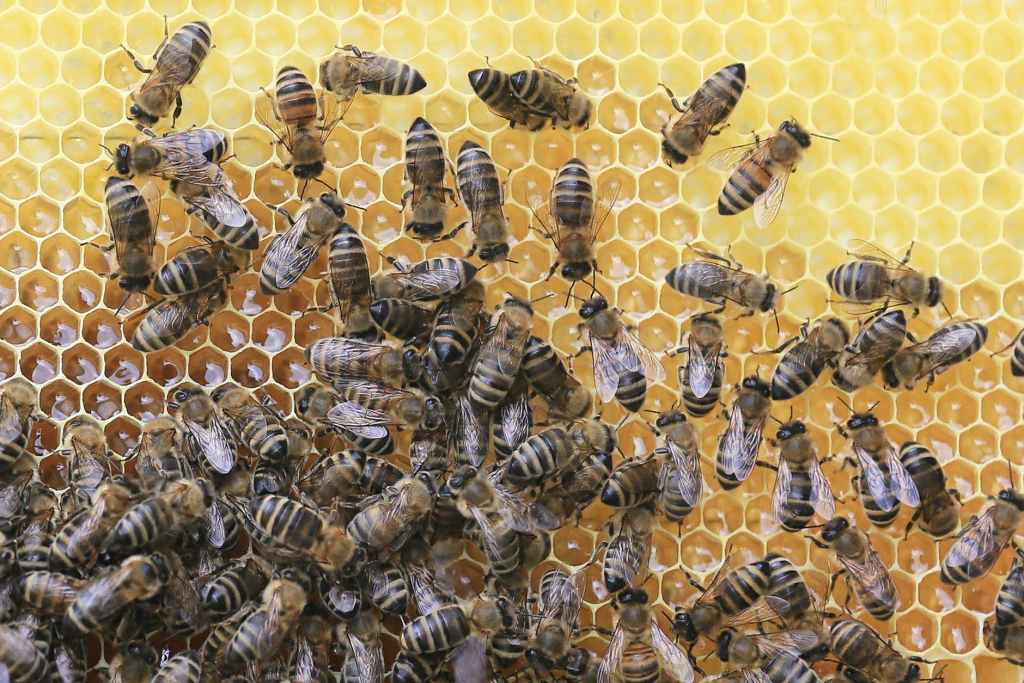
    I have always wanted to have bees. Growing up, my Grandfather had bees (Don Miller of Miller Meadow Farms – now Across the Creek Organics). I have memories of his hives out by the rhubarb and grape vines – little white boxes of magic. Memories of full gallon jars of liquid gold in Grandma’s pantry. Memories of covering her homemade biscuits in sugary love. He eventually had to stop beekeeping as he developed a bee sting allergy (And this being Pemberton in the ‘80s with no EpiPens available and only a small clinic a 15 minute drive away, I totally understand why he stopped.).

    My first time “getting my hands dirty” or sticky in a hive was about 8 years ago on the farm when my Aunt got her first hive. I had no idea what I was doing, but no one got stung and we harvested 11 liters of amazing honey. Unfortunately, the hive didn’t survive the winter and now I have inherited some of her equipment.

    Beekeeping is not a cheap hobby, but if you are lucky and not too greedy you can make some money selling honey to family and friends. Why not be greedy? Well, bees collect flower nectar and convert it into honey, (honey is their carbohydrate and pollen their protein), so they need to store enough of both to last through the winter.

    In preparation for receiving my first two bee nucs (or nucleus, a small bee colony made from larger ones) at the end of May, I have taken a three day beekeeping course, read four books, talked to local bee keepers, watched countless educational videos online, and I still don’t know anything!

    The real learning will come once I get my hands sticky again. And then even after a few years, I still probably won’t know enough.

    All I can say is that I’m fascinated by Apis Melifera (the Western/European Honey Bee) and I can’t wait to learn more and share my journey with anyone who wants to read about it!

    You can follow my journey on Instagram @Pembee_Hives.


  • Taking the Sting

    Taking the Sting

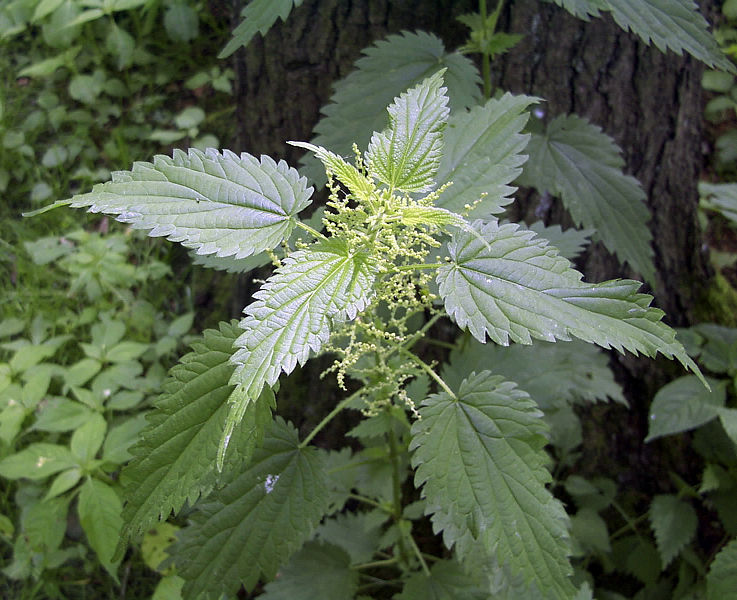
    I am one of those weird and fantastic people who get really excited about the plants nobody likes. The wild ones, the weeds. The FLOWERS OF TREES. The pesky dandelions old men spend hours picking out of their lawns. The patch of chickweed I found growing in the horse pasture… and made into lip balm and a series of green juices that impressed even my mother.

    I want to share a little about a spiky, prickly friend of mine, otherwise known as Stinging Nettle. Nettle is the star of the show right now. When I filmed the video I was fresh from two hours of editing a manuscript, and an hour of harvesting Nettle tops. The result? One part medicinal plant talk, two parts deep restorative ecology of the human ecosystem, and one part neighbour’s chainsaw as background noise. You can’t get more ‘weedy’ then that!


  • Don’t date a farmer if you want to lose weight

    Don’t date a farmer if you want to lose weight

    Riley doesn’t know this, but when we first met, I thought dating a farmer would help me lose weight. I didn’t really need to lose weight, at the time, but I thought, “Oh yeah, this is going to be great…I’ll be eating all these veggies, and helping in the fields. By the end of the summer, I’m gonna be tanned, and I’m gonna be ripped.”

    I was sitting on my butt at a desk in Whistler for over eight hours a day at the time, but a total body transformation over one summer seemed totally feasible.bacon.jpgAs our relationship progressed, my usual breakfast evolved from a green smoothie to fresh duck eggs fried with homemade bacon luscious and sticky from the maple syrup it was cured in. Life was sweet, was it love or the spoonful of brown sugar I started adding to my huge mug of coffee?
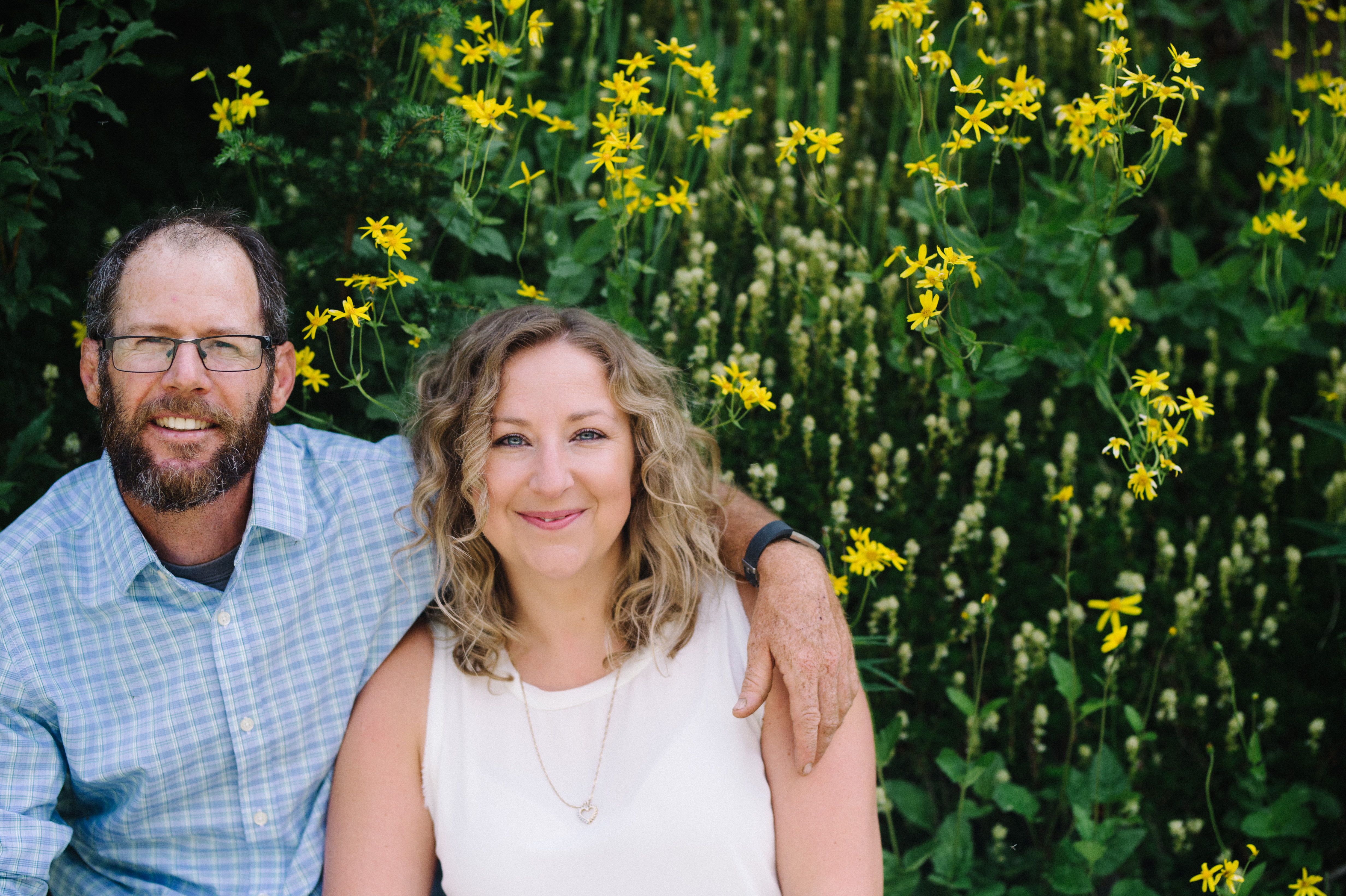
    After work, I would change into some old jeans and head out into the field to help with weeding. These golden hours were half “drinks after work”, half chores as we moved down the row side by side, catching each other up on the day’s events, and swigging from cold cans of beer set, sweating, in between the beets.

    Gone were my single-girl dinners of a chicken breast with steamed broccoli, or red wine and popcorn in front of the TV. Now I ate a proper plate, at the table, tucking into pasture-raised pork chops, roast chicken, or lamb burgers with a side of potatoes, beets, and carrots.

    PembertonBandits.jpg
    Anastasia Chomlack photo.

    So, approximately four years here I am, a little “fluffier” than I was before I met Riley. I gained a lot by dating a farmer – a few pounds, a happy life, love and the ability to eat ridiculously well every single day.

    For me, small changes like minimizing gluten and cutting out sugar move the dial in small ways. But this spring my goal is to move the dial in a big way, and I have joined the twice-weekly running club led by personal trainer Anngela Leggett of Evergreen Fitness and Yoga in an effort to get more fit. The women in this group are more experienced runners than I am, but I do what I can and managed to run 10.5km last week.running groupI’m pretty sure running should work out as a better tactic for me to lose weight than dating a farmer. If it doesn’t, I’ll still value my gains as I get outside and explore Pemberton’s amazing trails with a diverse and inspiring group of local women.


  • How to Enjoy Pemberton Deer Meat

    How to Enjoy Pemberton Deer Meat

    I did not grow up eating deer meat. Beef, yes. Chicken, yes. Salmon and sole, yes. But deer meat, no. So when I moved to Pemberton and began sharing my fridge with a hunter, I was in for a change in dietary habits.

    While it was not something I can say I enjoyed eating at first, over the years I have learned that deer meat can be just fine. I would like to add that I am grateful for the deer, and the deer meat. Deer eat leaves in the forest, and that is a healthy, natural diet that is passed on to us in the form of healthy, natural, and lean meat. I also like the fact that we know where our meat comes from.

    Some Recipes Work for Deer Meat. Others Do Not:

    My advice to any readers who either have just taken up hunting, or are living with people who hunt, is that some recipes complement deer and others do nothing for it. For instance, do not create a delightful, light, refreshing marinara sauce with Lillooet tomatoes and fresh basil, and expect that it will taste great mixed with a pound of ground deer meat. It will not. (I do not call it venison – that’s chef talk. Deer meat it is.)

    Stew Meat and Ground Meat are Your Friends:

    No matter how much a hunter tries to tell you that “deer roast is amazing”, do not believe him or her. A pork roast? Sign me up. A beef roast? Pass the Dijon. A deer roast? I have [expletive] tried and tried for over a decade and not once has one turned out well. Do not let that hunter persuade you into deer steaks either. In my culinary opinion, another waste of time.

    In short, your entire deer should be turned into either ground or stew meat, with all due respect for the animal.

    Recipes That Have Worked for Me:

    My best recipes for deer meat are used over and over again, and they are best suited for fall, winter and early spring. By late spring we are pretty much done with deer meat, but it can still be used in warmer weather for my taco fiesta recipe which follows.

    My favourite recipe that truly complements deer meat (or disguises it – depending on your point of view) is Shelley Adams’ Whitewater Cooks at Home recipe for Curried Lamb & Lentil Soup. It is delicious, full of flavour, freezes and reheats beautifully, and anyone I have served this to loves it (including many people who do not eat wild game). Deer stew meat is substituted for the lamb.

    Honourable mentions go to Shelley’s recipe for Beef, Leek and Pot Barley Soup (swap out the beef for deer stew meat) from the same book, and her Whitewater Cooks Chilli from her first cookbook. I have still not found the ideal pasta sauce recipe but the one I use is the Best of Bridge cookbook series Best of the Best for their lasagna recipe – the sauce can be used over any pasta. It is really only good on a fall or winter chilly night as it is quite heavy – and the flavours may be a bit dated for today’s palates. But a heavy pasta meal can be very satisfying and comforting on a dark, cold, winter night so it works for me sometimes.

    Mexican Taco Fiesta with Pemberton-Area Deer Meat (Serves 6):

    Here is a recipe I just came up with recently that is delicious, kid-friendly, and appealing to the palate year-round. I choose to serve the tacos without cheese or sour cream, but it’s a personal choice. I also make a cooked salsa with canned tomatoes, making this recipe a practical choice in winter months when fresh tomatoes are expensive and not flavourful.

    Ingredients:

    1 lb. ground deer meat

    3 tbs. home mixed taco seasoning

    1 12-count package of authentic corn tortillas

    10 romaine lettuce leaves, shredded

    1 recipe cooked tomato salsa (recipe follows)

    2 cups cooked black beans

    2 cups finely chopped cilantro

    2 cups cooked corn kernels (fresh or frozen)

    Choice of hot sauce for garnish

    Method:

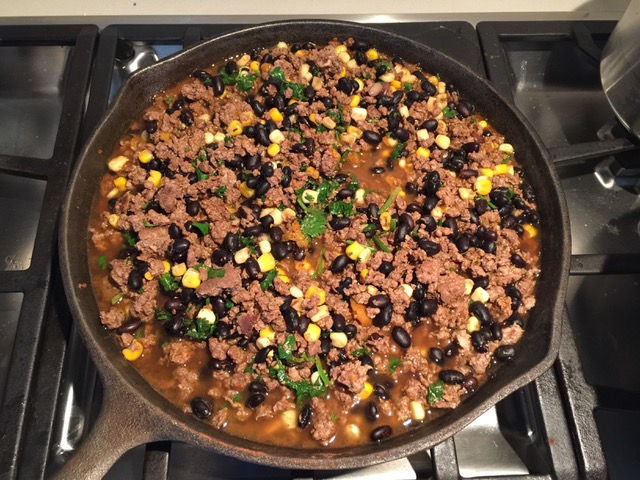
    Cook your deer meat in a very large cast iron fry pan or a heavy-bottomed large saucepan until no longer pink.

    When fully cooked, add 2 cups water and 3 tbs. of taco seasoning.

    Add cooked black beans, cilantro and corn and simmer until the liquid is boiled down (but not so much that your meat mixture is dry).

    Warm tortillas in oven for 15 minutes at 180F

    Chop up lettuce into small shreds.

    Assemble tacos with meat mixture, salsa and lettuce over a tortilla, at the table. No need to roll up (corn tortillas will fall apart easily). Cut up and eat with knife and fork.

    Enjoy!

    Cooked Salsa:

    Ingredients:

    1 litre of canned, diced Lillooet tomatoes

    1 cup chopped cilantro

    1 cup chopped white or yellow onion

    1 tsp. salt

    1 tsp. ground pepper

    Method:

    Sauté onions til very well cooked or caramelised. Add cilantro, tomatoes and salt and pepper. Simmer until most of the liquid is boiled down.

    Leftovers:

    Combine the salsa, the deer meat mixture, and shredded lettuce and sauté over medium heat until hot. Makes a great lunch next day!

    IMG_5492