Category: cookbook club

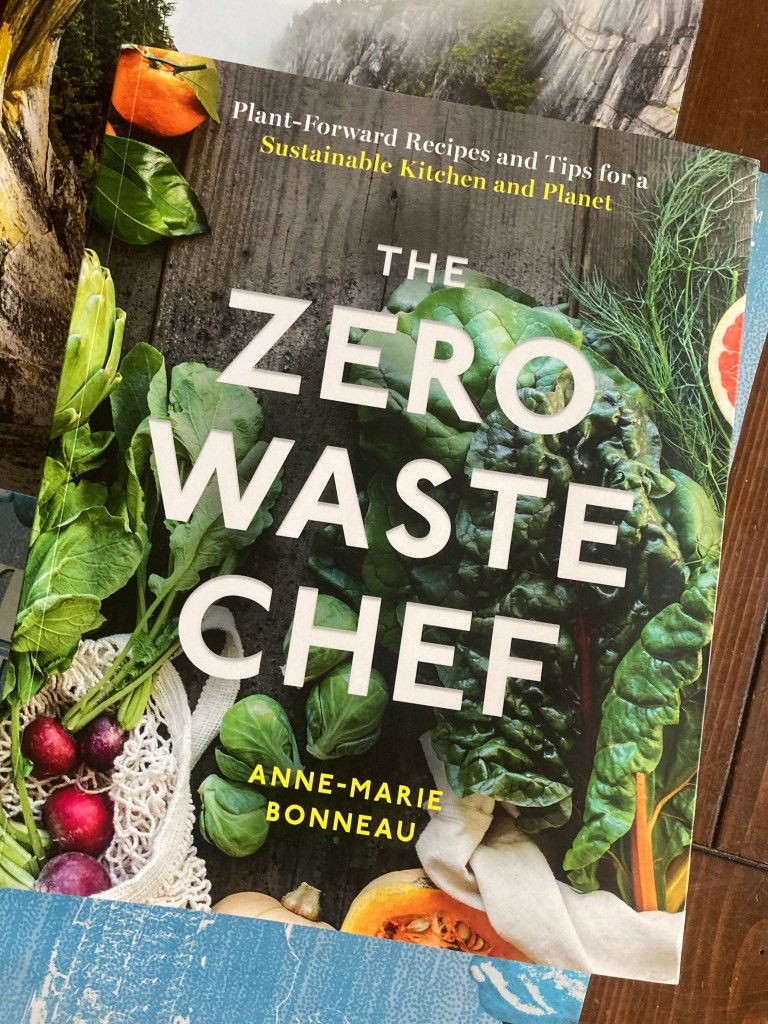
  • Zero Waste Chef is my jar-hoarding alibi, and she could be your next favourite kitchen accomplice too

    Zero Waste Chef is my jar-hoarding alibi, and she could be your next favourite kitchen accomplice too

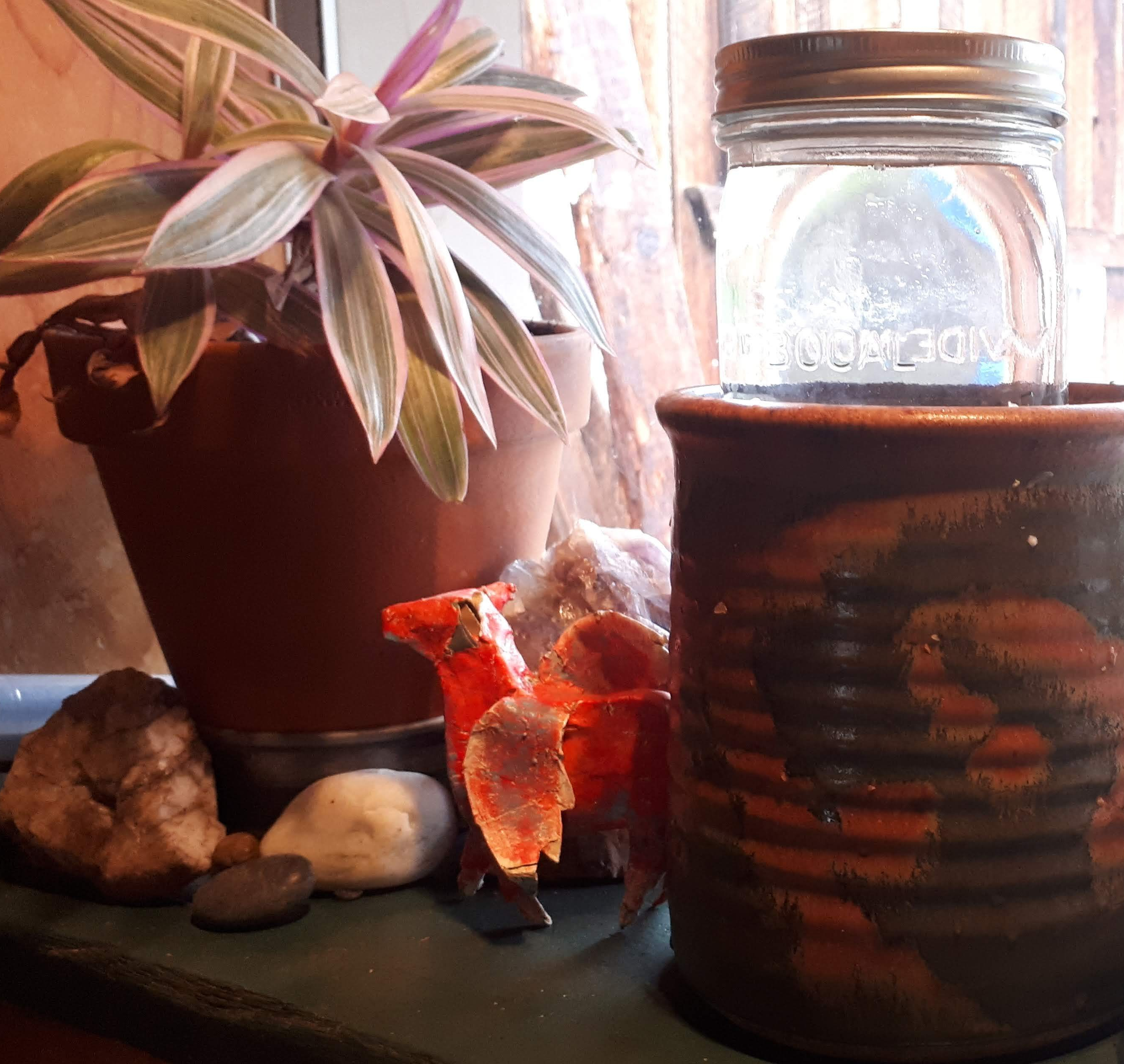
    I am a jar hoarder.

    And the Zero Waste Chef is my alibi.

    I have a weird inability to throw old jars into the recycling bin. Instead, I tuck them in the drawer, for future use. (And every now and then my partner silently stages a protest slash intervention and culls them all. And I start over, undeterred.) There is some part of me that believes we are going to run out of jars, one day, globally, as a civilization, and my foresight will mean I have plenty of storage devices that smell faintly of decades-old peanut butter or salsa.

    It may be because the biggest environmental battle that informed my childhood was over Fraser Island, a sand island off the coast of Queensland that was being dredged for sand, to make, you know, glass, for jars, and windows, and screens, and concrete.

    I was so happy today to see that University of Queensland scientists have partnered with industry to create a process for making cement that using recycled glass. We want our grandkids to be able to play on the beach, they said. And after water, sand is one of the most expensive and hard to find commodities in the world right now.

    Dr Mehdi Serati from UQ’s School of Civil Engineering said the amount of sand in the world was finite, so ingenuity was necessary to solve the problem of a looming shortage.

    “If we don’t do something about sand depletion at a global scale, our grandchildren are not going to see sandy beaches,” Dr Serati said.

    “Over the past 20 years the cost of sand has increased by six times, and it’s the second most consumed natural product globally, after fresh water.“

    I’m Australian, so sandy beaches are sacrosanct. Life in Australia doesn’t make sense if there are no sandy beaches. It’s just unimaginable.

    And so, I merrily hoard.

    Which means I was even happier this week when the Zero Waste Chef book arrived in the mail.

    I’ve been following Anne-Marie Bonneau on instagram for a while. She’s core. Super core. She knows how to make ginger beer from ginger bugs from ginger, sugar and water. She knows how to make kombucha. She’s an evangelist for sourdough and fermentation, calling “Fermentation an act of defiance against our broken food system.” All the things I’ve been learning about, she’s the resource.

    “I’m not claiming that fermentation will save the world. But preparing food this way does put us more in tune with the natural world – the food is alive, after all – and that might lead us to better preserve and protect the world.”

    Anne-Marie Bonneau

    She’s motivated to help us kick our plastic-addiction. You could join Plastic Free July and see if you can reconfigure your summer days to avoid single use plastic bags, water bottles, takeaway coffee cups and plastic straws.

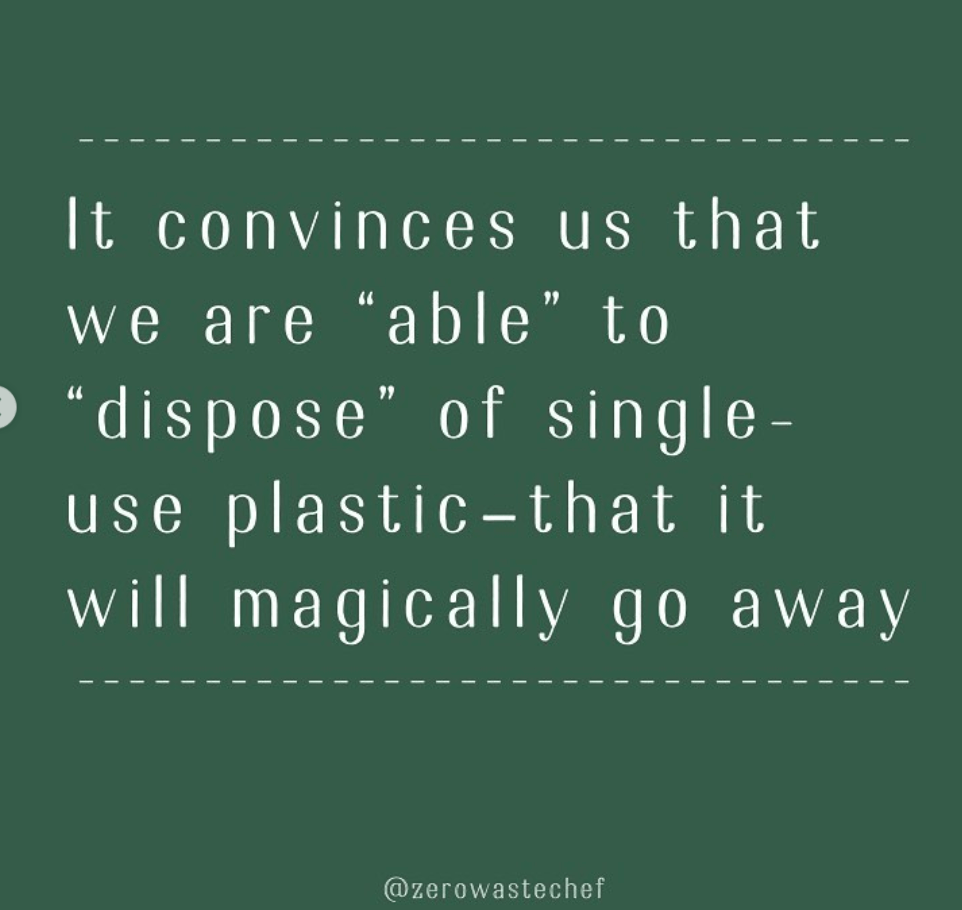
    It’s really about rethinking “disposable”, because lovelies, nothing is disposable. Nothing is so without worth or value on this Earth that we should just mindlessly chuck it away.

    Bonneau recommends developing a zero-waste kit… you don’t have to go buy any fancy stuff – “we can’t shop our way out of the climate crisis”, she says. Just put together an on-the-go shopping kit (of shopping bags, produce bags and jars or containers), and a out-and-about kit (a stash bag with water bottle, utensils, cloth napkin, jar or metal container and produce bag.) Wherever you are, if you get a craving for a coffee, a snack, or a smoothie, use your own container. Pandemic precautions have put a pause on a lot of these practices, but we need to get back on them, as soon as we can, and try and counter the impact of all those disposable masks. Aaaagh.

    Your Zero-Waste Kit works like a shield to deflect unwanted single-use trash

    The Zero Waste Chef

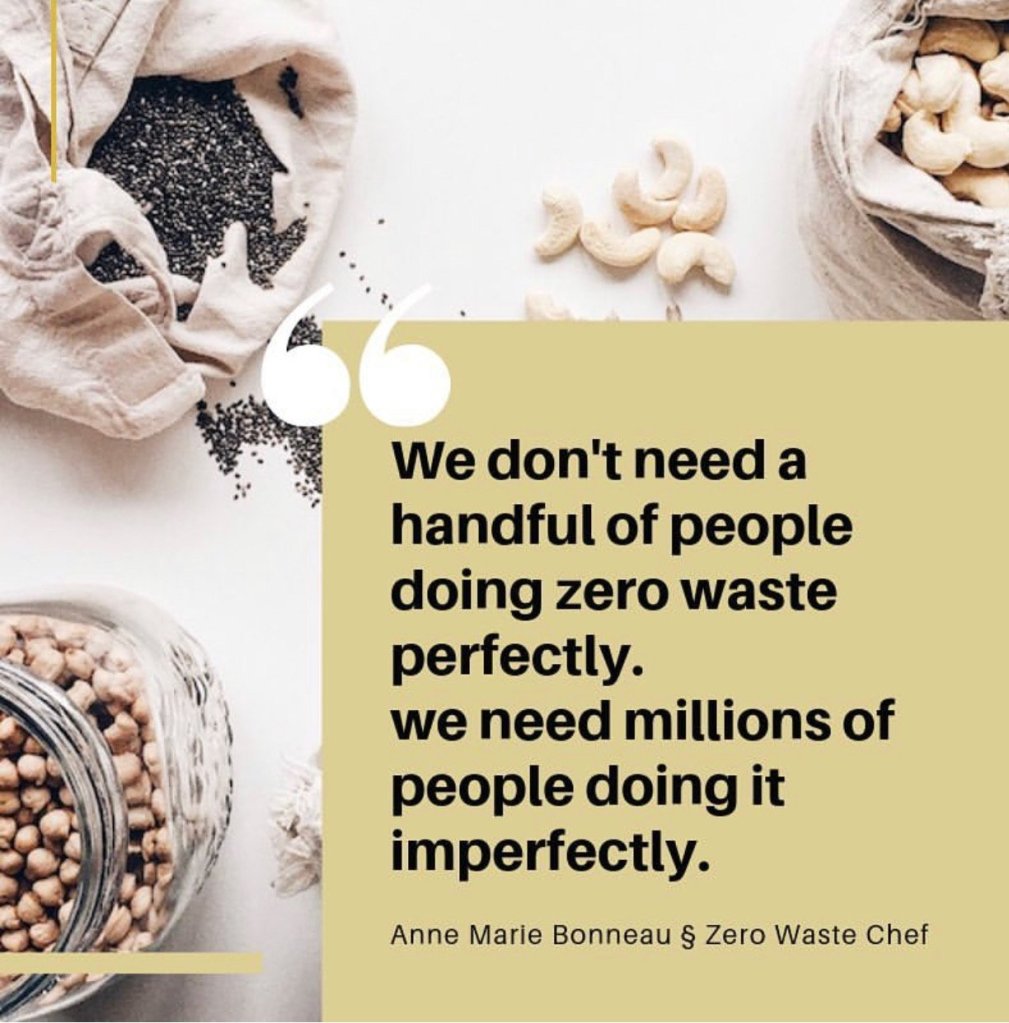
    Also, to solidify her status in my heart, once she posted: we don’t need four more people to do zero waste living perfectly. We need millions of people doing it imperfectly. And that was it. She’d won me over. I don’t really need any more aspirational benchmarks that I’m incapable of meeting, because I’m flawed, flailing, and trapped in a system that means every aspirational thing I want to do, to help improve the world, or life for other people, essentially means swimming upstream.

    So, darlings, bring your flawed and flailing selves, bring your big hearts, your hope for your kids, your affection for a grandma or aunty or someone you imagine had a little earth mother wisdom, bring your fetish for collecting jars, bring your love for kitchen experiments and weird science. Bring your friends.

    Don’t bring righteousness or judgment and let’s leave the despair at the door. Or in the hammock out back taking a well needed rest.
    So, as we pick away slowly at deconstructing and remaking systems that actually flow with life, I’m just gonna do the best I can, and PS Don’t nobody mess with my jar stash.

    How creative can you be, at rethinking “waste”? Can you turn old fabric scraps into sandwich wraps? Can you turn last night’s leftovers into tomorrow’s frittata? Can you forego bubbly water and make your own ginger soda? Are you ready to get really next-level and make your own sauerkraut? Or granola bars?

    Apart from a host of great recipes, Bonneau’s new book offers this beautiful rethink, which anyone with a garden or a harvest box (CSA) subscription, has bumped hard up against: how do you cook opportunistically, rather than “diligently” to a menu plan and a series of recipes?

    “Rather than allowing your cravings to dictate what you’ll make, let the food you have on hand in your pantry, refrigerator, and freezer, serve as the basis for your next dish. This method will eliminate food waste in the home.” It will make us more creative, as parameters tend to do, and that makes cooking more fun, she says. And who doesn’t long for time in the kitchen to actually feel like fun?

    It’s a big shift – to start with a pile of ingredients first, rather than with a recipe or a go-to meal (oh, it’s Tuesday, so pull out the taco shells and jar of salsa.) To say, okay, the bok choi is coming up, and there’s still some asparagus in the garden, what shall we eat today… but once we re-orient to this way of thinking, and begin flicking through recipe books with an ingredient-first lens (okay, what features kale, because I sure grow a heck of a lot of kale)… it becomes more natural. Grill some veggies on the BBQ. Turn the leftovers into frittata the next day. Blend up whatever is fresh and green into a pasta sauce, or toss it on a pizza. End of the week – time for leftovers soup or stock with whatever is wilting away in the crisper.

    I’ve realised, after decades of anguish about being a sub-par home-maker, that it’s all about having a repertoire. Once you have a few things in the repertoire, everything gets a little easier. You don’t have to think as hard. Habits carry you through. You don’t even realise you’ve graduated and aren’t sub-par anymore, but are successfully keeping your people alive and fed, because you’re not expending anywhere near the same amount of brain space that it once took and you’ve somehow absorbed this story that cooking healthfully and eating well is a giant uphill grind.

    Until it’s not.

    The biggest shift required is breaking old habits of consuming-out-of-convenience. Convenience has a cost. It’s a kind of Earth-tax. As soon as something is pitched to us as “convenient”, we should get squinty-eyed and start asking about the catch. Someone is going to pay for this. Possibly your grandkids.

    The Zero Waste Chef is a good helpmate if you want to, ultimately, be a good ancestor. If you want to enjoy your life right now (which is basically built on the good things that people who came before you have done) AND set up future generations to also flourish and enjoy themselves and play on sandy beaches and eat a yummy sandwich under a tree. As she says, in the first chapter, that has graphs and mathematical equations and that I skipped over to go look at the glossy photos of yummy food, “zero waste isn’t an all-or-nothing proposition. You can live a little bit zero waste. And if 10,000 people reduced their waste by 10% that would reduce 10 times more waste than if 100 people got their waste down to zero. The point is, every little bit counts, especially when it’s amplified by a lot of us having a go.

    So jump on board. Sign up for her newsletter, follow her on instagram or twitter, and/or buy the book.

    A lot of her recipes are on her website, but it’s nice to have the book on hand as a reference – especially when it comes to things like fermentation, which are processes that I find I need to read about, again and again. And if you missed the pandemic sourdough train, or fell off and want to get back on, there are a ton of recipes for things to do with all the starter. Including how to make the starter. (But my favourite chapter is called Naked Snacks and Natural Sodas. Naked snacks probably are the type that will make you feel better naked, but it really means no packaging. )
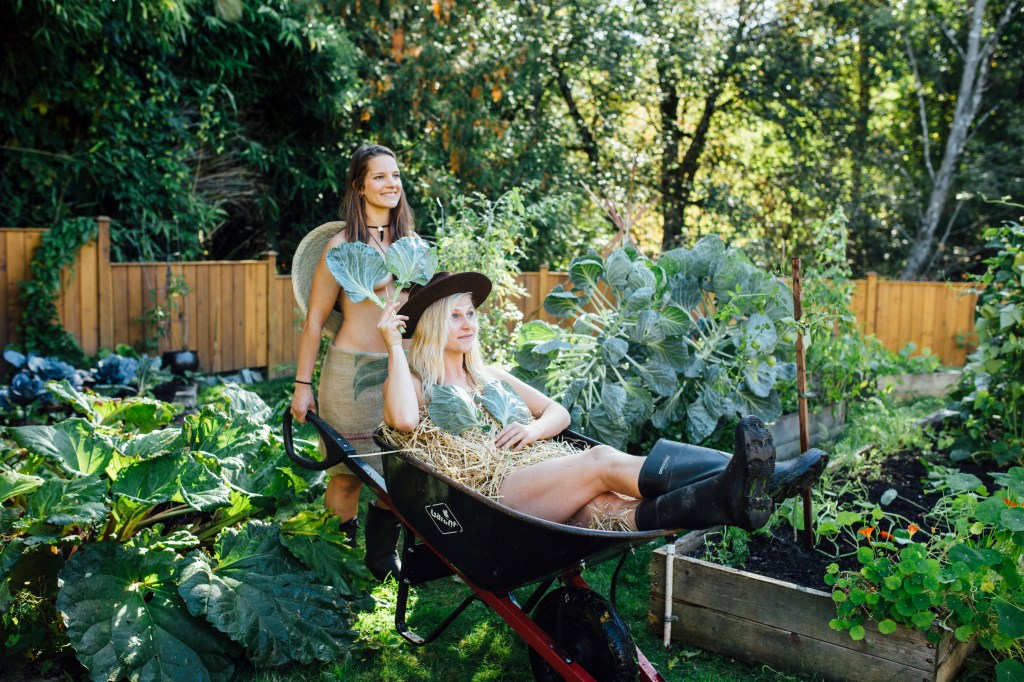
    Jordie and Steph from Solscapes pose in one of their client’s edible gardens. via https://tracedelements.com/2018/10/25/squamish-farmers-strip-down-for-fundraising-calendar/

    So, your summer mission, should you choose to accept it: Eat naked. Save your jars. Carry a napkin and a mug and a fork wherever you go. Shorten the distance from food to plate. Go barefoot, so the idea of lightening your footprint connects to an actual sensation of bare toes and soil. Have fun.
  • Tartine Cookbook Review Part 2: Gougères

    Tartine Cookbook Review Part 2: Gougères

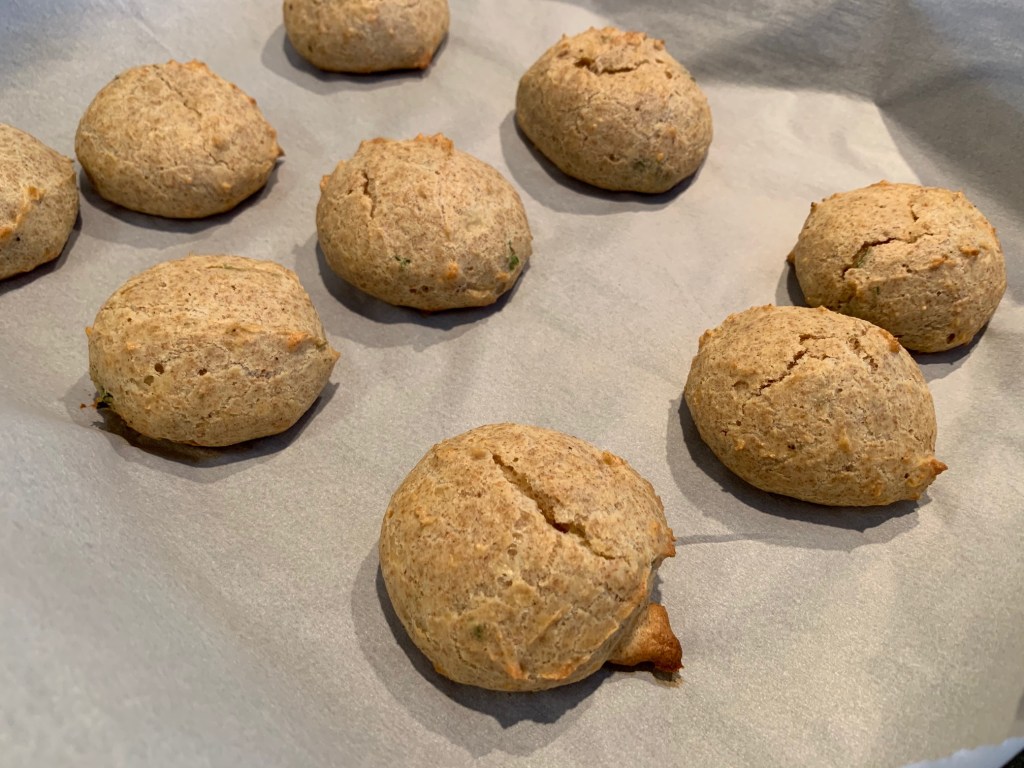
    I wanted to spend a bit more time with this cookbook and make something out of my comfort zone. Turns out gougères are pretty easy to make and are an impressive hors d’oeuvre! I changed a few things to healthify them – namely used whole grain spelt flour instead of white wheat flour. However, they call for milk and cheese so not vegan or for the lactose intolerant. I also sped up the method by altering a few steps so you can get these into the oven quicker. I will make these again!

    Gougères: (or cheese puffs, to keep things simple)

    Yield: 3 dozen gougères.

    Ingredients:

    1 ¼ cup skim milk (or half part whole milk, half part water)

    140 grams unsalted butter

    1 tsp salt

    1 cup spelt flour

    5 large Pemberton eggs

    ¾ cup grated Jarlsberg cheese

    ¼ cup fine chopped parsley

    ½ tsp pepper

    Method:

    Put milk and butter into medium heavy bottom sauce pan over low-medium heat. Bring to boil. When boiling, shut off heat and add flour. Mix with wooden spoon until well incorporated. Then transfer mixture to stand mixer and add eggs one at a time until well mixed. Then add grated cheese, parsley and pepper.

    Drop spoonfuls of batter onto parchment-lined baking sheet and bake for 25 minutes at 350F. Serve immediately.


  • A fresh take on the classic oatmeal cookie from the new Tartine Cookbook

    A fresh take on the classic oatmeal cookie from the new Tartine Cookbook

    When Lisa gave me the opportunity to review a cookbook or two I jumped at the chance. I have always wanted to do this!

    I have had a lot of fun looking at just-released cookbooks (one more review coming next month). The new Tartine cookbook (a classic baking book from an established San Francisco area bakery that has been given a refresh for a new generation with plenty of gluten-free options) by Elisabeth Prueitt and Chad Robertson, is beautifully photographed and full of innovative recipes.

    But, heads up, the recipes are not for beginner bakers or anyone time-strapped. The book is beautifully photographed and has been a welcome addition to my coffee table and looking through it has given me ideas for how to incorporate new flavours into old stand-by recipes. I also appreciated the fact that the authors list the ingredients in grams and ounces which I find a time saver (for those of us with kitchen scales).

    In the spring when I have a bit more time I will tackle the brioche recipe and some of the elaborate cakes, such as the Russian Napoleon cake. For now I wanted a recipe that would pack a punch, be time-efficient, and would also be useful in the lunch box and for snacks on the go. This recipe fit the bill.

    I Pemberton-ised it by using dehydrated Saskatoon berries instead of currants, and also healthified it by reducing the sugar and using whole-grain sprouted spelt flour instead of all-purpose wheat flour. I also swapped out nutmeg for cinnamon as I am not a nutmeg fan. I also changed the method a bit and baked them straight after mixing, whereas the authors recommend refrigerating the dough first. I think the cookies were delicious and the extra step was not necessary. Less time = enjoying cookies sooner! I also appreciate the fact that these cookies are nut-free and therefore suitable for nut-free schools.

    I hope these will be a hit in your home for these snowy winter days.

    Orange-Oatmeal Currant Cookies:

    (yield: 3 dozen cookies)

    Ingredients:

    1 cup currants or dehydrated saskatoon berries

    285 grams spelt flour

    ½ tsp baking soda

    ½ tsp cinnamon

    225 grams unsalted butter

    1 cup granulated sugar

    1 large Pemberton egg

    1 Pemberton egg yolk

    2 tbs light corn syrup

    1 tbs molasses

    3 tsp orange zest

    ½ tsp salt

    1 2/3 cup rolled oats

    Method:

    Whisk flour, baking soda and cinnamon together in bowl.

    In stand mixer fitted with paddle attachment, mix butter until it is fluffy and light. Add sugar and mix until well blended. Add all other ingredients except oats and currants and blend well. Add flour mixture, oats and saskatoon berries/currants. Mix until well blended.

    Preheat oven to 350F.

    Place tablespoons of dough (use a spring-loaded ice-cream scoop for a professional look) onto a parchment-lined cookies sheet. Bake 12 minutes. Check for doneness after 10 minutes. Every oven varies in temperature. Cool and enjoy!


    IMG_5980


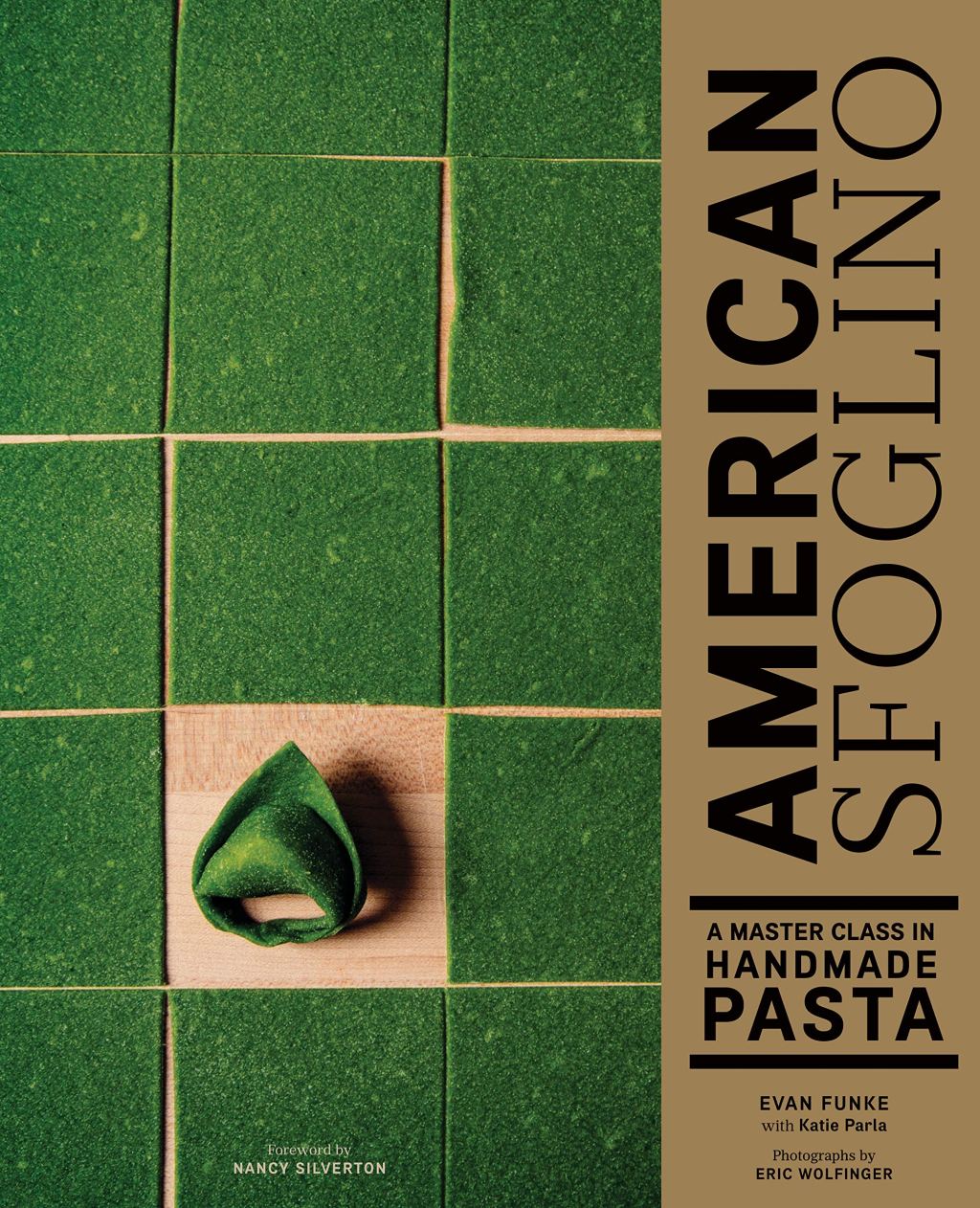
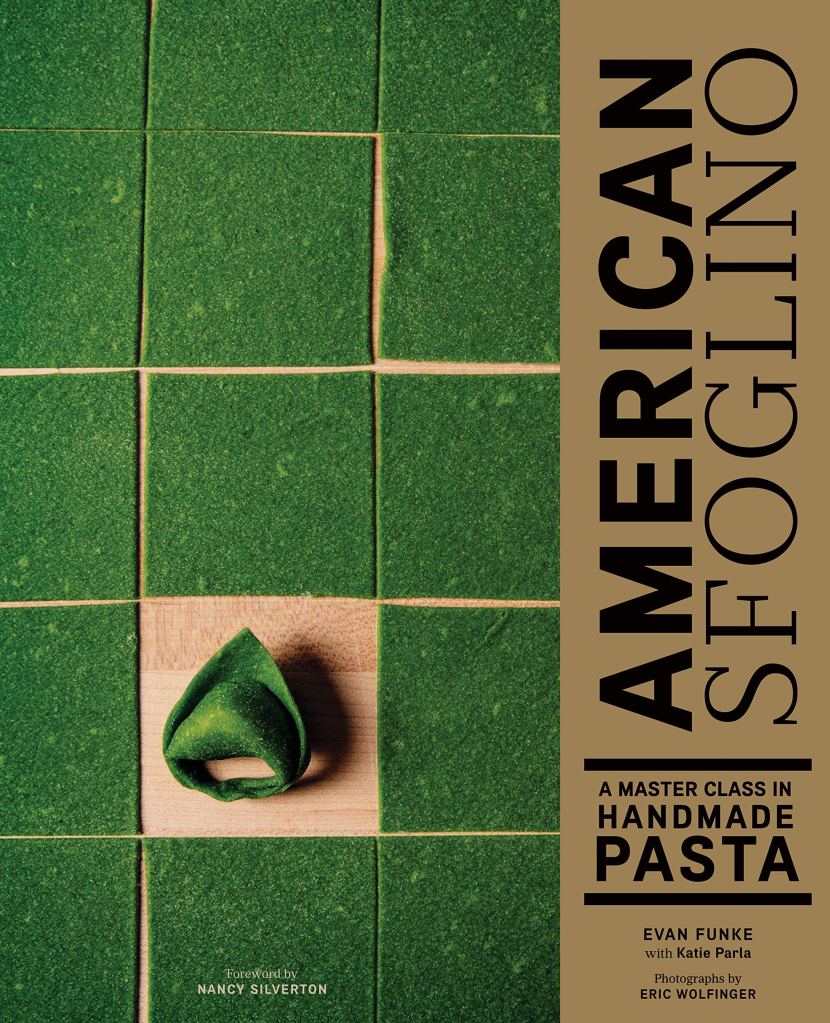
  • Kerry Teitzel reviews new cookbook American Sfoglino by making pasta by hand, and discovers it’s actually easy

    Kerry Teitzel reviews new cookbook American Sfoglino by making pasta by hand, and discovers it’s actually easy

    I love this cookbook!

     I have always wanted to make homemade pasta but always thought it was too hard and time-consuming.  This cookbook, American Sfoglino: a master class in hand made pasta, byEvan Funke, showed me that making homemade pasta and gnocchi is easy and I was even able to hack the time process a little.

    Although my background is mostly Finnish (with a little French Canadian and English smattered in there), I come from a very Canadian-Italian hometown.  Italian is the predominant ethnicity.  So I grew up with amazing homemade Italian food by friends, neighbours and great Italian restaurants.  I know good Canadian Italian food.

    I cook a lot of Italian at home – lasagnes and pasta dishes – I have always been intimidated to make my own homemade pasta.  This cookbook American Sfoglino has changed that.  Not only did I learn that it is easy to make homemade pasta and gnocchi, you do not need fancy ingredients or equipment. I also really loved the stories in it of the author’s time training in Bologna, Italy with a pasta master. It is a bit of a travel memoir (my favourite book genre) with history of Bologna pasta and food culture.  So it’s a great read even besides the pasta making. It also has beautiful, simple and useful photography.  The food I made actually kind of looked like the food in the photographs which doesn’t always happen with cookbooks for me!

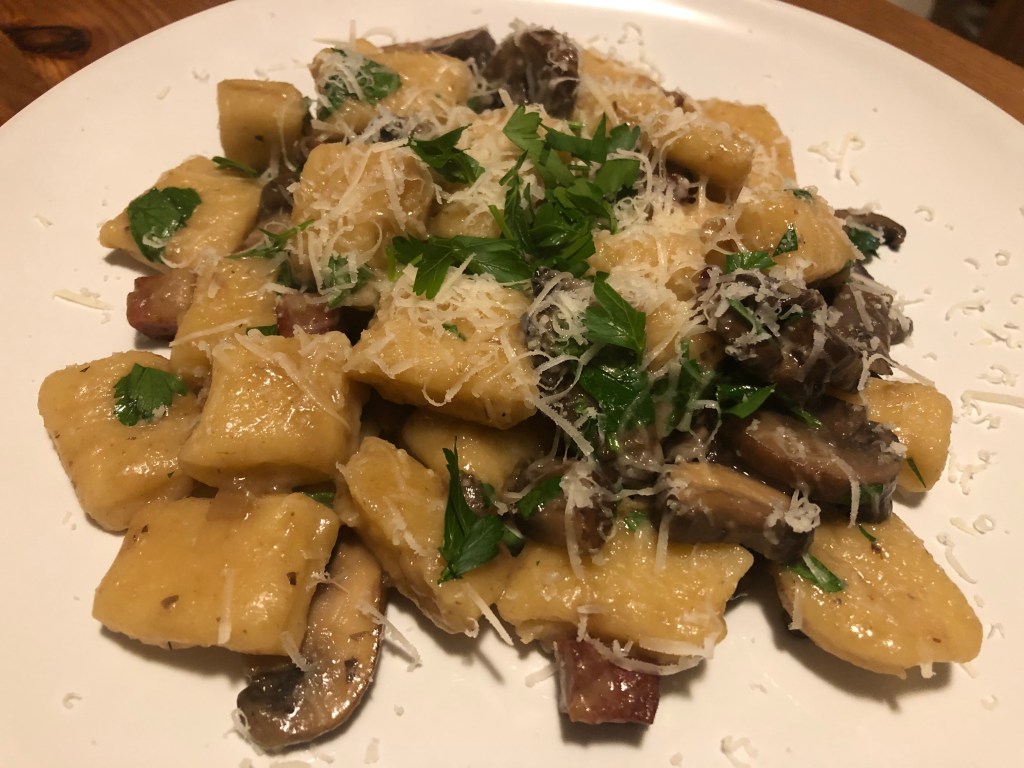
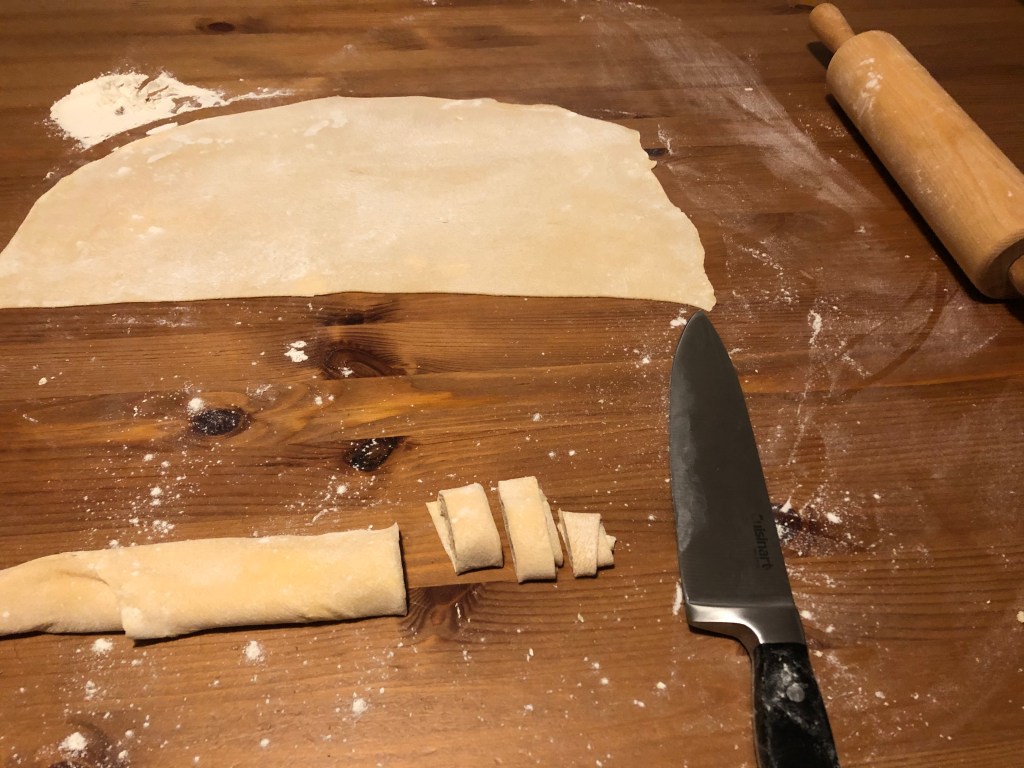
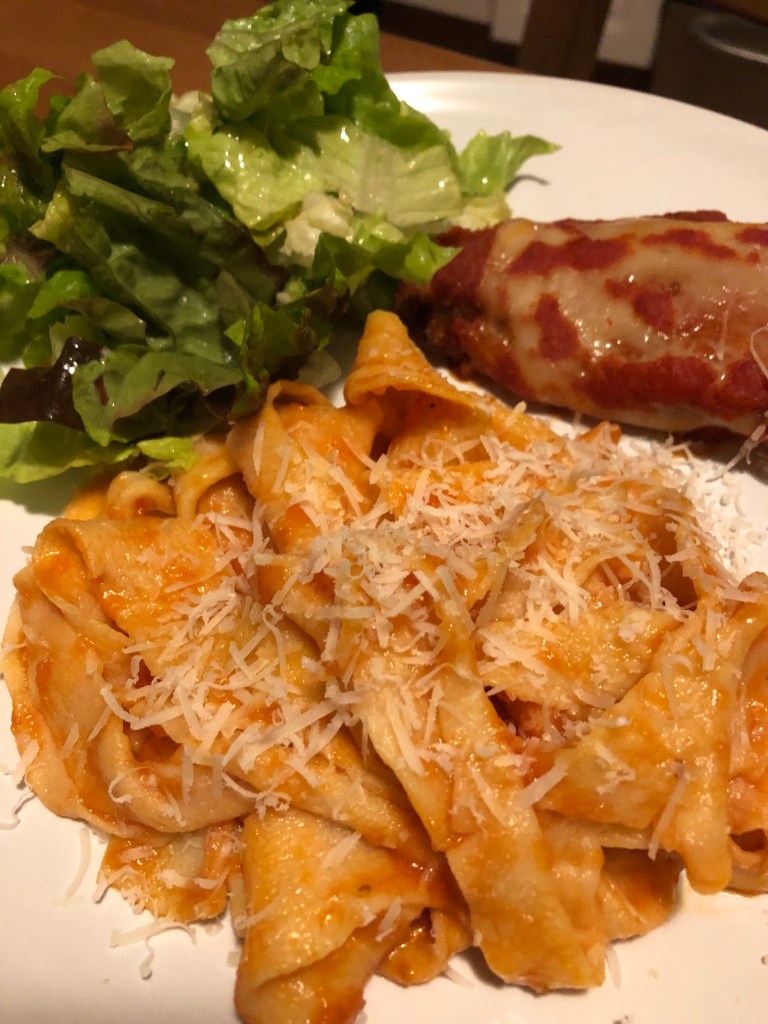
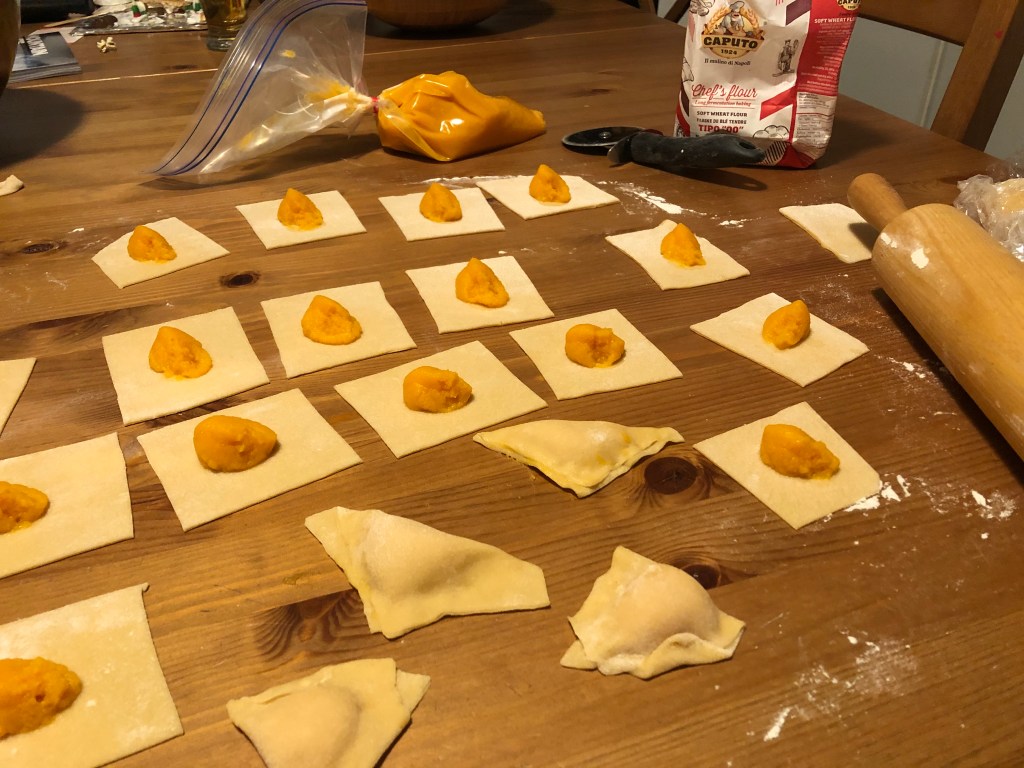
    The recipes I have tried so far the Sfoglia All’Ouvo (Egg Dough) and Gnocchi Di Ricotta (Ricotta Dumplings).  I turned the Sfoglia All’Ouvo into Tagliatelle with the Pomodoro Sauce (which I served with parmesan chicken and salad), Triangoli with Ripieno Di Zucca (Butternut Squash Filling) served in the Burro E Salvia (Butter and Sage sauce) and the Gnocchi Di Ricotta Alla Boscaiola (Pancetta, Mushrooms and Herbs sauce).

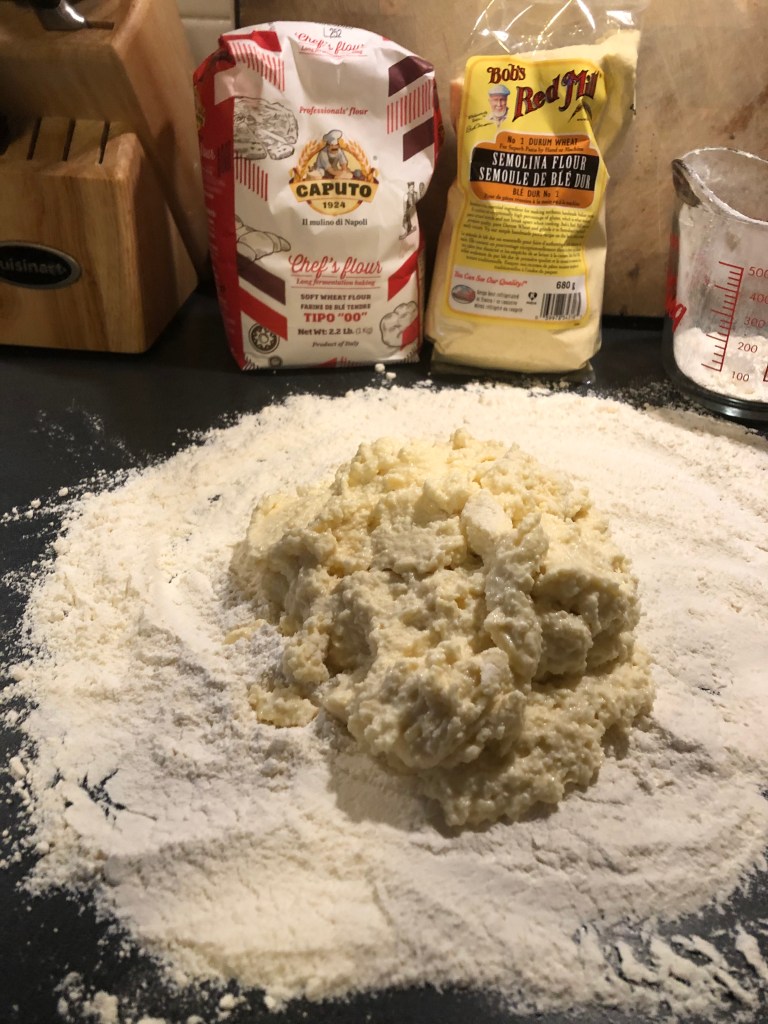
    All recipes tasted amazing and looked surprisingly as good as they did in the book.  And the best part was that I only needed special flour – “00” Italian flour – which I found in our rural grocery store. 

    I could not find all the mushrooms listed for the Pancetta, Mushrooms and Herb sauce, but I did find button, baby belle and oyster mushrooms which tasted amazing.  Our grocery store also had pancetta in the deli and Italian peeled canned tomatoes.

    When he first described rolling out the pasta dough to the thickness of 4 post it notes I thought I’d never get it that thin, but I cleared off my table and rolled it out easily to this thickness.  I was pleasantly surprised how easy the dough was to work with.

    The only hacks I did make was to not use a kitchen scale to weigh the ingredients – I googled weight to cups and this worked fine, although I do a lot of cooking and feel my cooking experience may have helped estimate if the dough was wet/dry enough and adjust accordingly. 

    I also sped up some of the waiting times on the dough which needs to rest 2-3 hours, I waited 2 hours with the first batch and 1 hour with the second batch, and it came out amazing both times. I also substituted chicken stock for the mushroom stock in the mushroom sauce which still came out amazing.

    I loved everything I made from American Sfoglino but I especially loved how light, fluffy and airy my Tagliatelle was in the Pomodoro sauce – it was exactly how I imagined my homemade pasta should feel and taste and the Pancetta, Mushroom and Herb sauce was the best mushroom sauce I have ever made and would go great with any pasta. 

    I can’t wait to make these recipes again and try more from American Sfoglino.  I will be cooking from this cookbook and reading for pleasure for a long time to come!

    P.S.  Sfoglino/Sfloglina means a maker of fresh pasta sheets in Italian.

    American Sfoglino made the NY Times list of the 13 best cookbooks of the fall.

  • Munchy Munchy Cookbook for kids: review

    Munchy Munchy Cookbook for kids: review

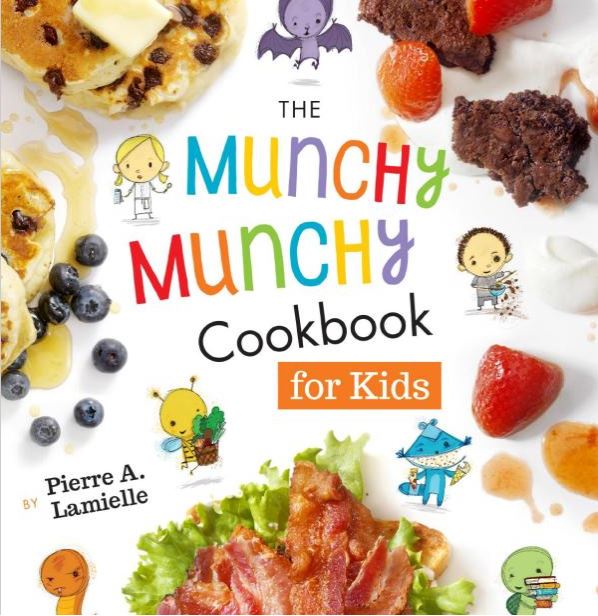
    My kids offered (er.. rather were bribed with a cookbook and kitchen privileges) to review the Munchy Munchy Cookbook for Kids by Pierre A. Lamielle. It looked and sounded like a lot of fun.

    Here’s our first shared book review featuring me (tonight, tired mom), Calian (10) and Kwaya (8). My additions are in italics.

    The book is pretty cool. It includes handy cooking instructions, a good variety of easy to make, but not dull recipes, safety tips and great illustrated characters.

    What did you like about the book?

    K: I thought it was a cool idea for the Munchy Munchy Bunch.

    There’s Sal, who has to follow a recipe; Pepper, who’s a hot mess; Ragu, who’s always hungry for anything and everything;  Ziti, who’s the absolute most picky eater of all time; Sage, who’s the ultimate food nerd; Rose, who knows how everything grows; and Bean, who’s here and there and everywhere.

    K: The very, very, very slow grilled cheese looked yummy. I did not get time to make it!

    C: I made the volcano eggs and pancakes. I wanted to make the brownies, too, but you wouldn’t let me.

    How did the recipes go?

    C: The volcano eggs didn’t turn out well. I didn’t follow the recipe that well. They were hard inside. I’d like to try making them again.

    Volcano eggs in progress

    C: The pancakes were the best pancakes I’ve ever made. And they even looked like the best pancakes.

    Good looking pancakes!

    I agree. C was home from school with a cold one day and made the pancakes. They tasted great, cooked easily, and would pack well for lunch.

    What else would you like to cook?

    C: I would like to cook the brownies. The Caesar salad looks good, but we don’t have the ingredients or any lettuce.

    What didn’t you like?

    K: The illustrations on the recipes were not my favourite. I couldn’t really tell what I was seeing.

    Who would you recommend this cookbook for?

    K: The book would be good for a person who has never cooked before: maybe someone who is 6 or 7.

    C: It would be good for someone like Gabriel in kindergarten to learn how to cook his first things. Older kids (like us) could use it without help. Younger kids could use it with parents in the kitchen.

    Anything else to add?

    K: Thanks for the book!

    I was impressed by the description of Familius, the global trade publishing company that published this book. They believe that the family is the fundamental unit of society and that happy families (of all types) are the foundation of a happy life. They publish beautiful books that help families live their 9 Habits of Happy Family Life: love together, play together, learn together, work together, talk together, heal together, read together, eat together, laugh together. What an inspiring mission!

    Update

    C made the brownies. They were delicious for one-bowl brownies with limited ingredients–chewy and crispy without being too chocolately. Another success!

  • The Vibrant Life: Cookbook review

    The Vibrant Life: Cookbook review

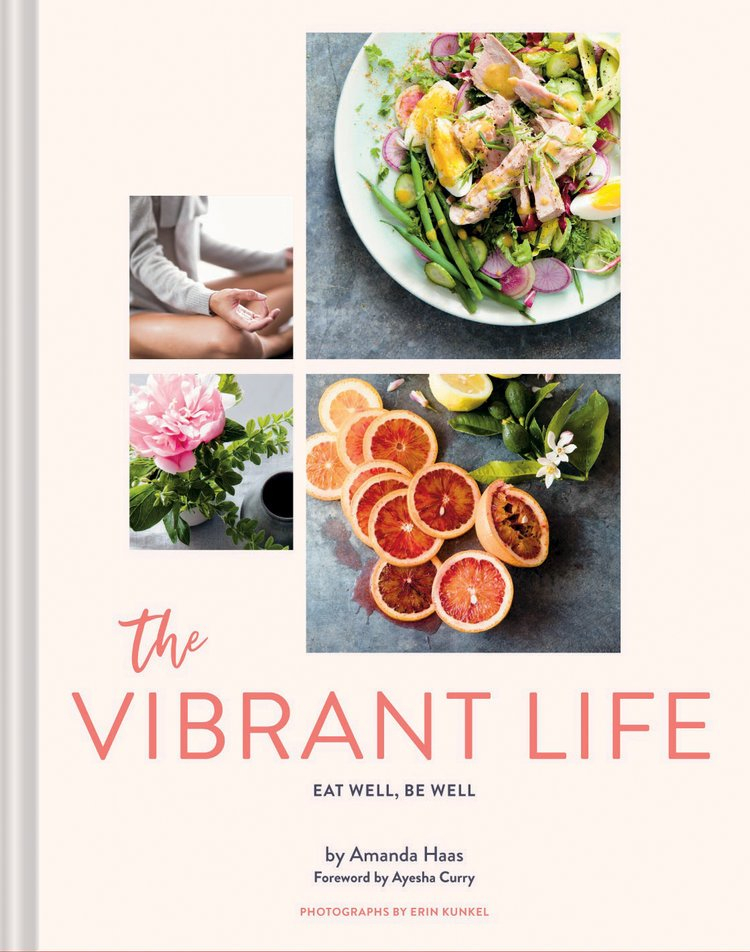
    I’ll admit that when I ordered The Vibrant Life cookbook by Amanda Haas, I thought I was ordering The Anti-Inflammation Cookbook which she also wrote. I was dealing with a neck injury and figured that learning some low inflammation recipes would expand my repertoire and help me heal.

    Haas’s introduction, though, won me over.

    Haas, the former culinary director for swoon-worthy cookware store Williams-Sonoma, talks about reaching the age of 45 and experiencing chronic fatigue along with other health complaints. She’s not advocating for turning back the clock – she says, “I love that age has provided me with a stronger sense of self, courage and compassion.” Instead, she talks about having people who showed up in her life and helped her redefine what aging looked like.

    The Vibrant Life is Haas’s answer to wanting to resolve her health issues to feel great. It’s a wellness cookbook that includes recipes and lifestyle recommendations ranging from yoga and strength-training to acupuncture, cryotherapy and meditation.

    I’m the same age as Haas and can relate to her call to live her best life.

    The ups

    The book is well designed and full of easy to follow, unfussy recipes and excellent photography. It’s moderate and balanced in terms of the diet presented. Although gluten-free, many of the recipes include meat, fish or dairy.

    The downs

    Because many of the ingredients for many recipes wouldn’t be found in a regular, well-stocked kitchen (e.g. tarragon, Marcona almonds, pistachios, sour cherries, fennel bulbs, adobo sauce, crème fraiche, King Trumpet mushrooms, golden raisins), this wouldn’t be my everyday go-to recipe book.

    Although recipes like the chocolate ganache tart with grand marnier, tequila old-fashioneds, and roasted Moroccan chicken with cauliflower “couscous” sound delicious, I was, frankly, expecting more wholesome plant-based dishes from a wellness cookbook. Instead, there seem to be a disproportionate number of recipes in the “Land and Sea” and “Sweets, Treats and Cocktails” chapters.

    granola-1

    Favourites

    I didn’t have some of the ingredients required on hand, so tried some of the simpler recipes, including:

    • The drinks like maple-turmeric golden milk and coconut almond matcha, both made with almond milk
    • Sophia’s toasted almond granola – a tasty recipe featuring dark chocolate, sour cherries, maples syrup and cardamom
    • Wild rice, butternut squash salad with pistachios, cherries and mint
    • Blistered curry cauliflower with mint, currants and toasted almonds

    CauliflowerKaleSoupThe shaved brussel sprout salad with roasted root vegetables and pomegranate seeds is next on my list.
    The final word

    I can see myself cooking some of the recipes for special occasions, but don’t imagine that this cookbook will make it into my regular rotation. For a wellness cookbook, too, I would have liked to be nudged further along with truly inspiring, downright healthy food.

    This book would make a great gift for an omnivore, who enjoys making colourful, tasty, fresh food to entertain friends.

    With Haas’s simple, but sincere wellness recommendations, it would also make sense for someone who has experienced some health challenges and is just starting out on a wellness path.

    And thanks

    Thanks to Raincoast Books for sharing this cookbook!

  • Cookbook Club – Why Gathering is as Nourishing as Food

    Cookbook Club – Why Gathering is as Nourishing as Food

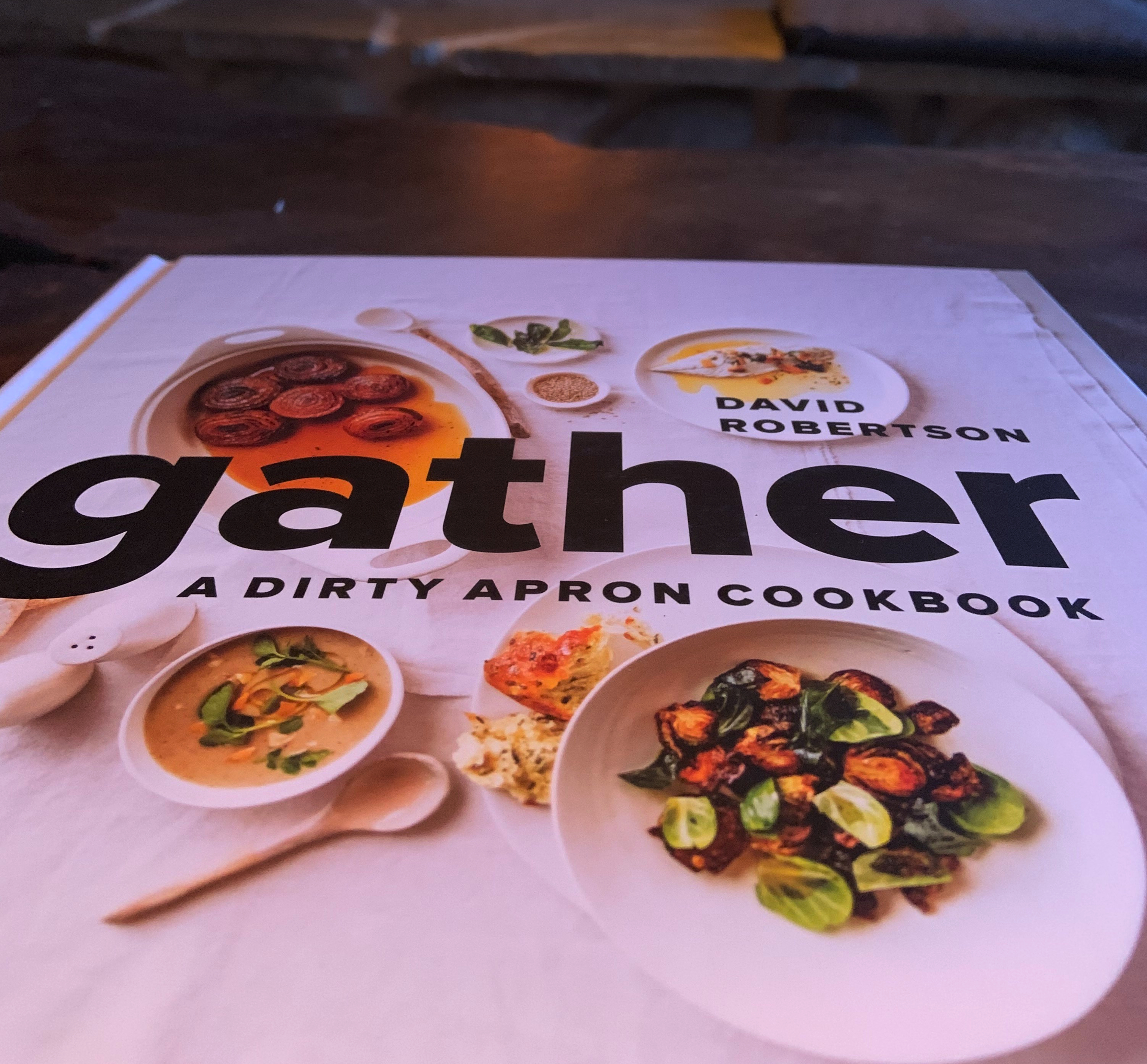
    Lisa gathered us to share recipes from the perfectly named cookbook Gather by David Robertson. David owns the Dirty Apron Cooking School in Vancouver. If you get the chance to take part in one of his interactive, social cooking classes, you will not be disappointed. When I did a short stint in Vancouver, a friend and I did one of his Italian classes and it was one of the most memorable experiences I have had. It is a learn-to-cook, meet-up, dinner date all wrapped in a delicious bow.  https://www.dirtyapron.com/cooking-school/

    img_4137-e1576086726292.jpg

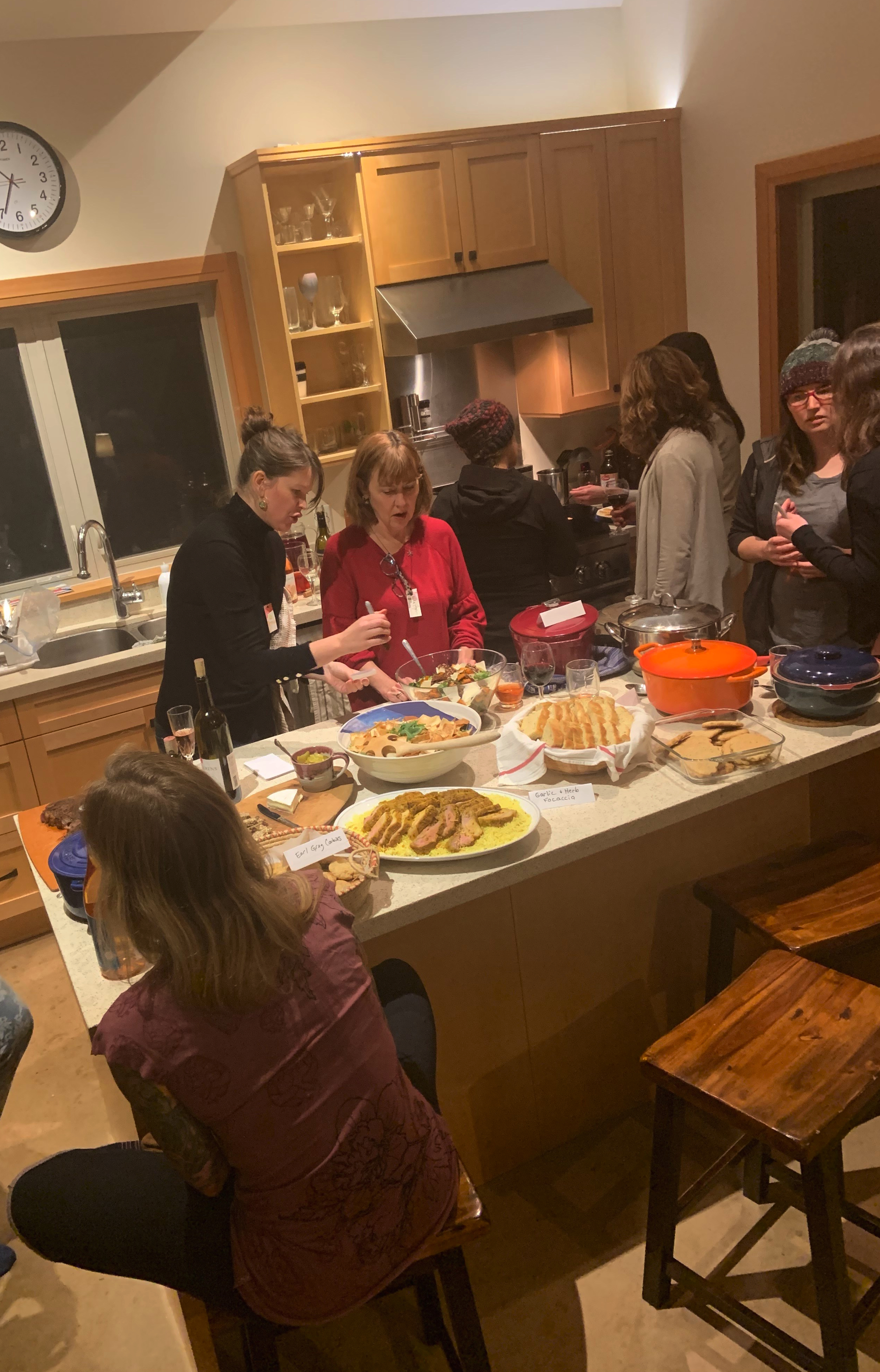
    On a cool December night in Pemberton, a group of sisters (figuratively, not literally, although I’d be cool if any of these dynamo women were actually my sisters) gathered to share food, share ideas, share music, share stories and to share love.

    IMG_4153

    Upon arriving to the warm glow of the farmhouse, there was a wonderful buzz, a positive energy in the excitement to unveil our nourishing dishes. Lisa kicked off the evening with a welcome. A welcome that set the tone to deepen our connections with each other, to be part of the sisterhood of this gathering. Lisa shared a story of “sistering” – a carpenter’s term to provide extra support to a weaker joist or strengthening a load-bearing beam. Our gathering is more than nourishing our bellies. It is also about nourishing our souls. It is about creating space to hold each other up, higher, stronger than when we all arrived – sistering.

    IMG_4147

    Eager to dive into the incredible dishes prepared with thoughtfulness, love and creativity, each person introduced themselves and the dishes they prepared. Stories started to emerge during the introductions and it was fascinating to hear how each person approached their dish. Living in a small town, several people agreed that there were challenges with certain dishes due to the shortage or absence of a key ingredient – a spice never heard of before or a hard-to-find-bean. Modifications became essential and there were some amazingly creative types in the group that approached their chosen recipe more as a rough guideline than a must-follow-rulebook. Full disclosure: cooking for guests is stressful, especially a brand new recipe and I needed to follow my recipe to its exact instructions, that way if the soup was a disaster, I could just blame the recipe.

    IMG_4146

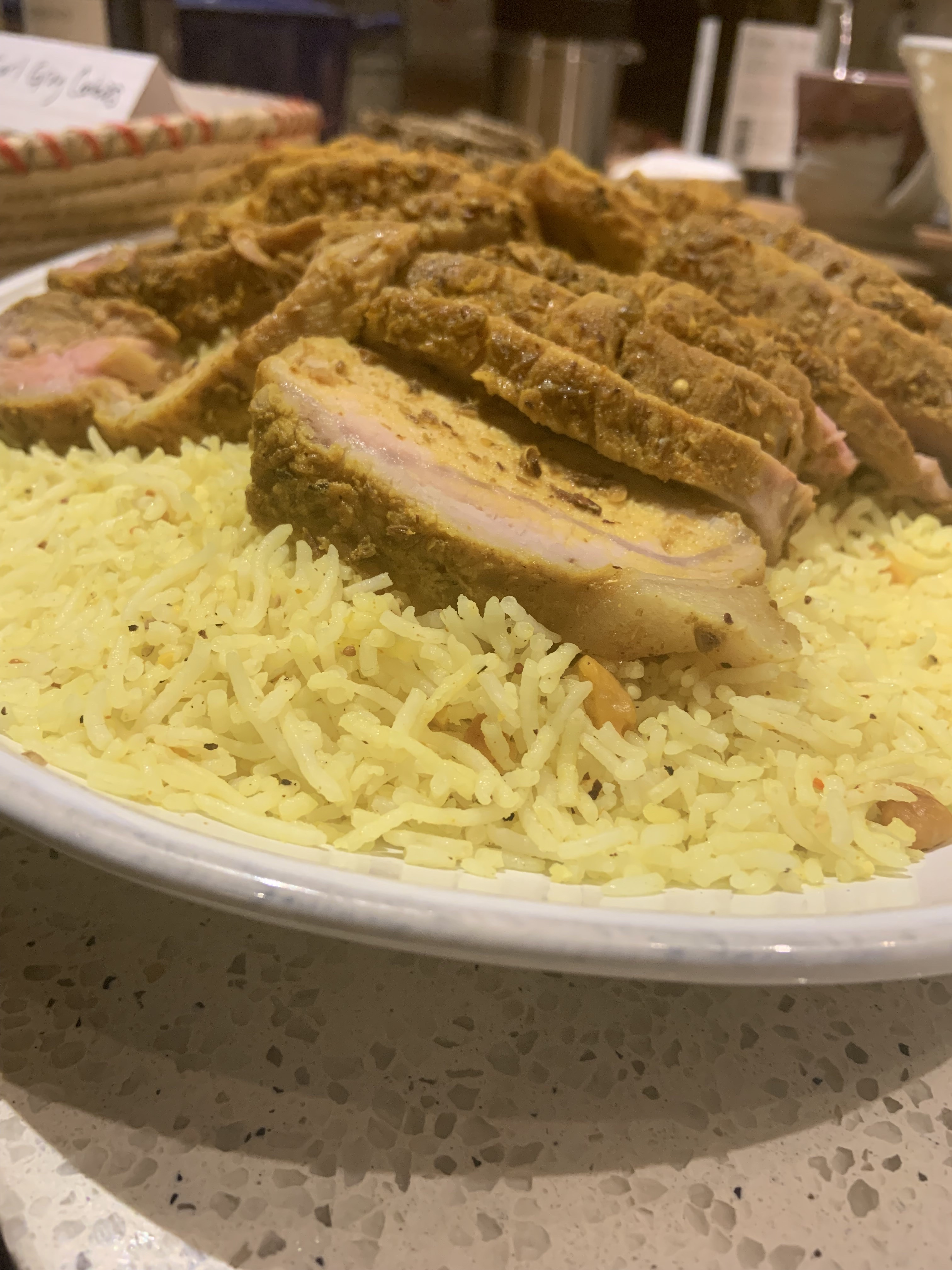
    Introductions completed, tummies growling, anticipation building, it was time to dive in. The Food. The food was unbelievable. The Flavours. The flavours were diverse, layered, complicated yet simple. The Options. The options were unlimited – there was something for everyone. The People. The people made the evening divine. Nothing to see here – just a bunch of warrior women meeting, quietly conquering the world, through food. The Conversation. If you paused for a moment while savouring a morsel of deliciousness, you could hear the hum of stories being told, recipe ideas being shared, connections being created.

    To Gather: the dry dictionary definition states “bring or come together”, “pick or collect as harvest”, “infer or deduce”.  After our evening gathering, here’s my definition. To Gather: “to come together to nourish each other through food, conversation, connection. To share a love for food, a love for life. To build a sisterhood.”

    img_4149.jpg

    It was the kind of evening that one does not want to end. And when it did, gracious thank yous were shared, heart-felt goodbyes were reluctantly made and each of us headed to our homes, bellies full, hearts filled. Upon arriving at home, my husband inquired as to which dish was my favorite. Cheeky guy – I’m not falling for that “who’s your favorite kid” trick question. I told him about the dishes, the immense flavours, the quality of company. I tried to explain sistering but quickly realized that this gathering was not something to be explained, rather, to be experienced. So, I summed the evening to him by saying “A gathering of amazing women, what could be better than that”?

    IMG_4148

  • Space Saving Sauerkraut

    Space Saving Sauerkraut

    I live in a barn. Between the barn and my little house is a mud room. It’s a liminal place: half barn, half house. These days, it’s where I keep all my tack, tools, and wild/crafting materials for the camps that I run. The counter is generally littered with things that need to be put away. Like that unidentified bracket fungi that smells like apricots… and the bags of sand and gravel from October’s Fairy Gardens.

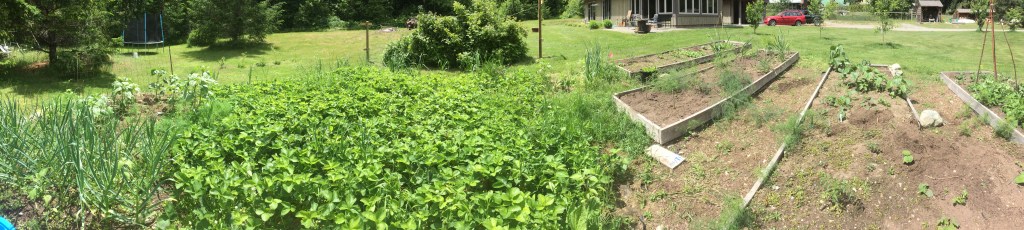
    Because I keep it at about ten degrees all winter (to keep the various stored items happy and the pipes from freezing) the mud room is also where I throw all the veggies I pull out of the garden and procrastinate about dealing with. One morning a few weeks (when I had to remove 6 large pumpkins from the top of the washing machine so I could do a load of laundry) I realized things were out of hand. The pumpkins were still too intimidating. I couldn’t quite look them in the eye. Plus they were in great shape so there was no need to rush processing them. The cabbages on the other hand… and the bowl filled with unwashed root veggies… oh dear. Definitely starting to go. I cut away the rotting bits from the cabbages, washed the salvageable carrots and beets, and then did the only responsible thing: I made Kraut.

    Sauerkraut is the best way to make a large volume of cabbage store in as small a space as possible. The lactic acid fermentation process loads it with helpful wild gut bacteria, boosts its nutritional value, and enables us to store it for a long time. It also makes a boring vegetable delicious. ‘Kraut- while traditionally just cabbage, salt and water- is also flexible and can accommodate the addition of a wide variety of veggies and flavours. For mine, I used the 3 small heads of cabbage, two handfuls of carrots and beets, kale stalks and leaves from Four Beat Farm, and two wild apples that I picked on the way home from Clinton last summer. For flavour, I added a small thumb of ginger, a handful of dried Saskatoon Berries, and five Juniper Berries.

    20181115_121843
    Kraut-to-be: here you can see the texture and flavourings before salt is added

    Directions:

    • First, shred or chop your cabbage. If you are going to play with adding other veggies, make sure you keep about 75% cabbage to make sure achieve a good lactic acid ferment. You add use almost anything you can think of to flavour your ‘Kraut. Caraway seeds. Black peppercorns. Seaweed. Dried fruit. Spruce tips. Citrus zest.
    • Add salt, and mix/rub it well into the veggies with your hands. You want to macerate your cabbage, as you want the salt to break down the cell walls and begin to release water. How much salt should you add? Well… more than you think you should. The salt acts as a preservative, and will help your ‘Kraut keep its texture so it doesn’t ferment down into a goopy mess. Taste your cabbage/veggie mix. It should taste quite salty. As you rub them, the veggies should start to shine a little bit, as well as moisten and soften.
    • Pack your crock! I use a small pottery crock I found at a thrift store. You can also pack your ‘Kraut into a large mouth Mason Jar. You can use utensils for this, but I prefer to use my fist. It’s fun to punch your food, and you can put more pressure on the ‘Kraut. You want to REALLY mash it down so that all the air pockets are squished out and it starts to release water. Add more handfuls of cabbage/veggies, and press down. Continue in this way until all your Kraut-to-be is in the crock. You should have enough water that’s been released at this point that it covers the top of the ‘Kraut when you apply pressure.
    • Because you can’t stand there squishing it forever, you need to add weight to the top off your ‘Kraut. The ‘Kraut needs to stay submerged in its own juices so that it doesn’t mould as it ferments. (Fermentation=good, mould=bad.) I use a large class coaster that’s a little smaller than the diameter of my crock, topped with a Mason Jar. You can also use rocks as weights, provided they’re clean! Then you can cover the top of your crock with cheesecloth or a dishtowel to keep out dust and mould spores but still let it breathe, which is essential for the Lactic Acid fermentation process. If you don’t have enough juice that’s been released from the veggies to keep your ‘Kraut submerged, you can top it up with a little water or brine.

    20181115_1230191
    The crock and (and accompanying Mason Jar of water that acts as a weight to keep the Kraut submerged)

    • Wait and taste! How long it takes your ‘Kraut to be done depends on how warm your environment is, and how tangy you like your ‘Kraut. The usual window is one to four weeks. The longer you let the fermentation go, the stronger the flavour will be, and the more beneficial bacteria you will cultivate. However, the longer you wait the softer your veggies become. If you keep tasting the ‘Kraut as it progresses, then you will be able to stop the fermentation it when it reaches your favourite balance of flavour and texture.
    • When you’re smitten with your ‘Kraut, take it out of the crock and compost any bits with surface mould. (Sometimes a little ‘Kraut will stick to the sides of the crock and turn white and fuzzy, but the rest of the batch that is still submerged will be fine). I pack mine into clean half pint jars and keep them in the fridge. This stops the fermentation process, but does not kill any of the lactic acid and other goodness.
    • Enjoy! Yum. Cleaning up and making more space was never so delicious…


  • Cookbook Club to reconvene, after summer hiatus, on September 20, with a freestyle celebration of your own garden

    Cookbook Club to reconvene, after summer hiatus, on September 20, with a freestyle celebration of your own garden

    Cookbook Club goes freestyle.

    Your mission, should you choose to accept it, is to grow your next dish for Cookbook Club’s next gathering, at Stay Wild Natural Health, on Thursday, September 20.

    No specific cookbook needed, when the real recipe for deliciousness is the terroir of this place right here.

    Potluck or preserves-tasting and trading session – let’s celebrate the end of summer, the harvest, and the potential we have in our own backyard to experiment with a zero mile diet.

    It’s a Cookbook Club with no featured cookbook.

    Find your own recipe. Bring copies, so everyone can build out their repertoire.

    Explore Traced Elements and try one of the recipes our contributors have shared.

    Screen Shot 2018-06-14 at 10.11.47 AM

    Pickle or preserve a little something extra, and put it away to share and show offf this September.

    Celebrate an ingredient.

    Enlist a farmer to help you.

    Let’s see what freestyle Cookbook Club dishes out.

    See you in September.

  • Cook Book Club does Thug Kitchen, May 24

    Cook Book Club does Thug Kitchen, May 24

    The day after April’s Cook Book Club, my 5 year old asked me, “Did you win?”

    I ate an amazing meal, with 10 other people, that hadn’t been pre-planned or organized, but covered the gamut from elk curry to grated squash to beet and mandarine salad, potato pancakes, and grilled shrimp and pineapple skewers, AND everyone gave me a thumbs-up for my cake.

    “I sure did.”

    Winning is guaranteed.

    TK2_paella_spread

    Our May collective culinary adventure is set for Thursday May 24, 2018, 7pm – 9pm, at Stay Wild Natural Health.

    Make a dish from one of the Thug Kitchen books. And let’s see how many f-bombs are dropped next meeting as we explore the New York Times best-selling vegan potty-mouthed phenomenon.

    image