Tag: willowcraft farm

  • Chickenisms

    Chickenisms

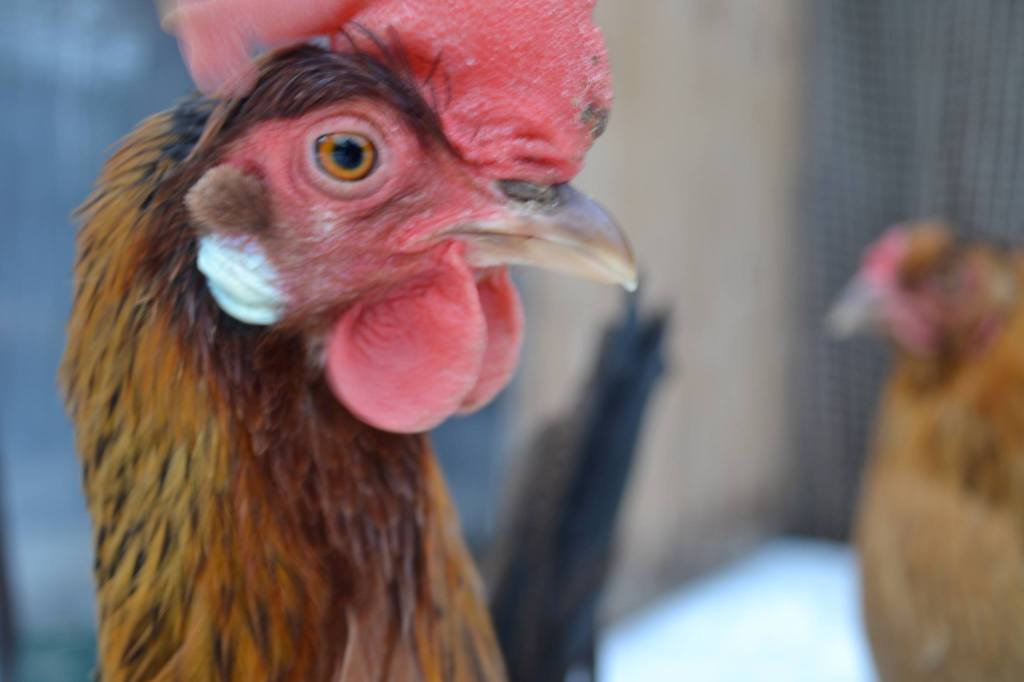
    I know from the demand  following the pandemic, there are lots of new chicken raisers out there now. Many of them it seems are females (nurturers) trying to get their reluctant partners (practical) to get on board and help them set it up. The learning curve is steep and I’m sure there has been quite a few trials and tribulations. Raising chickens can be fun, frustrating and eye-opening, just like life in general. With this familiarity comes the realization that chickens offer a philosophical and social microcosm, especially within the English language. I believe there are more parallels attributed to chickens than any other farm animal. I am going to run you through just a small portion of sayings about chickens and how they relate to us.This is a short scenario about new Covid-inspired chicken farming couples.

    First of all many of you have been COOPED UP, with the lockdown as opposed to RUNNING AROUND WITH YOUR HEAD CUT OFF as per usual. So with no HEN PARTIES and a desire to be more self-sufficient you thought you would WING IT and and take some chicks UNDER YOUR WING.You wanted  to play MOTHER HEN  to someone other than your homeschooled children before they FLY THE COOP.  Your husband may have CHICKENED OUT but you PLAYED CHICKEN with him instead, stating not to PUT ALL YOUR EGGS IN ONE BASKET when it comes to food security. Being NO SPRING CHICKEN,  and knowing the PECKING ORDER, he was eventually HEN-PECKED to the point of having to build a coop. Doing the math, he realized that the cost would not be CHICKEN FEED. His calculations looked like CHICKEN SCRATCH on paper and the numbers didn’t add up. The CHICKEN AND EGG SITUATION is that raising chickens could actually cost money as you CAN’T COUNT YOUR CHICKENS BEFORE THEY HATCH!

  • Acclimatization, zones, and how plants adapt to weather

    Acclimatization, zones, and how plants adapt to weather

    You know when you go on a tropical vacation in the winter and at your destination, the locals are wearing hats, long sleeves and pants. You strip down, head to the beach only to get sunburn and heatstroke? Eventually, after a week, you get used to it. Upon return, that first blast of cold at the airport feels like the Arctic, yet people are wearing shorts!

    Plants experience the same affect, perhaps even more because it happens gradually at a cellular level. The more robust the cell walls become, the hardier the plant.

    Every living thing has preferred conditions. Plants are grouped into zones to help guide gardeners to choose plants that will survive in their climate. It is based on the worst weather extremes for the area: Coldest temperature, number of frost free days and exposure. It’s good to know your zone before you waste your time and money on something that won’t thrive. Zones can be pushed higher by starting plants indoors, protecting them with cloth, overhangs, windbreaks, a south facing wall and   greenhouses. Global warming is also changing things and most areas will be up-zoned in the near future.

    Microclimates exist in all zones. Sunny south facing protected areas can be a full zone or more higher than a cold, windy, shady frost pocket. Understanding your microclimates on your property can determine whether you will succeed or not. It’s something you need to constantly pay attention to, and even make notes, if you have to. The smallest changes can make a big difference.

    Slowly, plants need to adapt from one environment to the other. Our intervention is called “hardening off”. Plants started indoors are used to the warm cosy, calm and diffused light. If you put those out right away they will most likely get shocked by cold nights, wind, pounding rain and scorching sun. The trick is to, over the course of several days, slowly leave them out in their new environment a little more each day, paying attention to extremes in which case you will have to leave them indoors or add extra protection.

    When buying plants in the spring it’s good to ask the grower to what extent they’ve been hardened off, if at all. You may have to do it yourself. Something few consider. Many tropical plants in Florida, grown for export as houseplants are raised under shade cloth, not because they don’t tolerate sun, but because they will eventually live in someone’s living room. It works both ways.

    When to plant your starts or seeds outside is also tricky. Seed packages are only a rough guideline as they can’t possibly know everyone’s circumstances. Even experienced gardeners can’t rely on calendar dates, as every year is different. It’s part intuition, part trial and error and partly luck. Those in tune with nature will know when to plant something by biological clues related to the weather, like when the crocuses sprout, the ice on the lake melts, you see the first Robin or the forsythia blooms.  This study is called Phenology  and is the most accurate method. The even more in tune will take biodynamic guidance into account such as moon cycles, the almanac  and spiritual doctrines to plan schedules, making things  even more complicated to organize.

    Regardless, all good farmers are aware of the weather and check the forecast constantly.

    Starting some things early can be as detrimental as starting them late. A root-bound start can suffer and be stunted. A plant left too long indoors on a windowsill can get leggy and fall over searching for the sun. It’s good to know how many days it takes a particular variety to mature. Transplanting earlier may serve no benefit.

    Most plants will survive marginal temps above freezing. Few do anything and stay in a state of statice between 1-6 degrees celsius. Some tender annuals such as basil will perish at a damp 1-2 degrees. Transplanting on a windy day is terrible as it knocks them over, and sucks the moisture from the plants and soil, through transpiration. Some things that have a short lifespan may need successive planting to stagger the harvest. Cool loving crops may only work in spring and fall. and will quickly bolt in the summer. Late maturing species may need to be brought indoors to finish off or  to spend their dormancy. Hardening off is also required to adapt in this case , now humidity and introducing pests indoors becomes a concern. Plants are fickle,  you need to get to know them personally.

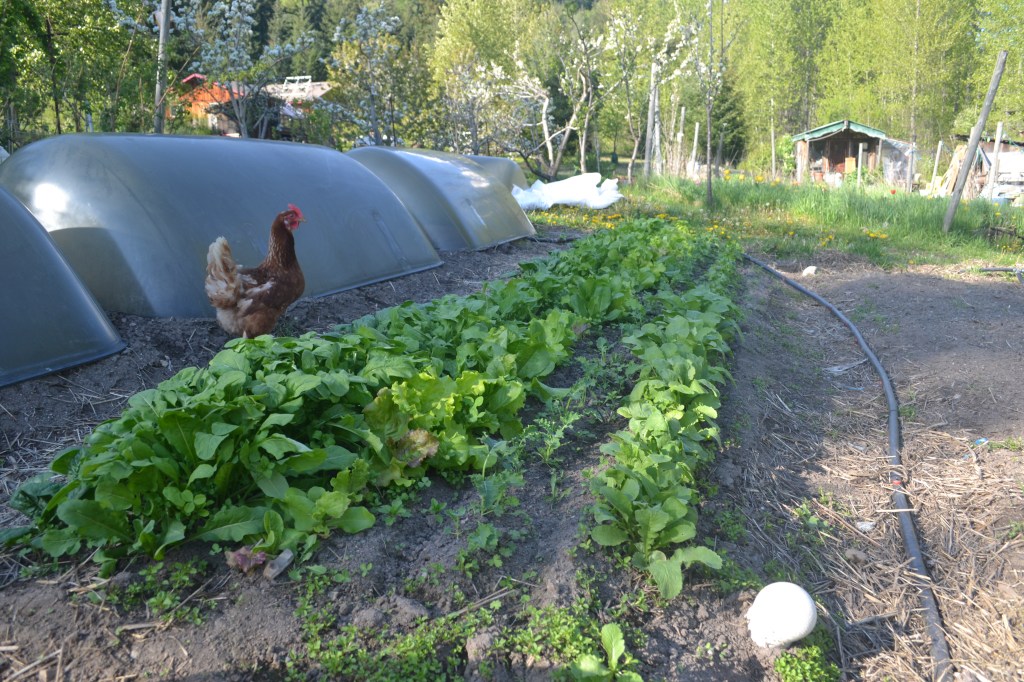
    There are obviously so many factors to consider: The bottom line is that you have to treat all your plants like dependents and provide the best care for them from the elements as possible. You have to guide them through life, like children, until they are strong enough to go at it with little intervention. You can never assume anything, be complacent or lazy. What if it was your infant out there? How would you care for it?
     

  • My top 10 best farming and gardening practices

    My top 10 best farming and gardening practices

    10 . BE PASSIONATE. Always remember despite the ups and downs you are doing something that you LOVE to do. If you don’t, the negative results will come through in your product and others will ingest that. Treat it as a lifestyle not a job. If you’re in it for the money, you’ve chosen the wrong profession. Expect joy, disappointments, successes and failures.

    9. SET REASONABLE/ ACHIEVABLE  GOALS.   It’s so easy to take on too much and to try to grow everything. Just because you planted a ton of seedlings and tilled a huge garden bed, doesn’t mean you can maintain it. Focus on what you do best and keep it simple.  Create a niche  and take baby steps.

    8. TREAT PLANTS LIKE DEPENDENTS. Plants are living entities that require food, water, shelter, love and care and then there’s the point where they mature and you have to let go by harvesting, letting  go to seed, and waking up one fall morning to see that a frost has killed off all your annuals. Just like kids, adolescents and adults, it’s all a cycle of life.

    7 . SAVE SEEDS. There’s often a single plant that out-performs the rest. Let it go to seed, collect and store for the following year. That’s exactly how humans created an agrarian society and prospered. Food security and biodiversity are now more important than ever.

    6. KEEP YOUR OVERHEAD LOW. There are all sorts of fancy gadgets, expensive planters, machines and tools you will need once a year. Plants couldn’t care less. Borrow, rent, fix and improvise.  Be efficient and devise ways to save time. Most farms go bankrupt, don’t be a statistic.

    5. KEEP IT NATURAL.  Look to nature for inspiration and explore organic, biodynamic and permaculture methods. Remember that a garden is part of the ecology. Consider birds, insects and animals are all part of the cycle. Mother Nature is the wisest gardener of all.

    4. BUILD YOUR SOIL. Even if your planting in fertile ground, plants take nutrients and once you harvest you’ve created a deficit. Build and maintain a compost pile, rotate your crops, plant cover crops and nitrogen fixing legumes.Test your soil occasionally and amend as needed. Good soil is the foundation of a healthy and bountiful garden.

    3. KEEP LEARNING. Its literally impossible to know it all. Read, experiment, discuss, research and always be interested in finding out more. Teach others as that re-inforces your own knowledge.

    2. SHARE.  Whether it’s your experiences, successes, failures or the final tasty product.  That’s what creates a healthy garden and farm community. Use the barter system. Someone else has too much or too little compared to you so trading balances things out.

    1. MULCH. This simple technique will save you hours of weeding and watering, while preventing erosion , encouraging beneficial micro-organisms, creating humus and  future soil.

  • Whats All The Fuss About Garlic?

    Whats All The Fuss About Garlic?

    There aren’t too many plants or food items that gets growers more excited than garlic. Sure, some folks get mushroom fever in the fall, and cannabis is all the rage, but garlic gets almost all gardeners hyped.

    Why? After all, it’s just another onion (allium). Onions don’t command upwards of $15/lb. I’ve never heard of a Leek Festival. Apparently the labourers who built the pyramids were partially paid in garlic — I don’t think that shallots would have even got the Sphinx completed.

    Garlic is easy to grow, but it takes some practise to get big high quality bulbs. The most important thing is to start with very large locally grown cloves that are proven and acclimatized to our region.

    Never attempt to plant (or eat) store-bought imported crap, especially from China. Most of it is bleached, irradiated and fumigated to prevent sprouting. It could be years old and grown in a toxic environment. Yuk!

    I truely believe the Pemberton to Lytton corridor grows some of the finest garlic in the world. In all my travels, in which I’m always scouting for garlic at markets, I have never seen or tasted better. We are fortunate to be able to grow both the more hardy and flavourful hardnecks and the more typical softnecks grown in the south. We are blessed with mineral rich soils, pleasant weather in October for planting, just enough insulating snow, an early spring, ample rain into June and a hot dry summer to force bulbing and easy harvesting. The most perfect scenario!

    My interest in garlic happened unassumingly about 25 years ago by reading a book called the Garlic Testament. It was a zen and the art of growing garlic type novel written by a hobby garlic farmer in New Mexico. It was part informative, part biography, part philosophy. I don’t think it even comes close to the best book written on the subject, but the lifestyle intrigued me. That autumn, I bought 5 lb off an old hippie friend who lives on the Highline Road and the rest is history. I now grow over 12,000 bulbs.

    The local homesteaders of the 60’s, 70′ and 80’s were probably unaware that the were planting the seeds of a future craze. The Rocombole Variety was introduced by the “back to the landers” between D’arcy and  Seton; the Red Russian from the Doukhabour settlement up in the Haylemore and Barkley Valleys; the Porecelains from the commune at the Langstaff Farm in Birken.  If you’re a misfit, garlic is the crop for you.

    Nowadays, everyone with a garden has caught the fever. Take a drive up the Meadows and you will see lots of patches, big and small. And why not? It’s easy, healthy, tasty and gets people excited, talking and posting photos on social media… about a bulb in the onion family. Go figure.

    The Annual Garlic Festival , Saturday August 25th at Willowcraft Farm in Poole Creek (Birken) is being sanctioned and promoted by the Pemberton Arts Council this year. Everyone is welcome after 4pm. There will be food, drink, live music and of course… Garlic!