Tag: mike roger

  • Silly Gardening Mistakes

    Silly Gardening Mistakes

    Trial and error is a necessary and inevitable part of the learning curve for all gardeners.There are so many variables it’s impossible to always have 100% success, no matter the experience. Even when you think you have something figured out, you usually find you could have improved on your method, or Mother Nature throws your theory out the window.

    Luckily the internet with its blogs, scientific studies and You Tube provide a wealth of information. This can also get overwhelming and even provide misinformation, so read between the lines, keep it simple and my best advice: look to nature. Perhaps it’s unfortunate I didn’t have the luxury of the internet in my rookie years and even when things came online, we didn’t even get service for a couple decades. In the beginning I had one resource – “The Encyclopedia of Country Living”. A thick hippie homesteading bible from the 70’s, complete with anecdotes, recipes and preserving methods. Maybe it was a blessing as it forced me to experiment more, simplify, improvise and get my cues intuitively. One thing for sure is I made a lot of mistakes and learned from them. Improvements to techniques are constant, and mis-steps still occur. I try not to make the same blunders twice. I have compiled a list of common lessons I’ve learned, often the hard way.

    START SMALL.

    Biting off more than you can chew can end up being overwhelming. Planting seeds is the least labour intensive part, so it’s easy to get carried away. Don’t buy too many packages, there’s often hundreds of seeds in each. After all, it’s supposed to be fun even amid failures. If it’s no longer enjoyable, scale down or find another hobby.

    GROW WHAT YOU LIKE.

    If you don’t like Brussel sprouts, do you really want to tend them until Thanksgiving just to give them away and lie about how good they are? If you like something grow an abundance and learn how to perfect it and preserve it.

    PLANT FOR YOUR ZONE.

    Why bother growing something that will struggle and/or require extra protection. Ask your neighbours what does or doesn’t work, figure out your microclimate before you push the boundaries. If you notice that no one in your area grows a particular type of something its probably because someone else tried and failed or it’s just too difficult.

    SEEDING TOO EARLY.

    It’s easy to get excited and impatient in the late winter. There is an optimum sowing window and it varies depending on the plant. Problems can arise such as outgrowing their cell and needing up potting, weak leggy plants needing more light and nutrients, susceptibility to pests and diseases, over and under watering, and of course unnecessary labour. Sometimes you’re better off waiting and direct seeding. avoiding all those issues. Some seed packages will dictate what period to plant, listing the days before last frost or growing days required to harvest. This is still variable depending on your location, so again, ask your neighbours their schedule.

    PLANTING TOO LATE.

    Conversely getting things out late may result in a poor harvest. If you’ve “put the cart before the horse” by not having your beds prepared when your seedlings are at their prime for transplanting, this will affect the health and wellbeing of the plant’s whole cycle. There is also a transplant shock, and hot dry summer weather that can set things back to consider. Protecting your plants from various elements may be needed and change seasonally. Timing and knowing the growing season depending on the plant comes with experience. Expect some failures.

    ADJUST YOUR SCHEDULE FOR THE WEATHER.

    Planting in hot, sunny , dry or windy weather is not recommended. Nor is spreading soil in the rain, tilling mud or dust, mulching before it rains or pruning while flowering or when the sap is running. Some biodynamic farmers take things further and adjust for solar and moon cycles. Watching the weather is common sense for all gardeners.

    LIMIT WHAT YOU GROW.

    It’s best to do a few good things well than struggle with too many things going on. Plant what you can manage, and use efficiently. Succession planting can ensure a continuous crop of quick growing veggies such as greens or radishes as opposed to a huge patch of bolting lettuces and then nothing. Don’t forget the biggest and most common rookie mistake – planting too many Zucchinis!

    AVOID COMPROMISED PLANTS AND SEEDS.

    Plants have a life cycle and seeds have a shelf life. If a plant is sick and hasn’t been tended properly you will inherit all their problems and perhaps create more. If seeds are outdated or haven’t been stored properly you will be at a disadvantage from the get go. A good compassionate gardener can often nurse back a sick plant, but why take the risk and hassle as a beginner.

    BUILD YOUR SOIL.

    Everything your plants need, except for light, is in your soil. It is the foundation of every successful natural garden. Investigate nutrients, micro organisms, amendments, mulches and cultivation methods. It’s endless what you can learn and the more you do the better off your garden will be.

    RESIST UNNATURAL QUICK FIXES.

    By this I mean the use of pesticides and herbicides. Figure out the root causes, and find organic solutions. There are usually a multitude of natural alternatives. It often takes some time to regain a natural balance and eliminate the issue. Be patient.

    DON’T PROCRASTINATE.

    In gardening there is usually a short window to most optimally do a necessary task. The longer you wait the more difficult and time consuming most of the following steps become. If you have the opportunity, just do it right away.

    BE RESOURCEFUL.

    It’s easy to spend many times the value of your crop on exotic varieties, greenhouses, shiny tools and fancy gadgets. Your plants couldn’t care less. They just need the loving care of the gardener and that’s something you can’t buy. Buy used equipment, recycle and improvise. That’s what all the old timer gardeners do.

    BE CLEAN.

    Remember all it takes is a single spore or a mating couple of pests to exponentially turn into an infestation. Avoid bringing outdoor soil indoors, sterilize your growing area, disinfect your tools and wash all your recycled containers. It’s all extra work but well worth the prevention of potentially big problems.
  • The Honour stands of Birken

    The Honour stands of Birken

    The Birken / D’Arcy corridor is unique to the Sea to Sky Region. Unhurried, non-commercial, safe, sparsely populated and relatively unchanged throughout the nearly 3 decades I’ve lived here. In fact, there is less here now than there was back then. Its downtown consists of an old resort at Gates Lake, open for a few months, and a telephone booth (there is no cell service). The Demographic is also interesting. It’s more affordable and out of the way and therefore attracts misfits, homesteaders, bohemians, red necks, hermits, draft dodgers, hippie relics, adventurers and commuters to Whistler. There are few, if any, employment opportunities, therefore those who stick it out have become resourceful, artistic and enterprising.

    The climate is more arid, being on the cusp of the interior and in the rain shadow of the Coast Mountains. Spring comes early.  We see more sunny days, warm days, and cool evenings. Its narrow valley is  protected by steep mountains. It is not a  conventional farming community like Pemberton with acres of flat tillable ground. It is however a great hobby gardening area. Its soils are well drained, mineral rich and ideally suited for fruits, berries, and garlic. Its waters are crisp and clean. I don’t believe a single person uses pesticides. It is sought after for bee keepers for this reason as well as its natural bio-diversity.

    PIC 5 plant sale

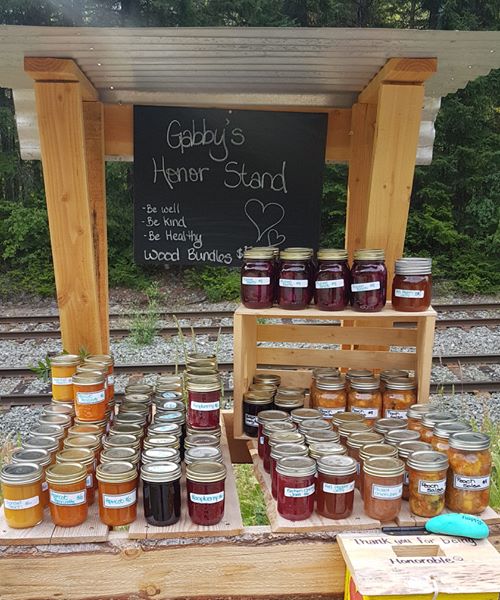
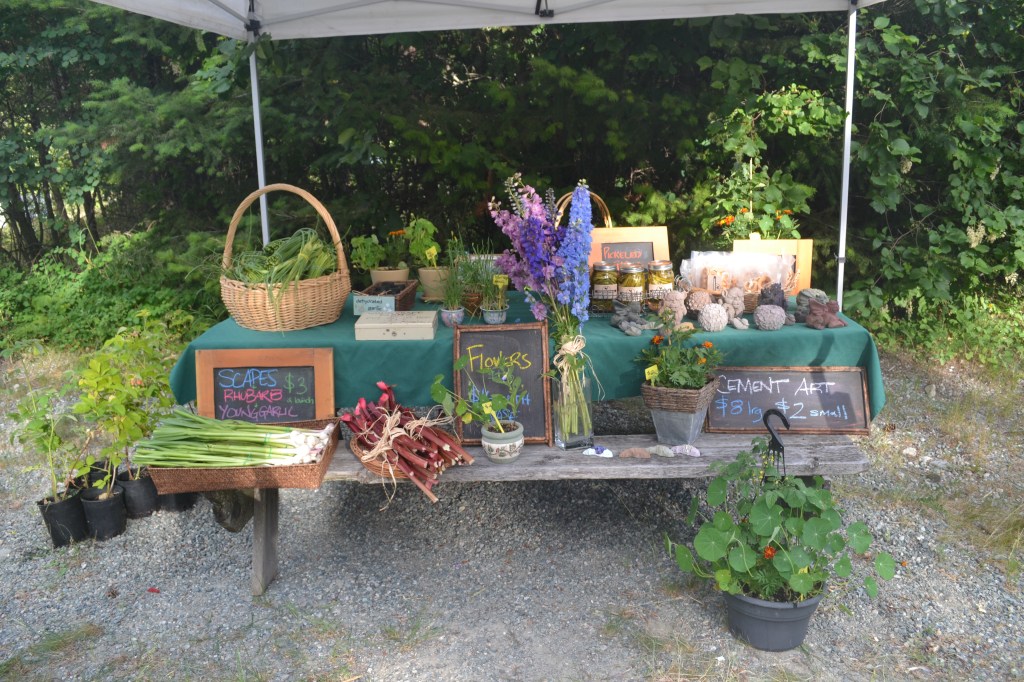
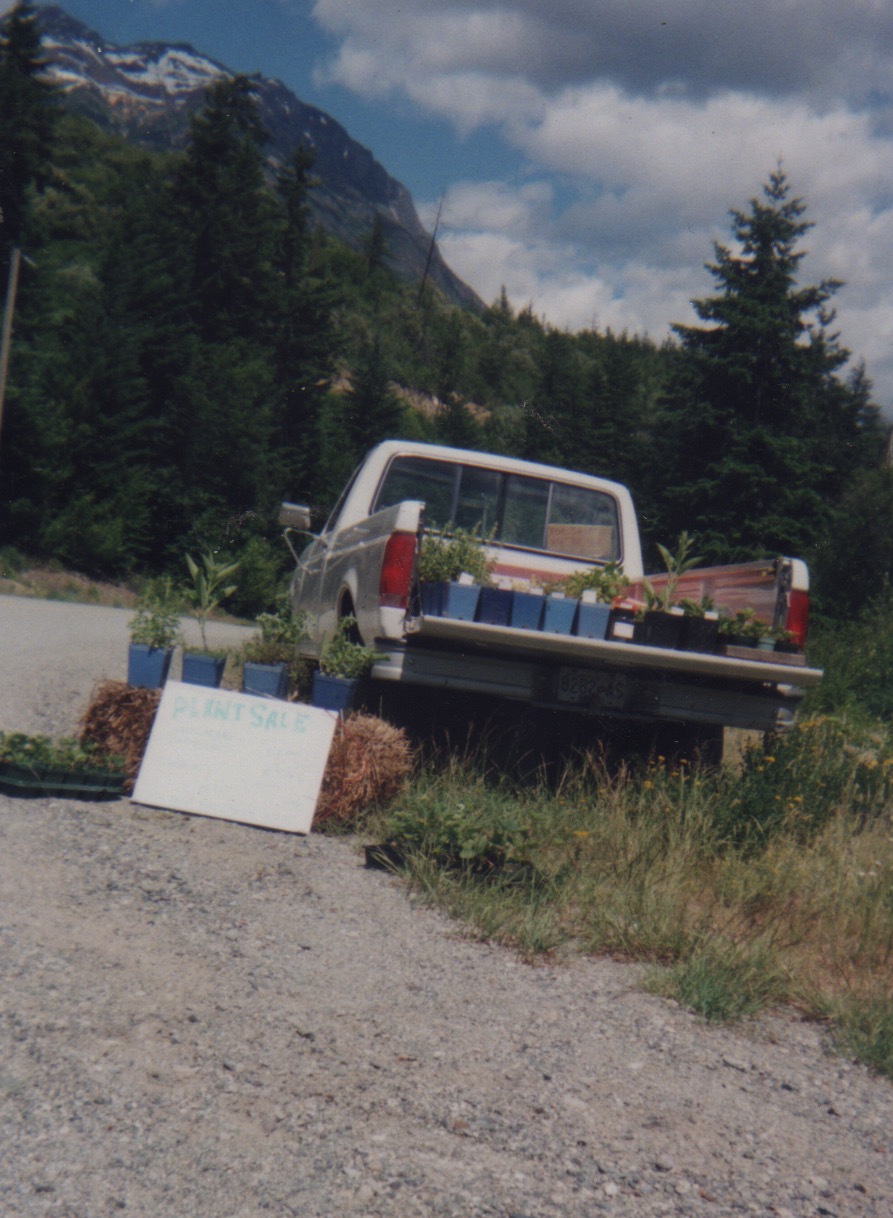
    I started putting plants and surplus veggies at the top of my driveway with a jar for cash many years ago, mostly for my neighbours. The above photo is circa 1995. I called it the Beer Stand back then. If I had enough for a case for the weekend it was a successful week. Over time it got consistently busier and we added more products. It became the Entertainment Stand where, in good weeks, we could go to a restaurant or even a concert. Our farm is now a registered business and after a good year we can take a vacation at the end of the season. Keeping it stocked is now a part-time job (farming, of course, is full-time), but I have to say it’s the best job I’ve ever had.  I joke when being leisurely that I’m currently working my job . The operating costs are extremely low so every sale is a bonus. Farming itself is extremely labour intensive with a low profit margin and high risk. We could never afford to pay someone to sit and serve customers. It’s really the only viable way of doing business in a rural area. If we bring perishables back from the market they quickly go up there in the fridge. We can offer an ever-changing wider selection of items than we would at the farmers market, can keep things fresh and pass our cost savings on to the customer. Win, win, win!

    Generally people are honest and since it’s the honour system, we accept e-transfers and IOU’s. Someone, who we caught pinching out of the change jar, returned years later with a letter of apology and a $50 bill. This restored our faith in humanity and the honour system. What comes around goes around.

    115823217_10157015108455755_4358984688747848677_o

    Birken has now become a valley with many honour stands offering everything from jams to fresh pasta to firewood. It’s a place of cottage industries, where hobbies help many with spare cash. They range from tents, and  permanent shelters to coolers. Many interested in setting up their own stand have contacted us wondering if we would be offended by the competition. We look at it the opposite way. The more the merrier! It has started to become a destination place for a casual drive picking up things along the way.  Those coming up for a swim in our many lakes can grab some fruit to munch on. Campers and boaters can pick up a fresh bouquet and something to add to their dinners on the way home. We’ve had nothing but positive feedback. It reminds many of their country childhoods and a simpler time when everything was local and fresh and neighbours shared.


  • Chickenisms

    Chickenisms

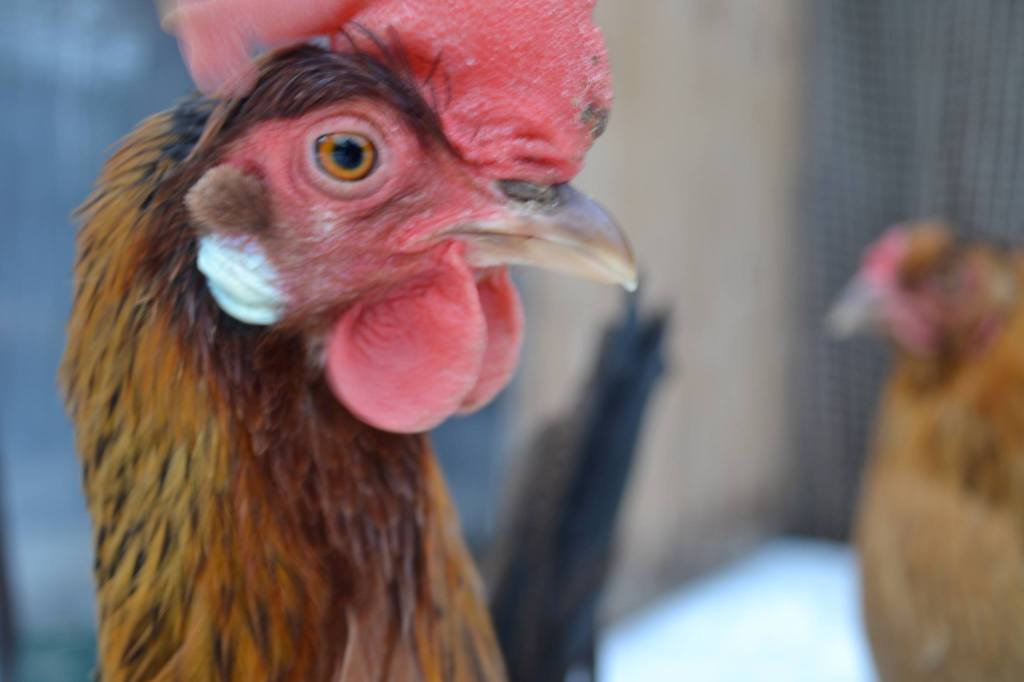
    I know from the demand  following the pandemic, there are lots of new chicken raisers out there now. Many of them it seems are females (nurturers) trying to get their reluctant partners (practical) to get on board and help them set it up. The learning curve is steep and I’m sure there has been quite a few trials and tribulations. Raising chickens can be fun, frustrating and eye-opening, just like life in general. With this familiarity comes the realization that chickens offer a philosophical and social microcosm, especially within the English language. I believe there are more parallels attributed to chickens than any other farm animal. I am going to run you through just a small portion of sayings about chickens and how they relate to us.This is a short scenario about new Covid-inspired chicken farming couples.

    First of all many of you have been COOPED UP, with the lockdown as opposed to RUNNING AROUND WITH YOUR HEAD CUT OFF as per usual. So with no HEN PARTIES and a desire to be more self-sufficient you thought you would WING IT and and take some chicks UNDER YOUR WING.You wanted  to play MOTHER HEN  to someone other than your homeschooled children before they FLY THE COOP.  Your husband may have CHICKENED OUT but you PLAYED CHICKEN with him instead, stating not to PUT ALL YOUR EGGS IN ONE BASKET when it comes to food security. Being NO SPRING CHICKEN,  and knowing the PECKING ORDER, he was eventually HEN-PECKED to the point of having to build a coop. Doing the math, he realized that the cost would not be CHICKEN FEED. His calculations looked like CHICKEN SCRATCH on paper and the numbers didn’t add up. The CHICKEN AND EGG SITUATION is that raising chickens could actually cost money as you CAN’T COUNT YOUR CHICKENS BEFORE THEY HATCH!

  • Acclimatization, zones, and how plants adapt to weather

    Acclimatization, zones, and how plants adapt to weather

    You know when you go on a tropical vacation in the winter and at your destination, the locals are wearing hats, long sleeves and pants. You strip down, head to the beach only to get sunburn and heatstroke? Eventually, after a week, you get used to it. Upon return, that first blast of cold at the airport feels like the Arctic, yet people are wearing shorts!

    Plants experience the same affect, perhaps even more because it happens gradually at a cellular level. The more robust the cell walls become, the hardier the plant.

    Every living thing has preferred conditions. Plants are grouped into zones to help guide gardeners to choose plants that will survive in their climate. It is based on the worst weather extremes for the area: Coldest temperature, number of frost free days and exposure. It’s good to know your zone before you waste your time and money on something that won’t thrive. Zones can be pushed higher by starting plants indoors, protecting them with cloth, overhangs, windbreaks, a south facing wall and   greenhouses. Global warming is also changing things and most areas will be up-zoned in the near future.

    Microclimates exist in all zones. Sunny south facing protected areas can be a full zone or more higher than a cold, windy, shady frost pocket. Understanding your microclimates on your property can determine whether you will succeed or not. It’s something you need to constantly pay attention to, and even make notes, if you have to. The smallest changes can make a big difference.

    Slowly, plants need to adapt from one environment to the other. Our intervention is called “hardening off”. Plants started indoors are used to the warm cosy, calm and diffused light. If you put those out right away they will most likely get shocked by cold nights, wind, pounding rain and scorching sun. The trick is to, over the course of several days, slowly leave them out in their new environment a little more each day, paying attention to extremes in which case you will have to leave them indoors or add extra protection.

    When buying plants in the spring it’s good to ask the grower to what extent they’ve been hardened off, if at all. You may have to do it yourself. Something few consider. Many tropical plants in Florida, grown for export as houseplants are raised under shade cloth, not because they don’t tolerate sun, but because they will eventually live in someone’s living room. It works both ways.

    When to plant your starts or seeds outside is also tricky. Seed packages are only a rough guideline as they can’t possibly know everyone’s circumstances. Even experienced gardeners can’t rely on calendar dates, as every year is different. It’s part intuition, part trial and error and partly luck. Those in tune with nature will know when to plant something by biological clues related to the weather, like when the crocuses sprout, the ice on the lake melts, you see the first Robin or the forsythia blooms.  This study is called Phenology  and is the most accurate method. The even more in tune will take biodynamic guidance into account such as moon cycles, the almanac  and spiritual doctrines to plan schedules, making things  even more complicated to organize.

    Regardless, all good farmers are aware of the weather and check the forecast constantly.

    Starting some things early can be as detrimental as starting them late. A root-bound start can suffer and be stunted. A plant left too long indoors on a windowsill can get leggy and fall over searching for the sun. It’s good to know how many days it takes a particular variety to mature. Transplanting earlier may serve no benefit.

    Most plants will survive marginal temps above freezing. Few do anything and stay in a state of statice between 1-6 degrees celsius. Some tender annuals such as basil will perish at a damp 1-2 degrees. Transplanting on a windy day is terrible as it knocks them over, and sucks the moisture from the plants and soil, through transpiration. Some things that have a short lifespan may need successive planting to stagger the harvest. Cool loving crops may only work in spring and fall. and will quickly bolt in the summer. Late maturing species may need to be brought indoors to finish off or  to spend their dormancy. Hardening off is also required to adapt in this case , now humidity and introducing pests indoors becomes a concern. Plants are fickle,  you need to get to know them personally.

    There are obviously so many factors to consider: The bottom line is that you have to treat all your plants like dependents and provide the best care for them from the elements as possible. You have to guide them through life, like children, until they are strong enough to go at it with little intervention. You can never assume anything, be complacent or lazy. What if it was your infant out there? How would you care for it?


  • Sobering Advice for New Impulse Gardeners

    Sobering Advice for New Impulse Gardeners

    first gardenOne of the few businesses that has and will continue to thrive throughout the Covid crisis is the garden and small farming sector. The sudden interest  in our food security, sustainability and living off the land  is at a level I have never seen before. This is great. It is something that anyone involved in small farming has been advocating and working towards for a long time. I have seen the progression from the early farmers market days, trying to convince consumers what organic meant and  that local was best, to the vibrant markets we have now. It’s been a slow and steady growth, business-wise. Something is different now – maybe self-isolation has give folks time to think about what’s really important in the game of life, how vulnerable and dependent on the system we are.

    I would never discourage anyone to garden. Even a few patio planters, home landscaping or a herb garden can bring anyone joy. Warning, it can be addictive. There’s always more to learn. It’s grounding and healthy for body and mind. Do it.

    What I’m seeing as the result of the pandemic, is a mad rush to become self sufficient in a very short period of time. People are “panic buying” chickens, livestock, incubators, fencing, potting soil, seeds and any garden supplies as if it were toilet paper. As a side hobby, gardening is awesome, but the reality is you will most likely spend more on retail supplies and work hard for a small harvest. You will have successes and even more failures. You will enjoy the fruits of your labour so much it will seem worth it. Unfortunately, it won’t make you self-sufficient right away. Sorry.

    I’m not quite there yet, myself and that’s after 27 years of homesteading, with 5 years of schooling and lots of  related work and business experience. My first veggie garden was in 1994. It was a lot of work. I had mediocre results. There was no Google. I winged it. I decided I would try to live off what I grew. I lost 50 lbs, before I gave in to groceries and meat. Not advisable as a weight loss diet.

    I don’t like bursting people’s bubbles, because I have always said I live in one myself. I have learned mostly through trial and error, and it pains me to see others about to make the same mistakes I made through naivete and inexperience. I have the need to explain to those new to this way of life that it’s just not a short term process that can be accomplished in a season. For most small business plans, they say you shouldn’t see a return on your investment for 2 -3 yrs. For small farms change that to decades. Available land, infrastructure, supplies, labour and overhead will eat into any profits. If you plant a fruit tree you might not see a reasonable harvest for 8-10 years. Soil needs to be built up over several years. You need a rough plan, expect slow incremental growth and lots of long term commitment.

    It’s all possible with patience, capital, sweat equity and a good team.

    Study it as much as you want, it’s endless. The reality is you will inevitably learn from your mistakes and Mother Nature will always throw you a curveball or two.

    My advice is to start small with realistic goals and low expectations. Think about by whom and how everything will be maintained, especially if you plan to return to  your regular work in the future. Don’t “put the cart before the horse” by buying livestock before you have fencing and shelters or plants before your beds are prepped. Be patient. Timing is everything. Ask questions. Don’t overspend on fancy tools and gadgets from Lee Valley, exotic plants, and pricey greenhouses. Do a few things well instead of trying everything.  Be efficient. Think about how you can work with nature in the simplest ways.  Don’t bite off more than you can chew. Enjoy, it’s a long ride.

  • Blissfully Homesteading through a Pandemic

    Blissfully Homesteading through a Pandemic

    I don’t intend to downplay the seriousness of the present situation nor am I arrogant nor ignorant enough to suggest this will not affect everyone, including ourselves. My partner and I have been laid off over 2 months early and we rely on this income to get us through the lean planting and prepping season where were busy working and buying supplies with little income. We will have to adapt – something we are familiar with. “We will get by, we will survive”: an anthem and lyric from my favourite band.

    Rural dwellers, being more isolated, have an advantage right now and farmers are optimists – they have to be, as every year poses new and unforeseen challenges. Different hits and misses, but things always seem to work out in the long run. Just planting seeds, building soil or incubating eggs is a sign you believe in the positivity for the future. Theres no short term gain. It’s all for a benefit sometime down the road.

    Homesteading, by definition, is literally staying and working from home, something all others are being asked to do, many out of their comfort zone. Many of the practises the general public are being asked to do are commonplace for us. Farmers can’t be germaphobes, they are constantly exposed to bacteria, both good and bad. They also understand that such exposure builds up their immune system, same goes for plants and livestock. At the same time most understand the importance of disinfecting propagation rooms, equipment, and keeping stables and coops clean to prevent an outbreak of pests and diseases, which can get out of hand quickly. Once a problem is identified, it’s important to act quickly as the situation increases exponentially. Organic farmers will resist the temptation to completely nuke everything with chemicals – the idea is to regain a sense of balance, so nature can do the rest. You never get it all, just slow down and manage the overwhelming progression. Patience and persistence are the key. Sound familiar?

    Quarantine is another age-old practice. It’s always a good idea to separate sick plants and animals for the greater good of the rest. The difficult decision to cull is something we all have to deal with.  As Darwin observed long ago, it’s the survival of the fittest that lets the strongest genetics evolve. Sometimes you you have to let something special go, so others can live.

    Organic farmers know that Mother Nature has a tendency to spank those who challenge her natural balance. The worst outbreaks occur in monocultures and factory farming. Mad cow disease, avian flus, E coli, listeria  and now Covid 19 (apparently originating a dirty Asian market) are all examples of problems from an overcrowded, unsanitary, misguided system and unnatural methods.

    Stocking up, preserving and being prepared are the cornerstones of homesteading. Pantries and freezers are like safety deposit boxes. It’s a currency that rarely devalues and becomes more valuable when times are tough. It’s something that is an ongoing process, not something you rush and do over a weekend. Toilet paper however, is not a survival item. Any naturalist knows water, newspaper, moss or leaves will do in a pinch, pardon the pun.

    I’ve sometimes questioned my decision to live off the land, knowing if I did the math it would be much more economical to use my skillset and work as a landscape designer or operate heavy machinery, and buy food with a regular salary from regular sources. These options however didn’t offer to feed my soul. Working outside with nature is my happy place. In times like these, I have no regrets.

    So it’s business as usual on the farm, with the always-lots-to-do list to keep busy. We will easily and naturally do our civic duty to self isolate, keep our social (media) distance, practice hygiene, stay active outdoors, and offer and accept help from the community.  I just cleaned the chicken coop, I washed my hands thoroughly.


  • Winterizing your garden

    Winterizing your garden

    The crops are in, the first frost has decimated whatever was left, markets are over, but the work isn’t over yet. In fact, it’s often one of the busiest times for farmers. That last push is crucial, and it can be difficult to get motivated in the cool mornings and reduced daylight. Most farmers are close to burnout by this time. My partner and I like to take a well deserved vacation in November so there’s a real fire under our asses to meet that Halloween deadline. Besides the usual firewood stacking and yard clean up, I’ve posted my autumn to-do list:

    PLANTING:  Most people are stoked to plant in the spring, and busy garden centers at that time are proof. Fact is, the fall is the best time to plant and deals can be had. I like to plant perennials, spring bulbs and fruit trees. Garlic, of course, should always be planted now. They will stay dormant throughout winter and get the earliest possible start in the spring. Cool wet weather should get their roots established before the hot dry summer.

    PRESERVING SURPLUS: This is the time to use up what’s left. Pickle, make jams, freeze, dehydrate and juice. It’s a shame to see your hard work wasted. Trade, barter or give it away.

    DIGGING/STORING/COVERING TENDER PLANTS: If your favourite plant is pushing its winter hardiness zone, you will have to protect it or move it indoors. Perennials should be cut back and mulched, roses and hydrangeas should be hilled with dirt. Really tender stuff should be potted and slowly acclimatized to the indoors. We are busy at this time digging up hundreds of dahlia tubers and storing them in crates in our garage. Some root crops can be mulched and covered with plywood and harvested throughout the winter.

    REMOVING THE POLY FROM HOOP HOUSES:  If you don’t do this now, you will inevitably be shovelling and/or waking up to a collapsed greenhouse.

    SHUTTING DOWN AND DRAINING WATER LINES: If you don’t do this now you will inevitably be facing split lines and fittings in the spring. Roll up hoses and hang them up.

    SERVICE MACHINERY: This is the best time to fix broken stuff, maintain and winterize anything mechanical. Put it away in a dry spot.

    COVER CROP: Fall rye and legumes are excellent amendments and protect your soil from erosion and weeds. Plant them now and turn the green carpet under in the spring. Topdressing with manure is also an excellent idea.

    FERTILIZING: This is often overlooked at this time. Look for high potassium (K) to increase hardiness and Phosphorus (P) for early root growth in the spring. Feed anything that didn’t thrive and seemed depleted. If you soil tends to be acidic, lime now to raise PH as it takes many months to adjust.

    RAKE LEAVES: While this can be done in the spring, it’s easier to do now when they’re dry and they can be used as mulch or compost. Whatever you do, don’t burn them, you just smoke out your neighbours. Cleaning up under fruit trees is important to prevent the spread of  pests and disease.

    CLEARING AND BURNING BRUSH: With the leaves gone, its easier to brush cut. It’s also often the safest time to burn it.  Theres nothing better than watching “Hippie TV” on a cool autumn evening.

    PICK STUFF UP:  It’s a drag to find rusted tools and odds and ends when the snow melts.

    TAKE NOTES: While your memory is fresh, this is a good time to reflect on your successes, failures and what you plan to change next year.


  • My top 10 best farming and gardening practices

    My top 10 best farming and gardening practices

    10 . BE PASSIONATE. Always remember despite the ups and downs you are doing something that you LOVE to do. If you don’t, the negative results will come through in your product and others will ingest that. Treat it as a lifestyle not a job. If you’re in it for the money, you’ve chosen the wrong profession. Expect joy, disappointments, successes and failures.

    9. SET REASONABLE/ ACHIEVABLE  GOALS.   It’s so easy to take on too much and to try to grow everything. Just because you planted a ton of seedlings and tilled a huge garden bed, doesn’t mean you can maintain it. Focus on what you do best and keep it simple.  Create a niche  and take baby steps.

    8. TREAT PLANTS LIKE DEPENDENTS. Plants are living entities that require food, water, shelter, love and care and then there’s the point where they mature and you have to let go by harvesting, letting  go to seed, and waking up one fall morning to see that a frost has killed off all your annuals. Just like kids, adolescents and adults, it’s all a cycle of life.

    7 . SAVE SEEDS. There’s often a single plant that out-performs the rest. Let it go to seed, collect and store for the following year. That’s exactly how humans created an agrarian society and prospered. Food security and biodiversity are now more important than ever.

    6. KEEP YOUR OVERHEAD LOW. There are all sorts of fancy gadgets, expensive planters, machines and tools you will need once a year. Plants couldn’t care less. Borrow, rent, fix and improvise.  Be efficient and devise ways to save time. Most farms go bankrupt, don’t be a statistic.

    5. KEEP IT NATURAL.  Look to nature for inspiration and explore organic, biodynamic and permaculture methods. Remember that a garden is part of the ecology. Consider birds, insects and animals are all part of the cycle. Mother Nature is the wisest gardener of all.

    4. BUILD YOUR SOIL. Even if your planting in fertile ground, plants take nutrients and once you harvest you’ve created a deficit. Build and maintain a compost pile, rotate your crops, plant cover crops and nitrogen fixing legumes.Test your soil occasionally and amend as needed. Good soil is the foundation of a healthy and bountiful garden.

    3. KEEP LEARNING. Its literally impossible to know it all. Read, experiment, discuss, research and always be interested in finding out more. Teach others as that re-inforces your own knowledge.

    2. SHARE.  Whether it’s your experiences, successes, failures or the final tasty product.  That’s what creates a healthy garden and farm community. Use the barter system. Someone else has too much or too little compared to you so trading balances things out.

    1. MULCH. This simple technique will save you hours of weeding and watering, while preventing erosion , encouraging beneficial micro-organisms, creating humus and  future soil.

  • Mulch: the key to successful gardening

    Mulch: the key to successful gardening

    I get asked a lot for gardening tips: what to do and not to do.

    These, of course, are never replied with straightforward answers. There are so many factors in such a dynamic environment that it’s never an exact science.

    However, if I could choose one word that always defines success it would be MULCH!

    A weedy bed is not only unsightly, it competes for sun and nutrients. Weeds are a breeding ground for pests and diseases. They usually outperform your desired crop and can physically and emotionally exhaust you. Just when you think you’ve tackled them they reappear with vigour. It’s a never-ending losing battle.

    Some say to use a sterilized potting mix and well-heated compost, but these lack the nutrients, micro organisms and minerals of real soil. Weeds will eventually be introduced by wind and birds anyways.Weed seeds can live in the soil for over 7 years, so why fight it? Mulch.

    DSC_0145

    A good mulch is a thick layer of almost anything bio-degradable.

    A light sprinkling serves no benefit. It has to smother the weeds completely. I use a good 3-5 inches of hay or bark mulch. Straw is superior over hay because it lacks grass and weed seeds but is difficult to obtain and expensive. I prefer rotting hay from square bales left outside for a few months . The weed seeds have usually decomposed and the hay is already on its way to becoming soil, full of moisture and bacteria.

    If weed seeds still persist, who cares? As long you continually keep mulching, it’s not an issue.

    Fir bark mulch is superior to cedar, as the latter contains a natural growth-inhibiting preservative, creosote.

    The best, I find, are the wood chips from the tree services that usually contain a good mix of hard and soft woods and promote mycelium fungus that is beneficial to the soil.

    You can use so many recycled items to mulch. Lumber tarps are temporarily good for smothering the grass on a new field. Newspapers, feedbags and cardboard work great between rows and even better with a layer of hay on top to keep it down. Landscape fabric works great and breathes. We use a corn-based bio-mulch – essentially a compostable black plastic film, on all our beds. We just poke a hole in it and plant. We install a drip system of watering under the bio-mulch, otherwise only the plant bases get moisture. Besides pulling a few weeds that grow in the same hole we really don’t have to weed it. We can focus on fertilizing , staking and harvesting.

    Mulching is best when its done after a good soak and when the soil has warmed.  You don’t want to preserve the cold dry ground. It’s also best when your seedlings or transplants are well established.

    Be gentle at first and don’t be shy. Use it liberally. It’s hard to over-mulch but detrimental if there is still exposed soil. In that case you’re promoting weeds and losing moisture. Go heavy.

    DSC_0146

    A popular gardening trend in permaculture is the no till method. This is when instead of tilling your soil every season and continually between rows, you just keep mulching and plant directly in it. Tilling may make the ground temporarily weed-free and easy to work, but it also disrupts the micro-ecology and exposes the soil to wind and water erosion.

    In nature the soil strata is layered. Healthy soil in the wild has a top layer of duff or humus on the surface from decaying  plants, leaves and branches, therefor creating a layer of composted top soil followed by mineral rich sub soil and then gravels.

    Mother Nature has the perfect recipe for the richest medium providing the best protection, drainage and nutrients in layers for the plants to access, encouraging  them to send their roots deeper to get what they want and need. When in doubt always look to nature for guidance. Mother knows best.

    An hour of mulching will save you several hours of weeding even more of watering. It will prevent erosion,  the leaching of nutrients and will eventually  feed and condition your soil when it’s tilled in, or better yet, left for the following season. Lift up a section of mulch and you will find worms and a layer of their super nutritious castings. Mulching is the very best thing every gardener should do. Once you’re on the program you will never go back to exposed soil gardening again.


  • The Atypical, Unfair Economics of Farming.

    The Atypical, Unfair Economics of Farming.

    Q : How do you make a million dollars farming? A: Start with 4 million!

    As far as business models go, none is as bizarre as farming. There are very few winning formulas. It’s either large scale corporate agribusiness (which has its fair share of hidden costs) or struggling small-scale mom-and-pop operations. There really is no middle ground. It’s feast or famine, so to speak.

    The reality is our food system is broken and has been heavily subsidized since it became a transportable industrialized commodity. The sticker price on food rarely reflects its true value. Farmers markets offer a more equitable price point, but the math still rarely adds up.

    Competition in most sectors is healthy to keep businesses up to date and prices in check. In farming, it’s devastating. Huge mechanized monocultures, using underpaid labour, utilizing relatively cheap petroleum for fertilizing, harvesting and transportation are no match for a local farmer growing the natural way. Throw in crop insurance, subsidies, GMO’s and shareholders and it’s a lose-lose for both sides. One model is unsustainable environmentally the other is economically unfeasible. It’s a David vs Goliath scenario. That’s why the local, organic and fair trade movement has developed to help level the playing field of this uphill battle. The disparity gap is massive.

    When I asked for something  pricey, my mother always said “Money doesn’t grow on trees.”  Eventually I proved her wrong, but she had a point. A fruit tree, for example, may not bear a sizeable crop for 8-10 yrs. During this time it will need annual maintenance and constant care. Same can be said for the fence that protects it, the irrigation system that waters it and the root cellar to store the fruit. Everything is a long term investment. It is said you plant “pears for your heirs.” I call my  fruit trees my RRSP’s.

    So why would anyone even attempt to become a farmer?

    Passion, sustainability, and the romantic notion of working with nature in the outdoors are all good reasons.

    Yes you can eke out a living like the pioneers did, but with today’s expenses, it’s hardly a get rich quick scheme. Most thriving farms either started out small and slowly grew within their means, such as in my case, or they were inherited complete with infrastructure. Other options are leasing land, buying into a co-op or renting out your land and hiring farm hands while you work your real paying job.

    The big dilemma surfaces eventually: Do you stay small, subsist and struggle, or do you invest large and go big, making it even more risky. Either way is tough and requires  hard work… Almost all will need winter employment and additional sources of income. When doing our books, I often get discouraged. My wife has to remind me sometimes we’ve chosen a lifestyle not a career.

    Can you imagine going to the bank and asking to borrow money for a farm start up in Pemberton with your list of capital projects and expenses? A couple million for the land and a couple more for housing, outbuildings, power, irrigation, equipment, supplies etc. That doesn’t even include the operating costs such as labour, permits, insurance, taxes, fuel, tools, amendments and general overhead.

    Now you have to explain that you’re going to sell your produce at a few dollars per pound, provided the weather and other environmental conditions co-operate. Our short growing season rarely offers a second chance. Over half the year brings in little or no income. Every concept is risky. Almost everything is perishable with a short shelf life. Now you have to market your goods. Do you get a fair price toiling away a couple days a week at farmers markets, drive all over delivering to restaurants, or do you succumb to the middle man and sell it at a discounted wholesale price? The middle man can make as much or more on the transaction alone. Any potential investors out there interested yet? I can picture the Dragons tearing a strip out of that business plan.

    So how on earth does one make a living farming? Hard work and determination is needed, but still won’t guarantee success alone. Diversifying, simplifying, creating a unique niche market, marketing, networking, packaging, bartering, preserving and value-adding your harvest into products is really the only way to justify small scale farming. Farmers should spend as much time in the kitchen, office and garage to be successful. Reinvesting, organization, maintenance and long term planning are essential.

    There is a relatively new category of farmer that seems to be proliferating: “Le Nouveaux Riche Fermier.” They are recognized by their huge mansions set in the middle of the field, a long tree lined paved driveway with a large elaborate locked gate. The obligatory white picket fence, brightly painted barn and shiny tractors. The owners are rarely seen outdoors and never with dirty fingernails. It’s often hard to see what they’re doing from the road. So what are they cultivating anyways? Tax breaks and the right to brag that they are trendy farmers at the country club, I suppose. If you assume all that bling was acquired through farming, you’re fooling yourself. It’s a false front.

    Just because you can afford to buy a farm doesn’t automatically make you a farmer. They are actually taking away usable land and degrading true farm culture.

    If you’re in it for the money, you’re literally wasting your time. There is not a single small-scale farmer that tracks their time and would ever attempt to calculate a wage. For them, their lifestyle is priceless. There is no point in tying to make sense of the economics. You work your ass off and hopefully reap something from what you sow.

    So the next time you wonder why that pineapple from the Philippines is cheaper that those local grapes at the farmers market, just remember your comparing apples and oranges.