Tag: melissa darou

  • (Now you can) get your greens salad

    (Now you can) get your greens salad

    Spring comes on fast and furious. One minute (or month), it seems, I am scratching seeds into half-thawed ground and the next I am watching  Red Russian kale and arugula flower and spinach go to seed.

    I have watched crocuses, hyacinths, tulips, lilacs, forget-me-nots and dandelions bloom, and now am into rhododendrons, lupines, alliums, columbines and irises. The bees are happy at work, while ants are partying on my peonies.

    I’ve been relishing my time in the garden with a different rhythm, since COVID-19  interrupted life as we knew it. I sleep later, work during off hours when the kids are outside, and stay up at night watching videos about growing things. I drink coffee in the morning, but often forget to eat until later in the day when my hangry panic sets in. Thankfully, we are moving out of months of buying greens at the store into eating our own home-grown. 

    This is the salad I wolf down in the afternoon these days:
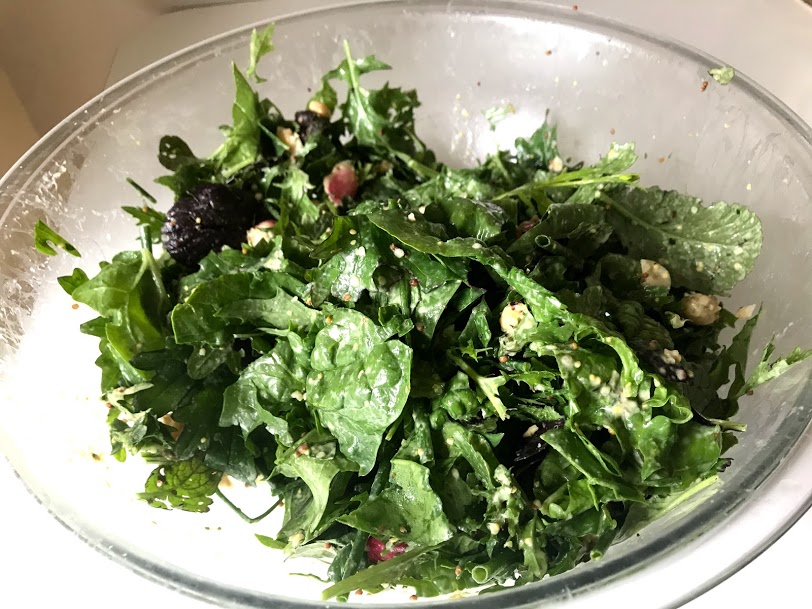
    Before

    Get yer greens salad

    Ingredients

    • Large bowl of greens (mine included kale, arugula, spinach and spicy mesclun greens today. Sometimes, I’ll add dandelion leaves. And my kids prefer romaine mixed with the darker wilder greens.)
    • Radishes, if you have them
    • A few green onions or chives
    • Herbs, if you have them (parsley, dill, cilantro or basil)

    Dressing

    • Large heaping tablespoon of grainy mustard
    • Large heaping spoon of tahini
    • A couple of tablespoons of hemp seeds
    • Splash of apple cider vinegar (mine is infused with dandelion flowers)
    • Splash of flax seed oil
    • Tablespoon of nutritional yeast
    • Splash of maple syrup or fresh local honey
    • Chopped garlic, if you have some (we’ve run out of last year’s garlic, so I used a sprinkle of garlic, hot pepper salt flakes instead)

    Directions

    • Wash greens thoroughly and chop or cut with scissors into bite sized pieces; Dry in salad spinner.
    • Whisk dressing ingredients in a large bowl, adding more or less tahini depending on how thick you want it.
    • Add greens, radishes and onions to the bowl with salad dressing and toss vigorously or massage with your hands.

    Add extras if you like. Try chickpeas, roasted yams, pumpkin seeds, toasted sesame seeds, smoked tofu, grated carrots or ginger, or red peppers.

    Resist the temptation to eat the whole bowl if you offered to make lunch for your partner. Enjoy ’til the next ravenous feast!
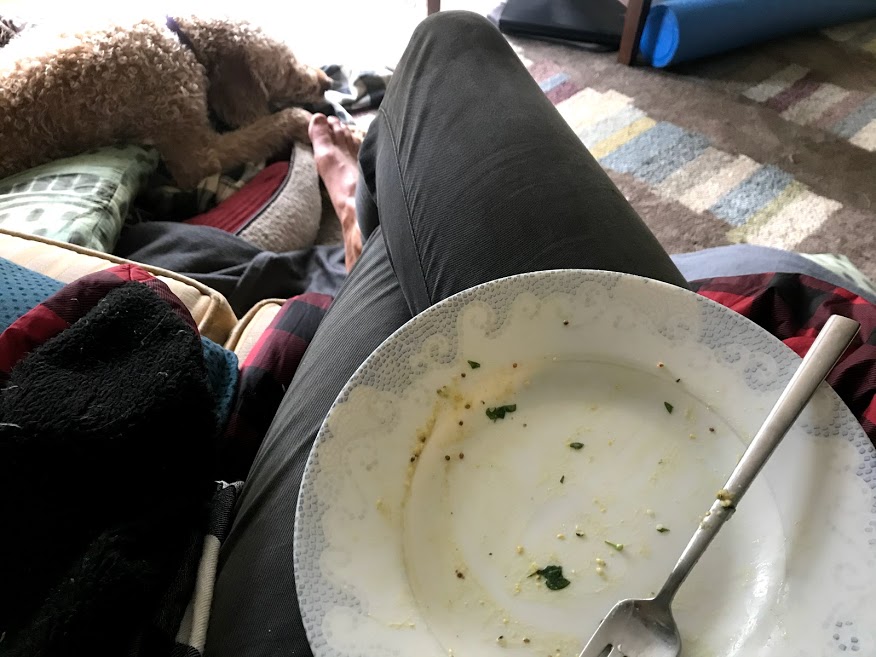
    After: empty plate, full belly, dirty garden jeans and happy dog at my feet
  • Munchy Munchy Cookbook for kids: review

    Munchy Munchy Cookbook for kids: review

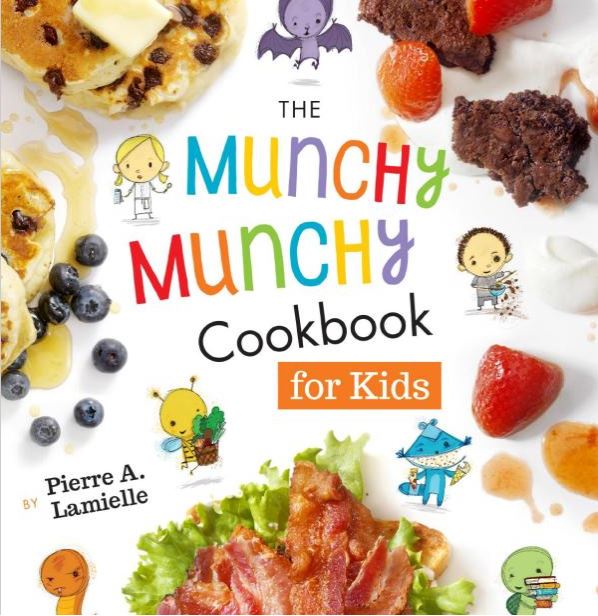
    My kids offered (er.. rather were bribed with a cookbook and kitchen privileges) to review the Munchy Munchy Cookbook for Kids by Pierre A. Lamielle. It looked and sounded like a lot of fun.

    Here’s our first shared book review featuring me (tonight, tired mom), Calian (10) and Kwaya (8). My additions are in italics.

    The book is pretty cool. It includes handy cooking instructions, a good variety of easy to make, but not dull recipes, safety tips and great illustrated characters.

    What did you like about the book?

    K: I thought it was a cool idea for the Munchy Munchy Bunch.

    There’s Sal, who has to follow a recipe; Pepper, who’s a hot mess; Ragu, who’s always hungry for anything and everything;  Ziti, who’s the absolute most picky eater of all time; Sage, who’s the ultimate food nerd; Rose, who knows how everything grows; and Bean, who’s here and there and everywhere.

    K: The very, very, very slow grilled cheese looked yummy. I did not get time to make it!

    C: I made the volcano eggs and pancakes. I wanted to make the brownies, too, but you wouldn’t let me.

    How did the recipes go?

    C: The volcano eggs didn’t turn out well. I didn’t follow the recipe that well. They were hard inside. I’d like to try making them again.

    Volcano eggs in progress

    C: The pancakes were the best pancakes I’ve ever made. And they even looked like the best pancakes.

    Good looking pancakes!

    I agree. C was home from school with a cold one day and made the pancakes. They tasted great, cooked easily, and would pack well for lunch.

    What else would you like to cook?

    C: I would like to cook the brownies. The Caesar salad looks good, but we don’t have the ingredients or any lettuce.

    What didn’t you like?

    K: The illustrations on the recipes were not my favourite. I couldn’t really tell what I was seeing.

    Who would you recommend this cookbook for?

    K: The book would be good for a person who has never cooked before: maybe someone who is 6 or 7.

    C: It would be good for someone like Gabriel in kindergarten to learn how to cook his first things. Older kids (like us) could use it without help. Younger kids could use it with parents in the kitchen.

    Anything else to add?

    K: Thanks for the book!

    I was impressed by the description of Familius, the global trade publishing company that published this book. They believe that the family is the fundamental unit of society and that happy families (of all types) are the foundation of a happy life. They publish beautiful books that help families live their 9 Habits of Happy Family Life: love together, play together, learn together, work together, talk together, heal together, read together, eat together, laugh together. What an inspiring mission!

    Update

    C made the brownies. They were delicious for one-bowl brownies with limited ingredients–chewy and crispy without being too chocolately. Another success!

  • Wonder really is a survival skill

    Wonder really is a survival skill

    I read this quote as I skimmed The Curious Nature Guide: Explore the Natural Wonders All Around You, by Clare Walker Leslie and it stuck with me. It’s at the heart of what I hope my kids get out of school… and life, really. 

    But maybe it’s for just that reason–how busy we are and distracted and disconnected we are–that wonder really is a survival skill. It might be the thing that reminds of what really matters, and of the greater systems that our lives are completely dependent on. It might be the thing that helps us build an emotional connection–an intimacy–with our surroundings that, in turn, would make us want to do anything we can to protect them. ~ H. Emerson Blake in the foreword to Wonder and Other Survival Skills

    It’s wonder that helped me survive the last year, too.

    Exactly a year ago, I quit my decade-long secure government job, launched myself into self-employment and simultaneously became really ill. I left work and needed my first of many blood transfusions a few weeks later. I’d been struggling with severe anemia for years and my condition had eluded a definitive diagnosis.  

    By February I received a lymphoma diagnosis and in March I was receiving life-giving and equally barbaric chemo and antibody treatments. 

    I worked in bed for the winter–one of the luxuries of self-employment– and in the spring began a slower version of gardening. 

    My year was all about survival, but also wonder. Wonder at the drugs that saved me, and the plants they were originally derived from. Wonder at my family, who I would love to live with for a long time, and would grieve so much to leave. Wonder at how sick I had become, how I’d fallen between cracks in the medical system, how I looked “fine” and pale when I was barely floating through my days with dangerously low hemoglobin– the oxygen carrying component of blood.

    And there was wonder at how ridiculously great and high I felt the first time I received a blood transfusion. Wonder at how my fingers and lips turned pink–how I was reanimated with blood. Wonder that strangers literally gave me the gift of life. Wonder at the cost of my drugs–$10,000 for two days’ treatment every month. Wonder that our health care system paid for them. Wonder at how much care was missing in treatment, and also wonder at how much care was offered from lab techs, ER and chemo nurses, and angel friends.

    HomeGrown

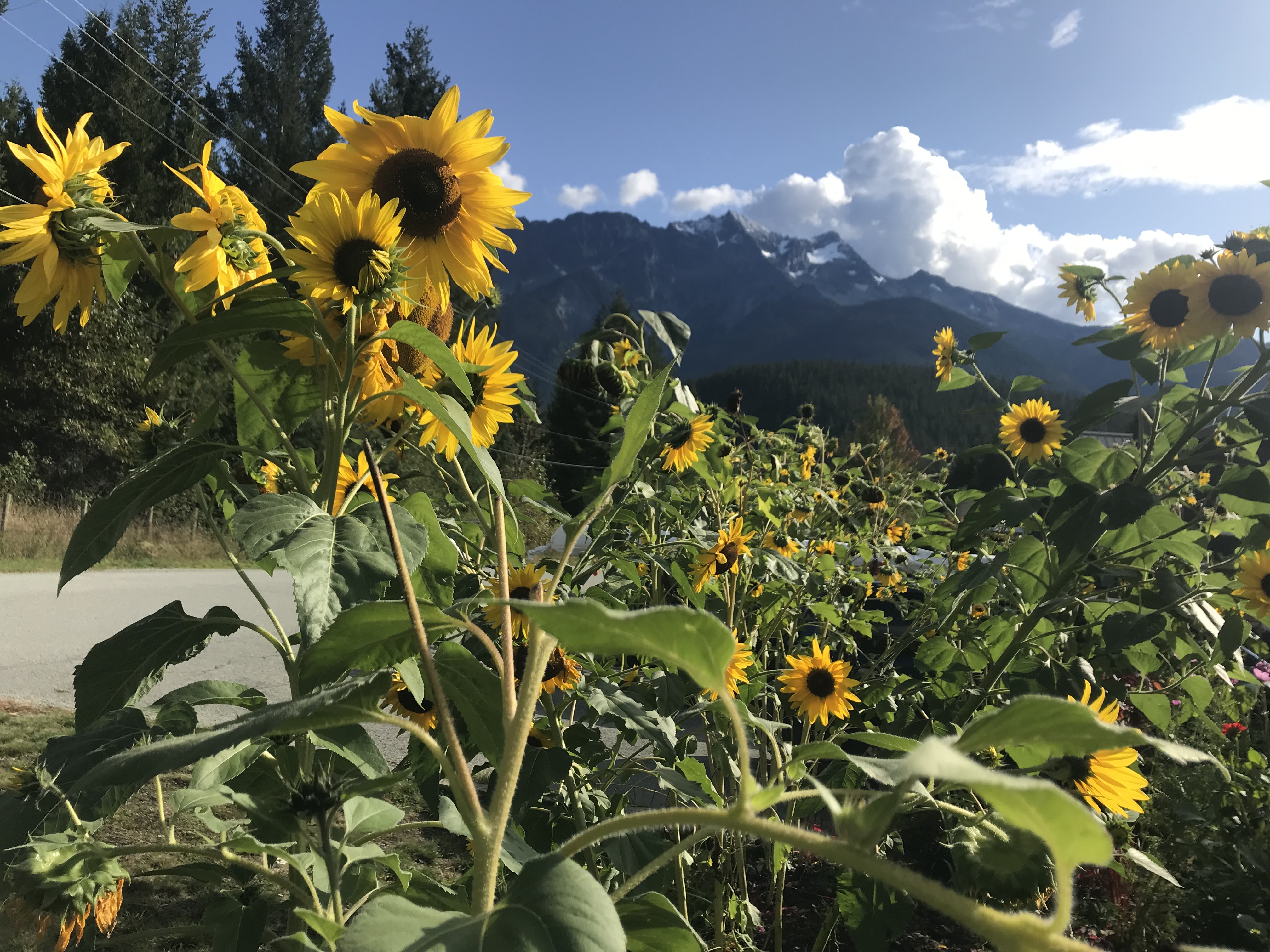
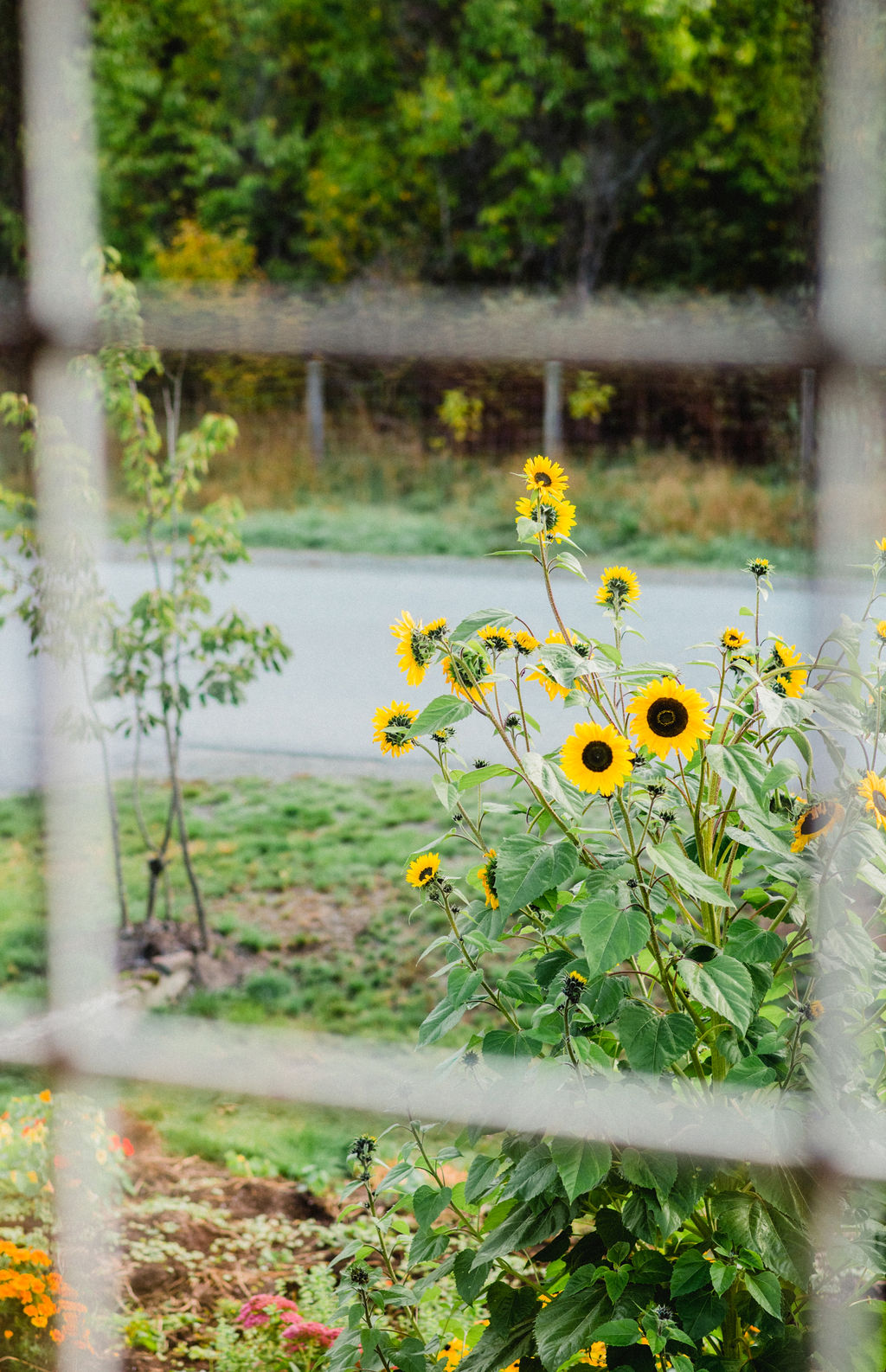
    And my wonder garden grew in spite of me, and continued to offer gifts: the wonder of harvesting garlic in between summer rain storms, celebrating epic and endless dahlia blooms, eating broccoli and peas for days, and enjoying such a bounty of tomatoes that the last batch sat ripening in egg cartons on my counter even last week. Wonder at the soil–lush, rich, buttery and black that I’ve been building in my garden for the last few years. Wonder at the sunflowers that provided so many blooms abuzz with bees and then food for weeks to so many different kinds of birds. 

    SunflowerJungle

    I also experienced confusion and wonder at the suffering of so many people I saw in treatment and in our community. I felt the sadness of illness and accidents and the losses of loved ones.  Wonder at the gaping holes and the ways we try to soothe and patch them.

    I had a few days after my second round of treatment when I entered a black pit of despair. Nothing made sense. I saw no reason for my suffering or anyone’s suffering and no reason for living or sickness or treatment for it. But then tulips bloomed and that made sense. It a crack of enchantment. A thread of wonder. A signal that something small was still right in the world. 

    It’s foggy and cold today. There are cracked chestnuts, a precarious pile of birch logs, a dull axe, a frosty table and a barbeque abandoned for the season on our deck. The leaves are still hanging onto the overhanging chestnut tree, now wilted and brown. I’ve been harvesting the last scrubby bits of kale, chard, parsley, chives and celery leaves sticking out of straw mulch, as I surrender to buying greens over the winter.

    Mel'sHappyPlace

    I survived the year, along with my garden, along with my kids, along with my partner, along with my dog, along with my work, thanks, in part, to the balm of wonder.

  • Frost’s lesson plan: on decisiveness

    Frost’s lesson plan: on decisiveness

    The frost last week was decisive. In one night our dahlia, scarlet runner, nasturtium, cosmos, marigold, sunflower, and tomato plants were killed. Meandering fall became decisively winter or deep fall. There were no questions left to ask about whether or not we should bed down the garden for winter and pull out our tubers. The decision was made and there was work to be done.

    Decisiveness and decision-making seem to be the main themes of my life right now. I decisively resigned for my job of the last 10 years and will finish work there at the end of the month. I closed a door, and am now trusting that other doors will open along other paths.

    I also decided to go for an investigative medical procedure that I was avoiding. I waffled and debated and agonized about it, but when I finally got still enough to sit with my thoughts, I was guided to look up the word “decide”. Decide has “cide” as its suffix, like insecticide, germicide, fungicide. To decide means to settle a dispute, make a decision, and literally cut off… to determine by killing off choices.

    I appreciated frost’s lesson in decisiveness. 

    After the frost, our warm sunny fall days returned again. It has been energizing to rip out old plants and create massive piles of compost—little havens of rotting organic matter to plant over next spring. 

    I am so awed by the sincere abundance of the plants—the sheer size of a single dahlia plant with its branching stems and leaves yielding 20 blooms per week, the single stalk of sunflower producing a 40-headed plant (one seed: a miracle!), the single squash seed growing into a small acreage of leaves and spines and glorious giant fruit in my front yard.

    This fall is the savasana of gardening—the death of the practice, putting it to bed, and acknowledging and anticipating death as an integral part of living.

    It’s a good time to rest as part of this cycle of rebirth and renewal. There’s something exciting about this season, too—being forced into dormancy and dreaming as the summer days have been pruned away.

    Neurologist, poet and author Debashish Mridha says it perfectly:

    “Despite the heart numbing frost, my soul is blooming like spring.”

  • Worry, not worry

    Worry, not worry

    This year has been a year of worry: worry about a mysterious illness that has been depleting my blood levels and sapping my energy, worry about work and money, worry about my kids—they’re fine, but parenting is perplexing—, worry about climate change and politics and the state of the world, and worry about my livelihood and contribution to the planet. Really? I am worrying about all of this? A friend and mentor calls worry “meditating on sh#t.” Maybe I’ve got it all wrong.

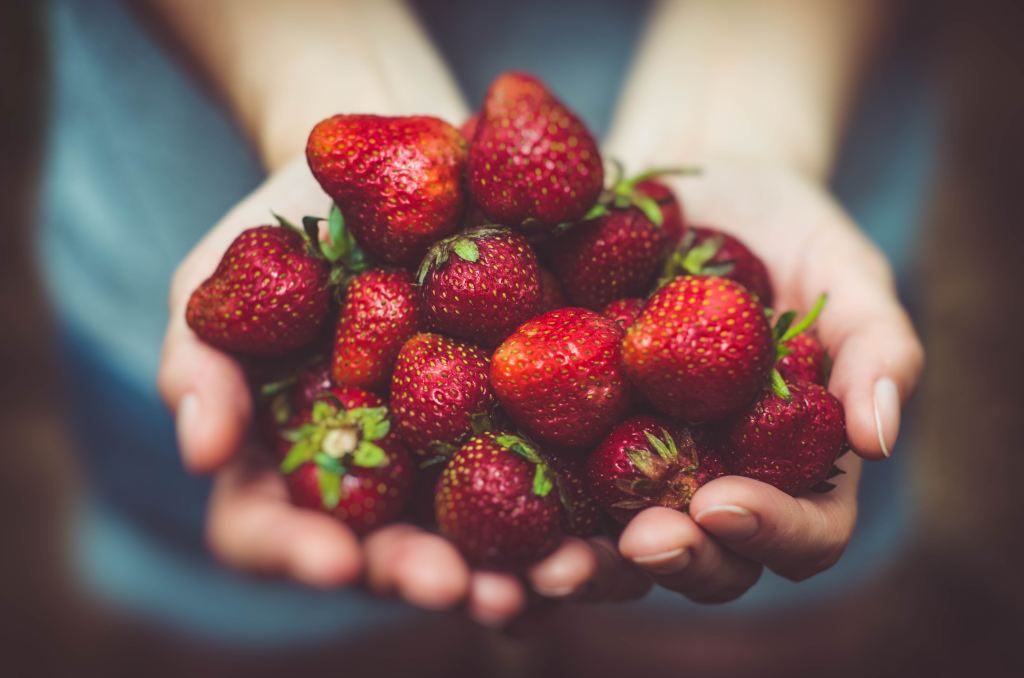
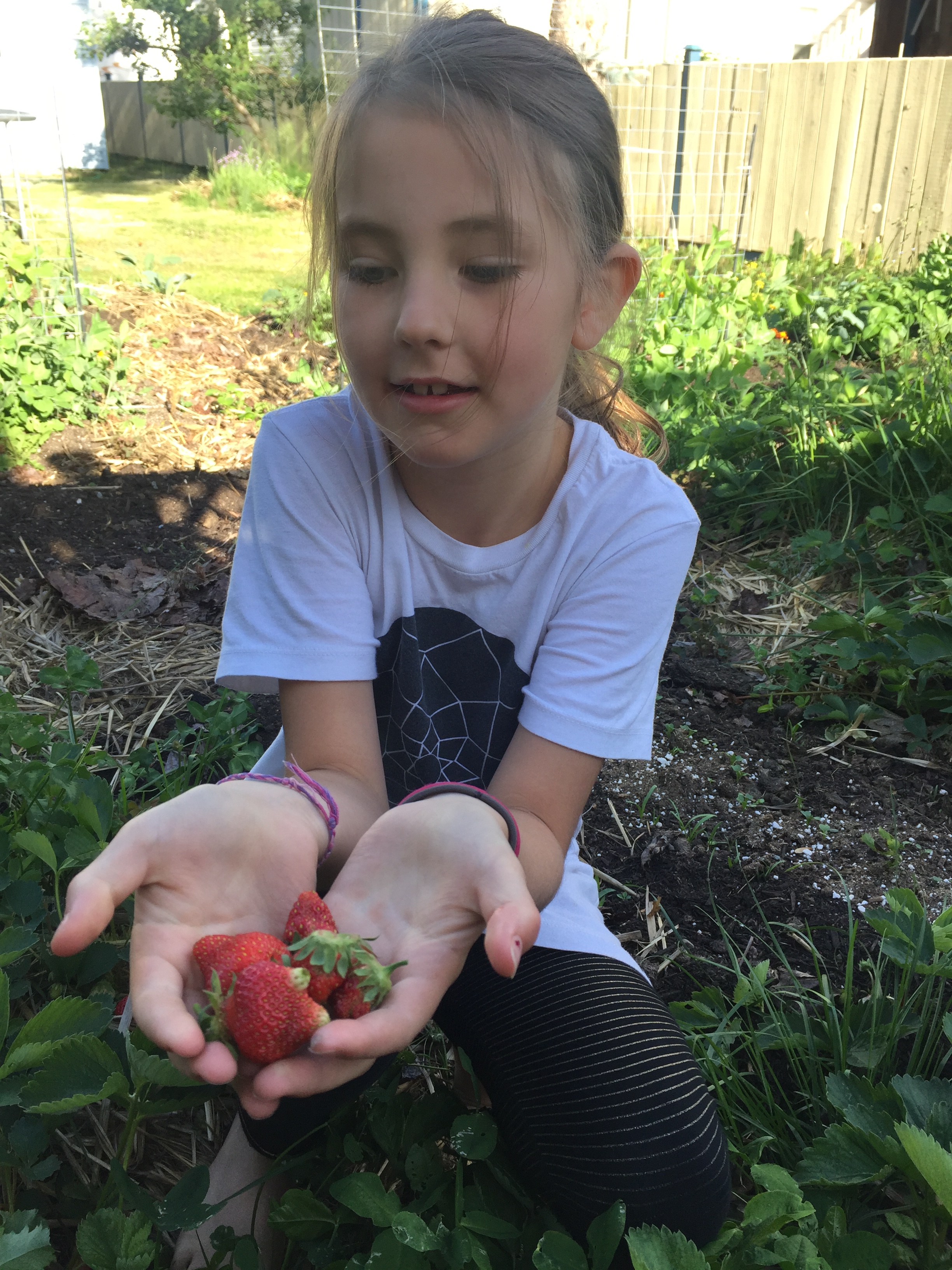
    But, when I’m in my garden, this goes away. There is something perfect about harvesting strawberries with my daughter. We fill our hands until we can’t pick any more, and then—who are we kidding—eat them all before we even stand up out of our crouch. Things are right in the world when she notices that our peas have started to flower, and when she concedes to planting snow peas, in addition to her favourite snap peas, because our dog, Louis, (our other loyal harvester) prefers them.

    strawberries

    All is well in the world when I notice that the blueberry plants are covered in blueberries, the squash have blossoms, the garlics are scaping, the slug-eaten cabbages are bouncing back with vigour after the rain, the soil is buttery soft and black under a layer of mulch from the fall, and there’s an unexpected patch of thyme flowering on a path.

    My peonies went wild this year bursting with excitement when I picked them, and then continuing to explode with petals once inside. I can remember my heart feeling full like that when I met my partner.

    But isn’t it moments like this? Just noticing or tending to the moment in time when everything is fine. The singularity of this okayness.

    Last weekend my partner celebrated a business milestone on the same day that a staff member suffered an enormous, tragic, heart-breaking loss. He couldn’t shake his sadness. “I should be celebrating,” he said, “but this is my worst day in business so far.”

    Life is like that.

    My garden reminds me that we can either celebrate everything—every miraculous seed that germinates, every volunteer tomato or cucumber, every iridescent and sour rhubarb slice, every bite of peppery arugula, every cherry blossom, every furry mint leaf—this is all we get after all. Or we can celebrate nothing. We can wait until everything is lined up and there’s nothing to worry about, but that moment that will never come.

    So, I’ll celebrate knowing it’s all okay just how it is. When I’m worried, all I need to do is return to my garden. It’s so full of life.


  • Eggs and the place we call home

    Eggs and the place we call home

    1. The best eggs I’ve ever eaten were done over easy, and served on crusty toasted hazelnut and currant bread that was smothered with melted butter and peanut butter. A strict vegetarian, I hadn’t eaten eggs for years, but started craving them while pregnant with my first son. This decadent breakfast, repeated many times through the pregnancy felt so nourishingly good. My son, Isaac, was born a huge, healthy baby (it must have been the eggs) at home in Victoria on a rainy day in May. The next day my potato plants were a foot taller. My son’s father might have been hard to live with, but he was an amazing gardener and grew a jungle of food and flowers in our backyard.
    2. My friend “Chicken Jen” (who lived down the road from me in Sooke) turned a residential lot into a productive and wild vegetable and herb garden in less than three months, with the help of  home-made portable PVC dome chicken coops. The chickens removed sod, and aerated and fertilized the soil in each successive round bed that she planted, and her “ladies” gave her surplus eggs to sell. Her vision for her abundant garden, created while her kids were only two and four, still astounds me. 13 years later, the nickname Chicken Jen has stuck.
    3. I moved from the island to Whistler with Isaac and my new partner. I was pregnant again. Our access to food and gardens dried up in the mountain resort. Sure, we could get good local food at the farmers’ market, but we didn’t know the farmers. We no longer hacked down chard from our front yard, or picked brambly blackberries, or gardened for 10 months out of the year. We missed eating farm fresh local eggs.
    4. After seven years in Whistler, our growing brood (I’d had one more child) moved to Pemberton. We bought our first home, got a dog and planted a garden. On one of my first rides around town, I discovered the egg box on Urdal Road and I knew we were home. We traded zucchini, cucumber and greens from our first lush, wild backyard garden for composted manure from our neighbour’s farm and for heirloom eggs in every colour.. Having access to real food right where we live, and knowing where it comes from is a big deal. It’s something we love about living here and it’s not something we take for granted.
    5. Let’s play local food Jeopardy. The answer is: Bog’s, the Wag’n’Wash, the Animal Barn, AC Gas, Stay Wild, the Owl’s Nest, Mile One, Collins Cross, the egg box on Urdal, the farmer’s market, Brooke and Kevin’s place, and Pemberton Valley Wellness. The business names themselves reveal  the flavour of this funky little town. The question: Where can you buy local eggs in Pemberton?
    6. The secret: Everyone has their own source. If you don’t time it right on delivery days, you could be cruising around town, visiting all of these locations without realizing they’re part of a hyperlocal egg market. Alternatively, you might well disappoint your family by coming home empty-handed. Sorry, kids, no pancakes this morning.
    7. You’ll be late, too, because you’ll have talked to friends and neighbours all over town. During our first couple of months in Pemberton, I would frustrate my partner every time I biked to the store to get milk for his coffee. My 15-minute round trip would invariably take an hour or more, slowed by the pull of  my grocery store conversations.
    8. Eggs are a window into the local food system in Pemberton. Local food is grown in abundance by experts and amateurs throughout the valley—but you need to know where to go to get it. And to find out where to get it, you need to talk to people. That’s the fun part. If they made it easier, something would be lost.
    9. We have a great farmer’s market and some awesome local businesses and CSA programs to get the straight goods right from the source. But you can also find your eggs or fresh basil or seed garlic on the Pemberton Food and Farm Facebook page, a matchmaking service for people looking to buy or sell food, seeds, plants or other random farm and garden stuff. Looking for a Thanksgiving turkey, alpaca wool, goats or egg cartons? Selling tomato starts, plums, bushels of basil? The source or recipient are only a couple of messages away.
    10. Farming and backyard growing in Pemberton is surprisingly untrendy. People just raise food and grow stuff here because they can, or because they love to, and it just makes sense. Keeping backyard chickens isn’t new, and while I’m tempted sometimes to imagine myself as more of a homesteader than I actually am, I don’t think I have the heart to deal with bear proofing and the collateral damage when raccoons or cougars or coyotes get into the coops. I barely have the heart to steal eggs from aggressive chickens.
    11. Every egg carton has a story. One of our local egg suppliers sells her daughter’s eggs and tracks the cartons to see if they get returned to her shop. One of the farmers at the market in the summer said new cartons cost more than twenty cents apiece—that puts a serious dent in his egg profits. Farmers don’t become farmers to get rich. But what is shared and supplied and circulated in this community is rich. It’s the soil, the place, the creatures, the stories.
    12. Eggs have been one of the nutritional threads in raising my kids—one of the first meals they could cook for themselves—one of the nutrient dense meals I’ve eaten through pregnancies, breastfeeding and birth. One of the food sources that connects us to the place where we live.
    13. My baker’s dozen. I’m lucky if there are eggs in my house or it’s back to part 5 of this story.  My favourite homegrown breakfast:

    11 o’clock braised greens & eggs

    INGREDIENTS

    • A few giant handfuls of greens from the garden (kale, chard, spinach, collard or beet greens)
    • A few cloves of garlic (homegrown if you can), peeled
    • Coconut oil
    • A couple of eggs
    • Flax oil
    • Condiments (homemade kimchi, sauerkraut or hot sauce & Bragg’s)
    • Ground flax seed
    • Leftover brown rice (optional)

    INSTRUCTIONS

    • Wash greens and tear into large pieces.
    • Wilt greens and simmer garlic with a splash of water in a pan with a lid.
    • Add a small amount of coconut oil to the pan.
    • Add a couple of eggs and fry them up in the same pan.
    • Serve eggs and your pile’o’greens with hot sauce, Bragg’s, flax oil, flax seed, and homemade kimchi or sauerkraut (*recipes for vegan kimchi and sauerkraut to follow in future posts).
    • Add a scoop of warm leftover brown rice, if you have some.
    • Eat with thanks. Be nourished.