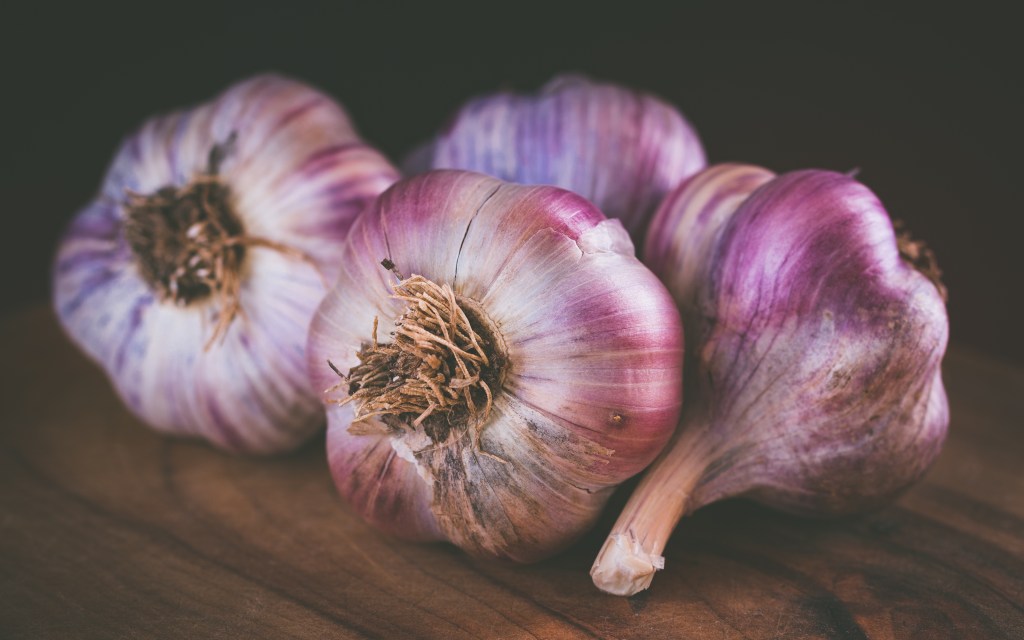
Tag: garlic

  • Our 2018 Farming Season in a Nutshell: Part 3 (Late summer/Fall)

    Our 2018 Farming Season in a Nutshell: Part 3 (Late summer/Fall)

    After Juneuary,  (see part 2), July’s weather was seasonably normal, but it was too-little-too-late for many of our flowers and for our heat-loving crops, like the tomatoes, eggplants and peppers.

    We were 6 weeks behind and many things needed 6 more weeks to mature.

    Luckily , over the years we have planted and divided many perennials to fill in the gaps as we waited for our annuals to bloom. We combined these with some natural wildflowers, like tansy, goldenrod and lupines, and were able to put together some nice bouquets for our regular customers.

    We had intended to expand our flower market, but with limited supply, that was out of the question this year. We had planted over 200 dahlia tubers and patiently waited for them to bloom. And bloom they did!

    Due to the weather, our season had become compressed.

    Plants have only goal in life – to reproduce. They bud, flower, fruit and go to seed, accomplishing this in whatever time frame is offered.

    Our gardens, just like wildflowers in the alpine, bloomed all at once, through necessity. So instead of having a staggered harvest, our cherries, berries, veggies, and flowers all needed attention at the same time. Hectic, to say the least.

    Our garlic  and fruit crops, a couple weeks late due to weather, were steadily approaching and we couldn’t keep up with everything else. We did what all farmers do when push comes to shove – we worked our asses off from dawn to dusk. Now we had fresh products for our markets, which of course is another job in itself. Our colorful stand attracted customers like butterflies. Finally we had a decent income stream, even though we had been at it for several months.

    Garlic, being our cash crop, is also our most labour intensive one. Every year, for the last few, we’ve expanded our volume by about 2000 bulbs. We were up to over 12,000 last year. Harvesting, sorting, cleaning and curing, usually takes about 6 weeks, with extra help, at a steady pace.

    Pulling it up can turn into panic if there’s a forecast for rain. After 2-3 days in wet soil  ripe garlic skins decompose, leaving split bulbs which store poorly and affect marketability.

    Murphy’s law of course, proved correct – it rained heavily mid-harvest. As we frantically  pulled the crop out of the soggy ground, we luckily found most of them still intact. Good. Most however were significantly smaller than usual. I did everything I normally did  at all stages with respect to mulching, weeding and fertilizing, and everything looked great above ground. Unfortunately, being a root crop, it’s what’s happening below the soil that matters. I had planted them in a new site that was south facing, but obscured by tall trees to the east and west, resulting in shady mornings and early evenings. This combined with a cool spring must have been the problem. Garlic prefers warm soil to bulb. This size difference didn’t affect quality but drastically reduced yields, yet it was still the same amount of work.

    My biggest concern now is that I won’t have enough seed-grade-sized garlic to replant for myself, let alone sell to other growers.

    I am ironically currently trying to purchase some more.

    I haven’t done the calculations yet, but  we will definitely have a smaller crop to plant.

    After the garlic harvest we immediately proceeded to fruit harvesting. This year we picked most of it in the rain, as we finished off the summer months with the worst September I can remember. It poured rain for 5 out of 6  of our most important market weekends from Labour Day to Thanksgiving. This not only affected sales but also our motivation. Again, we put on a brave face, brightened some people’s day with lovely flowers and pretended farming is always great.

    If our season comes across as all doom and gloom, that’s not the whole picture. We had  quite a few successes. Our huge dahlia patch was a field of dreams with massive blossoms over our heads. We had a bumper crop of berries, which kept our daughter, our highball picker, busy.  Apples and pears did really well and made up for the less than average cherries and plums. Our value-added garlic products, such as powders, are a huge hit.

    Should we measure our season by the weather, how some plants did or from our bottom line? Absolutely not! Any farmers who view their business this way, would soon admit defeat and quit. We are pleased to have a freezer full of meat to eat and trade with, and enough frozen, dried  and juiced fruit to last the winter. We have enough tomatoes , onions and peppers to keep us in pasta sauce for a long while. We have just enough savings to take a short holiday before the snow flies. Success in my books.

    I had to summarize our seven month season into three parts because this chosen profession is so involved and variable. Did I cover everything? Not even close! We have two orchards with dozens of trees and huge berry patches that need pruning and spraying, (organic methods of course), then picking and storing. Regular yard work and landscaping for 6 acres. Composting and amending soil. Tool and machine maintenance. Clearing, brushing, burning and firewood. Irrigation, weeding and succession planting. Renos and maintenance of our large house and outbuildings. Fencing, building a chicken coop and hoop houses. Daily chores such as taking care of 20 layers and 200 meat birds not to mention, slaughtering, butchering and processing them (not fun).  On top of all that, there are the indoor jobs I loathe the most such as marketing, book keeping, ordering supplies, and other paperwork.

    Now, before I think of anything else I’ve missed, I must stop writing because I have garlic beds to prepare and plant. A farmer’s day is never done. If you like a cushy, stable, and risk-free job, don’t even think about being a farmer. Personally, I wouldn’t have it any other way.
  • The pros and cons of having WWOOFers

    The pros and cons of having WWOOFers

    Q; What is a Wwoofer? A: Its a dog that pulls weeds! Jokes aside, WWoof can be an acronym for either World Wide Opportunities on Organic Farms or Willing Workers on Organic Farms depending on the area and its labour laws. They are basically homestay farm volunteers who work 4-6 hrs /day in exchange for room and board. The organization began in the UK in 1971 when there was a revival of back to the land interest, volunteering and adventure travel.

    I can only imagine the logistics of organizing such an endeavour back then, with snail mail and hard copy photos. Since the advent of the internet it is so much easier, with quite a few other similar websites such as HelpX and Workaway.  These new sites have become popular because they’re not just organic farm related. It’s easy, using the same format as a dating web site with profiles and photos from both parties. Fortunately, the meetings are less awkward.

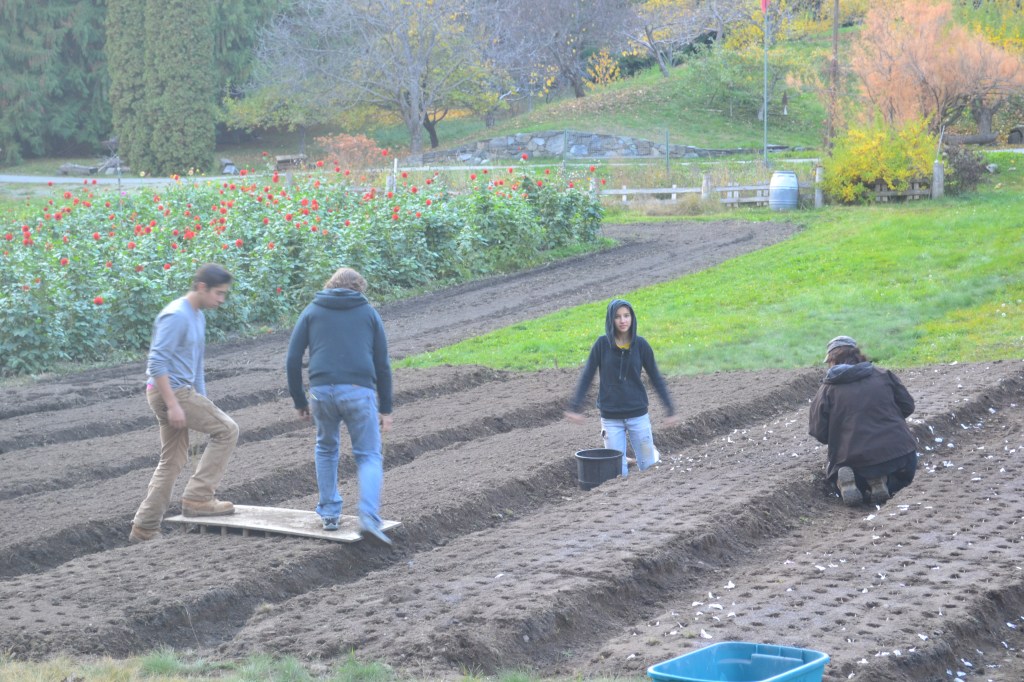
    We have hosted an average of a dozen helpers a year, for the last few years. They come from all places, cultures and ages. There are many pros and cons, but to be honest, so far, about 90% of our visits have been a good experience for everyone involved.

    The pros are:

    • We get to meet new people every few weeks without leaving our bubble. It’s been great to introduce our somewhat sheltered kids to others and their cultures. We always get out the atlas and they explain to us where they are from and where they’ve been. A homeschool geography lesson.
    • We get to be tour guides and ambassadors for our area, showing them our secret spots (only if they promise not to post it on social media.)
    • We’ve become more productive, Many hands make light work, whether it’s tediously picking berries, cleaning garlic or heavy work such as firewood. This leaves us more time for other projects and leisure.
    • We get to share our wholesome lifestyle and food with others who may have otherwise never experienced an authentic BC mountain environment.
    • We have made some fleeting as well as long term friendships, with a few repeat visitors. and have even stayed with some while travelling abroad.
    • We get to teach others new skills and teaching is learning.

    The cons:

    • It takes work to organize work for others and stay productive. It takes a game plan and most farmers are constantly adjusting plans, especially due to weather.
    • Sometimes people are just not compatible (remember the dating analogy). I can tell within hours if the person grew up in an urban or country setting. While most are adaptable, some are just out of their element, scared of wildlife or not accustomed to isolation.
    • You have to assume they don’t know a thing, explaining and demonstrating exactly how you want something done and setting the pace, especially if you plan to leave them unsupervised.
    • You may have to accomodate their dietary restrictions, religious or cultural practises. You have to be polite, politically correct, entertain them and drive them around. It can be a hassle and an invasion of privacy. You have to have blind faith and trust in a total stranger.

    Like I said, on the whole its been mostly great for us, but it’s not for everyone. It’s hard not to discriminate and develop stereotypes, but that’s human nature as we look for the most compatible fit. We are weary of bringing the elderly, disabled and the permanently transient. We have to accept that different cultures have different work ethics. We have to choose the right candidates at the right time depending on the season.

    There are no set rules or contracts, and the only repercussions come in the form of reviews. We have chosen to do between 2 -3 week stays, mostly to keep things fresh and avoid complacency. A recent couple who have had some negative experiences elsewhere noted that most other hosts require a minimum as opposed to a maximum stay. My response was “with a private cabin, wholesome work and farm fresh food, most travellers don’t want to leave. We treat others how we would like to be treated.”

    DSC_0020


    We


  • A Recipe to Keep Vampires At Bay

    A Recipe to Keep Vampires At Bay

    A little garlic, judiciously used, won’t seriously affect your social life and will tone up more dull dishes than any commodity discovered to date.  ~ Alexander Wright, ‘How to Live Without a Woman’ (1937)

    It’s that time of year where garlic goes into every single meal. It’s nearly unbearable to stand near or around me, not to mention @therocketnarcissist. In fact, there are days that we don’t even want to stand near each other.

    But when you love garlic — and it’s garlic season — it’s so freakin’ hard to resist.

    A few days ago, we added a whole bulb of Russian Red (the real potent shit) to a black pepper & garlic stir fry (an homage to the dish that I so dearly miss from the good ol’days of Thai One On).

    It was fine. We were fine – sitting alone, in our living room post-dinner, not harming any noses but our own. That’s how it works. Couples who eat garlic together, stay together.

    You can never have enough garlic. With enough garlic, you can eat The New York Times. ~ Morley Safer

    Because garlic goes with almost any cuisine, we’ve had a chance to use up a horde of in-season vegetables that we pick up either at the Pemberton Farmers Market on Fridays or one of the two Whistler Farmers Markets.

    Recent hauls netted us several varietals of tomatoes and spicy peppers, plus basil, eggplant, broccoli, spaghetti squash, onions, leeks and zucchini.

    Now, legend has it that Pemberton villagers almost never resort to buying a zucchini due to the simple fact that even those with a documented plant-killing history can grow award winning zucchinis in Pemberton’s personal produce patches. But, for those of us living in Pemberton south south (aka. Emerald Estates), we’re well outside of the prime growing zone.

    Due to your zucchini glut, a recent call was made for ideas. And, I happily supplied a list of google-able dishes.

    But after reading “Zucchini Two Ways” I felt inspired to contribute an actual recipe. Although this pancake could be found almost anywhere (and your recipe might even be better than the one found here), the heavy-on-the-garlic toppings, inspired by “What’s All The Fuss About Garlic?“, really are what made this recipe special.

    I see recipes calling for one clove of garlic. One clove of garlic is not enough for any recipe unless it’s a recipe for, ‘how to cook one clove of garlic’ – even in this case use two. ~ Unknown

    Note to cooks: As mentioned in “Stop glorifying the summit and enjoy the climb: an astrological forecast for pasta makers”, I rarely follow a recipe or remember to write down specifics. So again, rustic, untested instructions follow:

    Pancakes

    1 cup all purpose flour

    1 tsp baking powder

    ¾ cup of milk

    2 tbsp butter, melted

    1 egg

    1 cup of grated zucchini

    Mix the dry together. Mix the wet together, including the melted butter. Squeeze the zucchini lightly to remove some of the juice.

    Mix the zucchini shreds into the flour. Pour in the wet ingredients and mix until combined. I give a little flour if it’s too wet or add a little zucchini juice or milk if it’s too dry.

    Add fat (lard, butter or high-heat oil) to a cast-iron skillet on medium-high (our burner is a little weak, so you might go lower if you’re cooking on gas or a powerful cooktop). Place about ¼ cup of batter into the skillet, use a spatula to flatten & spread it out a bit. Add more batter, leaving enough space between pancakes to get your flipper in there.

    Flip once puffier on top and golden on the bottom.

    Sorry, from here you’ll have to use your judgment to determine when it’s time to serve. My pan tends to get hotter as time goes on, so I turn it down and leave them a little longer – until the inside is cooked. I might even crack one open to see if it’s done.

    Tomato “Salsa”

    1 cup of chopped tomatoes

    1 handful of roughly chopped basil

    2 – 4 cloves of garlic, minced (no. of cloves dependent on variety and personal preference, but we rolled the dice and went with 4)

    ½ lemon squeezed

    We used a variety of tomatoes that offered different flavours and textures. Simply chop them about the same size – we used a ½ of cherry tomato as the measure.

    Toss the ingredients in a bowl. It’s best when given a little time to marinate.

    Garlic is divine. Few food items can taste so many distinct ways, handled correctly. Misuse of garlic is a crime…Please, treat your garlic with respect…Avoid at all costs that vile spew you see rotting in oil in screwtop jars. Too lazy to peel fresh? You don’t deserve to eat garlic.  ~ Anthony Bourdain (Kitchen Confidential: Adventures in the Culinary Underbelly)

    Blue Cheese Dressing

    2 tbsp plain yogurt

    2 tbsp crumbled blue cheese

    1 tbsp honey

    Mix together.

    Top your pancakes and enjoy.

    August 2018 (7 of 7)

    ~

    Lisa Severn is going to the Whistler Writer’s Festival’s Cooks with Books: Passionate Locovore Edition — and she thinks you should too.

    ~

    Start a conversation about food with Lisa over @rhubarbstreet or look for more on Lisa and her co-conspirators… err… co-contributors.

    ~

    “Garlic Quotes.” found here https://www.torontogarlicfestival.ca/garlic-quotes/

    Images and recipes are by Lisa.


  • Whats All The Fuss About Garlic?

    Whats All The Fuss About Garlic?

    There aren’t too many plants or food items that gets growers more excited than garlic. Sure, some folks get mushroom fever in the fall, and cannabis is all the rage, but garlic gets almost all gardeners hyped.

    Why? After all, it’s just another onion (allium). Onions don’t command upwards of $15/lb. I’ve never heard of a Leek Festival. Apparently the labourers who built the pyramids were partially paid in garlic — I don’t think that shallots would have even got the Sphinx completed.

    Garlic is easy to grow, but it takes some practise to get big high quality bulbs. The most important thing is to start with very large locally grown cloves that are proven and acclimatized to our region.

    Never attempt to plant (or eat) store-bought imported crap, especially from China. Most of it is bleached, irradiated and fumigated to prevent sprouting. It could be years old and grown in a toxic environment. Yuk!

    I truely believe the Pemberton to Lytton corridor grows some of the finest garlic in the world. In all my travels, in which I’m always scouting for garlic at markets, I have never seen or tasted better. We are fortunate to be able to grow both the more hardy and flavourful hardnecks and the more typical softnecks grown in the south. We are blessed with mineral rich soils, pleasant weather in October for planting, just enough insulating snow, an early spring, ample rain into June and a hot dry summer to force bulbing and easy harvesting. The most perfect scenario!

    My interest in garlic happened unassumingly about 25 years ago by reading a book called the Garlic Testament. It was a zen and the art of growing garlic type novel written by a hobby garlic farmer in New Mexico. It was part informative, part biography, part philosophy. I don’t think it even comes close to the best book written on the subject, but the lifestyle intrigued me. That autumn, I bought 5 lb off an old hippie friend who lives on the Highline Road and the rest is history. I now grow over 12,000 bulbs.

    The local homesteaders of the 60’s, 70′ and 80’s were probably unaware that the were planting the seeds of a future craze. The Rocombole Variety was introduced by the “back to the landers” between D’arcy and  Seton; the Red Russian from the Doukhabour settlement up in the Haylemore and Barkley Valleys; the Porecelains from the commune at the Langstaff Farm in Birken.  If you’re a misfit, garlic is the crop for you.

    Nowadays, everyone with a garden has caught the fever. Take a drive up the Meadows and you will see lots of patches, big and small. And why not? It’s easy, healthy, tasty and gets people excited, talking and posting photos on social media… about a bulb in the onion family. Go figure.

    The Annual Garlic Festival , Saturday August 25th at Willowcraft Farm in Poole Creek (Birken) is being sanctioned and promoted by the Pemberton Arts Council this year. Everyone is welcome after 4pm. There will be food, drink, live music and of course… Garlic!