Blog

  • The Hands That Feed Us

    The Hands That Feed Us

    My small scale efforts of container planting and tending a small plot in a community garden make me even more grateful for the more productive labours of others. My horticultural failures are frequent but also fairly inconsequential in the long-run. One of the great fortunes of living in this region is our proximity to those who are growing food for a living (especially in the summer months). We drive by their roadside stands, support them at farmers markets and most of us personally know farmers or food-providers through one connection or another. It feels easy to connect the dots and appreciate their effort.

    IMG_20181002_110319_867

    Growing the circle of gratitude beyond the local farmers feels a bit trickier… how to start when the origin of the food can feel mysterious, layered, even dubious?

    As an experiment: I tried for a season to pause before meals and acknowledge the chain of events, sometimes even the ongoing industrial churnings which worked together to bring me to that particular meal. I’d extend a quick, internal thank you to everyone, thing and place involved (well… the ones I could easily come up with that is). And within moments the world had shrunk down to fit the size of my bowl & cup.

    IMG_20180504_124744_545

    An ‘easy’ meal of morning oatmeal and turmeric milk had me visualizing oat-farmers, threshers, packers and transport-truck drivers. People building the machines that made the farming possible. Cinnamon grown in tropical heat and harvested by who-knows-who. Sunflower seeds and hemp hearts sprinkled on top brought to me by the Local Goods Company based out of Squamish. I visualized the sunflowers that grew those seeds planted by the farmers who chose to pursue organic certification, grow the flowers and then find a market for those particular seeds. I pour blueberries from Pemberton on top, grown by an ex pro-skier and the best I’ve tasted in years. Mix in the turmeric grown in India and sold in Nesters. Many hands along the way to bring it to my table. Someone picking the medjool dates that I add to the blender, someone else cleaning them, another person packing them, another loading them into boxes, another onto barges, another onto shelves.

    OLYMPUS DIGITAL CAMERA
    One million thanks required. Photo by Asta Kovanen

    One meal and my mind is slightly melting. I’m both hungry and amazed.

    Having worked at one point picking and packing apples, pears and cherries for export to Japan, I have seen the many labourers required at each step. And having been one, I know that the pay isn’t always the best. The chance to eat locally grown food is a privilege in this region and when possible I am happy to spend my money supporting the people doing the hard work to cultivate brussel sprouts and melons right here in Canada.

    20180507_200628

    However, all the other groceries (noodles, rice, spices, crackers) become more meaningful to me when I pause and consider how it made it to my cupboard. Some I won’t buy due to food justice or environmental concerns (palm oil or suspect meat) but even my vices like dark chocolate and ice-cream have lessons for me, some tasty, some not once you start digging through the chain of events.
    OLYMPUS DIGITAL CAMERA

    And sometimes that minute of foody reflection will simply bring me awareness and other times, it has helped guide me towards a different, more local, more compassionate choice.

    20170701_092705
    “Innumerable beings brought us this food. We should know how it comes to us.” Buddhist grace, as recalled by Benedictine monk David Steindl-Rast


  • It’s time to Slow Food as if the future of food depended on it. Sunday August 18!

    It’s time to Slow Food as if the future of food depended on it. Sunday August 18!

    Thanks to Carlee Cindric, the tireless event producer with Tourism Pemberton, behind Slow Food Cycle Sunday, for taking time out from organizing, to share this reminder of what Pemberton’s signature home-grown festival is all about. Connecting consumers with their food and the farmers responsible for it, seems more and more vital, as the UN releases its report forecasting the human population on Earth will go to 10 billion by 2050, and the way we eat and grow will have one of the most profound impacts on our planet, its habitability and climate stability, of almost any other thing we do. The headlines might read “world food security at risk” and “agricultural practices add to climate threat”, but what’s important to grasp (i.e. hook your soul’s momentum onto) here is that the way we grow our food (and our beer! and our booze! and our flowers!) offers one of the very best and most powerful ways we have of stabilizing the climate. It’s not a foregone conclusion. Don’t give in to despair! Get on your bike. And go meet some growers, who are practicing regenerative techniques and nurturing the soil that feeds us.

    by Carlee Cindric for Tourism Pemberton

    Do you Slow Food? It’s the 15th year of the annual Slow Food Cycle Sunday presented by the Pemberton Valley Supermarket! That’s quite an achievement given the modest beginnings of this favourite community event.

    60302107_2756632497686353_1835345366459875328_n
    Most compatible road-mates: tractor and bicycle. Photo by Dave Steers

    Founded in 2005 by two locals with a shared vision of the importance of farmland and connecting consumers with farmers/producers, the Slow Food Cycle Sunday has grown into a larger cycling festival complete with live music, food, drinks, art, crafts, treats and more – all with a local, grassroots vibe.

    67498225_1941028872663332_1332770906484768768_n
    Visit The BeerFarmers, one of Slow Food Cycle’s founding farms, and learn how long it really takes to grow and brew a beer. We’re talking field to tap.

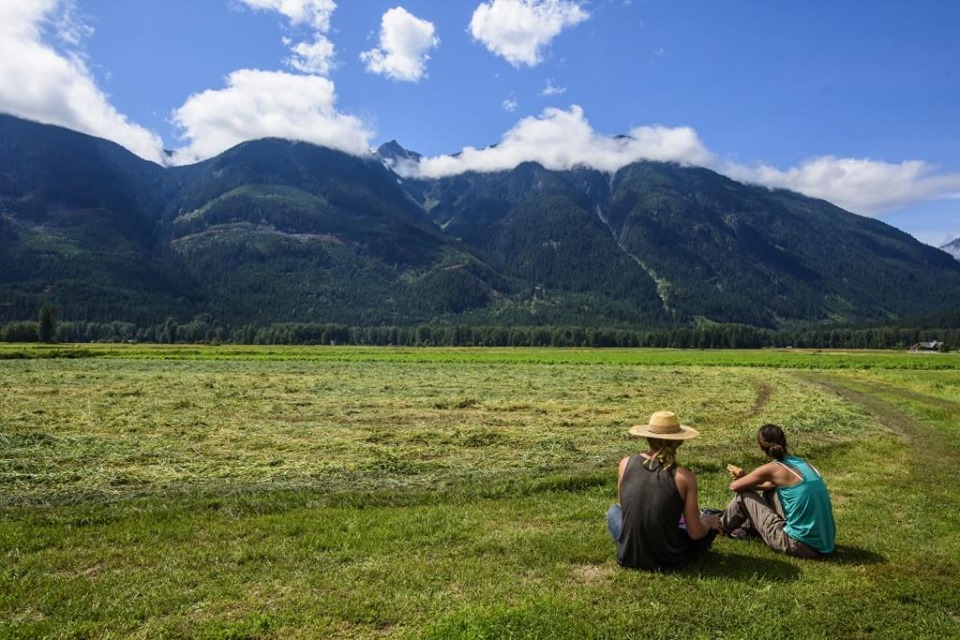
    Pemberton’s Slow Food Cycle Sunday is an important event for Pemberton because it brings together consumers and producers in a unique ‘green’ agri-tourism experience, drawing participants from the Sea-to-Sky Corridor, Vancouver and worldwide. The event shines a spot light on the slow food movement – food that is produced or prepared in accordance with local culinary traditions, typically using high-quality locally sourced ingredients – and the importance of farm land, eating locally and supporting local food producers.

    484455_459547660752749_856749037_n

    The event invites participants to choose their own cycling adventure using an interpretive map highlighting the various participating farms and venues along Pemberton Meadows Road. Participants can set their own pace and decide which farms along the 25 kilometer roud-trip route to visit. Along the way, participating farms open their ‘doors’ for the day and host a variety of vendors selling and sampling everything Pemberton has to offer from baking and honey to coffee, Pemberton potato fries, hamburgers and of course Pemberton fresh fruit and veggies.

    67808141_10157218241065631_1610355901250666496_n
    Laughing Crow Organics have been “setting up” a sunflower maze for your pleasure at Slow Food Cycle, growing sunflower babies from seed for a field of sunny dreams experience.
    We’ve got a few new farms/venues and vendors joining us for year 15 which helps to keep the event new and exciting for those participants who return year after year.

    The Slow Food Cycle Sunday will take place on August 18. We encourage folks to register online before the event at slowfoodcyclesunday.com. Don’t forget to bring your helmet and water and remember to follow the rules of the road.  

    67718143_2909841565698778_5704900850485297152_n

    We look forward to hosting you during this celebration of Food, Farmers and the Joys of Biking! For more information, visit slowfoodcyclesunday.com


    67645071_2914099698606298_4618611159270948864_n


    Website: www.slowfoodcyclesunday.com
    Facebook: facebook.com/slowfoodcyclesunday
    Instagram: www.instagram.com/slowfoodcyclesunday

    #SFCS2019
    #SFCS
    #slowfoodcyclesunday

    The amazing thing about Slow Food Cycle is that, just by showing up, you are being part of the event. But if you want to further inject your energy into the day, you can sign up for a 2 hour volunteer shift at the registration table.

    68522701_2913573848658883_4964114043846524928_n


  • Three Things Cindy Coughlin Learned This Summer about Getting Dirty

    Three Things Cindy Coughlin Learned This Summer about Getting Dirty

    This is a guest post by Cindy Coughlin, a Pemberton-based HR professional, coach and facilitator, who operates Thirst for Change Coaching, where she blogs knowledgeably but equally engagingly about things other than gardening. When she told me recently she had unexpectedly become a happy garden-sitter, I begged her to write about it for Traced Elements. I had literally just seen Dawn Johnson that morning, and learned that Dawn’s squash plants grew over the wheelbarrow, obscuring it entirely, as it awaited  Dawn to return from a camping weekend and get to the garlic harvest. So I share Cindy’s awe for this Eden in which she has apprenticed herself. So happy to welcome Cindy to the Traced Elements community. ~ Lisa

    +++

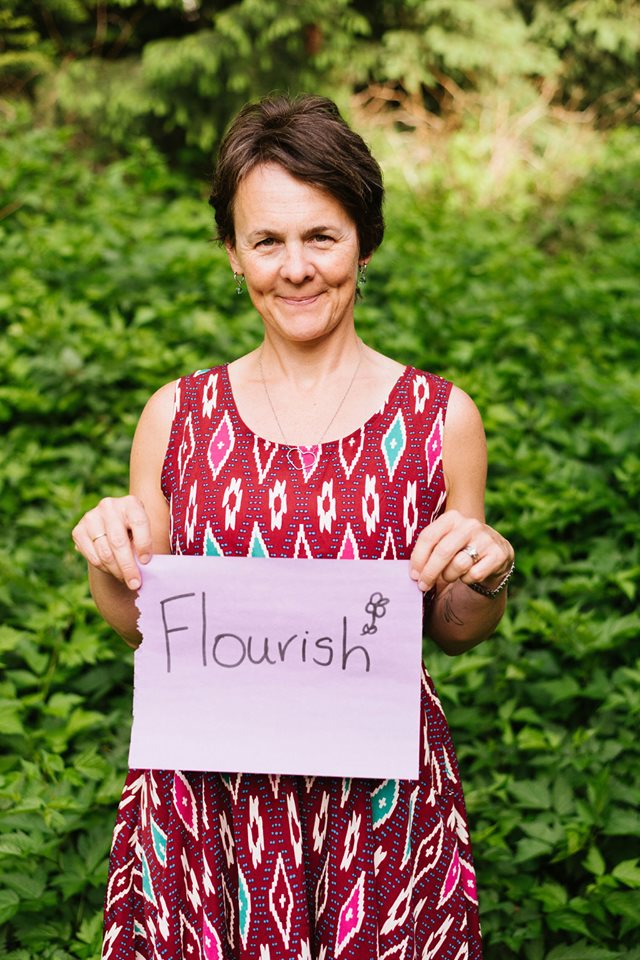
    Flourish. This is my word this year. It originally started as part of a peer mentoring group where my main focus was on getting my consulting business up and running. We had to come up with a theme or a word. I picked Flourish. Well, actually I picked “Nourish to Flourish” –  the idea being that I put in the care and attention to help build up my first year of going it solo.

    66390578_2797551553607639_2291418099557072896_n
    Cindy Coughlin chooses to Flourish. Photo by Cathy Goddard

    Nourish, according to the dictionary, means to cherish, foster, keep alive, to strengthen, build up, or promote.

    Flourish is to thrive.

    And this mantra, this intentional approach has quite naturally carried over to other aspects of my life.

    I’ve been working with my awe-inspiring, plant-whisperer neighbour and friend, Dawn, in her spectacular garden. I approached her in the spring and asked her to put me to work. Now to give you some context as to how outside my comfort zone this is – when I was younger and had the list of chores split with my sibs, I’d be adamant about staying inside and doing the laundry, vacuuming, etc. When I moved to Whistler and started off as a lifty, it was the worst job I could imagine. I hated working outside (I know weird, right, cuz I love riding and skiing and playing outside). I also really hate big bugs – especially of the 8-legged nature.

    IMG_3790
    Plant-whisperer Dawn Johnson. Photo by Cindy Couglin

    But this spring and summer, working in the garden, have nourished me in the best ways.

    Here are three things I’ve learned about getting dirty:

    Paying Attention

    I need to be paying attention. I’ve been reading books about trees, books about bears, books about over-tourism. I’ve been watching tons of the stunning newsfeeds on the climate emergency. All of these are asking me, begging me, to step up my game, consider my impact, take some type of action – start somewhere. And now I feel the pull to pay attention. To pay attention to my food. To pay attention to how nature provides. To pay attention to the interconnectedness.

    Recently I was trying to cut some lettuce, quite close to a flower which had a busy bee in it. I could see the bee was getting agitated with me being so close. So, instead of wildly flapping my arms to scare away the bee, I just stopped and watched. The bee did its bee thing in the flower and then moved on. I felt so filled up. Co-existing and working with nature.

    IMG_3791

    Feeding my Soul

    Dawn and her family went away for a week and I was trusted with taking care of everything while they were gone. Isn’t that incredible – I was TRUSTED to take care of a garden – my mom would literally think I’d been taken over by aliens.

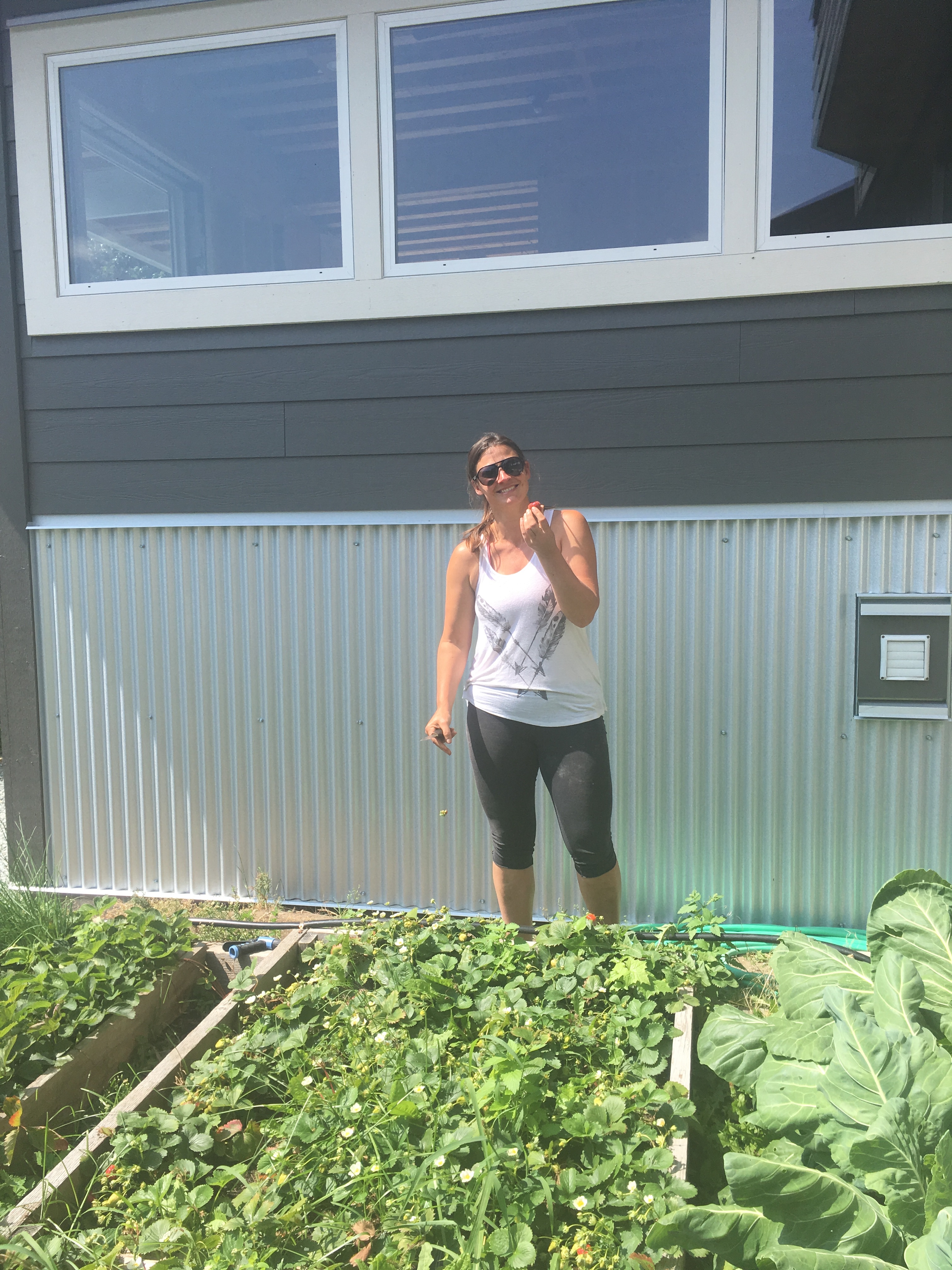
    And it was incredible. Everyday I’d check on the budding plants. I’d chat with the chickens and bees. I’d cut some lettuce and some yellow little squashy thing for dinner salad. I’d find that zucchini hiding under a massive, prickly leaf – happily earning my stripes by scratching my arms while I cut the stem. I’d just stand and stare and admire. I’d thank the garden for everything. I’d tell the garden how beautiful it was.

    I tend to just take. Take from this earth. I feel like I’m starting, albeit in a small way, to give back. I’m starting to see, really see. And by seeing, by paying attention, I am feeding my own soul. I am seeing the interconnectivity. I am part of the impact and I can make new, different choices.

    And I’m learning. Dawn to me is like Yoda was to Luke. Like Mr. Miyagi was to the Karate Kid. Her wisdom and unwavering passion is a gift to this world. And I feel so filled up as I watch, listen, try things out and learn. I’m learning how to garden. I’m learning to care for my food. I’m learning to take only what I need. I’m learning about eating food that is in season and waiting, anticipating, for things to come back next season. Meaning, going without in the off-season – oh the anticipation will make it so much sweeter.

    IMG_3789

    All the Good Eats

    The little yellow squashy thing that I thought was just an ornament has this beautiful mild flavour with just the right amount of crunch. The edible purple flowers that my Albertan-meat-and-potato husband is welcoming in his salad – taken in very small quantities because the bees love them so much – are so good. The cukes and zukes that seem to grow 5 inches overnight – no one believes me – but I think if I sat and watched them for 24 hours, I’d actually witness them growing. And the flaves from these are incredible!

    IMG_3786

    I’m completely impatient for the carrots and so am happily pulling them as babies in service of giving space for the others to grow nice and big and sweet. Have you ever pulled a carrot from the earth, dusted it off and ate it right there? Nothing tastes better.

    And the pièce de résistance, the biggest surprise of all has been the asparagus. Dawn simply broke off a piece and handed it to me right in the garden while she took a mighty crunch from her own piece. No salt and pepper, no butter. I took a tentative bite and was shocked to find out this is what asparagus actually tastes like. Almost 50 years old and I have just experienced what asparagus is supposed to taste like for the first time in my life.

    IMG_3787

    If I can do this, anyone can do this. I am getting dirty. I am working it out with the 8-legged-who-shall-not-be-named. I am learning. I am growing. I am nourishing. I am flourishing.

  • Thoughts on plastic bag bans from an organic potato farmer

    Thoughts on plastic bag bans from an organic potato farmer

    Clamorous demands for a plastic bag ban at Vancouver farmers’ markets have resulted in… a (pending) plastic bag ban at market. The association that runs the markets at which we have been selling potatoes for over 25 years recently announced that starting with the 2020 season all single-use plastic bags will be banned. I have been privately fuming about it for ages, with no proper articulation. The formal announcement has forced me to publicly admit that I have issues with the new policy.

    First some groundwork. Let me lay this on you. I sell a lot of things in plastic. Potatoes mainly, but also carrots, beets, parsnips, and even on the odd occasion broccoli, beans and basil. Retailing with plastic is effective and efficient. It’s not completely brainless and some merchandizing skills are required. The tops should be tucked under the bags, for example, or the display can end up looking like a farmers’ market stand that sells plastic bags, as opposed to potatoes. The bags should be of good value with the price stickers visible. You should know when to use a twist tie for closure and when to use a knot, and what type of knot. The bag should contain no unsightly culls. There ought to be a bulk option right beside the ordered heap of pre-packaged product. Half the customers will choose one, half will choose the other.

    Things in plastic bags sell. Every retailer knows this. That’s why you see in the grocery store that everything is packaged, particularly in the produce department. If you want to sell more, put it in plastic. I think too, consumers have been convinced that things in plastic are more hygienic so that adds to the appeal and bolsters demand for plastic bagging. It’s entirely about boosting sales, however.

    So to continue with the summary of my current situation, plastic bags are a major part of our retailing plan at farmers’ market. I rely on them. If I want something to sell, I put it in a plastic bag. Boom. It sells. My farm depends on farmer’s market sales for almost 80% of our revenues and at least half those sales come from things in plastic: We make it convenient, attractive and of good value. We are managing to come up with lots of packaging alternatives, but none check all the boxes. The pending plastic bag ban is causing me to feel (and this is just for starters) highly irritated, somewhat stressed, and quite mis-understood.

    A mild yet persistent panic over-rides everything: how am I going to maintain sales at market if I can’t use plastic bags? I have known this was coming for a few years but now it is officially imminent, and I still don’t have a good replacement.


    My other feelings include indignation and not a little derision: how dare anyone who has never tried to sell potatoes in the rain demand a plastic bag ban. You can’t just put them in paper. A paper bag containing heavy potatoes is going to be very disappointing at some future possibly inconvenient and ruinous point, even in only slightly moist weather. The more fickle customer is going to pass on potatoes in soggy paper. There are a lot of that type of customer.

    This line of thought leads to a further point of indignation: why is it okay to impede my ability to compete in the retail environment? People need to understand that we feel ourselves slightly in competition with grocery stores who have a lot of very cheap potatoes, which they sell in plastic bags, because that’s how potatoes sell best. I have customers on the bubble to whom convenience and price almost outweigh taste and quality, and we will lose them. Resentment bubbles in my bosom…

    …followed by more derision: what exactly do you mean when you glibly say “single-use plastic bag ban”, which appears to be the go-to wording of this pending policy? It sounds a little jingo-y, to my ears, and it’s semantically weak.

    How about those produce roll-bags. They don’t have holes. They get used again. And again. Especially to carry potatoes and carrots in damp weather, and to store them at home. You know, it has been a long, long time since there was no plastic in the household. Before plastic bags, homes featured things like root-storage rooms, and somebody doing daily cooking and shopping. Freshly dug, delicate, oh-so-tasty nugget potatoes store well in a plastic bag in the bottom crisper drawer OR in a log-walled, dirt floor roothouse. Do people really know how to live without plastic? It’s kind of a big deal. Anyways, I am pretty sure those roll-bags are included in this ban.

    As another aside, because it is irresistible and the resentment has briefly bubbled over, are the same people also calling for a ban on plastic dog-poop bags? Oh? What’s that? You have a dog? And you think those dog poop bags aren’t rife with environmental issues and that your dog poop is pure? Bah. Pick it up with paper, why don’t you.

    I guess I think demands for plastic bag bans are thoughtless and not a little frenzied. Seems crazy to expect a little farmer like me to have to re-invent packaging, and that having done so, it will matter. I guess I don’t want to have to go through this with my 600 customers a week when the other 4 million people in the Lower Mainland are being offered, and are voluptuously consuming, singularly useless plastics galore at the grocery store.

    I don’t think anyone should feel like an environmental champion because they have been successful in their calls for a plastic bag ban at farmers’ market. This is, and you will forgive the expression, very small potatoes, and the price is being paid by a small, local organic family farm. Hardly heroic.

    Having said all that (and perhaps I have said too much), I am going to stop using the plastic bags with holes. I accept this. We have been thinking creatively for some time now, even before we heard the baying calls for a ban. It will cost us money, both in terms of lost sales and replacement packaging, but obviously I don’t think plastic bags with holes in them are useful beyond the single use for which they are so well designed. They are the junk food of packaging. We can do better. And I can even recognize that I might be wrong about the consequences.

    It would be super nice in return if people could check their calls for this ban. Farmers’ markets themselves are already on the cutting (and bleeding) edge of the quest for low environmental impact business operations. Environmental glory for all can certainly be found there. I am in awe of and deeply appreciative of the efforts that people will make to avail themselves of well-grown food at farmers’ markets. Speaking of plastic alone, a farmers’ market customer must barely use any compared to a grocery store shopper. Should we not be boasting about that? And enticing more of them over, rather than scaring them off?

    It is a simple exercise to find something environmentally devastating in someone else’s lifestyle. I try to resist (dog-poop bag rant an exception to the rule), because…well…sometimes it is none of my business.


    Anna Helmer farms with family and friends in the Pemberton Valley and dearly loves to pile it high and watch it fly.

  • Zucchini – again!

    Zucchini – again!

    It seems to be that time of year again! So many people I know are offering up their excess zucchini’s as they have too many and don’t know what to do with them!

    So when my neighbour put out a post saying she had some up for grabs I volunteered to take one of her hands. And it was a monster! So much so that I made to make up half as much again of the recipe I found. This meant that I could make four mini-loaves and one standard size loaf. Good job I’m a fan of zucchini bread.

    Besides, I gifted back two of the mini-loaves for her, and her family, to enjoy! 🙂

    The Mini Zucchini Loaf recipe I found included walnuts which I didn’t have on hand, but the pecans worked just as well!

    So, if you have any spare zucchini’s I won’t say no. 😉

    Ingredients

    • 2 cups grated zucchini (about 2-3 zucchini)
    • 3 cups all-purpose flour
    • 1 teaspoon kosher salt
    • 1 1/2 teaspoons baking powder
    • 1 1/2 teaspoons baking soda
    • 1 tablespoon cinnamon
    • 1 cup sugar
    • 1 cup packed brown sugar
    • 1 cup vegetable oil
    • 3 large eggs
    • 1/4 teaspoon almond extract
    • 1 cup chopped walnuts

    Directions

    1. Preheat oven to 350 degrees. Coat two [or three] 5 1/2 by 3-inch loaf pans with nonstick spray, line with parchment paper, and then spray paper.
    2. To reduce the moisture, press the grated zucchini between sheets of paper towel. When most of the moisture has been absorbed, you can fluff with your hands or a fork and then set aside.
    3. In a small bowl, mix together flour, salt, baking powder, baking soda, and cinnamon.
    4. In a large bowl, combine sugar, brown sugar, vegetable oil, almond extract and eggs and mix until well combined. Stir in the zucchini.
    5. Add dry ingredients to the bowl of wet ingredients and mix well. Fold in nuts. Divide batter between the two mini loaf pans. If you have extra batter, you can drop liners into a muffin pan and make a few zucchini muffins.
    6. Bake for 35-45 minutes. Use a toothpick to test – if it comes out clean, it’s ready to take out. Let cool for about 10 minutes on wire rack before removing from the pan to cool completely.

  • Mulch: the key to successful gardening

    Mulch: the key to successful gardening

    I get asked a lot for gardening tips: what to do and not to do.

    These, of course, are never replied with straightforward answers. There are so many factors in such a dynamic environment that it’s never an exact science.

    However, if I could choose one word that always defines success it would be MULCH!

    A weedy bed is not only unsightly, it competes for sun and nutrients. Weeds are a breeding ground for pests and diseases. They usually outperform your desired crop and can physically and emotionally exhaust you. Just when you think you’ve tackled them they reappear with vigour. It’s a never-ending losing battle.

    Some say to use a sterilized potting mix and well-heated compost, but these lack the nutrients, micro organisms and minerals of real soil. Weeds will eventually be introduced by wind and birds anyways.Weed seeds can live in the soil for over 7 years, so why fight it? Mulch.

    DSC_0145

    A good mulch is a thick layer of almost anything bio-degradable.

    A light sprinkling serves no benefit. It has to smother the weeds completely. I use a good 3-5 inches of hay or bark mulch. Straw is superior over hay because it lacks grass and weed seeds but is difficult to obtain and expensive. I prefer rotting hay from square bales left outside for a few months . The weed seeds have usually decomposed and the hay is already on its way to becoming soil, full of moisture and bacteria.

    If weed seeds still persist, who cares? As long you continually keep mulching, it’s not an issue.

    Fir bark mulch is superior to cedar, as the latter contains a natural growth-inhibiting preservative, creosote.

    The best, I find, are the wood chips from the tree services that usually contain a good mix of hard and soft woods and promote mycelium fungus that is beneficial to the soil.

    You can use so many recycled items to mulch. Lumber tarps are temporarily good for smothering the grass on a new field. Newspapers, feedbags and cardboard work great between rows and even better with a layer of hay on top to keep it down. Landscape fabric works great and breathes. We use a corn-based bio-mulch – essentially a compostable black plastic film, on all our beds. We just poke a hole in it and plant. We install a drip system of watering under the bio-mulch, otherwise only the plant bases get moisture. Besides pulling a few weeds that grow in the same hole we really don’t have to weed it. We can focus on fertilizing , staking and harvesting.

    Mulching is best when its done after a good soak and when the soil has warmed.  You don’t want to preserve the cold dry ground. It’s also best when your seedlings or transplants are well established.

    Be gentle at first and don’t be shy. Use it liberally. It’s hard to over-mulch but detrimental if there is still exposed soil. In that case you’re promoting weeds and losing moisture. Go heavy.

    DSC_0146

    A popular gardening trend in permaculture is the no till method. This is when instead of tilling your soil every season and continually between rows, you just keep mulching and plant directly in it. Tilling may make the ground temporarily weed-free and easy to work, but it also disrupts the micro-ecology and exposes the soil to wind and water erosion.

    In nature the soil strata is layered. Healthy soil in the wild has a top layer of duff or humus on the surface from decaying  plants, leaves and branches, therefor creating a layer of composted top soil followed by mineral rich sub soil and then gravels.

    Mother Nature has the perfect recipe for the richest medium providing the best protection, drainage and nutrients in layers for the plants to access, encouraging  them to send their roots deeper to get what they want and need. When in doubt always look to nature for guidance. Mother knows best.

    An hour of mulching will save you several hours of weeding even more of watering. It will prevent erosion,  the leaching of nutrients and will eventually  feed and condition your soil when it’s tilled in, or better yet, left for the following season. Lift up a section of mulch and you will find worms and a layer of their super nutritious castings. Mulching is the very best thing every gardener should do. Once you’re on the program you will never go back to exposed soil gardening again.


  • Summer is for Hummus

    Summer is for Hummus

    Hummus is a fantastic summer staple as you can take it camping or somewhere with limited refrigeration and it won’t go off. It is full of vitamins and protein, and vegan to boot. It tastes great accompanied by Pemberton-grown carrots, and the secret ingredient is Pemberton-grown cilantro. You can also make your own tahini by grinding raw sesame seeds with a little olive oil in a high-powered blender.

    Cumin and Cilantro Hummus:

    Ingredients:

    2 cups cooked chick peas

    3 peeled Pemberton garlic cloves

    1/3 cup tahini

    Juice of 2 lemons (must be fresh)

    2 tbs water

    4 dashes tabasco sauce

    1 tsp cumin

    ¼ cup cilantro leaves

    1 tsp pepper

    1.5 tsp salt

    Method:

    Mix chick peas and garlic in food processor.

    Add tahini and all remaining ingredients until very smooth. Adjust water amount to desired consistency.

    Garnish with a few cilantro leaves. Enjoy!

  • Why the Farmers Market is more than just a shopping experience

    Why the Farmers Market is more than just a shopping experience

    In the spring, I sprinkled a small mason jar of biodynamic preparation 500 under my fruit trees and around my garden beds, just as Anna Helmer had shown me. There didn’t seem to be a very specific science to it, although I videoed her doing it and watched it over several times to make sure I had the insouciant wrist flick just right.

    It seemed kind of random and messy, which should suit my style to a tee, but I felt weirdly anxious that I would screw it up by flinging the droplets around too wildly, causing the cosmic magic that had been channeled into this precious jar of “water” to elude my little patch of earth.

    When Helmer’s Farm hosted an open house in late April, I was there, dragging the kid and his best friend, who amused themselves for hours, eating potatoes cooked over a fire, gently terrorizing the ducks, and eventually holing up in the sandpit.


    They also took a turn stirring the great vat of biodynamic preparation, which I suspect was part of the Helmers’ agenda for hosting an open house – to crowdsource some sweat equity from the farm visitors.

    IMG_2950

    I took my turn with the stirring stick, thinking I was really helping things along until Doug Helmer took over and showed me how it was really done, the vigorous stirring that must take place for several hours, creating vortexes, then disrupting them by swirling the water the opposite direction, channeling a winter-buried cow horn full of celestial magic into a kind of homeopathic preparation for the soil.

    IMG_2952

    Once again, as I yielded the stick and accepted a small jar of preparation, it became apparent that I was benefitting a lot more than I was contributing. But as my farmer friends keep reminding me: if there isn’t a willing consumer at the other side of the field, their work is for naught. It might feel imbalanced, when I see how hard they work, but supporting that work makes you an important partner.

    Charles Massy is a 60-something year old Australian pastoralist, self-professed shit-disturber and the author of Call of the Reed Warbler, who has become a growing voice for regenerative agriculture. He contends that, given agriculture influences several major earth systems, adopting a more regenerative approach offers the biggest potential to save the planet from the climate crisis. Regenerative farming is “nearly two and a half times better at burying carbon in the ground than anything else” in large part because of its commitment to nurturing soil health and rebuilding soil organic matter.

    He came to these views from the near-decimation of his family farm, and its slow recovery into a commercially thriving business, through the trial and adoption of many regenerative practices. A PhD in his 50s helped provide a framework for his ideas.

    Massy sees regenerative agriculture’s success as being dependent on farmers who shift their practices to become part of this solution. But equally, it’s on consumers. The movement will only work if the farmers’ products are supported by the urban community. “It’s a two-way partnership.”

    Anna Helmer and her family have been growing for Farmers’ Markets for 20 years. She acknowledges that it’s easy for consumers to hit the weather-insulated grocery store or order up home delivery from SPUD, but contends that farmers’ markets offer one key advantage – something she has come to think of as ‘mutual appreciation.’ She writes, “This is an energy generated at the point of contact between primary producer and end consumer at market,  notably at the transaction stage. I take your money, you take my potatoes. We are both appreciative of the other. The feeling builds each week, from season to season and year to year and really can’t be re-created in other retail environments.”

    It’s the spark of contact that makes magic. Direct, human to human, contact. Built into that transfer of energy – my money, your product, eye contact, appreciation – is the recognition that we are interdependent, that through this simple interaction, we are defending the life force, and creating a more beautiful planet together.

    Every Friday, from June until October, the Pemberton Farmers Market offers the opportunity for these kinds of sparks to fly. Helmer’s Farm is there, as well as Four Beat Farm, Devine Gardens, Willowcraft Farm, Blackwater Creek Orchard, Spray Creek Ranch and Rainshadow & Seed to Culture. The Square Root Food Truck is back, alongside Whistler Elixir, Nidhi’s Cuisine, Rosalind Young’s gypsy wagon  the RomniBolta (Rosalind Young), Birken House Bakery, and new this year, Lori Ternes. You can also pick up From the Garden Shed’s lavender, herbal remedies from Evelyn Coggins, enjoy a massage from Inner Space Massage, or browse PawWow Pet Products, Rock the Feather, Gallup Pottery, Oh Suzana’s glassware, Betty Mercer’s repurposed silver and Aenahka Creations’ leatherwear.


    But it’s not just about shopping. With community groups setting up, live musicians playing each week, and a host of special events, from Bard in the Barn, to the Zucchini Derby, Slow Bike Race and Stone Soup celebration, the magic of the Market is really in the gathering.

    20181012_152022

    “Our vendors work together almost like a family and the overall community spirit makes it a welcoming event,” says Market Manager Molli Reynolds. “The barn is such a lovely structure that eliminates the need for individual tents and that brings us all together ‘under one roof’.”

    That community vibe was recognized last year when the Pemberton Farmers Market was awarded Farmer’s Market of the Year 2018, in the medium category, from the BC Association of Farmers Markets. Yes, our little community Farmers Market is the best of its size in BC.

    20181016_083818

    Because magic is a joint effort.  Creative sparks, like any kind of new life, require the DNA of more than one human to come together. Which is why Fridays under the Barn are one of my favourite kinds of gathering. The raw ingredients are all there – fresh produce, food and drinks and treats, live music, play zones, community organizations, great people. Just add yourself, and see what happens.


  • Dirty Apron – Cooking School

    Dirty Apron – Cooking School

    For Christmas my OH surprised with an experience of a 4-hour hands on cooking class at the Dirty Apron in Vancouver. Not, he hastily added, because there is anything wrong with my cooking, but that it may give me tips and the confidence to try new things.

    After Christmas I browsed on their website for available dates and to see what course I would like to try based on ingredients used and techniques I could learn.

    So on 12th May I headed to Beatty Street for my “BC Dine & Vine – Wine & Food Pairings From Our Own Backyard” class.

    Along with 17 other people I first sampled some freshly baked bread with sparkling wine before we got down to the real business at hand.

    Each course was individually cooked in front of us by our instructor, giving pointers along the way, ie how to hold the knife when cutting, how to know when your sauce has reduced enough etc, and then we were sent to our stations to cook each course ourselves. The ingredients were all provided, along with the equipment we needed, so all we had to do was cook everything and then we got to eat it, paired with a BC wine. And while we were eating the kitchen fairies came in and cleared everything away in preparation for the next course!

    There were four courses in all:

    • Spot Prawn Gyoza with Dipping Sauce (recipe below)
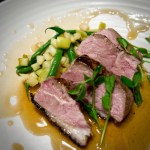
    • Crispy Seared Duck Breast with Orange Gastrique and Apple and Green Bean Sauté
    • Crisp Seared Salmon with Horseradish Crème Fraiche and Scallion Potato Rosti
    • Apple Almond Tart

    What did I learn? How to mince my own garlic so much that it was almost a paste, not to panic when water hits a gas flame (thank god I use an electric ceramic hob!), leave the ingredient in the pan and not move it around constantly (ie have patience) and it’s okay to cheat (ie buy store bought puff pastry!).

    If you ever get the chance to head down, either for a demo class or a hands on class, I highly recommend it. Even better if you can get a small group of you together, although I am sure that everything would pretty soon become a competition! 😉

    So, as promised, here’s the recipe for Spot Prawn Gyoza with Dipping Sauce:

    Ingredients

    (Makes 10)

    Gyoza Filling

    • 60 g Prawn meat (minced)
    • 15 ml Carrots (finely chopped)
    • 15 ml Leek (finely chopped)
    • 15 ml Celery (finely chopped)
    • 1 pc Green Onion (finely chopped)
    • 1 tbsp Chives (chopped)
    • 2 cloves Garlic
    • 15 g Ginger
    • 10 mL Yuzu Juice
    • 5 mL Soy Sauce
    • 5 mL Sesame Oil
    • 1 tsp Sugar
    • 10 BC Spot Prawns
    • 10 Gyoza Skins

    Classic Dipping Sauce

    • 30 ml Soy Sauce
    • 15 ml Rice Wine Vinegar
    • 15 ml Chili Oil

    Directions 

    (For steaming but can be deep fried)

    1. Combine all ingredients into a bowl and mix well.
    2. Heat a pan to medium-high; add enough oil to coat the bottom of the pan.
    3. Place gyoza in pan and sear bottom.
    4. Turn heat down to medium and add ¼ cup of water and place lid on top to steam for 3 – 4 minutes.
    5. Carefully remove from pan with a spatula.
    6. Combine all the dipping sauce ingredients into a bowl and mix.

    Folding Gyoza

    1. Place a spoonful of filling off centre on wonton wrapper. Lay peeled Spot Prawn atop filling.
    2. Using fingertip moisten the outer edge of the wrapper with water.
    3. Fold in half, using fingertips to crimp the two sides together, creating a seam on top of gyoza.