Blog

  • The apples of our eyes

    The apples of our eyes

    Longtime champion of local food, Glenda Bartosh, turned her attention to apples this week, and discovered that our very own Traced Elements regular, Mike Roger, is quite the apple man. Glenda gave us permission to repost her column here.
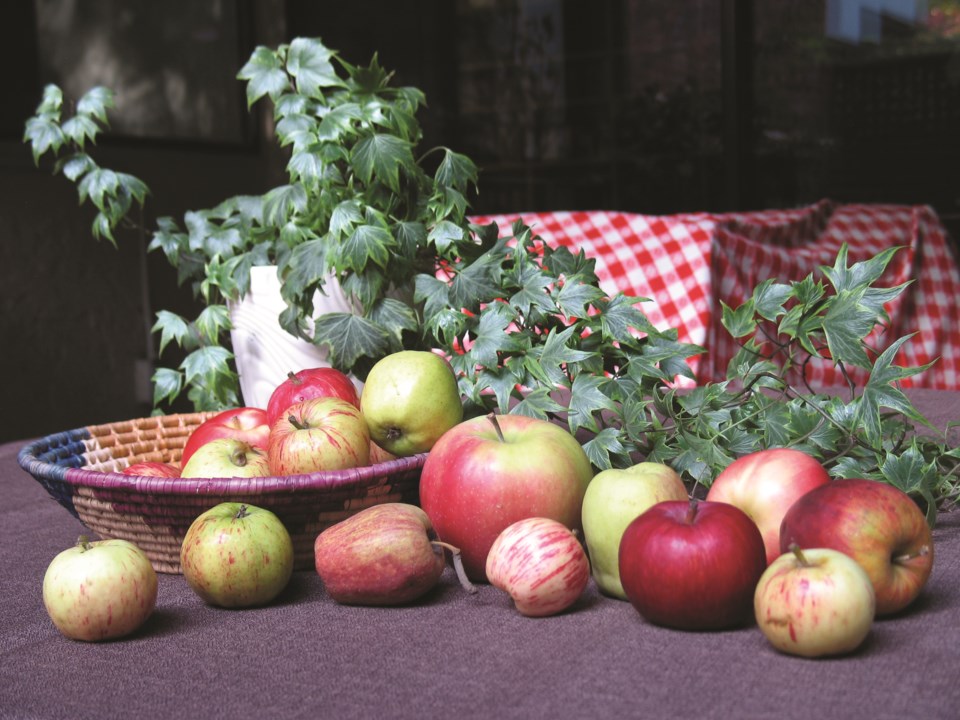
    Photo by Glenda Bartosh

    Apples, apples, apples. They’re everywhere this time of year, especially southern B.C., including Sea to Sky, so you don’t have to hit the Okanagan. 

    From West Van to Birken and beyond, you’ll find apple trees, babied and pampered, dwarfed and full-sized. And neglected old troopers that tug at your heartstrings—twisted and tortured, maybe 100 years old—still bearing fruit, in yards, orchards and ditches, where the goodness is yours for the taking, as gleaners well know. Even Whistler has a tree or three. (Ask Feet Banks about them apples.) 

    Fresh juicy apples; dried apples; apple chips. Apples baked, boiled, canned and pied. My 92-year-old mom, who’s lived a long and happy life eating many an apple, recommends a dab of peanut butter on an apple slice. 

    If you’re of a certain age or from the prairies, you’ll smile at the memory of bobbing for apples (the apples were bobbing, hopefully not you!), and the sing-song “Hallowe-e-en a-a-apples!” called out on doorsteps when, truth be told, we were hoping for candy, not apples at all. And who’d ever want one now in their trick-or-treat bag? 

    Poor apples! They’re so common we take them for granted, not realizing what a rich and noble lineage they come from, and how good they are—for health, nutrition and pleasure—especially those heritage varieties. 

    We have some 7,500-plus kinds of apples on the planet, but most of us can name, maybe, six. McIntosh—the original big Mac—so ubiquitous in Ontario, where it was first grown by one John McIntosh, in 1811. Delicious apples from the States. Spartans, created by R. C. Palmer in Summerland in the 1930s by crossing Macs and a pippin. Maybe Galas and Ambrosias, and the ever-green Granny Smith, a friendly apple from Australia, circa 1868. 

    But how about Grimes Golden, which could be a rockstar? Or the Hubbardson Nonsuch. Blacktwig. Buckingham (The Queen). Greening from Rhode Island, going back to 1650. The Gano. The Gennet Moyle. All poetic, and all apples grown in southwestern B.C. since the 1850s, and now sought after by many a heritage apple buff and association, including the Royal B.C. Museum, UBC’s Botanical Garden and Mike Roger of Willowcraft Farm near Birken.

    Mike, who plants six apple trees a year, is known for helping out on older farms dating back to the 1950s and bringing heritage apples such as sweet Annanas; super-tart Cox Orange Pippins; or humungous Boskopps (great for cooking) to Sea to Sky farmers’ markets. 

    Photo courtesy Willowcraft Farm

    “The heritage varieties are usually grafted onto full-sized trees, like, 30 feet [9.1 metres] tall and 25 feet [7.6 m] in diameter, so they’re massive. They can give several hundreds of pounds of apples,” says Mike, who’s also known for making amazing apple juice—150 litres in a few hours—by running a gunny sack full of ground apples through a top-loading washing machine on “spin.” (The juice pours out the drain hose—how excellent is that?) Recent commercial varieties, by contrast, are grafted onto semi-dwarf or dwarf rootstock so they’re easier to pick. 

    As for that noble apple lineage, cast your mind back 10, maybe, 12 thousand years, to the earliest proto-apples in Neolithic Britain and Europe—wizened little things, more like crabapples.

    Wild apples spread like crazy, but what we think of as an apple today most likely came from the Caucasus Mountains of Asia Minor, near where 17th-century historians located the Garden of Eden. BTW, there’s no scientific evidence confirming it was an apple that tempted Eve. It was just (forbidden) fruit, possibly a fig or apricot. 

    We have Ancient Romans to thank for breeding apples for size and taste, although they don’t grow true from seed (ergo the above-mentioned grafting). Plato, for one, could name about two-dozen apples, and in ancient Assyria, apples were served at a wee gathering for 69,000-plus people hosted by the king. A thousand oxen were also on the menu. 

    Apples are a key ingredient in classical Arabic cooking. I love how Farouk Mardam-Bey in Ziryab: Authentic Arab Cuisine points out that at the centre of every apple, we’ll find a five-pointed star, “the symbol of knowledge and power.”   

    As for an apple a day keeping the doctor away, it’s true. All the fibre in apples is good for your gut, plus it helps you feel full. Several studies show that apples’ polyphenols help prevent heart disease and lower the risk of stroke, while the flavonoids and anti-oxidants could help fight cancer. 

    University of Michigan researchers, who concluded that apples’ only health benefit was an avoidance of prescription drugs, analyzed just how big that beneficial apple should be: At least 7 centimetres in diameter and 149 grams. But an Italian study showed significant benefits in reducing heart disease and cholesterol when people ate two apples a day versus consuming the same amount of sugar and calories in apple drinks. 

    If all this makes you curious about branching out, ahem, and re-thinking apples, excellent. And if you’d like to branch out when the snow flies, and try some lovely homemade baking featuring all kinds of apples—maybe even from their own orchard in Naramata—head to Ian Gladstone and Joni Denroche’s cozy cafe at Cross-Country Connection in Lost Lake Passivhaus, just a short walk from Lot 5 in Whistler Village. 

    Joni’s taught me a great new trick: Simply wash, core, then slice your apples and freeze them. Use them, as is, for baking, or freeze them on a pan before bagging, so they don’t stick together. Voilà! A “super-cool” snack straight from the freezer. 

    Glenda Bartosh is an award-winning journalist who tips her hat to everyone who helped with these apple tales, including my mom, Feet, Mike, Joni, Ian, Bob Deeks, Lisa Richardson, Pauline Wiebe, Cate Webster, Paul Burrows, and Bob Brett. Long live the apple buffs! 

    This piece ran originally in the Pique.

  • Working Hard

    Working Hard

    “I can’t wait to go back to bed” – my first thought most mornings. I stop my alarm almost before it starts. Hitting snooze is tempting, but too dangerous. I don’t leave myself any extra time; the extra minutes of sleep are well worth the rush. Quarter to six, my eyes open, I take a deep breath and swing out of bed. I put on water to boil while I go to the bathroom, and when I come out, I am ready to go. A quick piece of toast and coffee in hand, and I am out the door.

    As I drive up the Meadows to the farm I work at, angsty questions roll through my head: why am I doing this? There has to be an easier job, one where I might feel rested at least one day a week.

    Pink light is hitting the east facing peaks and spraying a soft alpenglow into the valley. Cows graze in a large field veiled by a fine mist.

    I pull into work, put my boots on and walk out into the field. First thing is harvest. We need to get the vegetables off the field and into the cooler before the sun is too high. As I pull kale leaves off their stalks and tie them into bunches, my mental fog begins to lift. Looking around at the walls of the valley, Mt. Currie at one end, and the Hurley at the other, I forgive myself for the weight of my angst.

    What is work? For most of us, it’s having something to do that we don’t want to. We spend our days going off to an office or a store or a field to earn enough money to play, to do the things we do want to do. It is a trade-off we accept, day after day.

    If you have a job you love, you never work a day in your life, so the cliché goes. But it is more nuanced than that. Love is not a purely positive emotion. It is an act, difficult and requiring effort; at times it is defined by tolerating unpleasant things precisely because the positives are so pure. And maybe without those unpleasant things, the positives would not be so deep, and the beauty of a morning in the valley would be wasted.

    Life as a farmhand falls within that cliché. When I told people I would be working on a farm, their initial reply was often, “that’s hard work,” with the skeptical gaze of imagining the hardships of manual labour. I knew it would be difficult, and my chronic exhaustion proves it, but the positives far outweigh the opportunity to get more sleep.

    The physical aspect of the job pays for itself; despite fatigue, my body feels strong and capable, and I count this as a blessing. I consider myself fortunate to be outside every day, in a place people drive for hours just to look at. The early hours are my favourite of the day. My mind feels as clear as the air, crisp and refreshing. I spend my weekends hiking to places to find this feeling, and I have it every day at work.

    Maybe more important than anything in a good job is what the work is towards. At the farm, every transplant I put in the ground, and every weed I pull out, helps grow food that will feed the community. Compared to most of my jobs in the past, where my effort is often aimed at something I have no connection with, harvesting the food I will eat for dinner and that I saw at every step of the way, feels like a religious experience. And I am lucky enough to be paid for it.

    This sort of thoughtful work attracts characters with unique wisdom at their disposal. Conversations fill the air, and may interfere with the work at hand. But at lunch or in the small gaps between jobs, new ideas are openly exchanged and my own beliefs are questioned. Smart people are told they should be lawyers or doctors or scientists, but here they are farming.

    In the process, I have picked up indispensable skills that would have been unavailable to me from a seat behind a desk. I am confident I could start my own garden and feed myself. I would face unforeseen challenges, I’m sure, but working to solve problems is part of the fun.

    Not all work is paid for, at least not in dollars and cents. We will always need to do things we are not keen on doing to survive, but that does not mean we must suffer. Growing food is work, and leaves you as fulfilled as what you put on your plate. After I eat dinner and get ready for bed, I am filled with a sense of satisfaction a day in bed could never give me.

    You can find John at the Grand Majestic Pumpkin patch until Halloween.

  • Planting Garlic Is My Most Potent Annual Prayer

    Planting Garlic Is My Most Potent Annual Prayer

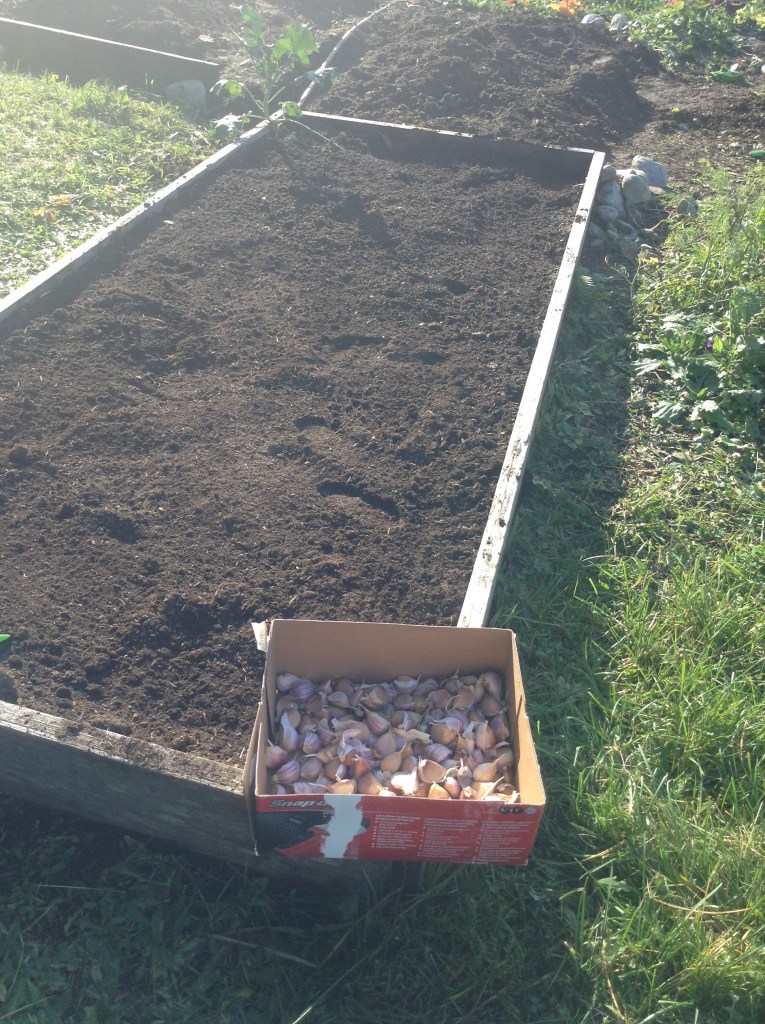
    I guess I always did say a kind-of prayer when I planted garlic – “okay then, do your thing.” I’d brush my hands clean of the moist black soil and feel again the improbability of all this growing business – stick clove in soil, anticipate its budding five or six months from now. I mean, how the hell does that even work? Shrug.

    “Over to you guys. Here’s hoping.”

    And there was a certain kind of hope in the action, a brave kind of reclaiming my right to grow my own garlic and feel a bit empowered, but the prayer itself was largely a faithless one – a parcel dropped by my suspicious feet, with no address, beyond a scribbled “To whom it may concern”.

    I am always caught by surprise by the little nubs of green shooting up through the mulch in the spring. It inspires wonder… but the wonder of the doubter… like, “that’s wonderful, but I can’t really believe it actually worked. There must be some trick to this Life business.”

    This year was different. (And I don’t think I can attribute it to experience – or to ten consecutive “successful” (knock on wood) garlic harvests.)

    I think the difference is that this year, there’s a new word in my vocabulary. The Underworld.

    Says the Google:

    Hidden deep within the bowels of the earth and ruled by the god Hades and his wife Persephone, the Underworld was the kingdom of the dead in Greek mythology, the sunless place where the souls of those who died went after death.

    It’s a word that kept coming up this year, from some of the thinkers I follow, folk who try to parse meaning from news headlines, whose idea of bigger picture involves mythology and ancestors and cosmic time.

    What I gleaned from those thinkers is that we could possibly think of this pandemic time, this “lockdown Lite” (as it’s been in BC) experience, as an opportunity to be initiated. An invitation to take things seriously. To go deep. To be confronted. To stop running around like the White Rabbit (“I’m late, I’m late, for a very important date”) and turn bravely and acknowledge Death. To shed some stuff – some of the ego’s favourite props. To emerge out the other side a little wiser… rather than just annoyed and anxious to reclaim my old life, exactly as it was.

    The climate emergency is the real event horizon that looms large. Maybe, I thought, COVID-19 might teach us something that can help us approach that bigger drama, treat this as a threshold into a different way of being, instead of just an interruption to our regular programming.

    Garlic planting with my helper in more innocent pre-pandemic days

    So when there was a brief window through which I could race out to the garden, clear a few beds, and insert cloves, I was in a different frame of mind.

    What has happened, strangely, in this last year, is that I’ve been invited by wonderful meditation and wisdom teachers, (thank you Susan Reifer and Natalie Rousseau) to allow myself to feel supported. Like, literally, to sit and close my eyes and feel my bones on the ground and the floor meeting me, and all the bits of my house holding things up and the earth beneath that… everything that rises up to meet the parts of me that settle down.

    That was new.

    And when I got around to planting this spring, I invited my weedy messy garden to support my little food-growing mission – to rise up to meet the part of me that was sowing seeds and digging down. And to my everlasting surprise, it did.

    And whenever I felt the lonely weight of all my feelings throughout the spring and summer, as we practiced physical distancing and hunkered in our wee bubble and I lamented all the things and people I was missing, the falling away of all the things that used to prop my ego up, the shock of lost momentum, the loss of all that had suddenly been cancelled, I walked outside and sensed the trees creating a kind of open-air church around me, all steadfast and able to contain the leakages of my emotions.

    And when I got curious about the idea that my great-grandmothers probably lived through pandemics, and did a little ancestry research, I arrived at this powerful sense that I am now the garden, I am now the physical matter in which my ancestors have the opportunity to flourish. I am the place of bloom. I am the landscape of Life and vitality, and they are all informing that, nourishing that, infusing that with richness, with the compost of their own lives.

    In short, instead of working in this hopeful-but-not-really-convinced state of reclaiming life, growth, gardening and garlic, I became reclaimed. I was reclaimed by my ancestors, by the soil, by the life force, by the trees around me.

    I planted the garlic this year, and I knew, without doubt, that those little cloves were not being cast out into an uncertain future, but that they were being offered back to Life, returned to soil that I tend with care, that I nourish with compost that has been generated from a combination of yard waste, our food scraps, wonderful worms and a host of other microscopic life. I understand that under every foot of soil, are gazillions of microscopic living beings. It is not me, kinda hopeful, against the emptiness. It is me settling down and receiving an immense amount of support that rises up to meet me, from every imaginable direction. Invisible, sure. But, even though I don’t see it, I sense it. I sense it now.

    I pushed the garlic into the Earth, and tucked them in for their winter sleep, their journey to the Underworld, beneath a blanket of maple leaves that I scraped up from the yard.

    This year, I have come to believe in the Intelligence of All Things, an intelligence that is encoded in all of us, a deep Knowing of what to do. The garlic will lie in its depths through the Dark Season, as the wheel of the year rolls from Samhain (pronounced sow-en in Celtic, the pagan precursor to Halloween) through to Solstice and over into Imbolc, the spring, and then they will rise again.

    And it won’t be a surprise. Because this is what Life does. It returns. It sprouts forth, it blossoms, it revels, it fruits, it pares away, it dies, it is absorbed, and it returns.

    So I tucked them in to the bed, and I offered my prayer, and this year, it wasn’t: hope you know what to do now… It was “thank you, thank you, sleep well and I’ll see you in the spring,” silently uttered with a little tearfulness and the deepest kind of gratitude and reverence I know.

  • Nature’s Gifts – Chanterelles

    Nature’s Gifts – Chanterelles

    Stop and smell the… CHANTERELLES!!

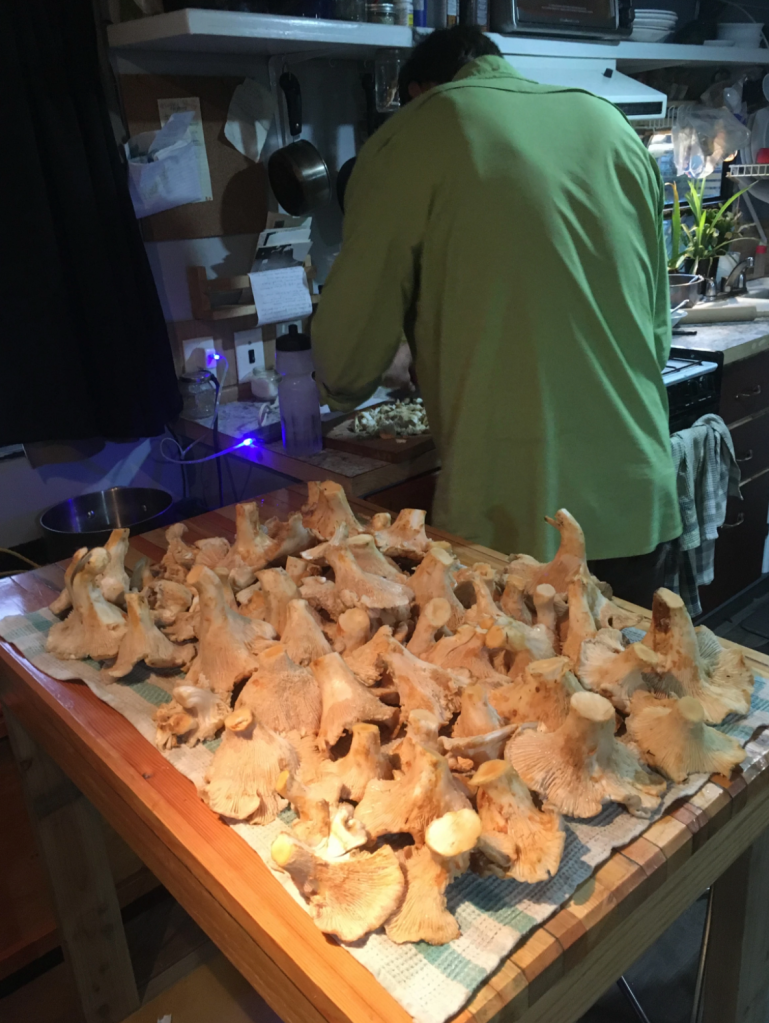
    Once again, I went for a walk in the woods and was shocked by the bounty that nature provides when I make the time to search it out. Look at those beauties!

    In case you haven’t gone mushroom hunting, it’s a delight. I leave the house with a vague destination, no peak to bag, no panorama to catch, no goal except to meander slowly and pay attention. It is so nice to just BE: to be present, to smell the forest, to remember which direction I came from, and pick where I want to go. To watch the world work its magic slowly, growing with seasons and time, and to forget about needing to DO all of the time. I carry a wicker basket, so the spores of the mushrooms can fall out as I walk (a trail of breadcrumbs to the mushroom patch once they fruit too!). I carry bear spray, water, snacks, I bring the dog, and with no rhyme or reason, I explore!

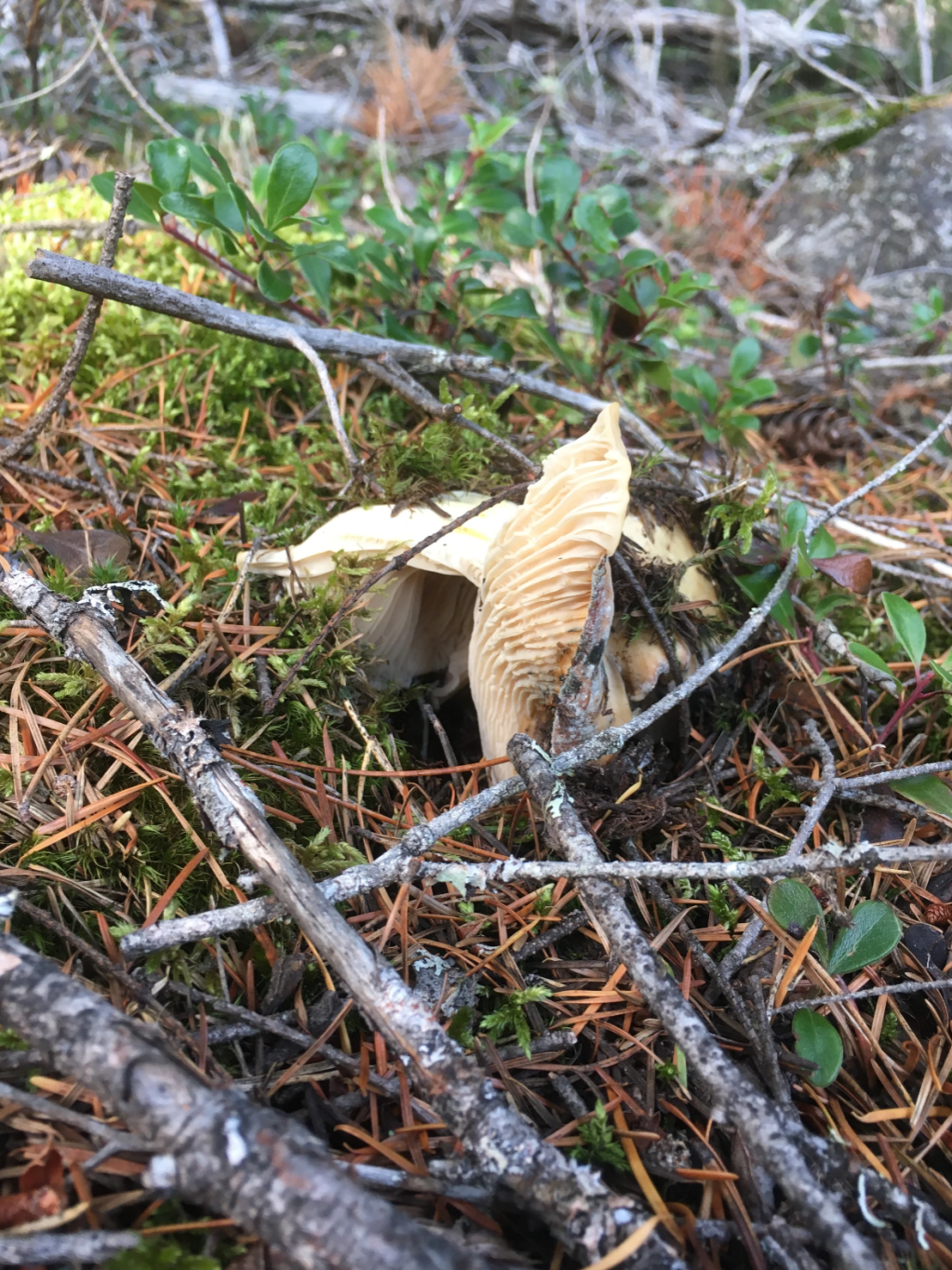
    You can see in the first picture- chanterelles can be mischievous, hidey little devils. Sometimes, as with most hunts, it’s best to expect to find nothing so that I can’t come away disappointed. Sometimes, however, when you find one, there are probably more around. Chanterelles are in season right now, they like partly sunny, wet, mossy forest floors. And in the right conditions, can be as big as my face!

    Once I get chanterelles home, I clean them with minimal water and a toothbrush. Water makes mushrooms mushy – but since they pop up out of mossy forest floors they often need some kind of cleaning.

    I think chanterelles are best fried in butter until they lose all of their moisture. When they start turning brown and crispy, add them into pesto or stirfry. YUMM!!

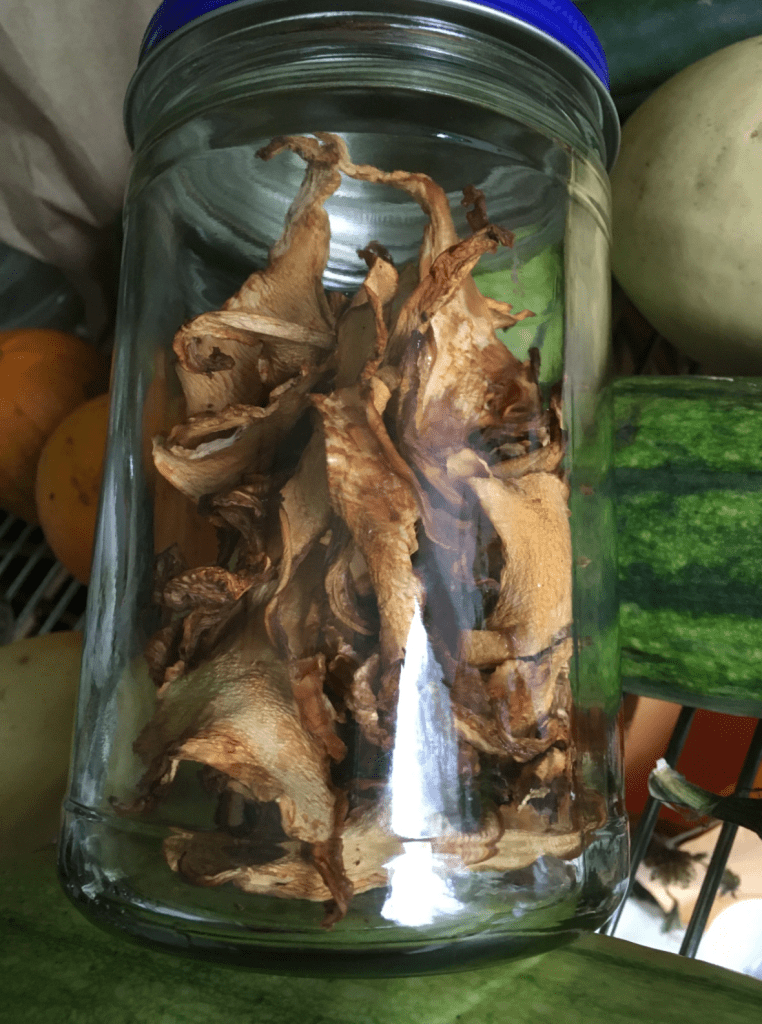
    And in the situation when I have so many I can’t cook them all at once, I like to dehydrate the rest and save them for later.

    A cream of chanterelle soup late in winter really makes home feel cozy and warm!! And I love the memory of the adventure that brought my food to my home. Meals paired with memories taste even better.

    Pop over to visit Nurture in Nature’s website for more of their thoughts, inspiration and events.

  • Farming for Change: introducing writer-farmer John Alpaugh

    Farming for Change: introducing writer-farmer John Alpaugh

    As a child I avoided eating vegetables as if they were toxic. The final scene of many dinners was a stand off between my parents and I over an untouched side of raw carrots. Eventually they surrendered, not willing to torture me or forego sleep to prove a nutritional point. For many years after these victories I avoided vegetables altogether. It is a strange turn of events that today I am working on a small organic vegetable farm.

    Like many people in British Columbia, I am not from here. I have the indistinct story of being from Ontario. After graduating from Dalhousie University last spring, I moved back home to work for my parents and save some money. When the fall came around, I built a bed in my car and set off for a road trip through the United States. I had a ski pass and a National Parks pass, and I was going to see the natural splendour that is so celebrated.

    As I approached the end of my trip and the bottom of my bank account in the early spring of 2020, I had to decide what to do next. Rounding the turn and heading north from California, BC appeared to be a natural conclusion. In the past, I had spent my summers working on golf courses. I wanted to continue working outside, this time putting my efforts towards work I felt was part of a solution, environmentally and physically. I went on GoodWork.ca, a jobsite connecting eco-minded workers with sustainable work.

    One posting caught my eye: Laughing Crow Organics in Pemberton, working as a farmhand. I emailed Andrew Budgell and Kerry McCann, the owners and operators of the farm. A few days later, I had a Skype interview from the visitor’s centre in Yosemite Valley, and they offered me the job. I started looking for a place to live that would also be financially sustainable.

    Kerry McCann, Laughing Crow Organics’ co-owner: “People need to eat.”

    But soon after this, the world entered a pandemic, and suddenly every plan was on shaky foundation. No one had any idea what would be possible a week, a month, a year from now. I was in Lake Louise staying with a friend from home when COVID hit, planning to continue west. He had been laid off from his job at the hotel, and we both decided to head east and wait things out.

    I got in touch with Kerry. Would there still be a job for me? People still need to eat, she said. “We will be growing plants and feeding people and we will need your help.” A month after my first cross country drive, I turned around and headed back west.

    Immediately I knew I had made the right decision. Even in May, at the height of COVID confusion, Pemberton was a pocket of normalcy. The next month, when Black Lives Matter demonstrations erupted across North America, the events of the world felt even further away. In both instances, I wondered what part I played in it all. What is my responsibility?

    Farming was an attempt to answer this question. Our food systems are some of the most oppressive systems we have, environmentally, socially and economically. Like many others in the capitalist mindset, optimization has been focused on profits, rather than quality. As a result, large scale agriculture has sterilized the growing process in an effort to grow more food for less money. These costs do not evaporate. They are passed down the line onto the health, the environment, the worker, and the consumer.

    When I was on the road, I did most of my shopping at Walmart. It was the cheapest option, and they let me sleep in the parking lot, so it was convenient, but I knew there was something wrong with this decision. By spending my money on cheaper food, I was inevitably supporting practices I do not believe in. Cheaper food is cheaper because it exploits workers, and abuses the environment.

    Eating is a completely different experience on the farm, one I am very fortunate to have. The work is fair, the pay is honest, and our relationship with the land is respectful. We give it what it needs, and it repays in kind.

    Unfortunately, there is an observed problem of access to good food, one that can often be drawn on lines of racial inequality. Buying organic is often out of reach, and Walmart or McDonald’s appears to be the best or only option. But when I go to market, and see what our customers get for $30, in quality and quantity, I cannot believe I shopped at Walmart. If I were a customer, which I have no doubt I will be in the future if I am not still an employee, I would be proud to be supporting better practices, and to be receiving a better product.

    To be an activist does not necessarily mean you must be on the front lines with a picket sign. It can be as simple as making more informed choices at the grocery store. By supporting local, small scale sustainable agriculture, we are supporting the health of the earth, the health of ourselves, and the health of society. It is an act of liberation and solidarity. The more we choose to buy from farmers who are doing the right thing, the more this opportunity will be presented to others.

    I needed to find myself on a farm before I truly grasped this, but awareness is free to anyone, and it is often the most powerful thing we can do.

  • Bring your own bubbles: how to make a ginger bug (wild fermented soda) ie your own healthy pop

    Bring your own bubbles: how to make a ginger bug (wild fermented soda) ie your own healthy pop

    You know the scene in the BFG when the giant introduces Sophie to the most scrumdiddlyumptious drink in the world, frobscottle?

    My mate and I decided to scale back our adult-beverage-drinking, after we went into pandemic survival mode with the help of a case of wine and a couple of cases of beer, and discovered, months (and unwelcome pounds) later (although it still felt like March), that the daily take-the-edge-off habit was not really sustainable over the long-term, or over the conceivable life of COVID-19, which could be years.

    Embracing sober-curiosity in July meant asking ourselves questions in a curious way: what need in me is rising up and seeking fulfilment right now? What can I do to meet that need, in lieu of pouring a glass of wine? It was interesting to realise what those needs were, as we found substitutes – glass of water, cup of tea, fancy little cheese and cracker platter to call the day to an end, delicious oxymels brewed up according to Natalie Rousseau’s recipes.

    Sometimes I was just thirsty. Sometimes, I wanted a little reward for having done such a good job of adulting all day. Sometimes, we wanted to create a feeling of celebration. Sometimes, the day felt so much like every day that had come before it, that we needed some kind of ritual to mark it as special (which goal was somewhat undermined by choosing alcohol as the ritual every day.) Some days, I just needed to claim one single fucking moment that was mine, after an endless stream of moments catering to everybody else, even if it was literally just a mouthful.

    And it has been fun to discover that I can meet these needs in other ways (although the last one is proving the trickiest.)

    The celebration, the specialness, the coming together is quite wonderfully met with frobscottle. Or, our version, ginger lemon soda. (Doesn’t make you toot. But the bubbles are spectacular.)

    It’s probiotic, if that tag helps you feel generally better about consuming things.

    So that’s the long introduction that could be summed up with a clickbait headline: the drink that makes you feel happy, while sober!

    In one of the first posts we ever shared on Traced Elements, Denise shared about making a ginger bug, and I was intrigued.

    (Here’s the Nourished Kitchen post that explains all about it.:

    Ginger bug is a slurry of fresh ginger, sugar and water that has been allowed to ferment until bubbly and foamy. Brewers use the bug to brew probiotic tonics and drinks like root beer, ginger beer or probiotic lemonade.

    Like sourdough starter, ginger bug is a starter culture that is rich in wild bacteria and yeast. These starters kickstart the fermentation process for other fermented foods. Sourdough starters provide the bacteria and yeast to make bread. Kombucha mothers make kombucha tea. And ginger bugs make homemade, naturally fermented sodas.

    When you mix ginger and sugar together with water and let it sit, the wild bacteria and native yeasts in your kitchen and on the ginger itself begin to proliferate and grow. These wild microorganisms eat the sugar in your bug, and produce carbon dioxide as a result.

    When mixed with a sweetened herbal tea, fruit juice or other base, the microorganisms in the ginger bug consume the sugar in the tea or juice. As they do, they reproduce and emit carbon dioxide that gives homemade soft drinks their bubbles.

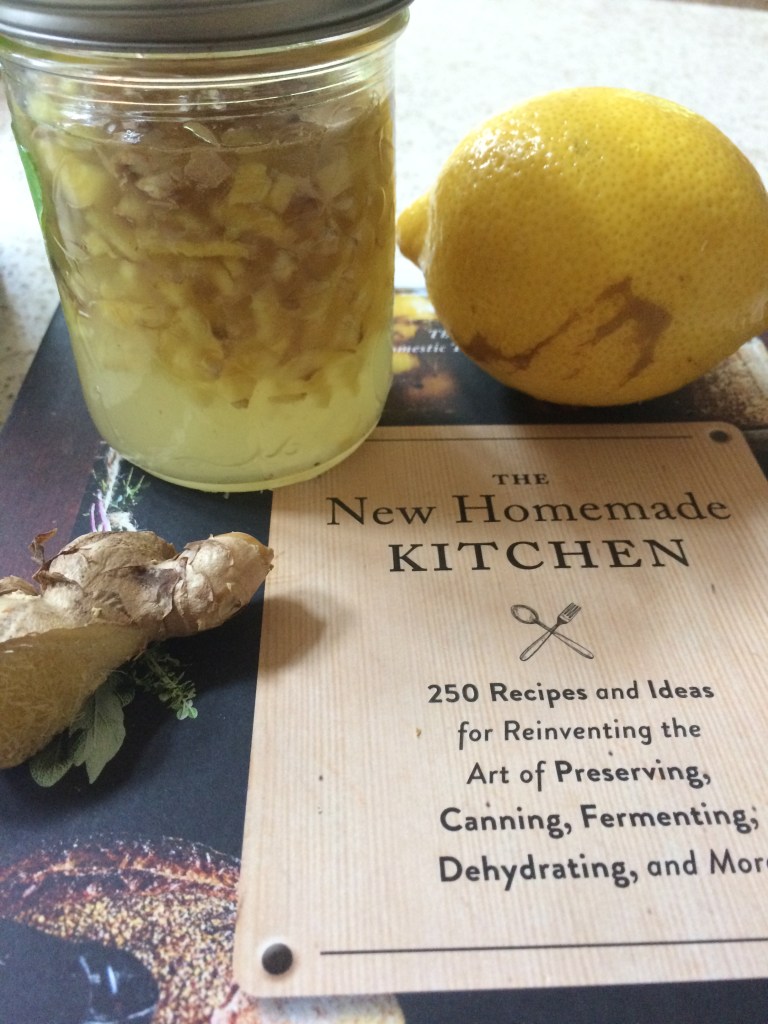
    When I opened up my copy of The New Homemade Kitchen: 250 Recipes and Ideas for Reinventing the Art of Preserving, Canning, Fermenting, Dehydrating and More by Joseph Shuldiner (last mentioned as my pickling bible), I was enchanted by this statement:

    Wild Fermented Soda

    Fermented soda is made with your own live, wild starter, fermented using only fresh ginger and sugar, charmingly referred to as a “ginger bug.”

    It’s super easy.

    These instructions follow the recipe from The New Homemade Kitchen, a wicked-good reference for any kitchen, which has emboldened me to experiment joyfully:

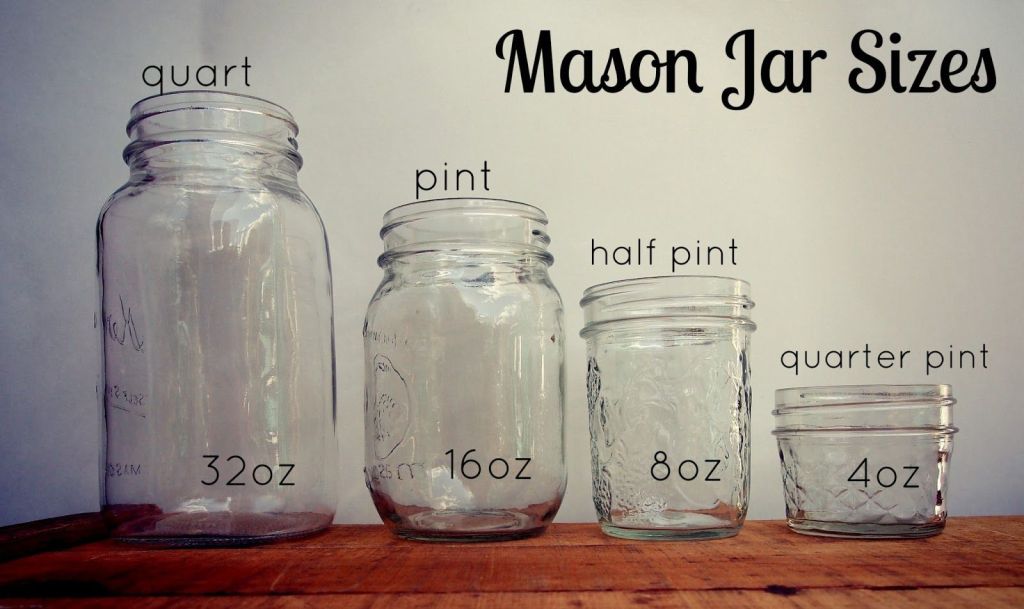
    Take a large (pint-sized) mason jar, (the book suggests a half pint, but we quickly upsized, to meet our production demands… maybe start with the half pint and then scale up?), add 1 tbsp fresh unpeeled finely chopped ginger and 1tbs white sugar. Fill with filtered water (if using tap water that is treated, let it sit out for a while so the chlorine can burn off; if you are on a well, you can use that water). Leave about an inch of headspace at the top. Stir to combine, then cover the jar and set it aside at room temperature.

    Feed your ginger bug every day, at roughly the same time, by adding another 1 tbsp of chopped ginger and 1 tbsp of sugar. Stir, and cover. After 5-7 days of daily feeding, the “bug” should fizz strongly when the ginger is added. It’s now ready for soda making!

    Soda making!

    The first week was the hardest – remembering to feed it, being patient, feeling sceptical, wondering if I actually really want to cultivate and house and invite the proliferation of invisible bacteria that are *already living in my kitchen* (say what?? I mean, ewwwww.)

    To make soda, I strain off 105 ml of the starter at a time, and then refill the jar with water, and keep feeding it. Now and then, I’ll scoop out some of the ginger to make room. But basically, the ginger bug has become a regular countertop companion, alongside the kombucha and the jars of oxymel in various states of infusing. It’s just one more lovely life form I tend to (and the most low maintenance, let’s be honest, especially compared to the Significant-Other-bug, charming as he can be.)

    If you’re like me, and need to read recipes six or seven times before they stick, check out the Zero Waste Chef’s blog in which she explains her ginger bug process. (She has a book coming out in the spring!)

    As far as I can tell, you need a wire-bale or EZ cap bottle for your concoction, because pressure builds as carbon dioxide is generated.

    The New Homemade Kitchen instructs you to mix:

    105 ml of strained Ginger Bug starter

    1/3 cup of fresh lemon juice

    4 tsp of fresh ginger juice (the most finicky part of the process which involves pressing a piece of peeled ginger against a fine mesh sieve to extract some juice… I don’t ever find this very juicy, so I might be doing something wrong… but that’s the best thing I’ve taken away from this whole experiment… You might not do it perfectly, and the results are still delicious.)

    When we opened the first bottle, ceremoniously (and slightly nervously, “stand back, stand back, it could possibly explode!” which of course made my 7 year old desperate to be in charge of opening it), the boy-child drank a cup and pronounced it the best ever. “I will never drink another pop again,” he said. Subsequently, it has been increasingly difficult for me to get my hands on. It seems to disappear quickly. I tell myself it’s medicinal – after all, isn’t ginger and lemon tea the prescription to ward of colds and flu? Add probiotics. Drink up, kiddo. I’ll make another batch.

    Apparently, you can also use this ginger bug base to brew your own ginger beer… stand by, that may be a future post…

    Living in a world held hostage by an invisible pathogen, I have found it to be immensely heartening to make friends with other invisible microbes… to realize the world is full of life forms that we cannot see and barely pay attention to, and they’re part of our daily life, impacting us constantly – and often, beneficially – helping us digest our food, accelerating the action in our compost pile, turning the tea into kombucha… Befriending them, and inviting them into the kitchen as my co-creators, has helped me find a better sense of balance, mentally, than at the start of the pandemic when I hunkered down with my case of wine hoping the invisible lurgy didn’t pounce on me and my loved ones. This, after all, is the actually story of Life. Not ‘eat or be eaten’. But let’s co-exist. Symbiosis, my friends. It’s win-win.

    Symbiosis is recognition that the way life actually evolved was through different organisms working out how they could offer something to another organism. Rather than the zero-sum game we’re told Life is in the Selfish Gene concept, (everyone’s out to beat everybody else), that’s not how evolution works. It works by different entities getting together and sharing their particular skills to create something bigger that is better for all, eg the way Fungi take all that debris of plants and animal matter and reorganise it to make the soil fertile for plants. Or, plants, that are superb at photosynthesis, need help moving their seeds around, so they offer nutrition to animals who in turn move the seeds of the plants to enable the whole ecology to strengthen.

    Every single element of life is like that: we work together to create something better. ~ Jeremy Lent

  • To be prepared, ask a better question

    To be prepared, ask a better question

    I’ve been wrestling with the task of getting a 72 hour emergency preparedness kit together for years now.

    And still have made no real progress on that grab and go bag.

    On Thursday, as kids headed off back to school, the provincial health officer, Dr Bonnie Henry warned that the fall could be really challenging, saying: “We must now prepare for whatever may lie ahead this fall and winter.”

    South of the border, Dr Fauci has the same warning: “We need to hunker down and get through this fall and winter, because it’s not going to be easy.”

    That said, in Australia, which is coming towards the end of winter, social distancing and a big uptake in flu vaccines, has led to the lightest influenza season experienced in memory (literally 107 cases down from 61,000 last year.)

    So, get prepared for what could be really terrible, or what could be really fine – there’s no way to know and hence, how do you prepare for that?

    This is what has stalled me out from that 72 hour emergency preparedness kit (am I outfitting myself for an earthquake? a fire? a power outage? zombies? do i need chocolate, a water purifier or an arsenal of weaponry?), and it’s what was swirling through my brain for a lot of May and June… but then the sun came out. And it felt nice to just go outside, and relax.

    And now, this thought is coming back, this great moment of clarity I had… “how can I be prepared for the fall/winter?” is not the best question. It leads to a hunker down in the bunker mentality, an immediate need to stockpile and hoard, because preparedness feels like fortifying things… BUT if the shit doesn’t hit the fan, it will feel like a waste, an overreaction, almost an embarrassment. So, it feels as if I have to buy in to the actual likelihood of terrible things happening, in order to make preparations to survive them…

    The question that opened up a more generative response was when I wondered, “what can I do to resource myself?”

    Resourcing myself feels like an interesting inquiry, a wondering, it feels generous and creative and fun, because it

    1. involves taking a moment to ask what do I love? what brings me joy? what makes me feel well? and

    2. it doesn’t feel like wasted effort if the worst possibilities don’t transpire. I’m not suddenly sitting on a stockpile of inedible army surplus MREs. I have some nice jigsaw puzzles to do, and a lovely selection of teas.

    This image has an empty alt attribute; its file name is img_1789.jpeg

    Being well-resourced, to me, means having some trusted friends I can reach out to when I need it, means having some go-to responses when I feel a little overwhelmed, means having plenty to read and some trees to go hug. (It also means having farmer friends who give me gardening advice when I text – thanks Anna!) So, part of resourcing myself for an unknown fall/winter has meant dealing with my phone-phobia, and connecting with a handful of people who I really enjoy talking with, but can’t simply assume I’ll run into. It has meant getting sober-curious, and seeing if teas, tisanes and tinctures at the end of the day can become part of my ritual to replace a glass or two of vino. It has meant investing in books and cookbooks. And carving a little path in the grass of a regular route around my yard, where I stand with a few trees. I’ve also been pickling and preserving and seed-saving – not in any fashion that is going to save my life – but just enough to feel deeply immersed in the season, to develop a felt sense of abundance (nothing does this more than tickling the dried seeds off a herb or flower and realizing you now have more than you will possibly ever need), and growing a little bit of know-how.

    Drying flower petals for teas might not save my life, but it sure felt nice.

    I don’t think we can be “prepared” given the curveballs life throws our way… and because I don’t want to squander my imaginative energy trying to conjure all the possibly scenarios. But this unfolding experimenting in being better-resourced, as a human, has been enjoyable. I recommend it. 🙂

    And tell me, do, what makes you feel well-resourced?

  • An end to the fits and starts

    An end to the fits and starts

    I recently, well 33 days ago, signed up for a creative workshop that asks that you ship something every day for 100 days.

    It’s hard. I am a “do it when the muse shows up” creative. And, this course teaches you to accept creativity as a career — a position where people expect you to show up and do the work.

    Prompts remind you that people who have creative careers submit below average work as often as they submit just good enough work — and rarely submit creative genius. And the prompts posit that hope, that plane-is-delayed-painstaking-waiting-hope, for the creative genius to show up is what keeps us comfortably sitting in that mythical land of writer’s block.

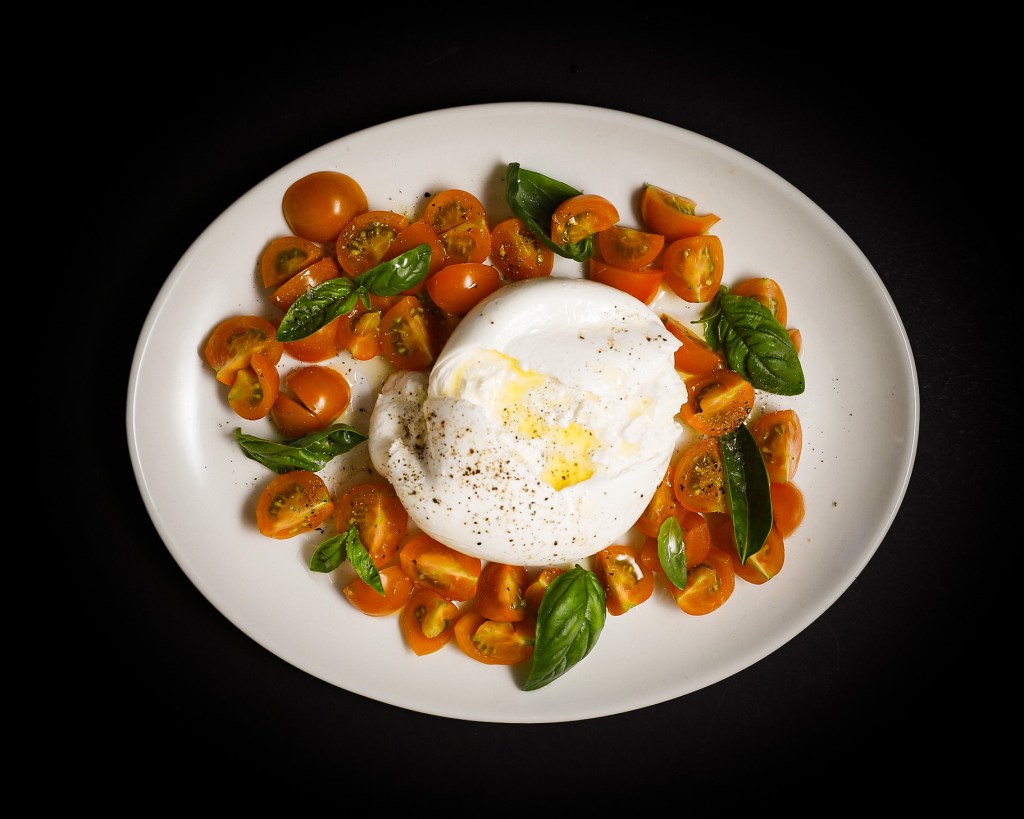
    I don’t write a story every day, but I am sure to make an observation. Sometimes that observation includes photography (like the cherry toms and burrata). My genre is creative non-fiction. Here is a compilation of a few of those observations (your thoughts in the comments will be welcomed).


    I pull open the door, without recalling that it’s weighted with jams, chutneys and quickles. The energy of my pull slams the door against the wall with a big thud and subsequent clinking of jars.

    It’s Friday. Farmers’ Market day.

    And fridge cleaning day.

    For the millionth time, I check the temperature, and it’s still set to as low as it will go. I shake my fist, as if my landlord above our suite can see me. This fridge, from brand new, has always been too cold for fragile veggies. I sigh.

    I yell over the jammy beat of the Grateful Dead, “Honey. I think a refrigerator risotto will clean this out! Can you do the prep while I go to market?”

    “Fennel. Carrots. Zucchini. Fava beans. Garlic. Patty Pans. Beets. Roasted…on risotto. How’s that sound?”

    “Honey…?”


    I rip open the bag. The dirt-laden pickling cucumbers present a distinct earthy smell that reminds me that it’s August. I carefully weigh six and a half pounds. A wave forms as I dump the cucumbers into an enormous bowl full of crystal-clear water.

    I’m drenched. I go to the drying rack and grab a fresh shirt.

    I return to the kitchen to find emerald green oblongs floating in murky brown water. I’m mindful, as I drain the swamp – so as not to need another shirt. I guide the spray hose and jiggle the bowl full of soon-to-be pickles. The force of the tap dislodges most of the brown wilted blossoms from which these little delights grew.

    As the stainless basin once again fills to the brim, the brown feathery blobs float to the top – and with an odd sense of wonder I think about how long it’s been since the flowers perished.


    The room fills with light, and a small rumble follows.

    My husband snores next to me. I consider waking him to watch the light show, and help calm my nerves. Instead I watch alone, and wonder how many forest fires we can expect from this rainless lightning storm.

    I can’t sleep, so I open social media and people are posting images and videos of massive lightning rods that reach to the horizon. Exactly the kind of lightning that starts forest fires, I muse. It takes time, but I fall asleep.

    I hadn’t checked the wildfire map even once this summer. It’s been cool and rainier than the last 5 years. The moment I hear the espresso machine, I grab my phone. More than 100 new fires dot the map with the likelihood of more remote fires still to be identified.

    Ten new fires in the farming town just 30 kms north are noted. Each fire, according to the elevation lines, is well into the mountains, and still, it is nerve wracking.

    Rain is expected in the days to come, but I hope farming can continue with the suppressive smoke that is reportedly filling the valley floor. I think about how they will maintain their livelihoods should another state of emergency befall the farmers’ work of feeding their communities. The prospects look grim.


    Thanks for reading. Is there something you’ve been doing in fits and starts that could use a 100 day push? Share in the comments below – I’d love to know.

    ~Lisa Severn

  • Thank-you Bees!

    Thank-you Bees!

    From 20 hives, our own Nurture in Nature bees have been busy buzzzyy…

    Our own honey is now available in our Farm-acy Stand and with the wax caps from the honey combs, came an exciting learning day of rendering the wax and the extra honey, that had been extracted by our beekeeper Joel.

    Feeling like a hungry bear, I scooped up handfuls of the wax, dead bees and honey from the large tub into the slow cooker and like a bear, licking my paws was so good and irresistible! (I did wash them of course before continuing).

    Good thing Mr Bear didn’t smell it from afar because the bees certainly did and tried to come join me to claim it back!

    Once melted, I filtered it through cheese cloth so the wax dripped through into water, cooling immediately to form pure wax while the slum gum (unwanted material) was caught and the rest of the honey settled at the bottom of the water. Amazingly once the water was drained off as much as possible, 7 more jars of cooking honey were filled. Yay!

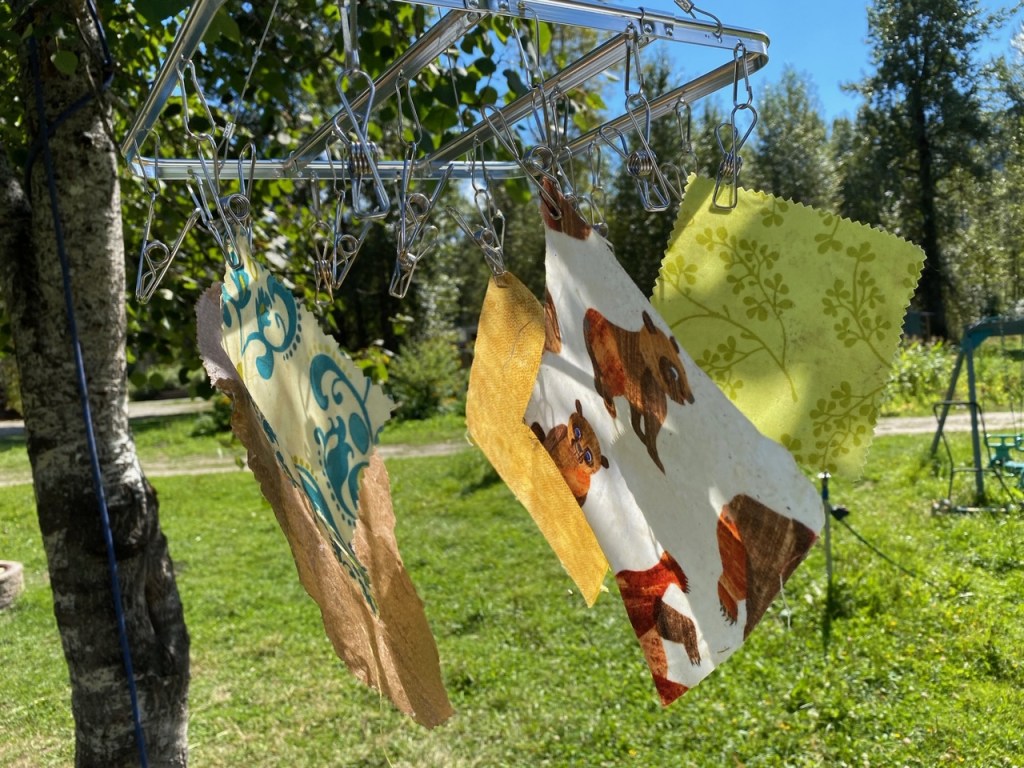
    For our Friday workshop, we decided to use the wax to create wax food wraps and for those not familiar with them, we dip or paint some lovely cotton material, the melted wax which when hardens can be shaped around a pot, used to wrap lunch sandwiches in, and any other use that can be thought of. (Thank you Carin in your guidance in making these and provision of the cloth).

    Though many pieces were made by many hands, making it easy work to process lots of wraps, we realised we did not mention that in coming to our workshop, our philosophy is that we are here as a community, learning and sharing together, so though one person may make many pieces, that does not entitle them to claim those pieces as their ‘own’. Rather they are learning by helping, giving something back but do get to keep an item they make.

    This leaves all the other wraps to be sold in the Farm-acy Stand which brings funds back to the community garden, (and to those happy hardworking bees)….so lets please say a thank you to all our local bees out there for providing us with some wonderful products to enjoy!

    Follow Nurture in Nature’s adventures at https://www.nurtureinnature.ca, or visit them at one of their forthcoming September events. For more details check out https://www.nurtureinnature.ca/upcoming-events

  • Rainy August Day in Pemberton – Make These Cookies!

    Rainy August Day in Pemberton – Make These Cookies!

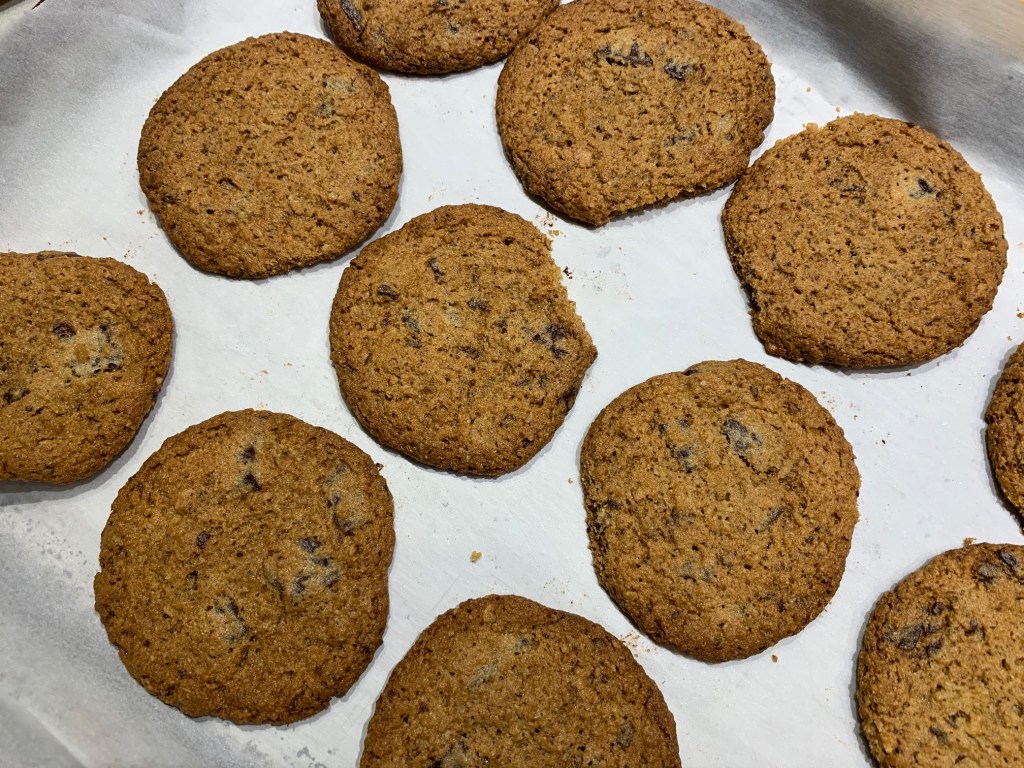
    Torrential rain here in Pemberton today. A good day for baking. These cookies I adapted from a John Bishop recipe from his cookbook At Home. They are great for road trips. I have not had luck with PB cookies lately and have been disappointed with the recipe in the Joy of Cooking (both the original edition and the updated version published about a decade ago). This one is very good! John Bishop’s recipes have good bones…

    Not a recipe high in Pemberton ingredients this post except for the Pemberton egg – only the best!

    Gluten-Free Peanut Butter Chocolate Chunk Cookies (yield: 2 dozen)

    ½ cup unsalted butter

    ½ cup natural chunky peanut butter (I used Western Family brand)

    1/3 cup white sugar

    ¾ cup coconut sugar

    1 Pemberton egg

    ½ cup pulverized gluten-free oats (pulverize in Cuisinart until oats are the consistency of flour)

    1 cup almond meal

    ½ tsp baking powder

    ¾ tsp baking soda

    ¼ tsp salt

    4 oz Lindt 90% dark chocolate, chopped

    Cream butter and peanut butter in mixer. Add all other ingredients. Blend well. Stir in chocolate chunks. Use a 1.5 tbs-sized spring-loaded cookie scoop and use it to drop dough onto 2 parchment-lined baking sheets (these cookies spread quite a bit). Bake at 375C for 12 minutes. Cool and enjoy!