Category: Uncategorized

  • A Veggie-Laden Twist on Shepherd’s Pie 

    A Veggie-Laden Twist on Shepherd’s Pie 

    Shepherd’s Pie is another great dish for experimenting with. It is also great comfort food on a winter evening! Lately I have been omitting tomatoes and garlic from my recipes. I don’t love garlic in particular and I am cutting back on acidic tomatoes. Eliminating these two ingredients is a challenge, as they pack a lot of flavour.

    With a lot of time in a good cast iron Dutch oven, you can bring out the flavour in SO many veggies. For shepherd’s pie you can experiment, but this time I used: 1 cup diced green cabbage, ½ an eggplant, a large yellow onion, 2 cups parsley, and several healthy dashes of Worcestershire sauce – as well as S&P.

    If you sauté those veggies at a low-medium heat for a good ½ hour – or more, you will have the flavour you want. And not have to resort to tomatoes for zing, or the usual garlic! The other veggie-friendly thing I did was steam a whole cauliflower and then mash it along with 8 fingerling potatoes, with plenty of butter and salt and the cauliflower steam water. All in all, this shepherd’s pie was a hit, and had tons of servings of nutritious veggies in it to boot. This is my re-boot of the usual “carrots, peas and corn” shepherd’s pie – which by my palate has had its day!

    Veggie Turbo-Charged Shepherd’s Pie:

    Ingredients:

    3 tbs pure olive oil

    ½ eggplant, small dice

    1 cup green cabbage, small dice

    2 cups parsley, chopped

    1 large yellow onion, small dice

    1 tsp pepper

    2 tbs Worcestershire sauce

    1 lb ground Pemberton-area deer meat, or grass-fed lean ground beef

    1/3 cup unsalted butter

    1 medium cauliflower

    8 small yellow potatoes (Pemberton Sieglindes are a treat)

    Salt to taste

    Method:

    Sauté all veggies (except cauliflower and potatoes) until well cooked and caramelised in cast iron Dutch oven.

    Brown deer meat/ground beef in a separate cast iron fry pan, then and add to veggie mixture.

    Add ½ cup chicken broth and 2 tbs cornstarch. Mix well. Mixture should thicken nicely.

    Boil potatoes until very fork-tender.

    Steam cauliflower.

    Puree steamed cauliflower in food processor fitted with steel blade until very smooth.

    Blend cauliflower and potatoes together in stand mixer with butter, salt and cauliflower steam water until you have a smooth consistency.

    Pour veggie mix into 9×13” casserole dish and spoon mashed potatoes/cauliflower over top. Spread well.

    Bake 350C for ½ hour.

    Enjoy!

    ** Leftovers: next day add a good splash of chicken broth to a serving of shepherd’s pie and it forms a stew that is very satisfying in a Thermos for lunch on the go.

  • Growth

    Growth

    “Life is like a box of chocolates. You never know what you’re going to get.” Forrest Gump

    Without a shadow of a doubt I can say this has been one of my most challenging years to date.

    Thus, I’ve been quick to say, “Peace out 2018, thanks for nothing!” But really, deep down I’m actually saying, “Thanks for everything. “

    Having suffered a bad concussion earlier this spring I was forced to slow down and smell the roses. My garden became my sanity through it all and I re-kindled my love affair with the soil under my nails. (If only the confidence I feel within those walls projected throughout all aspects of my life.)

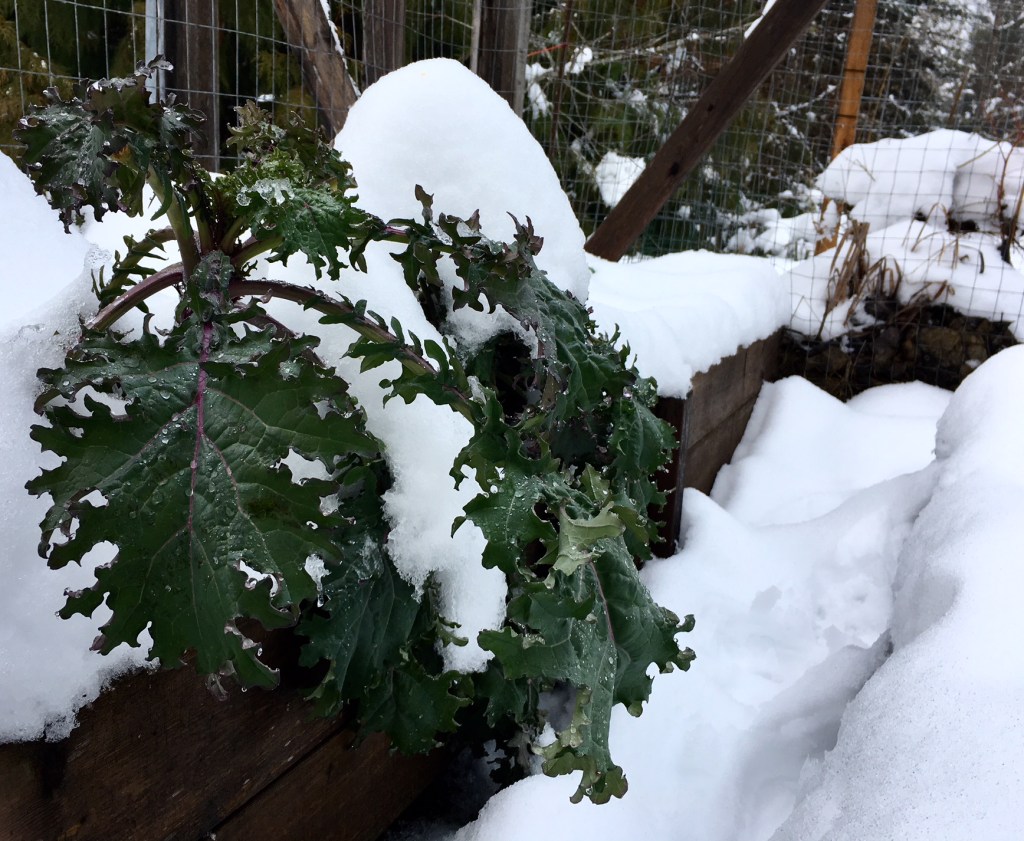
    But if kale can weather harsh conditions and continue to grow then so can I. My roots are strong; I’m just feeling bound. All I need to do is prune back some dead shit, be re-potted and I’ll bloom.

    For years I’ve reached for the cheat sheet in a box of chocolates because I wanted to know what I was getting (otherwise known as the Comfort Zone). Bite into something “gross”: no thank you. But life for the most part doesn’t give us something to follow and you just have to be ready to ingest anything.

    All of this being said; learning will nourish my new year as I deepen my love for all things horticulture. The second step is sharing it with those who need some inspiration or want to learn more or just need a little nudge.

    Here are your first tips:

    Grow your own food: it’s the best way to get what you want.

    Experiment: maybe you’ll discover that something you thought you hated you actually love.

    As we grow in the life we’ve been gifted we begin to learn we love some flavors more then others. Breaking away from the comfort of our favourite flavors is when we will be most rewarded but it’s key to keep some classics in your back pocket.

    In the end if we keep sowing our own seeds, growth is inevitable.

  • Gifts for Soil Lovers

    Gifts for Soil Lovers

    HOE HOE HOE: a gardener’s salute to the holidays!

    The countdown is officially on to the day jolly ol’ Saint Nick gobbles up treats left by excited little people, adds a splash of rum to a glass of eggnog and leaves gifts for all. I thought it a perfect time to share a few thing that graze my wish list/need list throughout the year, in hopes it may inspire some of you stuck on stocking stuffers.

    Promise me this — you will source locally as much as possible. For the love of sustainability and supporting our community, we need to tighten up our game.

    So, here we go (in no particular order): fun ideas for the chef, gardener and wanna-be green thumb in your life.

    1. GLOVESI’m the first to admit I use them sparingly but I’m sure happy to have a set around and nothing beats a new pair; like the feeling of a fresh pair of socks.
    2. NAIL BRUSHMany of us are proud of the dirt under our nails and our calluses but sometimes life calls for clean hands. Small Potatoes Bazaar has you covered.
    3. FELCO PRUNERSMy personal favourite are the #2; an essential component to any gardener’s kit and the holster is a mandatory accessory. Available at Pemberton Valley Nursery and their Whistler location along with a great selection of gloves and number 12 on this list!
    4. GARDNER’S DREAM CREAMTreat your hands – they do so much hard work. Stay Wild keeps their shelves stocked with the goods.
    5. SCANDINAVE SPA PASS w/ MASSAGE The heavy lifting and bending is over; this gift is a no brainer.
    6. BOOKS!There are so many options out there but here are my current top three picks: Floret Flowers (Erin Benzakein, Julia Chai), Seed to Seed (Susan Ashworth) and Putting Food By (Ruth Hertzberg). The folks at Armchair Books are great. They don’t always have what you’re looking for in stock but they are amazing at getting you what you need as fast as the other guys.
    7. WEST COAST SEEDS GCTheir seed selection is top notch and their website is like a bible for home and pro-gardeners alike. Grow and eat your way to happiness.
    8. GROWOYAA self-watering terracotta pot that you sink into your garden… AKA: a pretty nifty idea that a girlfriend introduced to me as a way to deal with the summer watering restrictions. It doesn’t work for all vegetables but their website is full of information on how to get the most out of this efficient irrigation style.
    9. CRINKLE VEGGIE CUTTERWe live in Spud valley and are ruled by potatoes so why not have a cool device on hand to make some funky fries from time to time!
    10. VANDUESEN GARDEN PASSThis place is the Willy Wonka factory for plant lovers: so easy to lose track of time, so easy to get “lost”. (Insert the words to ‘Pure Imagination’ from said mentioned movie and you’ll find they’re quite fitting). Plus, you’ll forget you’re even in the city. Every season boasts new blooms and something to discover making it, easily, one of my favourite places to go and geek out.
    11. A JOURNAL note taking and random reminders are a great aid from year to year. They are also a great place to doodle, write down new recipes along with your hopes and greens.
    12. PRETTY POTSThere is always a use for a beautiful ceramic pot… be it to house an indoor plant or something outside. But since you’re at the plant store you mind as well plop a plant in there too!

     From my sleeping garden to yours… happy semi-hibernation and snow days!

  • Turbo-charged Veggie Deer Curry

    Turbo-charged Veggie Deer Curry

    This recipe is adapted from Shelley Adam’s Curried Lamb and Lentil Soup from Whitewater Cooks at Home. I turbo-charged it with way more veggies, but I owe the amazing spicing and core concept of this recipe to Shelley Adams, whose cookbooks, especially the first two, changed the way I cook, and made cooking exciting for me.

    The main difference from Shelley’s original recipe is I’ve added half an eggplant, a full 2 cups of blanched spinach, and 2 cups of chopped green cabbage. You can also add ½ a cauliflower! I also added half a parsnip and took out the garlic cloves and her can of diced tomatoes. I’ve swapped out the lamb for deer.

    I hope Shelley approves. I am driven to create hearty dishes that complement veggies. In winter I prefer my veggies well cooked and spiced. Ideally, they are in a good hearty soup!

    Turbo-Charged Veggie Deer Curry:

    2 tbs pure olive oil

    1 tbs fresh ginger, minced

    ½ tsp red pepper flakes

    1 tsp turmeric

    1 lb Pemberton deer stew meat

    6 cups water

    1.5 cups green lentils, rinsed

    2 tbs pure olive oil

    1 large yellow onion, small dice

    ½ eggplant, small dice

    2 cups chopped cilantro

    2 cups green cabbage, finely chopped

    ½ parsnip, small dice

    2 cups blanched spinach or chard, chopped

    1 red pepper, small dice

    ½ yellow pepper, small dice

    2 carrots, small dice

    ½ cauliflower, small dice (optional)

    1 tbs cumin

    1 tsp coriander

    1 tsp garam masala

    2 tsp salt

    1 tsp pepper

    Method:

    Sear deer meat in dutch oven or stainless soup pot on medium-high heat with ginger, chili flakes and turmeric until meat is well browned. Add lentils and water.

    Bring to boil, then reduce heat and simmer 45 minutes.

    In another large soup pot, add olive oil at medium heat. Add fenugreek and mustard seeds and cook until they pop. Then add ALL other veggies: onion, turnip, peppers, eggplant, blanched spinach, cilantro, etc. Sauté low and slow until soft and translucent and/or caramelised. Then add cumin, coriander and garam masala.

    Finally add the deer and lentil mix to the veggie mixture and simmer for another 20 minutes or so. Add salt and pepper to taste.

    Enjoy!


  • Obsession

    Obsession

    Lately I’m having a hard time drawing the line between what should get more attention: my new Le Creuset Dutch oven or planning out my garden for next year. What to cook vs what to plant. Either way both schools of thought provide me with a constant mind game and humor my co-workers. Not to mention, a day wandering through the Van Duesen Gardens, tackling Julia Child’s ‘Beef Bourguignon’, absorbing the concepts I’ve been studying in an ‘Intro to Landscape Design’ course and an evening with Stevie (MF’in) Nicks – basically, my mind has been on overload.

    Stimulation: it’s a blessing and a curse.

    The Internet was slow as molasses for Cyber Monday sales as people consumed their lives away. It’s also made my normal routine of scouring through sites for new recipes to cook during the week near impossible. So, I decided to kick it old school and take to my graph paper, apply some new design techniques and start planning out my garden. Nothing like thinking in colour on a grey day: Julia Child inspirations can wait… lasagna is on the menu tonight and that recipe is engraved in my mind.

    The process for me starts by making a list of what I loved and what did well, knowing full well that next year might bring completely different growing conditions. But I don’t dwell on that. Just like I’m not dwelling on the fact that last year we were shredding deep snow at this time and this year it’s warm and wet with the lowest base we’ve seen in years. Gross – but c’est la vie.

    The second list I make is what’s sucked or I just don’t want to grow anymore. This is largely based on the fact that I can get it from someone local like Laughing Crow Organics or Helmer’s or without sacrificing my own garden space. Supporting our local farmers is equally as important in the grand equation and should not be left out!

    The third list is the experimental list AKA: my favourite.

    The other lists include; herbs, flowers and things that grow on the deck. This list will change and grow which is part of the glory of working in pencil.

    0

    Second step of the layout plan is to draft your garden space on paper, preferably graph (enter a hint of obsession here), to somewhat of an exact scale in 2D form and trace the outline with permanent marker. Then the fun begins – what grew where and where do they go next: the power of rotation.

    Be sure to sharpen your HB2 pencil and prepare your eraser for this stage. Start plopping your veggies, flowers and herbs in as you see fit. Ideas will come and go as fast as you think them and are on to the next. And to be completely honest, by the time you go to plant they’ve probably changed but hey, remember, it’s just as much fun to colour outside of the lines as within.

    IMG_6599

    Third step… sit and wait. It’s winter – the ground is frozen, you can’t plant shit but somehow your kale still seems to grow; roll with it. Pour yourself a tasty beverage, dream up new ideas, play around with your design, your ideas and aspirations. No thought is too small or unachievable. Remember, I started my current garden with nothing but a “green house”.

    IMG_6526

    To obsess over what you want to grow and eat is a healthy, sustainable step in the right direction – you just have to be willing to try.

  • Pumpkin Gnocchi

    Pumpkin Gnocchi

    The rainy days of fall have come at last and today even a bit of the white stuff. But thanks to our extended August weather my garden saw yet another expansion complete with an Asian pear tree, perennials, and flowering bulbs; plus I finally got the garlic planted. My focus has taken a small hiatus from planning out next year to filling my freezer with quick dinner options for the dark hibernating nights of winter.

    I don’t have kids but I ended up with pumpkins and carving them didn’t happen. I also had potatoes – go figure. So, I thought I’d channel my inner nonna, combine the two and make some gnocchi. To say I followed a single recipe would be far from the truth… more like scoured through a ton of websites and drew on certain elements from each to make one. Biased opinion or not I think it turned out pretty delicious. They are in no way gluten-free or dairy-free but rich in flavour and love.

    Step Uno: Roast your pumpkin – cook your potatoes

    • Cut your pumpkin into half, gut it and then cut it into wedges (save the seeds to roast). Place on a cookie sheet skin side down, drizzle with a bit of olive oil and season with salt & pepper. Bake at 350°F for about an hour then remove from the oven and set aside to cool. Scoop out all the flesh and keep aside 1½ cups – freeze the rest for a rainy day. While your pumpkin is cooking place 3 medium sized russet potatoes into a pot and start to boil them. There is no need to cut or take the skin off just place them in whole! This will help you achieve the perfect texture – fork tender no more no less. Remove them from the water and allow to cool completely. When they’re ready peel the skin off and either grate the potatoes or use a potato ricer to process them.


    Step Two: Prepare your dough

    • In a large bowl add your pumpkin, prepared potato, 2 egg yolks, some fresh grated nutmeg, 1 cup of ricotta, ¼ cup grated parmesan, salt and approximately ½ cup+ of oo Italian flour. Now some of you are probably wondering; what the hell is oo flour? Basically, it’s more refined then normal flour and while it’s not necessary for this recipe I think it creates a superior, silkier dough and helps the pasta maintain chewiness once cooked. But use whatever you have on hand. I’d also like to mention that the flour amount will vary and this is where “channeling your inner nonna” comes in. As a friend recounted to me from her recent trip to Italy where she learnt to make pasta with a real live nonna, “they don’t measure – they feel; and just know when it’s enough.” Start with only ½ cup of flour and use a wooden spoon to bring all the mixture together, adding in flour as you go until the dough does not feel wet any more. Turn the dough onto a floured surface and knead until smooth.

    Step 3: Make your gnocchi


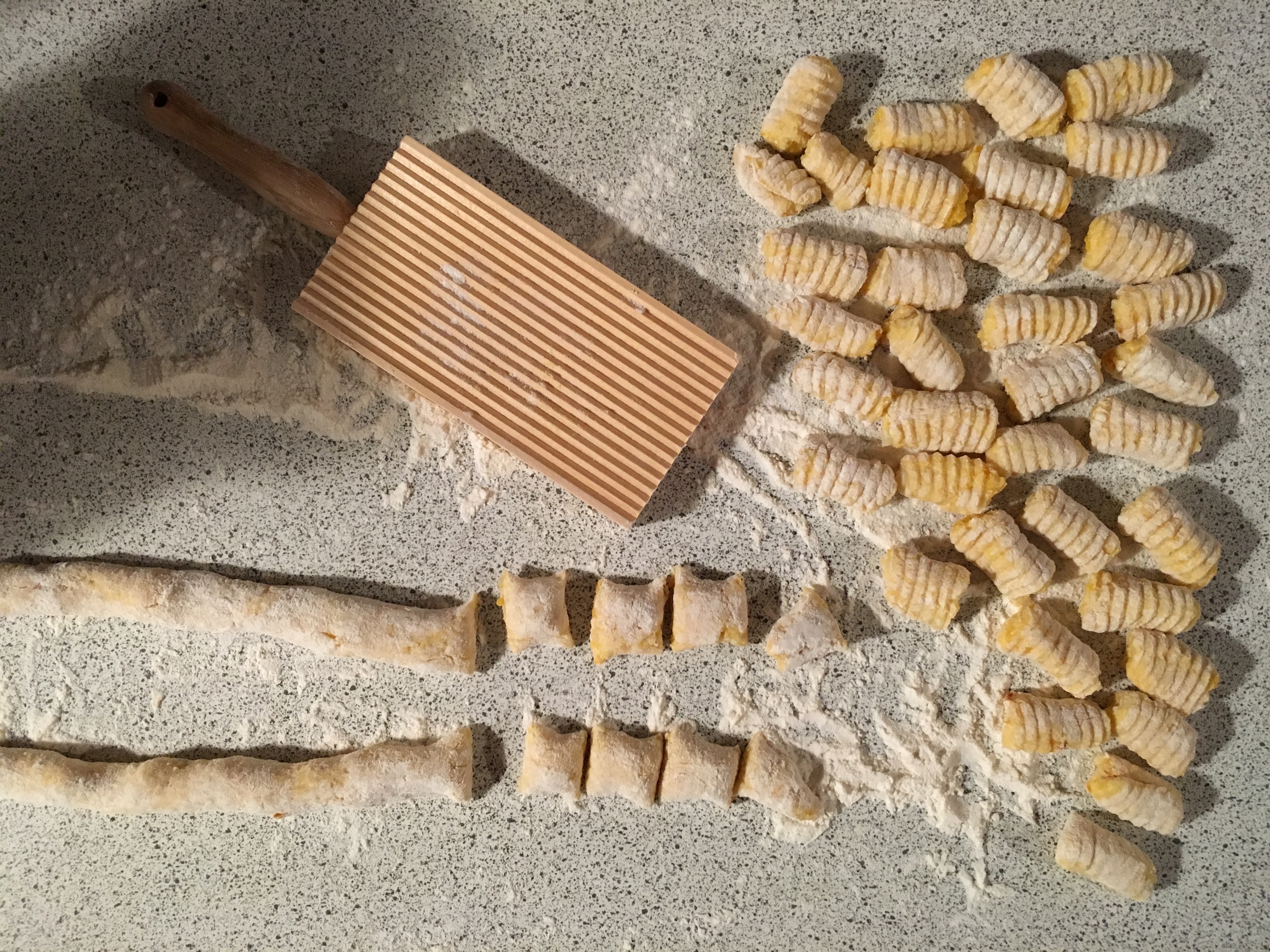
    • Cut a slice of dough off and roll it out into a rope about ½” thick. Using a sharp knife cut your rope into 1” pieces. Keep flour on hand for this stage as well, you don’t want your gnocchi sticking to the counter. Use a fork or a gnocchi board to gently roll your pieces, creating texture on top and a small indent on the bottom to catch your sauce. Continue this formula until all the dough is used.


    IMG_6497

    Step Quatro: Cook & eat!

    • Bring some salted water up to a boil, working in small batches to cook your gnocchi. When they float to the surface they are done… it does not take long – do not leave them unattended. At this point the rest is up to you: skies the limit. Sauce them up with whatever your heart is craving. For this round I used A LOT of butter then some sage, chili pepper, garlic and toasted hazelnuts (plus a little extra pancetta I had on hand). Like with pasta I added a bit of the water the gnocchi was cooked in to make it extra saucy.


    Step 5: Freeze your extras

    • This recipe produces a lot of little gnocchi so I froze the extras in a single layer on cookie sheet lined with parchment (as seen in the featured image).

    In my kitchen I experiment just as much, if not more, as I do in my garden. I did not nail this recipe on the first try and it’s still not nonna’s gnocchi but it’s mine. It’s really about how the more I cook, the more I learn, the more I love to do it and the more I eat! And, let’s be honest, there are way worse problems to have then a full stomach and heart.

    Buon appetito!

  • When Life Hands You Pemberton Pumpkins…Make Pumpkin Bread!

    When Life Hands You Pemberton Pumpkins…Make Pumpkin Bread!

    I am submitting my November entry early because I cannot bear to think people are going to chuck their Halloween pumpkins into the compost or attend a pumpkin-smashing event to get rid of their creations. As long as your carved pumpkin hasn’t been mauled by wildlife or is going moldy then why not consume it?

    What to do:

    Take your carved pumpkin and slice it into manageable pieces. Lay the pieces skin side down onto baking dishes with a couple inches of water in them. Bake at 350F until soft and mushy. Then scoop out flesh into a large bowl and cool. Then freeze in 2-cup portions. You can make pumpkin soup, muffins, or pumpkin bread. Here is a great recipe for pumpkin bread that is very moist and also freezes well. I adapted it from Susan Mendelson’s recipe from her 1980 cookbook Mama Never Cooked Like This (which also contains a delicious banana bread recipe). In short – respect your pumpkin! Its use extends far beyond decorating your porch on Halloween night.

    Pumpkin Bread (yield: 2 loaves)

    Ingredients:

    2 cups mashed cooked Pemberton-grown pumpkin (no need to puree first)

    2.5 cups spelt flour

    3/4 cup almond meal

    2 cups white sugar

    4 eggs

    1 cup grapeseed oil

    2/3 cup water (can use the water from bottom of pumpkin baking pans)

    2 tsp baking soda

    1.5 tsp cinnamon

    1.5 tsp nutmeg

    1 tsp cloves

    1 tsp ginger

    1/5 tsp salt

    1 tsp cardamom (optional)

    Method: Preheat oven to 350F. Mix all ingredients well in stand mixer. Pour batter into 2 well-greased standard-size bread loaf pans. Bake 60-70 mins. Done when skewer inserted in centre of loaf comes out clean.

    **Note: this bread often sticks to the bottom when removing, so grease pans very well and consider flouring the pans too. Silicone loaf pans are a better choice than pyrex.

  • Career Posting for a Homestead Farmer

    Career Posting for a Homestead Farmer

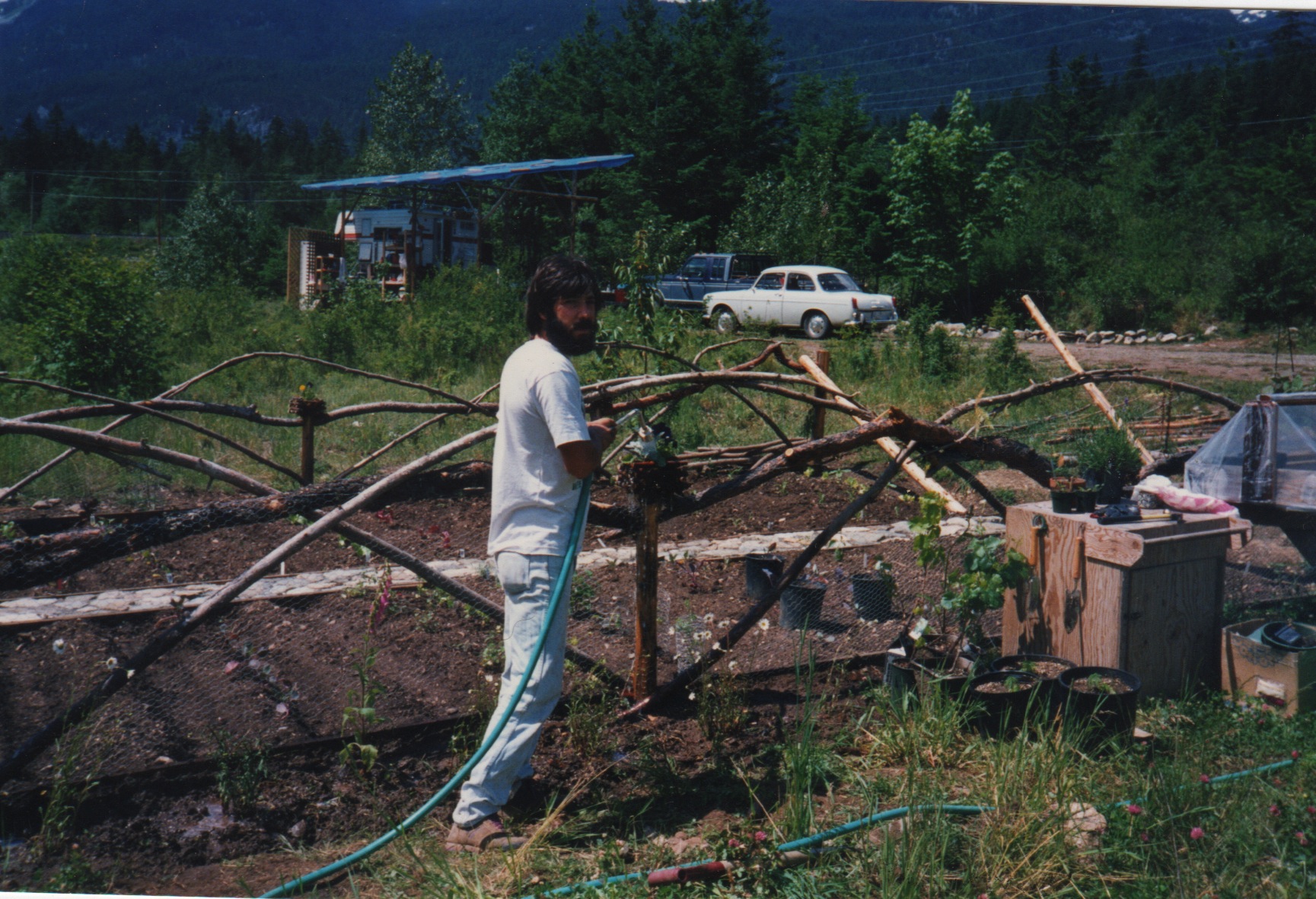
    Scan 16(This is a photo of my first kitchen garden and campsite in my rookie year homesteading circa 1994 )

    The few job postings  I’ve come across for farming are usually for  minimum wage labouring on commercial farms. You might be better seeking one of these positions if you’re not sure about a forever commitment, but I have never seen a posting for my lifestyle, that which I refer to as “Homestead Farmer” as it’s more of a self-employed way of life. So I’ve created a fictitious (yet accurate) tongue-in-cheek ad to provide some understanding as to what is entailed. Unlike most job ads, this one is in-depth and not candy-coated. It’s the good, the bad and the ugly.

    HOMESTEAD FARMERS NEEDED FOR FOOD SECURITY

    PHYSICAL REQUIREMENTS:

    You must be strong, able-bodied, resilient and okay with getting  stinky and dirty. You may work up to 14 + hr days/ 6-7 days a week, 7 or more months/year in all types of weather. There is no set schedule and you must be available at all times. Your hands will be permanently stained and callused, your back sore and you will most likely eventually get a hernia.

    LOGISTICS AND JOB DESCRIPTION:

    You must first acquire a piece of land preferably in the 5 acre range to start. (Finding a nice developed  homestead with the infrastructure and house on it is out of the question unless you inherit one or you have a million dollars). You will need  a 50% down payment on said piece as required by the banks for any undeveloped land without a house on it.  For this you will have to beg, borrow or steal. You will most likely end up with a derelict lot away from an urban centre that needs driveway access, hydro, a well, a septic system, and a landline. You will probably not have cell service or wifi. You will need reliable transportation, preferably a truck. You will have to camp on this land until a cabin is built and services are in (approx 2-5yrs). During this time you will be analyzing your micro climate, making compost, improving the drainage, clearing, brushing, burning, tilling, fencing, testing the soil and water, applying for permits, and most importantly making friends with your neighbours (who you will rely on heavily for info, tools and help, but will have to reciprocate in return).  You will be picking thousands of rocks, and once you think you have most of them, more will surface yearly, forever. Many trees and bushes will need to be planted for future fruit and buffers. Outbuildings such as sheds, barns, and chicken coops will have to be constructed. Salvaging, storing and using recycled building materials will take up a lot of time and effort but will be way cheaper than buying new. There is no course or training for any of this. You will have to learn everything the hard way; through trial and error. You must be able to adapt, improvise and suffer.

    You will need to be resourceful and find side hustles here and there to finance the above infrastructure as production and income will slowly trickle in for many many years. Having a spouse to help is a definite asset, but finding one who will put up with such rustic conditions will be difficult. Keeping one will be even harder.

    Eventually, once you’ve succeeded at producing your chosen crops and developed a niche market (you will already have learned that you can’t do everything or compete with the big farms), you will have to find a way to sell your products. This will involve attending lengthy farmers markets, setting up and maintaining a farm stand and doing cold calls, back door kitchen sales and deliveries. Once you’re at this stage you will have even more overhead in fees, fuel, insurance, advertising and additional help.

    EXPERIENCE:

    Any gardening, landscaping, mechanics, machine operating, tree planting or any labour intensive job experience is a definite asset. You must be able to do mindless tedious repetitious jobs yet also be a jack of all trades and problem solver.

    Post secondary Diplomas and Degrees are worthless other than proving to yourself that you can stick it out on a shoestring budget. It’s also a hindrance in that you will have to explain to your family how you’ve squandered a perfectly good education and professional career possibilities to live in the bush like a hillbilly. Having student loan debt is extremely detrimental.

    COMPENSATION (or lack of):

    Calculating your wage is near impossible and fruitless. If you try to guess, it  will rarely top minimum wage. You can only reap what you sow and that can take a long time or sometimes never. You will always be tight on funds as you straddle the poverty line. You will have to pay your bills promptly no matter what because you will rely on  your credit  rating very often. You will need and replace lots of implements and clothing without a tool allowance. There are no regular or extended medical benefits, injury, sickness or life insurance. Workplace injuries are not covered by WCB. There is no overtime, vacation or stat holiday pay, RRSP, pension fund or severance package. There is no crop loss insurance or subsidies for small farms. Self employed farmers are not eligible for unemployment insurance or welfare. Tips are extremely rare. You will need a well paying second job (preferably with some benefits) to survive the winter months.

    OTHER BENEFITS (the positive):

    You will be your own boss and work unsupervised. You can take ownership of all your failings and keep them secret.Your job will be secure, since everyone always needs to eat. You will be unaffected by recessions and global markets. You will be well positioned for a complete financial collapse or other disasters. You will not be demoted, replaced by technology or out sourced. (You will however be constantly undercut by mechanized agribusiness.)  Once your farm is over 50% cultivated and you have a certain steady income you may apply for Farm Status to receive modest tax breaks on property taxes, fuel  and supplies. You will live a heathy and holistic lifestyle with a sense of purpose and pride. You will become a steward of your piece of land and feel good about working toward sustainability. You will breathe clean air, drink fresh water and eat the most nutritious balanced diet. You be able to take lovely photos and post them on social media, where people will comment on the beauty and bounty that surrounds you. You will network and trade with other farmers for food, tools and help, building lasting friendships. You may sometimes be able to take a few days off (if you get someone to watch the farm) and possibly take a short  vacation between seasons. In the end your children will inherit the legacy of your vision and hard work. If they decide to follow in your footsteps they will be much better set up for success.

    ONLY SERIOUS CANDIDATES WHO ARE WILLING TO DEDICATE THEIR ENTIRE LIFE TO SUCH AN ENDEAVOUR NEED APPLY. THERE IS NO BACKING OUT. YOU WILL HOLD THIS POSITION UNTILL YOUR BODY CAN NO LONGER HANDLE IT.

  • An Apple a Day

    An Apple a Day

    You already know that fall is my favourite time of the year. It also happens to be one of the busiest times of year for me at work. So busy that sometimes it feels hard to find a full breath. A breath that I can get behind: my normal rhythm. Yet one thing that constantly replenishes my soul is when my house if full of friends and family. It’s then that my breath returns to normal – no matter what. This is why every year I muster up some energy to host Thanksgiving dinner, even if all I want to do is sit in silence.

    Initially I thought I’d post some great, amazing Thanksgiving recipe the day after dinner but I could not find any words and you can’t force something that’s not there. Instead I chose to harness the good vibes from a room full of laughter, sing-a-longs, amazing food and love, to put my garden to sleep. It was the perfect remedy and the bonus? – I got to do it with my dad. However, I thought I’d share a recipe for a pie that usually graces my Thanksgiving feast but just didn’t have time to make. I mean I barely got the turkey in the oven on time and that only happened because my mom did it!

    This is apple season. When your parents show up with a massive bag of said fruit from a friend’s tree on the Island and you’re eating at minimum and apple a day, or two, but barely making a dent in the stock, you make pies.

    So, without further ado… here is Apple Cheddar Pie: an instant crowd pleaser and a delicious breakfast supplement.

    Step Uno: make your crust.

    2½ cups all purpose flour – TBSP sugar – TSP salt – 1½ cups grated white cheddar (kept cold in fridge until ready to use) – ¾ cup grated butter (frozen) – ½ cup ice-cold water (maybe a bit more)

    • Add the flour, salt and sugar to your mixing bowl and combine them. Then grate your butter into the bowl and add in your cheddar. Next start gently rubbing the ingredients through your hands; you’re aiming to get a “pea like” texture (you may recall me using this method in my previous pie recipe). Pour the water in and use your hands to bring the dough to together. I always end up turning it out onto my counter to finish kneading it. Separate the dough into two balls with one slightly larger then the other. Flatten them out to resemble small saucers and a place in the fridge for at least an hour.

    Step Two: prepare your apples.

    8-9 apples peeled, cored & cut into eighths – juice of half a lemon – cinnamon, nutmeg, ground clove – a sprinkle of cornstarch

    • Place your apples in a bowl, add in your preferred amount of spice, squeeze the lemon on top and sprinkle that cornstarch… then toss.

    Step 3: build your pie.

    • Preheat your oven to 375°F. Roll out the smaller disc on a floured surface, place it in your pie dish then add your apple mixture. Before rolling out your second dough disc and topping the apples with it, dot them with a bit of butter. Seal the edges together and then cut some shapes in the top crust or keep it simple with a few little knife slits that will allow the air to escape. Brush the pie with an egg wash (I forgot but you should really do it).

    Step Quatro: bake & wait.

    • Place the pie on a baking sheet and pop it in the oven. Let bake for a least an hour or until the crust is golden brown. Allow it to cool on a wire rake for an hour or more… I am not capable of this step. Not even a little bit.

    Step Five: consumption.

    • Serve this bad boy with some ice cream or nothing at all.


    So if you’re wondering what to do on this rainy weekend and have a bunch of apples, you should make this pie and fill your house with people to share it with.

    And don’t forget to breathe.

  • Squamish Farmers Strip Down For Fundraising Calendar

    Squamish Farmers Strip Down For Fundraising Calendar

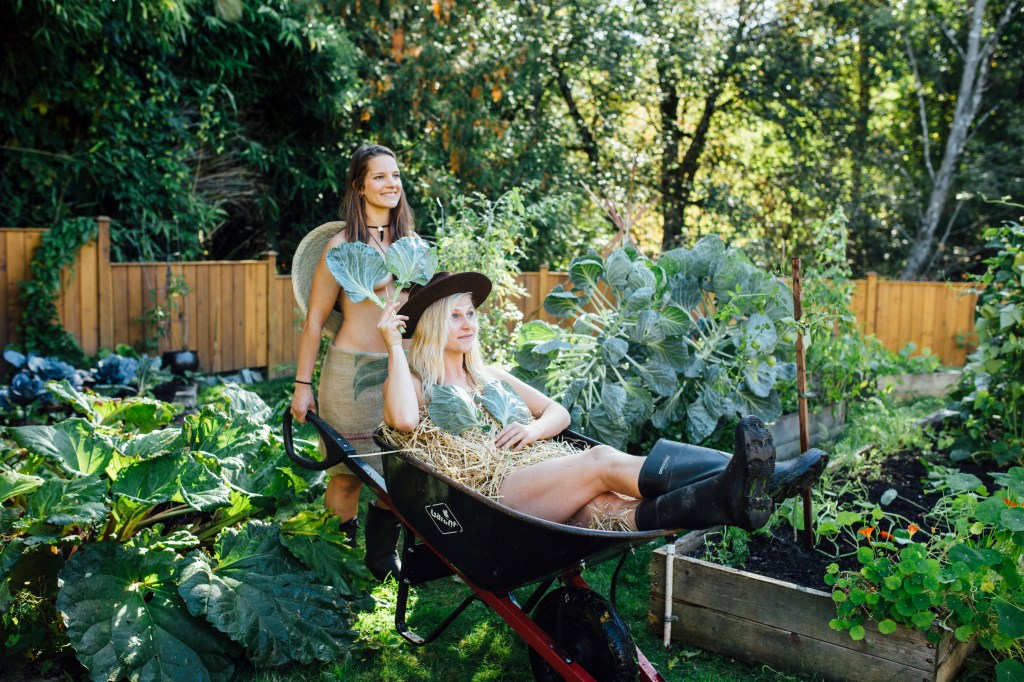
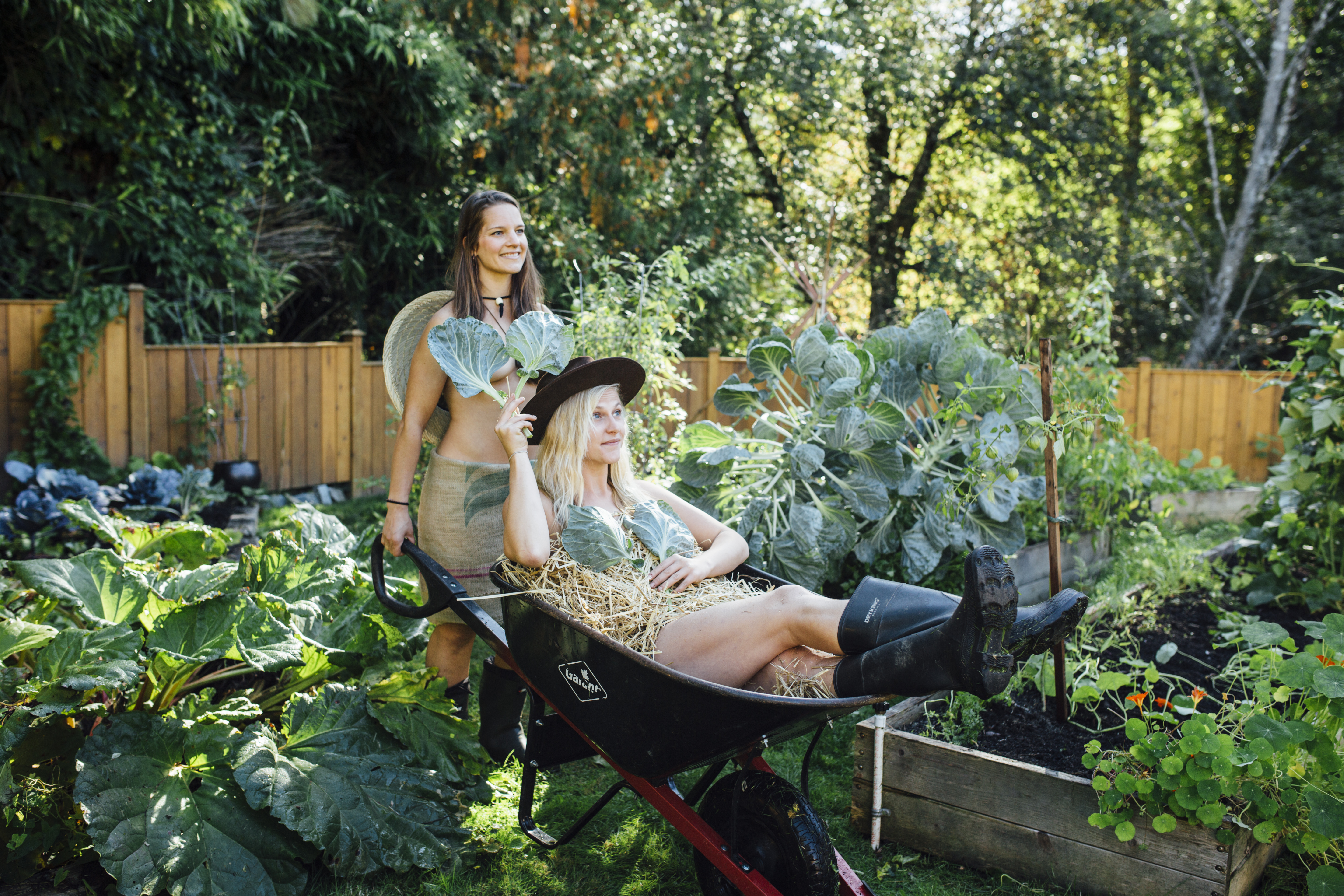
    Squamish CAN (Climate Action Network) has launched an Indiegogo calendar fundraising campaign featuring nude Squamish farmers in hopes of raising money for a community farm.

    _T1A9470-NinaLaFlammePhotography-2
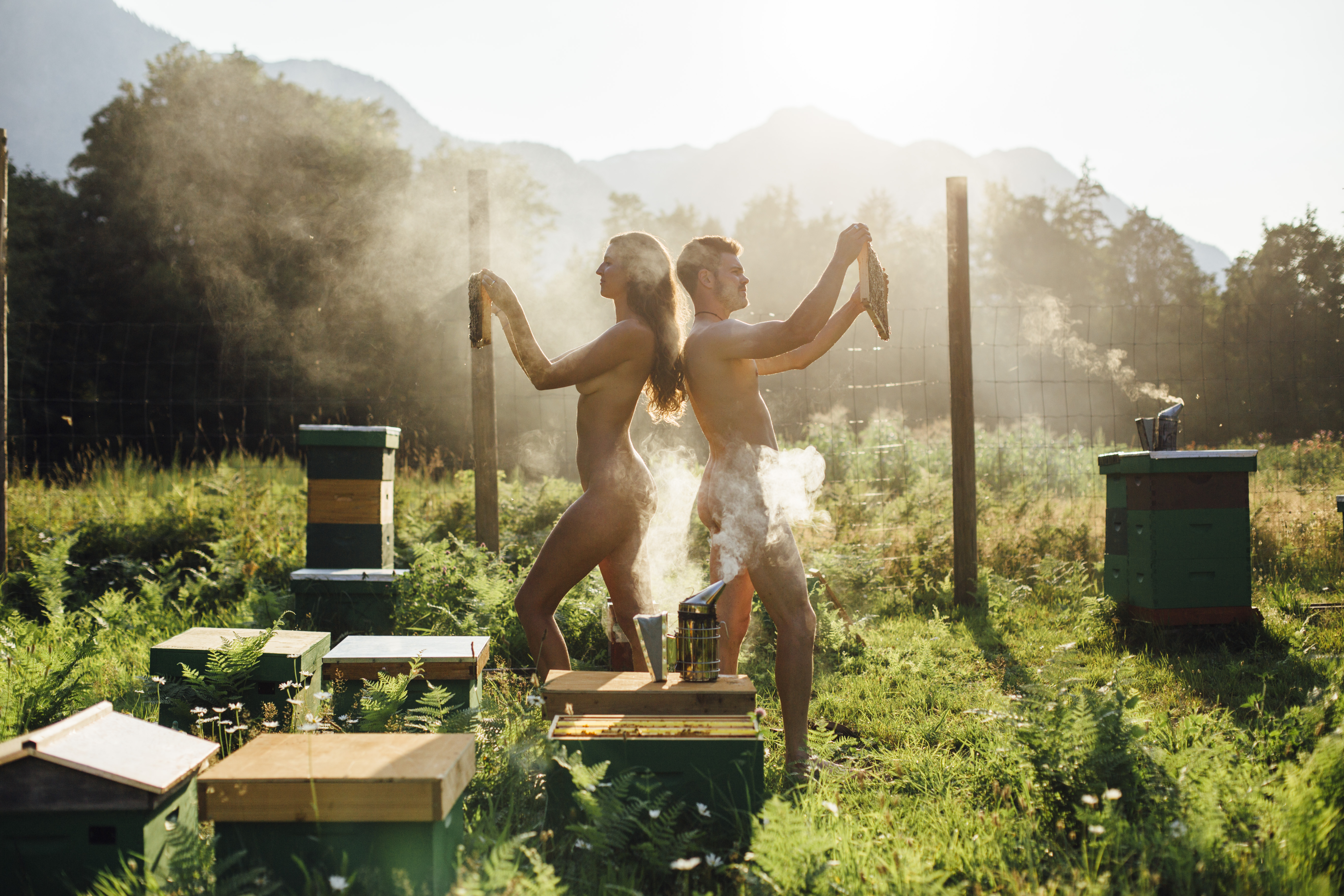
    Jordie and Steph from Solscapes pose in one of their client’s edible gardens.

    The group has been running community and school gardens over the past several years, and have been identifying ways to strengthen the local food system through consultations with farmers and other stakeholders in the food industry. Their community farm project aims to engage youth, attract new farmers to Squamish, and support established farmers while preserving agricultural land. They rallied local farmers to strip down for the cause, and most were willing to go along with it.

    Calendar coordinator and Squamish CAN president, Michalina Hunter, was inspired by a past calendar she purchased in 2015. “The nude farming calendar I bought on Indiegogo raised $35,000 for two women to put a downpayment on farm property. I thought it was such a great idea. How amazing would it be if we could raise that much for our organization? We finally decided to go for it this year. We have incredible farmers in Squamish. I hope the idea is just cheeky enough to be successful!”

    Preferred_MG_7791-NinaLaFlammePhotography-4
    Michalina and Darwyn of Green Bee Honey–probably the most dangerous photoshoot of them all given the flying stinging insects everywhere…

    There are other models of community farms and similar projects nearby. The group toured and learned about the Tsawassen Farm School, Glorious Organics (Aldergrove), Richmond Schoolyard, Fresh Roots Urban Farm (Vancouver), Amlec Organic Limited (Lillooet), Farm Folk City Folk (Vancouver), and others to design the project. 

    “We’re not the first community to do this,” says Hunter, “We’re really excited about the potential of creating multiple win-wins with this project. It can engage youth in growing food and learning employable skills, it can support new farmers in finding land, it can create shared sales opportunities for established farmers, and it can engage the community in sustainable agriculture. We envision a central educational market garden for us to work on, and then several 1/4 acre to 1 acre plots for new farmers to lease. There will be shared tools, equipment, wash stations, and storage for all the farmers to share. The community farm is really a jumping off point that can support so many other community initiatives.”

    IMG_6051
    Dorte and Thor from the Brackendale Art Gallery.

    Squamish used to be a prosperous agricultural community, growing primarily hops, hay, and potatoes. In fact, hop farming was Squamish’s first major industry. Much of the fertile valley-bottom land has since been paved and built on. Only 2% of Squamish’s remaining usable farmland is currently used for agriculture, yet skyrocketing land prices make it cost-prohibitive for new farmers to get into the industry. Leasing land, on the other hand, has less financial risk, and can allow new farmers to get into the industry, hone their skills, and build credit.

    _MG_3062-NinaLaFlammePhotography-15
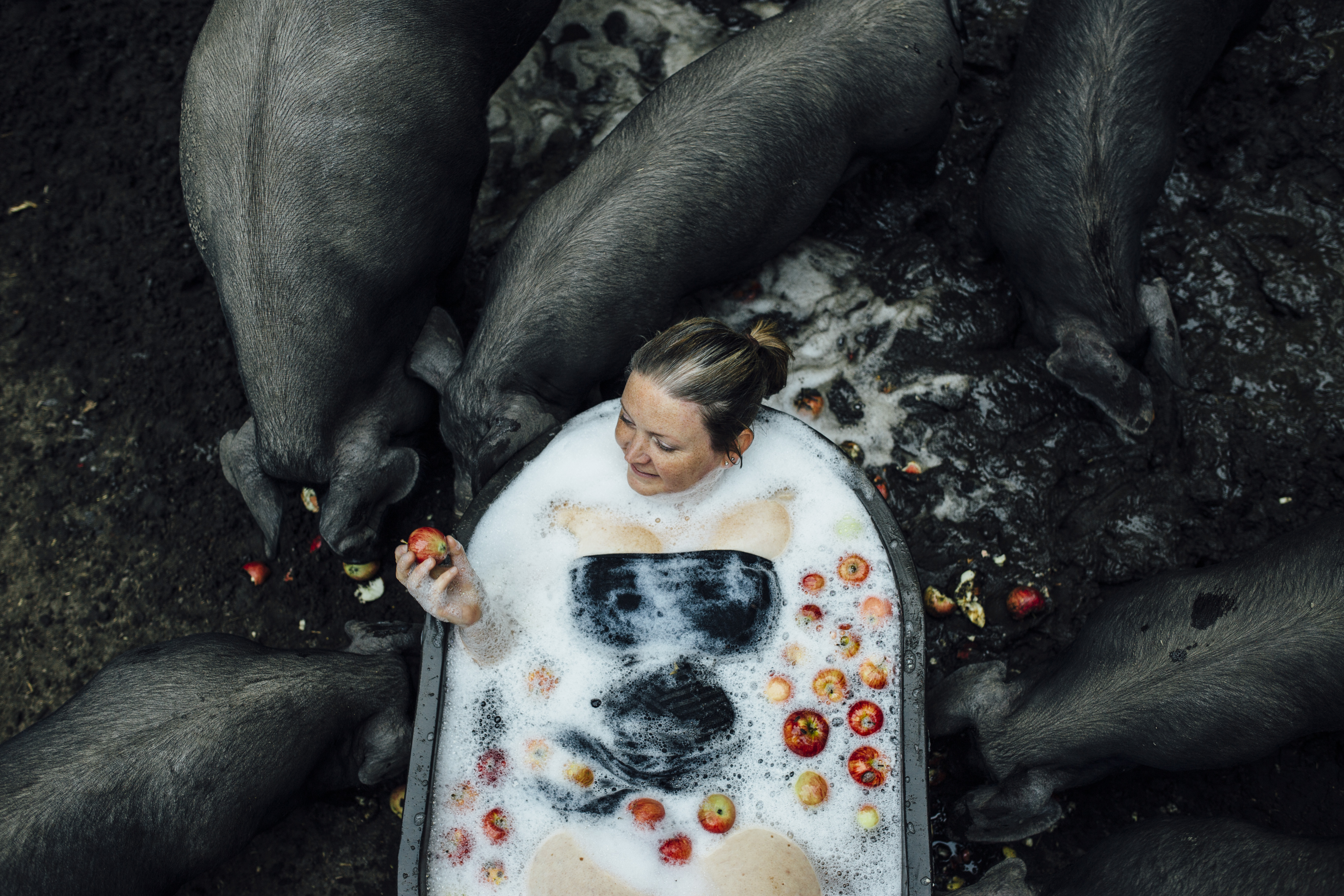
    Tracy of Stony Mountain Farm. The pigs were wary about the apples once they were covered in bubble bath, but of course being pigs they ate them anyway.

    The group envisions starting small with the community farm, then adding components over the years such as a Food Hub, community garden, covered workshop space, and food forest. They have not solidified a location for the community farm, but are exploring different options. Ideally they would own the piece of land, but a long term lease or memorandum of understanding would also suffice.

    Sneak peek of the calendar and ordering options here! 

    Perhaps a Squamish-Lillooet Farming Calendar is on the horizon for next year!