This week before our Pro D day experience at Nurture in Nature, I wandered the farm, asking what it would offer the students of the day. I happened to find a bunch of baby pumpkins leftover in our pumpkin patch! That just might do the trick…
Sure enough, when our students arrived Friday morning, they were ecstatic about making a pumpkin pie- from scratch!! So, after the normal chores of the farm, which as they will all tell you include making sure the chickens, ducks, and pig have food, fresh water, and a clean habitat, we set off to find these baby pumpkins left in the field. As you can see in the picture above, one student is showing off the bonus duck egg he found in the coop on the way over too!
Preparing the Ingredients
We cut the pumpkins in half and scooped out the seeds. We saved 15 seeds to ferment in pulpy water for 10 days so they would be ready to germinate next year, and set the rest aside to roast as a snack. Then, we coated our pumpkin in olive oil, cinnamon, and nutmeg, and set it to roast for 45 minutes at 400 degrees.
45 minutes to spare… well, every time we take a pumpkin (or anything else) from the field, we take away all those nutrients from that environment forever. What happens if we do this over and over without ever giving back? Soil turns to dirt. Theres nothing left. So what can we do to prevent that here? Feed the soil- with compost and leaves!!
Of course, feeding the soil means playing in those leaves first!
So after a little weeding and moving some leaves, and lots of laughs, ding! Back to pumpkins!
Recipe
Now that the pumpkins are roasted until they are soft and easily separate from their shells, we scoop out the yummy insides and put in a bowl:
-2 cups pumpkin
-The recipe calls for 3 eggs, who can get those from the chicken coop?
-1/4 cup brown sugar
-1/4 cup white sugar
-1 TBS cornstarch
-1/2 tsp salt
-1 1/2 tsp cinnamon
-1/2 tsp ground ginger
-1/4 tsp nutmeg
-1/8 tsp cloves
-1/8 tsp pepper
– 1/2 cup milk
And mix away! I mentioned that you can put this in a blender for a smoother finish, but I like the way with a hand mixer, the little chunks tell that this is a pie made from real food. Roll out your pie crust, I’ll save that recipe for a later date, then cook at 400 degrees for 15 minutes, and at 350 for another 45. So that means we have another hour to learn about how to always give back more than you take!
And so, that’s our recipe, and how we spent a mostly chilly, kinda rainy, day at Nurture in Nature Community Farm. I hope you get to make a pumpkin pie too!
Yes, it has been a weird year. And these are the shortest and darkest days of the year to boot. Right now I am craving calorie-laden stodgy food and damn the consequences. Lighter fare will appeal when the days brighten up.
I have made this casserole with some good Pemberton veggies but the mayo, sour cream and cheese do not put this casserole in the healthy category. But dark days plus face mask-wearing at all times? Sign me up for a retro casserole.
Here is to hugging family and friends in 2021 and to our Pemberton library being open for real – SOON! Happy Christmas to all!
Chicken Casserole with Pemberton Veggies
4 cups cooked Pemberton-raised chicken, diced
2 tbs pure olive oil
1 large yellow onion, diced
2 cups blanched Pemberton-grown Swiss chard, chopped (Do NOT add raw – it MUST be blanched first)
1 cup Pemberton-grown corn kernels
1 cup chopped cauliflower
2 cups chopped celery
1 cup chopped cilantro
1 cup diced tomatoes
2 tsp dry mustard
1 tsp cumin
1 tsp paprika
1 tsp sambal oelek
1 tsp salt
1 tsp pepper
½ cup mayonnaise
2/3 cup full-fat sour cream
1 8-oz package Pad Thai noodles
1 cup mozzarella, shredded
Method:
Sauté onion, corn, chard, celery, cauliflower and cilantro in olive oil in a large cast-iron Dutch oven. Sauté until well caramelised. When caramelised, add cumin, paprika, dry mustard, sambal oelek, salt and pepper, tomatoes, and diced chicken. Mix well.
Cook Pad Thai noodles by pouring boiling water over the noodles and leave immersed for 5 minutes. Drain well.
Add cooked Pad Thai noodles and mayo and sour cream to veggie mixture. Mix well. Sprinkle top with cheese.
Thanks to Belinda Geisler, the program coordinator for Stewardship Pemberton’s Feasting for Change initiative, for putting together this reflection of this year.
This spring I was so nervous, wondering if it would be possible to run any of the Feasting for Change programs, as for this I was asking people to come together, voluntarily, and work together to help grow, and gather food that could help feed us all. Suddenly though, the need to feed ourselves without bringing that food in from outside became a priority, not just for me personally, but for our community as a whole.
I looked at all our projects, the Fruit Tree Project, Grow it Forward Garden, Seed Library and Crabapple Project, and thought hard about how to make it all work, eliminating all the indoor workshops and focusing on the bare bones of our projects: keeping bears wild, while feeding our community.
What I didn’t expect was the number of people that were not only willing but wanting to donate their time and energy to our projects. We’ve always had an amazing rotating crew of volunteers, some that have been with us from the beginning and some who are still, to make it to a fruit harvest, or garden workshop. But this summer we had a bunch of fresh faces join us and stick it out to the end. At our 22 fruit tree harvests, we had 45 different volunteers gift us their time, many of them came to several harvests, (be warned, it’s addictive) and we ended up counting 124 “volunteer occurrences”.
The grand total of 3,364 lbs of fruit is proof of all the hard work our volunteers put in, not to mention the trust that tree owners showed in allowing us to come to their property and harvest their trees. We had several firsts this summer that need to be celebrated in and of themselves: We took on our first farm, harvesting over 300 lbs of blueberries from a farm that struggled to get their usual crew of workers in to manage them.
We also had one of our largest ever harvests where we took on 11 trees, in a single harvest, getting over 600 lbs of apples and pears. As our final harvest of the year it felt like the perfect covid friendly fruit party: 26 adults and 10 kids all keeping to their bubbles by taking on a tree each, happily chatting from between the branches, while the owner was blown away that we got them all cleared in a single morning.
It’s possible that as people were working from home, more bears got caught in the act of accessing fruit trees, and so we got several new properties signed up to our fruit tree project. This kept me on my toes, as each property needed a plan. However, it also meant we could flow from cherries, to apples, to blueberries, to plums, grapes, back to apples, crabapples, and finally pears and more apples. Those that came to multiple harvests now have wonderfully full freezers full of local free fruit. The project works quite simply; we pick the fruit and split it 3 ways, one third goes back to the owner of the tree, one third goes to the volunteers that pick the fruit, and one third gets donated to be shared further.
Usually we try to have a network of local social groups (like the seniors) who can take fruit from us after a harvest and then divide it up and distribute it. With the restrictions in place this year we scaled back and focused on donating to the Food Bank.
The Food Bank needs to be celebrated to the fullest here, expanding and attempting to reach and fill the needs all over our community and into the surrounding areas. We are so, so lucky to have such a dedicated crew able to adapt and address the needs that arise. Without them, our community simply couldn’t thrive.
The bi-weekly harvests from the Grow it Forward Gardens became quite the social morning (in a safely monitored, spaced out kind of way). Last year we had 18 volunteers over the course of the season, this season we had 38. The garden itself always provided a fun treasure hunt. I think some of our volunteers came just to see where the cucumber vines had wandered off to next, or if the beans or toddlers had grown more in the 2 weeks between harvests! Either way, they put in the efforts and we reaped the rewards. This summer we donated a record 650 lbs of fresh locally grown vegetables of the food bank. While we always offer food from the garden to our volunteers, most were content to take home the “weeds” and try out things like purslane smoothies, or chickweed and carrot top pesto. I know that without the dedication of these guys (you know who you are!) we would not have had nearly as successful of a season. Even on the muggy, buggy days they were there, working hard, periodically jumping in the air and running out for a bug break, or slapping ourselves with rutabaga leaves to keep going “Just to weed to the end of this patch”. They were true garden heroes.
With the library closing down right in the midst of planting season and seeds running into short supply, I rescued the Seed Library and attempted to create a virtual inventory and contactless pick up system to make sure that this project could continue to make food-growing an option for everyone and anyone. What I didn’t expect was that again this community saw it as an opportunity to fill the need, and ended up donating almost more than was given out from the library. (Which is perfect, as the seed library depends on people ‘returning’ their seeds to keep it stocked for the next library patron). We always try and include seed harvesting in our grow it forward garden harvests, which helps to keep the library stocked.
Most in jeopardy was the re-invented crabapple project. While we may not have crabapple trees lining our main street (I’m looking forward to experimenting with lilac jelly btw), we do have a number of them in backyards. Last year we helped keep the bears out of harm’s way by harvesting the crabapples, but we inundated our fruit distributors and saw the potential for a scaled-down version. While we made close to 500 jars of jelly, unfortunately, we were unable to include volunteers and people dropping in to investigate the smells of jelly-making. We’re hopeful that the jelly travels further than we can right now and maybe encourages other communities to start looking at their fruit trees more as an asset than an inconvenience. As there’s limited supply of jelly this year, I’d recommend stocking up!
The support these projects get not only from volunteers but also from partners and sponsors keeps them ticking along, evolving, growing, and changing. These include the Whistler Community Foundation, The Pemberton Wildlife Association, Sea to Sky Soils, West Coast Seeds, the Pemberton Legion Branch 201, Bluehore Financial (Donation Program), the Fall Clothing Swap, Pilates Integrated, and the donations from the blueberry harvest. Each of these places has donated various amounts to various projects – together they make all our Feasting for Change Programs possible.
As I’m looking into winter, I’m so grateful to be here, in this community, where so many people are willing to come together to help us all – the people, the wildlife, the community as a whole – to grow, and harvest our own food, and, of course, eat jelly!
This is the time of year when the freezer can be very full (a good problem to have). If there is deer meat to go in, something must come out. In my case, the many bags of apples I peeled and sliced two months ago! This is a recipe that uses up those apples well and is seriously the best apple cake I’ve ever had – in convenient muffin form. It is also fairly healthy with good fats and whole grains.
These apple muffins are an adaptation of Shelley Adams’ “Joey’s Apple Cake”, found in her first cookbook Whitewater Cooks – Pure, Simple and Real (2005). Shelley Adams is my food mentor (she doesn’t know that) and I have adapted so many of her recipes over the last 12 years. Her recipes have good bones. I have usually adapted them to be whole grain, reduced sugar and sometimes grain-free. This recipe was also altered by making muffins instead of cake (which is quite finicky as it calls for a Bundt pan and the cake always stuck to it). Enjoy!
Whole Grain Apple Muffins (yield: 36 muffins)
Ingredients:
3 cups spelt flour (*you can also use 2 cups spelt and 1 cup almond meal OR you can use 2.5 cups spelt flour and 1/2 cup oat bran)
1/2 cup white sugar
1/4 cup brown sugar
3 tsp cinnamon
1/4 tsp cardamom
1 tsp baking soda
½ tsp salt
1.5 cups grapeseed oil
3 Pemberton eggs
3 tsp almond extract
4 cups finely-diced Pemberton-grown peeled and cored apples (I use a Cuisinart and pulse the apples until they are just shy of applesauce texture. They should still have lumps).
Method:
Preheat oven to 350C
Blend pureed apples, oil, eggs and sugars in stand mixer. Blend well. Add cinnamon, cardamom, flour, baking soda and salt. Blend well.
Scoop batter into silicone muffin pans (I like silicone pans because the muffins don’t stick).
Bake at 350C for 26 minutes. Cool 15 minutes in pans, then invert onto cooling rack.
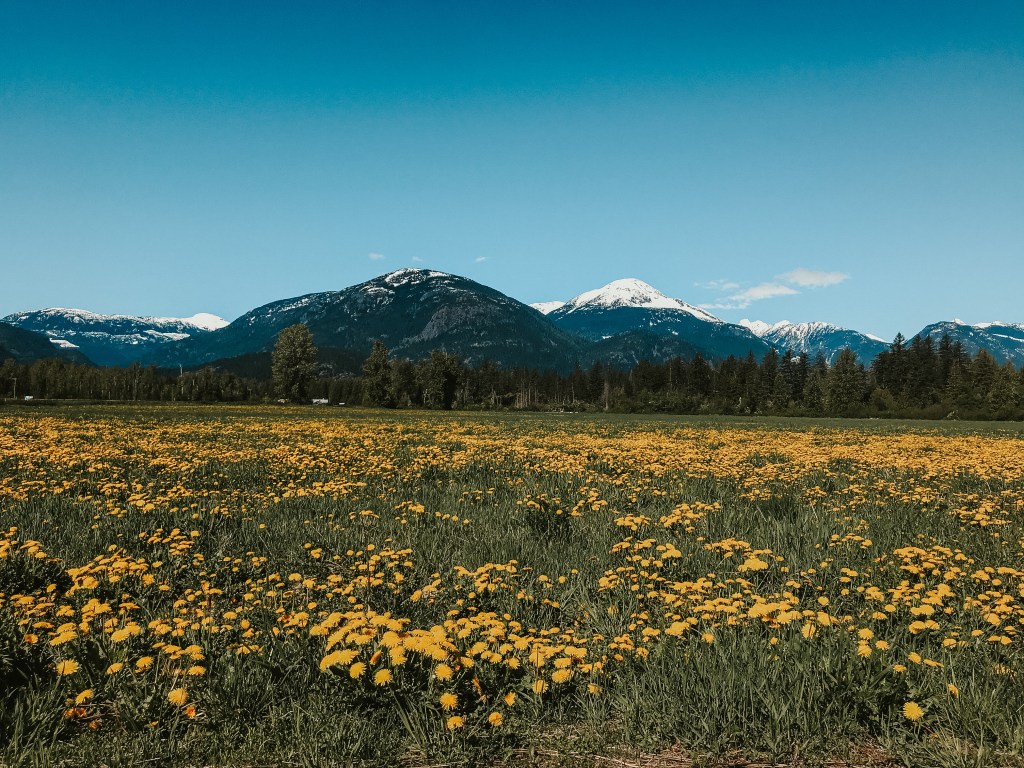
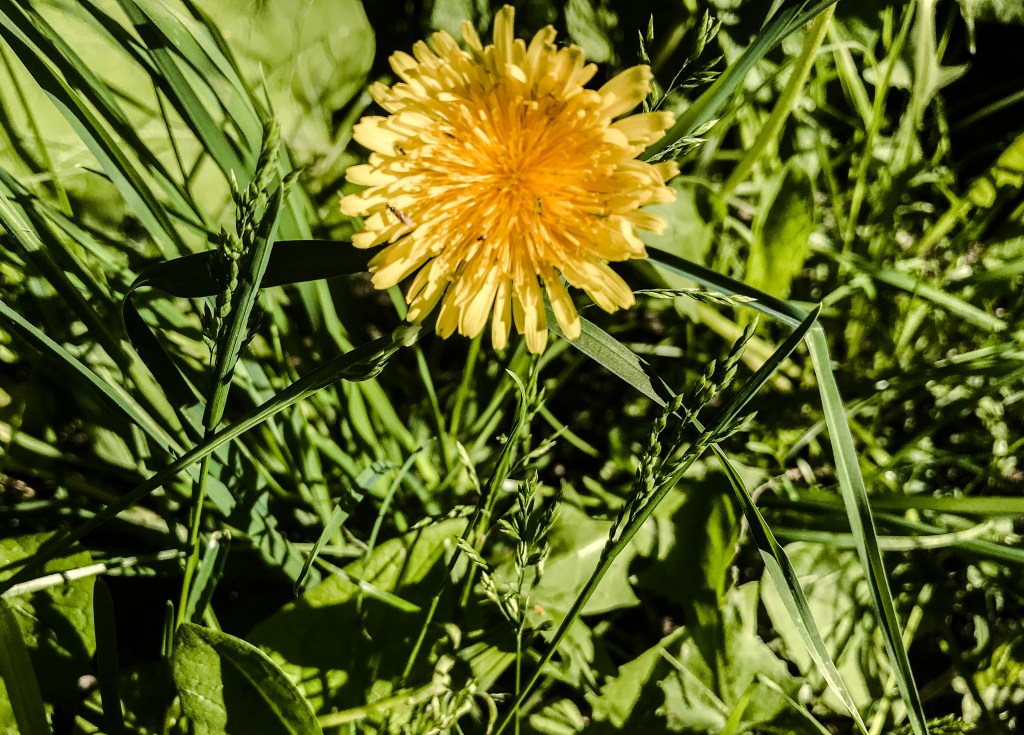
This spring I have been truly taken with (or perhaps a better way of saying it would be: OBSESSED) with dandelions! Yes the weeds everyone attempts to terminate that spread easily upon crisp green lawns!
These past few years I decided to make a pact with myself, to get in touch with some of my ancestral roots and learn more deeply their simple ways of existence and so, I have been exploring a deep pull within: the vast knowledge of wild edibles!
As a young girl I always told the world that my favourite ‘flower’ was a dandelion. This remark was often met with scoffing or a simply worded statement “Dandelions are not flowers, they are weeds.” I didn’t know the difference, all I knew was that they looked like small puffs of sunshine that occasionally would turn into a fun toy that you could tell the time with. As an adult it has been many years since my dandelion days and I’m thoroughly proud to say they are back!
As a vegan, a vegan cook and a self proclaimed kitchen witch, I have delved deep into the succulent yellow petals of our local friends and from root to tip I have explored all of the wonder this plant provides. Before I move onto the incredible recipe that features this wild edible, the health warrior in me wishes to share some fun facts about these bountiful beauties:
Dandelions contain fibre, vitamins A, C , K, E, folate, small amounts of B vitamins and minerals including iron, calcium, magnesium and potassium.
You can consume the roots, the flower and the leaves!
Dandelion has been used for thousands of years in both Ayurvedic and Chinese medicine.
Dandelion is most commonly used as a liver remedy, diuretic and cholekinetic (increases stomach bile)
Dandelions are also used as a digestive aid for diseases of the mammary glands, abscesses, ulcerations and swollen lymph glands.
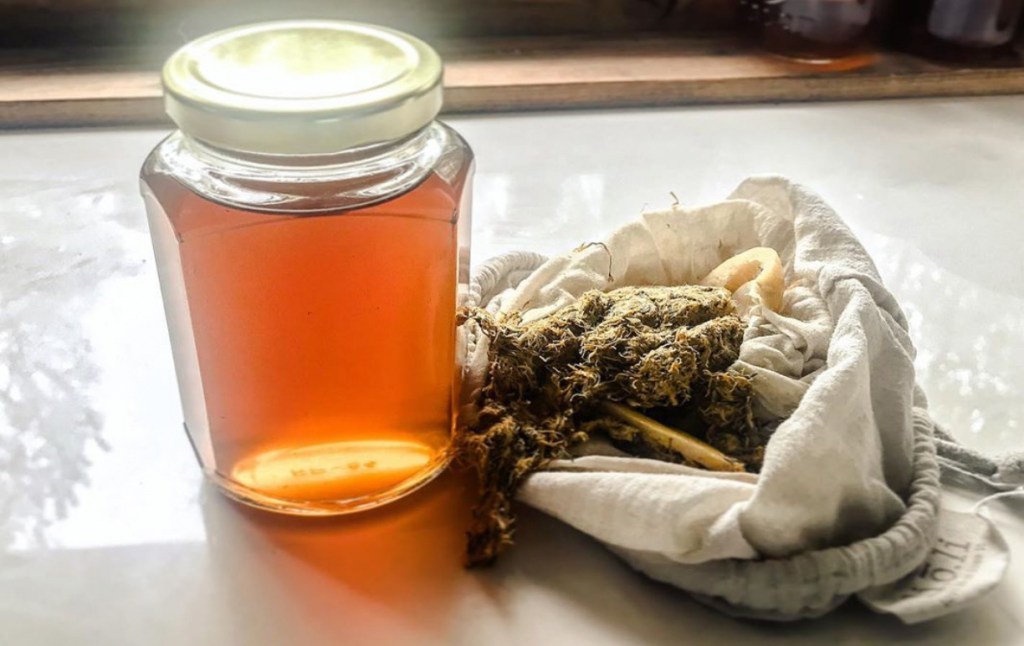
They also can taste incredible! As a general rule the younger greens are less bitter and are great in salads or blanched as a side. The root can be roasted and drank with hot water as a coffee substitute. The heads can be added to salads, dressings, dips or even tempura them and add to a stir fry or salad. I have also added the yellow flowers to breads, baked goods, pancakes, coconut yogurt…you name it! Yet my favourite way to use these high mineral powerhouses is to make traditional Scandinavian dandelion honey! This is very simple, delicious and a great way to add a little sweetness to your desserts, morning pancakes and beverages.
Recipe:
2 cups of dandelion heads (presoaked in water, 1 tbsp vinegar for 10min and strained)
2 tsp vanilla extract
1/2 lemon
Organic sugar of choice
Water
In a medium sized pot cover the lemon, vanilla and 2 cups of dandelion heads with water. Bring to a boil and simmer for 15min, allow to cool and place in an airtight container in the fridge overnight to infuse. Next day strain out the solids using a nut milk bag or strainer. Measure the liquid you have in a jug, typically it should be around 1.5 – 2 cups. Match the same ratio with your organic sugar of choice. Bring the dandy liquid and sugar to a boil. Keep a close eye on it until it gets thicker and turns a deeper colour (around 15min.) Once finished add to a clean jar, you can store this in the refrigerator for about 1 month and enjoy in any way you please!
It tastes remarkably like honey, is a sweeter rich in vitamins and minerals and just might be the best thing you have ever tried on pancakes!
As discussed in my last post I think we owe vegans in particular an enormous debt of gratitude. These deadly viruses originate with wild animals in captivity caged inhumanely alongside domesticated animals for human consumption in markets mainly in China, but also it has been reported Indonesia and Thailand. What will happen in future and how and if this will be monitored is another matter.
Vegans are against the use of any animal product for consumption and their choices are truly admirable. We have so many ethical food producers here and ethical and sustainable hunting practices yet unfortunately there will always be people who abuse a shared trust. Also, whenever we purchase packaged meat in the grocery store and are not connected with the hunting of the meat ourselves or the raising of the meat ourselves or by people we know in our own community (shout out to those very important and hard-working people in Pemberton now and how grateful I am to you) then we honestly cannot say for sure that the meat was raised ethically.
So if you find this all too much to process (pun not intended) then you can just go vegan. And if that is too much to process then you can at least go partially vegan. I find vegan eating particularly easy at breakfast and lunch. Oatmeal and oat milk (yay – oat milk has 4g of protein per cup!), toast with peanut butter, etc.
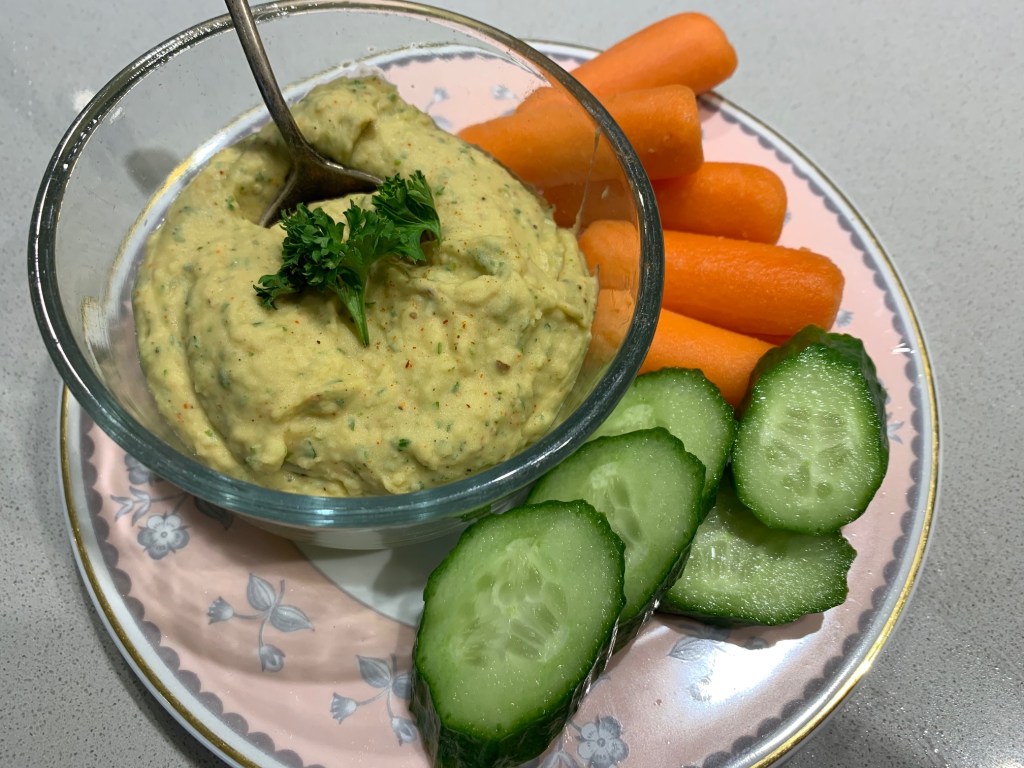
For lunch I like to serve bean dips and veggies and even a light lentil soup. I just tweaked a bean dip I found online that in its original posted form was bland and blah. This one is zippy and fluffy and very delish. Please enjoy and thank you again to the vegan community.
White Bean Dip with Pemberton Garlic and Parsley:
Ingredients:
15 grams of small white cannellini beans
**Method for dried beans: Soak a bag or two of dried cannellini beans overnight. In the AM, drain water and put beans in slow cooker and add water until beans are covered by two inches. Cook on low 8 hours. When tender, put 15 gram portions of beans in containers and freeze for future use.
2 cloves Pemberton garlic
4 dashes hot sauce (I like the Cholula brand from Mexico)
1/3-1/2 cup pure olive oil
3 tbs fresh-squeezed lemon juice
1/3 cup Pemberton-grown parsley
1 tsp salt
1 tsp pepper
1 tsp paprika
Method: Blend all ingredients together in Cuisinart. Adjust salt and pepper to taste. Serve with sliced cucumbers, celery, carrots or sweet peppers.
How is everyone doing? I have been thinking about so many of our assumptions lately. That the tourists will come. That Whistler Blackcomb will open. That our kids will be in school. That I can get on a plane and fly to Italy. That I can ride the ferry. That I can go to the store and purchase what I need.
Our supply chains:
I read a locally published book about a decade ago called The Cucumber Tree – a memoir by a man growing up in Vancouver in the 1940s and 1950s. He recalled evenings with his family; dinner was always at home. Never would they go out for dinner or even out to other people’s homes for dinner parties. Dinner was prepared and eaten at home, every night.
We just have assumptions that we can go out for dinner and that we will be able to travel. And this is a new assumption. It has only been since I was growing up that going out with the family was a thing. And to recall, it only occurred on a special occasion. I do not remember too much of it going on but if we did eat out, it was to a family-run pizza restaurant in my neighbourhood in Vancouver. We have so many lifestyle assumptions under fire right now.
Back when my parents were growing up food supply chains were different and going back further your family and your home was a big part of the supply chain. You ate what you grew. You preserved what you could for the winter.
Here in Pemberton yes, we are very lucky to have farmers and so we would assume that we will always have access to good healthy food. Yet…
Many articles are being written lately about growing a “Victory Garden” and that if you can you should be more food secure within your own backyard. It is time to get cracking. If we are not gardeners then this would be the time to start. If you don’t grow anything then maybe this year grow one thing – one thing that you aren’t going to be reliant on anyone else for. If you live in a townhouse or condo in town, can you grow your own herbs? Sprouts? Micro greens? If you have a yard but simply don’t garden, start with one, two, or three items that will sustain you. I would lean towards items that are hardy like chard, kale and spinach. Fresh herbs – parsley, cilantro, dill, basil, chives – make a meal.
A Note on Veganism:
I am thinking vegans and vegetarians are pretty pissed off at the world, with Covid-19 originating from the filthy Wuhan, China wet markets and the disgusting treatment of wild animals caged for human consumption there. I think we owe vegans and vegetarians enormous respect, and I think they have every right to be angry. Maybe this is that time to pursue veganism or vegetarianism, or to pursue this way of eating as best we can.
I read all the Little House on the Prairie books by Laura Ingalls Wilder when I was a kid. My favourite was Farmer Boy and how the Wilder family grew all their own food, spun their own yarn from the merino sheep they raised, and were successful in their efforts. Do you think there were any vegans back then? When the supply chain began and ended with you and your family throughout the year, where did alternative eating come in? Something to chew on. Respect the planet, have knowledge of where your food comes from, and if you can, raise it, grow it, hunt it yourself.
What would you eat if you had to grow, raise or hunt it yourself?
A meal from my own yard, by a minimal gardener (who may become a proper gardener this year):
Sautéed garlic scapes (sautéed in hazelnut oil, which I would have to learn how to make)
Spinach salad garnished with cilantro, dried saskatoons, and toasted hazelnuts, with a dressing of hazelnut oil and minced garlic
Fruit salad of chopped apples, cherries, plums, and apple-pears
Barbequed deer steaks (hunted locally by my spouse)
If I were to get serious about my victory garden I would plant spuds, beans, hardy greens and romaine lettuce. I am considering a small backyard chicken coop. It would be a lot of work, but individual food security is a worthy goal. I consider weeding back-breaking labour after about 15 minutes of crawling around in the dirt, mosquitoes buzzing in my ears, and the relentless Pemberton sun beating down on me. Again, I salute the farmers. We are lucky to live among them, now more than ever.
Hi everyone, and thank you for visiting this website and thank you as ever to Lisa for running it. It is a lot of fun to contribute to – now more than ever. I see at the Pemberton Supermarket that there are store-packaged containers of yeast! The usual small amount of yeast that the store stocks in jars is apparently not enough for everyone (including myself) making bread these days. I think it is wonderful. I have been making my own bread for years. A warning however – do not buy large quantities of yeast at a place like Costco, in bulk. Yeast loses its power after a while, so buy it in small jars (after this Covid crisis is over). Bread takes patience and time and it is very disappointing when your bread doesn’t rise due to outdated yeast!
This is the recipe I have tweaked over the years. I meant to post it last June but I scrolled down today and noticed that either the recipe got bumped off or I didn’t actually post it like I meant to! Sorry about that. This bread is especially good for toast in the am. There was a butter shortage last week when I got to the Pemberton Supermarket so I bought what was left – organic butter at $10.00 per pound – yikes! We were rationing it at that price. Thank you to the Pemberton Supermarket which during regular times is well stocked, clean, friendly, and bright, but during this crisis is doing a wonderful job supplying our community.
Delicious Fibre-full Spelt Bread (yield: 2 loaves)
Ingredients:
7 cups whole grain spelt flour
(I used the Everland brand this time but Bob’s Red Mill works well too. I have recently had all my Anita’s brand sprouted spelt flour go rancid on me recently even being kept in the freezer so I am not going to use it or recommend it for the time being.)
4 tsp instant dry yeast
1 tbs table salt
1 cup ground chia seed (MUST be ground first)
1.5 cups slow old-fashioned oats
3 ¼ cup water
1/3 cup unsalted butter
1 cup oat bran
Method:
Put 4 cups flour into stand mixer, and add: yeast, salt, oats, chia. Mix well with dough hook.
In saucepan place water and butter, over low heat. When butter has melted remove from heat and add to mixer, with mixer on low speed.
When flour and water mixture are well incorporated, add oat bran and 3 cups of flour slowly.
Increase speed to medium. When dough is elastic and well mixed (10 minutes), remove dough and place in a large buttered mixing bowl. Cover bowl with plastic wrap and place in oven with oven light on for 1 hour.
After one hour, remove dough and divide in half. Take each half and roll into a cylinder. Place each cylinder into a greased loaf pan. You will have two loaves.
Place loaf pans into oven with oven light on for 1 hour.
Remove pans from oven after one hour and then turn on oven to 375C.
Bake loaves for 30-32 minutes. Cool on rack. Enjoy!
Let’s talk about the cost of a dozen eggs. What I see in our area is that most farmers sell a dozen eggs for $5. A few farmers sell for $6 or $7, not many. In the grocery store prices range from $3 to $8.
I have been selling eggs for $6 and most people feel comfortable paying that price. Here’s the thing, I do not make any money off selling eggs. I basically sell eggs for the People. The People love farm, fresh eggs! That’s why I do it. I even try not to use eggs in my home so that I have more to sell. It is not because I’m being greedy and want to make more money but because I need to sell them all to break even. Yes. you heard that right! If I sell the majority of the eggs I collect, I break even but only with the cost of feed.
I have been using an app called “Count My Eggs” for the last 40 days. I can input how many chickens I have, how many eggs I collect each day, my expenses, and my sales. The app tells me that I have collected over 500 eggs (chicken and duck) and sold over 450 eggs. It shows me that I have spent $2 more on feed in last 40 days than I’ve made in sales. I lose money. Having said this, I do have eggs in the incubator and if I had sold them I would have made a tiny bit more on egg sales. Had I sold those 3 dozen eggs I would have made about $0.45/day of income. Yep, raking in the big bucks!!
I have the same feed expenses all year but chickens don’t lay all year. The math is about $6.64/day for about 40 laying hens and a few roosters all year round regardless of how many eggs they lay/day. In the winter they hardly lay and I use a light the coop during the winter to try and encourage laying (so a bit of hydro). The chickens take a lot of laying breaks throughout the year (if it’s too hot, or too cold, if they’re molting, if they’re stressed out, if there isn’t enough daylight, a hundred reasons!). No eggs, no income…but they keep on eating. There will be a bit of a flux in income for the next month or so selling day-old chicks but it won’t even begin to cover what I’ve spent feeding hens that aren’t laying.
Keeping chickens takes a lot of time, every day. I am not compensated for the hours spent feeding and watering, cleaning coops and water jugs, collecting and washing eggs, or building fences. Also anything extra, like sawdust or wood pellets for the floor and nesting boxes, replacment feeders, or the cost of fencing materials when needed is money out of my pocket.
Raising chickens is not a money maker, it is a passion project (like most farming is). I love being able to provide folks with eggs from happy, healthy, free-range chickens but I do so at a great cost to my bank account.
Please remember how hard I work every day, all year to provide people with eggs and please keep this article in mind when you are asked to pay a bit more for a dozen eggs. I do it all for you!
In these strange times I have been waiting (impatiently) for the frogs to start croaking. First come the pussy willows, next comes the frogs. And tonight I heard them – over on Urdal Road. They will slowly migrate west to Collins Road and Pemberton Meadows Road soon but for now you have to tilt your ears to the east. I always am excited to hear the first frogs, but this year I have been really anxious for them – a sign that outside of the human species, life goes on as normal.
Thank you to our farmers. This pandemic and crisis has re-alerted me to the importance of food security. When I first moved to Pemberton 16 years ago Anna Helmer explained all this to me. I hadn’t a clue, being raised in Vancouver and buying my groceries at Safeway. I didn’t know what the ALR was. “Pave paradise, put up a parking lot”, sang Joni Mitchell in Big Yellow Taxi. More recently, she wrote in her song Shine: “Shine on fertile farmland buried under subdivisions”.
We need farmers. We need farmland. This cannot be outsourced. Farmland must be protected. We are learning this now during this crisis. The hard way.
When the Hellevangs recently announced that they were selling big 50 lb bags of Yukon Gold potatoes I jumped on it. And for the last 2 weeks we have been eating a lot of baked potatoes. I visited the UK for the first time nearly 30 years ago, and my Mum and I stayed with her friends who had a very young and “highly-spirited” (bratty in our view) child. She would only settle down with the promise of a “jacket potato”. At a village tea room or at their home these jacket potatoes seemed to have magical powers.
Not sure why it’s taken me so long to embrace the simple but sublime jacket potato – but if you have some chili on hand (my recipe for deer chili is posted on this blog), plus sour cream, chopped green onions, butter and crumbled bacon, and of course some beautiful Pemberton Yukon Gold or Russet potatoes, you have such an easy and delicious meal.
Frogs, farmers, potatoes. Pemberton we will get through this!
Pemberton Baked Potatoes: (serves 4)
4 large Russet or Yukon Gold Pemberton-grown potatoes, scrubbed well.
Method: Using the tines of a fork, poke the potatoes in 5 or 6 places.
Bake 1 to 1.5 hours at 350F. (Time depends on size of your potatoes.)
Serve with butter, sour cream, green onions, bacon bits, or chili.








 Traced Elements