Category: relationships

  • Wildflower Gummies!

    Wildflower Gummies!


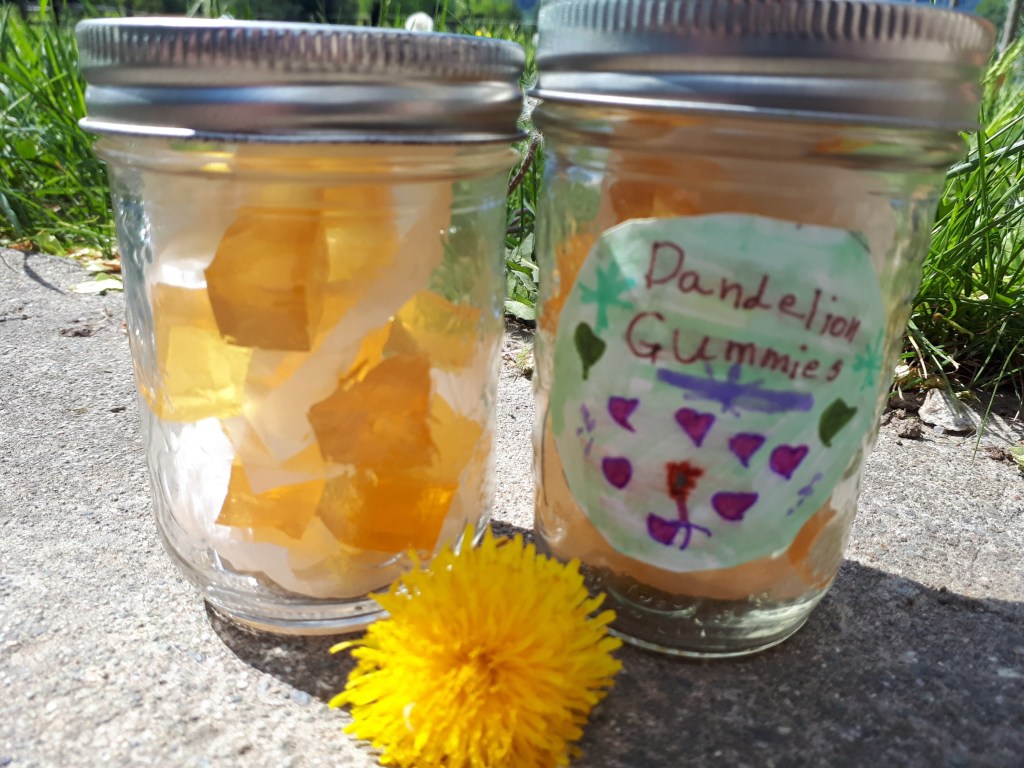
    20180509_1701241On May 11, I hosted a camp where we were supposed to make dandelion jelly. I had all these beautiful ideas in my head about the kids picking a huge bowl of blossoms out in the back field with the bees and other pollinators, their, fingers becoming stained yellow with pollen… how romantic. Of course, this is not how it happened in real life.

    “Jelly, what’s that?” one of the girls asked.

    “Well, it’s like jam, except there are no chunks in it, and we can make it from flowers!”

    “THAT SOUNDS GROSS!!” They replied in chorus. “EWWWW! WE ARE NOT MAKING THAT!! DISGUSTING!!”

    Well, that stumped me. For a moment.

    “Wait… we could make dandelion GUMMIES. Would that be better?”

    “YES!!” It was unanimous. GUMMIES were obviously WAY better than jelly.

    While we were waiting for our gummies to set in the freezer, we went outside and picked dandelions in the front yard. I showed the girls something my dad taught me when I was a little kid: that if you pick the largest dandelion stem you can find and take off its flower, it makes a noise like a kazoo! It takes a bit of patience to find the right stem, and sometimes you have to break it shorter and shorter before it will start to make  noise. It’s some kind of magic that happens when the dandelion milk in the bottom of the stem starts to vibrate, so it helps to have a juicy one! Two of the girls got bored and wandered away to play tag with Vinnie the sheep. But Avery was very excited about playing dandelions. “This is the best day of my life!” she exclaimed. “Now I can annoy everyone FOREVER!”
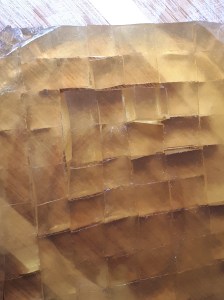


    20180511_142337
    Our gummies after being cut into bite sized morsels!

    As we cut up, divided up and packaged our very own homemade dandelion gummies, I realized this gummie making is an incredible way to get even the most squeamish of kids interested in the world that is growing all around them. If seasonal edible flower gummies can lead them to being able to identify a few species growing in their own back yard, then they learn to have a relationship with that particular plant, and that relationship can be a gateway to curiosity. In what other ways that plant can be used? What kind of environment does it like to grow in? Knowing a single plant intimately is enough to make the natural world come alive. I bet that even from reading this post you will notice dandelions more. Your awareness of them will become sharper, more open. And this kind of curiosity- this relatedness- is precious. It leads to a sense of belonging to the maze of green abundant life that exists outside our windows, the same way that knowing a friend in a crowd makes being amongst that many strangers less overwhelming. So if all we need is a few cups of cane sugar to kindle this relationship, then so be it!

    20180511_1432542
    Posing with our finished product!

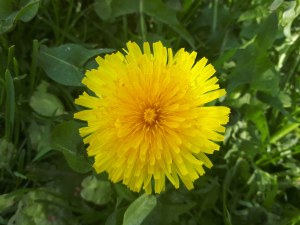
    And don’t worry, I am going to give you recipes. I am also going to acknowledge I am leading you on a little, as dandelion season is almost completely over in Pemby. Don’t worry, you can use any edible fragrant flower to make your gummies. That means, lilacs = yes. Peonies = yes. And those wild roses that are just starting to bloom? Yes, you can use those too!!

    First, you need to make a flower syrup. I make mine in big batches, as I like to be able to keep some to make into summer drinks (a few tbsp and a bit of mineral water over ice on a hot day = heavenly). Please note that the syrup recipe is not intended to be canned, as the proportions are not tested for safety. So please keep your syrups in the fridge! I am confident you will use them up before they have a chance to go bad. This recipe makes about 6c of syrup, which is quite a lot. You can always halve or quarter the amounts if you want to make a smaller batch.

    Wildflower Syrup:20180509_165901
    2c flower petals

    4c cane sugar

    5c water

    1 organic lemon, sliced

    1. Prepare your flowers. It is best to harvest them in full sun at the height of the day. (From noon to 3 pm.) That way the flowers will retain the most potency and fragrance. Whichever kind of flower you are using, do your best to use only the petals. (In the case of dandelions, this means removing the green base of the flower.) Use flowers as close as you can to the time of harvest, as they will lose potency as soon as they are picked.
    2. Bring the water to a boil and add the cane sugar and stir until dissolved.
    3. Add flower petals and sliced lemon and cover your pot or bowl with a tea towel or cheesecloth to keep out flies, and leave out at room temperature to infuse for 2-4 days, stirring once per day. You want to optimize the length of your infusion without your syrup starting to ferment. If you see lots of bubbles or you are happy with the flavour, it’s time to move onto step 4…
    4. Strain and bottle your syrup. Enjoy!


    Wildflower Gummies 20180511_1440321
    1c flower syrup

    3pkj (3tbsp) gelatin*

    1. Find a mould for your gummies. I used the bottom of a tupperware container and cut them into squares, but you could get super creative here. You don’t need parchment or non stick spray or anything.
    2. Heat your flower syrup until just before boiling. Separate 1/4 -1/2 c of syrup and shake or whisk the Gelatin into it. (I used a small Mason jar and shook it to combine the gelatin, then strained out the residual lumps using a tea strainer as I feel you get less foam this way.)
    3. Add the gelatin mix to the rest of your syrup, stir well to combine, then pour it into your mould. If foam has accumulated on top of your gummy, skim it off with a spoon.
    4. Let your gummies set. I put mine in the freezer, but if you are not in such a rush you can just leave them out.
    5. To get your gummy out of the mould, dip your mould into warm water for a few minutes (being careful not to get water on your gummy). Then run a knife around the edge of your mould and you should be able to pull it right out. Don’t be afraid to use your fingers to pull it out of the mould- you won’t wreck it.
    6. Now you can cut your gummy into shapes with a sharp knife or cookie cutter. You could also roll them in sugar and leave them out for a few days is you want a chewier texture. I was happy with mine as they were as I found them already quite sweet. If you don’t go the additional sugar method, I would keep your gummies in the fridge as they do have quite a bit of moisture in them and will mould if they are not devoured within the first few days. Enjoy!

    *I used Knox Gelatin which comes pre-portioned in little paper packages, but I saw Stay Wild has boxed gelatin that is also gluten free!
  • Garden Shadow

    Garden Shadow

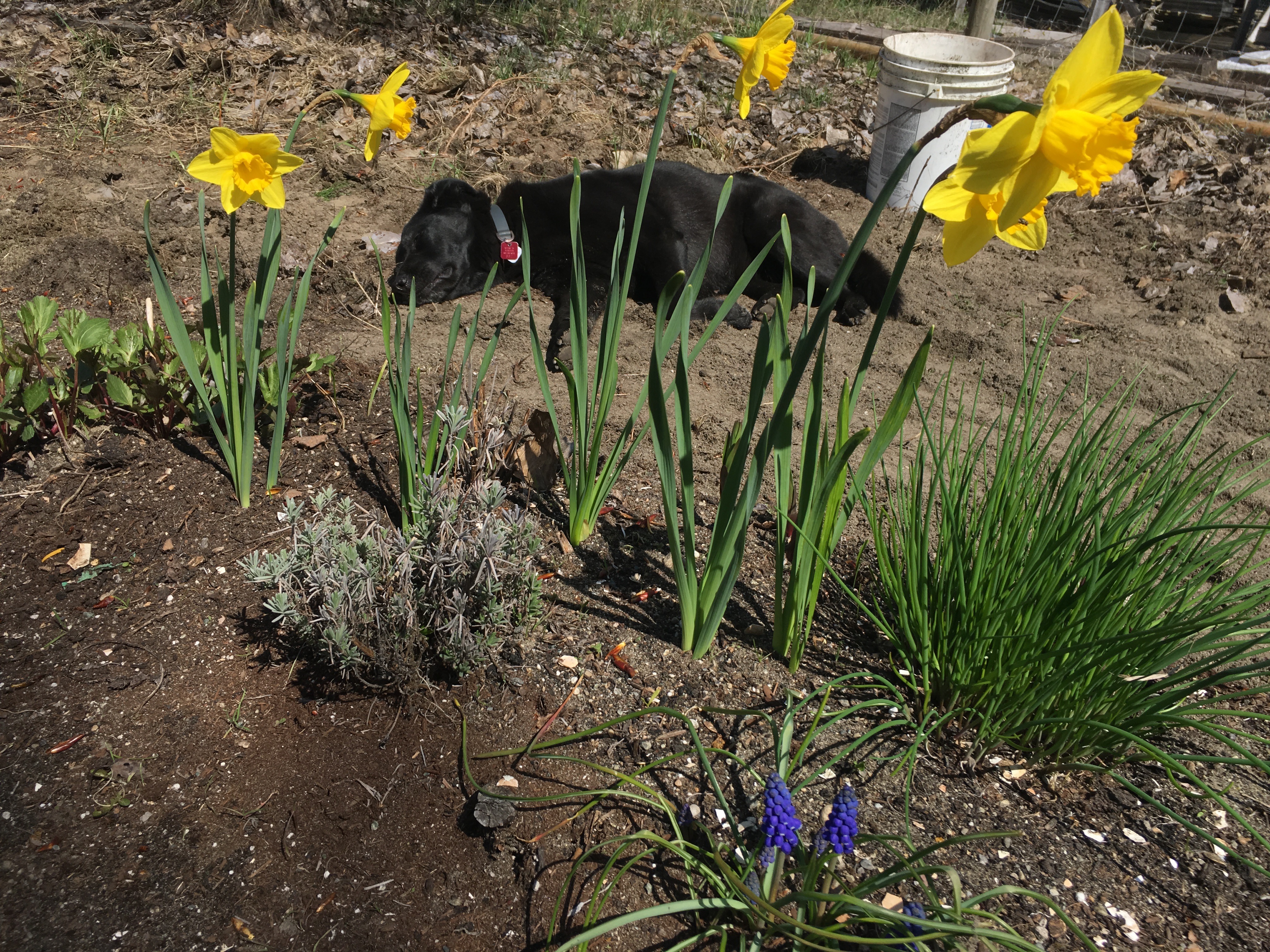
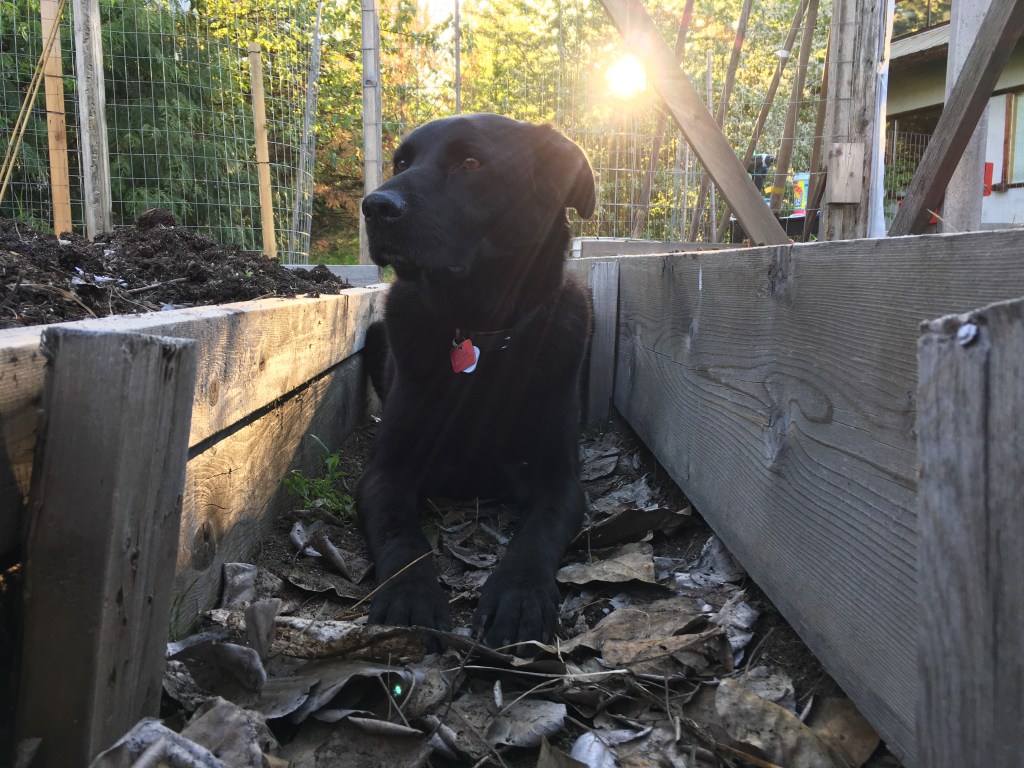
    I am not a scientist (although my current course on soils may turn me into one). Nor am I a psychologist; at best I’d classify myself as a horticulturalist. There is one thing I have come to acknowledge more then ever over the last few weeks… my dog’s intuition is more on point then most people I know. She came with the name Shadow and it suits her to a T – LITERALLY.

    So, allow me to introduce you to #shadowruffruff.

    IMG_0944

    (Need a laugh? Follow this Hosta lover’s hashtag on Instagram for guaranteed good times.)

    Here’s the skinny. Shadow was surrendered to the SPCA in Prince George where her puppy life was basically non-existent; she was quickly moved to the West Vancouver division for rehabilitation. We fell in love with her photo on their website and promptly pinned it down Hwy 99 from Squamish to meet the then 2½ year old Black Lab x Boarder Collie. Instantly we knew she’d be a perfect fit for us and she’s been melting hearts ever since.

    She is not stick or ball obsessed (thankfully). She didn’t swim until she was 4 and it’s only because there was a duck to chase. Her ability to find food and crumb around is so good she should be paid for cleaning the floor. She is extremely smart and loves to tell stories. She took up minnowing at age 10 and has been a pro field mouser for years. She is nearing 13 now and still loves to come on biking, ski touring and hiking adventures. She is showing minimal signs of slowing down. Maybe she’s stubborn like me. Grey hairs you ask? Nope. Only a few visible on her chin but most are hidden on the bottom of her paws. A lady never tells or really shows her age.

    (Minnowing obsession, recovery biking, Chief Pascal ski tour & Rohr Mt. summit)

    You might be wondering how this plays into gardening but be worried not for this hound loves veggies as much as the rest of us. When I crack my container snack vegetables she’s usually at my feet before the lid is off. I have to pack extra knowing she’ll eat half of what I brought. But don’t try to feed her kale unless it’s been massaged because she’ll look at you like you’re crazy! Smart dog. You have to watch her around the blueberry bushes, raspberries, strawberries and cherry tomatoes; anything at her level is fair game. She is a phenomenal forager. And, of course, all the thinned out carrots rightfully belong to her dirt and all.

    IMG_3649

    Since my bike crash I have been tripping over her even more times then I can count. A friend gave her the nickname “Underfoot” for good reason. I have been spending most of my time in my garden healing my concussed brain because that’s what feels good and Shadow has been there every step of the way. Therapy dog. Keeping the cats out, barking at the deer and warning me when the bears are close long before I actually see them. Again, her intuition is impeccable on all levels. She is the keeper of my garden, paid in full with vegetables.

    Besides, someone has to test out the fresh raked dirt to ensure its level.

    IMG_3321

  • Telling the Bees of the Legend of Lisa

    Telling the Bees of the Legend of Lisa

    I asked Pemberton’s bee-keeping community if there was anyone interested in contributing their know-how and passion to Traced Elements. Jennie Helmer put her hand up, and offers this first post, of bee-keeper wisdom, in dedication to Lisa Korthals. 

    This community has lost one of the most-loved, revered, and all-around rad women this grateful town has ever seen.  Pemberton will not soon forget the beauty, grace and strength that was Lisa Korthals.

    When I heard the unimaginable news of her death, I sat in stunned silence. Thinking of all the broken-hearts aching in our town. I imagined Lisa’s beautiful smile and her effortless love of all things related to family, friends, wheels and skis.

    Eventually I went to sit with my honey bees, to tell them the story of Lisa’s life and death.

    I sat on the old wooden fence beside the bees. I built this fence to wrap around their hives. It was designed to give them flying space while I sip tea and watch them zip in and out of their little hive-homes. At times, I’m able to mark the changing days by the various shades of yellow pollen stuffed gently into their legs. In the early Spring the pollen is a brilliant, neon yellow, later it turns a dusky orange.

    Today it is an intense burst of yellow, as I sit and tell the bees of Lisa.

    The “telling of the bees” is an old-world tradition, where bees are informed of important moments in their keepers’ lives. In Celtic myth, bees were regarded as having great wisdom and acted as messengers between worlds, able to travel to the Otherworld bringing back messages from the gods.

    telling the bees by jennie helmer

    I told the bees the tale of the warrior woman who has died in the unforgiving and indiscriminating arms of the mountains. I told the bees of Lisa’s family, of her phenomenal soul-mate Johnny with his gentle smile, his bravery and unimaginable strength. I told the bees of her son Tye who embodies Lisa’s spirit, who is a kind soul and an amazing ski racer, and who is building into his own legend at such a young age. And of lovely Chris, Lisa’s brother whose spirit she kept alive with stories and photos.

    I told the bees of her daring ascents, her tenacious descents, and the beautiful places she’d been in this world. I told the bees of the other female ski guides in the area whose souls were crushed on this day, whose worlds would never be the same again. A remarkably close group of strong women, they are the queens of an industry where female ski guides are revered, iconic and so undeniably safe in every choice they make in the mountains. This should not have happened to one of them.

    I shared with the bees that the hearts and minds of our community are devastated and tattered and torn. I asked that the bees find these hearts, and gently give them strength to keep breathing and moving and smiling; and then I asked that if they could find Lisa, could they let Lisa know that we will hold sacred her memory, that her family will be loved and cared for and that she will never be forgotten. If they could also stay a bit longer by her side, I asked, could they tell her that we’ll see her in the mountains, on the trails, and everywhere in-between.

    As I told the bees, they told me: be still, be strong, be comforted, be kind, be love in this life, live like the Legend that is Lisa.


  • Patty B, Pemberton Wedding Duck

    Patty B, Pemberton Wedding Duck

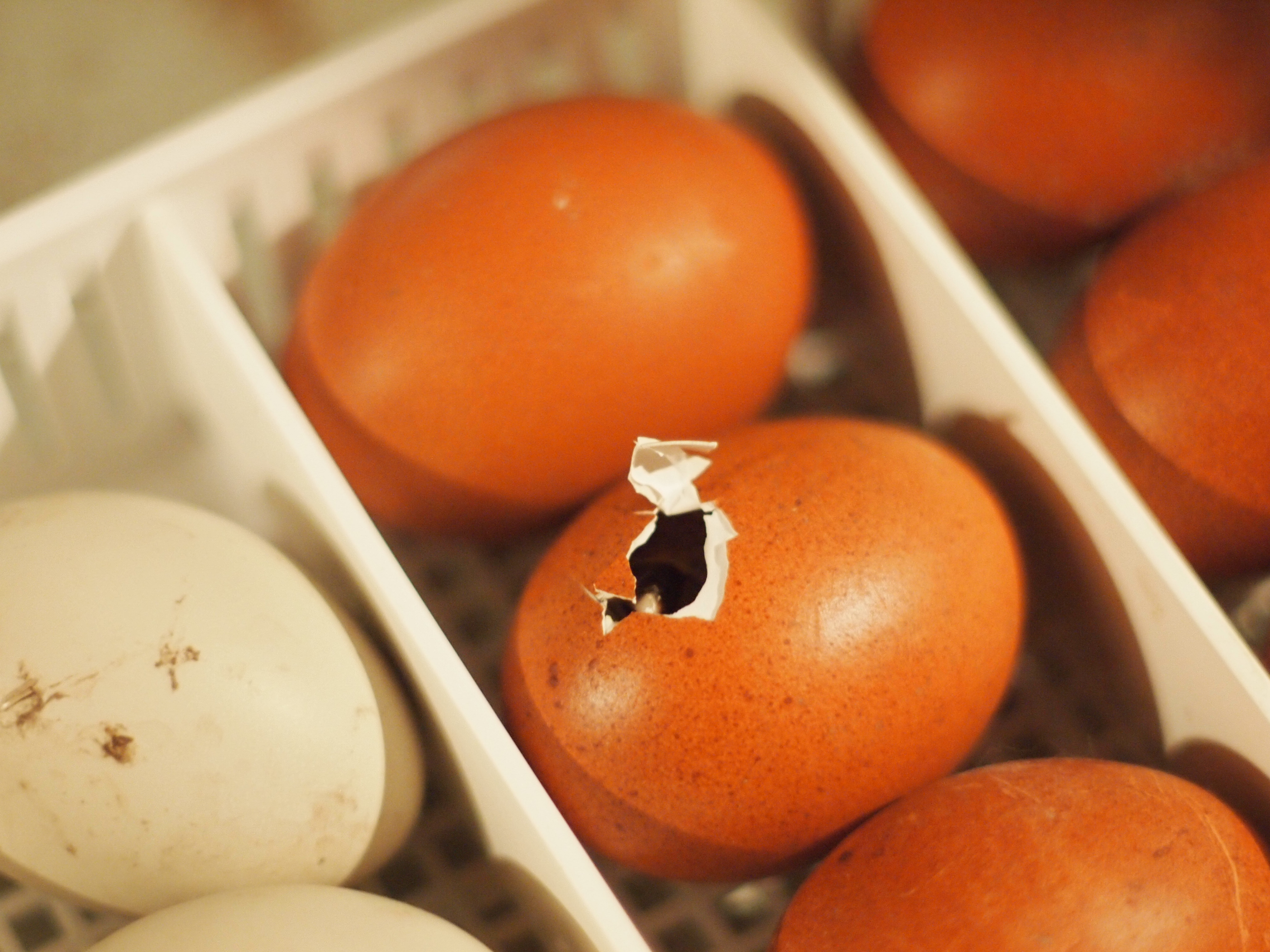
    The sounds of spring are in the air. Birdsong fills the yard, and the egg incubator hums in my living room. Every spring we carefully place colourful, fertilized chicken and duck eggs in the racks and wait patiently, until we can hear, with ears pressed to warm shell, the muffled rustles and faint peeps of tiny birds inside.

    OLYMPUS DIGITAL CAMERA

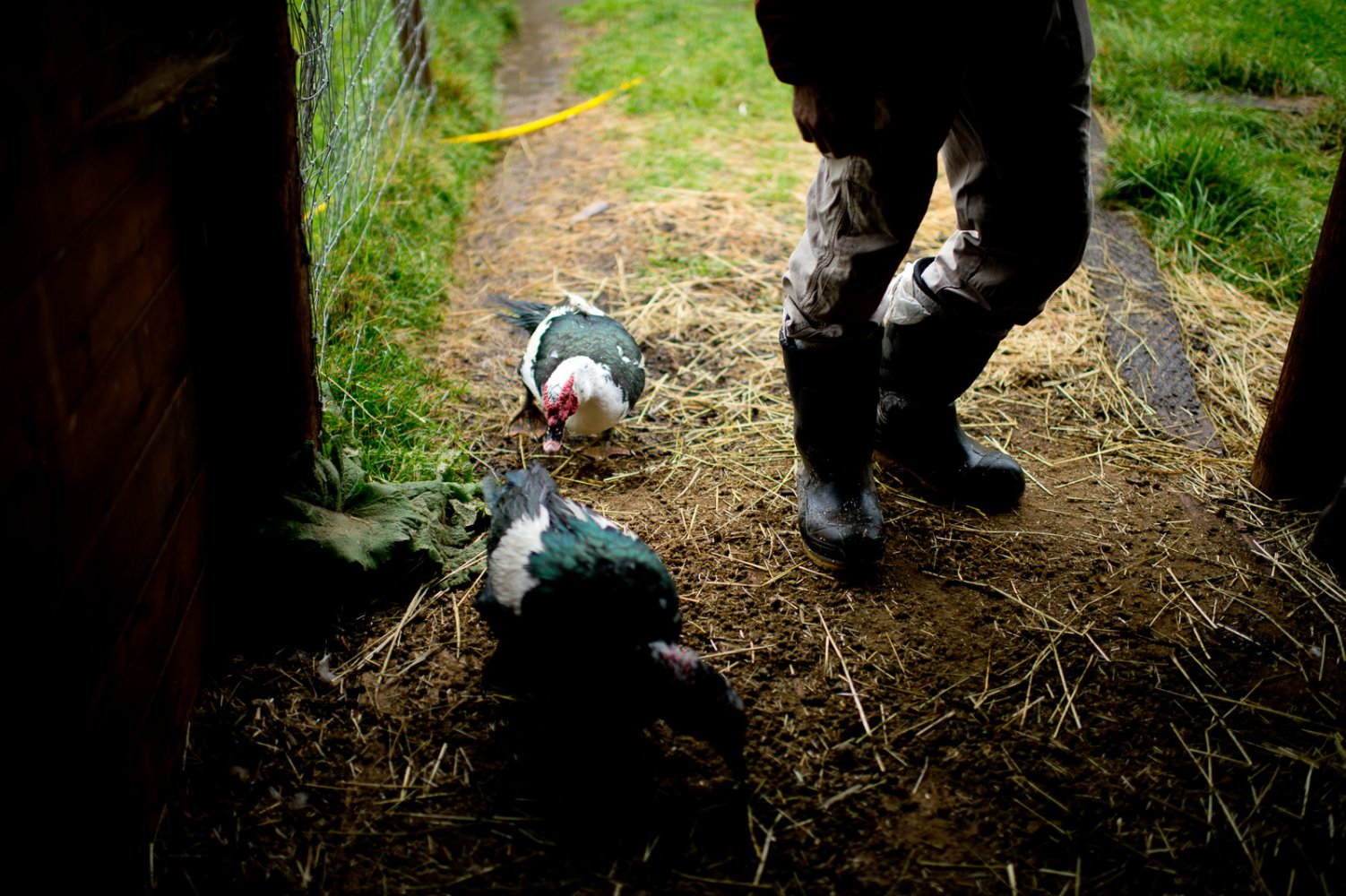
    The ducklings and chicks we hatch are egg layers – we generally won’t eat these birds, but sometimes a male duck will find its way into the oven. Our layers are almost like pets, and those with standout personalities or traits often get names.

    Last year, about a month before our wedding in September, we decided to incubate some duck eggs out of the spring season to bolster our flock after a lot of losses to raccoon and bobcat. Only one duck ended up hatching out, and since the little guy was going to be alone in the brooder, I decided to take the tiny duckling under my wing. We started calling the duck Pat since we didn’t know if it was a boy or girl. Then we changed tactic and tweaked the name to Patty B to help sway the universe into giving us a lady egg layer instead of another randy male.

    IMG_3695 (002)

    We aren’t going to have kids, and you may laugh, but being a duck mom was super intense. I have no idea how mothers of actual, tiny humans do it!

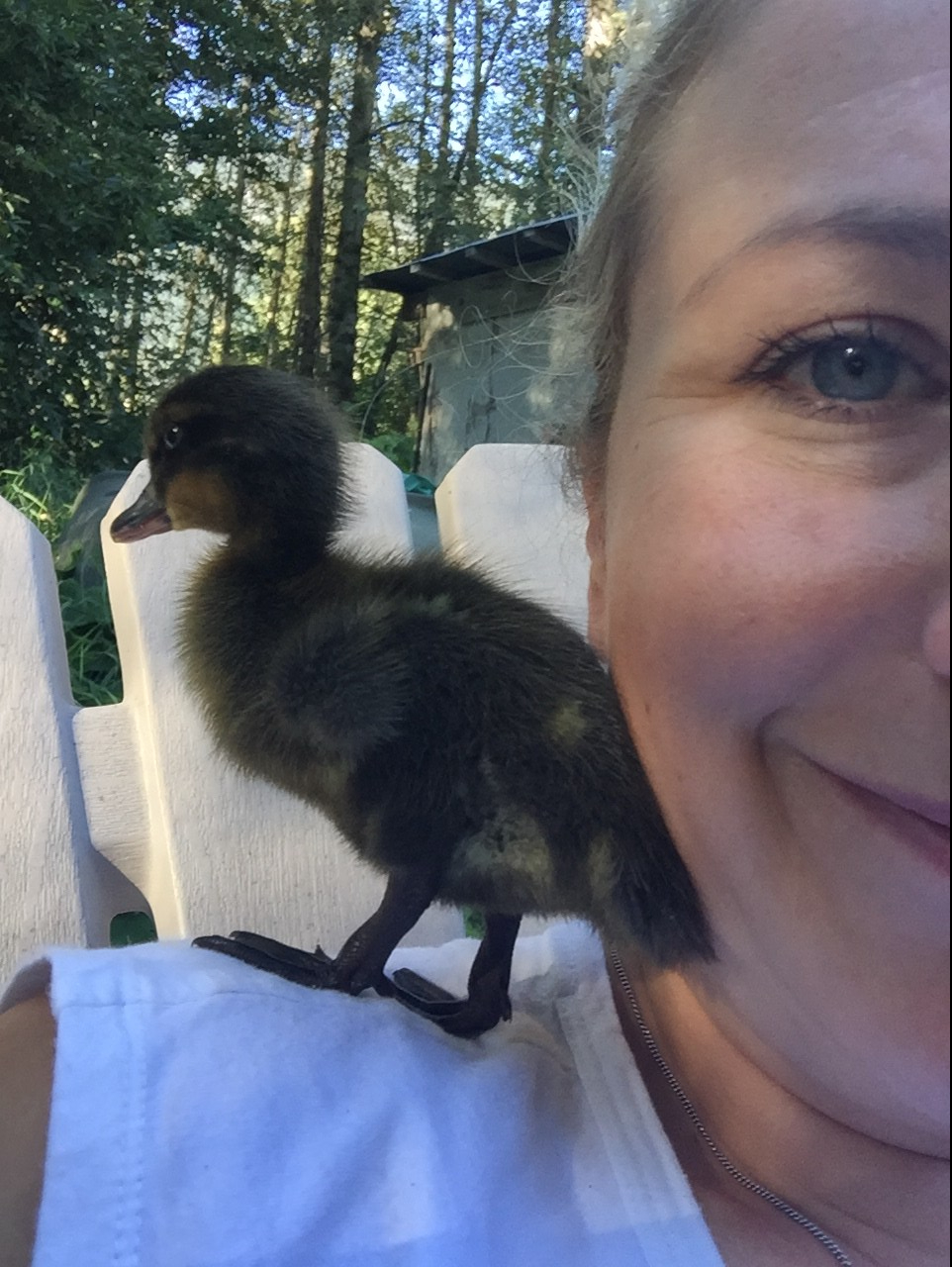
    When she wasn’t with me, perched on my shoulder, Patty B was in a large pen outside the French doors of my home office. Every time I put Patty B back into the pen after a walk around the yard, her frantic cries would break my heart and inevitably I would be back out there for another visit. In retrospect those regular walks around the yard, with the slapslapslap of her tiny feet windmilling behind me and our chilly wades into the backyard slough so she could dip and dive through the muddy water probably saved me from a total “crash and burn” in the lead up to the wedding.

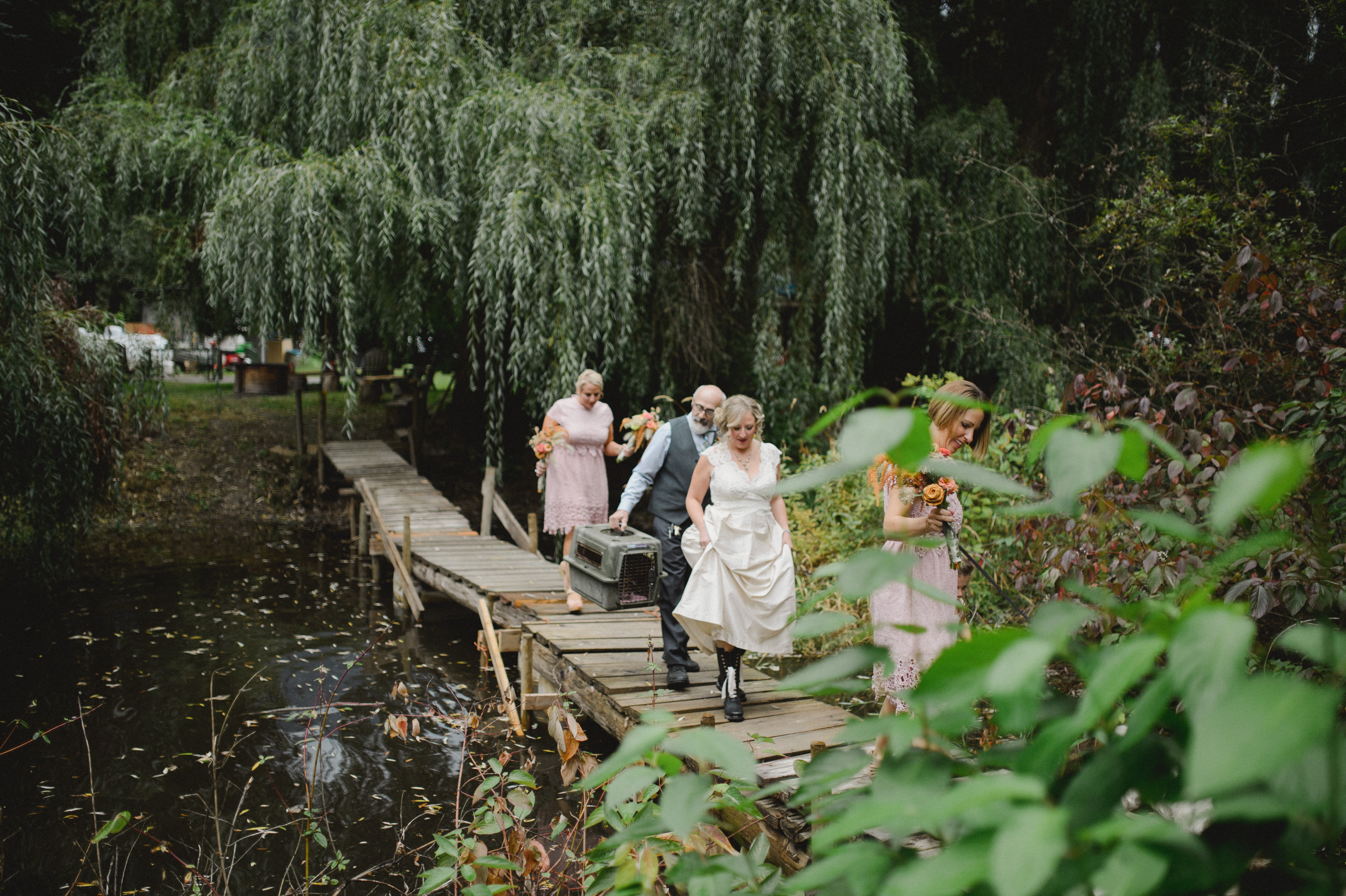
    As the big day drew closer and our walks got longer I hatched an idea – what if Patty B was part of the wedding procession? Training began in earnest with longer walks around the yard and then, eventually, forays across the small bridge into the backfield where our ceremony would take place.


    R+M_001237
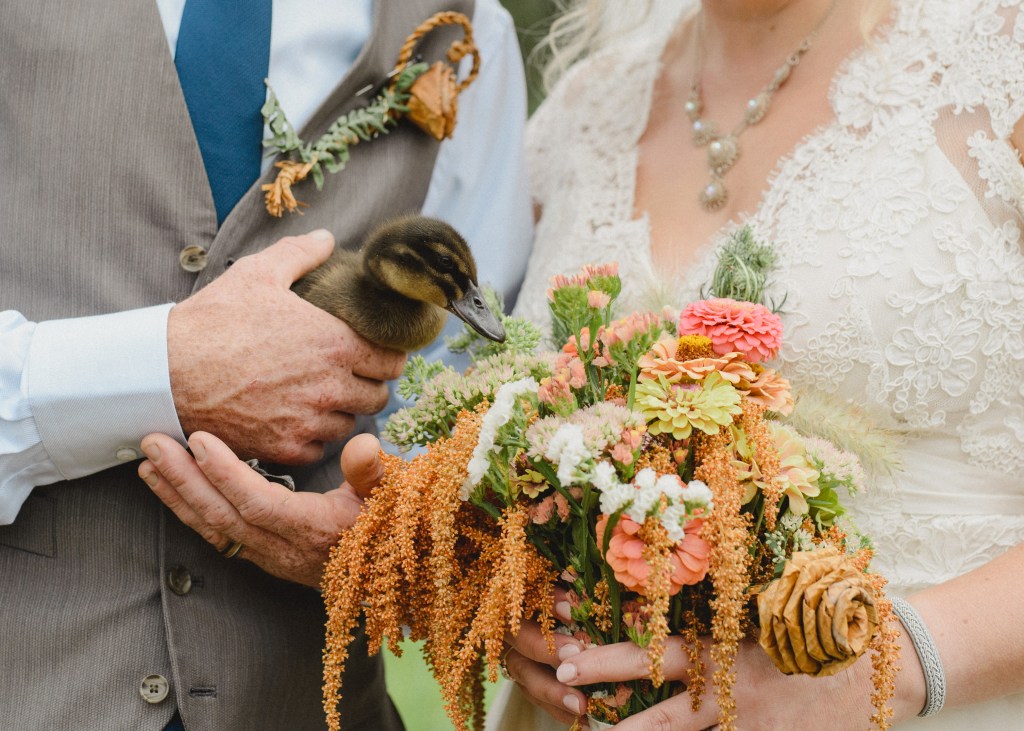
    Anastasia Chomlack photo


    The wedding day finally dawned…and it was windy and rainy. September 9, 2017, happened to be the first time it rained since Patty B was born…actually, I think it was the first day it rained all summer! Luckily, we had a break in the weather before the outdoor ceremony began and as my wedding party and I gathered just across the bridge, my dad opened the door to the pet carrier to release Patty B. She dashed out onto the muddy path with excited chirps and peeps and began slurping muddy water up her bill. Mud! Worms! AWESOME.

    It was time to start down the aisle, and my flower girl and bridesmaids began their slow march down the field. It was time for me, my dad and Patty B to make our way down to the rest of my life. But Patty B was having none of it.

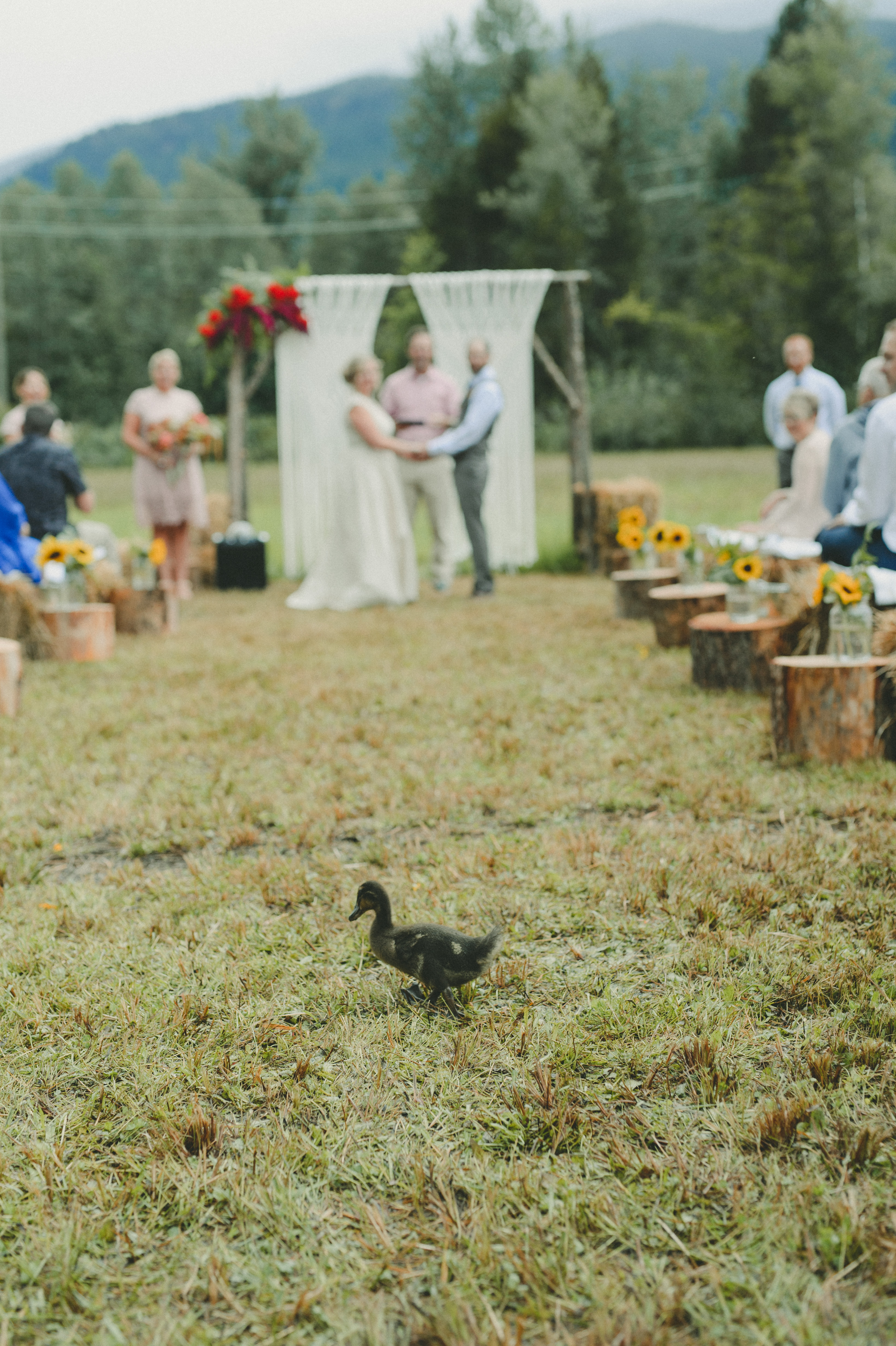
    I gave one last “C’mon, Patty B!” before sighing and giving up. The show had to go on. We walked down the field and suddenly as we were coming up between the rows of guests I heard a small boy cry out, “Is that a DUCK!?”


    R+M_001267
    Anastasia Chomlack photo


    YES. Patty B made it down the aisle with me after all.

    Most of the animals we raise have a pretty low-key life compared to the wedding adventures of Patty B. But, we tend to every animal at Bandit Farms with care, love, and respect whether we are raising them for their eggs or to eventually harvest for meat. I’m not a duck mom to everyone but being close to our food sources is a privilege I will never take for granted.

    Also, in case you were wondering, Patty B turned out to be Pat…but don’t worry, we won’t eat him.

    ML_PattyB

  • Nonna’s Kitchen Table: Mangia! I Love-a You!

    Nonna’s Kitchen Table: Mangia! I Love-a You!


    The table, for me is the trunk of the family tree.

    In her  post “The Imperfect Table”, Lisa Richardson challenged us to “reclaim the table.”

    I was intrigued by that statement. It was an opportunity to investigate the perception I have of my own scruffy dinner table situation.

    First, I thought of the meaningful and diverse experiences I’ve had while seated around a table with others. The common thread woven through so many very different experiences was the uplifted and complete feeling from simply showing up, sitting together and sharing a meal.

    The kitchen table – an ordinary yet omnipresent piece of furniture, in an infinite variety of shapes, sizes across cultures and this planet – for gathering and eating the food that has been graciously provided by mother earth herself.

    Now that I have a family of my own, I look back with deep appreciation for the commitment my family had for gathering together every evening to share space, food and conversation.

    When I visualize myself as a kid with my family, we are usually sitting around a table. My family roots are European – Italian and Eastern European.  My siblings, cousins and I were all born in Canada, but we’ve always been enveloped into the dining culture of Italy.

    One table shines above all others for its weighty contribution in shaping my sense of what it means to gather in the spirit of food, family and togetherness – Nonna’s kitchen table.

    “Nonna” is the Italian word for Grandmother.

    Nonna Selfie

    My Nonna’s table represents all that is good and pure about sharing space with the people in your life who spark joy and happiness.

    Nonna’s table, and kitchen, remain a timeless constant in my life of change.

    Physically, it is a vintage enthusiast’s wonderland.

    For my psyche, it is a meditative place of calm and serenity.

    The décor is firmly lodged in the disco era and has been since I was a kid… perfectly preserved and immaculately cared for. Four swivelling vinyl bucket chairs sit around the glazed marble-look tabletop with lace cloth, atop the vibrant 1970’s linoleum. Mandatory gold framed painting of fruit and wine looks down from the wall.

    Nonna's Kitchen

    This table holds the imprint of four generations of Di Valentino’s gathering, breaking bread and eating pasta, laughing, crying, supporting, loving and holding space for each other. This table has facilitated a rise above language barriers – the offer and acceptance of food and “caffè” was the only phrase required to communicate the boundless love between grandchild and Nonna.

    I bring this priceless wisdom, gleaned from forty years of eating at my Nonna’s kitchen table, into my life and my child-raising. Whatever may have happened during the day is put on the back burner. What is brought to the table is food, love and eye contact.

    Sometimes that love has peeled and chopped, sautéed and baked for hours. Other times that love has ripped into a box of bunny shaped pasta and tossed it into a pot.

    Either way, the expression of love at the kitchen table is tangible and I feel deeply that this is one of the greatest gifts that I can offer.

  • The Imperfect Table

    The Imperfect Table

    Scruffy hospitality, Cook Book Clubs and reclaiming the table

    I hate owing someone a dinner invitation.

    It’s so high-pressure.

    I always thought “imperfectionism” was the character flaw until Brene Brown, the vulnerability guru, outed perfectionism as a tactic people use to protect themselves from getting hurt.

    perfectionism by brene brown

    Ha! I exhaled smugly, I knew there was something suspicious about you perfectly groomed, beautifully mannered ones, with your instagrammable dinner parties and Kinfolk magazines casually tossed on the Noguchi coffee table.

    kinfolk-founders

    kinfolk-preview1
    Trying very hard to look like you’re not trying. The Kinfolk Table – a different planet for aliens who specialize in artfully dishevelled, immaculately styled entertaining.

    But embracing your own flawsomeness is harder than it sounds. Even with Brene Brown’s Vulnerability manifesto at your back. I point a finger at Lucy Waverman, the Globe and Mail’s food columnist. Waverman has written that you should never ask “what can I bring” in response to a dinner party invitation. It’s an insult to the host who has put forethought into curating a great meal with perfectly paired wines. Just bring your conversational A-game, she says, and an elegant hostess gift.

    Lucy and I move in different circles.

    On my planet, we always ask.

    I ask, not to insult my host, but to acknowledge that bringing people into your space takes effort, and I’m happy to help lighten the load.

    For the record, I am never insulted when someone asks me. I am also stoked if, without even asking, someone randomly shows up with contributions. Throw them down there on the table. Open that bag of chips, decant some vino, let’s squeeze in as much conversation as possible before the children blow it all up.

    IMG_4275.JPG
    No, none of the plates at my house match. And they probably never will.

    But it’s taken a while to devolve to this place, helped along by necessity (children), a catchphrase and one unofficial intervention.

    The intervention occurred in the fall, when childless friends, after months of “we should get together soon” emails, randomly dropped by, with wine, cheese and crackers.

    This couple are consummate hosts. They’re foodies and entertainers with a genuine passion for food, wine, design and décor. For a long time, after first being invited to their house for dinner, (three courses, perfectly plated, in a room where the drapes and the curtains matched), I was too scared to return the favour and serve up one of my standard one-pot meals in return.

    When I eventually braved-up, and dished forth something peasant-like, on chipped plates, from a help-yourself-to-more platter on the table, they didn’t turn up their noses. They were more distracted by the conversation, by playing with my toddler, or whipping up the dessert themselves. (I’m smart enough to say hell yes, when an amazing cook asks “shall I bring dessert?” Sorry Lucy for not measuring up to your standards.)

    Their drive-by drop-in was the ultimate signal to me: we don’t need to be entertained, we don’t want to be a high pressure entry in your dayplanner, we just want to catch up.

    IMG_1540
    For perfect looking, perfect tasting meals, eat out. Fergie’s Cafe at Sunwolf is instagram-worthy. Dinner at my place is not.

    The catchphrase came out of a sermon, in which a Knoxville, Tennessee minister commended us to lower our standards and embrace “scruffy hospitality”, the kind of dinner party that reveals you hunger more for good conversation than fancy ingredients.

    In my gospel of scruffy hospitality, “what can I bring” is the password, a signal that a person appreciates they are participating in a come-as-you-are experience, where the napkins are unironed, if we even remembered to put them out, and the kids will move from lap to table to toy room as we try and coerce them into eating something, before ignoring them for conversation that is grabbed and relished and as nourishing as the food could be.

    “What can I bring?” is also code for: “I know you’ll have cleaned the bathroom for the first time this week because people are coming over, and that you and your partner will probably be arguing the moment we walk in the door, because that’s what happens to us too, every single time we have people around.”

    It means: “I anticipate stepping around toys piled into a corner. I am willing to push past my inhibitions and make myself at home, to find a glass and pour myself a glass of water if I am feeling thirsty.”

    Ultimately, it’s code for: ”I’m just happy to see you.”

    IMG_0444
    Keep it casual. Otherwise, we’ll see you in 15 years or so.

    That’s what my foodie friends taught me, when they dropped by with crackers and dip and we ate standing up, moving between the kitchen island and the side of the bath-tub where the kid happily contributed his chatter.

    And that’s why I started Cook Book Club. which debuted Thursday 22, at Stay Wild Natural Health Store and Juice Bar.

    deep like pow-08697
    Leah Langlois of Stay Wild imagines all the yummy plates that will arrive for Cook Book Club

    If your contribution is a fizzle or a flop, you blame it on the cookbook.

    Imperfectionism, scruffy hospitality, cook book club, it’s all an invitation to reclaim the table as a gathering place. Even when we’re too busy to entertain. Especially then.

    Cook Book Club Feb 22 poster

    The Velocity Project: how to slow the f*&k down and still achieve optimum productivity and life happiness, is a biweekly column by Lisa Richardson that runs in Pique newsmagazine. 


  • The dirt on how the PR girl met the farmer

    The dirt on how the PR girl met the farmer

    March 11 marks four years since I met the farmer that would change the course of my life forever. You see,  that day I went on a date with “SnowboardingFarmer,” aka Riley Johnson, a Pemberton guy I met on an online dating site.

    We won’t talk about how he postponed our date twice; once because his snowmobile broke down and the second time because his basement flooded and two baby rabbits died on the same day. Those things don’t matter anymore.

    March 11 was the perfect day to meet him.

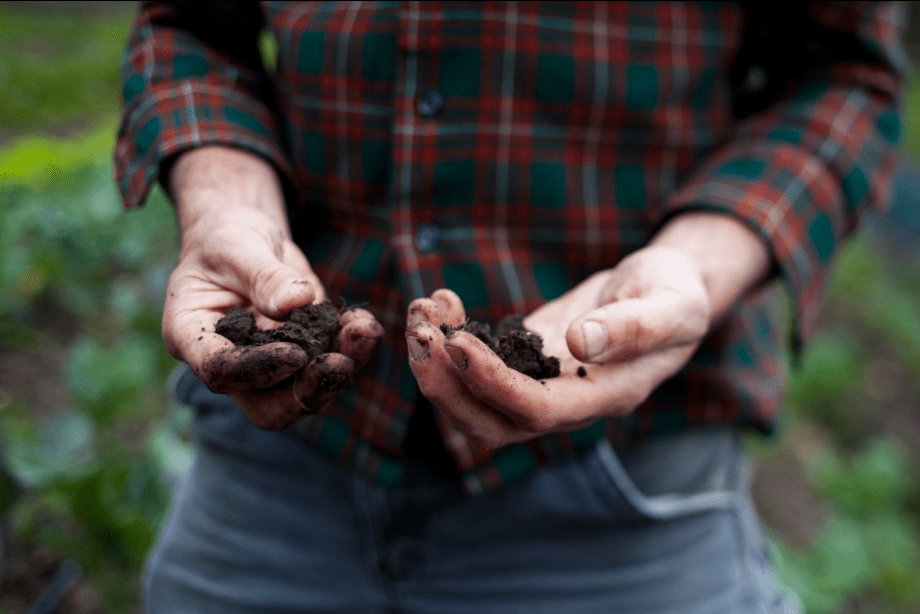
    Perfect, because he called me that day to see if I would be able to get together – THAT AFTERNOON – for a drink after work. No notice, at all. So, I met him wearing an old plaid shirt with jeans, and unwashed hair frizzing in a ponytail. He showed up in a plaid shirt too and came clomping up the stairs to the Mexican Corner in Whistler wearing huge mud splattered work boots.

    OLYMPUS DIGITAL CAMERA

    “What is THIS?” I asked myself as he sat across from me with a mischievous twinkle in his eye.

    Both of us showing each other who we were. Me, inadvertently, since I would have made way more of an effort for a blind date if I knew that it would be happening that day. Him, by design, since if any Whistler girl is going to embark on a relationship with a Pemberton farmer you might as well show her the dirt up front.

    After eleven years in Whistler marching down quaint cobblestone lanes in heeled boots, working my way up the ladder in Whistler Blackcomb’s public relations department, and networking and attending special events like a fiend, finding myself falling in love with this muddy farmer was both the most surprising event in my life and the easiest thing in the world.

    One of the first ways I acknowledged the significance of my new relationship was a call I made to SPUD organic produce delivery. When they asked me why I was cancelling my longstanding and recurring order, my answer was simple.

    I fell in love with a farmer.

    OLYMPUS DIGITAL CAMERA

  • The Dirt on Food and it’s Power to Heal

    The Dirt on Food and it’s Power to Heal


    chooks

    Fuck calories.

    To which I would add, fuck “clean eating”, fuck salmonella poisoning, and fuck the commodities trading of food futures.

    Let’s bring eating back to earth.

    By which I mean, let’s put the dirt back on your produce, the scruffiness into your hospitality, and relationships back into your consumption.

    Let’s put ecology back on the table.

    Literally, let’s place the dinner table into a web, instead of at the end of supply chain. Let it be part again of a network of living things, that flow through and from the table, in a million different forms – energy, sunlight, worm food, fresh produce, dead animals; as an anchor to conversation, to nourishment, to relationship, to healing.

    Reclaim the table, and the garden, the power that food has heal – not just our bodies, but our relationships, our sense of agency, and our role as stewards and restorers of the earth. And the opportunity food offers us, to grow – not just out there in the soil, but as humans.

    We’ve been consumers for long enough.

    This website is a place to map food stories, from the heart of the Pemberton Valley, in order to turn consumers on to the idea of being growers, creators, culture-shapers and restorers of the planet. Without guilt. Without pressure. With joyful messy experimentation, scrappy gardens, candour and dirt.

    Community Garden