Category: portraits

  • Pemberton farmers featured in Patagonia’s Winter 2020 catalogue: What the Farmers Know

    Pemberton farmers featured in Patagonia’s Winter 2020 catalogue: What the Farmers Know

    Turns out the crucial work of tending to the land balances nicely with the release of deep winter rollicking in the mountains.
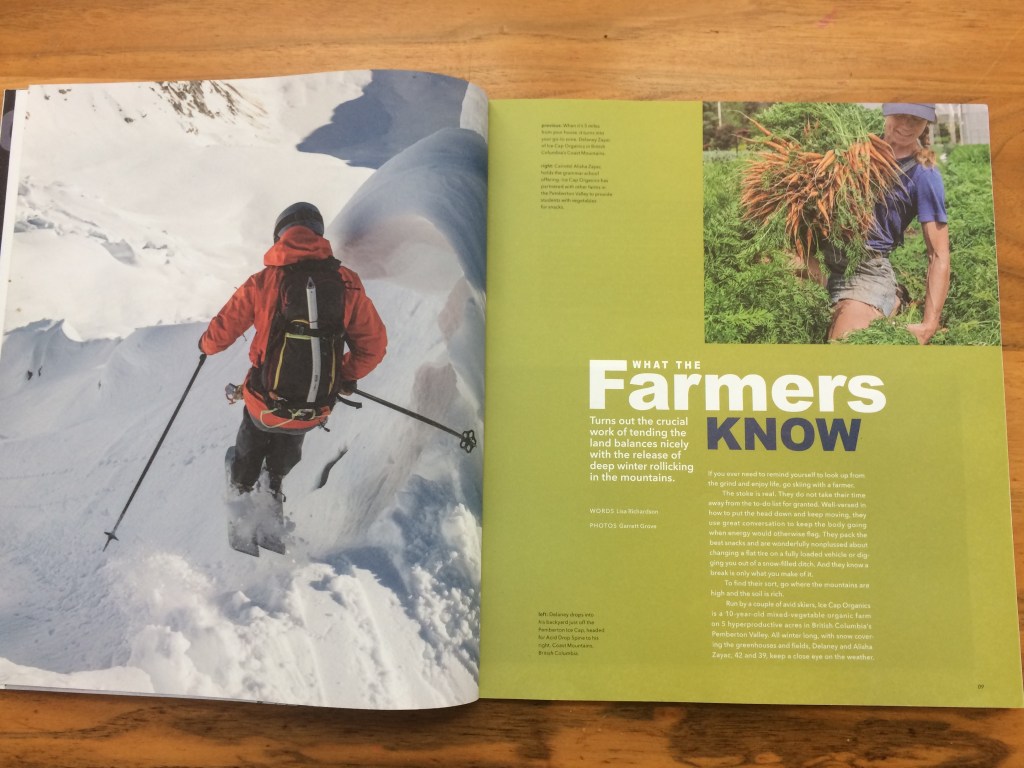
    If you ever need to remind yourself to look up from the grind and enjoy life, go skiing with a farmer.

    The stoke is real. They do not take their time away from the to-do list for granted. Well-versed in how to put the head down and keep moving, they use great conversation to keep the body going when energy would otherwise flag. They pack the best snacks, and are wonderfully nonplussed about changing a flat tire on a fully-loaded vehicle or digging you out of a snow-filled ditch. And they know a break is only what you make of it.

    To find their sort, go where the mountains are high and soil is rich.
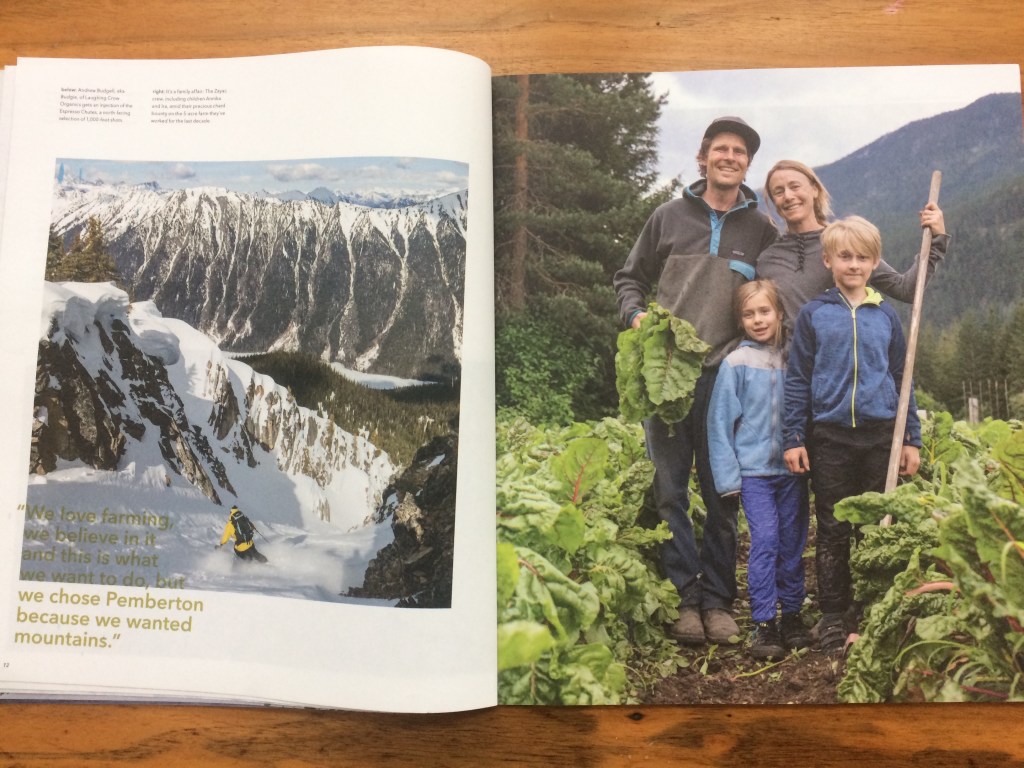
     

    Run by a couple of avid skiers, Ice Cap Organics is a ten-year-old mixed vegetable organic farm, on five hyper-productive acres in British Columbia’s Pemberton Valley. All winter long, with snow covering the greenhouses and fields, Delaney and Alisha Zayac, 42 and 39, keep a close eye on the weather. And whenever the conditions are right, Delaney, is up at 3 a.m., blazing out the door, skinning in the dark with headlamps to pursue objectives out on Miller Ridge or Duffey Lake Road with a small crew of friends. Alisha often opts to show their kids what’s to love about winter.  

    The volcanic-rich river-silt blessed soil of the Pemberton Valley has earned many farmers’ attention, but it’s the massive Coast Mountains that catch the farming-skiing type. And if the mountains bring folks in, it’s sometimes the farming that gets them to stay—loamy earth beneath 8,000-foot mountains, and living to the sound of glacier-fed rivers.
    “It’s why we’re here,” says Alisha. “Winters off is one of the things that drew us to farming,” explains the former tree-planter and agro-ecology scientist. “We love farming, we believe in it, and this is what we want to do, but we chose Pemberton, because we wanted mountains. We canvassed the world, to find places where you have mountains and farmland – Bella Coola, Pemberton, Chile, a couple of places in France.”

    Delaney reflects on their decision-making process—a couple of young nomads who were dividing their year into three seasons—university, tree-planting, travelling or skiing.  He’d spent his twenties and early thirties skiing over 100 days a year, bumming throughout the Canadian Rockies, Kootenays and Coast Range, and venturing farther afield to the Andes and the Alps. It was time to root down and think about having a family but Delaney knew that without big mountains there was no chance of his calling a place home. Pemberton was fertile, steep, proximate to a hungry market, and permanently set to stun—a place where there are no ugly views.

    Now their year breaks into two parts: farming season, and winter. As the farm sleeps, the pair take turns driving their vegetables down to winter markets in Vancouver, a city of 2.5 million people two hours to the south. They make plans, research the latest science and developments in farming, ski, and regenerate. “We work hard in the summer, and play hard in the winter.”  Every morning since completing the 10-day silent Vipassana retreat she’s wanted to do for decades, Alisha wakes up before dawn, before the kids, 6 and 8, have roused, to sit and meditate for an hour, watch her mind, and bank some equanimity for the day ahead. Delaney plans his last spring mission to the remote Waddington Range. Bad weather days, they tackle the farm chores, like sourcing an old upright freezer from a Chinese grocery store that they can upcycle into a germinator for their seed starts.

    Then, come growing season, they take up their mantle as activists.

    “That’s another reason we started farming,” says Alisha. “It was a way to align with our values, a positive way to be part of the community. I wanted to fight the good fight for agriculture and as soon as I started farming, I realized this is actually enough.” It’s a quiet, radical activism.

    After he’s been at the markets in the city for the weekend, the first thing Delaney does is park the truck, grab the kids and walk around in the fields together, see how things are looking, noting the growth and changes that have unfurled in the last three days. The Lillooet River runs past the end of the narrow, pot-holed street, flowing down out of the ice-cap and past the sulfurous thermal sleeping volcano that still vents steam out its fumeroles. The Lil’wat Nation, whose traditional territory this is, says the wild land upstream of Ice Cap’s farm has a power that comes from deep in the earth. It’s so big and powerful that when he skis back there, it gives him goosebumps. He treads the soil of the farm to shake off the city, touch down, ground down, and tap quickly back into that energy.

    Winter gives it the time to seep in.

    “Every farm has its own personality,” says Amy Norgaard, who’s worked at many farms in the Pemberton Valley, including Ice Cap Organics.

    Amy, 26, grew up in western Canada, in the 7,000-person ranching and logging town of Merritt, British Columbia, skiing and snowboarding obsessively from the age of two. When her mom got breast cancer, Amy, then in high-school, discovered that vegetables are potent and delicious medicine. Later, she floundered through university courses until discovering the faculty of Land and Food systems—that’s when Amy found her people.

    “I took my first soil science course in 2013 and it literally changed my life. I started learning about farming systems and their complexity and beauty and the complete mess we’ve made with food production.” Two years later, to acquire her final six credits and prove to herself that her romantic idea of farming probably wouldn’t withstand reality, she interned as a farmhand for eight months at Ice Cap. All the pieces fell into place – her love of the mountains and her understanding that being stressed is completely different from working hard. She farmed so hard that years of brain-spinning insomnia disappeared, allowing her to fall asleep exhausted and satisfied.

    Of course, the skiing helped.

    For the last eight years that he has lived in Pemberton, Andrew Budgell rented a poorly insulated cabin near his farm fields, tucked off the narrow road in a giant grove of cedars. Winter is the only time he’s not covered in dirt, but the price he pays is in “cold.” Some days, it was so freezing, he’d blast hot air in his face with a hair dryer to bring himself back to life.

    “He calls it the comfort gun,” says his soft-spoken farming partner, Kerry McCann.

    Andrew, 44, and Kerry, 36, met in Pemberton eight years ago, when Andrew, a ski-bumming boot-fitter in Whistler and refugee from the suburbs of Ottawa, decided to experiment with growing salad greens as a side hustle. He knew nothing about farming, except that he wasn’t afraid of hard work, loved learning, and wanted to attune more deeply to the rhythms of the earth.

    McCann, a beekeeper, yoga teacher and cranio-sacral therapist, had been working as the “hands” of an arthritic physiotherapist in the economically depressed community in Ontario where she’d grown up, home-schooled, on a self-sufficient homestead run by her back-to-the-lander parents. Changes in the health insurance legislation meant her work was drying up, so she ventured west, and stopped in the first place she found that had seven pages of help wanted ads in the newspaper – the Whistler-Pemberton corridor. She convinced her landlord to let her install garden beds alongside the field where Andrew was growing his greens. As her seasonal job as a park host wound down, Kerry began to ponder her next move when Andrew proposed next-leveling his salad bar. “Maybe we should start a farm? I can’t do this alone. We’ll get bees!”

    Kerry is an instinctive grower. Where Andrew acquires knowledge through his brain, poring over books and websites, and studying dewpoint and freezing level and weather models, Kerry’s insight into the natural world flows through her actual pores – she will walk outside, sniff the air and announce, “Frost is on its way. We should cover the vegetables.” These approaches define their skiing styles, too: Andrew studies maps and trip reports; Kerry rests on instinct.

    Pemberton farmers are featured as radical activists, balancing work with winter play, in Patagonia's latest journal.

    Seven years into operating Laughing Crow Organics – their certified organic mixed vegetable farm – they’ve doubled income and veggie production almost every year. But Andrew says, “The reality is, we’re both very challenged in pulling this off. We are living and breathing this farm dawn until dusk.” Farming, just like hiking and skiing your ass around the mountains in temps that turn any exposed hair into icecicles, is not an easy endeavour. 

    But they always eat well, and when winter arrives, they forget their 30-item daily to-do list and head for the hills.

    Kerry spent years meditating and practicing yoga; skiing is her winter practice, exploring the backroads and drainages and skin laps around Pemberton. “I used to spend a lot of time looking for enlightenment. But when you’re skiing powder, it’s a kind of samadhi,” she says, referring to the yogic word for oneness, or meditative absorption, the goal of all her sitting. It’s a kind of short-cut.

    Increasingly, Amy is part of Laughing Crow Organic’s winter crew too.  After several seasons with Ice Cap, she went to graduate school to study soil science. She skis every chance she gets. “Part of the connection you gain from farming comes from being so exposed to the elements. There’s a lot of vulnerability. You don’t know what the day is going to look like, and you’re vulnerable to what Mother Nature wants to do to you.” She thinks about this when she’s out skiing, too—the natural synergy between mountain people and growers, and how they understand the thrill and sense of vitality that come from being immersed in the elements. The honest exhaustion at the end of the day’s effort. The risk, the reward of getting out among it.

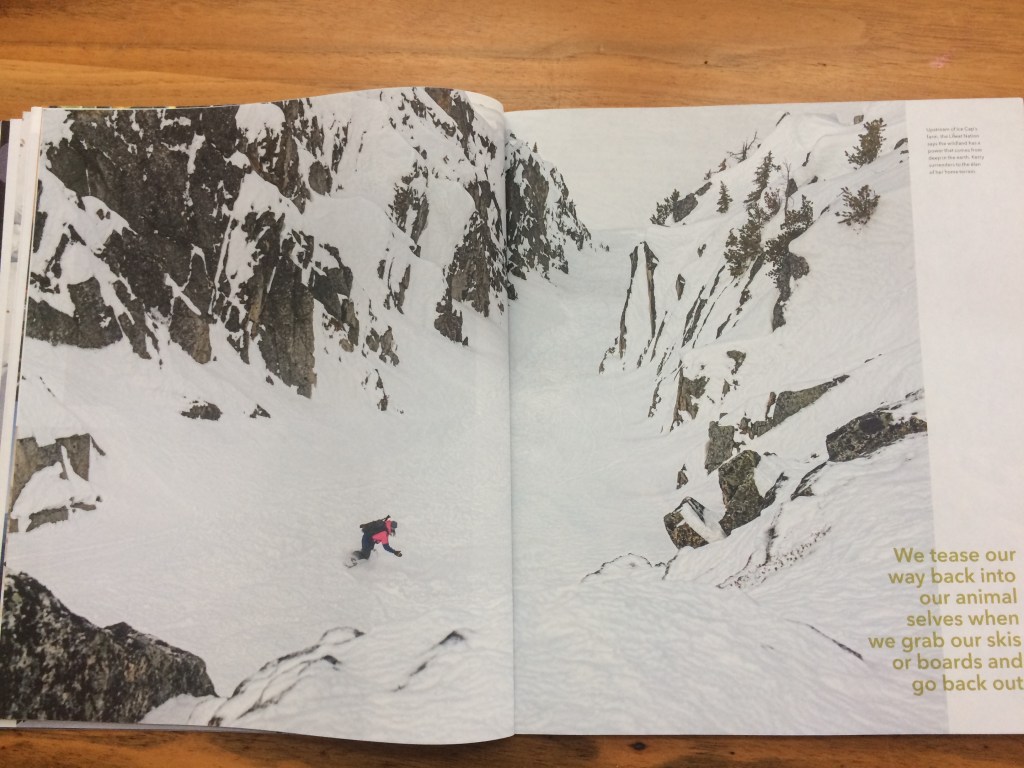
    Most of the modern developed world is a set of systems and habits and structures designed to limit our exposure to nature and keep us safe from variability, from discomfort or physical labor, and help us not even break a sweat. We tease our way back into our animal selves when we grab our skis and go back out. But the illusion of separation remains, constantly reinforced every time we jump into a vehicle, order a coffee to-go, stock up at the grocery store where an invisible, complex, global supply chain presents us with the illusion of a constant steady supply of fuel, of food, insulating us from our true vulnerability on this delicate earth.

    It’s good to sit with that: what the skiing-farmers know.

    This story was featured in Patagonia’s Winter 2020 Journal. All images captured by Garrett Grove.

    Follow IceCap Organics on instagram at www.instagram.com/icecaporganics/

    and Laughing Crow Organics at www.instagram.com/laughingcroworganics/

  • Frontier Thinking: Everything you do happens at the place where your ideas meet your idea of the world

    Frontier Thinking: Everything you do happens at the place where your ideas meet your idea of the world

    This is the time of year when the farm machines roll full-tilt out of winter hibernation.

    At least, that’s how Andrew Budgell speaks of it.

    Co-owner of Laughing Crow Organics, one of Pemberton’s small scale organic mixed vegetable farms, Budgell is six credits shy of an English degree, and seven years in to his transformation as a farmer. We sat down this winter to talk shop, mutually intrigued by each other’s craft.

    LGC-LaughingCrow-24©AudreyThizy.2019
    Andrew Budgell and Kerry McCann of Laughing Crow Organics. ©Audrey Thizy.2019. All rights reserved / audreythizy.mail@gmail.com / +1 778 266 3655 / http://www.audreythizy.com.

    “In the winter time, it’s like you’re assembling this really complicated machine,” Budgell explained. “And when the season starts, you pull it out in the field and start it up. It begins lumbering forward. And you start seeing, as the season goes on, that you’ve become a part of the machine, working, weeding, watching. But this has all been planned. Every now and again, the machine will trip because of something you didn’t think of. Then there’s this extra challenge of patching things up and putting out fires. But the machine rumbles onwards forever.”

    Once the snow is off the fields, and the Life Force is surging through everything, nothing is sleeping. And the farmers start moving to keep pace – a pace that will keep accelerating until they feel like they’re running. “I feel like if I don’t keep moving alongside it, the machine falls apart. You have one chance. It’s a really hard deadline, unless you can decode nature.”

    You make the machine, you become the machine. Phoyo by Laughing Crow organics

    Budgell is regaling me with images of his Frankensteinian creature, in part, because we’ve sat down to talk about the contrast between winter and summer. Winter is a time for planning and playing. Now that farming season is here, it’s time to get down and dirty with your creation – to fully engage in this mysterious interplay between your plans and ideas and the physical world.

    Farmer Andrew Budgell working on an early draft Laughing Crow Organics

    I returned to this interview after listening to poet David Whyte talk about “the conversational nature of reality.” Whyte suggests that “the only place where things are actually real is at this frontier between what you think is you, and what you think is not you; that whatever you desire of the world will not come to pass exactly as you like it. But the other mercy is that whatever the world desires of you will also not come to pass. And what actually occurs is this meeting, this frontier.”

    One day this winter, running alongside my own lumbering beast of deadlines and deliverables, I did something different. Instead of downing two espressos, I squandered 15 precious minutes in meditation. I sat, breathed out, and in, and out, and in, and offered a kind of prayer to the universe. This story means a lot to me, I admitted. I want to do the idea, and the people it represents, real service. And I have five and a half hours to do it. Anything or anyone out there that can help get this fully formed out onto the page right now is most welcome.

    I’d long been intrigued by Eat, Pray, Love author Elizabeth Gilbert’s theory of creativity, famously disseminated in her TED talk. Her insight is that there are Muses, a kind of “other” energy that works through us. A big part of doing creative work, maybe the biggest part, is consistently showing up so the forces know where to find you.

    She came to that story as a kind of medicine to her huge commercial success and the weight of creative pressure that followed. Excavating an ancient understanding of Muses was her way of letting the air out of the pressure cooker of her Next Big Project; saying, look it’s not all on me. If I just show up, some other magic will meet me there.

    It intrigued me, but it felt a bit passive, like she meant opening yourself up as a channel or a medium, letting something use you to flow through and onto the page. Writing hadn’t ever felt like productive sleep-walking to me. But when I sat in that moment of pause, inviting mysterious allies out of the cosmic woodwork, I suddenly saw it as a much more dynamic process – profoundly collaborative. Co-creation. Something might work through me, but it had to work with me, with my brain, my thought patterns and habits of language, and I would be shaped by the flow, just as I might allow it to help shape the work.

    It was a new frontier.

    It may be that some kind of meeting took place that day. But I began to let my fear and overwhelm subside at the responsibility of what I was tackling, trying to pull stories out of the ether, alone.

    LGC-LaughingCrow-12©AudreyThizy.2019
    Photo by Audrey Thizy

    Every spring, when the freshly plowed fields are full of scribbles and half-thoughts, Budgell feels the weight of the beautiful responsibility he has shouldered to feed hundreds of people. “We always freak out! We worry: is it going to grow this year? Is it going to happen? Are we going to have food? All through April and May and June. And then right around July, it’s like this crazy revelation. Oh my God! It worked again! Nature!”

    When the miraculous manifests photo by Laughing Crow Organics
    Photo courtesy Laughing Crow Organics

    “There is a chemistry to creative work that is about two parts miraculous to one part sheer effort,” reads a quote tacked above my desk.  The precise effort-to-miracle ratio may change, but both are indispensable. We keep fumbling back to this. It’s on you, but it’s not all on you. It can’t happen without you, so show up and do the very best you can but make space for the not-knowing, the magical, the forces that keep the plants growing and the words flowing, and whatever else needs human hands to manifest in the world, in this earthy gritty sweaty dimension, where revelation happens.

    Follow @laughingcroworganics on instagram for more revelations.

  • Courting Wonder

    Courting Wonder

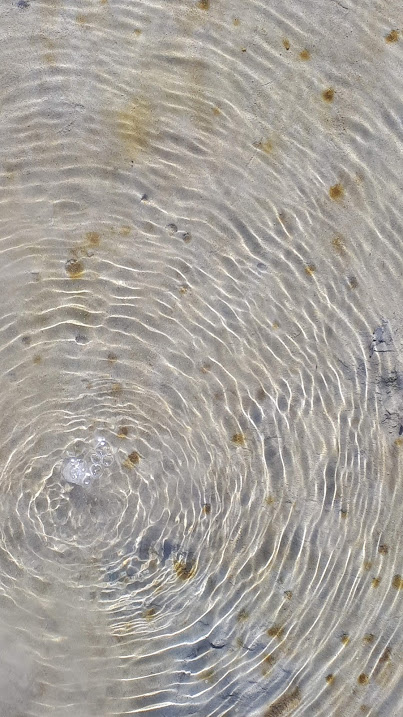
    On my desk right now is a gorgeous little collection of essays called Wonder and Other Survival Skills, put together by the editors of Orion magazine. On its cover, a young girl presses her hand against the surface of a lake: skin of girl meeting skin of lake. From this meeting, a ripple moves.

    the ripple


    “Is wonder a survival skill?” H. Emerson Blake asks in the foreword. “The din of modern life pulls our attention away from anything that is slight, or subtle, or ephemeral. We might look briefly at a slant of light in the sky while walking through a parking lot, but then we’re on to the next thing: the next appointment, the next flickering headline, the next task…Maybe it’s just for that reason—how busy we are and distracted and disconnected we are—that wonder really is a survival skill. It might be the thing that reminds us of what really matters, and of the greater systems that our lives are completely dependant on. It might be the thing that helps us build an emotional connection—an intimacy—with our surroundings that, in turn, would make us want to do anything we can to protect them.”

    By my own definition, wonder is the ability to travel beyond attention, beyond mindfulness–to truly make an encounter with the world in a way that, for the slenderest of moments, lifts us out of ourselves and returns us back with something more. Something of the ‘other’ we’ve encountered travels with us. A little of the world comes into the interiority of us and lodges there. Permeates.

    Winter is a season of rest for most of us land-based folks. A season of living in a place of dreams and visioning (literally, as we get caught up on sleep, and plan for the year ahead.) This is the first season I’ve stopped teaching completely. I felt the need to let the work do a deep dive into silence, and (beyond the day-to-day chores of keeping animals, which never go away), to truly let myself drop out of time. I sleep when I’m tired. I wake up when I wake up. I have breakfast and a cup of coffee, before I go out to do chores. Which sometimes makes me feel like a slacker, but it also feels… luxurious. Luxurious in a simple way I haven’t allowed into my life before. A spaciousness that holds its own kind of wonder.

    The other reason I decided to stop teaching completely once the snow hit in December, was I wanted my horses to feel like they belonged to me again. 2018 was our busiest year teaching together (THANK YOU, PEMBERTON!) but I wanted a chance to ride when I wanted to again, instead of working a horse so they would be ready to say ‘yes’ to a student. I wanted to WANT to ride again. To wander about aimlessly bareback with nothing but a lead rope joining me to my horse’s mind. I wanted the horses to be able to choose who came out to play with me, whenever I showed up at the gate with a halter or a bridle.

    20190123_163959-1

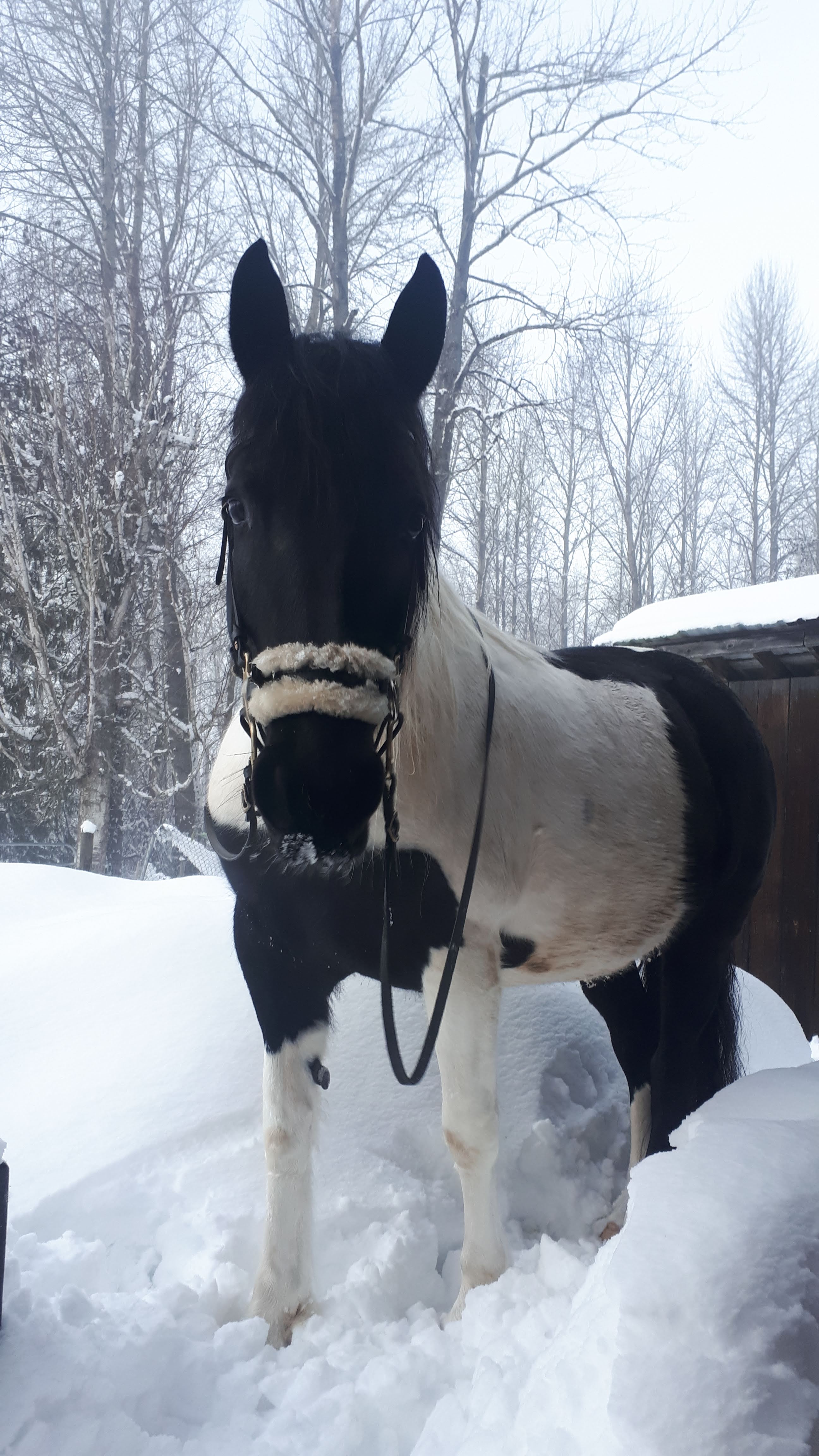
    What’s emerged out of this unravelling is that I was finally able to back Besa, my big paint/Friesian mare. When she came to me 18 months ago, she was an untrained 6-year-old, freshly weaned from being a mamma to a feisty filly. She made it very clear to me- in her lack of desire to be caught and her extreme reactivity, power and athleticism- that I’d have to take my time with her. Given space and the permission to approach me (instead of me expecting to approach her and do what I wanted), she decided that humans were worth being curious about. Her curiosity flowered into full-blown affection. She’s the first horse to come to anyone out of the field now, and she sometimes chooses to pull me (or whoever I’m accompanying into the field) in against her chest with her muzzle, the closest a horse can come to giving a hug.

    Besa’s been asking me to do things with her for months (Proper things! With a bridle and tack like all the other horses!) and all summer and fall I just didn’t have the capacity. But these last few weeks I’ve slipped onto her back and let her carry me around our little maze of snow paths in a mutual exchange of trust: I will trust you with my body, if you will trust me with your body. The ‘training’ part of it can come later. For now, all I want is her to turn her head to me, so she can look at me fully out of her huge dark eye: Oh. So now you’re up there now. So that she can yawn and snort and let all the tension go out of her nervous system, and get used to this strange new way that horses and humans can be together.

    Perhaps it’s me she’s been waiting for all along. Perhaps I needed to drop into this spaciousness for us to find this way to trust each other.

    There’s one essay that stands out for me in this slim little collection that sits on my desk. It’s Chris Dombrowski’s Kana: a father grasps at the nature of wonder. In it, he defines Kana as “a word or figure the Japanese haiku poets used as a kind of wonder-inducing syllable (it translates loosely into English as an exclamation point.)… that heart-stutter we receive when an image of the world takes root in us…”

    His essay shares the spell of a day spent morel hunting with his twenty month old son. The way the boy wanders across the face of the burn, trailing a whitetail’s antler behind him, carelessly decapitating the very mushrooms he’s hunting for:

    …he is either in a daze of boredom or he is walking kana, penetrated each step by the world, not penetrating it. It’s tempting to call this spirit naïveté, but it’s not: it’s wisdom we lose along the way.”

    Perhaps that’s what I’ve been courting this winter: wisdom I’ve lost along the way as I’ve been coerced into ascribing to linear time, to capitalism, to the many demands the constructs of being human impose upon us. There is gentleness here, in this wonder, that doesn’t feel rushed or imposed. A hand resting against the surface of a lake.

    I’ve wanted to broaden the scope of my horse and nature based teaching practice to include workshops for adults since I started Mountain Horse School in 2012, but I’ve shied away for a long time. I’ve always felt comfortable with kids because they’re so immediate, so open still to this touch of the world upon them. Grown-ups’ responses are layered. More conditioned. We need more language to access understanding, and experiences that can operate like keys opening the locks of ways of perceiving we’ve long put away. Grown-ups want reasons to pacify our rational, linear ways of thinking, and we want to know if playing with opening the doors to wonder, if walking Kana is ‘worth the investment’ of our time. We’ve become used to being sold meditation through a list of its benefits. A walk in the woods has become a thing we could pay for. Forest bathing, it’s called in the brochures.

    What if wonder is the gateway to possibility? What if it’s the only skill that will give us the tools, insight, and power we need to move into (here I am, throwing another book title at you!)  The More Beautiful World That our Hearts Know is Possible? What if the benefits of wonder—similar to its more lauded cousin, gratitude—might be the resurrection of a life woven into belonging with the wider world that sustains us?

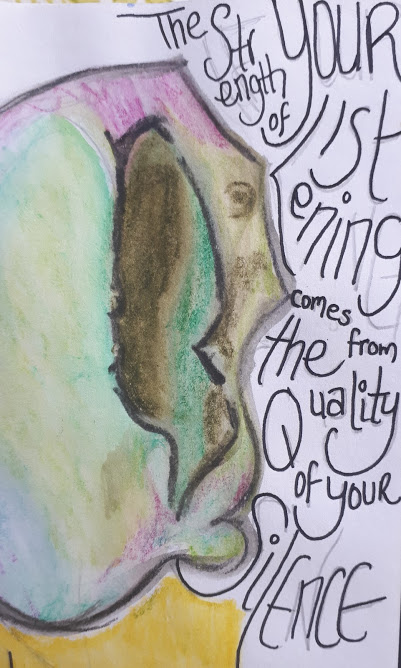
    whale's earbone
    Small watercolour of a whale’s ear bone from the intergalactic spaceship that is my desk. Because of the complexity of their hearing, whales’ inner ear bones are contained within a separate chamber, not encased inside the skull as ours are. It amazes me how much this bone looks like a shell. If I held it to my ear, would I hear the sound of the sea?

    It’s not up to me to answer these questions. I can only speak from the lens of my own experience, my own perceptions. In lieu of that, I can say with certainty that this winter’s dreaming I’ve been luxuriating in, this kana I’ve been walking in my own life, feels absolutely essential to the future that comes next. I can say—if I may speak with authority based on the way things feel from the intergalactic spaceship that is my writing desk this afternoon—that it HAS been absolutely necessary. That nothing is currently more important. Oh, the great irony that ‘doing the work’ this winter has actually meant ‘doing less work—!’ (Is that an exclamation mark or is it kana? You decide.)

    So, in the spirit of wonder being the gateway to possibility, I’m issuing a little dare to myself. Actually, it’s not little at all. On Feb 17, I’m offering a one day workshop called Lightning Seeds: Opening the Gateway of what’s Possible, in collaboration with my dear friend, animal listener and translator Guliz Unlu. Come play with us as we walk kana in the company of the horses and other animals at Mountain Horse School, and court wonder through a combination of equine guided learning, animal communication, intuitive herbalism, earth wisdom, and soul craft. Curious to know more? Please visit our website or facebook page for all the juicy details!

  • Squamish Farmers Strip Down For Fundraising Calendar

    Squamish Farmers Strip Down For Fundraising Calendar

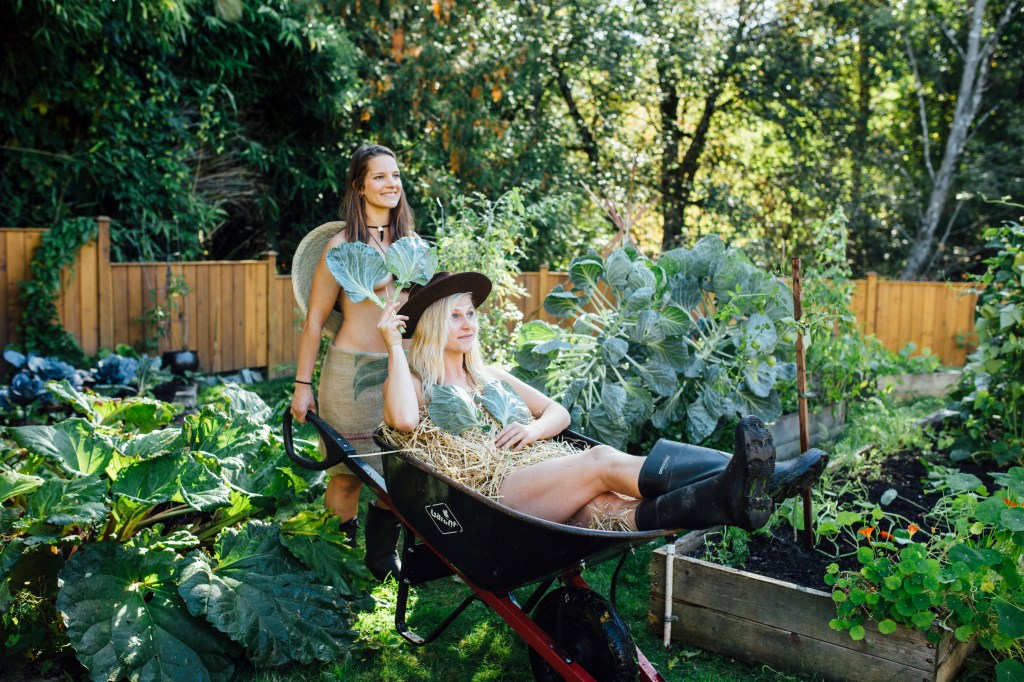
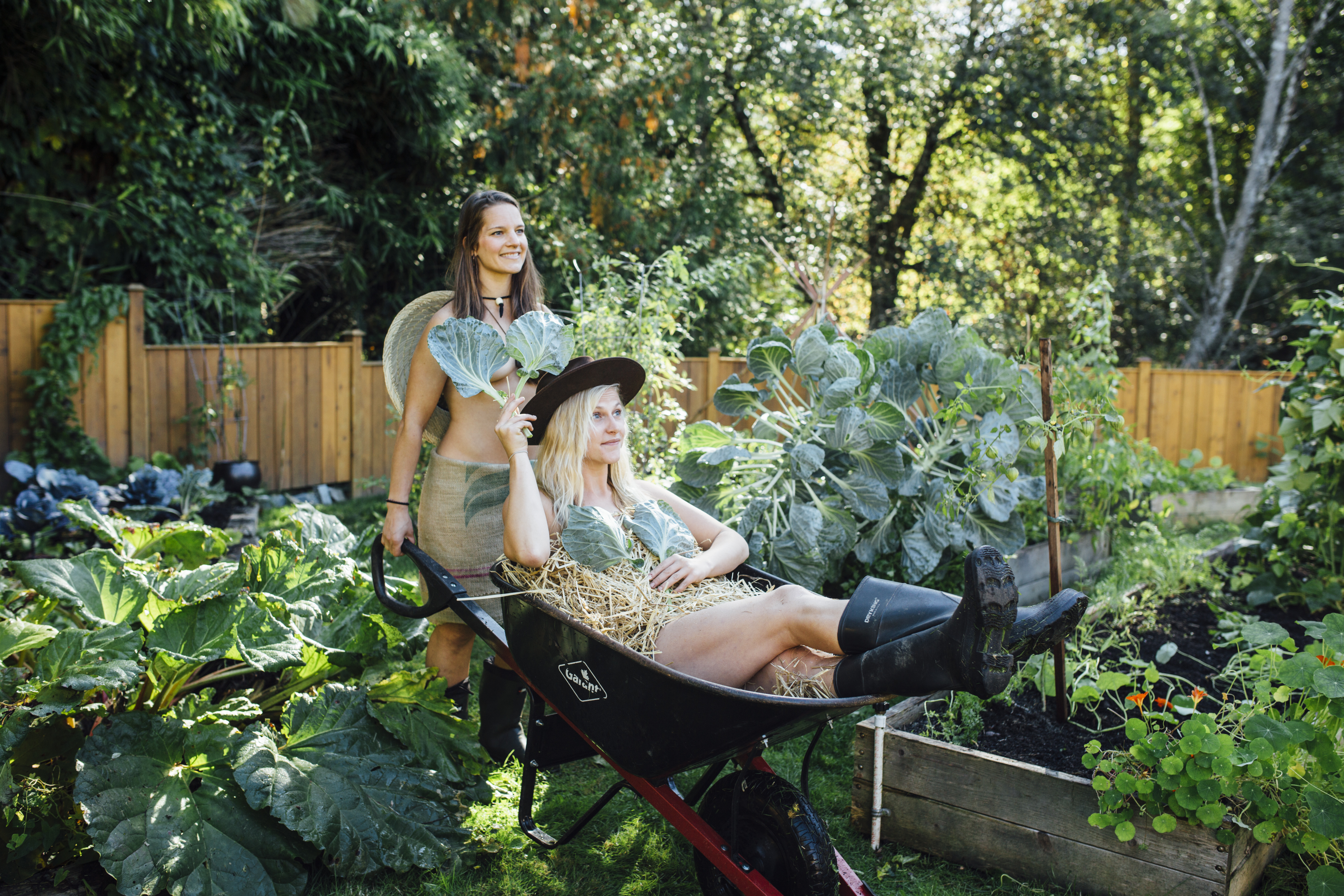
    Squamish CAN (Climate Action Network) has launched an Indiegogo calendar fundraising campaign featuring nude Squamish farmers in hopes of raising money for a community farm.

    _T1A9470-NinaLaFlammePhotography-2
    Jordie and Steph from Solscapes pose in one of their client’s edible gardens.

    The group has been running community and school gardens over the past several years, and have been identifying ways to strengthen the local food system through consultations with farmers and other stakeholders in the food industry. Their community farm project aims to engage youth, attract new farmers to Squamish, and support established farmers while preserving agricultural land. They rallied local farmers to strip down for the cause, and most were willing to go along with it.

    Calendar coordinator and Squamish CAN president, Michalina Hunter, was inspired by a past calendar she purchased in 2015. “The nude farming calendar I bought on Indiegogo raised $35,000 for two women to put a downpayment on farm property. I thought it was such a great idea. How amazing would it be if we could raise that much for our organization? We finally decided to go for it this year. We have incredible farmers in Squamish. I hope the idea is just cheeky enough to be successful!”

    Preferred_MG_7791-NinaLaFlammePhotography-4
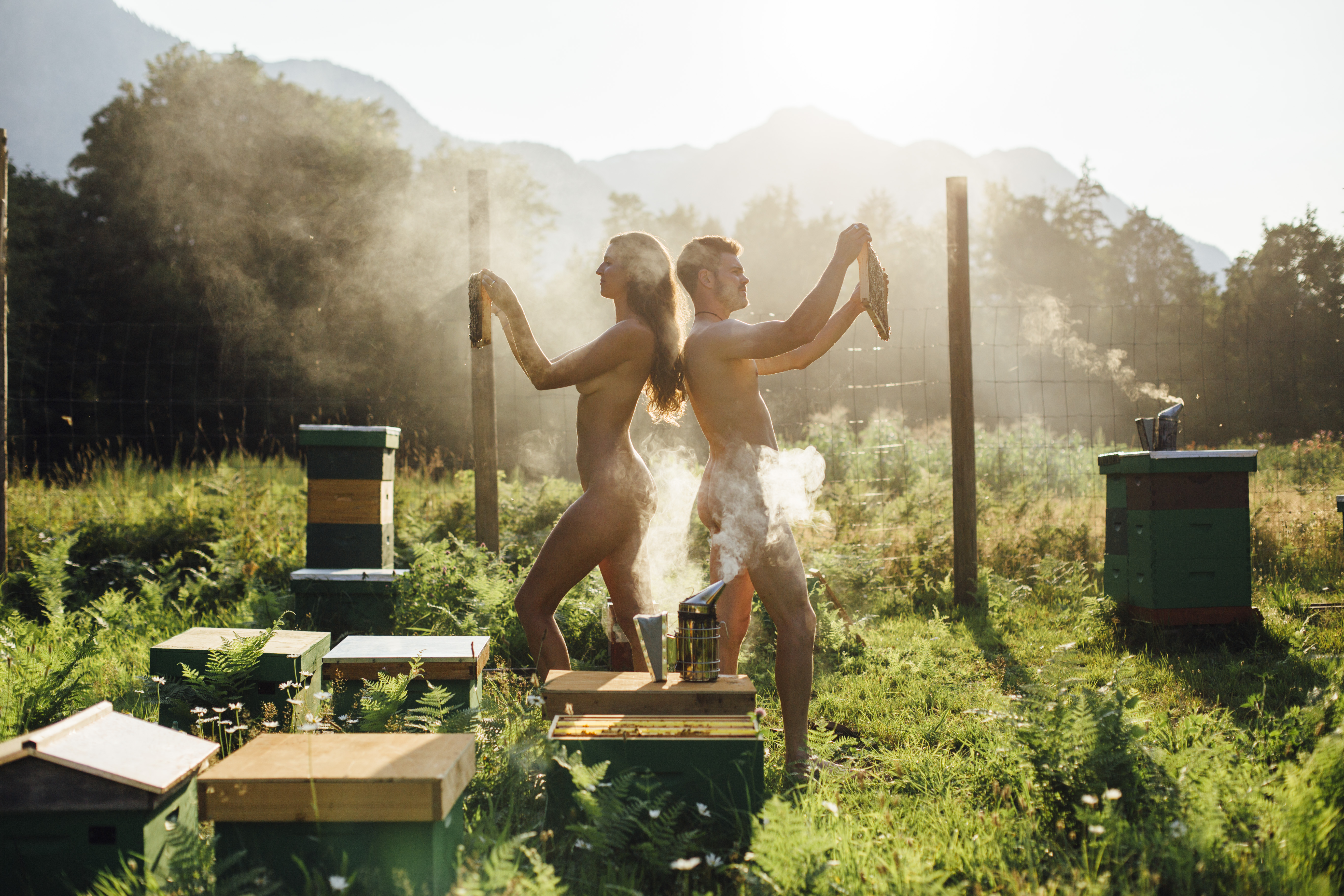
    Michalina and Darwyn of Green Bee Honey–probably the most dangerous photoshoot of them all given the flying stinging insects everywhere…

    There are other models of community farms and similar projects nearby. The group toured and learned about the Tsawassen Farm School, Glorious Organics (Aldergrove), Richmond Schoolyard, Fresh Roots Urban Farm (Vancouver), Amlec Organic Limited (Lillooet), Farm Folk City Folk (Vancouver), and others to design the project. 

    “We’re not the first community to do this,” says Hunter, “We’re really excited about the potential of creating multiple win-wins with this project. It can engage youth in growing food and learning employable skills, it can support new farmers in finding land, it can create shared sales opportunities for established farmers, and it can engage the community in sustainable agriculture. We envision a central educational market garden for us to work on, and then several 1/4 acre to 1 acre plots for new farmers to lease. There will be shared tools, equipment, wash stations, and storage for all the farmers to share. The community farm is really a jumping off point that can support so many other community initiatives.”

    IMG_6051
    Dorte and Thor from the Brackendale Art Gallery.

    Squamish used to be a prosperous agricultural community, growing primarily hops, hay, and potatoes. In fact, hop farming was Squamish’s first major industry. Much of the fertile valley-bottom land has since been paved and built on. Only 2% of Squamish’s remaining usable farmland is currently used for agriculture, yet skyrocketing land prices make it cost-prohibitive for new farmers to get into the industry. Leasing land, on the other hand, has less financial risk, and can allow new farmers to get into the industry, hone their skills, and build credit.

    _MG_3062-NinaLaFlammePhotography-15
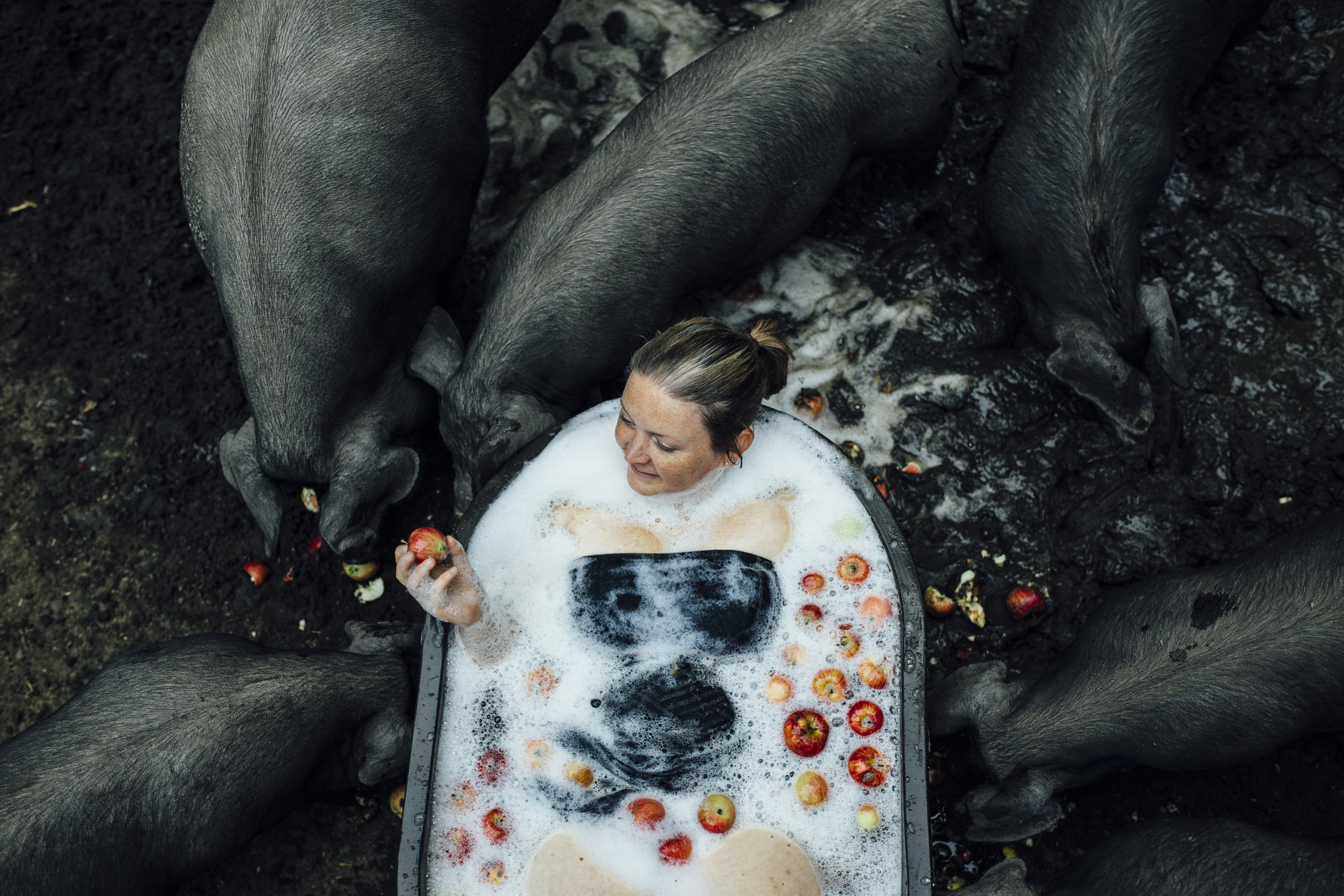
    Tracy of Stony Mountain Farm. The pigs were wary about the apples once they were covered in bubble bath, but of course being pigs they ate them anyway.

    The group envisions starting small with the community farm, then adding components over the years such as a Food Hub, community garden, covered workshop space, and food forest. They have not solidified a location for the community farm, but are exploring different options. Ideally they would own the piece of land, but a long term lease or memorandum of understanding would also suffice.

    Sneak peek of the calendar and ordering options here! 

    Perhaps a Squamish-Lillooet Farming Calendar is on the horizon for next year!

  • It’s time to talk Farm Fashion

    It’s time to talk Farm Fashion

    The time has come for a column on farm fashion. All the chick farm columnists eventually get around to a “what to wear” piece, don’t they? This one is all about what happens when fashion is slave to function and haute couture ain’t in it.

    When choosing an outfit for the day, I consider the potential for getting dirty, wet, cold, greasy, dusty, sun-burned, heat-stroked, or photographed for Elle magazine.

    Helmers1_S6A3181
    The cows have very exacting standards. In forage. In fashion, they’re a bit more chill. Unless, of course, you’re wearing leather.

    Evaluation complete, I don yesterday’s work pants, (hopefully, but unlikely) complete with small crescent wrench and pen-knife in the pockets, clean work shirt, work boots (rubber or leather), and make obvious weather-related adjustments. A seasonal ball cap or toque, with occasional forays into wide brimmed sun hats, offers warmth, shade, and hair control. I don’t bother with make-up.

    There are two items in my functional farm-chic wardrobe to which a more detailed examination is due. They score particularly low on fashion but shoot the lights out on functionality; a by no means unusual description for just about everything I wear out there. Let us then consider coveralls, and the mosquito bag net.

    13124927_10153945295231311_8492489048310326032_n
    Anna Helmer gets into her bee-suit, and someone takes a photo and puts it on Facebook.

    Until I went to welding class in the city, where we were required to wear coveralls, I had decided against that look for myself.  I tried wearing them a few years ago and felt about as alluring as an old hockey bag. Never having been what you might call an instinctively feminine dresser, I felt wearing coveralls would sever completely any connection to my embattled femininity. I had to draw the line.

    In welding school I was not given any choice in the matter and I initially bemoaned my baggy figure. Eventually however, I noticed that my good jeans (worn mistakenly to class) stayed clean, protected by the Big Blues (pet name for my coveralls) which got sooty and smoky. Perhaps, I began to think, there was yet wine to be squeezed from this stone.

    rootdown-organic-farm-2
    Sarah and Simone from Rootdown Organics demonstrate the key farm fashion accessories: soiled pants, rubber boots, cute baby who is actually in charge.

    I have come to realize that the coveralls represent a new opportunity for me. I can stay a little cleaner on the farm, and not arrive home resembling a diesel spill in a dust bowl. Not only can I look presentable at the end of the day, but if Elle magazine does happen to show up for a photo shoot, I can be assured of a clean outfit underneath. They will still have to bring their own make-up person.

    plentywildheader
    Alyssa and David from Plenty Wild Farms must have had enough time to shower before their photo shoot. Do farmers really ever look this clean when out in the fields?

    Turning now to the mosquito bag net; my choice for most essential farm fashion accessory.

    In my net I am bug-free; I blithely disregard the scornful sniggering of other slaves to fashion on the farm, slathered as they are in dodgy chemicals, and/or in a high state of denial over the level of torment they endure as bag-less labourers in mosquito country. There is no bigger slap in the face to high fashion than dropping a bag over your head, but neither can I countenance flies in my eyes.

    acrosscreekheader
    Bruce Miller models the ultimate in Pemberton farm fashion, the Slow Food Cycle Sunday t-shirt.

    To conclude, it would be nice to point to an item in my farm wardrobe that is more fashion than function, but I am at a loss. I suppose my pink John Deere ball cap tilts the balance slightly in favour of glam, but looses ground as its grubbiness increases with every passing day of summer. In an uncharacteristic eruption of reckless consumerism, I have purchased a brand new one for this summer.

    Anna Helmer believes farmers are under-represented on the fashion run-way but sort of sympathizes.

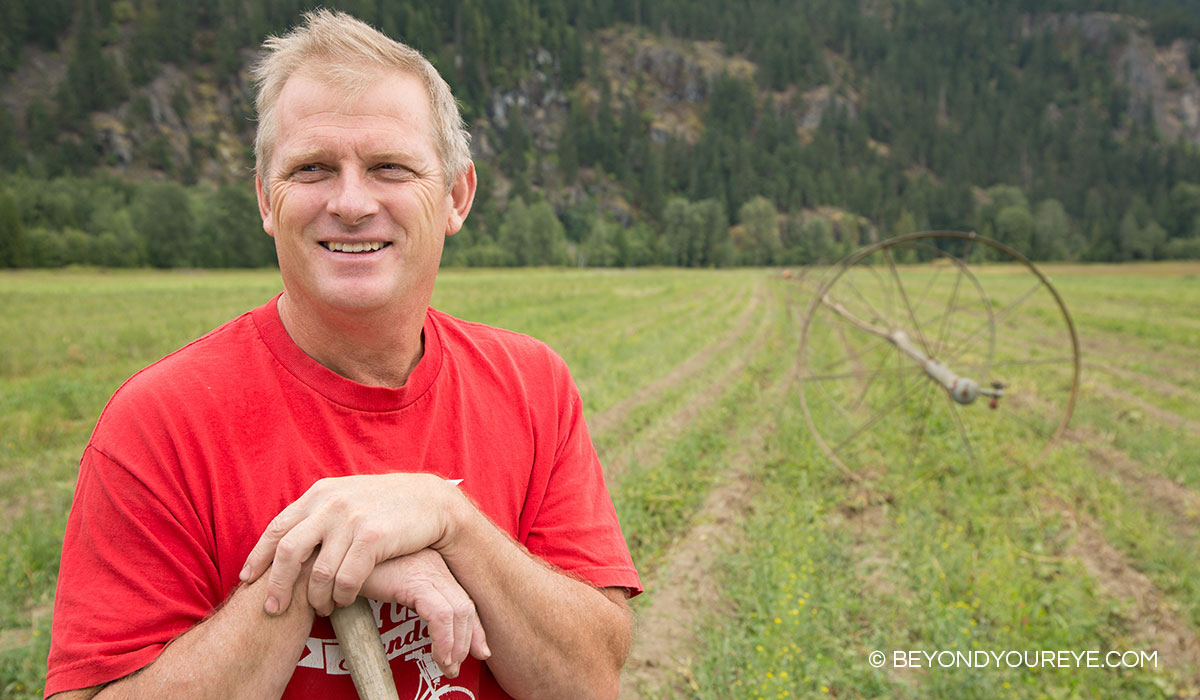
    Not being able to stage a photo shoot of Anna’s farm fashion moments during planting season, we’ve poached these illustrative photos of Pemberton’s organic farmers in their sartorial best, from BeyondYourEye.com photography, via the BC Organic Farmers.

  • Garden Shadow

    Garden Shadow

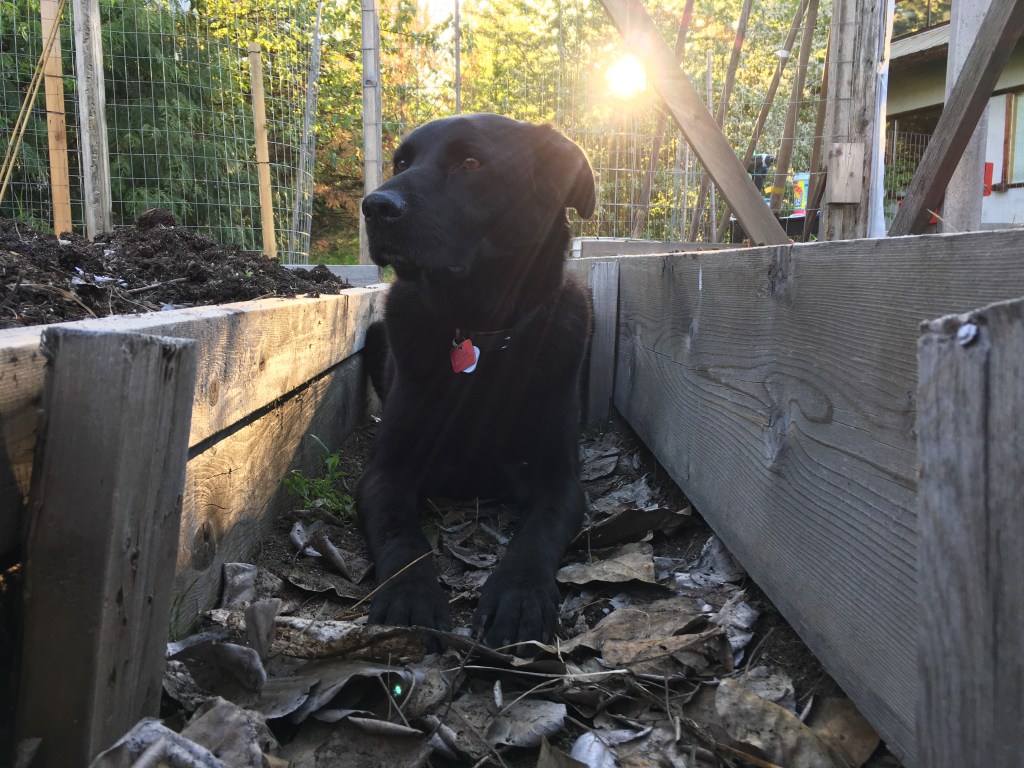
    I am not a scientist (although my current course on soils may turn me into one). Nor am I a psychologist; at best I’d classify myself as a horticulturalist. There is one thing I have come to acknowledge more then ever over the last few weeks… my dog’s intuition is more on point then most people I know. She came with the name Shadow and it suits her to a T – LITERALLY.

    So, allow me to introduce you to #shadowruffruff.

    IMG_0944

    (Need a laugh? Follow this Hosta lover’s hashtag on Instagram for guaranteed good times.)

    Here’s the skinny. Shadow was surrendered to the SPCA in Prince George where her puppy life was basically non-existent; she was quickly moved to the West Vancouver division for rehabilitation. We fell in love with her photo on their website and promptly pinned it down Hwy 99 from Squamish to meet the then 2½ year old Black Lab x Boarder Collie. Instantly we knew she’d be a perfect fit for us and she’s been melting hearts ever since.

    She is not stick or ball obsessed (thankfully). She didn’t swim until she was 4 and it’s only because there was a duck to chase. Her ability to find food and crumb around is so good she should be paid for cleaning the floor. She is extremely smart and loves to tell stories. She took up minnowing at age 10 and has been a pro field mouser for years. She is nearing 13 now and still loves to come on biking, ski touring and hiking adventures. She is showing minimal signs of slowing down. Maybe she’s stubborn like me. Grey hairs you ask? Nope. Only a few visible on her chin but most are hidden on the bottom of her paws. A lady never tells or really shows her age.

    (Minnowing obsession, recovery biking, Chief Pascal ski tour & Rohr Mt. summit)

    You might be wondering how this plays into gardening but be worried not for this hound loves veggies as much as the rest of us. When I crack my container snack vegetables she’s usually at my feet before the lid is off. I have to pack extra knowing she’ll eat half of what I brought. But don’t try to feed her kale unless it’s been massaged because she’ll look at you like you’re crazy! Smart dog. You have to watch her around the blueberry bushes, raspberries, strawberries and cherry tomatoes; anything at her level is fair game. She is a phenomenal forager. And, of course, all the thinned out carrots rightfully belong to her dirt and all.

    IMG_3649

    Since my bike crash I have been tripping over her even more times then I can count. A friend gave her the nickname “Underfoot” for good reason. I have been spending most of my time in my garden healing my concussed brain because that’s what feels good and Shadow has been there every step of the way. Therapy dog. Keeping the cats out, barking at the deer and warning me when the bears are close long before I actually see them. Again, her intuition is impeccable on all levels. She is the keeper of my garden, paid in full with vegetables.

    Besides, someone has to test out the fresh raked dirt to ensure its level.

    IMG_3321

  • Farm Series: A photo essay by Kevin Arnold

    Farm Series: A photo essay by Kevin Arnold


    This slideshow requires JavaScript.

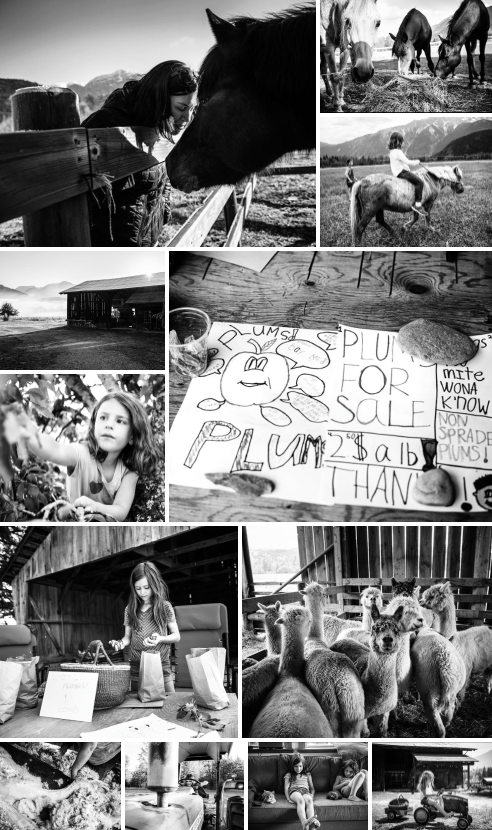
    Kevin Arnold is a commercial and fine art photographer based in Pemberton, who fits in a little farming on the side.

    Follow him at https://www.instagram.com/kevinarnoldphoto/

    Farm Series by Kevin Arnold collage