Category: pemberton

  • My First Time Gardening

    My First Time Gardening

    28D3C77D-AADD-4180-8F4C-2B4EA9FDAB6C

    I never seemed to stick around long enough in one place to have a garden.  Even if I was around, I was too scared to mess it up to even try.  I have, however, always admired people who gardened. In my eyes they’re modern day witches and wizards!

    Food has taken a leading role in my life, though. I’ve worked as a chef on and off for over 10 years, transitioning from traditional butter/cream/French style cooking to now more ‘holistic’ organic, gluten free, dairy free foods. I was diagnosed with celiac disease a few years ago, so I had to change my diet. As well as, I’ve worked through an eating disorder that took over a large portion of my life. While food has always been on my mind, until now, I never got to truly experience the joys of growing my own food!

    Close to a year ago I met Derek. When I learned about his love for plants and gardening my admiration for him grew too. It wasn’t long till I moved in with him, and let Pemberton become my new home.

    After a long winter I was itching to get going. Patience has never been my best attribute, something I got to work on watching plants grow. Our first step was to get some more soil. That shit’s hard. And heavy. But it was fun watching Derek unload it all as I hobbled around with a semi sprained ankle;)  Then we got on to planting. I was nervous planting.  What if I messed something up? What if this shouldn’t go there? What if I plant too close, what if I put too much soil on top, or plant too shallow? Derek would remind me that it’s all good – it’s a process, we can thin things out later, and replant if we want to too.

    I realized I was so worried about messing up in the past, that I never tried.

    458C1AA8-806F-4DEA-994A-EBEC308469C2

    Soon our sprouts were shooting up and I was so excited to get back to the garden every day to check in on our little babies. Each time when we would walk to the garden I would mindlessly ask Derek – “Will we need to water it?” And every day he’d respond – “we’ll feel the dirt and decide.” I’d laugh and say oh ya right right. This part reminded me of cooking.

    When I teach people how to cook, one of the most common questions I get is, “How do you know when something is done?”  Or “how do you know if it’s good?”  I explain that we need to taste it, touch it and feel it! It’s so funny how often we want to rely on our brain to tell us everything. But we gotta get in there. And so I got to get my hands in the dirt and would feel around:)

    I learnt so much though over the past 5 months.

    Firstly – gardening is not as difficult as I thought it was – at least on our small community plot.  I have so much admiration for farmers who are growing large quantities of food!!  That is not easy work and I have much deeper appreciation for the food that I buy at the store now. I used to whine over $4.99 bunches of broccolis. Or a giant box of pre-washed organic mixed greens for $7.99. I won’t be complaining anymore, and will definitely be more mindful with letting things go to waste!

    It’s been an amazing summer, and I can’t wait to get planting again!!

    05E3963E-0DF0-4E09-BF02-4A932586EBCD

  • A Recipe to Keep Vampires At Bay

    A Recipe to Keep Vampires At Bay

    A little garlic, judiciously used, won’t seriously affect your social life and will tone up more dull dishes than any commodity discovered to date.  ~ Alexander Wright, ‘How to Live Without a Woman’ (1937)

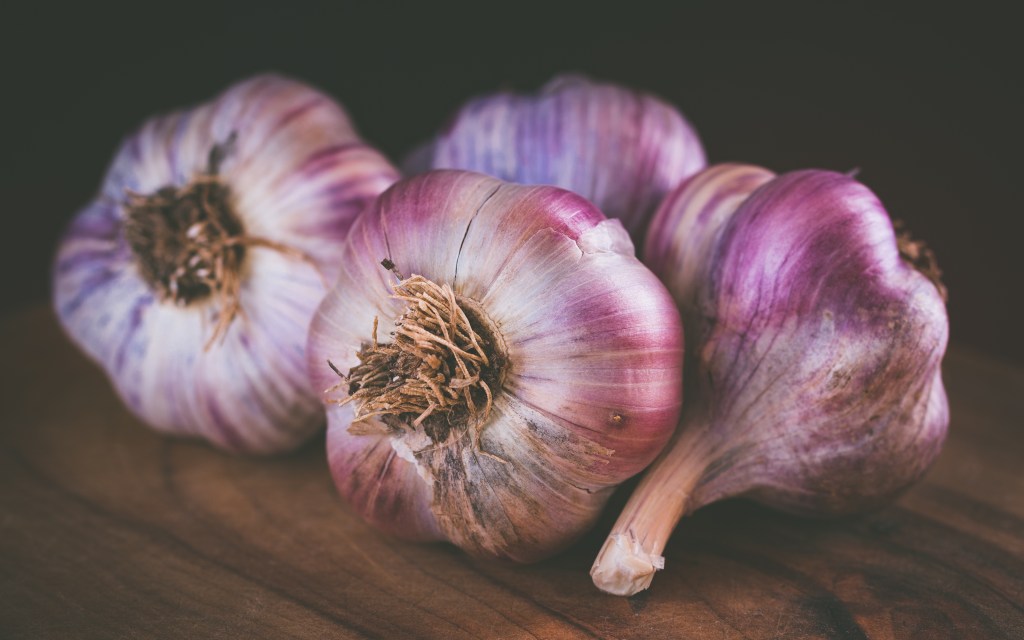
    It’s that time of year where garlic goes into every single meal. It’s nearly unbearable to stand near or around me, not to mention @therocketnarcissist. In fact, there are days that we don’t even want to stand near each other.

    But when you love garlic — and it’s garlic season — it’s so freakin’ hard to resist.

    A few days ago, we added a whole bulb of Russian Red (the real potent shit) to a black pepper & garlic stir fry (an homage to the dish that I so dearly miss from the good ol’days of Thai One On).

    It was fine. We were fine – sitting alone, in our living room post-dinner, not harming any noses but our own. That’s how it works. Couples who eat garlic together, stay together.

    You can never have enough garlic. With enough garlic, you can eat The New York Times. ~ Morley Safer

    Because garlic goes with almost any cuisine, we’ve had a chance to use up a horde of in-season vegetables that we pick up either at the Pemberton Farmers Market on Fridays or one of the two Whistler Farmers Markets.

    Recent hauls netted us several varietals of tomatoes and spicy peppers, plus basil, eggplant, broccoli, spaghetti squash, onions, leeks and zucchini.

    Now, legend has it that Pemberton villagers almost never resort to buying a zucchini due to the simple fact that even those with a documented plant-killing history can grow award winning zucchinis in Pemberton’s personal produce patches. But, for those of us living in Pemberton south south (aka. Emerald Estates), we’re well outside of the prime growing zone.

    Due to your zucchini glut, a recent call was made for ideas. And, I happily supplied a list of google-able dishes.

    But after reading “Zucchini Two Ways” I felt inspired to contribute an actual recipe. Although this pancake could be found almost anywhere (and your recipe might even be better than the one found here), the heavy-on-the-garlic toppings, inspired by “What’s All The Fuss About Garlic?“, really are what made this recipe special.

    I see recipes calling for one clove of garlic. One clove of garlic is not enough for any recipe unless it’s a recipe for, ‘how to cook one clove of garlic’ – even in this case use two. ~ Unknown

    Note to cooks: As mentioned in “Stop glorifying the summit and enjoy the climb: an astrological forecast for pasta makers”, I rarely follow a recipe or remember to write down specifics. So again, rustic, untested instructions follow:

    Pancakes

    1 cup all purpose flour

    1 tsp baking powder

    ¾ cup of milk

    2 tbsp butter, melted

    1 egg

    1 cup of grated zucchini

    Mix the dry together. Mix the wet together, including the melted butter. Squeeze the zucchini lightly to remove some of the juice.

    Mix the zucchini shreds into the flour. Pour in the wet ingredients and mix until combined. I give a little flour if it’s too wet or add a little zucchini juice or milk if it’s too dry.

    Add fat (lard, butter or high-heat oil) to a cast-iron skillet on medium-high (our burner is a little weak, so you might go lower if you’re cooking on gas or a powerful cooktop). Place about ¼ cup of batter into the skillet, use a spatula to flatten & spread it out a bit. Add more batter, leaving enough space between pancakes to get your flipper in there.

    Flip once puffier on top and golden on the bottom.

    Sorry, from here you’ll have to use your judgment to determine when it’s time to serve. My pan tends to get hotter as time goes on, so I turn it down and leave them a little longer – until the inside is cooked. I might even crack one open to see if it’s done.

    Tomato “Salsa”

    1 cup of chopped tomatoes

    1 handful of roughly chopped basil

    2 – 4 cloves of garlic, minced (no. of cloves dependent on variety and personal preference, but we rolled the dice and went with 4)

    ½ lemon squeezed

    We used a variety of tomatoes that offered different flavours and textures. Simply chop them about the same size – we used a ½ of cherry tomato as the measure.

    Toss the ingredients in a bowl. It’s best when given a little time to marinate.

    Garlic is divine. Few food items can taste so many distinct ways, handled correctly. Misuse of garlic is a crime…Please, treat your garlic with respect…Avoid at all costs that vile spew you see rotting in oil in screwtop jars. Too lazy to peel fresh? You don’t deserve to eat garlic.  ~ Anthony Bourdain (Kitchen Confidential: Adventures in the Culinary Underbelly)

    Blue Cheese Dressing

    2 tbsp plain yogurt

    2 tbsp crumbled blue cheese

    1 tbsp honey

    Mix together.

    Top your pancakes and enjoy.

    August 2018 (7 of 7)

    ~

    Lisa Severn is going to the Whistler Writer’s Festival’s Cooks with Books: Passionate Locovore Edition — and she thinks you should too.

    ~

    Start a conversation about food with Lisa over @rhubarbstreet or look for more on Lisa and her co-conspirators… err… co-contributors.

    ~

    “Garlic Quotes.” found here https://www.torontogarlicfestival.ca/garlic-quotes/

    Images and recipes are by Lisa.


  • Navigating through all the Greenwash

    Navigating through all the Greenwash

    Theres no doubt people in these parts are more and more concerned and conscious about what they ingest. After all, you are not only what you eat but also what your food ate. The organic food industry is a multi-billion dollar industry and continually growing. Making sense of labeling or the lack of it can be confusing. Organic regulations and labeling requirements differ from place to place and across different certifying bodies. Despite the popularity of farmers markets and kitchen gardens, here in BC most of our organic produce comes from California because they offer a consistent supply year-round. We are inevitably bound by their rules. Is it GMO, biodynamic, freerange, freerun wholesome, naturally grown? What does any of it mean? We just want good clean nourishment with the least harm to the environment. Right?

    Is imported organic the best choice? It’s often overly packaged, travels hundreds of km’s, employs underpaid and often vulnerable illegal workers, and is heavily subsidized. Often  farms are big unsustainable monocultures owned by big corporations. If they follow a few rules, there’s a certifying agency that will approve it. When there’s millions at stake  and corporations involved, there is always a possibility of corruption. Produce also quickly loses its nutritional value within its shelf life, and tasteless varieties that keep best are preferred. Think California strawberries. Profits can come before your well-being. After all, it’s still capitalism.

    So local is the best?

    Yes of course! But, it’s limited in our climate.

    And, no. For a number of reasons. Local organic out of season is either hothouse grown or warehouse stored using lots of energy and infrastructure.  It’s not grown using soil and sunshine. The worst part of the “local” label is that here, as long as it was grown in BC, it can be called local. A Pemberton berry farmer here has no competitive advantage over the thousands of acres of commercial product flooding the market as local. Even a Fraser Valley potato can be sold here as local.

    That’s wrong.

    So what is a small scale farmer or even  a gardener, who has unadulterated naturally  grown surplus, to do?

    Certifying is complicated, time-consuming and expensive. Saying that it’s organic is unlawful and disrespectful to those who have jumped through the hoops. What I see all the time is the “no spray” label: this is extremely deceptive because there are a myriad of organic sprays that all good growers use, such as: Bt, neem or horticultural oil, and insecticidal soap. So can you say it’s no spray and feed it tons of miracle grow? I guess, because no one is going to question or test it.

    At our small farm we advertise ourselves as “Local and Sustainable” – which at fist glance sounds like a bunch of corporate bullshit, same as what we see from big companies globally. However we are truly local. We have been in corridor for 30 years and farming  and homesteading for 25. We have only done business from Squamish to D’arcy. We have never bought, sold or repackaged anything from a middleman. We only do markets and farm-gate sales. We were once certified but found it costly and it wasn’t advantageous for our small scale. We have never deviated from the practices we learned that are acceptable. We are a mom and pop family business and feel our integrity is as important as a healthy environment. We welcome anyone to come and see how we do things.

    So the message here is: get to know your farmers, pay them a visit and buy direct and fresh in season. Ask questions. There is no shortage of greenwash out there so buyer beware.


  • Literary Locavores: when Pembertonians head to the Whistler Writers Festival in 2018, talk turns (obviously) to food

    Literary Locavores: when Pembertonians head to the Whistler Writers Festival in 2018, talk turns (obviously) to food

    Screen Shot 2018-08-26 at 1.22.34 PM

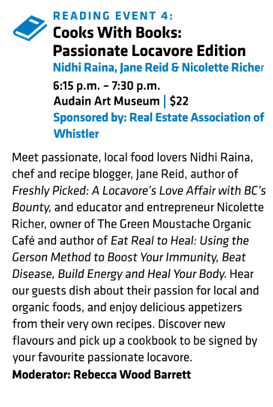
    Two Pembertonians will take to the stage at the 2018 Whistler Writers Festival on Friday, October 12, from 6:15pm, for the reading event Cooks with Books: Passionate Locavore Edition.

    Traced Elements contributor Nidhi Raina’s samosas and chutney have become famous at the Pemberton Farmers Market. And new Pembertonian Nicolette Richer is the creator of the Green Moustache Organic Café and the author of Eat Real to Heal: Using the Gerson Method to Boost Your Immunity, Beat Disease, Build Energy and Heal Your Body.

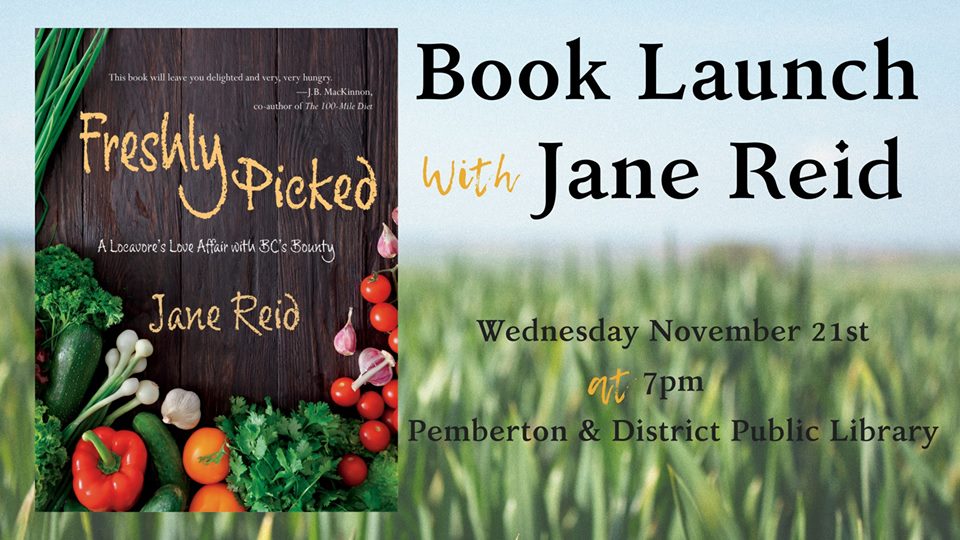
    They will appear alongside another local Jane Reid, who secured a publishing contract for her book after pitching at last year’s festival. Jane’s new book is Freshly Picked; A Locavore’s Love Affair with BC’s Bounty.

    40100039_10156706471735238_8306097769823600640_n

    Also, once your appetite is whet, save the date for a reading with Jane at the Pemberton Library, on Wednesday November 21, at 7pm.

    Tickets for the Whistler Writers Festival events are on sale now at https://whistlerwritersfest.ticketleap.com

    Download the program for the full weekend’s line-up here.


  • Zucchini – two ways

    Zucchini – two ways

    I recently bumped into a friend who has a veggie patch and she asked if I had any recipes for zucchinis as she had lots growing. She also wanted to know what it was with Pemberton that zucchinis grew so well!

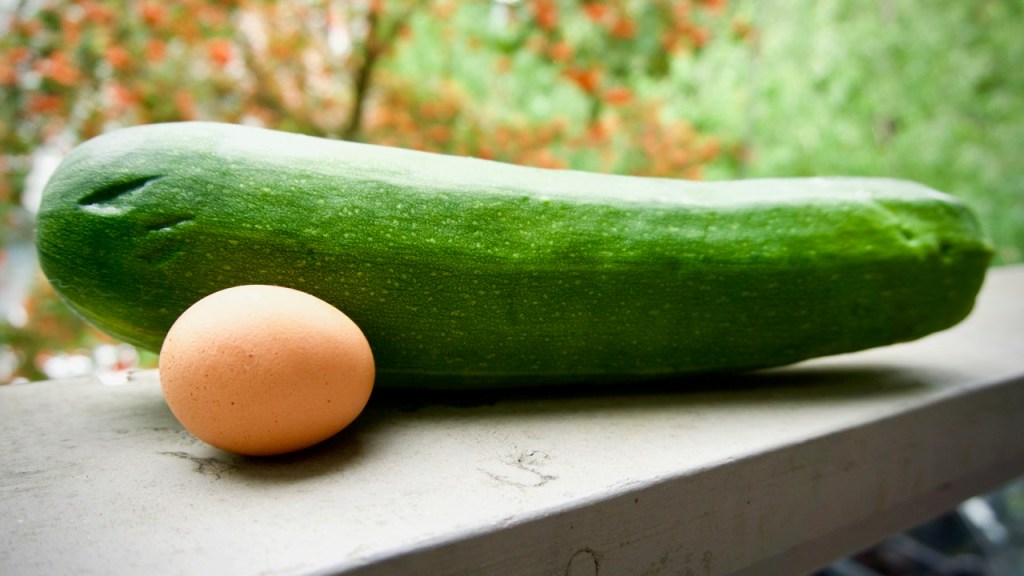
    I wasn’t quite sure what she meant until another friend gifted me the mother of all zucchinis! I mean, this one was about as large as the marrows my grandad used to grow! (Egg for scale.)

    Being curious I did a Google search on zucchinis, which are a summer squash and are a cultivar of the marrow I remember from my childhood. It appears that they can actually reach almost 1 metre (100 cm; 39 in) in length, but are usually harvested when still immature at about 15 to 25 cm (6 to 10 in). They are also very productive plants and just one or two plants will produce enough for a small family. You can also harvest the large yellow squash blossoms and eat them raw or cooked. Only female blossoms produce fruit, so you can harvest most of the male flowers without slowing down the plant’s productivity. Who knew?

    With a zucchini this large I didn’t know what I was going to do with it. I could make a quiche, galettes or even gnocchi. But no, with temperatures much cooler, and with my propensity towards baking, I decided to try both a savoury and a sweet bread.

    The trick to cooking or baking with the grated zucchini is to squeeze some of the moisture out before adding to your recipe. Just use a clean tea towel, place the zucchini in the centre, twist and watch the excess water drip out.

    Whether you prefer savoury or sweet I hope one of the following recipes helps you out with your glut of zucchinis, but if you still have too many then I have a couple more bread recipes that I’d like to try!

    First up is a Zucchini Cheddar Quick Bread made with buttermilk (or a home-made version as in the recipe) and which smelled as delicious cooking in the oven as it tasted not long out of it. Cheesy mouthwatering goodness!

    Ingredients

      • 1 1/2 cups zucchini, grated
      • 2 cups all purpose white flour
      • 2 teaspoons baking powder
      • 1/2 teaspoons baking soda
      • 1/2 teaspoon salt
      • 1 cup milk plus 1 tablespoon vinegar, white or apple cider to make home-made buttermilk or use 1 cup buttermilk
      • 1 egg
      • 3 tablespoons butter, melted
      • 1 1/2 cups grated sharp cheddar
      • 2 green onions, chopped

    Directions

    1. Preheat oven to 350 degrees and spray a 9 x 5 bread pan with non stick spray. (I would also add a layer of parchment paper to the bottom of the pan to ensure that the bread does not stick.)
    2. Wrap grated zucchini in a paper towel, or clean tea towel, and squeeze until some of the liquid releases. (You don’t need to completely dry it out.)
    3. In a large bowl, combine flour, baking powder, baking soda and salt.
    4. If making home-made buttermilk, combine milk and vinegar in a small bowl. (The milk will curdle a bit). If not making then use 1 cup traditional buttermilk. Mix in melted butter and egg.
    5. Add milk mixture to dry mixture being careful not to over mix to avoid the bread turning out flat.
    6. Add grated zucchini, cheese and onions, mixing lightly until just combined.
    7. Pour batter into prepared pan and bake at 350 degrees for one hour.
    8. If toothpick inserted comes out clean, bread is done!  Cool for 10 minutes in the pan.  Remove carefully and cool on wire rack.

    After your savoury zucchini bread what do you need? Orange Zucchini Bread with Orange Glaze of course! The orange provided a nice zing and the glaze was a touch of sweetness against the bread itself. My orange was very juicy and I could have done with a bit more icing sugar to thicken it up. I’ll know for next time. 😉

    Ingredients

    For the bread:

    • 3 large eggs
    • 2 cups sugar
    • 1 cup vegetable or canola oil
    • 1 tsp vanilla
    • zest and juice of 1 large orange
    • 3 cups all-purpose flour
    • 1 tsp salt
    • 1 tsp cardamom (optional)
    • 1/4 tsp baking soda
    • 2 cups grated zucchini

    For the glaze:

    • zest and juice of 1 large orange
    • 3 tbsp. butter melted
    • 1 tsp. vanilla
    • 3 cups powdered sugar

    Directions

    For the bread:

    1. In a large bowl, whisk together eggs, sugar, oil, vanilla, and orange zest and juice.
    2. In another large bowl, whisk together flour, salt, cardamom (if using), and baking soda.
    3. Add the wet ingredients to the dry ingredients, along with the zucchini, and stir until just combined. Do not overmix.
    4. If you’d like to add any nuts, fold in about 1 cup chopped nuts.
    5. Line a 9×5-inch loaf pan with foil or parchment paper, letting the edges hang over the pan. This is a MUST as the bread will to stick to the pan. Coat with non-stick spray.
    6. Spread batter into prepared pan.
    7. Bake at 325 degrees for 60-70 minutes, or until top and edges are golden and a toothpick inserted near the centre comes out clean.
    8. Remove to a wire rack to cool for 10 minutes.
    9. Run a knife along any edges that may have seeped and stuck to the pan.
    10. Remove bread from the pan completely using the foil or parchment paper edges. Cool completely.
    11. Meanwhile, prepare glaze.

    For glaze:

    1. In a medium bowl, whisk together all the glaze ingredients until smooth.
    2. Depending on how juicy your orange was, you may need to add a little water or more powdered sugar! You should be able to drizzle or pour it, but it shouldn’t easily run off the bread.
    3. Drizzle glaze over cooled bread. Cut and serve.
  • Tory Pearson explains where Pemberton’s first “community supported homestead” experiment began

    Tory Pearson explains where Pemberton’s first “community supported homestead” experiment began

    This is a story about the founding of the Wamhily CSH (Community Supported Homestead). What that is and why, is held in the story below. I hope this tale speaks to you and reminds you, as Field of Dreams profoundly taught us all: “If you build it, they will come.”

    I bought my acreage in a very tumultuous and vulnerable time. I’d been working in social and environmental justice organizations my entire career and had just transitioned into a role in Vancouver’s tech scene. It was what I felt I needed to do, but left me with a void inside and some major guilt for having transitioned to a life “for profit”. For the first time, I was dedicating my daily toils to the system that I knew was broken and only compounding the things about this world that are hollowing us out from the inside.

    It took three years working in high-paced tech sales for me to hit my wall. I was anxious, I was demoralized and I was becoming more and more disillusioned by the day.

    And then I found Pemberton.

    38637483_10156721693349306_2296609585441538048_n

    It happened as a result of a panic attack. Something that was totally foreign to me. I found myself hyperventilating under my desk in my office, overlooking the ferry boats of Granville Island with its happy tourists going about their day in the sun in one of Vancouver’s most beautiful locations. Who has a panic attack in Vancouver’s happiest place?

    I fled the office, got in my truck and ‘drove’. I say ‘drove’ but if we’re being fully honest it wasn’t driving, it was running. I ran up the Sea-to-Sky, I ran past Squamish and past Whistler, further than I’d ever been in this direction. I ran, only to find Pemby.

    It wasn’t until I hit this quiet mountain town that the anxiety lifted and I was able to breathe again. I felt it deep inside and I knew. This is it.

    It took me a few months of weekend visits and some persistence from my realtor, but I found it. I found my acreage. I found my blissful slice of paradise. I found Wamhily – five wild acres in the mountains outside Pemby that lacked cell reception. Perfect.

    37266574_10156671310489306_3804017680407592960_n

    For those of you who get it, this won’t be news to you. But for me, it was a revelation — the peace, the strength and the levelling and grounding power of these mountains. Of the land between them. And of what they can evoke in even the most desperate and hollowed out of us. So much so, I quit my job, left the upward trajectory of a stellar career and never looked back.

    I named my acreage Wamhily. It’s a long story, too long for this piece, but the short story is that the calm steadfast mountains, our deep rich forests and the serene lakes that make up our magical home manifested. Wamhily, an acronym for With All My Heart I Love You. And I do.

    Having worked in the political and not for profit trenches with others who wear their passion on their sleeves and who have been able to withstand the heartbreak that this world throws at us, things crystalized. Wamhily was built to open its arms to those still doing that great work, as a respite, as an oasis, and as a hub for support and connection between those who are able to continue the fight. A quiet place away in nature, far from the social and environmental fights we wage on behalf of others and our collective selves. A safe place in nature that is always here for you.

    Unfortunately, real life creeps in, and reality is: no acreage is an island, as much as we wish it could be so. There are bills, taxes and the costs that come with participating in greater society. And after four years, Wamhily has been forced to evolved.

    To say Wamhily was a one way street providing for the community that needed it would be a lie. After four years on the acreage, building my mini homestead, the community it fed has showed up. It has built gardens with me, it has tended bees, it has mourned their loss to bears getting fat for winter, it has supported the dream and revelled in its escapism. Now, it has moved to helping further, with supporting me in my homestead dreams and making sure the bills get paid to keep this place afloat for us all.

    This brings me to the Wamhily CSH.

    What is a CSH (Community Supported Homestead)?

    To be honest, I’ve never heard of another one. The idea came from the intrepid farmers out there running CSAs (Community Supported Agriculture), making their way with the help of their neighbours, friends and those that believe in local farming. Participants pay a fee at the outset of the season and reap the benefit that harvest season holds.

    The inaugural Wamhily CSH is the first time a monetary value will be placed on the gift that Wamhily is to me and those that draw upon it. It feels weird to bring money into this beautiful ecosystem of love and support but it came at the behest of its community, now demanding to pay into the work I do and the dream it supports in us all.

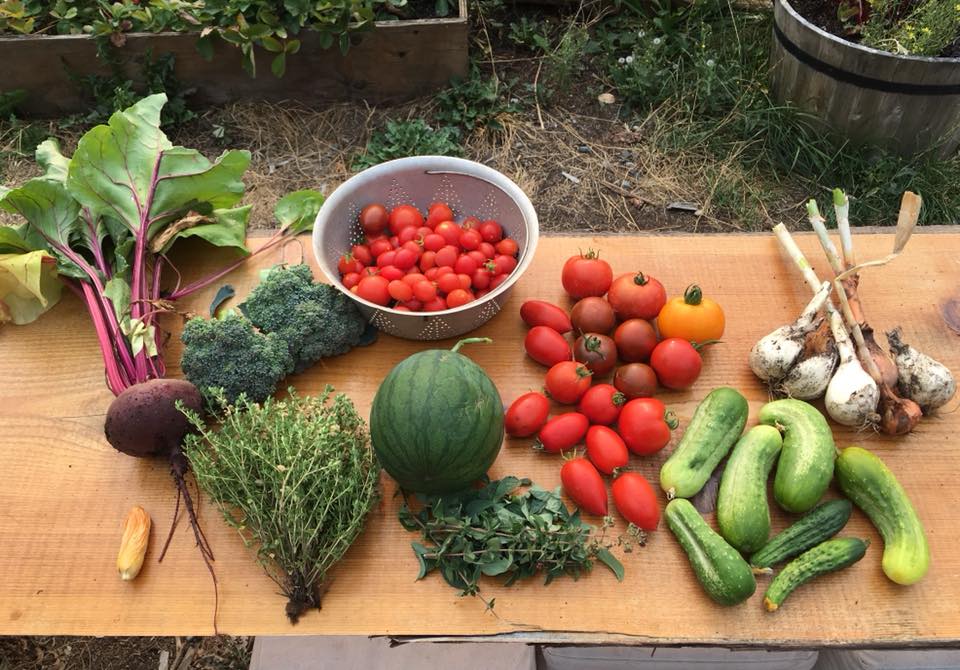
    In spring, we harvest garlic scapes from the garden and make pesto. Summer brings:  beets, beans and cucumbers for pickling; tomatoes for drying and sauce; peppers and onions to add for salsa; berries for jam; cabbages for sauerkraut; herbs and kidney beans for drying; seeds for saving; and other garden delights that find their way into jars. Down time manifests vegan soaps made from scratch with exfoliants like lavender grown and dried here, and knitted dish rags so you can say goodbye to disposable j-clothes, among many other gifts.
    39979433_10156761712549306_4218753195821760512_n

    Before the costs and toils of the season are upon me, I know I have the support of my community. Not just in spirit, but in the currency of our culture, dollar dollar bills y’all. Those who believe in what I’m doing buy in at the outset and set me up to be able to manifest the season’s bounty into what we need to get by throughout the year. A jar of raspberry jam, still smacking of the sunshine it was harvested in, shining through in the bleak grey of February.

    In short, a CSH is a community supporting an alternative “back to our roots” lifestyle, supporting a person and supporting a belief that together we can grow, make and provide for ourselves. I’m not just preserving food or making my own cheese — we’re preserving a way of living that our existing consumerist and capitalist system have thrown to the wayside and devalued.

    Wamhily’s CSH is more than just the monetary support to be able to provide healthy and love-filled food and household items. It’s the understanding between us that there is value in where we’ve come from and the knowledge passed from generation to generation. There is innate and deep importance in hands covered in dirt, arms torn up by blackberry brambles, wax from my hives dipped into tapers.

    The Wamhily CSH is the manifestation of love into action. A divergence from the corporatized and prescribed path to a more connected and nurturing one. Of my community saving me and I hope, in a small way, me saving them.

    It comes not from a place of judgment of what we’ve inherited and is easy, but of what we can do when we set our minds to it and believe that we are capable. Capable of a different narrative, capable of doing more with less and capable of knowing deep in ourselves that we don’t need the system handed to us.

    This season, with the support of my community, I go to bed each night knowing that Field of Dreams was right. When you build it, they will come. At least when you build it together.

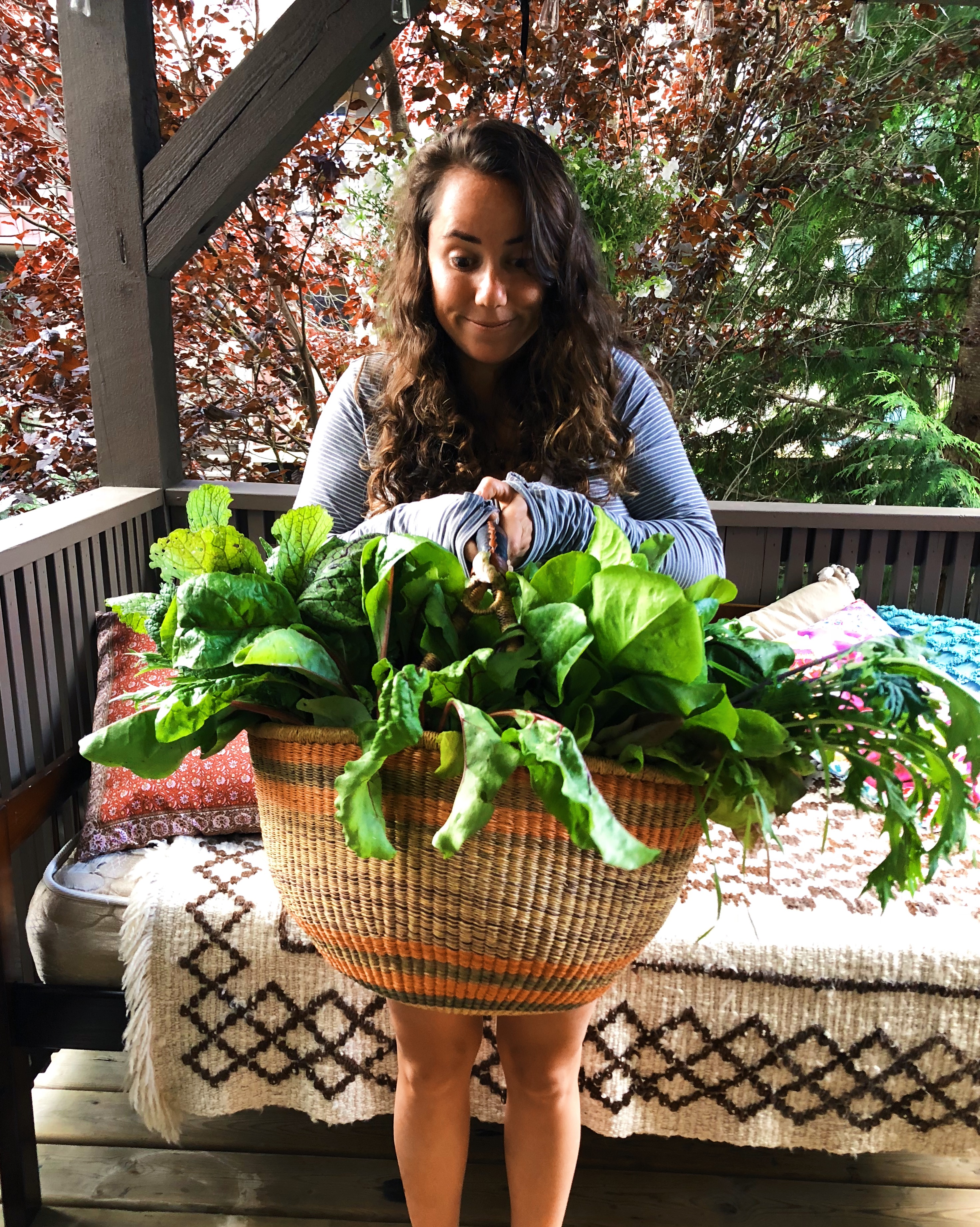
  • Gratitude

    Gratitude

    Mother Nature is neat. She gives and she takes: it comes down to how we choose react to each facet in our open relationship with her that matters. Seems odd to me that we’re becoming more accepting the smoke shows each summer and that the map of BC resembles the Lite-Brite I used to play with as a kid. Yet, there are still folks out there that say climate change isn’t real.


    This is only one of the reasons why I feel so strongly about the importance of growing our own food, saving seeds, choosing local and preserving. By teaching people easier ways to manage what they grow we can prepare for any surprises thrown at us, have a taste of summer all winter long and make difference.


    We are so lucky to live in a valley rich in good dirt for growing and farmers that know how to use it. Every time I pedal out the meadows for a meander I am in awe of the beautiful fields full of vegetables. The Slow Food Cycle that is hosted here every August come rain, shine or smoke is great for educating us on who grows what and other local goods available. Every year there are new and exciting vendors showing us what’s possible if you experiment a little in your backyard. But it’s in these simple connections where the subconscious is fueled with ideas and relationships are forged.

    So buy a big bag of carrots from Helmer’s, buy a bag of pickling cucumbers from Laughing Crow, go to the garlic festival this weekend, fill your growlers up at the breweries, stop at the food stands on the side of the road, heck, why not just join the Pemberton Food and Farm Facebook page to see who has surplus of fruit and veggies and take full advantage. Stock your freezer, stock your pantry and feel good about where your food has come from. You can definitely believe if it’s come from anywhere in this valley it’s grown with love and that my friends will leave the best taste in your mouth.


    I am grateful that I love to garden (and seem to be good at it) and have the want to share my knowledge and I am so in love with this community… and, I am very grateful for Hazy IPAs on hazy days.

    IMG_5381

  • Software for Wild Intelligence

    Software for Wild Intelligence

    “Seeds are software, and we have the seeds” -Representative of the chemical giant Seminis, just before selling out to Monsanto

    Usually, plantain is a quiet, unobtrusive little plant. She is known for her excellent healing properties, her usefulness as a spit poultice, and her excellent nutritional properties. She is generally soft spoken, and most people are surprised to notice she has been underfoot all along. She is like coffeeshops in Vancouver: ubiquitous. But lately plantain, sometimes called ‘white man’s foot’ for the way she has followed our footsteps across North America, has been shouting at me. She is poking me with her seed spears. Every time I turn around, there she is. Usually when this happens it means the particular plant that is ‘shouting’ has some particular medicine I need to pay attention to. My resistance is generally high. You think I would actively cultivate some sort of porosity towards these sorts of encounters, but no. When a plant is trying to get my attention (or most things, for that matter) my first response is resistance. When I finally let plantain in all I do is look at her for a moment, but that look takes a photograph that embeds her in my mind and from there she begins to communicate with me.

    plantain
    Plantain

    Because of the way the summer has gone- hot and dry- Plantain is setting seed earlier than usual, and with an abundance I did not notice last fall. Perhaps she is foretelling the future, but it is more likely her actions are a reflection of the present. (When a plant is stressed, their seed production tends to be prolific. Cue the fallen black cottonwood I stood in the ruins of this past spring, who released her white parachute fluff designed to float her future progeny over the entire province OVERNIGHT WHILE SHE LAY DYING ON THE GROUND, while most of the trees were barely starting to open their little seed casings.)

    But that is not what I want to tell you. What I want to tell you is that I want to cry. Each time a Plantain seed spire touches my ankle it is a reminder that things will never be the way that they were. A reminder that I do not have the time and that I am doing too much, too fast, to really listen, to really hear, to really feel any of it. There is grief in these too-early seed spires. Grief that the world is burning; that part of the morphic field of these seeds will always contain the memory of smoke.

    I believe a plant is a part of a specific ecosystem’s innate intelligent awareness made incarnate, and that a seed is the plant’s answer to the questions of its times. And the answer will be different, even among similar species, if they are growing in different locations. A seed is this wild intelligence made portable, designed for dispersal, a portable currency of consciousness.

    So if we really want to rejoin the dance, if we really want to be a part of what is going up in flames around us, what is burning and the new seeds that will be born out of this fire, we need to eat of the wild, NOW. We need to take a little of the otherly intelligence that is the essence of the natural world into our bodies so that we can start to belong to the place in which we are standing. Perhaps this is the beginnings of true reconciliation. Or at least the seeds with which to begin.

    Please don’t think I am being trite. I am not making small of atrocities that have been committed both by and against humanity. I am not saying that by taking yet another thing from the wild we can heal from the many woundings of the entitlement we have been taught to assume. I am saying that we need to begin to build a bridge to another way of being, of living, of feeling, and that if we can ingest the local wild plants that are doing that all around us in the places where we live, who have not cut themselves off from the responsiveness of the wild innate intelligence of their own sovereignty,  then we begin to take those transforms of meaning into our cells, and that begins to alter us.

    Do you remember at the beginning when I said Plantain shouted at me? Well obviously she didn’t, at least not in words. But when I started to pay attention- when I started to unravel the thread of meaning she held for me- she led me here. When I went out to shoot the pictures for this post I stripped a handful of her seeds from their spire, winnowed their husks away by breathing into my palm, put them into my mouth and chewed. They popped between my teeth like chia seeds, and had a similar mucilaginous texture. They didn’t really taste like much but maybe that’s a good thing. Something about pulling the seeds from their stalk felt familiar, the way I sometimes recognize the face of a stranger I have not known in this life.

    Beside the Plantain (and remaining mostly quiet all this time) was a stand of Dock, with seeds also ready for harvest.

    So here is where we get to the practical and super-actionable and amazing part of this post: you can make flour from both these seeds. Yep, that’s right. SUPER SOVEREIGN INTELLIGENCE WILD MORPHIC FIELD FLOUR WITH BONUS SUPER NUTRITION! (Or as we more quietly call it, Plantain/ Wild Dock Flour.)

    Plantain/Wild Dock Flour

    1. Simply go out and gather as much Plantain and Dock seeds as you have the patience for, checking that the ground the plants grow in is free from contaminants and roadside pollutants. There is no need to winnow (separate) the seeds from the hulls as from both kinds of seeds’ hulls are edible and add extra fibre to your flour, as would happen if you added rice bran. If the seeds do not pull off the seed heads easily when you are harvesting, they are not ripe yet and should be left on the plant to mature. As with all wildcafting/foraging, be considerate of the plant’s needs to reproduce and other animals who may depend on the seeds as a food source. (A good rule is to not harvest more than 25% of the yield of a patch, but in the case of weeds like Plantain and Dock (which are prolific) you can sometimes take a little more without ill effects.
    2. If you wish to increase the nuttiness of the flavour of your flour (OR if you are worried about bugs, OR if you are not sure your seeds are completely dry) you can roast your seeds on a cookie sheet in the oven, stirring several times at 200 degrees  until seeds have darkened slightly.
    3. Store whole in airtight containers until ready for use. Grind seeds and hulls in a coffee grinder until they reach a flour like texture. Substitute 1 for 1 to replace up to 1/2c of flour called for in the recipe to add extra nutritional value and wild intelligence to whatever you are baking.


    Author’s note: The seed harvesting in this piece was originally inspired by Katrina Blair’s book ‘The Wild Wisdom of Weeds: 13 Essential Plants for Human Survival” which is an excellent resource for anyone wanting an accessible way to learn to incorporate edible weeds into their diet!


  • Small Potatoes

    Small Potatoes

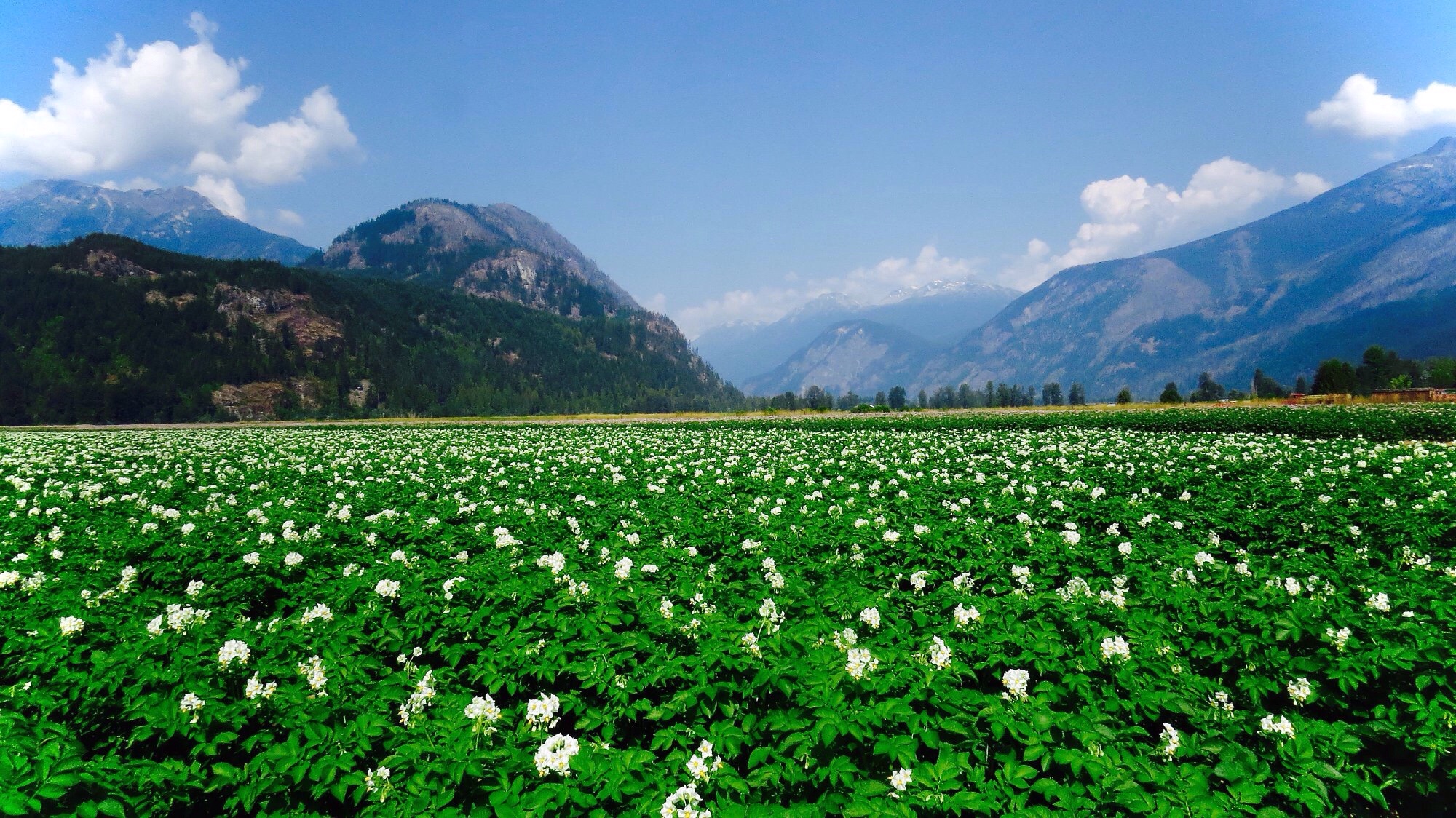
    Pemberton is nicknamed Spud Valley for good reason. Potatoes are the number one crop grown in the valley. The soil here is amazing for growing all kinds of vegetables but potatoes especially love it. The families who immigrated from Ireland and settled here in the early 1900’s saw this and started to grow potatoes. Thus the legend of the Pemberton potato was born.

    Fast forward to today. There are 9 farms in the valley growing Elite Seed Potatoes. It takes us 3 or 4 years to get a crop that we will sell and ship off our farm. We grow our potatoes strictly to sell for seed to other potato growers who then may plant them for 1 or 2 more years before they end up in a store and on your plate.

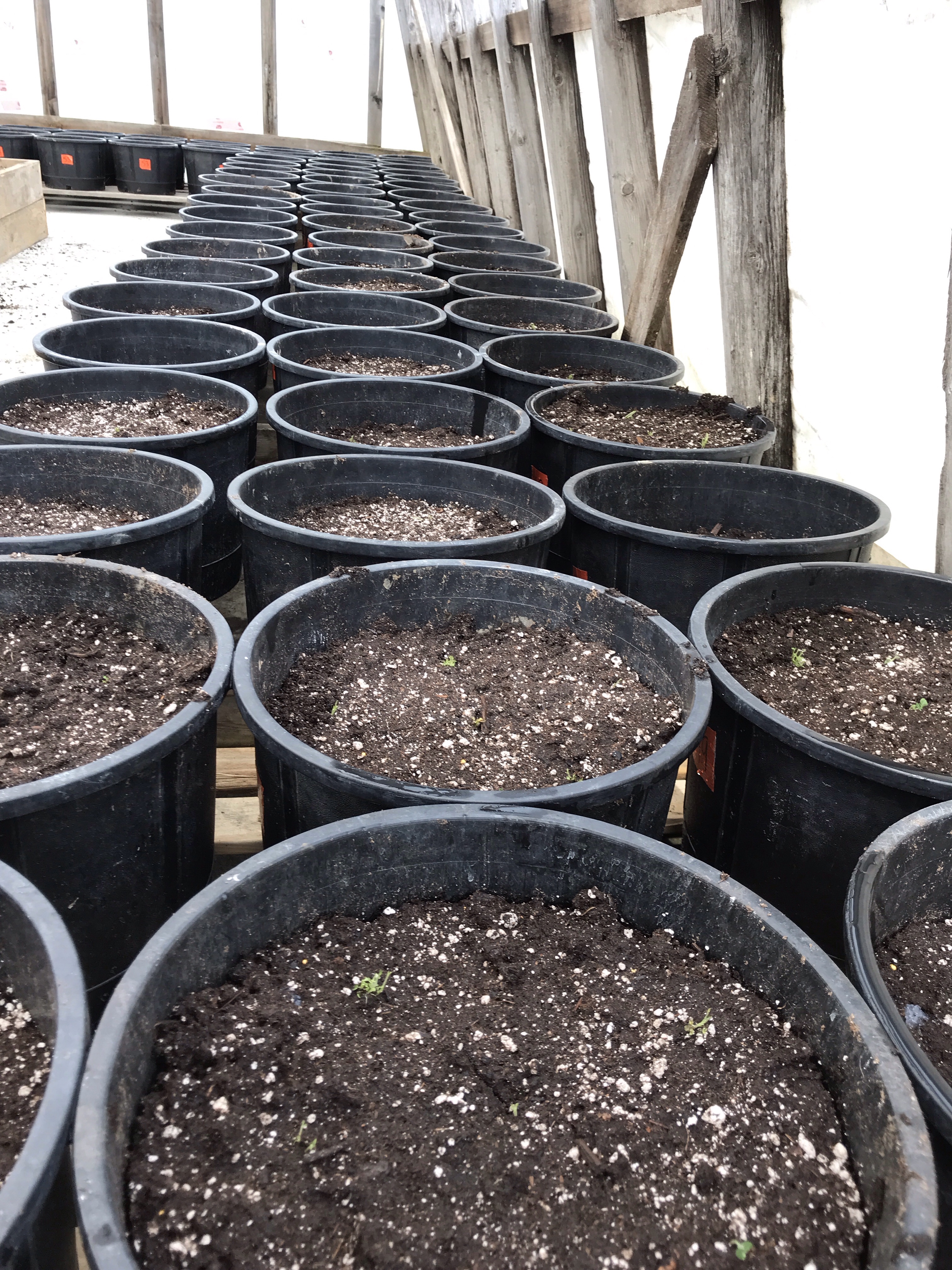
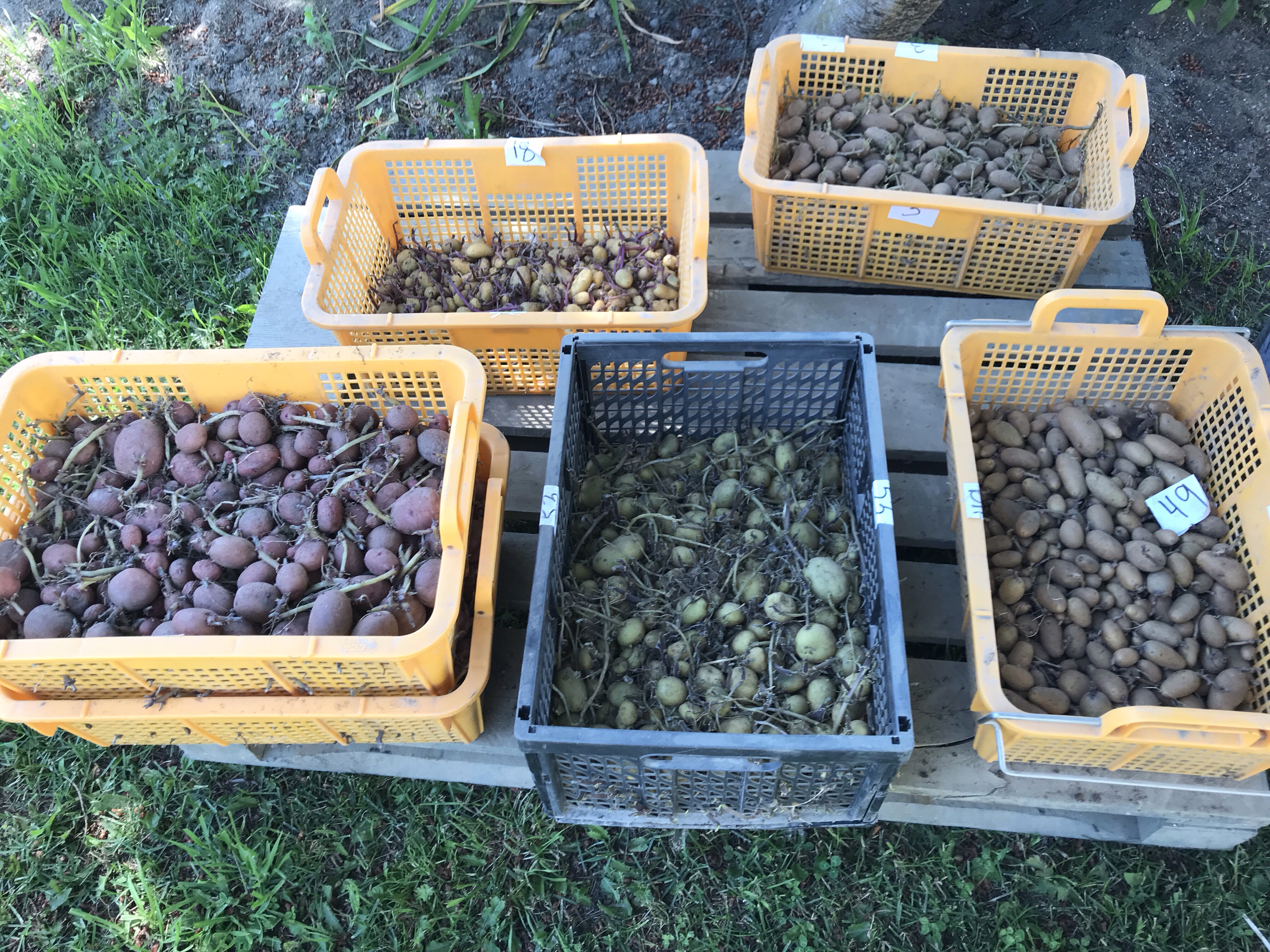
    The first year starts with what we call tissue culture plants. These are basically potato plant stem cuttings produced in a plant propagation facility that is co operatively run buy the farmers. Thousands of these plants are produced and planted in the field or in a screen house.

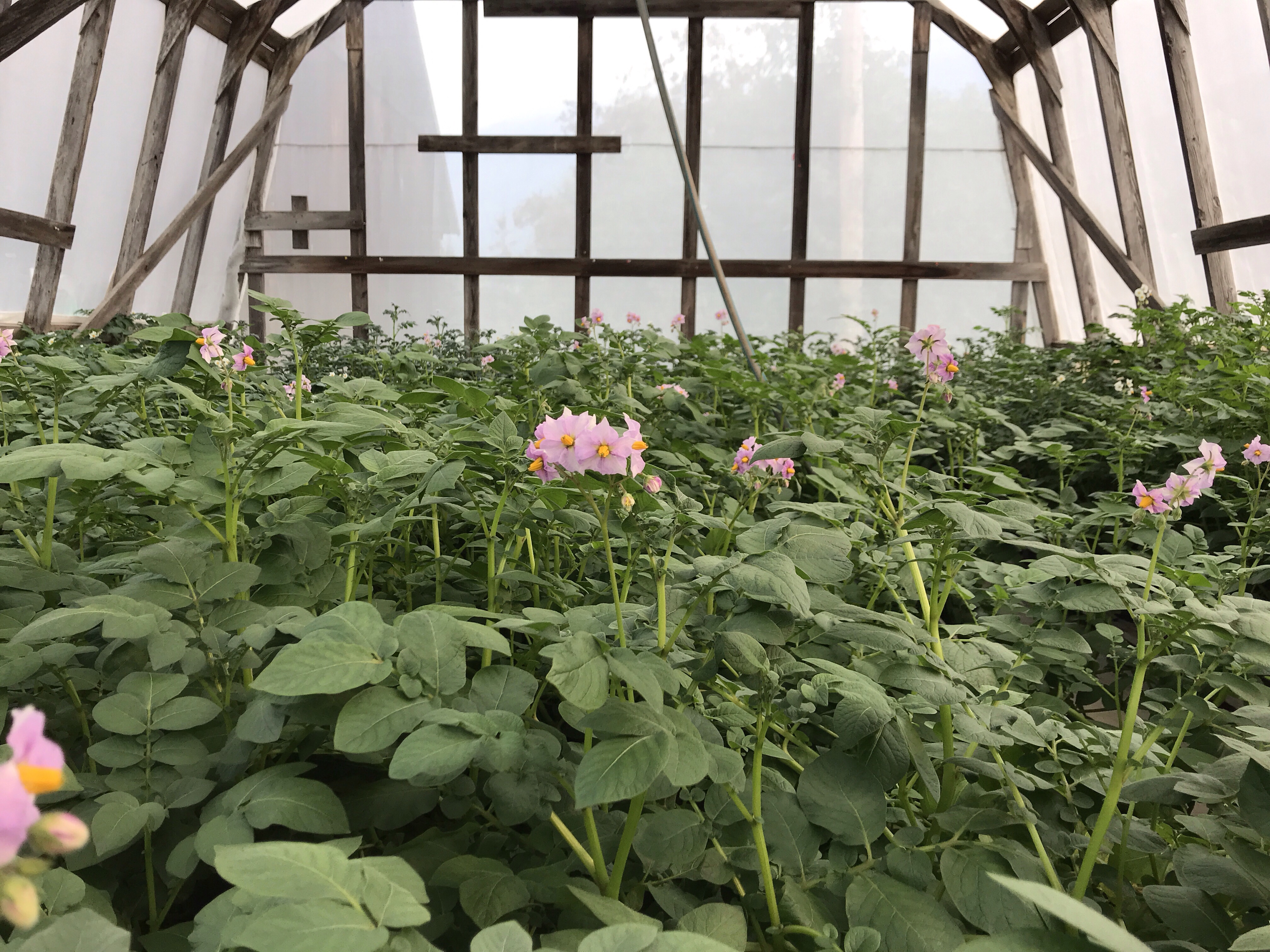
    Our operation runs a screen house. This small house will produce enough potatoes to plant 40 or 50 acres in 3 years. These plants are amazing! Whenever I plant them I just can’t believe that these tiny fragile cuttings are going to grow into anything. Watered and cared for all summer long and they do it. They grow into beautiful big potato plants that produce tiny little tubers that will then become the base of our seed crop which we will sell in 4 years.

    The potatoes that we harvest from our screen house are called mini tubers. Tiny little potatoes that we harvest, in the fall, by hand and store for the winter, planting them the following spring. They will be harvested and planted 3 more times. And so begins the circle of life for the famous Pemberton Potato.

  • How does the Pemberton Seed Library work

    How does the Pemberton Seed Library work

    marjorie-bertrand-122238-unsplash
    Photo by Marjorie Bertrand on Unsplash


    If Catherine Karpman’s post, from earlier last week, got you excited about seed-saving, here is what the Pemberton Seed Library is all about, in a nutshell. Why not try saving seed from your garden this year, and donating it to the Seed library, to help boost the collection?!?

    Challenge for 2018? Accepted.

    Seed-Library.png

    If you do it, document it!! We’d love to share.