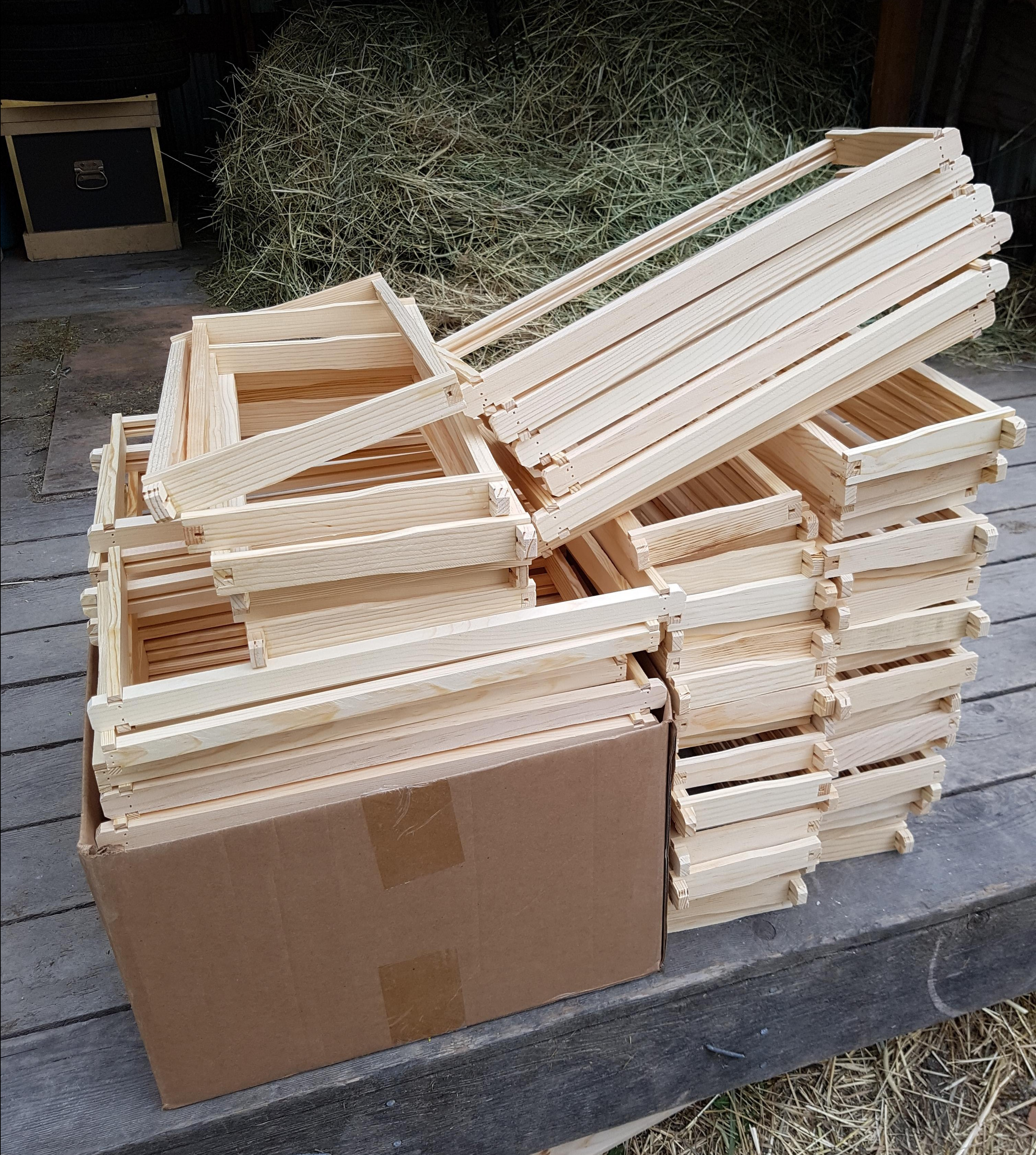
If you recall from my first post (A Bee Journey Vol 1), I mentioned that getting into beekeeping is not cheap. So how did a frugal girl reduce her start-up costs? She asked her carpenter boyfriend to help her make bee boxes instead of buying them! So, on a Saturday in April, we stopped at Home Depot for wood and spent 5 very productive hours in the workshop, cutting enough wood to make 4 bee hives. While he cut, I gave cutting directions and sanded the newly cut pieces. The total savings were $300, which was about the amount that I had to spend on frames (this is where the bees store their honey, eggs, pollen, etc.) I needed to buy 120 frames for only for 4 hives. Imagine how many you’d need for a 50-hive apiary (that’s around 1500 frames!).
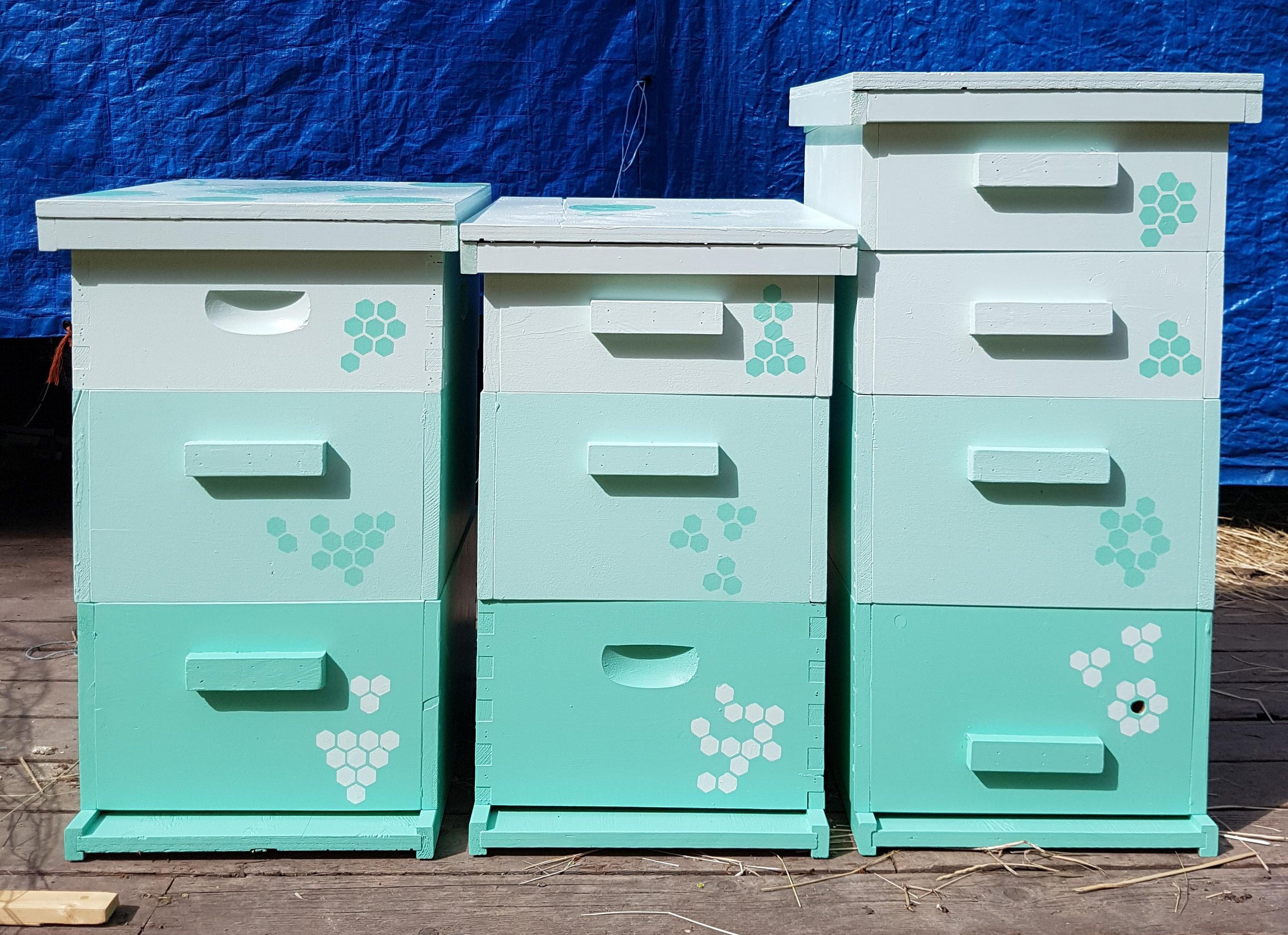
Then came the fun part, picking paint colours! My favorite colour is teal, so three shades of teal it was. Bees see blue, green and ultraviolet, which means they see colours differently than we do (humans see red, blue and green). So any colour in their spectrum works, but not red. Bees don’t like red! You don’t want too dark a paint as it will increase the internal hive temperature, which will make the bees have to work harder to keep the hive at 34C. This will cause them stress and we don’t want that. Many factors affect honeybee survival and it’s the beekeeper’s job to manage factors that can cause them stress.
So, now I had unassembled hive boxes and paint. We spent a good portion of a day gluing, nailing and screwing the boxes and frames together. Then another afternoon of painting. And I think they turned out pretty good. Now I just have to be patient and wait for the bees!
The kids started sanding on their own!Frames, frames and more frames!
The time has come for a column on farm fashion. All the chick farm columnists eventually get around to a “what to wear” piece, don’t they? This one is all about what happens when fashion is slave to function and haute couture ain’t in it.
When choosing an outfit for the day, I consider the potential for getting dirty, wet, cold, greasy, dusty, sun-burned, heat-stroked, or photographed for Elle magazine.
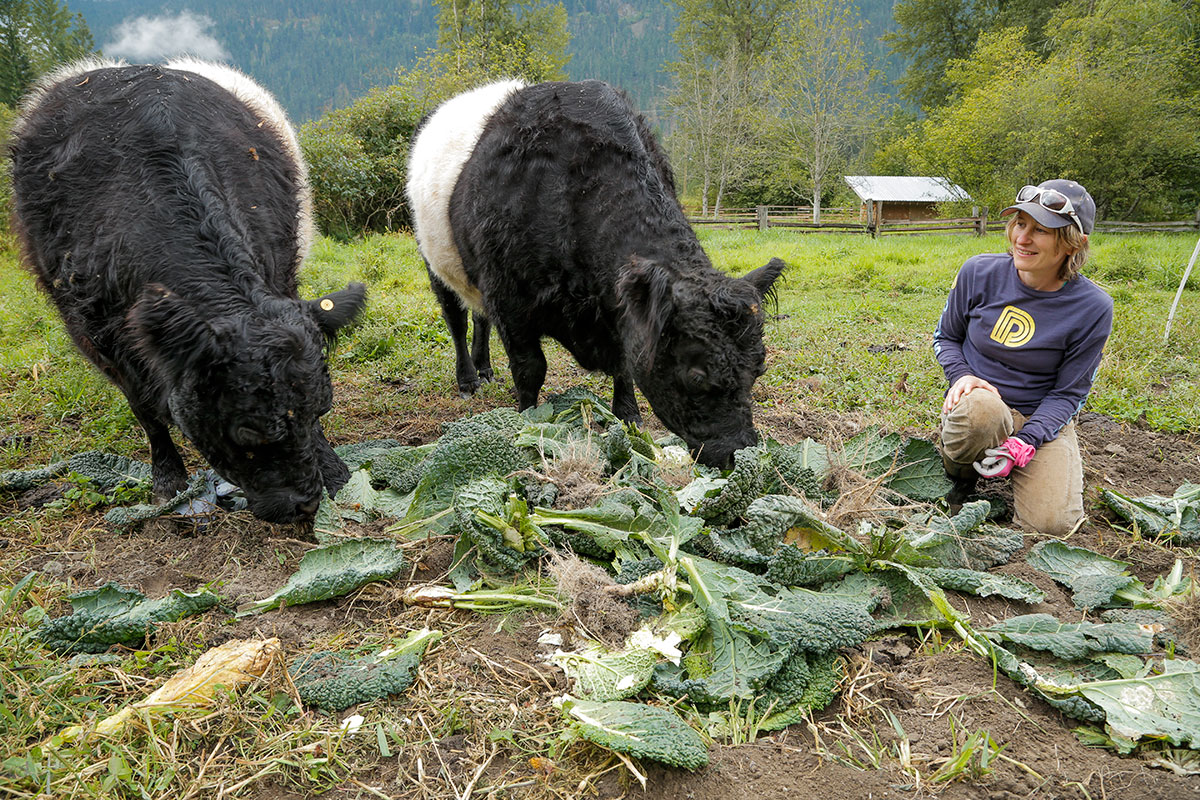
The cows have very exacting standards. In forage. In fashion, they’re a bit more chill. Unless, of course, you’re wearing leather.
Evaluation complete, I don yesterday’s work pants, (hopefully, but unlikely) complete with small crescent wrench and pen-knife in the pockets, clean work shirt, work boots (rubber or leather), and make obvious weather-related adjustments. A seasonal ball cap or toque, with occasional forays into wide brimmed sun hats, offers warmth, shade, and hair control. I don’t bother with make-up.
There are two items in my functional farm-chic wardrobe to which a more detailed examination is due. They score particularly low on fashion but shoot the lights out on functionality; a by no means unusual description for just about everything I wear out there. Let us then consider coveralls, and the mosquito bag net.
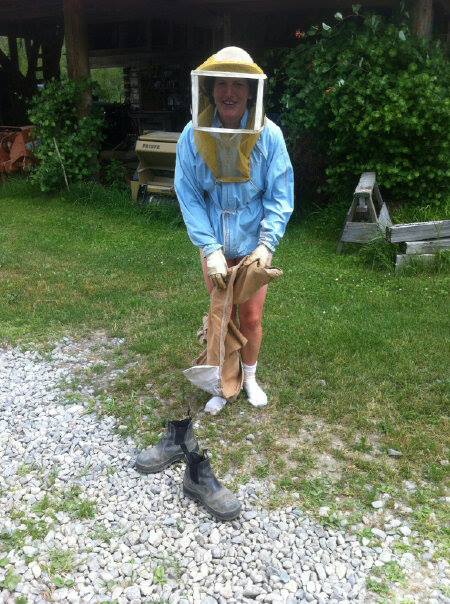
Anna Helmer gets into her bee-suit, and someone takes a photo and puts it on Facebook.
Until I went to welding class in the city, where we were required to wear coveralls, I had decided against that look for myself. I tried wearing them a few years ago and felt about as alluring as an old hockey bag. Never having been what you might call an instinctively feminine dresser, I felt wearing coveralls would sever completely any connection to my embattled femininity. I had to draw the line.
In welding school I was not given any choice in the matter and I initially bemoaned my baggy figure. Eventually however, I noticed that my good jeans (worn mistakenly to class) stayed clean, protected by the Big Blues (pet name for my coveralls) which got sooty and smoky. Perhaps, I began to think, there was yet wine to be squeezed from this stone.
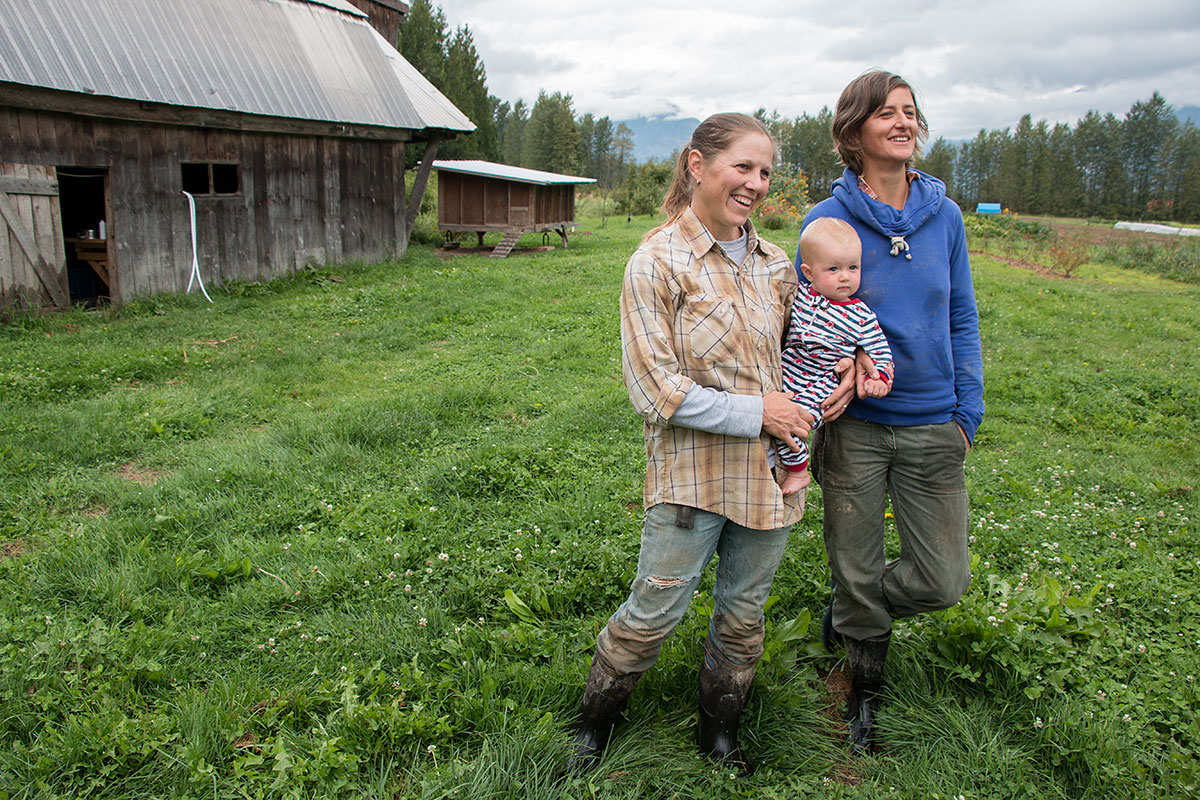
Sarah and Simone from Rootdown Organics demonstrate the key farm fashion accessories: soiled pants, rubber boots, cute baby who is actually in charge.
I have come to realize that the coveralls represent a new opportunity for me. I can stay a little cleaner on the farm, and not arrive home resembling a diesel spill in a dust bowl. Not only can I look presentable at the end of the day, but if Elle magazine does happen to show up for a photo shoot, I can be assured of a clean outfit underneath. They will still have to bring their own make-up person.
Alyssa and David from Plenty Wild Farms must have had enough time to shower before their photo shoot. Do farmers really ever look this clean when out in the fields?
Turning now to the mosquito bag net; my choice for most essential farm fashion accessory.
In my net I am bug-free; I blithely disregard the scornful sniggering of other slaves to fashion on the farm, slathered as they are in dodgy chemicals, and/or in a high state of denial over the level of torment they endure as bag-less labourers in mosquito country. There is no bigger slap in the face to high fashion than dropping a bag over your head, but neither can I countenance flies in my eyes.
Bruce Miller models the ultimate in Pemberton farm fashion, the Slow Food Cycle Sunday t-shirt.
To conclude, it would be nice to point to an item in my farm wardrobe that is more fashion than function, but I am at a loss. I suppose my pink John Deere ball cap tilts the balance slightly in favour of glam, but looses ground as its grubbiness increases with every passing day of summer. In an uncharacteristic eruption of reckless consumerism, I have purchased a brand new one for this summer.
Anna Helmer believes farmers are under-represented on the fashion run-way but sort of sympathizes.
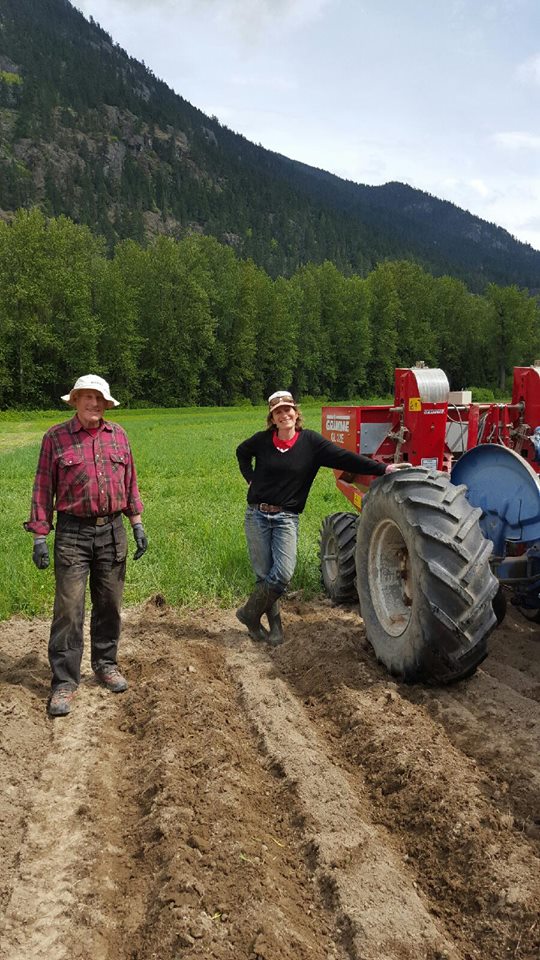
Not being able to stage a photo shoot of Anna’s farm fashion moments during planting season, we’ve poached these illustrative photos of Pemberton’s organic farmers in their sartorial best, from BeyondYourEye.com photography, via the BC Organic Farmers.
One and a half years ago I moved to Pemberton, and I started working at the most amazing health food store & juice bar – Stay Wild Natural Health.
If you’re a regular at Stay Wild you might have noticed the abundance of amazing humans that walk through those doors on a daily basis. I would say I am extremely lucky to have met some pretty incredible, driven, and inspiring people from this area.
I am privileged to be a part of your lives in one way or another, whether just a momentary hello, or as a form of guidance. And I am extremely grateful to those who have allowed me to help them. Thank you.
Some of you may know that my passion is in nutrition and mental health. I focus a lot of my time on further study in anxiety, depression and eating disorders.
As this is my first post for Traced Elements, I would love to start by spreading awareness and shedding some light on the topic of eating disorders, as this is something people rarely speak of and something I endeavour to create a safe space for.
Around 5 years ago during Mental Health Week in Australia, I decided to share my story – my history facing an eating disorder. It had been a long time coming. I felt that I couldn’t fully help others until I could first be honest about how I came to be the person I am today, and why this is all so important to me.
Sharing my story was one of the scariest things I’ve ever done, but also one of the best things I have done. Since living in Pemberton, I have witnessed the power of others sharing their own stories.
Never doubt that your experience, your story, can help or inspire others.
For those still battling with body image issues, eating disorders, anxiety, depression, or any other mental health condition, know that you are not alone. Know that even though it seems like the darkness will last forever, it doesn’t. Know that you ARE strong enough. You ARE beautiful enough. YOU ARE ENOUGH.
Thank you Traced Elements, and Lisa, for providing this platform for people to share. What an amazing community this is to be a part of.
I will leave you with this, a message from the National Eating Disorders Association:
NEDA week vision:
“Our theme this year is Let’s Get Real and our goal is to expand the conversation and highlight stories we don’t often hear. Our culture has complicated relationships with food, exercise, and appearance.
30 million Americans will struggle with a full-blown eating disorder and millions more will battle food and body image issues that have untold negative impacts on their lives.
But because of stigma and old stereotypes, many people don’t get the support they deserve. Join the conversation and help us raise awareness, bust myths, get people screened, and start journeys to healing.”
A Message from NEDA: Let’s get real – eating disorders can affect anyone, anywhere. This National Eating Disorders Awareness Week (#NEDAwareness), we’re changing the conversation around food, body image, and eating disorders! Join us at nedawareness.org.
There are essentially a couple groups you would’ve fallen into this past weekend: camping, working or planting your garden (ideally a combo). No doubt in my younger years I was way more into packing the truck with a tent, sleeping material, coolers full of beer, sausages, buns, ketchup, cans of beans and chips – lots of chips – and getting the hell outta of Dodge. Now as I age “gracefully” my focus has changed or maybe temporarily wandered and there is also that work thing. The exception is chips; there will always be lots of chips.
But let’s focus on gardening… What is it about the May long weekend, no matter where you are in Canada, it’s viewed as “the time to plant your garden”? Surely it’s some sort of phenomenon or maybe a myth.
Firstly, I’d like to draw your attention to a key fact. Our growing zone here in Pemberton is radically different from that of my family in Kenora, Ontario and those in Nova Scotia and Newfoundland. Yet, we all assume it’s totally kosher to plant tomatoes and basically everything else outside the same weekend. We can all also agree that one of our garden’s biggest nemeses is frost. So really, by accepting this planting time frame we are all pretty much assuming that frost is off the plate as of May long weekend. Hereby committing our plants to a life outside producing us a bountiful harvest.
It’s as if the universe is giving us a chance to all exist on the same plane for a mere moment in time; I’ll take it.
Here in Pemberton the mercury levels on our thermometers have been reading higher then normal for May. Which has made it easy to get crazy and just start sowing things. And, of course, I am all for this and 100% participated. It speaks to that whole experimental element in gardening that I love. You just have to be ready to face the fact that some things may not survive. Like a game of Monopoly; sometime you pass go and collect $200 and sometime you go to jail. I’m willing to bet the vegetables that prefer the cooler growing season of spring are probably wondering this year like the rest of us why it’s July’ing in May.
Early direct sow experiment with Borage… Status: alive & thriving. Stoked to have this gem in my garden this season.
Don’t get me wrong, I’m not complaining about the sunshine and the extra early lake dips but I am hot and bothered that my garden already needs to be watered twice a day… I genuinely miss Spring – She was super cool.
One thing I need to tell you right now is this – if you are going to go foraging for stinging nettles do not wear sandals. The other thing I need to tell you is if you want to go foraging for stinging nettles you may have to wait until the spring of 2019.
Which leads me to the point of this month’s post. Procrastination is not your friend if you want to forage.
I have been known to procrastinate, especially when it comes to anything I would categorize outside of “work”. This spring I enrolled in a year-long course designed by local Natalie Rousseau called 13 Moons -and I have been learning about foraging and “kitchen witching”. The recipes are so inspiring, and I am excited about deepening my connection to the land and the seasons by incorporating more native plants into my diet.
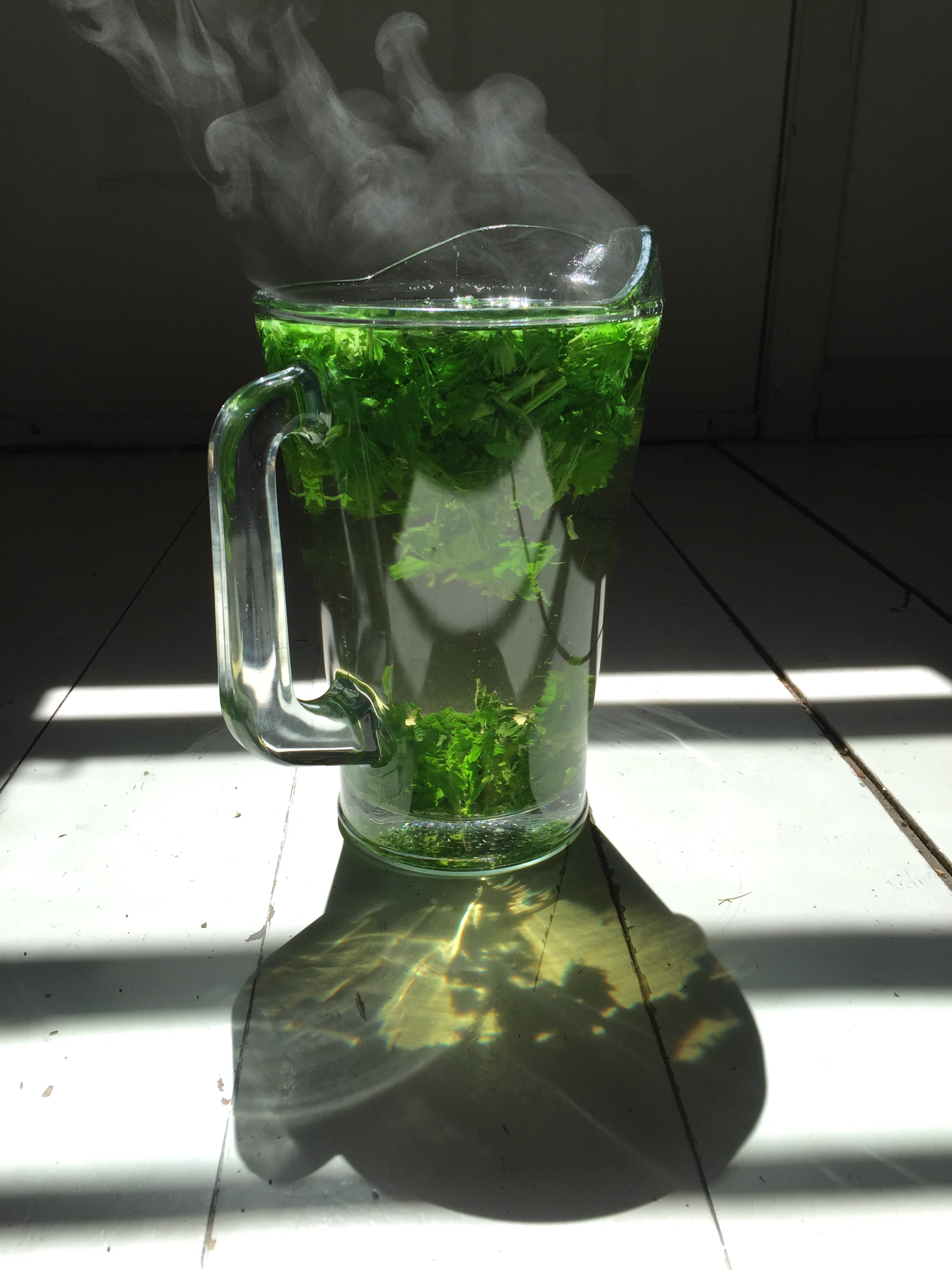
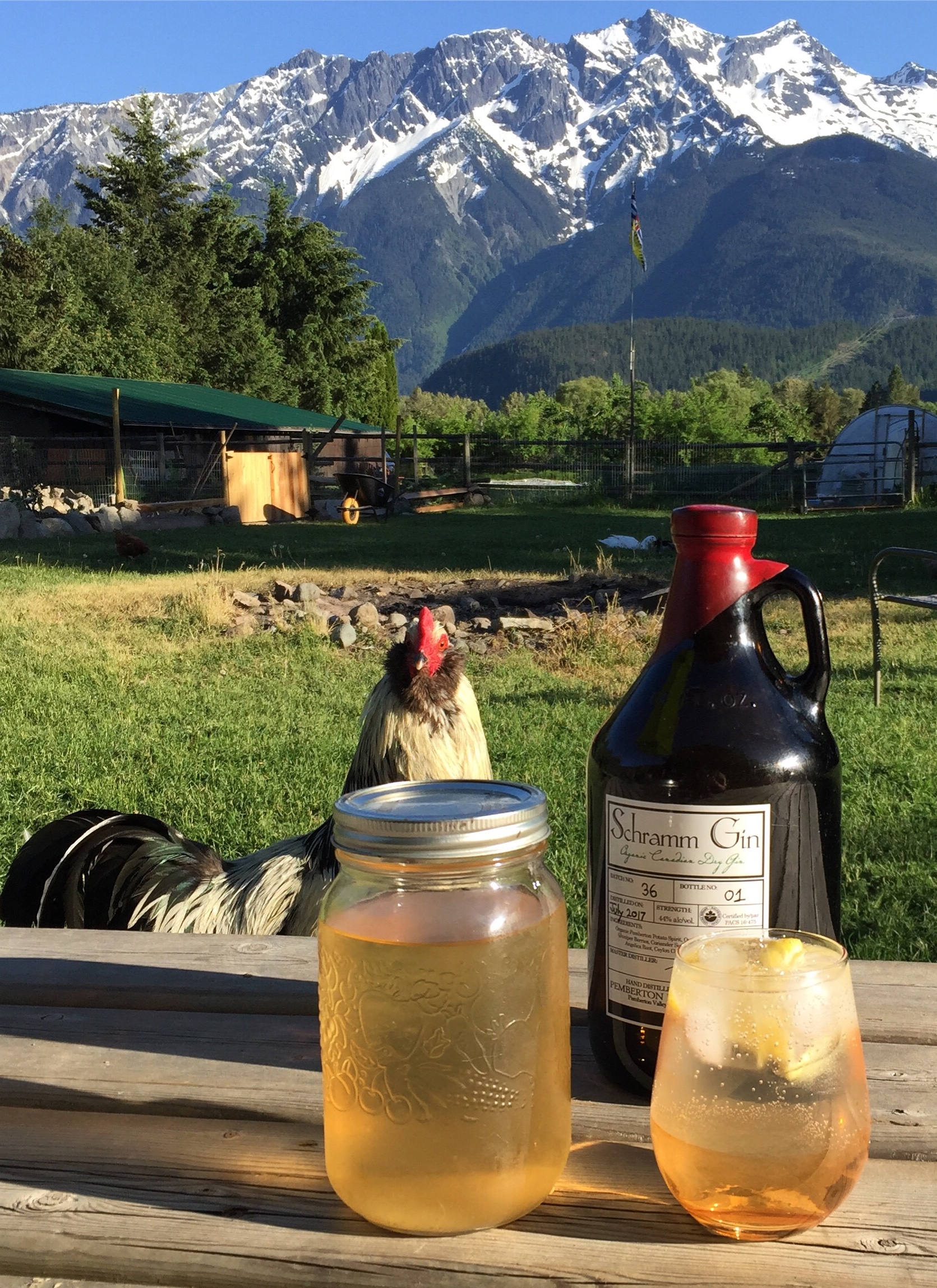
So far, I have been able to get out there for two stinging nettle harvests and one elderflower harvest. The nettles were steeped into teas and blended into smoothies that I believe have drastically reduced my usual hell storm of hay fever symptoms. The elderflower blossoms were infused into a delightful cordial that has been mixed with Pemberton Distillery gin and soda for drinks on the deck with friends, prosecco for an elegant cocktail at a Mother’s Day gathering and sparkling water for a refreshing lunchtime drink…all with delicious results!
I was hoping to get dandelions and lilacs for more cordials and tea infusions but fear I may have missed my opportunity…but maybe I can gather some this weekend? And therein lies the problem, the native plant does not wait for the procrastinator. It may be best to pin my hopes on the next round of edibles on my list – wild roses. I plan to use the petals to make a herbal honey, to infuse with oil for skincare, and to dry for tea blends.
If you go out foraging:
Be sustainable and ethical – don’t overharvest or strip entire plants. Try to harvest small amounts from numerous plants so your forage doesn’t harm the plant and leaves plenty of food for the insects and animals that rely on it for a food source. Always make sure you are prepared to process your harvest properly so it doesn’t go to waste.
Be safe – it is always good to cross-reference a couple of resource books and if possible, learn from a real life person who has been wildcrafting or foraging for a long time. Thanks to Dawn Johnson for taking me out on an elderflower adventure!
On March 29th my daughter turned 9 months old, this same day I had bittersweet emotions as it also marked the 11th year of my fathers passing. My father suffered from depression and this eventually lead him to take his own life. This article weighs heavy on me as I raise a tiny human with a brain that’s growing and absorbing at an alarming rate. I want to give her the best tools and support to ensure healthy brain development and positive mental health. I truly believe this starts with our nutrition. Did you know that our brains are 60% fat and a whopping 20% of our calorie intake is used to fuel our brains. It’s no wonder what we consume can have such a huge impact on how we feel and perceive.
Mental health has always played a huge role in my life. I’ve always been conscious of my own mental state and I have siblings and friends that are currently managing their depression and anxiety. Although there are many good days, the bad days can often turn into weeks, months and sometimes years. And what do we do when we have these days, consume junk and comforts foods, we often stop exercising and moving our bodies which only worsens the symptoms. Chances are you also know someone that is suffering or perhaps you yourself have struggled with mental health. Even seasonally I see so many people, myself included, fall into a slump over the winter months or the never ending rainy spring or fall. On a less severe scale, have you ever felt brain fog, mood swings, anxiety or an overwhelming or prolonged feeling of being unmotivated. This could all tie into your brain not getting the essential nutrients that it needs. Two mornings ago after a night of broken sleep, no breakfast (or coffee) I proceeded to getting house chores done. I caught myself trying to put the clean dishes away in the freezer and nearly threw the dirty laundry in the garbage… I clearly was not on my A game that morning. Perhaps that’s why they say breakfast is so important, get that brain fueled up and ready for the day.
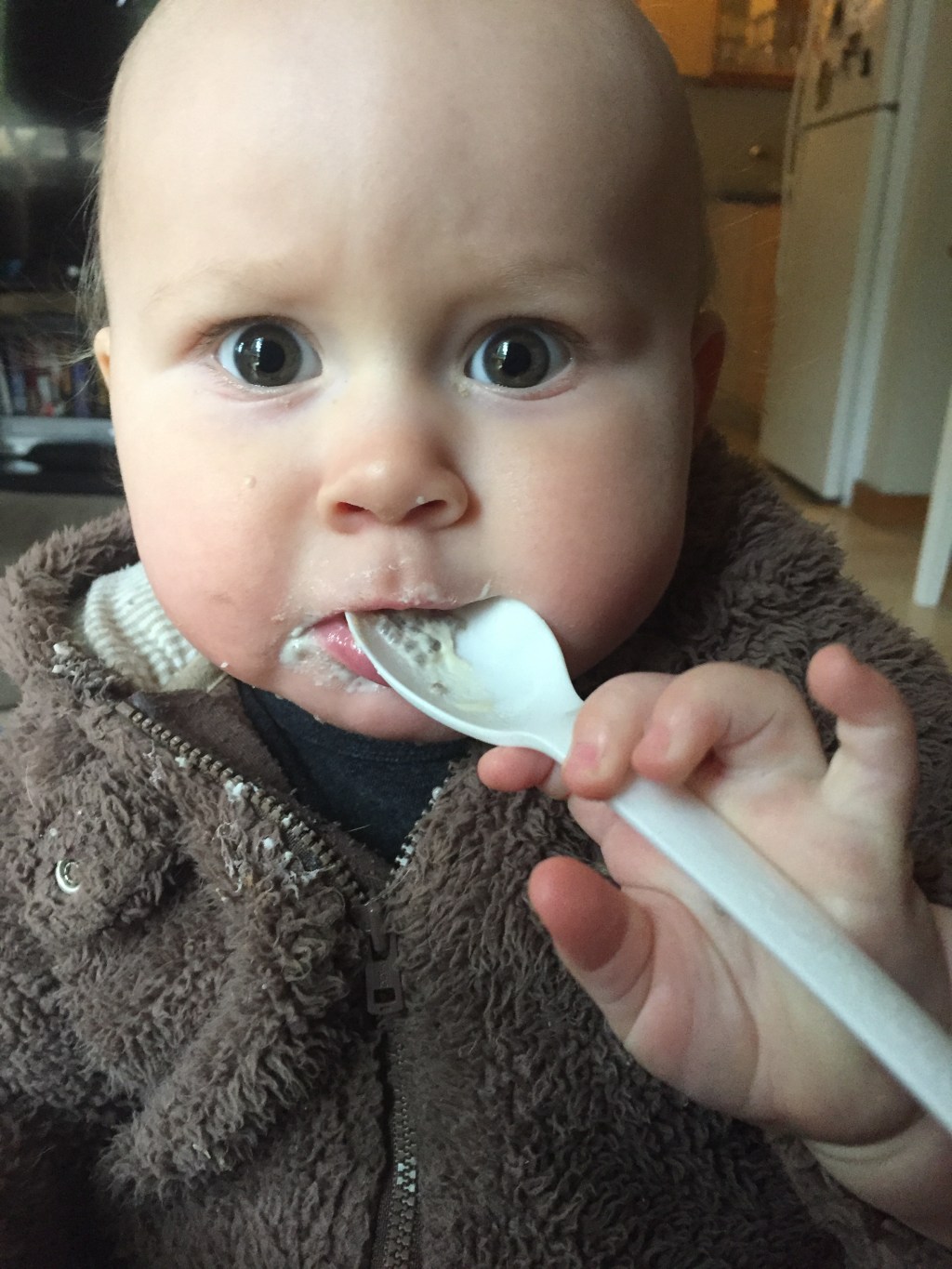
Speaking of which, here is one of my favourite breakfasts that just happens to be ideal brain food. The overnight oat and chia cups from Staywild. If you have not already tried one of these, I urge you to. They are also baby approved, I usually need to get two otherwise my little one will eat all of mine. I’ve tried so many home recipes but they never come close to how tasty Staywild prepares them. They have the perfect oat to chia ratio and that cashew and date whip is the icing on the cake. Here’s a quick breakdown of the ingredients and what makes them essential for fueling our brains.
Oats: provide glucose, long term energy for the body and mind. They also contain vitamin B, E, potassium and zinc which help the brain function at its optimum level.
Chia seeds: Omega 3 ALA which your brain uses to make DHA fatty acids (essential for optimum brain function). Also a complete protein which means it contain all 9 essential amino acids
Almond milk: Riboflavin, L-carnitine, vitamin E, vitamin D. All key nutrients in supporting positive neurological activity
Cashew: Rich in vitamin B6. Cashews have been know to help fight depression and an anxious mood. B6 can help the uptake of serotonin in the body and help magnesium reach cells more effectively
Strawberries/Blueberries: Rich in Antioxidants and flavonoids help protect against free radicals, reduce inflammation and studies have shown improvement in memory and cognitive ability from diets with high amounts of berries.
Coconut: Healthy source of dietary fibre and MCT (medium chain triglycerides)
I cannot begin to express the importance of managing a healthy mind and I truly believe that begins with our nutrition. What we fuel our bodies with can have a massive impact on our mental health both positively and negatively.
Our brains are absolutely fascinating and the more I learn about how the brain works and what it needs to function optimally, the more I try to make conscious decisions that will make a positive impact. I’m also quicker to realize the negative effects when I make poor choices. Eat well, feel well!
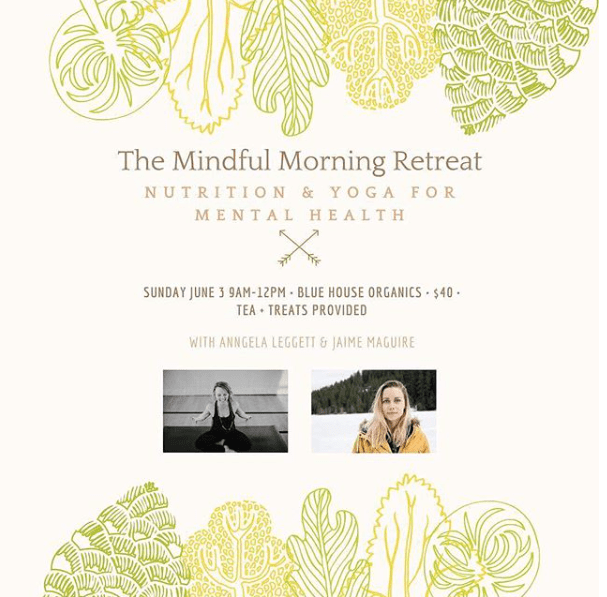
I wanted to use this to promote a really great event The Mindful Morning Retreat that is being held at Blue House Organics by Anngela Leggett and Jamie Maguire but I wasn’t quick enough. They sold out in no time. However, a little birdie told me that there will be a round two at the end of the summer so keep your eyes and ears open if you’re interested in getting more in depth on the topic of nutrition and brain function while partaking in some mindful yoga. Your brain is a hungry little organ, feed it well and seriously you should try an oat and chia cup from Staywild when you have the opportunity.
Enjoying breakfast with a fabulous view and of Mount Currie never hurts
There’s a scene from the movie Now and Then where all of the girls are joyfully riding their bikes around their town. Often when I’m riding my bike with my friends, around Pemberton, I pretend I’m in that movie. Perhaps it’s because what I’m doing is a simple yet heart-fulfilling activity? Perhaps when I’m on my bike it feels like all of life’s complications melt away? Perhaps I just really love that movie and wish I was in it?
I’m not sure what it is but I love being on my bike and riding the “mellow” trails and routes around town.
Being from Winnipeg, where the biggest hill I had growing up was a bridge, inclines and declines can be intimidating to me. So, I’ve established that there are certain trails in town that I’m comfortable with.
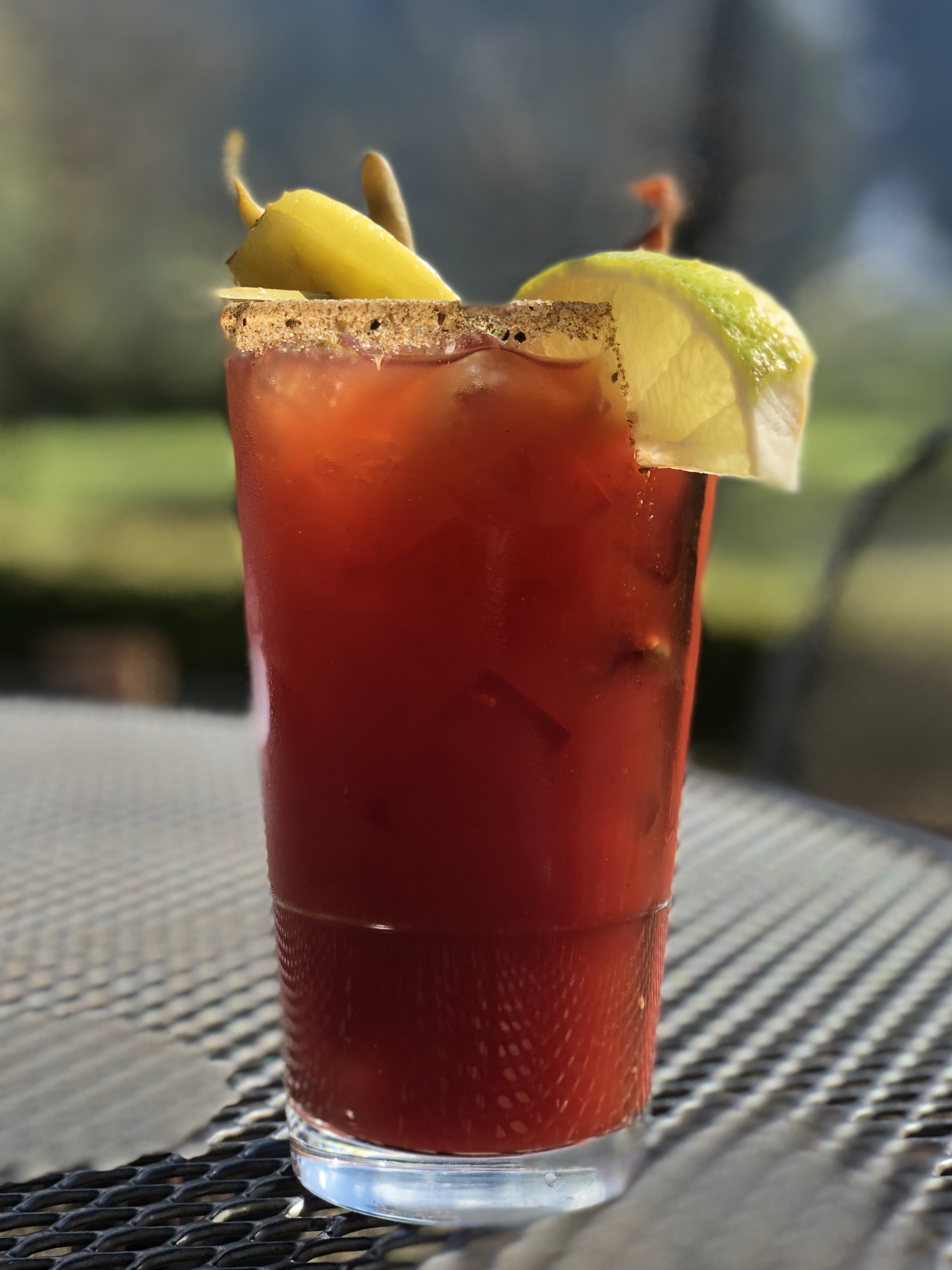
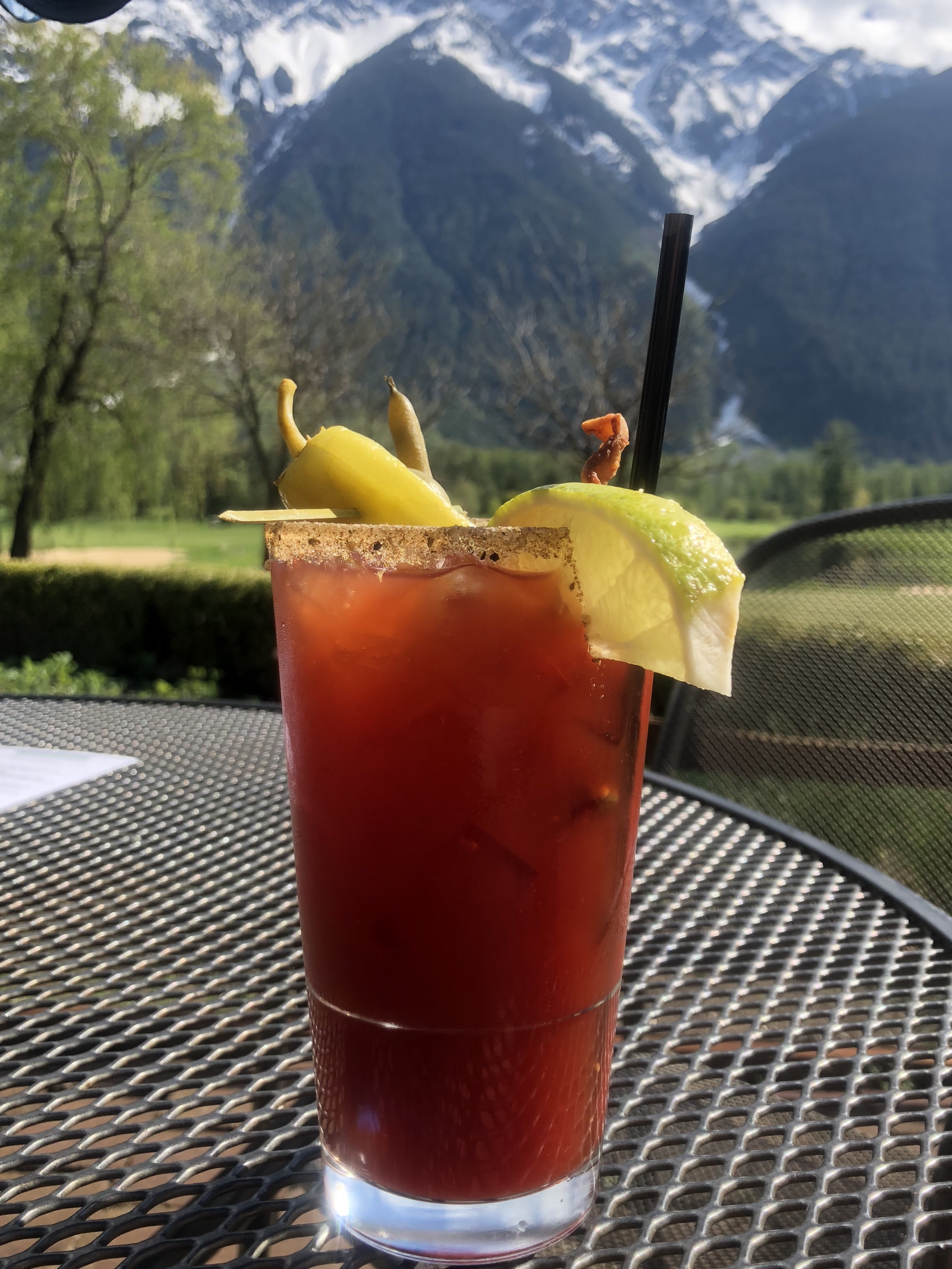
One of those trails is called “Caesar Trail.”
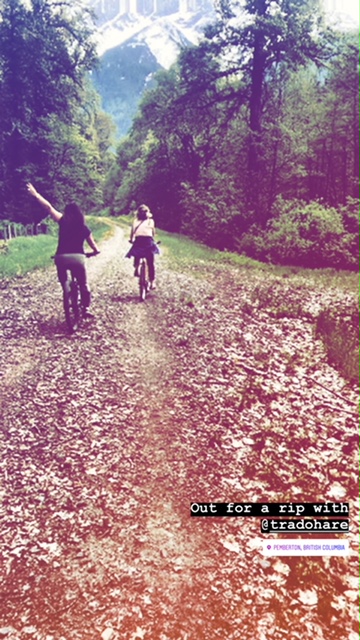
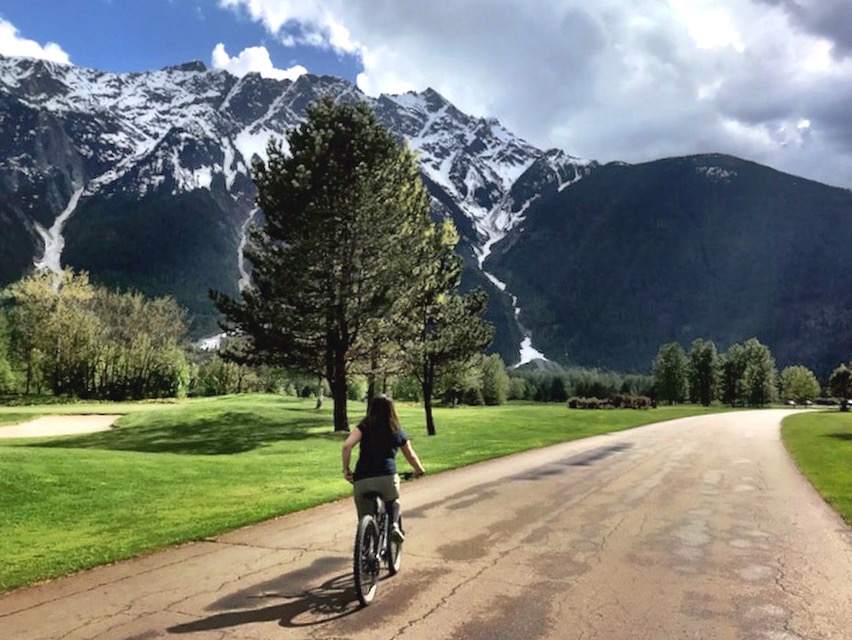
Upon moving to Pemberton in 2012 I was introduced to the activity of riding my bike along the dike to the golf course zone. It’s quite magical and beautiful to ride my bike on the dike and to be able to choose where to go next once the dike ends. I found myself more often than not riding that trail and ending up at one of the golf courses for a Caesar.
Yum….Caesars.
The fact that the route/trail didn’t have that exciting of a name, in my opinion, I started to call it the “Cesar Trail.” Maybe this is a name that will catch on? Maybe this is the name that only me and my friends will use?
All that matters is that at the end of the beautiful and chill adventure is a Caesar.
It’s my favorite trail to ride in the whole Sea to Sky Corridor and I recommend you try it out (especially if the sun is shining).
Cheers to Tara and Kalmia for being my partners-in-caesar and to Shayne for taking pictures of us!
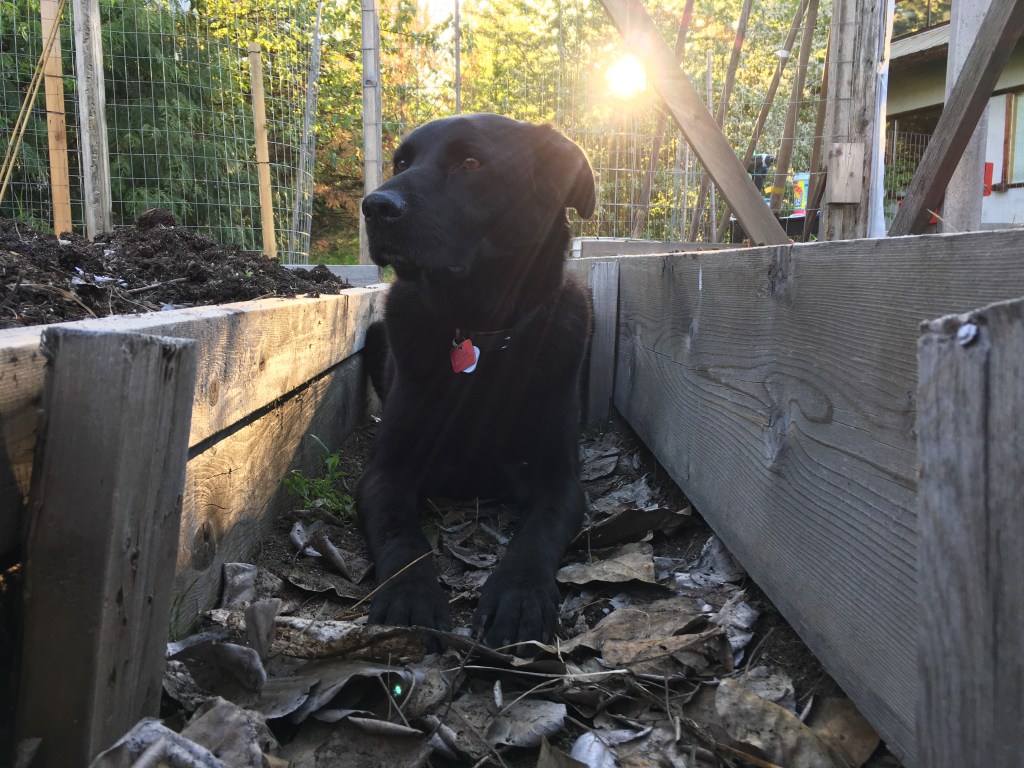
I am not a scientist (although my current course on soils may turn me into one). Nor am I a psychologist; at best I’d classify myself as a horticulturalist. There is one thing I have come to acknowledge more then ever over the last few weeks… my dog’s intuition is more on point then most people I know. She came with the name Shadow and it suits her to a T – LITERALLY.
So, allow me to introduce you to #shadowruffruff.
(Need a laugh? Follow this Hosta lover’s hashtag on Instagram for guaranteed good times.)
Here’s the skinny. Shadow was surrendered to the SPCA in Prince George where her puppy life was basically non-existent; she was quickly moved to the West Vancouver division for rehabilitation. We fell in love with her photo on their website and promptly pinned it down Hwy 99 from Squamish to meet the then 2½ year old Black Lab x Boarder Collie. Instantly we knew she’d be a perfect fit for us and she’s been melting hearts ever since.
She is not stick or ball obsessed (thankfully). She didn’t swim until she was 4 and it’s only because there was a duck to chase. Her ability to find food and crumb around is so good she should be paid for cleaning the floor. She is extremely smart and loves to tell stories. She took up minnowing at age 10 and has been a pro field mouser for years. She is nearing 13 now and still loves to come on biking, ski touring and hiking adventures. She is showing minimal signs of slowing down. Maybe she’s stubborn like me. Grey hairs you ask? Nope. Only a few visible on her chin but most are hidden on the bottom of her paws. A lady never tells or really shows her age.
You might be wondering how this plays into gardening but be worried not for this hound loves veggies as much as the rest of us. When I crack my container snack vegetables she’s usually at my feet before the lid is off. I have to pack extra knowing she’ll eat half of what I brought. But don’t try to feed her kale unless it’s been massaged because she’ll look at you like you’re crazy! Smart dog. You have to watch her around the blueberry bushes, raspberries, strawberries and cherry tomatoes; anything at her level is fair game. She is a phenomenal forager. And, of course, all the thinned out carrots rightfully belong to her dirt and all.
Since my bike crash I have been tripping over her even more times then I can count. A friend gave her the nickname “Underfoot” for good reason. I have been spending most of my time in my garden healing my concussed brain because that’s what feels good and Shadow has been there every step of the way. Therapy dog. Keeping the cats out, barking at the deer and warning me when the bears are close long before I actually see them. Again, her intuition is impeccable on all levels. She is the keeper of my garden, paid in full with vegetables.
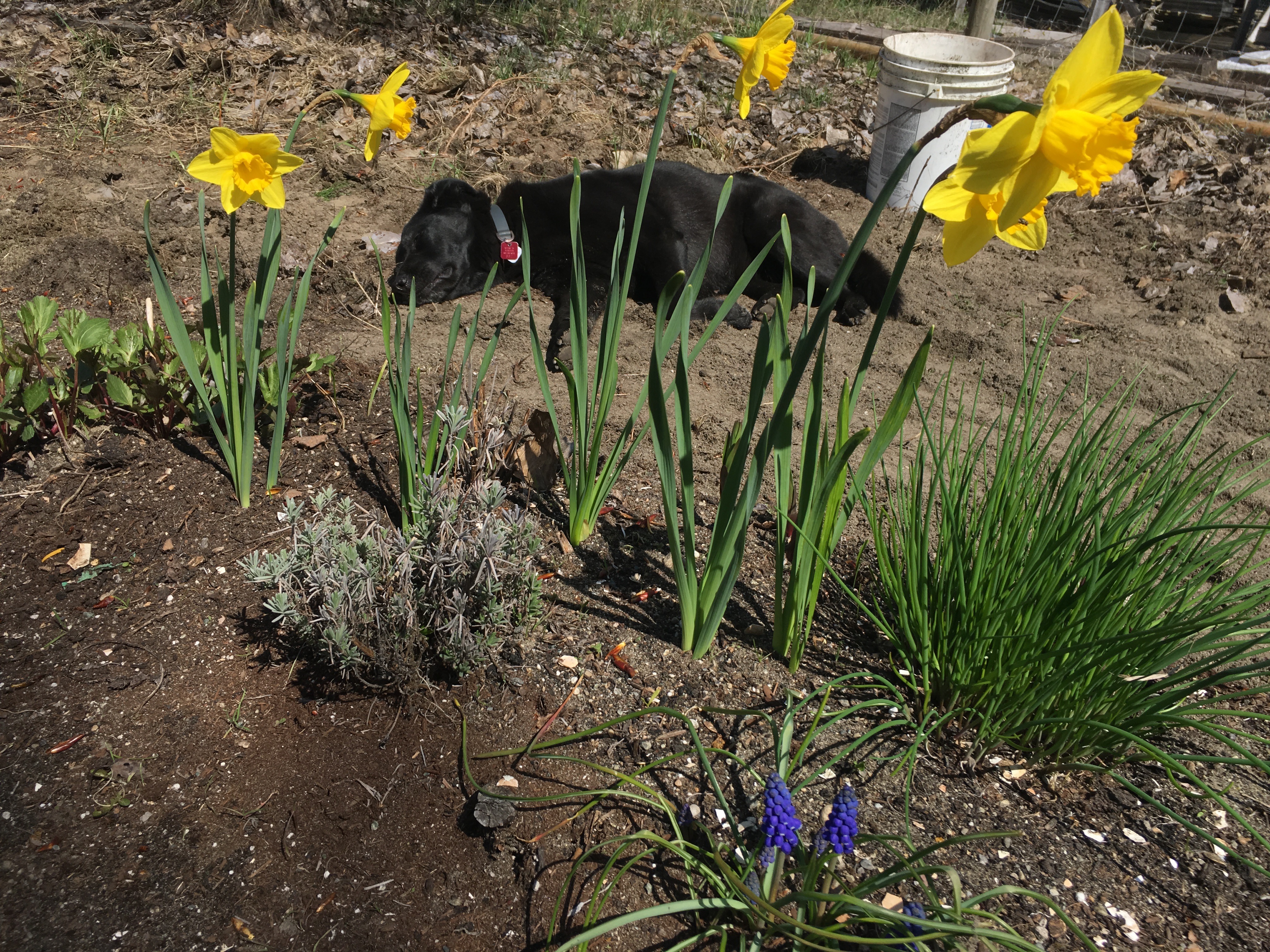
Besides, someone has to test out the fresh raked dirt to ensure its level.
The first time I saw a hummingbird was in Sooke, on Vancouver Island, while visiting my boyfriend’s parents. They had several feeders around their property, and the first time one of these minuscule, zippy birds approached, I was completely rapt. I’ve found them fascinating ever since, but we lived in Vancouver, where no hummingbirds dared venture.
When Nathan and I moved to Pemberton four years ago, his mother Lisa gave us a hummingbird feeder as a housewarming gift. It was December at the time, and I couldn’t wait for spring to arrive to set up our feeder.
And now every year, as much as I look forward to spring for the fresh green scent of new growth and the return of warmer weather, what I really look forward to is the return of the hummingbirds. I get immense joy from putting out fresh, homemade nectar for these precious visitors, and take special care to ensure my feeder is always stocked. (I haven’t planted my garden yet, but I’ve already refilled my feeder twice.)
Part of my joy comes from being able to watch these fascinating birds closely, as the feeder is located right by our living room window. But a good portion of this joy is from the feeling that I’m helping these tiny creatures by providing them with food. Especially at this time of year, when the flowers are still just returning and nectar is low, and they are vying for the attentions of potential mates. (It must take a lot of energy to execute those dive-bombing shows the males use to impress the ladies.) Since moving here, I’ve learned there’s plenty of wildlife you shouldn’t feed, but thankfully the hummingbirds aren’t one. It gives me joy to feed these birds, while they in turn feed my joy.
Hummingbirds can be seen as a symbol of lightness, for the incredibly light way they move about their world. They can help remind us to try to use similar lightness in the way we move through our world. To leave gentle footprints on the Earth, to care for one another, and to treat everyone with gratitude and respect. So here’s to spring, here’s to joy, and here’s to the hummingbirds.
I’ve carried this ritual of kitchen sadhana into my life as I find it very grounding.
This month I have two particular recipes that I’m really excited about.
The first is one of my absolute favourite foods to make when I need something easy to digest that is also a complete meal and very comforting and nourishing. Kitchari (sometimes spelled kichadi) refers to a stew-like one-pot meal which is a mixture of two grains. Spring is often a time when we are shedding the stagnant, dense energy of winter and the heavier foods we’ve been eating to up-shift to the lighter, more buoyant foods of spring, like dandelion greens and fresh nettle. The great thing about kitchari is that you can use any vegetables you have on hand.
This particular recipe is with a mix of mung beans and basmati rice and I had butternut squash, spinach and frozen peas on hand so in they went.
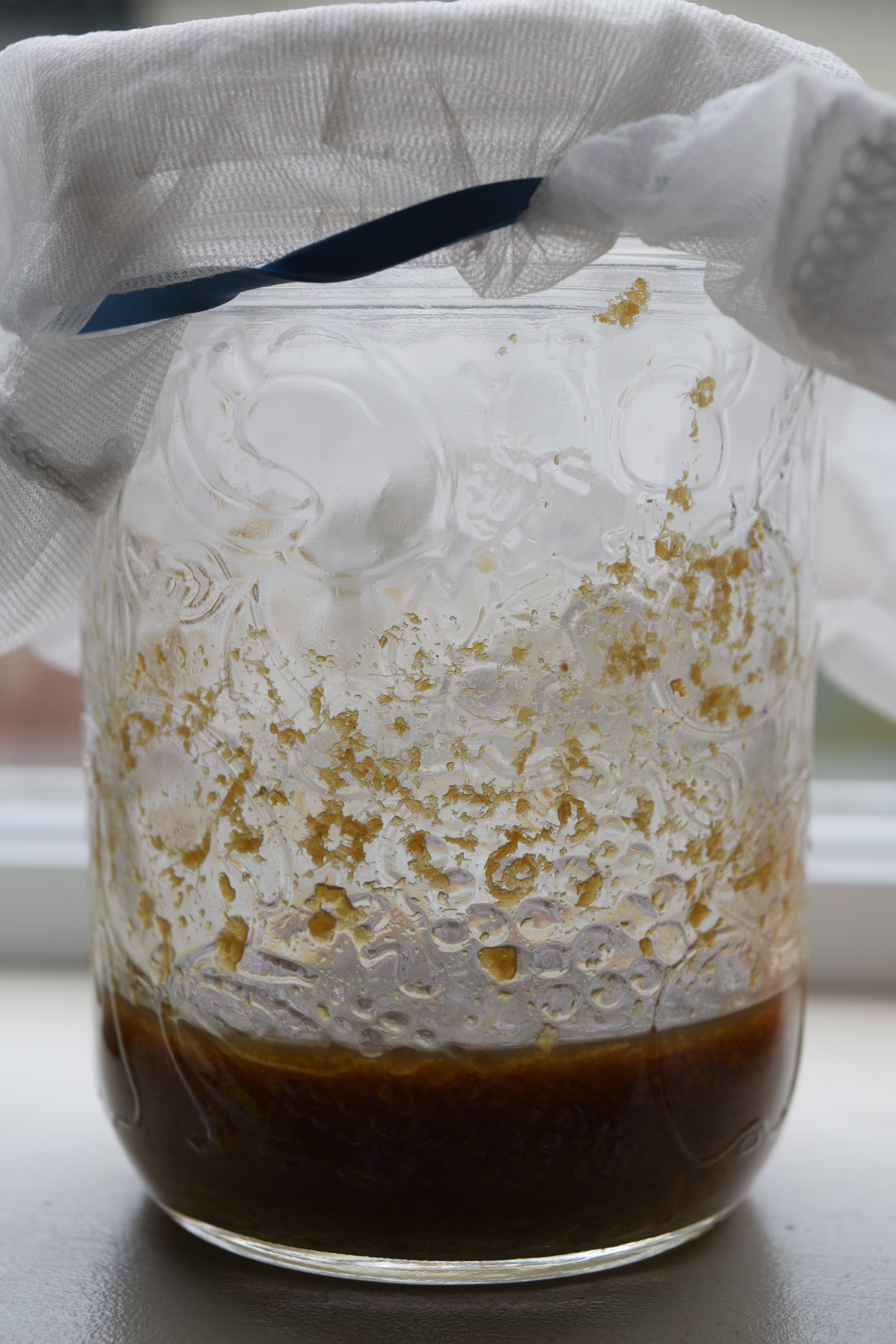
For me, it is not an everyday kind of cookbook but a fun experimental one. Of particular interest to me is her chapter on fermentation. I love water kefir and kombucha and homeade sodas but usually buy them. I am now 3 days in to creating my own live wild yeast and ginger starter. From this, I can then create my own water kefir and beet kvass or flavoured sodas and the starter keeps living as long as you replenish what you use and keep it fed and/or refrigerated.
It doesn’t look super delicious now but I love the simplicity of just ginger, water, unrefined sugar and time in the environment and from here the off shoots will be a complex flavour sensation and also great for gut health like ginger lemon water kefir or beet kvass mixed with spring water on a hot afternoon. A great reward for my kitchen sadhana. You can find this cookbook at the Pemberton Library and she also has a website you can check out at https://nourishedkitchen.com/
















 And now every year, as much as I look forward to spring for the fresh green scent of new growth and the return of warmer weather, what I really look forward to is the return of the hummingbirds. I get immense joy from putting out fresh, homemade nectar for these precious visitors, and take special care to ensure my feeder is always stocked. (I haven’t planted my garden yet, but I’ve already refilled my feeder twice.)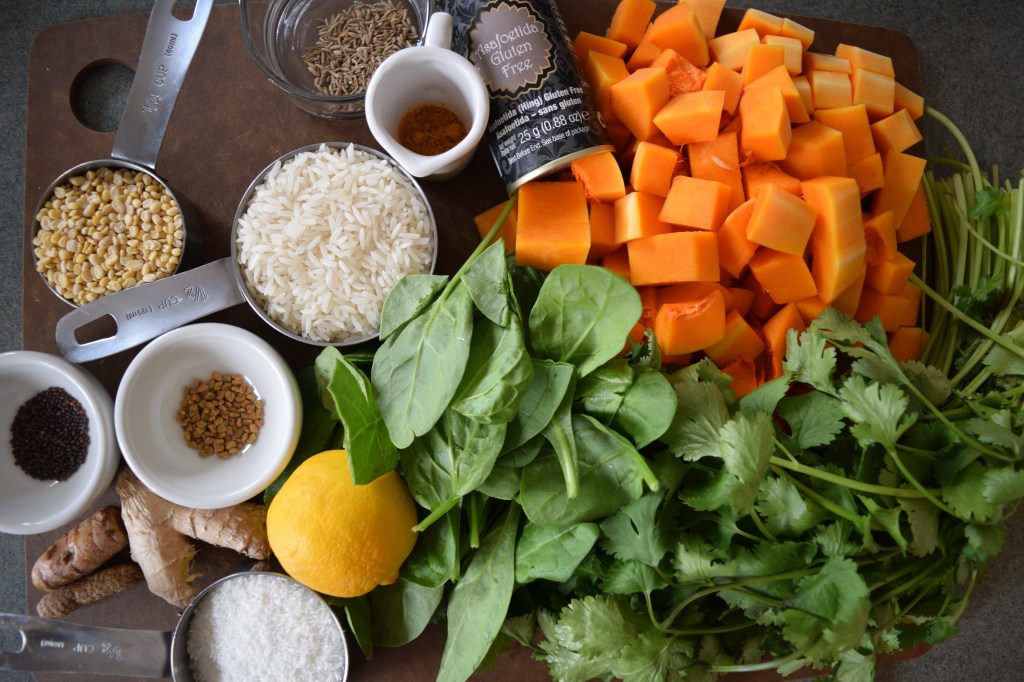


 Traced Elements