Category: musings

  • Best-Laid Plans

    Best-Laid Plans

    “Do you have any plans for Canada Day?”

    I asked, and was asked, this question several times on Sunday while I was at work. Some people were going for hikes or bike rides. Some people were having parties or visiting friends. Some people were going to partake in the festivities at the community centre.

    I had zero plans for Canada Day this year. My sister and three of her friends came up to visit and hung out during the day while I was at work, and afterwards I made us dinner, and cake, and we had a lovely visit. I even got to bed at a reasonable time. To be perfectly honest, it was like any other weekend, with no special plans.

    I felt a little guilty at first. I mean, it’s a special holiday. We should be doing something to celebrate. But I realized that I didn’t actually feel bad at all. For me, taking a break from planning actually is something special. I’m a chronic organizer. I have to-do lists for my to-do lists. I’m constantly thinking four, five days in advance, planning meals, organizing lists, and arranging errands around my work schedule. I have a whiteboard in my house for spur of the moment rememberings, and an app on my phone to organize my lists when I’m out. I am forever and always making plans.

    But I’ve discovered some of the best things can emerge when all my carefully laid plans go completely out the window.

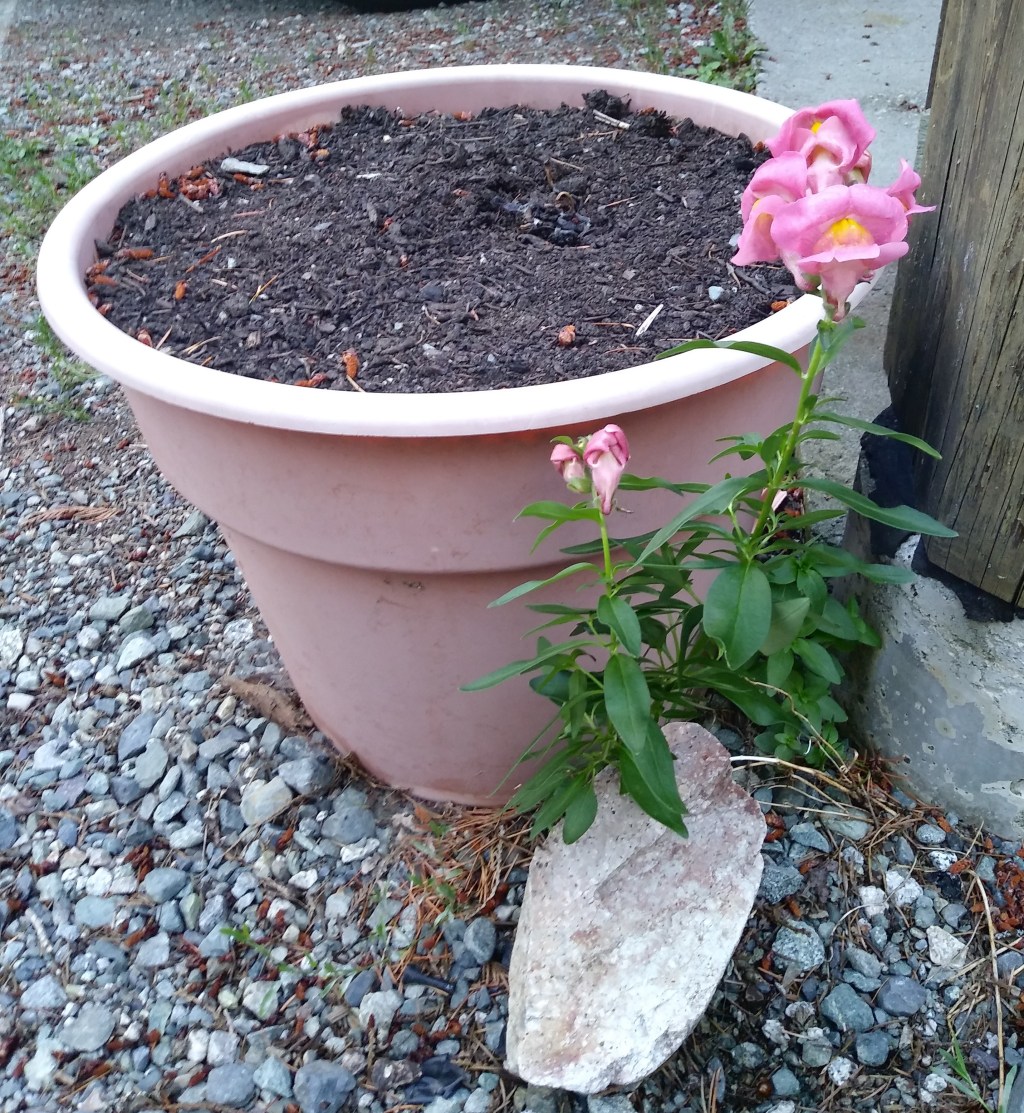
    I’m a comically bad gardener. I’ve tried every one of the four years we’ve been in Pemberton to grow a successful garden, and the results have been less than formidable. I carefully plan out my gardens and flower beds. I research which types of veggies and flowers should go where and the conditions they need. I spend time planting, and watering, and fertilizing. And things never go as I plan. Take this picture for example.

    20180703_184926.jpg

    This is the container where I planted some flower seeds at the end of spring in a beautiful sunny spot with fresh dirt. Where nothing took root and grew. And yet just beside this perfect container, growing out of nearly straight gravel, is a beautiful flower. Where did this come from? How did it get here? And how is it growing so vigorously with absolutely no attention from me? Does this make me frustrated? No. (Okay, for a brief second, maybe.) Instead I am wondrously amused at how beauty can come out of plans that go haywire.

    My best example of this is our arrival in Pemberton. Before my boyfriend Nathan and I moved here four years ago, I had never been to Pemberton. We had plans to move to Vancouver Island once a long-awaited position came available for Nathan, and we were just waiting for the opportunity to unfold. We had carefully laid plans. So imagine my surprise when Nathan calls me at work one day and tells me to start looking at properties in either Squamish, Whistler, or Pemberton because he’d been offered a position based out of Whistler. Less than a month later we were moving, and six months later we found what we hope is our forever home. Did we plan for that? Definitely not. But beauty emerged in the form of this lovely town that we’ve fallen head over heels in love with, and now can’t imagine leaving.

    As appreciated as this break in planning was this weekend, I won’t be hanging up my trusty to-do lists just yet. I’ll keep planning, and stay very aware that, as the poet Robert Burns said, the best-laid schemes of mice and men often go awry.

    And when they do, I’ll be ready to appreciate the beauty that will surely unfold.
    20180703_184838


  • Mindful Morning Musings •

    Mindful Morning Musings •

    This past month I have been thinking a lot about mindfulness and mindful eating.

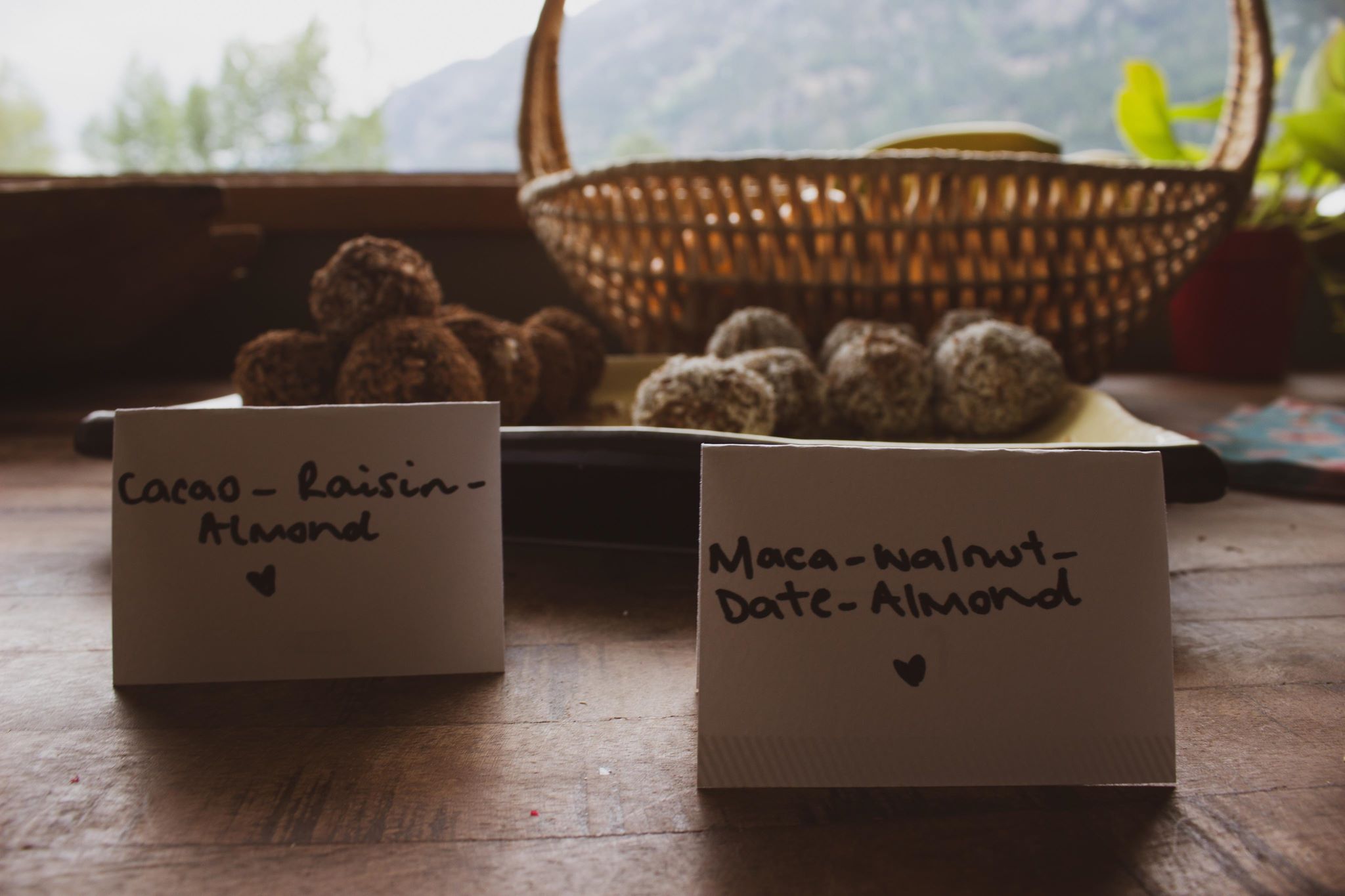
    Anngela Leggett (Evergreen Fitness) and I recently ran the Mindful Morning Retreat at Blue House Organics. It was a magical morning consisting of a beautiful yoga practice with Anngela, raw treats, and a circle of discussion around the way we eat and the way we think about food.

    36137574_10157573170533327_3147079793711775744_n

    What an amazing experience it is to openly share your experiences with mindfulness and food with a group of unique and inspiring individuals. I was blown away.

    I knew I wasn’t going to be delivering exactly what people would expect. I was there as a guide, to show people the ball was already in their court, and help them to discover how they could realistically apply mindful eating to support mental health, to their own individual lifestyles.

    As it turns out, I may have learned more from the group than they did from me! I learned new ways to approach mindfulness, I was taught how to be grateful for the action of making dinner for your loved ones, I was taught how to be mindful through your purchases of food, not just at meal times, and I learned just how important these reminders are.

    36177379_10157573170453327_4880108134258966528_n

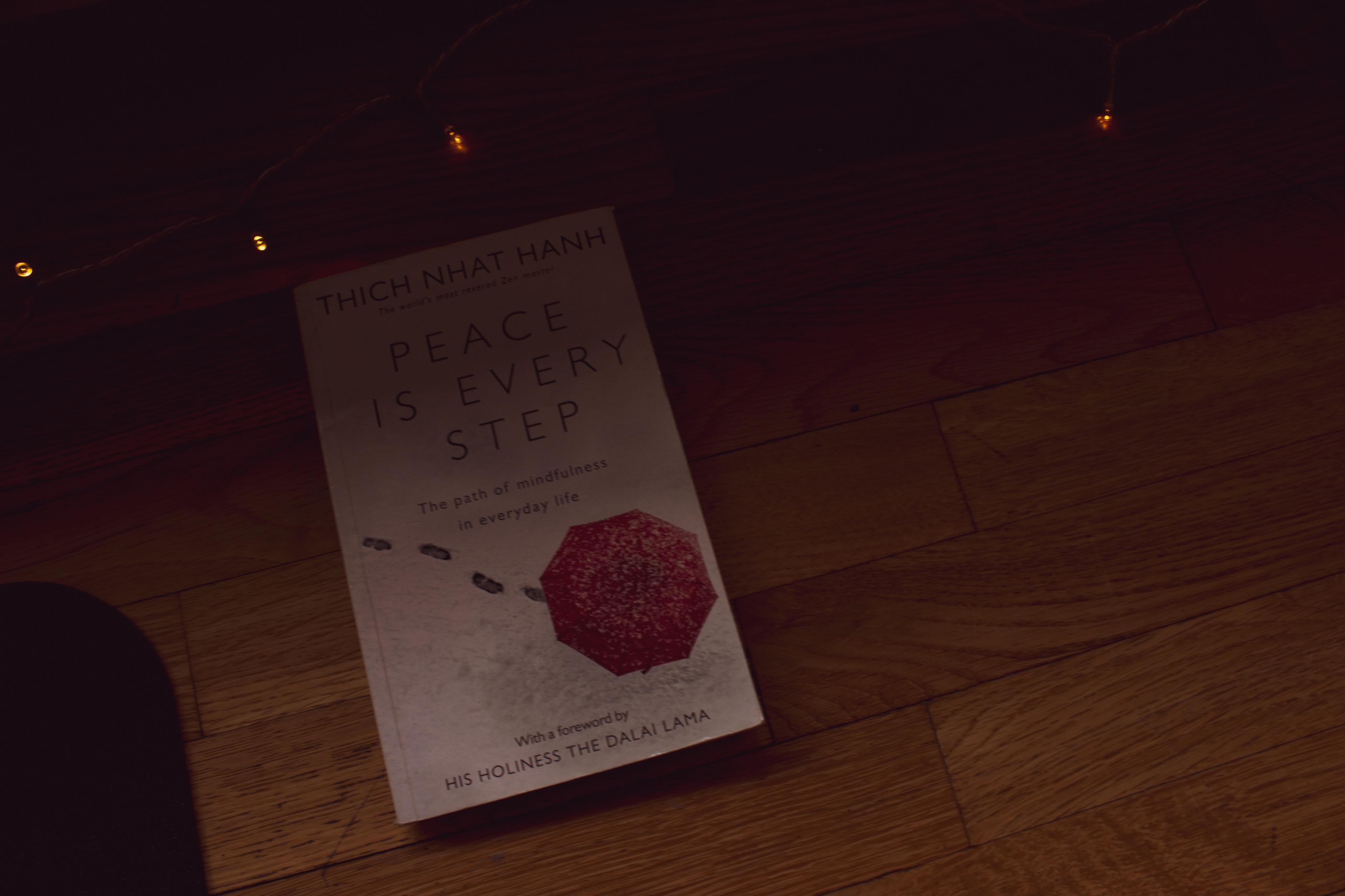
    I shared this reading with the group from Peace Is Every Step, by Thich Nhat Hanh:

    “One day, I offered a number of children a basket filled with tangerines. The basket was passed around, and each child took one tangerine and put it in his or her palm. We each looked at our tangerine, and the children were invited to meditate on its origins. They saw not only their tangerine, but also its mother, the tangerine tree. With some guidance, they began to visualise the blossoms in the sunshine and in the rain. Then they saw petals falling down and the tiny green fruit appear. The sunshine and the rain continued, and the tiny tangerine grew. Now someone has picked it, and the tangerine is here. After seeing this, each child was invited to peel the tangerine slowly, noticing the mist and the fragrance of the tangerine, and then bring it up to his or her mouth and have a mindful bite, in full awareness of the texture and taste of the fruit and the juice coming out. We ate slowly like that. 

    Each time you look at a tangerine you can see deeply into it. You can see everything is the universe in one tangerine. When you peel it and smell it, its wonderful. You can take your time eating a tangerine and be very happy.”

    36137196_10157573170613327_2397848145066196992_n

    Lisa Richardson writes for the Pique, and had this to say about the Mindful Morning Retreat:

    “They offered to help us connect the dots between food and mood. I went to pick up a few good lifestyle hacks that would help me come away from that moment when I’m standing forlornly in front of the fridge, with a fistful of carrot sticks and a dash of psychic resilience instead of a spoonful of Nutella and a guilty conscience.

    Our guide, Maguire, having survived six years of disordered eating and come out the other side with practical wisdom to partner with her science degree, informed us that there is no such thing as good food and bad food. She invited us to replace that hazardous dichotomy with mindfulness. Self-care and slowing down. The Mindful Morning Retreat wasn’t an intervention, a six-step program or even a specific solution. It was quite simply a beautiful morning of yoga followed by tea and treats, and the chance for a circle of people to sit together and make connections—between our experiences and other people’s experiences, between our eating habits and our emotions. It was the welcome mat to mindfulness. It was the reminder that attention, not willpower, will save us, from pathology, addiction, the downward spiral of self-loathing.”

    Some questions to ponder:

    What does mindfulness mean to you?

    What does mindful eating mean to you?

    How can you realistically apply this to your own life?

    Do you think about food as being ‘good’ or ‘bad’?

    Do you feel guilty after eating certain foods?

    Does social media influence how you feel about food?

    Nutrition Mind Collective

    @nutritionmindcollective

  • RJ

    RJ

    IMG_4330

    AKA Mr. Moran, Randal John, Miracs or simply – dad.

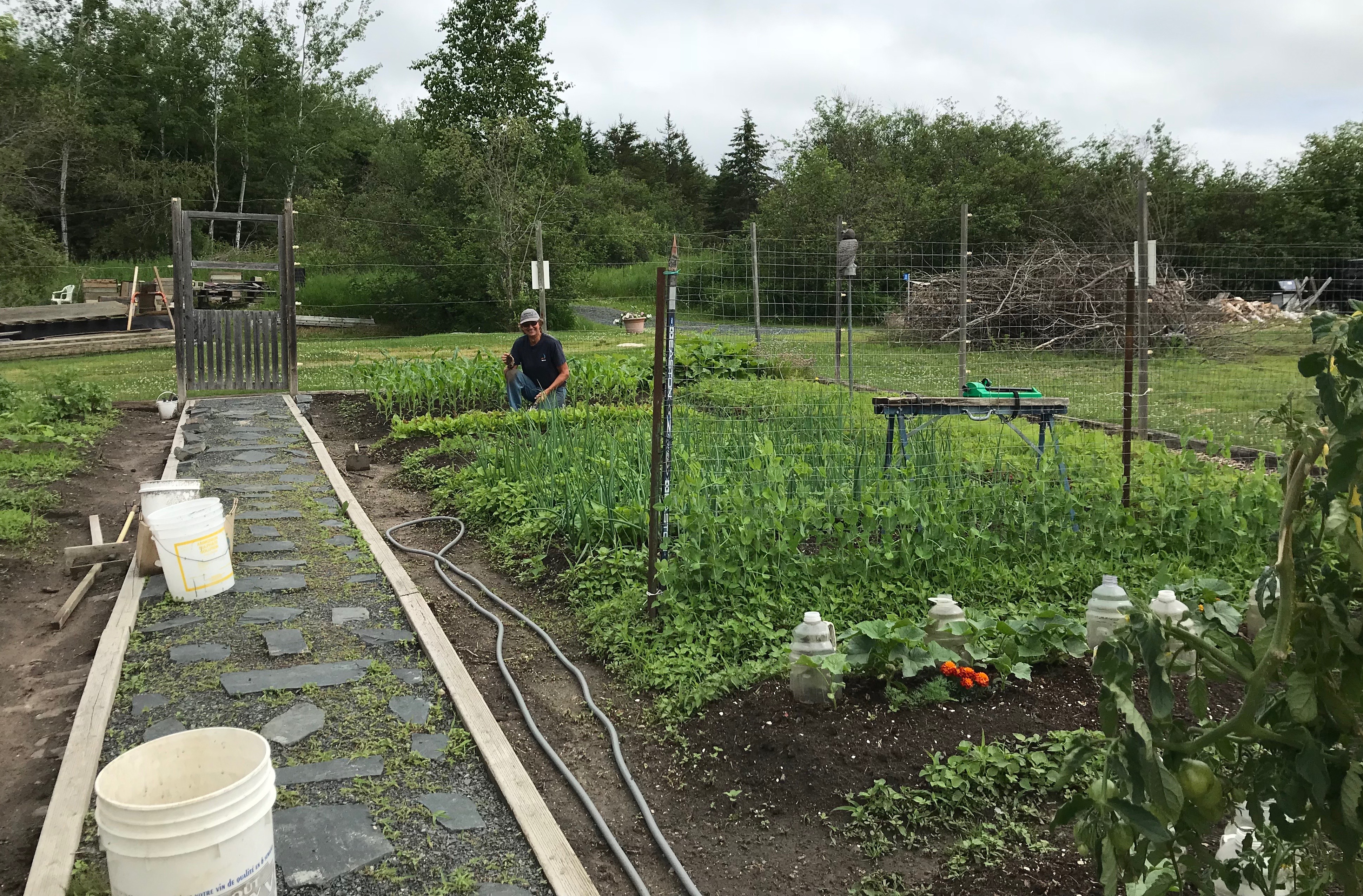
    My green thumb has been inherited through a long line of amazing gardeners. I am just barely starting to scratch the surface of my mom’s flower power, but I’ve been in deep with my dad’s veggie garden sense for longer then my subconscious knows. Most likely my conception is the root of my problem, this gardening obsession of mine.

    RJ, as he’s known to most, is a “retired” teacher: one of the best. His forte is math; a subject I grew up hating, which inevitably led to a few tears at the kitchen table over algebraic equations. Overall I did well at. It’s also not a coincidence that my initials are 3 M’s. He is full of dad jokes, he is an athlete, he is highly involved in the community, he landscapes on Lake of the Woods with his other “retired” friends during the summer and he’s always up for a good time.

    When it comes to gardening dad is a full experimenter.

    Like father, like daughter.

    Since being gifted a pocket calculator or I mean cell phone, RJ’s “we’ll see” experimental attitude has become even more evident and I love it every bit of it. (Small back-story; dad used to drill my brother, our friends and I with math problems because a calculator in our pocket was something we’d never have… so, this is a big HA! told you so moment that I’m taking full advantage of.) Really there is too much awesomeness to share and well… perhaps it’s best we keep some family secrets but allow me to enlighten you with a couple excerpts from text messages complete with photos.


    “Trying something new grinding egg shells and coffee grounds putting them in the tomato holes.”

    “Also tried some with an egg in the hole. Keeping track of which ones got what.”

    “Planted some corn and am experimenting with Epson salts on every second row – again, we’ll see…”

    “And finally my parsnips from last year that I leave in all winter – so yummy!!!”


    Of course, there are the show-off photos. Dad and I have been firing pictures back and forth of what we’re growing and what’s ready to eat regularly. Rj’s last photo was of what he collected for a TRUE garden salad for dinner, claiming that icicle radishes might be his favourite at the moment but he’d like to try growing the spicy purple daikon variety I‘ve got in my plot. I’ve even been able to share video walkthroughs of my garden. Basically, we each get to live what’s in our respective gardens in a matter of seconds even though we are 2,427km away from each other: technology is very cool.


    IMG_4281
    RJ’s TRUE garden salad


    Perhaps the best part of RJ’s massive garden is that it’s always open for foraging to neighbors and friends. Growing more then he and mom can eat really goes to show that when you’re passionate about something and you can share it with others you get the best of both worlds.

    I already know that I’ll have a lot of vegetables to share this summer as I have planted more than two of us can eat, but I’m happy to carry on this family tradition out west.

    After all, I’ve been taught by the best.

    IMG_4333


  • How do you explain a seed to a three year old?

    How do you explain a seed to a three year old?

    “Tell me more about seeds,” asked my three year old, way back when. It was spring. We’d been mucking about in the dirt all morning, depositing tiny treasures in the warming earth.

    IMG_5422
    Now 5, even more helpful on the seed front.

    IMG_5434IMG_5438IMG_5439

    A seed is an inkling, I wanted to say. It is its own ambition and instruction book, all bundled into one. It is a packet of information. It is your heritage and your birthright, little man, even though you are inheriting a world in which the control of more than half of the world’s seed stock has fallen into the hands of a few mega-chemical companies. Some people call that bio-piracy. But I don’t want you to know about this yet. Because thinking too hard about these things makes me want to crawl into bed, pull the duvet over my head, and refuse to get up again.

    But you, Small, you make me want to sit on my haunches in the warming earth, with some trowels and forks and little packets full of seed. You make me want to cajole a beautiful harvest out of the little square of world I find myself inhabiting, and so, every spring, we start at it, with just a handful of seeds and a fistful of hope.

    IMG_3745

    And by this time of year, I look at the Life Force asserting itself in my garden, and feel it coursing through me, as I pick strawberries, admire the calendula, tug up a radish, measure the height of the sunflowers just by standing next to it and gazing up… Hope. Hope. Hope.

    (And weeds. Of course. Let’s not get too precious.)


    “Every young person should recognize that working with their hands is not a degradation. It’s the highest evolution of our species. Start a garden. Create a playground in the way you grow food. Save seeds. Cook. Create community. We are not atomized producers and consumers. We are part of the Earth family. We are part of the human family. We are part of a food community. Food connects us. Everything is food.” ~ Vandana Shiva

    Thank you to Evelyn Coggins for sharing this video with me.

  • A love affair with coffee

    A love affair with coffee

    44AABF12-C486-4211-8D91-890793064D0D

    My first interactions with coffee took place on Sunday mornings. My sister and I would fight over who was going to add the sugar and milk to my father’s cup. We’d wait impatiently by the crackling coffee maker only to pull the pot away before it was finished brewing, tiny drops sizzling as they hit the hot plate. I’d sneak spoonfuls of coffee when I thought no one was watching. Always hoping I would enjoy the taste but every time I was sorely disappointed. “It’s an acquired taste” my father would say as I brought him his cup, spilling it along the way.

    While finishing school, I took a part time job at a small cafe in my hometown in Quebec. It was, and still is, an adorable two storey house, along the main drag, that was converted into a cafe. There is a lush garden out front, a covered porch for rainy days and the coziest reading nook upstairs. The owner, Cindi, had lived a decade in Vancouver and brought her coffee knowledge and West Coast style back to the shop – passion she later passed along to me. Perhaps it was the environment, perhaps it was Cindi’s deep rooted passion or a likely combination of the two, but serving coffee started to feel like home. There were the regulars who came in each day, like clockwork, each desiring a completely unique rendition of a seemingly simple drink .“Coffee”. You know how some people say dog owners kind of resemble their dogs? Well, this is how I began to feel about people and their coffees.

    I appreciated the uniqueness (of both the coffee and people) and began to take pleasure in preparing each customer their individual one-of-a-kind drink. Customers came in groggy and in a rush, and I could see, with that first mindful sip, a calm wave wash over them, almost as though a little light turned on. They’d head out to conquer the day with a little more pep in their step.

    55E5517F-AC5E-48C7-BC26-CAE5EC98543B

    When I first moved to Pemberton a little over 6 years ago, my first mission, naturally, was to seek out the best cup of coffee. I had become rather particular over the years in precisely what I was looking for in an espresso. You could say, I had finally acquired the taste. I was delighted when I came across Mount Currie Coffee co. Walking into the shop for the first time, before even tasting the coffee, I just knew it was going to be good. The Synesso espresso machine steamed away and the smell of a finely roasted espresso filled the air. It wasn’t long before I applied for a barista position and became part of the MCCC team, and got to know the amazing Pemberton locals and their drinks of choice.


    If you don’t know, coffee is grown in areas within the “coffee belt” or “coffee bean belt” which hovers around the equator, in countries such as Mexico, Columbia, Ethiopia, Papua New Guinea, etc.

    Coffee trees also need an average altitude between 1800-3600 ft to grow to produce a high quality bean.

    The bean itself is the seed of a coffee cherry that grows on these trees. The cherries are most often handpicked, processed (a laborious pulping process that removes the flesh of the cherry and dries the bean), transported in large burlap sacks as “green beans”, roasted (which is an art in and of itself), packaged, ground, brewed and finally served to the consumer.

    It’s an amazing journey and I’ve always felt privileged to be the last one that gets to put my spin on it before the consumer gets to enjoy it. It’s a lot of responsibility to make sure that bean gets the attention it deserves after such a journey.

    4CD97A2C-F98B-4263-9CA7-A88909826A57
    A coffee cupping at Pallet
    F21EFDB8-3D8E-4F45-88C5-6F7F03C47139
    The evolution of a coffee bean being roasted

    There is a lot to know about coffee and each step in the process seems to be just as important as the next. It’s sort of art meets science meets farming which are all of my favourite things.

    I could nerd out and talk about coffee for days and I don’t even know all there is to know about coffee. How could you? There’s just so much to know! Which is why I am so excited to be taking my coffee knowledge and skills to the next level with MCCC.

    Pemberton, there are some exciting new things coming your way in the world of coffee!

    Get your travel mugs ready and stay tuned — there’s some buzzing coming from the industrial park.

    Whew! All this talk about coffee, I’m off to get myself an italiano (8oz double shot americana). Yum!


  • Worry, not worry

    Worry, not worry

    This year has been a year of worry: worry about a mysterious illness that has been depleting my blood levels and sapping my energy, worry about work and money, worry about my kids—they’re fine, but parenting is perplexing—, worry about climate change and politics and the state of the world, and worry about my livelihood and contribution to the planet. Really? I am worrying about all of this? A friend and mentor calls worry “meditating on sh#t.” Maybe I’ve got it all wrong.

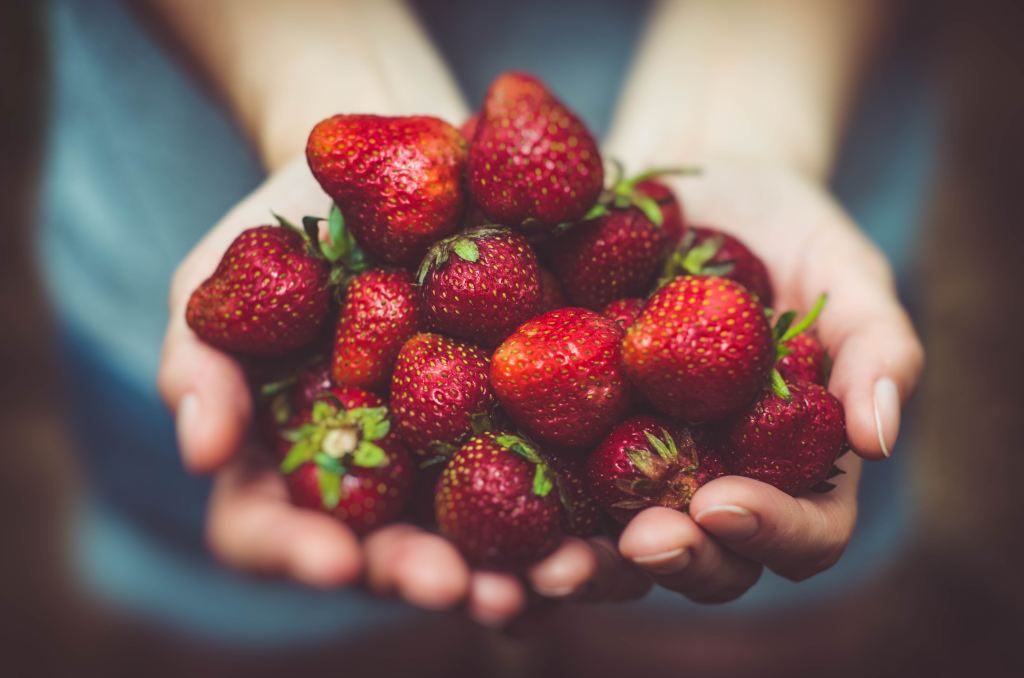
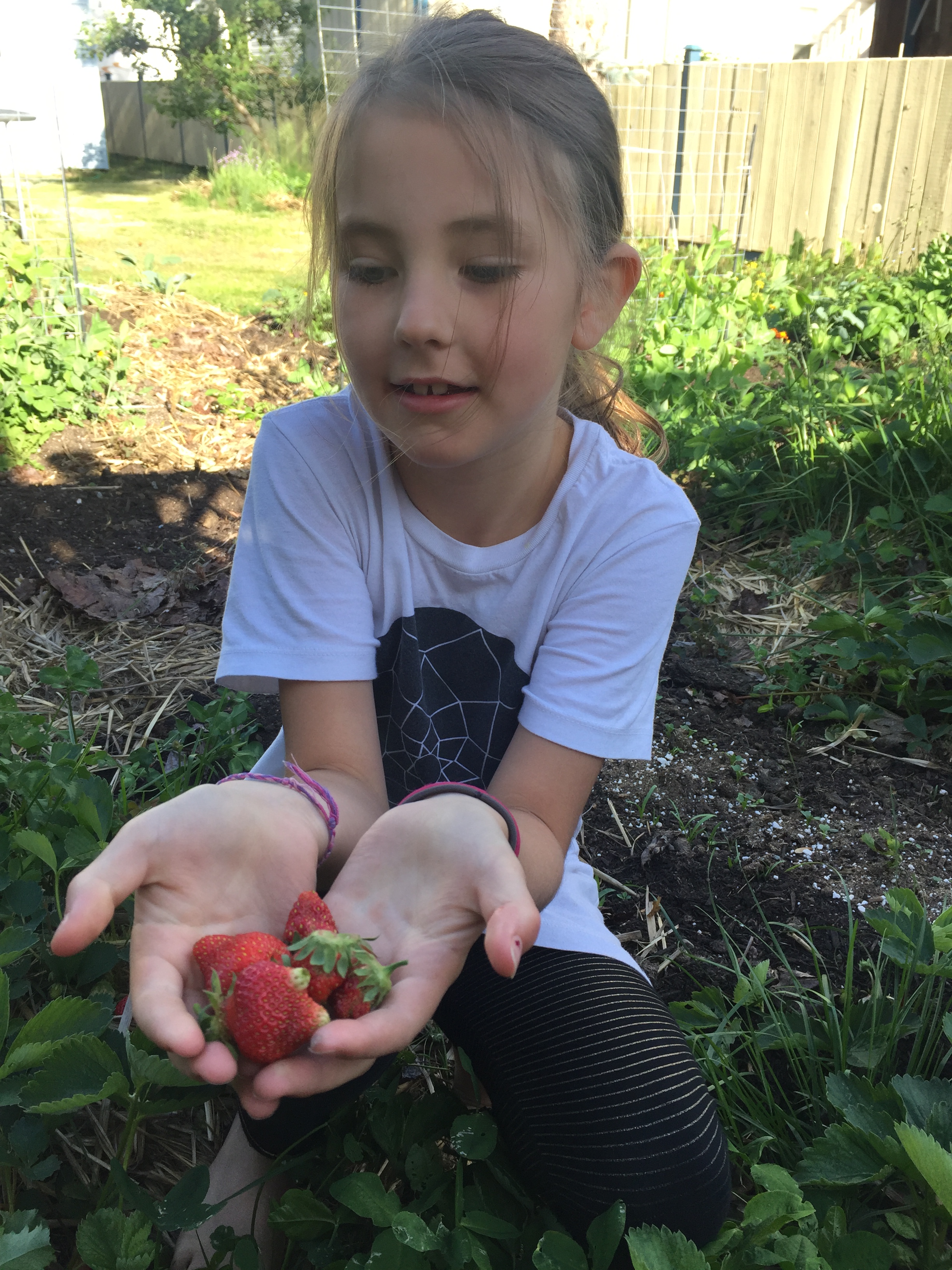
    But, when I’m in my garden, this goes away. There is something perfect about harvesting strawberries with my daughter. We fill our hands until we can’t pick any more, and then—who are we kidding—eat them all before we even stand up out of our crouch. Things are right in the world when she notices that our peas have started to flower, and when she concedes to planting snow peas, in addition to her favourite snap peas, because our dog, Louis, (our other loyal harvester) prefers them.

    strawberries

    All is well in the world when I notice that the blueberry plants are covered in blueberries, the squash have blossoms, the garlics are scaping, the slug-eaten cabbages are bouncing back with vigour after the rain, the soil is buttery soft and black under a layer of mulch from the fall, and there’s an unexpected patch of thyme flowering on a path.

    My peonies went wild this year bursting with excitement when I picked them, and then continuing to explode with petals once inside. I can remember my heart feeling full like that when I met my partner.

    But isn’t it moments like this? Just noticing or tending to the moment in time when everything is fine. The singularity of this okayness.

    Last weekend my partner celebrated a business milestone on the same day that a staff member suffered an enormous, tragic, heart-breaking loss. He couldn’t shake his sadness. “I should be celebrating,” he said, “but this is my worst day in business so far.”

    Life is like that.

    My garden reminds me that we can either celebrate everything—every miraculous seed that germinates, every volunteer tomato or cucumber, every iridescent and sour rhubarb slice, every bite of peppery arugula, every cherry blossom, every furry mint leaf—this is all we get after all. Or we can celebrate nothing. We can wait until everything is lined up and there’s nothing to worry about, but that moment that will never come.

    So, I’ll celebrate knowing it’s all okay just how it is. When I’m worried, all I need to do is return to my garden. It’s so full of life.


  • Haskaps and Thimbleberries: Our Babies’ First Foods

    Haskaps and Thimbleberries: Our Babies’ First Foods

    Tae's first meal-4

    Our first child was born in March. That summer, I awaited eagerly for one of my favourite berries to ripen, so it could be his first food. Wild growing thimbleberries were just the right timing.

    Well almost.

    His first food ended up being dirt! He had found himself a meal from the forest floor. Later that day, perfectly undigested pieces of twig and dirt contrasted his baby poo.


    A few days later, my big moment of sharing happened. I gave him a piece of thimbleberry, and observed the expression of “What on earth is this sensation!?”

    Just like the dirt, later that day perfectly undigested pieces of thimbleberry moved through his system.

    To this day, he still loves thimbleberries.

    What I love about thimbleberries is that they can only be found freshly picked off the bush, not from the store. They are super bright in colour; rich in nutrients.

    One of the special things my four year old and I do together is go on forest walks, in search of edible berries, a form of connecting to the wonders of nature.

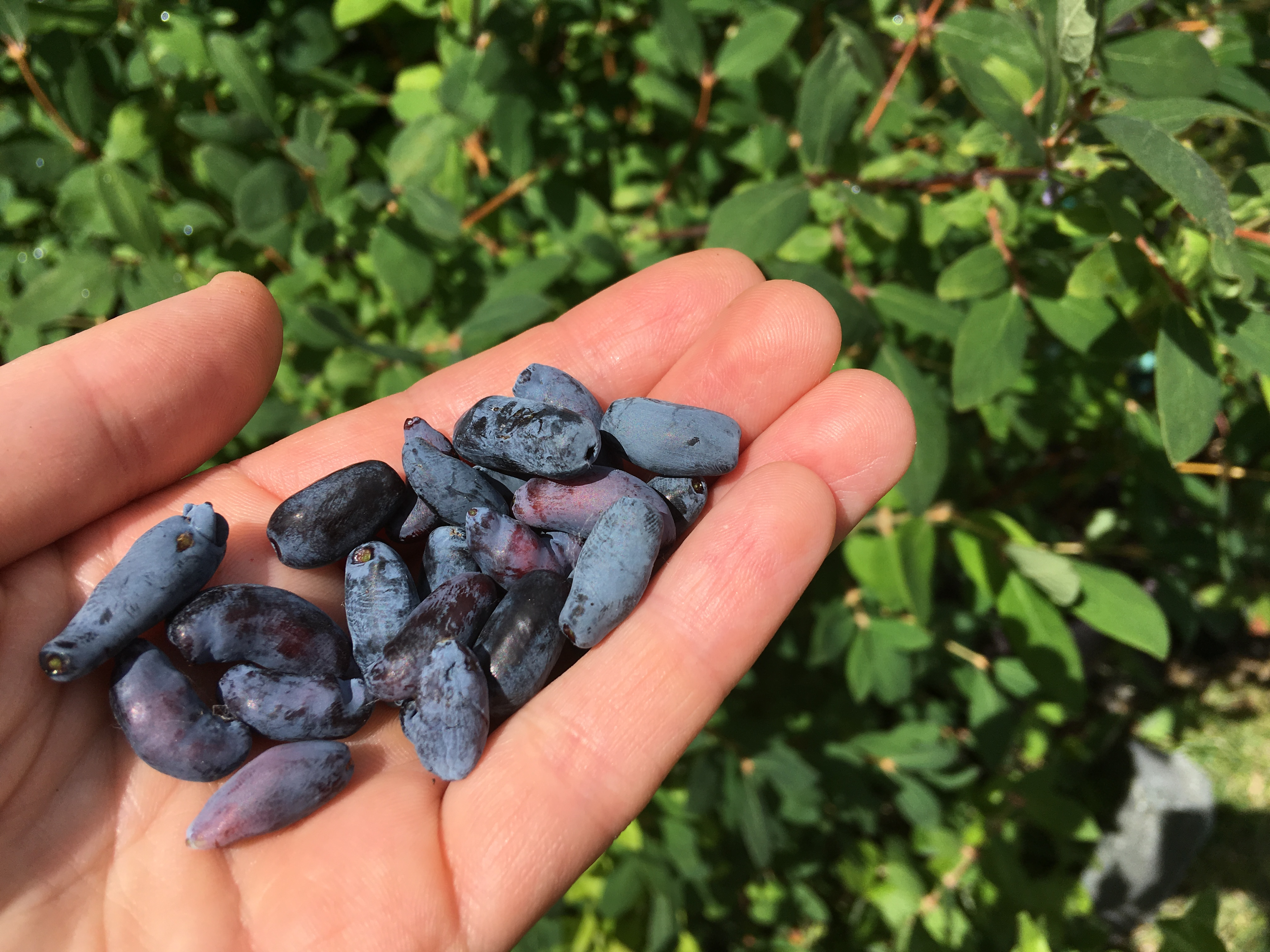
    Our second child, born in November got to enjoy haskaps as one of his first foods.

    Haskap Berries

    Haskaps ripen early, in May. Like thimbleberries, haskaps are vivid in colour; bright in nutrients.

    One of the special things my baby and I do together is sit in the backyard and pick a baby kale leaf or haskap berry and enjoy 🙂 I pre-chew the baby kale leaf, and pop it in his mouth. Big smiles all around 🙂

    Thank you forests, thank you gardens, for such exchanges of radiance.

    Resource for edible berries in BC: http://northernbushcraft.com/berries/
  • Resiliency and Mysteries of the Morel Mushroom

    Resiliency and Mysteries of the Morel Mushroom

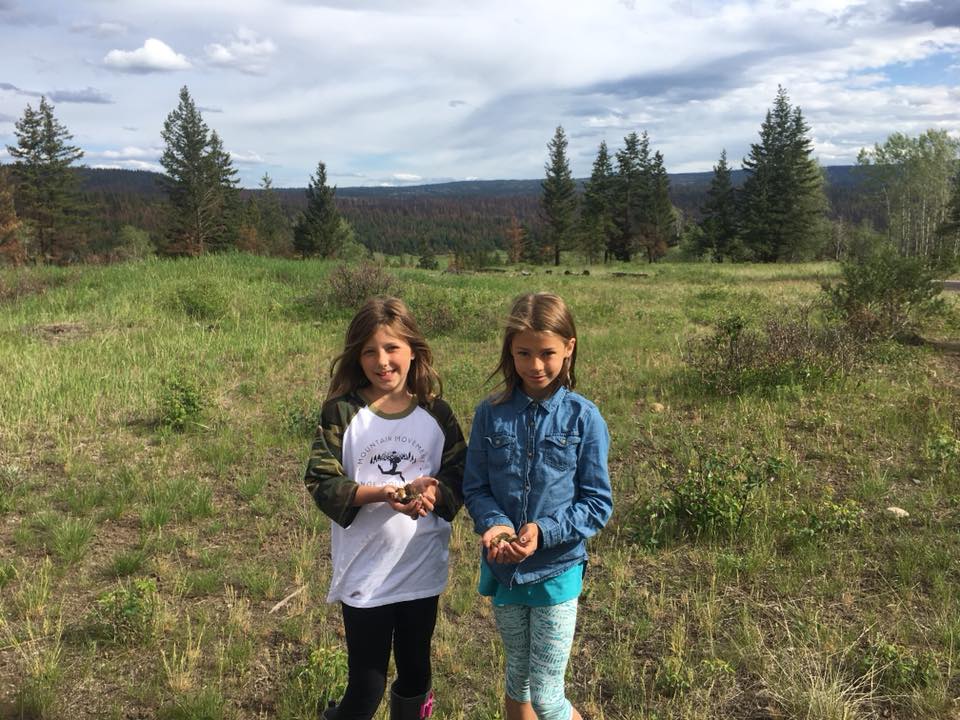
    The previous extent of my mushrooming has pretty much focused around the fall when the fruiting bodies emerge from beneath the moss, on the sides of logs, and through the cottonwood leaves. Pines, chanterelles, shaggy mane, and combs tooth are all I really know well enough to harvest and eat without being worried I might kill my family. But this year, it was the spring harvest of morels that called. My partner in crime suggested we bring the kids. They (the kids) are low to the ground and possibly more enthusiastic about picking mushrooms than we are. They had a small taste of the exciting morel hunt a couple of years ago picking in the Boulder Creek fire zone. We were all excited about finding a few morels to cook, save, trade.

    v and dawn geeking out

    We decided to pick in the Elephant Hill Fire zone that burned about 192,000 hectares in the Cariboo last year. While this is undoubtedly devastating on many levels, fire is part of the natural disturbance regime of that forest type. Many species that grow in that area are fire-adapted or fire-dependent. For example, the thick bark of mature Douglas-fir can withstand moderate fire (check out the fire scarred trees at One Mile Lake). Deep roots of vaccinium species (blueberries, huckleberries, etc) survive and send up an abundance of new shoots in following years. The cones of pines trees have a waxy coating which opens in response to the heat of the blaze, scattering seeds onto soil newly fertilized by nutrients in the ash. Many forest types require fire to stay healthy, to regenerate. Indigenous people throughout the world incorporated fire into their traditional landscape management. Lil’wat people extensively burned areas within their Traditional Territory to promote food production, and “the hills were just like a garden” (Baptiste Ritchie in Turner, 1999). Root vegetables such as: Indian potatoes or skewnkwina, yellow avalanche lily or sk’am’c , and tiger lily or skimuta (Lilium columbianum) and many berry crops were managed through controlled burning to produce better crops (Turner, 1999).

    Fire suppression to protect homes, communities, forest “crops” and other interests have impacted this natural disturbance regime. Without fire, forests are susceptible to disease such as the mountain pine beetle and over time, stagnate. Forests that historically burned regularly in a patchwork pattern now are subject to catastrophic, widespread, high intensity fires that change the way the forests regenerate. Soils become hydrophobic, resulting in a vegetative moonscape and flash flooding (we saw this near Loon Lake). Fire-adapted species can’t withstand the intensity. The list goes on.

    However, I digress. Back to the morels.

    Morels and wild mushroom harvesting in general are a huge industry. In preparation for the onslaught of mushroom pickers, the Secwépemc people (whose Traditional Territory we were picking on) implemented a permitting system, created designated campgrounds, and on-the-ground safety support. Permits in hand, we tested a few places on the way up to our destination. We kind of thought we may need to be picking with elbows out like on an epic powder day but were pleasantly surprised to be alone. Within a couple of minutes of jumping out of the truck the kids were shouting in excitement.

    ash and violet

    But we did not expect what waited for us only a short distance from our cabin. The forest floor was littered with morels in places. Over the course of a couple of short and easy days picking, we harvested all we needed for ourselves and close friends, so abundant in the immediate area we stayed in sight of the truck the entire time. In places, you had to really watch where you stepped so that you didn’t crush these highly camouflaged gems.

    post burn bounty

    The kids, in total disregard to the cloud of mosquitos, picked solidly and without complaint, filling their buckets amidst cries of “Jackpot!”. “Partner Alert! I need help!”.

    motherlode

    We hypothesised about abundance, distribution, ecology. I was excited to come home and learn more. I wanted to know why morels appear after a fire, and the question seems somewhat unanswered by science. While much research has been conducted in recent years regarding the extraordinary and fascinating importance of mycelium or  “mushroom roots” in the forest floor (check out this video– SO COOL!), morel ecology, spatial distribution, and abundance are not widely researched. In order to make sense of one hypothesis, it helps to have basic knowledge of the mushroom life cycle.

    mushroom life cycle

    Some scientists suggest that after a fire destroys many of the plants the morel hyphae may have been working with, the hyphae are stimulated to form fruiting bodies and send their spores far and wide in hope that some will land in areas with living plant roots. Totally plausible in my eyes.

    It is fascinating to think about how ecosystems are adapted to respond to catastrophe. It gives me hope in our changing world. If a morel mushroom can withstand the hottest of fires and not only survive, but thrive, can we heal our hurting planet? Can our natural world adapt fast enough for climate change?  Is that part of why our hearts are buried so deep in our chests? I like to think that is why for some of us, our fears, happiness, vulnerability, our joy are buried in emotional vaults that they are just waiting to be tested, to have the opportunity to rise up, to spread, to be released.
    It makes me think about the projects I am working on right now, which have a strong focus on “resiliency”. It seems to be the new buzz word, superceding sustainability. Like the theory of morels acting out of a need for survival, I wonder what the catalyst will be for individuals and communities to summon the vision of resiliency into the action of resiliency. It is already happening, I know, but at the same time it feels like our world is constantly bracing, building, preparing. I am grateful to celebrate the ways in which our community builds resiliency. Great weekends away with great friends. Breaking bread, sharing food, spreading ideas.

    I employed a variety of methods to preserve my bounty but focused on dehydrating. My favourite morel recipe so far was a simple Risotto Bianco with morels and garlic scapes sautéed in butter. If anyone is inspired to go hunting for morels, I think that area will still be good until mid-June or so. Keep a watch on fires happening this summer and plan a trip for next spring. Like most trips to the woods, it deeply satisfied the nerder naturalist and philosopher in me!


  • Is oregano worthy of your love?

    Is oregano worthy of your love?

    I never buy herbs.

    With the exception of cilantro – of course. And basil. But only during basil season.

    I used to spend big bucks for that recipe that needed two, yep two, sprigs of thyme. And I’d think to myself, what the hell am I going to make now.

    I couldn’t eat roasted cherry tomatoes with goat’s cheese, thyme and lemon on fresh pasta all week (a recipe ripped from a friend, which may have been ripped from the internet, which could probably be re-ripped from the internet through the Googling of the list of ingredients, if by chance one’s taste buds are tingling at the thought).

    Herbs - thyme (1 of 1)
    Lemon Thyme

    Invariably, thyme, rosemary and oregano went to waste in my fridge.

    It wasn’t long before I got wise to how easy it is to grow a pot of herbs. And not long after that did I realize herbs make for an amazing rock garden display – even in my frigid and often sun-challenged sideyard.

    The shapes, colours and smells in my rock garden have changed immensely over the years.

    Herbs (4 of 8)
    Lemon Balm

    I have fewer traditional flower garden flowers and an abundance of lemon balm, lavender, rosemary, oregano, chives, mint, tarragon and thyme. Most return each year. Each dependant on the winter weather.

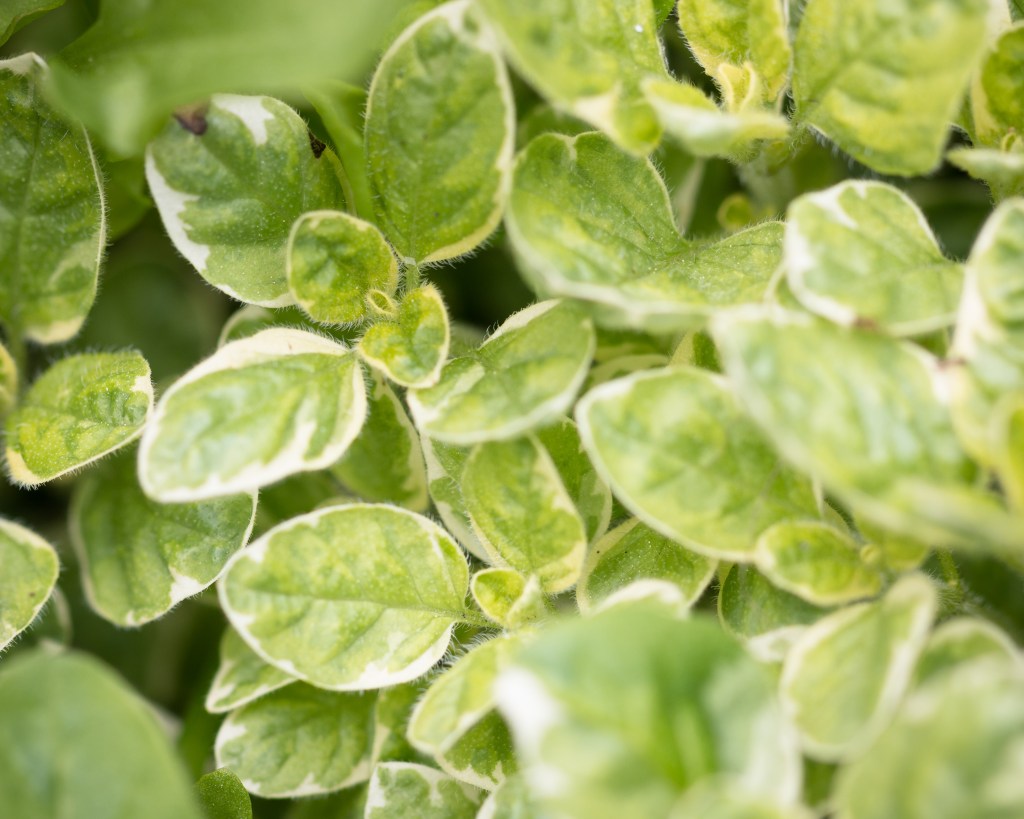
    Although my favourite trailbuilder often suggests oregano isn’t worthy of the dirt it rests in, the bees love it — especially when it flowers.

    Oregano shadow digi (1 of 1)
    Oregano Flowers

    And I think the oregano flowers look stunning once dried. And so does @therocketnarcissist, but he never makes the oregano connection. Nor do I remind him.

    Today, was a bit damp, but it didn’t stop me from getting eye level with a few of the lovely herbs that make up my rock garden “passion” project.

    I like mornings best. The light is gorgeous. The bugs are sleeping in.

    Herbs (3 of 8)
    Chive Flower Buds

    The only downfall is the need to watch out for the banana slugs on your way through the garden. That slime is certainly the most unpleasant thing about gardening. It’s disgusting.

    ~

    Lisa Severn lives in Pemberton South South (aka. Emerald Estates) with her trail-obsessed “husband”. Pembertonians can be seen around town asking Dan and Lisa, “So, what are you doing in Pemberton, again. Did you move here?”

    ~

    Follow Lisa @rhubarbstreet for more of her food photography. Click for more on Lisa and her co-conspirators… err… co-contributors.

  • Where There’s Smoke…

    Where There’s Smoke…

    Summer is almost officially here, although it’s basically felt like summer this past month with the weather we’ve been having. The sun is out, the flowers are blooming, and the rain clouds have stayed away for the most part. While this is incredibly enjoyable, it makes one remember what else comes with sunny, dry weather.

    Fire.

    According to the BC Wildfire Service, since April 1st of this year there have already been 242 fires, with an area of over 37,000 hectares affected. And that number is only going to grow. Just last week the historic Ladner Creek trestle bridge went up in flames from a simple, discarded cigarette butt. I will never forget the wildfires from three years ago that caused smoke to hang like a pall over our beloved valley, mixing with the 40°C weather to create an uncomfortable miasma. I imagine that most of you, like me, feel some trepidation when hot weather lingers, and look to the horizon with dread for signs of smoke.

    But thankfully, unlike the old adage, smoke doesn’t necessarily mean fire. If you are heading up Reid road to Mosquito Lake this summer and happen to smell smoke, don’t panic. It’s probably coming from our house, and it’s not a fire.

    My boyfriend’s birthday was this past week, and I gave him a new digital electric smoker. He’s over the moon. Visions of smoking everything from bacon, salmon, trout, and even mac n’ cheese are dancing through our heads. Our first creation was this beauty, smoked pork shoulder, and it couldn’t have been easier. A simple spice rub, a five hour stint in the smoker with some apple and hickory chips, and the occasional spritz with an apple cider vinegar and apple juice mix, and voilà. And yes, it tastes just as good as it looks.

    This summer, I sincerely hope the only smoke I have to reckon with is the kind that produces delicious results like this.

    pork