Category: musings

  • An Ode to Shovels and Rakes

    An Ode to Shovels and Rakes

    These two unassuming primitive implements no doubt helped propel humankind from hunter-gatherer to agrarian in some sticks-and-stones fashion long before the Iron Age. As I will describe, my very being is also “owed” to these simple tools, so I thought I’d write an “ode” to them.

    A rake and a shovel
    Will cause you no trouble,
    They don’t have a moving part.
    It may seem a bore,
    But it will strengthen your core,
    It’s even good for your heart.
    With a dig and a pull,
    It will get the job done,
    With the right attitude,
    It might even seem fun.
    If the handle should break,
    It’s easy to replace,
    You just need a long wooden stick.
    For a shovel and a rake,
    Is all you need to do the trick.

    “Shovels and Rakes” was the name of my very first landscaping venture over 35 years ago. I got the idea from Arlo Guthrie’s infamous song Alice’s Restaurant where he “loaded up the red VW microbus with shovels and rakes and implements of destruction”. In retrospect, it was also fitting – they were the only tools I could afford at the time. My only power tool was my parents’ lawnmower.

    My wife calls me her “digger boy” because in some strange way I enjoy shovelling and raking. There’s a quiet, zen-like, methodical motion to it that I find comforting. And it’s good exercise.

    In the construction field, the shovel and rake are unaffectionately known as a D1 and D2. The D8-9-10 are large bulldozers. Being a machine operator, I love big equipment, especially if it belongs to someone else. On a landscaping job site, time is money and it belongs to the client. Machinery is needed for efficiency and to be competitive. Conversely, on the farm time is… well, simply your time. I prefer to spend it quietly with good old fashioned hand tools if I can.

    At one point, I had a fair amount of machinery. A tractor and hoe, rototillers, blowers, compactors etc. These things are expensive, require fuel, maintenance, repairs, storage and they don’t last forever. For the few times a year I needed them, it made sense to eventually do away with owning them and just lease the right tool for the right job. This type of overhead is justifiable for a landscaping business but is a killer for small scale farmers. A blown motor or transmission could exceed your profit margin for a season.

    We are trying to have less of an environmental footprint. I would rather use my own human-powered energy, to become more sustainable, more connected to the earth and stay in shape while breathing fresh air as opposed to exhaust fumes.We are starting to practise “no till ” methods, we’re mulching more and instead of blowing leaves,we simply rake them onto a tarp. I rarely miss my machines.

    If I was on one of those survivor type reality shows, and could only have a single tool it would be a flat spade. This versatile tool is not only a shovel – it can cut, level, edge and scrape. My favourite tool is the wide aluminum landscaping rake.You see, after over 25 years of snow grooming, I’m obsessed with having perfectly level and impeccably combed garden beds. With these tools I can buff out the soil, to a standard that a ski instructor would appreciate. It’s in my DNA. I just can’t help it.

  • Ask not what the Earth can do for you, but what you can do for the Earth

    Ask not what the Earth can do for you, but what you can do for the Earth

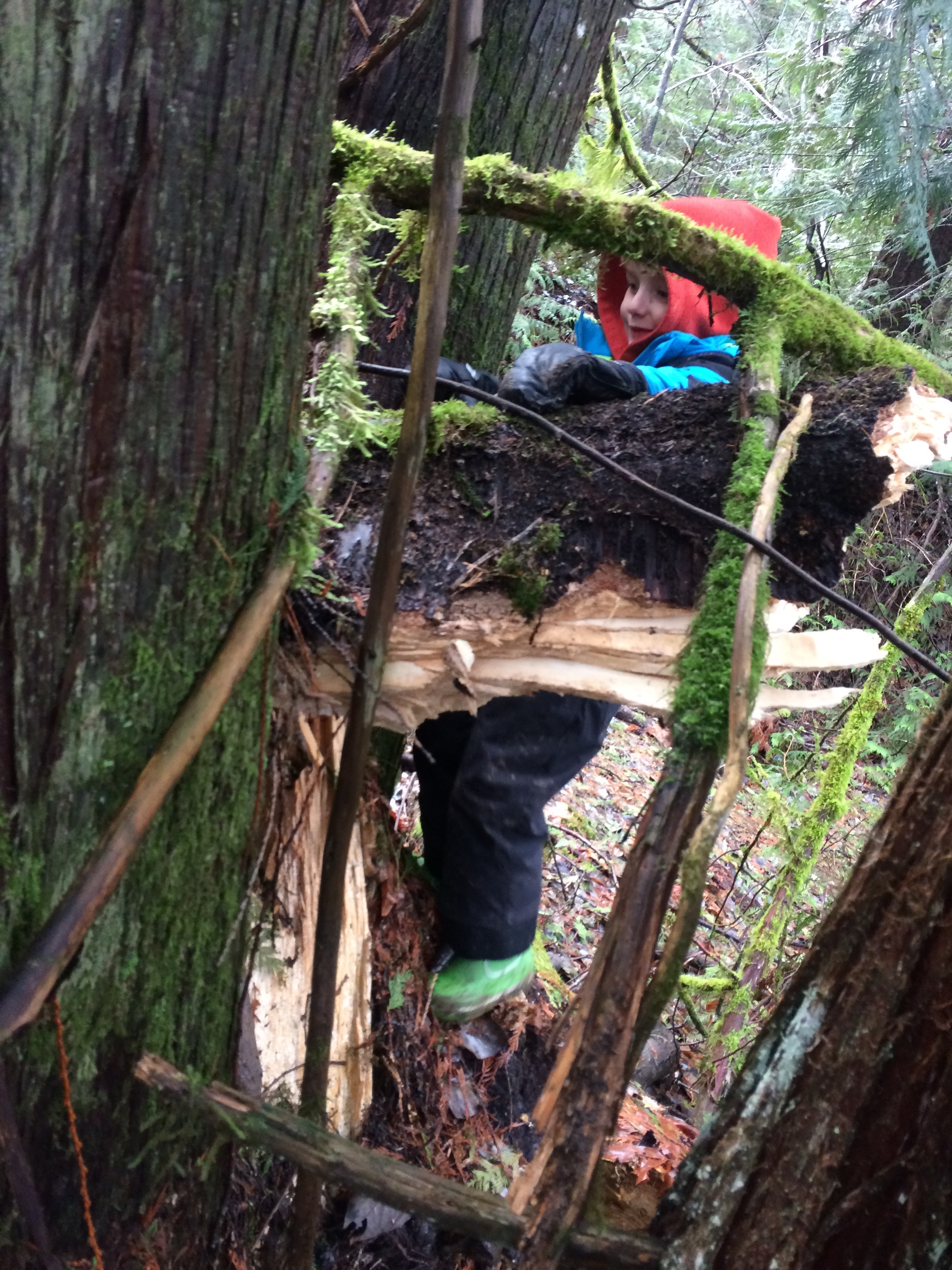
    When my kindergartener began concocting a little dirt-pile offering for the tree, to say thanks for the fallen branch he had harvested to be a sword, I wondered if maybe I’ve gone a bit far with my semi-pagan ramblings.

    IMG_4186

    I had relayed the rules of the honourable harvest to my little forest sprite, as I had just absorbed them from a 15 minute online video by Dr Robin Wall Kimmerer, botanist, author, professor of environmental biology and member of the Citizen Potawatomi Nation.

    I pronounced, in a conspiratorial whisper, that we should ask permission of the trees and thank them and offer something back for everything they give us, including the air we breathe.

    IMG_4232

    I delivered this mystical proclamation earnestly, reveling in the captive audience that is one’s own pre-school aged progeny and the prayerful way he stage-whispered “may I” into the old cedar’s rough bark, despite the fact that I have I completely failed to live up to this pact of reciprocity in my every day life… I mean, when was the last time I gave thanks to the earth? When was the last time I remembered my reusable shopping bags? When was the last time I made a gesture of offering?

    But out in the forest behind our house, where I mark the seasons by observing the shifting flows of the creek, “the earth” is not an abstract entity, it is right there, exhaling and shimmering around me, and talking to the trees seems as normal as any plot point in the fairy tales I read to the boy.

    The Honorable Harvest is a set of ethics that were taught to Dr Kimmerer by her teachers to guide her when she would go out to pick berries or medicines, and they landed somewhere in my son’s small body, and there he was, weeks later, offering a gift of humus, a hand-packed dirt pie, to the cedar tree.

    Is this how we grow a generation of honourable men? Or is it just a way to prolong his belief in magic a little longer? I wish I knew.

     The first rule for foragers, shared Dr Kimmerer, is you never take the first one – berry, mushroom, plant – because it might be the last. You restrain yourself, until you’ve checked the health of the population, asked permission of the plant, and listened for the answer. If you’re given permission, explains Dr Kimmerer, you take only what you need. You take in the way that does the least harm. You use everything you take. Then you give thanks, and share what you glean.

    The last and most important tenet is to reciprocate the gift.

    “If you take from the earth, in order for balance to occur, you have to give back. We have forgotten this. Even our definitions of sustainability are all about trying to find a formula by which we can keep on taking.”

    To heal our relationship with the land, says Dr Kimmerer, we have to reclaim our role as givers.

    “I don’t think what we need today is more data, more studies, new technology, or more money,” says Dr Kimmerer, “but an ethical shift. A change in the story that we tell ourselves about our relationship to the living world. We need acts of restoration, not only for polluted waters and degraded lands — we need a restoration of honor. This is where our efforts at de-extinction can go. To the regeneration of the ethics of reciprocity. It’s not the land that is broken, but the relationship between us and the land. We can heal the relationship, by asking, what will I give in return for the gifts of the earth, in return for the gifts of birds and berries, in return for the privilege of breath.”

    IMG_4198

    Small hands in the dirt. That’s where my answer, and a new story, begins. Will it be enough? I don’t know. But begin we must.

  • Frost’s lesson plan: on decisiveness

    Frost’s lesson plan: on decisiveness

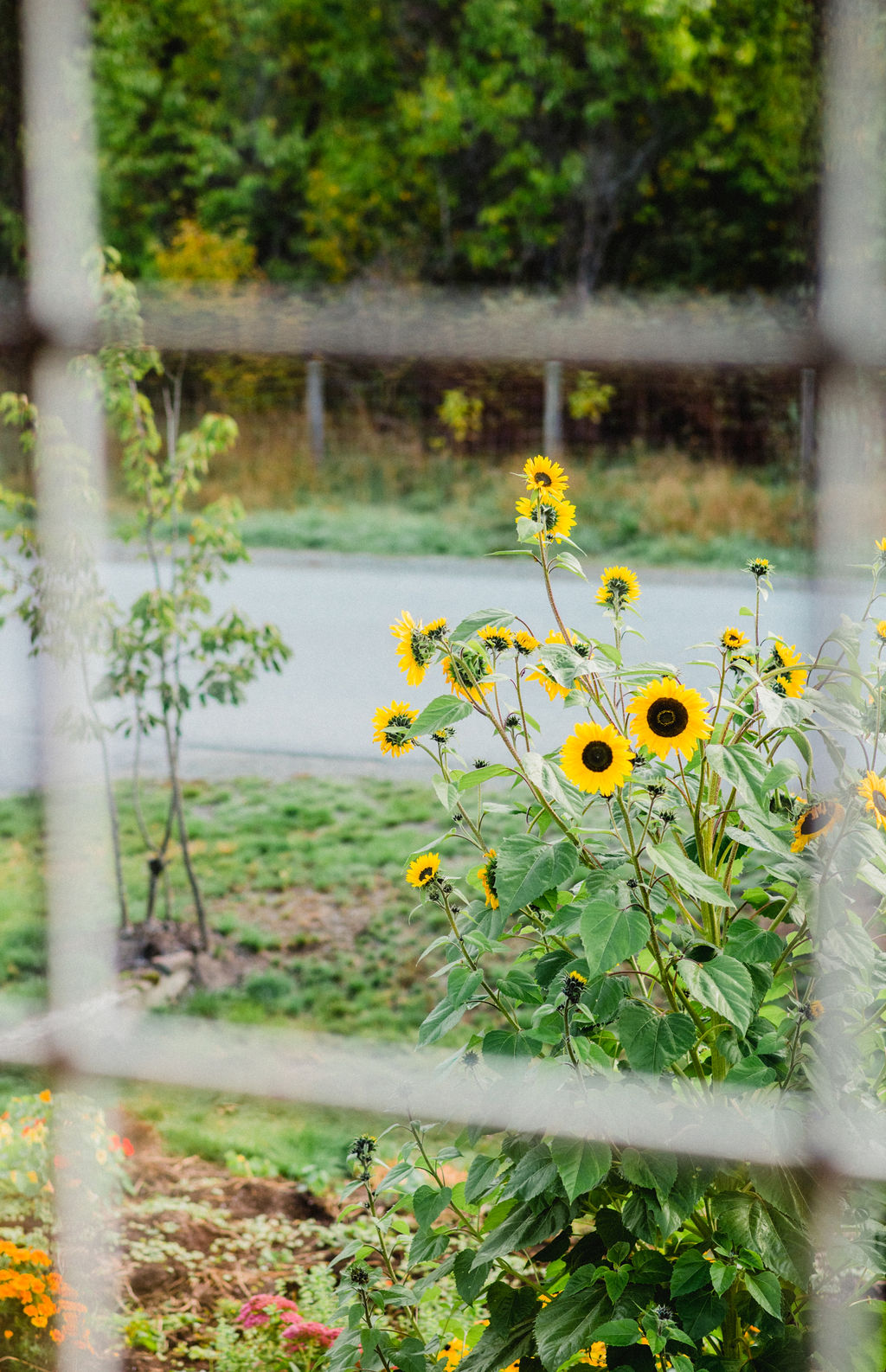
    The frost last week was decisive. In one night our dahlia, scarlet runner, nasturtium, cosmos, marigold, sunflower, and tomato plants were killed. Meandering fall became decisively winter or deep fall. There were no questions left to ask about whether or not we should bed down the garden for winter and pull out our tubers. The decision was made and there was work to be done.

    Decisiveness and decision-making seem to be the main themes of my life right now. I decisively resigned for my job of the last 10 years and will finish work there at the end of the month. I closed a door, and am now trusting that other doors will open along other paths.

    I also decided to go for an investigative medical procedure that I was avoiding. I waffled and debated and agonized about it, but when I finally got still enough to sit with my thoughts, I was guided to look up the word “decide”. Decide has “cide” as its suffix, like insecticide, germicide, fungicide. To decide means to settle a dispute, make a decision, and literally cut off… to determine by killing off choices.

    I appreciated frost’s lesson in decisiveness. 

    After the frost, our warm sunny fall days returned again. It has been energizing to rip out old plants and create massive piles of compost—little havens of rotting organic matter to plant over next spring. 

    I am so awed by the sincere abundance of the plants—the sheer size of a single dahlia plant with its branching stems and leaves yielding 20 blooms per week, the single stalk of sunflower producing a 40-headed plant (one seed: a miracle!), the single squash seed growing into a small acreage of leaves and spines and glorious giant fruit in my front yard.

    This fall is the savasana of gardening—the death of the practice, putting it to bed, and acknowledging and anticipating death as an integral part of living.

    It’s a good time to rest as part of this cycle of rebirth and renewal. There’s something exciting about this season, too—being forced into dormancy and dreaming as the summer days have been pruned away.

    Neurologist, poet and author Debashish Mridha says it perfectly:

    “Despite the heart numbing frost, my soul is blooming like spring.”

  • Taking My Own Medicine

    Taking My Own Medicine

    Every October I sort of lose my mind. I could choose to call it seasonal affective disorder, depression, pieces of shadow I have not eaten. But I am careful not to put it into any of these neat little boxes, because then I would stop extending my most compassionate curiosity toward this strange seasonal storm. I want it to remain a wild thing, an unknown tempest of fury and flying sticks, because every time it shows up it serves a purpose. I’d even go so far as calling it sacred, because each time I allow it to sweep my floor clean, something I have been praying for enters.

    There’s a pattern here. A seasonality. Every October, I used to migrate like a swan. As soon as the last of September’s warmth sank over the horizon, I blew up my life, put the pieces in a backpack, and left. Later, when I stopped traveling to far-off countries and instead moved in a series of lunges across the North American continent, October became the month I put everything I owned into my car (or my truck, or a suitcase in the underbelly of a Greyhound bus) and drove until I hit a coast and had to stop.

    Now that I’ve rooted myself in the kind of life that contains four horses, one sheep, one pig, one dog, twelve ducks and two roosters, the ferocious energy of THE MIGRATION THAT SHOULD BE HAPPENING no longer blows me across the continent. Instead, it bowls me over. This year, I looked out over the crazy abundance of harvest season, my belly full of squash and roast duck (all the incredible generosity of the natural world!) and was so irrevocably angry that nothing made sense anymore. The anger burnt until there was nothing left but nothingness. While all around me trees dropped their leaves in an incredible display of letting go, I was furious at them for making it look so easy. This is insane, no?

    How does this connect to Pemberton food culture, you ask? Well, it doesn’t. But it does. Because a couple of days ago, before this year’s particular loss of mind levelled out and let me think with something akin to clarity, I opened my medicine cabinet and saw this:

    medicine cabinet

    “This” is the library of wild-foraged tinctures I’ve created over the past 4 years. (Their labels are double-sided, so the essence of the words can seep into the medicine.) As I read their labels, I realized something: I created each of these medicines in October. Each was created as a support for weathering that particular year’s energetic storm. As I felt into their contents, I realized that looking at the interior of my medicine chest was like looking at the growth rings of my own evolution, as well as my connection to this wild part of the world I call home.

    2015: Love, Compassion, Congruence. Usnea longissima: the long, delicate single strands of lichen that hangs from trees like the animate glowing trees in Avatar. Potent antiviral and immune support, grows only where the air is pure and the forests contain old growth.

    2016: Changes toward Infinite Potential. Again Usnea longissima, this time with Lungwort Lichen (Lobaria pulmonaria.) I was still working with air beings, still striving for lightness. This one recognized the animus of the invisible transmission of air as connector between the animal and plant realms and between all beings. (If I breathe in air a tree exhaled and then YOU then take in the air I breathed-)

    2017: Liberation. Atonement. Unity. This was a graduation ceremony from air to earth, something I created specifically when I moved from Squamish Valley to Pemberton. Devil’s club root and bark (adaptogen), willow bark (for deep pain and calling in receptivity and remediation).

    2018: Belonging, Lightness, Radiance, Love. This one I made in secret after hiking up to Tenquille Lake with Pemby herbalist Evelyn Coggins this summer. We were not supposed to take any plants. (Evelyn, I am sorry I am so terrible at obeying rules.) There’s a chance a few flower heads of Valerian and River Fireweed (along with a few hemlock tips, a piece of old man’s beard (another Usnea!), and a piece of quartz may have made their way into my pocket on this hike. (Barely a handful of plant matter, I swear…) Covered in 100 proof vodka and shaken every day for 20 days, this one is light and floral but POTENT. Holy $^%&. The first time I tried it I almost fell asleep in the library. It’s for taking before bed, to encourage new neural connections to form through dreams…

    Then I had a conversation with myself that I’m embarrassed to disclose. But I will anyway, because I think we all have these sorts of conversations from time to time. It’s just not something we talk about.

    “Well Kera, you should try to remember to take some of these. That was the point of making them.”

    “Humph.”

    “??”

    “Oh, right. Okay, okay.”

    “And you know that St John’s Wort tincture you have in a mason jar under the kitchen sink? You should take that too. Because you made it SPECIFICALLY for coping with Octobers. Remember?”

    “Um, yeah. Yeah I did.”

    I did. I do. I am. Taking them. Ten drops in the morning of Liberation/Atonement/Unity and 6 drops of Belonging/Lightness/Radiance/Love before bed. Could the prescription be anymore poetic?

    Pharmaceutical companies, take note. You could do better.


  • The pros and cons of having WWOOFers

    The pros and cons of having WWOOFers

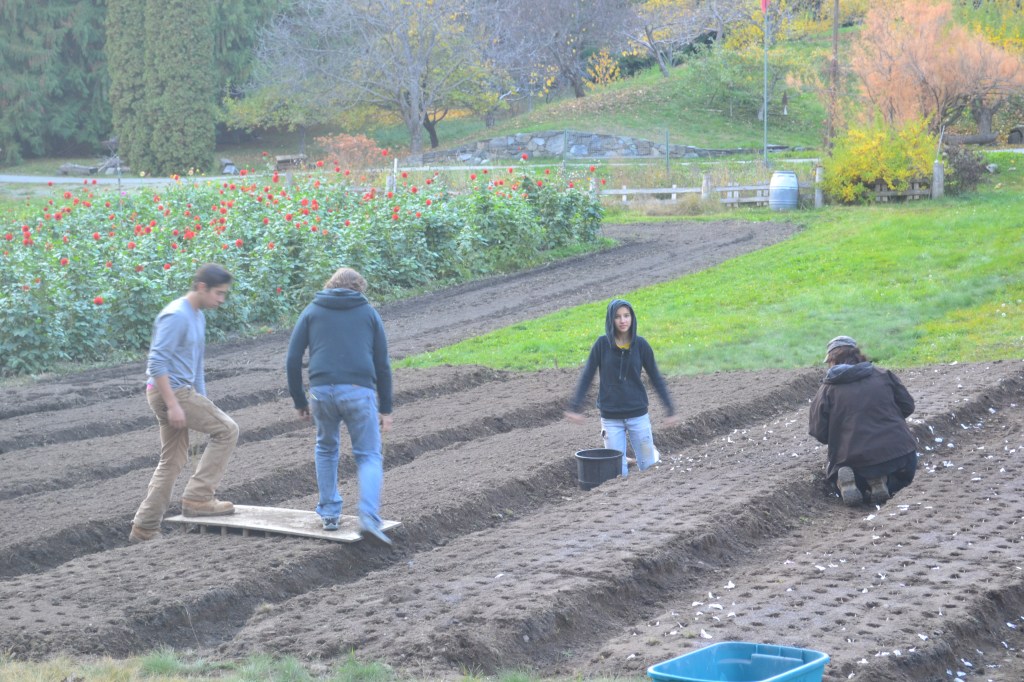
    Q; What is a Wwoofer? A: Its a dog that pulls weeds! Jokes aside, WWoof can be an acronym for either World Wide Opportunities on Organic Farms or Willing Workers on Organic Farms depending on the area and its labour laws. They are basically homestay farm volunteers who work 4-6 hrs /day in exchange for room and board. The organization began in the UK in 1971 when there was a revival of back to the land interest, volunteering and adventure travel.

    I can only imagine the logistics of organizing such an endeavour back then, with snail mail and hard copy photos. Since the advent of the internet it is so much easier, with quite a few other similar websites such as HelpX and Workaway.  These new sites have become popular because they’re not just organic farm related. It’s easy, using the same format as a dating web site with profiles and photos from both parties. Fortunately, the meetings are less awkward.

    We have hosted an average of a dozen helpers a year, for the last few years. They come from all places, cultures and ages. There are many pros and cons, but to be honest, so far, about 90% of our visits have been a good experience for everyone involved.

    The pros are:

    • We get to meet new people every few weeks without leaving our bubble. It’s been great to introduce our somewhat sheltered kids to others and their cultures. We always get out the atlas and they explain to us where they are from and where they’ve been. A homeschool geography lesson.
    • We get to be tour guides and ambassadors for our area, showing them our secret spots (only if they promise not to post it on social media.)
    • We’ve become more productive, Many hands make light work, whether it’s tediously picking berries, cleaning garlic or heavy work such as firewood. This leaves us more time for other projects and leisure.
    • We get to share our wholesome lifestyle and food with others who may have otherwise never experienced an authentic BC mountain environment.
    • We have made some fleeting as well as long term friendships, with a few repeat visitors. and have even stayed with some while travelling abroad.
    • We get to teach others new skills and teaching is learning.

    The cons:

    • It takes work to organize work for others and stay productive. It takes a game plan and most farmers are constantly adjusting plans, especially due to weather.
    • Sometimes people are just not compatible (remember the dating analogy). I can tell within hours if the person grew up in an urban or country setting. While most are adaptable, some are just out of their element, scared of wildlife or not accustomed to isolation.
    • You have to assume they don’t know a thing, explaining and demonstrating exactly how you want something done and setting the pace, especially if you plan to leave them unsupervised.
    • You may have to accomodate their dietary restrictions, religious or cultural practises. You have to be polite, politically correct, entertain them and drive them around. It can be a hassle and an invasion of privacy. You have to have blind faith and trust in a total stranger.

    Like I said, on the whole its been mostly great for us, but it’s not for everyone. It’s hard not to discriminate and develop stereotypes, but that’s human nature as we look for the most compatible fit. We are weary of bringing the elderly, disabled and the permanently transient. We have to accept that different cultures have different work ethics. We have to choose the right candidates at the right time depending on the season.

    There are no set rules or contracts, and the only repercussions come in the form of reviews. We have chosen to do between 2 -3 week stays, mostly to keep things fresh and avoid complacency. A recent couple who have had some negative experiences elsewhere noted that most other hosts require a minimum as opposed to a maximum stay. My response was “with a private cabin, wholesome work and farm fresh food, most travellers don’t want to leave. We treat others how we would like to be treated.”

    DSC_0020


    We


  • Find Your People

    Find Your People

    Full disclosure: the following post isn’t actually about food or farming. I know, I’m sorry. I ran it by Lisa Richardson because I had my doubts as to whether it would be appropriate, and as she jokingly said, “there’s no mention of dirt anywhere!”

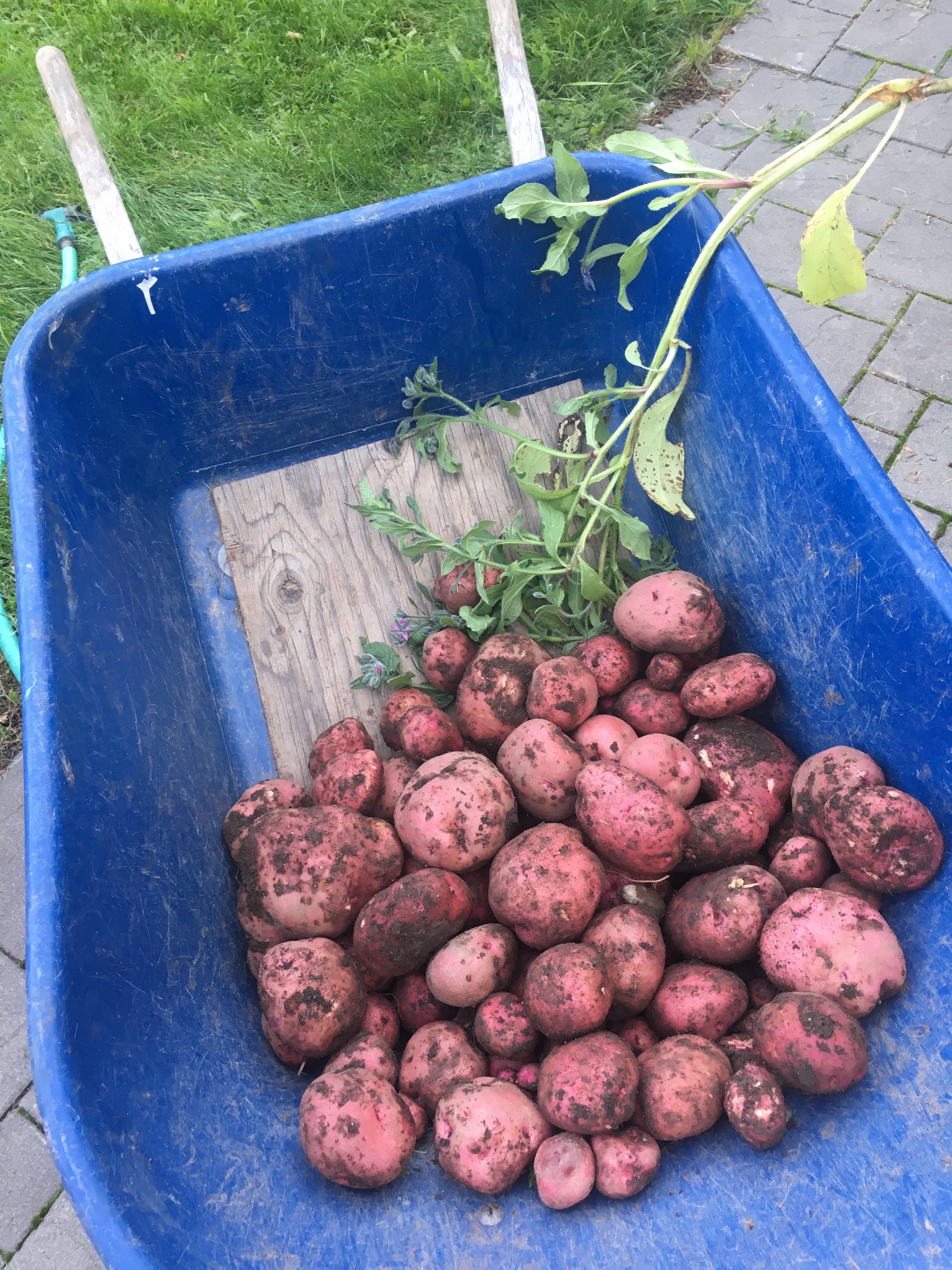
    IMG_4451
    Random photo of freshly harvested Pemberton potatoes still cloaked in dirt, to meet the 1% dirt content requirements of a Traced Elements contribution. Photo by Lisa Richardson. As you were saying, Kristine…

    But it is about Pemberton, and the people that live here, so please bear with me. It’ll be worth it in the end, I promise.

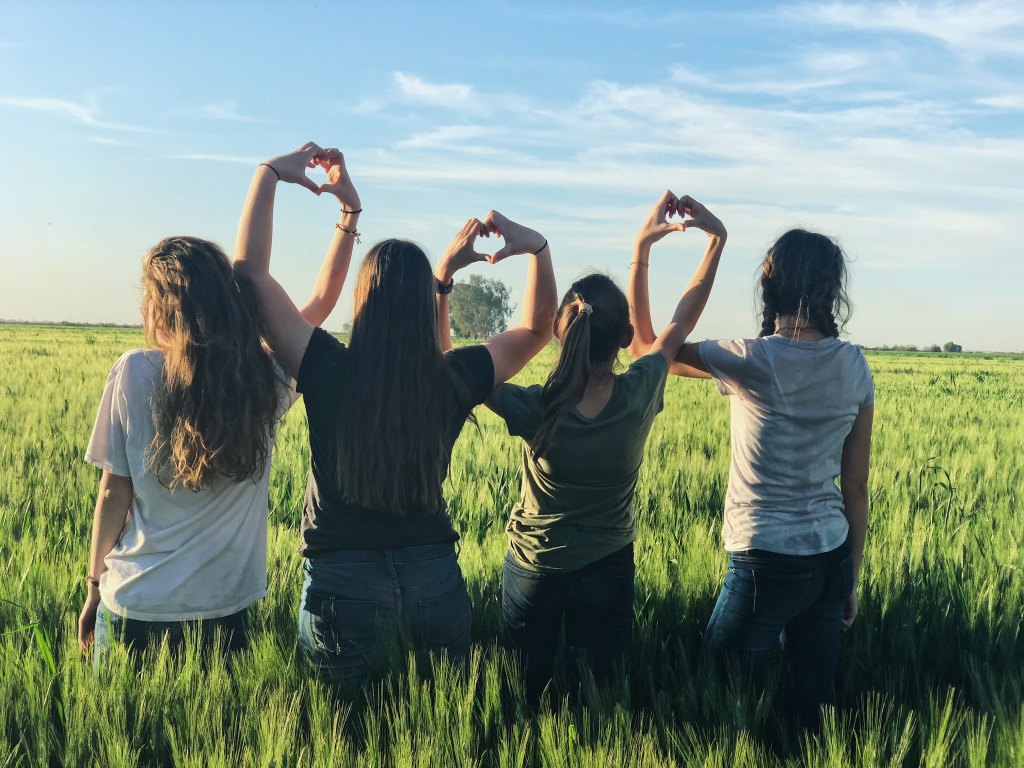
    melissa-askew-642466-unsplash
    Photo by Melissa Askew on Unsplash

    My partner and I didn’t end up in Pemberton by choice, per se, but by chance. He received an offer for a job based mainly out of Whistler, but his route would cover Squamish to Pemberton. We had the choice of which town we wanted to live in, and we chose Pemberton. The funny thing is that we didn’t choose Pemberton specifically because of its world renowned mountain biking and outdoor sports, or thriving farming community. It just seemed like a nice, quiet place to live, and we were tired of the hustle and bustle of big city living.

    When we first moved here, I quickly came to realize how steeped Pemberton is in outdoor adventure sports. Mountain biking, BMX, hiking, climbing, skiing, sledding, paragliding, fishing, hunting, and everything in between. Once I started meeting people in the community, I realized that many of them came to Pemberton specifically for this reason, and would spend every free moment they had exploring and experiencing the rugged backcountry. I knew people who worked two jobs just to make sure they could afford both their ski pass and bike pass every year, and many that would keep their gear ready to go in their vehicle for a quick ride or climb after work. Because you never know.

    I am not one of those people. I’m not what you would call athletic or even adventurous. I am the nerd. The book worm. I would much rather have my adventures within a really good book from the comfort of my sunny deck. I haven’t been on a bicycle in about eight years. I haven’t been on a pair of skis in probably fifteen.

    And that started to bother me a little. Here I was, living in a gorgeous valley full of fun and adventure in the great outdoors, and I started to feel that I was missing something. And with housing prices rising and the town really growing, I had a little thread of disquiet that I didn’t belong in Pemberton if I wasn’t into that, and that maybe I’d be better suited somewhere else. That I should let someone else take my place who would enjoy those activities.

    writing 2Let’s change course a little here. Two weeks ago I attended my first writing conference in Seattle held by the Pacific Northwest Writers Association, of which I’m a member. I spent four days taking workshops, meeting other authors, including those specifically in my genre (fantasy fiction), chatting with agents and editors, and overall immersing myself in the world of writing. I was incredibly nervous to go. I didn’t know a single person there. I had never done this before. And I had only been seriously writing for about three years, a process that I’ve gone through almost entirely alone. I was a little nervous that I’d meet more established, published authors and they’d laugh in my face.

    I’m happy to say they didn’t. I had the most incredible, uplifting, energizing time of my life. From the very first morning, I had no problem chatting up strangers and engaging in intelligent conversation about writing. I got to ask their opinions on topics I was a little unsure about, like self-publishing vs. traditional publishing, and share what I’ve learned on how to write fiction. I made friends that I saw again and again during the conference, friends that I imagine I’ll have for a very long time. I pitched my novel to agents and editors for the first time and didn’t make a fool of myself. I got to meet incredible authors like: Kay Kenyon, who has 14 published novels under her belt; Donald Maas, veteran literary agent and expert fiction instructor; Christopher Vogler, who’s been a story consultant for major Hollywood companies (including Disney) for decades. I even got to shake hands with R.L. Stine, who was the featured speaker for the conference. (He’s hilarious, by the way.)

    writing 1
    All signed by their authors. Eek!

    I realized from this conference that those are my people. Writers, editors, literary agents. People involved in the writing world and for whom writing is their whole life. Because writing is my whole life too. My first novel is almost finished and I’ve already got plans for three more. I think about my books every day. Every minute that I’m not at work or managing the tasks of my life, I’m thinking about writing. I keep a notebook and pen with me ready to go at all times. Because you never know.

    Find-your-tribe.-Love-them-hard.-And

    So now, I’ve finally realized that I’m not betraying my beloved town of Pemberton by not participating in adventure sports. It’s just that my adventurist friends have found their people, and they happen to live in Pemberton. Their people are fixed on a geographic location, while my people are more spread out. I needed to put in a little extra effort to find my people. And the good news is that you can have multiple people. My community in Pemberton are my people too, because while we may not share a love for outdoor sports, there is something else we share. A love for this town. We love its rugged beauty, its incredible natural bounty, and its thriving, vibrant community.

    So I say whatever it is that calls to you, that drives you, that fills you up, you need to find your people. Find the people that share that love, that drive, and it will make everything better.

    (And if you’re one of my writing people, feel free to chat me up about all things writing! You can usually find me at the Blackbird Bakery serving coffee and delicious treats.)

  • #falltimealltime

    #falltimealltime

    It’s the most wonderful time of the year – or at least it’s MY favourite time of the year.

    Colours start to pop as the foliage begins its natural, beautiful progression to death and my appreciation for the warmth of the sun on my back is revived. Praise arises for the rainy days as reason to stay in, make soup and stock the freezer with food. Then there is also the rush of the game to see who gets to the fruit trees first – me or the bears. I go to bed with an extra blanket but leave the windows wide open while the coyote’s howl echoes through the night. Of course the dusting of snow on Mount Currie gets me pretty excited too! And, most importantly, my garden is still delivering the goods.

    This time of the year, I also sit back and think about my garden; what worked, what I want to do more of and what I can do away with next year. Journaling for the win: do it, do it now. So, what I thought I would do is share some of my favourite photos of the summer complete with commentary.

    First up is purple daikon radish. I pickled the shit out of these guys while in season. When a vegetable randomly forms heart shape upon cutting into it you really can’t help loving it. More will be planted in my garden next year, their spicy flavour is beyond delicious.


    Melons. Who doesn’t love a good melon. Previously I had tried watermelon but with little success there, this year I tried cantaloupe. Gave it a sunnier spot and was rewarded big time. Go figure: #shadowruffruff loved it too… juicy and flavourful beyond both our expectations!


    I have mentioned that kohlrabi was the undisputed heavy-weight champion in my garden but my Borage babes blew my mind; turns out they’re MASSIVE! They helped pollinate my butternut squash and many other things in my garden, plus the flowers were delicious in salads. This year I trained my squash to grow along the fence in hopes it would take up less space overall. As it turns out this move was a game changer. I will incorporate this method next year as well, perhaps to even shade something that requires less sun. And for the bee’s sake, borage will forever be in my garden regardless of the space it takes up.


    You know you’ve made it to the big time when your whole pasta sauce has been sourced from your backyard… I mean it’s SO good you want to share but really not really. Last season was the first year where I grew my own Roma tomatoes, celery, carrots, garlic, onions, basil, rosemary, thyme, oregano and cayenne peppers. I basically vowed from then on this was the way forward every year; always plant enough to make sauce for Dbot. I will also openly admit I have a love affair with fried green tomatoes served with soft poached eggs – you would too, if you’ve had it. Never underestimate the power of a green tomato.


    Does your cilantro bolt like crazy in the heat of the summer even if you’re giving it shade from the hot afternoon sun? No problem. Let them bolt and go to flower. The coriander seeds born from the delicate white flowers will produce the best ground version of this spice you’ve ever had. I guarantee you’ll start to plant cilantro just to let it go to seed!


    Fall is also the time when members of the brassica family shine. I remember being amazed when I learned how Brussel sprouts grew, so they became a yearly addition to my garden (just be sure to give them plenty of space). New this year was Savoy cabbage grown from seed and it’s sure to make my cabbage rolls go from A+ to A++. Another tip for cabbage is to space out their planting times then you don’t end up with a whole bunch at the same time even though they keep quite well.


    Flowers… I will plant way more flowers in my garden next year both perennials and annuals. Some of my perennials are ready to split which benefits both the plant and my wallet. Plus, having fresh cut blooms in my house just makes me smile.


    I feel like I could carry on for a long time but as I write the weeds are still growing and they sure aren’t picking themselves! So I’ll just leave you with this last photo that I call, “The Mushroom that had all the Thyme in the World”. #dadjoke #sorrynotsorry

    IMG_5862

  • My First Time Gardening

    My First Time Gardening

    28D3C77D-AADD-4180-8F4C-2B4EA9FDAB6C

    I never seemed to stick around long enough in one place to have a garden.  Even if I was around, I was too scared to mess it up to even try.  I have, however, always admired people who gardened. In my eyes they’re modern day witches and wizards!

    Food has taken a leading role in my life, though. I’ve worked as a chef on and off for over 10 years, transitioning from traditional butter/cream/French style cooking to now more ‘holistic’ organic, gluten free, dairy free foods. I was diagnosed with celiac disease a few years ago, so I had to change my diet. As well as, I’ve worked through an eating disorder that took over a large portion of my life. While food has always been on my mind, until now, I never got to truly experience the joys of growing my own food!

    Close to a year ago I met Derek. When I learned about his love for plants and gardening my admiration for him grew too. It wasn’t long till I moved in with him, and let Pemberton become my new home.

    After a long winter I was itching to get going. Patience has never been my best attribute, something I got to work on watching plants grow. Our first step was to get some more soil. That shit’s hard. And heavy. But it was fun watching Derek unload it all as I hobbled around with a semi sprained ankle;)  Then we got on to planting. I was nervous planting.  What if I messed something up? What if this shouldn’t go there? What if I plant too close, what if I put too much soil on top, or plant too shallow? Derek would remind me that it’s all good – it’s a process, we can thin things out later, and replant if we want to too.

    I realized I was so worried about messing up in the past, that I never tried.

    458C1AA8-806F-4DEA-994A-EBEC308469C2

    Soon our sprouts were shooting up and I was so excited to get back to the garden every day to check in on our little babies. Each time when we would walk to the garden I would mindlessly ask Derek – “Will we need to water it?” And every day he’d respond – “we’ll feel the dirt and decide.” I’d laugh and say oh ya right right. This part reminded me of cooking.

    When I teach people how to cook, one of the most common questions I get is, “How do you know when something is done?”  Or “how do you know if it’s good?”  I explain that we need to taste it, touch it and feel it! It’s so funny how often we want to rely on our brain to tell us everything. But we gotta get in there. And so I got to get my hands in the dirt and would feel around:)

    I learnt so much though over the past 5 months.

    Firstly – gardening is not as difficult as I thought it was – at least on our small community plot.  I have so much admiration for farmers who are growing large quantities of food!!  That is not easy work and I have much deeper appreciation for the food that I buy at the store now. I used to whine over $4.99 bunches of broccolis. Or a giant box of pre-washed organic mixed greens for $7.99. I won’t be complaining anymore, and will definitely be more mindful with letting things go to waste!

    It’s been an amazing summer, and I can’t wait to get planting again!!

    05E3963E-0DF0-4E09-BF02-4A932586EBCD

  • A Recipe to Keep Vampires At Bay

    A Recipe to Keep Vampires At Bay

    A little garlic, judiciously used, won’t seriously affect your social life and will tone up more dull dishes than any commodity discovered to date.  ~ Alexander Wright, ‘How to Live Without a Woman’ (1937)

    It’s that time of year where garlic goes into every single meal. It’s nearly unbearable to stand near or around me, not to mention @therocketnarcissist. In fact, there are days that we don’t even want to stand near each other.

    But when you love garlic — and it’s garlic season — it’s so freakin’ hard to resist.

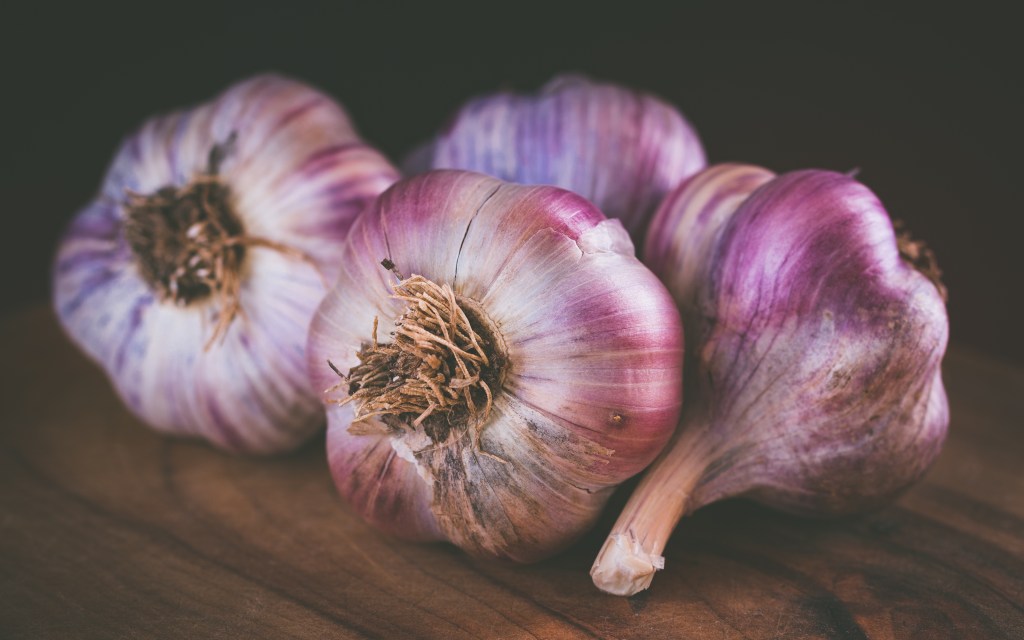
    A few days ago, we added a whole bulb of Russian Red (the real potent shit) to a black pepper & garlic stir fry (an homage to the dish that I so dearly miss from the good ol’days of Thai One On).

    It was fine. We were fine – sitting alone, in our living room post-dinner, not harming any noses but our own. That’s how it works. Couples who eat garlic together, stay together.

    You can never have enough garlic. With enough garlic, you can eat The New York Times. ~ Morley Safer

    Because garlic goes with almost any cuisine, we’ve had a chance to use up a horde of in-season vegetables that we pick up either at the Pemberton Farmers Market on Fridays or one of the two Whistler Farmers Markets.

    Recent hauls netted us several varietals of tomatoes and spicy peppers, plus basil, eggplant, broccoli, spaghetti squash, onions, leeks and zucchini.

    Now, legend has it that Pemberton villagers almost never resort to buying a zucchini due to the simple fact that even those with a documented plant-killing history can grow award winning zucchinis in Pemberton’s personal produce patches. But, for those of us living in Pemberton south south (aka. Emerald Estates), we’re well outside of the prime growing zone.

    Due to your zucchini glut, a recent call was made for ideas. And, I happily supplied a list of google-able dishes.

    But after reading “Zucchini Two Ways” I felt inspired to contribute an actual recipe. Although this pancake could be found almost anywhere (and your recipe might even be better than the one found here), the heavy-on-the-garlic toppings, inspired by “What’s All The Fuss About Garlic?“, really are what made this recipe special.

    I see recipes calling for one clove of garlic. One clove of garlic is not enough for any recipe unless it’s a recipe for, ‘how to cook one clove of garlic’ – even in this case use two. ~ Unknown

    Note to cooks: As mentioned in “Stop glorifying the summit and enjoy the climb: an astrological forecast for pasta makers”, I rarely follow a recipe or remember to write down specifics. So again, rustic, untested instructions follow:

    Pancakes

    1 cup all purpose flour

    1 tsp baking powder

    ¾ cup of milk

    2 tbsp butter, melted

    1 egg

    1 cup of grated zucchini

    Mix the dry together. Mix the wet together, including the melted butter. Squeeze the zucchini lightly to remove some of the juice.

    Mix the zucchini shreds into the flour. Pour in the wet ingredients and mix until combined. I give a little flour if it’s too wet or add a little zucchini juice or milk if it’s too dry.

    Add fat (lard, butter or high-heat oil) to a cast-iron skillet on medium-high (our burner is a little weak, so you might go lower if you’re cooking on gas or a powerful cooktop). Place about ¼ cup of batter into the skillet, use a spatula to flatten & spread it out a bit. Add more batter, leaving enough space between pancakes to get your flipper in there.

    Flip once puffier on top and golden on the bottom.

    Sorry, from here you’ll have to use your judgment to determine when it’s time to serve. My pan tends to get hotter as time goes on, so I turn it down and leave them a little longer – until the inside is cooked. I might even crack one open to see if it’s done.

    Tomato “Salsa”

    1 cup of chopped tomatoes

    1 handful of roughly chopped basil

    2 – 4 cloves of garlic, minced (no. of cloves dependent on variety and personal preference, but we rolled the dice and went with 4)

    ½ lemon squeezed

    We used a variety of tomatoes that offered different flavours and textures. Simply chop them about the same size – we used a ½ of cherry tomato as the measure.

    Toss the ingredients in a bowl. It’s best when given a little time to marinate.

    Garlic is divine. Few food items can taste so many distinct ways, handled correctly. Misuse of garlic is a crime…Please, treat your garlic with respect…Avoid at all costs that vile spew you see rotting in oil in screwtop jars. Too lazy to peel fresh? You don’t deserve to eat garlic.  ~ Anthony Bourdain (Kitchen Confidential: Adventures in the Culinary Underbelly)

    Blue Cheese Dressing

    2 tbsp plain yogurt

    2 tbsp crumbled blue cheese

    1 tbsp honey

    Mix together.

    Top your pancakes and enjoy.

    August 2018 (7 of 7)

    ~

    Lisa Severn is going to the Whistler Writer’s Festival’s Cooks with Books: Passionate Locovore Edition — and she thinks you should too.

    ~

    Start a conversation about food with Lisa over @rhubarbstreet or look for more on Lisa and her co-conspirators… err… co-contributors.

    ~

    “Garlic Quotes.” found here https://www.torontogarlicfestival.ca/garlic-quotes/

    Images and recipes are by Lisa.


  • Navigating through all the Greenwash

    Navigating through all the Greenwash

    Theres no doubt people in these parts are more and more concerned and conscious about what they ingest. After all, you are not only what you eat but also what your food ate. The organic food industry is a multi-billion dollar industry and continually growing. Making sense of labeling or the lack of it can be confusing. Organic regulations and labeling requirements differ from place to place and across different certifying bodies. Despite the popularity of farmers markets and kitchen gardens, here in BC most of our organic produce comes from California because they offer a consistent supply year-round. We are inevitably bound by their rules. Is it GMO, biodynamic, freerange, freerun wholesome, naturally grown? What does any of it mean? We just want good clean nourishment with the least harm to the environment. Right?

    Is imported organic the best choice? It’s often overly packaged, travels hundreds of km’s, employs underpaid and often vulnerable illegal workers, and is heavily subsidized. Often  farms are big unsustainable monocultures owned by big corporations. If they follow a few rules, there’s a certifying agency that will approve it. When there’s millions at stake  and corporations involved, there is always a possibility of corruption. Produce also quickly loses its nutritional value within its shelf life, and tasteless varieties that keep best are preferred. Think California strawberries. Profits can come before your well-being. After all, it’s still capitalism.

    So local is the best?

    Yes of course! But, it’s limited in our climate.

    And, no. For a number of reasons. Local organic out of season is either hothouse grown or warehouse stored using lots of energy and infrastructure.  It’s not grown using soil and sunshine. The worst part of the “local” label is that here, as long as it was grown in BC, it can be called local. A Pemberton berry farmer here has no competitive advantage over the thousands of acres of commercial product flooding the market as local. Even a Fraser Valley potato can be sold here as local.

    That’s wrong.

    So what is a small scale farmer or even  a gardener, who has unadulterated naturally  grown surplus, to do?

    Certifying is complicated, time-consuming and expensive. Saying that it’s organic is unlawful and disrespectful to those who have jumped through the hoops. What I see all the time is the “no spray” label: this is extremely deceptive because there are a myriad of organic sprays that all good growers use, such as: Bt, neem or horticultural oil, and insecticidal soap. So can you say it’s no spray and feed it tons of miracle grow? I guess, because no one is going to question or test it.

    At our small farm we advertise ourselves as “Local and Sustainable” – which at fist glance sounds like a bunch of corporate bullshit, same as what we see from big companies globally. However we are truly local. We have been in corridor for 30 years and farming  and homesteading for 25. We have only done business from Squamish to D’arcy. We have never bought, sold or repackaged anything from a middleman. We only do markets and farm-gate sales. We were once certified but found it costly and it wasn’t advantageous for our small scale. We have never deviated from the practices we learned that are acceptable. We are a mom and pop family business and feel our integrity is as important as a healthy environment. We welcome anyone to come and see how we do things.

    So the message here is: get to know your farmers, pay them a visit and buy direct and fresh in season. Ask questions. There is no shortage of greenwash out there so buyer beware.