10 . BE PASSIONATE. Always remember despite the ups and downs you are doing something that you LOVE to do. If you don’t, the negative results will come through in your product and others will ingest that. Treat it as a lifestyle not a job. If you’re in it for the money, you’ve chosen the wrong profession. Expect joy, disappointments, successes and failures.
9. SET REASONABLE/ ACHIEVABLE GOALS. It’s so easy to take on too much and to try to grow everything. Just because you planted a ton of seedlings and tilled a huge garden bed, doesn’t mean you can maintain it. Focus on what you do best and keep it simple. Create a niche and take baby steps.
8. TREAT PLANTS LIKE DEPENDENTS. Plants are living entities that require food, water, shelter, love and care and then there’s the point where they mature and you have to let go by harvesting, letting go to seed, and waking up one fall morning to see that a frost has killed off all your annuals. Just like kids, adolescents and adults, it’s all a cycle of life.
7 . SAVE SEEDS. There’s often a single plant that out-performs the rest. Let it go to seed, collect and store for the following year. That’s exactly how humans created an agrarian society and prospered. Food security and biodiversity are now more important than ever.
6. KEEP YOUR OVERHEAD LOW. There are all sorts of fancy gadgets, expensive planters, machines and tools you will need once a year. Plants couldn’t care less. Borrow, rent, fix and improvise. Be efficient and devise ways to save time. Most farms go bankrupt, don’t be a statistic.
5. KEEP IT NATURAL. Look to nature for inspiration and explore organic, biodynamic and permaculture methods. Remember that a garden is part of the ecology. Consider birds, insects and animals are all part of the cycle. Mother Nature is the wisest gardener of all.
4. BUILD YOUR SOIL. Even if your planting in fertile ground, plants take nutrients and once you harvest you’ve created a deficit. Build and maintain a compost pile, rotate your crops, plant cover crops and nitrogen fixing legumes.Test your soil occasionally and amend as needed. Good soil is the foundation of a healthy and bountiful garden.
3. KEEP LEARNING. Its literally impossible to know it all. Read, experiment, discuss, research and always be interested in finding out more. Teach others as that re-inforces your own knowledge.
2. SHARE. Whether it’s your experiences, successes, failures or the final tasty product. That’s what creates a healthy garden and farm community. Use the barter system. Someone else has too much or too little compared to you so trading balances things out.
1. MULCH. This simple technique will save you hours of weeding and watering, while preventing erosion , encouraging beneficial micro-organisms, creating humus and future soil.
My small scale efforts of container planting and tending a small plot in a community garden make me even moregrateful for the more productive labours of others. My horticultural failures are frequent but also fairly inconsequential in the long-run. One of the great fortunes of living in this region is our proximity to those who are growing food for a living (especially in the summer months). We drive by their roadside stands, support them at farmers markets and most of us personally know farmers or food-providers through one connection or another. It feels easy to connect the dots and appreciate their effort.
Growing the circle of gratitude beyond the local farmers feels a bit trickier… how to start when the origin of the food can feel mysterious, layered, even dubious?
As an experiment: I tried for a season to pause before meals and acknowledge the chain of events, sometimes even the ongoing industrial churnings which worked together to bring me to that particular meal. I’d extend a quick, internal thank you to everyone, thing and place involved (well… the ones I could easily come up with that is). And within moments the world had shrunk down to fit the size of my bowl & cup.
An ‘easy’ meal of morning oatmeal and turmeric milk had me visualizing oat-farmers, threshers, packers and transport-truck drivers. People building the machines that made the farming possible. Cinnamon grown in tropical heat and harvested by who-knows-who. Sunflower seeds and hemp hearts sprinkled on top brought to me by the Local Goods Company based out of Squamish. I visualized the sunflowers that grew those seeds planted by the farmers who chose to pursue organic certification, grow the flowers and then find a market for those particular seeds. I pour blueberries from Pemberton on top, grown by an ex pro-skier and the best I’ve tasted in years. Mix in the turmeric grown in India and sold in Nesters. Many hands along the way to bring it to my table. Someone picking the medjool dates that I add to the blender, someone else cleaning them, another person packing them, another loading them into boxes, another onto barges, another onto shelves.
One million thanks required. Photo by Asta Kovanen
One meal and my mind is slightly melting. I’m both hungry and amazed.
Having worked at one point picking and packing apples, pears and cherries for export to Japan, I have seen the many labourers required at each step. And having been one, I know that the pay isn’t always the best. The chance to eat locally grown food is a privilege in this region and when possible I am happy to spend my money supporting the people doing the hard work to cultivate brussel sprouts and melons right here in Canada.
However, all the other groceries (noodles, rice, spices, crackers) become more meaningful to me when I pause and consider how it made it to my cupboard. Some I won’t buy due to food justice or environmental concerns (palm oil or suspect meat) but even my vices like dark chocolate and ice-cream have lessons for me, some tasty, some not once you start digging through the chain of events.
OLYMPUS DIGITAL CAMERA
And sometimes that minute of foody reflection will simply bring me awareness and other times, it has helped guide me towards a different, more local, more compassionate choice.
“Innumerable beings brought us this food. We should know how it comes to us.” Buddhist grace, as recalled by Benedictine monk David Steindl-Rast
Thanks to Carlee Cindric, the tireless event producer with Tourism Pemberton, behind Slow Food Cycle Sunday, for taking time out from organizing, to share this reminder of what Pemberton’s signature home-grown festival is all about. Connecting consumers with their food and the farmers responsible for it, seems more and more vital, as the UN releases its report forecasting the human population on Earth will go to 10 billion by 2050, and the way we eat and grow will have one of the most profound impacts on our planet, its habitability and climate stability, of almost any other thing we do. The headlines might read “world food security at risk” and “agricultural practices add to climate threat”, but what’s important to grasp (i.e. hook your soul’s momentum onto) here is that the way we grow our food (and our beer! and our booze! and our flowers!) offers one of the very best and most powerful ways we have of stabilizing the climate. It’s not a foregone conclusion. Don’t give in to despair! Get on your bike. And go meet some growers, who are practicing regenerative techniques and nurturing the soil that feeds us.
by Carlee Cindric for Tourism Pemberton
Do you Slow Food? It’s the 15th year of the annual Slow Food Cycle Sunday presented by the Pemberton Valley Supermarket! That’s quite an achievement given the modest beginnings of this favourite community event.
Most compatible road-mates: tractor and bicycle. Photo by Dave Steers
Founded in 2005 by two locals with a shared vision of the importance of farmland and connecting consumers with farmers/producers, the Slow Food Cycle Sunday has grown into a larger cycling festival complete with live music, food, drinks, art, crafts, treats and more – all with a local, grassroots vibe.
Visit The BeerFarmers, one of Slow Food Cycle’s founding farms, and learn how long it really takes to grow and brew a beer. We’re talking field to tap.
Pemberton’s Slow Food Cycle Sunday is an important event for Pemberton because it brings together consumers and producers in a unique ‘green’ agri-tourism experience, drawing participants from the Sea-to-Sky Corridor, Vancouver and worldwide. The event shines a spot light on the slow food movement – food that is produced or prepared in accordance with local culinary traditions, typically using high-quality locally sourced ingredients – and the importance of farm land, eating locally and supporting local food producers.
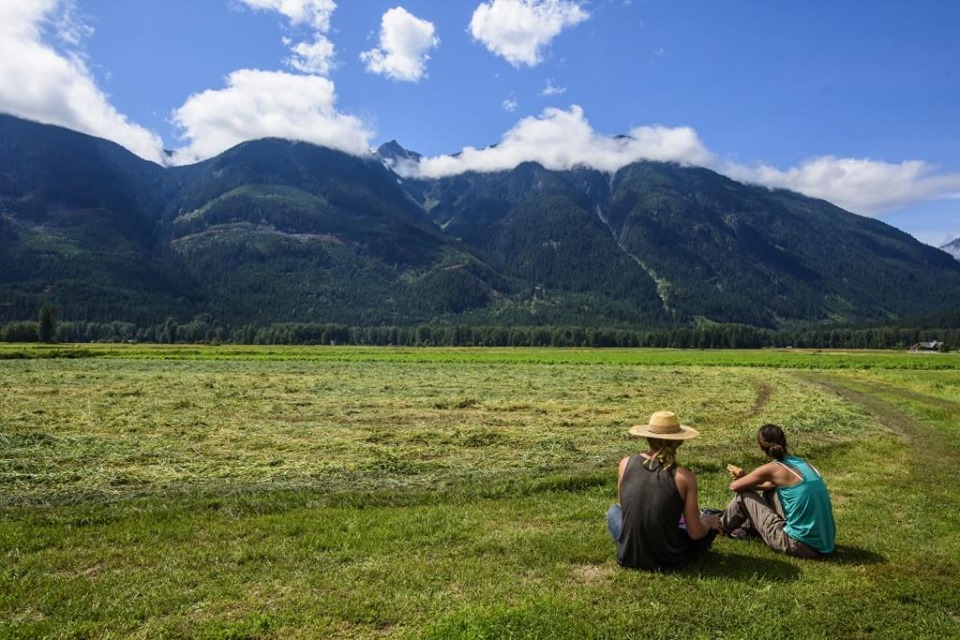
The event invites participants to choose their own cycling adventure using an interpretive map highlighting the various participating farms and venues along Pemberton Meadows Road. Participants can set their own pace and decide which farms along the 25 kilometer roud-trip route to visit. Along the way, participating farms open their ‘doors’ for the day and host a variety of vendors selling and sampling everything Pemberton has to offer from baking and honey to coffee, Pemberton potato fries, hamburgers and of course Pemberton fresh fruit and veggies.
Laughing Crow Organics have been “setting up” a sunflower maze for your pleasure at Slow Food Cycle, growing sunflower babies from seed for a field of sunny dreams experience.
We’ve got a few new farms/venues and vendors joining us for year 15 which helps to keep the event new and exciting for those participants who return year after year.
The Slow Food Cycle Sunday will take place on August 18. We encourage folks to register online before the event at slowfoodcyclesunday.com. Don’t forget to bring your helmet and water and remember to follow the rules of the road.
We look forward to hosting you during this celebration of Food, Farmers and the Joys of Biking! For more information, visit slowfoodcyclesunday.com
The amazing thing about Slow Food Cycle is that, just by showing up, you are being part of the event. But if you want to further inject your energy into the day, you can sign up for a 2 hour volunteer shift at the registration table.
This is a guest post by Cindy Coughlin, a Pemberton-based HR professional, coach and facilitator, who operates Thirst for Change Coaching, where she blogs knowledgeably but equally engagingly about things other than gardening. When she told me recently she had unexpectedly become a happy garden-sitter, I begged her to write about it for Traced Elements. I had literally just seen Dawn Johnson that morning, and learned that Dawn’s squash plants grew over the wheelbarrow, obscuring it entirely, as it awaited Dawn to return from a camping weekend and get to the garlic harvest. So I share Cindy’s awe for this Eden in which she has apprenticed herself. So happy to welcome Cindy to the Traced Elements community. ~ Lisa
+++
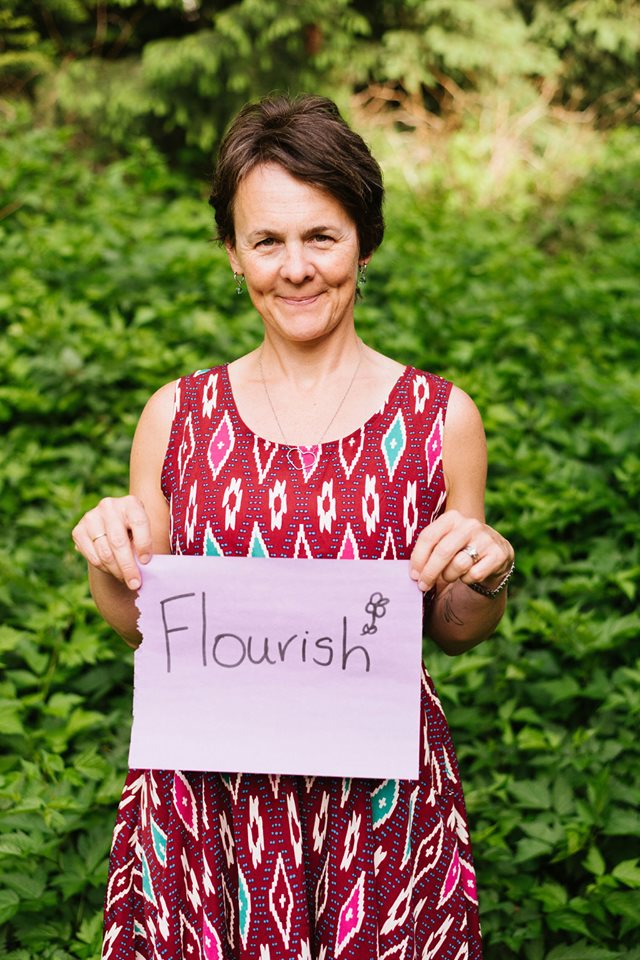
Flourish. This is my word this year. It originally started as part of a peer mentoring group where my main focus was on getting my consulting business up and running. We had to come up with a theme or a word. I picked Flourish. Well, actually I picked “Nourish to Flourish” – the idea being that I put in the care and attention to help build up my first year of going it solo.
Cindy Coughlin chooses to Flourish. Photo by Cathy Goddard
Nourish, according to the dictionary, means to cherish, foster, keep alive, to strengthen, build up, or promote.
Flourish is to thrive.
And this mantra, this intentional approach has quite naturally carried over to other aspects of my life.
I’ve been working with my awe-inspiring, plant-whisperer neighbour and friend, Dawn, in her spectacular garden. I approached her in the spring and asked her to put me to work. Now to give you some context as to how outside my comfort zone this is – when I was younger and had the list of chores split with my sibs, I’d be adamant about staying inside and doing the laundry, vacuuming, etc. When I moved to Whistler and started off as a lifty, it was the worst job I could imagine. I hated working outside (I know weird, right, cuz I love riding and skiing and playing outside). I also really hate big bugs – especially of the 8-legged nature.
Plant-whisperer Dawn Johnson. Photo by Cindy Couglin
But this spring and summer, working in the garden, have nourished me in the best ways.
Here are three things I’ve learned about getting dirty:
Paying Attention
I need to be paying attention. I’ve been reading books about trees, books about bears, books about over-tourism. I’ve been watching tons of the stunning newsfeeds on the climate emergency. All of these are asking me, begging me, to step up my game, consider my impact, take some type of action – start somewhere. And now I feel the pull to pay attention. To pay attention to my food. To pay attention to how nature provides. To pay attention to the interconnectedness.
Recently I was trying to cut some lettuce, quite close to a flower which had a busy bee in it. I could see the bee was getting agitated with me being so close. So, instead of wildly flapping my arms to scare away the bee, I just stopped and watched. The bee did its bee thing in the flower and then moved on. I felt so filled up. Co-existing and working with nature.
Feeding my Soul
Dawn and her family went away for a week and I was trusted with taking care of everything while they were gone. Isn’t that incredible – I was TRUSTED to take care of a garden – my mom would literally think I’d been taken over by aliens.
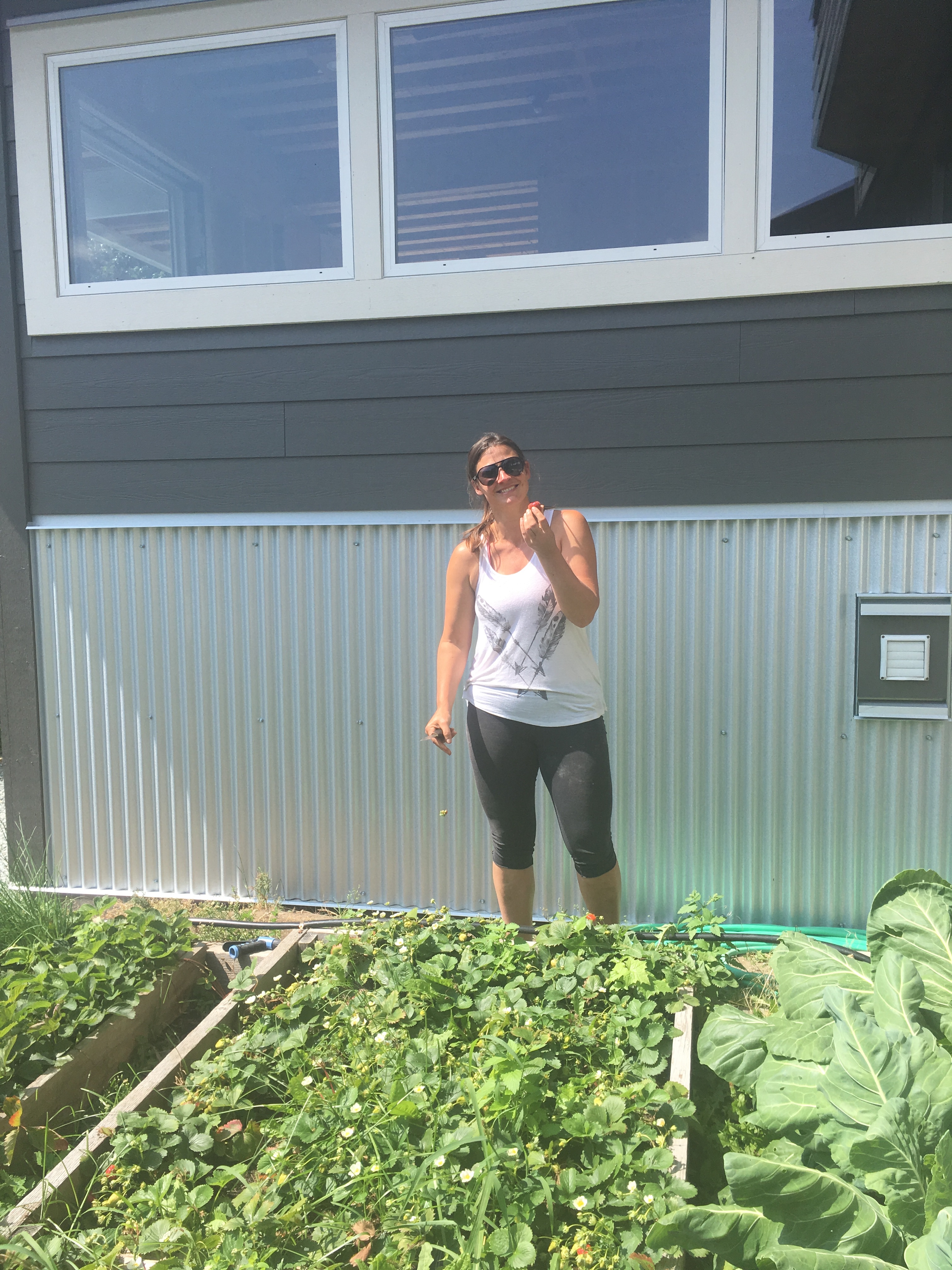
And it was incredible. Everyday I’d check on the budding plants. I’d chat with the chickens and bees. I’d cut some lettuce and some yellow little squashy thing for dinner salad. I’d find that zucchini hiding under a massive, prickly leaf – happily earning my stripes by scratching my arms while I cut the stem. I’d just stand and stare and admire. I’d thank the garden for everything. I’d tell the garden how beautiful it was.
I tend to just take. Take from this earth. I feel like I’m starting, albeit in a small way, to give back. I’m starting to see, really see. And by seeing, by paying attention, I am feeding my own soul. I am seeing the interconnectivity. I am part of the impact and I can make new, different choices.
And I’m learning. Dawn to me is like Yoda was to Luke. Like Mr. Miyagi was to the Karate Kid. Her wisdom and unwavering passion is a gift to this world. And I feel so filled up as I watch, listen, try things out and learn. I’m learning how to garden. I’m learning to care for my food. I’m learning to take only what I need. I’m learning about eating food that is in season and waiting, anticipating, for things to come back next season. Meaning, going without in the off-season – oh the anticipation will make it so much sweeter.
All the Good Eats
The little yellow squashy thing that I thought was just an ornament has this beautiful mild flavour with just the right amount of crunch. The edible purple flowers that my Albertan-meat-and-potato husband is welcoming in his salad – taken in very small quantities because the bees love them so much – are so good. The cukes and zukes that seem to grow 5 inches overnight – no one believes me – but I think if I sat and watched them for 24 hours, I’d actually witness them growing. And the flaves from these are incredible!
I’m completely impatient for the carrots and so am happily pulling them as babies in service of giving space for the others to grow nice and big and sweet. Have you ever pulled a carrot from the earth, dusted it off and ate it right there? Nothing tastes better.
And the pièce de résistance, the biggest surprise of all has been the asparagus. Dawn simply broke off a piece and handed it to me right in the garden while she took a mighty crunch from her own piece. No salt and pepper, no butter. I took a tentative bite and was shocked to find out this is what asparagus actually tastes like. Almost 50 years old and I have just experienced what asparagus is supposed to taste like for the first time in my life.
If I can do this, anyone can do this. I am getting dirty. I am working it out with the 8-legged-who-shall-not-be-named. I am learning. I am growing. I am nourishing. I am flourishing.
I get asked a lot for gardening tips: what to do and not to do.
These, of course, are never replied with straightforward answers. There are so many factors in such a dynamic environment that it’s never an exact science.
However, if I could choose one word that always defines success it would be MULCH!
A weedy bed is not only unsightly, it competes for sun and nutrients. Weeds are a breeding ground for pests and diseases. They usually outperform your desired crop and can physically and emotionally exhaust you. Just when you think you’ve tackled them they reappear with vigour. It’s a never-ending losing battle.
Some say to use a sterilized potting mix and well-heated compost, but these lack the nutrients, micro organisms and minerals of real soil. Weeds will eventually be introduced by wind and birds anyways.Weed seeds can live in the soil for over 7 years, so why fight it? Mulch.
A good mulch is a thick layer of almost anything bio-degradable.
A light sprinkling serves no benefit. It has to smother the weeds completely. I use a good 3-5 inches of hay or bark mulch. Straw is superior over hay because it lacks grass and weed seeds but is difficult to obtain and expensive. I prefer rotting hay from square bales left outside for a few months . The weed seeds have usually decomposed and the hay is already on its way to becoming soil, full of moisture and bacteria.
If weed seeds still persist, who cares? As long you continually keep mulching, it’s not an issue.
Fir bark mulch is superior to cedar, as the latter contains a natural growth-inhibiting preservative, creosote.
The best, I find, are the wood chips from the tree services that usually contain a good mix of hard and soft woods and promote mycelium fungus that is beneficial to the soil.
You can use so many recycled items to mulch. Lumber tarps are temporarily good for smothering the grass on a new field. Newspapers, feedbags and cardboard work great between rows and even better with a layer of hay on top to keep it down. Landscape fabric works great and breathes. We use a corn-based bio-mulch – essentially a compostable black plastic film, on all our beds. We just poke a hole in it and plant. We install a drip system of watering under the bio-mulch, otherwise only the plant bases get moisture. Besides pulling a few weeds that grow in the same hole we really don’t have to weed it. We can focus on fertilizing , staking and harvesting.
Mulching is best when its done after a good soak and when the soil has warmed. You don’t want to preserve the cold dry ground. It’s also best when your seedlings or transplants are well established.
Be gentle at first and don’t be shy. Use it liberally. It’s hard to over-mulch but detrimental if there is still exposed soil. In that case you’re promoting weeds and losing moisture. Go heavy.
A popular gardening trend in permaculture is the no till method. This is when instead of tilling your soil every season and continually between rows, you just keep mulching and plant directly in it. Tilling may make the ground temporarily weed-free and easy to work, but it also disrupts the micro-ecology and exposes the soil to wind and water erosion.
In nature the soil strata is layered. Healthy soil in the wild has a top layer of duff or humus on the surface from decaying plants, leaves and branches, therefor creating a layer of composted top soil followed by mineral rich sub soil and then gravels.
Mother Nature has the perfect recipe for the richest medium providing the best protection, drainage and nutrients in layers for the plants to access, encouraging them to send their roots deeper to get what they want and need. When in doubt always look to nature for guidance. Mother knows best.
An hour of mulching will save you several hours of weeding even more of watering. It will prevent erosion, the leaching of nutrients and will eventually feed and condition your soil when it’s tilled in, or better yet, left for the following season. Lift up a section of mulch and you will find worms and a layer of their super nutritious castings. Mulching is the very best thing every gardener should do. Once you’re on the program you will never go back to exposed soil gardening again.
Hummus is a fantastic summer staple as you can take it camping or somewhere with limited refrigeration and it won’t go off. It is full of vitamins and protein, and vegan to boot. It tastes great accompanied by Pemberton-grown carrots, and the secret ingredient is Pemberton-grown cilantro. You can also make your own tahini by grinding raw sesame seeds with a little olive oil in a high-powered blender.
Cumin and Cilantro Hummus:
Ingredients:
2 cups cooked chick peas
3 peeled Pemberton garlic cloves
1/3 cup tahini
Juice of 2 lemons (must be fresh)
2 tbs water
4 dashes tabasco sauce
1 tsp cumin
¼ cup cilantro leaves
1 tsp pepper
1.5 tsp salt
Method:
Mix chick peas and garlic in food processor.
Add tahini and all remaining ingredients until very smooth. Adjust water amount to desired consistency.
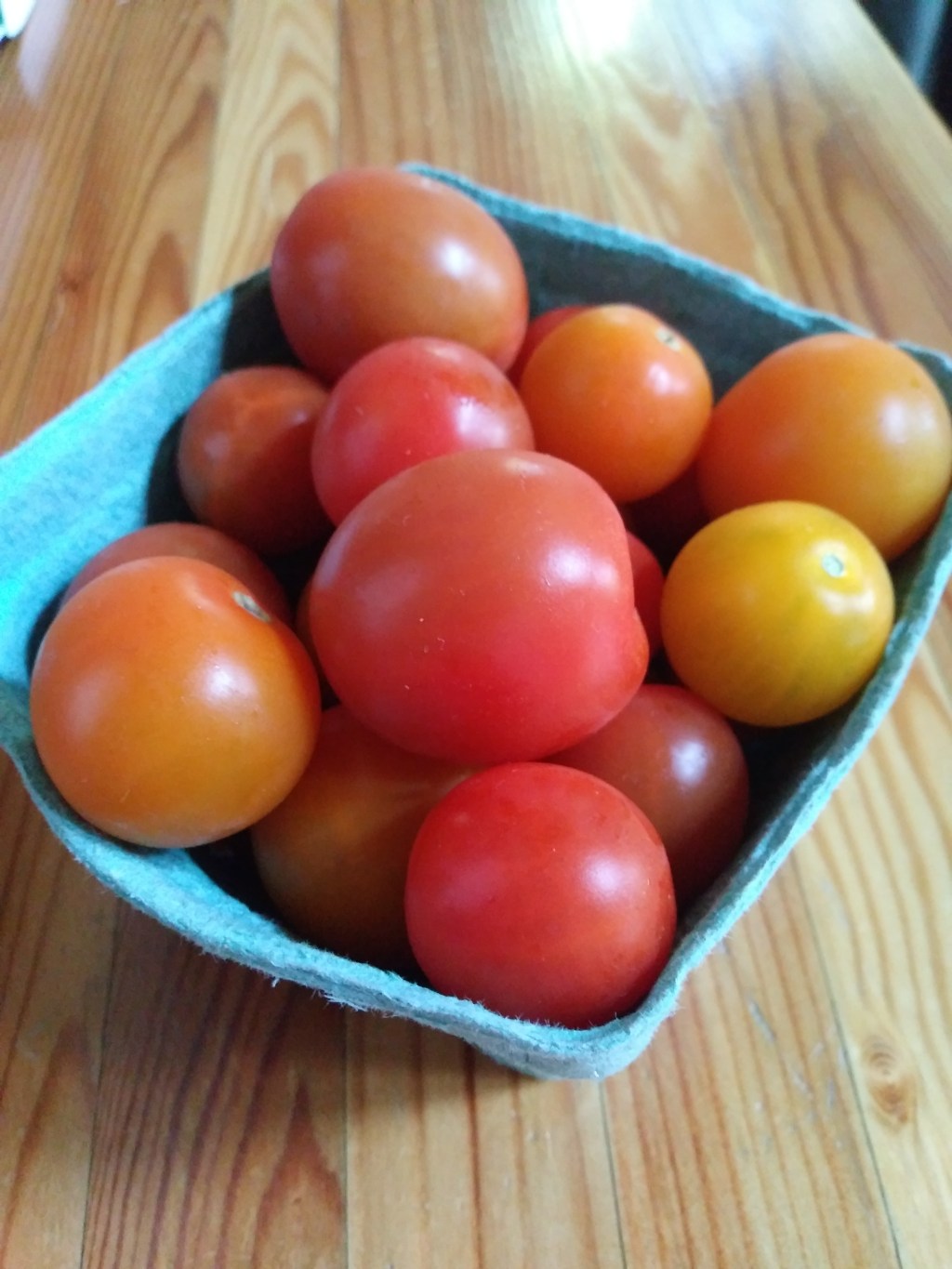
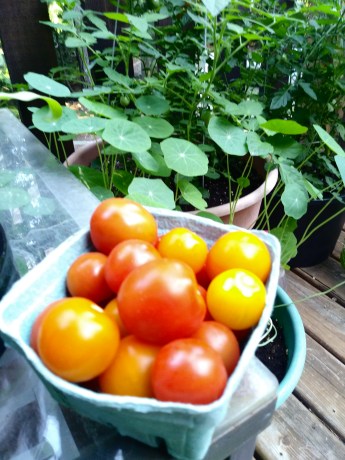
I started my tomato seedlings on March 24th which is at least two weeks later than usual. It wasn’t until the snow really started to melt that I felt motivated, but better late than never.
My Dad is the self-titled Second Best Tomato Grower in West Vancouver. I can’t vouch for whether #1 deserved the title as I never met him, but as far back as I can recall, my Dad has grown tomatoes. Not the weird multi-coloured heirloom ones, just the basic varieties of Big Beef, Early Girl and red Cherry tomatoes, that look like, you know, tomatoes. My Dad is known as Tomato Grampa to his Grandkids to differentiate from the other Grandpas; not sure if they were lucky enough to have nicknames.
I remember the first greenhouse Dad built in the house I lived in until I was 24. It had poly sheet walls on a thin frame, and a plastic corrugated roof. My mother, sister and I were instructed to donate any pantyhose that had runs, as they made wonderful flexible slings for vines and fruit; this is back in the day when women wore pantyhose at work and most other places so there was an endless supply. After I left home, my parents moved into a new house and Dad built a hot tub inset in the raised deck off the kitchen; the heat from the tub heated the enclosed glass greenhouse he built under the deck. It was ingenious and the tomatoes flourished.
When I lived in various apartments in the city, I always had a tomato plant on my deck donated by my Dad. When I moved to Pemberton, I finally had room for a garden, so started my own plants from Dad’s seedlings. As he did, Dad taught me to save the seeds from the biggest and best fruit by placing the seeds onto a paper towel and letting it dry. Label it, fold it up and put it someplace you’ll remember. No cleaning or fancy storage required. For many years, I have grown the babies from my Dad’s original plants, and I still save my seeds the same way. I hope one day to pass along their progeny to my son.
Last year I started 72 plants, and all but two came up. Of those 70, 6 didn’t survive the transplant into the ground (I don’t have a greenhouse, yet…) so I asked my husband to pick up 6 to replace them. He came home with a flat of 36 instead. They were so cheap, he says. This happens every year as my husband has little faith in my leggy and straggly transplants, but by the height of the season they have stalks as thick as my thumb. Unlike my Dad’s orderly greenhouse rows, my boxes are overcrowded, a Tomatazon rainforest. My carpenter husband builds straight and orderly trellises with end cuts for his bought plants, while I pick up weirdly-shaped deadfall from the woods, as pantyhose are no longer a staple of my wardrobe. My boxes are whimsical and interesting; his are uniform. Nevertheless, all our plants do well, so I spend a good part of my fall canning, drying and giving away tomatoes. I always complain about having too many but every year I still start 72 plants, in case half don’t make it, and every year my husband buys more.
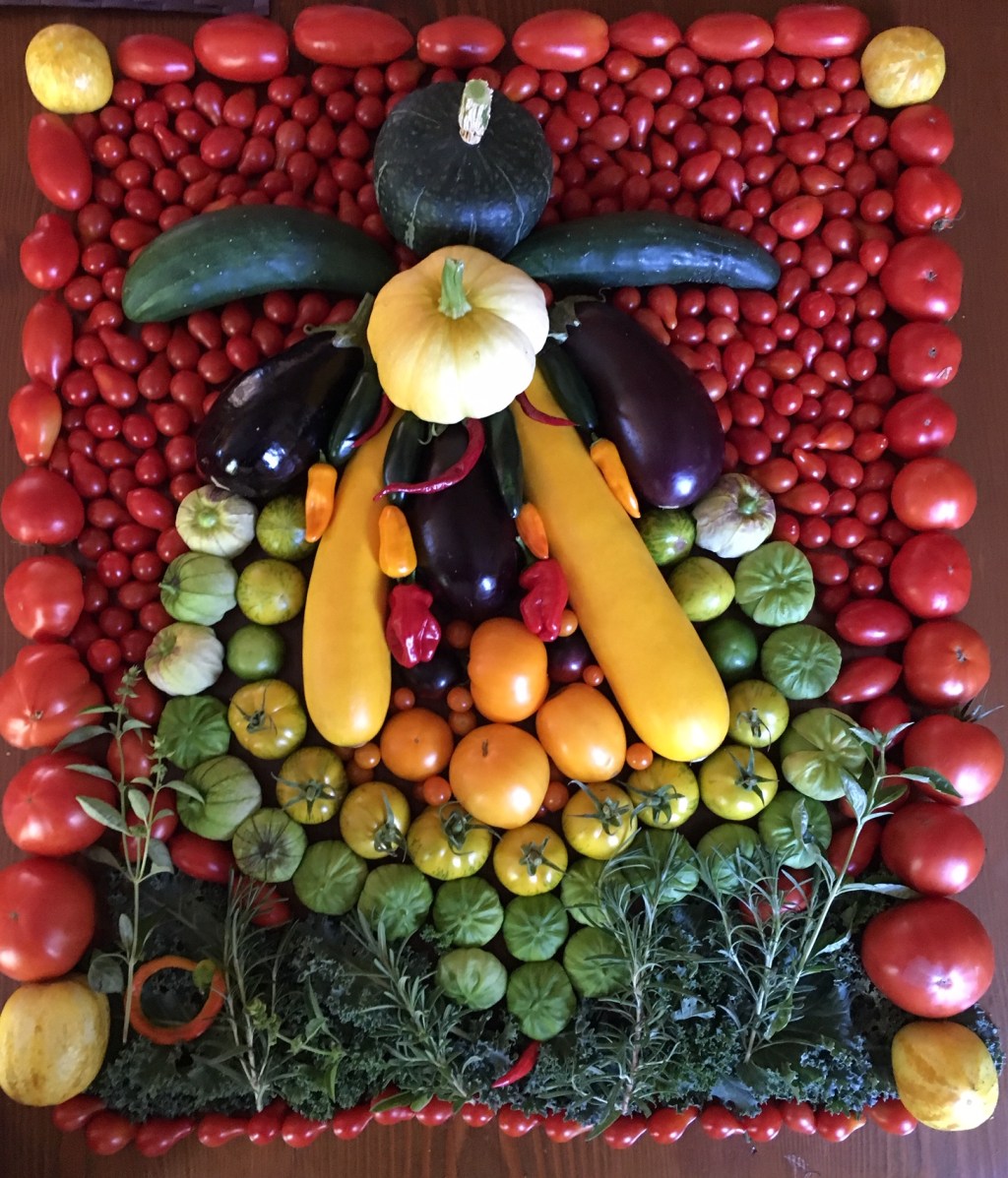
When life gives you an abundance of tomatoes, make art. Photo, and vegetable art, by Nancy Lee.
When my parents moved into their current seaside apartment, Dad gave up starting his own plants. Now I donate a plant or two, some of which I get the side-eye for (Green Zebra, Big Yellow, Indigo Cherry or Roma) as he prefers the basic round red tomatoes you can slice and put on a sandwich. He also buys a plant from the local nursery, since my garden tomatoes don’t seem to flourish as much in the ocean breeze as in the Pemby heat.
As I write this a week after planting, most of my seedlings are starting to pop up, and I expect we’ll have another bumper crop. I have a heavy heart though, as Dad isn’t doing well, and likely won’t be here to enjoy tomatoes this summer. I will always be thankful for all you taught me Dad, and every time I eat a warm tomato fresh from the vine, especially the round red ones, I will think of you.
Prepping dinner in late February. Note “green onions”, carefully harvested from some storage onions that decided it was time to start sprouting.
Note: This post the product of a farmer itching for the snow to melt, of Lisa Richardson’s gentle encouragement to not be ashamed by my lack of posts since last May, and also a plug for a new page on our farm website that talks about VEGETABLES.
It tries to answer questions like “What’s this?” or “How can I cook that?” or “Can I freeze these?” that I get asked from time to time as a CSA farmer. I also admit to eating cabbage for breakfast on a regular basis. Feel free to have a look if you’d like. http://fourbeatfarm.ca/news/
A breakfast option for the Pemberton loca-vore. Includes an average portion of cabbage, pickled garlic scapes from last summer, and some additions from friends at Spray Creek Ranch.
Now, to ramble…
Last week, the spare room where I store my personal supply of winter produce had its annual conversion into a spring “grow room” for this year’s seedlings. Anyone else have ~8000 allium roommates right now? No? Oh well, just me then. We will be co-habitating for a few weeks until the seedling greenhouse gets set-up and temperatures climb a bit.
Because of this new roommate situation that I have come to believe is normal, I spent a few hours picking through the bins of winter storage vegetables. Since I haven’t been to the produce section of the grocery store all winter, there wasn’t much left. I salvaged the best to cram into the fridge and imminent meals, and that about took care of it. Let me begin by saying that, despite my attention to detail when it comes to processing and storing vegetables in the main farming season (destined for CSA and farmers market shoppers), my winter set-up for personal use is…well…simple. Or lacking. Depends how you look at it. Let’s call it “rustic” to be nice.
It’s a small room in the house. It’s separated off and slightly insulated by a blanket over the doorway to avoid wasting woodstove heat from the hallway. The window stays cracked open to let in cold air and keep the bins of veggies comfy. When we get a cold snap, I make the crack smaller. When we get a mid-winter thaw, I open the window a bit more. If I remember.
This has successfully kept beets, carrots, turnips, watermelon radishes, cabbages, rutabaga, celery root, kohlrabi potatoes and onions in fine shape until at least early March. There are some sprouty bits. Occasionally one will turn to mush and cause a small amount of slime to touch those around it. These now-slimey neighbours get rinsed off and put in soup or fed to the draft horses (onions exempt, they go direct to compost and bypass the horse trough).
Winter storage veggies at their prime for fall CSA members. Mine do not look like this now.
By March, things kept in such un-fancy conditions tend to look a little tired. Rutabagas are starting to sprout wild hairstyles. Celery roots are looking a bit shrivelled. But the cabbages? Oh, the cabbages. They’re like a breath of fresh air. Dozens of them have been sitting in a Rubbermaid bin in the house for nearly four months and they are still crunchy, juicy, sweet, and willing to join in to up the freshness factor of just about any meal.
If you’re looking for ideas about vegetables, recipes, or curious about how this particular farmer likes to eat her veggies year-round, I’d welcome you to check out a resource we are growing to help our friends and CSA members with the age-old question “What is this?” (holds up a cabbage shaped like a cone, an alien-resembling kohlrabi, or a yellow beet).
Seriously though, those cabbages. They’re just what a farmer needs this time of year.
A friend of mine called this a “Winter Glory Bowl”. Not sure if she was joking or not, but we’ll take it. Canned salsa from our summer tomatoes, refried beans from some shelling beans we grew and froze, sweet curry zucchini pickles, and roasted rutabaga. I don’t know if they’ll be serving it at any restaurants anytime soon, but it was a perfect sweet & sour, hearty & crunchy combination of food from the farm for a post-snowshoe lunch.
“I only had one bite but it was amazing.” – Austin, age 9
These mini pot pies were a hit with my age 9-12 year old kids cooking class I teach each week. I also teach a teen class. The pot pies can be adapted to throw in many different veggies, and they might be a good addition to the lunch box. Keeping them open-faced means they are less stodgy, with more protein and veggie filling to focus on, instead of excessive pastry. Enjoy!
Mini Open-Faced Chicken Pot Pies: (Yield: 24 muffin cup-sized pies – you may have leftover filling and pastry for a large standard pie plate-sized pot pie also)
½ cup to 1 cup pure olive oil
3 medium yellow potatoes, finely diced
2 cups parsley, finely chopped
1 large yellow onion, finely chopped
3 stalks celery, finely diced
2 Pemberton carrots, finely diced
1 large red pepper, finely diced
3 cups brown mushrooms finely diced (you could try other varieties)
2 lbs chicken thighs (boneless and skinless) chopped into small pieces about 1 cm in diameter
2 tbs butter
2 tbs pure olive oil
3 cups no-salt chicken broth
2 tbs spelt flour
2 tsp pepper
2 tsp salt
Pastry:
1 box Tenderflake lard
5 cups spelt flour
1 egg
1 tbs white vinegar
2 tsp salt
Water
Method:
Sauté veggies. Heat ½ cup pure olive oil in large pot and sauté all veggies, order not important but all veggies need lots of time to sauté. When well caramelised, add 3 cups of chicken broth and spelt flour.
In separate pan, sauté chicken pieces in 2 tbs butter and 2 tbs pure olive oil, until cooked through. Add 1 tsp pepper. When cooked thoroughly, add chicken to finished veggie mixture.
Make pastry:
Measure flour and salt into large bowl. Add lard. Mix until incorporated. Add one beaten egg in a liquid measuring cup with 1 tbs vinegar and fill the rest to the one-cup mark with water. Mix together. Roll out. Cut into circles about 5 cms wide. Place into muffin cups and press down snugly to form a cup.















 Traced Elements