Category: farming

  • Courting Wonder

    Courting Wonder

    On my desk right now is a gorgeous little collection of essays called Wonder and Other Survival Skills, put together by the editors of Orion magazine. On its cover, a young girl presses her hand against the surface of a lake: skin of girl meeting skin of lake. From this meeting, a ripple moves.

    the ripple


    “Is wonder a survival skill?” H. Emerson Blake asks in the foreword. “The din of modern life pulls our attention away from anything that is slight, or subtle, or ephemeral. We might look briefly at a slant of light in the sky while walking through a parking lot, but then we’re on to the next thing: the next appointment, the next flickering headline, the next task…Maybe it’s just for that reason—how busy we are and distracted and disconnected we are—that wonder really is a survival skill. It might be the thing that reminds us of what really matters, and of the greater systems that our lives are completely dependant on. It might be the thing that helps us build an emotional connection—an intimacy—with our surroundings that, in turn, would make us want to do anything we can to protect them.”

    By my own definition, wonder is the ability to travel beyond attention, beyond mindfulness–to truly make an encounter with the world in a way that, for the slenderest of moments, lifts us out of ourselves and returns us back with something more. Something of the ‘other’ we’ve encountered travels with us. A little of the world comes into the interiority of us and lodges there. Permeates.

    Winter is a season of rest for most of us land-based folks. A season of living in a place of dreams and visioning (literally, as we get caught up on sleep, and plan for the year ahead.) This is the first season I’ve stopped teaching completely. I felt the need to let the work do a deep dive into silence, and (beyond the day-to-day chores of keeping animals, which never go away), to truly let myself drop out of time. I sleep when I’m tired. I wake up when I wake up. I have breakfast and a cup of coffee, before I go out to do chores. Which sometimes makes me feel like a slacker, but it also feels… luxurious. Luxurious in a simple way I haven’t allowed into my life before. A spaciousness that holds its own kind of wonder.

    The other reason I decided to stop teaching completely once the snow hit in December, was I wanted my horses to feel like they belonged to me again. 2018 was our busiest year teaching together (THANK YOU, PEMBERTON!) but I wanted a chance to ride when I wanted to again, instead of working a horse so they would be ready to say ‘yes’ to a student. I wanted to WANT to ride again. To wander about aimlessly bareback with nothing but a lead rope joining me to my horse’s mind. I wanted the horses to be able to choose who came out to play with me, whenever I showed up at the gate with a halter or a bridle.

    20190123_163959-1

    What’s emerged out of this unravelling is that I was finally able to back Besa, my big paint/Friesian mare. When she came to me 18 months ago, she was an untrained 6-year-old, freshly weaned from being a mamma to a feisty filly. She made it very clear to me- in her lack of desire to be caught and her extreme reactivity, power and athleticism- that I’d have to take my time with her. Given space and the permission to approach me (instead of me expecting to approach her and do what I wanted), she decided that humans were worth being curious about. Her curiosity flowered into full-blown affection. She’s the first horse to come to anyone out of the field now, and she sometimes chooses to pull me (or whoever I’m accompanying into the field) in against her chest with her muzzle, the closest a horse can come to giving a hug.

    Besa’s been asking me to do things with her for months (Proper things! With a bridle and tack like all the other horses!) and all summer and fall I just didn’t have the capacity. But these last few weeks I’ve slipped onto her back and let her carry me around our little maze of snow paths in a mutual exchange of trust: I will trust you with my body, if you will trust me with your body. The ‘training’ part of it can come later. For now, all I want is her to turn her head to me, so she can look at me fully out of her huge dark eye: Oh. So now you’re up there now. So that she can yawn and snort and let all the tension go out of her nervous system, and get used to this strange new way that horses and humans can be together.

    Perhaps it’s me she’s been waiting for all along. Perhaps I needed to drop into this spaciousness for us to find this way to trust each other.

    There’s one essay that stands out for me in this slim little collection that sits on my desk. It’s Chris Dombrowski’s Kana: a father grasps at the nature of wonder. In it, he defines Kana as “a word or figure the Japanese haiku poets used as a kind of wonder-inducing syllable (it translates loosely into English as an exclamation point.)… that heart-stutter we receive when an image of the world takes root in us…”

    His essay shares the spell of a day spent morel hunting with his twenty month old son. The way the boy wanders across the face of the burn, trailing a whitetail’s antler behind him, carelessly decapitating the very mushrooms he’s hunting for:

    …he is either in a daze of boredom or he is walking kana, penetrated each step by the world, not penetrating it. It’s tempting to call this spirit naïveté, but it’s not: it’s wisdom we lose along the way.”

    Perhaps that’s what I’ve been courting this winter: wisdom I’ve lost along the way as I’ve been coerced into ascribing to linear time, to capitalism, to the many demands the constructs of being human impose upon us. There is gentleness here, in this wonder, that doesn’t feel rushed or imposed. A hand resting against the surface of a lake.

    I’ve wanted to broaden the scope of my horse and nature based teaching practice to include workshops for adults since I started Mountain Horse School in 2012, but I’ve shied away for a long time. I’ve always felt comfortable with kids because they’re so immediate, so open still to this touch of the world upon them. Grown-ups’ responses are layered. More conditioned. We need more language to access understanding, and experiences that can operate like keys opening the locks of ways of perceiving we’ve long put away. Grown-ups want reasons to pacify our rational, linear ways of thinking, and we want to know if playing with opening the doors to wonder, if walking Kana is ‘worth the investment’ of our time. We’ve become used to being sold meditation through a list of its benefits. A walk in the woods has become a thing we could pay for. Forest bathing, it’s called in the brochures.

    What if wonder is the gateway to possibility? What if it’s the only skill that will give us the tools, insight, and power we need to move into (here I am, throwing another book title at you!)  The More Beautiful World That our Hearts Know is Possible? What if the benefits of wonder—similar to its more lauded cousin, gratitude—might be the resurrection of a life woven into belonging with the wider world that sustains us?
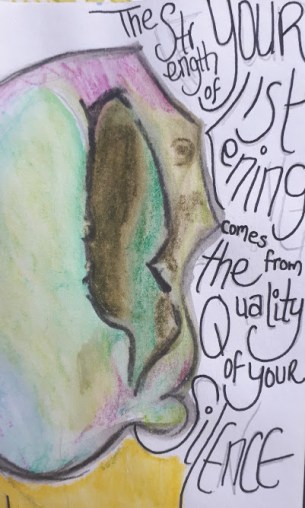
    whale's earbone
    Small watercolour of a whale’s ear bone from the intergalactic spaceship that is my desk. Because of the complexity of their hearing, whales’ inner ear bones are contained within a separate chamber, not encased inside the skull as ours are. It amazes me how much this bone looks like a shell. If I held it to my ear, would I hear the sound of the sea?

    It’s not up to me to answer these questions. I can only speak from the lens of my own experience, my own perceptions. In lieu of that, I can say with certainty that this winter’s dreaming I’ve been luxuriating in, this kana I’ve been walking in my own life, feels absolutely essential to the future that comes next. I can say—if I may speak with authority based on the way things feel from the intergalactic spaceship that is my writing desk this afternoon—that it HAS been absolutely necessary. That nothing is currently more important. Oh, the great irony that ‘doing the work’ this winter has actually meant ‘doing less work—!’ (Is that an exclamation mark or is it kana? You decide.)

    So, in the spirit of wonder being the gateway to possibility, I’m issuing a little dare to myself. Actually, it’s not little at all. On Feb 17, I’m offering a one day workshop called Lightning Seeds: Opening the Gateway of what’s Possible, in collaboration with my dear friend, animal listener and translator Guliz Unlu. Come play with us as we walk kana in the company of the horses and other animals at Mountain Horse School, and court wonder through a combination of equine guided learning, animal communication, intuitive herbalism, earth wisdom, and soul craft. Curious to know more? Please visit our website or facebook page for all the juicy details!

  • Obsession

    Obsession

    Lately I’m having a hard time drawing the line between what should get more attention: my new Le Creuset Dutch oven or planning out my garden for next year. What to cook vs what to plant. Either way both schools of thought provide me with a constant mind game and humor my co-workers. Not to mention, a day wandering through the Van Duesen Gardens, tackling Julia Child’s ‘Beef Bourguignon’, absorbing the concepts I’ve been studying in an ‘Intro to Landscape Design’ course and an evening with Stevie (MF’in) Nicks – basically, my mind has been on overload.

    Stimulation: it’s a blessing and a curse.

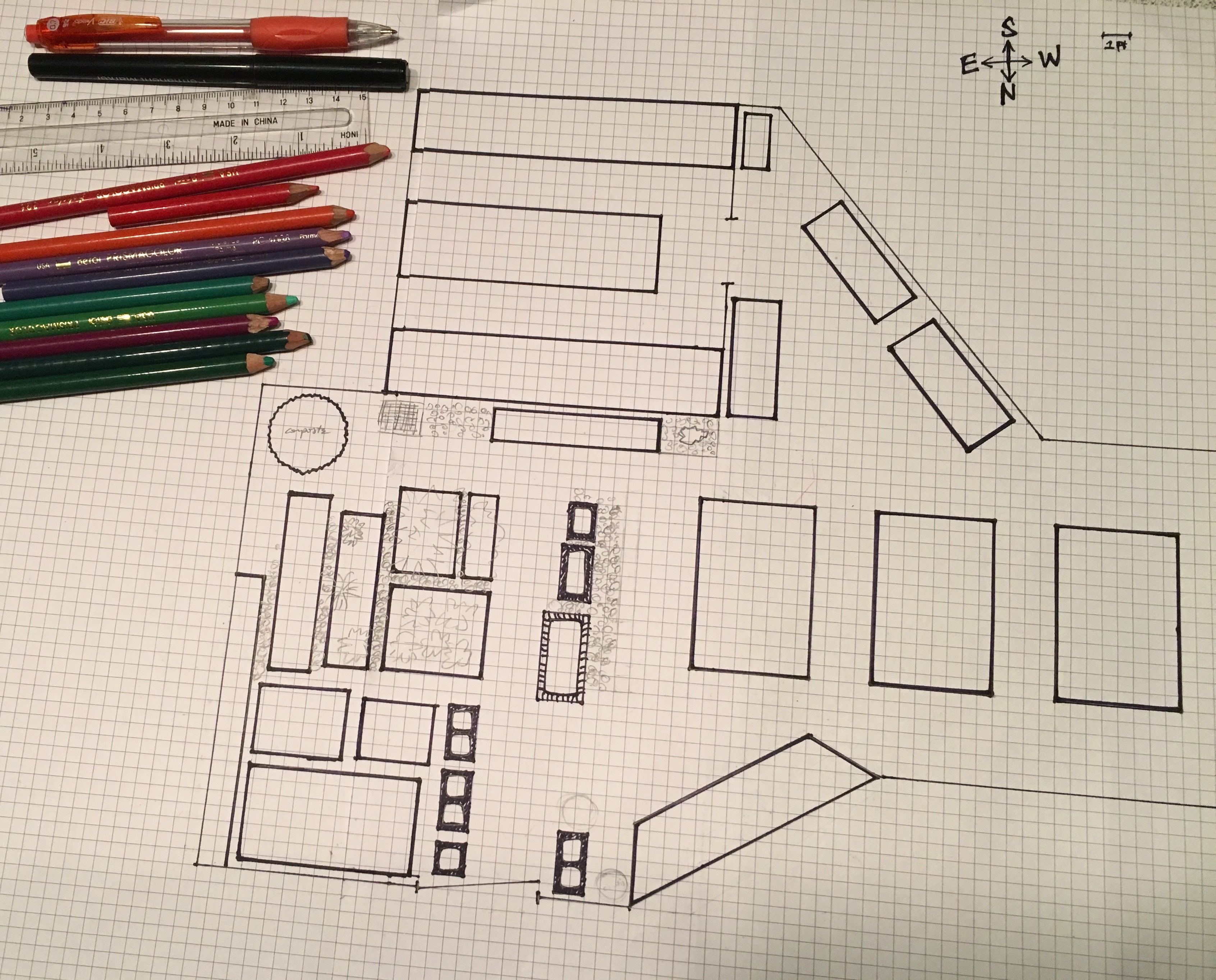
    The Internet was slow as molasses for Cyber Monday sales as people consumed their lives away. It’s also made my normal routine of scouring through sites for new recipes to cook during the week near impossible. So, I decided to kick it old school and take to my graph paper, apply some new design techniques and start planning out my garden. Nothing like thinking in colour on a grey day: Julia Child inspirations can wait… lasagna is on the menu tonight and that recipe is engraved in my mind.

    The process for me starts by making a list of what I loved and what did well, knowing full well that next year might bring completely different growing conditions. But I don’t dwell on that. Just like I’m not dwelling on the fact that last year we were shredding deep snow at this time and this year it’s warm and wet with the lowest base we’ve seen in years. Gross – but c’est la vie.

    The second list I make is what’s sucked or I just don’t want to grow anymore. This is largely based on the fact that I can get it from someone local like Laughing Crow Organics or Helmer’s or without sacrificing my own garden space. Supporting our local farmers is equally as important in the grand equation and should not be left out!

    The third list is the experimental list AKA: my favourite.

    The other lists include; herbs, flowers and things that grow on the deck. This list will change and grow which is part of the glory of working in pencil.

    0

    Second step of the layout plan is to draft your garden space on paper, preferably graph (enter a hint of obsession here), to somewhat of an exact scale in 2D form and trace the outline with permanent marker. Then the fun begins – what grew where and where do they go next: the power of rotation.

    Be sure to sharpen your HB2 pencil and prepare your eraser for this stage. Start plopping your veggies, flowers and herbs in as you see fit. Ideas will come and go as fast as you think them and are on to the next. And to be completely honest, by the time you go to plant they’ve probably changed but hey, remember, it’s just as much fun to colour outside of the lines as within.

    IMG_6599

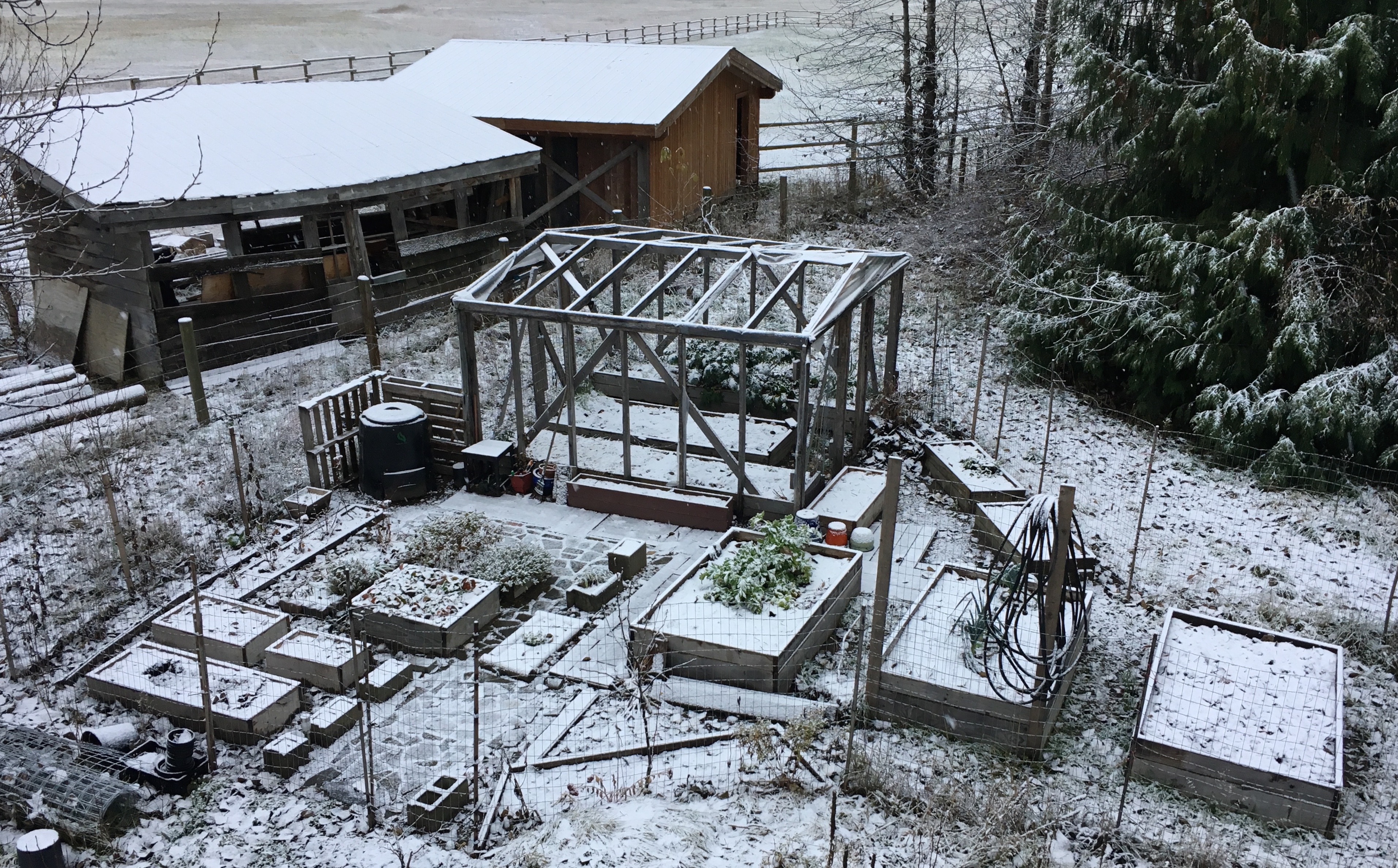
    Third step… sit and wait. It’s winter – the ground is frozen, you can’t plant shit but somehow your kale still seems to grow; roll with it. Pour yourself a tasty beverage, dream up new ideas, play around with your design, your ideas and aspirations. No thought is too small or unachievable. Remember, I started my current garden with nothing but a “green house”.

    IMG_6526

    To obsess over what you want to grow and eat is a healthy, sustainable step in the right direction – you just have to be willing to try.

  • An Ode to Shovels and Rakes

    An Ode to Shovels and Rakes

    These two unassuming primitive implements no doubt helped propel humankind from hunter-gatherer to agrarian in some sticks-and-stones fashion long before the Iron Age. As I will describe, my very being is also “owed” to these simple tools, so I thought I’d write an “ode” to them.

    A rake and a shovel
    Will cause you no trouble,
    They don’t have a moving part.
    It may seem a bore,
    But it will strengthen your core,
    It’s even good for your heart.
    With a dig and a pull,
    It will get the job done,
    With the right attitude,
    It might even seem fun.
    If the handle should break,
    It’s easy to replace,
    You just need a long wooden stick.
    For a shovel and a rake,
    Is all you need to do the trick.

    “Shovels and Rakes” was the name of my very first landscaping venture over 35 years ago. I got the idea from Arlo Guthrie’s infamous song Alice’s Restaurant where he “loaded up the red VW microbus with shovels and rakes and implements of destruction”. In retrospect, it was also fitting – they were the only tools I could afford at the time. My only power tool was my parents’ lawnmower.

    My wife calls me her “digger boy” because in some strange way I enjoy shovelling and raking. There’s a quiet, zen-like, methodical motion to it that I find comforting. And it’s good exercise.

    In the construction field, the shovel and rake are unaffectionately known as a D1 and D2. The D8-9-10 are large bulldozers. Being a machine operator, I love big equipment, especially if it belongs to someone else. On a landscaping job site, time is money and it belongs to the client. Machinery is needed for efficiency and to be competitive. Conversely, on the farm time is… well, simply your time. I prefer to spend it quietly with good old fashioned hand tools if I can.

    At one point, I had a fair amount of machinery. A tractor and hoe, rototillers, blowers, compactors etc. These things are expensive, require fuel, maintenance, repairs, storage and they don’t last forever. For the few times a year I needed them, it made sense to eventually do away with owning them and just lease the right tool for the right job. This type of overhead is justifiable for a landscaping business but is a killer for small scale farmers. A blown motor or transmission could exceed your profit margin for a season.

    We are trying to have less of an environmental footprint. I would rather use my own human-powered energy, to become more sustainable, more connected to the earth and stay in shape while breathing fresh air as opposed to exhaust fumes.We are starting to practise “no till ” methods, we’re mulching more and instead of blowing leaves,we simply rake them onto a tarp. I rarely miss my machines.

    If I was on one of those survivor type reality shows, and could only have a single tool it would be a flat spade. This versatile tool is not only a shovel – it can cut, level, edge and scrape. My favourite tool is the wide aluminum landscaping rake.You see, after over 25 years of snow grooming, I’m obsessed with having perfectly level and impeccably combed garden beds. With these tools I can buff out the soil, to a standard that a ski instructor would appreciate. It’s in my DNA. I just can’t help it.

  • Career Posting for a Homestead Farmer

    Career Posting for a Homestead Farmer

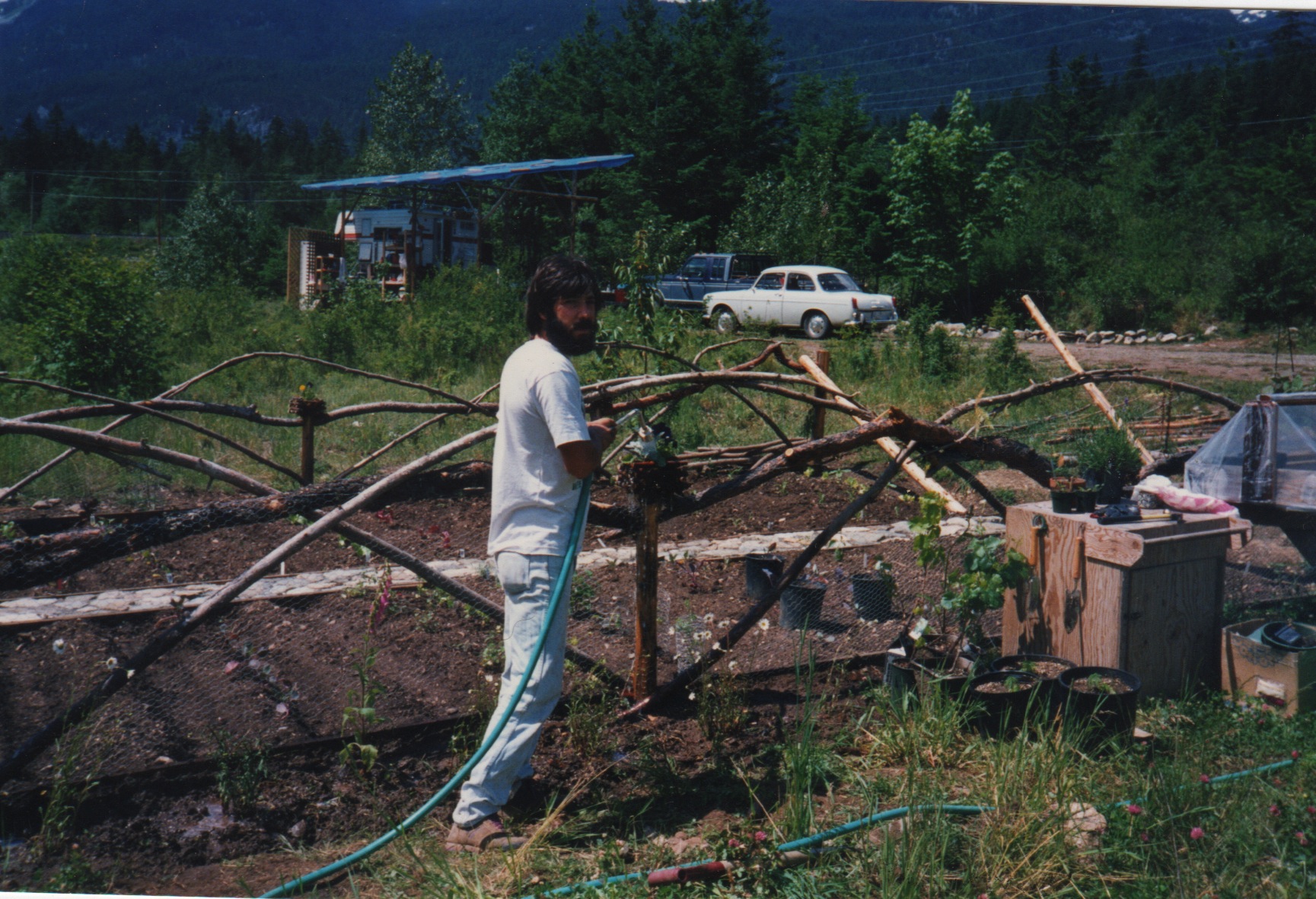
    Scan 16(This is a photo of my first kitchen garden and campsite in my rookie year homesteading circa 1994 )
    The few job postings  I’ve come across for farming are usually for  minimum wage labouring on commercial farms. You might be better seeking one of these positions if you’re not sure about a forever commitment, but I have never seen a posting for my lifestyle, that which I refer to as “Homestead Farmer” as it’s more of a self-employed way of life. So I’ve created a fictitious (yet accurate) tongue-in-cheek ad to provide some understanding as to what is entailed. Unlike most job ads, this one is in-depth and not candy-coated. It’s the good, the bad and the ugly.

    HOMESTEAD FARMERS NEEDED FOR FOOD SECURITY

    PHYSICAL REQUIREMENTS:

    You must be strong, able-bodied, resilient and okay with getting  stinky and dirty. You may work up to 14 + hr days/ 6-7 days a week, 7 or more months/year in all types of weather. There is no set schedule and you must be available at all times. Your hands will be permanently stained and callused, your back sore and you will most likely eventually get a hernia.

    LOGISTICS AND JOB DESCRIPTION:

    You must first acquire a piece of land preferably in the 5 acre range to start. (Finding a nice developed  homestead with the infrastructure and house on it is out of the question unless you inherit one or you have a million dollars). You will need  a 50% down payment on said piece as required by the banks for any undeveloped land without a house on it.  For this you will have to beg, borrow or steal. You will most likely end up with a derelict lot away from an urban centre that needs driveway access, hydro, a well, a septic system, and a landline. You will probably not have cell service or wifi. You will need reliable transportation, preferably a truck. You will have to camp on this land until a cabin is built and services are in (approx 2-5yrs). During this time you will be analyzing your micro climate, making compost, improving the drainage, clearing, brushing, burning, tilling, fencing, testing the soil and water, applying for permits, and most importantly making friends with your neighbours (who you will rely on heavily for info, tools and help, but will have to reciprocate in return).  You will be picking thousands of rocks, and once you think you have most of them, more will surface yearly, forever. Many trees and bushes will need to be planted for future fruit and buffers. Outbuildings such as sheds, barns, and chicken coops will have to be constructed. Salvaging, storing and using recycled building materials will take up a lot of time and effort but will be way cheaper than buying new. There is no course or training for any of this. You will have to learn everything the hard way; through trial and error. You must be able to adapt, improvise and suffer.

    You will need to be resourceful and find side hustles here and there to finance the above infrastructure as production and income will slowly trickle in for many many years. Having a spouse to help is a definite asset, but finding one who will put up with such rustic conditions will be difficult. Keeping one will be even harder.

    Eventually, once you’ve succeeded at producing your chosen crops and developed a niche market (you will already have learned that you can’t do everything or compete with the big farms), you will have to find a way to sell your products. This will involve attending lengthy farmers markets, setting up and maintaining a farm stand and doing cold calls, back door kitchen sales and deliveries. Once you’re at this stage you will have even more overhead in fees, fuel, insurance, advertising and additional help.

    EXPERIENCE:

    Any gardening, landscaping, mechanics, machine operating, tree planting or any labour intensive job experience is a definite asset. You must be able to do mindless tedious repetitious jobs yet also be a jack of all trades and problem solver.

    Post secondary Diplomas and Degrees are worthless other than proving to yourself that you can stick it out on a shoestring budget. It’s also a hindrance in that you will have to explain to your family how you’ve squandered a perfectly good education and professional career possibilities to live in the bush like a hillbilly. Having student loan debt is extremely detrimental.

    COMPENSATION (or lack of):

    Calculating your wage is near impossible and fruitless. If you try to guess, it  will rarely top minimum wage. You can only reap what you sow and that can take a long time or sometimes never. You will always be tight on funds as you straddle the poverty line. You will have to pay your bills promptly no matter what because you will rely on  your credit  rating very often. You will need and replace lots of implements and clothing without a tool allowance. There are no regular or extended medical benefits, injury, sickness or life insurance. Workplace injuries are not covered by WCB. There is no overtime, vacation or stat holiday pay, RRSP, pension fund or severance package. There is no crop loss insurance or subsidies for small farms. Self employed farmers are not eligible for unemployment insurance or welfare. Tips are extremely rare. You will need a well paying second job (preferably with some benefits) to survive the winter months.

    OTHER BENEFITS (the positive):

    You will be your own boss and work unsupervised. You can take ownership of all your failings and keep them secret.Your job will be secure, since everyone always needs to eat. You will be unaffected by recessions and global markets. You will be well positioned for a complete financial collapse or other disasters. You will not be demoted, replaced by technology or out sourced. (You will however be constantly undercut by mechanized agribusiness.)  Once your farm is over 50% cultivated and you have a certain steady income you may apply for Farm Status to receive modest tax breaks on property taxes, fuel  and supplies. You will live a heathy and holistic lifestyle with a sense of purpose and pride. You will become a steward of your piece of land and feel good about working toward sustainability. You will breathe clean air, drink fresh water and eat the most nutritious balanced diet. You be able to take lovely photos and post them on social media, where people will comment on the beauty and bounty that surrounds you. You will network and trade with other farmers for food, tools and help, building lasting friendships. You may sometimes be able to take a few days off (if you get someone to watch the farm) and possibly take a short  vacation between seasons. In the end your children will inherit the legacy of your vision and hard work. If they decide to follow in your footsteps they will be much better set up for success.

    ONLY SERIOUS CANDIDATES WHO ARE WILLING TO DEDICATE THEIR ENTIRE LIFE TO SUCH AN ENDEAVOUR NEED APPLY. THERE IS NO BACKING OUT. YOU WILL HOLD THIS POSITION UNTILL YOUR BODY CAN NO LONGER HANDLE IT.

  • Squamish Farmers Strip Down For Fundraising Calendar

    Squamish Farmers Strip Down For Fundraising Calendar

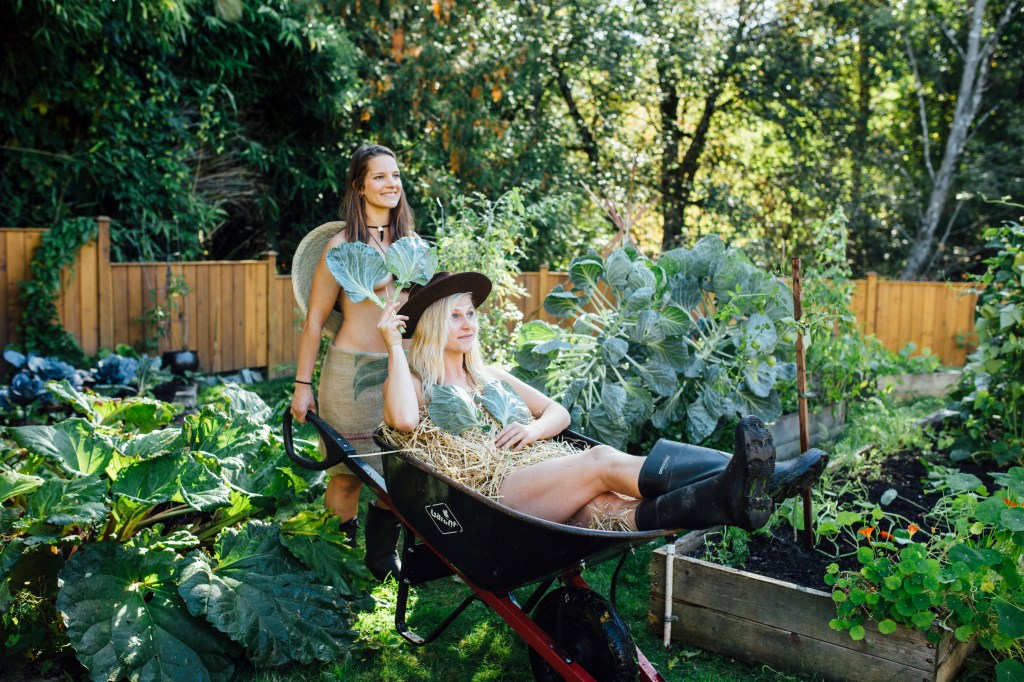
    Squamish CAN (Climate Action Network) has launched an Indiegogo calendar fundraising campaign featuring nude Squamish farmers in hopes of raising money for a community farm.

    _T1A9470-NinaLaFlammePhotography-2
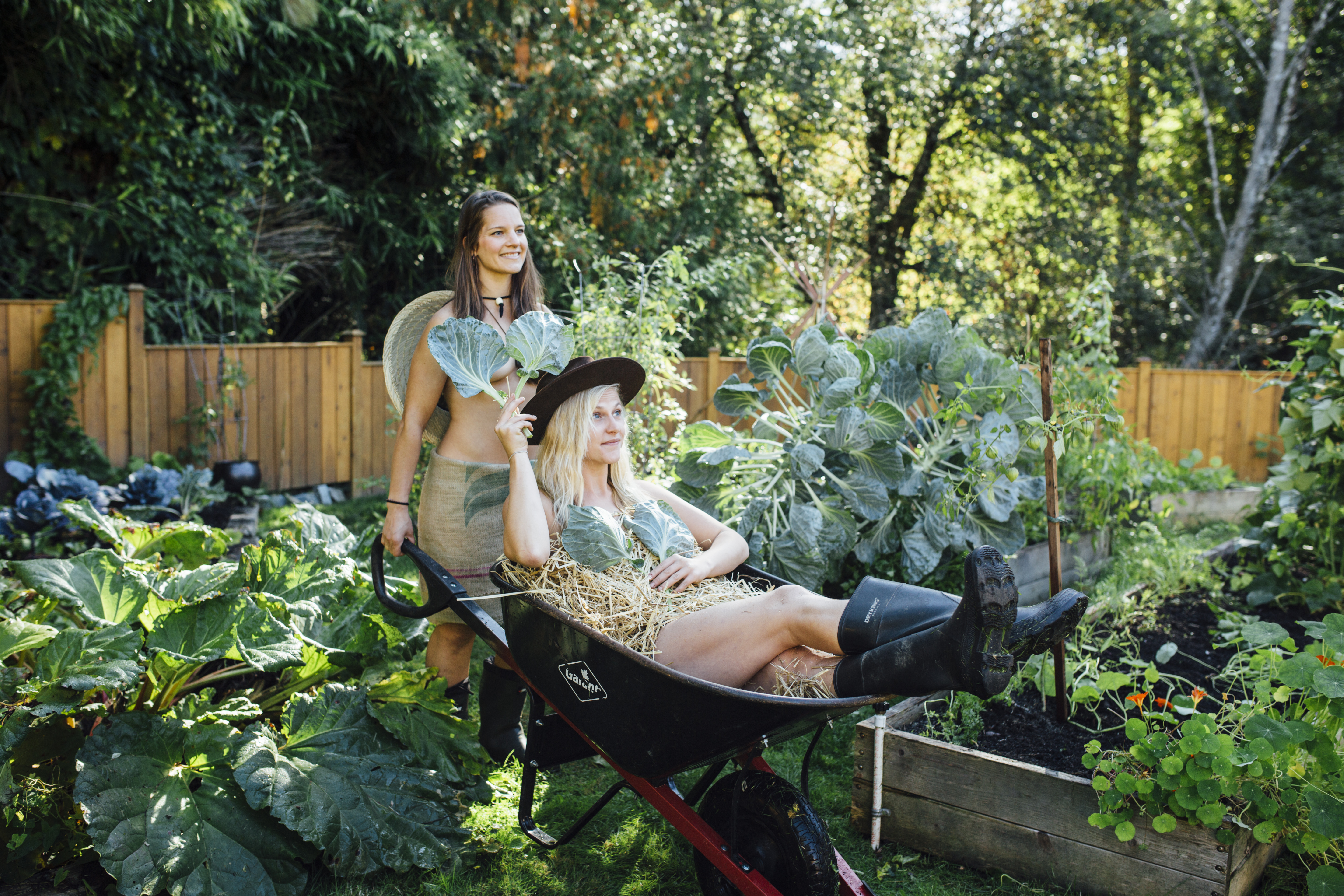
    Jordie and Steph from Solscapes pose in one of their client’s edible gardens.

    The group has been running community and school gardens over the past several years, and have been identifying ways to strengthen the local food system through consultations with farmers and other stakeholders in the food industry. Their community farm project aims to engage youth, attract new farmers to Squamish, and support established farmers while preserving agricultural land. They rallied local farmers to strip down for the cause, and most were willing to go along with it.

    Calendar coordinator and Squamish CAN president, Michalina Hunter, was inspired by a past calendar she purchased in 2015. “The nude farming calendar I bought on Indiegogo raised $35,000 for two women to put a downpayment on farm property. I thought it was such a great idea. How amazing would it be if we could raise that much for our organization? We finally decided to go for it this year. We have incredible farmers in Squamish. I hope the idea is just cheeky enough to be successful!”

    Preferred_MG_7791-NinaLaFlammePhotography-4
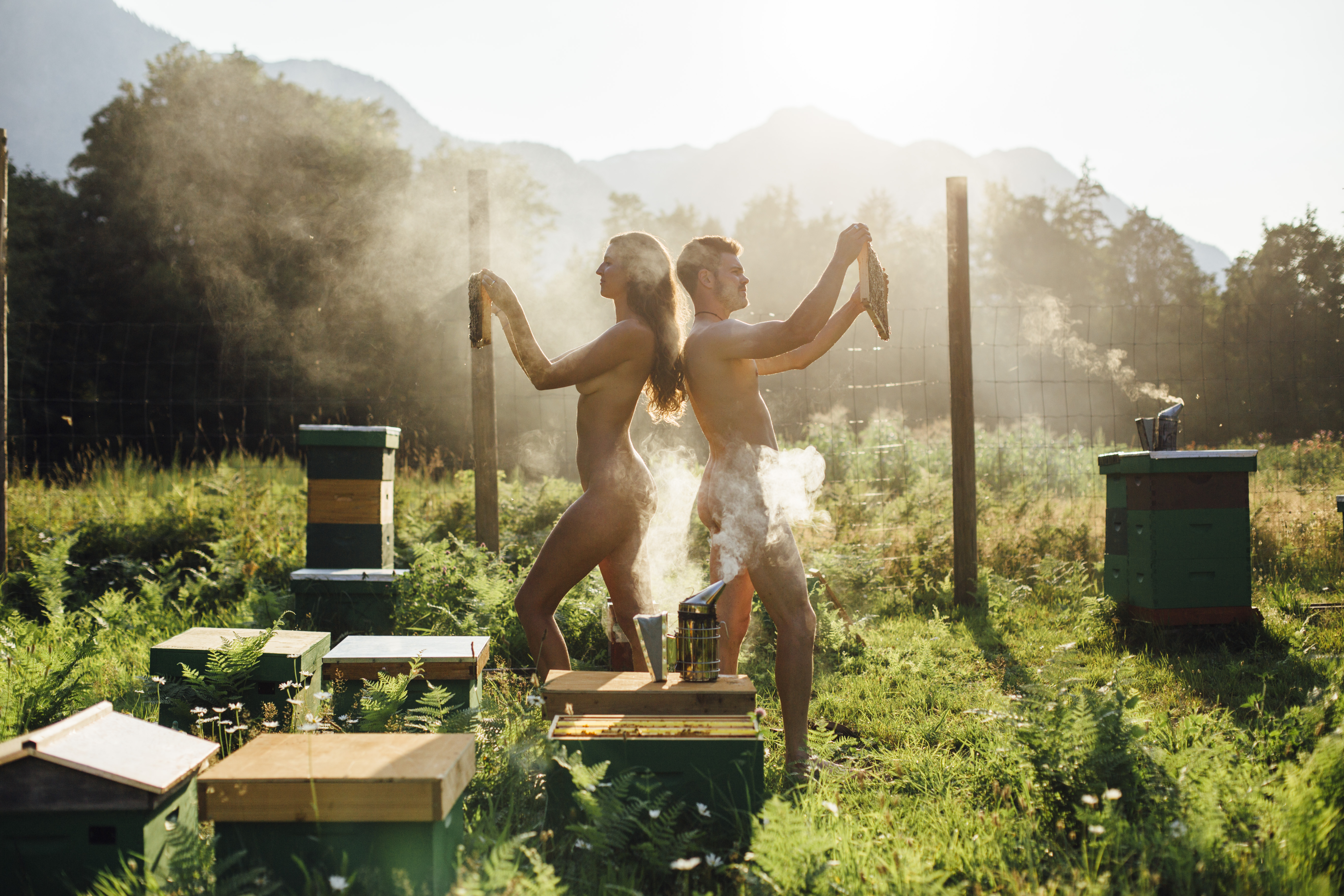
    Michalina and Darwyn of Green Bee Honey–probably the most dangerous photoshoot of them all given the flying stinging insects everywhere…

    There are other models of community farms and similar projects nearby. The group toured and learned about the Tsawassen Farm School, Glorious Organics (Aldergrove), Richmond Schoolyard, Fresh Roots Urban Farm (Vancouver), Amlec Organic Limited (Lillooet), Farm Folk City Folk (Vancouver), and others to design the project. 

    “We’re not the first community to do this,” says Hunter, “We’re really excited about the potential of creating multiple win-wins with this project. It can engage youth in growing food and learning employable skills, it can support new farmers in finding land, it can create shared sales opportunities for established farmers, and it can engage the community in sustainable agriculture. We envision a central educational market garden for us to work on, and then several 1/4 acre to 1 acre plots for new farmers to lease. There will be shared tools, equipment, wash stations, and storage for all the farmers to share. The community farm is really a jumping off point that can support so many other community initiatives.”

    IMG_6051
    Dorte and Thor from the Brackendale Art Gallery.

    Squamish used to be a prosperous agricultural community, growing primarily hops, hay, and potatoes. In fact, hop farming was Squamish’s first major industry. Much of the fertile valley-bottom land has since been paved and built on. Only 2% of Squamish’s remaining usable farmland is currently used for agriculture, yet skyrocketing land prices make it cost-prohibitive for new farmers to get into the industry. Leasing land, on the other hand, has less financial risk, and can allow new farmers to get into the industry, hone their skills, and build credit.

    _MG_3062-NinaLaFlammePhotography-15
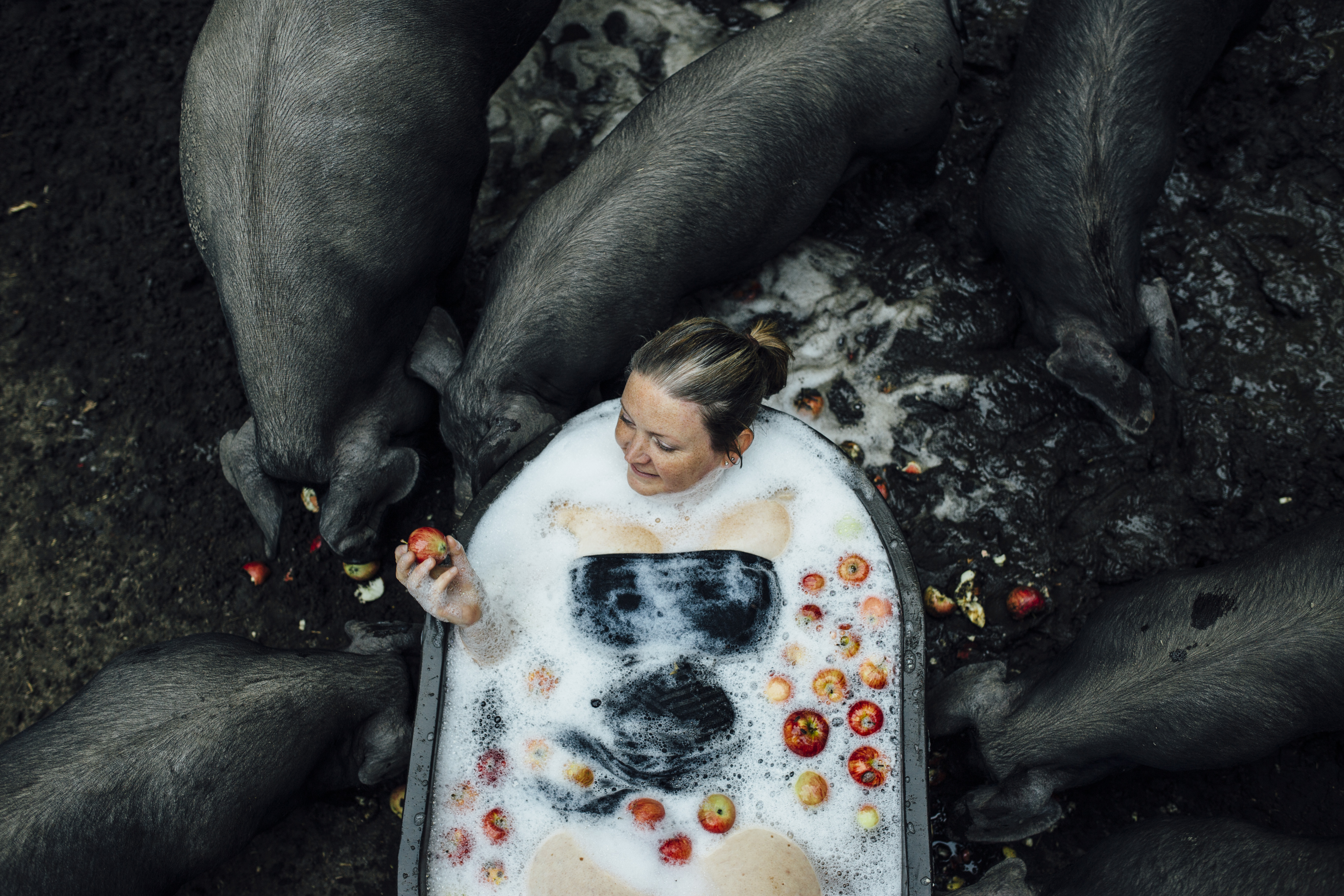
    Tracy of Stony Mountain Farm. The pigs were wary about the apples once they were covered in bubble bath, but of course being pigs they ate them anyway.

    The group envisions starting small with the community farm, then adding components over the years such as a Food Hub, community garden, covered workshop space, and food forest. They have not solidified a location for the community farm, but are exploring different options. Ideally they would own the piece of land, but a long term lease or memorandum of understanding would also suffice.

    Sneak peek of the calendar and ordering options here! 

    Perhaps a Squamish-Lillooet Farming Calendar is on the horizon for next year!

  • Our 2018 Farming Season in a Nutshell: Part 3 (Late summer/Fall)

    Our 2018 Farming Season in a Nutshell: Part 3 (Late summer/Fall)

    After Juneuary,  (see part 2), July’s weather was seasonably normal, but it was too-little-too-late for many of our flowers and for our heat-loving crops, like the tomatoes, eggplants and peppers.

    We were 6 weeks behind and many things needed 6 more weeks to mature.

    Luckily , over the years we have planted and divided many perennials to fill in the gaps as we waited for our annuals to bloom. We combined these with some natural wildflowers, like tansy, goldenrod and lupines, and were able to put together some nice bouquets for our regular customers.

    We had intended to expand our flower market, but with limited supply, that was out of the question this year. We had planted over 200 dahlia tubers and patiently waited for them to bloom. And bloom they did!

    Due to the weather, our season had become compressed.

    Plants have only goal in life – to reproduce. They bud, flower, fruit and go to seed, accomplishing this in whatever time frame is offered.

    Our gardens, just like wildflowers in the alpine, bloomed all at once, through necessity. So instead of having a staggered harvest, our cherries, berries, veggies, and flowers all needed attention at the same time. Hectic, to say the least.

    Our garlic  and fruit crops, a couple weeks late due to weather, were steadily approaching and we couldn’t keep up with everything else. We did what all farmers do when push comes to shove – we worked our asses off from dawn to dusk. Now we had fresh products for our markets, which of course is another job in itself. Our colorful stand attracted customers like butterflies. Finally we had a decent income stream, even though we had been at it for several months.

    Garlic, being our cash crop, is also our most labour intensive one. Every year, for the last few, we’ve expanded our volume by about 2000 bulbs. We were up to over 12,000 last year. Harvesting, sorting, cleaning and curing, usually takes about 6 weeks, with extra help, at a steady pace.

    Pulling it up can turn into panic if there’s a forecast for rain. After 2-3 days in wet soil  ripe garlic skins decompose, leaving split bulbs which store poorly and affect marketability.

    Murphy’s law of course, proved correct – it rained heavily mid-harvest. As we frantically  pulled the crop out of the soggy ground, we luckily found most of them still intact. Good. Most however were significantly smaller than usual. I did everything I normally did  at all stages with respect to mulching, weeding and fertilizing, and everything looked great above ground. Unfortunately, being a root crop, it’s what’s happening below the soil that matters. I had planted them in a new site that was south facing, but obscured by tall trees to the east and west, resulting in shady mornings and early evenings. This combined with a cool spring must have been the problem. Garlic prefers warm soil to bulb. This size difference didn’t affect quality but drastically reduced yields, yet it was still the same amount of work.

    My biggest concern now is that I won’t have enough seed-grade-sized garlic to replant for myself, let alone sell to other growers.

    I am ironically currently trying to purchase some more.

    I haven’t done the calculations yet, but  we will definitely have a smaller crop to plant.

    After the garlic harvest we immediately proceeded to fruit harvesting. This year we picked most of it in the rain, as we finished off the summer months with the worst September I can remember. It poured rain for 5 out of 6  of our most important market weekends from Labour Day to Thanksgiving. This not only affected sales but also our motivation. Again, we put on a brave face, brightened some people’s day with lovely flowers and pretended farming is always great.

    If our season comes across as all doom and gloom, that’s not the whole picture. We had  quite a few successes. Our huge dahlia patch was a field of dreams with massive blossoms over our heads. We had a bumper crop of berries, which kept our daughter, our highball picker, busy.  Apples and pears did really well and made up for the less than average cherries and plums. Our value-added garlic products, such as powders, are a huge hit.

    Should we measure our season by the weather, how some plants did or from our bottom line? Absolutely not! Any farmers who view their business this way, would soon admit defeat and quit. We are pleased to have a freezer full of meat to eat and trade with, and enough frozen, dried  and juiced fruit to last the winter. We have enough tomatoes , onions and peppers to keep us in pasta sauce for a long while. We have just enough savings to take a short holiday before the snow flies. Success in my books.

    I had to summarize our seven month season into three parts because this chosen profession is so involved and variable. Did I cover everything? Not even close! We have two orchards with dozens of trees and huge berry patches that need pruning and spraying, (organic methods of course), then picking and storing. Regular yard work and landscaping for 6 acres. Composting and amending soil. Tool and machine maintenance. Clearing, brushing, burning and firewood. Irrigation, weeding and succession planting. Renos and maintenance of our large house and outbuildings. Fencing, building a chicken coop and hoop houses. Daily chores such as taking care of 20 layers and 200 meat birds not to mention, slaughtering, butchering and processing them (not fun).  On top of all that, there are the indoor jobs I loathe the most such as marketing, book keeping, ordering supplies, and other paperwork.

    Now, before I think of anything else I’ve missed, I must stop writing because I have garlic beds to prepare and plant. A farmer’s day is never done. If you like a cushy, stable, and risk-free job, don’t even think about being a farmer. Personally, I wouldn’t have it any other way.

  • Our 2018 Farming Season in a nutshell:  Part 2 (Late Spring/Early Summer)

    Our 2018 Farming Season in a nutshell: Part 2 (Late Spring/Early Summer)

    This is the second instalment of Mike Roger’s recap of the rollercoaster farming season of 2018. For part 1, click here.

    So, here we are at the end of April, with a grow room full of tiny, compromised seedlings (see part 1).  Our hydro bill is through the roof and we have a lot of expenses. Most farmers have already tilled up their beds and are starting to plant the hardier varieties outside. We are feeling defeated. Why bother turning the soil if we don’t have anything to plant yet? It’s only an open invitation for weeds.

    In farming, if you’re not an optimist, you’ve already lost the game, so despite it all, we prepare our beds, not knowing what or how much we’re going to grow. We cover the fresh soil with drip irrigation and bio-mulch, a bio degradable plastic film to suppress the weeds and wait for whatever seedlings have survived to mature enough to transplant.

    Our only farm income in the spring is our annual Mother’s Day plant sale. Less than a month away, things are looking grim. Our neighbours have come to count on us to find heirloom varieties of tomatoes and other starts you may not find at the nursery. Luckily the tomatoes fared better than the delicate exotic flowers that we spent a lot on seeds for. Miraculously we had a successful sale, factoring in our perennials such as raspberries, rhubarb and herbs.

    Farming is so profoundly weather-related — the nicer the spring, the better off you are. Well, not in our case. May was extremely unseasonably hot (aka “Maygust)”. We knew we had to get our starts in for the traditional Victoria Day holiday deadline. We literally watched our tiny compromised transplants shrivel in the hot sun. The top of the soil would be bone-dry midday  and watering at this time often magnifies the sun’s rays. We lost even more plants and were forced to direct seed in the blank spaces between the survivors. We also had to resort to purchasing expensive starts from the nursery for many plants we couldn’t wait to sprout.

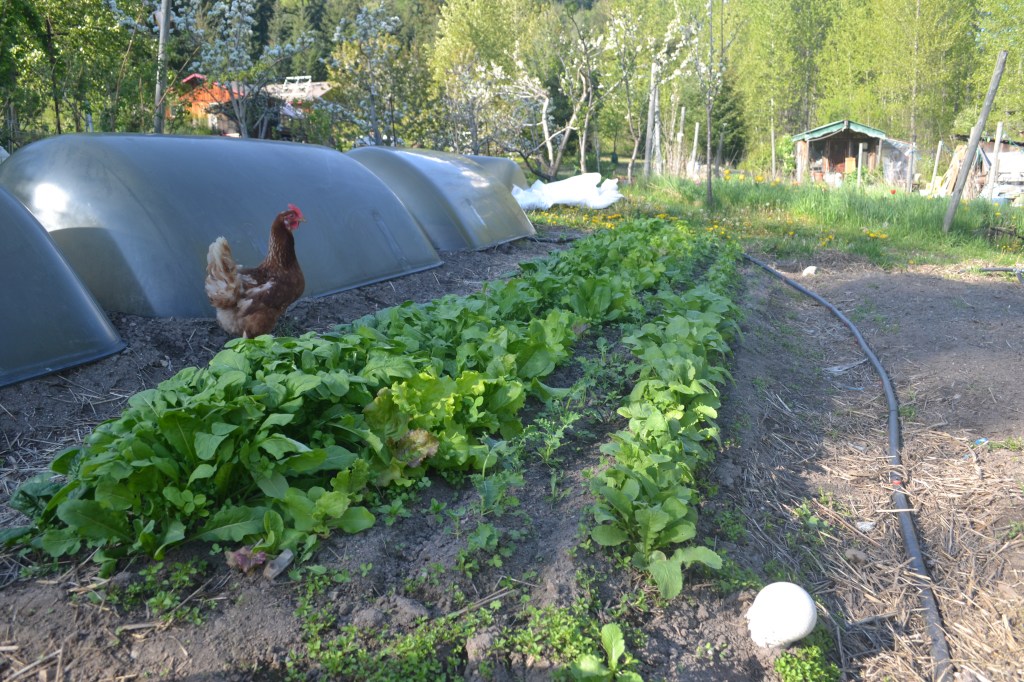
    Most of the things we focus on growing in our niche market are late season – heat-loving and slow-ripening – such as fruit, berries, tomatoes, flowers, and garlic. June is a make or break month, weather-wise. It sets the stage for yields by establishing buds and  deep roots to prepare for the summer.  A cold spell in June, for some reason, has become common here in recent years. This is fine for those growing brassicas, spinach, radishes and early season crops. During June, however, this weather pattern (Juneuary) lasted the entire month! It seems we got hit worse in Birken than in Pemberton. A few hundred feet in elevation results in a few degrees which can make a huge difference. The general rule is that below 6 degrees C, most plants just stop growing.  The nightly lows were often around 7 in Pemberton and less than 5 in Birken. We were burdened with covering  the plants up at night (with bubbles from the old Wizard chair), something we normally did in April.

    DSC_0021

    Farmers Markets have become big business. There is pressure to extend the season on both ends, regardless of what’s available from the weather dependent farmers. Again, this is okay for cool weather crops and artisans, but not for us. Nonetheless, we have to  book and pay for our markets long in advance.  So here we are into July and we’ve got nothing  fresh for our scheduled markets. Do we just cancel? No! We need money to keep the farm running! We had to somehow pull a rabbit out of a hat. We  quickly made some twig baskets and rustic coatracks (hence the Willowcraft name), packaged some dehydrated garlic and apples, made some vinaigrettes and raided our kitchen garden of herbs and greens. Of course, our stand looked awesome and our customers were unaware of all our challenges.

    In farming, if you don’t adapt quickly, you’re done.  It’s not like there’s a choice. It’s a life-long lifestyle. I wasn’t going to abandon everything and get a 9-5 job to pay for bills. If it weren’t for credit, I don’t think there would be a single farm in existence.

    Stay tuned for part 3, in which we’re overwhelmed as everything ripens at once, and underwhelmed by the performance of our cash crop, garlic. We finally somehow salvage our difficult season finishing on a (spoiler alert) positive note.


  • Our 2018 Farming Season in a Nutshell: Part 1 (Earlyspring)

    Our 2018 Farming Season in a Nutshell: Part 1 (Earlyspring)

    In farming, no two years are ever similar, with hits, misses, trials and tribulations. You often add a few experiments, delete a few duds, and try to improve infrastructure and efficiency. Nature is fickle however, and like anything in life, things rarely work out as planned, you have to roll with the punches and Mother Earth has a hefty left hook.

    This year, we had so many ups and downs I will have to break it into 3 parts: Early  spring, Late spring/summer and Fall

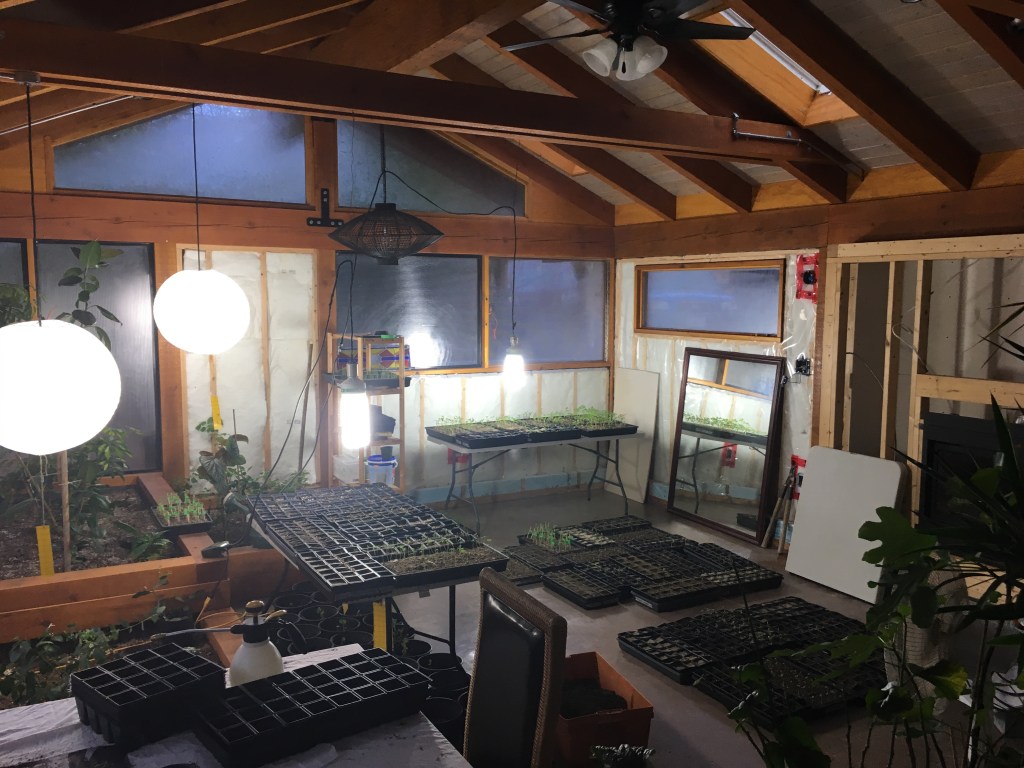
    Our seasons always start optimistically with the first inkling of spring in early March. This year, we were extremely excited to use our newly constructed propagation room, a large solarium with heated floors, grow lights and ventilation. We invested  tons on construction, and more than our usual amount in new seeds, with the intent of going big. We had a line on some recycled potting mix from an indoor commercial operation.  I knew using  outdoor natural soil for indoor plant starts is a big no-no with the possibility of introducing pests or diseases. I felt confident with my score because it started as  certified organic sterilized mix and also sat outside all winter which should have killed any troublemakers and their eggs, plus I had used some before. Most of all it was free, saving me hundreds of dollars in a time that is lean for farmers.

    Our lovely solarium also has tropicals, citrus, coffee, figs etc. As soon as the temp rose , the aphids, whose eggs overwintered on these plants, hatched. Problem number one. We quickly tried to control it with insecticidal soap, but couldn’t keep up. With organic methods, you have to work as many angles as possible – you can’t just go out and buy some strong poison and kill everything in one shot. We tried jets of water and vacuuming, but still couldn’t keep up. We became concerned when these little creatures found the tender sprouts of our seed starts. We purchased 3000 lady bugs and let them do the work. They eventually worked but some damage occurred and we had to re-seed a lot. This was early in the game, and we weren’t too upset. We still had plenty of time to recoup our losses.

    Fast forward a week or two, and we noticed the seedlings are dying off . We get out the magnifying glass to check for bugs: none. Good. We assumed the plants are damping off, a condition that often occurs in wet, cold soil. We cut back the watering and crank up the heat. This only made the situation worse. Eventually we noticed tiny fruit flies hanging around the plants. Problem number 2. This was perplexing as there was no fruit anywhere and the sprouting vegetation was fine. These plants were dying from the ground up. Oh no! Fungus gnats! These flies are harmless, but their larva were eating the roots faster than they could grow. The damage had been done before we even diagnosed the problem. Those thousands of flies were laying tens of thousands of eggs in the soil. Now what? We called the company that sold us the ladybugs and ordered a bug with a fancy name that eats gnats. We had luck with biological controls (that’s the term when you introduce something natural to control a pest) with the ladybugs vs aphids, so we were confident. We disposed of the trays, re-seeded again and released thousands of these critters all over to deal with the gnats. We didn’t really know yet how these gnats were introduced and assumed they also overwintered on the tropicals in our above freezing solarium. Time was running out on our seeding window, but still felt we could pull it off.

    Unfortunately this didn’t work as well as planned. The control pests didn’t multiply as fast as the gnats. The flies kept on hatching which meant the roots were still being eaten.

    But where the hell did these bugs come from in the first place? I called the person I got the recycled soil from and asked him if they ever had issues with fungus gnats. He shamefully replied yes, but hadn’t mentioned it at the time, assuming everything would have frozen to death as it sat outside all winter. A quick google search on gnats revealed they have a natural antifreeze in their eggs and larva that can withstand warm winters.

    This dilemma kept me up at night: a large part of our farm income – annual flowers, tomatoes, herbs and veggies, was seriously jeopardized. There is no insurance for this type of thing. I scoured the internet for any solution. One was to douse the soil with diluted hydrogen peroxide (suitable for organic standards). This worked a bit, but not totally as it also killed the control pests in the soil. Now I was back to square one and there were still gnats flying around ready to lay more eggs.  I tried some other control bugs, but they took a few weeks to hatch! No time to waste! I was frantic.

    Next possibility was nematodes – another control bug that lives in the soil. They are expensive, and our seeding budget was getting tighter. I got some leftovers from a friend, but they were out of date. I had no time to rely on something that may not work. Last option? An organic mosquito control for small ponds that apparently works on gnats. This was affordable and I just kept dousing the soil every couple days. It seemed to be working but not after losing thousands of seedlings.

    Now that we knew the source of the problem and a  had a solution, we had to get some fresh potting mix and re-seed for the 3rd time with whatever seeds we had left.

    We were now far behind schedule, but like all farmers we kept ploughing through on a wing and a prayer.

    Come back for part 2 (Late spring/summer), in which I will describe how the weather further shit-kicked us.

  • #falltimealltime

    #falltimealltime

    It’s the most wonderful time of the year – or at least it’s MY favourite time of the year.

    Colours start to pop as the foliage begins its natural, beautiful progression to death and my appreciation for the warmth of the sun on my back is revived. Praise arises for the rainy days as reason to stay in, make soup and stock the freezer with food. Then there is also the rush of the game to see who gets to the fruit trees first – me or the bears. I go to bed with an extra blanket but leave the windows wide open while the coyote’s howl echoes through the night. Of course the dusting of snow on Mount Currie gets me pretty excited too! And, most importantly, my garden is still delivering the goods.

    This time of the year, I also sit back and think about my garden; what worked, what I want to do more of and what I can do away with next year. Journaling for the win: do it, do it now. So, what I thought I would do is share some of my favourite photos of the summer complete with commentary.

    First up is purple daikon radish. I pickled the shit out of these guys while in season. When a vegetable randomly forms heart shape upon cutting into it you really can’t help loving it. More will be planted in my garden next year, their spicy flavour is beyond delicious.


    Melons. Who doesn’t love a good melon. Previously I had tried watermelon but with little success there, this year I tried cantaloupe. Gave it a sunnier spot and was rewarded big time. Go figure: #shadowruffruff loved it too… juicy and flavourful beyond both our expectations!


    I have mentioned that kohlrabi was the undisputed heavy-weight champion in my garden but my Borage babes blew my mind; turns out they’re MASSIVE! They helped pollinate my butternut squash and many other things in my garden, plus the flowers were delicious in salads. This year I trained my squash to grow along the fence in hopes it would take up less space overall. As it turns out this move was a game changer. I will incorporate this method next year as well, perhaps to even shade something that requires less sun. And for the bee’s sake, borage will forever be in my garden regardless of the space it takes up.


    You know you’ve made it to the big time when your whole pasta sauce has been sourced from your backyard… I mean it’s SO good you want to share but really not really. Last season was the first year where I grew my own Roma tomatoes, celery, carrots, garlic, onions, basil, rosemary, thyme, oregano and cayenne peppers. I basically vowed from then on this was the way forward every year; always plant enough to make sauce for Dbot. I will also openly admit I have a love affair with fried green tomatoes served with soft poached eggs – you would too, if you’ve had it. Never underestimate the power of a green tomato.


    Does your cilantro bolt like crazy in the heat of the summer even if you’re giving it shade from the hot afternoon sun? No problem. Let them bolt and go to flower. The coriander seeds born from the delicate white flowers will produce the best ground version of this spice you’ve ever had. I guarantee you’ll start to plant cilantro just to let it go to seed!


    Fall is also the time when members of the brassica family shine. I remember being amazed when I learned how Brussel sprouts grew, so they became a yearly addition to my garden (just be sure to give them plenty of space). New this year was Savoy cabbage grown from seed and it’s sure to make my cabbage rolls go from A+ to A++. Another tip for cabbage is to space out their planting times then you don’t end up with a whole bunch at the same time even though they keep quite well.


    Flowers… I will plant way more flowers in my garden next year both perennials and annuals. Some of my perennials are ready to split which benefits both the plant and my wallet. Plus, having fresh cut blooms in my house just makes me smile.


    I feel like I could carry on for a long time but as I write the weeds are still growing and they sure aren’t picking themselves! So I’ll just leave you with this last photo that I call, “The Mushroom that had all the Thyme in the World”. #dadjoke #sorrynotsorry

    IMG_5862

  • Tory Pearson explains where Pemberton’s first “community supported homestead” experiment began

    Tory Pearson explains where Pemberton’s first “community supported homestead” experiment began

    This is a story about the founding of the Wamhily CSH (Community Supported Homestead). What that is and why, is held in the story below. I hope this tale speaks to you and reminds you, as Field of Dreams profoundly taught us all: “If you build it, they will come.”

    I bought my acreage in a very tumultuous and vulnerable time. I’d been working in social and environmental justice organizations my entire career and had just transitioned into a role in Vancouver’s tech scene. It was what I felt I needed to do, but left me with a void inside and some major guilt for having transitioned to a life “for profit”. For the first time, I was dedicating my daily toils to the system that I knew was broken and only compounding the things about this world that are hollowing us out from the inside.

    It took three years working in high-paced tech sales for me to hit my wall. I was anxious, I was demoralized and I was becoming more and more disillusioned by the day.

    And then I found Pemberton.

    38637483_10156721693349306_2296609585441538048_n

    It happened as a result of a panic attack. Something that was totally foreign to me. I found myself hyperventilating under my desk in my office, overlooking the ferry boats of Granville Island with its happy tourists going about their day in the sun in one of Vancouver’s most beautiful locations. Who has a panic attack in Vancouver’s happiest place?

    I fled the office, got in my truck and ‘drove’. I say ‘drove’ but if we’re being fully honest it wasn’t driving, it was running. I ran up the Sea-to-Sky, I ran past Squamish and past Whistler, further than I’d ever been in this direction. I ran, only to find Pemby.

    It wasn’t until I hit this quiet mountain town that the anxiety lifted and I was able to breathe again. I felt it deep inside and I knew. This is it.

    It took me a few months of weekend visits and some persistence from my realtor, but I found it. I found my acreage. I found my blissful slice of paradise. I found Wamhily – five wild acres in the mountains outside Pemby that lacked cell reception. Perfect.

    37266574_10156671310489306_3804017680407592960_n

    For those of you who get it, this won’t be news to you. But for me, it was a revelation — the peace, the strength and the levelling and grounding power of these mountains. Of the land between them. And of what they can evoke in even the most desperate and hollowed out of us. So much so, I quit my job, left the upward trajectory of a stellar career and never looked back.

    I named my acreage Wamhily. It’s a long story, too long for this piece, but the short story is that the calm steadfast mountains, our deep rich forests and the serene lakes that make up our magical home manifested. Wamhily, an acronym for With All My Heart I Love You. And I do.

    Having worked in the political and not for profit trenches with others who wear their passion on their sleeves and who have been able to withstand the heartbreak that this world throws at us, things crystalized. Wamhily was built to open its arms to those still doing that great work, as a respite, as an oasis, and as a hub for support and connection between those who are able to continue the fight. A quiet place away in nature, far from the social and environmental fights we wage on behalf of others and our collective selves. A safe place in nature that is always here for you.

    Unfortunately, real life creeps in, and reality is: no acreage is an island, as much as we wish it could be so. There are bills, taxes and the costs that come with participating in greater society. And after four years, Wamhily has been forced to evolved.

    To say Wamhily was a one way street providing for the community that needed it would be a lie. After four years on the acreage, building my mini homestead, the community it fed has showed up. It has built gardens with me, it has tended bees, it has mourned their loss to bears getting fat for winter, it has supported the dream and revelled in its escapism. Now, it has moved to helping further, with supporting me in my homestead dreams and making sure the bills get paid to keep this place afloat for us all.

    This brings me to the Wamhily CSH.

    What is a CSH (Community Supported Homestead)?

    To be honest, I’ve never heard of another one. The idea came from the intrepid farmers out there running CSAs (Community Supported Agriculture), making their way with the help of their neighbours, friends and those that believe in local farming. Participants pay a fee at the outset of the season and reap the benefit that harvest season holds.

    The inaugural Wamhily CSH is the first time a monetary value will be placed on the gift that Wamhily is to me and those that draw upon it. It feels weird to bring money into this beautiful ecosystem of love and support but it came at the behest of its community, now demanding to pay into the work I do and the dream it supports in us all.

    In spring, we harvest garlic scapes from the garden and make pesto. Summer brings:  beets, beans and cucumbers for pickling; tomatoes for drying and sauce; peppers and onions to add for salsa; berries for jam; cabbages for sauerkraut; herbs and kidney beans for drying; seeds for saving; and other garden delights that find their way into jars. Down time manifests vegan soaps made from scratch with exfoliants like lavender grown and dried here, and knitted dish rags so you can say goodbye to disposable j-clothes, among many other gifts.

    39979433_10156761712549306_4218753195821760512_n

    Before the costs and toils of the season are upon me, I know I have the support of my community. Not just in spirit, but in the currency of our culture, dollar dollar bills y’all. Those who believe in what I’m doing buy in at the outset and set me up to be able to manifest the season’s bounty into what we need to get by throughout the year. A jar of raspberry jam, still smacking of the sunshine it was harvested in, shining through in the bleak grey of February.

    In short, a CSH is a community supporting an alternative “back to our roots” lifestyle, supporting a person and supporting a belief that together we can grow, make and provide for ourselves. I’m not just preserving food or making my own cheese — we’re preserving a way of living that our existing consumerist and capitalist system have thrown to the wayside and devalued.

    Wamhily’s CSH is more than just the monetary support to be able to provide healthy and love-filled food and household items. It’s the understanding between us that there is value in where we’ve come from and the knowledge passed from generation to generation. There is innate and deep importance in hands covered in dirt, arms torn up by blackberry brambles, wax from my hives dipped into tapers.

    The Wamhily CSH is the manifestation of love into action. A divergence from the corporatized and prescribed path to a more connected and nurturing one. Of my community saving me and I hope, in a small way, me saving them.

    It comes not from a place of judgment of what we’ve inherited and is easy, but of what we can do when we set our minds to it and believe that we are capable. Capable of a different narrative, capable of doing more with less and capable of knowing deep in ourselves that we don’t need the system handed to us.

    This season, with the support of my community, I go to bed each night knowing that Field of Dreams was right. When you build it, they will come. At least when you build it together.