Category: farming

  • Silly Gardening Mistakes

    Silly Gardening Mistakes

    Trial and error is a necessary and inevitable part of the learning curve for all gardeners.There are so many variables it’s impossible to always have 100% success, no matter the experience. Even when you think you have something figured out, you usually find you could have improved on your method, or Mother Nature throws your theory out the window.

    Luckily the internet with its blogs, scientific studies and You Tube provide a wealth of information. This can also get overwhelming and even provide misinformation, so read between the lines, keep it simple and my best advice: look to nature. Perhaps it’s unfortunate I didn’t have the luxury of the internet in my rookie years and even when things came online, we didn’t even get service for a couple decades. In the beginning I had one resource – “The Encyclopedia of Country Living”. A thick hippie homesteading bible from the 70’s, complete with anecdotes, recipes and preserving methods. Maybe it was a blessing as it forced me to experiment more, simplify, improvise and get my cues intuitively. One thing for sure is I made a lot of mistakes and learned from them. Improvements to techniques are constant, and mis-steps still occur. I try not to make the same blunders twice. I have compiled a list of common lessons I’ve learned, often the hard way.

    START SMALL.

    Biting off more than you can chew can end up being overwhelming. Planting seeds is the least labour intensive part, so it’s easy to get carried away. Don’t buy too many packages, there’s often hundreds of seeds in each. After all, it’s supposed to be fun even amid failures. If it’s no longer enjoyable, scale down or find another hobby.

    GROW WHAT YOU LIKE.

    If you don’t like Brussel sprouts, do you really want to tend them until Thanksgiving just to give them away and lie about how good they are? If you like something grow an abundance and learn how to perfect it and preserve it.

    PLANT FOR YOUR ZONE.

    Why bother growing something that will struggle and/or require extra protection. Ask your neighbours what does or doesn’t work, figure out your microclimate before you push the boundaries. If you notice that no one in your area grows a particular type of something its probably because someone else tried and failed or it’s just too difficult.

    SEEDING TOO EARLY.

    It’s easy to get excited and impatient in the late winter. There is an optimum sowing window and it varies depending on the plant. Problems can arise such as outgrowing their cell and needing up potting, weak leggy plants needing more light and nutrients, susceptibility to pests and diseases, over and under watering, and of course unnecessary labour. Sometimes you’re better off waiting and direct seeding. avoiding all those issues. Some seed packages will dictate what period to plant, listing the days before last frost or growing days required to harvest. This is still variable depending on your location, so again, ask your neighbours their schedule.

    PLANTING TOO LATE.

    Conversely getting things out late may result in a poor harvest. If you’ve “put the cart before the horse” by not having your beds prepared when your seedlings are at their prime for transplanting, this will affect the health and wellbeing of the plant’s whole cycle. There is also a transplant shock, and hot dry summer weather that can set things back to consider. Protecting your plants from various elements may be needed and change seasonally. Timing and knowing the growing season depending on the plant comes with experience. Expect some failures.

    ADJUST YOUR SCHEDULE FOR THE WEATHER.

    Planting in hot, sunny , dry or windy weather is not recommended. Nor is spreading soil in the rain, tilling mud or dust, mulching before it rains or pruning while flowering or when the sap is running. Some biodynamic farmers take things further and adjust for solar and moon cycles. Watching the weather is common sense for all gardeners.

    LIMIT WHAT YOU GROW.

    It’s best to do a few good things well than struggle with too many things going on. Plant what you can manage, and use efficiently. Succession planting can ensure a continuous crop of quick growing veggies such as greens or radishes as opposed to a huge patch of bolting lettuces and then nothing. Don’t forget the biggest and most common rookie mistake – planting too many Zucchinis!

    AVOID COMPROMISED PLANTS AND SEEDS.

    Plants have a life cycle and seeds have a shelf life. If a plant is sick and hasn’t been tended properly you will inherit all their problems and perhaps create more. If seeds are outdated or haven’t been stored properly you will be at a disadvantage from the get go. A good compassionate gardener can often nurse back a sick plant, but why take the risk and hassle as a beginner.

    BUILD YOUR SOIL.

    Everything your plants need, except for light, is in your soil. It is the foundation of every successful natural garden. Investigate nutrients, micro organisms, amendments, mulches and cultivation methods. It’s endless what you can learn and the more you do the better off your garden will be.

    RESIST UNNATURAL QUICK FIXES.

    By this I mean the use of pesticides and herbicides. Figure out the root causes, and find organic solutions. There are usually a multitude of natural alternatives. It often takes some time to regain a natural balance and eliminate the issue. Be patient.

    DON’T PROCRASTINATE.

    In gardening there is usually a short window to most optimally do a necessary task. The longer you wait the more difficult and time consuming most of the following steps become. If you have the opportunity, just do it right away.

    BE RESOURCEFUL.

    It’s easy to spend many times the value of your crop on exotic varieties, greenhouses, shiny tools and fancy gadgets. Your plants couldn’t care less. They just need the loving care of the gardener and that’s something you can’t buy. Buy used equipment, recycle and improvise. That’s what all the old timer gardeners do.

    BE CLEAN.

    Remember all it takes is a single spore or a mating couple of pests to exponentially turn into an infestation. Avoid bringing outdoor soil indoors, sterilize your growing area, disinfect your tools and wash all your recycled containers. It’s all extra work but well worth the prevention of potentially big problems.

  • Working Hard

    Working Hard

    “I can’t wait to go back to bed” – my first thought most mornings. I stop my alarm almost before it starts. Hitting snooze is tempting, but too dangerous. I don’t leave myself any extra time; the extra minutes of sleep are well worth the rush. Quarter to six, my eyes open, I take a deep breath and swing out of bed. I put on water to boil while I go to the bathroom, and when I come out, I am ready to go. A quick piece of toast and coffee in hand, and I am out the door.

    As I drive up the Meadows to the farm I work at, angsty questions roll through my head: why am I doing this? There has to be an easier job, one where I might feel rested at least one day a week.

    Pink light is hitting the east facing peaks and spraying a soft alpenglow into the valley. Cows graze in a large field veiled by a fine mist.

    I pull into work, put my boots on and walk out into the field. First thing is harvest. We need to get the vegetables off the field and into the cooler before the sun is too high. As I pull kale leaves off their stalks and tie them into bunches, my mental fog begins to lift. Looking around at the walls of the valley, Mt. Currie at one end, and the Hurley at the other, I forgive myself for the weight of my angst.

    What is work? For most of us, it’s having something to do that we don’t want to. We spend our days going off to an office or a store or a field to earn enough money to play, to do the things we do want to do. It is a trade-off we accept, day after day.

    If you have a job you love, you never work a day in your life, so the cliché goes. But it is more nuanced than that. Love is not a purely positive emotion. It is an act, difficult and requiring effort; at times it is defined by tolerating unpleasant things precisely because the positives are so pure. And maybe without those unpleasant things, the positives would not be so deep, and the beauty of a morning in the valley would be wasted.

    Life as a farmhand falls within that cliché. When I told people I would be working on a farm, their initial reply was often, “that’s hard work,” with the skeptical gaze of imagining the hardships of manual labour. I knew it would be difficult, and my chronic exhaustion proves it, but the positives far outweigh the opportunity to get more sleep.

    The physical aspect of the job pays for itself; despite fatigue, my body feels strong and capable, and I count this as a blessing. I consider myself fortunate to be outside every day, in a place people drive for hours just to look at. The early hours are my favourite of the day. My mind feels as clear as the air, crisp and refreshing. I spend my weekends hiking to places to find this feeling, and I have it every day at work.

    Maybe more important than anything in a good job is what the work is towards. At the farm, every transplant I put in the ground, and every weed I pull out, helps grow food that will feed the community. Compared to most of my jobs in the past, where my effort is often aimed at something I have no connection with, harvesting the food I will eat for dinner and that I saw at every step of the way, feels like a religious experience. And I am lucky enough to be paid for it.

    This sort of thoughtful work attracts characters with unique wisdom at their disposal. Conversations fill the air, and may interfere with the work at hand. But at lunch or in the small gaps between jobs, new ideas are openly exchanged and my own beliefs are questioned. Smart people are told they should be lawyers or doctors or scientists, but here they are farming.

    In the process, I have picked up indispensable skills that would have been unavailable to me from a seat behind a desk. I am confident I could start my own garden and feed myself. I would face unforeseen challenges, I’m sure, but working to solve problems is part of the fun.

    Not all work is paid for, at least not in dollars and cents. We will always need to do things we are not keen on doing to survive, but that does not mean we must suffer. Growing food is work, and leaves you as fulfilled as what you put on your plate. After I eat dinner and get ready for bed, I am filled with a sense of satisfaction a day in bed could never give me.

    You can find John at the Grand Majestic Pumpkin patch until Halloween.

  • Farming for Change: introducing writer-farmer John Alpaugh

    Farming for Change: introducing writer-farmer John Alpaugh

    As a child I avoided eating vegetables as if they were toxic. The final scene of many dinners was a stand off between my parents and I over an untouched side of raw carrots. Eventually they surrendered, not willing to torture me or forego sleep to prove a nutritional point. For many years after these victories I avoided vegetables altogether. It is a strange turn of events that today I am working on a small organic vegetable farm.

    Like many people in British Columbia, I am not from here. I have the indistinct story of being from Ontario. After graduating from Dalhousie University last spring, I moved back home to work for my parents and save some money. When the fall came around, I built a bed in my car and set off for a road trip through the United States. I had a ski pass and a National Parks pass, and I was going to see the natural splendour that is so celebrated.

    As I approached the end of my trip and the bottom of my bank account in the early spring of 2020, I had to decide what to do next. Rounding the turn and heading north from California, BC appeared to be a natural conclusion. In the past, I had spent my summers working on golf courses. I wanted to continue working outside, this time putting my efforts towards work I felt was part of a solution, environmentally and physically. I went on GoodWork.ca, a jobsite connecting eco-minded workers with sustainable work.

    One posting caught my eye: Laughing Crow Organics in Pemberton, working as a farmhand. I emailed Andrew Budgell and Kerry McCann, the owners and operators of the farm. A few days later, I had a Skype interview from the visitor’s centre in Yosemite Valley, and they offered me the job. I started looking for a place to live that would also be financially sustainable.

    Kerry McCann, Laughing Crow Organics’ co-owner: “People need to eat.”

    But soon after this, the world entered a pandemic, and suddenly every plan was on shaky foundation. No one had any idea what would be possible a week, a month, a year from now. I was in Lake Louise staying with a friend from home when COVID hit, planning to continue west. He had been laid off from his job at the hotel, and we both decided to head east and wait things out.

    I got in touch with Kerry. Would there still be a job for me? People still need to eat, she said. “We will be growing plants and feeding people and we will need your help.” A month after my first cross country drive, I turned around and headed back west.

    Immediately I knew I had made the right decision. Even in May, at the height of COVID confusion, Pemberton was a pocket of normalcy. The next month, when Black Lives Matter demonstrations erupted across North America, the events of the world felt even further away. In both instances, I wondered what part I played in it all. What is my responsibility?

    Farming was an attempt to answer this question. Our food systems are some of the most oppressive systems we have, environmentally, socially and economically. Like many others in the capitalist mindset, optimization has been focused on profits, rather than quality. As a result, large scale agriculture has sterilized the growing process in an effort to grow more food for less money. These costs do not evaporate. They are passed down the line onto the health, the environment, the worker, and the consumer.

    When I was on the road, I did most of my shopping at Walmart. It was the cheapest option, and they let me sleep in the parking lot, so it was convenient, but I knew there was something wrong with this decision. By spending my money on cheaper food, I was inevitably supporting practices I do not believe in. Cheaper food is cheaper because it exploits workers, and abuses the environment.

    Eating is a completely different experience on the farm, one I am very fortunate to have. The work is fair, the pay is honest, and our relationship with the land is respectful. We give it what it needs, and it repays in kind.

    Unfortunately, there is an observed problem of access to good food, one that can often be drawn on lines of racial inequality. Buying organic is often out of reach, and Walmart or McDonald’s appears to be the best or only option. But when I go to market, and see what our customers get for $30, in quality and quantity, I cannot believe I shopped at Walmart. If I were a customer, which I have no doubt I will be in the future if I am not still an employee, I would be proud to be supporting better practices, and to be receiving a better product.

    To be an activist does not necessarily mean you must be on the front lines with a picket sign. It can be as simple as making more informed choices at the grocery store. By supporting local, small scale sustainable agriculture, we are supporting the health of the earth, the health of ourselves, and the health of society. It is an act of liberation and solidarity. The more we choose to buy from farmers who are doing the right thing, the more this opportunity will be presented to others.

    I needed to find myself on a farm before I truly grasped this, but awareness is free to anyone, and it is often the most powerful thing we can do.

  • Thank-you Bees!

    Thank-you Bees!

    From 20 hives, our own Nurture in Nature bees have been busy buzzzyy…

    Our own honey is now available in our Farm-acy Stand and with the wax caps from the honey combs, came an exciting learning day of rendering the wax and the extra honey, that had been extracted by our beekeeper Joel.

    Feeling like a hungry bear, I scooped up handfuls of the wax, dead bees and honey from the large tub into the slow cooker and like a bear, licking my paws was so good and irresistible! (I did wash them of course before continuing).

    Good thing Mr Bear didn’t smell it from afar because the bees certainly did and tried to come join me to claim it back!

    Once melted, I filtered it through cheese cloth so the wax dripped through into water, cooling immediately to form pure wax while the slum gum (unwanted material) was caught and the rest of the honey settled at the bottom of the water. Amazingly once the water was drained off as much as possible, 7 more jars of cooking honey were filled. Yay!

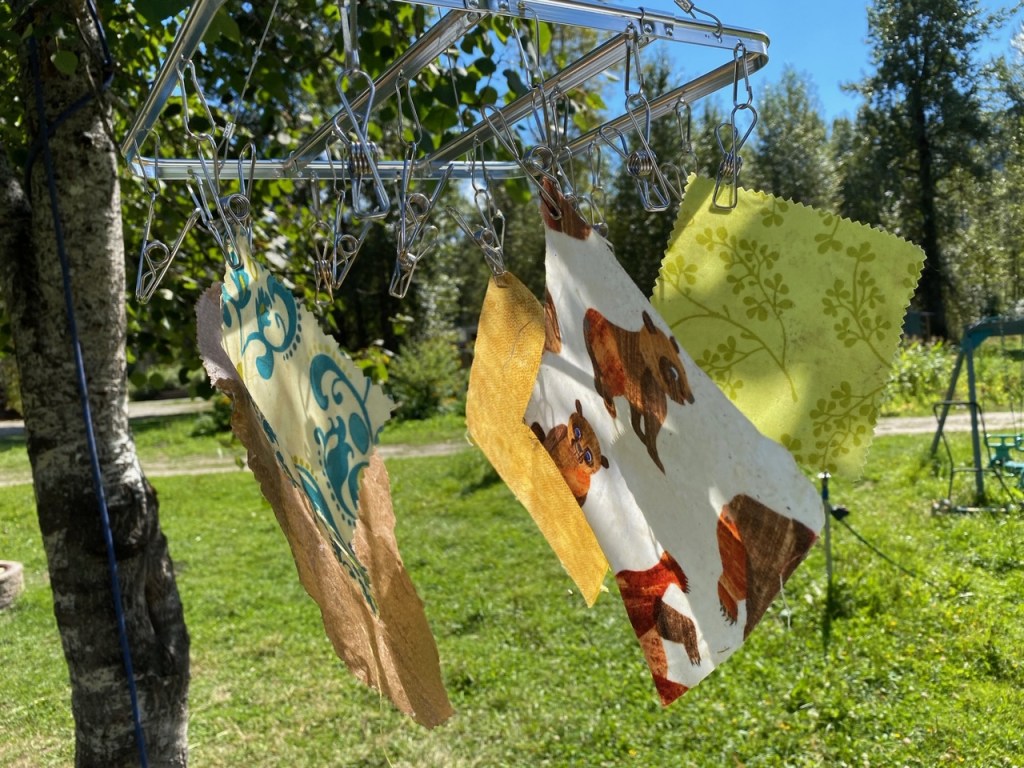
    For our Friday workshop, we decided to use the wax to create wax food wraps and for those not familiar with them, we dip or paint some lovely cotton material, the melted wax which when hardens can be shaped around a pot, used to wrap lunch sandwiches in, and any other use that can be thought of. (Thank you Carin in your guidance in making these and provision of the cloth).

    Though many pieces were made by many hands, making it easy work to process lots of wraps, we realised we did not mention that in coming to our workshop, our philosophy is that we are here as a community, learning and sharing together, so though one person may make many pieces, that does not entitle them to claim those pieces as their ‘own’. Rather they are learning by helping, giving something back but do get to keep an item they make.

    This leaves all the other wraps to be sold in the Farm-acy Stand which brings funds back to the community garden, (and to those happy hardworking bees)….so lets please say a thank you to all our local bees out there for providing us with some wonderful products to enjoy!

    Follow Nurture in Nature’s adventures at https://www.nurtureinnature.ca, or visit them at one of their forthcoming September events. For more details check out https://www.nurtureinnature.ca/upcoming-events

  • Laughing Crow’s farm monster is alive!

    Laughing Crow’s farm monster is alive!

    When I interviewed Kerry and Andrew last year, for a story about local farmers, Andrew shared his idea that the farm is a kind of mechanical beast that they build up every year, that eventually lurches to life. I loved seeing him unpack this idea in Laughing Crow Organics’ newsletter to harvest box subscribers last week, and got permission to share it here.

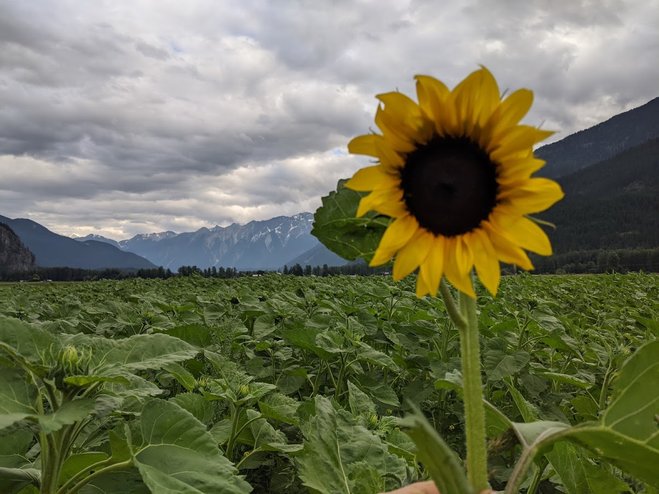
    In other news, the sunflower maze is ready and opening Friday August 14

    image-1

    Over to Andrew Budgell:

    The farm monster is a giant animated beast built from scratch every year, one miniature piece at a time placed by a few busy human hands.

    Slow incremental progress is the key.  In the early weeks it almost seems unlikely that it will take shape… 

    By June it starts to have form and begins to threaten action by spitting out peas, radishes, salad greens, lettuces and kales..

    More pieces are added…  the monster is fed and begins to belch out carrots and beets random flowers and zucchinis—–

    I’m not sure exactly what move creates the next shift but it’s like an all-of-a-sudden lurch when the monster begins to barf out all of the things… tomatoes, eggplants, beans, melons and onions. Squash starts to fatten up and beach ball pumpkins appear almost as if from nowhere… Brussels form, and armies of broccoli, cauliflower and cabbages line up for harvest.   

    It is exhilarating and exhausting all at once.  We are at this juncture now.  August…. we have built a veritable monster and are so very excited to share it with you over the second half the growing season.

    image-8

  • Pemberton Permaculture Community Garden

    Pemberton Permaculture Community Garden

    Community gardens – they allow for humans, plants, food, and wildlife to come together in symbiotic relationships. And now we have a new one in Pemberton!

    This slideshow requires JavaScript.

    Here at Nurture in Nature, we have 15 Pembertonians joining us on-site for two hours each week to maintain this communal permaculture garden. Everyone comes once a week to participate in the cycles of gardening, so the daily workload is shared amongst the group and we all get a weekly harvest. You can see in the above gallery we have come a long way so far this season! Thanks again to Sea To Sky Soils for helping so much with the initial setup!

    So far, we have harvested cotton buds, nettles, fiddleheads, dandelions, wild mint, spruce tips, and sweet cicely from the wild side of our garden. From our cultivated areas, we are already harvesting salad greens, heads of lettuce, kale and collard greens, and a plethora of herbs such as mints, lemon balm, oregano, summer savory, parsley and thyme. I have seen some pretty creative food ideas coming from the garden as we as a team learn how to create and share a yield as a community, but also how to appreciate what Nature is already offering without any work on our end. Cotton bud tinctures, nettle pesto, dandelion honey, peppermint brownies, herb butters and teas have all been made by our gardeners. Many of us joined this garden because we just didn’t have the space at home to grow our own food, so we can already see dramatic change towards resiliency for those of us currently involved!

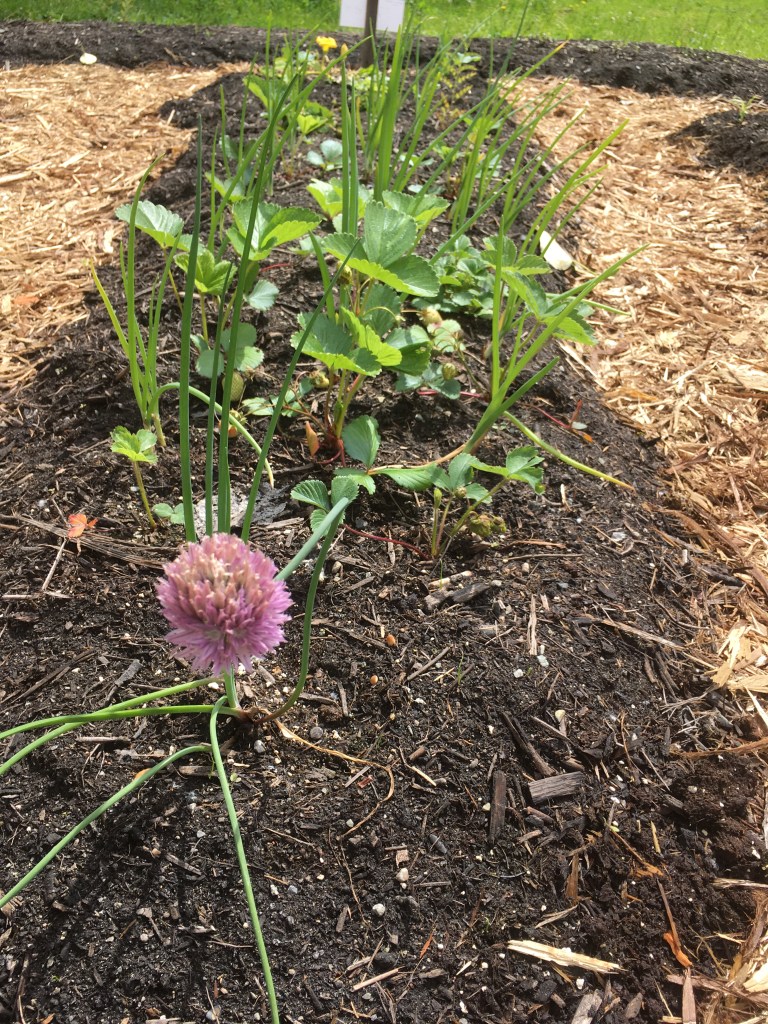
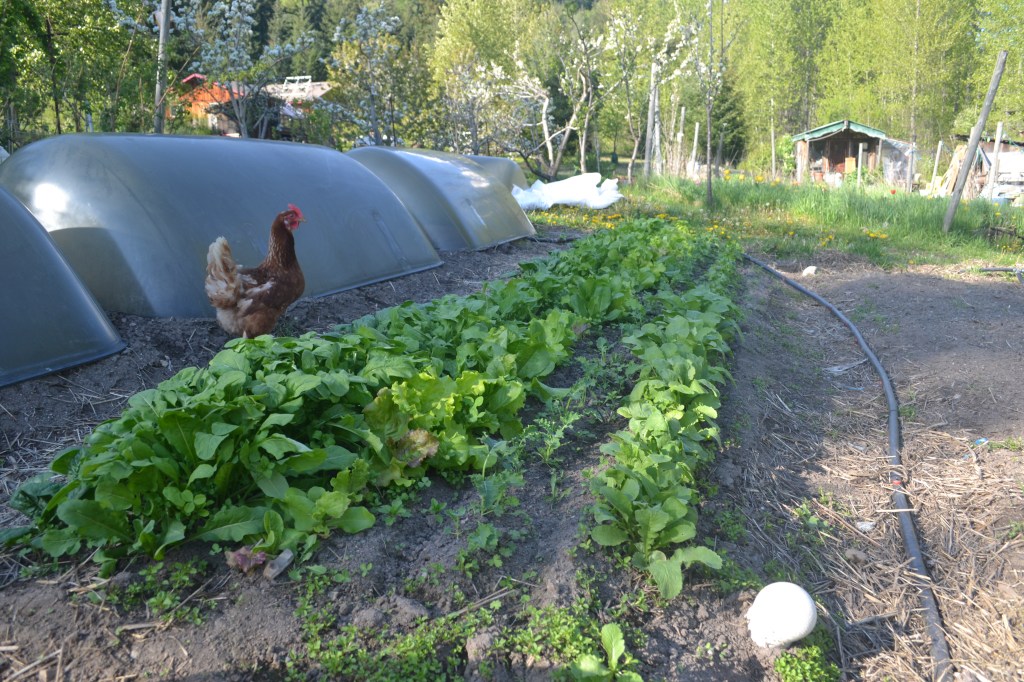
    My favourite aspect of permaculture gardening that I have been able to share so far this year is succession planting. Check out these pictures, as we are now harvesting our biggest lettuce heads, we are freeing the carrot and beet babies that are hidden underneath – can you see them? How about the parsnips coming up under the peas, and the little lettuces that will replace the bigger ones when we pull them?

    The web that this garden is creating is already visible and tangible, and it is only a month old. We have new friends, weekly connections with people and our environment, and a deeper understanding of our food sources as well as gratitude for fresh nutrition. And the colours are only just beginning to blossom. What else will this new community garden bring?!


  • Supply Chains…And a Challenge for Pemberton’s Non-Gardeners

    Supply Chains…And a Challenge for Pemberton’s Non-Gardeners

    How is everyone doing? I have been thinking about so many of our assumptions lately. That the tourists will come. That Whistler Blackcomb will open. That our kids will be in school. That I can get on a plane and fly to Italy. That I can ride the ferry. That I can go to the store and purchase what I need.

    Our supply chains:

    I read a locally published book about a decade ago called The Cucumber Tree – a memoir by a man growing up in Vancouver in the 1940s and 1950s. He recalled evenings with his family; dinner was always at home. Never would they go out for dinner or even out to other people’s homes for dinner parties. Dinner was prepared and eaten at home, every night.

    We just have assumptions that we can go out for dinner and that we will be able to travel. And this is a new assumption. It has only been since I was growing up that going out with the family was a thing. And to recall, it only occurred on a special occasion. I do not remember too much of it going on but if we did eat out, it was to a family-run pizza restaurant in my neighbourhood in Vancouver. We have so many lifestyle assumptions under fire right now.

    Back when my parents were growing up food supply chains were different and going back further your family and your home was a big part of the supply chain. You ate what you grew. You preserved what you could for the winter.

    Here in Pemberton yes, we are very lucky to have farmers and so we would assume that we will always have access to good healthy food. Yet…

    Many articles are being written lately about growing a “Victory Garden” and that if you can you should be more food secure within your own backyard. It is time to get cracking. If we are not gardeners then this would be the time to start. If you don’t grow anything then maybe this year grow one thing – one thing that you aren’t going to be reliant on anyone else for. If you live in a townhouse or condo in town, can you grow your own herbs? Sprouts? Micro greens? If you have a yard but simply don’t garden, start with one, two, or three items that will sustain you. I would lean towards items that are hardy like chard, kale and spinach. Fresh herbs – parsley, cilantro, dill, basil, chives – make a meal.

    A Note on Veganism:

    I am thinking vegans and vegetarians are pretty pissed off at the world, with Covid-19 originating from the filthy Wuhan, China wet markets and the disgusting treatment of wild animals caged for human consumption there. I think we owe vegans and vegetarians enormous respect, and I think they have every right to be angry. Maybe this is that time to pursue veganism or vegetarianism, or to pursue this way of eating as best we can.

    I read all the Little House on the Prairie books by Laura Ingalls Wilder when I was a kid. My favourite was Farmer Boy and how the Wilder family grew all their own food, spun their own yarn from the merino sheep they raised, and were successful in their efforts. Do you think there were any vegans back then? When the supply chain began and ended with you and your family throughout the year, where did alternative eating come in? Something to chew on. Respect the planet, have knowledge of where your food comes from, and if you can, raise it, grow it, hunt it yourself.

    What would you eat if you had to grow, raise or hunt it yourself?

    A meal from my own yard, by a minimal gardener (who may become a proper gardener this year):

    Sautéed garlic scapes (sautéed in hazelnut oil, which I would have to learn how to make)

    Spinach salad garnished with cilantro, dried saskatoons, and toasted hazelnuts, with a dressing of hazelnut oil and minced garlic

    Fruit salad of chopped apples, cherries, plums, and apple-pears

    Barbequed deer steaks (hunted locally by my spouse)

    If I were to get serious about my victory garden I would plant spuds, beans, hardy greens and romaine lettuce. I am considering a small backyard chicken coop. It would be a lot of work, but individual food security is a worthy goal. I consider weeding back-breaking labour after about 15 minutes of crawling around in the dirt, mosquitoes buzzing in my ears, and the relentless Pemberton sun beating down on me. Again, I salute the farmers. We are lucky to live among them, now more than ever.

  • Acclimatization, zones, and how plants adapt to weather

    Acclimatization, zones, and how plants adapt to weather

    You know when you go on a tropical vacation in the winter and at your destination, the locals are wearing hats, long sleeves and pants. You strip down, head to the beach only to get sunburn and heatstroke? Eventually, after a week, you get used to it. Upon return, that first blast of cold at the airport feels like the Arctic, yet people are wearing shorts!

    Plants experience the same affect, perhaps even more because it happens gradually at a cellular level. The more robust the cell walls become, the hardier the plant.

    Every living thing has preferred conditions. Plants are grouped into zones to help guide gardeners to choose plants that will survive in their climate. It is based on the worst weather extremes for the area: Coldest temperature, number of frost free days and exposure. It’s good to know your zone before you waste your time and money on something that won’t thrive. Zones can be pushed higher by starting plants indoors, protecting them with cloth, overhangs, windbreaks, a south facing wall and   greenhouses. Global warming is also changing things and most areas will be up-zoned in the near future.

    Microclimates exist in all zones. Sunny south facing protected areas can be a full zone or more higher than a cold, windy, shady frost pocket. Understanding your microclimates on your property can determine whether you will succeed or not. It’s something you need to constantly pay attention to, and even make notes, if you have to. The smallest changes can make a big difference.

    Slowly, plants need to adapt from one environment to the other. Our intervention is called “hardening off”. Plants started indoors are used to the warm cosy, calm and diffused light. If you put those out right away they will most likely get shocked by cold nights, wind, pounding rain and scorching sun. The trick is to, over the course of several days, slowly leave them out in their new environment a little more each day, paying attention to extremes in which case you will have to leave them indoors or add extra protection.

    When buying plants in the spring it’s good to ask the grower to what extent they’ve been hardened off, if at all. You may have to do it yourself. Something few consider. Many tropical plants in Florida, grown for export as houseplants are raised under shade cloth, not because they don’t tolerate sun, but because they will eventually live in someone’s living room. It works both ways.

    When to plant your starts or seeds outside is also tricky. Seed packages are only a rough guideline as they can’t possibly know everyone’s circumstances. Even experienced gardeners can’t rely on calendar dates, as every year is different. It’s part intuition, part trial and error and partly luck. Those in tune with nature will know when to plant something by biological clues related to the weather, like when the crocuses sprout, the ice on the lake melts, you see the first Robin or the forsythia blooms.  This study is called Phenology  and is the most accurate method. The even more in tune will take biodynamic guidance into account such as moon cycles, the almanac  and spiritual doctrines to plan schedules, making things  even more complicated to organize.

    Regardless, all good farmers are aware of the weather and check the forecast constantly.

    Starting some things early can be as detrimental as starting them late. A root-bound start can suffer and be stunted. A plant left too long indoors on a windowsill can get leggy and fall over searching for the sun. It’s good to know how many days it takes a particular variety to mature. Transplanting earlier may serve no benefit.

    Most plants will survive marginal temps above freezing. Few do anything and stay in a state of statice between 1-6 degrees celsius. Some tender annuals such as basil will perish at a damp 1-2 degrees. Transplanting on a windy day is terrible as it knocks them over, and sucks the moisture from the plants and soil, through transpiration. Some things that have a short lifespan may need successive planting to stagger the harvest. Cool loving crops may only work in spring and fall. and will quickly bolt in the summer. Late maturing species may need to be brought indoors to finish off or  to spend their dormancy. Hardening off is also required to adapt in this case , now humidity and introducing pests indoors becomes a concern. Plants are fickle,  you need to get to know them personally.

    There are obviously so many factors to consider: The bottom line is that you have to treat all your plants like dependents and provide the best care for them from the elements as possible. You have to guide them through life, like children, until they are strong enough to go at it with little intervention. You can never assume anything, be complacent or lazy. What if it was your infant out there? How would you care for it?


  • Sobering Advice for New Impulse Gardeners

    Sobering Advice for New Impulse Gardeners

    first gardenOne of the few businesses that has and will continue to thrive throughout the Covid crisis is the garden and small farming sector. The sudden interest  in our food security, sustainability and living off the land  is at a level I have never seen before. This is great. It is something that anyone involved in small farming has been advocating and working towards for a long time. I have seen the progression from the early farmers market days, trying to convince consumers what organic meant and  that local was best, to the vibrant markets we have now. It’s been a slow and steady growth, business-wise. Something is different now – maybe self-isolation has give folks time to think about what’s really important in the game of life, how vulnerable and dependent on the system we are.

    I would never discourage anyone to garden. Even a few patio planters, home landscaping or a herb garden can bring anyone joy. Warning, it can be addictive. There’s always more to learn. It’s grounding and healthy for body and mind. Do it.

    What I’m seeing as the result of the pandemic, is a mad rush to become self sufficient in a very short period of time. People are “panic buying” chickens, livestock, incubators, fencing, potting soil, seeds and any garden supplies as if it were toilet paper. As a side hobby, gardening is awesome, but the reality is you will most likely spend more on retail supplies and work hard for a small harvest. You will have successes and even more failures. You will enjoy the fruits of your labour so much it will seem worth it. Unfortunately, it won’t make you self-sufficient right away. Sorry.

    I’m not quite there yet, myself and that’s after 27 years of homesteading, with 5 years of schooling and lots of  related work and business experience. My first veggie garden was in 1994. It was a lot of work. I had mediocre results. There was no Google. I winged it. I decided I would try to live off what I grew. I lost 50 lbs, before I gave in to groceries and meat. Not advisable as a weight loss diet.

    I don’t like bursting people’s bubbles, because I have always said I live in one myself. I have learned mostly through trial and error, and it pains me to see others about to make the same mistakes I made through naivete and inexperience. I have the need to explain to those new to this way of life that it’s just not a short term process that can be accomplished in a season. For most small business plans, they say you shouldn’t see a return on your investment for 2 -3 yrs. For small farms change that to decades. Available land, infrastructure, supplies, labour and overhead will eat into any profits. If you plant a fruit tree you might not see a reasonable harvest for 8-10 years. Soil needs to be built up over several years. You need a rough plan, expect slow incremental growth and lots of long term commitment.

    It’s all possible with patience, capital, sweat equity and a good team.

    Study it as much as you want, it’s endless. The reality is you will inevitably learn from your mistakes and Mother Nature will always throw you a curveball or two.

    My advice is to start small with realistic goals and low expectations. Think about by whom and how everything will be maintained, especially if you plan to return to  your regular work in the future. Don’t “put the cart before the horse” by buying livestock before you have fencing and shelters or plants before your beds are prepped. Be patient. Timing is everything. Ask questions. Don’t overspend on fancy tools and gadgets from Lee Valley, exotic plants, and pricey greenhouses. Do a few things well instead of trying everything.  Be efficient. Think about how you can work with nature in the simplest ways.  Don’t bite off more than you can chew. Enjoy, it’s a long ride.

  • Appreciating the Neighbourhood Chicken Lady

    Appreciating the Neighbourhood Chicken Lady

    Hey folks!

    Let’s talk about the cost of a dozen eggs.  What I see in our area is that most farmers sell a dozen eggs for $5.  A few farmers sell for $6 or $7, not many.  In the grocery store prices range from $3 to $8.

    I have been selling eggs for $6 and most people feel comfortable paying that price.  Here’s the thing, I do not make any money off selling eggs.  I basically sell eggs for the People.  The People love farm, fresh eggs!  That’s why I do it.  I even try not to use eggs in my home so that I have more to sell.  It is not because I’m being greedy and want to make more money but because I need to sell them all to break even.  Yes. you heard that right!  If I sell the majority of the eggs I collect, I break even but only with the cost of feed.

    I have been using an app called “Count My Eggs” for the last 40 days.  I can input how many chickens I have, how many eggs I collect each day, my expenses, and my sales.  The app tells me that I have collected over 500 eggs (chicken and duck) and sold over 450 eggs.  It shows me that I have spent $2 more on feed in last 40 days than I’ve made in sales.  I lose money.  Having said this, I do have eggs in the incubator and if I had sold them I would have made a tiny bit more on egg sales.  Had I sold those 3 dozen eggs I would have made about $0.45/day of income.  Yep, raking in the big bucks!!

    Screenshot_20200402-152857_Instagram

    I have the same feed expenses all year but chickens don’t lay all year.  The math is about $6.64/day for about 40 laying hens and a few roosters all year round regardless of how many eggs they lay/day.  In the winter they hardly lay and I use a light the coop during the winter to try and encourage laying (so a bit of hydro).   The chickens take a lot of laying breaks throughout the year (if it’s too hot, or too cold, if they’re molting, if they’re stressed out, if there isn’t enough daylight, a hundred reasons!).  No eggs, no income…but they keep on eating.  There will be a bit of a flux in income for the next month or so selling day-old chicks but it won’t even begin to cover what I’ve spent feeding hens that aren’t laying.

    Keeping chickens takes a lot of time, every day. I am not compensated for the hours spent feeding and watering, cleaning coops and water jugs, collecting and washing eggs, or building fences.  Also anything extra, like sawdust or wood pellets for the floor and nesting boxes, replacment feeders, or the cost of fencing materials when needed is money out of my pocket.

    Raising chickens is not a money maker, it is a passion project (like most farming is).  I love being able to provide folks with eggs from happy, healthy, free-range chickens but I do so at a great cost to my bank account.

    Please remember how hard I work every day, all year to provide people with eggs and please keep this article in mind when you are asked to pay a bit more for a dozen eggs.  I do it all for you!

    Dare I ask for $7.00/dozen?

    Screenshot_20200402-161843_Instagram

    Air hugs!

    -Meg

    Once a farm girl, always a farm girl.

    once_a_farm_girl_nametag