Much is conjured in the kitchen, over the steam and bubble of a jam pot – sweet anticipation, yes, I am bottling summer, but also, curiously, a deep lament, for the fact that I am learning this out of a book that I must return to over and over, attempting to land the instructive words, like wily fish that dont wanna be caught, to drop head-knowledge to the dock of deep muscle memory. And my bones ache for the lack and the longing, that this is not second nature, that every year, it still feels foreign and fraught. That it is not bound in apron strings of beloved mothers, aunties, grandmothers…
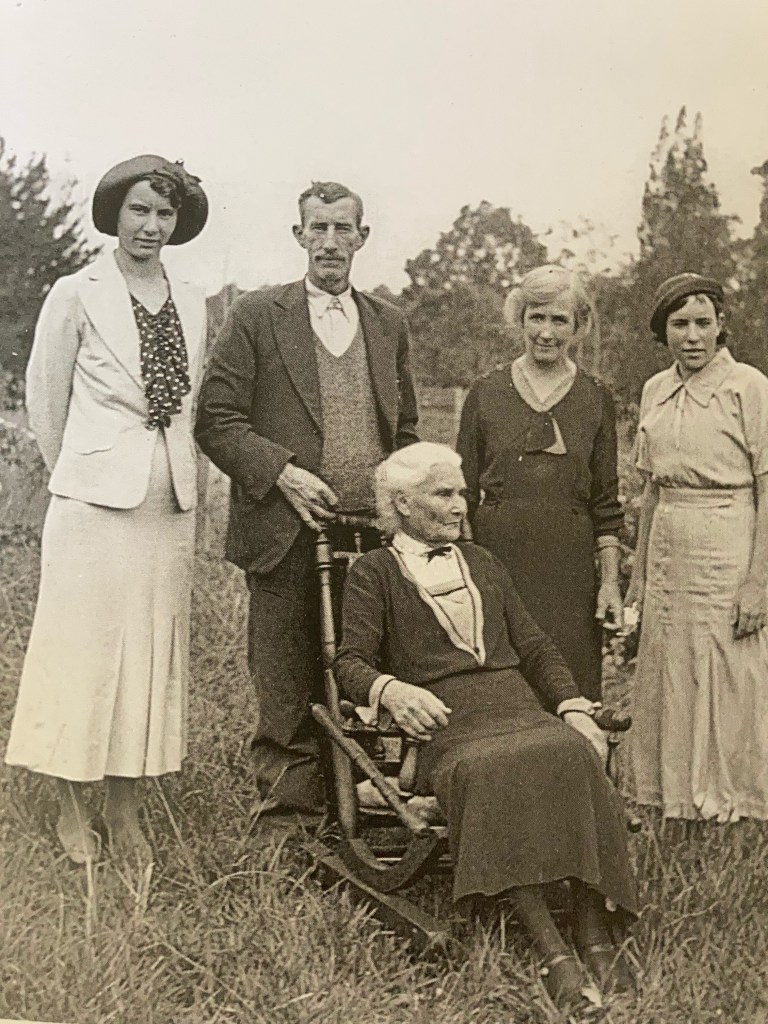
I sense all the grandmothers watching, mysterious women, unknowable stories, knowing I am downstream of the broken chains of transmission, of lands left, or of things survived or left behind or not passed on or not sought out. Of stories not treated as inheritance. Of recipes not recognised as legacies or spells, able to conjure us back into connection.
my mysterious matriarchs (from left to right): great aunt, great grandfather, great grandmother, grandmother, and seated, great great grandmother
Are they cheering or tut-tutting or intervening with whispers, or wishing that they could?
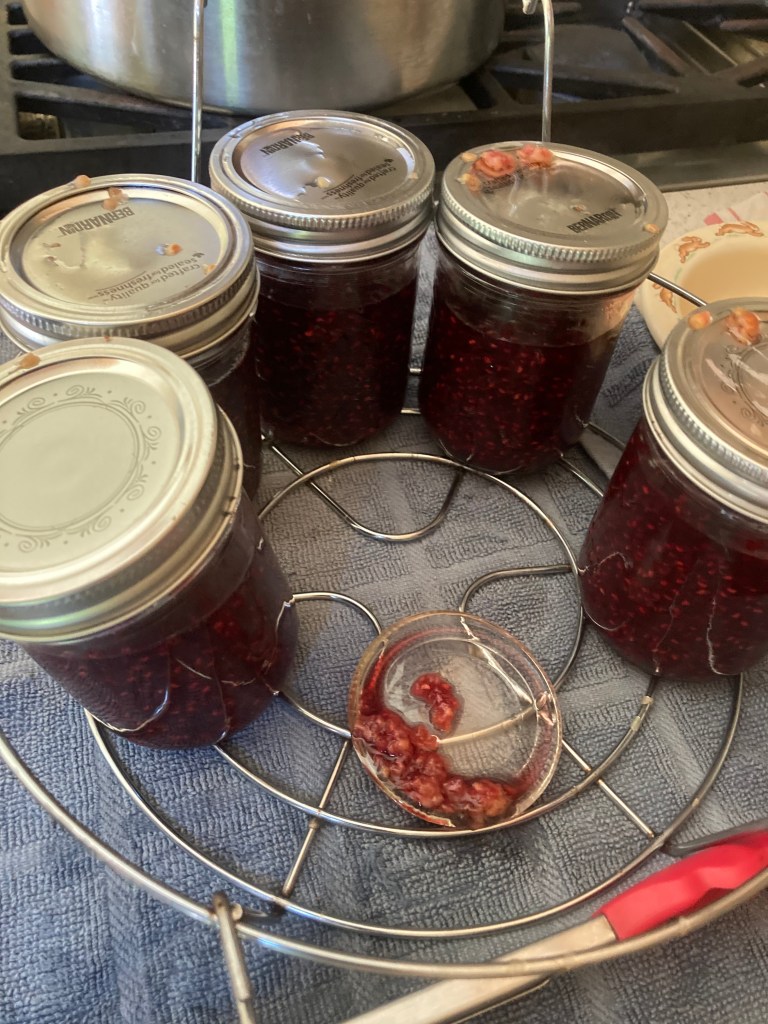
Who knows what they’d think when, after lowering the rack into the broil of water that has steamed up the already-too-hot-house and raised the temperature by an unwelcome additional two or three degrees Celsius, the bottom of one jar shears right off, and the emptied out vessel floats like a dead fish to the top, and the rest of them are then water-canned in a purplish soup with bleached out chunks of raspberries burbling around that look like someone’s puke.
What would they say? or want me to know?
I am trying to teach my son to be a problem-solver, to look at disaster or blank sections as problems so solve, instead of inevitabilities or failures or freeze frames or dead zones, and perhaps that is what they care to see: that we keep trying.
We, who move forward, who are the living garden of their DNA, the repository of their dreams, are teaching ourselves, are asking for help, are finding allies and guides and cookbooks and tenderness, and trying to send that tenderness, that resourcefulness, that regenerative energy forward, and backward through time. That we may know that this is the flavour of the season, of the first harvest, of Lammas time – the sweet and the sour… the fruits of our lives, the tang of our skins, the shape of the places we’ve grown out of, the shapes we make with ourselves.
I have a weird inability to throw old jars into the recycling bin. Instead, I tuck them in the drawer, for future use. (And every now and then my partner silently stages a protest slash intervention and culls them all. And I start over, undeterred.) There is some part of me that believes we are going to run out of jars, one day, globally, as a civilization, and my foresight will mean I have plenty of storage devices that smell faintly of decades-old peanut butter or salsa.
Dr Mehdi Serati from UQ’s School of Civil Engineering said the amount of sand in the world was finite, so ingenuity was necessary to solve the problem of a looming shortage.
“If we don’t do something about sand depletion at a global scale, our grandchildren are not going to see sandy beaches,” Dr Serati said.
“Over the past 20 years the cost of sand has increased by six times, and it’s the second most consumed natural product globally, after fresh water.“
I’m Australian, so sandy beaches are sacrosanct. Life in Australia doesn’t make sense if there are no sandy beaches. It’s just unimaginable.
And so, I merrily hoard.
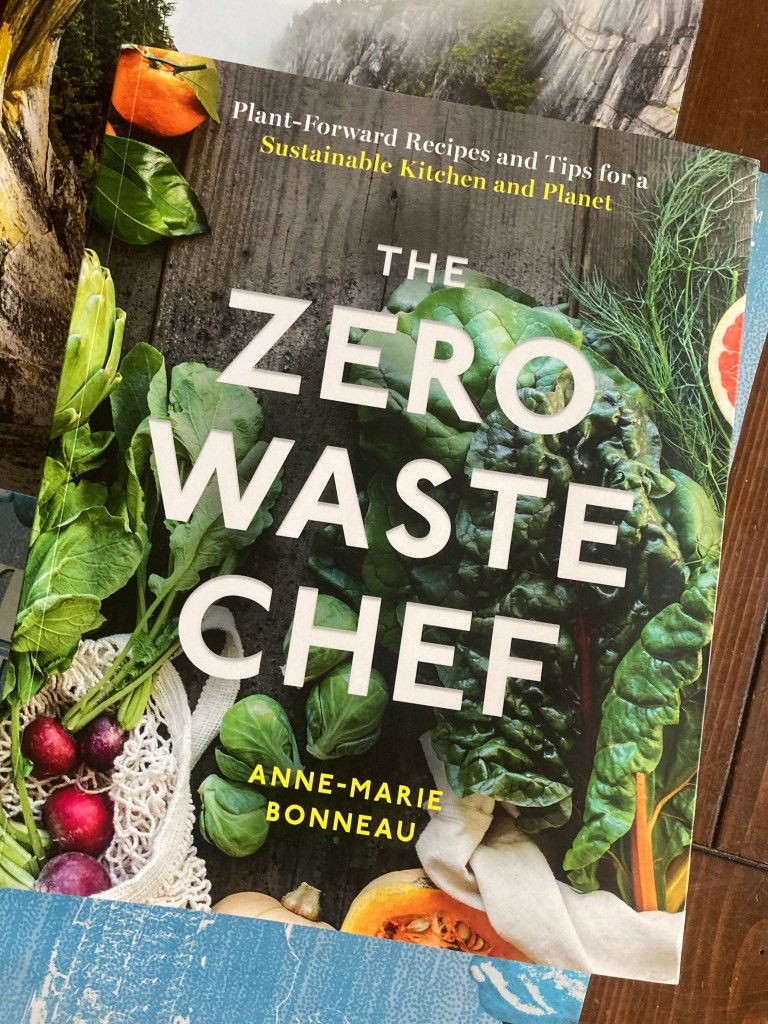
Which means I was even happier this week when the Zero Waste Chef book arrived in the mail.
I’ve been following Anne-Marie Bonneau on instagram for a while. She’s core. Super core. She knows how to make ginger beer from ginger bugs from ginger, sugar and water. She knows how to make kombucha. She’s an evangelist for sourdough and fermentation, calling “Fermentation an act of defiance against our broken food system.” All the things I’ve been learning about, she’s the resource.
“I’m not claiming that fermentation will save the world. But preparing food this way does put us more in tune with the natural world – the food is alive, after all – and that might lead us to better preserve and protect the world.”
Anne-Marie Bonneau
She’s motivated to help us kick our plastic-addiction. You could join Plastic Free July and see if you can reconfigure your summer days to avoid single use plastic bags, water bottles, takeaway coffee cups and plastic straws.
It’s really about rethinking “disposable”, because lovelies, nothing is disposable. Nothing is so without worth or value on this Earth that we should just mindlessly chuck it away.
Bonneau recommends developing a zero-waste kit… you don’t have to go buy any fancy stuff – “we can’t shop our way out of the climate crisis”, she says. Just put together an on-the-go shopping kit (of shopping bags, produce bags and jars or containers), and a out-and-about kit (a stash bag with water bottle, utensils, cloth napkin, jar or metal container and produce bag.) Wherever you are, if you get a craving for a coffee, a snack, or a smoothie, use your own container. Pandemic precautions have put a pause on a lot of these practices, but we need to get back on them, as soon as we can, and try and counter the impact of all those disposable masks. Aaaagh.
Your Zero-Waste Kit works like a shield to deflect unwanted single-use trash
The Zero Waste Chef
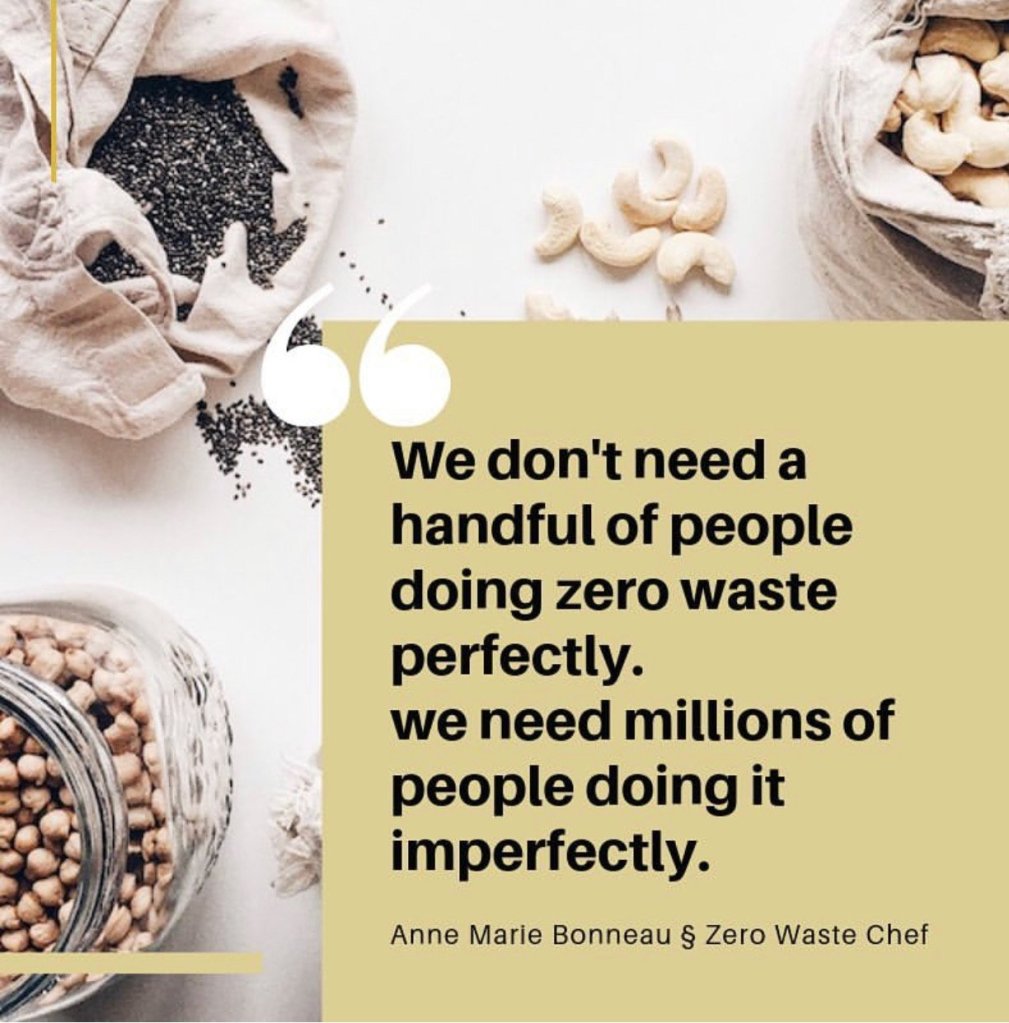
Also, to solidify her status in my heart, once she posted: we don’t need four more people to do zero waste living perfectly. We need millions of people doing it imperfectly. And that was it. She’d won me over. I don’t really need any more aspirational benchmarks that I’m incapable of meeting, because I’m flawed, flailing, and trapped in a system that means every aspirational thing I want to do, to help improve the world, or life for other people, essentially means swimming upstream.
So, darlings, bring your flawed and flailing selves, bring your big hearts, your hope for your kids, your affection for a grandma or aunty or someone you imagine had a little earth mother wisdom, bring your fetish for collecting jars, bring your love for kitchen experiments and weird science. Bring your friends.
Don’t bring righteousness or judgment and let’s leave the despair at the door. Or in the hammock out back taking a well needed rest.
So, as we pick away slowly at deconstructing and remaking systems that actually flow with life, I’m just gonna do the best I can, and PS Don’t nobody mess with my jar stash.
How creative can you be, at rethinking “waste”? Can you turn old fabric scraps into sandwich wraps? Can you turn last night’s leftovers into tomorrow’s frittata? Can you forego bubbly water and make your own ginger soda? Are you ready to get really next-level and make your own sauerkraut? Or granola bars?
Apart from a host of great recipes, Bonneau’s new book offers this beautiful rethink, which anyone with a garden or a harvest box (CSA) subscription, has bumped hard up against: how do you cook opportunistically, rather than “diligently” to a menu plan and a series of recipes?
“Rather than allowing your cravings to dictate what you’ll make, let the food you have on hand in your pantry, refrigerator, and freezer, serve as the basis for your next dish. This method will eliminate food waste in the home.” It will make us more creative, as parameters tend to do, and that makes cooking more fun, she says. And who doesn’t long for time in the kitchen to actually feel like fun?
It’s a big shift – to start with a pile of ingredients first, rather than with a recipe or a go-to meal (oh, it’s Tuesday, so pull out the taco shells and jar of salsa.) To say, okay, the bok choi is coming up, and there’s still some asparagus in the garden, what shall we eat today… but once we re-orient to this way of thinking, and begin flicking through recipe books with an ingredient-first lens (okay, what features kale, because I sure grow a heck of a lot of kale)… it becomes more natural. Grill some veggies on the BBQ. Turn the leftovers into frittata the next day. Blend up whatever is fresh and green into a pasta sauce, or toss it on a pizza. End of the week – time for leftovers soup or stock with whatever is wilting away in the crisper.
I’ve realised, after decades of anguish about being a sub-par home-maker, that it’s all about having a repertoire. Once you have a few things in the repertoire, everything gets a little easier. You don’t have to think as hard. Habits carry you through. You don’t even realise you’ve graduated and aren’t sub-par anymore, but are successfully keeping your people alive and fed, because you’re not expending anywhere near the same amount of brain space that it once took and you’ve somehow absorbed this story that cooking healthfully and eating well is a giant uphill grind.
Until it’s not.
The biggest shift required is breaking old habits of consuming-out-of-convenience. Convenience has a cost. It’s a kind of Earth-tax. As soon as something is pitched to us as “convenient”, we should get squinty-eyed and start asking about the catch. Someone is going to pay for this. Possibly your grandkids.
The Zero Waste Chef is a good helpmate if you want to, ultimately, be a good ancestor. If you want to enjoy your life right now (which is basically built on the good things that people who came before you have done) AND set up future generations to also flourish and enjoy themselves and play on sandy beaches and eat a yummy sandwich under a tree. As she says, in the first chapter, that has graphs and mathematical equations and that I skipped over to go look at the glossy photos of yummy food, “zero waste isn’t an all-or-nothing proposition. You can live a little bit zero waste. And if 10,000 people reduced their waste by 10% that would reduce 10 times more waste than if 100 people got their waste down to zero. The point is, every little bit counts, especially when it’s amplified by a lot of us having a go.
A lot of her recipes are on her website, but it’s nice to have the book on hand as a reference – especially when it comes to things like fermentation, which are processes that I find I need to read about, again and again. And if you missed the pandemic sourdough train, or fell off and want to get back on, there are a ton of recipes for things to do with all the starter. Including how to make the starter. (But my favourite chapter is called Naked Snacks and Natural Sodas. Naked snacks probably are the type that will make you feel better naked, but it really means no packaging. )
So, your summer mission, should you choose to accept it: Eat naked. Save your jars. Carry a napkin and a mug and a fork wherever you go. Shorten the distance from food to plate. Go barefoot, so the idea of lightening your footprint connects to an actual sensation of bare toes and soil. Have fun.
Thanks to Belinda Geisler, the program coordinator for Stewardship Pemberton’s Feasting for Change initiative, for putting together this reflection of this year.
This spring I was so nervous, wondering if it would be possible to run any of the Feasting for Change programs, as for this I was asking people to come together, voluntarily, and work together to help grow, and gather food that could help feed us all. Suddenly though, the need to feed ourselves without bringing that food in from outside became a priority, not just for me personally, but for our community as a whole.
I looked at all our projects, the Fruit Tree Project, Grow it Forward Garden, Seed Library and Crabapple Project, and thought hard about how to make it all work, eliminating all the indoor workshops and focusing on the bare bones of our projects: keeping bears wild, while feeding our community.
What I didn’t expect was the number of people that were not only willing but wanting to donate their time and energy to our projects. We’ve always had an amazing rotating crew of volunteers, some that have been with us from the beginning and some who are still, to make it to a fruit harvest, or garden workshop. But this summer we had a bunch of fresh faces join us and stick it out to the end. At our 22 fruit tree harvests, we had 45 different volunteers gift us their time, many of them came to several harvests, (be warned, it’s addictive) and we ended up counting 124 “volunteer occurrences”.
The grand total of 3,364 lbs of fruit is proof of all the hard work our volunteers put in, not to mention the trust that tree owners showed in allowing us to come to their property and harvest their trees. We had several firsts this summer that need to be celebrated in and of themselves: We took on our first farm, harvesting over 300 lbs of blueberries from a farm that struggled to get their usual crew of workers in to manage them.
We also had one of our largest ever harvests where we took on 11 trees, in a single harvest, getting over 600 lbs of apples and pears. As our final harvest of the year it felt like the perfect covid friendly fruit party: 26 adults and 10 kids all keeping to their bubbles by taking on a tree each, happily chatting from between the branches, while the owner was blown away that we got them all cleared in a single morning.
It’s possible that as people were working from home, more bears got caught in the act of accessing fruit trees, and so we got several new properties signed up to our fruit tree project. This kept me on my toes, as each property needed a plan. However, it also meant we could flow from cherries, to apples, to blueberries, to plums, grapes, back to apples, crabapples, and finally pears and more apples. Those that came to multiple harvests now have wonderfully full freezers full of local free fruit. The project works quite simply; we pick the fruit and split it 3 ways, one third goes back to the owner of the tree, one third goes to the volunteers that pick the fruit, and one third gets donated to be shared further.
Usually we try to have a network of local social groups (like the seniors) who can take fruit from us after a harvest and then divide it up and distribute it. With the restrictions in place this year we scaled back and focused on donating to the Food Bank.
The Food Bank needs to be celebrated to the fullest here, expanding and attempting to reach and fill the needs all over our community and into the surrounding areas. We are so, so lucky to have such a dedicated crew able to adapt and address the needs that arise. Without them, our community simply couldn’t thrive.
The bi-weekly harvests from the Grow it Forward Gardens became quite the social morning (in a safely monitored, spaced out kind of way). Last year we had 18 volunteers over the course of the season, this season we had 38. The garden itself always provided a fun treasure hunt. I think some of our volunteers came just to see where the cucumber vines had wandered off to next, or if the beans or toddlers had grown more in the 2 weeks between harvests! Either way, they put in the efforts and we reaped the rewards. This summer we donated a record 650 lbs of fresh locally grown vegetables of the food bank. While we always offer food from the garden to our volunteers, most were content to take home the “weeds” and try out things like purslane smoothies, or chickweed and carrot top pesto. I know that without the dedication of these guys (you know who you are!) we would not have had nearly as successful of a season. Even on the muggy, buggy days they were there, working hard, periodically jumping in the air and running out for a bug break, or slapping ourselves with rutabaga leaves to keep going “Just to weed to the end of this patch”. They were true garden heroes.
With the library closing down right in the midst of planting season and seeds running into short supply, I rescued the Seed Library and attempted to create a virtual inventory and contactless pick up system to make sure that this project could continue to make food-growing an option for everyone and anyone. What I didn’t expect was that again this community saw it as an opportunity to fill the need, and ended up donating almost more than was given out from the library. (Which is perfect, as the seed library depends on people ‘returning’ their seeds to keep it stocked for the next library patron). We always try and include seed harvesting in our grow it forward garden harvests, which helps to keep the library stocked.
Most in jeopardy was the re-invented crabapple project. While we may not have crabapple trees lining our main street (I’m looking forward to experimenting with lilac jelly btw), we do have a number of them in backyards. Last year we helped keep the bears out of harm’s way by harvesting the crabapples, but we inundated our fruit distributors and saw the potential for a scaled-down version. While we made close to 500 jars of jelly, unfortunately, we were unable to include volunteers and people dropping in to investigate the smells of jelly-making. We’re hopeful that the jelly travels further than we can right now and maybe encourages other communities to start looking at their fruit trees more as an asset than an inconvenience. As there’s limited supply of jelly this year, I’d recommend stocking up!
The support these projects get not only from volunteers but also from partners and sponsors keeps them ticking along, evolving, growing, and changing. These include the Whistler Community Foundation, The Pemberton Wildlife Association, Sea to Sky Soils, West Coast Seeds, the Pemberton Legion Branch 201, Bluehore Financial (Donation Program), the Fall Clothing Swap, Pilates Integrated, and the donations from the blueberry harvest. Each of these places has donated various amounts to various projects – together they make all our Feasting for Change Programs possible.
As I’m looking into winter, I’m so grateful to be here, in this community, where so many people are willing to come together to help us all – the people, the wildlife, the community as a whole – to grow, and harvest our own food, and, of course, eat jelly!
Longtime champion of local food, Glenda Bartosh, turned her attention to apples this week, and discovered that our very own Traced Elements regular, Mike Roger, is quite the apple man. Glenda gave us permission to repost her column here.
Photo by Glenda Bartosh
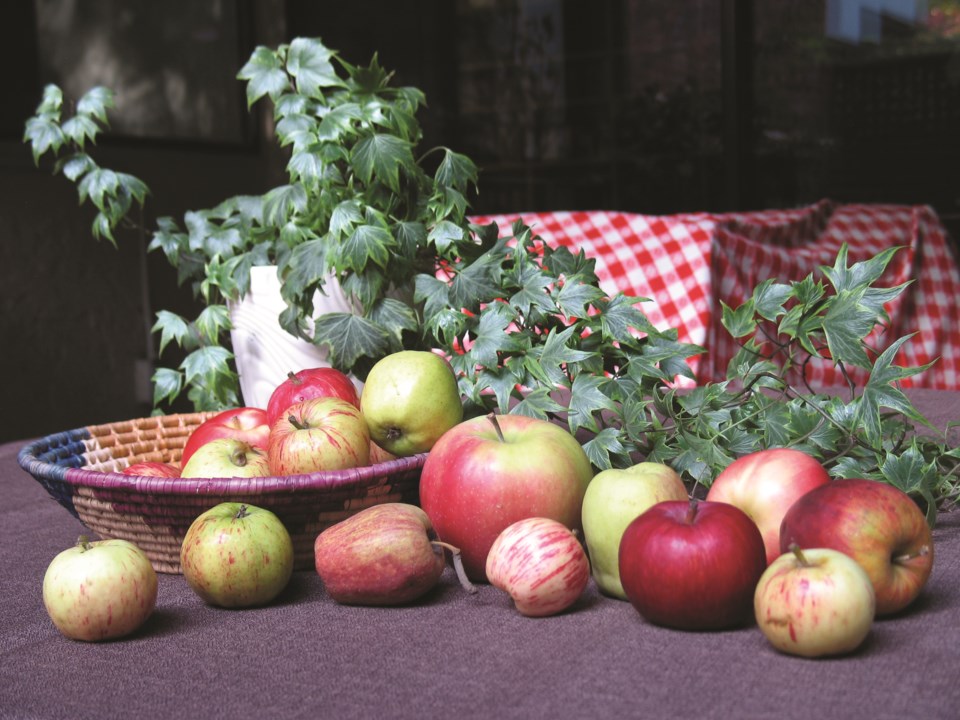
Apples, apples, apples. They’re everywhere this time of year, especially southern B.C., including Sea to Sky, so you don’t have to hit the Okanagan.
From West Van to Birken and beyond, you’ll find apple trees, babied and pampered, dwarfed and full-sized. And neglected old troopers that tug at your heartstrings—twisted and tortured, maybe 100 years old—still bearing fruit, in yards, orchards and ditches, where the goodness is yours for the taking, as gleaners well know. Even Whistler has a tree or three. (Ask Feet Banks about them apples.)
Fresh juicy apples; dried apples; apple chips. Apples baked, boiled, canned and pied. My 92-year-old mom, who’s lived a long and happy life eating many an apple, recommends a dab of peanut butter on an apple slice.
If you’re of a certain age or from the prairies, you’ll smile at the memory of bobbing for apples (the apples were bobbing, hopefully not you!), and the sing-song “Hallowe-e-en a-a-apples!” called out on doorsteps when, truth be told, we were hoping for candy, not apples at all. And who’d ever want one now in their trick-or-treat bag?
Poor apples! They’re so common we take them for granted, not realizing what a rich and noble lineage they come from, and how good they are—for health, nutrition and pleasure—especially those heritage varieties.
We have some 7,500-plus kinds of apples on the planet, but most of us can name, maybe, six. McIntosh—the original big Mac—so ubiquitous in Ontario, where it was first grown by one John McIntosh, in 1811. Delicious apples from the States. Spartans, created by R. C. Palmer in Summerland in the 1930s by crossing Macs and a pippin. Maybe Galas and Ambrosias, and the ever-green Granny Smith, a friendly apple from Australia, circa 1868.
But how about Grimes Golden, which could be a rockstar? Or the Hubbardson Nonsuch. Blacktwig. Buckingham (The Queen). Greening from Rhode Island, going back to 1650. The Gano. The Gennet Moyle. All poetic, and all apples grown in southwestern B.C. since the 1850s, and now sought after by many a heritage apple buff and association, including the Royal B.C. Museum, UBC’s Botanical Garden and Mike Roger of Willowcraft Farm near Birken.
Mike, who plants six apple trees a year, is known for helping out on older farms dating back to the 1950s and bringing heritage apples such as sweet Annanas; super-tart Cox Orange Pippins; or humungous Boskopps (great for cooking) to Sea to Sky farmers’ markets.
Photo courtesy Willowcraft Farm
“The heritage varieties are usually grafted onto full-sized trees, like, 30 feet [9.1 metres] tall and 25 feet [7.6 m] in diameter, so they’re massive. They can give several hundreds of pounds of apples,” says Mike, who’s also known for making amazing apple juice—150 litres in a few hours—by running a gunny sack full of ground apples through a top-loading washing machine on “spin.” (The juice pours out the drain hose—how excellent is that?) Recent commercial varieties, by contrast, are grafted onto semi-dwarf or dwarf rootstock so they’re easier to pick.
As for that noble apple lineage, cast your mind back 10, maybe, 12 thousand years, to the earliest proto-apples in Neolithic Britain and Europe—wizened little things, more like crabapples.
Wild apples spread like crazy, but what we think of as an apple today most likely came from the Caucasus Mountains of Asia Minor, near where 17th-century historians located the Garden of Eden. BTW, there’s no scientific evidence confirming it was an apple that tempted Eve. It was just (forbidden) fruit, possibly a fig or apricot.
We have Ancient Romans to thank for breeding apples for size and taste, although they don’t grow true from seed (ergo the above-mentioned grafting). Plato, for one, could name about two-dozen apples, and in ancient Assyria, apples were served at a wee gathering for 69,000-plus people hosted by the king. A thousand oxen were also on the menu.
Apples are a key ingredient in classical Arabic cooking. I love how Farouk Mardam-Bey in Ziryab: Authentic Arab Cuisine points out that at the centre of every apple, we’ll find a five-pointed star, “the symbol of knowledge and power.”
As for an apple a day keeping the doctor away, it’s true. All the fibre in apples is good for your gut, plus it helps you feel full. Several studies show that apples’ polyphenols help prevent heart disease and lower the risk of stroke, while the flavonoids and anti-oxidants could help fight cancer.
University of Michigan researchers, who concluded that apples’ only health benefit was an avoidance of prescription drugs, analyzed just how big that beneficial apple should be: At least 7 centimetres in diameter and 149 grams. But an Italian study showed significant benefits in reducing heart disease and cholesterol when people ate two apples a day versus consuming the same amount of sugar and calories in apple drinks.
If all this makes you curious about branching out, ahem, and re-thinking apples, excellent. And if you’d like to branch out when the snow flies, and try some lovely homemade baking featuring all kinds of apples—maybe even from their own orchard in Naramata—head to Ian Gladstone and Joni Denroche’s cozy cafe at Cross-Country Connection in Lost Lake Passivhaus, just a short walk from Lot 5 in Whistler Village.
Joni’s taught me a great new trick: Simply wash, core, then slice your apples and freeze them. Use them, as is, for baking, or freeze them on a pan before bagging, so they don’t stick together. Voilà! A “super-cool” snack straight from the freezer.
Glenda Bartosh is an award-winning journalist who tips her hat to everyone who helped with these apple tales, including my mom, Feet, Mike, Joni, Ian, Bob Deeks, Lisa Richardson, Pauline Wiebe, Cate Webster, Paul Burrows, and Bob Brett. Long live the apple buffs!
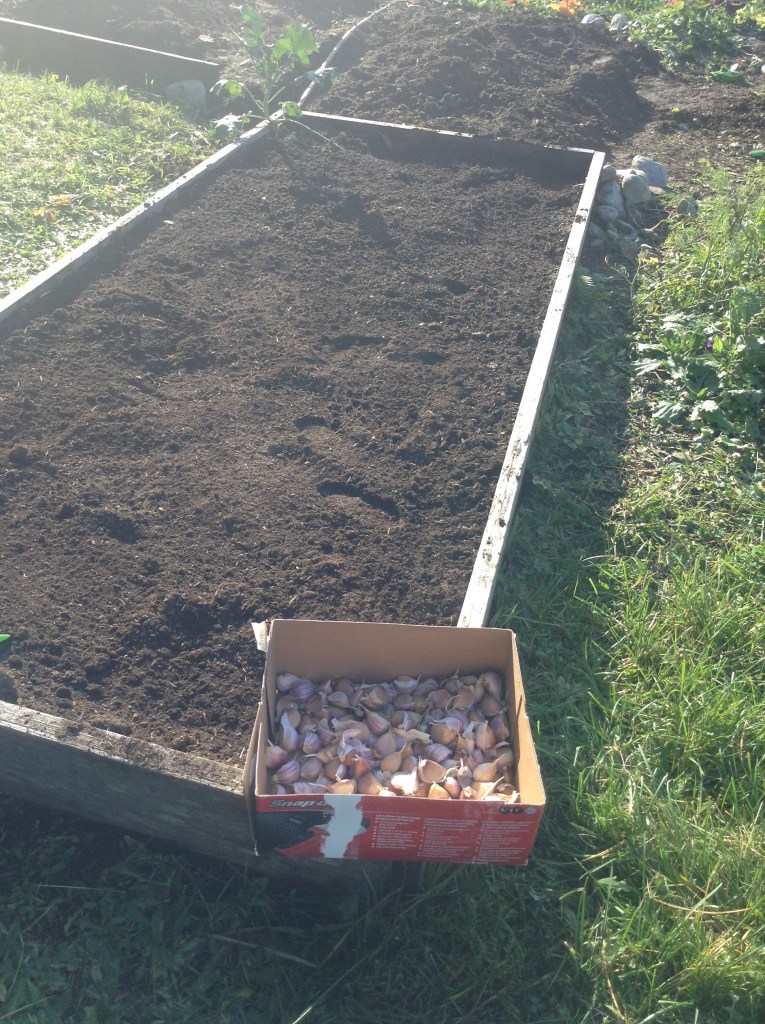
I guess I always did say a kind-of prayer when I planted garlic – “okay then, do your thing.” I’d brush my hands clean of the moist black soil and feel again the improbability of all this growing business – stick clove in soil, anticipate its budding five or six months from now. I mean, how the hell does that even work? Shrug.
“Over to you guys. Here’s hoping.”
And there was a certain kind of hope in the action, a brave kind of reclaiming my right to grow my own garlic and feel a bit empowered, but the prayer itself was largely a faithless one – a parcel dropped by my suspicious feet, with no address, beyond a scribbled “To whom it may concern”.
I am always caught by surprise by the little nubs of green shooting up through the mulch in the spring. It inspires wonder… but the wonder of the doubter… like, “that’s wonderful, but I can’t really believe it actually worked. There must be some trick to this Life business.”
I think the difference is that this year, there’s a new word in my vocabulary. The Underworld.
Says the Google:
Hidden deep within the bowels of the earth and ruled by the god Hades and his wife Persephone, the Underworld was the kingdom of the dead in Greek mythology, the sunless place where the souls of those who died went after death.
It’s a word that kept coming up this year, from some of the thinkers I follow, folk who try to parse meaning from news headlines, whose idea of bigger picture involves mythology and ancestors and cosmic time.
What I gleaned from those thinkers is that we could possibly think of this pandemic time, this “lockdown Lite” (as it’s been in BC) experience, as an opportunity to be initiated. An invitation to take things seriously. To go deep. To be confronted. To stop running around like the White Rabbit (“I’m late, I’m late, for a very important date”) and turn bravely and acknowledge Death. To shed some stuff – some of the ego’s favourite props. To emerge out the other side a little wiser… rather than just annoyed and anxious to reclaim my old life, exactly as it was.
The climate emergency is the real event horizon that looms large. Maybe, I thought, COVID-19 might teach us something that can help us approach that bigger drama, treat this as a threshold into a different way of being, instead of just an interruption to our regular programming.
Garlic planting with my helper in more innocent pre-pandemic days
So when there was a brief window through which I could race out to the garden, clear a few beds, and insert cloves, I was in a different frame of mind.
What has happened, strangely, in this last year, is that I’ve been invited by wonderful meditation and wisdom teachers, (thank you Susan Reifer and Natalie Rousseau) to allow myself to feel supported. Like, literally, to sit and close my eyes and feel my bones on the ground and the floor meeting me, and all the bits of my house holding things up and the earth beneath that… everything that rises up to meet the parts of me that settle down.
And whenever I felt the lonely weight of all my feelings throughout the spring and summer, as we practiced physical distancing and hunkered in our wee bubble and I lamented all the things and people I was missing, the falling away of all the things that used to prop my ego up, the shock of lost momentum, the loss of all that had suddenly been cancelled, I walked outside and sensed the trees creating a kind of open-air church around me, all steadfast and able to contain the leakages of my emotions.
And when I got curious about the idea that my great-grandmothers probably lived through pandemics, and did a little ancestry research, I arrived at this powerful sense that I am now the garden, I am now the physical matter in which my ancestors have the opportunity to flourish. I am the place of bloom. I am the landscape of Life and vitality, and they are all informing that, nourishing that, infusing that with richness, with the compost of their own lives.
In short, instead of working in this hopeful-but-not-really-convinced state of reclaiming life, growth, gardening and garlic, I became reclaimed. I was reclaimed by my ancestors, by the soil, by the life force, by the trees around me.
I planted the garlic this year, and I knew, without doubt, that those little cloves were not being cast out into an uncertain future, but that they were being offered back to Life, returned to soil that I tend with care, that I nourish with compost that has been generated from a combination of yard waste, our food scraps, wonderful worms and a host of other microscopic life. I understand that under every foot of soil, are gazillions of microscopic living beings. It is not me, kinda hopeful, against the emptiness. It is me settling down and receiving an immense amount of support that rises up to meet me, from every imaginable direction. Invisible, sure. But, even though I don’t see it, I sense it. I sense it now.
I pushed the garlic into the Earth, and tucked them in for their winter sleep, their journey to the Underworld, beneath a blanket of maple leaves that I scraped up from the yard.
This year, I have come to believe in the Intelligence of All Things, an intelligence that is encoded in all of us, a deep Knowing of what to do. The garlic will lie in its depths through the Dark Season, as the wheel of the year rolls from Samhain (pronounced sow-en in Celtic, the pagan precursor to Halloween) through to Solstice and over into Imbolc, the spring, and then they will rise again.
And it won’t be a surprise. Because this is what Life does. It returns. It sprouts forth, it blossoms, it revels, it fruits, it pares away, it dies, it is absorbed, and it returns.
So I tucked them in to the bed, and I offered my prayer, and this year, it wasn’t: hope you know what to do now… It was “thank you, thank you, sleep well and I’ll see you in the spring,” silently uttered with a little tearfulness and the deepest kind of gratitude and reverence I know.
You know the scene in the BFG when the giant introduces Sophie to the most scrumdiddlyumptious drink in the world, frobscottle?
My mate and I decided to scale back our adult-beverage-drinking, after we went into pandemic survival mode with the help of a case of wine and a couple of cases of beer, and discovered, months (and unwelcome pounds) later (although it still felt like March), that the daily take-the-edge-off habit was not really sustainable over the long-term, or over the conceivable life of COVID-19, which could be years.
Embracing sober-curiosity in July meant asking ourselves questions in a curious way: what need in me is rising up and seeking fulfilment right now? What can I do to meet that need, in lieu of pouring a glass of wine? It was interesting to realise what those needs were, as we found substitutes – glass of water, cup of tea, fancy little cheese and cracker platter to call the day to an end, delicious oxymels brewed up according to Natalie Rousseau’s recipes.
Sometimes I was just thirsty. Sometimes, I wanted a little reward for having done such a good job of adulting all day. Sometimes, we wanted to create a feeling of celebration. Sometimes, the day felt so much like every day that had come before it, that we needed some kind of ritual to mark it as special (which goal was somewhat undermined by choosing alcohol as the ritual every day.) Some days, I just needed to claim one single fucking moment that was mine, after an endless stream of moments catering to everybody else, even if it was literally just a mouthful.
And it has been fun to discover that I can meet these needs in other ways (although the last one is proving the trickiest.)
The celebration, the specialness, the coming together is quite wonderfully met with frobscottle. Or, our version, ginger lemon soda. (Doesn’t make you toot. But the bubbles are spectacular.)
It’s probiotic, if that tag helps you feel generally better about consuming things.
So that’s the long introduction that could be summed up with a clickbait headline: the drink that makes you feel happy, while sober!
Ginger bug is a slurry of fresh ginger, sugar and water that has been allowed to ferment until bubbly and foamy. Brewers use the bug to brew probiotic tonics and drinks like root beer, ginger beer or probiotic lemonade.
Like sourdough starter, ginger bug is a starter culture that is rich in wild bacteria and yeast. These starters kickstart the fermentation process for other fermented foods. Sourdough starters provide the bacteria and yeast to make bread. Kombucha mothers make kombucha tea. And ginger bugs make homemade, naturally fermented sodas.
When you mix ginger and sugar together with water and let it sit, the wild bacteria and native yeasts in your kitchen and on the ginger itself begin to proliferate and grow. These wild microorganisms eat the sugar in your bug, and produce carbon dioxide as a result.
When mixed with a sweetened herbal tea, fruit juice or other base, the microorganisms in the ginger bug consume the sugar in the tea or juice. As they do, they reproduce and emit carbon dioxide that gives homemade soft drinks their bubbles.
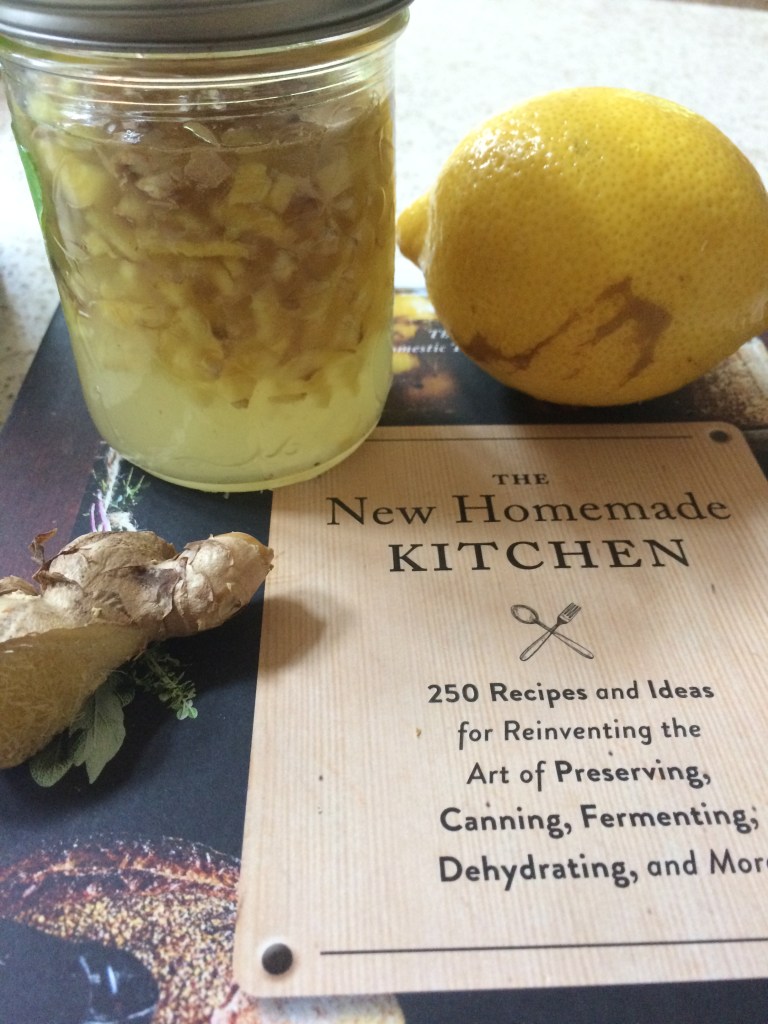
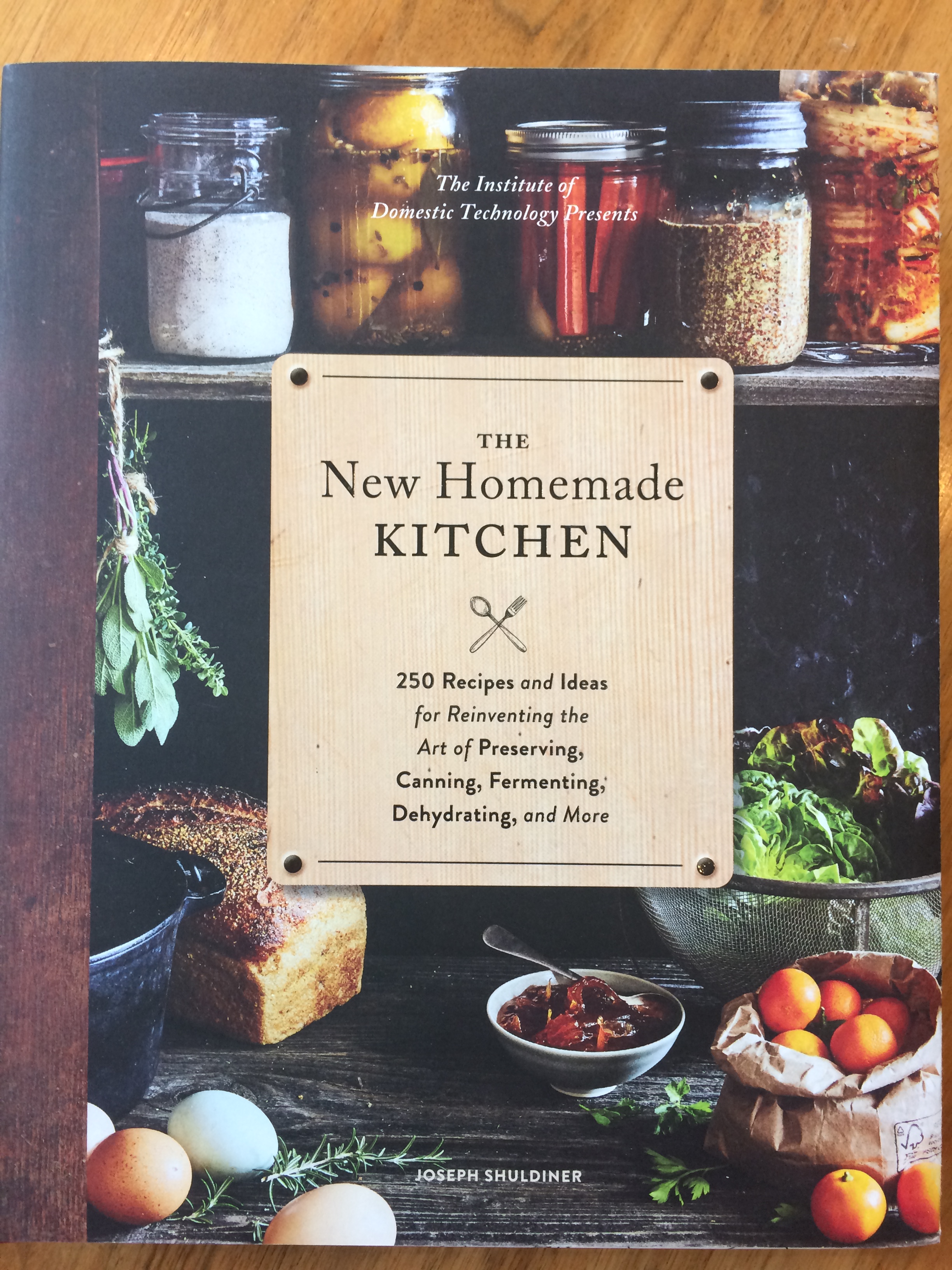
When I opened up my copy of The New Homemade Kitchen: 250 Recipes and Ideas for Reinventing the Art of Preserving, Canning, Fermenting, Dehydrating and More by Joseph Shuldiner (last mentioned as my pickling bible), I was enchanted by this statement:
Wild Fermented Soda
Fermented soda is made with your own live, wild starter, fermented using only fresh ginger and sugar, charmingly referred to as a “ginger bug.”
It’s super easy.
These instructions follow the recipe from The New Homemade Kitchen, a wicked-good reference for any kitchen, which has emboldened me to experiment joyfully:
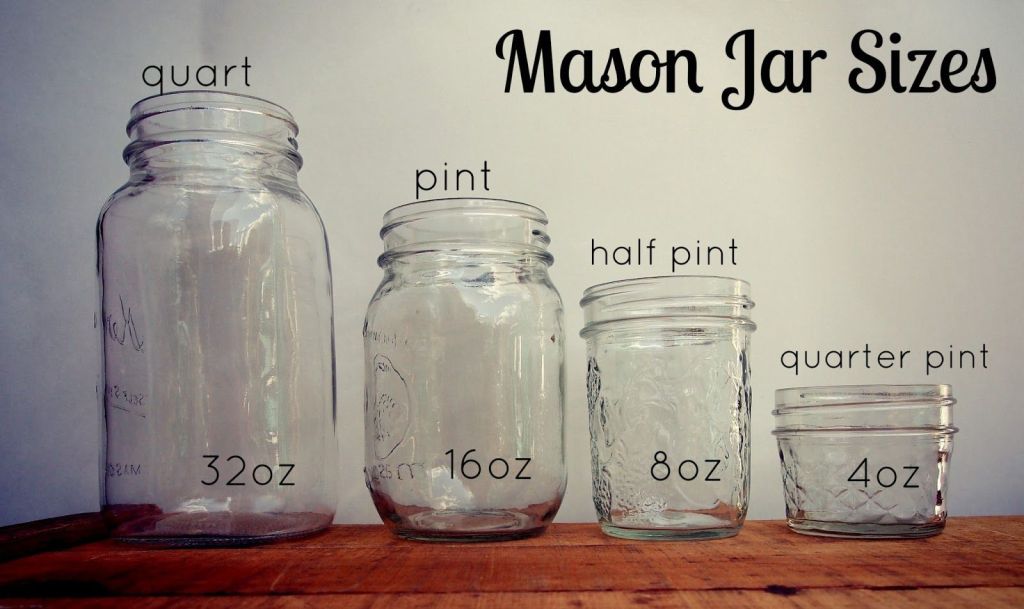
Take a large (pint-sized) mason jar, (the book suggests a half pint, but we quickly upsized, to meet our production demands… maybe start with the half pint and then scale up?), add 1 tbsp fresh unpeeled finely chopped ginger and 1tbs white sugar. Fill with filtered water (if using tap water that is treated, let it sit out for a while so the chlorine can burn off; if you are on a well, you can use that water). Leave about an inch of headspace at the top. Stir to combine, then cover the jar and set it aside at room temperature.
Feed your ginger bug every day, at roughly the same time, by adding another 1 tbsp of chopped ginger and 1 tbsp of sugar. Stir, and cover. After 5-7 days of daily feeding, the “bug” should fizz strongly when the ginger is added. It’s now ready for soda making!
Soda making!
The first week was the hardest – remembering to feed it, being patient, feeling sceptical, wondering if I actually really want to cultivate and house and invite the proliferation of invisible bacteria that are *already living in my kitchen* (say what?? I mean, ewwwww.)
To make soda, I strain off 105 ml of the starter at a time, and then refill the jar with water, and keep feeding it. Now and then, I’ll scoop out some of the ginger to make room. But basically, the ginger bug has become a regular countertop companion, alongside the kombucha and the jars of oxymel in various states of infusing. It’s just one more lovely life form I tend to (and the most low maintenance, let’s be honest, especially compared to the Significant-Other-bug, charming as he can be.)
If you’re like me, and need to read recipes six or seven times before they stick, check out the Zero Waste Chef’s blog in which she explains her ginger bug process. (She has a book coming out in the spring!)
As far as I can tell, you need a wire-bale or EZ cap bottle for your concoction, because pressure builds as carbon dioxide is generated.
4 tsp of fresh ginger juice (the most finicky part of the process which involves pressing a piece of peeled ginger against a fine mesh sieve to extract some juice… I don’t ever find this very juicy, so I might be doing something wrong… but that’s the best thing I’ve taken away from this whole experiment… You might not do it perfectly, and the results are still delicious.)
When we opened the first bottle, ceremoniously (and slightly nervously, “stand back, stand back, it could possibly explode!” which of course made my 7 year old desperate to be in charge of opening it), the boy-child drank a cup and pronounced it the best ever. “I will never drink another pop again,” he said. Subsequently, it has been increasingly difficult for me to get my hands on. It seems to disappear quickly. I tell myself it’s medicinal – after all, isn’t ginger and lemon tea the prescription to ward of colds and flu? Add probiotics. Drink up, kiddo. I’ll make another batch.
Apparently, you can also use this ginger bug base to brew your own ginger beer… stand by, that may be a future post…
Living in a world held hostage by an invisible pathogen, I have found it to be immensely heartening to make friends with other invisible microbes… to realize the world is full of life forms that we cannot see and barely pay attention to, and they’re part of our daily life, impacting us constantly – and often, beneficially – helping us digest our food, accelerating the action in our compost pile, turning the tea into kombucha… Befriending them, and inviting them into the kitchen as my co-creators, has helped me find a better sense of balance, mentally, than at the start of the pandemic when I hunkered down with my case of wine hoping the invisible lurgy didn’t pounce on me and my loved ones. This, after all, is the actually story of Life. Not ‘eat or be eaten’. But let’s co-exist. Symbiosis, my friends. It’s win-win.
Symbiosis is recognition that the way life actually evolved was through different organisms working out how they could offer something to another organism. Rather than the zero-sum game we’re told Life is in the Selfish Gene concept, (everyone’s out to beat everybody else), that’s not how evolution works. It works by different entities getting together and sharing their particular skills to create something bigger that is better for all, eg the way Fungi take all that debris of plants and animal matter and reorganise it to make the soil fertile for plants. Or, plants, that are superb at photosynthesis, need help moving their seeds around, so they offer nutrition to animals who in turn move the seeds of the plants to enable the whole ecology to strengthen.
Every single element of life is like that: we work together to create something better. ~ Jeremy Lent
South of the border, Dr Fauci has the same warning: “We need to hunker down and get through this fall and winter, because it’s not going to be easy.”
That said, in Australia, which is coming towards the end of winter, social distancing and a big uptake in flu vaccines, has led to the lightest influenza season experienced in memory (literally 107 cases down from 61,000 last year.)
So, get prepared for what could be really terrible, or what could be really fine – there’s no way to know and hence, how do you prepare for that?
This is what has stalled me out from that 72 hour emergency preparedness kit (am I outfitting myself for an earthquake? a fire? a power outage? zombies? do i need chocolate, a water purifier or an arsenal of weaponry?), and it’s what was swirling through my brain for a lot of May and June… but then the sun came out. And it felt nice to just go outside, and relax.
And now, this thought is coming back, this great moment of clarity I had… “how can I be prepared for the fall/winter?” is not the best question. It leads to a hunker down in the bunker mentality, an immediate need to stockpile and hoard, because preparedness feels like fortifying things… BUT if the shit doesn’t hit the fan, it will feel like a waste, an overreaction, almost an embarrassment. So, it feels as if I have to buy in to the actual likelihood of terrible things happening, in order to make preparations to survive them…
The question that opened up a more generative response was when I wondered, “what can I do to resource myself?”
Resourcing myself feels like an interesting inquiry, a wondering, it feels generous and creative and fun, because it
1. involves taking a moment to ask what do I love? what brings me joy? what makes me feel well? and
2. it doesn’t feel like wasted effort if the worst possibilities don’t transpire. I’m not suddenly sitting on a stockpile of inedible army surplus MREs. I have some nice jigsaw puzzles to do, and a lovely selection of teas.
Being well-resourced, to me, means having some trusted friends I can reach out to when I need it, means having some go-to responses when I feel a little overwhelmed, means having plenty to read and some trees to go hug. (It also means having farmer friends who give me gardening advice when I text – thanks Anna!) So, part of resourcing myself for an unknown fall/winter has meant dealing with my phone-phobia, and connecting with a handful of people who I really enjoy talking with, but can’t simply assume I’ll run into. It has meant getting sober-curious, and seeing if teas, tisanes and tinctures at the end of the day can become part of my ritual to replace a glass or two of vino. It has meant investing in books and cookbooks. And carving a little path in the grass of a regular route around my yard, where I stand with a few trees. I’ve also been pickling and preserving and seed-saving – not in any fashion that is going to save my life – but just enough to feel deeply immersed in the season, to develop a felt sense of abundance (nothing does this more than tickling the dried seeds off a herb or flower and realizing you now have more than you will possibly ever need), and growing a little bit of know-how.
Drying flower petals for teas might not save my life, but it sure felt nice.
I don’t think we can be “prepared” given the curveballs life throws our way… and because I don’t want to squander my imaginative energy trying to conjure all the possibly scenarios. But this unfolding experimenting in being better-resourced, as a human, has been enjoyable. I recommend it. 🙂
And tell me, do, what makes you feel well-resourced?
It’s not really cost-effective, this pickling and preserving business, I realize, as I empty another $20 bottle of Bragg’s apple cider vinegar into a pot. My husband keeps checking in, nervously asking “Are you having fun?” because these evenings are cutting into my Netflix/book-reading time, and I tend to be an angry-and resentful-if-you-aren’t-also-contributing house-cleaner.
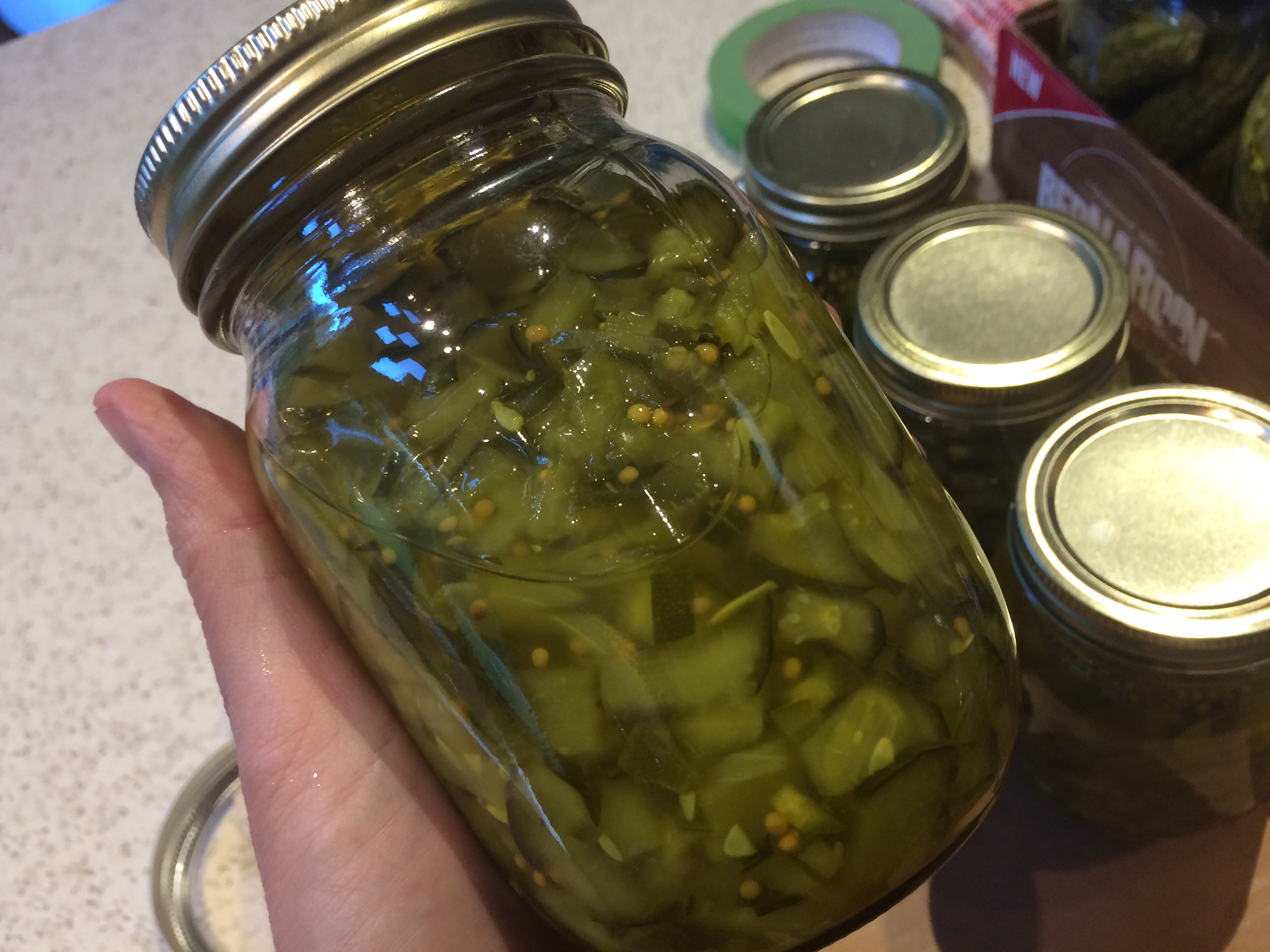
But there is the small stack of rainbow-hued jars starting to accumulate after a week of busy evenings, glowing from within. There is the sound of the “pop” that makes my heart lift a little when the seal is made. (It worked! Not incubating botulism yet!) There is a sense of deep alignment with the seasons and the fleeting urgency of this specific moment (cucumbers! carrots! beans! Pickle them now, or forfeit the opportunity entirely for another year.)
There is a small sense that I am resourcing myself for an uncertain future, by slow-growing these skills that all my ancestors knew but that somehow skipped a generation; that I’m building a little bit of resilience to depend slightly less on a volatile global supply chain. And there is the sense that I’m packing some of the sweetness of this moment, of this abundant sunshiney moment, into a glass container, as an offering to my Future Self. I imagine her, in the fall and winter, her step a little heavier getting out of bed in the dark, looking to a low-hung grey sky, missing the feeling of hair against bare shoulders and bare feet against lush clover-filled grass… and sending this gesture to her as a reminder: sweetness returns, love. Time might feel as if it’s lurching relentlessly forward, but it’s rolling over and over, cycling, spiralling, a wheel.
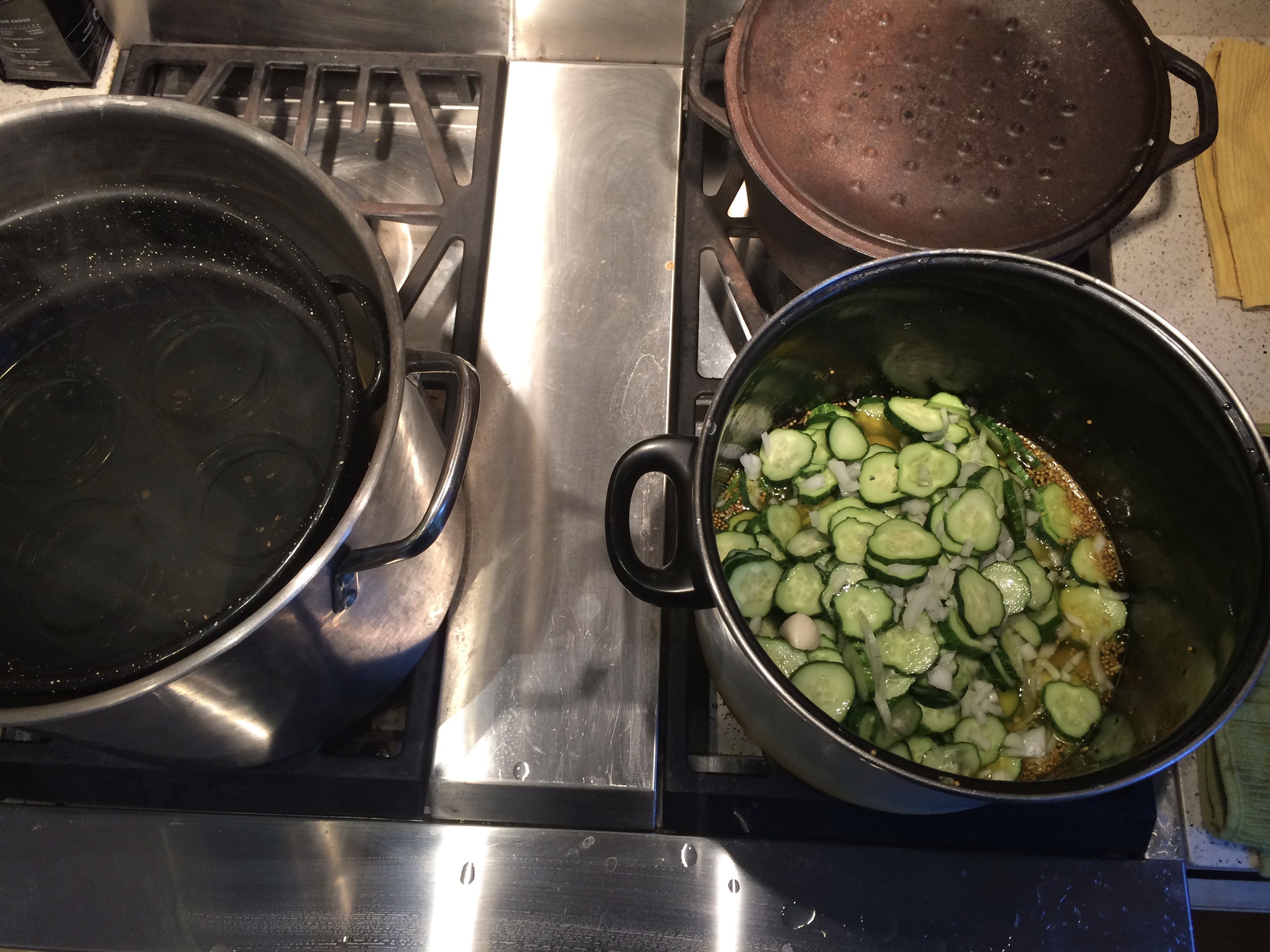
Step 2. Chop and stir. Revisit book several more times during process.
Step 3. Ignore dishes for a moment and rejoice in moment of completion. (Then realize all the steps you forgot, like stirring to remove air bubbles, and wonder if that actually was half an inch of head room. Wish your grandma was here. Start dishes. Label. Schedule Moment of Truth for 6 weeks+ from now. Hope Future You bloody well appreciates this.)
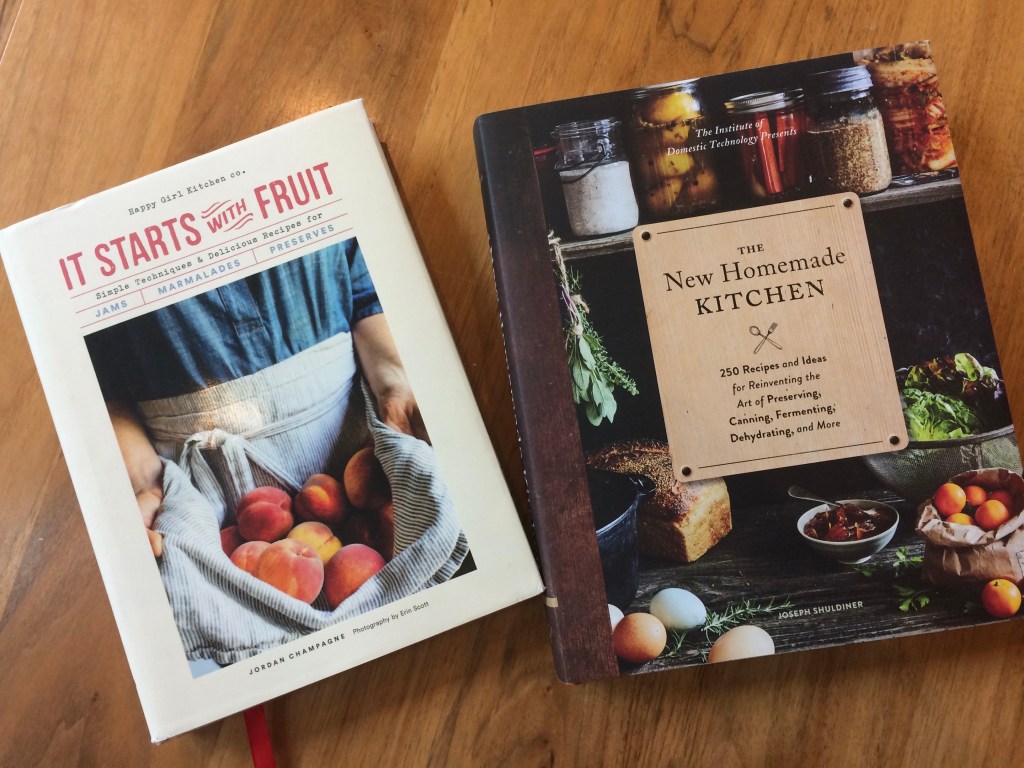
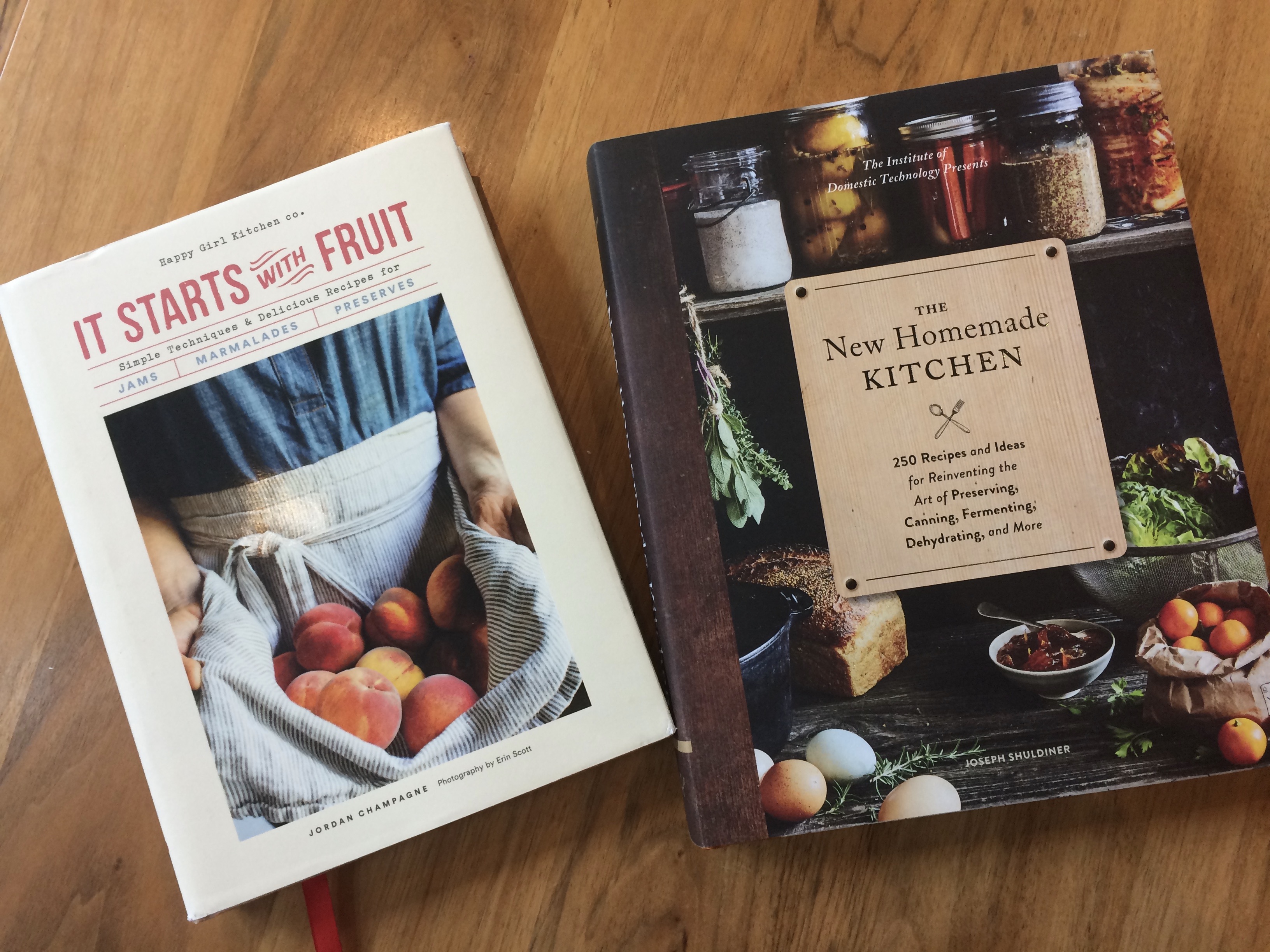
I didn’t learn these things at the apron strings of a beloved elder or a practical mother. I learned them out of books, so the knowledge always feels a bit slippery, like it dumped out of my head last year the minute the pot was scrubbed (just like all the information crammed into my brain to pass an exam promptly vanished the minute we headed to the pub to celebrate the final test). I learned them at the bookshelf, and these new bibles (The New Homemade Kitchen by Joseph Shuldiner and It Starts with Fruit by Jordan Champagne) are utterly lust-worthy and wonderful (and way better to have as a guide than a Google search.)
And yet, each year, I have a growing sense of the rhythm of this work, the laying out of supplies, jars, tongs, the MacGyvering of a canning rack, the towels delineating where the ready jars and the full jars and the processed jars will await their turns. Each year, I find there’s a little something more I can grab from my garden, instead of at the store, to add to the mix – my own dill, my own coriander seeds.
Enjoy August 7. Or discover they taste like a mouthful of salt and toss in compost. Vow not to try ‘winging it’ until you’re a bit more experienced.
There are failures – like the unredeemable refrigerator pickles that I made with the leftover brine from the dill pickles and that tasted like an ocean vegetable – a nice crunch and a mouthful of salt – to be deposited directly into the compost bin with a sigh. And there’s the worry that there are other, yet-to-be-discovered-screw-ups, that will be revealed when I eagerly open one of those jars of beets or beans or cukes or relish…
But if I wanted guarantees, I’d go buy something industrially packed and commercially grown, from the store.
I am realizing, deep in these days of uncertainty and strangeness, that I don’t trust those guarantees anymore.
I want the intimacy of relationship, with my garden, my farmers, my neighbour’s generosity, my own hands conjuring a future snack or meal, with my family and friends when I lay out a small platter of cheeses and crackers and home-made relish, with the friends who shared recipes and whose names blazon the top of my barely-legible recipe cards.
Perversely, I’ve absorbed the idea that the latter is a much riskier prospect to depend upon. Probably because emotional vulnerability – failure, rejection, disappointment – always feels so live and lurking. But that terrain is the most rewarding. The faceless amorphous industrial food complex has seduced us with the idea of being reliable, invulnerable, of providing us whatever we want whenever we want it… but it’s fracturing right now as every faultline that has ever existed gapes under COVID19 pressure loads.
I’m not pickling and preserving to save money, or to plant a flag for hope, or to stockpile my apocalypse arsenal. I’m doing what Kate Raworth, the renegade economist and founder of Doughnut Economics (which preaches the radical idea of building economic models that operate within the Earth’s carrying capacity and try to meet everyone’s needs), says: I’m activating in the space in which I have influence. In this small way, in the small space of my kitchen, I shape a small aspect of my future. Buying local, saving seeds, sharing abundance, observing the seasons, trading recipes with friends, falling into step with Nature… in these small ways, we all can.
“A kitchen compendium, a handbook, a reference guide, and an inspiration, The New Homemade Kitchen includes step-by-step instructions, helpful tips, and delicious recipes that feature ingredients you just learned how to make yourself.” Amazing new book from Chronicle Books for rookies and veterans, covering all kinds of basics, as well as enticing experiments like making your own miso, cider or roasting your own coffee.
When I interviewed Kerry and Andrew last year, for a story about local farmers, Andrew shared his idea that the farm is a kind of mechanical beast that they build up every year, that eventually lurches to life. I loved seeing him unpack this idea in Laughing Crow Organics’ newsletter to harvest box subscribers last week, and got permission to share it here.
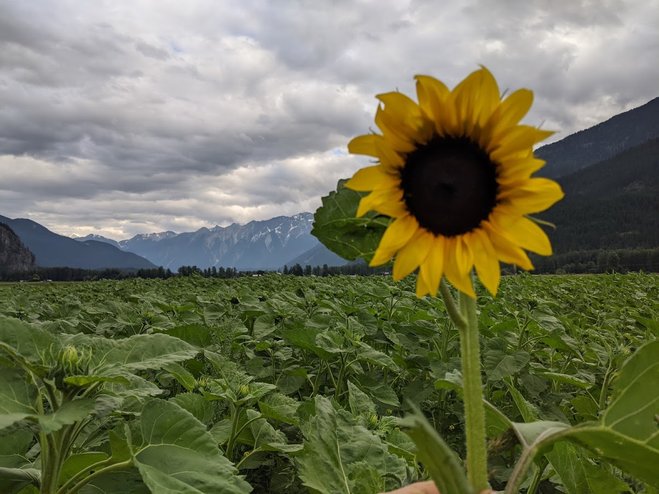
In other news, the sunflower maze is ready and opening Friday August 14
The farm monster is a giant animated beast built from scratch every year, one miniature piece at a time placed by a few busy human hands.
Slow incremental progress is the key. In the early weeks it almost seems unlikely that it will take shape…
By June it starts to have form and begins to threaten action by spitting out peas, radishes, salad greens, lettuces and kales..
More pieces are added… the monster is fed and begins to belch out carrots and beets random flowers and zucchinis—–
I’m not sure exactly what move creates the next shift but it’s like an all-of-a-sudden lurch when the monster begins to barf out all of the things… tomatoes, eggplants, beans, melons and onions. Squash starts to fatten up and beach ball pumpkins appear almost as if from nowhere… Brussels form, and armies of broccoli, cauliflower and cabbages line up for harvest.
It is exhilarating and exhausting all at once. We are at this juncture now. August…. we have built a veritable monster and are so very excited to share it with you over the second half the growing season.
For the past nine weeks I’d felt a low-level thrum of stress about the winter-mess of my garden. It would spike when I saw other people, in March, as the Prime Minster was giving his briefings in a snowstorm, who were pandemic-proofing their future by getting in loads of soil, going to physically-distanced plant sales, posting pics of their seedlings, their brand new beds. I was happy for them, of course. And happy for the idea that people would turn en masse to gardening.
But I hated them too.
That little frisson of envy and anxiety would perk up at the panic-buying of chickens and the video pleas from West Coast Seeds to please be patient, we’re experiencing unusual demand. I was working and parenting and re-orienting to life in isolation and trying to fit in the occasional mind-clearing walk in the woods. All my garden time in March and April was single-mindedly devoted to weeding the strawberry patch, an epic battle that left me hallucinating invasive wiry grass root systems whenever I closed my eyes. It was a race against time to excavate the plants before they began to flower, signaling May. It was a race against the 7 year old’s tolerance for solo-play. It was a battle compounded by the sense that now everyone else in the world was jumping ahead of me, scooping up all the seeds, all the soil, on top of all the yeast, flour and toilet paper they’d already stockpiled. Oh, hello scarcity mindset, my pandemic dance partner. The things that matter most (stretches of uninterrupted time, kids for my son to play with, seeds, clarity about the future) all seemed in desperately short supply.
One afternoon trail-running, the sudden scent of cottonwood stopped me in my tracks. It was as if someone had spilled a jar of infused oil. I stopped and inhaled deeply, looking around to for the source. “What?” I wondered. “What is it?”
It took a while for me to settle into listening mode, but when I did, the thought arose/the tree I could smell but couldn’t see, said: “When you work with us, you create the relationship that allows us to work with you.”
Had that quiet afternoon, working with my hands, my attention, and the invisible company of half a dozen women who had introduced me to this tree over the past few years, also been a gateway into a deeper relationship with the tree species itself? Could it be that a tree was now suggesting to me, that by doing that, I was opening up a portal of reciprocity, a way in which the plant could now work with me, too?
As I finally declared the Victoria Day long weekend my time to plant, and cleared away mounds of last year’s garden debris from one bed, feeling that little surge of overwhelm, inadequacy, I thought back to my cottonwood-perfume-on-the-trail moment and wondered if maybe, I could just ask the garden nicely to be prolific this season to support my family, and even possibly, to allow me to support other families. After all, as I turned up self-seeded carrots and cilantro and a bounty of worms, it seemed bent on sprouting forth with life. Perhaps we could work together.
What if the Law of Nature is as simple and generous and sensible as this: Work with what you have. It will work with you.
Dr Robin Wall Kimmerer, botanist, professor and the author of Braiding Sweetgrass: Indigenous Wisdom, Scientific Knowledge and the Teaching of Plants, asks her nature-loving students if they believe nature loves them back. They’re always a bit insulted or shocked by the naivete of the question. They’re scientists, after all.
I will always compare my garden to other people’s neater ones, the square angles, black soil, cute little labels, fancy trellises. Mine is chaotic and messy and imperfect. But it’s working with me. I felt the sudden lift of that, eased my trust into it. Some things will get eaten before I can harvest them, by deer or slugs or the kid. That’s part of it. We are impacted by other beings. It all flows. In this wild space, I dropped seeds and found a promise, and a reminder: it’s not all on my shoulders. All these beings and energies and life forms – the seeds, the wind, the rain, the worms – are working with me. Bringing me back, beckoning me back into relationship. Together, we might be okay. In fact, we might even flourish.






















 Traced Elements