Author: Erica Osburn

  • Soup for a Future Rainy Day – Curried Lentil Cauliflower Soup

    Soup for a Future Rainy Day – Curried Lentil Cauliflower Soup

    We had a cool period for a bit recently and being on the coast, it was a good opportunity to bring out my soup pot. Back into a heat wave so save this one for the next cool spell. I didn’t get a photo of it but it was a hit with some children I served it to as well as adults. Attached is a photo of some beautiful Squamish salal.

    Curried Lentil Cauliflower Soup with Coconut Milk and Cilantro

    Ingredients:

    3 tbs pure olive oil

    2 leeks, cleaned and chopped

    1 fennel bulb, chopped

    4 tomatoes, chopped

    1 medium cauliflower, chopped

    1 cup cilantro, chopped

    6 cups chicken broth

    1.5 cups red lentils

    2 tsp salt

    2 tsp pepper

    2 tbs cumin

    1 tbs curry powder

    1 can full fat coconut milk

    Method:

    Sauté leeks in olive oil on medium low heat until caramelised. Add all other vegetables and cilantro, and sauté until soft and caramelised.

    Add broth and lentils and coconut milk.

    Bring to boil and simmer 20 minutes.

    Blend half of soup in blender until smooth and adjust salt and pepper to taste.

    Garnish with chopped cilantro if desired.

  • The Time is Coming Soon…To Pick the First Ripe Saskatoons!

    The Time is Coming Soon…To Pick the First Ripe Saskatoons!

    I never liked saskatoon berries when I moved to Pemberton. What was the fuss about? The little things were grainy and full of seeds. I was not impressed although I knew people who adored them. Years passed, and each year I ignored the little purple berries that grew so plentifully around me. Then one day I looked down in my yard and it was covered in little shrivelled saskatoons. They had dropped off the tree and the sun had dried them out. I popped one in my mouth and the flavour was unexpectedly…fantastic. Like a raisin or currant but better. I scooped up all the berries I could and gobbled them up.

    The next year I purposely dried a few cups of saskatoon berries in a dehydrator and used them in a cracker recipe with rosemary, substituting saskatoons for raisins. Then two years ago I started enjoying the taste of fresh saskatoons. I will now paw through all the trees in my yard like a bear and cram them into my mouth. Yes, my taste buds really have changed. I eagerly anticipate the arrival of these little berries now.

    As a non-gardener (I am pretty much successful with only rhubarb, raspberries, apples, plums and cherries – and possibly parsley and cilantro if I’m lucky) saskatoons are an amazing return on zero investment. No watering, no weeding. My kind of berry!

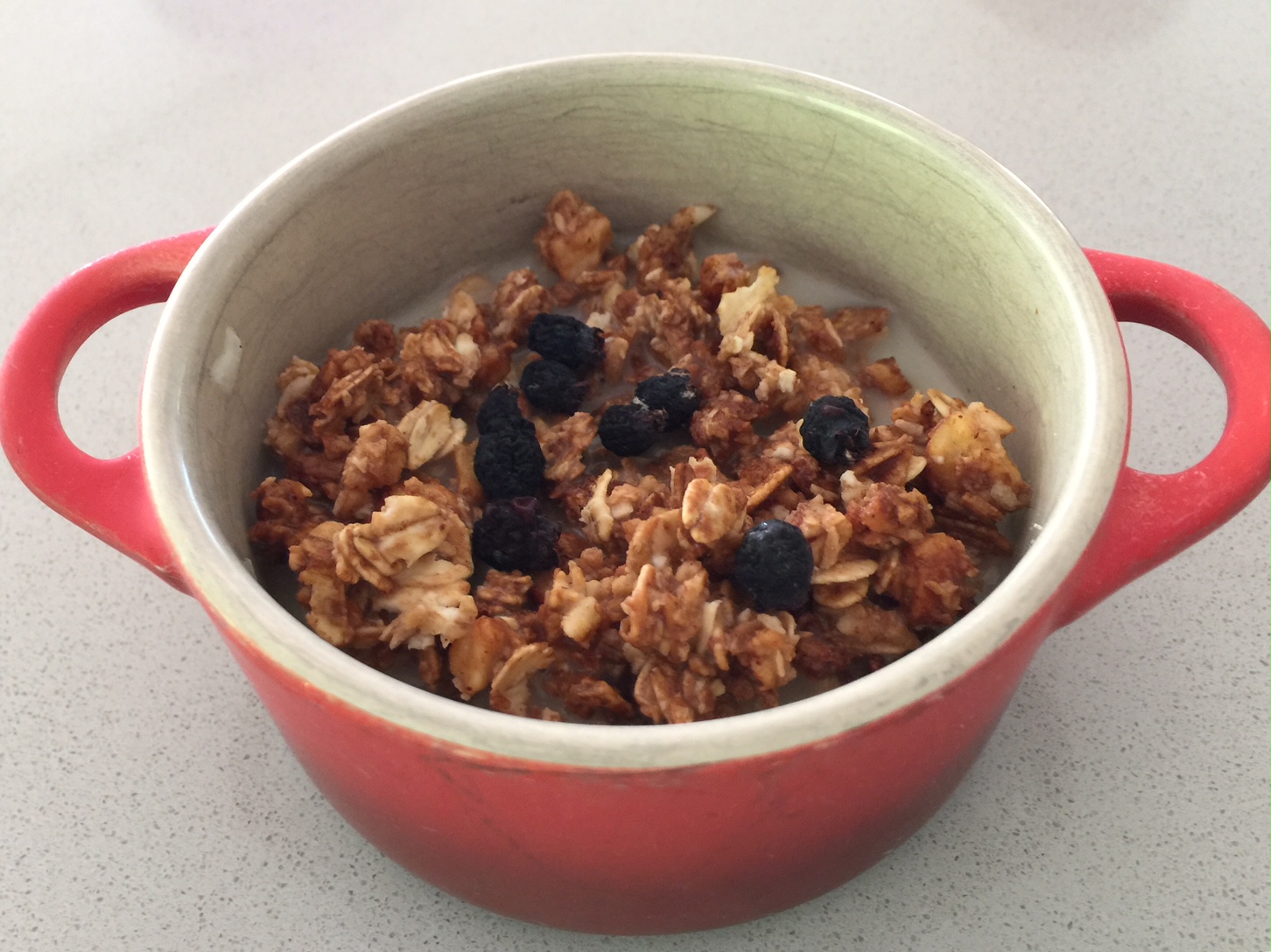
    My granola recipe which follows is adapted from my aunt’s recipe. We share an enthusiasm for a dry granola (not soggy or moist) that stays crunchy in milk. Many granola recipes call for oil which I think is not a good ingredient in granola. After your granola is baked, add a cup of dried saskatoons for a Pemberton treat!

    Crunchy Almond Granola with Dried Saskatoons:

    2/3 cup unsweetened shredded coconut

    2 cups chopped almonds (almond pieces should be the size of gravel)

    3 cups slow oats

    ½ tsp. salt

    2 tsp. cinnamon

    ½ cup runny honey (warm on very low heat if hardened)

    1 cup dried saskatoon berries

    Method:

    Preheat oven to 300F.

    Combine all ingredients (can use a mixer). When fully combined, add honey. Mix very well.

    Spread onto two parchment-lined rimmed baking sheets.

    Bake for approximately 30 minutes, stirring the granola thoroughly every 10 minutes. You must watch granola carefully as it will burn quickly and every oven is different.

    Cool.

    Add 1 cup dried saskatoons.

    Mix well and store in glass jar in fridge for up to several months. Granola and plain Greek yogurt makes an easy, quick, and nutritious breakfast! Enjoy!

    IMG_6291

  • A Couple of No-Bake Sweet Treats for Hot Pemberton Days

    A Couple of No-Bake Sweet Treats for Hot Pemberton Days

    Pemberton is a haven for horse lovers, golfers, mountain bikers, gardeners, farmers, adventure-seeking backcountry enthusiasts, ski and snowboard lovers (who would prefer to not reside in Whistler, or who cannot afford Whistler housing prices), and people who can tolerate extreme heat and bugs.

    I am none of those people, and thus look upon May to late September with dread when the temperatures hit north of 28C – which is frequent. However, Pemberton is also a place for people who enjoy peace and quiet and beautiful vistas – this is something I like very much about Pemberton.

    In light of the extremely high temperatures we are experiencing as of late, my entry this month will focus on two quick, satisfying and fairly healthy sweet treats. One of them, my peanut butter balls, are a staple in my fridge and I make them often. They are a good source of protein and healthy fats; a healthy peanut butter cup! Secondly, my healthier version of marzipan can be eaten on its own, dyed and made into fun fruit shapes, or rolled out to cover a cake – the famous Princess cake which I think is a Swedish tradition. In any case, sugar is reduced – but it does contain raw egg so do not serve to young kids, and anyone takes a risk consuming raw egg. I will take that chance.

    Therefore, my recipes this month do not highlight Pemberton ingredients – but highlight the importance of cooking and baking to suit Pemberton weather. Which seems to get hotter every year.

    Peanut Butter Balls (makes 10-12)

    (I use a kitchen scale for my recipes and I highly recommend owning a scale for bakers)

    6 oz Adams Original Salted smooth peanut butter

    2 oz coconut oil, (unmelted)

    4 oz coconut sugar

    ½ tsp salt

    1 tsp vanilla

    Coating:

    3 squares Lindt 90% dark chocolate

    1 tsp coconut oil

    Method:

    In a stand mixer, mix peanut butter and coconut oil together well. The coconut oil will take a while to fully incorporate.

    Add rest of ingredients and blend well.

    Refrigerate one hour.

    Take out of fridge and form dough into balls using 1 tbs of dough and place on a wax-paper lined plate.

    Refrigerate 1 hour

    Meanwhile make coating by melting coating ingredients slowly on stove or use a double boiler so chocolate doesn’t burn. If you have a very low setting on your stove, use that.

    When cold, dip balls into coating. Refrigerate ½ hour. Enjoy!


    Marzipan: (makes about 2/3 cup of marzipan)

    4 oz almond meal

    1 oz icing sugar

    1 egg beaten or 1 egg white (you won’t need all the egg)

    1 tsp almond extract

    Method: Using a Cuisinart, blend almond meal and icing sugar. With blade running add almond extract. Then slowly, add egg one tsp at a time until mixture comes together around the bowl. The marzipan should have a firm texture, not a mushy texture. Now you can do whatever you want with your marzipan, including eating it as-is!


  • How to Enjoy Pemberton Deer Meat

    How to Enjoy Pemberton Deer Meat

    I did not grow up eating deer meat. Beef, yes. Chicken, yes. Salmon and sole, yes. But deer meat, no. So when I moved to Pemberton and began sharing my fridge with a hunter, I was in for a change in dietary habits.

    While it was not something I can say I enjoyed eating at first, over the years I have learned that deer meat can be just fine. I would like to add that I am grateful for the deer, and the deer meat. Deer eat leaves in the forest, and that is a healthy, natural diet that is passed on to us in the form of healthy, natural, and lean meat. I also like the fact that we know where our meat comes from.

    Some Recipes Work for Deer Meat. Others Do Not:

    My advice to any readers who either have just taken up hunting, or are living with people who hunt, is that some recipes complement deer and others do nothing for it. For instance, do not create a delightful, light, refreshing marinara sauce with Lillooet tomatoes and fresh basil, and expect that it will taste great mixed with a pound of ground deer meat. It will not. (I do not call it venison – that’s chef talk. Deer meat it is.)

    Stew Meat and Ground Meat are Your Friends:

    No matter how much a hunter tries to tell you that “deer roast is amazing”, do not believe him or her. A pork roast? Sign me up. A beef roast? Pass the Dijon. A deer roast? I have [expletive] tried and tried for over a decade and not once has one turned out well. Do not let that hunter persuade you into deer steaks either. In my culinary opinion, another waste of time.

    In short, your entire deer should be turned into either ground or stew meat, with all due respect for the animal.

    Recipes That Have Worked for Me:

    My best recipes for deer meat are used over and over again, and they are best suited for fall, winter and early spring. By late spring we are pretty much done with deer meat, but it can still be used in warmer weather for my taco fiesta recipe which follows.

    My favourite recipe that truly complements deer meat (or disguises it – depending on your point of view) is Shelley Adams’ Whitewater Cooks at Home recipe for Curried Lamb & Lentil Soup. It is delicious, full of flavour, freezes and reheats beautifully, and anyone I have served this to loves it (including many people who do not eat wild game). Deer stew meat is substituted for the lamb.

    Honourable mentions go to Shelley’s recipe for Beef, Leek and Pot Barley Soup (swap out the beef for deer stew meat) from the same book, and her Whitewater Cooks Chilli from her first cookbook. I have still not found the ideal pasta sauce recipe but the one I use is the Best of Bridge cookbook series Best of the Best for their lasagna recipe – the sauce can be used over any pasta. It is really only good on a fall or winter chilly night as it is quite heavy – and the flavours may be a bit dated for today’s palates. But a heavy pasta meal can be very satisfying and comforting on a dark, cold, winter night so it works for me sometimes.

    Mexican Taco Fiesta with Pemberton-Area Deer Meat (Serves 6):

    Here is a recipe I just came up with recently that is delicious, kid-friendly, and appealing to the palate year-round. I choose to serve the tacos without cheese or sour cream, but it’s a personal choice. I also make a cooked salsa with canned tomatoes, making this recipe a practical choice in winter months when fresh tomatoes are expensive and not flavourful.

    Ingredients:

    1 lb. ground deer meat

    3 tbs. home mixed taco seasoning

    1 12-count package of authentic corn tortillas

    10 romaine lettuce leaves, shredded

    1 recipe cooked tomato salsa (recipe follows)

    2 cups cooked black beans

    2 cups finely chopped cilantro

    2 cups cooked corn kernels (fresh or frozen)

    Choice of hot sauce for garnish

    Method:

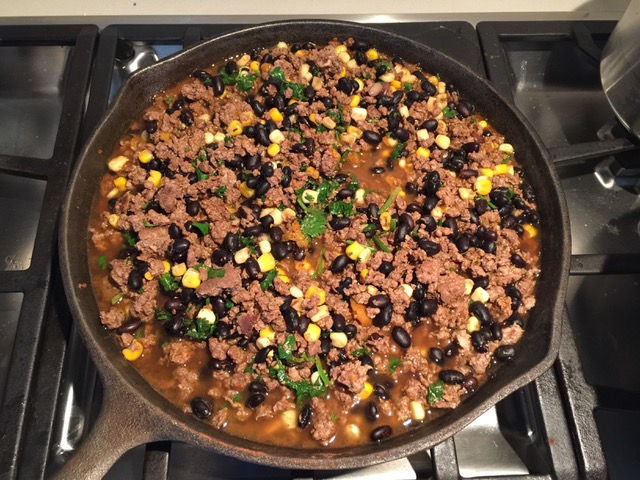
    Cook your deer meat in a very large cast iron fry pan or a heavy-bottomed large saucepan until no longer pink.

    When fully cooked, add 2 cups water and 3 tbs. of taco seasoning.

    Add cooked black beans, cilantro and corn and simmer until the liquid is boiled down (but not so much that your meat mixture is dry).

    Warm tortillas in oven for 15 minutes at 180F

    Chop up lettuce into small shreds.

    Assemble tacos with meat mixture, salsa and lettuce over a tortilla, at the table. No need to roll up (corn tortillas will fall apart easily). Cut up and eat with knife and fork.

    Enjoy!

    Cooked Salsa:

    Ingredients:

    1 litre of canned, diced Lillooet tomatoes

    1 cup chopped cilantro

    1 cup chopped white or yellow onion

    1 tsp. salt

    1 tsp. ground pepper

    Method:

    Sauté onions til very well cooked or caramelised. Add cilantro, tomatoes and salt and pepper. Simmer until most of the liquid is boiled down.

    Leftovers:

    Combine the salsa, the deer meat mixture, and shredded lettuce and sauté over medium heat until hot. Makes a great lunch next day!

    IMG_5492


  • Pemberton (by Way of India) Curry – 3 Ways:

    Pemberton (by Way of India) Curry – 3 Ways:

    If I ever write a cookbook it will be called Why the Heck Not? Culinary Adventures Without Leaving Home.

    I am an improviser, both in cooking and baking. Sometimes the results are forgettable, but sometimes everything works. This curry worked. It was a matter of getting “rid” of odds and ends in the freezer and using up odds and ends in the fridge. Curry, like soup, is a good destination for those odds and ends. I will endeavor to contribute recipes to Traced Elements that call for ingredients that come from Pemberton – or can be grown in Pemberton. This curry is a winner: Pemberton Russet potatoes, Pemberton asparagus, parsley, and tomatoes, Pemberton-raised chicken and chicken broth.

    The three ways part is this: the curry can be served over a bed of rice or quinoa. However, if it is simmered down, it can be a samosa filling (samosa dough recipe and samosa-assembling and baking method is courtesy of Shelley Adams’ awesome first cookbook Whitewater Cooks).

    Then finally, because I love soup, this curry can become a warm and satisfying one. I do not own a microwave, so leftovers are much easier to heat, eat, and enjoy if you just add a cup or two (or more) of chicken broth to them.

    Versatile Pemberton Chicken Curry with Asparagus and Tomato:

    Ingredients:

    3 cups Pemberton-raised cooked and diced chicken breast or thigh meat*

    2 cups sliced Pemberton-grown green gage plums (pits removed)*

    1 large yellow onion, diced

    2 tbs olive oil

    2 cloves Pemberton-grown garlic

    2 large Pemberton-grown russet potatoes, baked, cooled, peeled, and diced*

    1 large Pemberton or Lillooet-grown beefsteak tomato, diced*

    2-3 cups Pemberton-grown asparagus, cooked and diced*

    1 cup minced parsley

    2 tsp salt

    2 tsp pepper

    2 tsp curry powder

    2 tsp cumin

    1 can full-fat coconut milk

    3 tbs gluten-free soy sauce

    2 cups low/no sodium chicken broth*

    *Indicates this ingredient came directly out of my freezer.

    Method:

    Use a large heavy-bottomed stainless steel soup pot or a cast iron stew pot. Add 2 tbs olive oil and warm up on medium-low heat. Add diced onion and minced garlic. Let it cook slowly on low-medium heat so the onion caramelises. Do not rush this part. When the onion and garlic mixture is golden brown, turn the heat to medium, and add your diced chicken, sliced green-gage plums, diced tomato, parsley, asparagus, and potato. Let it sauté around so the flavours mingle and cook. Then add your cumin, curry powder, salt, pepper, and soy sauce. Sauté a few minutes more. Finally, add your coconut milk and 2 cups chicken broth. Let it simmer 10 minutes.

    **If you are making samosas, let the mixture simmer until there is not too much liquid as that will make the samosas too watery and will not stay formed. At the same time, you don’t want your curry mixture too dry either. Just remember your curry mixture will be encased in raw dough and baked so you don’t want the curry mixture to soak through.

    If you are making curry you are almost done. Cook a pot of basmati rice or quinoa and pour your curry over it. You may want to garnish with a chutney and papadum! I would like to make my own chutney but for now it is Major Grey’s from the supermarket.

    And if you are making soup, you will want to add 2 to 6 cups more chicken broth, depending on how thick you like your soup.

    Samosas (Yields 12):

    Samosa dough ingredients (adapted from Shelley Adams’ Whitewater Cooks – her first cookbook)

    3 cups spelt flour

    ½ tsp salt

    ½ tsp baking powder

    ¼ tsp turmeric

    ¼ tsp paprika

    2/3 cup cold butter cubed (for those of you who like to measure ingredients on a kitchen scale, that works out to be 152 grams)

    2/3 cup cold water

    1 egg, beaten

    Method:

    To make dough:

    Place all dry ingredients in food processor and pulse to combine. Add butter and pulse until mixture resembles sand granules. Then slowly add enough water until the dough comes together (you may not need all the water). Wrap dough in plastic wrap and refrigerate for one hour.

    To assemble samosas:

    Roll out dough on a piece of parchment paper until quite thin. You will need extra spelt flour to sprinkle so your dough doesn’t stick to your rolling pin. You don’t want thick dough or else your samosas will be too heavy and stodgy. Cut out portions of dough using the lid of a sour cream container (about 4 inches in diameter). Remove your circle and place on a parchment lined baking sheet. Place a scant ¼ cup of your curry mixture in the centre of your dough circle and fold the circle in half, making a half-moon. Crimp your edges. Do this with the remainder of the dough and curry. Makes about a dozen. Then brush all your samosas with an egg wash using a pastry brush. You will likely have curry mixture left over, and you can freeze that for future meals, as long as your chicken was not previously frozen.

    Bake your samosas in a 350F oven for 30 minutes. Serve with chutney.


  • Soup’s On – Recipes that Make it Easy to Eat Your Veggies in Winter

    Soup’s On – Recipes that Make it Easy to Eat Your Veggies in Winter

    First off, thanks to Lisa for getting this website/blog off the ground. There is so much to write about regarding food, especially in Pemberton.

    I consider myself first a baker by choice, and a cook by necessity. I still use my oven a lot but in the last few years I have really grown to love making soup. I adore soup and it is my preferred form of food, in all seasons except summer!

    You can use so many odds and ends in soup. You can improvise. You can make things vegan, or dairy free, with so many alternatives. Soup can often be a complete meal in a bowl, which is helpful for kids’ thermoses taken to school.

    I find in the winter a plate with a bit of starch, a piece of meat or fish, and some veggies on the side is not appealing. I would way rather slurp my meal from a steaming bowl. Chinese medicine, from what I understand of it, states that cooked veggies are easier to digest, and I find it so much more appealing to eat my veggies surrounded by broth in soup-form in cold weather.

    This soup recipe started with me looking for a butternut soup recipe online. I found something quite good, or looked as if it had potential, and I made it. I got 7 butternut squashes from my in-laws who had planted a bunch with my kids in their garden. I needed to do something with them because I don’t have a cold room with the perfect temperature that prevents winter veggies from rotting. I need to get my squash roasted, pureed, and then frozen.

    I took that initial recipe and have changed it so much that it is an entirely new recipe. I find cauliflower is such a versatile veggie that it can be added to a ton of dishes. The key is that it needs time to sauté slowly which brings out the sweetness and flavour.

    My rules of soup-making are: take your time to sauté the veggies low and slow. Second: I add my herbs to the sauté process – I find this adds flavour. Sometimes I will also add a bit of parsley or cilantro at the end, but I always add a lot of those two when I am sautéing my veggie base low and slow. Third: I always double, triple or quadruple cilantro or parsley called for in recipes. (Cilantro and parsley are two items I always have in my fridge.) Ditto for pepper. I always add more than called for.

    So here it is:

    “Mug of Gold” Butternut-Cauliflower Soup with Spinach:

    Ingredients:

    1 large yellow onion, medium dice

    1 large cauliflower- remove and chop florets into very small pieces

    2 tablespoons pure olive oil

    1-2 garlic cloves, chopped (optional)

    1 tablespoon fresh ginger, grated

    1/2 – 1 cup parsley, roughly chopped

    1 teaspoon curry powder

    1 teaspoon coriander

    2-3 teaspoons cumin

    1/4 teaspoon cloves

    2-3 cups puréed pumpkin or butternut squash

    1.5 cups blanched spinach

    5-6 cups chicken stock*

    1 cup plain, unseasoned tomato juice** (home canned ideally): (optional) OR if you don’t have unseasoned tomato juice, just use more chicken stock

    1/2 cup full fat coconut milk

    pinch of cayenne pepper (optional)

    1 tsp salt, or to taste

    2 tsp pepper, or to taste

    Chopped parsley for garnish

    DIRECTIONS:

    Sauté cauliflower florets in olive oil with onion, garlic, and parsley. Sauté until cauliflower is browned nicely and caramelized.

    Add salt, pepper and spices.

    Add puréed pumpkin or butternut squash.

    Add blanched spinach.

    Add coconut milk, tomato juice (if using), and stock.

    Bring to boil, then simmer on low 10-15 mins. Cool 5-10 mins.

    Blend in batches (in high powered, such as a Vita-Mix blender*** if possible)

    Adjust salt and pepper. Also you may want to add more stock if you find the consistency is too thick. Do not add more tomato juice, as more than one cup will overpower the butternut.

    Serves 8.

    *Chicken stock: I roast a chicken once a week. That evening I will put the carcass in a large stock pot with a ton of veggie ends/trimmings that I save in a large Ziploc in my freezer. In that bag I will add: cauliflower stalks and leaves, parsley ends, onion ends, green onion ends, carrot ends, celery ends, sweet pepper stems, etc. etc. The only “end” that doesn’t work is potato ends. And the veggie should be clean. I add the “ends” to the chicken carcass (works out to be about 3 cups of veggie trimmings), fill the pot with water, add 2 bay leaves and about 30 whole peppercorns. Then I bring to boil and simmer for 2 hours. After cooling I drain the broth and when cool, freeze in containers. I pick the meat off the carcass and this meat I will use in soups later.

    **Tomato juice: I home canned some juice after canning Lillooet tomatoes. I think the most simple juice is best, so you could use the juice from a can of commercial tomatoes. If you don’t have a mild and unseasoned juice like this, omit the tomato juice and just use more chicken stock.

    ***Blender: If you like blended soups then a high-powered blender, such as a Vita-Mix, will make the smoothest soups.