With the botanical name of ‘Myosoton aquaticum’ it becomes clear that there is more than meets the eye when acquainting oneself with the perennial weed known as ‘Chickweed’.
These triumphant little wonders that grow in nitrogen rich soil pack a powerful punch of medicine. Chickweed is consumed for stomach and bowel problems, blood disorders, asthma, lung diseases, obesity, vitamin C deficiency (scurvy) and skin conditions such as psoriasis, rabies, itching, muscle and joint pain!
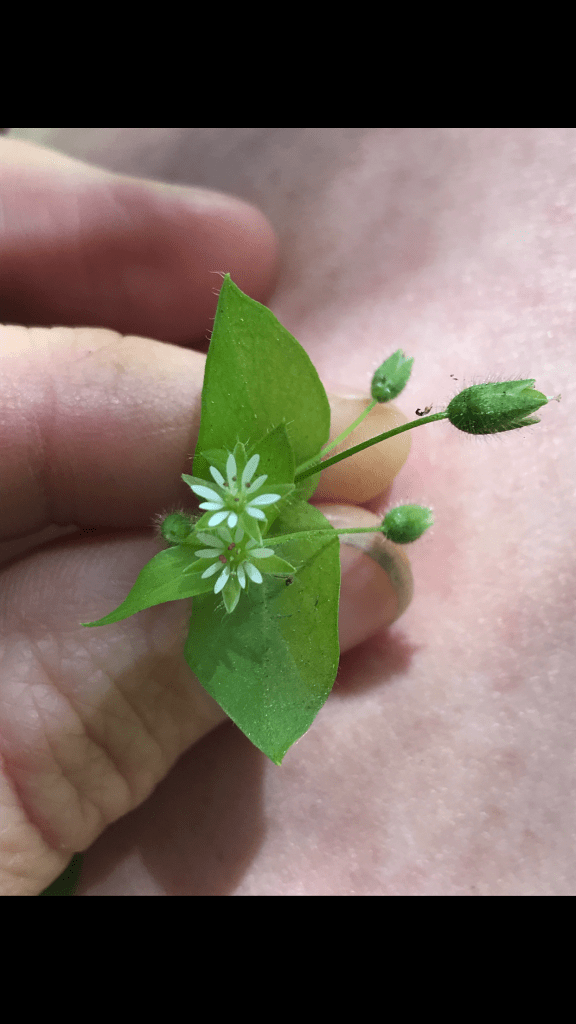
Nestled among flocks of clover and dandelion allies there is great joy to be discovered upon first glance. Pristine symmetry of ten white fronds and with a closer look, noticing there are in fact five immaculate heart shaped petals split down the gentle center of her alluring, aromatic excellence.
Building a relationship with this plant has been a joyful adventure and thankfully they grow wildly upon mountain tops, valleys and most lawns in the Pemberton Valley in every season sans snow. Chickweed is often overlooked as a weed, pulled up and out of the dirt without a chance to spread her delicate wings of love upon your dinner plates full of nourishing kindness and fresh flavor infusion. If you haven’t already I urge you to open your heart to this angelic wild edible and invite her into you culinary explorations!
When wild harvesting as always only take what you need, in this case a pair of scissors, the top six inches of the plant and no more than 10% of the crop you see present. You can add her to fresh spring salads, summery mocktails and even fall soups and garnishes. My personal favorite way to integrate this wild beauty is my vegan, ‘Chic’week Pesto’. I add this into an ice cube tray and set it in the freezer for a heal(thy) does of delicious nourishment. It is especially useful on evenings when making dinner seems an unattainable feat! Many studies suggest integrating phytonutriens (an abundance of which are found in the complex immune systems of wild edible plants) into our daily diet will decrease disease, bringing us closer to our ancestors diet of grazing on a variety of nutrient dense wilderness edibles.
Without further ado, here is the recipe!
Chic’Weed Pesto Recipe:
3 cups of Chickweed washed and drained
1/4 cup of Nutritional Yeast
1 cup raw nuts (cashews, pines, hazelnut, walnuts – pick your fave or mix)
2-3 Raw garlic cloves
1 tsp pink salt
1/4 tsp black pepper
1/2 cup olive oil
1 tbsp fresh lemon juice
Chop in a food processor until smooth, add to an ice cube tray and voila! Phytonutrient dense deliciousness at your fingertips!
I can’t wait to see how you explore this wonderful plant! Until then you can find me on Instagram @theplayfulmooon making all vegan recipes to share with you through my recipe hashtag #eatrealrainbows🌈
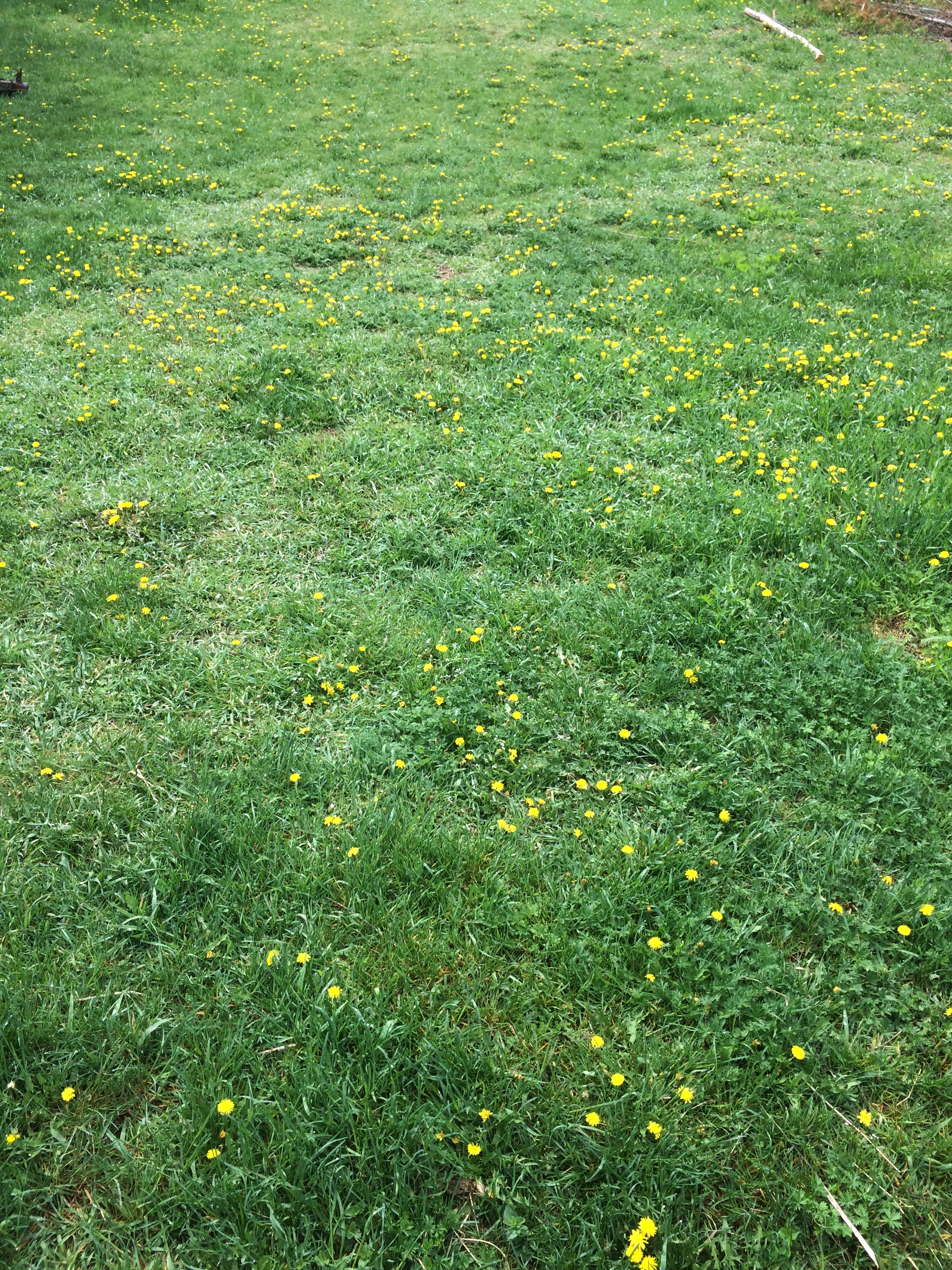
Could a food chain that whispers of global vulnerability make me reconsider the value of my yard as part of my personal supply chain? I cultivate weeds better than anything. My yard is a festival of dandelions.
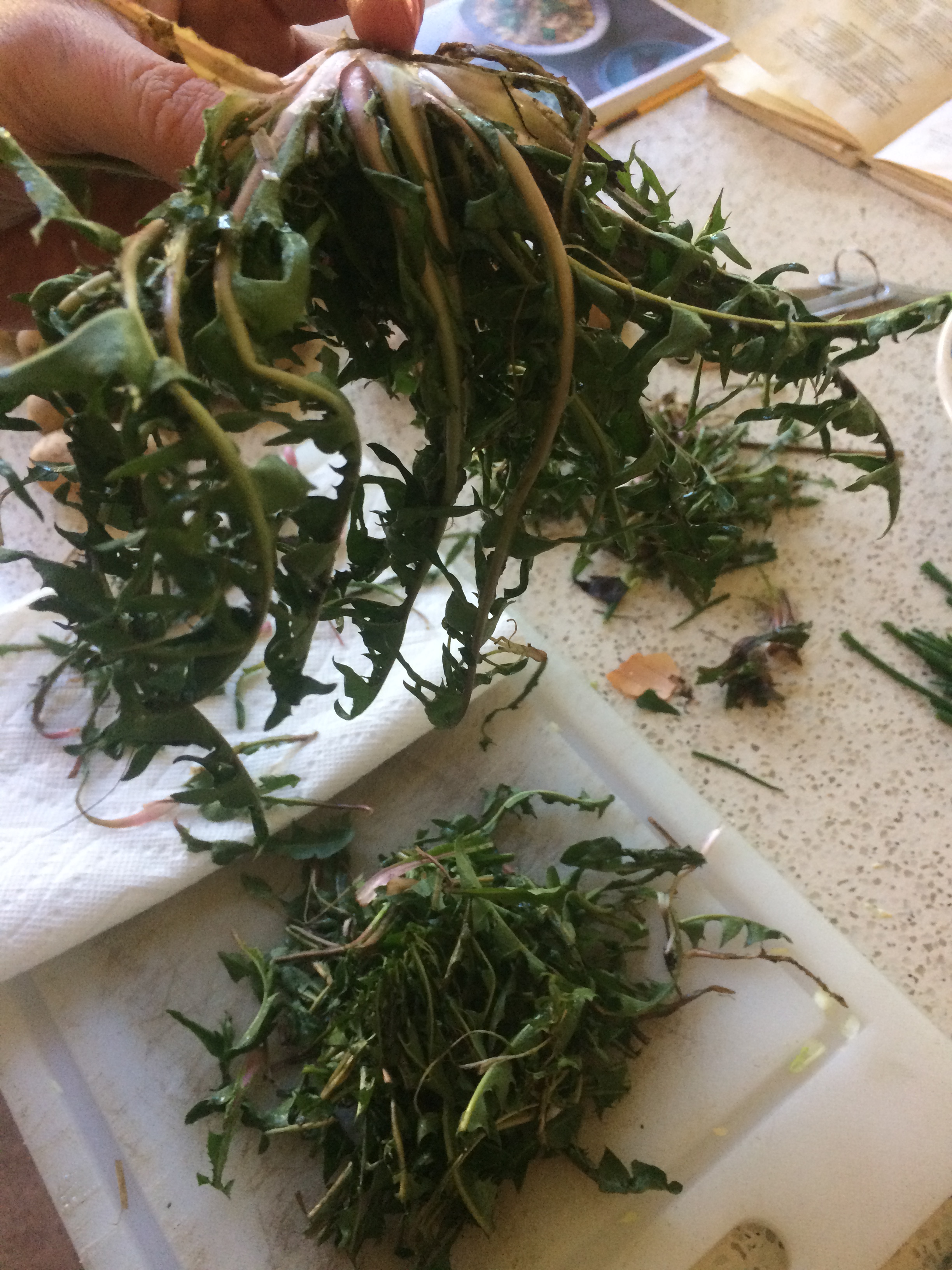
There is nothing to be gained by declaring war on this. But everything to be gained by researching all the medicinal and nutritional benefits of dandelion and declaring it my most successful garden crop ever. So, with a nudge of encouragement from Natalie Rousseau, whose plant ally for early spring in her 13 Moons course was dandelion, I cooked up a dandelion saute, as the evening’s serve of greens.
It tasted… so… weedy.
The seven year old sniffed and said, “No.” Husband’s verdict: “not for the permanent recipe collection.”
I went to instagram to announce this state of affairs.
And was encouraged by friends not to give up.
So I did some more research. They are SO GOOD FOR YOU. My coffee-to-wine IV line slash coping technique has short term effectiveness, (upping and downing me as required), but I’m not in love with the long term consequences (like looking haggard. I embrace witchiness but I’m not ready to be a hag just yet.) The promise of clear skin alone convinced me to keep trying – if not to disguise or balance the taste of dandelion, then to acquire.
Two weeks into my experiments with dandelion (and with even more available in my yard, yay abundance!) it’s some combination of all of the above.
Susun Weed has taught that information in wild food is healing to our cells, it nourishes them with fewer glitches, it returns us to a state of health that aligns with an older Earth, because the receptor sites for minerals in our cells, are primed for the nutrients found in wild food.
the optimum nutrition is the nutrition from the wild plants. ~ susun weed
Dandelion is a member of the Asteraceae (daisy) family, a spring tonic and blood purifier. Dandelion leaves and roots relieve chronic stagnation in the liver, while the flowers can relieve a stagnant depressed spirit.
“It grows almost anywhere: wild in fields, lining trails, in suburban yards, breaking through cracks in city sidewalks. Its constant presence is a reminder of its persistence to live as long as it can under any condition.” ~ Christine Buckley, Plant Magic
It was actually imported to North America as a spring green and boasts the scientific name Taraxacum officinale, meaning the official remedy. Like, for everything.
Its strengths are as a tonic, diuretic, alterative, antirheumatic, bitter, cholagogic, hepatic, exhilarant, mild laxative and nutritive.
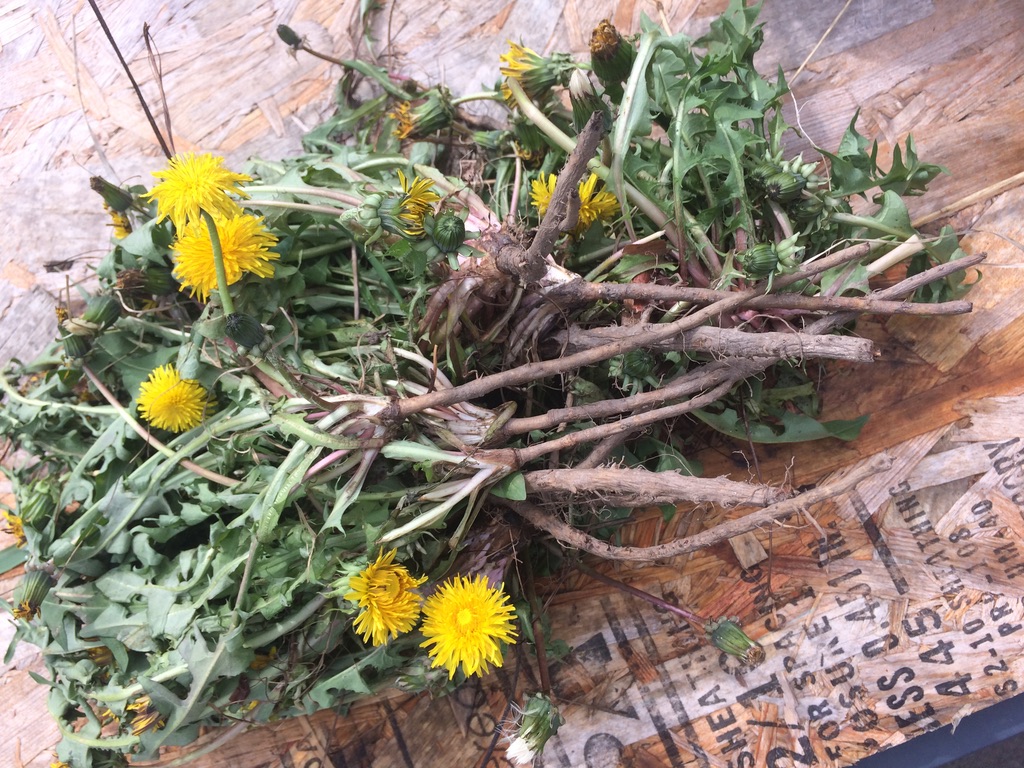
Dandelion – Are tap-rooted biennial or perennial herbaceous plants, native to temperate areas of the world. Dandelions are thought to have evolved about thirty million years ago in Eurasia, they have been used by humans as food and herb for much of recorded history. Dandelions are one of the first plants to bloom in the spring and therefore are a very important source of nectar and pollen early in the season. Its tap-root will bring up nutrients for shallower-rooting plants, and add minerals and nitrogen to the soil. Dandelions are even said to emit ethylene gas which helps fruit ripen.
Christine Buckley, in her new (and highly recommended) book Plant Magic includes dandelion in her herbal arsenal – she makes vodka tincture with the flowers and takes that jar of liquid sunshine as deep winter medicine, confessing it is her favourite plant for being “scrappy, fierce, life giving and cheery.”
Buckley recommends to use the roots for sluggish digestion – dandelion will not just kick your digestive system into high gear, it also improves bile production in the liver, so you can digest fats and eliminate toxins from your body with more ease. This will reduce inflammation in the body, make your skin look better, help your metabolism and allow the liver to cleanse the blood.
It’s high in mineral content and inulin, a type of fibre, which is an excellent prebiotic.
Are you sold yet?
The leaves are great spring salads – waking up our systems. It’s a tonic, so that means you can take it, every day, and little by little, you will improve.
“It is the ultimate preventative medicine,” says Buckley. And high in potassium, too.
So long as the leaves are green, they’re edible. They become progressively bitter, so start with tender spring leaves. It also is packed with vitamins A, E, K, b6, B1 and C. Temper the bitterness with other ingredients (like plaintain leaves, garden herbs, seeds, nuts, shaved cheese, dried fruit.)
So, with that data fomenting in my brain, my community of wild advisors offered tips on incorporating this super food into my diet.
Christine Buckley’s must-have new book, Plant Magic
Holly Joseph recommends: “The roots are nice and hot right now. Add to a stir fry, they taste so good! Brush them off under the hose. They are long and thin right now. And taste pretty peppery. I just cut it up right from the garden and put it right into my stir fry. Made it kind of spicy!”
Asta Kovanen’s advice: “My tip is to cut wild greens in slowly. Add them in small percentages to your regular veg and then your palate can adjust without major assault.”
Leala Selina Martin said: “I often will juice them as the larger they are the more bitter. They are so good for you though!”
Sarinda Hoilett advised: “It’s all in the balance of flavours. Macadamia nuts (although gift from heaven) are expensive and hard to find…you can substitute cashews or even avocado and try for a creamy citrus blend to balance the bitter 🍃, And mix them with other greens or drop a few in a sweet smoothie.”
Dandelion Cream Salad
20 dandelion leaves, finely chopped, main stem rmoved
1/2 cup macadamia nuts
1/4 cup diced red bell pepper
1/4 cup coconut water
3 tbs lemon juice
1 tsp Celtic salt
Massage chopped dandelion leaves well with salt to break down the fibre. Let sit for at least 5 minutes. Blend nuts with coconut water and lemon to cream. Mix well to coat dandelions with cream and add red bell pepper. This salad is a wonderful way to get the great nutrition of dandelion with a reduction of the bitterness.
After great success with Natalie’s dandelion cordial, making Christine Buckley’s winter rescue tincture (as I call it the “dandy brandy”) is next on my list.
1 ½ cups dandelion flower blossoms
1 cup honey
1 cup brandy
Put the flowers in a glass pint jar. Dissolve the honey in the brandy by stirring or whisking vigorously together. Pour the brandy and honey over the flowers, label and store in a cool dark place for 6 weeks. Bottle your tincture but don’t hide it away so well that you forget about it by winter.
Pemberton-based clinical herbalist, Evelyn Coggins,advised, after reading this post: “I love to hear this topic of wild medicine/wild food being shared as miraculous, magical news… because it is all that. A weed is just a plant that hasn’t learned to grow in rows. The bitter principal of dandelion is tricky. We like sweet, salty and to some degree sour but bitter rarely. Maybe we are cautious because the toxic constituents in plants are most often present as alkaloids and alkaloids are bitter. It must have been a real learning curve to distinguish between toxic and beneficial bitters. The beneficial bitters aid digestion and many traditional aperitifs employ plant based bitters. Gin and tonic is a good example. Gin is prepared from juniper berries and they are bitter. Bitters act on the bitter receptors on the tongue and start a chain reaction that leads to the increased flow of bile into the digestive tract and all the nutritional value that ensues from there. It is not surprising that the liver leaps into action with bitters since poisons must be metabolized and hopefully rendered harmless by this organ. I agree that one must start slowly when turning to bitter plants but the journey is so worth it.”
I’ve been a client of Evelyn’s and can’t recommend her highly enough.
Now, more than ever, is a time to treat nature as an ally, not a servant/slave, and to behave with honour, humility, curiousity and gratitude.
Just because you use the derisive word weed doesn’t mean this plant has no value.
Finally, leave some for the pollinators. They matter in this lovely web, perhaps more than anyone. Not to mention, the roots reach deep into the soil to bring up nutrients, so they’re working healing magic on the Earth, not just our bodies.
Thanks to Tanina Williams, who first introduced me to the idea of making dandelion jelly, for sharing this video:
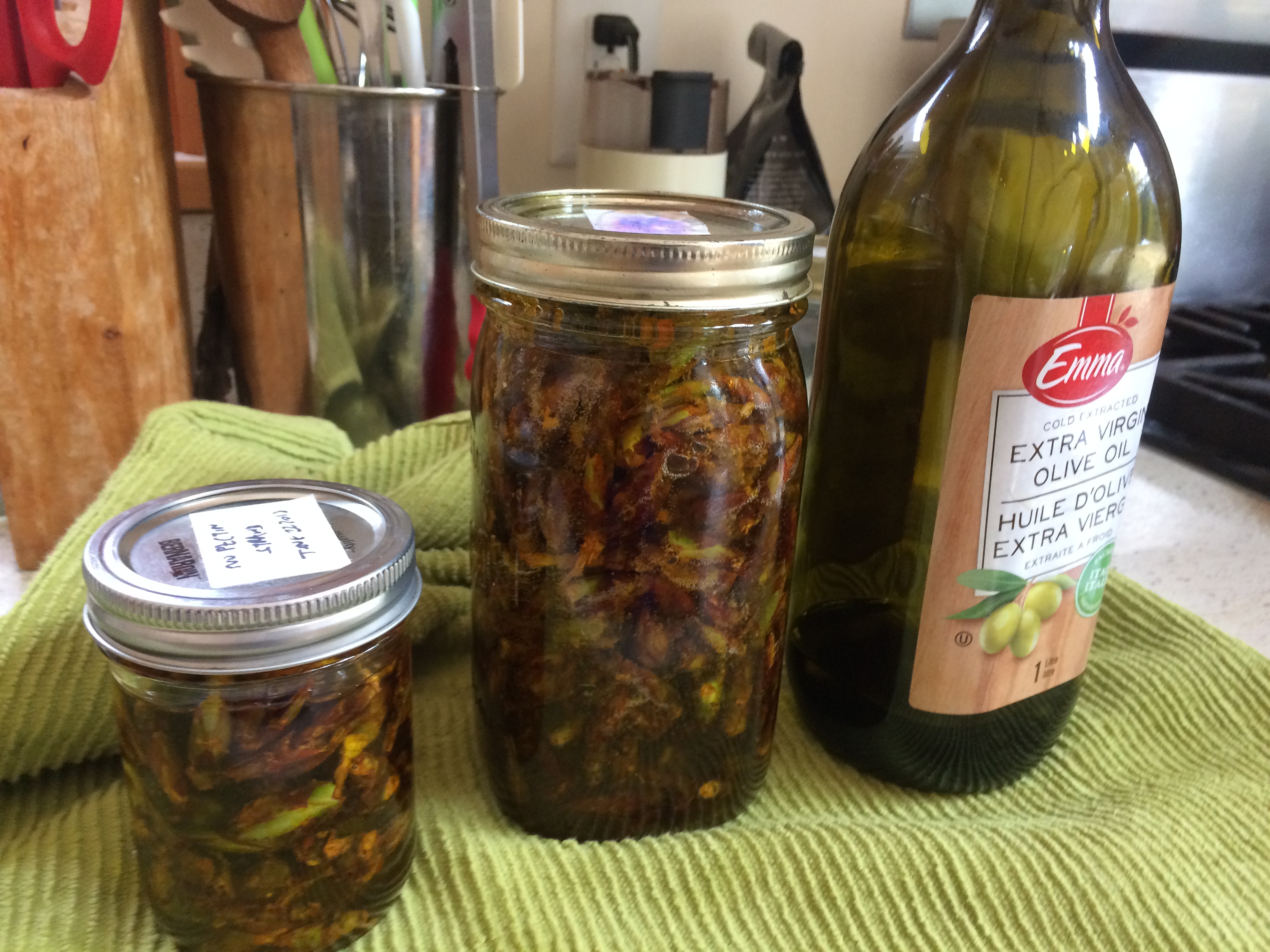
“What’s this?” asked my clutter-resistant husband, observing the giant mason jar of oily plant matter on the counter.
“Ohh, it’s medicine! It’s called Balm of Gilead,” I explained.
“Oh. But what is it?”
“Cottonwood tips in oil.”
“Hmm. And what’s it good for treating?” he asked, in an impressively neutral manner, eyes scanning to the brand new bottle of olive oil next to the stove that was now suddenly, dramatically, near-empty.
I reamed off a list of benefits from Balm of Gilead, the old herbal remedy – that I’d just copied out carefully into my new Plant Allies notebook – using information I gleaned from Natalie Rousseau’s blog. The resinous buds are rich in salicin which your body converts to salicylic acid, the active ingredient in aspirin. Good for sore muscles, rheumatic conditions, simple wound healing, as an expectorant chest rub to treat a boggy spring chest cold. Bees also use the resin to protect their hives.
“Plus,” I enthused, “it’s helping me be more in tune with this place, with the seasons, and what’s outside our door.” He’s knows that “tuning in to the deeper rhythms” is kind of my jam right now, so, even though I could see his brain calculating the cost per millilitre of this little experiment, as compared to the cost per unit of a bottle of generic aspirin tablets, as weighed against the likelihood of me ever 1. completing this project and 2. treating anything with it, he nodded quietly, and put the jar back on the counter.
Since moving to Pemberton from the land of eucalypts and snow gums, I had acquired the habit of thinking that black cottonwood (Populus balsamifera ssp.) are kind of junk trees – the wood is too wet to burn well, the snowfall of the seeds in May wreak havoc on friends’ allergies, and the branches crash to the ground, making them kind of hazardous to live directly under under. Even though wonderful plant mentors like Evelyn Coggins,Dawn Johnson and Connie Sobchak have offered me other ways of thinking about cottonwood, thanks to their contributions to The Wellness Almanac – great bird habitat! good for erosion prevention! great shade in a sweltering Pemberton summer! a beautiful scent! a medicine! – those attributes felt like supplementary prizes, making up for basic deficiencies in character.
Then, in February, I joined Kera Willis and Guliz Unlu for an all-day workshop, offered through Mountain Horse School, “Lightning Seeds: Opening the Gateway of What’s Possible.” The hook had been set, when Kera asked:
What happens when we invite natural rhythms, cycles and energies to help us create the changes we wish to see, in both ourselves and the wider world?
What if we could get out of our own way?
What if we could remember ourselves into a state of embedded belonging within the natural world?
“In the same way a lightning strike may ignite an instant blaze or slow burn that smoulders for months, these awarenesses and experiences may take root eagerly within us, or they may take months (or even years!) to percolate down through our soil,” wrote Kera.
Befriending my tree neighbours has been an outcome with a long slow germination. First there was ignorance, curiosity, longing, admiration of those with more knowing. Years of that.
Lightning Seeds beneath a big old cottonwood. Photo courtesy Kera Willis/Guliz Unlu.
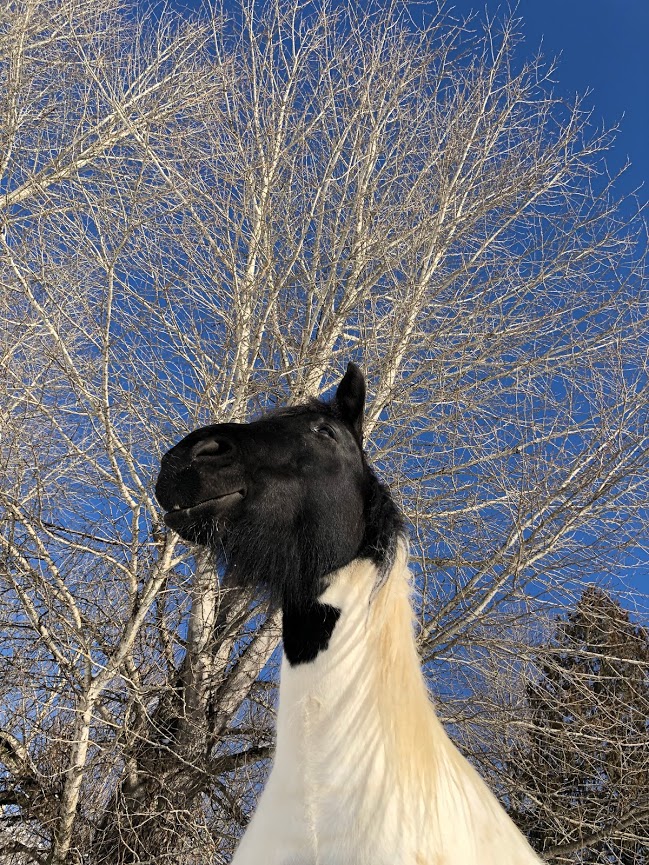
Besa. Photo courtesy Kera Willis/Guliz Unlu
Then, facilitated by Kera and Guliz, a group of us were invited to stand in the crunching snow in the shelter of a cottonwood and consider: what is the smell of lighting? what is the sensation of green? what secret desire might we share with a horse, a tree, a non-verbal witness? How might be hold ourselves if we courted wonder, if we invited animals to approach us, instead of steam-rolling our way into the thick of things, without waiting, without listening, without receiving?
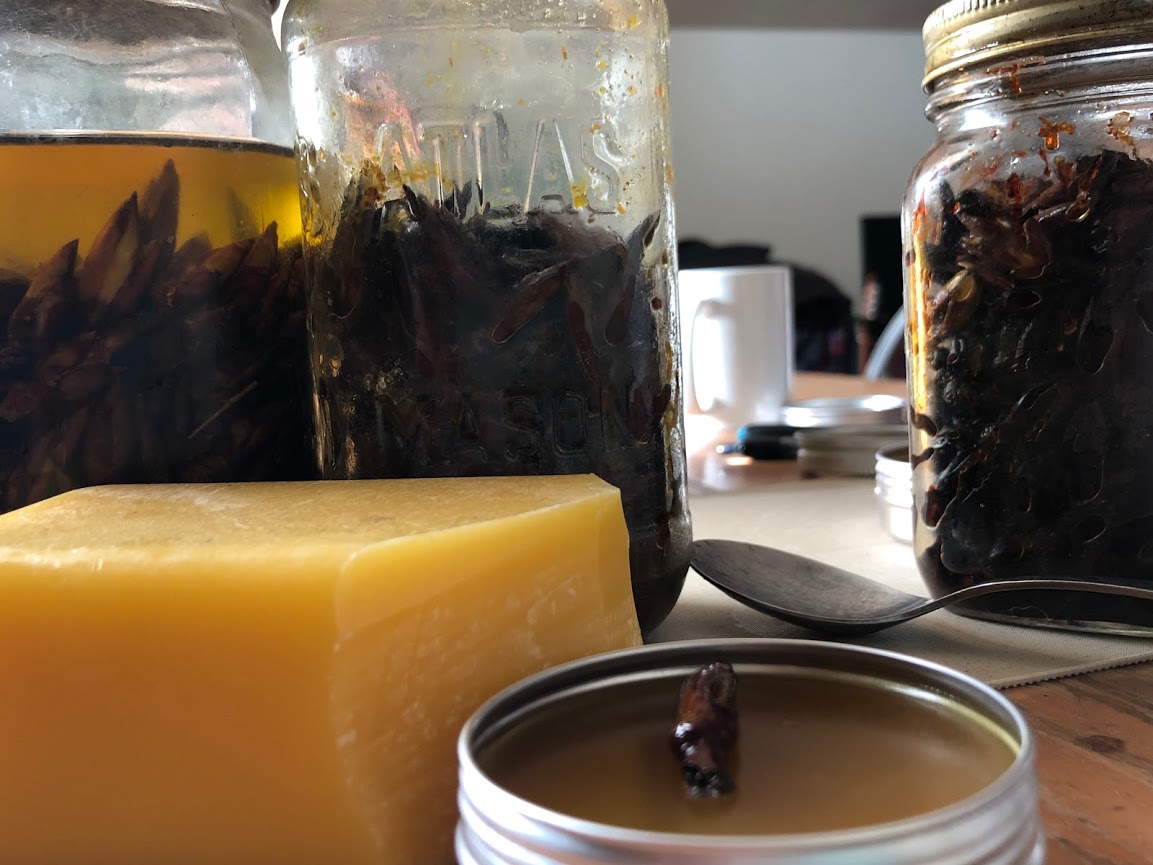
We ended our explorations at the mixing table, hands-on, pouring melted beeswax and cottonwood oil into containers, inhaling the aroma. Connecting with our senses. Relating.
Photo courtesy Kera Willis/Guliz Unlu
Photo courtesy Kera Willis/Guliz Unlu
Percolate.
A month later, on the first day of spring break, I found myself at the base of a massive cottonwood that grows beside the creek behind my house. I wouldn’t have known it was a cottonwood. But I was sniffing around the ground like a truffle pig, and when I found dropped branches with the tell-tale resinous buds (quick sniff for confirmation, month-old memory of sitting at Kera’s table still fresh), I gazed up, to locate the source. Oh. There she is. Wow. Your majesty. I couldn’t help but bow. Her crown was stunning. So different from the conical tops of the Douglas-fir and red cedar that have filled my winter days.
I picked the buds from winter-fallen branches, taking in the scent, and I kind of chatted away to the tree. First, I acknowledged her presence. Big step. I’ve walked by plenty of times, head in my own thoughts, brushing by like strangers. So we began the dance of becoming friends. I accepted her, without assessing her worthiness, just as I do when I become friends with someone. And I offered myself as a potential friend, and complimented her on her lovely qualities – like the fact that the branches she drops in winter storms are rich with buds that are full of medicine for spring coughs, muscle aches and pains, wound healing. I accepted the offering.
She’s a local here, (a coastal dweller, her kin are native to western North America) and the flood plain is her habitat – she can take root in pure sand or gravel along riverbanks, and absorbs water through her roots to help control flooding.
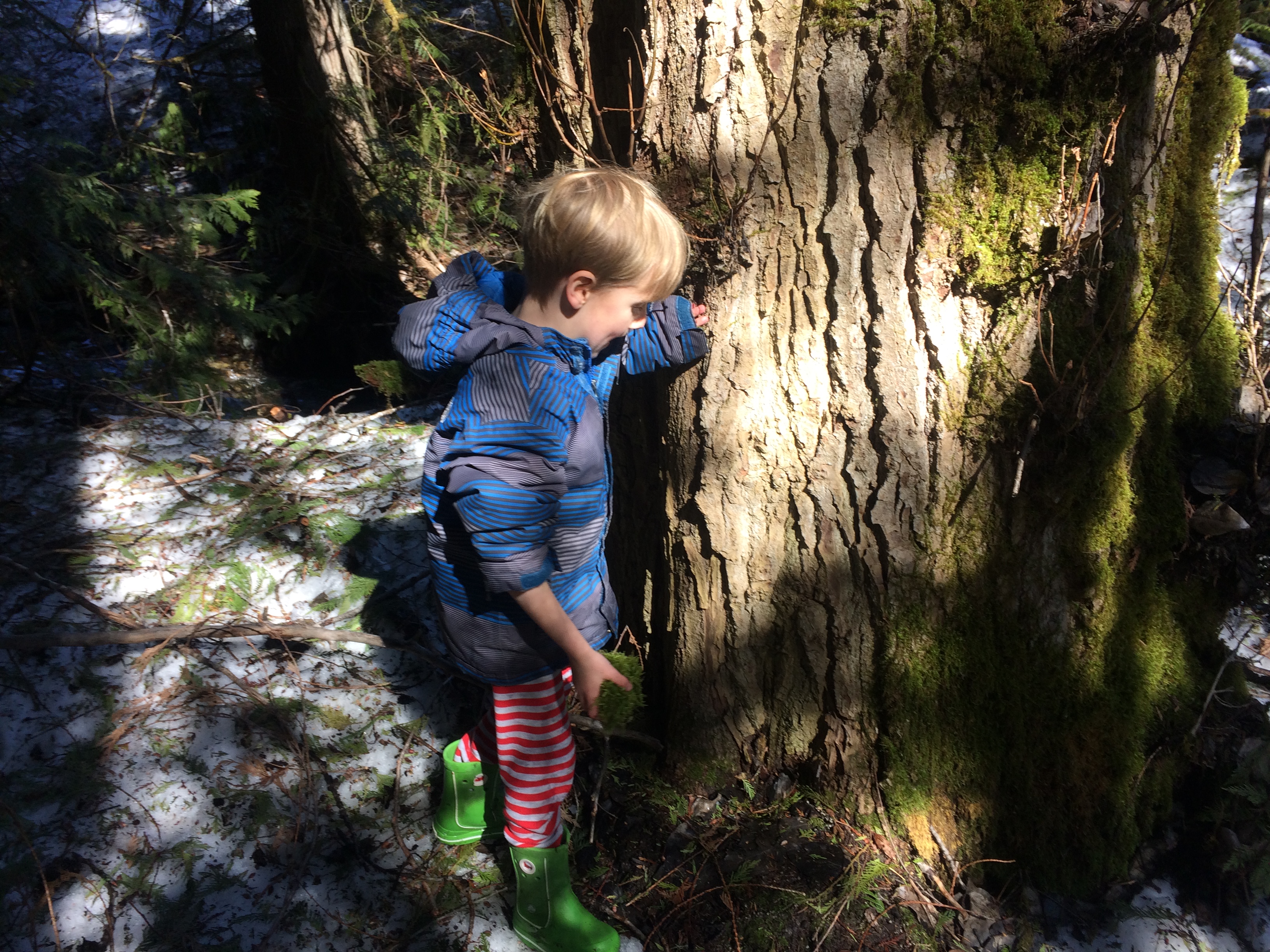
I’d brought the wee lad with me, beckoning him outside with the promise of a “creek patrol.” I had showed him Natalie’s blog post, with her step by step photo instructions of making a poplar salve, and explained what I was wanting to do. I pulled out my little jar of salve from February and we both inhaled it. He absorbed it all quietly, then ran to find a basket for me, and his raspberry picking container (yogurt container with string to hang around the neck) from the bottom drawer.
As I plucked the buds from fallen branches he hustled back and forth between the creek and mother tree pouring water on it as “an offering.” Also leaving branches against its trunk in case it felt compelled to be a Fort anytime soon. It has been almost a year since we last talked about the idea of offering thanks to the trees and living things around us – and maybe we owe it to Wild Kratts, but he’s bought into that idea completely.
(Cut to last night’s first fire, with deadfall we collected from the forest floor.
Dad: “trees are so awesome because they give us firewood!”
Boy: “No, trees are awesome because they give us oxygen. That’s more important than fire wood. If you don’t have oxygen, you can’t LIVE!”)
Making offering. Moss, dirt, creek water.
This is the seed I want to plant in his heart, I thought, as I was collecting buds from the forest floor : there is so much abundance here as long as we remember to acknowledge and give thanks and give something in return. This is the dawning that is, at last, awakening in me.
The smell of cottonwood resin, which I found kind of medicinal and stenchy in February, is now something I inhale with intention and gladness. (Especially given that my hands are covered with it, right now, after I opened the lid of my brewing jar to see how things were looking. Word to the wise: when they say, “only fill your jar 3/4 full, because the buds will swell”, they mean it. Oh grasshopper. So much to learn.)
Now that I have begun to enter into relationship with that great tree, I see her – from my window, out in the yard, walking the creek – all the time, and it doesn’t make sense to not nod in greeting. After all, we’re friends. Even if I never use the oil, medicinally, some “medicine” has been gained, in this, small glimpse at the significance of the phrase I have heard my Lil’wat neighbours use: all my relations.
Using a ratio of one part buds to 3 parts vegetable oil (I use olive oil), soak the buds for at least three weeks, stirring gently once a day to expose all bud surface areas to the solvent.
I use 500 ml canning jars and cover the tops with paper towel secured with canning rings. This prevents stuff from falling into your oil but also allows the moisture from the buds to escape. Keep the oil in a warm place (in the oven with the oven light on) to help gently dissolve the resins into the oil.
When your soaking is complete, allow the jars to sit at room temperature overnight then strain out the buds. Let the oil sit covered with a clean tea towel for another 24 hours at room temperature and then decant it into jars, cover tightly, label and store in a dark place.
You can apply it to sore spots as is or mix it with other infused oils and essential oils, add some melted beeswax and presto: an absolutely fabulous homemade version of “Tiger Balm”.
“Seeds are software, and we have the seeds” -Representative of the chemical giant Seminis, just before selling out to Monsanto
Usually, plantain is a quiet, unobtrusive little plant. She is known for her excellent healing properties, her usefulness as a spit poultice, and her excellent nutritional properties. She is generally soft spoken, and most people are surprised to notice she has been underfoot all along. She is like coffeeshops in Vancouver: ubiquitous. But lately plantain, sometimes called ‘white man’s foot’ for the way she has followed our footsteps across North America, has been shouting at me. She is poking me with her seed spears. Every time I turn around, there she is. Usually when this happens it means the particular plant that is ‘shouting’ has some particular medicine I need to pay attention to. My resistance is generally high. You think I would actively cultivate some sort of porosity towards these sorts of encounters, but no. When a plant is trying to get my attention (or most things, for that matter) my first response is resistance. When I finally let plantain in all I do is look at her for a moment, but that look takes a photograph that embeds her in my mind and from there she begins to communicate with me.
Plantain
Because of the way the summer has gone- hot and dry- Plantain is setting seed earlier than usual, and with an abundance I did not notice last fall. Perhaps she is foretelling the future, but it is more likely her actions are a reflection of the present. (When a plant is stressed, their seed production tends to be prolific. Cue the fallen black cottonwood I stood in the ruins of this past spring, who released her white parachute fluff designed to float her future progeny over the entire province OVERNIGHT WHILE SHE LAY DYING ON THE GROUND, while most of the trees were barely starting to open their little seed casings.)
But that is not what I want to tell you. What I want to tell you is that I want to cry. Each time a Plantain seed spire touches my ankle it is a reminder that things will never be the way that they were. A reminder that I do not have the time and that I am doing too much, too fast, to really listen, to really hear, to really feel any of it. There is grief in these too-early seed spires. Grief that the world is burning; that part of the morphic field of these seeds will always contain the memory of smoke.
I believe a plant is a part of a specific ecosystem’s innate intelligent awareness made incarnate, and that a seed is the plant’s answer to the questions of its times. And the answer will be different, even among similar species, if they are growing in different locations. A seed is this wild intelligence made portable, designed for dispersal, a portable currency of consciousness.
So if we really want to rejoin the dance, if we really want to be a part of what is going up in flames around us, what is burning and the new seeds that will be born out of this fire, we need to eat of the wild, NOW. We need to take a little of the otherly intelligence that is the essence of the natural world into our bodies so that we can start to belong to the place in which we are standing. Perhaps this is the beginnings of true reconciliation. Or at least the seeds with which to begin.
Please don’t think I am being trite. I am not making small of atrocities that have been committed both by and against humanity. I am not saying that by taking yet another thing from the wild we can heal from the many woundings of the entitlement we have been taught to assume. I am saying that we need to begin to build a bridge to another way of being, of living, of feeling, and that if we can ingest the local wild plants that are doing that all around us in the places where we live, who have not cut themselves off from the responsiveness of the wild innate intelligence of their own sovereignty, then we begin to take those transforms of meaning into our cells, and that begins to alter us.
Do you remember at the beginning when I said Plantain shouted at me? Well obviously she didn’t, at least not in words. But when I started to pay attention- when I started to unravel the thread of meaning she held for me- she led me here. When I went out to shoot the pictures for this post I stripped a handful of her seeds from their spire, winnowed their husks away by breathing into my palm, put them into my mouth and chewed. They popped between my teeth like chia seeds, and had a similar mucilaginous texture. They didn’t really taste like much but maybe that’s a good thing. Something about pulling the seeds from their stalk felt familiar, the way I sometimes recognize the face of a stranger I have not known in this life.
Plantain- the tall darker seeds stalks are ready to be harvested
Plantain seeds, slightly winnowed by blowing into my palm
Beside the Plantain (and remaining mostly quiet all this time) was a stand of Dock, with seeds also ready for harvest.
Dock seeds dried on the stalk and ready for harvest
Dock seeds close up- note their papery hulls which do not need to be winnowed- they can be ground along with the seeds
So here is where we get to the practical and super-actionable and amazing part of this post: you can make flour from both these seeds. Yep, that’s right. SUPER SOVEREIGN INTELLIGENCE WILD MORPHIC FIELD FLOUR WITH BONUS SUPER NUTRITION! (Or as we more quietly call it, Plantain/ Wild Dock Flour.)
Plantain/Wild Dock Flour
Simply go out and gather as much Plantain and Dock seeds as you have the patience for, checking that the ground the plants grow in is free from contaminants and roadside pollutants. There is no need to winnow (separate) the seeds from the hulls as from both kinds of seeds’ hulls are edible and add extra fibre to your flour, as would happen if you added rice bran. If the seeds do not pull off the seed heads easily when you are harvesting, they are not ripe yet and should be left on the plant to mature. As with all wildcafting/foraging, be considerate of the plant’s needs to reproduce and other animals who may depend on the seeds as a food source. (A good rule is to not harvest more than 25% of the yield of a patch, but in the case of weeds like Plantain and Dock (which are prolific) you can sometimes take a little more without ill effects.
If you wish to increase the nuttiness of the flavour of your flour (OR if you are worried about bugs, OR if you are not sure your seeds are completely dry) you can roast your seeds on a cookie sheet in the oven, stirring several times at 200 degrees until seeds have darkened slightly.
Store whole in airtight containers until ready for use. Grind seeds and hulls in a coffee grinder until they reach a flour like texture. Substitute 1 for 1 to replace up to 1/2c of flour called for in the recipe to add extra nutritional value and wild intelligence to whatever you are baking.
Author’s note: The seed harvesting in this piece was originally inspired by Katrina Blair’s book ‘The Wild Wisdom of Weeds: 13 Essential Plants for Human Survival” which is an excellent resource for anyone wanting an accessible way to learn to incorporate edible weeds into their diet!




 3 tbs lemon juice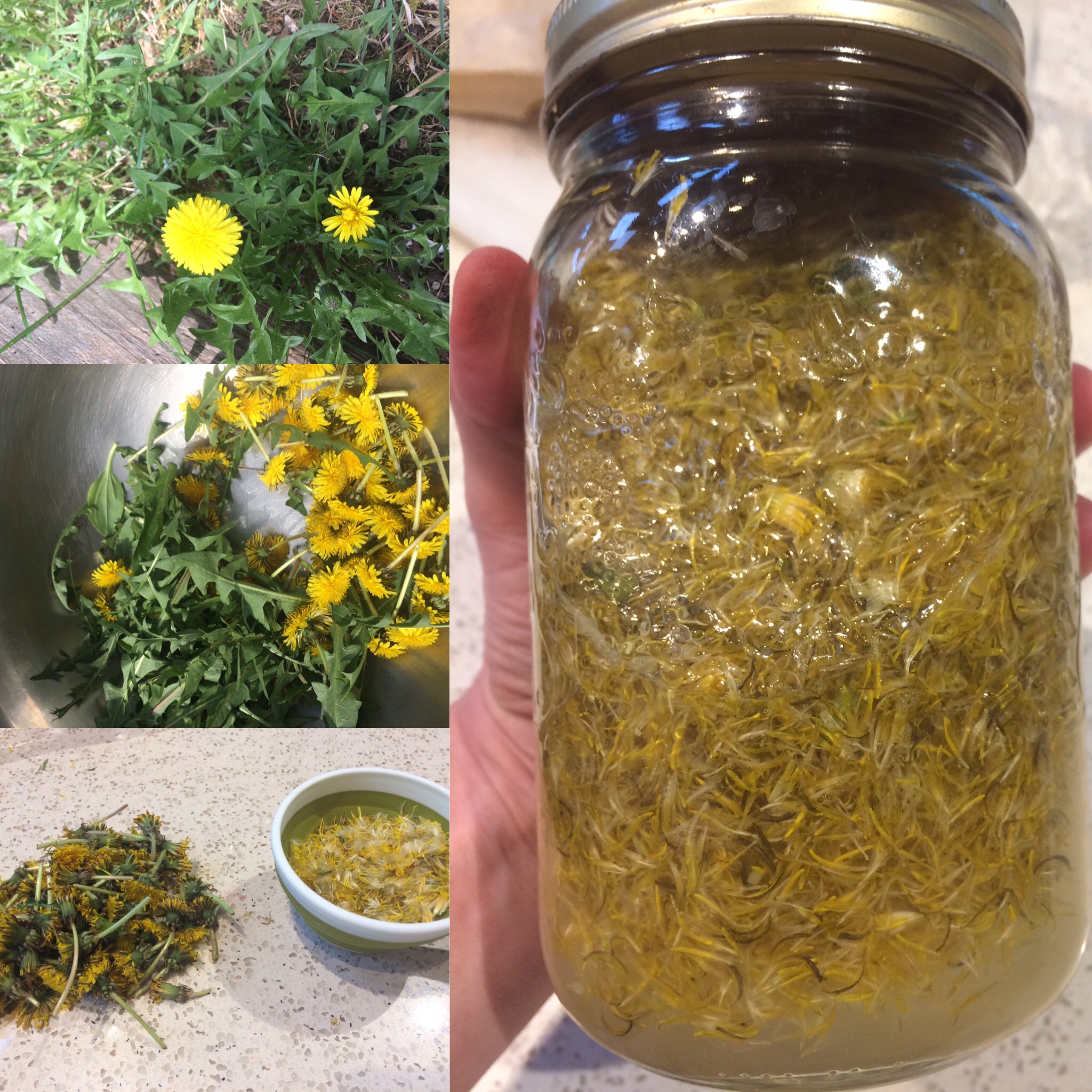








 Traced Elements