Tag: recipes

  • Dinner made easy – Chicken Divan

    Dinner made easy – Chicken Divan

    So my OH has been away, galavanting off to the UK and Spain, leaving me with the dog, and the chores, for just over a week on my own. (Don’t get me wrong – it’s been great catching up with episodes of Desperate Housewives and enjoying some peace and quiet!)

    It has also left me with the chance to take a day off work just so I can go and collect him from the airport. At least it gets me out of the “bubble”, right?

    The flight is due to land in the early afternoon so, with the drive and subsequent stops, on the way back, I thought it would be ideal if I could make something in advance for dinner that I can just reheat and serve when we get home. Luckily, Martha came to my rescue when this recipe popped in to my Facebook feed!

    Now, I’d never heard of Chicken Divan before but apparently it’s a chicken casserole usually served with broccoli, almonds, and Mornay sauce that was named after the place of its invention, the Divan Parisienne Restaurant in the New York City Chatham Hotel where it was served as the signature dish in the early twentieth century. So there you go!

    I have since seen a few recipes on Pinterest that use Cream of Mushroom Soup but there’s nothing more satisfying than making it all from scratch (time permitting). So, hopefully it tastes great and my efforts will be appreciated!

    Note this recipe serves 6 to 8 people – I guess we’ll have plenty of leftovers! 😉

    Ingredients

    • 1 bunch broccoli, cut into florets (about 5 cups)
    • 680g (1 1/2 pounds) boneless, skinless chicken breast, cut crosswise into 1/2-inch-thick strips
    • 1 small onion, finely chopped (1 cup)
    • 225g cremini mushrooms, sliced (about 2 1/2 cups)
    • 4 tbsps unsalted butter, plus 2 tablespoons melted
    • Kosher salt and freshly ground pepper
    • 3 tbsps unbleached all-purpose flour
    • 3 cups whole milk, room temperature
    • 255g shredded medium-sharp cheddar (3 cups)
    • 2 tsps Dijon mustard
    • 1 tsp Worcestershire sauce
    • 1/8 tsp cayenne pepper
    • 1/2 cup sour cream
    • 1 cup panko breadcrumbs
    • Cooked egg noodles or steamed white rice, for serving (or whatever you prefer)

    Directions

    1. Preheat oven to 400 degrees. In a large straight-sided skillet, simmer 1/2 cup water over medium-high heat, then add broccoli and a pinch of salt. Cover, reduce heat to medium-low, and cook until crisp-tender, about 6 minutes. Drain well, then transfer to a large bowl; set aside. Wipe out skillet.

    2. Pat chicken dry; season with salt and pepper. Melt 2 tablespoons butter over medium-high heat. Add half the chicken and cook, turning once, until browned and cooked through, about 4 minutes. Transfer to a plate. Repeat with remaining chicken; set aside.
    3. In same skillet, melt 2 tablespoons butter, then add onion and mushrooms. Cook, stirring occasionally, until tender and starting to brown, 6 to 7 minutes. Add flour and cook, stirring, 30 seconds. Slowly add milk, reduce heat to medium, and cook, stirring constantly, until mixture is thick enough to coat the back of a spoon, about 9 minutes. Add 2 cups cheese, Dijon, Worcestershire, cayenne, and sour cream; stir until combined. Season with salt and pepper. Add cheese sauce to bowl with broccoli, followed by chicken and accumulated juices; toss to combine. Transfer to a 2 1/2-quart baking dish.
    4. In a small bowl, combine 2 tablespoons melted butter, panko, and remaining 1 cup cheese. Sprinkle over broccoli-and-chicken mixture. Bake until bubbly and golden, 20 to 25 minutes. Let cool 15 minutes, then serve over noodles or rice.
  • Ginger Chew cookies – Healthified!

    Ginger Chew cookies – Healthified!

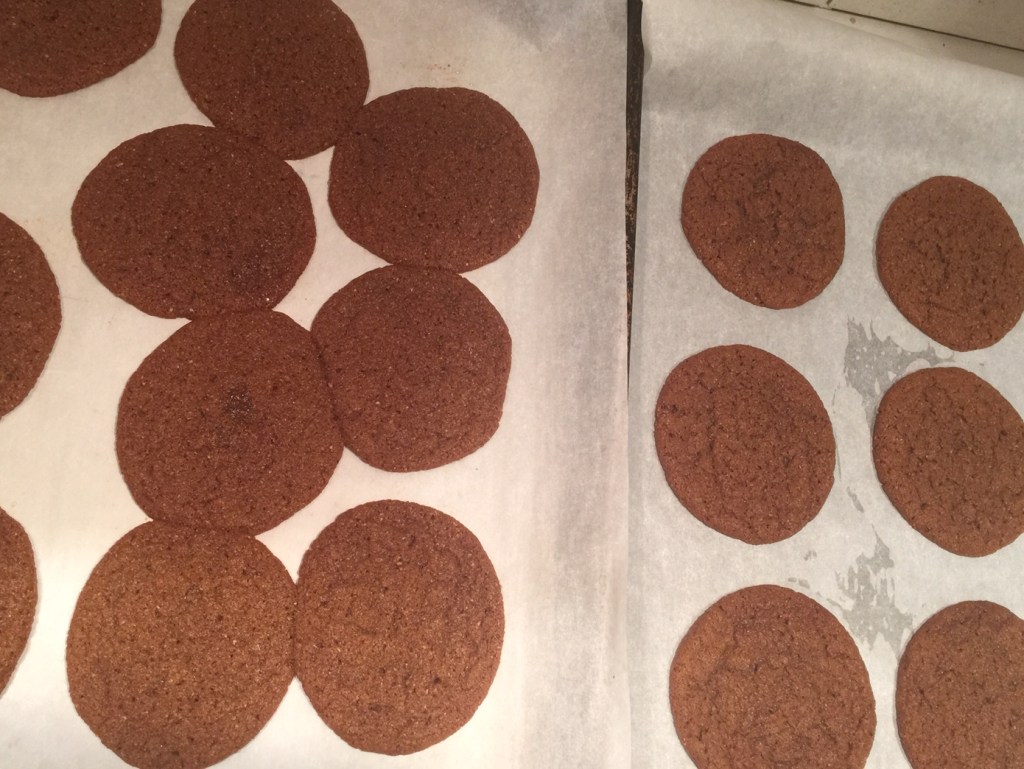
    These cookies are adapted from the Silver Palate Cookbook – a staple cookbook in the kitchens of my mother, aunt and gran in the 1980s. I have always loved their “molasses cookies” but in the past few years I have given up baking with white flour. I made this version healthier with 50% less sugar than the original recipe, spelt flour, and also some almond meal. They are very good. They do not feature heavily in Pemberton-area ingredients – except the egg – but today the weather was cold, stormy and winter-like, so ginger cookies seemed like a good match.

    Ginger Chews: (Yield: 21 cookies)

    Ingredients:

    6 oz unsalted butter

    ½ cup white sugar

    ¼ cup molasses

    1 large Pemberton egg

    1 ¼ cups spelt flour

    ½ cup almond meal

    ½ tsp baking soda

    ½ tsp ground cloves

    ½ tsp ground ginger

    ½ tsp salt

    1 tsp cinnamon

    Method:

    Preheat oven to 350F. Melt butter on very low heat in a medium saucepan. Add sugar, molasses, and egg and mix well. Then add the rest of the ingredients and mix well. Place 1 tbs balls of cookie dough on 2 parchment-lined cookie sheets. The cookies spread a lot when baking so leave 3 inches in between the cookie dough. Bake for 12-14 minutes. Cool for 15 minutes.

    Enjoy!

  • Banana Bread – another variation, with cream cheese frosting!

    Banana Bread – another variation, with cream cheese frosting!

    I’d seen this recipe months ago while, undoubtedly, searching for something entirely different on Pinterest.

    However, it caught my eye and was one of those cakes I could imagine baking up for team-mates at work or for a large get-together with friends. I mean who doesn’t like banana bread or cream cheese frosting?

    So the opportunity to try this recipe came up because we were meeting up with two sets of friends and would be able to share the banana bread love. But then one of the get-togethers we had planned, cancelled at the last minute. This meant that there was far more cake to eat, on our own, than was anticipated! But, as it turned out, this cake is so light and the frosting is so dreamy that it was way too easy to eat more than one serving.

    There goes the waistline – again!

    Ingredients

    For the Banana Bread Cake

    • 1/2 cup butter, softened
    • 1 1/2 cups granulated sugar
    • 2 large eggs
    • 1 cup sour cream full-fat is best
    • 1 teaspoon vanilla extract
    • 2 cups all-purpose flour
    • 1 teaspoon baking soda
    • 1/4 teaspoon salt
    • 1 cup mashed bananas about 2 or 3 bananas

    For the Cream Cheese Frosting

    • 1/2 cup butter, softened
    • 1 bar (8 oz/227 g) cream cheese full-fat is best
    • 1 teaspoon vanilla extract
    • 2 1/2 – 3 cups powdered sugar
    • 3-4 tablespoons heavy whipping cream

    Directions

    1. Heat oven to 350 degrees. Prepare a 9×13 baking dish and spray with cooking spray. Set aside.
    2. In a large bowl, cream butter and sugar together until light and fluffy. Add eggs, sour cream, and vanilla. Blend together until combined and creamy.
    3. In small bowl, add flour, baking soda, and salt. Whisk together to break up clumps. Add it into the wet batter and stir with spatula just until mixed and no flour pockets remain.
    4. Add mashed banana and gently stir together. Dump batter into the baking dish and spread out evenly. It makes it easier if you dump large spoonfuls of the batter all over the baking dish, instead of just one big pile of batter.
    5. Cook for 25-35 minutes or until toothpick inserted in middle does not come out with wet batter. The edges and top will be light browned. Mine takes about 32 minutes.
    6. Let cake cool completely before frosting.
    7. To make frosting: beat butter and cream cheese together until combined. Add in vanilla extract, 2 cups of the powdered sugar, and 3 tablespoons heavy cream. Beat together until frosting forms. Add more powdered sugar and/or milk until desired frosting consistency is reached.* NOTE: if you use anything other than heavy whipping cream, start with 1 tablespoon and work from there. Heavy cream is so thick that you need more of it, lower fat milks you will need less of.
    8. Cut into squares and garnish each piece with banana slices and chopped walnuts.

    Please don’t blame me if this becomes your next favourite Banana Bread recipe! I will certainly be making it again!

  • Just a couple of cupcakes!

    Just a couple of cupcakes!

    Monday 25th February was National Cupcake Day. Well, it was for SPCAs and Humane Societies across Canada, who encourage the baking and selling of cupcakes as a way to raise money.

    As Qanik was fortunate to have one of his images chosen to be part of the 2019 campaign it seemed only fair that I do my bit too.

    So, having chosen the Victoria Humane Society as my nearest participating society, I had to decide on what cupcakes I was going to make and then get people, mostly work colleagues, to purchase them!

    I decided on giving potential buyers the option of three different flavours:

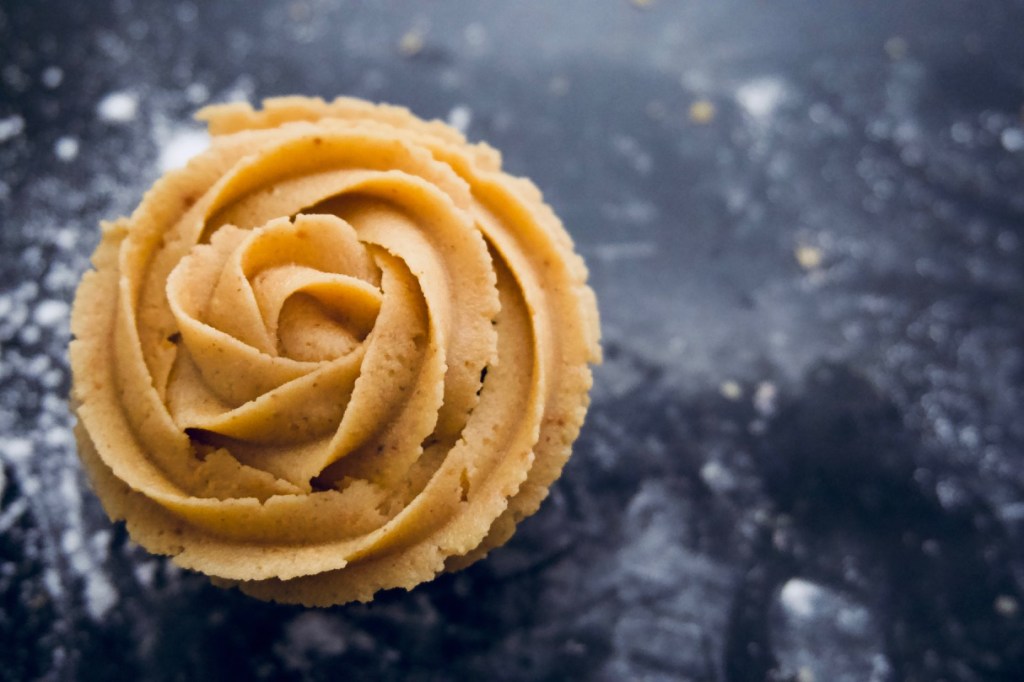
    The orders started making their way to me and, on Sunday, I spent most of the day baking and icing 89 cupcakes! The flavour that received the most requests was the Dark Chocolate with PB Frosting so here it is for you to make and try for yourself!

    Ingredients

    For the Cupcakes

    •  8 tablespoons unsalted butter, cut into 4 pieces
    •  2 ounces bittersweet chocolate (finely chopped)
    •  ½ cup Dutch-processed cocoa powder
    •  ¾ cup all-purpose flour
    •  ½ teaspoon baking soda
    •  ¾ teaspoon baking powder
    •  2 eggs
    •  ¾ cup granulated sugar
    •  1 teaspoon vanilla extract
    •  ½ teaspoon table salt
    •  ½ cup sour cream

    For the Peanut Butter Frosting

    •  1 cup icing sugar
    •  1 cup creamy peanut butter
    •  5 tablespoons unsalted butter (at room temperature)
    •  ¾ teaspoon vanilla extract
    •  ¼ teaspoon kosher salt
    •  cup heavy cream

    Directions

    1. Make the Cupcakes: Adjust oven rack to lower-middle position and pre-heat to 350˚ F. (If you are using a non-stick muffin pan, heat the oven to 325˚ F.) Line standard-size muffin pan with baking cup liners.
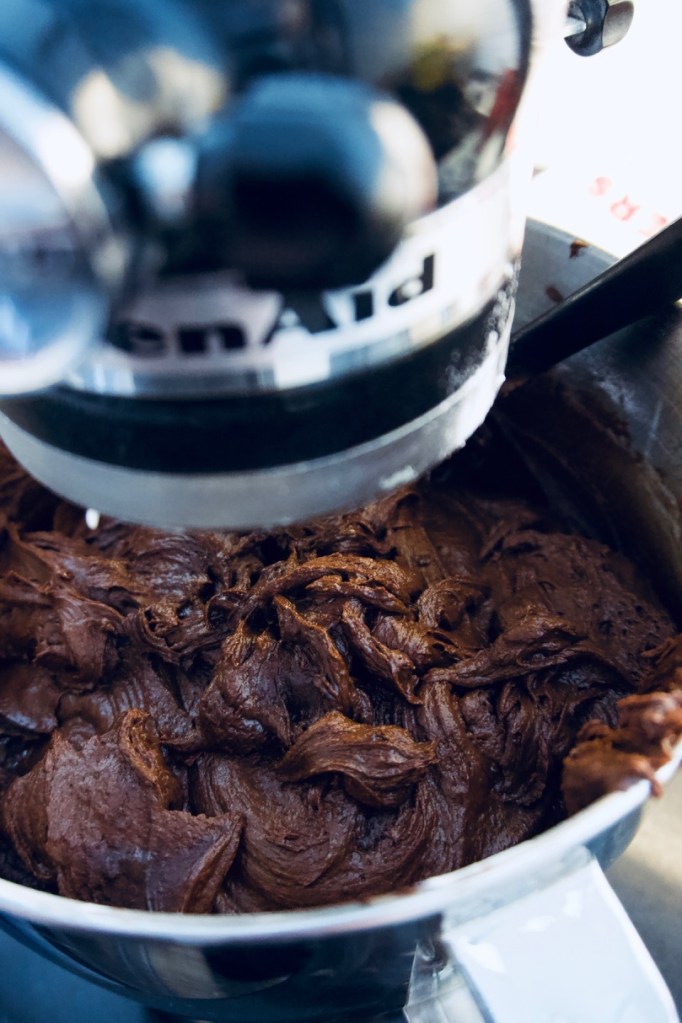
    2. Combine butter, chocolate, and cocoa in a medium heatproof bowl. Set the bowl over a saucepan containing barely simmering water; heat the mixture until the butter and chocolate are melted and whisk until smooth and combined. (Alternately, you can microwave the mixture at 50% power, stirring every 30 seconds until completely melted.) Set aside to cool until just warm to the touch.
    3. In a small bowl, whisk together the flour, baking soda and baking powder.
    4. In a medium bowl, whisk the eggs then add the sugar, vanilla and salt and whisk until fully incorporated. Add cooled chocolate mixture and whisk until combined. Sift one-third of the flour mixture over the chocolate mixture and whisk until combined; whisk in the sour cream until combined, then sift remaining flour mixture over and whisk until batter is fully mixed and thick.
    5. Divide the batter evenly among the muffin pan cups. Bake until a skewer inserted into centre of the cupcakes comes out clean, approx. 18 to 20 minutes.
    6. Cool cupcakes in the muffin pan on a wire rack for 15 minutes. Remove the cupcakes and set on wire rack to cool to room temperature before icing, about 30 minutes.

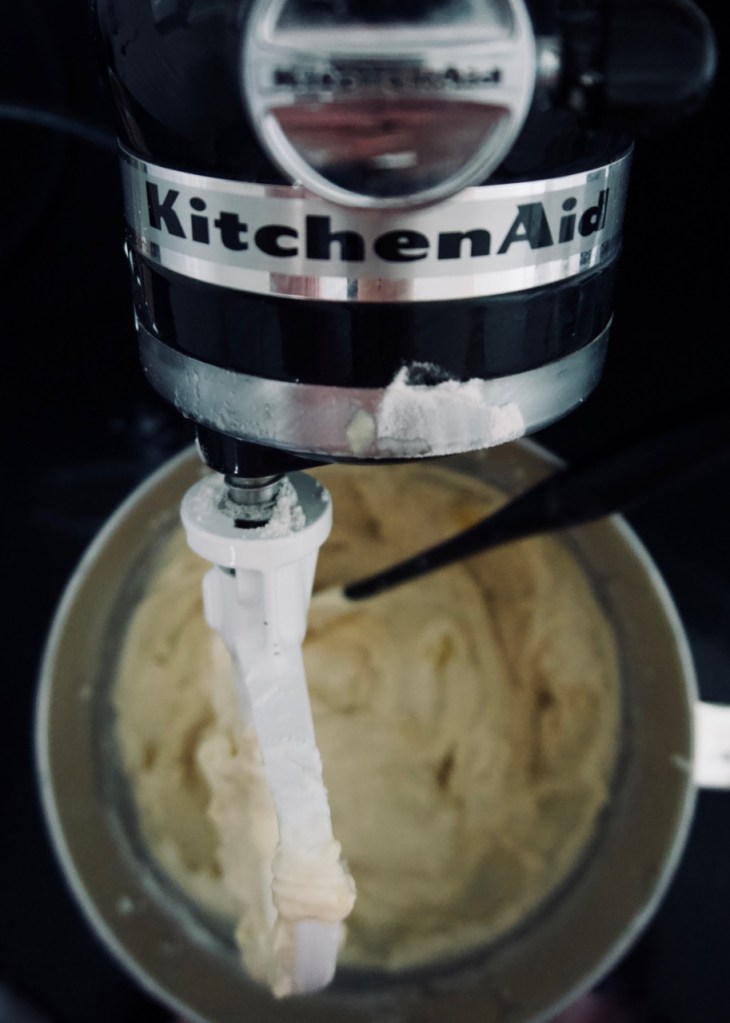
    1. Make the Peanut Butter Frosting: Place the icing sugar, peanut butter, butter, vanilla and salt in the bowl of an electric mixer fitted with a paddle attachment. Mix on medium-low speed until creamy, scraping down the bowl with a rubber spatula as you work. Add the cream and beat on high-speed until the mixture is light and smooth.
    2. Assemble the Cupcakes: Frost the cupcakes with an offset spatula, or with a decorating tip (I used a Wilton 1M tip and a rose pattern). Store at room temperature in an airtight container for up to 4 days.

    Want to know how to frost in a rose pattern? Check out this quick video tutorial.

    My cupcakes were a success and I managed to raise over $300.00 for my chosen charity. Next up are muffins and dog treats for Treat Week for the Sea to Sky BC SPCA!

  • Baking… it’s not just for people!

    Baking… it’s not just for people!

    Well, of course, it’s only people that can do the baking, but everyone can benefit from the outcomes. Like my puppy, who just turned one!

    What says love and happy birthday more than some home-baked cookies. Nothing, that’s what!

    I researched a few different recipes knowing that the main ingredient should be peanut butter as that’s one of his very favourite things! Also, I wanted to make something so I knew what was going into his cookies. The only difference with mine, compared with the recipe, was that I didn’t have any wholewheat flour so used all-purpose instead and used some chicken stock to bind it all together.

    For this occasion I went with the “Best of Breed” biscuits but I’ve already decided that the next biscuits I make will be peanut butter and banana and peanut butter and pumpkin – all three of his favourite things!

    Ingredients

    • 2 cups White Whole Wheat Flour or Whole Wheat Flour
    • 1 cup rolled oats, regular or quick
    • 1 tablespoon dried parsley or 2 tablespoons chopped fresh parsley
    • 1/2 cup nonfat dry milk
    • 1/2 teaspoon salt
    • 2 large eggs
    • 1 cup (9 1/4 ounces) peanut butter, crunchy or plain
    • 1/2 cup + 1 tablespoon cold water, or enough to make a cohesive dough

    Directions

    1. Preheat the oven to 300°F. Lightly grease a couple of baking sheets, or line them with parchment.
    2. Put the dry ingredients in a mixing bowl and stir to combine.
    3. Add the eggs and peanut butter. Stir to combine; the mixture will be crumbly.
    4. Add 1/2 cup + 1 tablespoon cold water, or enough to make a cohesive dough. Depending on the season, you may need to add a bit more (winter), or a bit less (summer).
    5. To make the cookies, roll the dough into walnut-sized balls onto a lightly greased or parchment-lined baking sheet and flatten to about 1/4” thick.
    6. Alternatively, roll the dough out to about 1/4” thick and cut out with a cutter of your choice. Gather and re-roll the scraps, and continue to cut biscuits until you’ve used all the dough.
    7. Lay the biscuits close together on the prepared baking sheets. Since the biscuits don’t include any leavening (baking powder, yeast, etc.), they won’t spread.
    8. Bake the biscuits for about 40 to 60 minutes, baking the smaller cookies for the shorter amount of time, the larger biscuits for the longer amount of time.
    9. When finished, the biscuits will be dark golden brown, and will be dry and crisp all the way through.
    10. Store in an airtight container or ziploc bag.

    And yes, they were birthday boy Qanik approved!

  • A Veggie-Laden Twist on Shepherd’s Pie 

    A Veggie-Laden Twist on Shepherd’s Pie 

    Shepherd’s Pie is another great dish for experimenting with. It is also great comfort food on a winter evening! Lately I have been omitting tomatoes and garlic from my recipes. I don’t love garlic in particular and I am cutting back on acidic tomatoes. Eliminating these two ingredients is a challenge, as they pack a lot of flavour.

    With a lot of time in a good cast iron Dutch oven, you can bring out the flavour in SO many veggies. For shepherd’s pie you can experiment, but this time I used: 1 cup diced green cabbage, ½ an eggplant, a large yellow onion, 2 cups parsley, and several healthy dashes of Worcestershire sauce – as well as S&P.

    If you sauté those veggies at a low-medium heat for a good ½ hour – or more, you will have the flavour you want. And not have to resort to tomatoes for zing, or the usual garlic! The other veggie-friendly thing I did was steam a whole cauliflower and then mash it along with 8 fingerling potatoes, with plenty of butter and salt and the cauliflower steam water. All in all, this shepherd’s pie was a hit, and had tons of servings of nutritious veggies in it to boot. This is my re-boot of the usual “carrots, peas and corn” shepherd’s pie – which by my palate has had its day!

    Veggie Turbo-Charged Shepherd’s Pie:

    Ingredients:

    3 tbs pure olive oil

    ½ eggplant, small dice

    1 cup green cabbage, small dice

    2 cups parsley, chopped

    1 large yellow onion, small dice

    1 tsp pepper

    2 tbs Worcestershire sauce

    1 lb ground Pemberton-area deer meat, or grass-fed lean ground beef

    1/3 cup unsalted butter

    1 medium cauliflower

    8 small yellow potatoes (Pemberton Sieglindes are a treat)

    Salt to taste

    Method:

    Sauté all veggies (except cauliflower and potatoes) until well cooked and caramelised in cast iron Dutch oven.

    Brown deer meat/ground beef in a separate cast iron fry pan, then and add to veggie mixture.

    Add ½ cup chicken broth and 2 tbs cornstarch. Mix well. Mixture should thicken nicely.

    Boil potatoes until very fork-tender.

    Steam cauliflower.

    Puree steamed cauliflower in food processor fitted with steel blade until very smooth.

    Blend cauliflower and potatoes together in stand mixer with butter, salt and cauliflower steam water until you have a smooth consistency.

    Pour veggie mix into 9×13” casserole dish and spoon mashed potatoes/cauliflower over top. Spread well.

    Bake 350C for ½ hour.

    Enjoy!

    ** Leftovers: next day add a good splash of chicken broth to a serving of shepherd’s pie and it forms a stew that is very satisfying in a Thermos for lunch on the go.

  • Space Saving Sauerkraut

    Space Saving Sauerkraut

    I live in a barn. Between the barn and my little house is a mud room. It’s a liminal place: half barn, half house. These days, it’s where I keep all my tack, tools, and wild/crafting materials for the camps that I run. The counter is generally littered with things that need to be put away. Like that unidentified bracket fungi that smells like apricots… and the bags of sand and gravel from October’s Fairy Gardens.

    Because I keep it at about ten degrees all winter (to keep the various stored items happy and the pipes from freezing) the mud room is also where I throw all the veggies I pull out of the garden and procrastinate about dealing with. One morning a few weeks (when I had to remove 6 large pumpkins from the top of the washing machine so I could do a load of laundry) I realized things were out of hand. The pumpkins were still too intimidating. I couldn’t quite look them in the eye. Plus they were in great shape so there was no need to rush processing them. The cabbages on the other hand… and the bowl filled with unwashed root veggies… oh dear. Definitely starting to go. I cut away the rotting bits from the cabbages, washed the salvageable carrots and beets, and then did the only responsible thing: I made Kraut.

    Sauerkraut is the best way to make a large volume of cabbage store in as small a space as possible. The lactic acid fermentation process loads it with helpful wild gut bacteria, boosts its nutritional value, and enables us to store it for a long time. It also makes a boring vegetable delicious. ‘Kraut- while traditionally just cabbage, salt and water- is also flexible and can accommodate the addition of a wide variety of veggies and flavours. For mine, I used the 3 small heads of cabbage, two handfuls of carrots and beets, kale stalks and leaves from Four Beat Farm, and two wild apples that I picked on the way home from Clinton last summer. For flavour, I added a small thumb of ginger, a handful of dried Saskatoon Berries, and five Juniper Berries.

    20181115_121843
    Kraut-to-be: here you can see the texture and flavourings before salt is added

    Directions:

    • First, shred or chop your cabbage. If you are going to play with adding other veggies, make sure you keep about 75% cabbage to make sure achieve a good lactic acid ferment. You add use almost anything you can think of to flavour your ‘Kraut. Caraway seeds. Black peppercorns. Seaweed. Dried fruit. Spruce tips. Citrus zest.
    • Add salt, and mix/rub it well into the veggies with your hands. You want to macerate your cabbage, as you want the salt to break down the cell walls and begin to release water. How much salt should you add? Well… more than you think you should. The salt acts as a preservative, and will help your ‘Kraut keep its texture so it doesn’t ferment down into a goopy mess. Taste your cabbage/veggie mix. It should taste quite salty. As you rub them, the veggies should start to shine a little bit, as well as moisten and soften.
    • Pack your crock! I use a small pottery crock I found at a thrift store. You can also pack your ‘Kraut into a large mouth Mason Jar. You can use utensils for this, but I prefer to use my fist. It’s fun to punch your food, and you can put more pressure on the ‘Kraut. You want to REALLY mash it down so that all the air pockets are squished out and it starts to release water. Add more handfuls of cabbage/veggies, and press down. Continue in this way until all your Kraut-to-be is in the crock. You should have enough water that’s been released at this point that it covers the top of the ‘Kraut when you apply pressure.
    • Because you can’t stand there squishing it forever, you need to add weight to the top off your ‘Kraut. The ‘Kraut needs to stay submerged in its own juices so that it doesn’t mould as it ferments. (Fermentation=good, mould=bad.) I use a large class coaster that’s a little smaller than the diameter of my crock, topped with a Mason Jar. You can also use rocks as weights, provided they’re clean! Then you can cover the top of your crock with cheesecloth or a dishtowel to keep out dust and mould spores but still let it breathe, which is essential for the Lactic Acid fermentation process. If you don’t have enough juice that’s been released from the veggies to keep your ‘Kraut submerged, you can top it up with a little water or brine.
    20181115_1230191
    The crock and (and accompanying Mason Jar of water that acts as a weight to keep the Kraut submerged)
    • Wait and taste! How long it takes your ‘Kraut to be done depends on how warm your environment is, and how tangy you like your ‘Kraut. The usual window is one to four weeks. The longer you let the fermentation go, the stronger the flavour will be, and the more beneficial bacteria you will cultivate. However, the longer you wait the softer your veggies become. If you keep tasting the ‘Kraut as it progresses, then you will be able to stop the fermentation it when it reaches your favourite balance of flavour and texture.
    • When you’re smitten with your ‘Kraut, take it out of the crock and compost any bits with surface mould. (Sometimes a little ‘Kraut will stick to the sides of the crock and turn white and fuzzy, but the rest of the batch that is still submerged will be fine). I pack mine into clean half pint jars and keep them in the fridge. This stops the fermentation process, but does not kill any of the lactic acid and other goodness.
    • Enjoy! Yum. Cleaning up and making more space was never so delicious…


  • It’s never too early…

    It’s never too early…

    In fact, to my mind, I am actually late! For what, you ask. Christmas, I say. More specifically Christmas Cake, the traditional fruit, soaked in alcohol, version.

    In years past I have made my cake at the end of September and then spent the next few months feeding it before marzipanning and icing it in mid-December. A rich fruit cake can be made 2 to 3 months in advance and kept in an airtight container in a cool, dark place. Feeding a cake means that once every few weeks you make holes in the cake using a skewer and then pour an amount of alcohol over it, before re-wrapping.

    The recipe I always use comes from a cake decoration cook book that I purchased way back when! But the recipe works every time, albeit I always need to cook it for longer than suggested. I even used the same recipe to make my friends wedding cake!

    You need a little time for this recipe as you should ideally start it the day before you want to actually make the cake mixture to allow the fruit to soak in the alcohol overnight. Once the mixture is in the tin, the surface can be covered with clingfilm and stored in a cool place overnight if cooking is not possible on the day (there are no leavening agents to worry about). However, do remember to allow for a longer cooking time as the temperature of the mixture will be colder.

    I know that a lot of people don’t like fruit cake, but this recipe offers a moist cake with the delicious spices and and flavours of Christmas and is a must in my house. The instructions below are for an 8″ round or 7″ square tin, but if you want the recipe for another size tin let me know as I can provide details for a 6″ round, all the way up to a 13″ round tin!

    Ingredients

    • 325g raisins
    • 250g sultanas
    • 175g currants
    • 150g glacé cherries (the bright red cocktail ones)
    • 50g cut mixed peel (I omit this in favour of more cherries!)
    • 50g flaked (sliced) almonds
    • 2 tsps lemon rind
    • 2 tbsps lemon juice
    • 3 tbsps Brandy or Sherry
    • 275g plain flour
    • 2.5 tsps ground mixed spice
    • 65g ground almonds
    • 200g dark brown soft sugar
    • 200g butter or margerine, softened
    • 1.5 tbsp black treacle or molasses
    • 4 eggs

    Directions

    1. Preheat the oven to 275F degrees and prepare the cake tin by double lining the inside of the tin with greaseproof paper, and the outside with a double thickness of brown paper. This will prevent the outside of the cake from bing overcooked.
    2. In a large mixing bowl place the raisins, sultanas, currants, glacé cherries, mixed peel, flaked almonds, lemon rind and lemon juice together with the Brandy or Sherry. Mix all the ingredients together until well blended, then cover the bowl with clingfilm. Leave for several hours or, ideally, overnight.
    3. Sift the flour and mixed spice into another mixing bowl. Add the ground almonds, sugar, butter (or margerine), treacle (or molasses) and eggs. Mix together with a wooden spoon, then beat for 2-3 minutes until smooth and glossy.
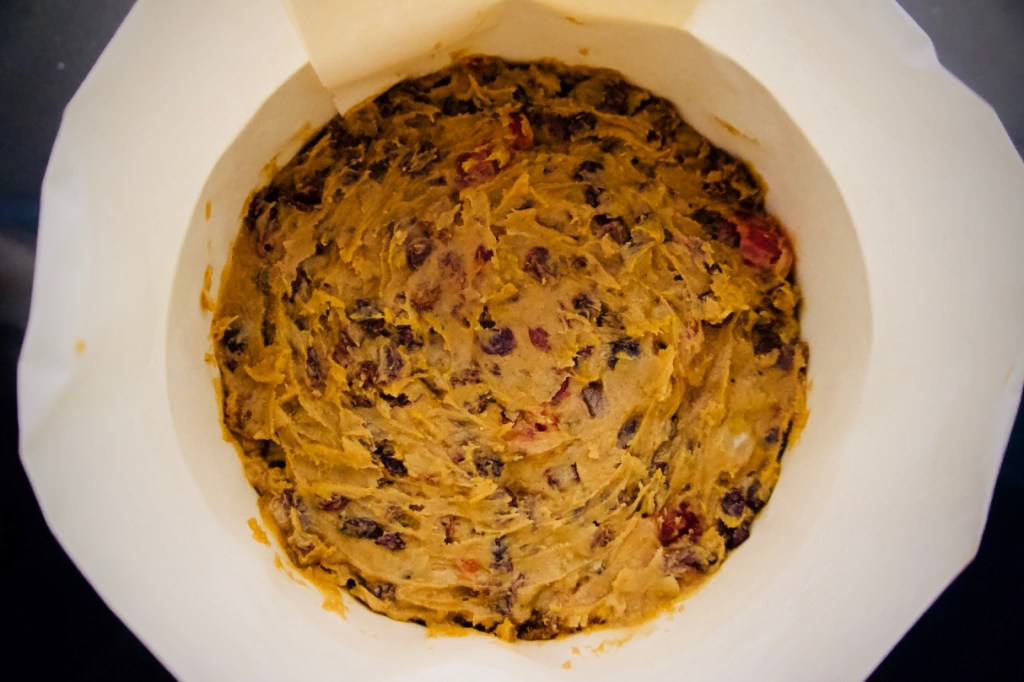
    4. Gradually add the mixed fruit to the creamed mixture and fold it in, using a spatula, until all the fruit has been evenly blended. Spoon the mixture into the prepared tin and spread it evenly. Give the tin a few sharp taps to level the mixture and to remove any air pockets. Smooth the surface with the back of a metal spoon, making a slight depression in the centre.
    5. Bake the cake in the centre of a pre-heated oven. Test the cake to see if it is cooked 30 minutes before the end of the cooking time (total 2.5 to 3 hours for a cake of this size). If it is cooked, the cake should feel firm and a fine skewer inserted into the centre should come out clean. If the cake is not cooked, re-test it at 15 minute intervals. Once cooked remove from the oven and allow it to cool in the tin.
    6. Once cooled, turn the cake out of the tin but do not remove the lining paper as it helps to keep the moisture in. Using half the quantity of alcohol as used in the recipe, spoon over the top of the cake and then wrap it in a double thickness of foil.
    7. Store the cake in a cool, dry place on its base with the top uppermost for a week. Unwrap the cake and spoon over another half quantity of the Brandy or Sherry. Re-wrap the cake well and store it upside down, so that the Brandy or Sherry moistens the top and helps to keep it flat. The cake will store well for up to 3 months; if it going to stored for this length of time, add the Brandy or Sherry just a little bit at a time at monthly intervals.

    I have a cake decorating “bake off” with one of my friends in the UK so I will provide an update once decorated so you can see the finished result too!

    Merry early Christmas! 😉

  • A zucchini recipe to be thankful for

    A zucchini recipe to be thankful for

    I know, I know! I’ve already written about zucchini, surely there must be some other ingredient I can use?

    Yes there is, but there was still some sitting in my fridge to be used up and Thanksgiving is just round the corner. Plus, I like to make cupcakes for all the boys and girls at my work, just to let them know that they are appreciated so having had success with my other zucchini cake and bread recipes I thought I’d give one more recipe a try.

    Zucchini CupcakesBesides, I am thankful that I had my granny to show me her love for baking and that I have people to appreciate the bakes that I try out on them.
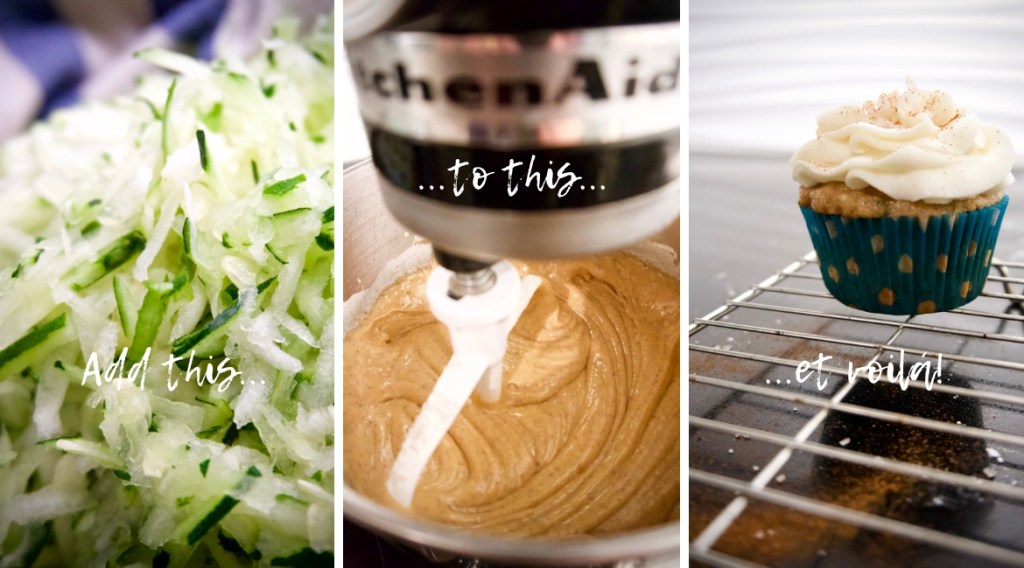
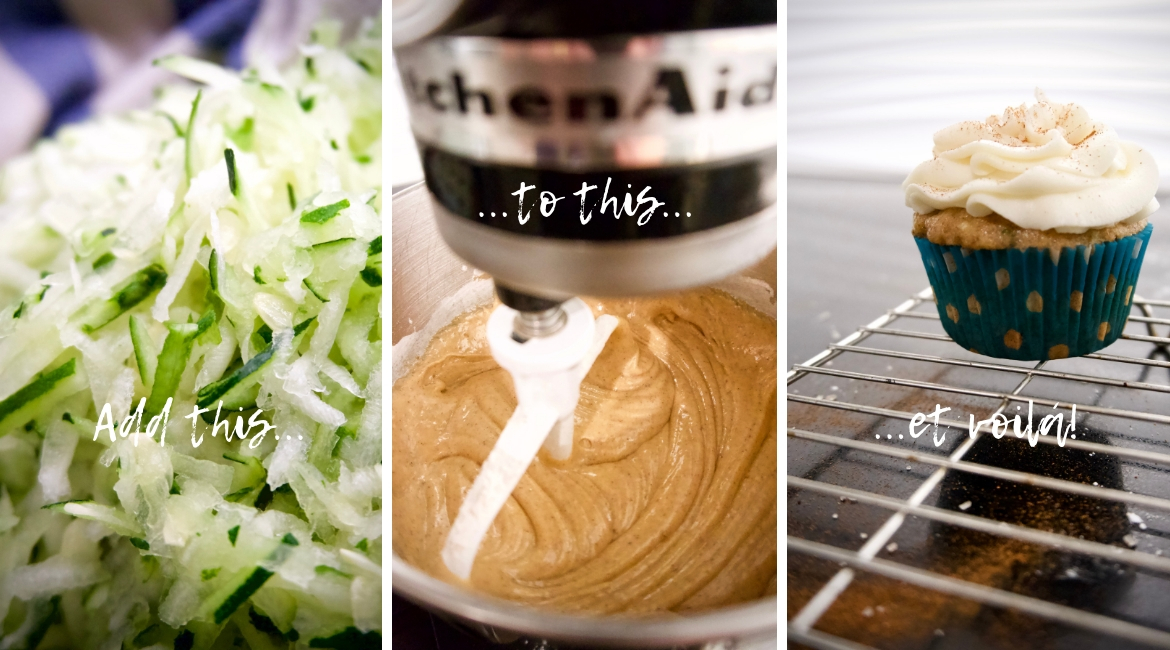
    So enjoy these zucchini cupcakes, which have delicate pumpkin spice flavours and are so soft they melt in your mouth, topped off with a wonderfully fluffy cream cheese buttercream.

    I can’t think of anything better this Thanksgiving.

    Cupcake Ingredients

    • 3/4 cup finely grated zucchini (I actually used a cup!)
    • 1 1/2 cups all-purpose flour
    • 2 teaspoons baking powder
    • 1/4 teaspoon salt
    • 1 teaspoon ground cinnamon
    • 1/4 teaspoon nutmeg
    • 1/8 teaspoon ground cloves
    • 1/2 cup vegetable or canola oil
    • 2/3 cup white sugar
    • 1/3 cup brown sugar
    • 2 large eggs
    • 2 teaspoons vanilla extract
    • 1/4 cup milk

    Cream Cheese Frosting Ingredients

    • 1/2 cup unsalted butter, softened
    • 4 oz brick-style cream cheese
    • 3 – 4 cups powdered sugar
    • 1 tablespoon heavy cream, if needed

    Cupcake Directions

    1. Preheat the oven to 350F degrees and line a muffin pan with muffin papers.
    2. Gently dab the grated zucchini with a paper towel to remove excess liquid. It shouldn’t be dry, but there shouldn’t be extra water.
    3. In a large bowl whisk together the flour, baking powder, salt, cinnamon, nutmeg and cloves.
    4. In a separate large bowl whisk together the oil and sugars until no lumps remain. Then whisk in the eggs, vanilla extract and milk.
    5. Whisk the dry ingredients into the wet ingredients, then gently fold in the grated zucchini using a rubber spatula or wooden spoon.
    6. Spoon the batter into the prepared muffin tin, filling each about 2/3 full. Be careful not to fill them any more than 3/4 full.
    7. Bake in the preheated oven for 16-19 minutes, or until an inserted toothpick comes out clean.
    8. Allow to cool in the pan for 5-10 minutes, then continue cooling on a wire rack.

    Cream Cheese Frosting Directions

    1. In a large bowl using an electric mixer, beat the butter until soft.
    2. Then mix in the cream cheese.
    3. With the mixer on low, beat in 3 cups of powdered sugar until combined.
    4. If needed, slowly beat in the rest of the powdered sugar a little at a time until the desired consistency and sweetness level is reached. If it gets a little too thick, then beat in the cream.
    5. Frost the cupcakes with a knife or using a piping bag and piping tip.

    If they last that long the cupcakes can be stored in an airtight container at room temperature for up to 3 days. Unfrosted cupcakes can be frozen and thawed in the fridge overnight.

    DSC01021

  • Zucchini – two ways

    Zucchini – two ways

    I recently bumped into a friend who has a veggie patch and she asked if I had any recipes for zucchinis as she had lots growing. She also wanted to know what it was with Pemberton that zucchinis grew so well!

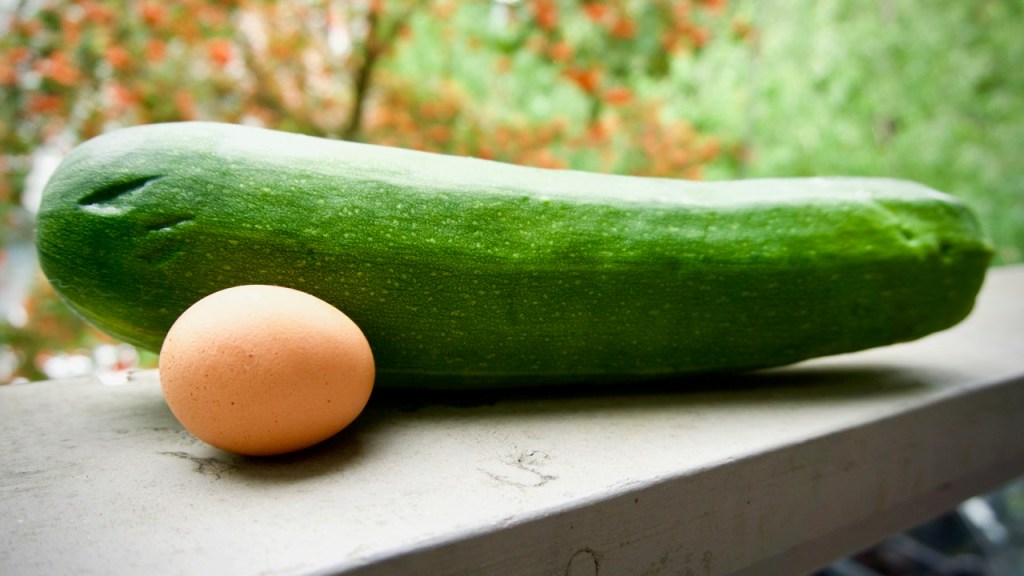
    I wasn’t quite sure what she meant until another friend gifted me the mother of all zucchinis! I mean, this one was about as large as the marrows my grandad used to grow! (Egg for scale.)

    Being curious I did a Google search on zucchinis, which are a summer squash and are a cultivar of the marrow I remember from my childhood. It appears that they can actually reach almost 1 metre (100 cm; 39 in) in length, but are usually harvested when still immature at about 15 to 25 cm (6 to 10 in). They are also very productive plants and just one or two plants will produce enough for a small family. You can also harvest the large yellow squash blossoms and eat them raw or cooked. Only female blossoms produce fruit, so you can harvest most of the male flowers without slowing down the plant’s productivity. Who knew?

    With a zucchini this large I didn’t know what I was going to do with it. I could make a quiche, galettes or even gnocchi. But no, with temperatures much cooler, and with my propensity towards baking, I decided to try both a savoury and a sweet bread.

    The trick to cooking or baking with the grated zucchini is to squeeze some of the moisture out before adding to your recipe. Just use a clean tea towel, place the zucchini in the centre, twist and watch the excess water drip out.

    Whether you prefer savoury or sweet I hope one of the following recipes helps you out with your glut of zucchinis, but if you still have too many then I have a couple more bread recipes that I’d like to try!

    First up is a Zucchini Cheddar Quick Bread made with buttermilk (or a home-made version as in the recipe) and which smelled as delicious cooking in the oven as it tasted not long out of it. Cheesy mouthwatering goodness!

    Ingredients

      • 1 1/2 cups zucchini, grated
      • 2 cups all purpose white flour
      • 2 teaspoons baking powder
      • 1/2 teaspoons baking soda
      • 1/2 teaspoon salt
      • 1 cup milk plus 1 tablespoon vinegar, white or apple cider to make home-made buttermilk or use 1 cup buttermilk
      • 1 egg
      • 3 tablespoons butter, melted
      • 1 1/2 cups grated sharp cheddar
      • 2 green onions, chopped

    Directions

    1. Preheat oven to 350 degrees and spray a 9 x 5 bread pan with non stick spray. (I would also add a layer of parchment paper to the bottom of the pan to ensure that the bread does not stick.)
    2. Wrap grated zucchini in a paper towel, or clean tea towel, and squeeze until some of the liquid releases. (You don’t need to completely dry it out.)
    3. In a large bowl, combine flour, baking powder, baking soda and salt.
    4. If making home-made buttermilk, combine milk and vinegar in a small bowl. (The milk will curdle a bit). If not making then use 1 cup traditional buttermilk. Mix in melted butter and egg.
    5. Add milk mixture to dry mixture being careful not to over mix to avoid the bread turning out flat.
    6. Add grated zucchini, cheese and onions, mixing lightly until just combined.
    7. Pour batter into prepared pan and bake at 350 degrees for one hour.
    8. If toothpick inserted comes out clean, bread is done!  Cool for 10 minutes in the pan.  Remove carefully and cool on wire rack.

    After your savoury zucchini bread what do you need? Orange Zucchini Bread with Orange Glaze of course! The orange provided a nice zing and the glaze was a touch of sweetness against the bread itself. My orange was very juicy and I could have done with a bit more icing sugar to thicken it up. I’ll know for next time. 😉

    Ingredients

    For the bread:

    • 3 large eggs
    • 2 cups sugar
    • 1 cup vegetable or canola oil
    • 1 tsp vanilla
    • zest and juice of 1 large orange
    • 3 cups all-purpose flour
    • 1 tsp salt
    • 1 tsp cardamom (optional)
    • 1/4 tsp baking soda
    • 2 cups grated zucchini

    For the glaze:

    • zest and juice of 1 large orange
    • 3 tbsp. butter melted
    • 1 tsp. vanilla
    • 3 cups powdered sugar

    Directions

    For the bread:

    1. In a large bowl, whisk together eggs, sugar, oil, vanilla, and orange zest and juice.
    2. In another large bowl, whisk together flour, salt, cardamom (if using), and baking soda.
    3. Add the wet ingredients to the dry ingredients, along with the zucchini, and stir until just combined. Do not overmix.
    4. If you’d like to add any nuts, fold in about 1 cup chopped nuts.
    5. Line a 9×5-inch loaf pan with foil or parchment paper, letting the edges hang over the pan. This is a MUST as the bread will to stick to the pan. Coat with non-stick spray.
    6. Spread batter into prepared pan.
    7. Bake at 325 degrees for 60-70 minutes, or until top and edges are golden and a toothpick inserted near the centre comes out clean.
    8. Remove to a wire rack to cool for 10 minutes.
    9. Run a knife along any edges that may have seeped and stuck to the pan.
    10. Remove bread from the pan completely using the foil or parchment paper edges. Cool completely.
    11. Meanwhile, prepare glaze.

    For glaze:

    1. In a medium bowl, whisk together all the glaze ingredients until smooth.
    2. Depending on how juicy your orange was, you may need to add a little water or more powdered sugar! You should be able to drizzle or pour it, but it shouldn’t easily run off the bread.
    3. Drizzle glaze over cooled bread. Cut and serve.