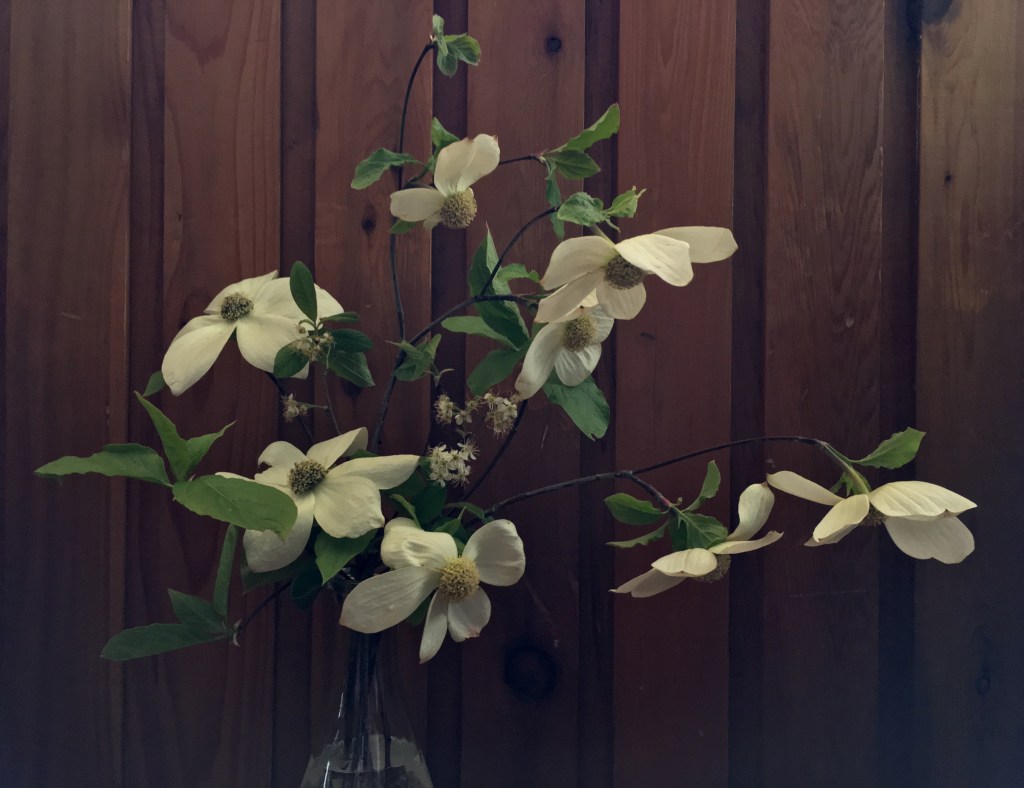
My favorite strip in the ol’ daily commute is in full bloom: Dogwood Row aka the false flat of Nairn Falls. When this magical time finally happens I know spring has officially arrived. These native beauties symbolizes this time of the year perfectly: rebirth and resurrection, durability and reliability, strength and resilience.
So, life has felt a little backwards lately and I’ve been dormant like the bulbs I planted in the fall: slowly growing in hibernation, slowly surfacing to flower. While the green glow of spring delivers a healthy dose of new beginnings there will always be things that don’t survive the winter.
The beauty is, you can always replant.
Spring offers up a chance to do over everything from last year… literally, start fresh, change the pattern and do it better. Prune away the dead to promote new growth, leaving some things the same (they’re called perennials for a reason) and don’t forget to tend to your evergreens as they are there for you every season.
It’s not always as simple as it seems: a large puzzle with small pieces. Sometimes you’re rewarded beyond expectation in an instant and sometimes patience is a virtue.
But by saying yes to growing new things and experimenting with new varieties we can create a new palette to work with.
There is little risk in gardening if you’re willing to fail and get your hands dirty. Notable and new to my garden this year are Jerusalem artichokes, shiso and fennel (which will actually be nowhere near my garden because it’s friends with no one). Oh, and way more flowers! Because why not? And pollination is key to life. Other plants are bound to sneak their way in too.
When supported by a cast of usual suspects: beets, carrots, cabbage, cauliflower, cucumber, tomatoes, brussel sprouts, squash, cantaloupe, onions, garlic, strawberries, raspberries, blueberries, peppers, peas, beans, all the herbs, chard, radish, daikon, celery, kale, romaine, greens, kohlrabi, leeks etc, one can be nourished and flourish quite well.
There is a good chance I’ve already said this but I’m just going to keep saying it:
Grow what you love, try new things, revisit old favourites and savour the process.
On my desk right now is a gorgeous little collection of essays called Wonder and Other Survival Skills, put together by the editors of Orion magazine. On its cover, a young girl presses her hand against the surface of a lake: skin of girl meeting skin of lake. From this meeting, a ripple moves.
“Is wonder a survival skill?” H. Emerson Blake asks in the foreword. “The din of modern life pulls our attention away from anything that is slight, or subtle, or ephemeral. We might look briefly at a slant of light in the sky while walking through a parking lot, but then we’re on to the next thing: the next appointment, the next flickering headline, the next task…Maybe it’s just for that reason—how busy we are and distracted and disconnected we are—that wonder really is a survival skill. It might be the thing that reminds us of what really matters, and of the greater systems that our lives are completely dependant on. It might be the thing that helps us build an emotional connection—an intimacy—with our surroundings that, in turn, would make us want to do anything we can to protect them.”
By my own definition, wonder is the ability to travel beyond attention, beyond mindfulness–to truly make an encounter with the world in a way that, for the slenderest of moments, lifts us out of ourselves and returns us back with something more. Something of the ‘other’ we’ve encountered travels with us. A little of the world comes into the interiority of us and lodges there. Permeates.
Winter is a season of rest for most of us land-based folks. A season of living in a place of dreams and visioning (literally, as we get caught up on sleep, and plan for the year ahead.) This is the first season I’ve stopped teaching completely. I felt the need to let the work do a deep dive into silence, and (beyond the day-to-day chores of keeping animals, which never go away), to truly let myself drop out of time. I sleep when I’m tired. I wake up when I wake up. I have breakfast and a cup of coffee, before I go out to do chores. Which sometimes makes me feel like a slacker, but it also feels… luxurious. Luxurious in a simple way I haven’t allowed into my life before. A spaciousness that holds its own kind of wonder.
The other reason I decided to stop teaching completely once the snow hit in December, was I wanted my horses to feel like they belonged to me again. 2018 was our busiest year teaching together (THANK YOU, PEMBERTON!) but I wanted a chance to ride when I wanted to again, instead of working a horse so they would be ready to say ‘yes’ to a student. I wanted to WANT to ride again. To wander about aimlessly bareback with nothing but a lead rope joining me to my horse’s mind. I wanted the horses to be able to choose who came out to play with me, whenever I showed up at the gate with a halter or a bridle.
What’s emerged out of this unravelling is that I was finally able to back Besa, my big paint/Friesian mare. When she came to me 18 months ago, she was an untrained 6-year-old, freshly weaned from being a mamma to a feisty filly. She made it very clear to me- in her lack of desire to be caught and her extreme reactivity, power and athleticism- that I’d have to take my time with her. Given space and the permission to approach me (instead of me expecting to approach her and do what I wanted), she decided that humans were worth being curious about. Her curiosity flowered into full-blown affection. She’s the first horse to come to anyone out of the field now, and she sometimes chooses to pull me (or whoever I’m accompanying into the field) in against her chest with her muzzle, the closest a horse can come to giving a hug.
Besa’s been asking me to do things with her for months (Proper things! With a bridle and tack like all the other horses!) and all summer and fall I just didn’t have the capacity. But these last few weeks I’ve slipped onto her back and let her carry me around our little maze of snow paths in a mutual exchange of trust: I will trust you with my body, if you will trust me with your body. The ‘training’ part of it can come later. For now, all I want is her to turn her head to me, so she can look at me fully out of her huge dark eye: Oh. So now you’re up there now. So that she can yawn and snort and let all the tension go out of her nervous system, and get used to this strange new way that horses and humans can be together.
Perhaps it’s me she’s been waiting for all along. Perhaps I needed to drop into this spaciousness for us to find this way to trust each other.
There’s one essay that stands out for me in this slim little collection that sits on my desk. It’s Chris Dombrowski’s Kana: a father grasps at the nature of wonder. In it, he defines Kana as “a word or figure the Japanese haiku poets used as a kind of wonder-inducing syllable (it translates loosely into English as an exclamation point.)… that heart-stutter we receive when an image of the world takes root in us…”
His essay shares the spell of a day spent morel hunting with his twenty month old son. The way the boy wanders across the face of the burn, trailing a whitetail’s antler behind him, carelessly decapitating the very mushrooms he’s hunting for:
…he is either in a daze of boredom or he is walking kana, penetrated each step by the world, not penetrating it. It’s tempting to call this spirit naïveté, but it’s not: it’s wisdom we lose along the way.”
Perhaps that’s what I’ve been courting this winter: wisdom I’ve lost along the way as I’ve been coerced into ascribing to linear time, to capitalism, to the many demands the constructs of being human impose upon us. There is gentleness here, in this wonder, that doesn’t feel rushed or imposed. A hand resting against the surface of a lake.
I’ve wanted to broaden the scope of my horse and nature based teaching practice to include workshops for adults since I started Mountain Horse School in 2012, but I’ve shied away for a long time. I’ve always felt comfortable with kids because they’re so immediate, so open still to this touch of the world upon them. Grown-ups’ responses are layered. More conditioned. We need more language to access understanding, and experiences that can operate like keys opening the locks of ways of perceiving we’ve long put away. Grown-ups want reasons to pacify our rational, linear ways of thinking, and we want to know if playing with opening the doors to wonder, if walking Kana is ‘worth the investment’ of our time. We’ve become used to being sold meditation through a list of its benefits. A walk in the woods has become a thing we could pay for. Forest bathing, it’s called in the brochures.
What if wonder is the gateway to possibility? What if it’s the only skill that will give us the tools, insight, and power we need to move into (here I am, throwing another book title at you!) The More Beautiful World That our Hearts Know is Possible? What if the benefits of wonder—similar to its more lauded cousin, gratitude—might be the resurrection of a life woven into belonging with the wider world that sustains us?
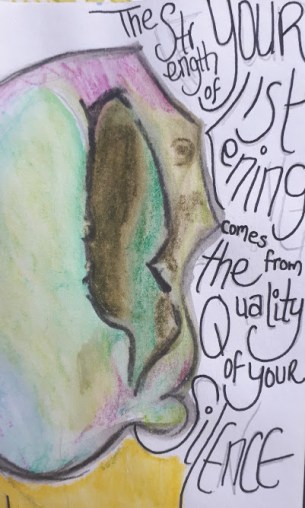
Small watercolour of a whale’s ear bone from the intergalactic spaceship that is my desk. Because of the complexity of their hearing, whales’ inner ear bones are contained within a separate chamber, not encased inside the skull as ours are. It amazes me how much this bone looks like a shell. If I held it to my ear, would I hear the sound of the sea?
It’s not up to me to answer these questions. I can only speak from the lens of my own experience, my own perceptions. In lieu of that, I can say with certainty that this winter’s dreaming I’ve been luxuriating in, this kana I’ve been walking in my own life, feels absolutely essential to the future that comes next. I can say—if I may speak with authority based on the way things feel from the intergalactic spaceship that is my writing desk this afternoon—that it HAS been absolutely necessary. That nothing is currently more important. Oh, the great irony that ‘doing the work’ this winter has actually meant ‘doing less work—!’ (Is that an exclamation mark or is it kana? You decide.)
So, in the spirit of wonder being the gateway to possibility, I’m issuing a little dare to myself. Actually, it’s not little at all. On Feb 17, I’m offering a one day workshop called Lightning Seeds: Opening the Gateway of what’s Possible, in collaboration with my dear friend, animal listener and translator Guliz Unlu. Come play with us as we walk kana in the company of the horses and other animals at Mountain Horse School, and court wonder through a combination of equine guided learning, animal communication, intuitive herbalism, earth wisdom, and soul craft. Curious to know more? Please visit our website or facebook page for all the juicy details!
It’s the most wonderful time of the year – or at least it’s MY favourite time of the year.
Colours start to pop as the foliage begins its natural, beautiful progression to death and my appreciation for the warmth of the sun on my back is revived. Praise arises for the rainy days as reason to stay in, make soup and stock the freezer with food. Then there is also the rush of the game to see who gets to the fruit trees first – me or the bears. I go to bed with an extra blanket but leave the windows wide open while the coyote’s howl echoes through the night. Of course the dusting of snow on Mount Currie gets me pretty excited too! And, most importantly, my garden is still delivering the goods.
This time of the year, I also sit back and think about my garden; what worked, what I want to do more of and what I can do away with next year. Journaling for the win: do it, do it now. So, what I thought I would do is share some of my favourite photos of the summer complete with commentary.
First up is purple daikon radish. I pickled the shit out of these guys while in season. When a vegetable randomly forms heart shape upon cutting into it you really can’t help loving it. More will be planted in my garden next year, their spicy flavour is beyond delicious.
Melons. Who doesn’t love a good melon. Previously I had tried watermelon but with little success there, this year I tried cantaloupe. Gave it a sunnier spot and was rewarded big time. Go figure: #shadowruffruff loved it too… juicy and flavourful beyond both our expectations!
I have mentioned that kohlrabi was the undisputed heavy-weight champion in my garden but my Borage babes blew my mind; turns out they’re MASSIVE! They helped pollinate my butternut squash and many other things in my garden, plus the flowers were delicious in salads. This year I trained my squash to grow along the fence in hopes it would take up less space overall. As it turns out this move was a game changer. I will incorporate this method next year as well, perhaps to even shade something that requires less sun. And for the bee’s sake, borage will forever be in my garden regardless of the space it takes up.
You know you’ve made it to the big time when your whole pasta sauce has been sourced from your backyard… I mean it’s SO good you want to share but really not really. Last season was the first year where I grew my own Roma tomatoes, celery, carrots, garlic, onions, basil, rosemary, thyme, oregano and cayenne peppers. I basically vowed from then on this was the way forward every year; always plant enough to make sauce for Dbot. I will also openly admit I have a love affair with fried green tomatoes served with soft poached eggs – you would too, if you’ve had it. Never underestimate the power of a green tomato.
Does your cilantro bolt like crazy in the heat of the summer even if you’re giving it shade from the hot afternoon sun? No problem. Let them bolt and go to flower. The coriander seeds born from the delicate white flowers will produce the best ground version of this spice you’ve ever had. I guarantee you’ll start to plant cilantro just to let it go to seed!
Fall is also the time when members of the brassica family shine. I remember being amazed when I learned how Brussel sprouts grew, so they became a yearly addition to my garden (just be sure to give them plenty of space). New this year was Savoy cabbage grown from seed and it’s sure to make my cabbage rolls go from A+ to A++. Another tip for cabbage is to space out their planting times then you don’t end up with a whole bunch at the same time even though they keep quite well.
Flowers… I will plant way more flowers in my garden next year both perennials and annuals. Some of my perennials are ready to split which benefits both the plant and my wallet. Plus, having fresh cut blooms in my house just makes me smile.
I feel like I could carry on for a long time but as I write the weeds are still growing and they sure aren’t picking themselves! So I’ll just leave you with this last photo that I call, “The Mushroom that had all the Thyme in the World”. #dadjoke #sorrynotsorry
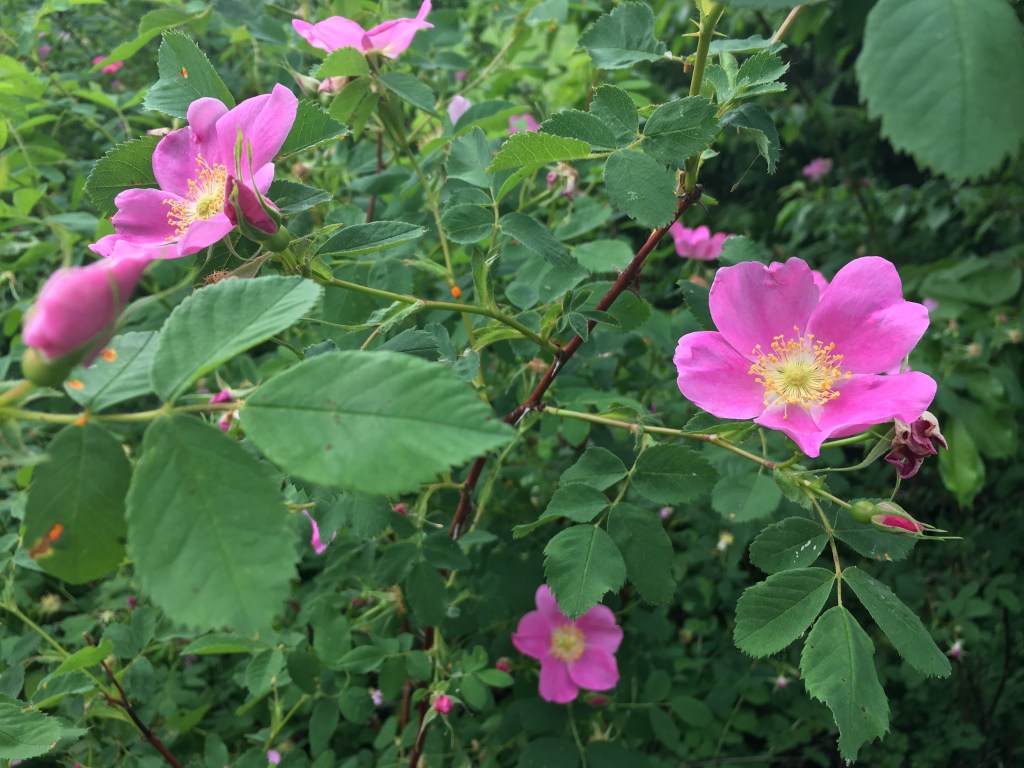
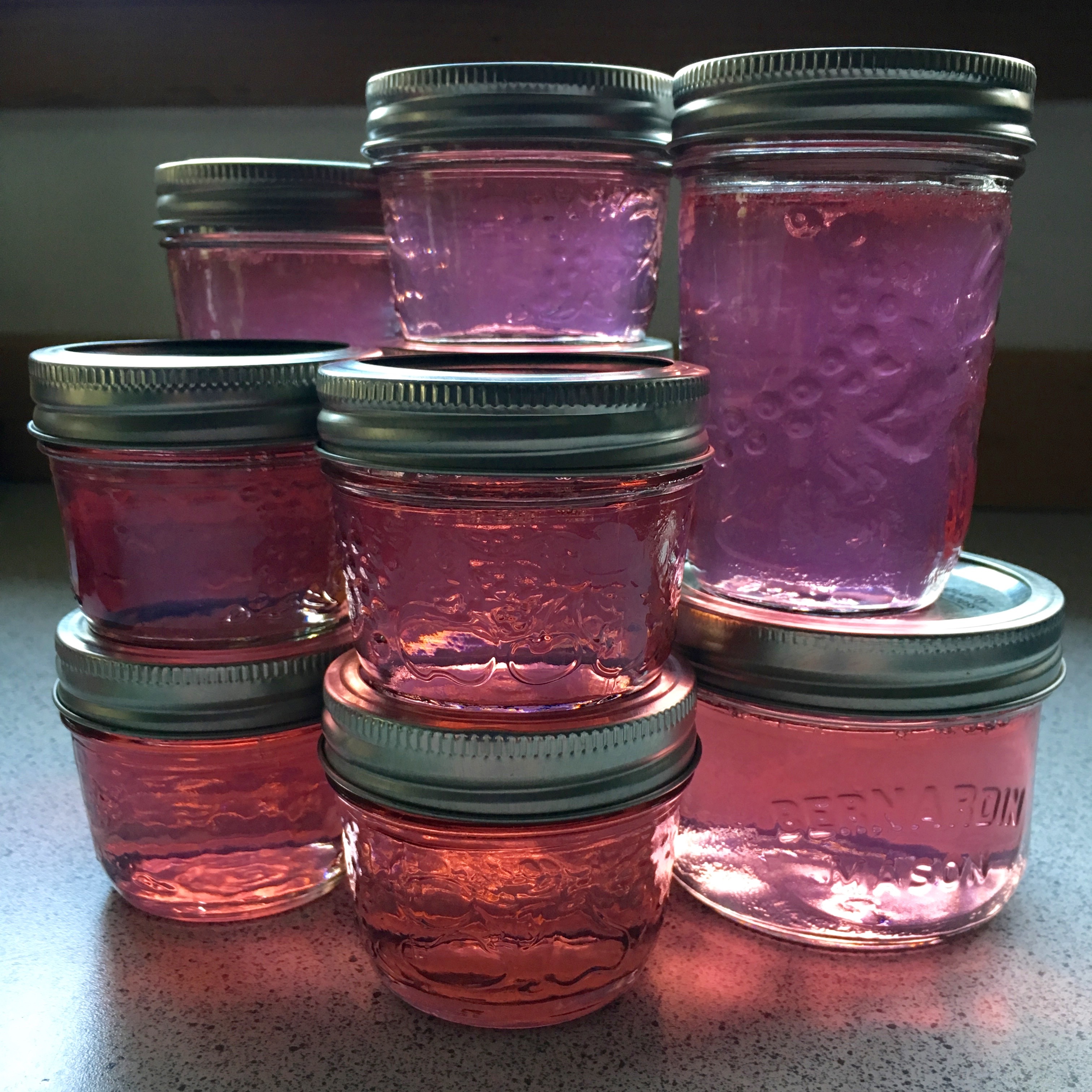
For me the art of slowing down and smelling the roses has turned into taking advantage of the surplus of this native shrub behind my house, plucking their petals and creating something delicious. As it is in my garden where I rarely follow my planting plans the same holds true to my style of cooking; recipes are but a base. I’ll admit my first batch, from a recipe I followed, did not set. This led me to taking matters into my own hands, going with the flow and trusting my strong sense of jamming. So, queue up some Bob Marley as I guide you to making your very own wild rose jelly.
INGREDIENTS
≈4 cups wild rose petals, lightly packed
4½ cups boiling water
¼ cup fresh lemon juice
5½ cups sugar
2 pkgs liquid pectin
Other: cheesecloth, jars, lids, tops, a big pot & lots of love
Start by foraging for rose petals: try to pick in areas away from the roadside and pick higher then a dog may pee! Give them a small bath in the sink to get rid of the majority of bigger bugs and pick out any of the greens. Don’t stress too much about getting everything, as you’ll end up straining the lot later. Place them in a nonreactive bowl, cover with the boiling water and allow steep for 1-2hrs. The petals will lose their colour and look quite dull but patience is key here.
While your petals are steeping prepare your jelly vessels. This recipe makes approximately 8-9 cups of liquid gold; I use a mishmash of 125ml and 250ml jars and usually prepare a few more then what’s needed, just incase. Wash every thing then put the lids and tops in a pot submerged in water and place on the stove over medium-high heat. Jars can go on a cookie sheet in the oven at 250°F. You want these to sit in their respective mediums for at least an hour.
When you’re satisfied with how long the petals have steeped or you can’t wait any longer get ready for some magic. Add the lemon juice and watch the water go from blah to vibrant pink! It’s science.
Pour the petals and water through a strainer lined with cheesecloth straight into a big pot squeezing all the liquid out that you can. You want 4 cups of rose water; if you’re a bit short just add a bit of filtered water. I found this recipe made the right amount of water so you should be fine but feel free to measure if you’re not sure. I like to wing things. Add the sugar and bring up to a boil, stirring to ensure all the sugar incorporates into the rose water. Once at a hard boil keep it here for 2 minutes skimming any foam off the top. After the time has elapsed remove from the heat, add the pectin and stir to combine for 5-6 minutes – no less – more is okay but no less.
Now you’re ready to put your creation into jars and await the sweet satisfying sound of popping lids. Some recipes call for a water bath to finish the canning process but I’ve never done that. I just go with what my mom taught me, which is what’s outlined here, and it’s never failed me just like her.
This simple tasty treat can be enjoyed may ways but my favourite thus far is on coconut ice cream or straight out of the jar… Happy jammin’!
It is a busy time in the life of a vegetable farmer, especially with the hot sunny weather we have been having! While the motto of April may have been “hurry up and wait”, May is definitely the month of “don’t stop moving” here at Four Beat Farm.
Most hours of the day (OK and the evening too sometimes) are devoted to preparing the fields for planting, transplanting and seeding the earlier vegetables, planning for markets and harvest season, keeping an eye on the early salad plantings to ensure that the weeds do not take hold, and putting the final tweaks onto those “spring projects” that somehow never did quite get finished. It is still spring in the calendar, though the temperatures might indicate otherwise. There is little time for reflection or lounging around, yet there is a sense of fun and excitement in the air as the days grow longer and momentum starts to build.
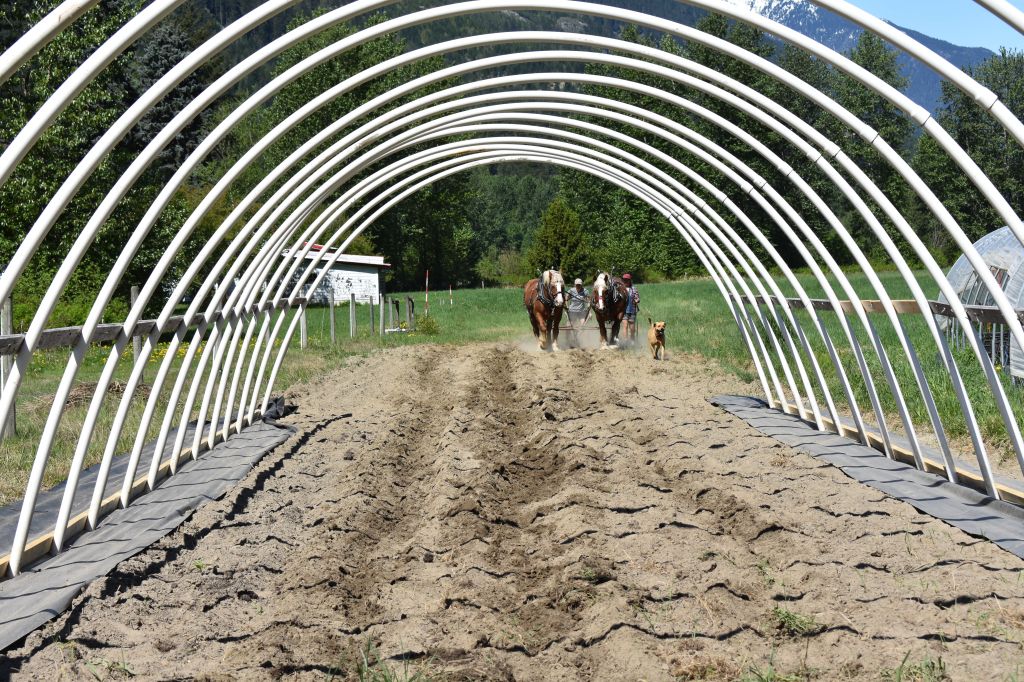
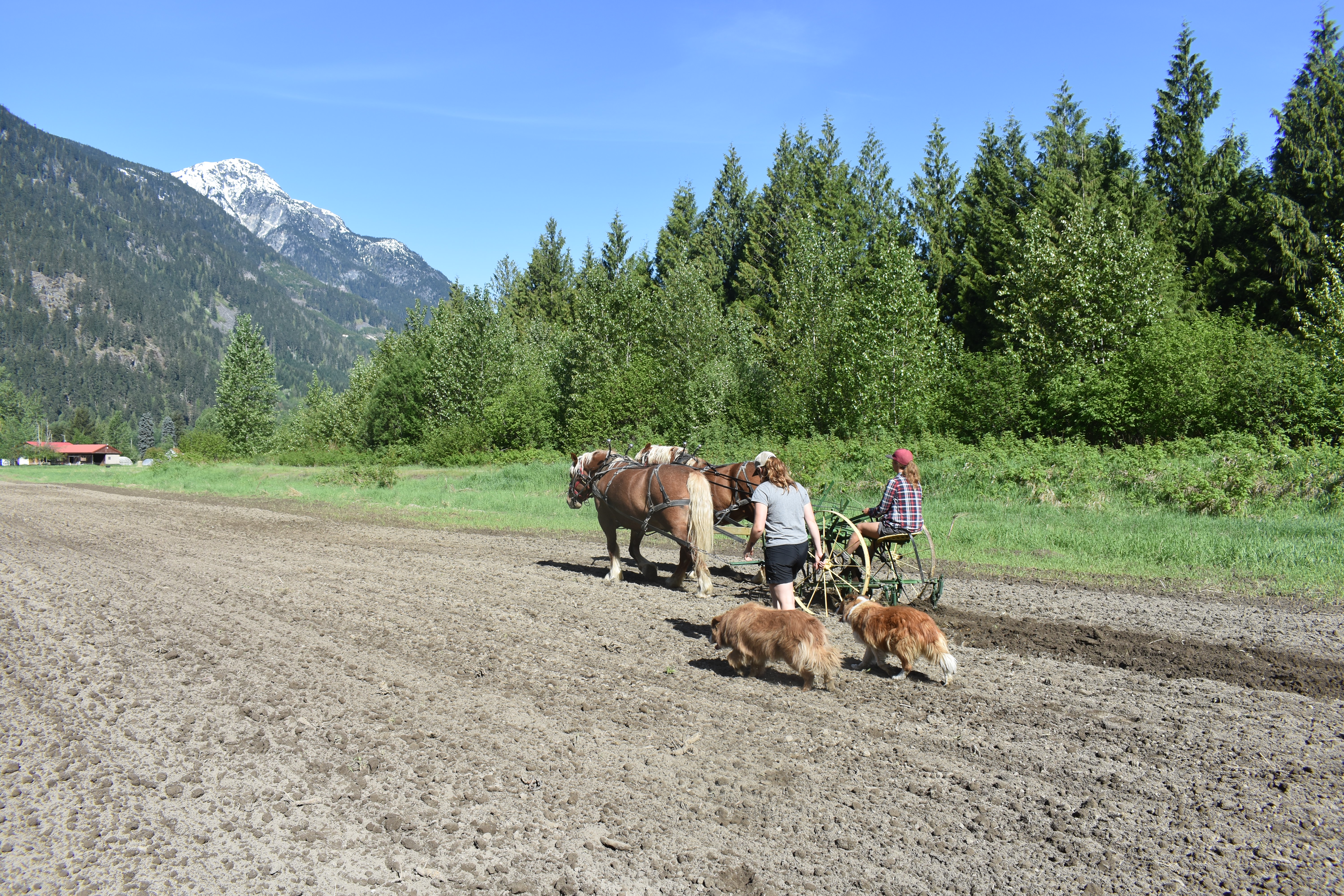
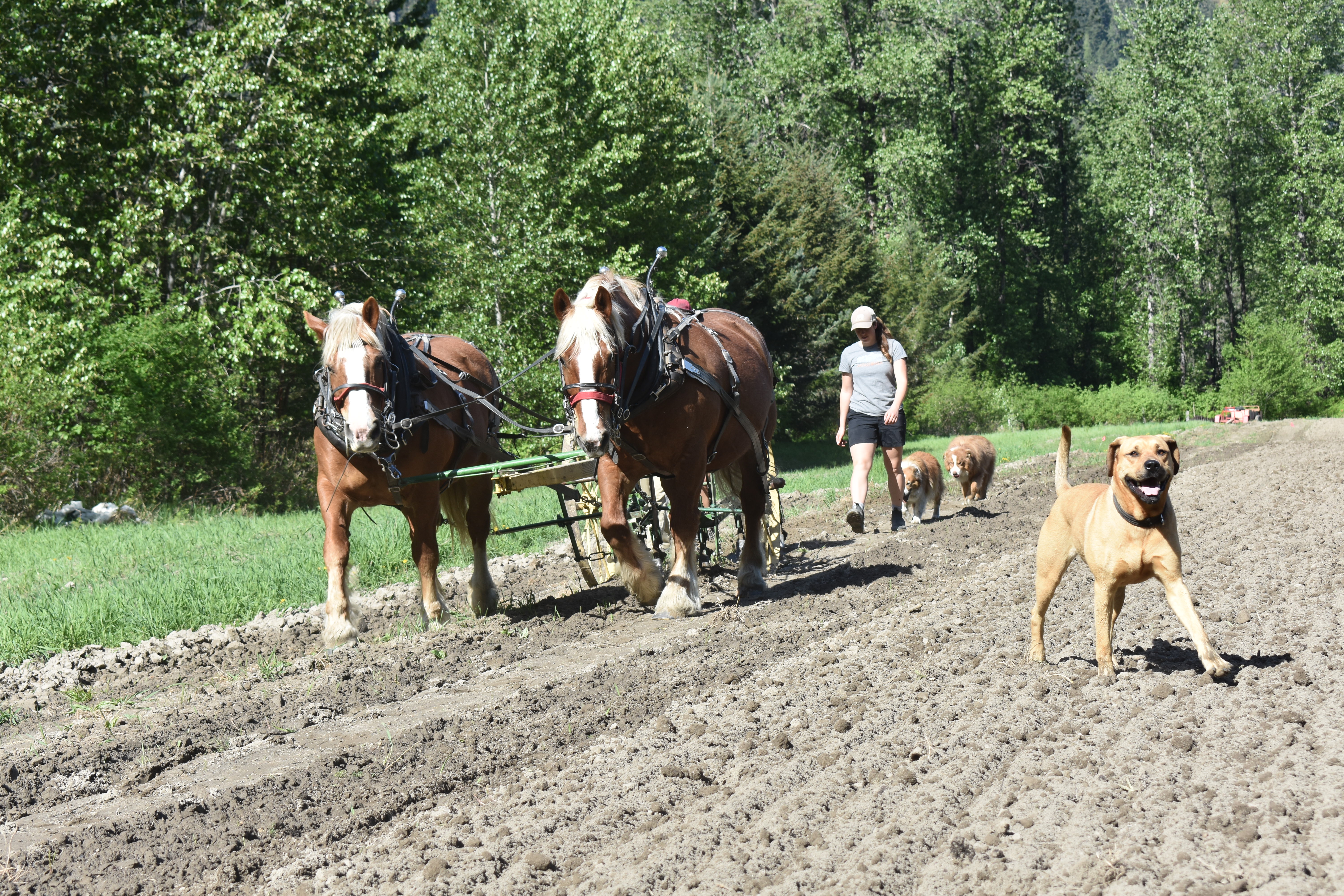
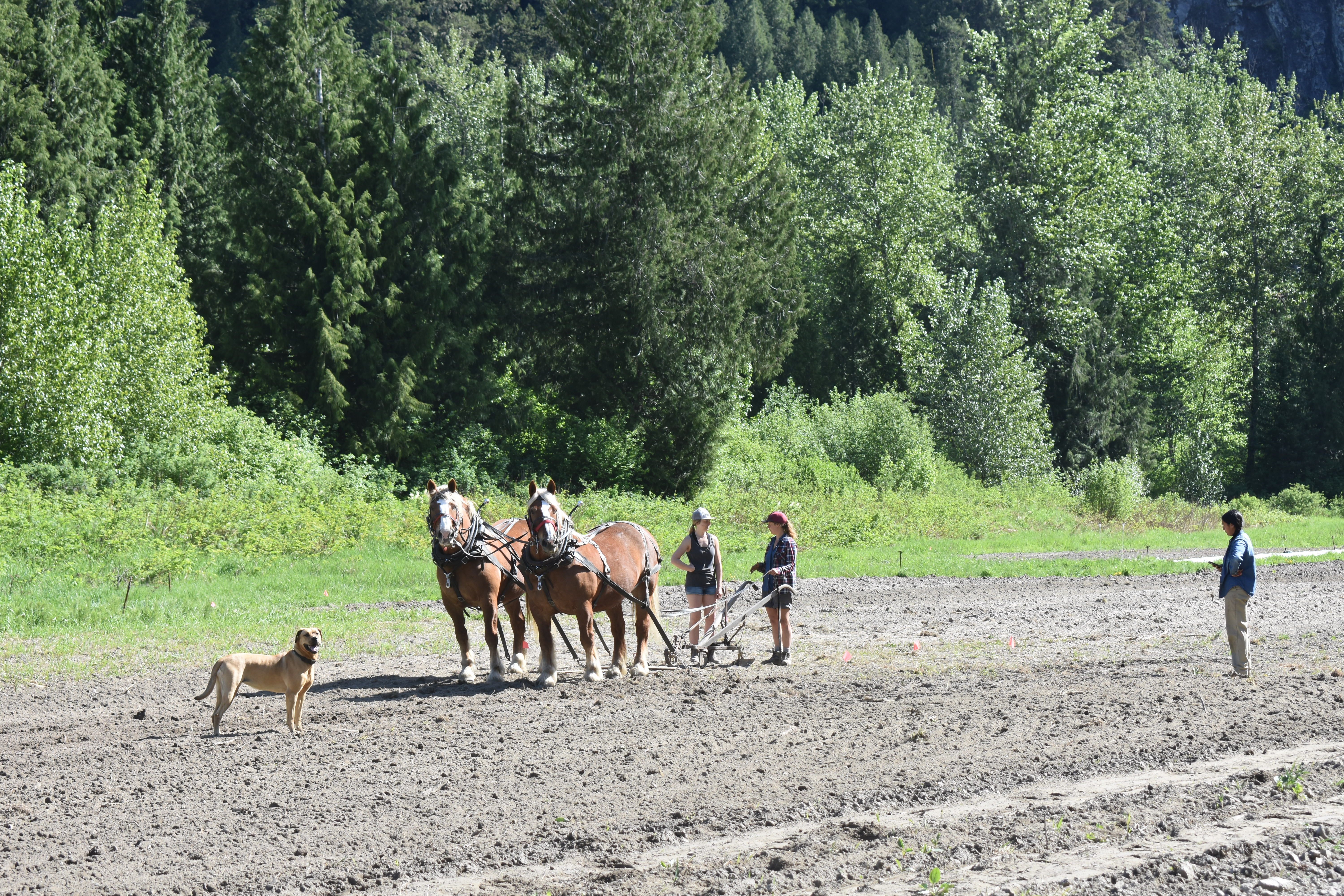
Even though there does not seem to be much time to go for a hike at the moment, there is fun to be had in the field, such as on this Saturday morning with some canine, equine, and human friends testing out a few new (to us) ways of cultivating in the vegetable field.











 Traced Elements