Tag: natalie rousseau

  • Unearthed: why mushrooms are the perfect symbol for the Dark Season, and why it’s totally okay for you to do LESS this Christmas

    Unearthed: why mushrooms are the perfect symbol for the Dark Season, and why it’s totally okay for you to do LESS this Christmas

    Sometimes when I tell myself to breathe, it triggers panic – as if by drawing attention to this innate, unconscious, automatic action, breathing in and out suddenly becomes improbably difficult. Meditation, swimming laps, yoga… all these experiences often contain a few extremely panicked moments when I gasp, unable to catch a breath that has suddenly awakened to itself, like an animal realizing it is trapped and throwing itself at the bars of the cage.

    It’s weird. “Here, notice this amazing thing you do. Breathing. Doesn’t it calm you down?”

    “OMFG. I can’t get enough air. I’m going to die!”

    I feel a little bit the same about this time of year: Mild fluttery panic somewhere beneath the rib cage.

    Up until now, you may have known this feeling as par for the course, as the essence of Shoulder Season, these days of Waiting for the Snow to Seriously Fly. The panic flutter channels as a kind of scarcity fear that ripples onwards and onwards, as the days shorten, darken, flip over, tumbling towards the bottom of the year: will there be enough snow? Will I get enough work? Will I ski enough days to pay off my pass? HOW many days left before Christmas? Have I got something for everyone? Will there be enough food to make it a feast? Will I manage to get through all the social occasions without melting down? Do I have enough of a tribe that I won’t be lonely?

    This year, thanks to Pemberton-based teacher Natalie Rousseau and her online programs, 13 Moons and The Witches’ Year, I have gleaned a slightly broader perspective on this time of year. I see that these questions arise from a deeper and older one: Will the light return? Every season that saw pre-industrial people store their harvests away and duck into shelters to weather the winter and live alongside the literal fruits of their labours, the consequences of their actions over the course of the preceding year, was a time of reckoning and resolution. It was a season of living with the question, what have I done with my time? Was it good enough?

    Rousseau calls this time of year, a 52 day period that runs from Samhain or Halloween to Yule or Winter Solstice, The Dark Season.

    I’ve come to think of it as a time of Unearthing. Of things not wanting to stay in their boxes, getting untidy, becoming pushed forth. Stories. Emotions. Stuff we’ve tried to bury, all heaving up, surfacing in strange ways, asking to be noticed, remedied, attended to.

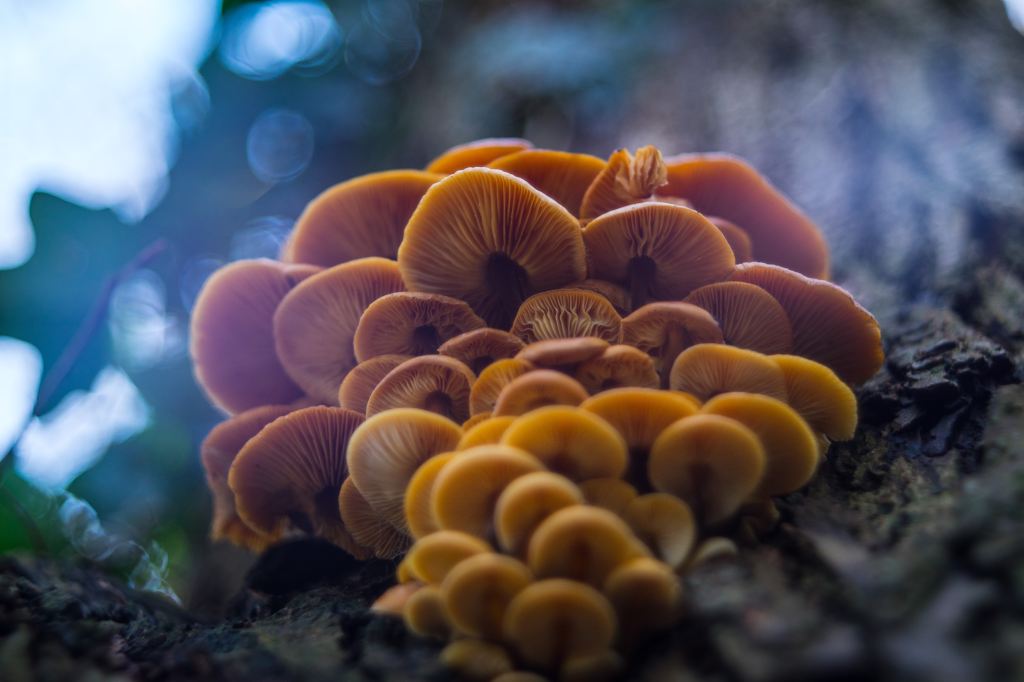
    For weeks, as I’ve learned of friends’ relationships breaking down and buried frictions waking up, tidied up the receipts of the year, seen stories I wrote months ago land in print, or stood in front of my pantry, outside the mushrooms were pushing themselves up with quiet force. Surfacing. Unearthing themselves. What did it all mean? Paul Stamets, the author of Mycelium Running, calls mushrooms “mycomagicians.” They are not afraid of endings, of decay. They are, in fact, “the grand recyclers of our planet, disassembling large organic molecules into simpler forms, which in turn nourish other members of the ecological community. Fungi are the interface organisms between life and death.”

    Kind of the perfect symbol for the Dark Season. Beneath our feet, beneath this surface of frosty soil that will soon be buried even deeper by metres of snow, (may it be so), vast intelligent complex fungal networks underscore and entangle everything. This is the season in which we glean a tiny window into that, as the fruit of all that complexity pops up. The question was never, “have I done enough?” But: Have We? Collectively, not just as little tribes, but in concert with the life force surging invisibly beneath our feet, all around us.

    Much is being unearthed, heaving to the surface, in these days, of unraveling climate systems. Much of our collective behaviour is nestling in for the winter, and demanding a reckoning. Sure makes you want to run for the nearest all-inclusive beach resort. Or beg the gods for the happy oblivion of a powder day.

    But before the flight, or fight – before the adrenalized response – the Wheel of the Year, the cycles of history, have built in this beautiful terrifying moment, this awful awe-full moment, a chance to be still and consider: have we done enough? Where have we fallen short? If we are gifted a new breath and a new day and another season together, what shall we plant in this beautiful living Earth? What shall we bequeath the future?

    “For most of our human evolution on this planet this was a season of rest,” says Rousseau. “And our souls still crave it. Important work happens in the catacombs and secret chambers of our soul during this season, even if our culture doesn’t recognize it.”

    Her prescription is generous, if not counter-intuitive to what we tend to expect of ourselves at this time of year: slow down. And notice.

    The year breathes its long sigh, and here, at the bottom of the breath, there is a pause. It’s okay if it makes you panic, a little. Notice that too. (Eventually it settles, I swear.) The pause is the most beautiful gift of the year, the echo of the harvest, in which all possibility hovers, looking for a place, a body, a community in which to land, to come into being once the light returns.

    This post first ran as a column in Pique newsmagazine, Velocity Project: how to slow the f*&k down and still achieve optimum productivity and life happiness. 

  • Plant medicine: wildcrafting Balm of Gilead

    Plant medicine: wildcrafting Balm of Gilead

    IMG_2019

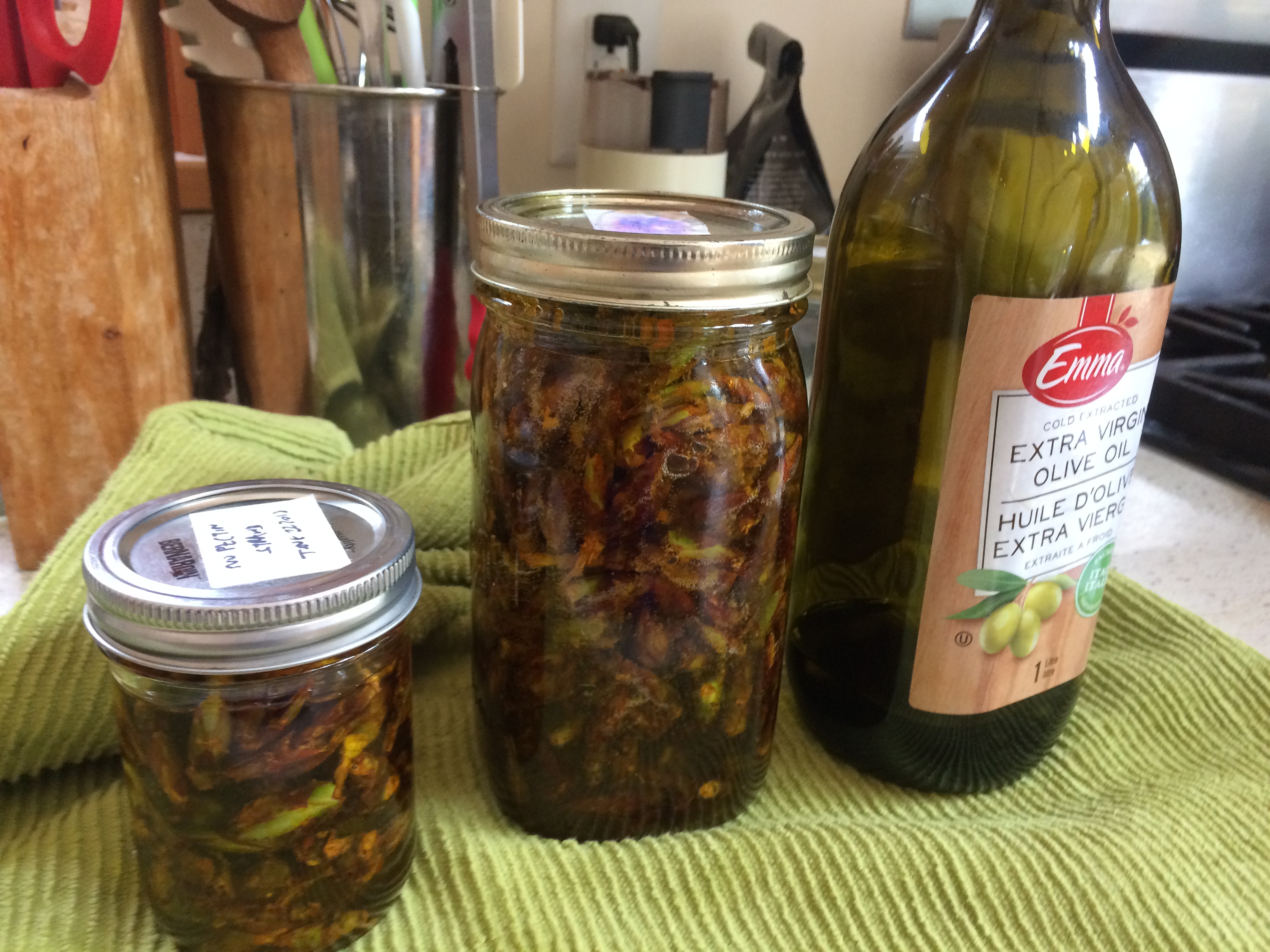
    “What’s this?” asked my clutter-resistant husband, observing the giant mason jar of oily plant matter on the counter.

    “Ohh, it’s medicine! It’s called Balm of Gilead,” I explained.

    “Oh. But what is it?”

    “Cottonwood tips in oil.”

    “Hmm. And what’s it good for treating?” he asked, in an impressively neutral manner, eyes scanning to the brand new bottle of olive oil next to the stove that was now suddenly, dramatically, near-empty.

    IMG_2023

    I reamed off a list of benefits from Balm of Gilead, the old herbal remedy – that I’d just copied out carefully into my new Plant Allies notebook – using information I gleaned from Natalie Rousseau’s blog. The resinous buds are rich in salicin which your body converts to salicylic acid, the active ingredient in aspirin. Good for sore muscles, rheumatic conditions, simple wound healing, as an expectorant chest rub to treat a boggy spring chest cold. Bees also use the resin to protect their hives.

    “Plus,” I enthused, “it’s helping me be more in tune with this place, with the seasons, and what’s outside our door.” He’s knows that “tuning in to the deeper rhythms” is kind of my jam right now, so, even though I could see his brain calculating the cost per millilitre of this little experiment, as compared to the cost per unit of a bottle of generic aspirin tablets, as weighed against the likelihood of me ever 1. completing this project and 2. treating anything with it, he nodded quietly, and put the jar back on the counter.

    Since moving to Pemberton from the land of eucalypts and snow gums, I had acquired the habit of thinking that black cottonwood (Populus balsamifera ssp.) are kind of junk trees – the wood is too wet to burn well, the snowfall of the seeds in May wreak havoc on friends’ allergies, and the branches crash to the ground, making them kind of hazardous to live directly under under. Even though wonderful plant mentors like Evelyn Coggins, Dawn Johnson and Connie Sobchak have offered me other ways of thinking about cottonwood, thanks to their contributions to The Wellness Almanac – great bird habitat! good for erosion prevention! great shade in a sweltering Pemberton summer! a beautiful scent! a medicine! – those attributes felt like supplementary prizes, making up for basic deficiencies in character.

    Then, in February, I joined Kera Willis and Guliz Unlu for an all-day workshop, offered through Mountain Horse School,Lightning Seeds: Opening the Gateway of What’s Possible.” The hook had been set, when Kera asked:

    What happens when we invite natural rhythms, cycles and energies to help us create the changes we wish to see, in both ourselves and the wider world?

    What if we could get out of our own way?

    What if we could remember ourselves into a state of embedded belonging within the natural world?

    “In the same way a lightning strike may ignite an instant blaze or slow burn that smoulders for months, these awarenesses and experiences may take root eagerly within us, or they may take months (or even years!) to percolate down through our soil,” wrote Kera.

    Befriending my tree neighbours has been an outcome with a long slow germination. First there was ignorance, curiosity, longing, admiration of those with more knowing. Years of that.

    IMG_0934
    Lightning Seeds beneath a  big old cottonwood. Photo courtesy Kera Willis/Guliz Unlu.

    IMG_0948
    Besa. Photo courtesy Kera Willis/Guliz Unlu

    Then, facilitated by Kera and Guliz, a group of us were invited to stand in the crunching snow in the shelter of a cottonwood and consider: what is the smell of lighting? what is the sensation of green? what secret desire might we share with a horse, a tree, a non-verbal witness? How might be hold ourselves if we courted wonder, if we invited animals to approach us, instead of steam-rolling our way into the thick of things, without waiting, without listening, without receiving?

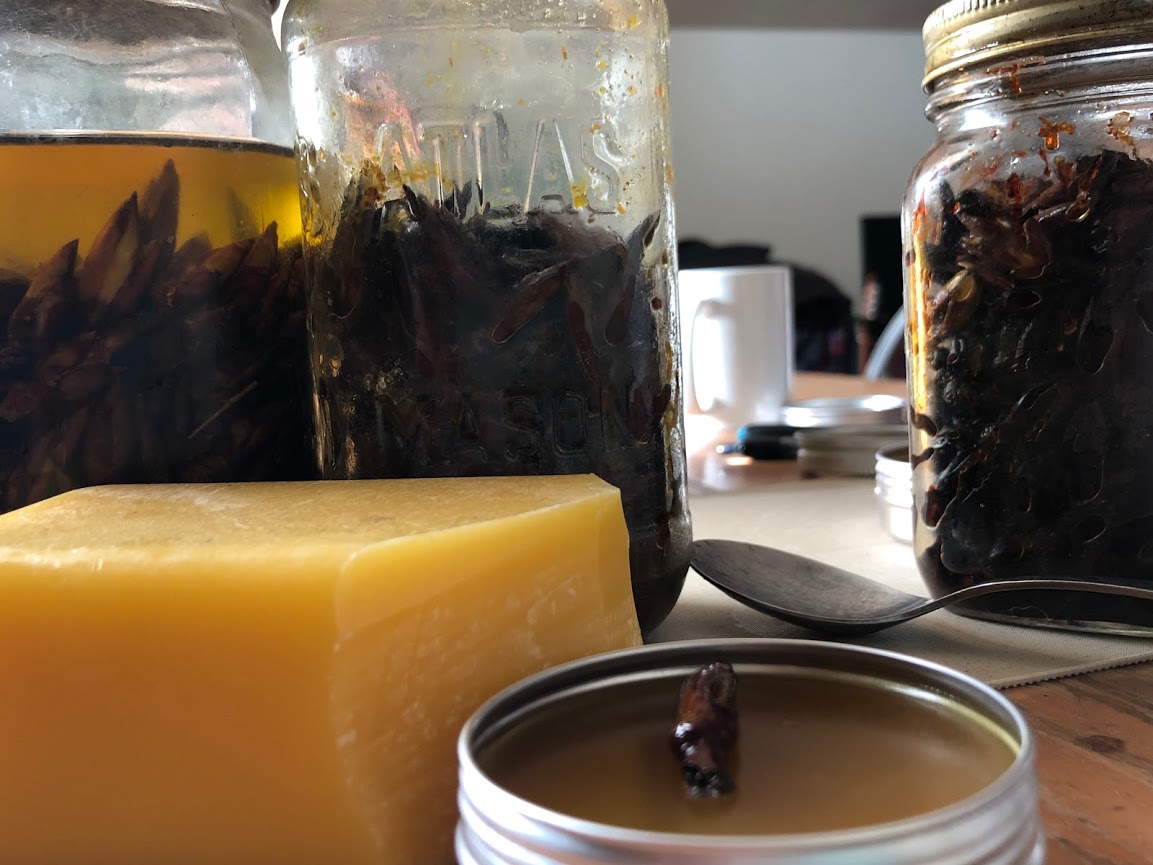
    We ended our explorations at the mixing table, hands-on, pouring melted beeswax and cottonwood oil into containers, inhaling the aroma. Connecting with our senses. Relating.

    IMG_0960
    Photo courtesy Kera Willis/Guliz Unlu

    IMG_0964
    Photo courtesy Kera Willis/Guliz Unlu

    Percolate.

    A month later, on the first day of spring break, I found myself at the base of a massive cottonwood that grows beside the creek behind my house. I wouldn’t have known it was a cottonwood. But I was sniffing around the ground like a truffle pig, and when I found dropped branches with the tell-tale resinous buds (quick sniff for confirmation, month-old memory of sitting at Kera’s table still fresh), I gazed up, to locate the source. Oh. There she is. Wow. Your majesty. I couldn’t help but bow. Her crown was stunning. So different from the conical tops of the Douglas-fir and red cedar that have filled my winter days.

    IMG_1868

    I picked the buds from winter-fallen branches, taking in the scent, and I kind of chatted away to the tree. First, I acknowledged her presence. Big step. I’ve walked by plenty of times, head in my own thoughts, brushing by like strangers. So we began the dance of becoming friends. I accepted her, without assessing her worthiness, just as I do when I become friends with someone. And I offered myself as a potential friend, and complimented her on her lovely qualities – like the fact that the branches she drops in winter storms are rich with buds that are full of medicine for spring coughs, muscle aches and pains, wound healing. I accepted the offering.

    She’s a local here, (a coastal dweller, her kin are native to western North America) and the flood plain is her habitat – she can take root in pure sand or gravel along riverbanks, and absorbs water through her roots to help control flooding.

    black-cottonwood

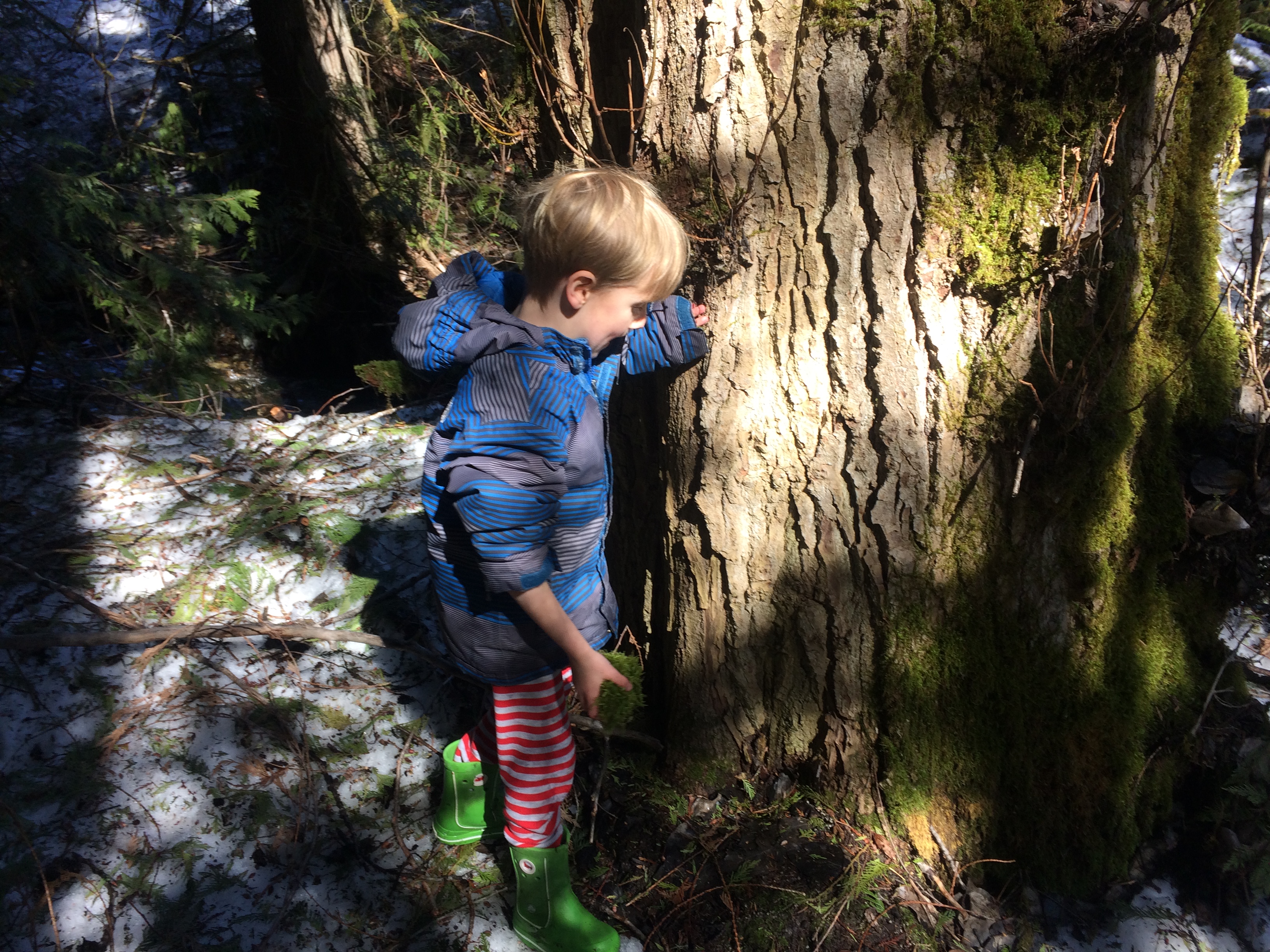
    I’d brought the wee lad with me, beckoning him outside with the promise of a “creek patrol.” I had showed him Natalie’s blog post, with her step by step photo instructions of making a poplar salve, and explained what I was wanting to do. I pulled out my little jar of salve from February and we both inhaled it. He absorbed it all quietly, then ran to find a basket for me, and his raspberry picking container (yogurt container with string to hang around the neck) from the bottom drawer.

    IMG_1869

    As I plucked the buds from fallen branches he hustled back and forth between the creek and mother tree pouring water on it as “an offering.” Also leaving branches against its trunk in case it felt compelled to be a Fort anytime soon. It has been almost a year since we last talked about the idea of offering thanks to the trees and living things around us – and maybe we owe it to Wild Kratts, but he’s bought into that idea completely.

    (Cut to last night’s first fire, with deadfall we collected from the forest floor.

    Dad: “trees are so awesome because they give us firewood!”

    Boy: “No, trees are awesome because they give us oxygen. That’s more important than fire wood. If you don’t have oxygen, you can’t LIVE!”)

    IMG_1872
    Making offering. Moss, dirt, creek water.

    This is the seed I want to plant in his heart, I thought, as I was collecting buds from the forest floor : there is so much abundance here as long as we remember to acknowledge and give thanks and give something in return. This is the dawning that is, at last, awakening in me.

    The smell of cottonwood resin, which I found kind of medicinal and stenchy in February, is now something I inhale with intention and gladness. (Especially given that my hands are covered with it, right now, after I opened the lid of my brewing jar to see how things were looking. Word to the wise: when they say, “only fill your jar 3/4 full, because the buds will swell”, they mean it. Oh grasshopper. So much to learn.)

    Now that I have begun to enter into relationship with that great tree, I see her – from my window, out in the yard, walking the creek – all the time, and it doesn’t make sense to not nod in greeting. After all, we’re friends. Even if I never use the oil, medicinally, some “medicine” has been gained, in this, small glimpse at the significance of the phrase I have heard my Lil’wat neighbours use: all my relations.

    IMG_2020
    As explosions go, things could have been worse.


    IMG_2022
    Add to grocery list: olive oil.

    Balm of Gilead

    Local clinical herbalist, Evelyn Coggins says you can make Balm of Gilead as follows:

    Using a ratio of one part buds to 3 parts vegetable oil (I use olive oil), soak the buds for at least three weeks, stirring gently once a day to expose all bud surface areas to the solvent.

    I use 500 ml canning jars and cover the tops with paper towel secured with canning rings. This prevents stuff from falling into your oil but also allows the moisture from the buds to escape. Keep the oil in a warm place (in the oven with the oven light on) to help gently dissolve the resins into the oil.

    When your soaking is complete, allow the jars to sit at room temperature overnight then strain out the buds. Let the oil sit covered with a clean tea towel for another 24 hours at room temperature and then decant it into jars, cover tightly, label and store in a dark place.

    You can apply it to sore spots as is or mix it with other infused oils and essential oils, add some melted beeswax and presto: an absolutely fabulous homemade version of “Tiger Balm”.


  • April Kitchen Sadhana

    April Kitchen Sadhana

    In yogi language (Sanskrit) the word sadhana often refers to a conscious spiritual practice, discipline or service.

    In the last year I participated in an absolutely divine online course with a local yoga teacher.  Each month we got amazing content including a particular kitchen sadhana – ideas like herbal bitters or kitcharis and other ayurvedic potions.

    I’ve carried this ritual of kitchen sadhana into my life as I find it very grounding.

    This month I have two particular recipes that I’m really excited about.

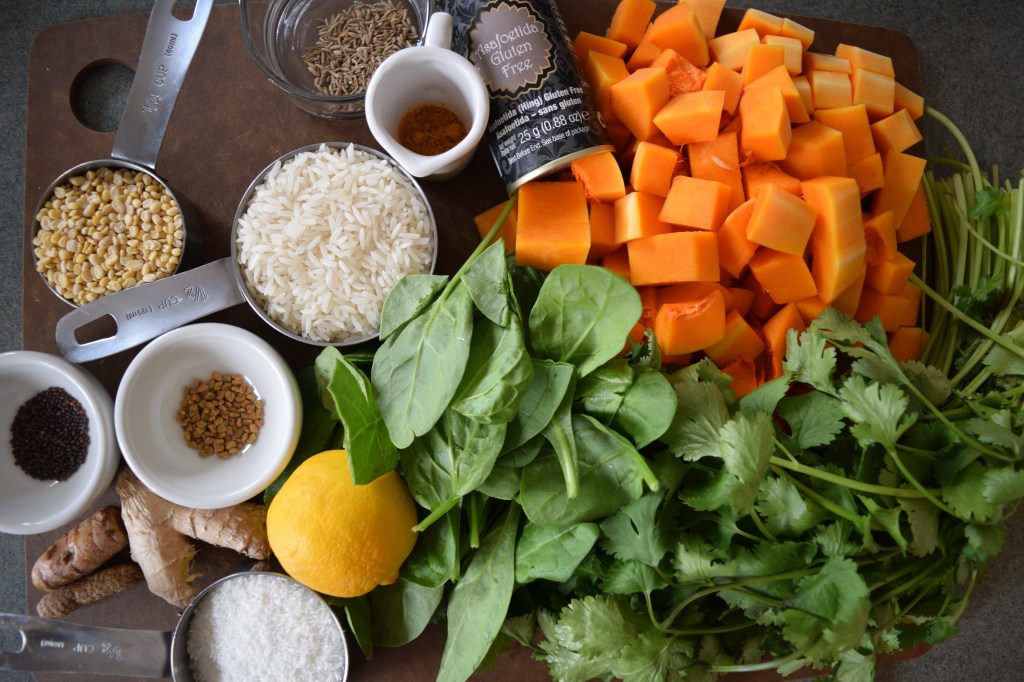
    The first is one of my absolute favourite foods to make when I need something easy to digest that is also a complete meal and very comforting and nourishing. Kitchari (sometimes spelled kichadi) refers to a stew-like one-pot meal which is a mixture of two grains. Spring is often a time when we are shedding the stagnant, dense energy of winter and the heavier foods we’ve been eating to up-shift to the lighter, more buoyant foods of spring, like dandelion greens and fresh nettle. The great thing about kitchari is that you can use any vegetables you have on hand.

    up to april 2018 200

    This particular recipe is with a mix of mung beans and basmati rice and I had butternut squash, spinach and frozen peas on hand so in they went.

    Here is the link for the recipe:  http://www.mapi.com/ayurvedic-recipes/soup-and-salad/khichadi-mung-bean-and-basmat-rice-stew.html

    up to april 2018 201

    The next spring kitchen sadhana is a work in progress. It comes from a cookbook I have taken out from the library seven times in the past three years called The Nourished Kitchen by Jennifer McGruther.

    Nearly May 001

    For me, it is not an everyday kind of cookbook but a fun experimental one. Of particular interest to me is her chapter on fermentation. I love water kefir and kombucha and homeade sodas but usually buy them. I am now 3 days in to creating my own live wild yeast and ginger starter. From this, I can then create my own water kefir and beet kvass or flavoured sodas and the starter keeps living as long as you replenish what you use and keep it fed and/or refrigerated.

    Nearly May 002

    It doesn’t look super delicious now but I love the simplicity of just ginger, water, unrefined sugar and time in the environment and from here the off shoots will be a complex flavour sensation and also great for gut health like ginger lemon water kefir or beet kvass mixed with spring water on a hot afternoon. A great reward for my kitchen sadhana. You can find this cookbook at the Pemberton Library and she also has a website you can check out at https://nourishedkitchen.com/