Tag: mushrooms

  • Unearthed: why mushrooms are the perfect symbol for the Dark Season, and why it’s totally okay for you to do LESS this Christmas

    Unearthed: why mushrooms are the perfect symbol for the Dark Season, and why it’s totally okay for you to do LESS this Christmas

    Sometimes when I tell myself to breathe, it triggers panic – as if by drawing attention to this innate, unconscious, automatic action, breathing in and out suddenly becomes improbably difficult. Meditation, swimming laps, yoga… all these experiences often contain a few extremely panicked moments when I gasp, unable to catch a breath that has suddenly awakened to itself, like an animal realizing it is trapped and throwing itself at the bars of the cage.

    It’s weird. “Here, notice this amazing thing you do. Breathing. Doesn’t it calm you down?”

    “OMFG. I can’t get enough air. I’m going to die!”

    I feel a little bit the same about this time of year: Mild fluttery panic somewhere beneath the rib cage.

    Up until now, you may have known this feeling as par for the course, as the essence of Shoulder Season, these days of Waiting for the Snow to Seriously Fly. The panic flutter channels as a kind of scarcity fear that ripples onwards and onwards, as the days shorten, darken, flip over, tumbling towards the bottom of the year: will there be enough snow? Will I get enough work? Will I ski enough days to pay off my pass? HOW many days left before Christmas? Have I got something for everyone? Will there be enough food to make it a feast? Will I manage to get through all the social occasions without melting down? Do I have enough of a tribe that I won’t be lonely?

    This year, thanks to Pemberton-based teacher Natalie Rousseau and her online programs, 13 Moons and The Witches’ Year, I have gleaned a slightly broader perspective on this time of year. I see that these questions arise from a deeper and older one: Will the light return? Every season that saw pre-industrial people store their harvests away and duck into shelters to weather the winter and live alongside the literal fruits of their labours, the consequences of their actions over the course of the preceding year, was a time of reckoning and resolution. It was a season of living with the question, what have I done with my time? Was it good enough?

    Rousseau calls this time of year, a 52 day period that runs from Samhain or Halloween to Yule or Winter Solstice, The Dark Season.

    I’ve come to think of it as a time of Unearthing. Of things not wanting to stay in their boxes, getting untidy, becoming pushed forth. Stories. Emotions. Stuff we’ve tried to bury, all heaving up, surfacing in strange ways, asking to be noticed, remedied, attended to.

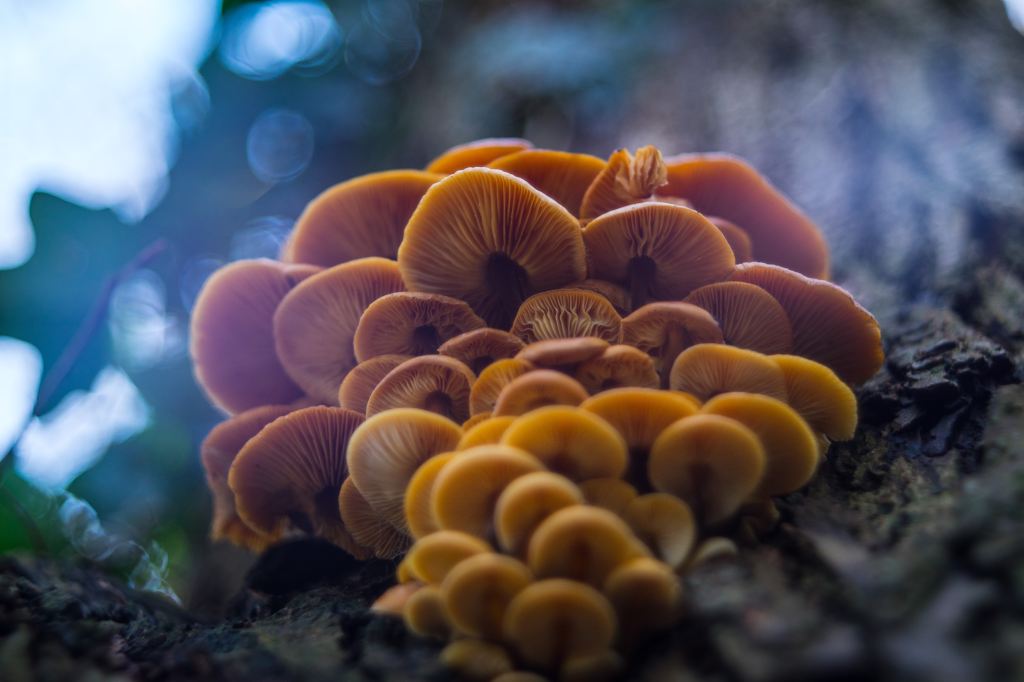
    For weeks, as I’ve learned of friends’ relationships breaking down and buried frictions waking up, tidied up the receipts of the year, seen stories I wrote months ago land in print, or stood in front of my pantry, outside the mushrooms were pushing themselves up with quiet force. Surfacing. Unearthing themselves. What did it all mean? Paul Stamets, the author of Mycelium Running, calls mushrooms “mycomagicians.” They are not afraid of endings, of decay. They are, in fact, “the grand recyclers of our planet, disassembling large organic molecules into simpler forms, which in turn nourish other members of the ecological community. Fungi are the interface organisms between life and death.”

    Kind of the perfect symbol for the Dark Season. Beneath our feet, beneath this surface of frosty soil that will soon be buried even deeper by metres of snow, (may it be so), vast intelligent complex fungal networks underscore and entangle everything. This is the season in which we glean a tiny window into that, as the fruit of all that complexity pops up. The question was never, “have I done enough?” But: Have We? Collectively, not just as little tribes, but in concert with the life force surging invisibly beneath our feet, all around us.

    Much is being unearthed, heaving to the surface, in these days, of unraveling climate systems. Much of our collective behaviour is nestling in for the winter, and demanding a reckoning. Sure makes you want to run for the nearest all-inclusive beach resort. Or beg the gods for the happy oblivion of a powder day.

    But before the flight, or fight – before the adrenalized response – the Wheel of the Year, the cycles of history, have built in this beautiful terrifying moment, this awful awe-full moment, a chance to be still and consider: have we done enough? Where have we fallen short? If we are gifted a new breath and a new day and another season together, what shall we plant in this beautiful living Earth? What shall we bequeath the future?

    “For most of our human evolution on this planet this was a season of rest,” says Rousseau. “And our souls still crave it. Important work happens in the catacombs and secret chambers of our soul during this season, even if our culture doesn’t recognize it.”

    Her prescription is generous, if not counter-intuitive to what we tend to expect of ourselves at this time of year: slow down. And notice.

    The year breathes its long sigh, and here, at the bottom of the breath, there is a pause. It’s okay if it makes you panic, a little. Notice that too. (Eventually it settles, I swear.) The pause is the most beautiful gift of the year, the echo of the harvest, in which all possibility hovers, looking for a place, a body, a community in which to land, to come into being once the light returns.

    This post first ran as a column in Pique newsmagazine, Velocity Project: how to slow the f*&k down and still achieve optimum productivity and life happiness. 
  • Best of Pemberton Fall Dinner: Pine mushrooms and deer burgers!

    Best of Pemberton Fall Dinner: Pine mushrooms and deer burgers!

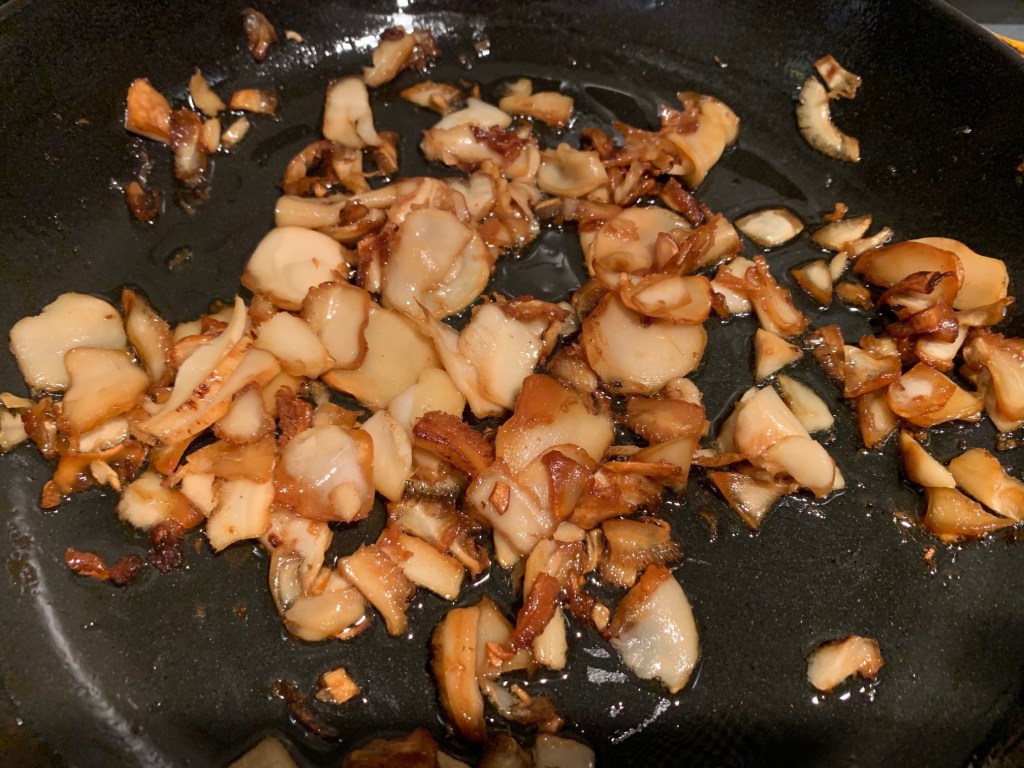
    This is a good time of year for eating well in Pemberton. Hopefully fresh deer meat, winter squash, mashed Sieglinde potatoes, and sautéed pine mushrooms! A healthier plate will also include sautéed chard – but I prefer to save my blanched chard to add to chilli and soup when it goes down so harmoniously with bold tomato flavour and spices. I used to dislike pine mushrooms but my tastes changed a few years ago when I ate them prepared very simply. Sautéed in olive oil, then drizzled with a tablespoon of fresh lemon juice and just a dash of gluten-free soy sauce…I can’t eat enough of them! Cheers to good fall meals using Pemberton’s finest local ingredients.

    Sautéed Pemberton Pine Mushrooms (serves 4 as a side dish, or 1 for a scrumptious snack)

    Ingredients:

    4 large pine mushrooms, well-scrubbed and clean

    2 tbs pure olive oil

    1 tbs fresh lemon juice

    ½ tsp gluten-free soy sauce

    Method:

    Scrub your pine mushrooms well.

    Slice VERY thinly into 2 mm slices. Thin slices are the key to flavourful and crispy pine mushrooms.

    Heat olive oil in a large cast iron skillet. Sauté mushrooms over medium heat until nicely browned and crisp. Turn off heat and add lemon juice and soy sauce. Enjoy!

    Pemberton Deer Burgers: (serves 4)

    Ingredients:

    1 lb ground deer meat

    2 tbs pure olive oil

    ½ medium yellow onion, fine dice

    1 tsp salt

    1 tsp pepper

    1 tsp prepared English mustard

    2 dashes hot sauce (optional)

    2 tbs chives, chopped.

    Method:

    Combine all ingredients. Form into patties. BBQ on high for about 10 minutes and flip burgers halfway through. Remove from heat when cooked through. Enjoy!

  • Resiliency and Mysteries of the Morel Mushroom

    Resiliency and Mysteries of the Morel Mushroom

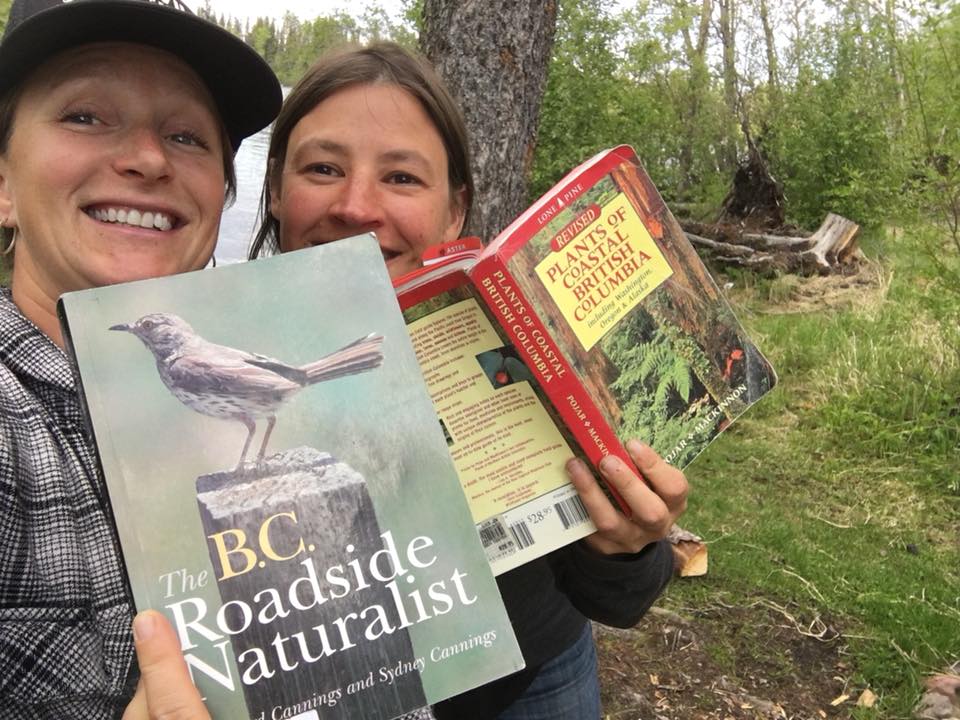
    The previous extent of my mushrooming has pretty much focused around the fall when the fruiting bodies emerge from beneath the moss, on the sides of logs, and through the cottonwood leaves. Pines, chanterelles, shaggy mane, and combs tooth are all I really know well enough to harvest and eat without being worried I might kill my family. But this year, it was the spring harvest of morels that called. My partner in crime suggested we bring the kids. They (the kids) are low to the ground and possibly more enthusiastic about picking mushrooms than we are. They had a small taste of the exciting morel hunt a couple of years ago picking in the Boulder Creek fire zone. We were all excited about finding a few morels to cook, save, trade.

    v and dawn geeking out

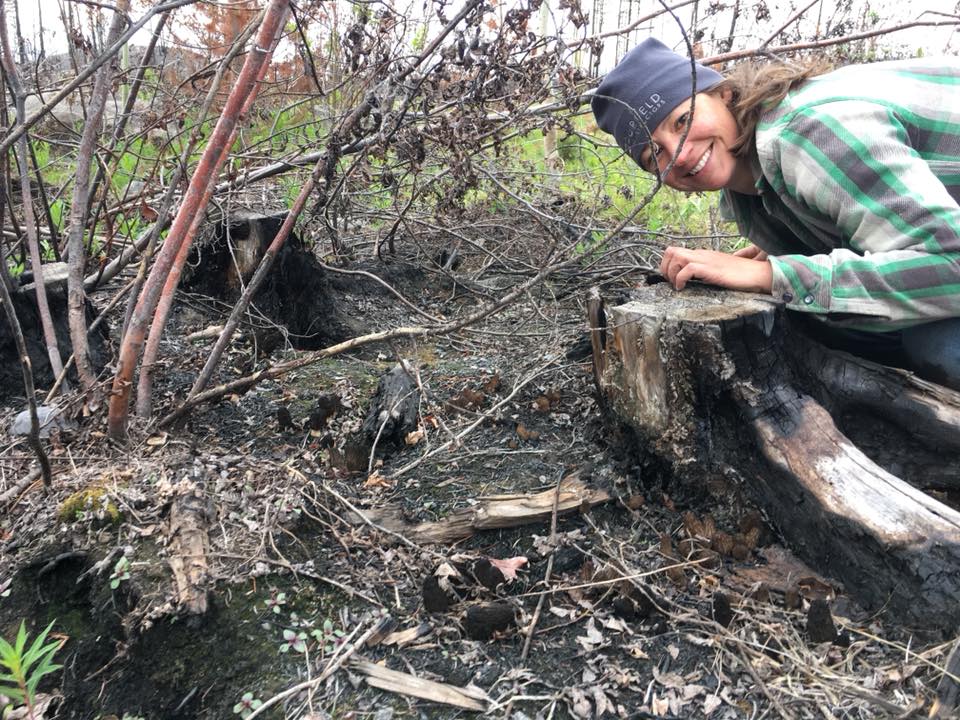
    We decided to pick in the Elephant Hill Fire zone that burned about 192,000 hectares in the Cariboo last year. While this is undoubtedly devastating on many levels, fire is part of the natural disturbance regime of that forest type. Many species that grow in that area are fire-adapted or fire-dependent. For example, the thick bark of mature Douglas-fir can withstand moderate fire (check out the fire scarred trees at One Mile Lake). Deep roots of vaccinium species (blueberries, huckleberries, etc) survive and send up an abundance of new shoots in following years. The cones of pines trees have a waxy coating which opens in response to the heat of the blaze, scattering seeds onto soil newly fertilized by nutrients in the ash. Many forest types require fire to stay healthy, to regenerate. Indigenous people throughout the world incorporated fire into their traditional landscape management. Lil’wat people extensively burned areas within their Traditional Territory to promote food production, and “the hills were just like a garden” (Baptiste Ritchie in Turner, 1999). Root vegetables such as: Indian potatoes or skewnkwina, yellow avalanche lily or sk’am’c , and tiger lily or skimuta (Lilium columbianum) and many berry crops were managed through controlled burning to produce better crops (Turner, 1999).

    Fire suppression to protect homes, communities, forest “crops” and other interests have impacted this natural disturbance regime. Without fire, forests are susceptible to disease such as the mountain pine beetle and over time, stagnate. Forests that historically burned regularly in a patchwork pattern now are subject to catastrophic, widespread, high intensity fires that change the way the forests regenerate. Soils become hydrophobic, resulting in a vegetative moonscape and flash flooding (we saw this near Loon Lake). Fire-adapted species can’t withstand the intensity. The list goes on.

    However, I digress. Back to the morels.

    Morels and wild mushroom harvesting in general are a huge industry. In preparation for the onslaught of mushroom pickers, the Secwépemc people (whose Traditional Territory we were picking on) implemented a permitting system, created designated campgrounds, and on-the-ground safety support. Permits in hand, we tested a few places on the way up to our destination. We kind of thought we may need to be picking with elbows out like on an epic powder day but were pleasantly surprised to be alone. Within a couple of minutes of jumping out of the truck the kids were shouting in excitement.

    ash and violet

    But we did not expect what waited for us only a short distance from our cabin. The forest floor was littered with morels in places. Over the course of a couple of short and easy days picking, we harvested all we needed for ourselves and close friends, so abundant in the immediate area we stayed in sight of the truck the entire time. In places, you had to really watch where you stepped so that you didn’t crush these highly camouflaged gems.

    post burn bounty

    The kids, in total disregard to the cloud of mosquitos, picked solidly and without complaint, filling their buckets amidst cries of “Jackpot!”. “Partner Alert! I need help!”.

    motherlode

    We hypothesised about abundance, distribution, ecology. I was excited to come home and learn more. I wanted to know why morels appear after a fire, and the question seems somewhat unanswered by science. While much research has been conducted in recent years regarding the extraordinary and fascinating importance of mycelium or  “mushroom roots” in the forest floor (check out this video– SO COOL!), morel ecology, spatial distribution, and abundance are not widely researched. In order to make sense of one hypothesis, it helps to have basic knowledge of the mushroom life cycle.

    mushroom life cycle

    Some scientists suggest that after a fire destroys many of the plants the morel hyphae may have been working with, the hyphae are stimulated to form fruiting bodies and send their spores far and wide in hope that some will land in areas with living plant roots. Totally plausible in my eyes.

    It is fascinating to think about how ecosystems are adapted to respond to catastrophe. It gives me hope in our changing world. If a morel mushroom can withstand the hottest of fires and not only survive, but thrive, can we heal our hurting planet? Can our natural world adapt fast enough for climate change?  Is that part of why our hearts are buried so deep in our chests? I like to think that is why for some of us, our fears, happiness, vulnerability, our joy are buried in emotional vaults that they are just waiting to be tested, to have the opportunity to rise up, to spread, to be released.

    It makes me think about the projects I am working on right now, which have a strong focus on “resiliency”. It seems to be the new buzz word, superceding sustainability. Like the theory of morels acting out of a need for survival, I wonder what the catalyst will be for individuals and communities to summon the vision of resiliency into the action of resiliency. It is already happening, I know, but at the same time it feels like our world is constantly bracing, building, preparing. I am grateful to celebrate the ways in which our community builds resiliency. Great weekends away with great friends. Breaking bread, sharing food, spreading ideas.

    I employed a variety of methods to preserve my bounty but focused on dehydrating. My favourite morel recipe so far was a simple Risotto Bianco with morels and garlic scapes sautéed in butter. If anyone is inspired to go hunting for morels, I think that area will still be good until mid-June or so. Keep a watch on fires happening this summer and plan a trip for next spring. Like most trips to the woods, it deeply satisfied the nerder naturalist and philosopher in me!