Tag: mike roger

  • Tips and tricks for starting seeds

    Tips and tricks for starting seeds

    With the promise of spring just around the corner, starting seeds initiates the growing season. Nothing conveys more optimism and hope for the future for a gardener.  Seeds are amazing, wonderful little specks of embryonic life.They are relatively easy to start, but these few guidelines can increase success.

    1- Store seeds properly in a cool dark place. It sounds detrimental but apparently the deep-freeze is best. That’s how the seed banks preserve them.

    2- Read the package for info, or better yet Google it. This will tell you timing, depth and whether they need light (sprinkle on top) or darkness (cover with newspaper). Some seeds have special requirements such as pre-soaking.

    3- Check the date packaged and find out how long they are viable for. If you’re not sure you can pre-germinate them in wet paper towel.

    4- Make sure you have the appropriate-sized container with drainage holes. Generally bigger plants and seeds will need bigger containers.

    5- If you are recycling containers, always wash and disinfect them with diluted bleach or hydrogen peroxide to kill moulds, bacteria, diseases, critters and their eggs.

    6- Always use a fine sterilized potting mix (peat moss, perlite and vermiculite) or peat pucks. Never use dirt from outside or recycled mix. All it takes is a few eggs or spores to create an infestation indoors. If you do encounter bugs, isolate immediately, discard or treat with insecticidal soap.

    7- Use a tray without drainage holes to capture excess water and to encourage roots to go down to get it.

    8- Line the bottom of the tray with perlite to provide aeration and somewhere for the roots to thrive should they outgrow their container. This is especially useful when using peat pellets.

    9-Grow more than you will require, there will usually be casualties and you can always trade or gift them. A staggered seeding schedule can increases your odds and provide a varied harvest in the future.

    10- Cover with washed sand to fill in the nooks and crannies. Newly sprouted seeds will easily push through this layer. When the sand dries on the surface they need water. Never overfill the container as the water will run off instead of soaking in.

    11- Label and date them. It’s easy to forget what you started if you have many trays going. Be patient. Some seeds take weeks to sprout but most are 5-7 days.

    12- Place somewhere with bottom heat until germinated. A heat mat or on top of the fridge works great.

    13- Cover with a dome or plastic film to retain humidity and heat.

    14- Use a spray bottle to keep starts misted and let water percolate to the bottom of the tray. A watering can will probably be too much for the sprouts.  The larger the plant and container the more water it will need.Never let the soil dry out, but also don’t over water.

    15- Place in a bright spot but out of direct sunlight. Place a fluorescent light a few inches above. This prevents stretching. A timer on 18hrs will promote more growth and give them a few hours to rest.

    16- The starts will eventually need ventilation, opening a window is good but an oscillating fan on low will help stiffen the stalks and prevent mould and damping off (a condition where the plants rot and fall over at the base from cold, damp soil and stagnant air).

    17- Tall plants may need staking – wooden skewers and tape work great. Pinching the tops can also promote a shorter bushy habit.

    17- Up-pot or transplant as soon as they outgrow their containers.Make sure there is no risk of frost before putting outside.

    18- Acclimatize them by slowly increasing light and decreasing temperature.
    Harden them off before planting by putting them out in the day (weather permitting) a week before slowly increasing duration.


    19- Feed them every second or third watering. Liquid seaweed is great – it has all the micro and macro nutrients they need at first. Start with 1/4 strength and slowly increase dosage. Remember, potting soil has zero nutrients.They can only survive so long on their own stored energy.

    20- Treat them like helpless, fragile babies, after all thats exactly what they are.

    Good luck and happy gardening!

  • Cannabis Cultivation (aka Growing Weed) Then and Now

    Cannabis Cultivation (aka Growing Weed) Then and Now

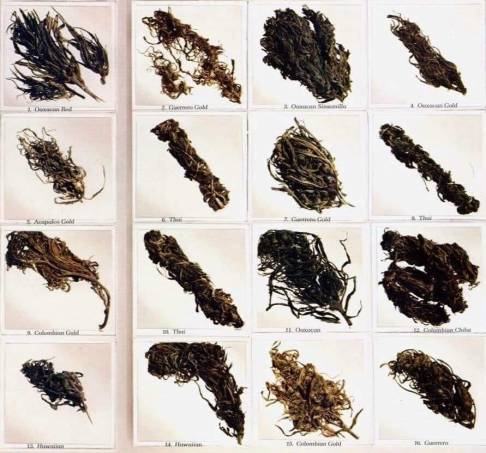
    scan 31CANADA-POT

    With legalization finally here, and the stigma of using cannabis diminishing, I’m not incriminating myself to confess I’ve been growing my own for decades. Even though this ancient herbal medicine has been around in most cultures for millennia, the evolution of what is now viewed as a huge agribusiness is very recent. This is a brief history as I perceive it. I’ve had the privilege to witness this progression from early on.

    I grew my first plant as a teenager in our backyard. My parents were liberal-minded and my mother had a green thumb and offered advice. It was my first experiment in growing anything. Keeping the plant alive was straightforward with a little direction from my mom. The end result on the other hand was poor at best. Acquiring seeds was easy, there were literally hundreds of them in every bag. Unfortunately it was impossible to duplicate the conditions of the countries the seed came from. It was a lose-lose and everyone who attempted grew what was known simply then as homegrown – Yuk.

    50690278_2254837127880400_6871468879235776512_n
    It’s hard to believe now, but pre-mid 80’s there was very little documented information for anyone that had any experience in cultivating this non-native plant in Canada. The only thing available was imported brown crap. Any pothead over 45 will confirm it was weak, full of twigs and seeds, and tasted like mouldy hay.

    Was it really that bad? In retrospect yes, but no one knew the difference. Technically the plant wasn’t as bad as the growers and handlers were. You see, those farmers in those undeveloped countries knew about as much as a Canadian teenager in the suburbs when it came to the horticultural techniques of breeding, growing, manicuring and curing pot. The only advantage was they usually had a longer growing season. It was still just a hardy cash crop, growing in a field by a peasant farmer, baled like hay and shipped on a boat. It tasted mouldy because it usually was.

    It was the Dutch who revolutionized cannabis cultivation. Being, in my opinion, the best botanists, horticulturalists, gardeners and innovators in the world, they researched, experimented and took it to the next level. They gave it the respect it deserved. They literally domesticated a wild plant that grew in many temperate and sub-tropical parts of the world. The first thing they did is realize that the female plant flowers have the most active ingredients and flavour. They also found if it was unfertilized and therefore seedless it was even better. Except for breeding purposes, they got rid of, or isolated the useless males. Secondly they figured out that light duration played a significant role. They noticed that with 18 hours of light the plants grew vigorously – under 12 they slowed down and went into flower. 2 short months later the fruiting buds were ripe. They also quickly figured out that if they grow indoors under lights they could force a plant into doing what they wanted it to do, in a controlled environment.

    The Netherlands’ climate, similar to western Canada’s was not really suited for the available strains of this plant outdoors. They also discovered that different strains reacted differently to these cycles depending on their origins. It is believed that Cannabis originated from Central Asia – Indica, adapted to cooler northern climate and seasonal light cycles of northern India; Sativa on the other hand, from the drier middle east had less fluctuating cycles being closer to the equator. A common misconception is that Cannabis likes the tropics. Wrong. The light cycles there are too constant, the humidity too high and the pests unmanageable.

    There is a third unrecognized strain – ruderalis, that has adapted and hardy in areas not suitable for either of the former ones. It is day neutral and is unaffected by light cycles. This is what is better known as hemp and had already naturalized North America as a bonafide weed. Farmers were encouraged to grow it to supply material such as canvas and rope for the war efforts. After prohibition it became invasive and wild.

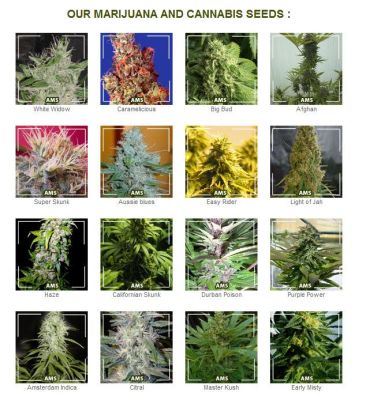
    With this new found botanical knowledge, the Dutch travelled the world collecting seeds from places that had been growing this herb for centuries. These pioneer growers could now modify their indoor growing conditions and cross breed all 3 species and dozens of varieties into hundreds (and now maybe thousands) of hybrids. They bred mostly for potency (THC) and quickly doubled and even tripled the strength. Flavours and taste that come through as turpines were modified to create spicy , fruity or ammonia undertones. Clones were made of the best ones and given catchy names such as Skunk #1 for its smell, Juicy Fruit for its taste, Northern Lights for its hardiness or Durban Poison reflecting its origins. Coffee shops openly marketed these new potent strains to the world’s tourists. The open-minded and business-savvy Dutch, proud of their horticultural talents turned a blind eye to the use of this still illegal, recreational drug. Seed companies began distributing, a few how-to books were published and hydroponic equipment became available. The domestic cannabis industry was born.

    56fcbc0746b8263ac87a269c5511ad1f
    It didn’t take long for these seeds and these new techniques to make their way to North America in the luggage of hippies and stoners. The hip areas of Northern California and Oregon were also suitable for some of these strains to perform well outdoors. With a little extra breeding and mixing in a little ruderalis these varieties acclimatized to more northern areas. The Cannabis wave reached BC in no time. There they also combined the horticultural knowledge of the Dutch with cheap hydro, and infused some California strains to perfect the legendary BC bud both indoors and out. Vangroovy became Vansterdam.

    The medical marijuana movement, and the research debunking harmful effects and supporting its usefulness in treating many diseases, was what truly paved the way for legalization.

    Once the Supreme Court granted legal access to this medicine, the floodgates burst wide open. Anyone with almost any ailment could now get a doctors prescription. In city centres, dispensaries became more abundant than coffee shops. Legalization became inevitable. The government wanted in on that tax revenue. Conservative white collars, generally opposed to the subculture, quickly became the big investors. The Mom and Pop operations are being eliminated. Sound familiar?

    You might ask what this hidden activity has to do with local farm culture?

    Plenty!

    Pemberton with its favourable growing conditions has long been a hot spot for outdoor growing. Many legal medical licences and even more illegal grow ops have existed for years. The infusion into our local economy has been immeasurable yet substantial. With warehouse factory producers in Squamish, Whistler and two huge ones coming on line in Pemberton, Cannabis is set to become sea to sky’s largest agricultural product. A recent start up , Whistler Medical Marijuana just sold for $175 million!

    While in theory, legalization, in my opinion, is a step in the right direction, I question the corporate factory farming business model. The very people that established this economy are being replaced by shareholders, and workers in lab coats. It’s over-priced, resource-intensive, often heavy in chemicals, unsustainable and treated as a commodity. If you want to support this business model, that’s your choice. I’m surprised that Whistler /Pemberton has not embraced retail recreational Marijuana yet. I won’t be a customer just like I avoid fast food, but it needs to be readily available for any adult just like alcohol. There also needs to be a local, organic, homegrown paradigm shift to counteract this generic approach. Why support an inferior product when most of the profits leave the community? This is exactly what happened to the food industry. The shift to local and organic took time and I’ve seen that progression as well. There is hope.

    In a way I will miss the adventure of guerrilla-growing my secret patch of personal in the bush. Luckily each household will now be able to legally grow 4 plants. Hopefully a new homegrown renaissance will occur. We now have the knowledge and the strains to be self sufficient. If you can grow tomatoes on your deck, you should be able to grow marijuana. After all it’s just a weed. If you would like any info on starting your own legal plants email me at mikoiko66@gmail.com. I know a thing or two and can set you up with the right strains.

  • Plant Porn and Botanical Deviants

    Plant Porn and Botanical Deviants

    Heres a shocker , especially for prudes — PLANTS HAVE SEX!

    That’s right, just like all animals, a plant’s main purpose is to reproduce and they have a complex reproductive system to achieve that goal. If you admire flowers in full bloom (and who doesn’t), you are a voyeur checking out their genitalia, (botanically called gametes.) Nothing conveys love, lust and romance more than a bouquet of flowers with their voluptuous gametes for our viewing pleasure.

    Males have stamens, complete with anthers and filaments. These produce pollen, the basis for fertilization. Females have a carpel with stigmas, styles and ovaries. These organs will eventually produce a fruit and seed to make more babies.

    This is the birds-and-the-bees of plant sex, but there are more juicy details that involve said birds and bees. It often takes a threesome to fully get it on. Unlike animals, plants are immobile and have evolved to allow insects and other creatures (as well as wind) to transport pollen. These pollinators are also turned on and attracted to these beautiful colourful blooms, their scent and nectars. They will go from plant to plant doing the (not so) dirty work, and therefore conceiving more offspring in the process. Many animals are inadvertently involved in dispersing those seeds and their inherent genetic diversity.

    Oddities are just as common as in the human world. Issues with sexual orientation and gender identity exist. Some plants are monoecious, meaning that both male and female systems appear on the plant. Stressed plants can have a sex change and become hermaphoditic – a last ditch effort to reproduce itself. Females that turn into males and fertilize themselves will produce all female seeds (- inspiration for women who want to do away with men and take over the world.) Pseudogamy is a term in which plants require pollination but does not involve male inheritance – kind of like female same-sex couples choosing to have children.

    Stressed plants will often produce an abundance of blooms and fruit as a survival mechanism. This knowledge is used by orchardists to increase yields by heavy pruning, trimming roots and starving them of moisture and nitrogen at certain times. Some seeds need to be ingested and excreted by animals before they will viably sprout. Some plants are sadistic carnivores that eat insects, such as the venus fly trap.

    Just as with pubescent teenagers and menopausal women, hormones are involved. There are 5 different hormones that affect plants growth. A particular hormone gibberellins, necessary for seed germination, can also, in high doses, force plants into changing sex. Also, if plant fertilization is suppressed by removing the male specimens, the horny females will desperately excrete more resins and nectars to get the pollen to stick. This technique is used in cannabis cultivation to produce the potent sinsemilla, translated from spanish to plant without seeds.

    Light intensity and cycles also play a major role. Plants intuitively know when to flower by the photoperiod and spectrum of light. Horticulturists can trick plants into flowering by adjusting these cycles as well as their nutrient regimes. Too much nitrogen and the plant may not flower at all. Adding phosphorous will encourage it it bloom. Potassium will help the seeds to ripen. Once an annual plant is fertilized and goes to seed, its job is done and it will die. The cycle continues through its seeds.

    Some plants are asexual and reproduce via cuttings, grafting or root division. This is often done by horticulturists to make clones of its parent. Since the beginning of agriculture, humans have cross-bred plants to produce better and better hybrids to suit our needs. Mutations have been selected and propagated to give us the millions of specimens we enjoy today. We created the sexual revolution of plants through millennia.

    This is the time of year when gardeners are busy searching catalogs and surfing online for plants and seeds. I call that plant porn — magnificent specimens in seductive and photoshopped poses; erotic descriptions of their habits, wants and needs. They make it easy to pull out the credit card. After all, it’s the golden rule of marketing — sex sells.

  • Winter Farming ?

    Winter Farming ?

    What do Canadian farmers do in the winter? The smart, financially stable “Snow Birds” follow the geese south. Most farmers are less fortunate and have to somehow find a way to make an income and pay the never-ending bills. I’ve heard tales of a few hardy souls eking out some form of a living on Vancouver Island selling their meat products, storage vegetables, and winter greens. For 99% of the rest of the country they are mostly shut down for many months. Sure there’s fences that may need mending, chickens to feed, and things to preserve. These chores however don’t bring home the bacon. (Hopefully their freezers are already stocked with protein). Self-employed farmers don’t qualify for EI, so most need some side seasonal jobs.

    I’m one of the lucky ones who get to farm in the snow. I’m a groomer. My Pisten Bully Snow Cat is one of the warmest, most comfortable, sophisticated state of the art tractors in the world.When it breaks, I get to grab another machine and a team of mechanics usually have it up and running the next day.

    We as a crew plough and till over 500 acres of terrain per mountain each night. What, when and how we accomplish this is very weather dictated.

    Our tractors’ accessories are referred to as implements. The blade is our shovel. The combing on the tiller is our rake. We use farming terms such as passes, windrows, berms, deposition, compaction, cut and fill. We farm snow — that’s what we call it — from the bottom of pitches, hollows, roads, snow fences and secret stashes and transport it to where it is needed. We sculpt and landscape the mountain, combining science and art. Anyone who does both mountain biking and winter sports will attest that snow is so much cleaner and softer than dirt. Grooming is a cushier, enjoyable, better compensated and less risky form of farming.

    Grooming shares lots of prerequisites with conventional farming. First of all you must be mechanically inclined, tolerate the smell of diesel, and be adaptable to changing weather conditions. It involves long hours of unsupervised solitary repetitive work. The thing I appreciate the most is the knowledge and intimacy with the natural environment that is aquirired over the long term. The sense of freedom.The privilege of getting to create something within nature using my own poetic licence. It puts me in the same semi-spiritual yet productive happy place that farming does. The greatest part of the great outdoors. Understanding microclimates, the effects of wind, sun, temperature and precipitation. The technicalities of snow vs dirt, mountains vs valley. The feeling of connectedness with my surroundings. It’s a perfect fit for both a farmer and a ski bum. I have the inside scoop on the best forecasted snow conditions in real time for every area on the slopes. In the spring I’m double dipping. I can experience my farm in full bloom, and get chores done during the day and extend my winter at night, or ski whenever its good. Bliss.

    Being a “packer” is a lifestyle more than a job.We could all make a better wage running machinery in an industrial setting. Nonetheless there is little turnover and the majority return year after year all for similar reasons. I’ve seen more winter sunrises and sunsets than most temperate rainforest mountain dwellers. My office has a constantly changing and usually spectacular view. I get 3 days off a week, can ski any afternoon and it allows me the opportunity to be a dirt farmer for 7 months. I can save a little money for the lean spring when expenses far exceed income. For half the year I get to enjoy benefits that other farmers could only dream of: a family (lifetime) Epic ski pass, extended medical and dental, short and long term disability, a small RRSP contribution as well as food and retail discounts. If I get injured or sick on or off the job in the winter I’m covered. If it happens from May to November, I’m screwed. If it wasn’t for my grooming job, I don’t think I could afford to be a farmer. Thank you ULLR (the norse God of snow) and Whistler/Blackcomb for 27 years of employment. Time flies when you’re having fun.

  • An Ode to Shovels and Rakes

    An Ode to Shovels and Rakes

    These two unassuming primitive implements no doubt helped propel humankind from hunter-gatherer to agrarian in some sticks-and-stones fashion long before the Iron Age. As I will describe, my very being is also “owed” to these simple tools, so I thought I’d write an “ode” to them.

    A rake and a shovel
    Will cause you no trouble,
    They don’t have a moving part.
    It may seem a bore,
    But it will strengthen your core,
    It’s even good for your heart.
    With a dig and a pull,
    It will get the job done,
    With the right attitude,
    It might even seem fun.
    If the handle should break,
    It’s easy to replace,
    You just need a long wooden stick.
    For a shovel and a rake,
    Is all you need to do the trick.

    “Shovels and Rakes” was the name of my very first landscaping venture over 35 years ago. I got the idea from Arlo Guthrie’s infamous song Alice’s Restaurant where he “loaded up the red VW microbus with shovels and rakes and implements of destruction”. In retrospect, it was also fitting – they were the only tools I could afford at the time. My only power tool was my parents’ lawnmower.

    My wife calls me her “digger boy” because in some strange way I enjoy shovelling and raking. There’s a quiet, zen-like, methodical motion to it that I find comforting. And it’s good exercise.

    In the construction field, the shovel and rake are unaffectionately known as a D1 and D2. The D8-9-10 are large bulldozers. Being a machine operator, I love big equipment, especially if it belongs to someone else. On a landscaping job site, time is money and it belongs to the client. Machinery is needed for efficiency and to be competitive. Conversely, on the farm time is… well, simply your time. I prefer to spend it quietly with good old fashioned hand tools if I can.

    At one point, I had a fair amount of machinery. A tractor and hoe, rototillers, blowers, compactors etc. These things are expensive, require fuel, maintenance, repairs, storage and they don’t last forever. For the few times a year I needed them, it made sense to eventually do away with owning them and just lease the right tool for the right job. This type of overhead is justifiable for a landscaping business but is a killer for small scale farmers. A blown motor or transmission could exceed your profit margin for a season.

    We are trying to have less of an environmental footprint. I would rather use my own human-powered energy, to become more sustainable, more connected to the earth and stay in shape while breathing fresh air as opposed to exhaust fumes.We are starting to practise “no till ” methods, we’re mulching more and instead of blowing leaves,we simply rake them onto a tarp. I rarely miss my machines.

    If I was on one of those survivor type reality shows, and could only have a single tool it would be a flat spade. This versatile tool is not only a shovel – it can cut, level, edge and scrape. My favourite tool is the wide aluminum landscaping rake.You see, after over 25 years of snow grooming, I’m obsessed with having perfectly level and impeccably combed garden beds. With these tools I can buff out the soil, to a standard that a ski instructor would appreciate. It’s in my DNA. I just can’t help it.

  • Career Posting for a Homestead Farmer

    Career Posting for a Homestead Farmer

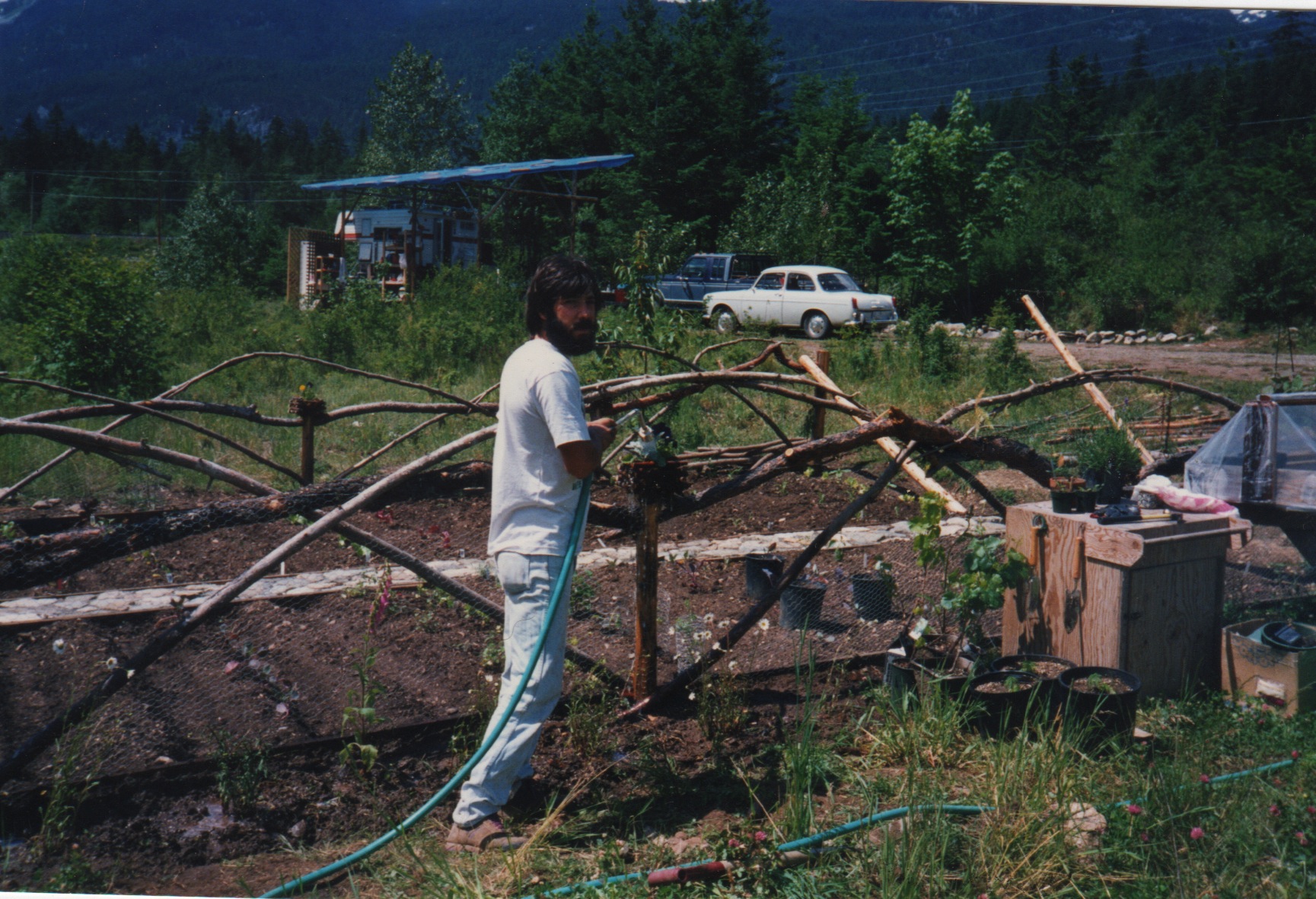
    Scan 16(This is a photo of my first kitchen garden and campsite in my rookie year homesteading circa 1994 )
    The few job postings  I’ve come across for farming are usually for  minimum wage labouring on commercial farms. You might be better seeking one of these positions if you’re not sure about a forever commitment, but I have never seen a posting for my lifestyle, that which I refer to as “Homestead Farmer” as it’s more of a self-employed way of life. So I’ve created a fictitious (yet accurate) tongue-in-cheek ad to provide some understanding as to what is entailed. Unlike most job ads, this one is in-depth and not candy-coated. It’s the good, the bad and the ugly.

    HOMESTEAD FARMERS NEEDED FOR FOOD SECURITY

    PHYSICAL REQUIREMENTS:

    You must be strong, able-bodied, resilient and okay with getting  stinky and dirty. You may work up to 14 + hr days/ 6-7 days a week, 7 or more months/year in all types of weather. There is no set schedule and you must be available at all times. Your hands will be permanently stained and callused, your back sore and you will most likely eventually get a hernia.

    LOGISTICS AND JOB DESCRIPTION:

    You must first acquire a piece of land preferably in the 5 acre range to start. (Finding a nice developed  homestead with the infrastructure and house on it is out of the question unless you inherit one or you have a million dollars). You will need  a 50% down payment on said piece as required by the banks for any undeveloped land without a house on it.  For this you will have to beg, borrow or steal. You will most likely end up with a derelict lot away from an urban centre that needs driveway access, hydro, a well, a septic system, and a landline. You will probably not have cell service or wifi. You will need reliable transportation, preferably a truck. You will have to camp on this land until a cabin is built and services are in (approx 2-5yrs). During this time you will be analyzing your micro climate, making compost, improving the drainage, clearing, brushing, burning, tilling, fencing, testing the soil and water, applying for permits, and most importantly making friends with your neighbours (who you will rely on heavily for info, tools and help, but will have to reciprocate in return).  You will be picking thousands of rocks, and once you think you have most of them, more will surface yearly, forever. Many trees and bushes will need to be planted for future fruit and buffers. Outbuildings such as sheds, barns, and chicken coops will have to be constructed. Salvaging, storing and using recycled building materials will take up a lot of time and effort but will be way cheaper than buying new. There is no course or training for any of this. You will have to learn everything the hard way; through trial and error. You must be able to adapt, improvise and suffer.

    You will need to be resourceful and find side hustles here and there to finance the above infrastructure as production and income will slowly trickle in for many many years. Having a spouse to help is a definite asset, but finding one who will put up with such rustic conditions will be difficult. Keeping one will be even harder.

    Eventually, once you’ve succeeded at producing your chosen crops and developed a niche market (you will already have learned that you can’t do everything or compete with the big farms), you will have to find a way to sell your products. This will involve attending lengthy farmers markets, setting up and maintaining a farm stand and doing cold calls, back door kitchen sales and deliveries. Once you’re at this stage you will have even more overhead in fees, fuel, insurance, advertising and additional help.

    EXPERIENCE:

    Any gardening, landscaping, mechanics, machine operating, tree planting or any labour intensive job experience is a definite asset. You must be able to do mindless tedious repetitious jobs yet also be a jack of all trades and problem solver.

    Post secondary Diplomas and Degrees are worthless other than proving to yourself that you can stick it out on a shoestring budget. It’s also a hindrance in that you will have to explain to your family how you’ve squandered a perfectly good education and professional career possibilities to live in the bush like a hillbilly. Having student loan debt is extremely detrimental.

    COMPENSATION (or lack of):

    Calculating your wage is near impossible and fruitless. If you try to guess, it  will rarely top minimum wage. You can only reap what you sow and that can take a long time or sometimes never. You will always be tight on funds as you straddle the poverty line. You will have to pay your bills promptly no matter what because you will rely on  your credit  rating very often. You will need and replace lots of implements and clothing without a tool allowance. There are no regular or extended medical benefits, injury, sickness or life insurance. Workplace injuries are not covered by WCB. There is no overtime, vacation or stat holiday pay, RRSP, pension fund or severance package. There is no crop loss insurance or subsidies for small farms. Self employed farmers are not eligible for unemployment insurance or welfare. Tips are extremely rare. You will need a well paying second job (preferably with some benefits) to survive the winter months.

    OTHER BENEFITS (the positive):

    You will be your own boss and work unsupervised. You can take ownership of all your failings and keep them secret.Your job will be secure, since everyone always needs to eat. You will be unaffected by recessions and global markets. You will be well positioned for a complete financial collapse or other disasters. You will not be demoted, replaced by technology or out sourced. (You will however be constantly undercut by mechanized agribusiness.)  Once your farm is over 50% cultivated and you have a certain steady income you may apply for Farm Status to receive modest tax breaks on property taxes, fuel  and supplies. You will live a heathy and holistic lifestyle with a sense of purpose and pride. You will become a steward of your piece of land and feel good about working toward sustainability. You will breathe clean air, drink fresh water and eat the most nutritious balanced diet. You be able to take lovely photos and post them on social media, where people will comment on the beauty and bounty that surrounds you. You will network and trade with other farmers for food, tools and help, building lasting friendships. You may sometimes be able to take a few days off (if you get someone to watch the farm) and possibly take a short  vacation between seasons. In the end your children will inherit the legacy of your vision and hard work. If they decide to follow in your footsteps they will be much better set up for success.

    ONLY SERIOUS CANDIDATES WHO ARE WILLING TO DEDICATE THEIR ENTIRE LIFE TO SUCH AN ENDEAVOUR NEED APPLY. THERE IS NO BACKING OUT. YOU WILL HOLD THIS POSITION UNTILL YOUR BODY CAN NO LONGER HANDLE IT.

  • Our 2018 Farming Season in a Nutshell: Part 3 (Late summer/Fall)

    Our 2018 Farming Season in a Nutshell: Part 3 (Late summer/Fall)

    After Juneuary,  (see part 2), July’s weather was seasonably normal, but it was too-little-too-late for many of our flowers and for our heat-loving crops, like the tomatoes, eggplants and peppers.

    We were 6 weeks behind and many things needed 6 more weeks to mature.

    Luckily , over the years we have planted and divided many perennials to fill in the gaps as we waited for our annuals to bloom. We combined these with some natural wildflowers, like tansy, goldenrod and lupines, and were able to put together some nice bouquets for our regular customers.

    We had intended to expand our flower market, but with limited supply, that was out of the question this year. We had planted over 200 dahlia tubers and patiently waited for them to bloom. And bloom they did!

    Due to the weather, our season had become compressed.

    Plants have only goal in life – to reproduce. They bud, flower, fruit and go to seed, accomplishing this in whatever time frame is offered.

    Our gardens, just like wildflowers in the alpine, bloomed all at once, through necessity. So instead of having a staggered harvest, our cherries, berries, veggies, and flowers all needed attention at the same time. Hectic, to say the least.

    Our garlic  and fruit crops, a couple weeks late due to weather, were steadily approaching and we couldn’t keep up with everything else. We did what all farmers do when push comes to shove – we worked our asses off from dawn to dusk. Now we had fresh products for our markets, which of course is another job in itself. Our colorful stand attracted customers like butterflies. Finally we had a decent income stream, even though we had been at it for several months.

    Garlic, being our cash crop, is also our most labour intensive one. Every year, for the last few, we’ve expanded our volume by about 2000 bulbs. We were up to over 12,000 last year. Harvesting, sorting, cleaning and curing, usually takes about 6 weeks, with extra help, at a steady pace.

    Pulling it up can turn into panic if there’s a forecast for rain. After 2-3 days in wet soil  ripe garlic skins decompose, leaving split bulbs which store poorly and affect marketability.

    Murphy’s law of course, proved correct – it rained heavily mid-harvest. As we frantically  pulled the crop out of the soggy ground, we luckily found most of them still intact. Good. Most however were significantly smaller than usual. I did everything I normally did  at all stages with respect to mulching, weeding and fertilizing, and everything looked great above ground. Unfortunately, being a root crop, it’s what’s happening below the soil that matters. I had planted them in a new site that was south facing, but obscured by tall trees to the east and west, resulting in shady mornings and early evenings. This combined with a cool spring must have been the problem. Garlic prefers warm soil to bulb. This size difference didn’t affect quality but drastically reduced yields, yet it was still the same amount of work.

    My biggest concern now is that I won’t have enough seed-grade-sized garlic to replant for myself, let alone sell to other growers.

    I am ironically currently trying to purchase some more.

    I haven’t done the calculations yet, but  we will definitely have a smaller crop to plant.

    After the garlic harvest we immediately proceeded to fruit harvesting. This year we picked most of it in the rain, as we finished off the summer months with the worst September I can remember. It poured rain for 5 out of 6  of our most important market weekends from Labour Day to Thanksgiving. This not only affected sales but also our motivation. Again, we put on a brave face, brightened some people’s day with lovely flowers and pretended farming is always great.

    If our season comes across as all doom and gloom, that’s not the whole picture. We had  quite a few successes. Our huge dahlia patch was a field of dreams with massive blossoms over our heads. We had a bumper crop of berries, which kept our daughter, our highball picker, busy.  Apples and pears did really well and made up for the less than average cherries and plums. Our value-added garlic products, such as powders, are a huge hit.

    Should we measure our season by the weather, how some plants did or from our bottom line? Absolutely not! Any farmers who view their business this way, would soon admit defeat and quit. We are pleased to have a freezer full of meat to eat and trade with, and enough frozen, dried  and juiced fruit to last the winter. We have enough tomatoes , onions and peppers to keep us in pasta sauce for a long while. We have just enough savings to take a short holiday before the snow flies. Success in my books.

    I had to summarize our seven month season into three parts because this chosen profession is so involved and variable. Did I cover everything? Not even close! We have two orchards with dozens of trees and huge berry patches that need pruning and spraying, (organic methods of course), then picking and storing. Regular yard work and landscaping for 6 acres. Composting and amending soil. Tool and machine maintenance. Clearing, brushing, burning and firewood. Irrigation, weeding and succession planting. Renos and maintenance of our large house and outbuildings. Fencing, building a chicken coop and hoop houses. Daily chores such as taking care of 20 layers and 200 meat birds not to mention, slaughtering, butchering and processing them (not fun).  On top of all that, there are the indoor jobs I loathe the most such as marketing, book keeping, ordering supplies, and other paperwork.

    Now, before I think of anything else I’ve missed, I must stop writing because I have garlic beds to prepare and plant. A farmer’s day is never done. If you like a cushy, stable, and risk-free job, don’t even think about being a farmer. Personally, I wouldn’t have it any other way.

  • Our 2018 Farming Season in a nutshell:  Part 2 (Late Spring/Early Summer)

    Our 2018 Farming Season in a nutshell: Part 2 (Late Spring/Early Summer)

    This is the second instalment of Mike Roger’s recap of the rollercoaster farming season of 2018. For part 1, click here.

    So, here we are at the end of April, with a grow room full of tiny, compromised seedlings (see part 1).  Our hydro bill is through the roof and we have a lot of expenses. Most farmers have already tilled up their beds and are starting to plant the hardier varieties outside. We are feeling defeated. Why bother turning the soil if we don’t have anything to plant yet? It’s only an open invitation for weeds.

    In farming, if you’re not an optimist, you’ve already lost the game, so despite it all, we prepare our beds, not knowing what or how much we’re going to grow. We cover the fresh soil with drip irrigation and bio-mulch, a bio degradable plastic film to suppress the weeds and wait for whatever seedlings have survived to mature enough to transplant.

    Our only farm income in the spring is our annual Mother’s Day plant sale. Less than a month away, things are looking grim. Our neighbours have come to count on us to find heirloom varieties of tomatoes and other starts you may not find at the nursery. Luckily the tomatoes fared better than the delicate exotic flowers that we spent a lot on seeds for. Miraculously we had a successful sale, factoring in our perennials such as raspberries, rhubarb and herbs.

    Farming is so profoundly weather-related — the nicer the spring, the better off you are. Well, not in our case. May was extremely unseasonably hot (aka “Maygust)”. We knew we had to get our starts in for the traditional Victoria Day holiday deadline. We literally watched our tiny compromised transplants shrivel in the hot sun. The top of the soil would be bone-dry midday  and watering at this time often magnifies the sun’s rays. We lost even more plants and were forced to direct seed in the blank spaces between the survivors. We also had to resort to purchasing expensive starts from the nursery for many plants we couldn’t wait to sprout.

    Most of the things we focus on growing in our niche market are late season – heat-loving and slow-ripening – such as fruit, berries, tomatoes, flowers, and garlic. June is a make or break month, weather-wise. It sets the stage for yields by establishing buds and  deep roots to prepare for the summer.  A cold spell in June, for some reason, has become common here in recent years. This is fine for those growing brassicas, spinach, radishes and early season crops. During June, however, this weather pattern (Juneuary) lasted the entire month! It seems we got hit worse in Birken than in Pemberton. A few hundred feet in elevation results in a few degrees which can make a huge difference. The general rule is that below 6 degrees C, most plants just stop growing.  The nightly lows were often around 7 in Pemberton and less than 5 in Birken. We were burdened with covering  the plants up at night (with bubbles from the old Wizard chair), something we normally did in April.

    DSC_0021

    Farmers Markets have become big business. There is pressure to extend the season on both ends, regardless of what’s available from the weather dependent farmers. Again, this is okay for cool weather crops and artisans, but not for us. Nonetheless, we have to  book and pay for our markets long in advance.  So here we are into July and we’ve got nothing  fresh for our scheduled markets. Do we just cancel? No! We need money to keep the farm running! We had to somehow pull a rabbit out of a hat. We  quickly made some twig baskets and rustic coatracks (hence the Willowcraft name), packaged some dehydrated garlic and apples, made some vinaigrettes and raided our kitchen garden of herbs and greens. Of course, our stand looked awesome and our customers were unaware of all our challenges.

    In farming, if you don’t adapt quickly, you’re done.  It’s not like there’s a choice. It’s a life-long lifestyle. I wasn’t going to abandon everything and get a 9-5 job to pay for bills. If it weren’t for credit, I don’t think there would be a single farm in existence.

    Stay tuned for part 3, in which we’re overwhelmed as everything ripens at once, and underwhelmed by the performance of our cash crop, garlic. We finally somehow salvage our difficult season finishing on a (spoiler alert) positive note.


  • Our 2018 Farming Season in a Nutshell: Part 1 (Earlyspring)

    Our 2018 Farming Season in a Nutshell: Part 1 (Earlyspring)

    In farming, no two years are ever similar, with hits, misses, trials and tribulations. You often add a few experiments, delete a few duds, and try to improve infrastructure and efficiency. Nature is fickle however, and like anything in life, things rarely work out as planned, you have to roll with the punches and Mother Earth has a hefty left hook.

    This year, we had so many ups and downs I will have to break it into 3 parts: Early  spring, Late spring/summer and Fall

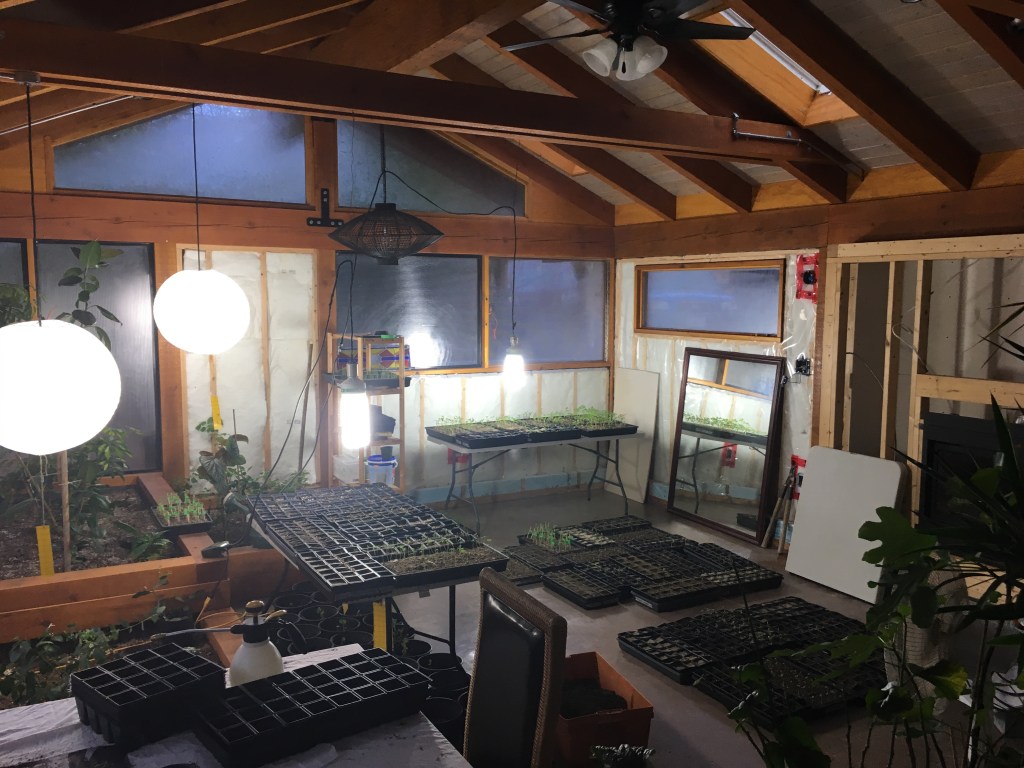
    Our seasons always start optimistically with the first inkling of spring in early March. This year, we were extremely excited to use our newly constructed propagation room, a large solarium with heated floors, grow lights and ventilation. We invested  tons on construction, and more than our usual amount in new seeds, with the intent of going big. We had a line on some recycled potting mix from an indoor commercial operation.  I knew using  outdoor natural soil for indoor plant starts is a big no-no with the possibility of introducing pests or diseases. I felt confident with my score because it started as  certified organic sterilized mix and also sat outside all winter which should have killed any troublemakers and their eggs, plus I had used some before. Most of all it was free, saving me hundreds of dollars in a time that is lean for farmers.

    Our lovely solarium also has tropicals, citrus, coffee, figs etc. As soon as the temp rose , the aphids, whose eggs overwintered on these plants, hatched. Problem number one. We quickly tried to control it with insecticidal soap, but couldn’t keep up. With organic methods, you have to work as many angles as possible – you can’t just go out and buy some strong poison and kill everything in one shot. We tried jets of water and vacuuming, but still couldn’t keep up. We became concerned when these little creatures found the tender sprouts of our seed starts. We purchased 3000 lady bugs and let them do the work. They eventually worked but some damage occurred and we had to re-seed a lot. This was early in the game, and we weren’t too upset. We still had plenty of time to recoup our losses.

    Fast forward a week or two, and we noticed the seedlings are dying off . We get out the magnifying glass to check for bugs: none. Good. We assumed the plants are damping off, a condition that often occurs in wet, cold soil. We cut back the watering and crank up the heat. This only made the situation worse. Eventually we noticed tiny fruit flies hanging around the plants. Problem number 2. This was perplexing as there was no fruit anywhere and the sprouting vegetation was fine. These plants were dying from the ground up. Oh no! Fungus gnats! These flies are harmless, but their larva were eating the roots faster than they could grow. The damage had been done before we even diagnosed the problem. Those thousands of flies were laying tens of thousands of eggs in the soil. Now what? We called the company that sold us the ladybugs and ordered a bug with a fancy name that eats gnats. We had luck with biological controls (that’s the term when you introduce something natural to control a pest) with the ladybugs vs aphids, so we were confident. We disposed of the trays, re-seeded again and released thousands of these critters all over to deal with the gnats. We didn’t really know yet how these gnats were introduced and assumed they also overwintered on the tropicals in our above freezing solarium. Time was running out on our seeding window, but still felt we could pull it off.

    Unfortunately this didn’t work as well as planned. The control pests didn’t multiply as fast as the gnats. The flies kept on hatching which meant the roots were still being eaten.

    But where the hell did these bugs come from in the first place? I called the person I got the recycled soil from and asked him if they ever had issues with fungus gnats. He shamefully replied yes, but hadn’t mentioned it at the time, assuming everything would have frozen to death as it sat outside all winter. A quick google search on gnats revealed they have a natural antifreeze in their eggs and larva that can withstand warm winters.

    This dilemma kept me up at night: a large part of our farm income – annual flowers, tomatoes, herbs and veggies, was seriously jeopardized. There is no insurance for this type of thing. I scoured the internet for any solution. One was to douse the soil with diluted hydrogen peroxide (suitable for organic standards). This worked a bit, but not totally as it also killed the control pests in the soil. Now I was back to square one and there were still gnats flying around ready to lay more eggs.  I tried some other control bugs, but they took a few weeks to hatch! No time to waste! I was frantic.

    Next possibility was nematodes – another control bug that lives in the soil. They are expensive, and our seeding budget was getting tighter. I got some leftovers from a friend, but they were out of date. I had no time to rely on something that may not work. Last option? An organic mosquito control for small ponds that apparently works on gnats. This was affordable and I just kept dousing the soil every couple days. It seemed to be working but not after losing thousands of seedlings.

    Now that we knew the source of the problem and a  had a solution, we had to get some fresh potting mix and re-seed for the 3rd time with whatever seeds we had left.

    We were now far behind schedule, but like all farmers we kept ploughing through on a wing and a prayer.

    Come back for part 2 (Late spring/summer), in which I will describe how the weather further shit-kicked us.

  • Irrigation Irritation. Don’t raise your plants to be spoiled brats.

    Irrigation Irritation. Don’t raise your plants to be spoiled brats.

    Someone once asked me when the best time to irrigate was. My cynical answer was when it’s raining!

    Technically the best time to water is before plants get thirsty and this is usually the morning. Watering in the evening is less ideal, as it leaves time for mould and diseases to develop. Simply sprinkling after a hot day is better than nothing, but no more than a band aid solution. Besides keeping seedlings constantly moist, the general rule for established plants is water “deep and infrequently” — kind of like an old married couples’ lovelife. But seriously, the average rainfall soaks in a just a couple of inches, so you can’t really count on it. So watering in the rain makes sense, so you can pay more attention to the younger shallow rooted vegetation when the weather clears up.

    Different plants have different water requirements, and this too changes throughout the season and its life cycle.

    Blueberries, for example, are a shallow rooted bog plant and love as much water as you give them. An established fruit tree, on the other hand, can have a root system as big as its crown, and may only need a good soak in a dry spell. Also, if you spoil your plants with constant watering, they will do what spoiled kids do for themselves… very little. You must let your plants search for that deep water, which is also where the most minerals are. Also a slightly stressed plant will tend to produce more, thinking its reproductive cycle is in jeopardy. This is a fine line that good gardeners closely monitor.

    On the most basic level, plants need three things to survive besides light, a daily given. These are air, nutrients and, of course, water. Without water, there is no life whatsoever. Water is essential for delivering the nutrients to the roots.

    Too much water for too long will suffocate the plants by filling in the air pockets in the soil. Too little and the cell walls dehydrate, causing wilting. Prolonged or frequent wilting will compromise or kill your plant.

    Automated sprinkler systems are great for the suburban landscape and lawn, but are not practical for the small scale hobby farmer over several acres. A good gardener has an  intimate relationship with his or her dependents’ needs. As I mentioned previously, these  watering needs change from plant to plant and season to season. Grouping plants with similar watering needs is wise. Automation is convenient for a small area if you’re going away for a bit, but it’s like leaving your teenagers home with a stocked fridge. I prefer drip systems — they conserve water and you can let them run for a whole  day to get that deep watering. Overhead sprinklers are prone to clogging, evaporation, uneven distribution, wind and even sun damage from magnifying the water droplets.

    Growing plants is often like raising children. They need lots of attention when they are young, but eventually you need to quit spoon-feeding and let them find their way. You should still check on them when they’re grown up and offer a care package every now and then.