Tag: helmets organic farm

  • Farm Story: The Biodynamic Ice-Break

    Farm Story: The Biodynamic Ice-Break

    Would you mind if we talked about Biodynamic farming?
    LEX158_Biodynamic_FINAL_FIXED-5715

    There. That’s how you keep your readership small. Those of you still with me have fought through eye-glaze and eye-roll and have resisted page turn. You will notice that even I am struggling a bit to stay on topic, and if only you could see the amount of squirming and fidgeting I am doing as I try to find the right way to write about one of the more under-simplified and over-complicated farming methods of our time.

    There is no way around this fact: Biodynamic farming methods involve focussing the power and influence of the entire universe on the health and productivity of the soil, plant, farmer and consumer. The sun, the planets, the galaxies beyond ours: they all matter. The position of the moon matters. It’s complicated. It’s off-putting.

    Screen Shot 2019-03-11 at 3.24.48 PM

    And yet, quite simply, it works whether you understand why or not. In fact, the less time sorting that out, the more time there will be for actual work and that is what really matters.

    We do need to talk about it, though. Biodynamics is an approach to farming that combines science, philosophy and common sense and it should not be avoided. Something like this could easily become the future of farming.

    You should know that it is a popular farming method in Germany, which has the highest concentration of scientific-minded farmers in the world, a fact I completely fabricated but which I believe could be used for emphasis without harm. I have (in actual fact) heard German farmers speak in excruciating scientific detail about soil science and crop management and then mention in a self-consciously off-hand manner that they also use Biodynamic preparations. Pressed further, they become extremely and remarkably vague about the details. I find this fascinating: farmers like that would not waste their time with something that wasn’t working.

    Our farm has been Biodynamic in practice and often certificate since the mid-nineties when my parents attended a conference on the subject and were impressed with the practical experience of the speakers. We have slowly incorporated some methods into our farming practices- and avoided talking about it as we really don’t understand it well enough to explain.

    slow food brochure (C) MC Bourgie 006
    Photo courtesy MC Bourgie

    To be honest, I really have not been paying much attention to the whole thing, content to let my parents and sister tell me what to do. It seemed more important to learn things like welding, mechanics and fertility-building cover-crop management. Although I have certainly not mastered any of that, I have gradually pushed Biodynamics up higher on the “things-to-learn-that-will-probably-be-helpful” list.

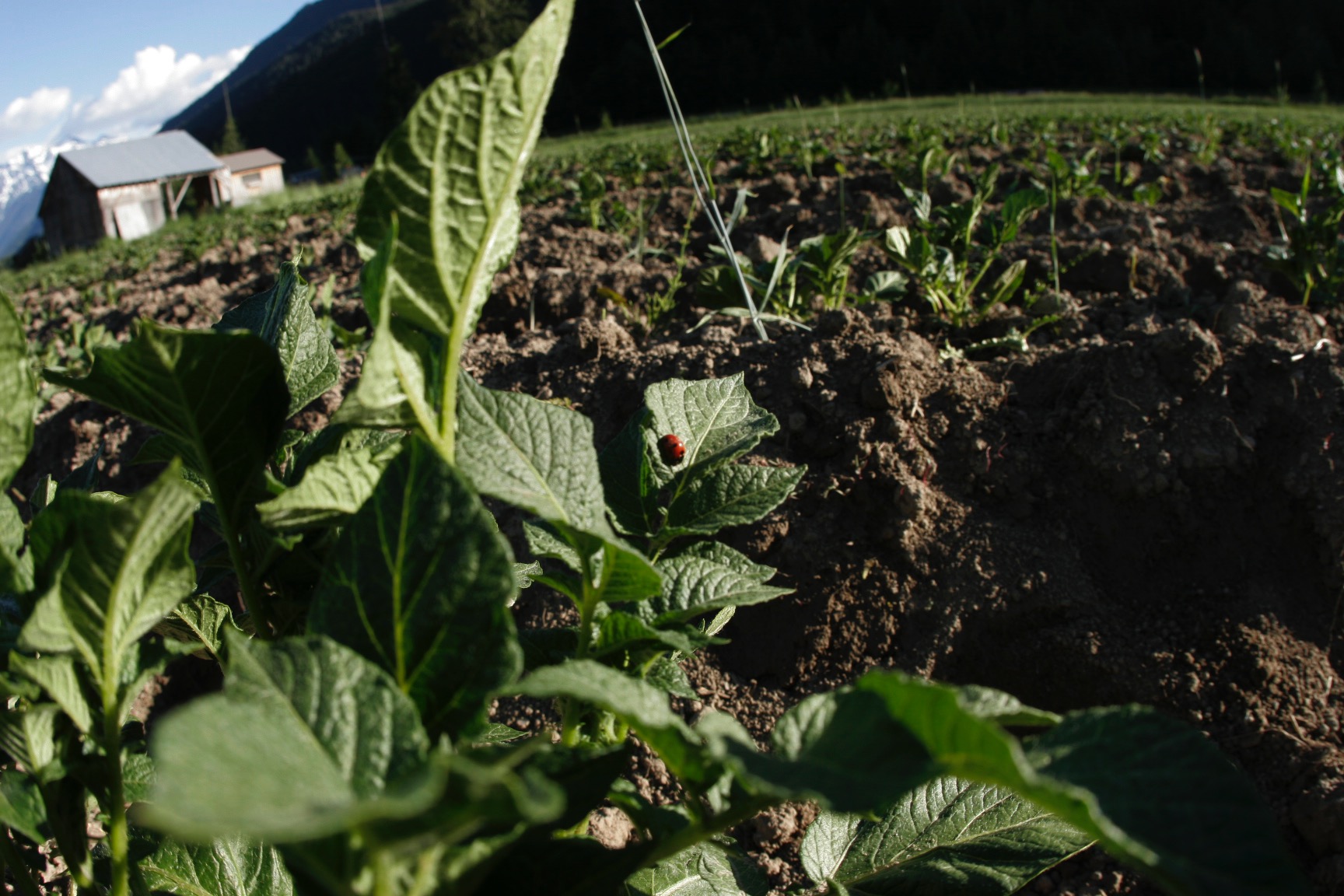
    Some Biodynamic practices have been incorporated thoroughly into our farm routine. Mom’s Biodynamic compost heaps, for example, could probably turn old cars into nice, rich, loamy soil. Tree branches certainly presented no difficulty. I follow her directions to build the heap, and I add the preparations (yarrow, chamomile, nettle, oak bark, dandelion, valerian) and marvel at the result a few months hence. It seems like magic, but really it isn’t.

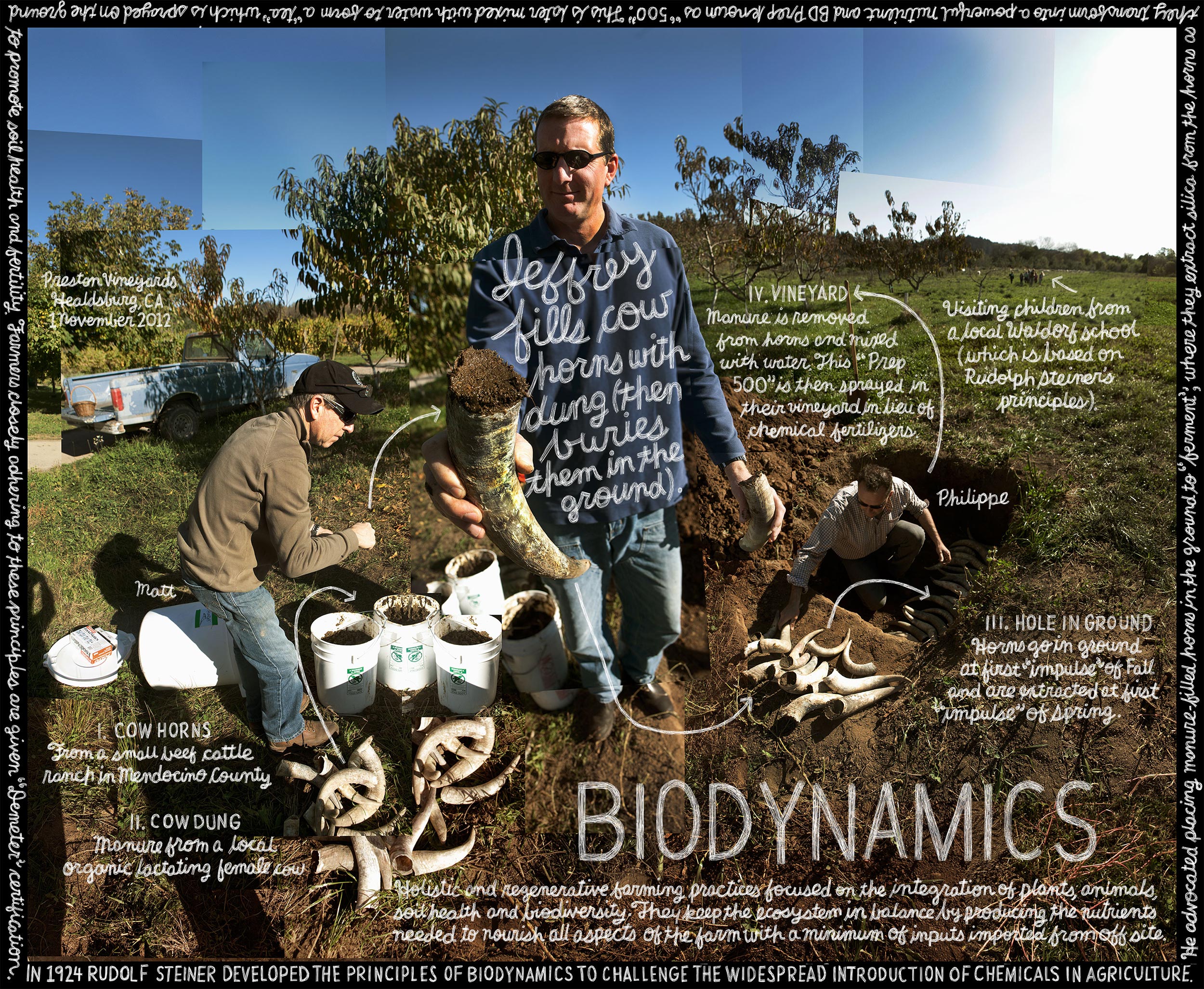
    My sister annually buries cow horns stuffed with manure and that becomes the preparation we apply to the carrot field every year. It’s very simple: if we do it, we get great carrots. If we don’t, they are normal.

    My mom boils it all down quite nicely: it is a fun way to farm.

    Our Biodynamic practice does not extend far beyond this. It really should, or at least could. It is time to experiment with a few more methods, acquire some knowledge, become conversant. Most of all, I want to write about it in a way that can be easily understood. Is that possible? Can we keep it fun?
    slow food brochure (C) MC Bourgie 008
    Photo: MC Bourgie

    I am starting at a very, very basic level of celestial understanding. This point cannot be over-emphasized. I cannot even tell you for certain what my birth sign of the zodiac is. I just never found it important. In terms of blind faith however, I am on more solid ground. I can “witch” water wells, for example, and fully support the protection of random wild areas on our farm because grandma said there were a lot of fairies living there. I guess the fact that I now believe with absolute certainty that it is quite likely that plant health is influenced not only by the phases and position of the moon but the universe beyond isn’t such a stretch after-all. You commoners will have to struggle to keep up.

    My first self-assigned task has been to read the original lectures, delivered in 1924 at a German agricultural convention by Rudolph Steiner, a philosopher with a practical bent who is also known for starting the Waldorf school system. This I am doing until the snow melts and I don’t have time for reading anymore. Looks like I might be able to make it through the whole works.

    Contained in a book called Agriculture, the lectures were commissioned by a group of farmers who had recently begun to use chemical fertilizers. Although the yields of certain cash crops were reaching unheard-of levels, they noted a significant decline in the health of their soils, and the overall productivity of their farms. Alarmingly, they could no longer produce very much at all without the use of the new chemicals.

    So far, for about 95% of what I have read, I have not a clue what he is talking about. Every once in a while, however, he talks about potatoes, and I certainly know what they are. They are the hook that keeps me focussed. I keep reading, hoping he will mention them again.

    Another point of light is his reasoning for considering the universe in the first place. You can’t describe a person based on the last joint of their little finger, nor describe a farm using one plant in the far corner, but they are strongly related to the whole. If we allow for the possibility that we are the little joint of the little finger of the universe, if becomes obvious that there is a lot going on that matters to us.

    We are part of something much bigger.

    Stay tuned for the next exciting installment. I am going to be building compost heaps and seeding celeriac at a time suggested by the Biodynamic Calendar: the sun will be in Pisces and the moon in Virgo. I don’t know what this means but hopefully the plants can sort it out.

    Anna Helmer farms potatoes in the Pemberton Valley with her family and friends who know she can cook if she must.  
  • It’s time to talk Farm Fashion

    It’s time to talk Farm Fashion

    The time has come for a column on farm fashion. All the chick farm columnists eventually get around to a “what to wear” piece, don’t they? This one is all about what happens when fashion is slave to function and haute couture ain’t in it.

    When choosing an outfit for the day, I consider the potential for getting dirty, wet, cold, greasy, dusty, sun-burned, heat-stroked, or photographed for Elle magazine.

    Helmers1_S6A3181
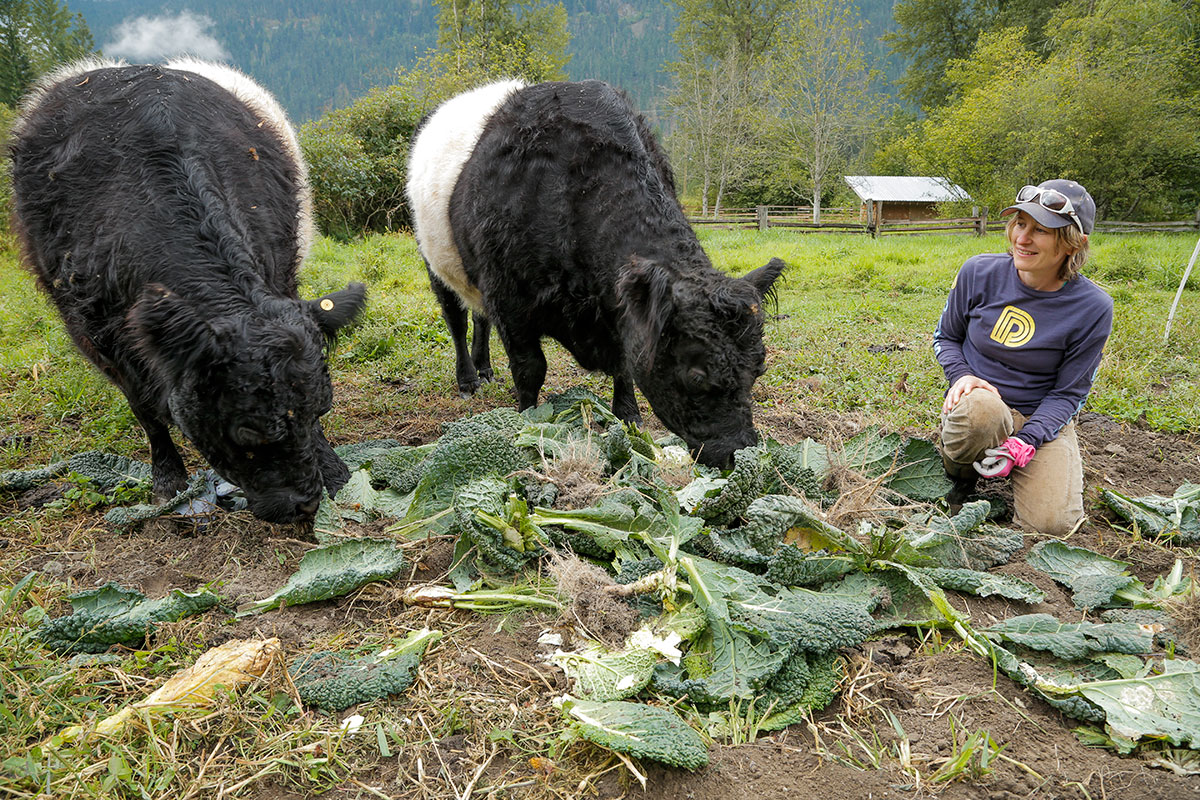
    The cows have very exacting standards. In forage. In fashion, they’re a bit more chill. Unless, of course, you’re wearing leather.

    Evaluation complete, I don yesterday’s work pants, (hopefully, but unlikely) complete with small crescent wrench and pen-knife in the pockets, clean work shirt, work boots (rubber or leather), and make obvious weather-related adjustments. A seasonal ball cap or toque, with occasional forays into wide brimmed sun hats, offers warmth, shade, and hair control. I don’t bother with make-up.

    There are two items in my functional farm-chic wardrobe to which a more detailed examination is due. They score particularly low on fashion but shoot the lights out on functionality; a by no means unusual description for just about everything I wear out there. Let us then consider coveralls, and the mosquito bag net.

    13124927_10153945295231311_8492489048310326032_n
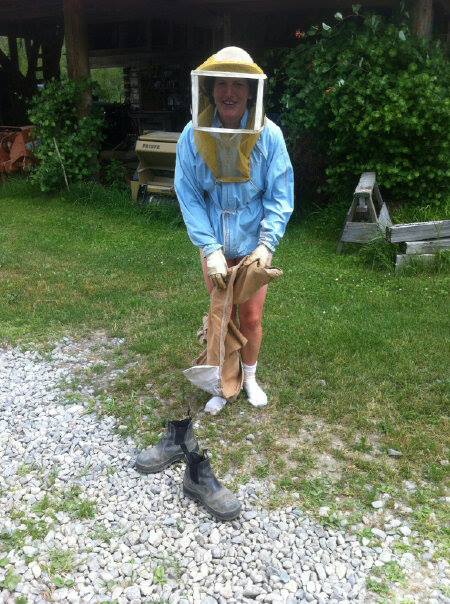
    Anna Helmer gets into her bee-suit, and someone takes a photo and puts it on Facebook.

    Until I went to welding class in the city, where we were required to wear coveralls, I had decided against that look for myself.  I tried wearing them a few years ago and felt about as alluring as an old hockey bag. Never having been what you might call an instinctively feminine dresser, I felt wearing coveralls would sever completely any connection to my embattled femininity. I had to draw the line.

    In welding school I was not given any choice in the matter and I initially bemoaned my baggy figure. Eventually however, I noticed that my good jeans (worn mistakenly to class) stayed clean, protected by the Big Blues (pet name for my coveralls) which got sooty and smoky. Perhaps, I began to think, there was yet wine to be squeezed from this stone.

    rootdown-organic-farm-2
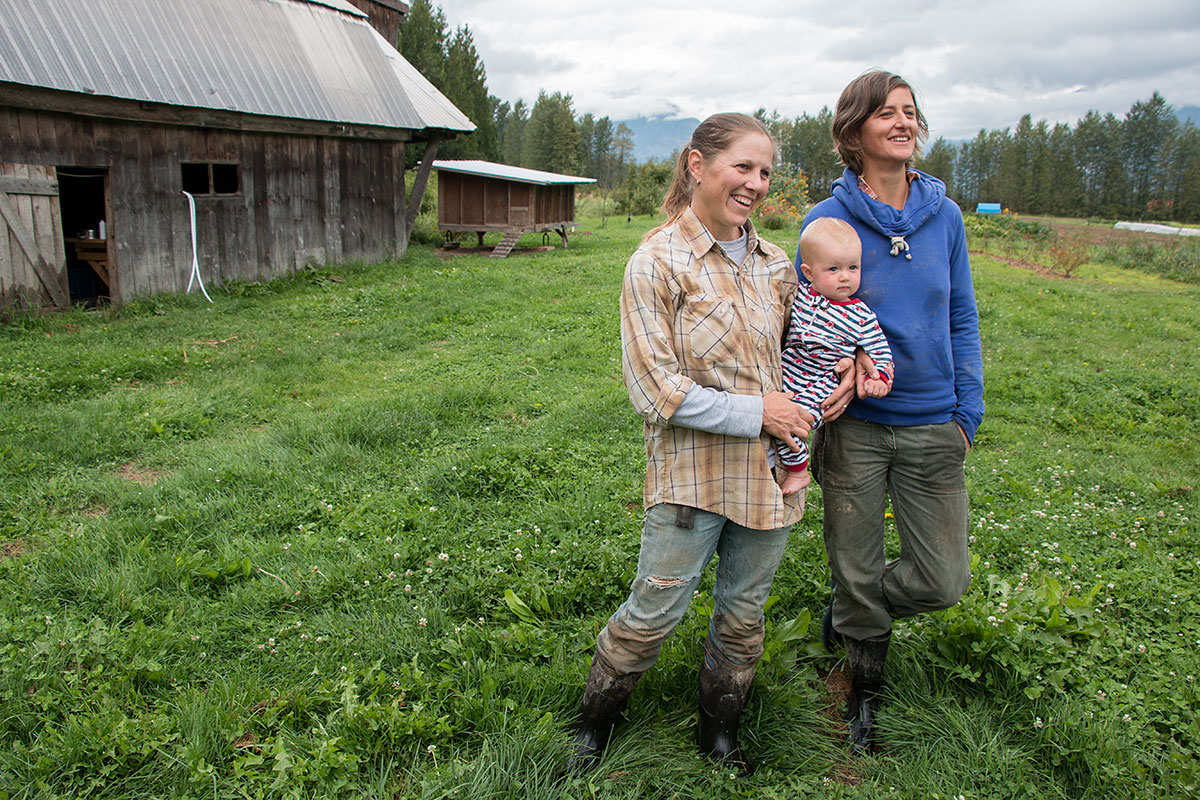
    Sarah and Simone from Rootdown Organics demonstrate the key farm fashion accessories: soiled pants, rubber boots, cute baby who is actually in charge.

    I have come to realize that the coveralls represent a new opportunity for me. I can stay a little cleaner on the farm, and not arrive home resembling a diesel spill in a dust bowl. Not only can I look presentable at the end of the day, but if Elle magazine does happen to show up for a photo shoot, I can be assured of a clean outfit underneath. They will still have to bring their own make-up person.

    plentywildheader
    Alyssa and David from Plenty Wild Farms must have had enough time to shower before their photo shoot. Do farmers really ever look this clean when out in the fields?

    Turning now to the mosquito bag net; my choice for most essential farm fashion accessory.

    In my net I am bug-free; I blithely disregard the scornful sniggering of other slaves to fashion on the farm, slathered as they are in dodgy chemicals, and/or in a high state of denial over the level of torment they endure as bag-less labourers in mosquito country. There is no bigger slap in the face to high fashion than dropping a bag over your head, but neither can I countenance flies in my eyes.

    acrosscreekheader
    Bruce Miller models the ultimate in Pemberton farm fashion, the Slow Food Cycle Sunday t-shirt.

    To conclude, it would be nice to point to an item in my farm wardrobe that is more fashion than function, but I am at a loss. I suppose my pink John Deere ball cap tilts the balance slightly in favour of glam, but looses ground as its grubbiness increases with every passing day of summer. In an uncharacteristic eruption of reckless consumerism, I have purchased a brand new one for this summer.

    Anna Helmer believes farmers are under-represented on the fashion run-way but sort of sympathizes.

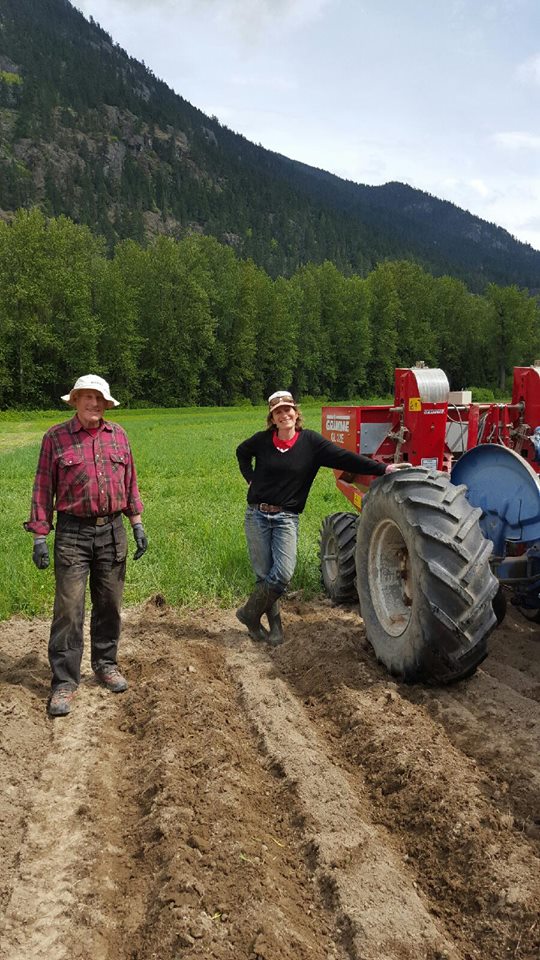
    Not being able to stage a photo shoot of Anna’s farm fashion moments during planting season, we’ve poached these illustrative photos of Pemberton’s organic farmers in their sartorial best, from BeyondYourEye.com photography, via the BC Organic Farmers.

  • Anna Helmer’s Farm Story continues

    Anna Helmer’s Farm Story continues

    Deep winter confessions of lavish plan-hatching and mild delusions, meet work in someone else’s root house. (Just don’t call it mindless.)

    A farming luxury: to lavishly plan the work of the coming season when there is no chance of starting any of it for at least two months. Cue careless disregard for work. Sloppy accounting of work requirements. Expansive imaginings absent anything but the faintest work alarm bells, easily ignored.

    The carrot crop proposal, for example. With a foot of snow on the ground and the clouds heavy with more, it seems totally reasonable to be planning to plant 2 acres of them this summer. The chefs are asking for more and the customers say they are the best at market. Ergo the ego demands, therefore the farmer plans, hence we can ignore the actual work involved. 2 acres. At least.

    I am not totally unaware of how things will unfold in real life. There will certainly be a privately raised eyebrow when enthusiastic planning first encounters carrot reality and the 5-gallon pails of seed start showing up sometime next month.  Second thoughts will come flooding in, assuming they haven’t already, when I find myself still seeding well into the evening come that day in June. Assuming (again) that I follow through with seeding the entire 2 acres, the subsequent weeding and irrigation requirements will cause heart palpitations in July and August, and the harvest will be frankly sobering, or perhaps borderline terrifying, because it will take for freakin’ ever to get them all out of the ground. And exactly one year from now, on a snowy day in mid-February, there will be tears because by now the unsold remaining crop will be sprouting hairs and getting soft in storage.

    For now, however, it’s a really clever and enterprising idea, worth pursuing and budgeting for. It’s even spawning tangential plans: a cooler expansion. My optimism knows no limits. These days are golden.

    To stay in farming shape, to maintain my farming bona fides now that markets are done for the season, and basically to keep it real, I am moonlighting as a forklift operator at a local seed potato farm, which is not as glamorous as it sounds.


    More precisely, I am stationed at the end of a seed potato sorting conveyor line and every 15 minutes I get to hop on an electric forklift and pick up a 2200lb sack of Red La Soda seed potatoes. I take it to the scale. If it’s too heavy, I remove potatoes; too light and I add them. Weight confirmed, I check that I remembered to slip the tag into the attached tag-holder and I move the sack to the collection area. That done, I return the forklift to the ready position and help my work partner manage the next bag. Twenty-two sacks make a full load on an 18-wheeler. It takes about a day to get it done, if nothing breaks down. It is unusual for nothing to break down.

    I like working on other people’s farms because I love considering a mechanical time-out to be an opportunity to get a walk in the sunshine. When they occur on my own farm, they can be expensive, disappointing and dreaded.

    It really goes on and on, doing the same thing over and over, with one hour for lunch. In these circumstances, a good co-worker makes a very positive difference. I have just the guy. His good humour rarely falters – the one time it did, he had an orange and was completely restored. The other thing I liked was that he never stopped trying to do a good job. There are a lot of challenges to managing 2200lb of potatoes every 15 minutes, none the least of which is staying focused, and we worked as hard on the first bag as we did on the 22nd.

    I am going to stop you right there before you call this mindless work. It is not. I think that phrase was floated by someone who could not handle the pressure of coming up with his/her own stuff to think about. (S)He panicked, quit, and branded it mindless.

    It is not mindless. Once you have sorted out the physical aspects of what you are doing, your mind is free to be engaged. How do you think this article got written? Still and all, it can be nice when there are breakdowns to liven up the day.

    So. Work. Thank goodness I have some to do or my theoretical planning for the summer might be absent a whiff of reality and I wouldn’t want that.

    Anna Helmer wrote a slim volume and put it on Amazon where it is a best seller in that category.

    Portrait by Maureen Douglas.