This week before our Pro D day experience at Nurture in Nature, I wandered the farm, asking what it would offer the students of the day. I happened to find a bunch of baby pumpkins leftover in our pumpkin patch! That just might do the trick…
Sure enough, when our students arrived Friday morning, they were ecstatic about making a pumpkin pie- from scratch!! So, after the normal chores of the farm, which as they will all tell you include making sure the chickens, ducks, and pig have food, fresh water, and a clean habitat, we set off to find these baby pumpkins left in the field. As you can see in the picture above, one student is showing off the bonus duck egg he found in the coop on the way over too!
Preparing the Ingredients
We cut the pumpkins in half and scooped out the seeds. We saved 15 seeds to ferment in pulpy water for 10 days so they would be ready to germinate next year, and set the rest aside to roast as a snack. Then, we coated our pumpkin in olive oil, cinnamon, and nutmeg, and set it to roast for 45 minutes at 400 degrees.
45 minutes to spare… well, every time we take a pumpkin (or anything else) from the field, we take away all those nutrients from that environment forever. What happens if we do this over and over without ever giving back? Soil turns to dirt. Theres nothing left. So what can we do to prevent that here? Feed the soil- with compost and leaves!!
Of course, feeding the soil means playing in those leaves first!
So after a little weeding and moving some leaves, and lots of laughs, ding! Back to pumpkins!
Recipe
Now that the pumpkins are roasted until they are soft and easily separate from their shells, we scoop out the yummy insides and put in a bowl:
-2 cups pumpkin
-The recipe calls for 3 eggs, who can get those from the chicken coop?
-1/4 cup brown sugar
-1/4 cup white sugar
-1 TBS cornstarch
-1/2 tsp salt
-1 1/2 tsp cinnamon
-1/2 tsp ground ginger
-1/4 tsp nutmeg
-1/8 tsp cloves
-1/8 tsp pepper
– 1/2 cup milk
And mix away! I mentioned that you can put this in a blender for a smoother finish, but I like the way with a hand mixer, the little chunks tell that this is a pie made from real food. Roll out your pie crust, I’ll save that recipe for a later date, then cook at 400 degrees for 15 minutes, and at 350 for another 45. So that means we have another hour to learn about how to always give back more than you take!
And so, that’s our recipe, and how we spent a mostly chilly, kinda rainy, day at Nurture in Nature Community Farm. I hope you get to make a pumpkin pie too!
We are fortunate to have a freezer full of moose meat from the Yukon. A beautiful moose that my spouse and his sister bagged in September (after 3 unsuccessful hunting trips in the past few years).
So we have moose sausages and stew meat and, of course, ground. I was craving meatballs so I searched my cookbooks for some recipes. One recipe from Sheila Lukins’ All Around the World Cookbook – called for allspice and nutmeg. No thanks! I do not enjoy nutmeg at the best of times, and certainly not in my meat.
So I charted my own course.
My thoughts on wild game are that one should not try anything too wild. The meat is wild, so when experimenting, go tame. That said, pecorino is a sharp and dramatic flavour but it worked. (I want to take a moment to thank the AMAZING Pemberton Valley Supermarket that always has pecorino in stock. PVS – you are the BEST.) As for spices, I went for dry mustard, paprika, S&P, oregano and basil – and not too much of any. And of course parsley. I rarely make anything that does not call for parsley or cilantro, my faithful culinary companions. When I do not have any of these two in my fridge, sure enough, I embark on a recipe that calls for one of them. So those two are always, always on my grocery list. Serve these meatballs with Pemberton mashed spuds and some broccoli or another green veggie. A good and satisfying fall dinner! Fall cheers to the hunters and the farmers! And thank you to Lisa always for being the amazing host of this food blog site!
Method: put all ingredients, except for olive oil, in a large bowl. Mix well and form into 1 tbs balls.
Heat 1/3 cup pure olive oil in large skillet with sides at least 4 inches high (oil splatters). Heat oil on medium heat. Gently place meatballs in pan. Do not rush but gently rotate the balls so they brown and cook thoroughly.
Serve with Pemberton russet mashed potatoes and a green steamed veggie. Enjoy!
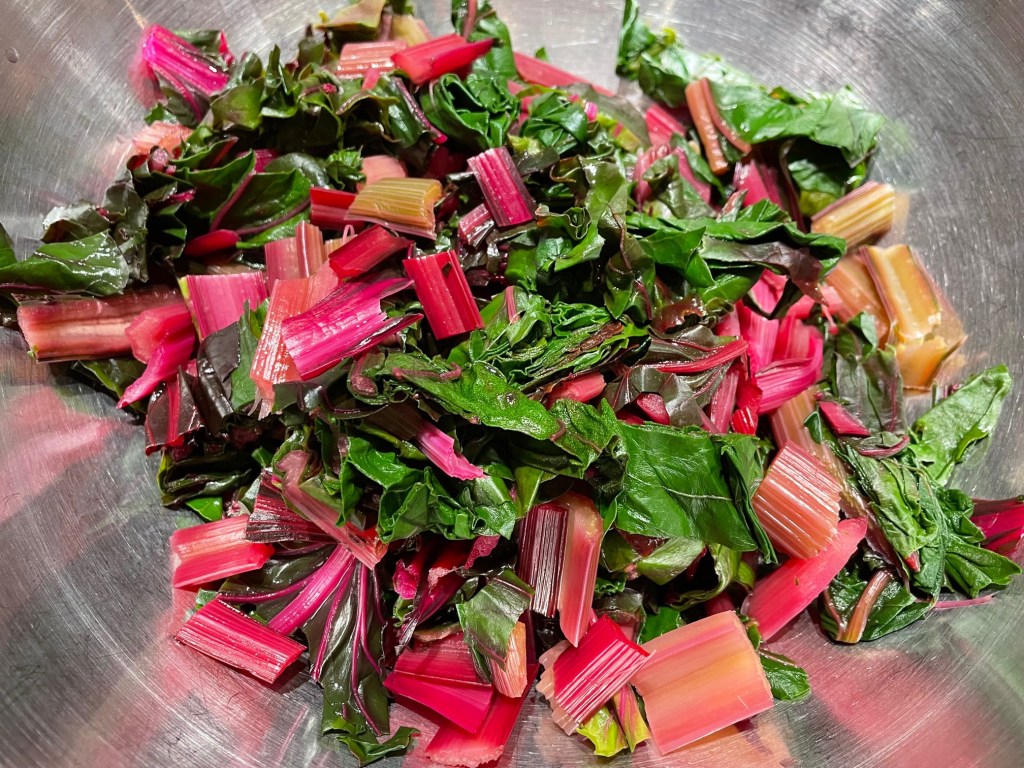
Back at home after most of the summer on the coast, I am now blanching and freezing veggies from my in-laws’ garden. Chard and zucchini. The chard is a welcome addition to my chilli recipe, as well as the deer lentil soup that I make regularly in winter. The zucchini does an amazing job of fibre-ing up chilli, shepherd’s pie and other soups.
I have mentioned blanching before but I wanted to share my storage technique which I just came up with. Instead of using medium ziplock bags for each portion, I decided to get away from the plastic and wrap 2-cup portions of chard and zucchini in parchment paper. I fold the parchment around the 2-cup portions and once wrapped nicely, place them in a large labelled ziplock. Thus, the ziplock stays clean and I much prefer my freezer food to rest on parchment paper. This is going to greatly reduce my use of ziplock bags, yet I still have the large freezer-weight ziplock to protect the food. As I work to de-plastic my lifestyle, I still want to have convenience and I think this technique will be useful.
Happy fall preserving everyone! (The next level up is canning – we will see!)
Much is conjured in the kitchen, over the steam and bubble of a jam pot – sweet anticipation, yes, I am bottling summer, but also, curiously, a deep lament, for the fact that I am learning this out of a book that I must return to over and over, attempting to land the instructive words, like wily fish that dont wanna be caught, to drop head-knowledge to the dock of deep muscle memory. And my bones ache for the lack and the longing, that this is not second nature, that every year, it still feels foreign and fraught. That it is not bound in apron strings of beloved mothers, aunties, grandmothers…
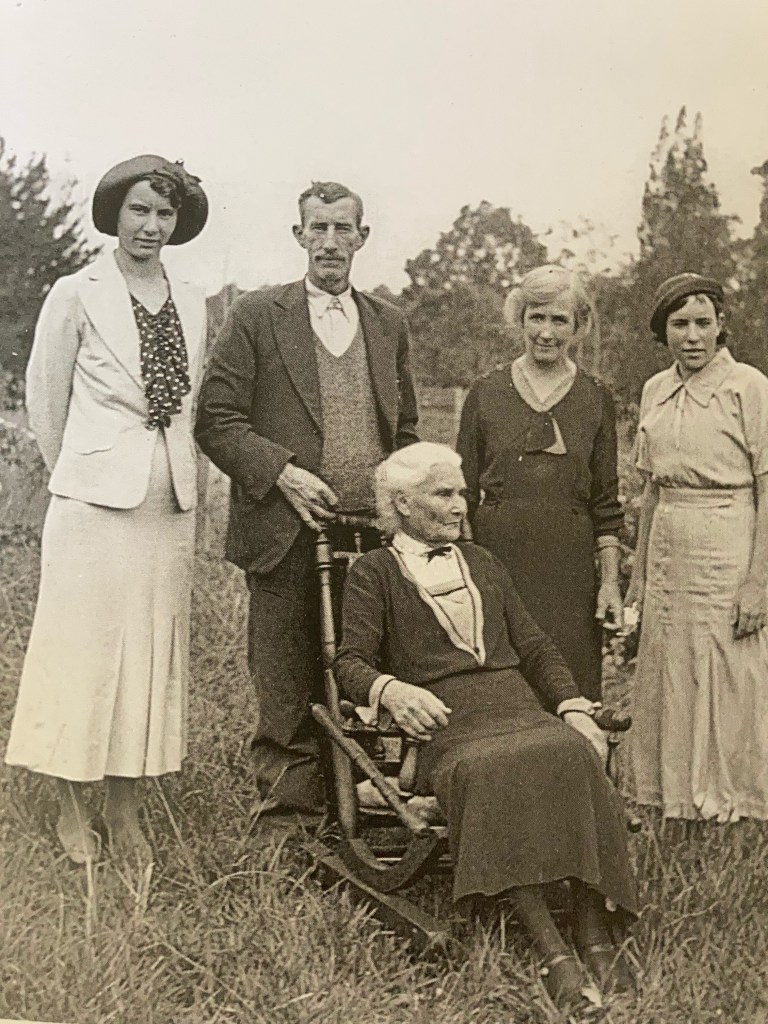
I sense all the grandmothers watching, mysterious women, unknowable stories, knowing I am downstream of the broken chains of transmission, of lands left, or of things survived or left behind or not passed on or not sought out. Of stories not treated as inheritance. Of recipes not recognised as legacies or spells, able to conjure us back into connection.
my mysterious matriarchs (from left to right): great aunt, great grandfather, great grandmother, grandmother, and seated, great great grandmother
Are they cheering or tut-tutting or intervening with whispers, or wishing that they could?
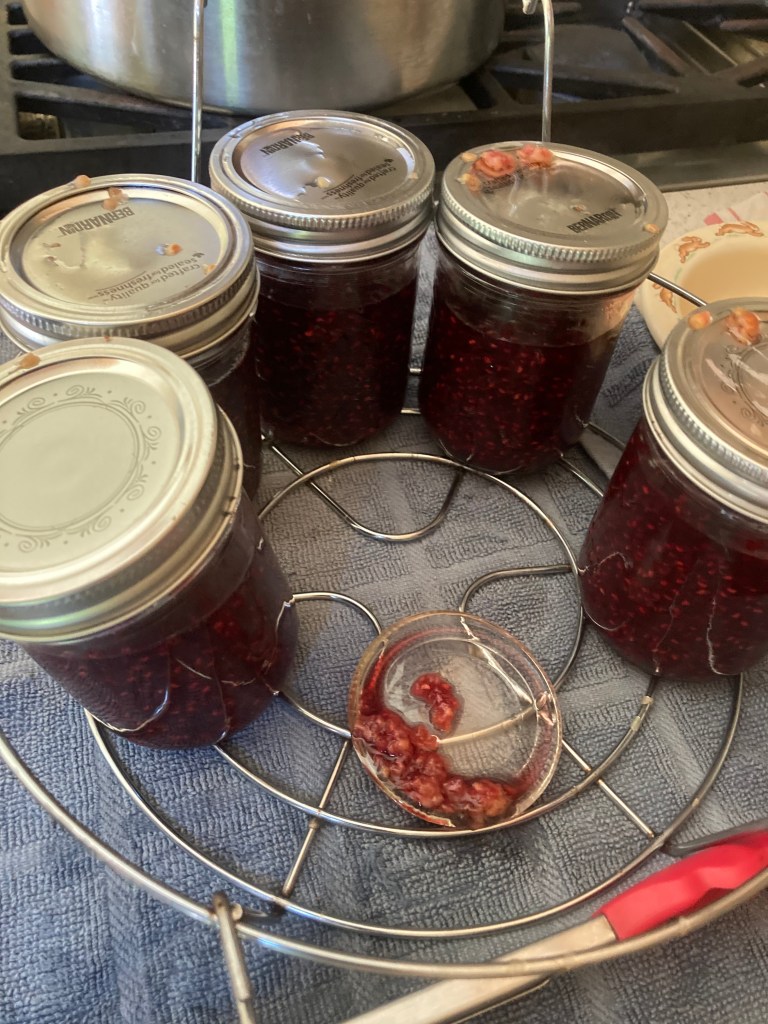
Who knows what they’d think when, after lowering the rack into the broil of water that has steamed up the already-too-hot-house and raised the temperature by an unwelcome additional two or three degrees Celsius, the bottom of one jar shears right off, and the emptied out vessel floats like a dead fish to the top, and the rest of them are then water-canned in a purplish soup with bleached out chunks of raspberries burbling around that look like someone’s puke.
What would they say? or want me to know?
I am trying to teach my son to be a problem-solver, to look at disaster or blank sections as problems so solve, instead of inevitabilities or failures or freeze frames or dead zones, and perhaps that is what they care to see: that we keep trying.
We, who move forward, who are the living garden of their DNA, the repository of their dreams, are teaching ourselves, are asking for help, are finding allies and guides and cookbooks and tenderness, and trying to send that tenderness, that resourcefulness, that regenerative energy forward, and backward through time. That we may know that this is the flavour of the season, of the first harvest, of Lammas time – the sweet and the sour… the fruits of our lives, the tang of our skins, the shape of the places we’ve grown out of, the shapes we make with ourselves.
I have a weird inability to throw old jars into the recycling bin. Instead, I tuck them in the drawer, for future use. (And every now and then my partner silently stages a protest slash intervention and culls them all. And I start over, undeterred.) There is some part of me that believes we are going to run out of jars, one day, globally, as a civilization, and my foresight will mean I have plenty of storage devices that smell faintly of decades-old peanut butter or salsa.
Dr Mehdi Serati from UQ’s School of Civil Engineering said the amount of sand in the world was finite, so ingenuity was necessary to solve the problem of a looming shortage.
“If we don’t do something about sand depletion at a global scale, our grandchildren are not going to see sandy beaches,” Dr Serati said.
“Over the past 20 years the cost of sand has increased by six times, and it’s the second most consumed natural product globally, after fresh water.“
I’m Australian, so sandy beaches are sacrosanct. Life in Australia doesn’t make sense if there are no sandy beaches. It’s just unimaginable.
And so, I merrily hoard.
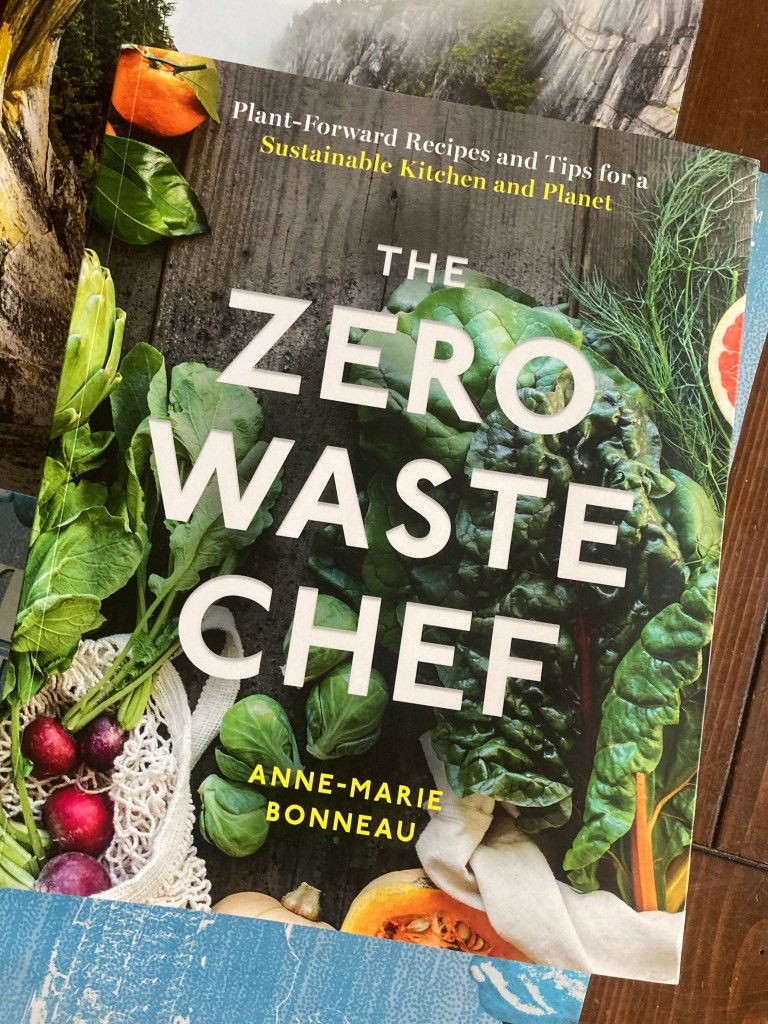
Which means I was even happier this week when the Zero Waste Chef book arrived in the mail.
I’ve been following Anne-Marie Bonneau on instagram for a while. She’s core. Super core. She knows how to make ginger beer from ginger bugs from ginger, sugar and water. She knows how to make kombucha. She’s an evangelist for sourdough and fermentation, calling “Fermentation an act of defiance against our broken food system.” All the things I’ve been learning about, she’s the resource.
“I’m not claiming that fermentation will save the world. But preparing food this way does put us more in tune with the natural world – the food is alive, after all – and that might lead us to better preserve and protect the world.”
Anne-Marie Bonneau
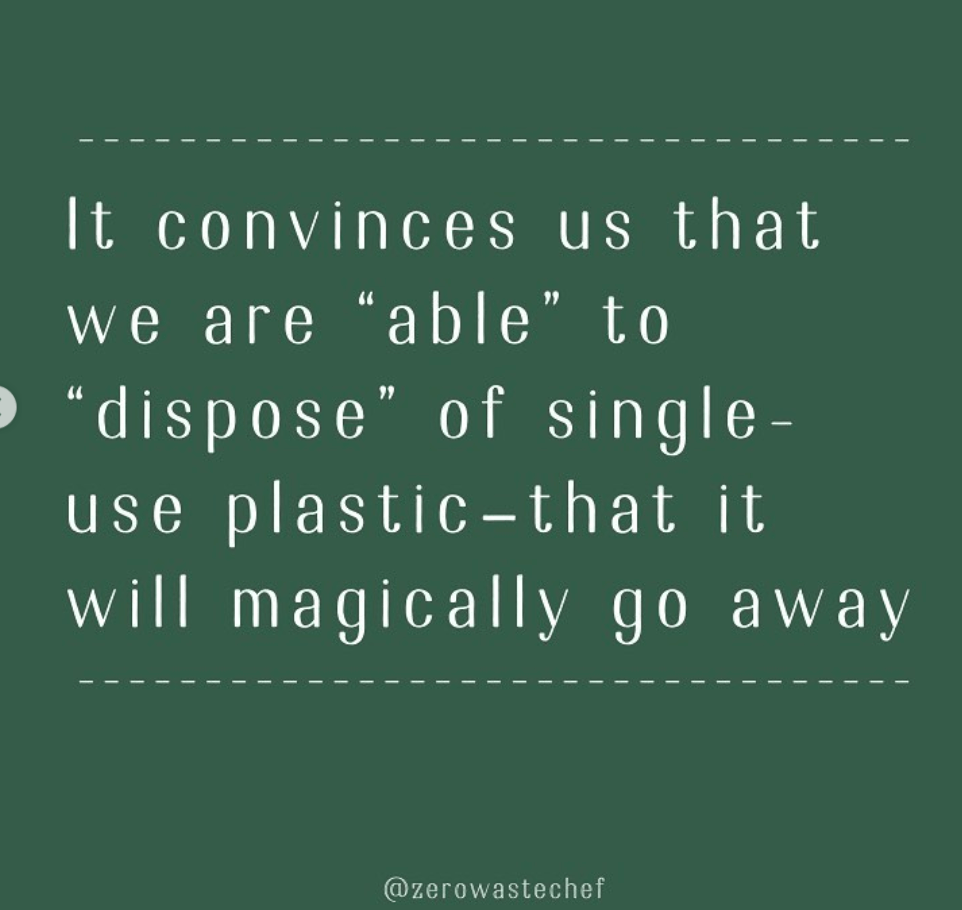
She’s motivated to help us kick our plastic-addiction. You could join Plastic Free July and see if you can reconfigure your summer days to avoid single use plastic bags, water bottles, takeaway coffee cups and plastic straws.
It’s really about rethinking “disposable”, because lovelies, nothing is disposable. Nothing is so without worth or value on this Earth that we should just mindlessly chuck it away.
Bonneau recommends developing a zero-waste kit… you don’t have to go buy any fancy stuff – “we can’t shop our way out of the climate crisis”, she says. Just put together an on-the-go shopping kit (of shopping bags, produce bags and jars or containers), and a out-and-about kit (a stash bag with water bottle, utensils, cloth napkin, jar or metal container and produce bag.) Wherever you are, if you get a craving for a coffee, a snack, or a smoothie, use your own container. Pandemic precautions have put a pause on a lot of these practices, but we need to get back on them, as soon as we can, and try and counter the impact of all those disposable masks. Aaaagh.
Your Zero-Waste Kit works like a shield to deflect unwanted single-use trash
The Zero Waste Chef
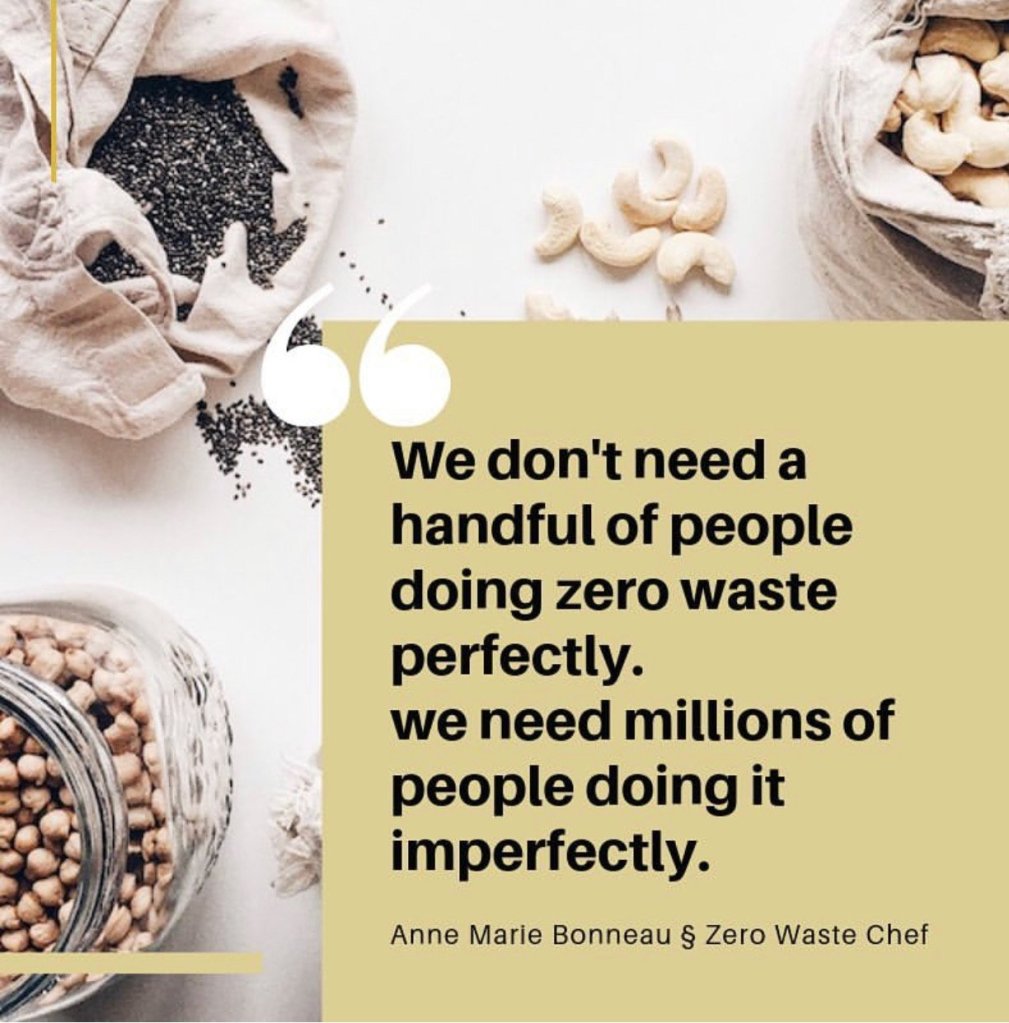
Also, to solidify her status in my heart, once she posted: we don’t need four more people to do zero waste living perfectly. We need millions of people doing it imperfectly. And that was it. She’d won me over. I don’t really need any more aspirational benchmarks that I’m incapable of meeting, because I’m flawed, flailing, and trapped in a system that means every aspirational thing I want to do, to help improve the world, or life for other people, essentially means swimming upstream.
So, darlings, bring your flawed and flailing selves, bring your big hearts, your hope for your kids, your affection for a grandma or aunty or someone you imagine had a little earth mother wisdom, bring your fetish for collecting jars, bring your love for kitchen experiments and weird science. Bring your friends.
Don’t bring righteousness or judgment and let’s leave the despair at the door. Or in the hammock out back taking a well needed rest.
So, as we pick away slowly at deconstructing and remaking systems that actually flow with life, I’m just gonna do the best I can, and PS Don’t nobody mess with my jar stash.
How creative can you be, at rethinking “waste”? Can you turn old fabric scraps into sandwich wraps? Can you turn last night’s leftovers into tomorrow’s frittata? Can you forego bubbly water and make your own ginger soda? Are you ready to get really next-level and make your own sauerkraut? Or granola bars?
Apart from a host of great recipes, Bonneau’s new book offers this beautiful rethink, which anyone with a garden or a harvest box (CSA) subscription, has bumped hard up against: how do you cook opportunistically, rather than “diligently” to a menu plan and a series of recipes?
“Rather than allowing your cravings to dictate what you’ll make, let the food you have on hand in your pantry, refrigerator, and freezer, serve as the basis for your next dish. This method will eliminate food waste in the home.” It will make us more creative, as parameters tend to do, and that makes cooking more fun, she says. And who doesn’t long for time in the kitchen to actually feel like fun?
It’s a big shift – to start with a pile of ingredients first, rather than with a recipe or a go-to meal (oh, it’s Tuesday, so pull out the taco shells and jar of salsa.) To say, okay, the bok choi is coming up, and there’s still some asparagus in the garden, what shall we eat today… but once we re-orient to this way of thinking, and begin flicking through recipe books with an ingredient-first lens (okay, what features kale, because I sure grow a heck of a lot of kale)… it becomes more natural. Grill some veggies on the BBQ. Turn the leftovers into frittata the next day. Blend up whatever is fresh and green into a pasta sauce, or toss it on a pizza. End of the week – time for leftovers soup or stock with whatever is wilting away in the crisper.
I’ve realised, after decades of anguish about being a sub-par home-maker, that it’s all about having a repertoire. Once you have a few things in the repertoire, everything gets a little easier. You don’t have to think as hard. Habits carry you through. You don’t even realise you’ve graduated and aren’t sub-par anymore, but are successfully keeping your people alive and fed, because you’re not expending anywhere near the same amount of brain space that it once took and you’ve somehow absorbed this story that cooking healthfully and eating well is a giant uphill grind.
Until it’s not.
The biggest shift required is breaking old habits of consuming-out-of-convenience. Convenience has a cost. It’s a kind of Earth-tax. As soon as something is pitched to us as “convenient”, we should get squinty-eyed and start asking about the catch. Someone is going to pay for this. Possibly your grandkids.
The Zero Waste Chef is a good helpmate if you want to, ultimately, be a good ancestor. If you want to enjoy your life right now (which is basically built on the good things that people who came before you have done) AND set up future generations to also flourish and enjoy themselves and play on sandy beaches and eat a yummy sandwich under a tree. As she says, in the first chapter, that has graphs and mathematical equations and that I skipped over to go look at the glossy photos of yummy food, “zero waste isn’t an all-or-nothing proposition. You can live a little bit zero waste. And if 10,000 people reduced their waste by 10% that would reduce 10 times more waste than if 100 people got their waste down to zero. The point is, every little bit counts, especially when it’s amplified by a lot of us having a go.
A lot of her recipes are on her website, but it’s nice to have the book on hand as a reference – especially when it comes to things like fermentation, which are processes that I find I need to read about, again and again. And if you missed the pandemic sourdough train, or fell off and want to get back on, there are a ton of recipes for things to do with all the starter. Including how to make the starter. (But my favourite chapter is called Naked Snacks and Natural Sodas. Naked snacks probably are the type that will make you feel better naked, but it really means no packaging. )
So, your summer mission, should you choose to accept it: Eat naked. Save your jars. Carry a napkin and a mug and a fork wherever you go. Shorten the distance from food to plate. Go barefoot, so the idea of lightening your footprint connects to an actual sensation of bare toes and soil. Have fun.
I recently spoke, appropriately distanced and outdoors, with Anna Helmer.
Anna mentioned (with a teasing tone), that @Therocketnarcissist and I should share a recipe on The Farm Story Podcast. I don’t think she expected a “Yes!” with such enthusiasm.
Anyway, you’ll have to give it a listen. Right HERE.
Rustic Recipe Ahead
Here are the deets for the dough:
2 c. full fat plain yogurt
1 egg
1 tsp. salt
2 1/4 c. all-purpose flour
Extra flour for rolling out dough.
Beat wet ingredients together (with whisk, stand mixer or hand mixer).
Slowly add flour and salt to the wet ingredients, if using a stand mixer. Or if combining by hand, pile the flour, make a well and pour the liquid into the well and bring the flour to the middle until combined. Some needing is required to combine. It should be tacky, not sticky.
Wrap the dough and let rest in the fridge for 2 hours.
You can make your favourite filling now (listen to the podcast for suggestions or consult Chef Google).
Remove dough from fridge. Cut in half (or quarters if you have a small work surface). Roll out the dough to 1/8 of an inch.
Cut circles. Dumpling cutters are often 3″ circles. I used a wide mouth mason jar which is almost 2 3/8. I roll the dough even more after cutting as it tends to retract from the original roll out. I spin the piece around and work from the middle outward getting an even stretch. The finished piece should be 3″.
Add 1 tsp. of filling to each circle.
Fold the dough over the filling and pinch closed. If the dough has dried, try dipping your finger in water and running it around the edge of the circle before closing.
Place complete perogies on a floured surfaced until ready to cook (I use a cookie sheet as it can be moved to your pot of water).
Next, cook as desired. I like the boil then fry method. I often test one in boiling water to see how long it takes for the dough to cook. I occasionally do this before filling a bunch of perogies, so I can ensure my filling is appropriately seasoned.
If you still have questions after listening and reading this rustic recipe, let me know in the comments below.
Trial and error is a necessary and inevitable part of the learning curve for all gardeners.There are so many variables it’s impossible to always have 100% success, no matter the experience. Even when you think you have something figured out, you usually find you could have improved on your method, or Mother Nature throws your theory out the window.
Luckily the internet with its blogs, scientific studies and You Tube provide a wealth of information. This can also get overwhelming and even provide misinformation, so read between the lines, keep it simple and my best advice: look to nature. Perhaps it’s unfortunate I didn’t have the luxury of the internet in my rookie years and even when things came online, we didn’t even get service for a couple decades. In the beginning I had one resource – “The Encyclopedia of Country Living”. A thick hippie homesteading bible from the 70’s, complete with anecdotes, recipes and preserving methods. Maybe it was a blessing as it forced me to experiment more, simplify, improvise and get my cues intuitively. One thing for sure is I made a lot of mistakes and learned from them. Improvements to techniques are constant, and mis-steps still occur. I try not to make the same blunders twice. I have compiled a list of common lessons I’ve learned, often the hard way.
START SMALL.
Biting off more than you can chew can end up being overwhelming. Planting seeds is the least labour intensive part, so it’s easy to get carried away. Don’t buy too many packages, there’s often hundreds of seeds in each. After all, it’s supposed to be fun even amid failures. If it’s no longer enjoyable, scale down or find another hobby.
GROW WHAT YOU LIKE.
If you don’t like Brussel sprouts, do you really want to tend them until Thanksgiving just to give them away and lie about how good they are? If you like something grow an abundance and learn how to perfect it and preserve it.
PLANT FOR YOUR ZONE.
Why bother growing something that will struggle and/or require extra protection. Ask your neighbours what does or doesn’t work, figure out your microclimate before you push the boundaries. If you notice that no one in your area grows a particular type of something its probably because someone else tried and failed or it’s just too difficult.
SEEDING TOO EARLY.
It’s easy to get excited and impatient in the late winter. There is an optimum sowing window and it varies depending on the plant. Problems can arise such as outgrowing their cell and needing up potting, weak leggy plants needing more light and nutrients, susceptibility to pests and diseases, over and under watering, and of course unnecessary labour. Sometimes you’re better off waiting and direct seeding. avoiding all those issues. Some seed packages will dictate what period to plant, listing the days before last frost or growing days required to harvest. This is still variable depending on your location, so again, ask your neighbours their schedule.
PLANTING TOO LATE.
Conversely getting things out late may result in a poor harvest. If you’ve “put the cart before the horse” by not having your beds prepared when your seedlings are at their prime for transplanting, this will affect the health and wellbeing of the plant’s whole cycle. There is also a transplant shock, and hot dry summer weather that can set things back to consider. Protecting your plants from various elements may be needed and change seasonally. Timing and knowing the growing season depending on the plant comes with experience. Expect some failures.
ADJUST YOUR SCHEDULE FOR THE WEATHER.
Planting in hot, sunny , dry or windy weather is not recommended. Nor is spreading soil in the rain, tilling mud or dust, mulching before it rains or pruning while flowering or when the sap is running. Some biodynamic farmers take things further and adjust for solar and moon cycles. Watching the weather is common sense for all gardeners.
LIMIT WHAT YOU GROW.
It’s best to do a few good things well than struggle with too many things going on. Plant what you can manage, and use efficiently. Succession planting can ensure a continuous crop of quick growing veggies such as greens or radishes as opposed to a huge patch of bolting lettuces and then nothing. Don’t forget the biggest and most common rookie mistake – planting too many Zucchinis!
AVOID COMPROMISED PLANTS AND SEEDS.
Plants have a life cycle and seeds have a shelf life. If a plant is sick and hasn’t been tended properly you will inherit all their problems and perhaps create more. If seeds are outdated or haven’t been stored properly you will be at a disadvantage from the get go. A good compassionate gardener can often nurse back a sick plant, but why take the risk and hassle as a beginner.
BUILD YOUR SOIL.
Everything your plants need, except for light, is in your soil. It is the foundation of every successful natural garden. Investigate nutrients, micro organisms, amendments, mulches and cultivation methods. It’s endless what you can learn and the more you do the better off your garden will be.
RESIST UNNATURAL QUICK FIXES.
By this I mean the use of pesticides and herbicides. Figure out the root causes, and find organic solutions. There are usually a multitude of natural alternatives. It often takes some time to regain a natural balance and eliminate the issue. Be patient.
DON’T PROCRASTINATE.
In gardening there is usually a short window to most optimally do a necessary task. The longer you wait the more difficult and time consuming most of the following steps become. If you have the opportunity, just do it right away.
BE RESOURCEFUL.
It’s easy to spend many times the value of your crop on exotic varieties, greenhouses, shiny tools and fancy gadgets. Your plants couldn’t care less. They just need the loving care of the gardener and that’s something you can’t buy. Buy used equipment, recycle and improvise. That’s what all the old timer gardeners do.
BE CLEAN.
Remember all it takes is a single spore or a mating couple of pests to exponentially turn into an infestation. Avoid bringing outdoor soil indoors, sterilize your growing area, disinfect your tools and wash all your recycled containers. It’s all extra work but well worth the prevention of potentially big problems.
Yes, it has been a weird year. And these are the shortest and darkest days of the year to boot. Right now I am craving calorie-laden stodgy food and damn the consequences. Lighter fare will appeal when the days brighten up.
I have made this casserole with some good Pemberton veggies but the mayo, sour cream and cheese do not put this casserole in the healthy category. But dark days plus face mask-wearing at all times? Sign me up for a retro casserole.
Here is to hugging family and friends in 2021 and to our Pemberton library being open for real – SOON! Happy Christmas to all!
Chicken Casserole with Pemberton Veggies
4 cups cooked Pemberton-raised chicken, diced
2 tbs pure olive oil
1 large yellow onion, diced
2 cups blanched Pemberton-grown Swiss chard, chopped (Do NOT add raw – it MUST be blanched first)
1 cup Pemberton-grown corn kernels
1 cup chopped cauliflower
2 cups chopped celery
1 cup chopped cilantro
1 cup diced tomatoes
2 tsp dry mustard
1 tsp cumin
1 tsp paprika
1 tsp sambal oelek
1 tsp salt
1 tsp pepper
½ cup mayonnaise
2/3 cup full-fat sour cream
1 8-oz package Pad Thai noodles
1 cup mozzarella, shredded
Method:
Sauté onion, corn, chard, celery, cauliflower and cilantro in olive oil in a large cast-iron Dutch oven. Sauté until well caramelised. When caramelised, add cumin, paprika, dry mustard, sambal oelek, salt and pepper, tomatoes, and diced chicken. Mix well.
Cook Pad Thai noodles by pouring boiling water over the noodles and leave immersed for 5 minutes. Drain well.
Add cooked Pad Thai noodles and mayo and sour cream to veggie mixture. Mix well. Sprinkle top with cheese.
Thanks to Belinda Geisler, the program coordinator for Stewardship Pemberton’s Feasting for Change initiative, for putting together this reflection of this year.
This spring I was so nervous, wondering if it would be possible to run any of the Feasting for Change programs, as for this I was asking people to come together, voluntarily, and work together to help grow, and gather food that could help feed us all. Suddenly though, the need to feed ourselves without bringing that food in from outside became a priority, not just for me personally, but for our community as a whole.
I looked at all our projects, the Fruit Tree Project, Grow it Forward Garden, Seed Library and Crabapple Project, and thought hard about how to make it all work, eliminating all the indoor workshops and focusing on the bare bones of our projects: keeping bears wild, while feeding our community.
What I didn’t expect was the number of people that were not only willing but wanting to donate their time and energy to our projects. We’ve always had an amazing rotating crew of volunteers, some that have been with us from the beginning and some who are still, to make it to a fruit harvest, or garden workshop. But this summer we had a bunch of fresh faces join us and stick it out to the end. At our 22 fruit tree harvests, we had 45 different volunteers gift us their time, many of them came to several harvests, (be warned, it’s addictive) and we ended up counting 124 “volunteer occurrences”.
The grand total of 3,364 lbs of fruit is proof of all the hard work our volunteers put in, not to mention the trust that tree owners showed in allowing us to come to their property and harvest their trees. We had several firsts this summer that need to be celebrated in and of themselves: We took on our first farm, harvesting over 300 lbs of blueberries from a farm that struggled to get their usual crew of workers in to manage them.
We also had one of our largest ever harvests where we took on 11 trees, in a single harvest, getting over 600 lbs of apples and pears. As our final harvest of the year it felt like the perfect covid friendly fruit party: 26 adults and 10 kids all keeping to their bubbles by taking on a tree each, happily chatting from between the branches, while the owner was blown away that we got them all cleared in a single morning.
It’s possible that as people were working from home, more bears got caught in the act of accessing fruit trees, and so we got several new properties signed up to our fruit tree project. This kept me on my toes, as each property needed a plan. However, it also meant we could flow from cherries, to apples, to blueberries, to plums, grapes, back to apples, crabapples, and finally pears and more apples. Those that came to multiple harvests now have wonderfully full freezers full of local free fruit. The project works quite simply; we pick the fruit and split it 3 ways, one third goes back to the owner of the tree, one third goes to the volunteers that pick the fruit, and one third gets donated to be shared further.
Usually we try to have a network of local social groups (like the seniors) who can take fruit from us after a harvest and then divide it up and distribute it. With the restrictions in place this year we scaled back and focused on donating to the Food Bank.
The Food Bank needs to be celebrated to the fullest here, expanding and attempting to reach and fill the needs all over our community and into the surrounding areas. We are so, so lucky to have such a dedicated crew able to adapt and address the needs that arise. Without them, our community simply couldn’t thrive.
The bi-weekly harvests from the Grow it Forward Gardens became quite the social morning (in a safely monitored, spaced out kind of way). Last year we had 18 volunteers over the course of the season, this season we had 38. The garden itself always provided a fun treasure hunt. I think some of our volunteers came just to see where the cucumber vines had wandered off to next, or if the beans or toddlers had grown more in the 2 weeks between harvests! Either way, they put in the efforts and we reaped the rewards. This summer we donated a record 650 lbs of fresh locally grown vegetables of the food bank. While we always offer food from the garden to our volunteers, most were content to take home the “weeds” and try out things like purslane smoothies, or chickweed and carrot top pesto. I know that without the dedication of these guys (you know who you are!) we would not have had nearly as successful of a season. Even on the muggy, buggy days they were there, working hard, periodically jumping in the air and running out for a bug break, or slapping ourselves with rutabaga leaves to keep going “Just to weed to the end of this patch”. They were true garden heroes.
With the library closing down right in the midst of planting season and seeds running into short supply, I rescued the Seed Library and attempted to create a virtual inventory and contactless pick up system to make sure that this project could continue to make food-growing an option for everyone and anyone. What I didn’t expect was that again this community saw it as an opportunity to fill the need, and ended up donating almost more than was given out from the library. (Which is perfect, as the seed library depends on people ‘returning’ their seeds to keep it stocked for the next library patron). We always try and include seed harvesting in our grow it forward garden harvests, which helps to keep the library stocked.
Most in jeopardy was the re-invented crabapple project. While we may not have crabapple trees lining our main street (I’m looking forward to experimenting with lilac jelly btw), we do have a number of them in backyards. Last year we helped keep the bears out of harm’s way by harvesting the crabapples, but we inundated our fruit distributors and saw the potential for a scaled-down version. While we made close to 500 jars of jelly, unfortunately, we were unable to include volunteers and people dropping in to investigate the smells of jelly-making. We’re hopeful that the jelly travels further than we can right now and maybe encourages other communities to start looking at their fruit trees more as an asset than an inconvenience. As there’s limited supply of jelly this year, I’d recommend stocking up!
The support these projects get not only from volunteers but also from partners and sponsors keeps them ticking along, evolving, growing, and changing. These include the Whistler Community Foundation, The Pemberton Wildlife Association, Sea to Sky Soils, West Coast Seeds, the Pemberton Legion Branch 201, Bluehore Financial (Donation Program), the Fall Clothing Swap, Pilates Integrated, and the donations from the blueberry harvest. Each of these places has donated various amounts to various projects – together they make all our Feasting for Change Programs possible.
As I’m looking into winter, I’m so grateful to be here, in this community, where so many people are willing to come together to help us all – the people, the wildlife, the community as a whole – to grow, and harvest our own food, and, of course, eat jelly!
This is the time of year when the freezer can be very full (a good problem to have). If there is deer meat to go in, something must come out. In my case, the many bags of apples I peeled and sliced two months ago! This is a recipe that uses up those apples well and is seriously the best apple cake I’ve ever had – in convenient muffin form. It is also fairly healthy with good fats and whole grains.
These apple muffins are an adaptation of Shelley Adams’ “Joey’s Apple Cake”, found in her first cookbook Whitewater Cooks – Pure, Simple and Real (2005). Shelley Adams is my food mentor (she doesn’t know that) and I have adapted so many of her recipes over the last 12 years. Her recipes have good bones. I have usually adapted them to be whole grain, reduced sugar and sometimes grain-free. This recipe was also altered by making muffins instead of cake (which is quite finicky as it calls for a Bundt pan and the cake always stuck to it). Enjoy!
Whole Grain Apple Muffins (yield: 36 muffins)
Ingredients:
3 cups spelt flour (*you can also use 2 cups spelt and 1 cup almond meal OR you can use 2.5 cups spelt flour and 1/2 cup oat bran)
1/2 cup white sugar
1/4 cup brown sugar
3 tsp cinnamon
1/4 tsp cardamom
1 tsp baking soda
½ tsp salt
1.5 cups grapeseed oil
3 Pemberton eggs
3 tsp almond extract
4 cups finely-diced Pemberton-grown peeled and cored apples (I use a Cuisinart and pulse the apples until they are just shy of applesauce texture. They should still have lumps).
Method:
Preheat oven to 350C
Blend pureed apples, oil, eggs and sugars in stand mixer. Blend well. Add cinnamon, cardamom, flour, baking soda and salt. Blend well.
Scoop batter into silicone muffin pans (I like silicone pans because the muffins don’t stick).
Bake at 350C for 26 minutes. Cool 15 minutes in pans, then invert onto cooling rack.








 Traced Elements