Tag: birken

  • The Honour stands of Birken

    The Honour stands of Birken

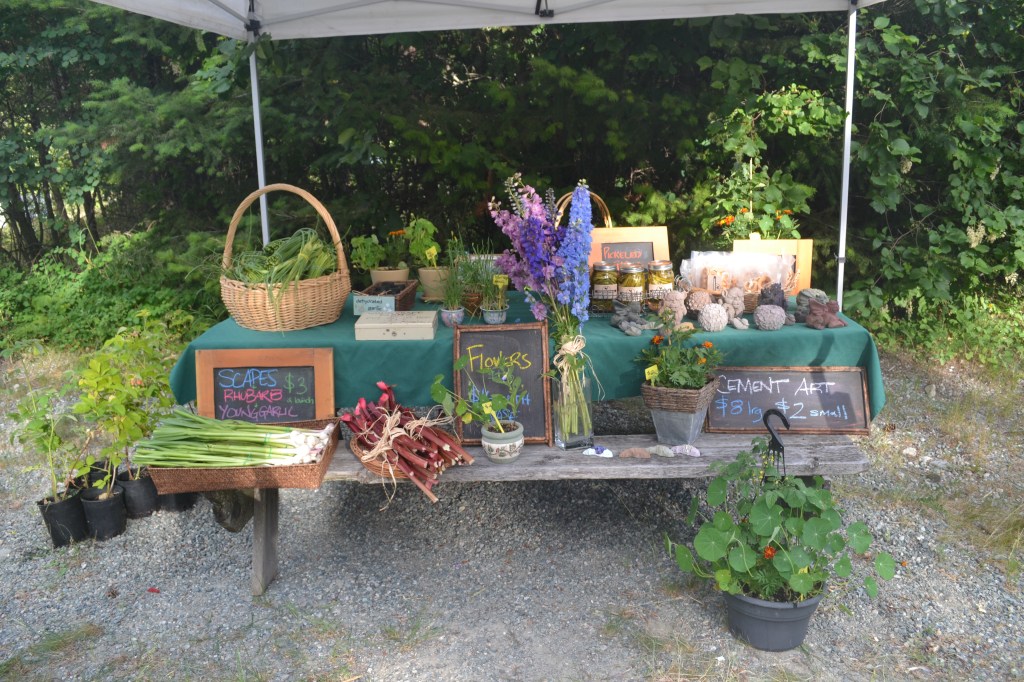
    The Birken / D’Arcy corridor is unique to the Sea to Sky Region. Unhurried, non-commercial, safe, sparsely populated and relatively unchanged throughout the nearly 3 decades I’ve lived here. In fact, there is less here now than there was back then. Its downtown consists of an old resort at Gates Lake, open for a few months, and a telephone booth (there is no cell service). The Demographic is also interesting. It’s more affordable and out of the way and therefore attracts misfits, homesteaders, bohemians, red necks, hermits, draft dodgers, hippie relics, adventurers and commuters to Whistler. There are few, if any, employment opportunities, therefore those who stick it out have become resourceful, artistic and enterprising.

    The climate is more arid, being on the cusp of the interior and in the rain shadow of the Coast Mountains. Spring comes early.  We see more sunny days, warm days, and cool evenings. Its narrow valley is  protected by steep mountains. It is not a  conventional farming community like Pemberton with acres of flat tillable ground. It is however a great hobby gardening area. Its soils are well drained, mineral rich and ideally suited for fruits, berries, and garlic. Its waters are crisp and clean. I don’t believe a single person uses pesticides. It is sought after for bee keepers for this reason as well as its natural bio-diversity.
    PIC 5 plant sale

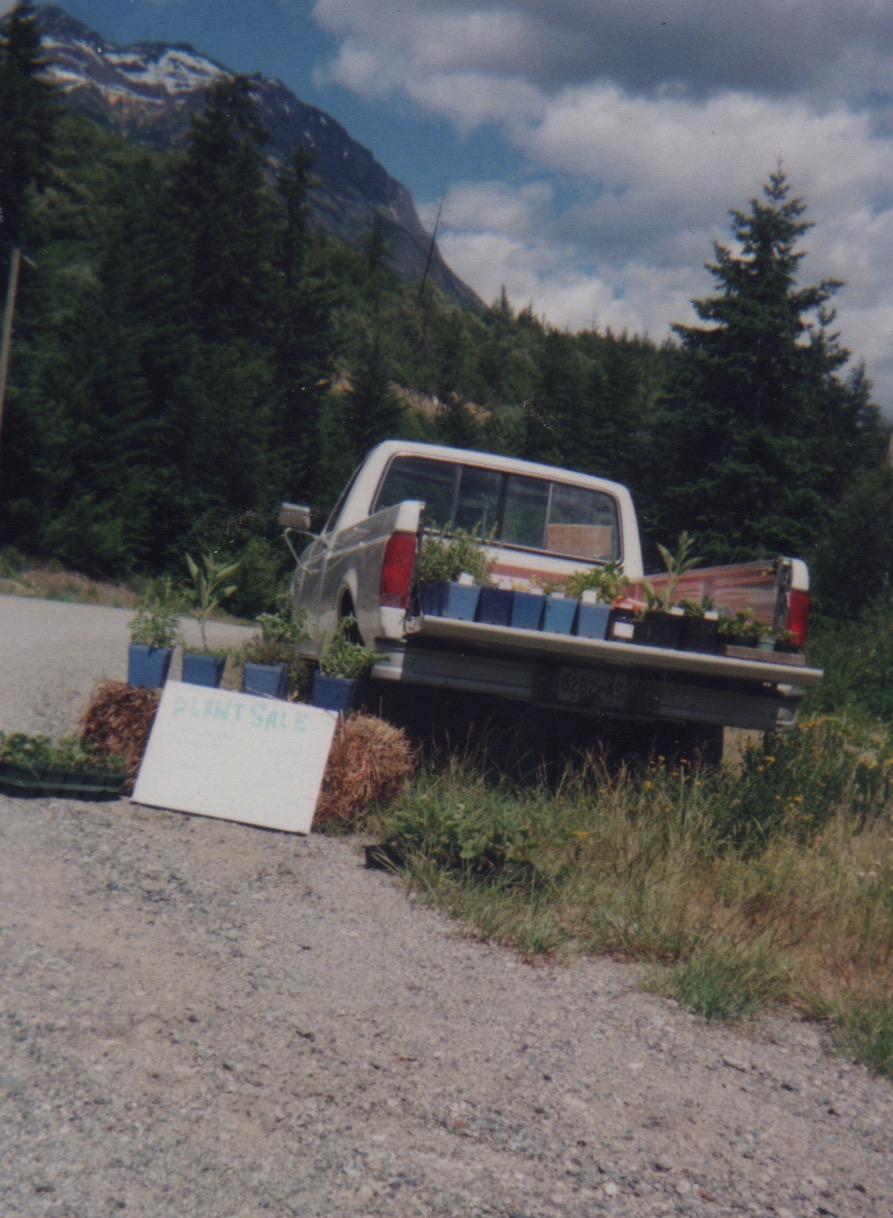
    I started putting plants and surplus veggies at the top of my driveway with a jar for cash many years ago, mostly for my neighbours. The above photo is circa 1995. I called it the Beer Stand back then. If I had enough for a case for the weekend it was a successful week. Over time it got consistently busier and we added more products. It became the Entertainment Stand where, in good weeks, we could go to a restaurant or even a concert. Our farm is now a registered business and after a good year we can take a vacation at the end of the season. Keeping it stocked is now a part-time job (farming, of course, is full-time), but I have to say it’s the best job I’ve ever had.  I joke when being leisurely that I’m currently working my job . The operating costs are extremely low so every sale is a bonus. Farming itself is extremely labour intensive with a low profit margin and high risk. We could never afford to pay someone to sit and serve customers. It’s really the only viable way of doing business in a rural area. If we bring perishables back from the market they quickly go up there in the fridge. We can offer an ever-changing wider selection of items than we would at the farmers market, can keep things fresh and pass our cost savings on to the customer. Win, win, win!

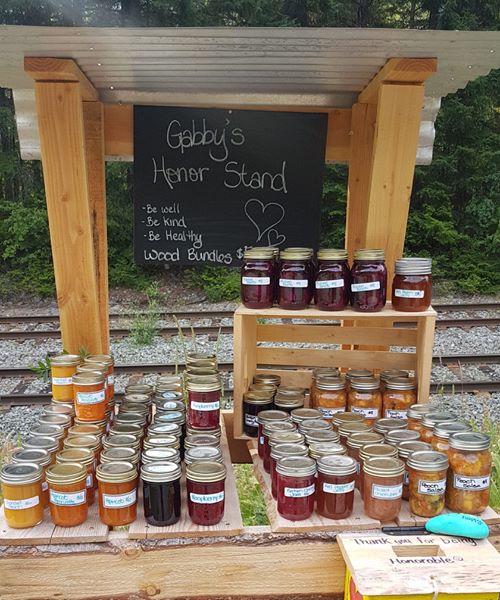
    Generally people are honest and since it’s the honour system, we accept e-transfers and IOU’s. Someone, who we caught pinching out of the change jar, returned years later with a letter of apology and a $50 bill. This restored our faith in humanity and the honour system. What comes around goes around.
    115823217_10157015108455755_4358984688747848677_o

    Birken has now become a valley with many honour stands offering everything from jams to fresh pasta to firewood. It’s a place of cottage industries, where hobbies help many with spare cash. They range from tents, and  permanent shelters to coolers. Many interested in setting up their own stand have contacted us wondering if we would be offended by the competition. We look at it the opposite way. The more the merrier! It has started to become a destination place for a casual drive picking up things along the way.  Those coming up for a swim in our many lakes can grab some fruit to munch on. Campers and boaters can pick up a fresh bouquet and something to add to their dinners on the way home. We’ve had nothing but positive feedback. It reminds many of their country childhoods and a simpler time when everything was local and fresh and neighbours shared.
     

  • Acclimatization, zones, and how plants adapt to weather

    Acclimatization, zones, and how plants adapt to weather

    You know when you go on a tropical vacation in the winter and at your destination, the locals are wearing hats, long sleeves and pants. You strip down, head to the beach only to get sunburn and heatstroke? Eventually, after a week, you get used to it. Upon return, that first blast of cold at the airport feels like the Arctic, yet people are wearing shorts!

    Plants experience the same affect, perhaps even more because it happens gradually at a cellular level. The more robust the cell walls become, the hardier the plant.

    Every living thing has preferred conditions. Plants are grouped into zones to help guide gardeners to choose plants that will survive in their climate. It is based on the worst weather extremes for the area: Coldest temperature, number of frost free days and exposure. It’s good to know your zone before you waste your time and money on something that won’t thrive. Zones can be pushed higher by starting plants indoors, protecting them with cloth, overhangs, windbreaks, a south facing wall and   greenhouses. Global warming is also changing things and most areas will be up-zoned in the near future.

    Microclimates exist in all zones. Sunny south facing protected areas can be a full zone or more higher than a cold, windy, shady frost pocket. Understanding your microclimates on your property can determine whether you will succeed or not. It’s something you need to constantly pay attention to, and even make notes, if you have to. The smallest changes can make a big difference.

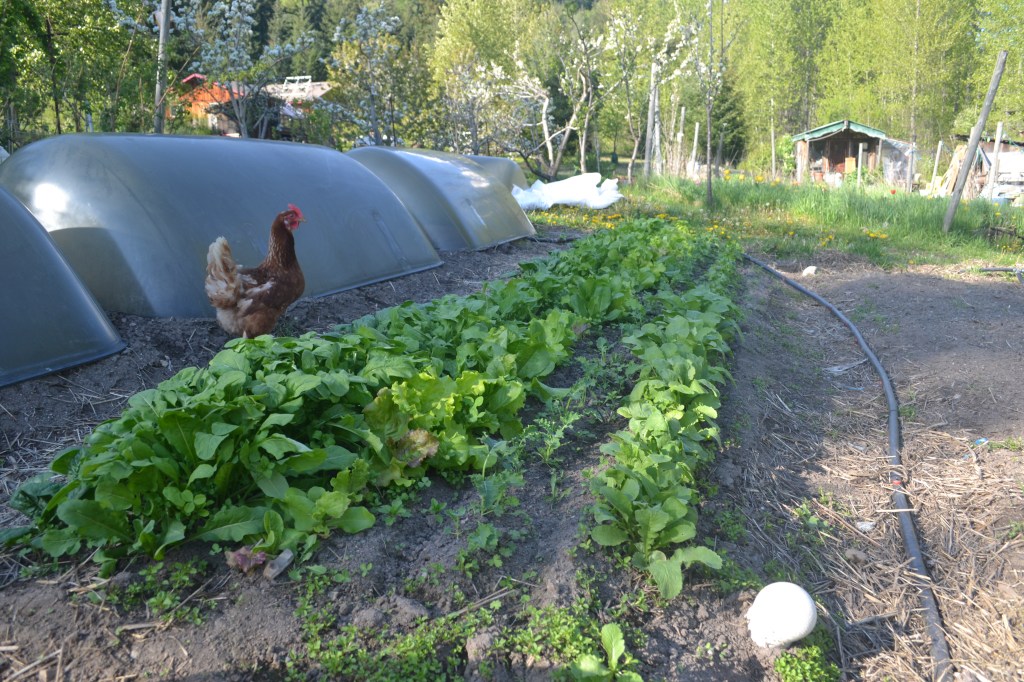
    Slowly, plants need to adapt from one environment to the other. Our intervention is called “hardening off”. Plants started indoors are used to the warm cosy, calm and diffused light. If you put those out right away they will most likely get shocked by cold nights, wind, pounding rain and scorching sun. The trick is to, over the course of several days, slowly leave them out in their new environment a little more each day, paying attention to extremes in which case you will have to leave them indoors or add extra protection.

    When buying plants in the spring it’s good to ask the grower to what extent they’ve been hardened off, if at all. You may have to do it yourself. Something few consider. Many tropical plants in Florida, grown for export as houseplants are raised under shade cloth, not because they don’t tolerate sun, but because they will eventually live in someone’s living room. It works both ways.

    When to plant your starts or seeds outside is also tricky. Seed packages are only a rough guideline as they can’t possibly know everyone’s circumstances. Even experienced gardeners can’t rely on calendar dates, as every year is different. It’s part intuition, part trial and error and partly luck. Those in tune with nature will know when to plant something by biological clues related to the weather, like when the crocuses sprout, the ice on the lake melts, you see the first Robin or the forsythia blooms.  This study is called Phenology  and is the most accurate method. The even more in tune will take biodynamic guidance into account such as moon cycles, the almanac  and spiritual doctrines to plan schedules, making things  even more complicated to organize.

    Regardless, all good farmers are aware of the weather and check the forecast constantly.

    Starting some things early can be as detrimental as starting them late. A root-bound start can suffer and be stunted. A plant left too long indoors on a windowsill can get leggy and fall over searching for the sun. It’s good to know how many days it takes a particular variety to mature. Transplanting earlier may serve no benefit.

    Most plants will survive marginal temps above freezing. Few do anything and stay in a state of statice between 1-6 degrees celsius. Some tender annuals such as basil will perish at a damp 1-2 degrees. Transplanting on a windy day is terrible as it knocks them over, and sucks the moisture from the plants and soil, through transpiration. Some things that have a short lifespan may need successive planting to stagger the harvest. Cool loving crops may only work in spring and fall. and will quickly bolt in the summer. Late maturing species may need to be brought indoors to finish off or  to spend their dormancy. Hardening off is also required to adapt in this case , now humidity and introducing pests indoors becomes a concern. Plants are fickle,  you need to get to know them personally.

    There are obviously so many factors to consider: The bottom line is that you have to treat all your plants like dependents and provide the best care for them from the elements as possible. You have to guide them through life, like children, until they are strong enough to go at it with little intervention. You can never assume anything, be complacent or lazy. What if it was your infant out there? How would you care for it?