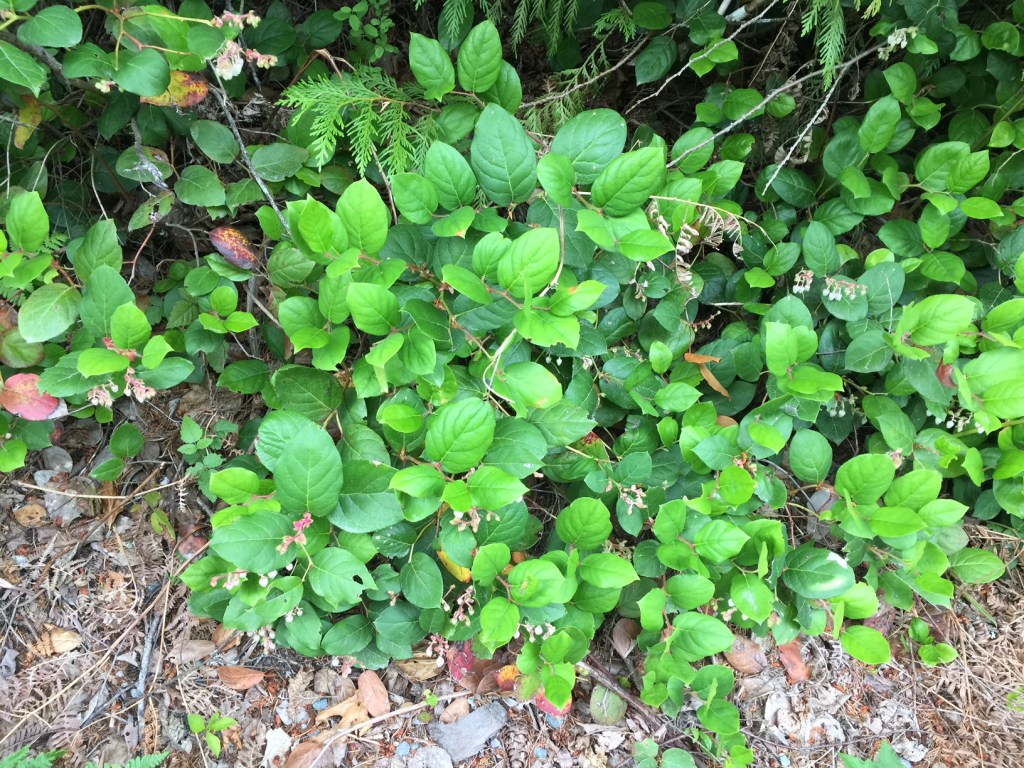
We had a cool period for a bit recently and being on the coast, it was a good opportunity to bring out my soup pot. Back into a heat wave so save this one for the next cool spell. I didn’t get a photo of it but it was a hit with some children I served it to as well as adults. Attached is a photo of some beautiful Squamish salal.
Curried Lentil Cauliflower Soup with Coconut Milk and Cilantro
Ingredients:
3 tbs pure olive oil
2 leeks, cleaned and chopped
1 fennel bulb, chopped
4 tomatoes, chopped
1 medium cauliflower, chopped
1 cup cilantro, chopped
6 cups chicken broth
1.5 cups red lentils
2 tsp salt
2 tsp pepper
2 tbs cumin
1 tbs curry powder
1 can full fat coconut milk
Method:
Sauté leeks in olive oil on medium low heat until caramelised. Add all other vegetables and cilantro, and sauté until soft and caramelised.
Add broth and lentils and coconut milk.
Bring to boil and simmer 20 minutes.
Blend half of soup in blender until smooth and adjust salt and pepper to taste.
Years ago, I read a horoscope that said, “Dear Capricorn, you’d be better off enjoying the climb than glorifying the summit.”
Or at least that’s how I remember it. The precise words are trivial. In effect, the astrological forecast reminded me of the value of process.
We need such memorandums, because we often forget about the value in getting our hands dirty. We seldom recognize the profits in puzzling out the crux move.
And, we barely admit our battles.
I’m sure you’re wondering what this has to do with fettuccini.
Well, I might argue that you should take the time to frolic in the process of making a plate of pasta – from scratch. From sourcing the flour, eggs and olive oil to wrapping the toothy noodles around your fork, it’s all part of a process that can soothe the mind and the soul.
This dish started with a trip the Pemberton Farmers’ Market and a chat with local farmers.
Killer noodle recipe ripped from “The Pasta Bible” circa 1994. (I went old school version – bonus points right?!).
“Pasta Dough No. 4”
2 1/2 c. all-purpose flour + extra for flouring surfaces and strips of fresh pasta
1 egg
7 egg yolks
1 tbsp. olive oil
1/2 tsp. salt
I added a wee bit of water when the dough was too dry to pull together in a solid mass. I’d say add no more than a teaspoon of water at a time.
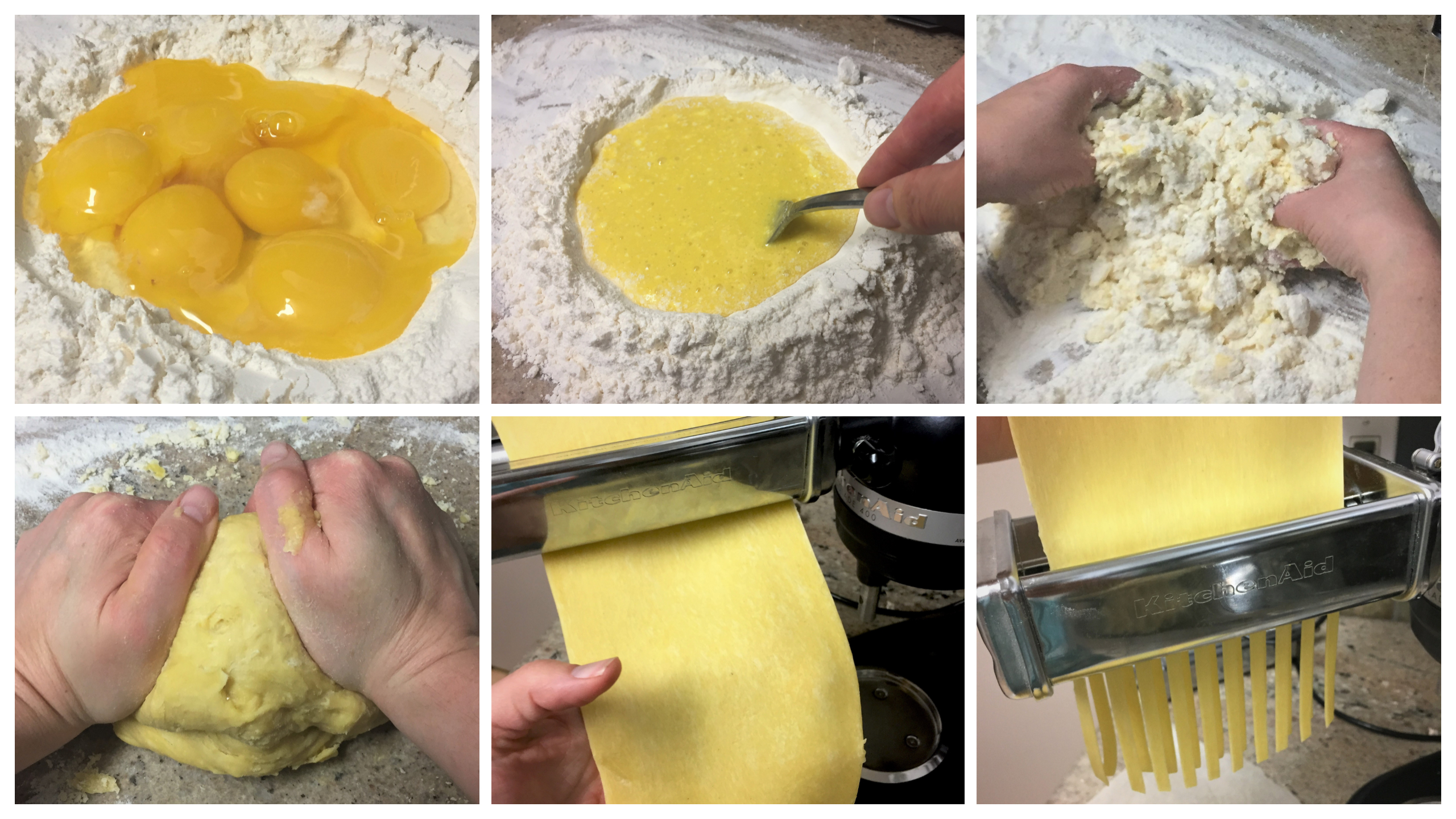
The recipe calls for sifting and fussy stuff like that, but I took a rustic approach. Perhaps, be careful when pulling the flour into the egg lake, if your crater breaks you can lose all your egg over that cliff that I call countertop edge.
Rustic instructions (feel free to ask questions in the comments)
Mound the flour on the countertop and make a deep crater for the eggs.
Crack the eggs into a pinch-bowl one at a time (it makes it easier should you have to fish out a shell or manage a breach of the crater wall) and gently slide them into the crater until you have all of them neatly inside. Add the olive oil too.
Gently beat the eggs, until well combined.
Pull the flour into the egg lake until the liquid is absorbed.
Pull the crumbles together and start to form a dough.
Knead.
Refrigerate, wrapped tightly (in a bees’ wax cloth, or cling wrap if you must) for at least an hour.
Roll out the dough.
Cut the dough into strips.
Dust the strips in flour.
To save my wrists, next time, I’ll use my stand mixer for the kneading as well as the rolling. You must knead it until it’s glossy and stretchy. Maybe 10 minutes, maybe more (add music and dancing, if you’re bored). I made the dough before work and rolled it out before dinner.
You can roll out the dough with a pin, but ensure that it’s very thin before cutting it into strips. I rolled my dough to the thinnest possible setting and it was still plump compared to store brands.
Be sure to drop the fettucini strips into rumbling water, because the temperature drops quickly with a big batch. If you’re really unsure about your dough, try cooking a few strands for about 4 minutes. Then taste test.
Someone once asked me when the best time to irrigate was. My cynical answer was when it’s raining!
Technically the best time to water is before plants get thirsty and this is usually the morning. Watering in the evening is less ideal, as it leaves time for mould and diseases to develop. Simply sprinkling after a hot day is better than nothing, but no more than a band aid solution. Besides keeping seedlings constantly moist, the general rule for established plants is water “deep and infrequently” — kind of like an old married couples’ lovelife. But seriously, the average rainfall soaks in a just a couple of inches, so you can’t really count on it. So watering in the rain makes sense, so you can pay more attention to the younger shallow rooted vegetation when the weather clears up.
Different plants have different water requirements, and this too changes throughout the season and its life cycle.
Blueberries, for example, are a shallow rooted bog plant and love as much water as you give them. An established fruit tree, on the other hand, can have a root system as big as its crown, and may only need a good soak in a dry spell. Also, if you spoil your plants with constant watering, they will do what spoiled kids do for themselves… very little. You must let your plants search for that deep water, which is also where the most minerals are. Also a slightly stressed plant will tend to produce more, thinking its reproductive cycle is in jeopardy. This is a fine line that good gardeners closely monitor.
On the most basic level, plants need three things to survive besides light, a daily given. These are air, nutrients and, of course, water. Without water, there is no life whatsoever. Water is essential for delivering the nutrients to the roots.
Too much water for too long will suffocate the plants by filling in the air pockets in the soil. Too little and the cell walls dehydrate, causing wilting. Prolonged or frequent wilting will compromise or kill your plant.
Automated sprinkler systems are great for the suburban landscape and lawn, but are not practical for the small scale hobby farmer over several acres. A good gardener has an intimate relationship with his or her dependents’ needs. As I mentioned previously, these watering needs change from plant to plant and season to season. Grouping plants with similar watering needs is wise. Automation is convenient for a small area if you’re going away for a bit, but it’s like leaving your teenagers home with a stocked fridge. I prefer drip systems — they conserve water and you can let them run for a whole day to get that deep watering. Overhead sprinklers are prone to clogging, evaporation, uneven distribution, wind and even sun damage from magnifying the water droplets.
Growing plants is often like raising children. They need lots of attention when they are young, but eventually you need to quit spoon-feeding and let them find their way. You should still check on them when they’re grown up and offer a care package every now and then.
My need to forage continues. This week’s victim: Saskatoon berries. Just try walking past the currently loaded bushes of perfectly plump, deep purple berries – I dare you. Even Shadow comes to a complete skid stop to forage on the lower quarters of these native shrubs. Our mission over the last week was to beat the bears to the berries around our place and hit up a few other spots I’d been scoping. We were more than successful; stained fingers, a full bucket and swelled bellies. I figured the best way to capture these jewels was by channeling my inner Julia Child and baking a pie. So, here we go!
Step Uno: make your crust. Use your favourite double crust recipe or try mine.
2½ cups flour – tsp salt – 1 cup unsalted butter (frozen) – 6 to 8 tbsp ice cold water
Combine the flour and salt in a medium sized bowl. Then grate the butter into the flour. I cut the butter into two halves and grate one at a time, leaving the second in the freezer until I’m done the first. Once both blocks are done use your hands to combine the flour with the butter by gently rubbing it through your hands. It doesn’t need to be fully incorporated but what your looking for is a bunch of little “butter peas” coated in flour. I’m ghetto and don’t own a pastry cutter but if you have one then small cubed blocks of butter cut in will give you the same effect. I have found that grating the butter gives great distribution in the pastry with a very flaky end result – BINGO! Now add most of the water and blend until just combined. Turn the mixture out onto your working surface and bring together the dough by kneading it into a ball, using more water if needed. Separate the ball into two with one just a bit bigger then other and shape them both into flat-ish discs. Cover separately with plastic wrap and retire them to the fridge to rest for at least an hour.
Step Two: the filling. (Plus turn on your oven to 425°F now to preheat it)
5 cups Saskatoon berries – 3 tbsp flour – ⅓ cup sugar – zest of a lemon (optional)
Combine everything together, easy-peasy.
Step 3: build your pie.
Take the smaller disc out of the fridge and place it on a floured surface. Grab your rolling pin and push the disc out to about a ¼“ thick and place into your pie plate. Pour those prepped Saskatoons in next! Scatter a few slivers of butter over the top of the berries. Grab the last disc and flatten it out to the same thickness as the bottom, re-flouring the surface if needed. The reason for the last dough disc being a bit bigger is that the filling of your pie usually makes a mini mountain and you want to ensure you’ve got plenty of dough to blanket the whole hill, and then some. Before layering on the dough topper, wet the edge of the bottom dough with water – this helps them stick together. Crimp, roll or pinch the dough layers together. Brush the top of the pie with a beaten egg and slice a few air holes into the top.
Step Quatro: Bake and wait.
Place your pie on a baking sheet and into your preheated oven. Bake at the preheated 425°F for 15 minutes then lower the temperature to 350°F for an addition 45-60min or until the crust is golden brown. Cool on a wire rack.
Step Five: eat now or freeze for later.
I chose to freeze my pie and savor it later this fall with friends when we’re craving a taste of summer. Luckily, I saved a bit of the filling and had just enough left over dough to make 4 mini tarts. They were consumed quite quickly.
There is a CBC story that recalls a visit by the Duke of Edinburgh to a small town in the Yukon many moons ago. He stops for a meal at a local diner and as the waitress reaches to remove his dinner plate she warmly says to him, “Save your fork Duke, there’s pie”.
Wives’ tale or not the phrase has stuck with us for generations… and this pie for sure warrants saving your fork.
I asked, and was asked, this question several times on Sunday while I was at work. Some people were going for hikes or bike rides. Some people were having parties or visiting friends. Some people were going to partake in the festivities at the community centre.
I had zero plans for Canada Day this year. My sister and three of her friends came up to visit and hung out during the day while I was at work, and afterwards I made us dinner, and cake, and we had a lovely visit. I even got to bed at a reasonable time. To be perfectly honest, it was like any other weekend, with no special plans.
I felt a little guilty at first. I mean, it’s a special holiday. We should be doing something to celebrate. But I realized that I didn’t actually feel bad at all. For me, taking a break from planning actually is something special. I’m a chronic organizer. I have to-do lists for my to-do lists. I’m constantly thinking four, five days in advance, planning meals, organizing lists, and arranging errands around my work schedule. I have a whiteboard in my house for spur of the moment rememberings, and an app on my phone to organize my lists when I’m out. I am forever and always making plans.
But I’ve discovered some of the best things can emerge when all my carefully laid plans go completely out the window.
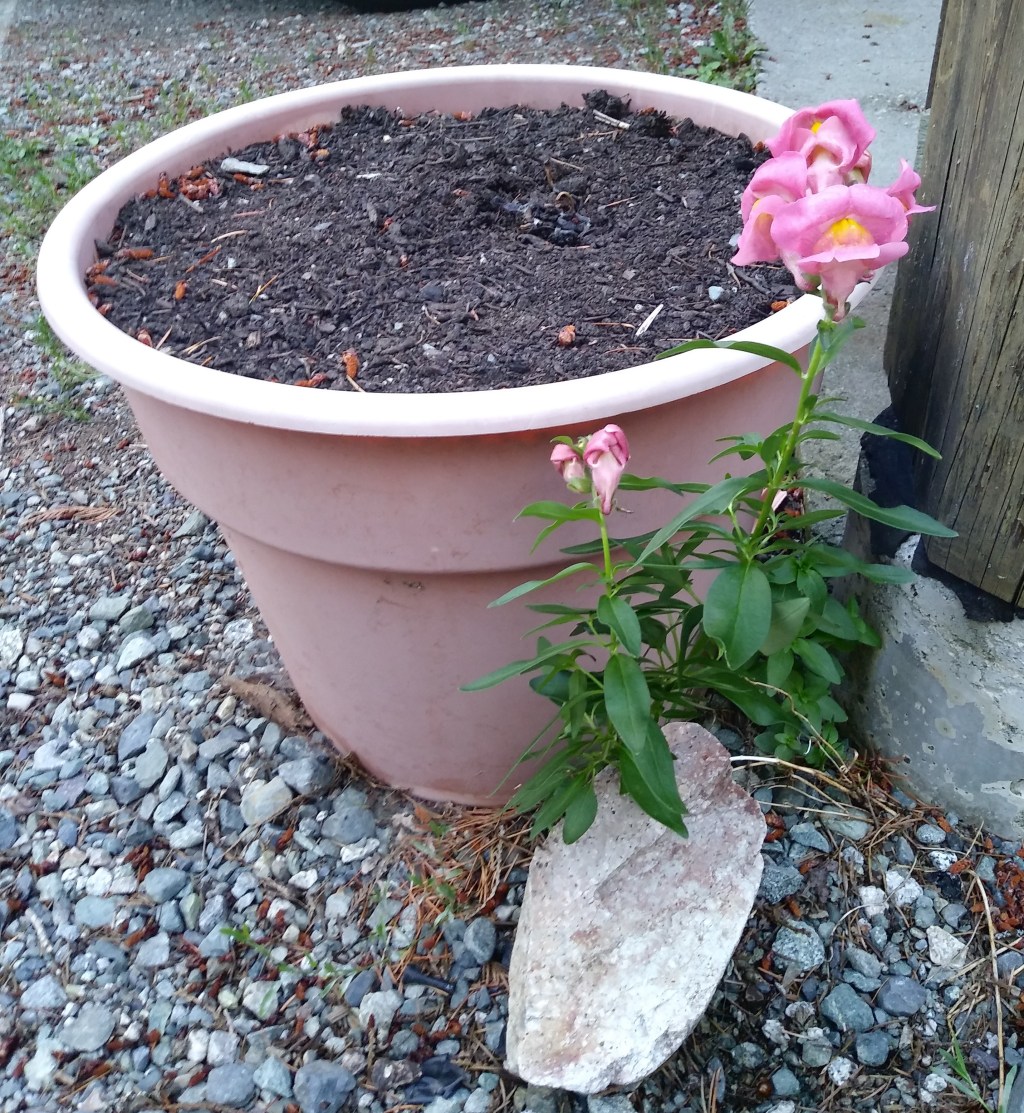
I’m a comically bad gardener. I’ve tried every one of the four years we’ve been in Pemberton to grow a successful garden, and the results have been less than formidable. I carefully plan out my gardens and flower beds. I research which types of veggies and flowers should go where and the conditions they need. I spend time planting, and watering, and fertilizing. And things never go as I plan. Take this picture for example.
This is the container where I planted some flower seeds at the end of spring in a beautiful sunny spot with fresh dirt. Where nothing took root and grew. And yet just beside this perfect container, growing out of nearly straight gravel, is a beautiful flower. Where did this come from? How did it get here? And how is it growing so vigorously with absolutely no attention from me? Does this make me frustrated? No. (Okay, for a brief second, maybe.) Instead I am wondrously amused at how beauty can come out of plans that go haywire.
My best example of this is our arrival in Pemberton. Before my boyfriend Nathan and I moved here four years ago, I had never been to Pemberton. We had plans to move to Vancouver Island once a long-awaited position came available for Nathan, and we were just waiting for the opportunity to unfold. We had carefully laid plans. So imagine my surprise when Nathan calls me at work one day and tells me to start looking at properties in either Squamish, Whistler, or Pemberton because he’d been offered a position based out of Whistler. Less than a month later we were moving, and six months later we found what we hope is our forever home. Did we plan for that? Definitely not. But beauty emerged in the form of this lovely town that we’ve fallen head over heels in love with, and now can’t imagine leaving.
As appreciated as this break in planning was this weekend, I won’t be hanging up my trusty to-do lists just yet. I’ll keep planning, and stay very aware that, as the poet Robert Burns said, the best-laid schemes of mice and men often go awry.
And when they do, I’ll be ready to appreciate the beauty that will surely unfold.
Having already written a couple of posts with sweet recipes I was convinced that my next inspiration would be of the savoury variety. That was until my physio mentioned she had lots of rhubarb growing in her garden (it’s currently in season) and did I know of any recipes.
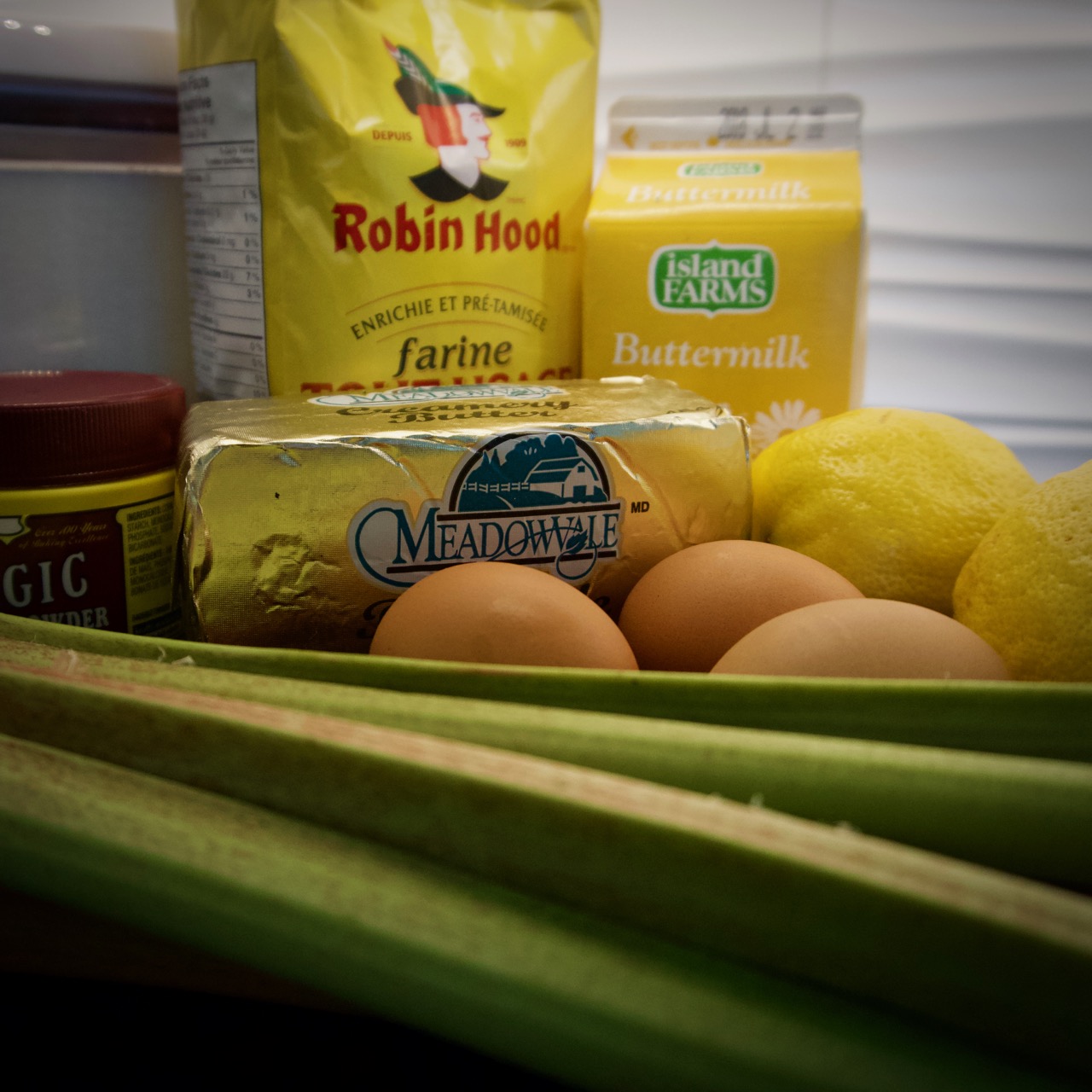
Well, that got my inquisitive side poring over Pinterest trying to find the perfect rhubarb recipe for her. I found cakes, pies and mojitos and shared a few I thought easy and suitable. However, some were deemed too complicated and one recipe was overlooked due to the lack of an oven; but not in my kitchen! And so it happened that was the recipe I tried when just the right amount of rhubarb turned up on my doorstep! (Plus the recipe calls for a bundt tin which I have a slight obsession with at the moment!)
I had been looking for a recipe that I thought would bring out the fresh, slightly tart, flavour of the rhubarb but still with just the right amount of sweetness and this Lemon Rhubarb Bundt Cake, from BC food blogger Warm Vanilla Sugar, fit the bill exactly!
Of course, I did not intend to eat this cake all by myself, particularly given the weight loss crusade that I am currently on, so it was shared with friends. Plus a large chunk was also offered back to the rhubarb provider, and well received at that!
Hopefully you can get your hands on some rhubarb before it is out of season and give this cake a try. I can guarantee it won’t last long!
PS I promise the next recipe will not be a cake!
Ingredients
For the cake:
1 cup (2 sticks) unsalted butter, softened
1 3/4 cup granulated sugar
2 lemons, zested
3 eggs
1 tsp pure vanilla extract
2 1/2 cups + 2 tbsp all-purpose flour, divided
1 tsp baking powder
1 tsp Kosher salt
3/4 cup buttermilk
3 cups rhubarb, diced in 1/2-inch pieces
For the Lemon Glaze:
2 cups icing sugar
1 lemon, juiced
1 tbsp melted unsalted butter (FYI I didn’t use)
Directions:
Preheat oven to 350 degrees F. Grease and flour a bundt cake pan. Set aside.
In the bowl of a stand mixer, or a large mixing bowl, beat together the softened butter, sugar and lemon zest until light and fluffy, about 3-5 minutes. Scrape the sides of the bowl with a spatula and then add the eggs, one at a time, until fully incorporated. Mix in the vanilla.
In a large bowl, whisk together 2 1/2 cups of flour, baking powder and salt. Add 1/3 of the flour mixture into the egg mixture along with 1/3 of the needed buttermilk and mix on low speed. Alternate with flour and buttermilk until both are fully incorporated.
In a medium bow, or large ziplock bag, toss the rhubarb with the remaining two tablespoons of flour until the rhubarb is well coated. Gently fold rhubarb into the batter with a rubber spatula until it’s distributed evenly.
Turn out cake batter into the prepared pan, using a spatula to gently spread and level it out.
Bake for about 60-70 minutes, or until the cake springs back gently when touched and a toothpick inserted into it comes out clean.
Allow cake to sit and cool in the pan on a wire rack for 30 minutes.
Meanwhile, make the glaze by whisking together all the glaze ingredients until smooth. Thin with extra lemon juice or thicken with more powdered sugar as you see fit.
When the cake is cooled, tip it out onto a serving plate and generously drizzle cake with the lemon glaze.
Slice and enjoy.
Yields 12 slices but it depends on how big your slices are! 😉
This past month I have been thinking a lot about mindfulness and mindful eating.
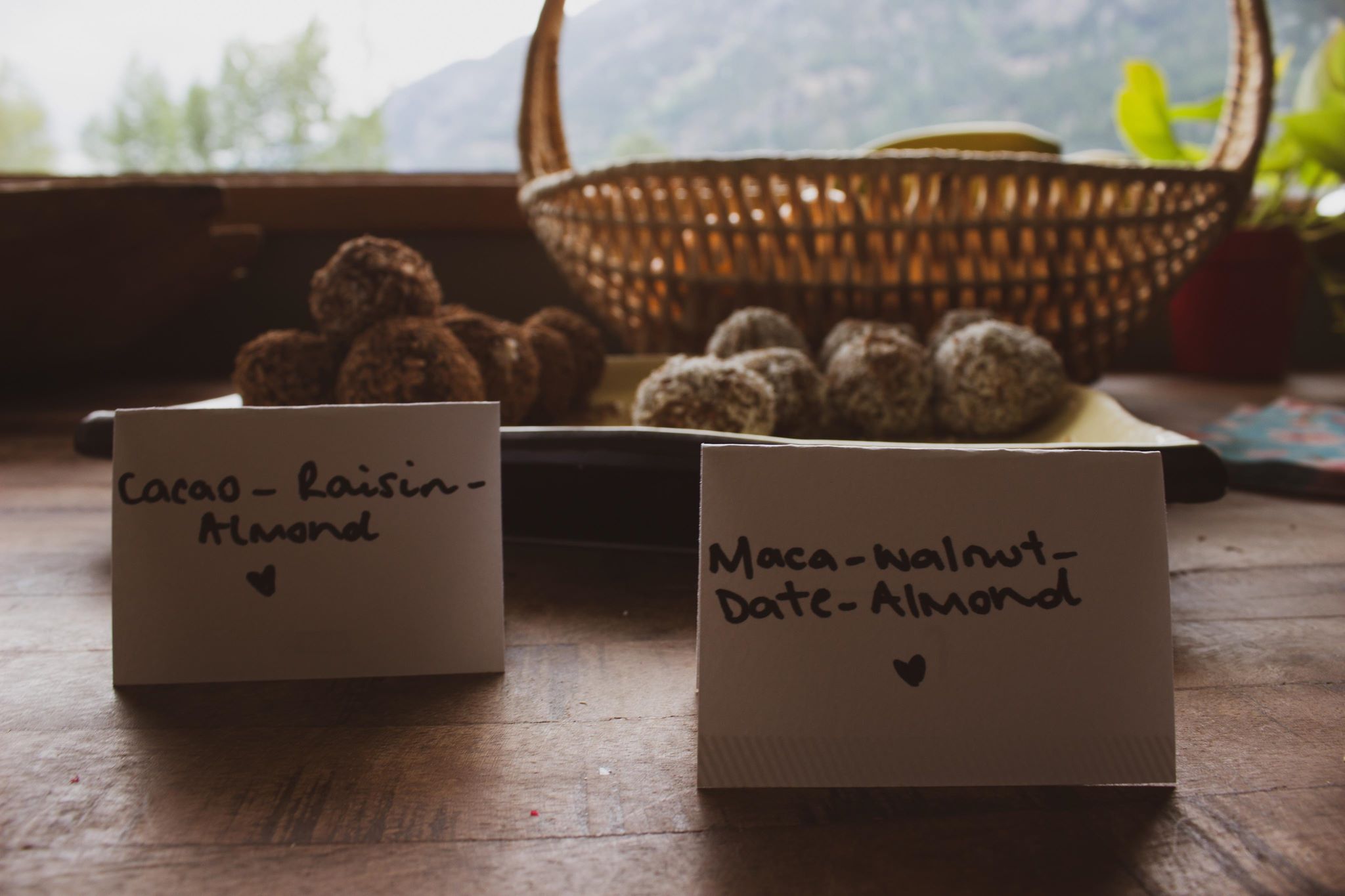
Anngela Leggett (Evergreen Fitness) and I recently ran the Mindful Morning Retreat at Blue House Organics. It was a magical morning consisting of a beautiful yoga practice with Anngela, raw treats, and a circle of discussion around the way we eat and the way we think about food.
What an amazing experience it is to openly share your experiences with mindfulness and food with a group of unique and inspiring individuals. I was blown away.
I knew I wasn’t going to be delivering exactly what people would expect. I was there as a guide, to show people the ball was already in their court, and help them to discover how they could realistically apply mindful eating to support mental health, to their own individual lifestyles.
As it turns out, I may have learned more from the group than they did from me! I learned new ways to approach mindfulness, I was taught how to be grateful for the action of making dinner for your loved ones, I was taught how to be mindful through your purchases of food, not just at meal times, and I learned just how important these reminders are.
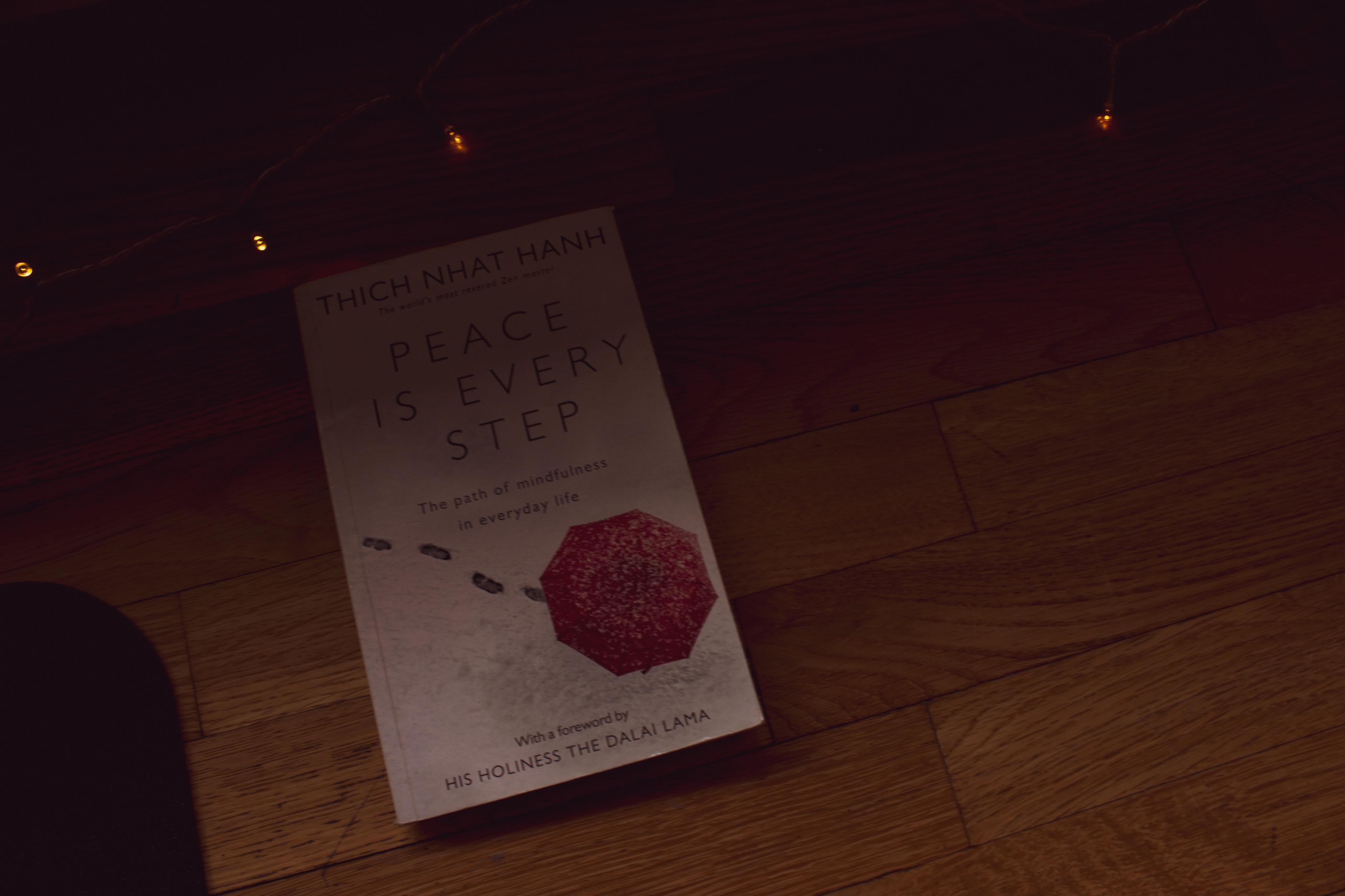
I shared this reading with the group from Peace Is Every Step, by Thich Nhat Hanh:
“One day, I offered a number of children a basket filled with tangerines. The basket was passed around, and each child took one tangerine and put it in his or her palm. We each looked at our tangerine, and the children were invited to meditate on its origins. They saw not only their tangerine, but also its mother, the tangerine tree. With some guidance, they began to visualise the blossoms in the sunshine and in the rain. Then they saw petals falling down and the tiny green fruit appear. The sunshine and the rain continued, and the tiny tangerine grew. Now someone has picked it, and the tangerine is here. After seeing this, each child was invited to peel the tangerine slowly, noticing the mist and the fragrance of the tangerine, and then bring it up to his or her mouth and have a mindful bite, in full awareness of the texture and taste of the fruit and the juice coming out. We ate slowly like that.
Each time you look at a tangerine you can see deeply into it. You can see everything is the universe in one tangerine. When you peel it and smell it, its wonderful. You can take your time eating a tangerine and be very happy.”
“They offered to help us connect the dots between food and mood. I went to pick up a few good lifestyle hacks that would help me come away from that moment when I’m standing forlornly in front of the fridge, with a fistful of carrot sticks and a dash of psychic resilience instead of a spoonful of Nutella and a guilty conscience.
Our guide, Maguire, having survived six years of disordered eating and come out the other side with practical wisdom to partner with her science degree, informed us that there is no such thing as good food and bad food. She invited us to replace that hazardous dichotomy with mindfulness. Self-care and slowing down. The Mindful Morning Retreat wasn’t an intervention, a six-step program or even a specific solution. It was quite simply a beautiful morning of yoga followed by tea and treats, and the chance for a circle of people to sit together and make connections—between our experiences and other people’s experiences, between our eating habits and our emotions. It was the welcome mat to mindfulness. It was the reminder that attention, not willpower, will save us, from pathology, addiction, the downward spiral of self-loathing.”
Some questions to ponder:
What does mindfulness mean to you?
What does mindful eating mean to you?
How can you realistically apply this to your own life?
Do you think about food as being ‘good’ or ‘bad’?
Do you feel guilty after eating certain foods?
Does social media influence how you feel about food?
AKA Mr. Moran, Randal John, Miracs or simply – dad.
My green thumb has been inherited through a long line of amazing gardeners. I am just barely starting to scratch the surface of my mom’s flower power, but I’ve been in deep with my dad’s veggie garden sense for longer then my subconscious knows. Most likely my conception is the root of my problem, this gardening obsession of mine.
RJ, as he’s known to most, is a “retired” teacher: one of the best. His forte is math; a subject I grew up hating, which inevitably led to a few tears at the kitchen table over algebraic equations. Overall I did well at. It’s also not a coincidence that my initials are 3 M’s. He is full of dad jokes, he is an athlete, he is highly involved in the community, he landscapes on Lake of the Woods with his other “retired” friends during the summer and he’s always up for a good time.
When it comes to gardening dad is a full experimenter.
Like father, like daughter.
Since being gifted a pocket calculator or I mean cell phone, RJ’s “we’ll see” experimental attitude has become even more evident and I love it every bit of it. (Small back-story; dad used to drill my brother, our friends and I with math problems because a calculator in our pocket was something we’d never have… so, this is a big HA! told you so moment that I’m taking full advantage of.) Really there is too much awesomeness to share and well… perhaps it’s best we keep some family secrets but allow me to enlighten you with a couple excerpts from text messages complete with photos.
“Trying something new grinding egg shells and coffee grounds putting them in the tomato holes.”
“Also tried some with an egg in the hole. Keeping track of which ones got what.”
“Planted some corn and am experimenting with Epson salts on every second row – again, we’ll see…”
“And finally my parsnips from last year that I leave in all winter – so yummy!!!”
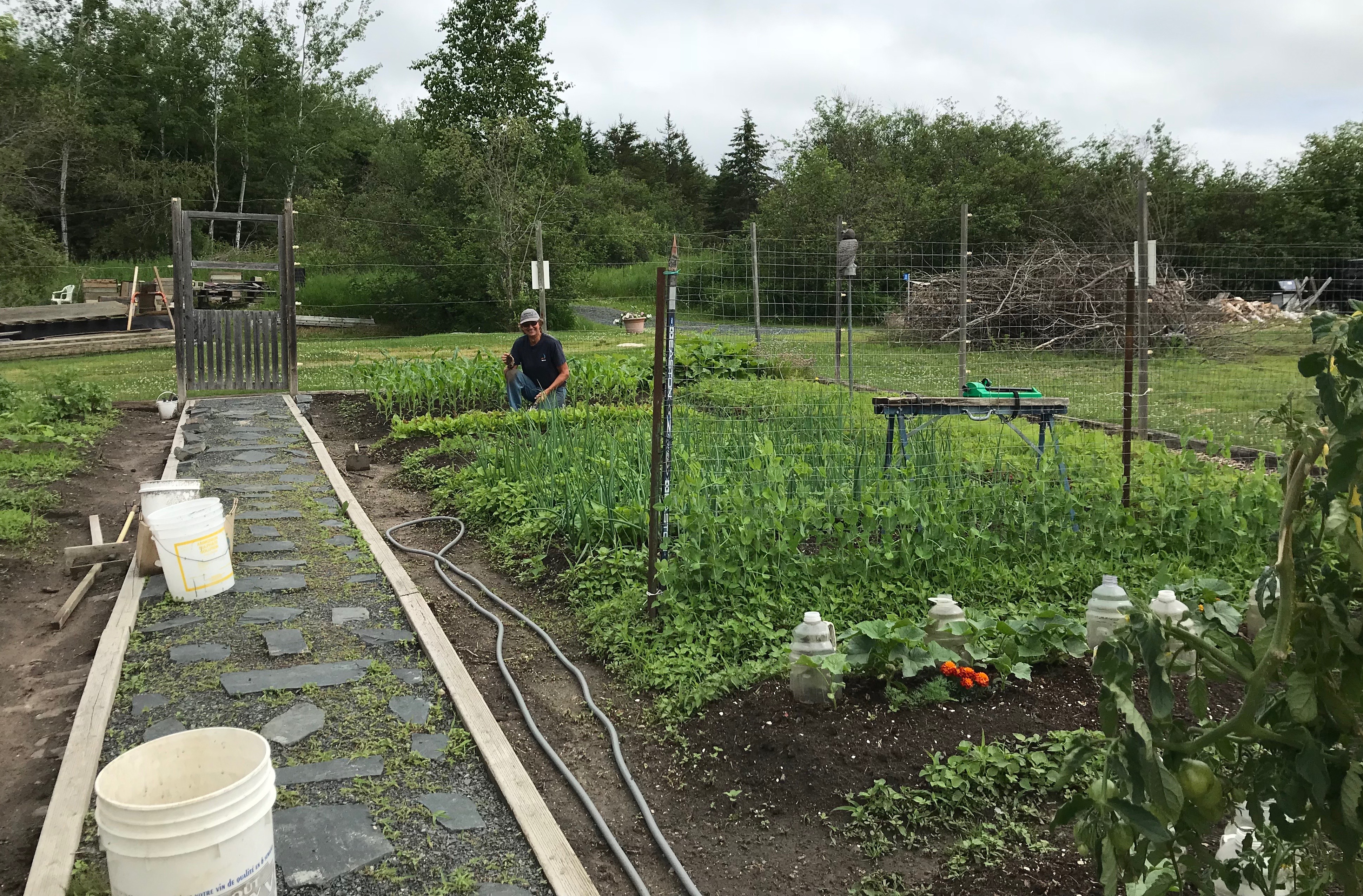
Of course, there are the show-off photos. Dad and I have been firing pictures back and forth of what we’re growing and what’s ready to eat regularly. Rj’s last photo was of what he collected for a TRUE garden salad for dinner, claiming that icicle radishes might be his favourite at the moment but he’d like to try growing the spicy purple daikon variety I‘ve got in my plot. I’ve even been able to share video walkthroughs of my garden. Basically, we each get to live what’s in our respective gardens in a matter of seconds even though we are 2,427km away from each other: technology is very cool.
RJ’s TRUE garden salad
Perhaps the best part of RJ’s massive garden is that it’s always open for foraging to neighbors and friends. Growing more then he and mom can eat really goes to show that when you’re passionate about something and you can share it with others you get the best of both worlds.
I already know that I’ll have a lot of vegetables to share this summer as I have planted more than two of us can eat, but I’m happy to carry on this family tradition out west.
“Tell me more about seeds,” asked my three year old, way back when. It was spring. We’d been mucking about in the dirt all morning, depositing tiny treasures in the warming earth.
Now 5, even more helpful on the seed front.
A seed is an inkling, I wanted to say. It is its own ambition and instruction book, all bundled into one. It is a packet of information. It is your heritage and your birthright, little man, even though you are inheriting a world in which the control of more than half of the world’s seed stock has fallen into the hands of a few mega-chemical companies. Some people call that bio-piracy. But I don’t want you to know about this yet. Because thinking too hard about these things makes me want to crawl into bed, pull the duvet over my head, and refuse to get up again.
But you, Small, you make me want to sit on my haunches in the warming earth, with some trowels and forks and little packets full of seed. You make me want to cajole a beautiful harvest out of the little square of world I find myself inhabiting, and so, every spring, we start at it, with just a handful of seeds and a fistful of hope.
And by this time of year, I look at the Life Force asserting itself in my garden, and feel it coursing through me, as I pick strawberries, admire the calendula, tug up a radish, measure the height of the sunflowers just by standing next to it and gazing up… Hope. Hope. Hope.
(And weeds. Of course. Let’s not get too precious.)
“Every young person should recognize that working with their hands is not a degradation. It’s the highest evolution of our species. Start a garden. Create a playground in the way you grow food. Save seeds. Cook. Create community. We are not atomized producers and consumers. We are part of the Earth family. We are part of the human family. We are part of a food community. Food connects us. Everything is food.” ~ Vandana Shiva
Thank you to Evelyn Coggins for sharing this video with me.
My first interactions with coffee took place on Sunday mornings. My sister and I would fight over who was going to add the sugar and milk to my father’s cup. We’d wait impatiently by the crackling coffee maker only to pull the pot away before it was finished brewing, tiny drops sizzling as they hit the hot plate. I’d sneak spoonfuls of coffee when I thought no one was watching. Always hoping I would enjoy the taste but every time I was sorely disappointed. “It’s an acquired taste” my father would say as I brought him his cup, spilling it along the way.
While finishing school, I took a part time job at a small cafe in my hometown in Quebec. It was, and still is, an adorable two storey house, along the main drag, that was converted into a cafe. There is a lush garden out front, a covered porch for rainy days and the coziest reading nook upstairs. The owner, Cindi, had lived a decade in Vancouver and brought her coffee knowledge and West Coast style back to the shop – passion she later passed along to me. Perhaps it was the environment, perhaps it was Cindi’s deep rooted passion or a likely combination of the two, but serving coffee started to feel like home. There were the regulars who came in each day, like clockwork, each desiring a completely unique rendition of a seemingly simple drink .“Coffee”. You know how some people say dog owners kind of resemble their dogs? Well, this is how I began to feel about people and their coffees.
I appreciated the uniqueness (of both the coffee and people) and began to take pleasure in preparing each customer their individual one-of-a-kind drink. Customers came in groggy and in a rush, and I could see, with that first mindful sip, a calm wave wash over them, almost as though a little light turned on. They’d head out to conquer the day with a little more pep in their step.
When I first moved to Pemberton a little over 6 years ago, my first mission, naturally, was to seek out the best cup of coffee. I had become rather particular over the years in precisely what I was looking for in an espresso. You could say, I had finally acquired the taste. I was delighted when I came across Mount Currie Coffee co. Walking into the shop for the first time, before even tasting the coffee, I just knew it was going to be good. The Synesso espresso machine steamed away and the smell of a finely roasted espresso filled the air. It wasn’t long before I applied for a barista position and became part of the MCCC team, and got to know the amazing Pemberton locals and their drinks of choice.
If you don’t know, coffee is grown in areas within the “coffee belt” or “coffee bean belt” which hovers around the equator, in countries such as Mexico, Columbia, Ethiopia, Papua New Guinea, etc.
Coffee trees also need an average altitude between 1800-3600 ft to grow to produce a high quality bean.
The bean itself is the seed of a coffee cherry that grows on these trees. The cherries are most often handpicked, processed (a laborious pulping process that removes the flesh of the cherry and dries the bean), transported in large burlap sacks as “green beans”, roasted (which is an art in and of itself), packaged, ground, brewed and finally served to the consumer.
It’s an amazing journey and I’ve always felt privileged to be the last one that gets to put my spin on it before the consumer gets to enjoy it. It’s a lot of responsibility to make sure that bean gets the attention it deserves after such a journey.
A coffee cupping at PalletThe evolution of a coffee bean being roasted
There is a lot to know about coffee and each step in the process seems to be just as important as the next. It’s sort of art meets science meets farming which are all of my favourite things.
I could nerd out and talk about coffee for days and I don’t even know all there is to know about coffee. How could you? There’s just so much to know! Which is why I am so excited to be taking my coffee knowledge and skills to the next level with MCCC.
Pemberton, there are some exciting new things coming your way in the world of coffee!
Get your travel mugs ready and stay tuned — there’s some buzzing coming from the industrial park.
Whew! All this talk about coffee, I’m off to get myself an italiano (8oz double shot americana). Yum!













 Traced Elements