Blog

  • Courting Wonder

    Courting Wonder

    On my desk right now is a gorgeous little collection of essays called Wonder and Other Survival Skills, put together by the editors of Orion magazine. On its cover, a young girl presses her hand against the surface of a lake: skin of girl meeting skin of lake. From this meeting, a ripple moves.

    the ripple


    “Is wonder a survival skill?” H. Emerson Blake asks in the foreword. “The din of modern life pulls our attention away from anything that is slight, or subtle, or ephemeral. We might look briefly at a slant of light in the sky while walking through a parking lot, but then we’re on to the next thing: the next appointment, the next flickering headline, the next task…Maybe it’s just for that reason—how busy we are and distracted and disconnected we are—that wonder really is a survival skill. It might be the thing that reminds us of what really matters, and of the greater systems that our lives are completely dependant on. It might be the thing that helps us build an emotional connection—an intimacy—with our surroundings that, in turn, would make us want to do anything we can to protect them.”

    By my own definition, wonder is the ability to travel beyond attention, beyond mindfulness–to truly make an encounter with the world in a way that, for the slenderest of moments, lifts us out of ourselves and returns us back with something more. Something of the ‘other’ we’ve encountered travels with us. A little of the world comes into the interiority of us and lodges there. Permeates.

    Winter is a season of rest for most of us land-based folks. A season of living in a place of dreams and visioning (literally, as we get caught up on sleep, and plan for the year ahead.) This is the first season I’ve stopped teaching completely. I felt the need to let the work do a deep dive into silence, and (beyond the day-to-day chores of keeping animals, which never go away), to truly let myself drop out of time. I sleep when I’m tired. I wake up when I wake up. I have breakfast and a cup of coffee, before I go out to do chores. Which sometimes makes me feel like a slacker, but it also feels… luxurious. Luxurious in a simple way I haven’t allowed into my life before. A spaciousness that holds its own kind of wonder.

    The other reason I decided to stop teaching completely once the snow hit in December, was I wanted my horses to feel like they belonged to me again. 2018 was our busiest year teaching together (THANK YOU, PEMBERTON!) but I wanted a chance to ride when I wanted to again, instead of working a horse so they would be ready to say ‘yes’ to a student. I wanted to WANT to ride again. To wander about aimlessly bareback with nothing but a lead rope joining me to my horse’s mind. I wanted the horses to be able to choose who came out to play with me, whenever I showed up at the gate with a halter or a bridle.

    20190123_163959-1

    What’s emerged out of this unravelling is that I was finally able to back Besa, my big paint/Friesian mare. When she came to me 18 months ago, she was an untrained 6-year-old, freshly weaned from being a mamma to a feisty filly. She made it very clear to me- in her lack of desire to be caught and her extreme reactivity, power and athleticism- that I’d have to take my time with her. Given space and the permission to approach me (instead of me expecting to approach her and do what I wanted), she decided that humans were worth being curious about. Her curiosity flowered into full-blown affection. She’s the first horse to come to anyone out of the field now, and she sometimes chooses to pull me (or whoever I’m accompanying into the field) in against her chest with her muzzle, the closest a horse can come to giving a hug.

    Besa’s been asking me to do things with her for months (Proper things! With a bridle and tack like all the other horses!) and all summer and fall I just didn’t have the capacity. But these last few weeks I’ve slipped onto her back and let her carry me around our little maze of snow paths in a mutual exchange of trust: I will trust you with my body, if you will trust me with your body. The ‘training’ part of it can come later. For now, all I want is her to turn her head to me, so she can look at me fully out of her huge dark eye: Oh. So now you’re up there now. So that she can yawn and snort and let all the tension go out of her nervous system, and get used to this strange new way that horses and humans can be together.

    Perhaps it’s me she’s been waiting for all along. Perhaps I needed to drop into this spaciousness for us to find this way to trust each other.

    There’s one essay that stands out for me in this slim little collection that sits on my desk. It’s Chris Dombrowski’s Kana: a father grasps at the nature of wonder. In it, he defines Kana as “a word or figure the Japanese haiku poets used as a kind of wonder-inducing syllable (it translates loosely into English as an exclamation point.)… that heart-stutter we receive when an image of the world takes root in us…”

    His essay shares the spell of a day spent morel hunting with his twenty month old son. The way the boy wanders across the face of the burn, trailing a whitetail’s antler behind him, carelessly decapitating the very mushrooms he’s hunting for:

    …he is either in a daze of boredom or he is walking kana, penetrated each step by the world, not penetrating it. It’s tempting to call this spirit naïveté, but it’s not: it’s wisdom we lose along the way.”

    Perhaps that’s what I’ve been courting this winter: wisdom I’ve lost along the way as I’ve been coerced into ascribing to linear time, to capitalism, to the many demands the constructs of being human impose upon us. There is gentleness here, in this wonder, that doesn’t feel rushed or imposed. A hand resting against the surface of a lake.

    I’ve wanted to broaden the scope of my horse and nature based teaching practice to include workshops for adults since I started Mountain Horse School in 2012, but I’ve shied away for a long time. I’ve always felt comfortable with kids because they’re so immediate, so open still to this touch of the world upon them. Grown-ups’ responses are layered. More conditioned. We need more language to access understanding, and experiences that can operate like keys opening the locks of ways of perceiving we’ve long put away. Grown-ups want reasons to pacify our rational, linear ways of thinking, and we want to know if playing with opening the doors to wonder, if walking Kana is ‘worth the investment’ of our time. We’ve become used to being sold meditation through a list of its benefits. A walk in the woods has become a thing we could pay for. Forest bathing, it’s called in the brochures.

    What if wonder is the gateway to possibility? What if it’s the only skill that will give us the tools, insight, and power we need to move into (here I am, throwing another book title at you!)  The More Beautiful World That our Hearts Know is Possible? What if the benefits of wonder—similar to its more lauded cousin, gratitude—might be the resurrection of a life woven into belonging with the wider world that sustains us?

    whale's earbone
    Small watercolour of a whale’s ear bone from the intergalactic spaceship that is my desk. Because of the complexity of their hearing, whales’ inner ear bones are contained within a separate chamber, not encased inside the skull as ours are. It amazes me how much this bone looks like a shell. If I held it to my ear, would I hear the sound of the sea?

    It’s not up to me to answer these questions. I can only speak from the lens of my own experience, my own perceptions. In lieu of that, I can say with certainty that this winter’s dreaming I’ve been luxuriating in, this kana I’ve been walking in my own life, feels absolutely essential to the future that comes next. I can say—if I may speak with authority based on the way things feel from the intergalactic spaceship that is my writing desk this afternoon—that it HAS been absolutely necessary. That nothing is currently more important. Oh, the great irony that ‘doing the work’ this winter has actually meant ‘doing less work—!’ (Is that an exclamation mark or is it kana? You decide.)

    So, in the spirit of wonder being the gateway to possibility, I’m issuing a little dare to myself. Actually, it’s not little at all. On Feb 17, I’m offering a one day workshop called Lightning Seeds: Opening the Gateway of what’s Possible, in collaboration with my dear friend, animal listener and translator Guliz Unlu. Come play with us as we walk kana in the company of the horses and other animals at Mountain Horse School, and court wonder through a combination of equine guided learning, animal communication, intuitive herbalism, earth wisdom, and soul craft. Curious to know more? Please visit our website or facebook page for all the juicy details!
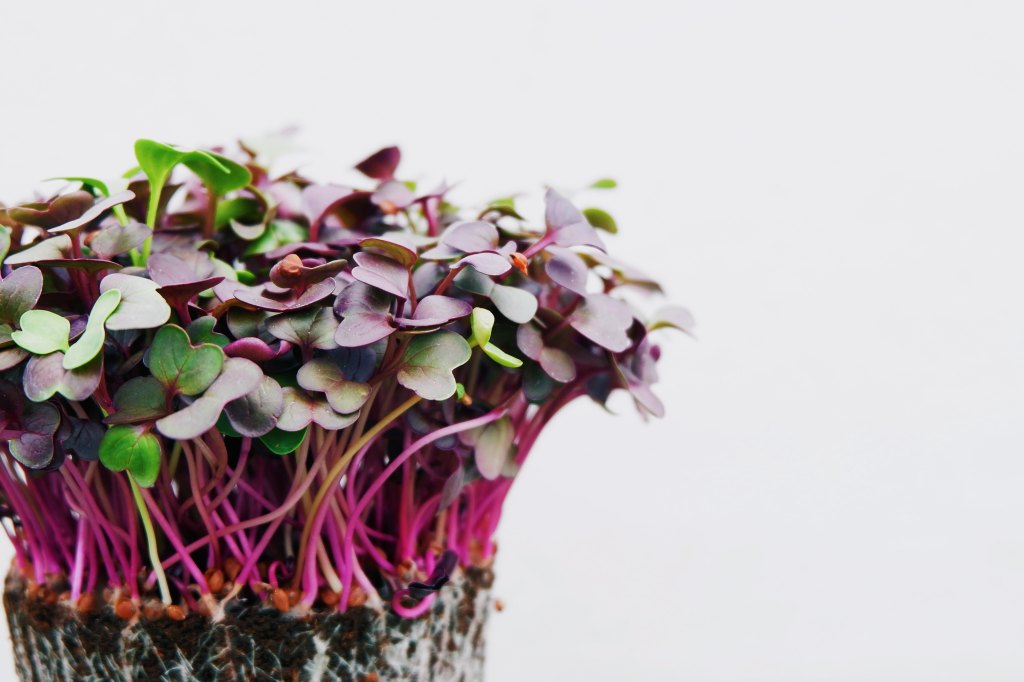
  • Sprout away the winter blues: the marvel of microgreens

    Sprout away the winter blues: the marvel of microgreens

    Molly Costello, a wonderful artist I just discovered (thank you instagram), asked her community this week: how do you get through winter?

    More specifically, she asked, “how do you find joy in winter?” which is a very constructive re-frame.

    It’s a beautiful and productive thread, and prompted me to this place: SPROUT!

    Well, I was nudged as much by Molly’s question as by the $5 price tag on a head of wilted lettuce, and the price tag on a bunch of kale, which my garden no longer yields (most of it was nibbled down to stem by the deer, and anything that remained is now buried under a foot of snow) and which inevitably cooks down to a single mouthful, although any dirt I didn’t wash from it manages to expand in size in some perverse inverse leaf-to-dirt amplification equation). Plus, I was motivated by this instinct that when I make something from scratch, or see something grow, I feel stupidly happy; my kid engages more deeply in the real world, and we’re already in that constant tussle of real world versus seductive screen; also, a desire to have some greenery in the diet in the depths of winter. I already had a sprouting jar, so I pulled it out of the cupboard and carefully measured out my tablespoon of alfalfa seeds, rinsed them, soaked them in water overnight, and then begin the daily ritual of rinse, swirl, drain, sit back upside in the jar on the plate on the corner of the counter.

    deviyahya-1052792-unsplash
    Photo by Deviyahya on Unsplash

    Then, thanks to a combination of internet-smarts, sunflower seeds and encouragement from Stay Wild (apparently, Leah’s countertop at home is covered in sprouts and micro greens), and a great book from the library, I became a micro green grower.

    deviyahya-801405-unsplash
    Photo by Deviyahya on Unsplash

    Farmer and micro green guru, Elizabeth Millard offers a lot of great advice, but it’s her tone that I appreciate the most:

    “Winter in Minnesota is notorious for wearing optimists down to a brittle nub, but the more experimentation we did with micro greens, pea shoots, radishes and other tasty vegetables, the more we felt like we were extending summer into our house… There’s a certain thrill that comes with seeing seeds begin to pop into three first leaves, and if you’re wearing your pyjamas at the time, that excitement can feel doubled.”

    4b8cb2f8-92ef-4878-a1cd-53d643f28b4b--16795820412_4f4d4cfce6_b
    Microgreen guru Elizabeth Millard (left) and her partner Karla Pankrow of Bossy Acres farm in Minnesota

    As a person who works from home, being able to do things in one’s pyjamas is Mission Critical for me. It’s a flashing neon sign that says, “Lisa, this might even work for you.”

    And so, following the various bits of advice I’d gleaned from above-mentioned resources, I began, with one plastic salad box rescued from the recycling bin, some potting mix excavated from underneath the cobwebs in the garage, and my little packet of sunflower seeds acquired from Stay Wild.

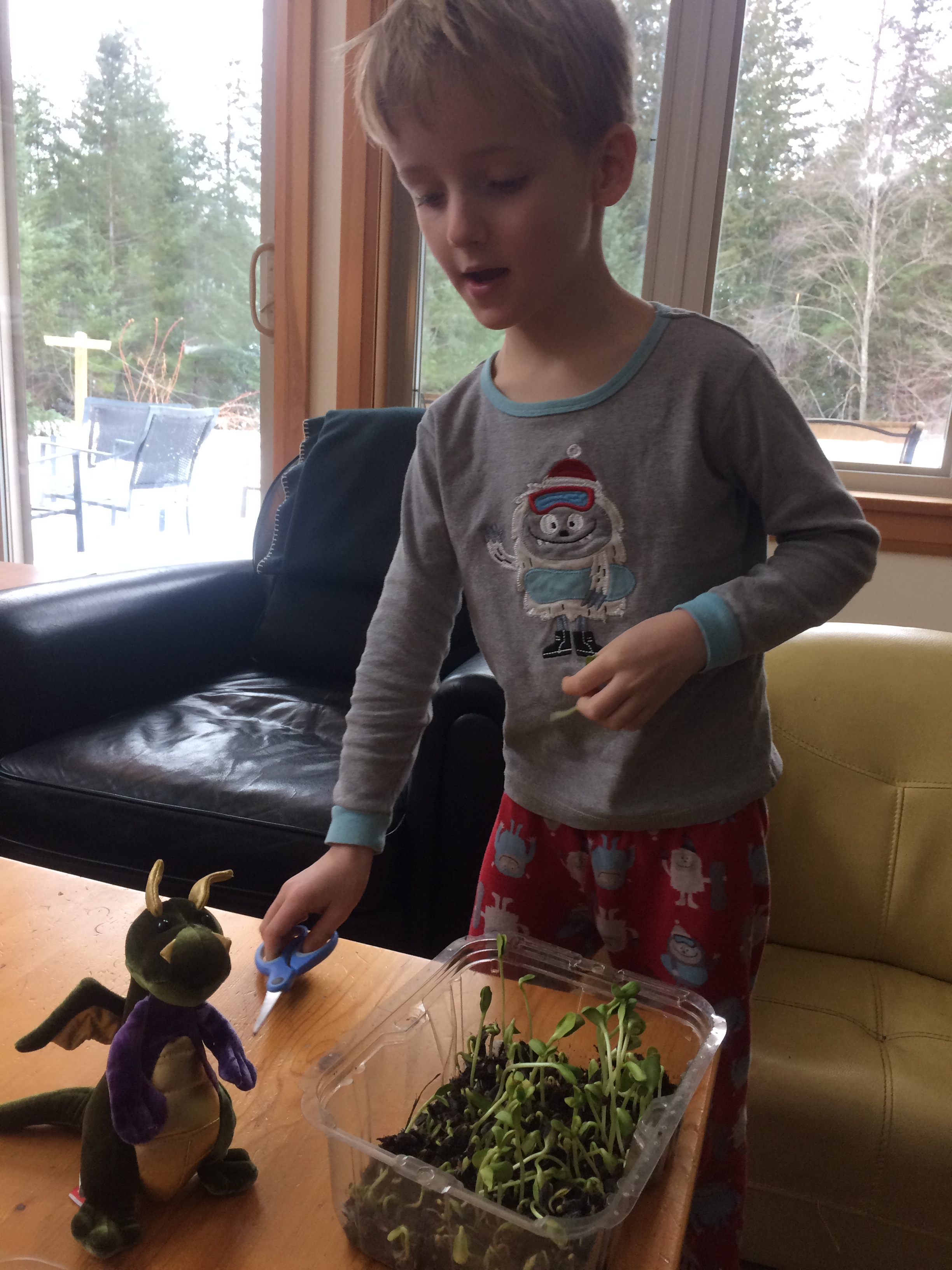
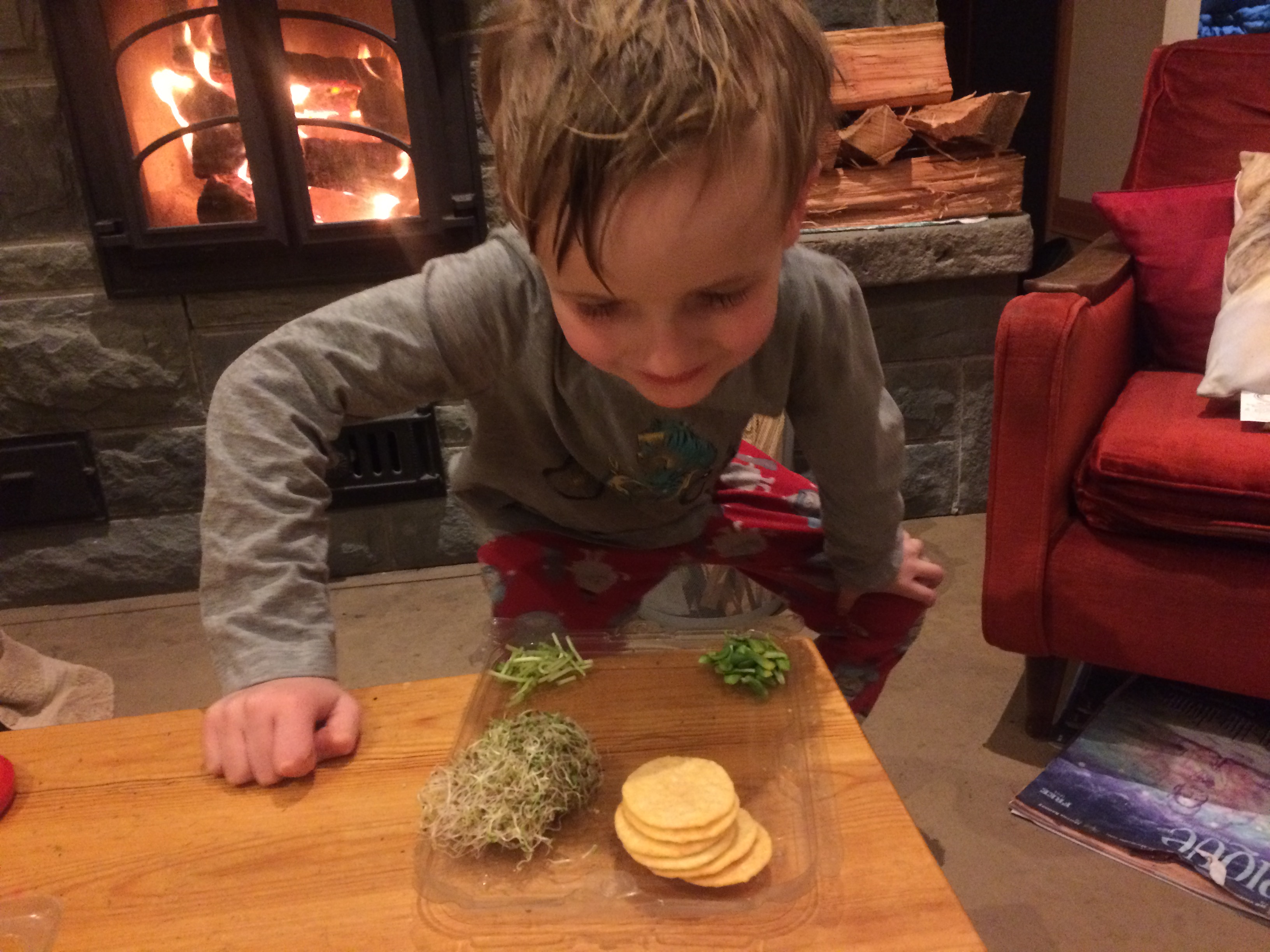
    A few days later, my 5 year old put himself in charge of the harvest, and Mr Just-Ichiban-Noodles-for-Me, snipped and plucked and made merry with the nutrient-dense cotyledons (the initial two leaves of a seedling, that give way to the plant’s “true leaves”). He made cracker-sandwiches for us, from the micro greens, and ate his way through much of the first harvest. Hooray!

    e19ef333-b272-4407-aea3-e48d7d0f1a87

    Some wins just feel too easy… I spent $3, used garbage, and my kid fed himself greens (and also introduced his meat-eating dragon to the joy of omnivorism.)

    img_0313
    Look, Sparky! Micro greens. Feel free to toast them, if you like. Bu they’re just as good raw, for those who don’t have the ability to breathe fire.


    img_0373
    Raw food chef-in-training preps the basic ingredients for a nutrient-dense snack for all the family.


    Added bonus, the micro greens made my dinner look more like the picture in the recipe book, which never happens! Wizardry. And joy.

    img_0402

    Millard said, in her book: “Sometime around the middle of February, it always seems to hit: the weariness of filling my shopping basket with fresh vegetables from California, Chile, Mexico, and even Peru or New Zealand. No offence to the hardworking farmers, because I truly appreciate the opportunity to eat oranges during a snowstorm. But these products require, by necessity, lengthy shipping times that sap them of flavour and nutrition to some degree. Still, it’s not easy to eat local when you live in a place that requires budgeting 20 minutes every morning for scraping the ice off your windshield.”

    How do you find joy in winter is a wonderful prompt, as I discovered when I read through the responses to Molly Costello’s post: cross-country skiing, running, sleepovers and dinners with friends, landscape planning and reading seed catalogues, being okay with not being totally okay, soup-making, sauna, drinking warm juice, extra gratitude practice, crafting, making art and cooking for friends, burning candles, forest walks, cold water swimming, making broth, hot baths, taking a cup of coffee outside cloaked in a huge coat, writing letters to long-distance friends and taking extra good care of the houseplants.

    If you want to get more specific, you could ask: where do you find joy in winter? And happily, I can now answer: on my kitchen counter.


  • Baking… it’s not just for people!

    Baking… it’s not just for people!

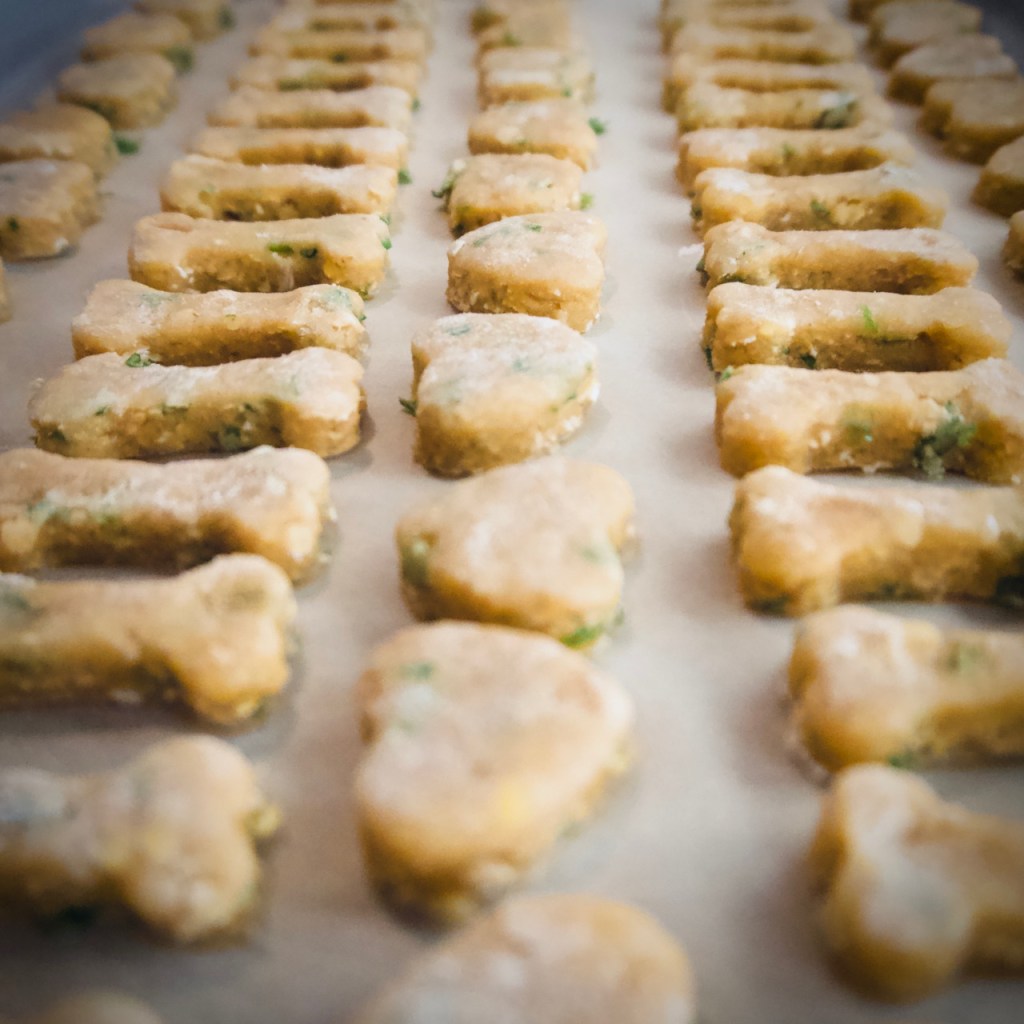
    Well, of course, it’s only people that can do the baking, but everyone can benefit from the outcomes. Like my puppy, who just turned one!

    What says love and happy birthday more than some home-baked cookies. Nothing, that’s what!

    I researched a few different recipes knowing that the main ingredient should be peanut butter as that’s one of his very favourite things! Also, I wanted to make something so I knew what was going into his cookies. The only difference with mine, compared with the recipe, was that I didn’t have any wholewheat flour so used all-purpose instead and used some chicken stock to bind it all together.

    For this occasion I went with the “Best of Breed” biscuits but I’ve already decided that the next biscuits I make will be peanut butter and banana and peanut butter and pumpkin – all three of his favourite things!

    Ingredients

    • 2 cups White Whole Wheat Flour or Whole Wheat Flour
    • 1 cup rolled oats, regular or quick
    • 1 tablespoon dried parsley or 2 tablespoons chopped fresh parsley
    • 1/2 cup nonfat dry milk
    • 1/2 teaspoon salt
    • 2 large eggs
    • 1 cup (9 1/4 ounces) peanut butter, crunchy or plain
    • 1/2 cup + 1 tablespoon cold water, or enough to make a cohesive dough

    Directions

    1. Preheat the oven to 300°F. Lightly grease a couple of baking sheets, or line them with parchment.
    2. Put the dry ingredients in a mixing bowl and stir to combine.
    3. Add the eggs and peanut butter. Stir to combine; the mixture will be crumbly.
    4. Add 1/2 cup + 1 tablespoon cold water, or enough to make a cohesive dough. Depending on the season, you may need to add a bit more (winter), or a bit less (summer).
    5. To make the cookies, roll the dough into walnut-sized balls onto a lightly greased or parchment-lined baking sheet and flatten to about 1/4” thick.
    6. Alternatively, roll the dough out to about 1/4” thick and cut out with a cutter of your choice. Gather and re-roll the scraps, and continue to cut biscuits until you’ve used all the dough.
    7. Lay the biscuits close together on the prepared baking sheets. Since the biscuits don’t include any leavening (baking powder, yeast, etc.), they won’t spread.
    8. Bake the biscuits for about 40 to 60 minutes, baking the smaller cookies for the shorter amount of time, the larger biscuits for the longer amount of time.
    9. When finished, the biscuits will be dark golden brown, and will be dry and crisp all the way through.
    10. Store in an airtight container or ziploc bag.

    And yes, they were birthday boy Qanik approved!

  • The Last Squash

    The Last Squash

    Bittersweet times are upon me these days as my personal stock levels of fresh garden produce dwindle down to the last survivors. Luckily seed ordering is in full effect to keep the dream alive! Yet, even though the light at the end of the winter tunnel grows brighter every day, you can still guarantee there will be times when we feel the need to: bundle up, get adventurous, come home and devour a hot bowl of soup.

    But I’ll reiterate before continuing that… #summeriscoming.

    Feeling inspired from an Instagram post by my “neighbor” Anna for a mega hearty vegetable broth and a recipe from My New Roots, I set forth to honor my last butternut squash with a soup so full of nutritional goodness that would make the new Canadian Food Guide salivate.

    So here we go – Butternut Miso Soup.

    Step Uno: Make Anna’s stock.

    • Once you’ve got all the goods simmering away go out and adventure for a few hours then come home to the most AMAZING smell, ladle up yourself a cup and savor the goods! Freeze what you don’t use in different sized containers for later. (I added in some carrot and celery because I had it on hand and well, I’ve never made a stock with out either!)


    Step Two: Start making the soup.

    Butternut squash, peeled & diced into ½“ pieces (approx. 3 cups), roasted at 375°F with some coconut oil, salt and pepper – one medium sized onion, diced – 3-4 cloves garlic, minced – 2-3 Tbsp fresh grated ginger (I keep mine in the freezer for easy grating and its keeps longer) – miso paste (Fuji Market in Whistler has a great selection, I used AWASE Miso)

    • Add some coconut oil into a Dutch oven over medium heat, then add the onion and cook until translucent then add in the garlic and ginger; allow everyone to mingle until fragrant. Then add in the butternut squash and cook for 5 minutes to absorb the flavors. Top the lot with the veggie stock and allow to simmer for 10-15minutes. Use one cup of water and combine with ¼ cup miso paste, whisking to combine then add to the pot. Remove from the heat and use an immersion blender to smooth out the soup. Add more stock or water to obtain your desired consistency and season with salt & pepper.

    Step 3: Wasabi cream.

    1 Tbsp wasabi powder – 1 Tbsp water – 2 Tbsp mayo – squeeze lemon or lime juice – dash of tamari

    • Whisk everything together and get ready to be addicted, and willing to putting this sauce on everything.

    Step Quatro: Eat the soup.

    • Serve the soup drizzled with the wasabi cream, sprinkled with black sesame seeds and topped with some pea shoots, micro greens or whatever is on hand. That is all.

    img_7124

    Simple. Delicious. Nutritious. Most importantly: made and grown with love.

    And remember… always trust a Swede.


  • A Veggie-Laden Twist on Shepherd’s Pie 

    A Veggie-Laden Twist on Shepherd’s Pie 

    Shepherd’s Pie is another great dish for experimenting with. It is also great comfort food on a winter evening! Lately I have been omitting tomatoes and garlic from my recipes. I don’t love garlic in particular and I am cutting back on acidic tomatoes. Eliminating these two ingredients is a challenge, as they pack a lot of flavour.

    With a lot of time in a good cast iron Dutch oven, you can bring out the flavour in SO many veggies. For shepherd’s pie you can experiment, but this time I used: 1 cup diced green cabbage, ½ an eggplant, a large yellow onion, 2 cups parsley, and several healthy dashes of Worcestershire sauce – as well as S&P.

    If you sauté those veggies at a low-medium heat for a good ½ hour – or more, you will have the flavour you want. And not have to resort to tomatoes for zing, or the usual garlic! The other veggie-friendly thing I did was steam a whole cauliflower and then mash it along with 8 fingerling potatoes, with plenty of butter and salt and the cauliflower steam water. All in all, this shepherd’s pie was a hit, and had tons of servings of nutritious veggies in it to boot. This is my re-boot of the usual “carrots, peas and corn” shepherd’s pie – which by my palate has had its day!

    Veggie Turbo-Charged Shepherd’s Pie:

    Ingredients:

    3 tbs pure olive oil

    ½ eggplant, small dice

    1 cup green cabbage, small dice

    2 cups parsley, chopped

    1 large yellow onion, small dice

    1 tsp pepper

    2 tbs Worcestershire sauce

    1 lb ground Pemberton-area deer meat, or grass-fed lean ground beef

    1/3 cup unsalted butter

    1 medium cauliflower

    8 small yellow potatoes (Pemberton Sieglindes are a treat)

    Salt to taste

    Method:

    Sauté all veggies (except cauliflower and potatoes) until well cooked and caramelised in cast iron Dutch oven.

    Brown deer meat/ground beef in a separate cast iron fry pan, then and add to veggie mixture.

    Add ½ cup chicken broth and 2 tbs cornstarch. Mix well. Mixture should thicken nicely.

    Boil potatoes until very fork-tender.

    Steam cauliflower.

    Puree steamed cauliflower in food processor fitted with steel blade until very smooth.

    Blend cauliflower and potatoes together in stand mixer with butter, salt and cauliflower steam water until you have a smooth consistency.

    Pour veggie mix into 9×13” casserole dish and spoon mashed potatoes/cauliflower over top. Spread well.

    Bake 350C for ½ hour.

    Enjoy!

    ** Leftovers: next day add a good splash of chicken broth to a serving of shepherd’s pie and it forms a stew that is very satisfying in a Thermos for lunch on the go.

  • AW NUTS: Nancy Lee finds out just why Nuts are so Expensive

    AW NUTS: Nancy Lee finds out just why Nuts are so Expensive

    I’ve been involved with the Fruit Tree Project the past two years. This awesome endeavour connects local fruit tree owners, volunteer pickers and community groups, such as the Food Bank, who share the bounty and reduce conflict with bears. I have enjoyed learning how to make crabapple juice and jelly, as well as eating delicious apples, pears, grapes and plums, so when the email came in looking for volunteers to pick black walnuts, I was in!

    My dear old Mom’s version of swearing is “gosh dangit” or “darg narbit” or “aw nuts”.  With the first two, one can imagine the true meaning, but I never understood how a delicious nut could be used as a cuss word.  Until now.

    Harvesting the nuts was quick and easy; you just pick up the nuts from the ground under the tree – who knew?  In no time, the 5 of us had collected 90 lbs! I was very excited with my share, a large bucketful, and imagined impressing my family at Christmas with something not tomato-based. (I grow too many tomatoes!)

    img_4855

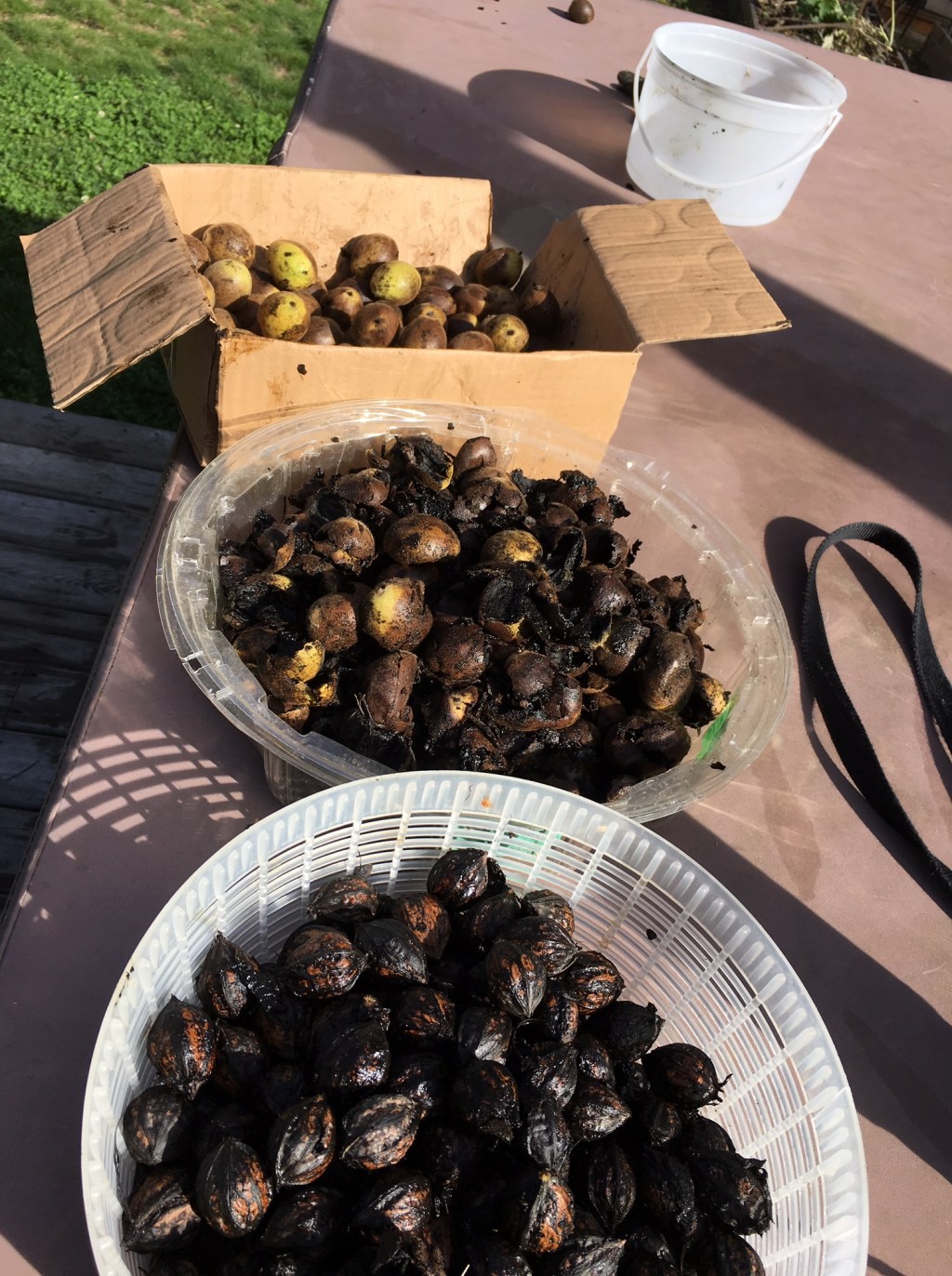
    Hulling the walnuts was also easy. I had been warned to wear gloves as walnuts stain but because the fruit was soft, removing the outer husks was quick work. Inside, a black glistening prune-like thing remained, hence the name “black” walnut. The black slime wasn’t easy to remove, so I went looking on YouTube and found a delightful video hosted by Farmer Drawl and his Long-Sufferin’ Wife from the Heartland (not really, but you get the idea). Drawl’s technique of husking the walnuts was a sledge hammer so I wasn’t convinced of his methods, but I kept watching. Once hulled, he “power-warshed” the walnuts in a large bin, “but that ain’t the end of the story”. He then put them into a smaller bucket, used a shovel to agitate them, changed the water, repeated this 4 times, and then and only then did they turn up looking like walnuts. Ha, I thought. I have a power-washer and a much smaller amount, so no problem.

    img_4858

    The darg narbit power-washer did a bit but Drawl was right; it didn’t finish the job. For the next two hours I tried methods like individual hand-scrubbing (that didn’t last very long), the shovel/bucket/agitate trick (didn’t work) and finally, the hand-pluck/fingernail scrape/rinse and rinse again/put in a large plastic mesh potato bag and roll it around on the grass on your hands and knees trick. I ended up soaking wet with black fingernails, but the result was a basket of things that finally resembled walnuts. Next week’s carrot cake will be worth it, I thought. Then Drawl says, “store ‘em for at least 6-7 weeks, then use a hammer to open ‘em up to git at the fruit”. Aw nuts.

    img_4859

    Fast forward to the week before Christmas and the big bag of walnuts sat ready to be divided amongst my siblings. Of course I kept a share for myself, and pulled out the nutcracker. I tried and tried and ended up with a broken nutcracker and a strained wrist, but no open walnuts. If I had this much trouble, I figured I would have to shell the nuts before I gifted them. Back to YouTube. Turns out black walnuts are notoriously difficult to open. Many different ideas were presented:  microwave ‘em, roast ‘em, soak ‘em. Nope.  Lightly tap the pointy end with a hammer. Nope. Nothing and I mean nothing opened the gosh-derned things. Then I remembered Farmer Drawl and pulled out the sledgehammer. I put half the nuts into the same mesh potato bag I’d used to clean them and smashed away on the concrete floor of the cold garage. I then spent the next hour picking pieces of fruit (the ones that weren’t dust) from the walnut shell shards, until I lost patience.

    img_5125

    End result: one lousy cup of small walnut pieces.

    Yes, they were sweet and tasty, but after all those hours of effort?!  I threw the rest of the unshelled nuts into the woods for the squirrels and birds. Family got tomato sauce for Christmas. Aw nuts!!

    ~ by Nancy Lee

  • Food and Feelings: Intentions for 2019

    Food and Feelings: Intentions for 2019

    Oh hello, 2019! I’m not someone who’s all about the “new year, new me” mantra but I do like to use the new year as a time to remind myself about the things that I love. I also use this time to set achievable intentions. To be honest, I celebrate my actual new year on my birthday (August 8th) and that is when I set bigger BHAG-ish goals. For 2019, I’ve set some intentions that will help inspire my happiness and that may require guidance from the community. I don’t have a very green thumb, I’m a creature of habit and I love being outside.

    If you have any suggestions or tips on any of the below intentions, please comment below this post or email. #help

    Pemberton on Christmas Day.

    Intention one:  Try something other than Pad Thai at Barn Nork

    I’m a frequent diner at Barn Nork (and also a frequent eater of their take out). I always switch up the starters but I can’t seem to deviate from their delicious Pad Thai. HELP! My goal for 2019 is to provide my taste buds a new experience via the Barn Nork train.

    Intention two: Always have local farm fresh eggs

    My name is Blair and I’m an egg-aholic. I start off every single day with a delicious breakfast that 99.9% of the time includes eggs. Since moving to Pemberton in 2012, I discovered how delicious farm fresh eggs are. Sometimes they are easy to buy and sometimes I feel like Sherlock Holmes trying to hunt down someone who will sell me at least a dozen. Over the years I’ve collected a few different resources for farm fresh eggs and I’ve learned to buy two dozen at a time. When I can’t find the eggs I desire, I buy them from the store and they just don’t have the same taste (in my opinion). Why should I let my eggs dip below my taste bud’s standards? I shouldn’t and I won’t! So, 2019, bring on the farm freshies!

    Intention three: Grow my own flowers (to cut)

    I’ve always been a sucker for fresh cut flowers. They are pretty and smell divine. I realized that during 2018 I spent a lot of money on purchasing flowers. Because I enjoy flowers so much, and I have the space to grow them, why try growing them? My husband has a greener thumb than I do and he’s agreed to help me out with this intention. I’m looking to grow flowers that are cat-friendly AND that are low maintenance. What do you think I should grow?

    One thing to note is that this past summer was the first summer (ever) that I managed to keep my lavender plant alive. GO ME!

    Intention four: Pick my raspberries, every day

    When I moved to town I shared with Shayne my love for raspberries and that I’ve always wanted my own raspberry bush. So, we planted a raspberry bush and we seemed to plant them in the right spot because they love to grow! Usually, halfway through the season, I seem to slip away from picking them daily and eventually forget about them. I usually have a moment where I remember (when I’m no where near Pemberton) and call a neighbour to send their kids to pick the berries. I have NO REASON to not pick the raspberries on a daily basis (unless I’m out of town, which, I guess, is a reason). I should also freeze them if I have too many. So, backyard bush, bring it on!

    Because it’s now January 10, 2019, and I’ve shared my intentions publicly with you, please hold me accountable. Also, if you have any words of encouragement or advice, please send them my way. Cheers to an awesome 2019 full of new menu choices, fresh cut flowers, raspberries galore and eggies from my neighbours.

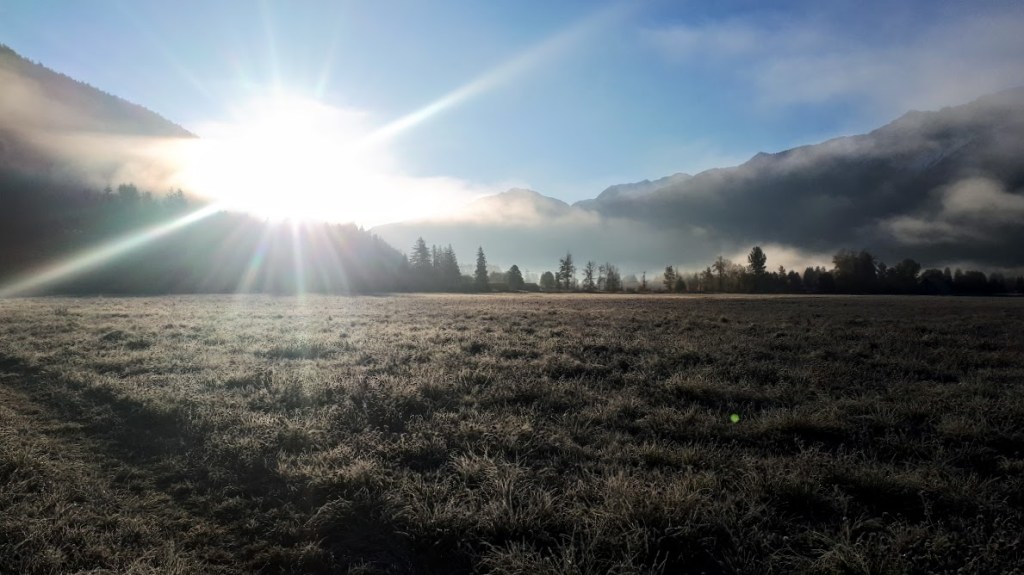
    Blue sky in Pemberton on Christmas Day.

    P.S. Want to drop me a line? My email is blair@blairkaplan.ca.

  • Where’s the Beef?

    Where’s the Beef?

    Happy New Year everyone!

    I don’t know about you, but I’m a little glad the holidays have passed. Don’t get me wrong. They were wonderful. Full of love, laughter, good times, and of course good food. One of the things I love most about the holidays is the food and drink. There are special recipes that I save only for this time of the year: homemade eggnog, butter tarts, ginger molasses cookies, mulled wine. Sure, I could whip up butter tarts any day of the year, but saving them for this special occasion makes them sparkle.

    The big finale, though, is Christmas dinner. The tradition in my family is turkey, but a few years ago I spent Christmas at Nathan’s parents’ house on Vancouver Island, and I wanted to make something special for his family as a thank you for welcoming me into their home. So I decided to try a new recipe: Beef Wellington.

    Ever since that year Beef Wellington has been the go-to Christmas dinner for Nathan and I. The original recipe came from Gordon Ramsay, but I read it incorrectly, which caused some interesting adaptations on my part. Instead of chestnut mushrooms, I used chestnuts and mushrooms to make my duxelle (mushroom paste). And last year we made another change that is here to stay. We went in on a quarter cow here in Pemberton, and with it came four beautiful beef tenderloin medallions. So instead of preparing a whole tenderloin, we did individual Beef Wellingtons, which I’m happy to share with you here today. The puff pastry to meat ratio is higher, they’re super easy to prepare ahead of time, and they look like perfectly wrapped little presents when they’re completed. Ideal for Christmas dinner. After trying this, you may never go back to turkey again. (Sorry.)(Not sorry.)

    Individual Beef Wellingtons

    Ingredients

    Beef tenderloin medallions, ~ 1.5″ – 2″ thick
    Grainy mustard
    Mushrooms (I used brown mushrooms this year, but any kind is fine.)
    Whole chestnuts
    Prosciutto (2 slices per medallion)
    Prepared frozen puff pastry, thawed.

    1.Roast the chestnuts. Peel while still warm, and set aside to cool.

    For two years I roasted my chestnuts in a cast iron pan over our woodstove, mostly for the novelty of singing “Chestnuts roasting on a woodstove.” This year I roasted them in the oven and it’s way easier, and faster. Make sure to score your chestnuts with an X, and I soaked mine for about an hour first. The idea is that the water will create steam and help loosen the skin under the shell. If you find they’re not peeling very easily, they probably need more time in the oven.

    2. Dice your mushrooms, and saute with a little butter and a sprinkle of salt. Cook until most of the moisture is gone, and they are soft and browned. Set aside to cool.

    The size of your dice doesn’t matter because we’re going to put them in a food processor later. The salt helps draw out the moisture. We’re looking to remove most of the moisture from the mushrooms so they don’t make the puff pastry too soggy.

    3. Mix the chestnuts and the mushrooms in a food processor until they form a smooth paste. Set aside.

    duxelle

    You may notice that I haven’t given any specific quantities up until this point, and that’s because this step is personal preference. Your mushroom to chestnut ratio is entirely up to you, as well as how much of this paste you would like. I was making Wellingtons for nine people, so I used an entire bag of chestnuts, and about fifteen to twenty mushrooms. It made enough for about two tablespoons per Wellington. You can also skip this part entirely if you don’t like mushrooms, or chestnuts.

    4. Pat your beef medallions dry and season with salt and pepper. Sear in a hot pan with a little olive oil, only a minute per side. Set aside on a plate. Brush the tops with grainy mustard while still warm.

    I like to use a little steak spice on mine as well. You barely need a minute in a nice, hot pan. We’re not looking to cook the steaks; we’re just looking for a little char on the outside to add flavour.


    5. Assembly time. Place a small piece of plastic wrap on your workstation. Lay down two pieces of prosciutto in an X pattern. Spread a spoonful of your mushroom/chestnut mixture in the centre. Place the beef medallion mustard side down on top of the mixture. Gently fold up the edges of the prosciutto, and tightly wrap with the plastic. Let sit in the fridge at least 30 minutes, or until you’re ready to wrap with puff pastry.


    You can prepare these ahead of time up until this point and keep in the fridge, or you can go straight to wrapping in puff pastry. The time spent in the fridge helps firm up the Wellington and makes it easier to wrap with the puff. I usually let these sit in the fridge while I prepare my puff pastry. If you’ve let them sit in the fridge for longer, let them sit out at room temperature for a little while to ensure even cooking.

    6. Roll out the puff pastry to approx. 1/4″ thickness. Cut into squares large enough to wrap around your Wellingtons. Unwrap the medallions from the plastic wrap, being careful not to dislodge the prosciutto, and place upside down on your puff pastry square. Wrap the four corners of the puff pastry around the meat, and use a little egg wash to help seal.

    I’m sorry I don’t have a picture for this step. The size of your puff square should be just enough to fold over the beef, like you did with the prosciutto. You can make egg wash by beating one egg with a bit of water, approx. 1-2 tsp. Try not to roll your puff pastry too thick, otherwise you’ll be eating more puff than meat. Thinner is better.

    7. Place Wellingtons on a baking sheet covered with parchment. Cut slits into the top of the pastry, and brush all over with egg wash. Bake at 400ºF for 25-30 minutes, until golden brown.


    Cooking time will depend on the thickness of your meat, and your oven. Use a meat thermometer to ensure you don’t overcook your meat. I overcooked the meat a little this year in favour of a more golden pastry, but nobody seemed to mind because they were so delicious. I cut some triangles from the puff to frame the slits, using a little egg wash to glue them down.

    And there you have it. Individual Beef Wellingtons. They go great with a fresh, green salad to counterbalance the heavy meat and puff pastry. It takes a bit of planning and prep, but you may find these sneaking into your own traditional holiday recipes before long.

    atty (2)
    Enjoy, and happy eating!
  • Plant Porn and Botanical Deviants

    Plant Porn and Botanical Deviants

    Heres a shocker , especially for prudes — PLANTS HAVE SEX!

    That’s right, just like all animals, a plant’s main purpose is to reproduce and they have a complex reproductive system to achieve that goal. If you admire flowers in full bloom (and who doesn’t), you are a voyeur checking out their genitalia, (botanically called gametes.) Nothing conveys love, lust and romance more than a bouquet of flowers with their voluptuous gametes for our viewing pleasure.

    Males have stamens, complete with anthers and filaments. These produce pollen, the basis for fertilization. Females have a carpel with stigmas, styles and ovaries. These organs will eventually produce a fruit and seed to make more babies.

    This is the birds-and-the-bees of plant sex, but there are more juicy details that involve said birds and bees. It often takes a threesome to fully get it on. Unlike animals, plants are immobile and have evolved to allow insects and other creatures (as well as wind) to transport pollen. These pollinators are also turned on and attracted to these beautiful colourful blooms, their scent and nectars. They will go from plant to plant doing the (not so) dirty work, and therefore conceiving more offspring in the process. Many animals are inadvertently involved in dispersing those seeds and their inherent genetic diversity.

    Oddities are just as common as in the human world. Issues with sexual orientation and gender identity exist. Some plants are monoecious, meaning that both male and female systems appear on the plant. Stressed plants can have a sex change and become hermaphoditic – a last ditch effort to reproduce itself. Females that turn into males and fertilize themselves will produce all female seeds (- inspiration for women who want to do away with men and take over the world.) Pseudogamy is a term in which plants require pollination but does not involve male inheritance – kind of like female same-sex couples choosing to have children.

    Stressed plants will often produce an abundance of blooms and fruit as a survival mechanism. This knowledge is used by orchardists to increase yields by heavy pruning, trimming roots and starving them of moisture and nitrogen at certain times. Some seeds need to be ingested and excreted by animals before they will viably sprout. Some plants are sadistic carnivores that eat insects, such as the venus fly trap.

    Just as with pubescent teenagers and menopausal women, hormones are involved. There are 5 different hormones that affect plants growth. A particular hormone gibberellins, necessary for seed germination, can also, in high doses, force plants into changing sex. Also, if plant fertilization is suppressed by removing the male specimens, the horny females will desperately excrete more resins and nectars to get the pollen to stick. This technique is used in cannabis cultivation to produce the potent sinsemilla, translated from spanish to plant without seeds.

    Light intensity and cycles also play a major role. Plants intuitively know when to flower by the photoperiod and spectrum of light. Horticulturists can trick plants into flowering by adjusting these cycles as well as their nutrient regimes. Too much nitrogen and the plant may not flower at all. Adding phosphorous will encourage it it bloom. Potassium will help the seeds to ripen. Once an annual plant is fertilized and goes to seed, its job is done and it will die. The cycle continues through its seeds.

    Some plants are asexual and reproduce via cuttings, grafting or root division. This is often done by horticulturists to make clones of its parent. Since the beginning of agriculture, humans have cross-bred plants to produce better and better hybrids to suit our needs. Mutations have been selected and propagated to give us the millions of specimens we enjoy today. We created the sexual revolution of plants through millennia.

    This is the time of year when gardeners are busy searching catalogs and surfing online for plants and seeds. I call that plant porn — magnificent specimens in seductive and photoshopped poses; erotic descriptions of their habits, wants and needs. They make it easy to pull out the credit card. After all, it’s the golden rule of marketing — sex sells.

  • I Traded Christmas and NYE for One Self-Indulgent Day

    I Traded Christmas and NYE for One Self-Indulgent Day

    Early on December 28th, I set up my “out of office” email. I had a plan.

    1. Close my computer.
    2. Pull out my new camera.
    3. Cook.
    4. Shoot.

    You see, it was my birthday. Three days after Christmas. Three days before NYE.

    It’s a day that gets completely lost in a ridiculously indulgent week (month?!). It wasn’t always lost for me. In fact, throughout my childhood, people would ask, “Doesn’t it bother you to have your birthday at Christmas?”

    I was always excited to reply. I’d even shout. “NO WAY! It doesn’t bother me one bit.”

    Life was good around our house at Christmas. School was out. I always had a birthday party full of kids. Especially if it fell on a weekday (free babysitting – I presume). My cousins could make it too.

    Great Aunts and Uncles — only around for the holidays — would give me a fiver on Christmas Day, just because my birthday was in the same week as Jesus’. My Pa (Dad’s Dad) had 12 siblings, so I was making the big bucks back in the 70s.

    My sister never got that kind of treatment in May. School was in. No one was hanging around our house near Mother’s Day. It was a holiday for the nuclear family.

    My birthday parties were always at Grandma & Pa’s farm and included tobogganing, hot chocolate, a campfire, roasted hotdogs and toasted marshmallows (or if you were like Mom, you loved your marshmallows burnt).

    We also had a snowmobile with a tow rope and special red fat skis with straps for your Sorels. It was like water skiing – but it hurt more when you crashed. Way more.

    When I moved to Whistler, birthdays changed. We used to try to plan something.

    But, we’ve learned. Going out for dinner is insane. Our family rarely ventures west. Friends are away or busy with family. @therocketnarcissist is always exhausted from battling the crowds at work.

    So, that’s my reason for blocking off an entire day of work to wallow in self-indulgence.

    I abandoned my complicated healthy & ethical algorithm when deciding what to make. I went shopping without an ounce of consideration to the planet or my waste line. And I promised myself I wouldn’t feel guilty about it. That’s what the rest of the year is for.

    I queued recipes for pâte brisée and tourtière filling. And diligently organized my photography “studio”.

    Tourtière is a dish that I learned about in primary school. Life at home was a bit turbulent then, but I had an amazing French teacher who kept me busy helping in her office. I organized her classroom props (like cartoon cats and dogs labeled chat and chien, respectively), but mostly we chatted. As a treat one Christmas, she invited me, plus a few kids and our moms, for lunch.

    She served us in French on fancy dishes! We ate tourtière. I remember it well. I was an extremely picky eater then. But this dish, well, it seemed like she had scooped out apples from the pie crust and put my favourite savoury food back inside – ground meat.

    Plus, it was served with ketchup. The best condiment.

    It was heavenly.

    It might have been 20+ years before I had my next slice of tourtière. And maybe 30 years before I made one myself.

    One March, during @therocketnarcissist ‘s athletic career, we landed in Quebec City. I spent hours researching the best tourtière. I think internet was still pretty slow back then. We battled the freezing cold and snowy streets to then burrow into a tiny ancient cottage for a slice of authenticity.

    It wasn’t quite as I had remembered. But this old recipe was made with just pork. Still good. But less earthy than the original.

    Although I don’t believe I’ve ever tasted it, @therocketnarcissist always reminds me that his mother’s tourtière is the best. As any good French-Canadian boy would say. He claims it’s full of venison, buffalo, moose, veal and the kitchen sink – I think.

    I should ask her one day.

    Anyway, if you’ve read any of my stories before, you’ll know that I don’t follow recipes well. Hence a queue of recipes. I often read a bunch to find the techniques and ingredients that I want to use and make it up from there.

    I’m not sure how I found this recipe for the perfect pâte brisée. It was likely that I googled “perfect pate brisee”.

    It calls for chilled vodka to ensure the flakiest pie crust – ever! Or at least, the flakiest according to Kelsey’s Apple a Day blogspot and America’s Test Kitchen.

    For a second, I wondered if gin from the Pemberton Distillery was too decadent for such a use – and then I remembered it was my birthday.

    I went to the grocery store with a plan to buy small portions of as many varieties of ground meat (except bird) as I could. Lo and behold, Christmas struck again. There were plenty of turkeys left. No pork. No buffalo. I managed to get the last package of beef – and found frozen lamb.

    I made the crust first. And let it rest for quite some time.

    Tortiere (2 of 8)Tortiere (1 of 8)Tortiere (3 of 8)Tortiere (4 of 8)

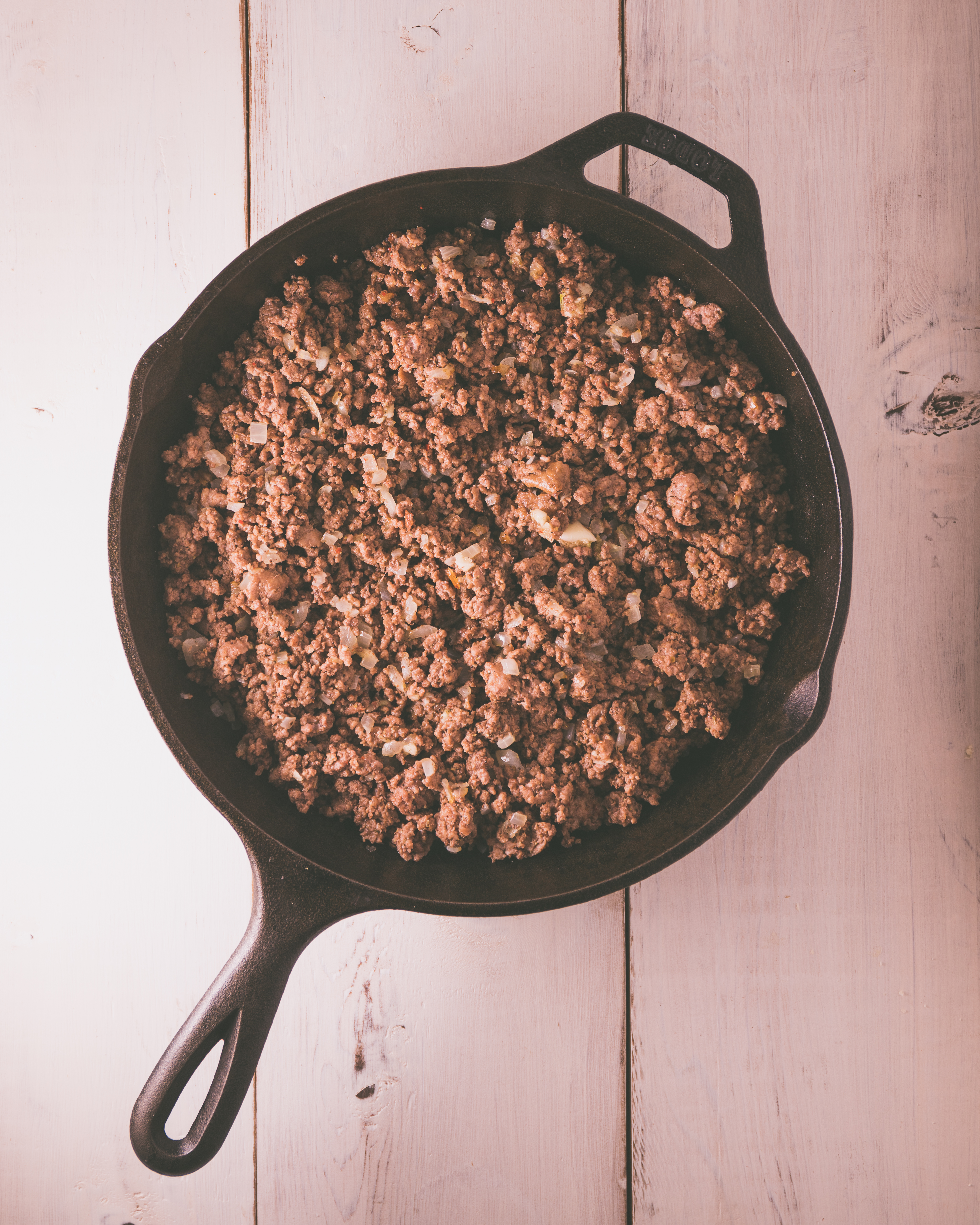
    The filling took shape without any one recipe taking the lead. I used onion, all spice, dried thyme, sage (which appears to be still growing in a pot on my snowy porch – weird), cloves, cinnamon, black pepper and salt.

    Tortiere (5 of 8)

    Garlic made it in. And the requisite shredded potato (or 2 depending on size) also made it in.

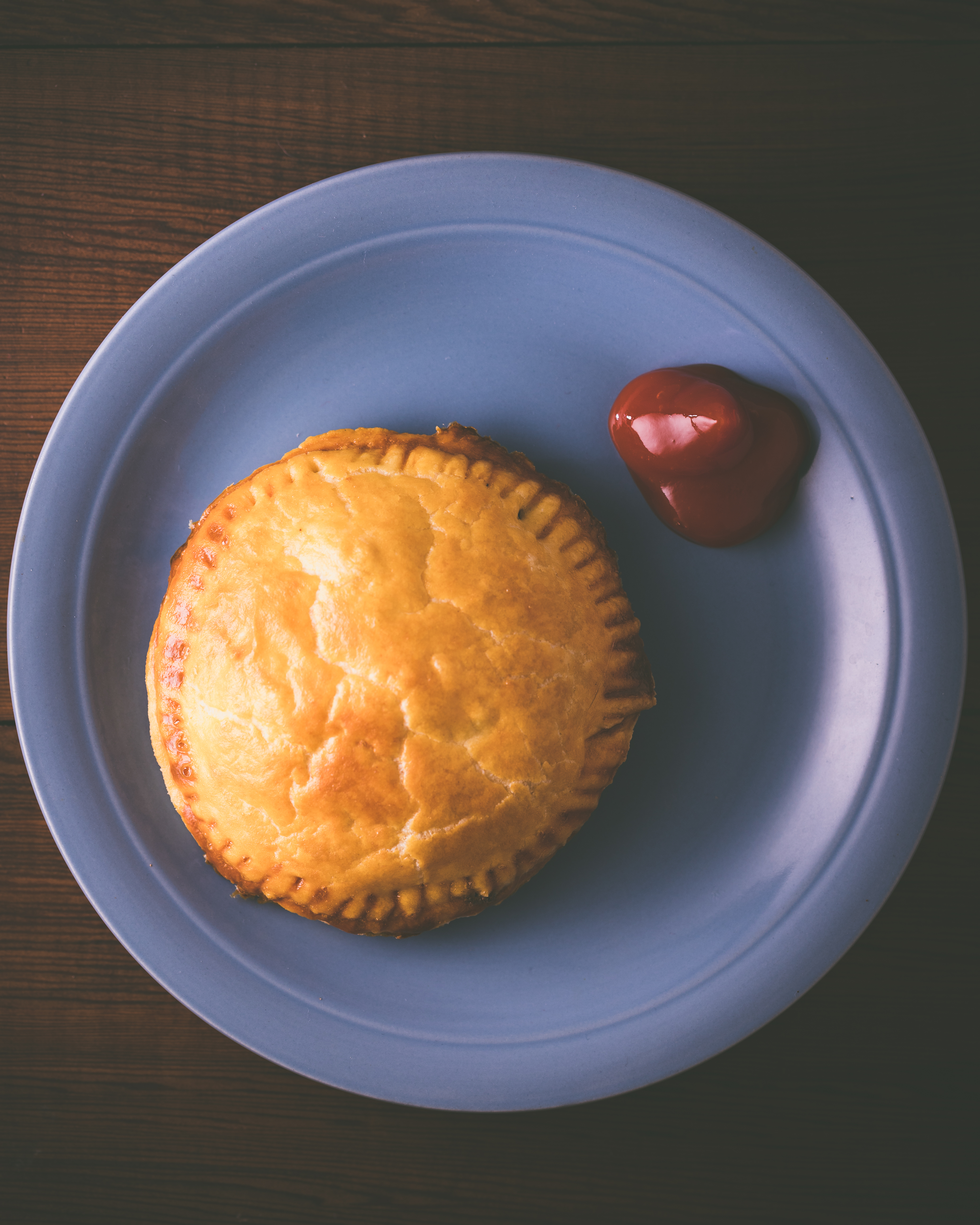
    Hand pies look nice and are fun to eat. So, I cut out as many circles as I could without working the dough too much – nobody likes a tough crust. And put some of the scraps that were getting warm back in the fridge (for a tiny peach pie the next day).

    I don’t like to use fake food when taking photos, so I googled best egg wash for pies. Here’s what I learned from this chart on finecooking.com, in the article “How to put colour and shine on pastry crust with egg wash”:

    Content of egg wash Effect on cooked pastry
    whole egg with water nicely browned, slightly glossy
    whole egg with milk nicely browned, more glossy
    egg white only evenly browned, slightly less brown than whole egg, very little shine
    egg yolk only or egg yolk with water browned and shiny, but less so than with cream or milk
    egg yolk with cream very browned and glossy, but a relatively thick egg wash that’s somewhat difficult to spread neatly
    egg yolk with milk the darkest brown crust and a touch less shiny than  yolk with cream

    I chose whole egg with milk.

    Tortiere (6 of 8)


    Cooking and shooting this recipe was fun. My new camera’s quality is similar to the old one, but has more features. It was a pleasure to use. In fact, it was fun to have two cameras. One on the tripod and one in hand.

    Tortiere (1 of 1)

    I certainly ate too many hand pies. I might have been too self-indulgent. Good thing we traded celebrating the ridiculously indulgent Christmas & NYE for my birthday.

    ~

    Lisa Severn is a communication specialist who lives in Whistler and is now OH, SHIT! one year closer to 50.

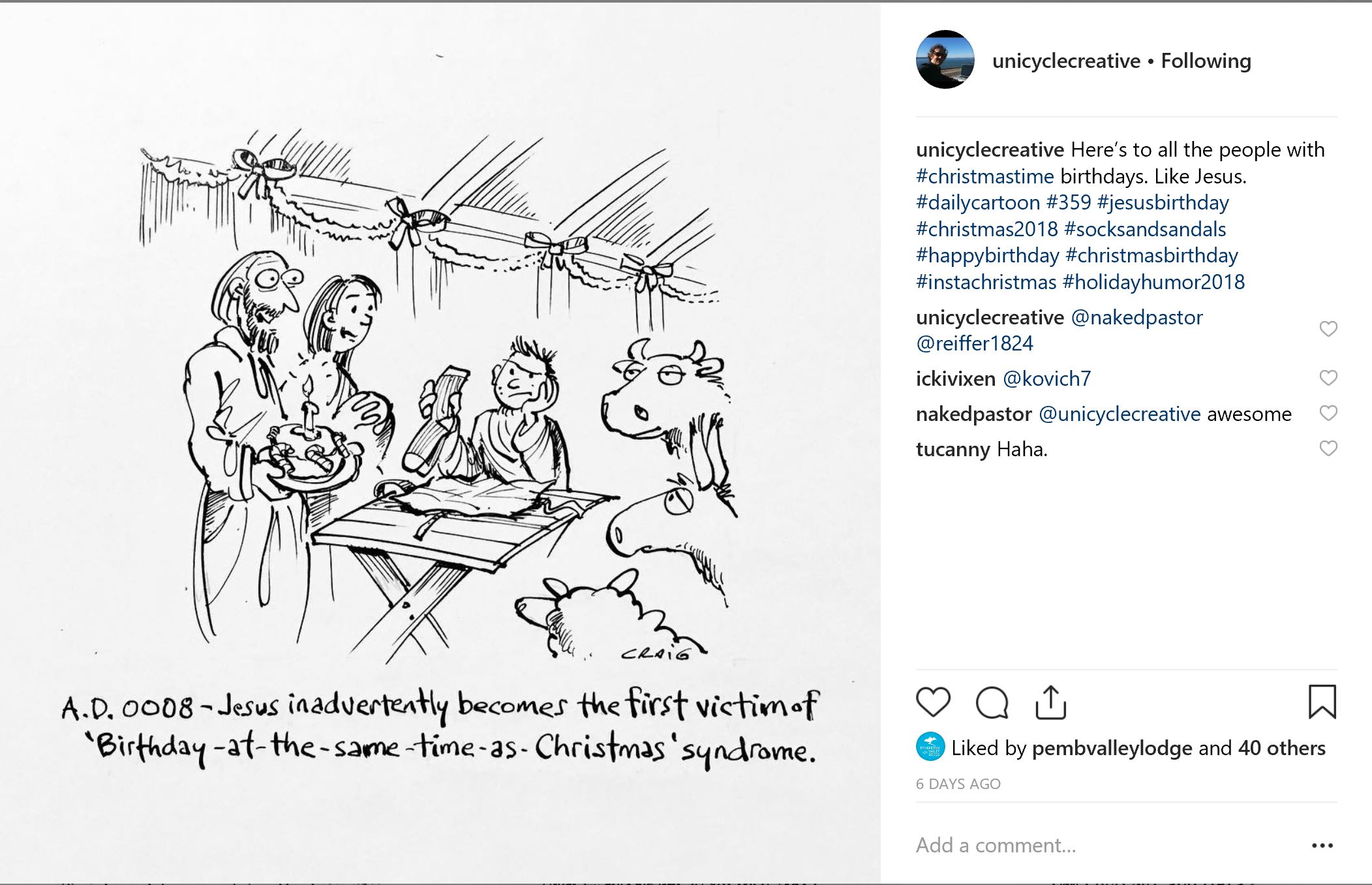
    P.s. My favourite Instagram post of 2018 is from @unicyclecreative

    cartoon